viruses lecture + ebola lab
 Call Kai
 Learn
Learn Practice Test
 Spaced Repetition
 Match
Match Flashcards
 Knowt Play
1/52

There's no tags or description
Looks like no tags are added yet.
Name | Mastery | Learn | Test | Matching | Spaced | Call with Kai |
|---|
No analytics yet
Send a link to your students to track their progress
53 Terms
structure of all viruses
nucleic acid core surrounded by a capsid (protein) and no cytoplasm
what do only SOME of viruses have?
specialized enzymes within the core and an envelope from the host cell membrane
nucleic acids can be
DNA or RNA
circular or linear
single or double-stranded
host range
type of organisms infected by the virus, which has a limited range
tissue tropism
a virus inside a host infecting only certain tissues (ex. rabies only infects neurons, brain cells)
host cells are?
REQUIRED for viral replication
what happens to the host cells after infection?
they are destroyed
viruses lack ___ for protein and nucleic acid synthesis
ribosomes and enzymes.
what do viruses use to replicate?
the host cell’s ribosomes and enzymes/ transcription and translation machinery
early genes
take over host cell’s machinery
intermediate and late genes
release virally from the infected cell
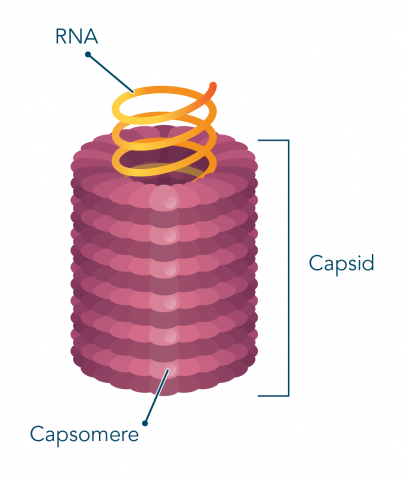
helical (viral shape)
rod or threadlike
icosahedral (viral shape)
nearly spherical but not quite.
why is morphology highly diverse?
viruses can be naked, complex, or enveloped
what does shape NOT determine what the virus does?
what the virus infects
RNA viruses
most common, 70% of viruses contain these. Mostly single-stranded with high mutation rates. will RARELY be linear
DNA viruses
double-stranded and replicated in the nucleus
retroviruses
single-stranded RNA is reverse transcribed to DNA, uses reverse transcriptase.
Viral classification is based on:
taxonomy, disease caused by it, type of host infected, genome expression
virus taxonomy
order, family, subfamily, and genus. Has 15 ranks, 8 primary and 7 secondary.
Disease they cause
not always useful, some viruses do not cause disease. Some viruses cause different diseases in different organisms.
host infected
viruses can infect multiple hosts
genome expression
Baltimore classification sorts by genome structure (from DNA or RNA to mRNA) and expression
Bacteriophage (or just “phage”)
viruses that ONLY infect bacteria. very diverse
2 phage cycles
Lytic and Lysogenic
Lytic cycle
cell rupture. Short and destructive. 5 steps.
Lytic cycle steps
attachment or adsorption
penetration or injection
synthesis
assembly
release
attachment/adsorption
targets bacterial outer surface, limits the hosts range when binding to surface
penetration/injection
pierces cell wall to infect viral genome (w/ syringe-like structure)
synthesis
phage uses cell machinery to replicate viral components
assembly
assembly of viral components (particles, genetic material and capsid proteins)
release
mature virus particles are released through the cell wall.
lysogenic cycle
when a temperate phage infects a host cell and a genome is integrated into the genome of the host cell.
lysogenic cycle
infection → replication → waiting period
latent phase
host cell not immediately dying. the virus nucleic acid is integrated into the host genome
prophage
the temperate/lysogenic phage when integrated
phage conversion
some viral genes are expressed, altering the host cell’s phenotype
the lysogenic cycle converts…
harmless cells into disease-causing ones
viral infections are based on…
how rapid and frequently the virus is produced and appearance of associated symptoms.
persistent infections
laten or chronic, will stick with the host for prolonged periods of time
acute infections
rapid replication of the virus and onset of symptoms. can cause major world events (outbreak, epidemic, pandemic)
Influenza (flu)
one of the most lethal viruses, pandemics of 1918-1919 infected 1/3rd of the worlds population. the flu is enveloped and infects animals.
Hemagglutinin (H) / flu subtype
aids in viral ENTRY
Neuraminidase (N) / flu subtype
aids in viral EXIT
Antigenic DRIFT
H (hemagglutinin) and N (neuraminidase) molecules accumulate RANDOM mutations, making the previous vaccine-induced immunity no longer protective.
Antigenic SHIFT
genetic recombination can occur when two viruses enter the same cell (major combinations, only in influenza A)
Zoonotic viruses
viruses that infect a variety of animals, spill over from nature
persistent viral infections
can be chronic, latent, or slow. the virus will be detectable in the host for years after infection or for life.
Cancer
cancer causing viruses are rare but deadly. caused by viruses altering the growth of healthy cells. Blocks cell death and promotes cell division.
Prions (NOT viruses, simpler)
misfolded proteins
viroids (NOT viruses OR proteins)
tiny, unenveloped molecules of circular RNA. made up of 250-400 nucleotides. Causes disease in economically important crops. Small interfering RNAs (siRNAs) may be produces during infection, effects growth and development.
ebola is..
zoonotic
ebola symptoms
uncontrollable internal bleedings, high fever (hemorrhagic). Liver and kidney failure, vomiting and diarrhea.