Vet 113 Chapter 8
 Call Kai
 Learn
Learn Practice Test
 Spaced Repetition
 Match
Match Flashcards
 Knowt Play
1/121

There's no tags or description
Looks like no tags are added yet.
Name | Mastery | Learn | Test | Matching | Spaced | Call with Kai |
|---|
No analytics yet
Send a link to your students to track their progress
122 Terms
Functions of the cardiovascular system
1. to deliver oxygen, hormones and nutrients to cells and tissues
2. to transport waste products to the appropriate wast removal system
The circulatory system is divided into what 2 systems?
systemic and pulmonary
systemic circulation
delivers blood from the left ventricle of the heart to the body and back to the right atrium of the heart
pulmonary circulation
delivers blood from the right ventricle to the lungs and back to the left atrium
Arteries carry blood
away from the heart
Veins carry blood
toward the heart
cardiovascular means
pertaining to the heart and blood vessels
heart is located where
mediastinum
Mediastinum
area between the lungs containing the heart, aorta, venae cavae, esophagus, and trachea
Pericardium
Double-layered membrane surrounding the heart.
2 layers of pericardium
fibrous and serous
2 layers of serous pericardium
parietal and visceral
visceral layer of the serous pericardium is also called
epicardium
pericardial fluid
serous fluid between parietal & visceral pericardium; reduces friction when heart beats
3 layers of the heart wall
epicardium, myocardium, endocardium
coronary arteries
blood vessels that branch from the aorta and carry oxygen-rich blood to the heart muscle
occlusion
blockage of a coronary vessel that causes disruption of blood to the myocardium
ischemia
caused by an occlusion. lack of blood supply to an area that can lead to necrosis
infarct
area of necrosis due to ischemia
atria
upper chambers of the heart
ventricles
Lower chambers of the heart
septum
Divides the right and left chambers of the heart
interatrial septum
separates atria
interventricular septum
separates ventricles
apex of the heart
lower tip of the heart
base of heart
top of the heart
chambers of the heart that receive blood
atria
heart valve
Heart valves allow blood to flow in only one direction through the heart.
right atrioventricular valve
tricuspid valve; blood leaving the right atrium flows into right ventricle through this valve
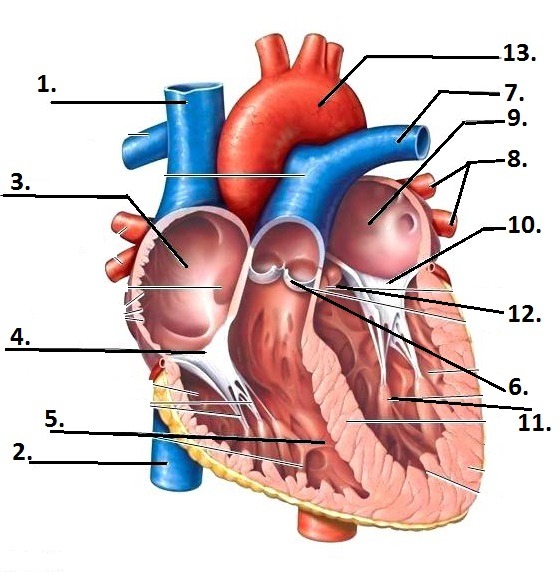
left atrioventricular valve
(10) (mitral or bicuspid valve) Blood leaving the left atrium flows into the left ventricle through this valve; most commonly replaced due to more pressure on left side of the heart
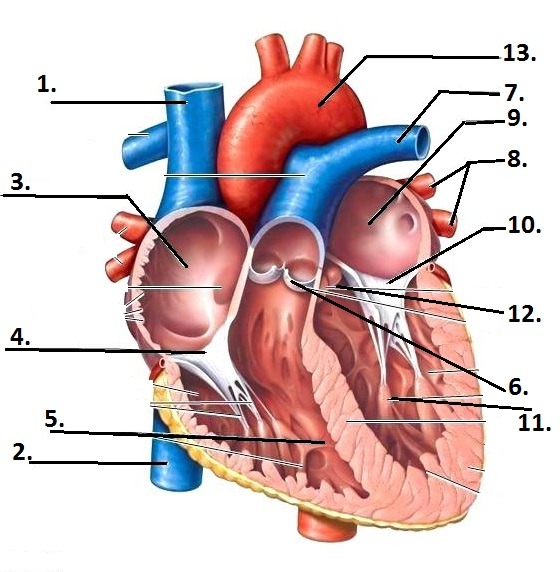
pulmonary semilunar valve
(6) located between the right ventricle and the pulmonary artery
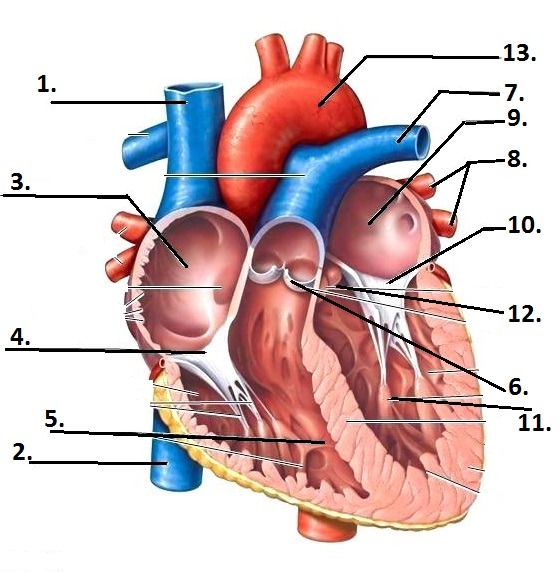
aortic semilunar valve
(12)located between the left ventricle and the aorta
Systole
contraction of a heart chambers
Asytole
without contraction
Diastole
relaxation of heart chambers
arrhythmia
Abnormal heart rhythm
sinus rhythm
normal heart rhythm
fibrillation
rapid, random, and ineffective contractions of the heart
Bradycardia
abnormally slow heartbeat
Tachycardia
Abnormally rapid heartbeat
ECG, EKG
electrocardiogram
electrocardiogram
record of the electrical activity of the heart
electrocardiography
process of recording the electrical activity of the heart
Auscultation
Listening to body sounds with a stethoscope
The lubb and dubb sounds you hear are made by
opening and closing of valves
Lubb sound
atrioventricular valves closing
Dubb sound
semilunar valves closing
murmur
abnormal heart sound associated with turbulent blood flow (leaky valve)
perfusion
blood flow through tissues
CRT
capillary refill time
capillary refill time
measures tissue perfusion
3 major types of blood vessels
arteries, capillaries, veins
Arterioles
smallest arteries
venules
smallest veins
capillaries
single-cell-thick vessels that connect the arterial and venous systems
lumen
opening in a vessel through which fluid flows
constriction
narrowing of lumen
dilation
widening of the lumen
blood pressure
tension exerted by blood on the arterial walls
pulse oximeter
External monitor that measures the oxygen saturation level in the blood
pulse
the rhythmic contraction and expansion of the arteries with each beat of the heart
sphygmomanometer
instrument to measure blood pressure
systolic pressure
Blood pressure in the arteries during contraction of the ventricles.
diastolic pressure
the pressure in the arteries when the heart is at rest
doppler
instrument used to listen to blood sounds
hypertention
high blood pressure
hypotension
low blood pressure
Antihypertensive drugs
used to lower blood pressure
echocardiography
an ultrasonic diagnostic procedure used to evaluate the structures and motion of the heart
AV
atrioventricular
BP
blood pressure
CHF
congestive heart failure
CPR
cardiopulmonary resuscitation
angiography
a radiographic study of the blood vessels after the injection of a radiopaque material
angiocardiography
radiographic study of the blood vessels and heart using contrast material
angiocardiogram
X-ray record of the heart and great vessels made visible through the use of a radiopaque contrast medium
cardiac catheterization
radiographic study in which a catheter is passed into a blood vessel and is guided into the heart to detect pressures and patterns of blood flow
electrocardiograph
instrument used to record the electrical activity of the heart
tourniquet
constricting band applied to a limb to control bleeding or to assist in drawing blood
aneurysm
localized balloon-like enlargement of an artery
angiopathy
disease of blood vessels
cardiomegaly
enlargement of the heart
cardiomyopathy
disease of the heart muscle
carditis
inflammation of the heart
congestive heart failure
syndrome that reflects insufficient cardiac output to meet the body's needs
congestion
accumulation of fluid
edema
accumulation of fluid in extracellular spaces
ascites
fluid accumulation in the peritoneal cavity
pleural effusion
Abnormal fluid accumulation between the layers of the membrane encasing the lungs
Diuretic
A substance that promotes the production of urine
Dirofilariosis
heartworm infection
prophylaxis
prevention
adulticide
substance that kills mature or adult heartworms
microfilaricide
substance that kills larvae or juvenile heartworms
embolus
foreign object circulating in the blood
embolism
Blockage of a vessel by a foreign object
endocarditis
inflammation of the endocardium and sometimes the heart valves
hemangioma
benign tumor comprised of newly formed blood vessels
hematoma
collection of blood
hypercapnia
above-normal levels of carbon dioxide