L38-skin function and dysfunction
 Call Kai
 Learn
Learn Practice Test
 Spaced Repetition
 Match
Match Flashcards
 Knowt Play
1/23

There's no tags or description
Looks like no tags are added yet.
Name | Mastery | Learn | Test | Matching | Spaced | Call with Kai |
|---|
No analytics yet
Send a link to your students to track their progress
24 Terms
list the functions of the skin
protection- melanin protects from uv
chemical and microbial defence- microflora competitiveness
water loss prevention- brick and mortar structure reduces water loss
thermoregulation - sweating and vasodilation increases heat loss
sensation- receptors detect touch, pressure, pain
immune function-cell initiate immune response
vitamin d storage- presence of UV-B
what are the two ways that drugs act on the skin/ routes of drug delivery
locally- dermal/topical
enter systemic circulation- transdermal
briefly describe what transdermal drug delivery is
transdermal drug delivery uses the skin as a transport matrix and requires the therapeutics to infiltrate towards the hydrophilic dermis and then the blood circulation to achieve their subsequent systemic effects
name three benefits of using the skin as a route for drugs
it avoids the gastrointestinal degradation and bypasses first pass hepatic metabolism
its useful for patients who cannot take oral drugs
it improves patient compliance in chronic therapy
describe the brick and mortar model when discussing the stratum corneum
the stratum corneum is the main barrier to drug penetration
brick- corneocytes ( which are differentiated flat keratinocytes filled with keratin )
mortar- lipid matrix ( a mixture of ceramides, cholesterol and free fatty acids )
what are the three main routes for drug to get through the skin
trans follicular- through the hair follicle
transcellular- through the cells
intracellular- between the cells
describe how hydrophobic and hydrophilic drugs can get through the statum corneum
hydrophobic drugs- travel through the ‘mortar’ the lipid aspect of the corneum
hydrophilic drugs- travel through the ‘bricks’ the corneocytes ( but they still have to navigate through the lipid rich layer )
hydrophobic- prefer intracellular
hydrophilic- prefers transcellular
what the effect of damaged or inflamed skin skin on drug absorption
it increases drug absorption
why would topical drug delivery be used ?
they are applied locally for local therapeutic effects for treatments of infections, acne and inflammation
describe systemic absorption with topical formulations
very minimal especially if the skin barrier is intact
provide three examples of topical drugs
hydrocortisone creams- reduce inflammation
clotrimazole- treats fungal infections
calcipotriol- ointment used to treat plaque psoriasis
what are the two types of transdermal drug delivery
passive delivery- uses natural diffusion through skin, it doesn’t disrupt the SC
active delivery- uses physical or chemical methods to bypass or disrupt stratum corneum
what is some of the criteria for a drug to be infiltrated into the skin passively
high pharmacological potency
small molecular size
moderate lipophilicity
low melting point
non-irritating
short half life
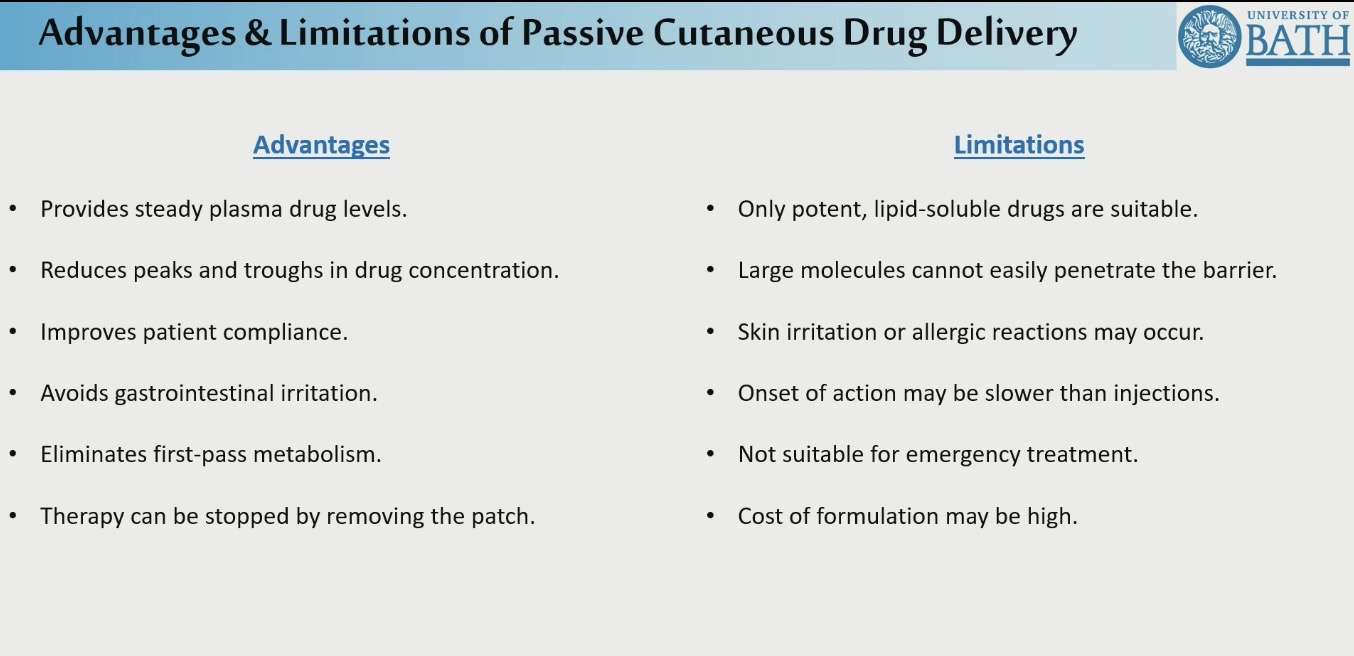
what are some advantages and disadvantages to passive transdermal drug delivery
what are some types of active transdermal drug delivery methods
what are the different types of micro needling technology
solid MN- applied to skin → removed→ formulation like cream is applied after ( poke and patch ) it creates the channels for the drug to go though
coated MN- applied to the skin → the drug is already on the needles so it dissolves through ( coat and patch)
hollow MN- applies to skin→ then liquid formulation is applied ( poke and patch)
dissolving MN- apply to the skin→ microneedles will be dissolved onto the skin→ drug also released with it→ when removed produces an empty patch ( poke and release )
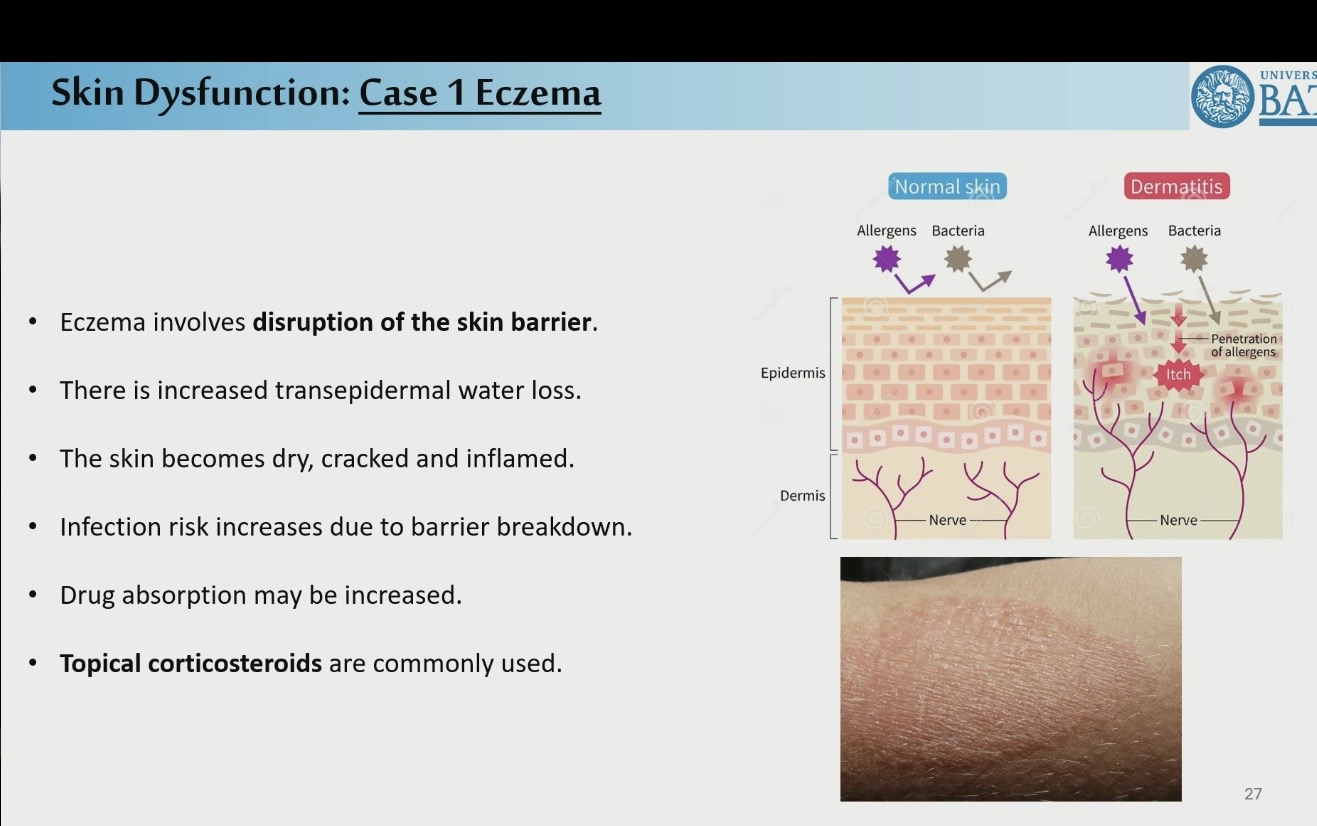
describe what eczema is
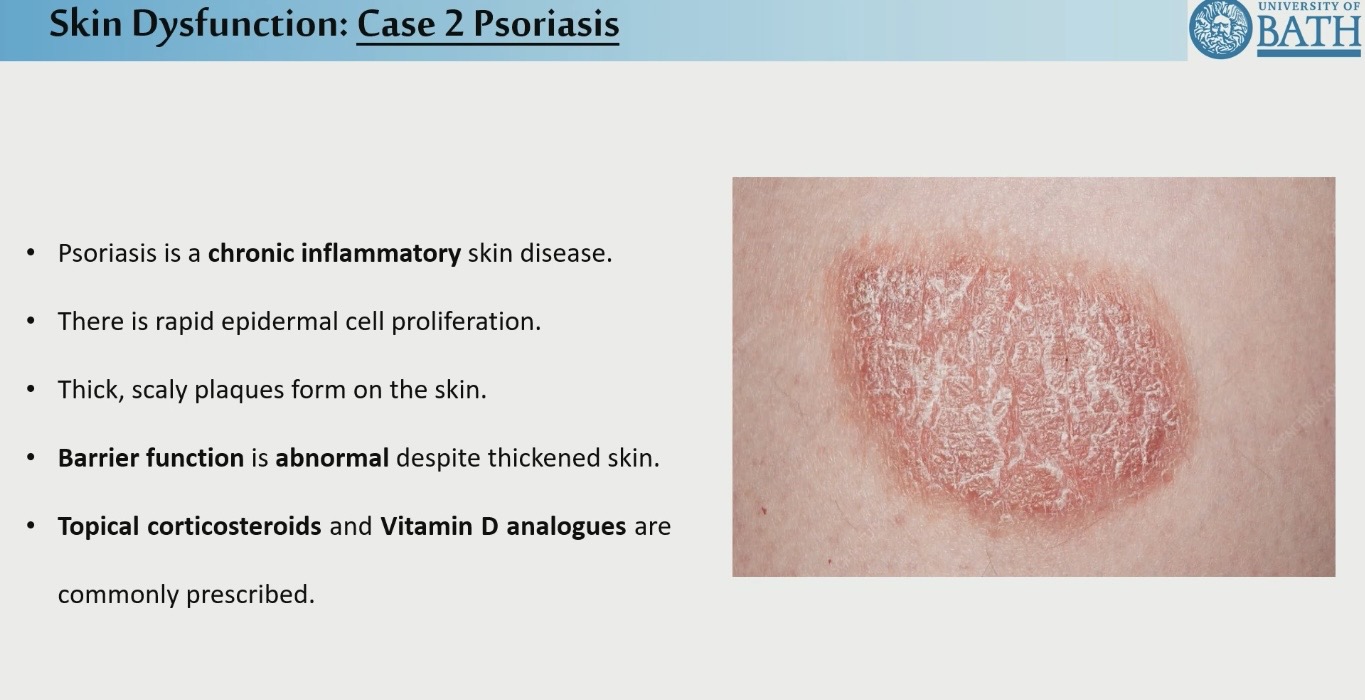
describe psoriasis
what is usually given to patients with psoriasis
topical corticosteroids and vitamin d analogues
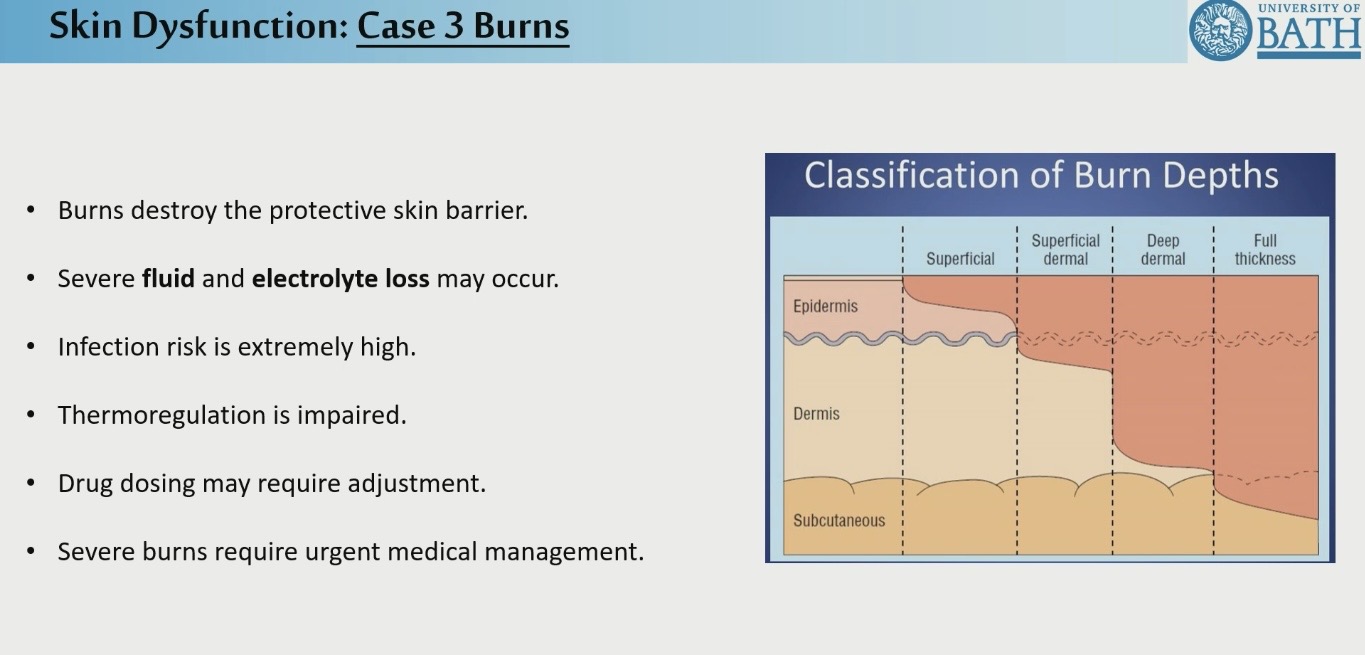
describe burns
describe acne and sebaceous dysfunction
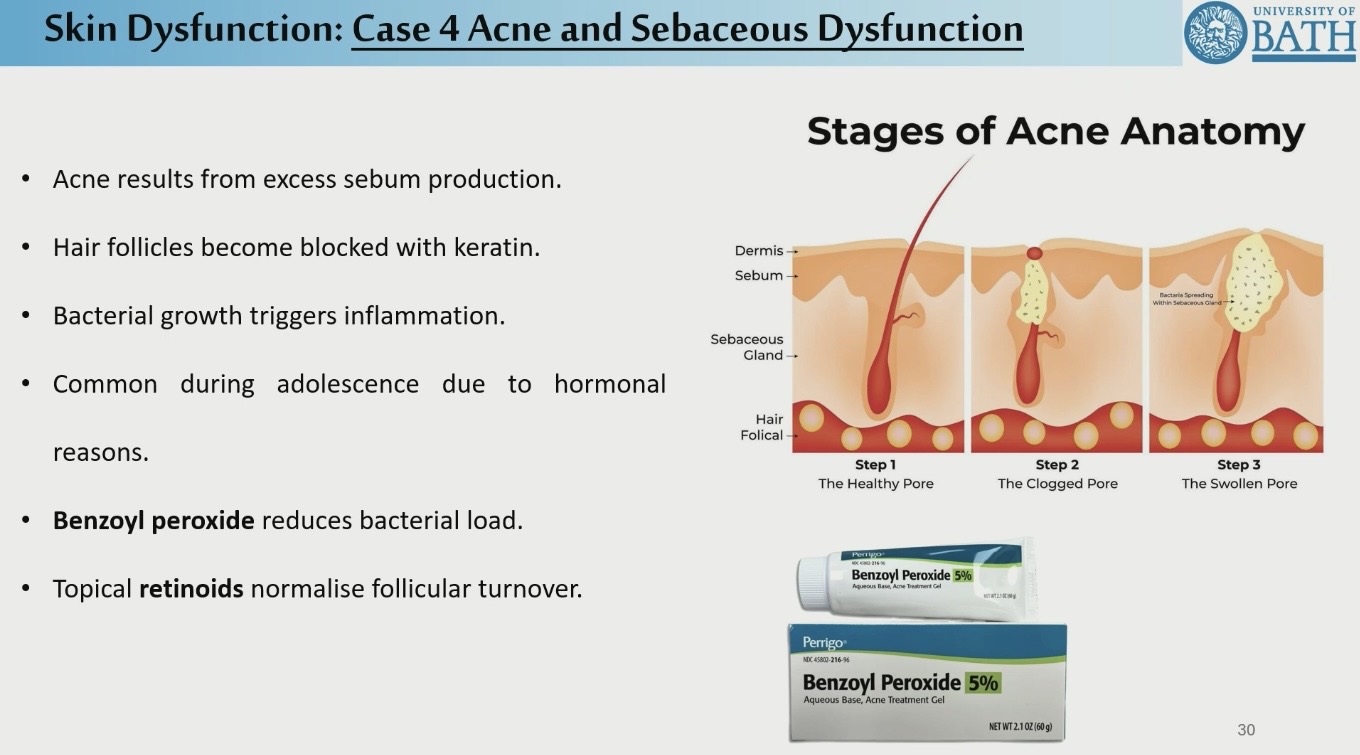
what is usually given to patients with acne
benzoyl peroxide reduces bacterial loads
topical retinoids normalise follicular turnover
briefly describe how trans follicular drug delivery works
the follicles act as reservoirs allowing the gradual drug release into the surrounding skin
as hairy skin with hair follicles only accounts for 0.1% of the skin surface area it isn’t common method
whata re the advantages and disadvantages for drug delivery across the nail plate for local treatment
advantages- allows treatment of fungal nail infections
avoids systemic side effect, liver toxicity and first pass metabolism
disadvantages-penetration is slow dues to the crosslinked keratin