citric acid cycle
 Call Kai
 Learn
Learn Practice Test
 Spaced Repetition
 Match
Match Flashcards
 Knowt Play
1/7

There's no tags or description
Looks like no tags are added yet.
Name | Mastery | Learn | Test | Matching | Spaced | Call with Kai |
|---|
No analytics yet
Send a link to your students to track their progress
8 Terms
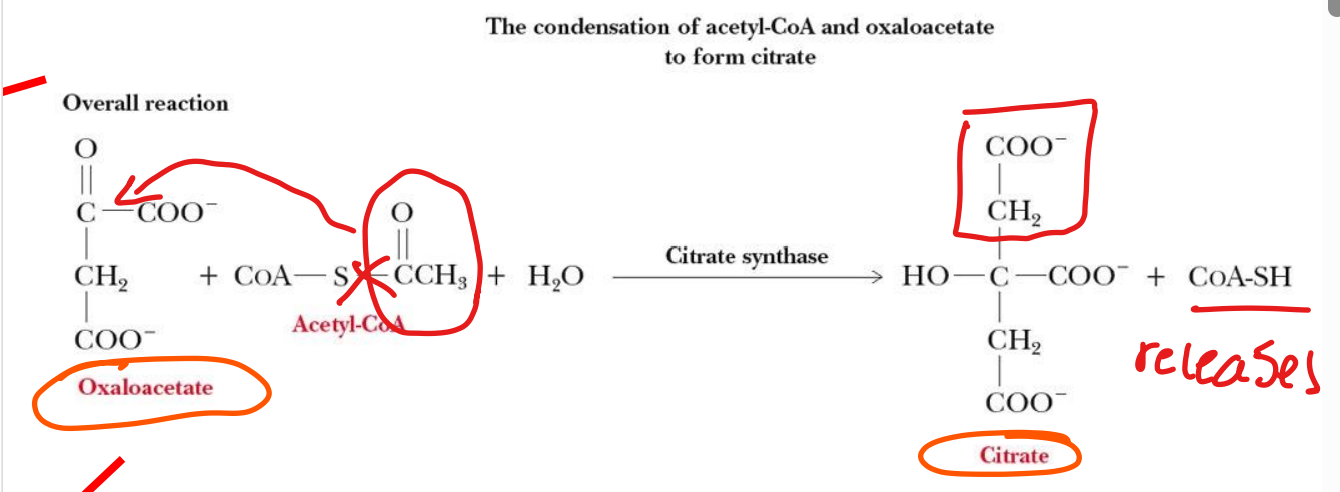
formation of citrate
step 1
carried out by citrate synthase
acetate from acetyl-CoA is combined with oxaloacetate
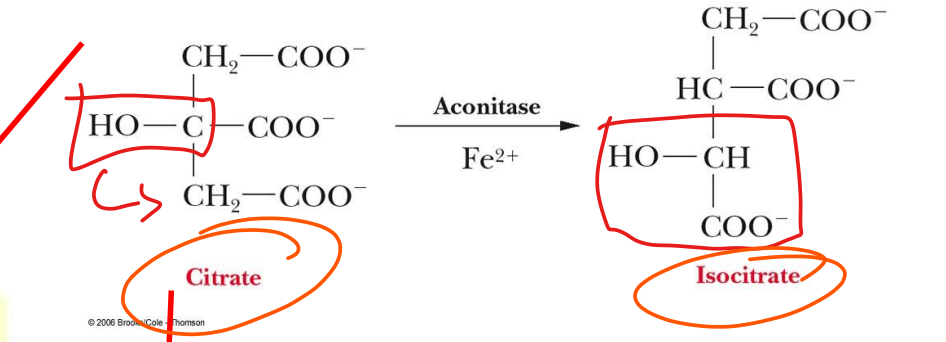
isomerization of citrate to isocitrate
step 2
reaction carried out by enzyme aconitase
requires Fe2+
OH moved to C-3 of isocitrate
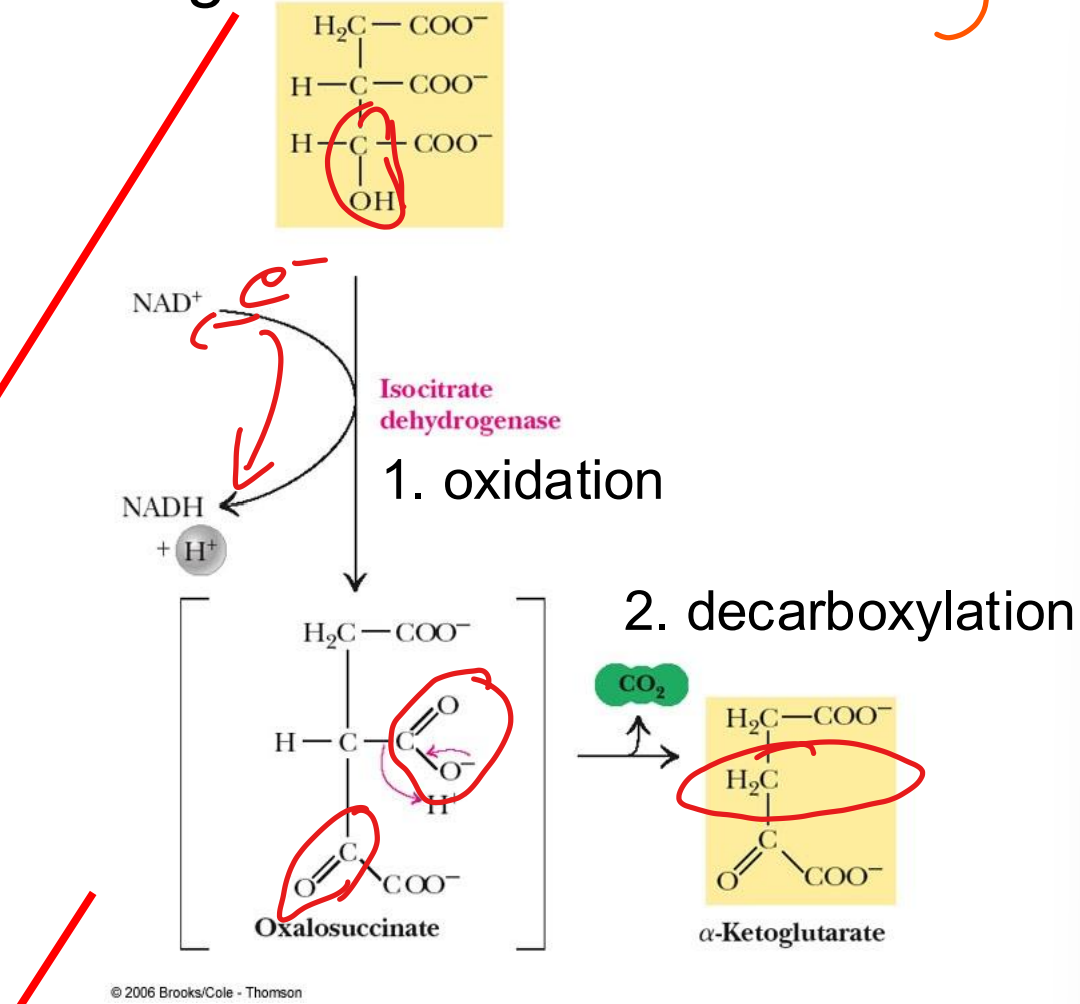
a-ketoglutarate formation
step 3
reaction carried out by the enzyme isocitrate dehydrogenase
NAD+ reduced to NADH
second loss of CO2
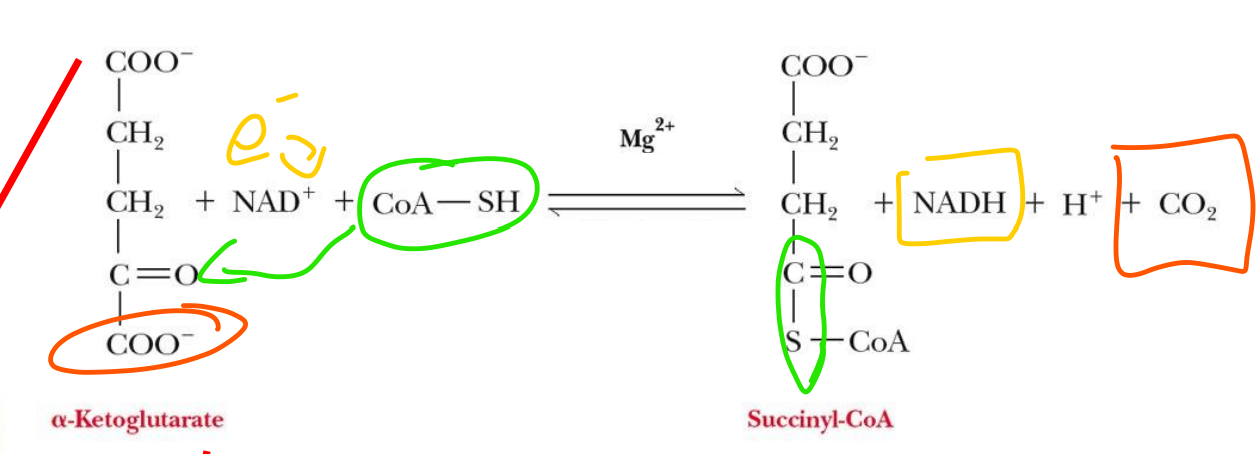
succinyl-CoA formation
step 4
carried out by a-ketoglutarate dehydrogenase
a-ketoglutarate oxidation to reduce NAD+ to NADH
5 carbon a-ketoglutarate to 4 carbon succinyl
THIRD CO2 LOSS
succinate formation
step 5
carried out by succinyl-CoA synthetase
Pi and energy from succinyl-CoA breakage is used to form GTP
Pi is transferred to ADP by nucleosidediphosphate kinase
only ATP made in TCA cycle
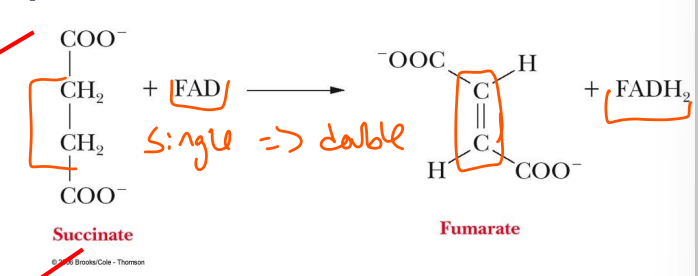
fumarate formation
step 6
reaction carried out by enzyme succinate dehydrogenase
enzymes is an integral mitochondrial inner membrane protein
FAD acts as an e- acceptor instead of NAD+
bond between C 2&3 is oxidized to double bond
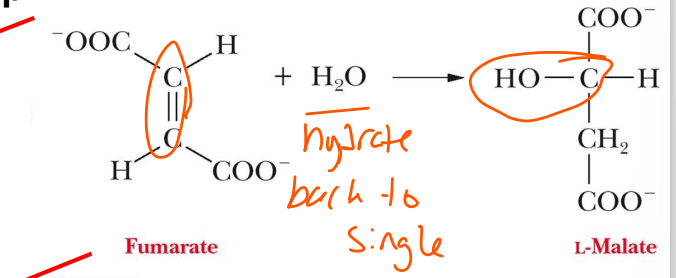
malate formation
step 7
reaction carried out by fumarase
double-bond of fumarate is hydrogenated by H2O
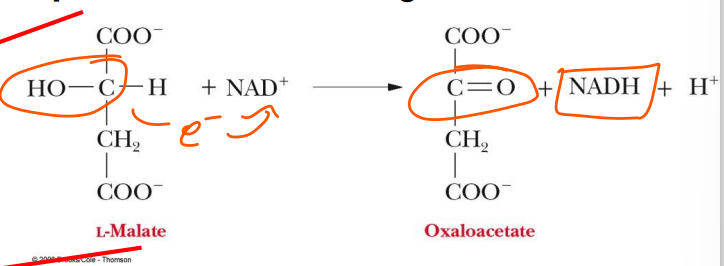
oxaloacetate regeneration
step 8
carried out by malate dehydrogenase
pathway regenerated
can now react with another acetyl-coa