OCR A Level Bio. 3.1.1 Exchange Surfaces
 Call Kai
 Learn
Learn Practice Test
 Spaced Repetition
 Match
Match Flashcards
 Knowt Play
1/70

There's no tags or description
Looks like no tags are added yet.
Name | Mastery | Learn | Test | Matching | Spaced | Call with Kai |
|---|
No analytics yet
Send a link to your students to track their progress
71 Terms
what are the (2) roles of exchange surfaces?
supply cells, remove metabolic waste from cells
what substances are exchanged in organisms? (in, excreted)
oxygen, waste products from metabolic activity - CO2, urea (NOT faeces)
true or false: single-celled organisms have low SA:V so need exchange systems
false - they have high SA:V so don't need exchange surfaces
what does the need for exchange systems depend on?
surface area (SA):volume (V) ratio
how do single-celled organisms exchange substances?
the substances diffuse directly into/out of the cell
do multicellular organisms need exchange systems? why (x3)?
yes - cells can be deep within the organism (high diffusion distance); low SA:V; high metabolic rate
REMEMBER SA:V = SA/V
REMEMBER SA:V = SA/V
volume of a cylinder
πr²h
surface area of a cylinder
2πr² + 2πrh
volume of a sphere
4/3πr³
surface area of a sphere
4πr²
how would you find the SA:V of a rod-shaped bacillus?
1) split the bacillus into 2 hemispheres and an cylinder
2) find the SA and V of the hemispheres and cylinder
3) do SA:V
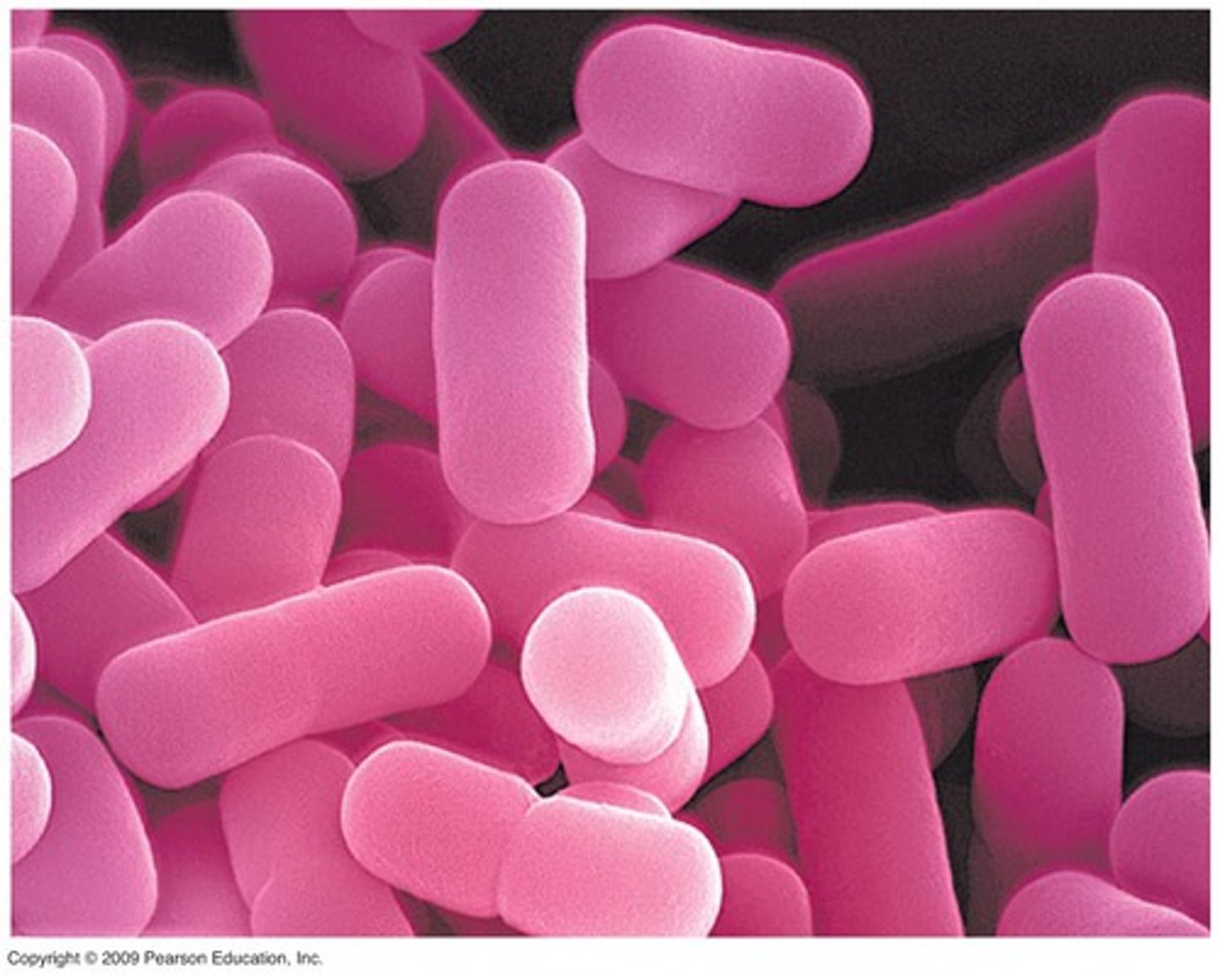
what are the 3 features of an efficient exchange surface? & example/s of each?
• large SA - root hair cells
• thin exchange surface - alveoli, capillary wall
• good blood supply/ventilation - gills, alveoli
what is the effect of exchange surface having a large SA?
more space for exchange/diffusion => increased diffusion rate
what is the effect of exchange surface having a thin exchange surface?
decreased diffusion distance => increased diffusion rate/efficiency
what is the effect of exchange surface having a good blood supply/ventilation?
maintains conc.n gradient => increased diffusion rate
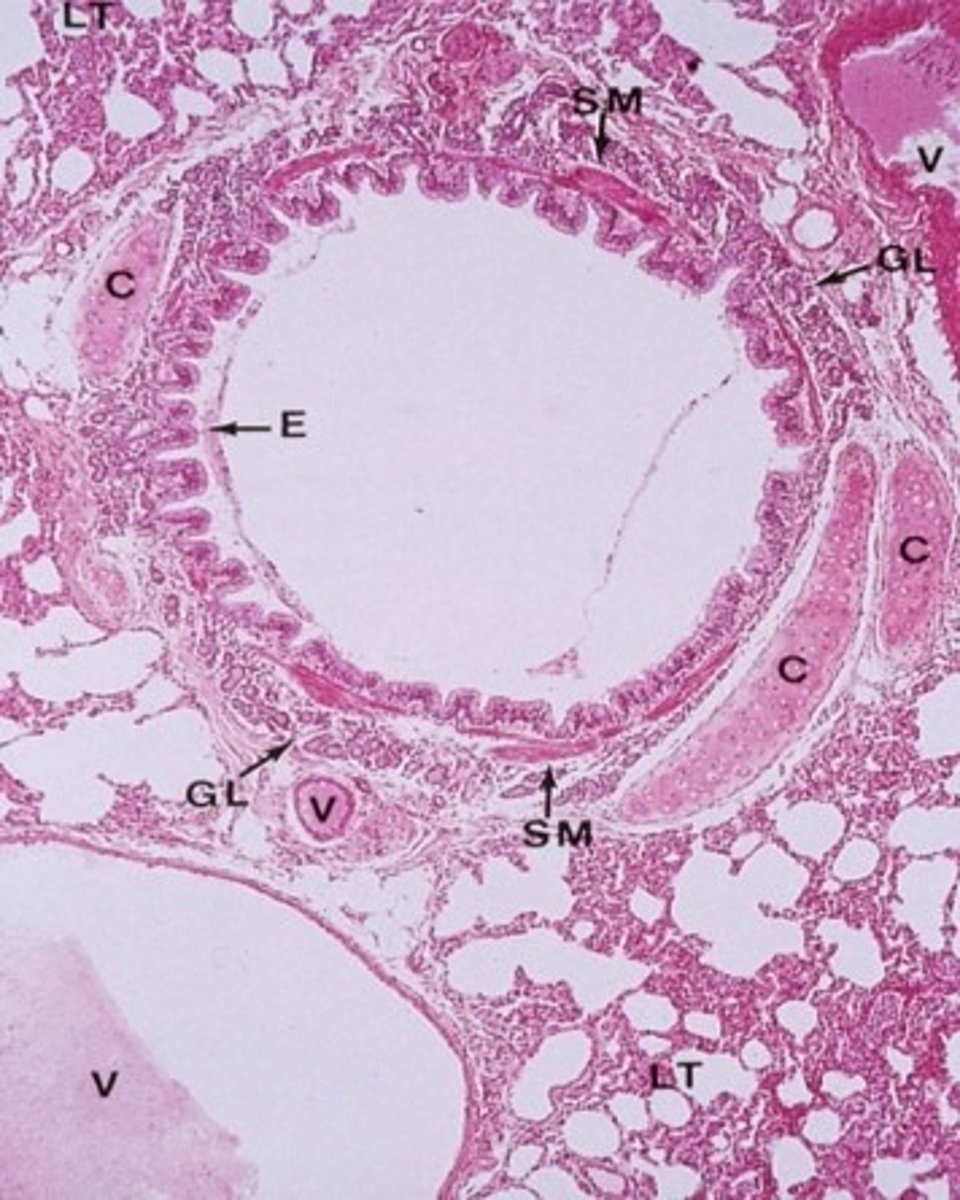
what tissues make up the mammalian gaseous exchange system?
trachea, bronchi, bronchioles, alveoli
goblet cell function
secrete mucus
ciliated epithelial cells function
beat mucus from goblet cells towards throat [get rid of dust & microorganisms, prevent lung infections]
where are goblet cells found?
trachea, bronchi, large bronchioles
where are ciliated epithelial cells found?
trachea, bronchi, large & small bronchioles
elastic fibres function (explain)
aid gas exchange -
• stretch when breathe in
• recoil when breathe out (help push air out)
where are elastic fibres found?
walls of: trachea, bronchi, all bronchioles, alveoli
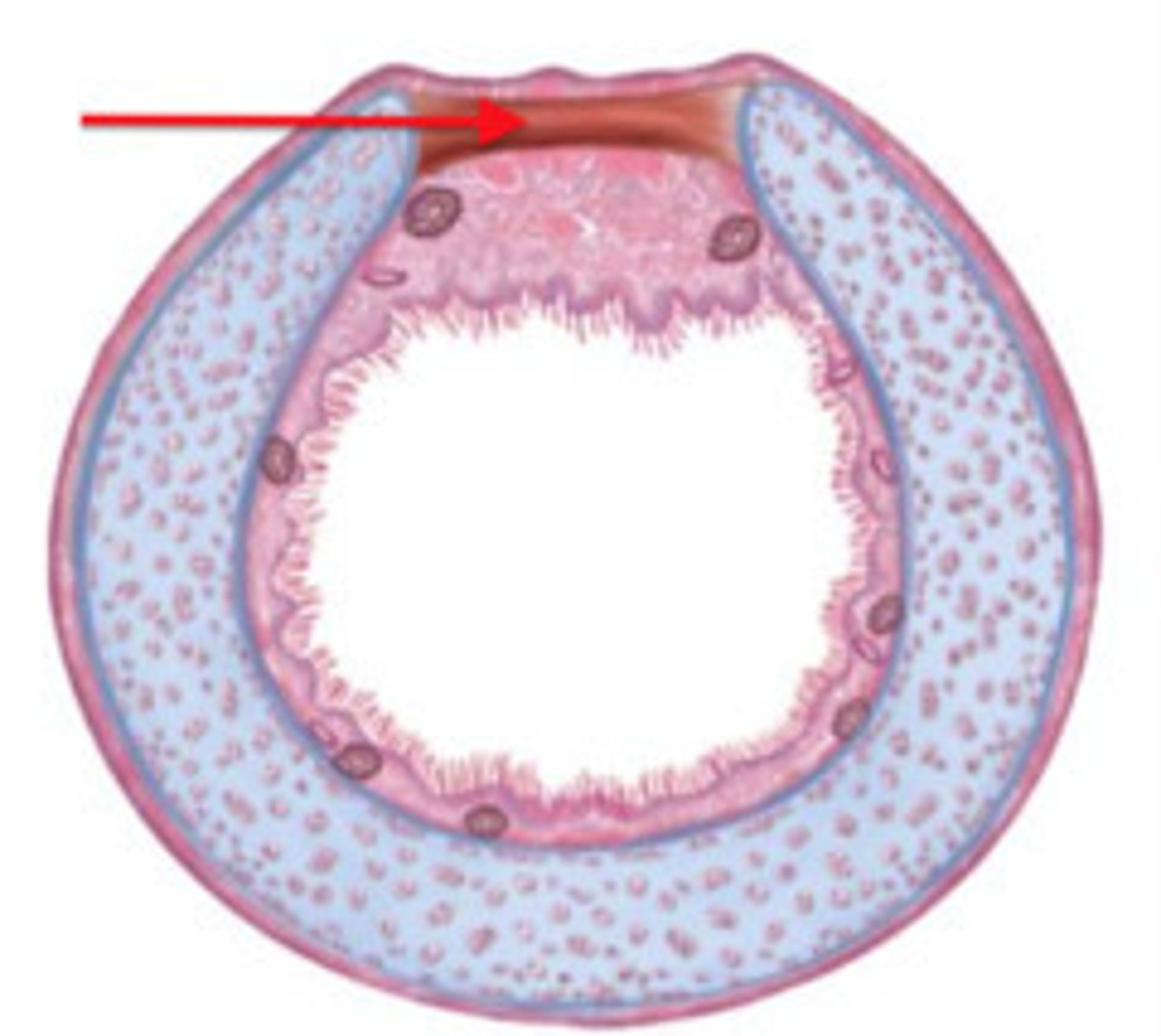
smooth muscle function
controls airway diameter - propels substances along airways
where is smooth muscle found?
trachea, bronchi, large bronchioles
how does smooth muscle appear in the trachea?
on one side
how does smooth muscle appear in bronchi?
small pieces - interspersed w/ cartilage
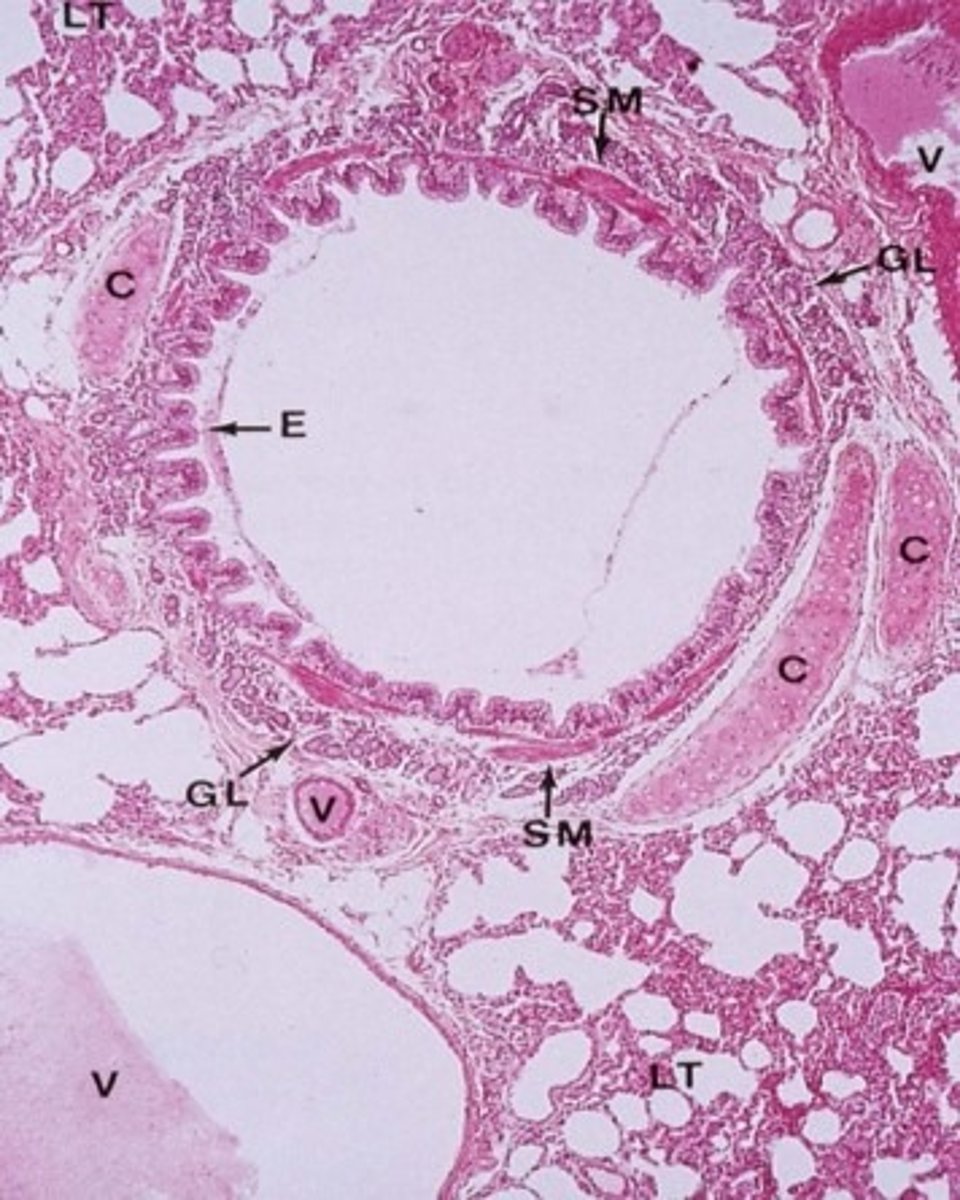
how does smooth muscle appear in bronchioles?
in the walls/ outside layer
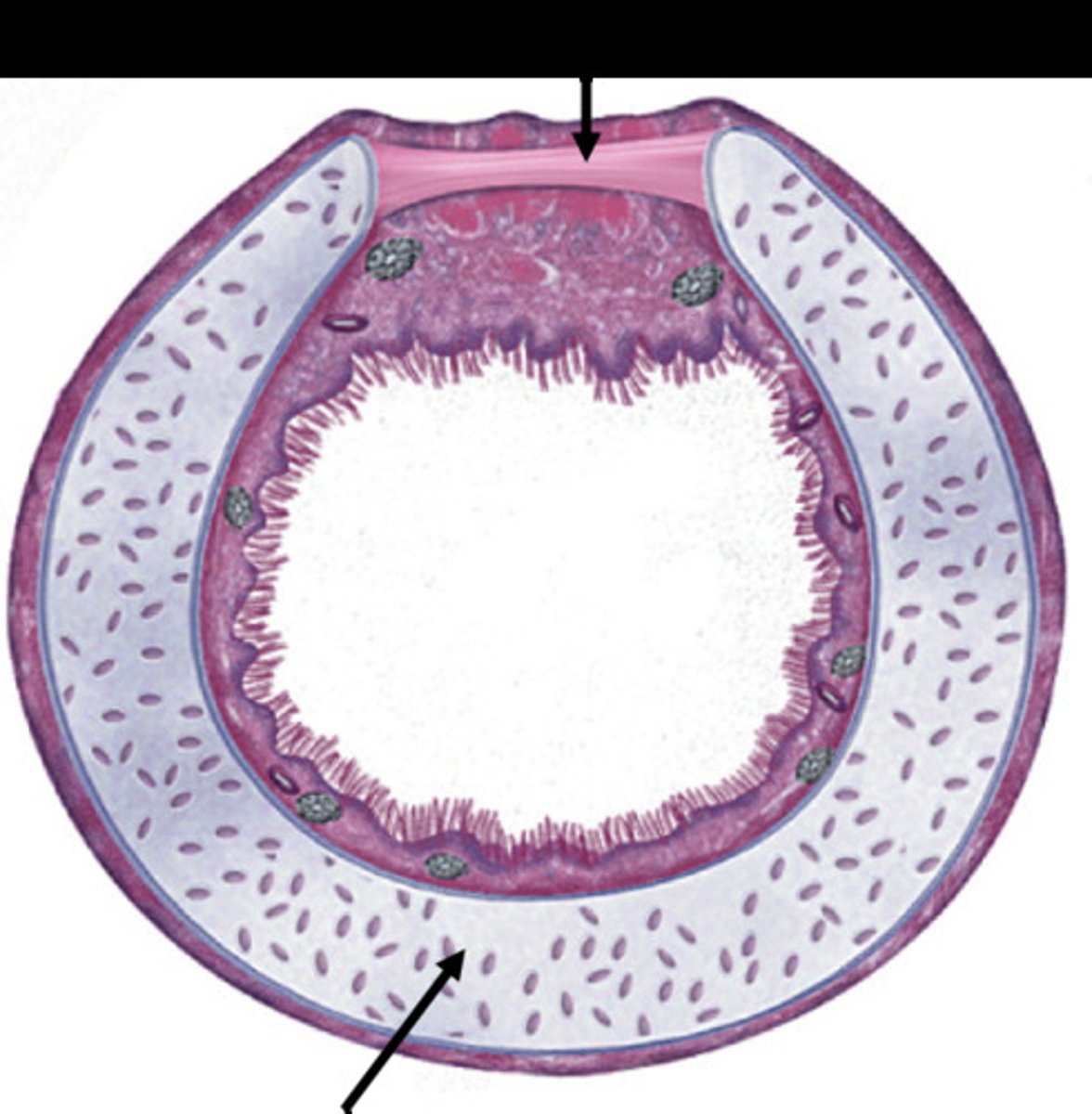
cartilage function
support - prevents collapsing when breathe in
where is cartilage found?
trachea, bronchi
how does cartilage appear in the trachea?
large 'C' shape around most of the diameter
how does cartilage appear in bronchi?
small pieces - interspersed w/ smooth muscle
what is ventilation?
movement of air into (inspiration) and out of (expiration) the lungs
what tissues control ventilation in mammals?
diaphragm, intercostal muscles (internal & external), ribcage
what happens during inspiration? (x5 steps)
1) i.c. muscles & diaphragm contract
2) ribcage goes upwards & outwards
3) thorax volume increases
4) thorax pressure decreases
5) air moves into the lungs (down conc.n grad. from outside -> inside)
what happens to the diaphragm when it contracts?
flattens
is inspiration active or passive?
active
what happens during expiration? (x5 steps)
1) i.c. muscles & diaphragm relax
2) ribcage goes downwards & inwards
3) thorax volume decreases
4) thorax pressure increases
5) air moves out of lungs (down conc.n grad. inside -> outside)
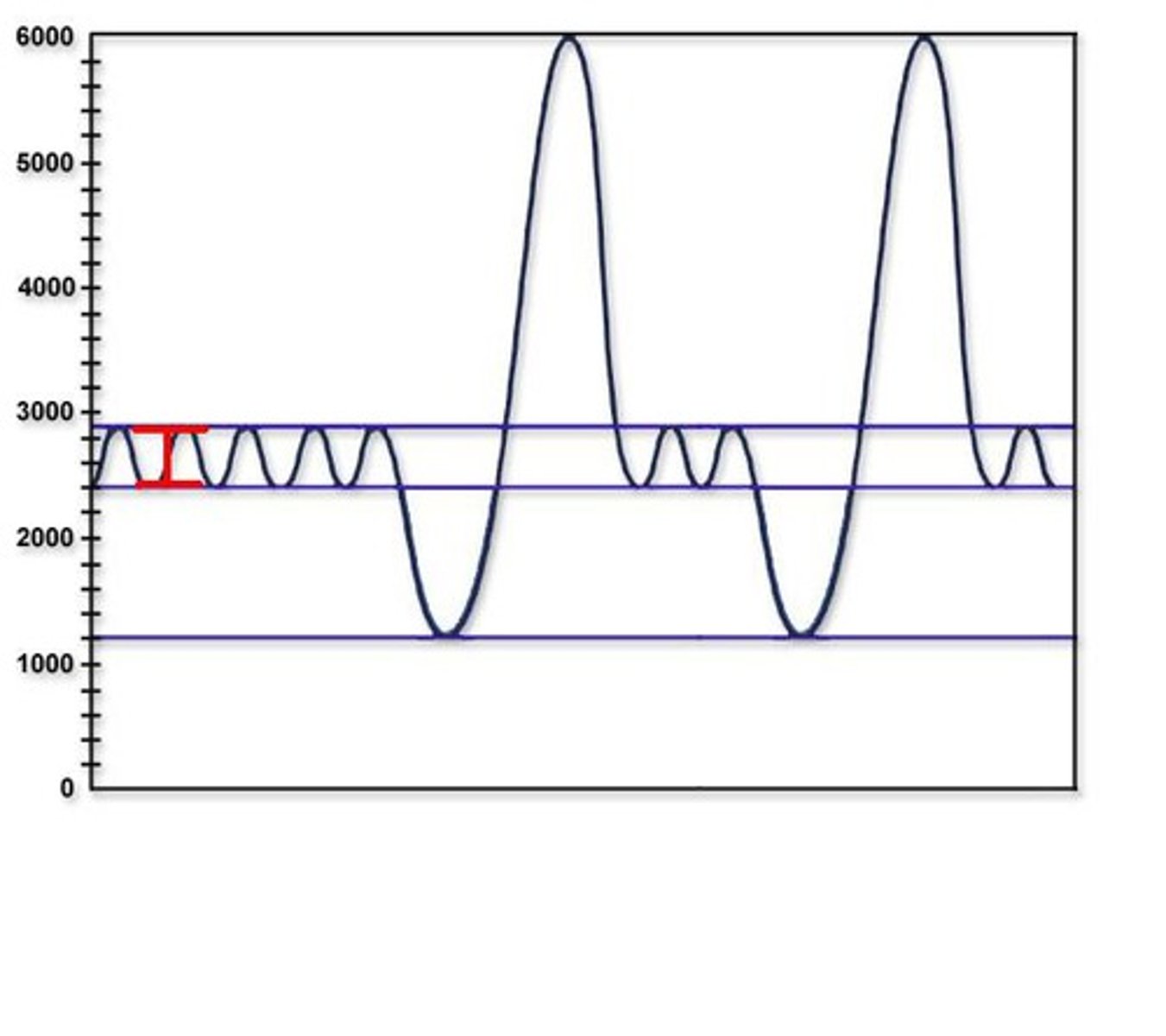
tidal volume (& average)
volume of air [in & out] each breath (0.4dm3)
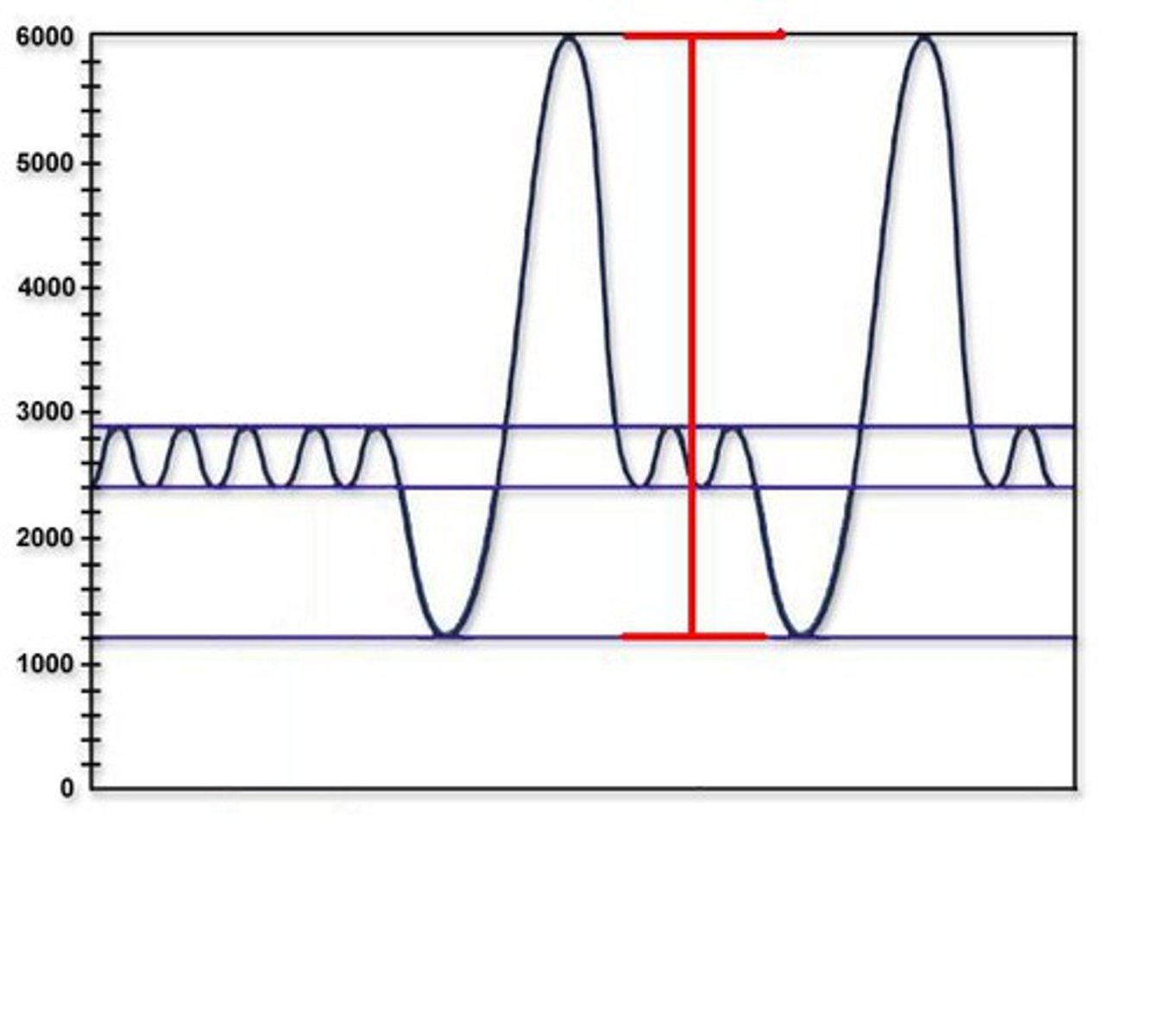
vital capacity (& average range)
max. volume air that can be breathed out after a deep breath in (2.5-5dm3)
what (4) factors affect vital capacity?
size, age, gender, amount of regular exercise
breathing rate
number of breaths per unit time (usually /min)
oxygen uptake (& units)
volume of O2 consumed by body per min (dm3/min)
what machine can be used to investigate breathing?
spirometer
how does a spirometer work? (x3 points)
1) person breathes through mouthpiece - wearing a nose clip so only breathe using machine
2) breaths move chamber lid => moves pen to draw trace
• has soda lime to absorb expired CO2 => gas level decreases over time
label tidal volume on a spirometer trace
label vital capacity on a spirometer trace
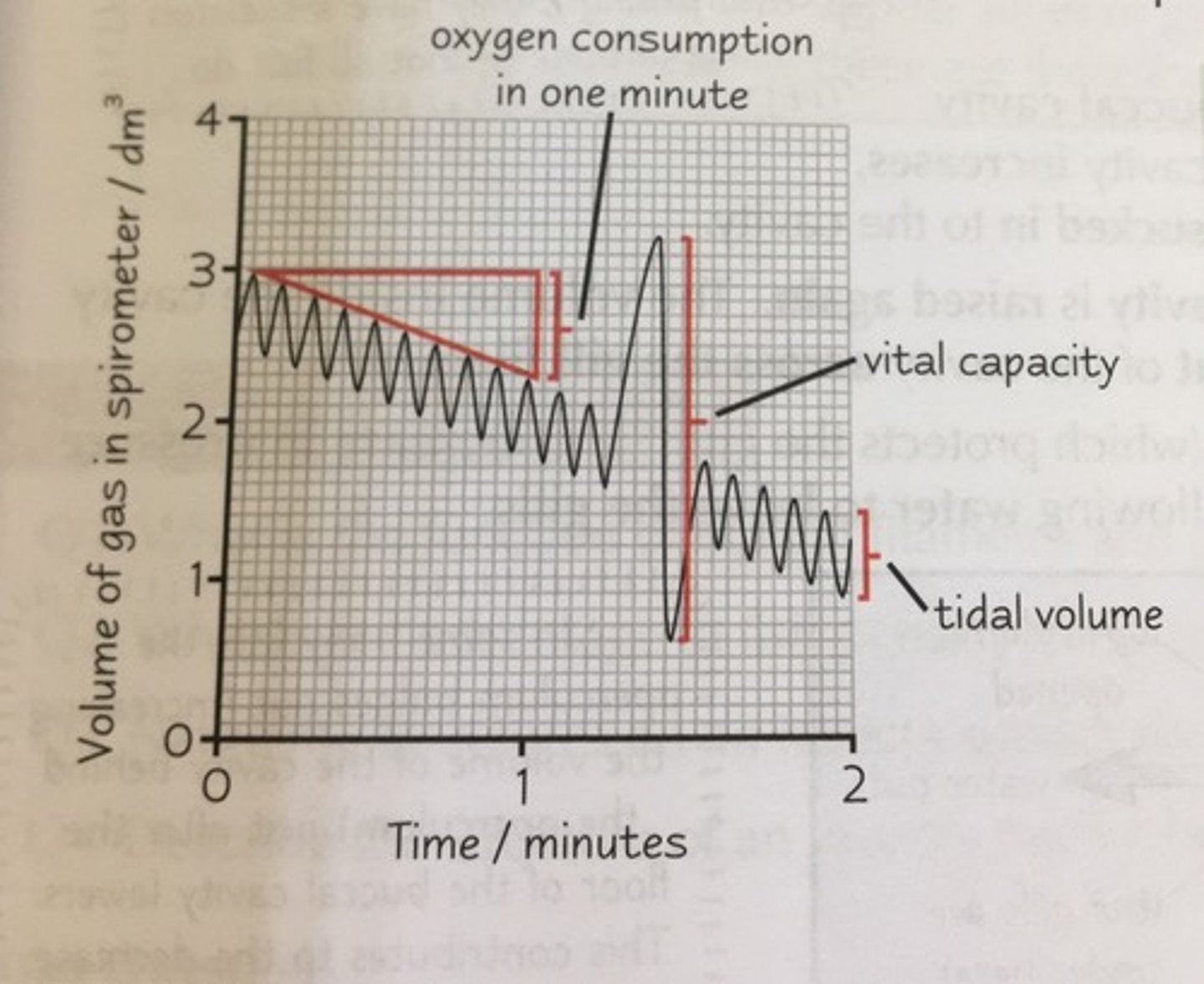
how do you find breathing rate from a spirometer trace?
count no. peaks per min. (count full waves)
how do you find oxygen uptake from a spirometer trace?
find gradient between 2 points on trace (rise/run) (dm3s-1)
residual volume (& average)
volume of air remaining in lungs after maximum exhalation (1.5dm3)
why do we have residual volume?
airways & alveoli remain open constantly to prevent the lungs collapsing
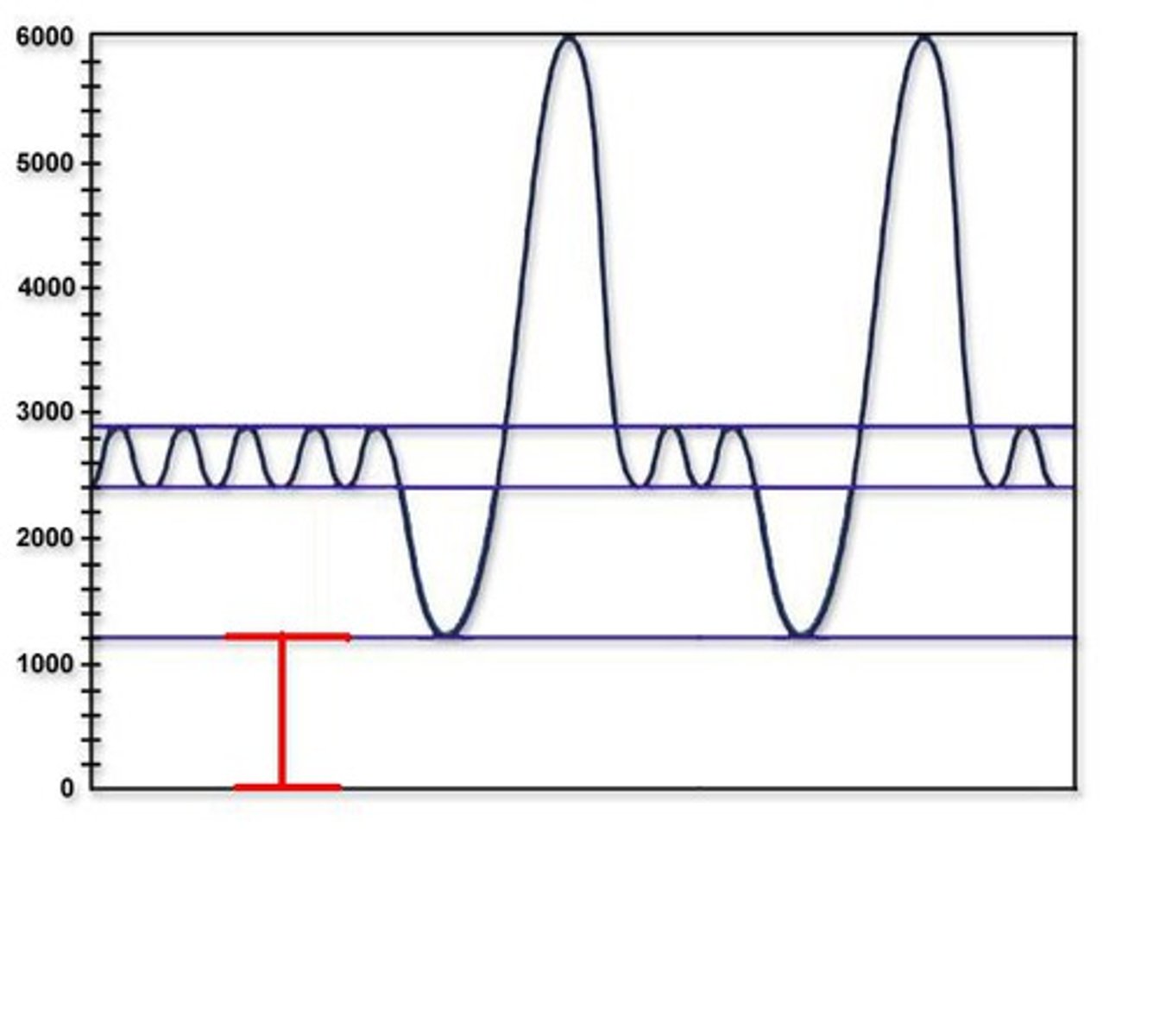
label residual volume on a spirometer trace
what structures do bony fish use for gas exchange
gills - covered by the operculum
how many gills do fish have?
5 pairs
what is the (basic) structure of gills?
gill arch w/ gill filaments(/1ary lamellae) protruding; gill plates(/2ary lamellae) = grooves in gill filaments
gill arch
a cartilage skeletal element that supports the gills; contains blood vessels to carry blood to/from gills
gill filaments/primary lamellae
thin plates protruding from gill arch; increase SA so increase gas exchange; covered in grooves
gill plates/secondary lamellae
grooves on gill filaments; increase exchange SA; contain blood vessels to maintain conc.n grad.; thin so decrease diffusion distance } increase gas exchange rate
counter-current system
blood and water flow in opposite directions in gills
why do fish have counter-current systems?
maintains (O2) conc.n gradient - H2O w/ relatively high O2 conc.n always runs next to blood w/ relatively low O2 conc.n - maximise gas exchange
how do fish ventilate their gills? (x4 steps)
1) open mouth - lower buccal cavity floor - increase b.c. vol. & decrease pressure
2) water goes into b.c.
3) close mouth - raise b.c. floor - decrease b.c. vol. & increase pressure
4) water forced out through gills & operculum
how do you dissect a bony fish gaseous exchange system? (x4 steps)
1) find operculum
2) lift operculum & observe gills
3) cut 1 operculum away to view gills - note gill slits & space between gills
4) cut out 1 gill - note gill arch & gill filaments - draw gill
similarities between mammalian & bony fish gaseous exchange systems (x3)
• large SA - alveoli; gill filaments & plates
• good blood supply
• thin exchange surface - alveoli; gill filaments & plates
difference between mammalian & bony fish gaseous exchange systems
only fish have counter-current system
true or false: insects don't have a transport system
true - they have an open circulatory system
what system do insects use for gas exchange?
tracheal system
how does an insect tracheal system work (O2)? (x1 point) (x3 steps)
• insects have multiple tracheae
1) air moves into tracheae through pores - spiracles
2) tracheae branch into tracheoles
3) tracheoles go to individual cells & contain tissue fluid that dissolves O2 (air diffuses out of tracheoles, into cells)
how does CO2 leave an insect? (x3 steps)
1) diffuses into tracheole from cell
2) moves to trachea
3) diffuses out of insect through spiracle
how are tracheoles adapted for efficient gas exchange? (x2)
• thin - decrease diffusion distance for gases
• go to individual cells - decrease diffusion distance
how do insects generally ventilate themselves?
• sections of the tracheal system have flexible walls - expansion & contraction of these air sacs are controlled by flight action
• wings control thorax vol. - increase/decrease pressure
how do large insects ventilate themselves?
they can change their abdominal vol. - increasing ab. vol. = opens front spiracles = air in; decreasing ab. vol. = opens back spiracles = air out