AP Bio 12 Digestive system
 Call Kai
 Learn
Learn Practice Test
 Spaced Repetition
 Match
Match Flashcards
 Knowt Play
1/69

There's no tags or description
Looks like no tags are added yet.
Name | Mastery | Learn | Test | Matching | Spaced | Call with Kai |
|---|
No analytics yet
Send a link to your students to track their progress
70 Terms
Functions of the digestive system
ingestion, propulsion (movement of food), Digestion and Absorption, Egestion (elimination of food)
Layers of the alimentary canal
serosa, musculares, submucosa, mucosa
(visceral peritoneum) membrane that secretes a slippery, watery fluid, reduces friction as digestive organs contract and more
serosa
layer of muscle extending in two directions, circular and longitudinal layer
muscularis
contains glands, nerve fibres and blood vessels, secretes hormones and carries things away
Submucosa
secreting mucus, digestive enzyme and hormones, absorption of nutrients, protection from pathogens (lymphatic tissue)
mucosa
how do teeth aid in digestion (4 parts of teeth)
incisors, canines, premolars and molars
anatomy of a tooth
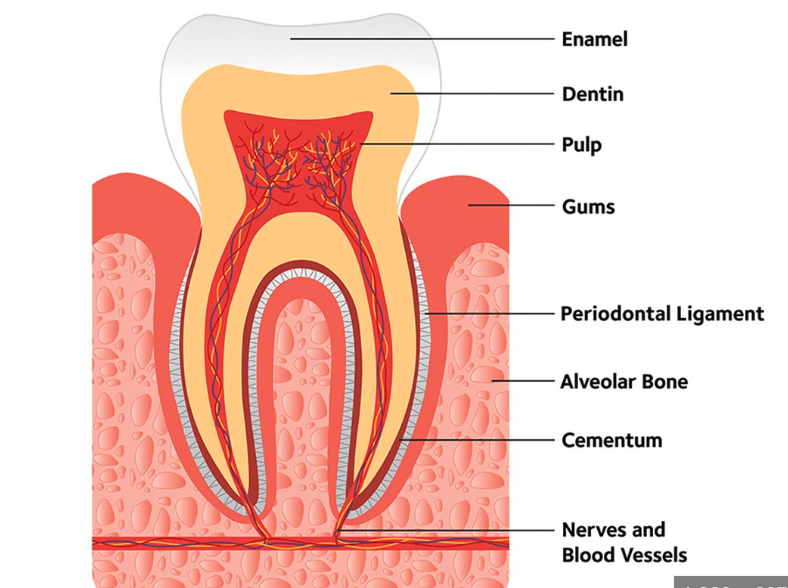
2 portions of the digestive system
alimentary canal and accessory organs
child’s teeth vs adults
20 vs 32 teeth
Digestive structures found in the mouth
Salvary glands (99% water), mucus, amylase, lysozymes, antibodies. lingual lipase
lingua lipase
breaks down lipids
Uvula
prevents swallowed food from entering the nasal cavity
deglutition
(swallowing)
2 major phases of deglutition
Buccal phase and pharyngeal
buccal phase
chewing (mastication) being mixed with saliva and food club is called bolus. forced into the pharynx by the tongue
Pharyngeal
thin flat Calle the epiglottis blocks the larynx and the uvula blocks the nasal cavity . causes food to travel down the esophagus rather than the respiratory system
How is the bolus moved towards the esophagus
using waves of muscle contractions —> process called peristalsis.
- involuntary and caused by the parasympathetic nervous system
stomach
muscular sac with thick walls
sphincters and function in digestive system
thick rings fo muscle that allows food to enter and leave appropriately
2 sphincters located in the stomach
cardiac sphincter, pyloric sphincter
anatomy of a stomach
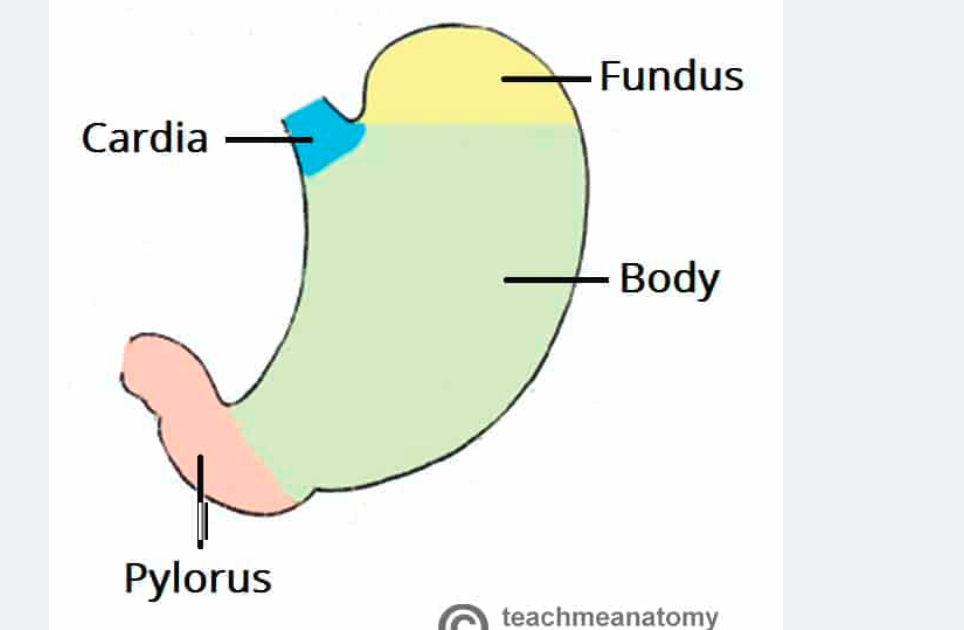
slippery outer layer of the stomach
serosa
3 muscles after the serosa in the stomach
longitudinal muscularis
circular muscularis
oblique muscularis
what do the 3 muscles after the serosa do
help churn food and propel towards small intestine
maceration
process of churning
Rugae
“wrinkles” that stretch when the stomach is full
how does chemical digestion occur in the stomach
specialized gastric gland cells in the mucosa layer of the stomach:
mucuous cells
chief cells
parietal cells
mucuous cells
secrete mucus to protect stomach lining
chief cells
secrete pepsinogen (inactive enzyme)
parietal cells
secrete HCL to kill microbes in food and convert pepsinogen into the digestive enzyme pepsin —> breaks down food protein
soupy mixture formed from the squeezing fo the stomach and the addition of gastric juices
chyme
Small intestine function
digestion and absorption
length of the small intestine
10 ft long
3 sections of the small intestine
Duodenum
jejunum
ileum
where does the ileum join the large intestine
at the ileoceral sphincter
what lines the small intestine to help the absorption of nutrients
villi and microvilli
villi
tiny fingers like projections in the lining of the intestine filled with blood vessels
what process occur in the small intestine glands
secrete digestive hormones
mucus
alkaline mucus from mucuous glands and duodenal glands protects them from pathogens
secretin
inhibits the release of gastric juices when chyme is very acidic
cholecystokinin (CCK)
causes gallbladder to release bile
maltase, sucrase, lactase
breaks down sugar
peptidase, enterokinase
breaks down protein
how does chyme work
slowed down to help small intestine absorb nutrients
circular muscles in the intestinal wall cause segmentation of the chyme
3 major sections of the large intestine
cecum
colon
rectum
2 major functions of the large intestine
absorption of water
removal of waste t
what vitamins do bacteria located in the large intestine help produce
Vitamin B and K → eat cellulose since we can’t break it down
what occurs in the rectum and anus
collects and stores undigested waste and bacteria
Liver
largets internal organ
2 major lobes of the liver
left and right
what do the lobes contain
hepatic sinusoids which are full of blood
function of liver cells
Reeves bacteria and old red blood cells
detoxifies blood from drugs and poison
stores glycogen and produced fat
manufacturing proteins and storing iron and copper
Bile
secreted from the liver to help break down fats
gallbladder
small green sac that stores bile before sending to the small intestine to digest fat
pancreas
long thin gland just behind the stomach
2 functions of the pancreas
secreting digestive enzymes
secreting hormones
life sustaining chemical reaction in the body
metabolism
Catabolism
breaking down of complex molecules while releasing energy
Anabolism
formation of complex molecules while using energy
reaction cascade
energy used for catabolic releases energy used to power anabolism reaction then the products causes another catabolic reaction… etc
4 types of macronutrients required by the body
carbs, protein, lipids, water
2 micronutrients required for the Boyd
vitamins and minerals
how are carbohydrates digested
Carbohydrates → broken by salivary amylase (mouth) and pancreatic amylase (small intestine), then by epithelial/brush border enzymes into glucose by breaking glycosidic bonds → absorbed → used in cellular respiration (citric acid cycle + electron transport chain) to make energy.
how are lipids digested
Lipids → emulsified by bile salts (small intestine) → broken down by pancreatic lipase into fatty acids and glycerol → absorbed → metabolized into ATP through cellular respiration.
how are proteins digested
Proteins → denatured by HCl and broken into polypeptide chains by pepsin (stomach) → further digested by pancreatic enzymes and brush border enzymes into amino acids → absorbed and used to make proteins or energy (ATP).
water use in the body
chemical reacrtions
painting blood pH levels
regulating body temp through sweat
dissolving food and digestion
fat soluble and water soluble vitamins
fat soluble → A and D water soluble → B and C
what micronutrients are needed in the body
vitamins and minerals
vitamins → organic molecules in small quantities
minerals → inorganic molecules
Nucleases
breaks down DNA in the food we eat