21/22. Climate Change and Adaptation
 Call Kai
 Learn
Learn Practice Test
 Spaced Repetition
 Match
Match Flashcards
 Knowt Play
1/17

There's no tags or description
Looks like no tags are added yet.
Name | Mastery | Learn | Test | Matching | Spaced | Call with Kai |
|---|
No analytics yet
Send a link to your students to track their progress
18 Terms
Expectation assuming no adaptation to compensate
100% loss of Manitoba breeding range
General shift in bird distributions
• Many bird species have shown a northward range expansion in recent decades
• An example is the non-migratory Northern Mockingbird
Bird distribution (breeding) results from 30 years of data
Determine species distribution using BBS data in 1970 vs 2000
Measure distance and direction of shift of southern species – i.e. they have room to move north
Of 22 passerine species, 16 (73%) had a northward shift
Median northward shift of these 16 species was ~100km
Christmas bird count data to estimate northward shift
Study used Christmas Bird Count data to get overwintering/non-breeding distributions of 65 species songbird & woodpeckers
Variable results, but most species showed latitudinal shifts north in winter range distribution + another great use of citizen science data!
shifts differ by species and flyway
Great Tit timing response
Year-round European resident,
Average egg-laying date is 2 weeks earlier than in 1960s
Shift in egg-laying date tracks increase in spring temperatures
Great Tit Plasticity
For females that bred in multiple years, can assess how well each individual can track year to year changes in spring temperatures
When spring was very warm, individuals could lay their eggs much earlier (remember this species is non-migratory)
Females could also shift the other way, and lay eggs later in cold springs
plasticity has increased over the decades
Bird most likely to adapt to climate change
Great Tit
3 migratory case studies for adjusting timing
1 - Pied Flycatcher
2 - Wood Thrush
3 - Purple Martin
Case Study 1
Earlier springs and peak food but arrival date unchanged (this is a ‘phenotypic mismatch’) in Pied Flycatchers and caterpillar peak dates
Evidence of genetic change in Pied Flycatchers
2002 birds sourced from same population as in 1981 show earlier timing under identical lab conditions = conclude genetic evolution of timing
Case Study 2
• Re-tracked wood thrush
• Compared within- and between individual variation
Thrushes depart on almost the same day from year to year
Case Study 3
Re-tracked individual purple martin migration timing (n=33)
Repeat timing of egg laying (n=28,000)
Compared within- and between individual variation
migration highly variable at individual level
Migration repeatability
Highly variable across species and seasons
repeatability - measure of individual plasticity
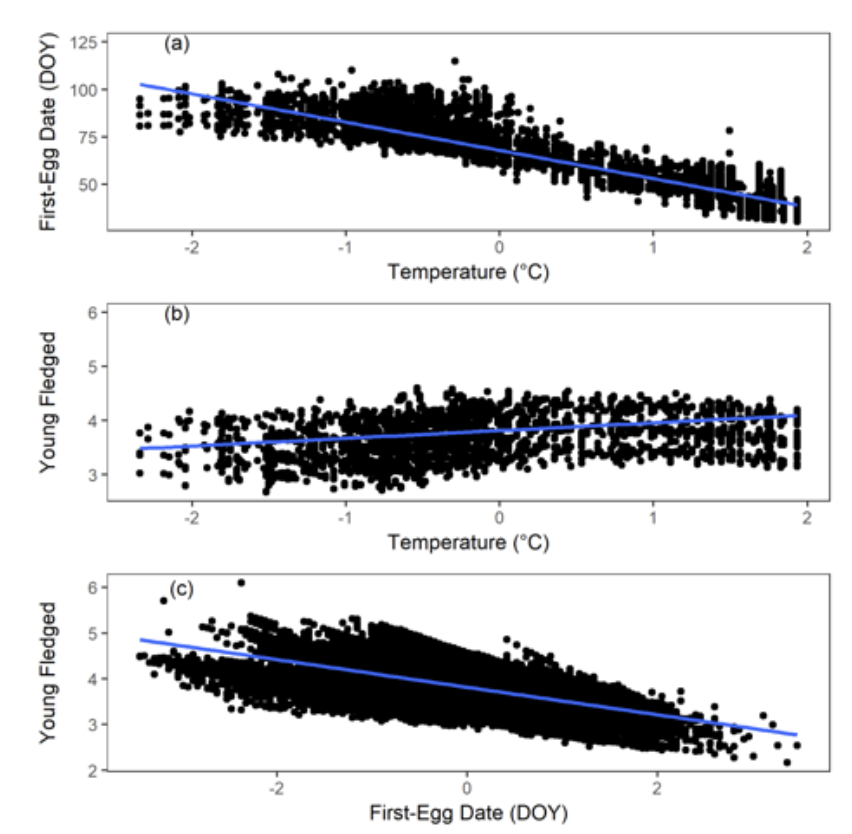
Purple Martin population level timing of nesting
birds lay earlier when its warmer
birds fledge more young when they lay earlier
shows plasticity
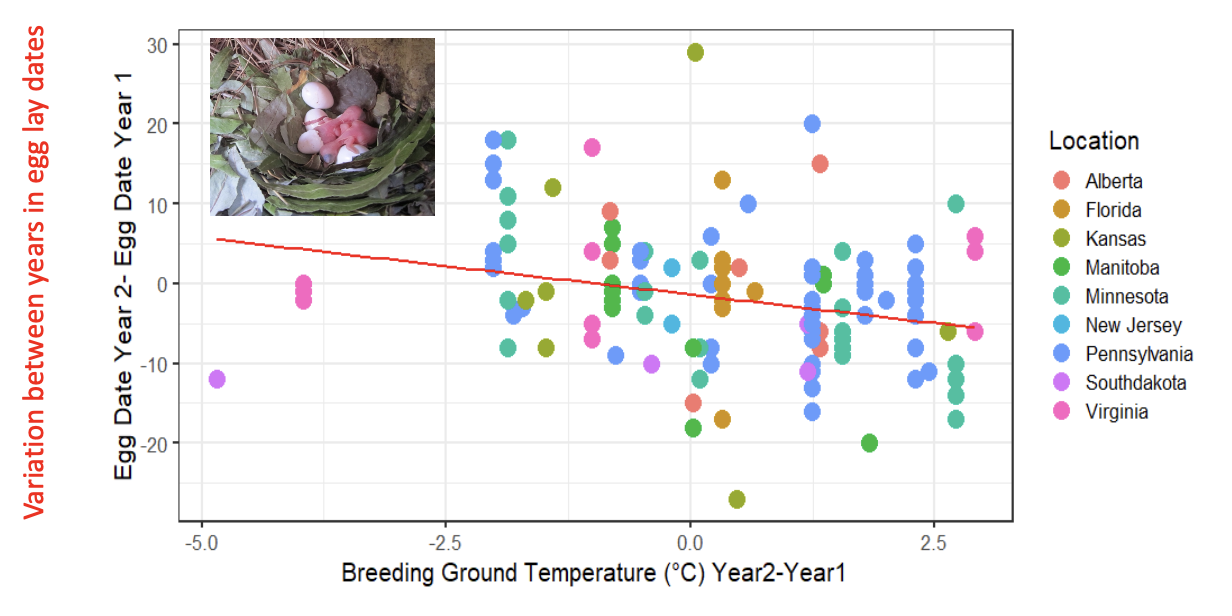
Purple Martin individual level timing of egg laying
Individual females laid their first egg earlier during warmer temps., or later with cooler temps.
i.e. high phenotypic plasticity
Do migratory birds have enough time to adjust?
More northern breeders have less time between arrival and egg laying
Timing of egg laying may be advancing faster than migration
Overall results of case studies
1 - No! Pied flycatcher spring arrival timing (but genetic evolution slower solution?)
2 - No! Wood thrush migration timing
3 - Maybe? Purple martin migration and nesting timing
=an active area of much needed research!
Risk of advanced spring timing
earlier lay dates has risk of higher mortality with cooler temperatures in these days in Tree Swallow
reports of new competition interactions among Pied Flycatchers in Great Tit nests