16 Chapter Electrophilic Aromatic Substitution
 Call Kai
 Learn
Learn Practice Test
 Spaced Repetition
 Match
Match Flashcards
 Knowt Play
1/9

There's no tags or description
Looks like no tags are added yet.
Name | Mastery | Learn | Test | Matching | Spaced | Call with Kai |
|---|
No analytics yet
Send a link to your students to track their progress
10 Terms
Electrophilic Aromatic Substitution Reactions (EAS)
FAR
1) Form Electrophile
2) Attack Electrophile:
3) Restore Aromaticity
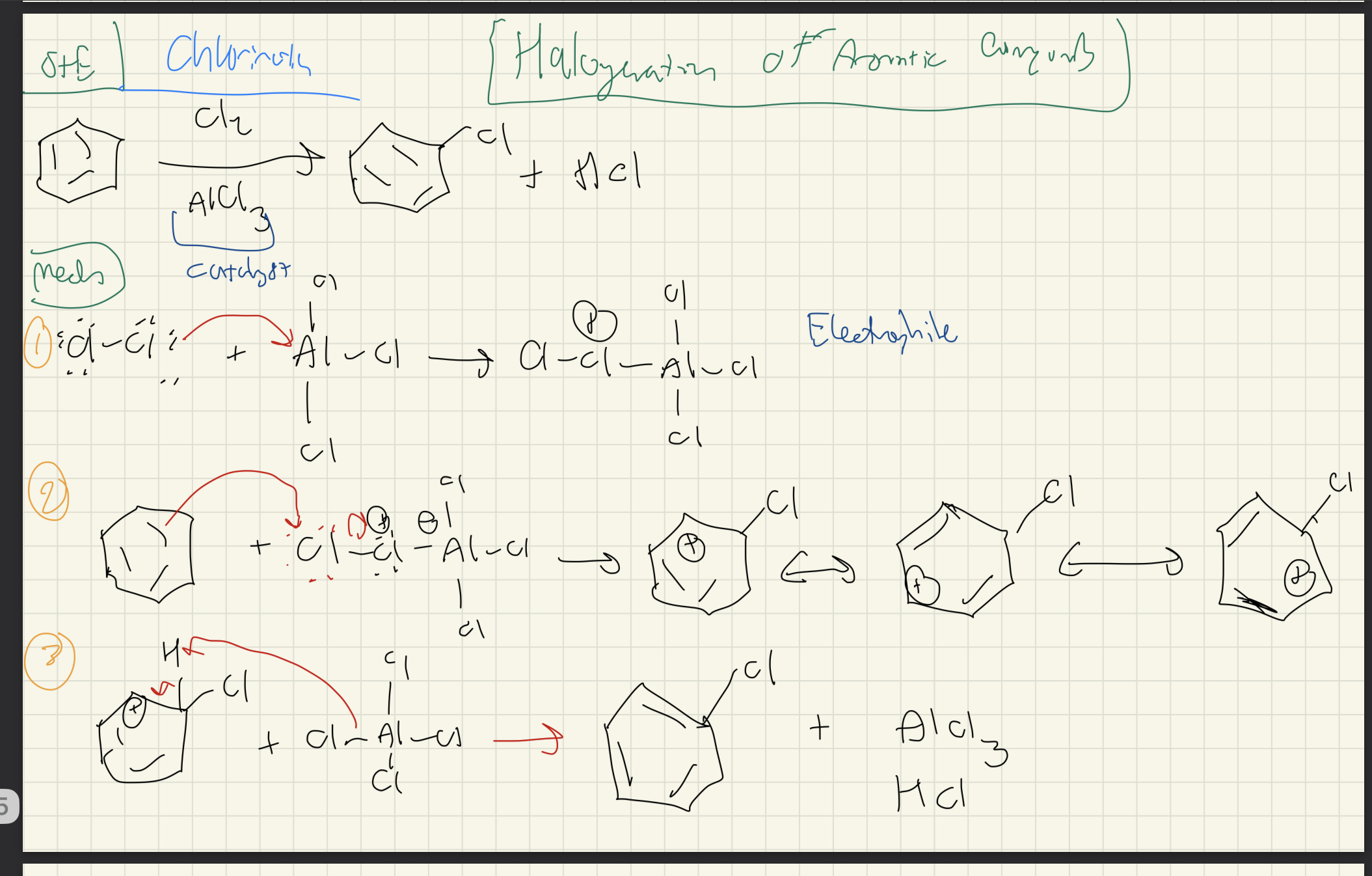
1) Chlorination
Cl2
AlCl3
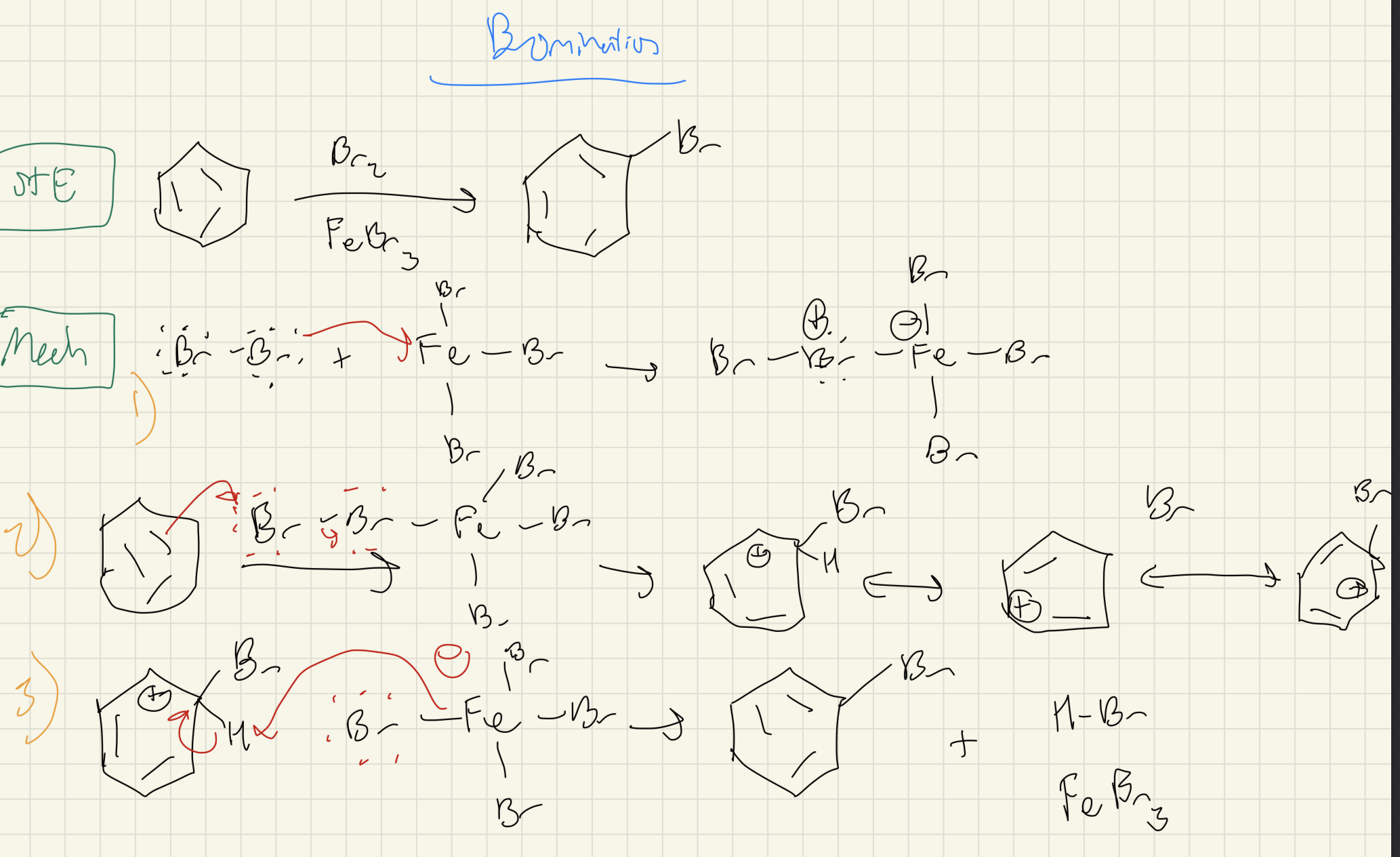
1) Bromination
Br2
FeBr3
Benzene → Halogenation
1) Form Electrophile: X2 and Al/FeX3 bind
2) Attack Electrophile: 3 Resonance Structures Form
3) Restore Aromaticity: H is deprotonated by extra X to form Aryl Halogen, H-X, and MetalX3

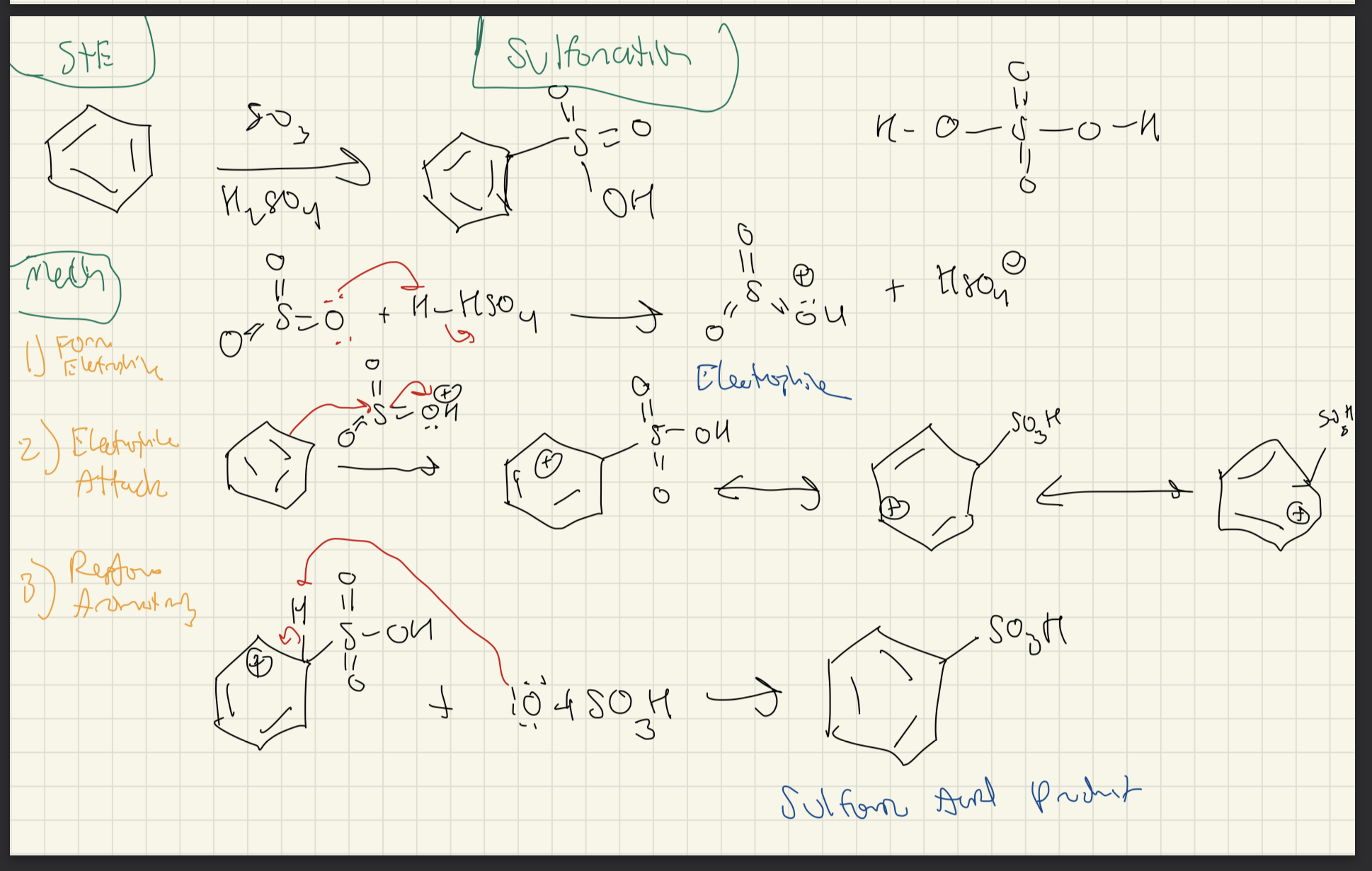
2) SO3, H2SO4
Benzene → Sulfonation
1) Form Electrophile
2) Attack Electrophile:
3) Restore Aromaticity
REVERSIBLE
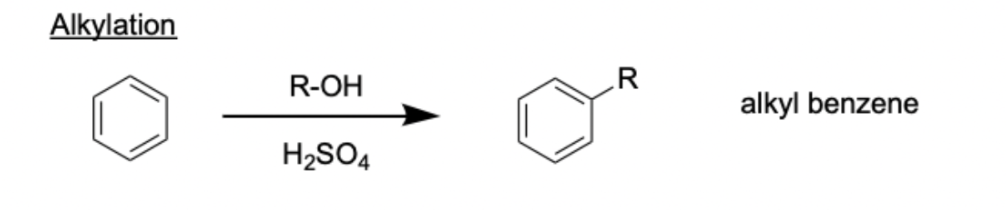
3) R-OH, H2SO4
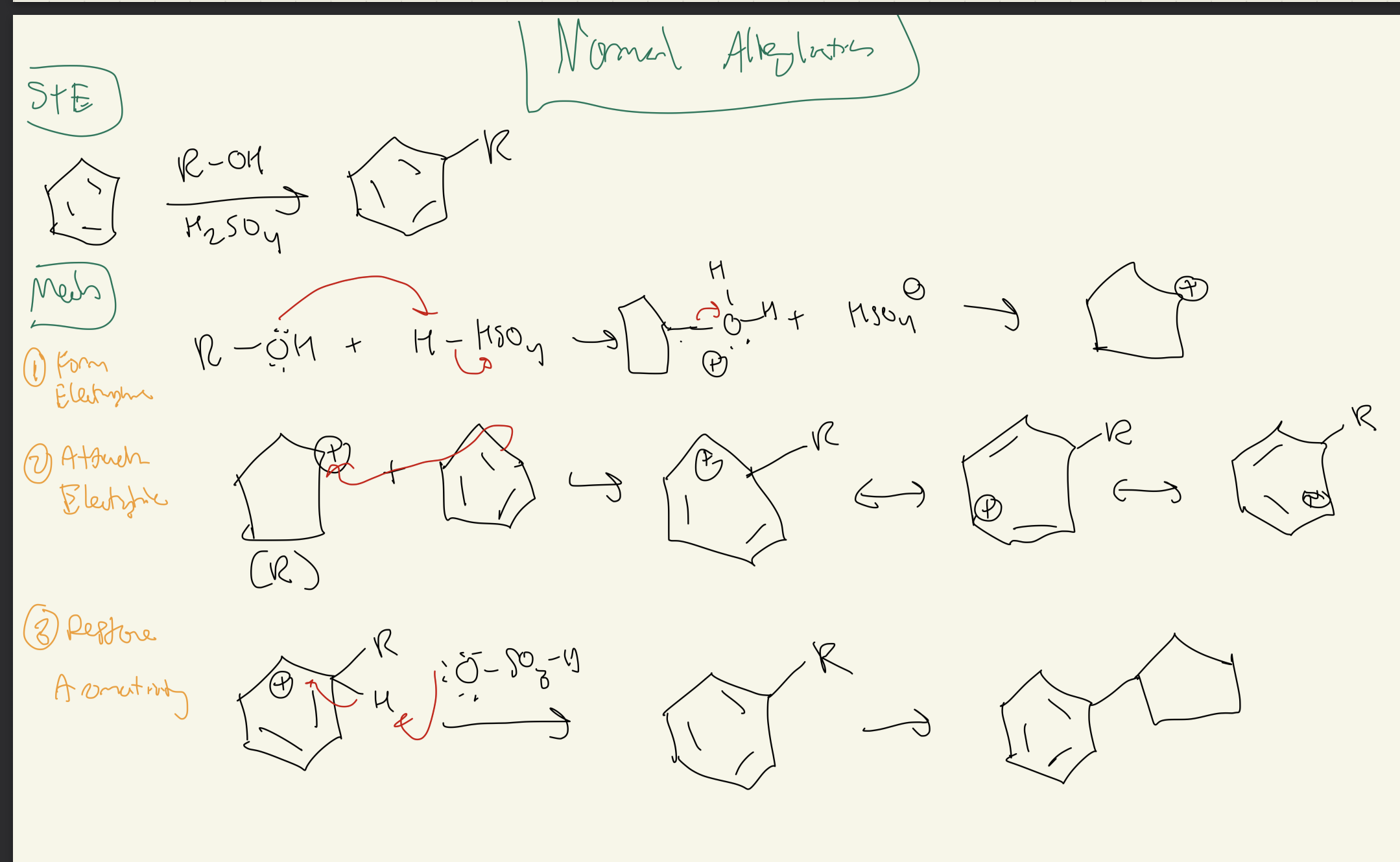
Benzene → Alkylation
1) Form Electrophile
2) Attack Electrophile:
3) Restore Aromaticity
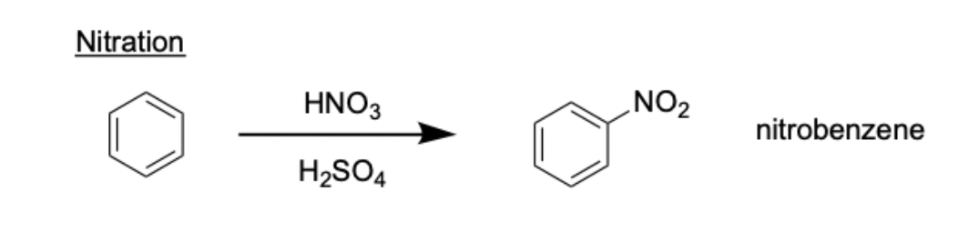
4) HNO3, H2SO4
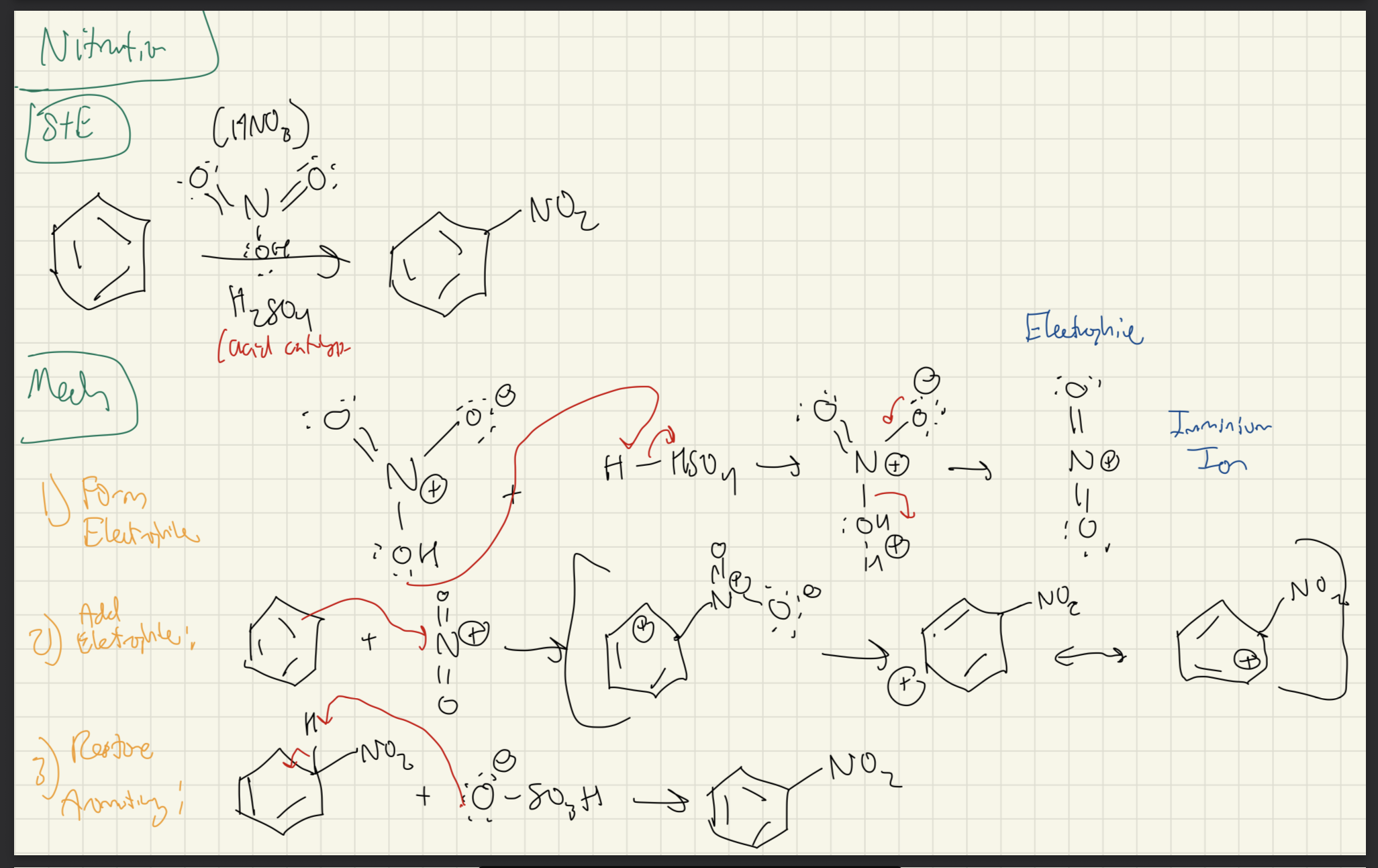
Benzene → Nitration
1) Form Electrophile
2) Attack Electrophile:
3) Restore Aromaticity
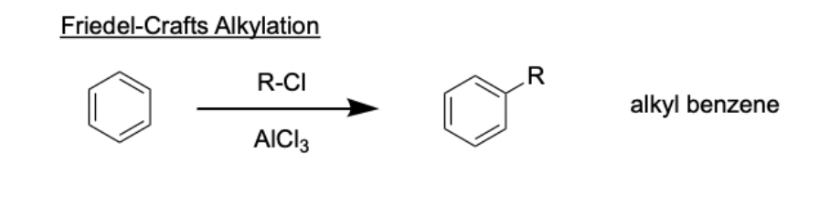
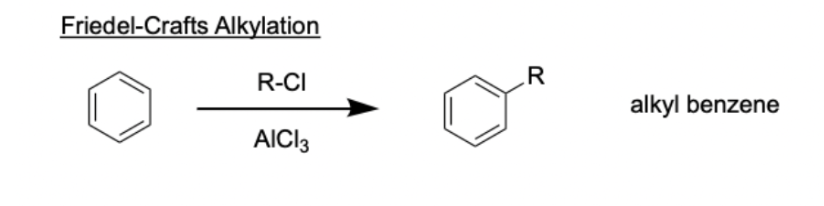
5) R-Cl, AlCl3
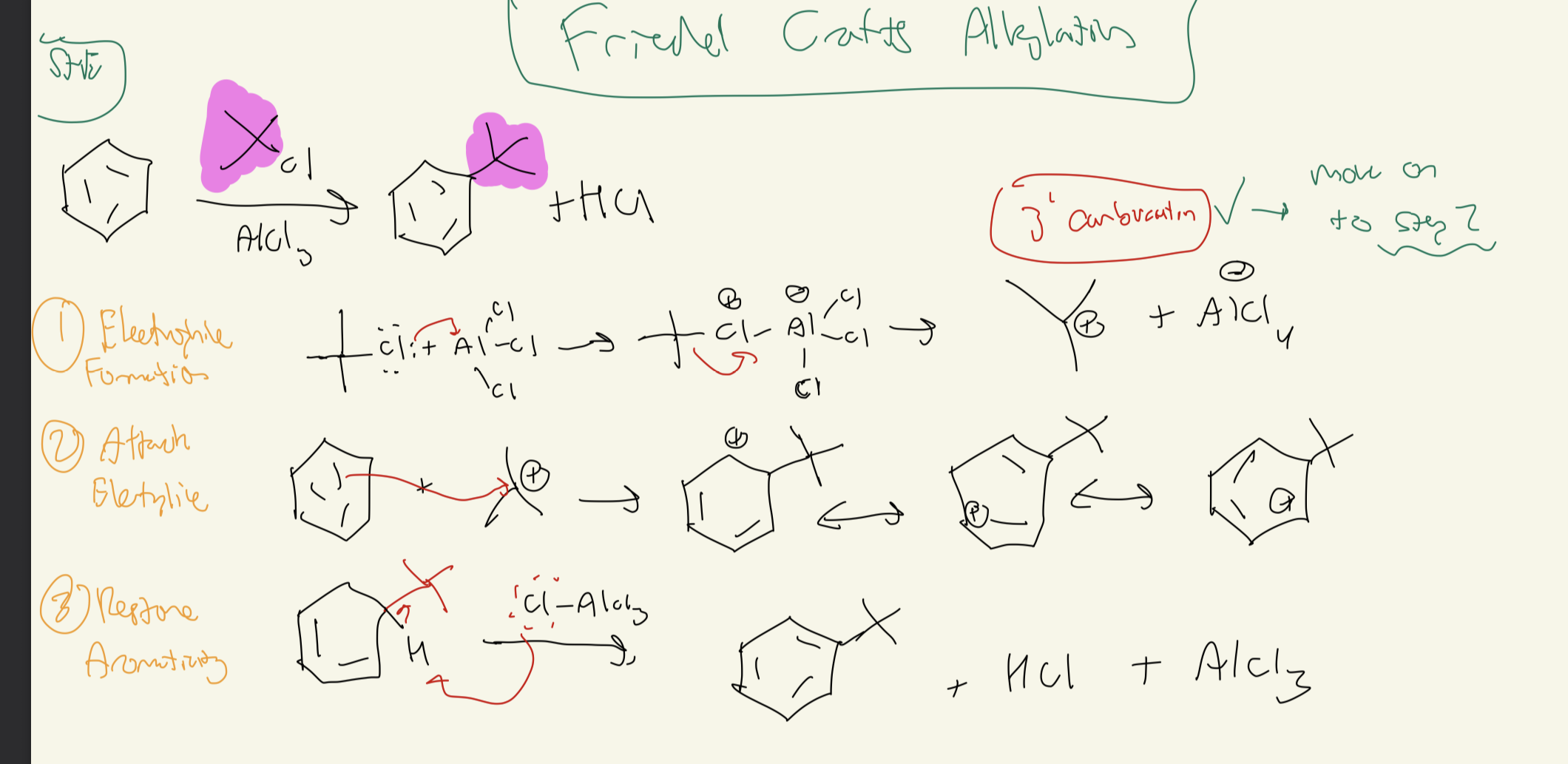
Benzene → Friedel-Crafts- Alkylation
IMPORTANT INFO:
1) BEWARE of Carbocation Rearrangements
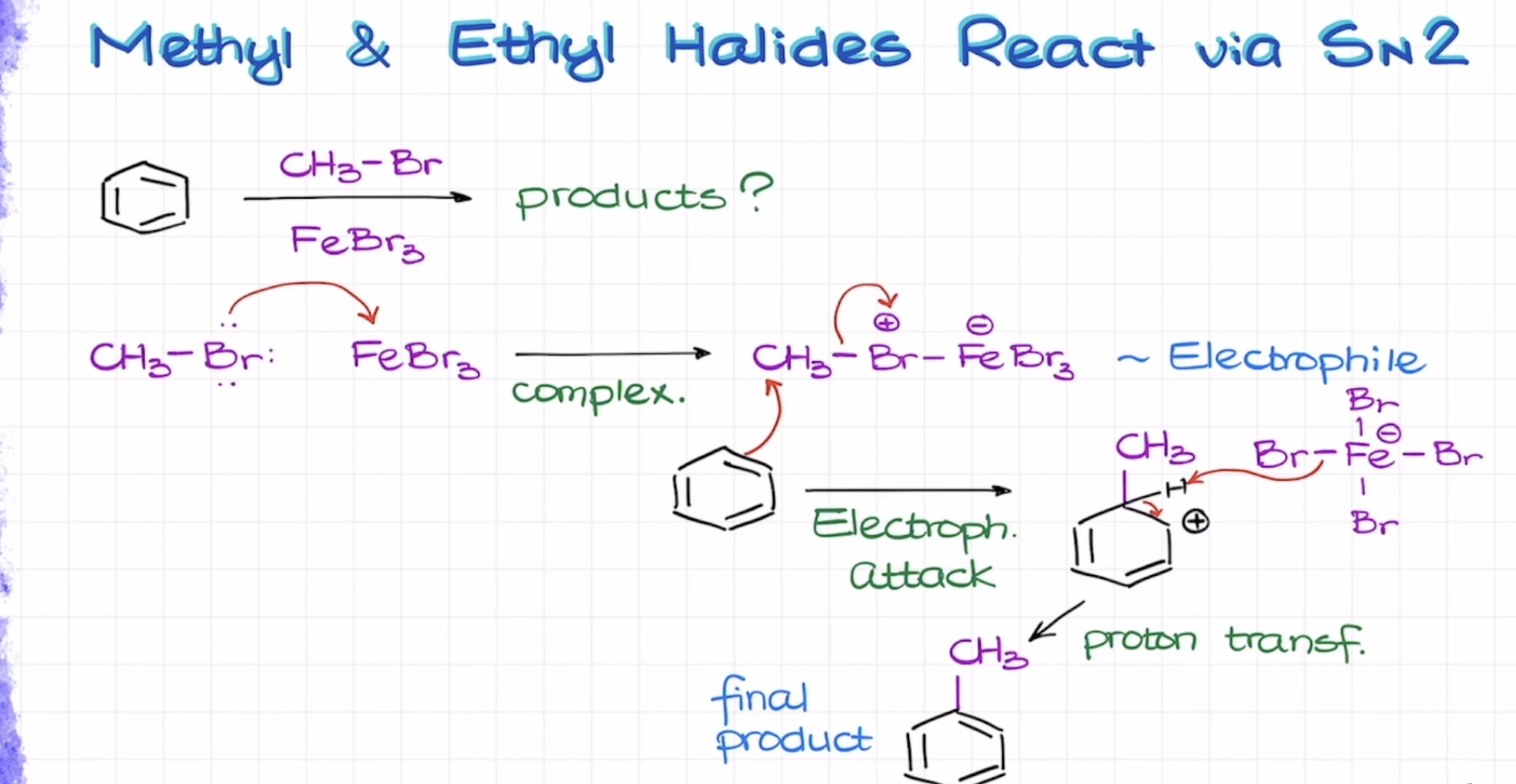
2) METHYL and Ethyl Halides React using SN2
3) Multiple Alkylations are Typical
4) Source of Carbocation can come from
Cl substituent + AlCl3 (Flaschard 5 (THIS))
Carbocation + H2SO4
OH substituent + H2SO4 (Flashcard 3)
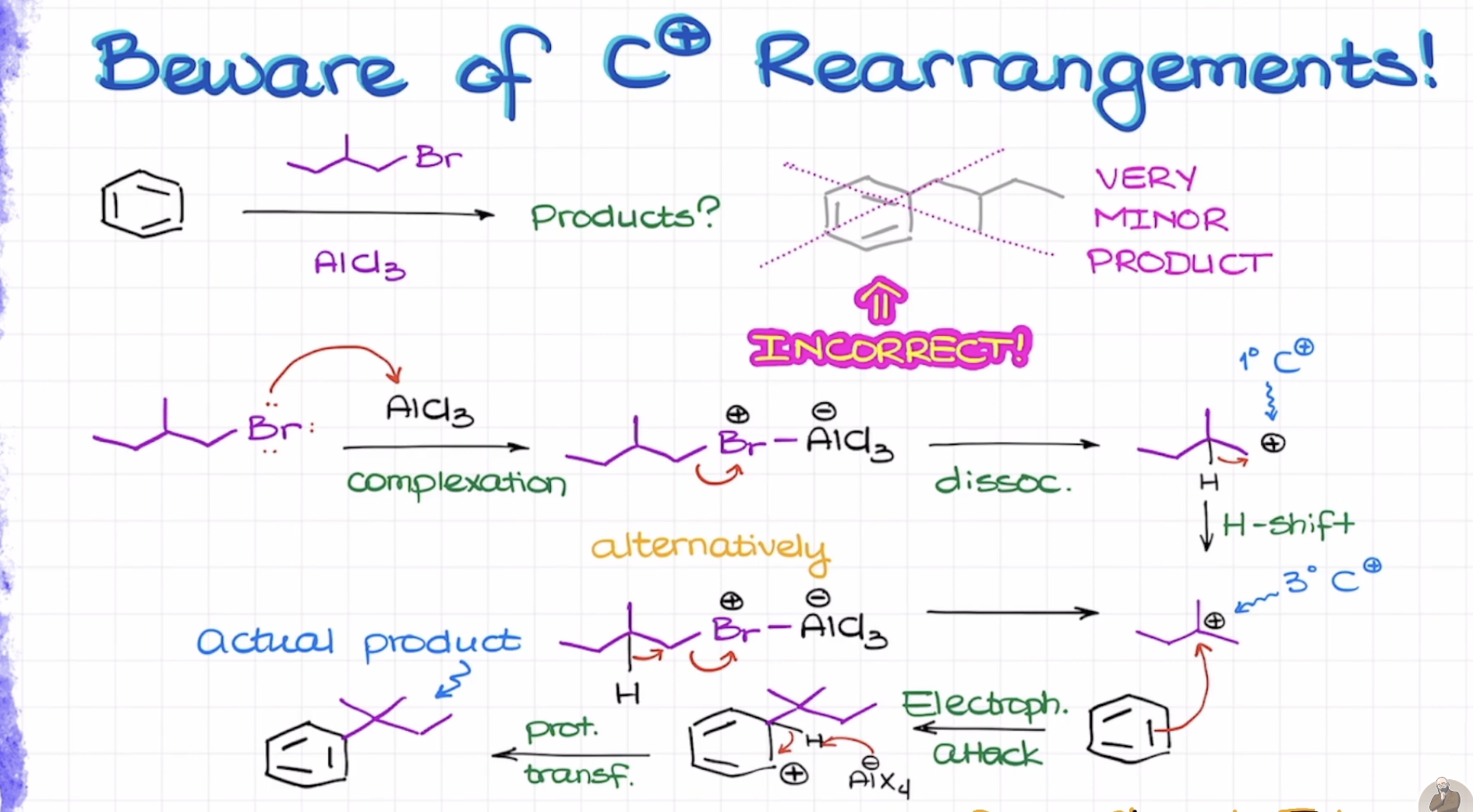
**1) BEWARE OF CARBOCATION REARRANGEMENTS
If it’s a 1° Carbocation, performa 1-2 Hydride shift to create a 3° Carbocation
**2) METHYL and Ethyl Halides React using SN2
CH3-Br
CH3-CH2-Br
**SAME FORMAT Mechanism as the Halogenation EAS Mechanism, But just SN2
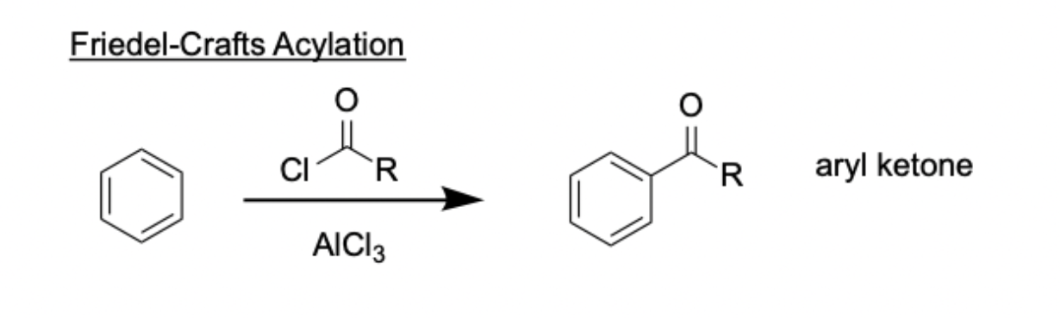
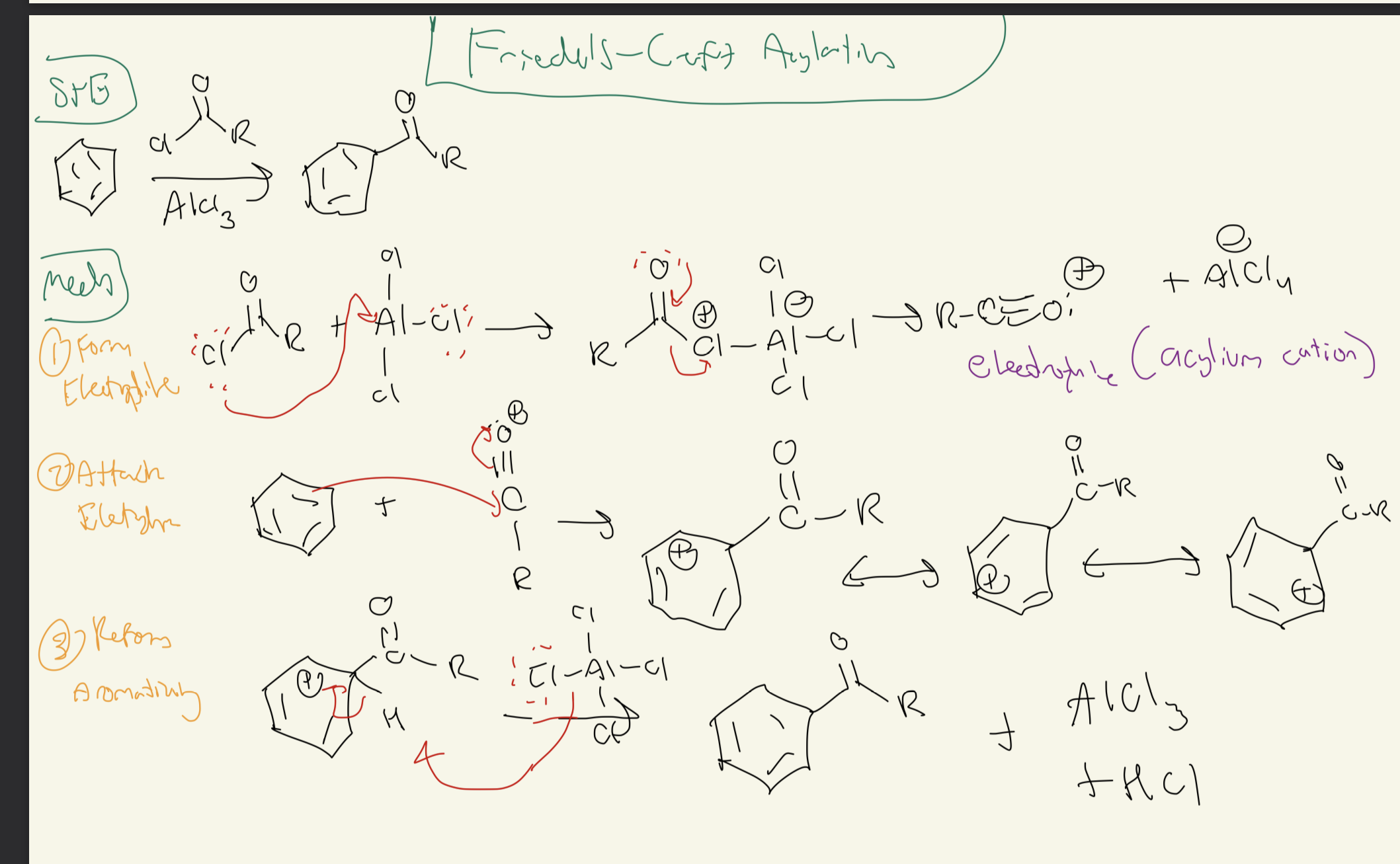
6) Acid Chloride, AlCl3
Benzene → Friedel-Crafts- Acylation
-NO Multiple Alkylations
-This is because C double bond O is an EWG and DEACTIVATING group