3.1.3 Lipids
 Call Kai
 Learn
Learn Practice Test
 Spaced Repetition
 Match
Match Flashcards
 Knowt Play
1/15

There's no tags or description
Looks like no tags are added yet.
Name | Mastery | Learn | Test | Matching | Spaced | Call with Kai |
|---|
No analytics yet
Send a link to your students to track their progress
16 Terms
State two main types of lipid. (2 marks)
- Triglycerides.
- Phospholipids.
Explain why lipids are not considered polymers. (2 marks)
- They are not made from a small repeating unit (monomers).
- They are macromolecules (made of two or more different molecules).
Describe the structure of a fatty acid (RCOOH). (2 marks)
- A variable hydrocarbon chain, which can be saturated or unsaturated.
- A carboxyl (-COOH) group.
Explain the difference between saturated and unsaturated fatty acids. (2 marks)
- Saturated fatty acids have no C=C double bonds, so each carbon is fully bonded to hydrogen.
- Unsaturated fatty acids have one or more C=C double bonds, which cause a bend or kink in the chain.
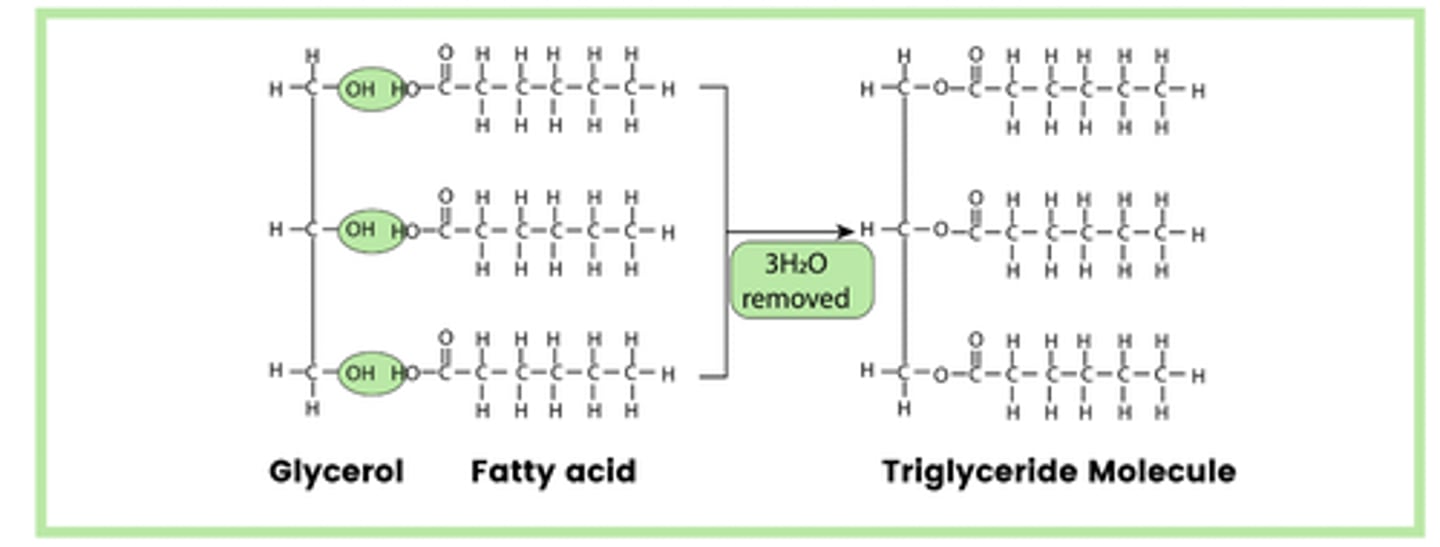
Describe how triglycerides are formed. (4 marks)
- One glycerol molecule bonds with three fatty acid molecules.
- This involves three condensation reactions.
- Three water molecules are released.
- Three ester bonds are produced.
Draw a diagram for the formation of a triglyceride. (3 marks)
Explain how the structure of triglycerides relates to their properties. (4 marks)
- They have many C-H bonds in their hydrocarbon chains, releasing large amounts of energy when respired.
- Their fatty acid chains are non-polar and hydrophobic, making them insoluble in water.
- Insolubility means they do not affect the water potential of cells.
- Can form droplets for energy storage or waterproofing.
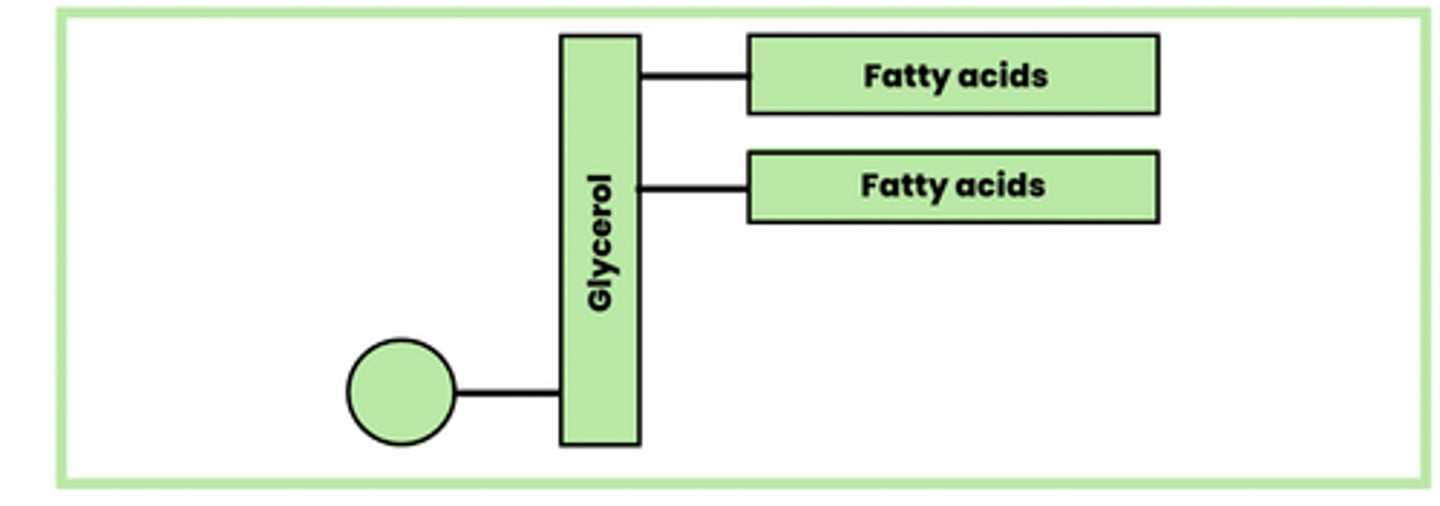
Describe how a phospholipid is formed. (3 marks)
- One glycerol, two fatty acids and a phosphate group.
- Joined together by an ester bond.
- During a condensation reaction.
Draw a diagram of a phospholipid molecule (3 marks)
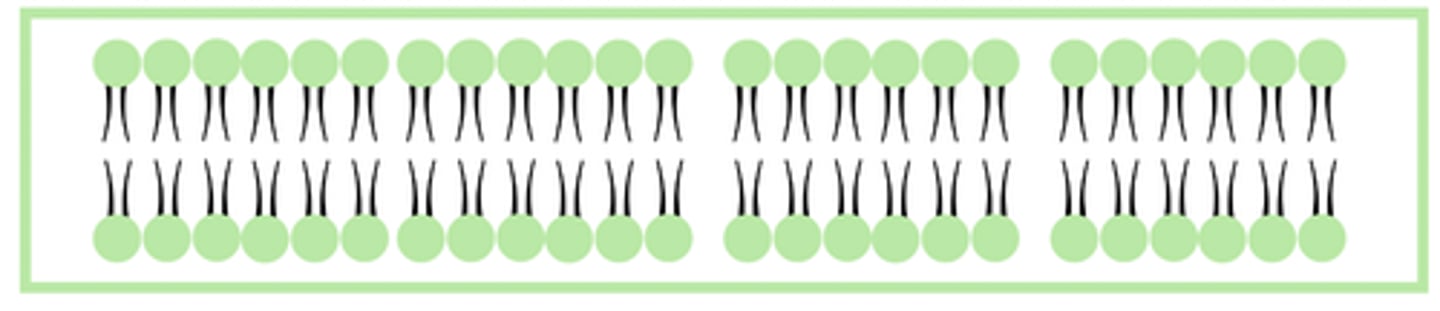
Explain how the structure of phospholipids is linked to their function. (3 marks)
- They form a bilayer in cell membranes.
- The phosphate head is hydrophilic and faces the water inside and outside the cell.
- The fatty acid tails are hydrophobic and face away from water, towards the inside of the bilayer.
Draw a diagram of the phospholipid bilayer. (3 marks)
Describe the test for lipids. (2 marks)
1. Add ethanol and shake to dissolve the lipid, then add water.
2. A positive result is shown by a white, milky emulsion.
State the two methods that can be used to hydrolyse lipids. (2 marks)
- Heat with acid or alkali.
- Use lipase at its optimum temperature and pH.
State the structural similarities between triglycerides and phospholipids. (4 marks)
- Both have a glycerol backbone.
- Both contain ester bonds.
- Both contain the elements C, H, O.
- Both are formed by condensation reactions.
State the structural differences between triglycerides and phospholipids. (3 marks)
- Phospholipids contain two fatty acids whereas, triglycerides contain 3 fatty acids.
- Phospholipids contain one phosphate group whereas, triglycerides do not contain a phosphate group.
- Phospholipids have a hydrophilic head and a hydrophobic tail whereas, triglycerides are hydrophobic.
Still learning (3)
You've begun learning these terms. Keep up the good work!