Chap 12 - Power, Politics, and Ethics
 Call Kai
 Learn
Learn Practice Test
 Spaced Repetition
 Match
Match Flashcards
 Knowt Play
1/40

There's no tags or description
Looks like no tags are added yet.
Name | Mastery | Learn | Test | Matching | Spaced | Call with Kai |
|---|
No analytics yet
Send a link to your students to track their progress
41 Terms
Power
The capacity to influence others who are in a state of dependence
The target of power is dependent on the power holder, it doesn’t imply that a poor relationship exists between the two
Ex: Friends have power to influence your behaviour because you are dependent on them for friendly reactions)
Power is not always perceived or exercised
Ex: Professors hold a great degree of potential power over students, but only use a small amount of this power
Power can flow in any direction in an organization
Ex: The junior auditor who obtains compromising info about the CEO may be in a powerful position if the CEO wishes to maintain a good rep in the organization
Power asymmetry doesn’t require an organizational hierarchy, it can even be driven by an algorithm
Ex: Vendors on online platforms like eBay, Uber, and Airbnb report considerable anxiety concerning negative customer reviews, as they can lead to serious sanctions form the platform operator
Power is a broad concept that applies to both individuals and groups
Ex: An individual marketing manager might exert considerable influence over direction reports and the marketing department a XYZ Foods might be the most powerful department in a company (getting away more often than other departments).
Legitimate power
Power derived from a person’s position or job in an organzaition
Reward power
Power derived from the ability to provide positive outcomes and prevent negative outcomes
Coercive power
Power derived from the use of punishment and threat
Referent power
Power derived form being well liked by others
Expert power
Power derived from having special info or expertise that is valued by an organization
Bases of leader power include
Coercive
Reward
Legitimate
Expert
Referent
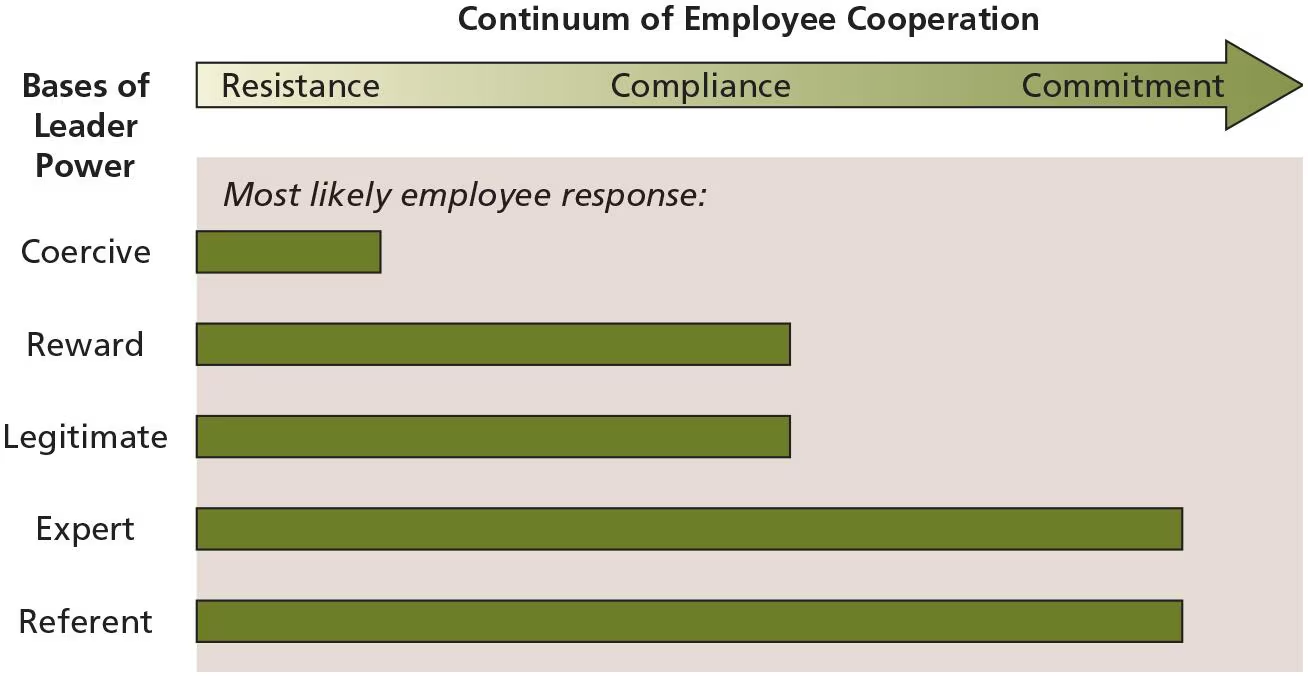
How do people obtain power in organizations?
Doing the right things
Extraordinary activities
Visible activities
Relevant activities
Cultivating the right people
Outsiders, subordinates, peers, superiors
Empowerment
Giving people the authority, opportunity, and motivation to take initiative and solve organization problems
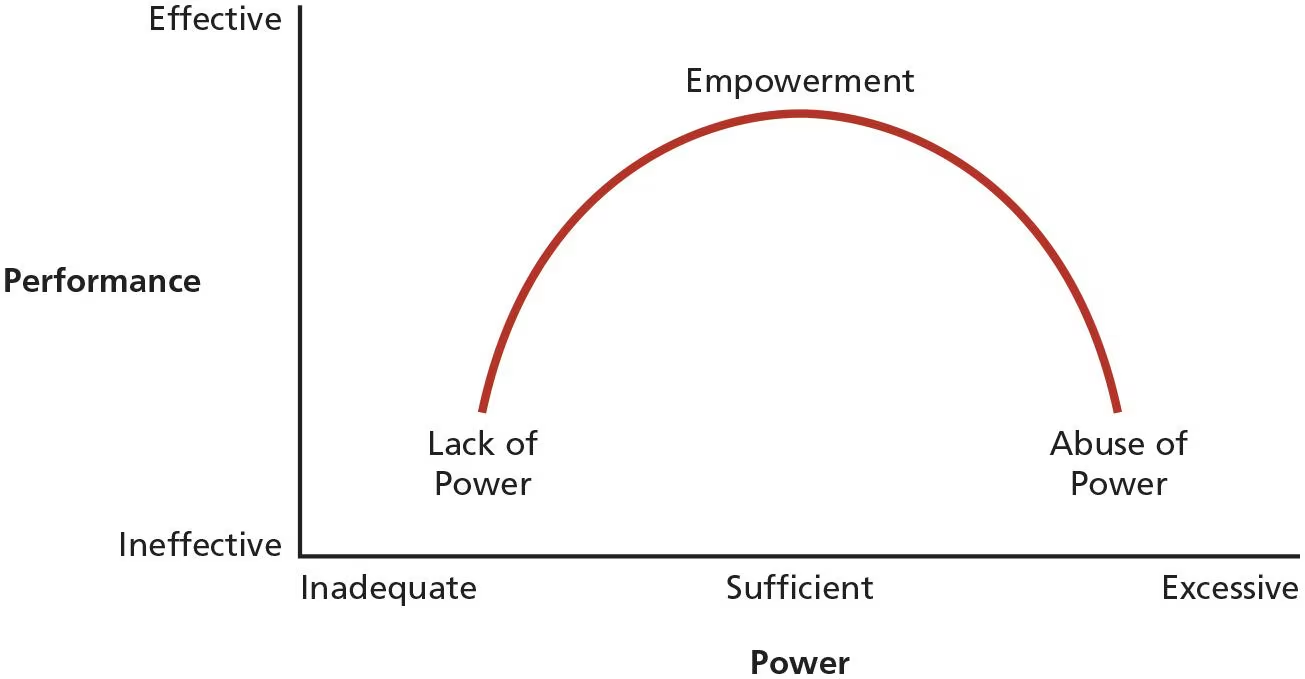
Influence tactics, putting power to work
Assertiveness
Ingratiation
Self promotion
Rationality
Exchange
Upward appeal
Coalition formation
Most effective managers have the following attributes:
High n Pow
Use their power to achieve organizational goals
Adopt a participative or “coaching” leadership style
Are relatively unconcerned with how much others like them
Subunit power
The degree of power held by various organizational subunits, such as departments
Strategic contingencies
Critical factors affecting organizational effectiveness that are controlled by a key subunit
How do subunits obtain power?
Subunit is magnified when resources become scarce
Uncertainty promotes confusion which permits changes in power priorities as the organizational environment changes
Subunits whose activities are more central to the mission of the organization acquire more power
Will have relatively little power if they can be outsourced
Organizational politics
The pursuit of self interest in an organization, regardless of whether this self interest corresponds to organizational goals
The dimensions of organizational politics
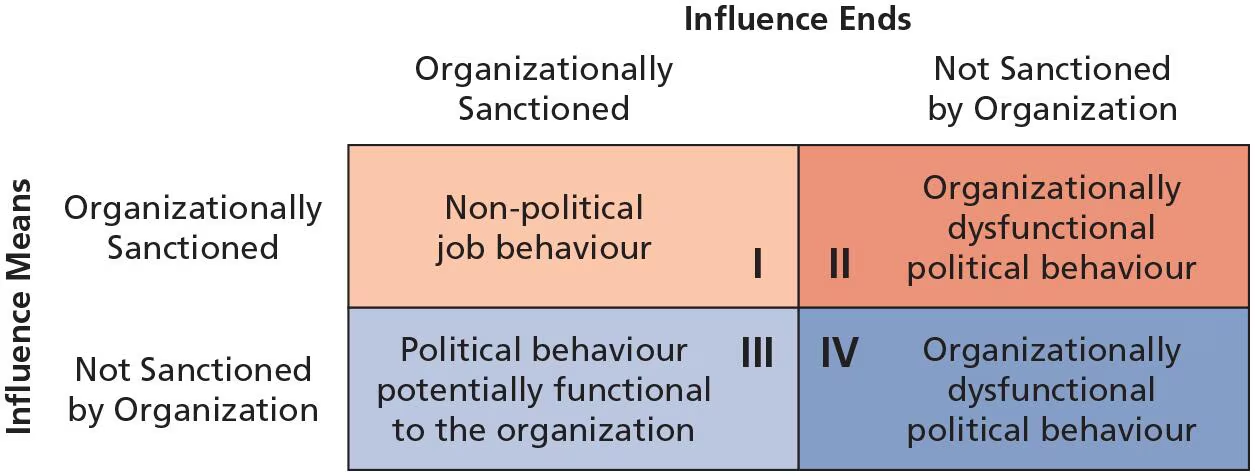
Sanctioned means/sanctioned ends
Power is routinely used to pursue agreed on goals. For example: a manager agrees to recommend a raise for an employee if they increase et sales by 30 percent int he next 6 months.
Sanctioned means/not sanctioned ends
Acceptable means of influence are abused to purse goals that the organization does not approve of. For example: a head nurse agrees to assign a subordinate nurse to a more favourable job if that nurse agrees to not report the superior for stealing medical supplies.
No sanctioned means/sanctioned ends
The ends are useful for the organizations but are pursued through questionable means. For example: Qatar officials were hosting the World Cup but allegedly used bribery.
No sanctioned means/not sanctioned ends
Most flagrant abuse of power, since disapproved tactics are used to pursue disapproved outcomes.
Political skill
The ability to understand others at work and to use that knowledge to influence others to act in ways that enhance one’s personal or organizational objectives
Social astuteness
Good politicians are careful observers who are tuned in to others’ needs and motives. They can read people and have high EI.
Interpersonal influence
Politically skilled individuals are convincing and persuasive.
Apparent sincerity
Influence attempts will be seen as manipulative unless they are accompanied by sincerity
Networking
Establishing good relations with key organizational members and outsiders to accomplish one’s goals
Several aspects to networking
Maintaining contacts
Socializing
Engaging in professional activities
Participating in community activities
Increasing internal visibility
Machiavellianism
A set of cynical beliefs about human nature, morality, and the permissibility of using various tactics to achieve one’s needs
Narcissism
A trait describing people who are self centred, self imporatnt, impulsive, and entitled
Knowledge hiding
Intentionally concealing or withholding info that has been requested by or is relevant to another organizational member
Defensive behaviours include
Stalling
Over conforming
Buck passing
Buffing
Scapegoating
Ethics
Systematic thinking about the moral consequences of decisions
Stakeholders
People inside or outside of an organization who have the potential to be affected by organizational decisions
Bounded ethicality
The psychological process by which people come to engage in behaviour that violates their own ethical standards
Causes of unethical behaviour
Personality
Gain
Extreme performance pressure
Role conflict
Strange organizational identification
Competition
Whistle blowing
Disclosure of illegitimate practices by a current or former organizational member to some person or organization that may be able to take action to correct these practices