Muscles of the Human Body: Origin, Insertion, and Action
 View linked note
 Call Kai
 Learn
Learn Practice Test
 Spaced Repetition
 Match
Match Flashcards
 Knowt Play
1/45

Earn XP
Description and Tags
Flashcards covering the origins, insertions, and actions of major muscle groups in the human body as described in the lecture transcript.
Name | Mastery | Learn | Test | Matching | Spaced | Call with Kai |
|---|
No analytics yet
Send a link to your students to track their progress
46 Terms
The action of the __________ belly is to raise the eyebrows.
Frontal
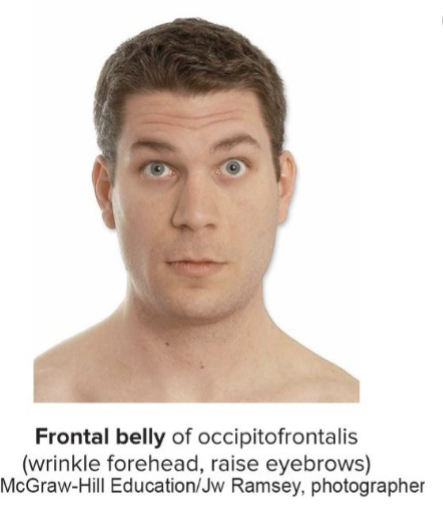
While the origin of the frontal belly is the epicranial optic neuroneurosis, the origin of the __________ belly is the temporal and the occipital bone.
Occipital
The __________ originates at the frontal and maxillary bones and ligaments around the orbit, and its action is to blink, wink, and squint.
Orbicularis oculi
Both the zygomatic major and zygomatic minor have their origin in the __________ bone.
Zygomatic
The __________ muscle originates at the temporal fossa and inserts at the coracoid process of the mandible to elevate and retract the mandible.
Temporalis
The __________ originates at the zygomatic arch and zygomatic bone and inserts at the ankle and the ramus of the mandible.
Masseter
Side to side movement of the mandible is produced by the __________ and the medial paragoid.
Lateral paragoid
The __________ originates from the fascia of the masseter muscle and pulls the lips laterally.
Risorius
The action of the __________ is to pursuer the lip or pucker.
Orbicularis oris
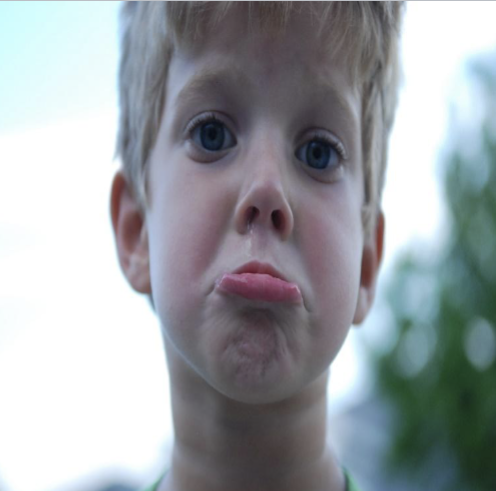
The __________ originates at the mandible below the incisors and inserts into the skin of the chin to depress the median lower lip (pouting).
Mentalis
The __________ originates from the molar region of the maxilla and the mandible and acts to tighten the cheek.
Buccinator
The __________ originates at the lower margin of the mandible and mastoid process and elevate the hyoid bone and depress the mandible.
Digastric
The __________ originates in the fascia of the chest and acts to depress the mandible and pull the lower lip back and down.
Platysma
The __________ originates at the ligamentum, nuclei, and spinosis process and extends the head and neck.
Splenius
The origin of the __________ is the manubrium of the sternum and the medial portion of the clavicle.
Sternocleidomastoid
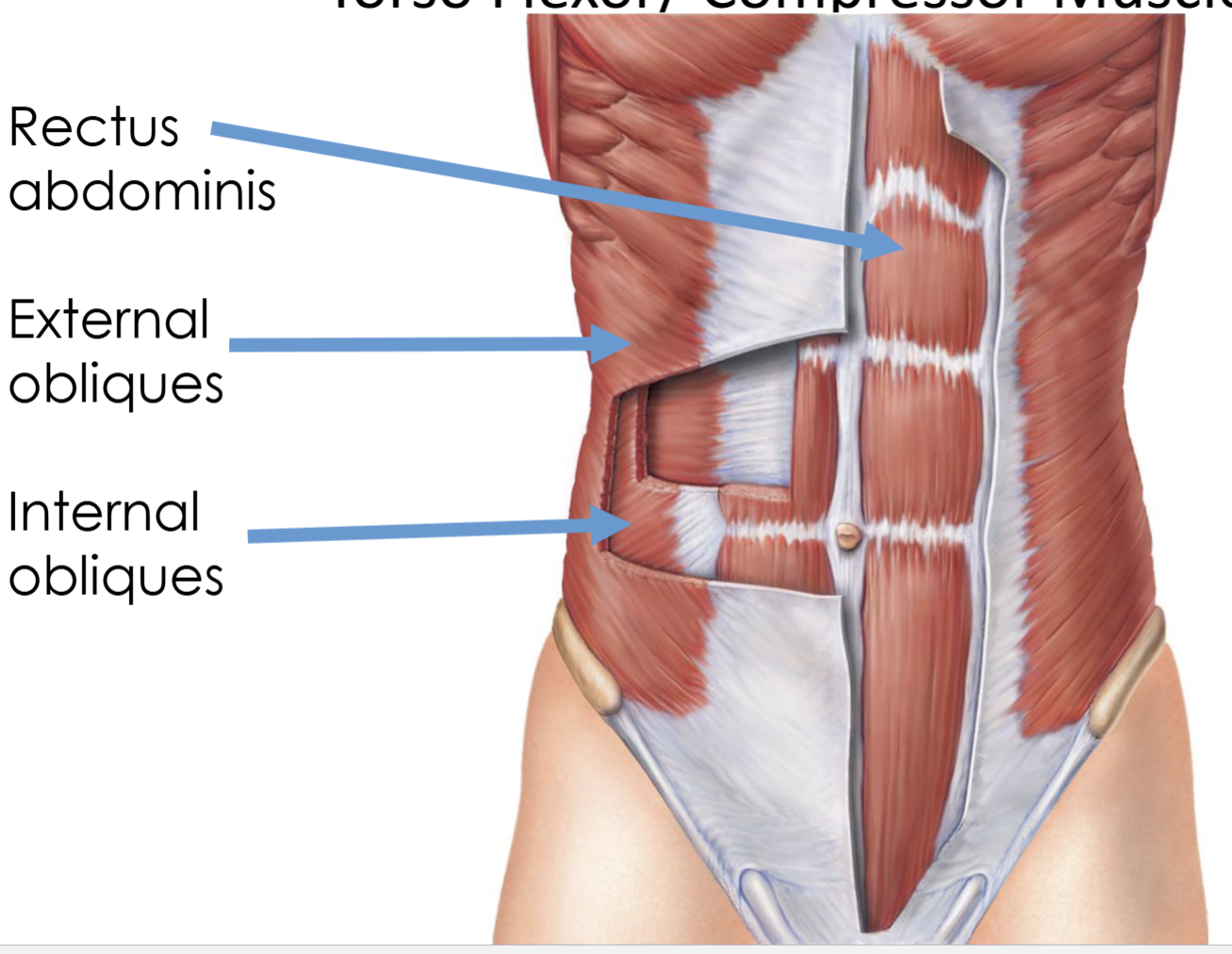
The __________ originates at the pubic synthesis and inserts into the xiphoid process and costal cartilage of ribs five, six, and seven.
Rectus abdominis
The __________ originates at the lower eight ribs and acts to flex or rotate the torso.
External obliques
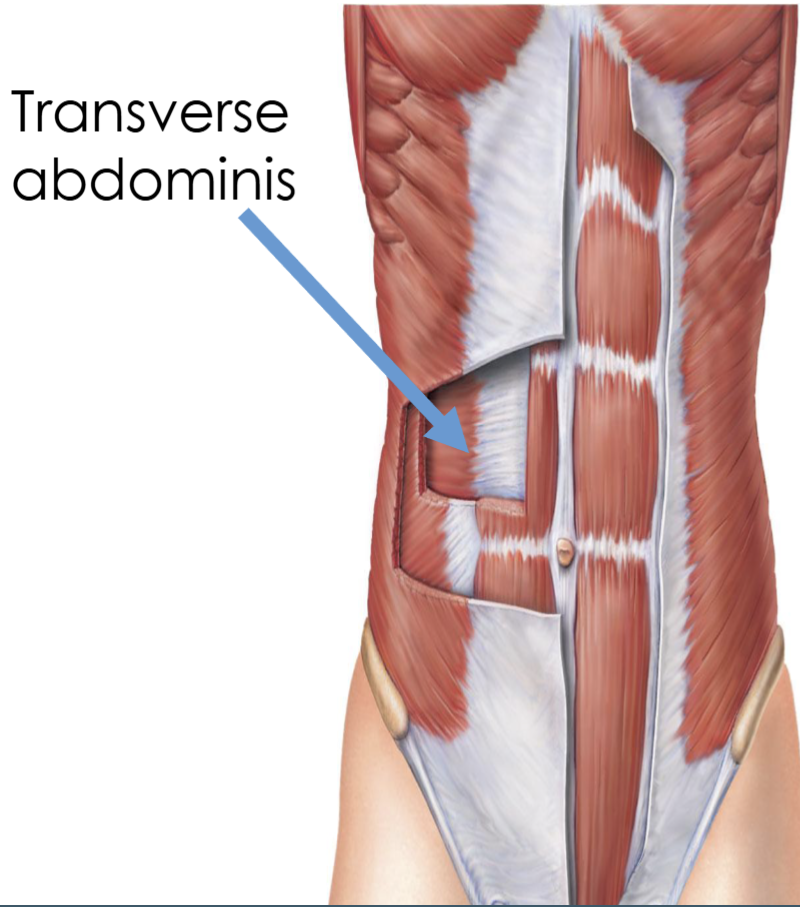
The action of the __________ is to compress the abdominal continents.
Transverse abdominis
The __________ originates at the lower six coastal cartilage, the xiphoid process, and lumbar one through lumbar five vertebrae.
Diaphragm
The __________ act in force inhalation by originating at the inferior border of the rib above and inserting at the superior border of the rib below.
External intercostals
The __________ is a torso extensor originating at the iliac crest and transverse processes of lumbar, thoracic, and cervical vertebrae.
Erector spinae
The __________ originates at the inferior angle of the scapula, thoracolumbar optoneurosis, sacrum, and thoracic seven through lumbar five.
Latissimus dorsi
The action of the __________ is the abduction of the humerus, and it originates at the supraspinatus fossa.
Supraspinatus
The __________ originates along the spine of the scapula and inserts at the deltoid tuberosity of the humerus.
Deltoid
The __________ originates in the subscapular fossa and pulls the humerus medially.
Subscapularis
The __________ and teres minor both act as lateral arm rotators and insert at the greater tubercle of the humerus.
Infraspinatus
The __________ originates at the occipital bone and thoracic vertebrae and acts to elevate, retract, and depress the scapula.
Trapezius
The __________ originates at the transverse process of C1 to C4 and elevates the scapula.
Levator scapulae
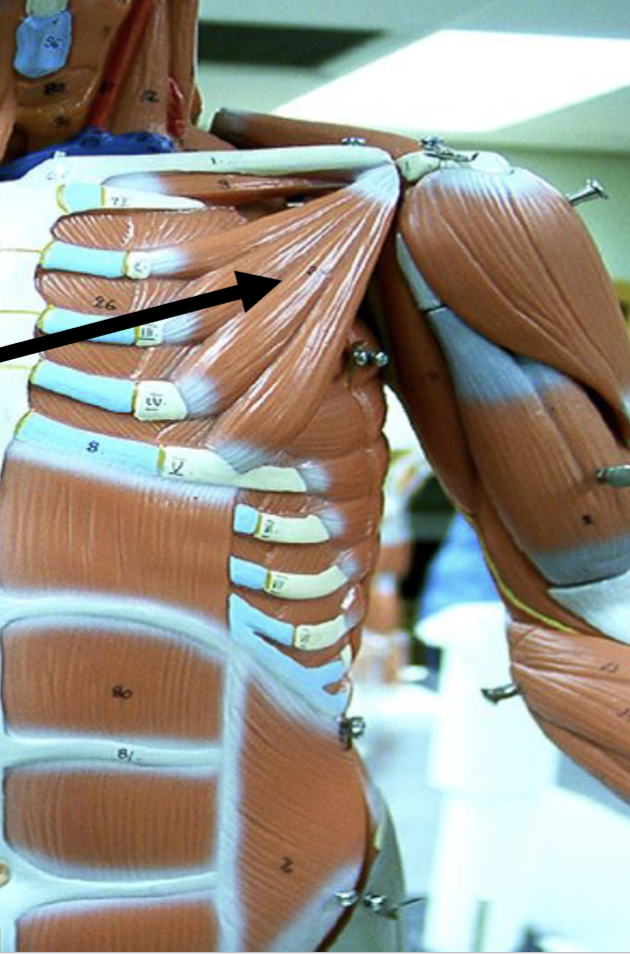
The __________ and serratus anterior both act in medial rotation and protraction of the scapula and arm.
Pectoralis minor
Retraction of the scapula is the action of the __________ minor and major.
Rhomboids
Forearm flexion is the action of the brachioradialis, brachialis, and the __________.
Biceps brachii
The __________ originates at the lateral epicondyle of the humerus and inserts into the lateral side of the ocranon.
Anconeus
The __________ head of the tricep brachii originates at the inferior margin of the glenoid cavity.
Long
The __________ originates at the lateral supracondylar ridge of the humerus and extends and abducts the hand.
Extensor carpi radialis longus
The origin of the __________ is the medial epicondyle, ocranon, and surface of the ulna.
Flexor carpi ulnarius
The __________ originates at the medial epicondyle of the humerus and inserts into the palmar aponeurosis
Palmaris longus
The action of the __________ is to pronate the forearm.
Pronator teres
The __________ originates at the pectineal line of the pubis and superior pubic ramus.
Pectineus
The __________ and gluteus medius both act to abduct the thigh.
Tensor fascia latae
The __________ originates at the anterior superior iliac spine and flexes the thigh.
Sartorius
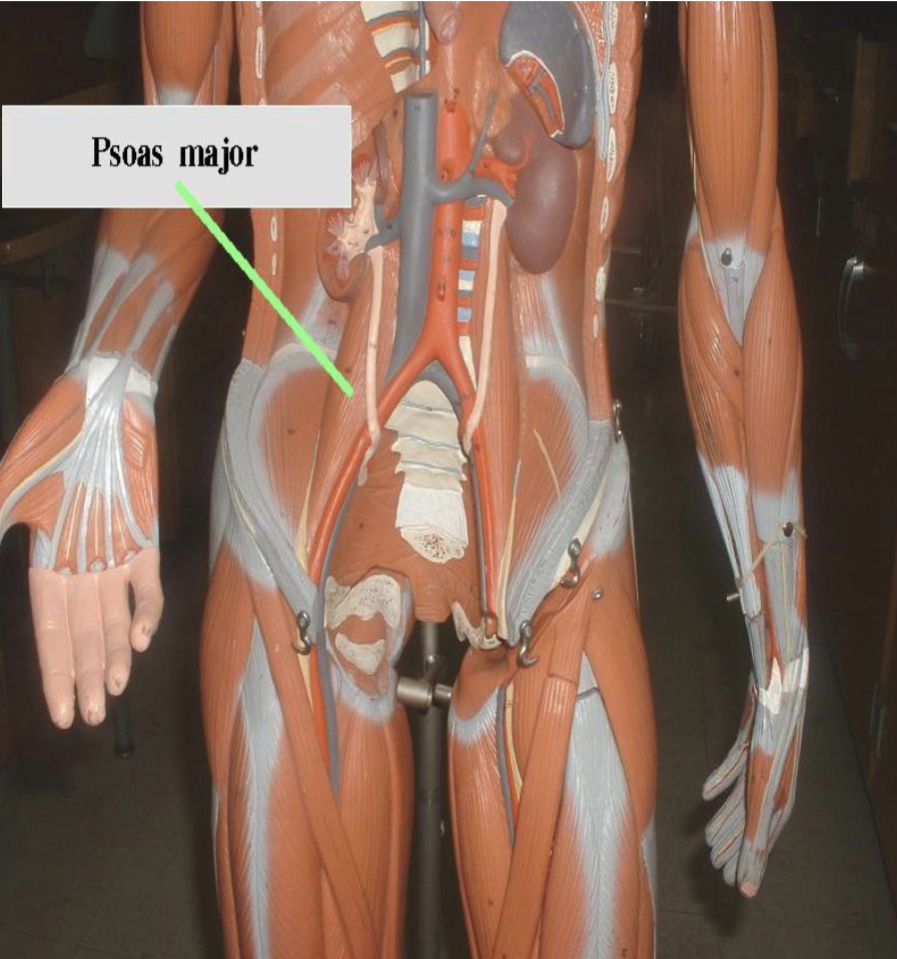
The __________ originates at the transverse process of thoracic 12 and lumbar vertebrae and flexes the thigh.
Psoas major
The three muscles that flex the leg and extend the thigh are the semitendinosus, semimembranurosis, and the __________.
Bicep femoralis
The __________ originates at the anterior inferior iliac spine and the superior margin of the acetabulum and extends the leg.
Rectus femoralis
The __________ and gastrocnemius both insert into the calcaneus via the calcaneal tendon.
Soleus
The __________ originates at the middle portion of the fibula shaft and flexes the big toe.
Flexor hallicus longus
The origin of the __________ is the lateral condyle and upper tibia and the interosseous membrane, and its action is dorsiflexion.
Tibialis anterior