Art History, Unit 1.
 Call Kai
 Learn
Learn Practice Test
 Spaced Repetition
 Match
Match Flashcards
 Knowt Play
1/44

Earn XP
Description and Tags
Memorizing Artists, Dates, and Tiles, Significance of artworks.
Name | Mastery | Learn | Test | Matching | Spaced | Call with Kai |
|---|
No analytics yet
Send a link to your students to track their progress
45 Terms
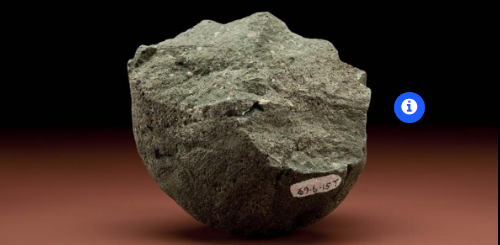
Title, Date and Significance?
Oldowan stone chopper.
1.8 million years old Pleistocene.
Importance: Early humans in Africa used hammerstones to strike stone cores and make sharp flakes.
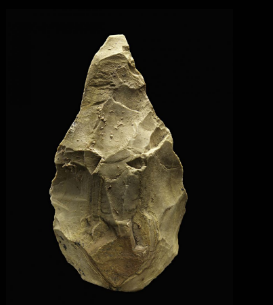
Title, Date and Significance?
Oldest known handaxe, India.
Flint.
1.1 million years! Pleistocene.
When did the Pleistocene period begin? What’s it known as?
2 million years BCE, AKA ice age.
When did the Holocene period begin? DId it end?
10,000 BCE. No. It is our current geological period.
When did the Ice Age peak and how long did it last?
20,000 BCE : Ice age peaks. Lasts until 12,000 BCE.
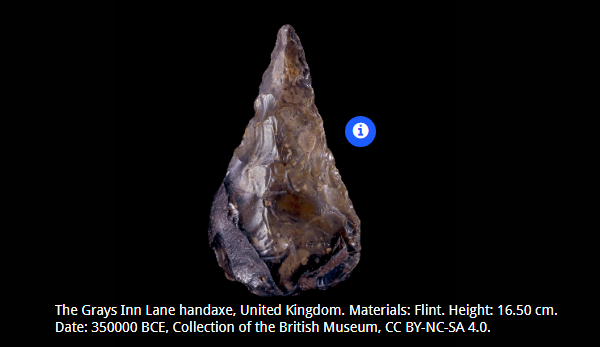
Title, Date and Significance?
The Grays Inn Lane handaxe.
350,000 BCE. Lower paleolithic period. Pleistocene Geological Period.
Found by Conyer in 1673, but kept it unpublished at first because it challenged biblical history, and proved that human existed much earlier than 6000 years! Didn’t want the dillema.
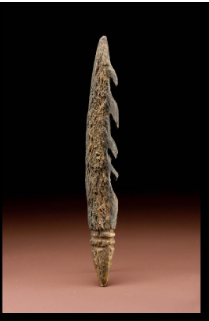
Title, Date and Significance?
Katanda Harpoon Point, ~90,000 - 80,000 years old. Middle Paleolithic. Discovered in 1988, Congo.
What is the Paleolithic Era?
Old Stone Age. Period in human history distinguished by development of stone tools. Has 3 Sub Periods.
Begins from 2million BCE, ends during Holocene at 10,000
Date range for the Lower Paleolithic Era:
2.6 million years - 120,000 years BCE. Crude arrowheads.
Date range for Middle Paleolithic Era:
120,000 - 40/35,000 years BCE. More arrowheads.
Date range for Upper Paleolithic Era:
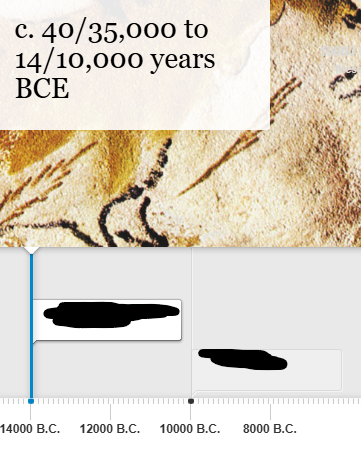
40/25,000 BCE - 14/10,000 BCE. Cave paintings, animals.
What is the Mesolithic Era? How does it connect with the Paleolithic Era?
The Mesolithic Era is the middle Stone Age and exists between the Paleolithic and Neolithic. Begins about 14/12,000 - 10/8,000 years ago!
What era is this?
Lower Paleolithic.
What era is this?
Middle Paleolithic.
What era is this?
Upper Paleolithic.

What era is this?
Mesolithic.
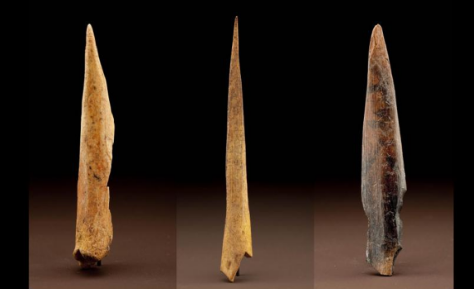
Title, Date, and Significance?
Bone Awls. About 77,000 years old. Middle Paleolithic. Late Pleistocene. Blombos Cave, South Africa. Used to make holes for clothing.
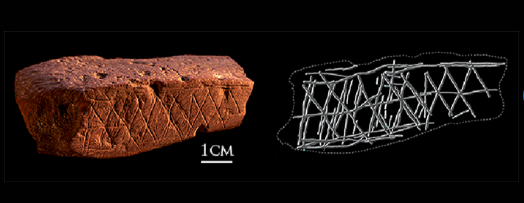
Title, Date, and Significance?
Incised ochre from Blombos Cave, SA.
100,000 - 66, 000 BCE. Middle Paleolithic.
Has plaque marks that were used to count or store info. Clearly organized, suggests information rather than decoration.
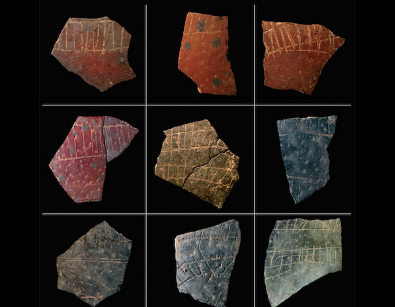
Title, Date, and Significance?
Ostrich shells from Western Cape, AF. 60,000 BCE. Middle Paleolithic.
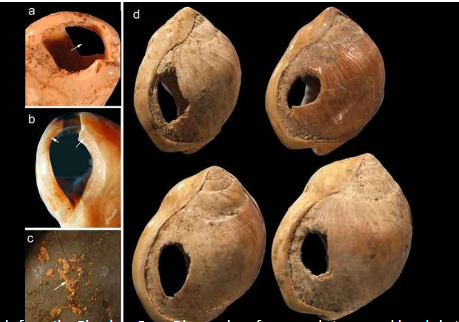
Title, Date, and Significance?
Nassarius shell beads from Blombos Cave. Some belief that early Homo sapiens capable of abstraction, thinking creatively! ~30,000 years old, upper Paleolithic.
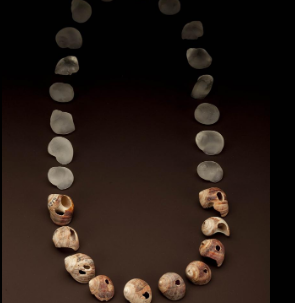
Title, Date, and Significance?
Nassarius shell beads from Blombos Cave. Some belief that early Homo sapiens capable of abstraction, thinking creatively! ~30,000 years old, upper Paleolithic.
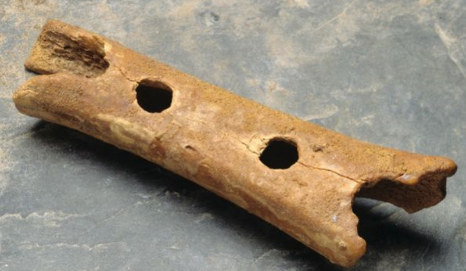
Title, Date, and Significance?
Neanderthal flute. 60,000 years BCE. Middle Paleolithic. Made from bone of a cave bear.
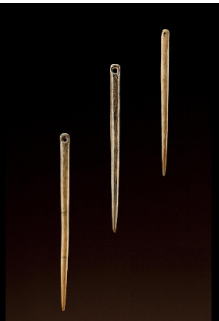
Title, Date, and Significance?
Bone needles from China. ~28,000 - 21,000 BCE . Upper Paleolithic.
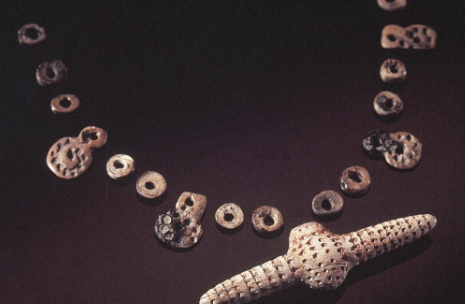
Title, Date, and Significance?
Neckalce of beads and pendants of mammoth found on infant skeleton. 28,000 - 22,000 BCE. Upper Paleolithic.
Demonstrates ornamentation, art-making, and symbolic value.
Burying such a valuable, time-intensive object suggests beliefs about the afterlife, love, or respect. Babies decorated too!
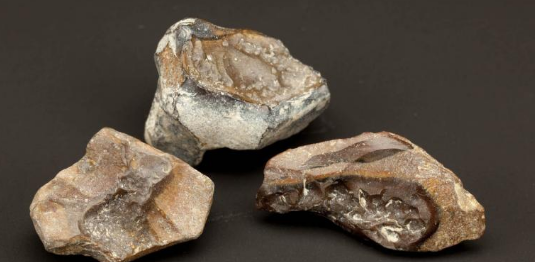
Title, Date, and Significance?
Burned flint from 790,000 year old site Gesher in Israel.
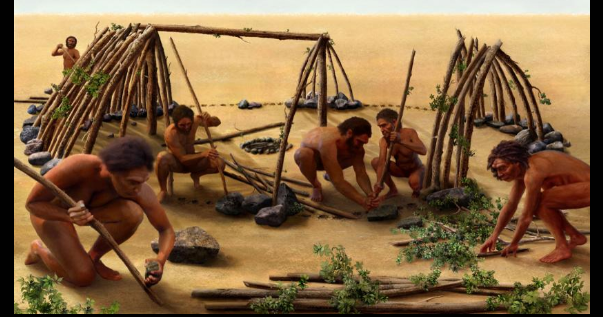
What is this?
A reconstruction of 400,000 year old shelter from Terra Amata, France. Shows sophisticated understanding before Homo sapiens!
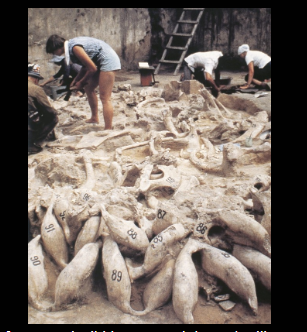
What is this?
Remains of Upper Paleolithic mammoth-bone dwelling #4. 15,000 BCE. Culture: Epigravettian. Shows adaptation and resourcefulness!
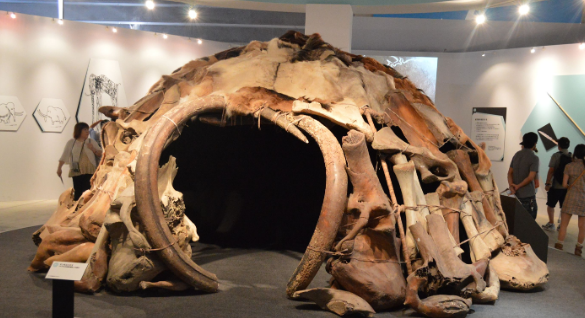
What is this?
Mammoth house! Shows problem solving.
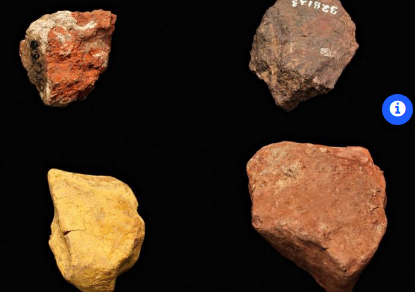
What is this, and what is the significance?
Found in Israel: Remains of 15 individuals buried with 71 pieces of red ocher, ocher-stained tools. Used for RITUAL! ~100,000 years old. Middle Paleolithic.
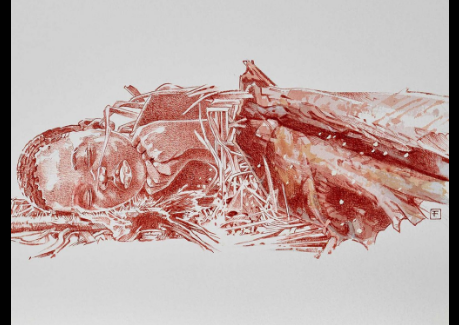
What is this?
An artist’s interpretation of 2.5 year old Mtoto’s (‘child’ in Swahili) burial in Kenya. Age: 76,000 BCE. Middle Paleolithic. Shows emotional and ritual care, especially for children.
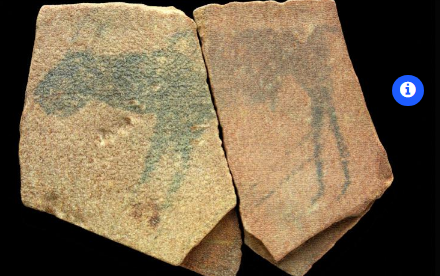
Title, Date, and Significance? Parietal, or portable?
Apollo 11 cave stones. c. 60,000 - 40,000 BCE. Middle Paleolithic. Parietal (Non portable) Possibly a cat, or animal. Shows early, sophisticated representation of the animal world.
What is Parietal art? What’s important about it?
Cave paintings, rock art. This art was seen as more significant (Especially European!) over Portable art.
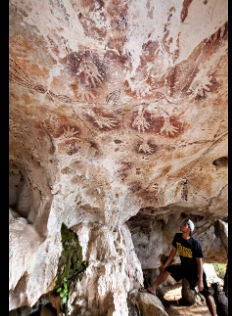
Title, Date, and Significance?
Borneo Cave Paintings, 45,500 BCE. Liang Téwé, Borneo (c. 45,500 BCE): Middle Paleolithic
Mulberry-colored hand stencils from spitting pigment onto the wall.
Discovery pushes back the date for oldest known figurative cave art, challenging the idea that it began in Europe.
Meaning of hand stencils is unknown (signature, "I am here," self-portrait?).
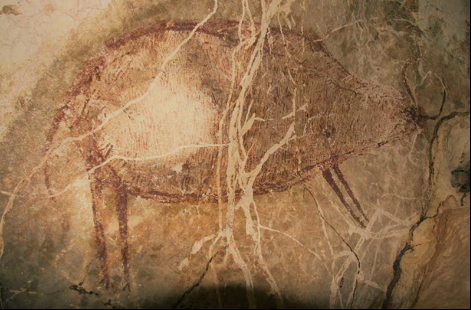
Title, Date, and Significance?
Sulawesi, Indonesia (c. 45,500 BCE): Middle Paleolithic
Painting of a pig/boar.
Reinforces that animals (food, environment) were central subjects
Oldest cave art found in Sulawesi
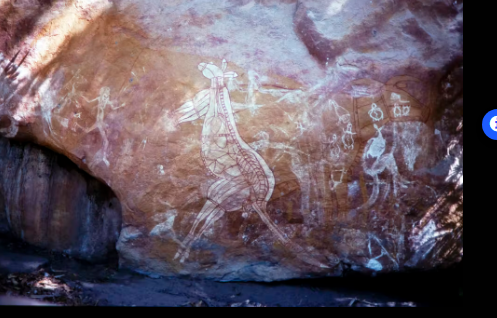
Title, Date, and Significance?
luru-Kata Tjuta, Australia (Occupied from c. 40,000 BCE to present):
Site of continuous artistic practice by Indigenous Australians.
Example shown (water buffalo/kangaroo) is more recent but demonstrates the deep, unbroken tradition.
3 periods:
The sequence of rock art at Ubirr and other sites in Arnhem Land has been divided into three periods: Pre-Estuarine (ca. 40,000?–6000 B.C.), Estuarine (ca. 6000 B.C.–500 A.D.), and Fresh Water (ca. 500 A.D.–present). These classifications are based on the changing style and iconography of the images.
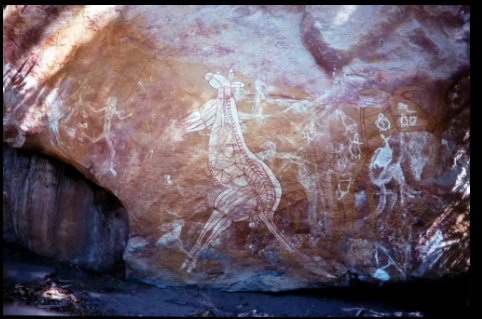
What are the 3 periods of rock art at Ubirr ?
Pre-Estuarine (ca. 40,000?–6000 B.C.) (Middle Paleolithic)
Estuarine (ca. 6000 B.C.–500 A.D.) Mesolithic
Fresh Water (ca. 500 A.D.–present).
These classifications are based on the changing style and iconography of the images.
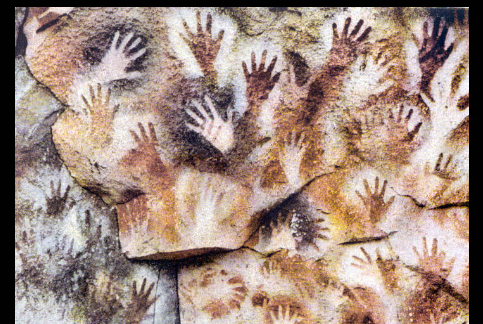
Title, Date, and Significance?
Cueva de las Manos, Río Pinturas, Argentina.
Between 13,000 and 9,500 years ago.
Upper Paleolithic and some Mesolithic
Many hand stencils (positive and negative).
Its existence suggests humans were in the Americas earlier than some theories (like the Bering Strait theory) claim.
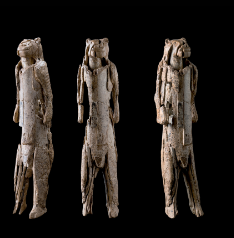
Title, Date, and Significance?
Lion Man (c. 40,000 BCE, Aurignacian culture):
Middle Paleolithic / Little bit of Upper Paleolithic
Carved from mammoth ivory.
Composite creature: lion head on a human-like, upright body.
Suggests sophisticated symbolic/spiritual thinking—a possible totem or item connecting human and animal realm
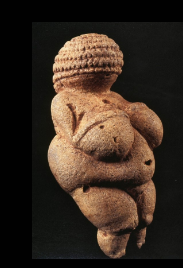
Title, Date, and Significance? Parietal, or portable?
Woman of Willendorf (aka "Venus," c. 28,000-25,000 BCE, Gravettian culture):
Upper Paleolithic
Carved from limestone.
Exaggerated fertility features (large breasts, belly, hips, clear labia); no facial features.
Tiny (10.4 cm) and cannot stand on its feet—meant to be held.
Likely a fertility symbol/totem related to childbirth/nurturing, not a "goddess of love."
Material traveled: The stone originated in Northern Italy, found in Austria, showing movement of people/objects. Portable!
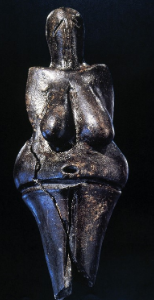
Title, Date, and Significance?
Venus of Dolni Vestonice
Female Statuette from Dolní Věstonice (c. 28,000-22,000 BCE):
Upper Paleolithic
Made of fired clay (one of the earliest known ceramic sculptures).
Similar fertility emphasis, no facial features, small and portable.
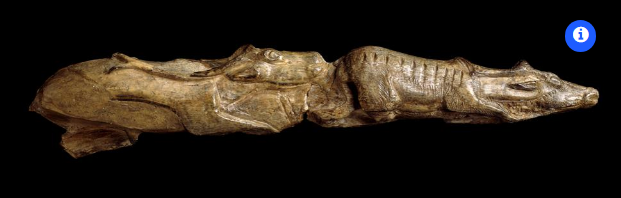
Title, Date, and Significance?
Swimming Reindeer (c. 11,000 BCE, Magdalenian period):
Upper Paleolithic/Mesolithic
As the gender of each animal is clearly shown, it is clear that the larger male is behind a smaller female and, as both animals have antlers, they must be reindeer because the only female deer to have antlers are reindeer hinds.
Carved from mammoth ivory.
Shows naturalistic observation of animal behavior (reindeer swimming).
Purpose unknown—could be decorative, part of a tool, or a ceremonial object.
When and why did the Middle Paleolithic end?
The Middle Paleolithic ended when Homo sapiens neanderthalensis were rapidly replaced by Homo sapiens sapiens (the first modern humans.)
Homo sapiens, whose anatomic structure is the same as ours, emerged in Europe around 40,000 years ago, and soon spread throughout the continent.
Their movement was probably facilitated by the steady disappearance of the ice sheet and marks the beginning of the Upper Paleolithic.
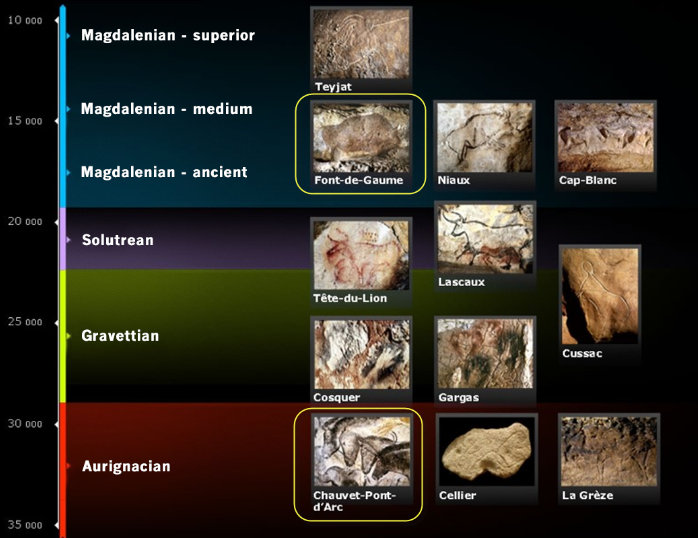
What is this?
These are four varieties of flint tools representing distinct societies of hunter–gatherers
Aurignacian - 35,000 - 30,000
Gravettian - 25, 000
Solutrean - 20, 000
Magdalenian - 15,000 - 10,000
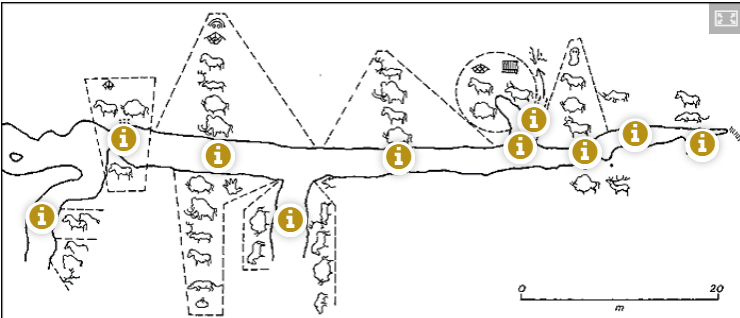
What is this?
André Leroi-Gourhan’s drawing of the Font de Gaume cave.
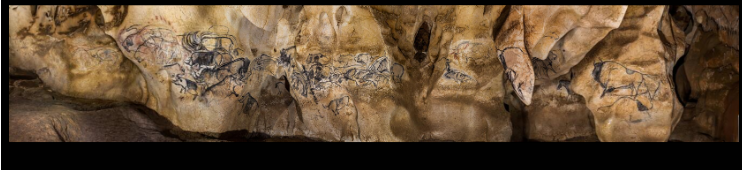
What cave is this? What is the dated art? What are the two cultures?
Grotte Chauvet-Pont D’Arc Cave, Ardeche, France
36,500 BCE Culture: Aurignacians
31,000 to 30,000 years BCE Culture: Gravettians.