Biochem Arizona Exam 2 practice questions
 Call Kai
 Learn
Learn Practice Test
 Spaced Repetition
 Match
Match Flashcards
 Knowt Play
1/69

There's no tags or description
Looks like no tags are added yet.
Name | Mastery | Learn | Test | Matching | Spaced | Call with Kai |
|---|
No analytics yet
Send a link to your students to track their progress
70 Terms
A hemoglobin variant contains a point mutation that removes a hydrogen bond that normally stabilizes the T-state conformation of the protein. Predict how this mutation would alter O₂ transport to the tissue and explain your reasoning.
Higher O₂ affinity; the R–T equilibrium would be shifted toward R state, reducing O₂ delivery to tissues.
Why is binding of a second NAD⁺ in the GADPH reaction critical to product formation?
Binding of the second NAD⁺ induces a conformational change that facilitates the attack of the inorganic phosphate on the thioester intermediate.
Hexokinase catalyzes the ATP-dependent phosphorylation of glucose through electrostatic positioning of active-site residues. Consider a mutation that replaces a lysine residue with arginine.
1. If this substitution occurs on the protein surface, how would enzyme activity likely change, and why?
2. If the same substitution occurs in the active site, how would activity differ, and why?
1) No significant change, because Lys-Arg substitution preserves surface charge and protein stability; 2) Decrease, because the guanidinium group may misalign catalytic contacts and reduce enzyme efficiency.
Which statement best explains how the structural differences between hemoglobin and myoglobin determine their distinct physiological functions in oxygen transport?
Hemoglobin is a tetramer that can bind BPG and O2 whereas myoglobin binds O2 but cannot bind BPG.
Put the following steps in the correct order describing the chymotrypsin reaction. Choose the answer that has the sequence of steps matching your answers for a à e (top to bottom). a.__His57 donates a proton to Ser195 to regenerate catalytic triad and release the N-terminal fragment.
b.__His57 donates a proton to the departing peptide nitrogen, allowing release of the C-terminal fragment.
c.__Hydroxide attacks the acyl-enzyme intermediate, forming a second tetrahedral intermediate. d.__His57 abstracts a proton from Ser195, enabling nucleophilic attack on the peptide carbonyl carb
e.__Water enters the active site and is deprotonated by His57, generating a hydroxide nucleophile
5, 2, 4, 1, 3
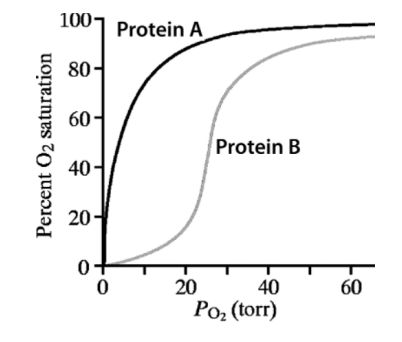
The graph shows O2-binding curves for two globin proteins.
1. Which protein requires a higher PO2 to reach 50% saturation?
2. Which protein releases O2 more readily in tissues where PO2 ≈ 20 torr?
3. Which protein exhibits a sigmoidal binding curve for cooperative binding?
4. Which protein would function best in O2 transport from lungs to tissues?
5. Which protein would function more effectively in O2 storage within muscle?
(1) Protein B (2) Protein B (3) Protein B (4) Protein B (5) Protein A
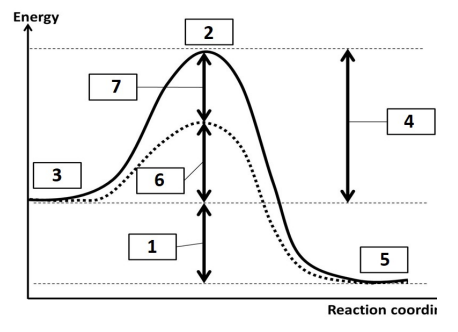
Refer to the reaction coordinate diagram at right that compares catalyzed and uncatalyzed reactions. Which of the following three labels are correct? “Activation energy” = AE.
3 = Reactant, 1 = DG, 2 = Transition state
Two reactions are identical except that one is catalyzed by an enzyme. The enzyme catalyzed reaction proceeds 10⁶ times faster than the reaction without the enzyme. Which statement best explains how the enzyme catalyzed reaction is differs from the uncatalyzed reaction?
The enzyme stabilizes the transition state, thereby lowering the activation energy DG‡ of the reaction.
Cells rely on enzyme-catalyzed reversible modifications to control biochemical processes. Which pair of reactions represents processes that can both be reversed enzymatically to regulate activity?
Methylation of bases in DNA and phosphorylation of phosphatidylinositols in membranes.
A chemist designs a molecule that functions as an inhibitor by mimicking the geometry and charge distribution of the predicted transition state in this enzymatic reaction. Which statement best explains why this transition state analog is an effective inhibitor?
The molecule outcompetes the substrate for active site binding because the enzyme forms more favorable interactions with a molecule resembling the transition state than with the substrate itself
Enzymes A (EnzA) and B (EnzB) have nearly identical turnover numbers (kcat), but EnzB exhibits a lower Km value when tested with the same substrate. Based on this information, which enzyme has the higher catalytic efficiency (kcat/Km), and why?
EnzB has the higher catalytic efficiency because a lower Km combined with a similar kcat gives a larger kcat/Km ratio
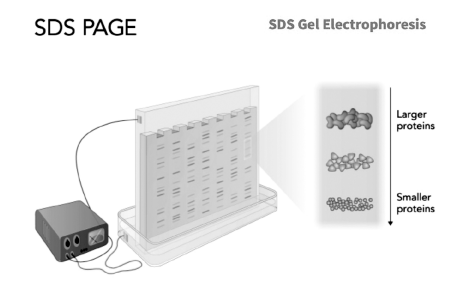
Sodium dodecyl sulfate (SDS) is a key reagent in protein electrophoresis. What is the primary reason that proteins treated with SDS migrate according to their molecular mass during SDS-PAGE?
SDS binds along the polypeptide chain, unfolding the protein and providing a uniform negative charge proportional to its mass.
A polypeptide was digested with chymotrypsin (cuts C-side of Phe = F, Tyr = Y, Trp = W) and trypsin (cuts C-side of Lys = K, Arg = R). The peptide fragments were sequenced by Edman degradation.
Determine the sequence of the intact polypeptide.
Chymotrypsin fragments: AECRW, VATPKMEY, ALM, HF, ALDKAF
Trypsin fragments: AFALM, WALDK, VATPK, MEYHFAECR
VATPKMEYHFAECRWALDKAFALM
A myosin mutant binds ATP and hydrolyzes it but fails to release inorganic phosphate (Pi). Based on the normal actin–myosin cycle, which experimental outcome is most likely observed?
The myosin head binds actin but cannot perform the power stroke that shortens the sarcomere.
Fluorescently labeled phospholipids were observed to rarely move from one leaflet of the plasma membrane bilayer to the other unless ATP is added to the cell culture. Explain this observation.
ATP is required for flippase or floppase activity that catalyzes transbilayer movement of phospholipids
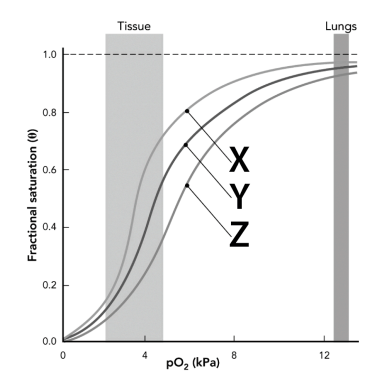
In the graph at right, the curve labeled Y represents adult hemoglobin (HbA) at pH 7.4 with normal levels of 2,3-BPG. Curves X and Z show how hemoglobin’s O₂-binding properties change under conditions where the level of 2,3-BPG is elevated in red blood cells (mimics effect of high altitude), or the hemoglobin tetramer in the experiment contains the fetal g globin subunit rather than the adult b globin subunit. Which statement best explains curves X and Z in terms of the two different conditions and the change in O2 binding relative to the curve labeled Y?
X represents fetal hemoglobin (HbF), which binds 2,3-BPG more weakly and therefore has higher O₂ affinity, facilitating O₂ transfer from maternal blood; Z represents adult Hb with elevated 2,3-BPG, which lowers affinity and enhances O₂ release in tissues.
Which combination matches the protein structure method with a characteristic strength?
X-ray crystallography – resolves atomic detail via diffraction; NMR – maps atoms in solution; cryo-EM – captures large complexes without crystals.
In a laboratory experiment, it is observed that two solutes are transported across the plasma membrane. Solute A moves down its concentration gradient without ATP, whereas solute B moves against its gradient only when ATP is available. Which conclusion best describes these transport processes?
Solute A transport is passive (ΔG < 0), while solute B transport is active (ΔG > 0).
Two enzymes, E₁ and E₂, catalyze the same reaction under identical conditions. E₁ reaches ½ vmax at a substrate concentration of 2 mM, whereas E₂ reaches ½ vmax at 0.2 mM. Which conclusion best explains the difference between the two enzymes?
E₂ has a lower Km and therefore reaches high catalytic rates even at low substrate concentration.
A reaction has Keq = 1.0×10² . The uncatalyzed reverse reaction rate is kR = 2.0×10⁻⁷ s⁻¹ and the catalyzed reverse reaction rate is kR = 1.0×10² s⁻¹.
(a) What are the corresponding forward rate constants kF for the uncatalyzed and catalyzed reactions?
(b) What is the fold-increase in kF due to catalysis?
(a) uncatalyzed: 2.0x10⁻⁵ /s, catalyzed 1.0x10⁴ /s (b) 5.0 x10⁸ -fold
The activity of a stomach enzyme was measured as a function of pH. The vmax of the enzyme was found to be pH 2, whereas the vmax was significantly lower at pH 7. What explains this observation?
The optimal pH is consistent with ionizable active-site residues that require protonation for catalysis.
Choose the list of proteins that represent examples from each of the major protein classes.
a. Structural protein
b. Genomic caretaker protein
c. Metabolic enzyme
d. Transport protein
e. Cell signaling protein
(a) Actin, (b) RecBCD, (c) Enolase, (d) Aquaporin, (e) Protein kinase A
Oxygen binding to the heme group in hemoglobin initiates a series of events that mediate cooperative binding of additional oxygen molecules to the hemoglobin tetramer. Put the following steps in the correct order and record a → e
__a. Fe2+ moves into the plane of the heme group.
__b. F helix movement alters hemoglobin structure.
__c. O2 binds to the Fe2+ atom in the heme group.
__d. Proximal His is pulled closer to the heme group.
__e. Fe2+radius is reduced owing to shared electrons.
3, 5, 1, 4, 2
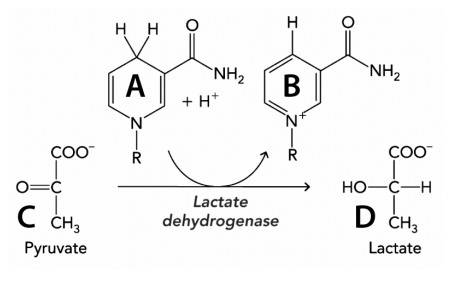
Identify the correct label for A, B, C, and D in the figure
A) NADH; B) NAD+ , C) oxidized reactant, D) reduced product
What structural feature of DFMO enables it to function as a mechanism-based suicide inhibitor of T. brucei ornithine decarboxylase (ODC)?
DFMO resembles ornithine, reacts with pyridoxal phosphate in the ODC active site, and forms a covalent adduct with a catalytic cysteine residue.
Would you expect alpha and beta subunits of hemoglobin to have more or fewer hydrophobic residues than myoglobin? Explain your reasoning.
There will be more hydrophobic residues because quaternary subunit interactions use hydrophobic amino acids; myoglobin is a monomer.
In isoelectric focusing, a protein that is initially located in the pH gradient that is below the pI of the protein would_______________.
migrate toward the cathode.
When purifying an enzyme, what is meant by the term "specific activity" of the sample?
It is the total amount of enzyme activity divided by the total amount of protein in the sample.
Calculate the purification of the target protein when there is a 30% decrease in activity and a 55% decrease in total protein after centrifugation.
1.6-fold
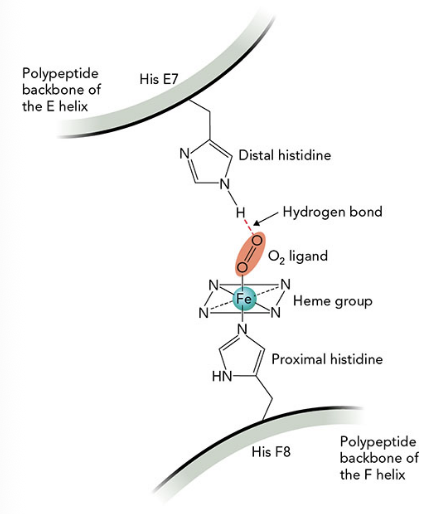
The figure below shows the coordination of heme, O2, and two critical histidine residues in globin proteins. Which of the following steps happens first in the oxygen binding process?
O2 binds to the iron of heme.
Predict the fragments of the following peptide after cleavage by trypsin.
DASRTYPECHI
DASR TYPECHI
Using SDS gel electrophoresis to separate proteins, _________ proteins migrate the fastest in the gel and move farther away from the ___________ because of their _________ charge.
small; cathode; negative
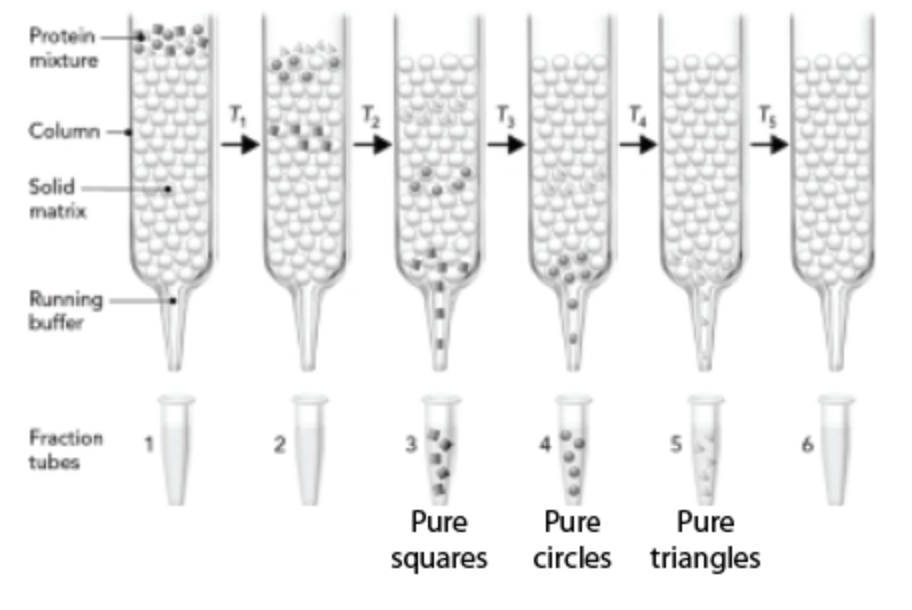
The figure below shows three proteins that are separated using gel filtration chromatography. Which protein is the largest?
squares
An enzyme that was purified from cells in the denatured state (in the presence of 8 M urea) lacks any catalytic activity even when the protein is refolded to the correct three-dimensional structure. What is a likely explanation for this observation?
A cofactor is required for enzyme activity and it was lost during the denaturation step and did not reassociate with the folded protein.
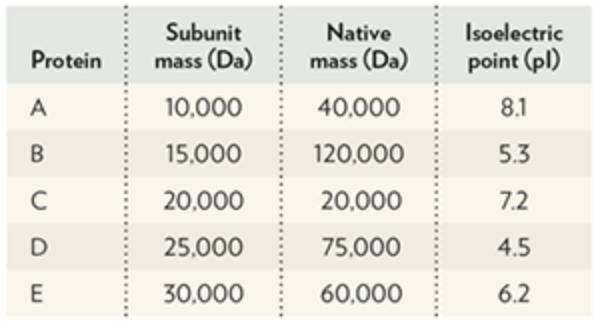
Consider five proteins with the properties shown in the table above and answer the following four questions. Record your answers and choose the set of correct answers for questions a --> d.
a) Which protein would elute first from a (+) charged anion exchange column in buffer at pH 4.0?
b) Which protein would migrate the slowest in an SDS-PAGE gel?
c) Which protein would elute last from a gel filtration chromatography column under non-denaturing conditions?
d) Which protein would elute last from a (-) charged cation exchange column in buffer at pH 4.0?
A, E, C, A
Although most protein sequencing is now done by mass spectrometry (MS), Edman degradation (ED) is useful if large amounts of a protein can be obtained even if from an uncharacterized species. Answer the True/False questions regarding methods used to sequence a polypeptide fragment and choose the set of all correct answers.
1. True / False – Protein sequencing by ED does not require purified protein but sequencing by MS does.
2. True / False – The N-terminal residue removed by acid treatment in ED is always a methionine.
3. True / False – Trypsin and chymotrypsin treatment often provides identical peptide fragments for ED.
4. True / False – Genomic sequences are needed to predict protein sequences by the MS method.
5. True / False – Trypsin treatment provides useful sequence information when analyzing data from MS.
(1) False (2) False (3) False (4) True (5) True
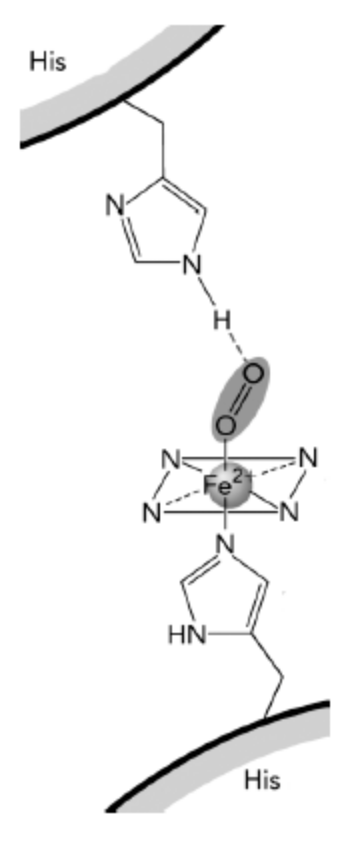
Oxygen binding to the heme group in hemoglobin initiates a series of events that mediate cooperative binding of additional oxygen molecules to the hemoglobin tetramer. Put the following steps in the correct order.
__F helix movement alters hemoglobin structure.
__Proximal His is pulled closer to the heme group.
__Fe2+ moves into the plane of the heme group.
__O2 binds to the Fe2+ atom in the heme group.
__Fe2+radius is reduced owing to shared electrons.
5, 4, 3, 1, 2
Though oxygen only binds to a particular place in the hemoglobin molecule, the oxy- and deoxy- forms of hemoglobin differ in overall protein conformation. An example of a structural change that does NOT play a role in translating local binding of oxygen to global protein conformational change would be the different ______ in the presence and absence of oxygen binding.
location of the distal histidine
You start with 100 units of protein activity and 100 grams of total protein. After the first centrifugation step, you have 15% less activity and 80% less total protein. What is your fold-purification of the target protein?
4.2-fold
A polypeptide was digested by V8 protease (cleaves after Asp, Glu), chymotrypsin (cleaves after Phe, Tyr, Trp), and cyanogen bromide (cleaves after Met). All three reactions cleave amino acids in the polypeptide on the carboxyl side. Use the following information to determine the complete 14 amino acid polypeptide sequence.
Cyanogen Bromide
Cys-Lys-Glu-Gly-Tyr-Asn-Asp-Pro-Arg-Gln
Gly-Ile-Phe-Met
V8 protease
Gly-Tyr-Asn-Asp
Pro-Arg-Gln
Gly-Ile-Phe-Met-Cys-Lys-Glu
Chymotrypsin
Gly-Ile-Phe
Met-Cys-Lys-Glu-Gly-Tyr
Asn-Asp-Pro-Arg-Gln
Gly-Ile-Phe-Met-Cys-Lys-Glu-Gly-Tyr-Asn-Asp-Pro-Arg-Gln
A hemoglobin variant contains a point mutation that removes a hydrogen bond normally stabilizing the T state conformation of the protein. Predict how this mutation would alter O₂ transport to the tissue and explain your reasoning.
Higher O₂ affinity; the R–T equilibrium would be shifted toward R state.
![<p><span>The Hb Yakima variation is caused by the mutation D99H, which results in a shift in oxygen binding as shown in the graph. What effect does the D99H variation have on the [T] / [R] ratio of Hb Yakima protein conformation compared to Hb Normal and how does D99H alter oxygen affinity? </span></p>](https://assets.knowt.com/user-attachments/20c297e3-6aad-4302-9bc5-25243b8c921a.png)
The Hb Yakima variation is caused by the mutation D99H, which results in a shift in oxygen binding as shown in the graph. What effect does the D99H variation have on the [T] / [R] ratio of Hb Yakima protein conformation compared to Hb Normal and how does D99H alter oxygen affinity?
The [T] / [R] ratio is decreased and the oxygen affinity is increased.
Leghemoglobin is an oxygen-binding protein in root nodules that contain bacteria that fix atmospheric nitrogen. Which ONE of the following is TRUE if leghemoglobin is more like myoglobin than hemoglobin?
The O2 binding curve is hyperbolic
A conformational change in troponin that opens the myosin-binding sites on actin is triggered by the
release of Ca2+ by the sarcoplasmic reticulum.
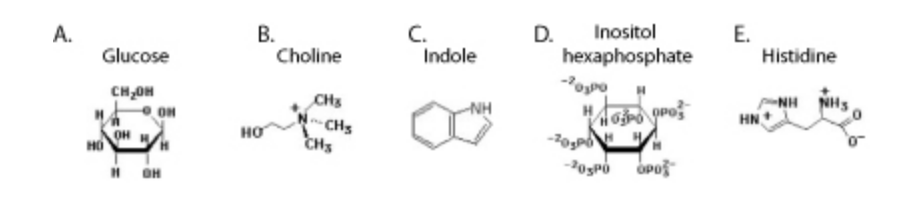
Bird hemoglobins are tetrameric and very similar in structure and function to mammalian hemoglobins. However, in some bird species, O2 binding affinity to hemoglobin is not regulated by 2,3-bisphosphoglycerate (BPG), but rather by a different compound that functions as a BPG analog.
Considering the chemical and physical properties of the following compounds, which is the most likely candidate for the BPG analog in bird red blood cells?
D
Put the following five steps of the actin-myosin reaction cycle in the correct order.
___Pi release pulls the active filament toward the center
___ATP binding causes myosin to dissociate from actin.
___ADP release empties the nucleotide binding site in myosin.
___Ca2+ binding to troponin uncovers myosin binding sites on actin.
___ATP hydrolysis induces the recovery conformation.
2,4,3,1,5
Which of the following may result from a His143 → Ala143 mutation in adult hemoglobin?
reduced affinity for 2,3-BPG
If the histidine on the E helix (His E7) that coordinates the O2 that binds to the heme iron in hemoglobin is mutated to an alanine, what effect would be most likely?
Oxygen binding would not cause the movement of the F helix, since the alanine at E7 cannot coordinate oxygen.
Using an enzyme characterization assay, it is observed that the reaction velocity plateaus above a certain high substrate concentration, , i.e. the reaction velocity is no longer increasing proportionally to increasing substrate concentration. The reaction velocity under these conditions is known as _________________.
the maximum velocity.
If an enzyme carries out acid-base catalysis, which of the following amino acids could act as general acid?
histidine
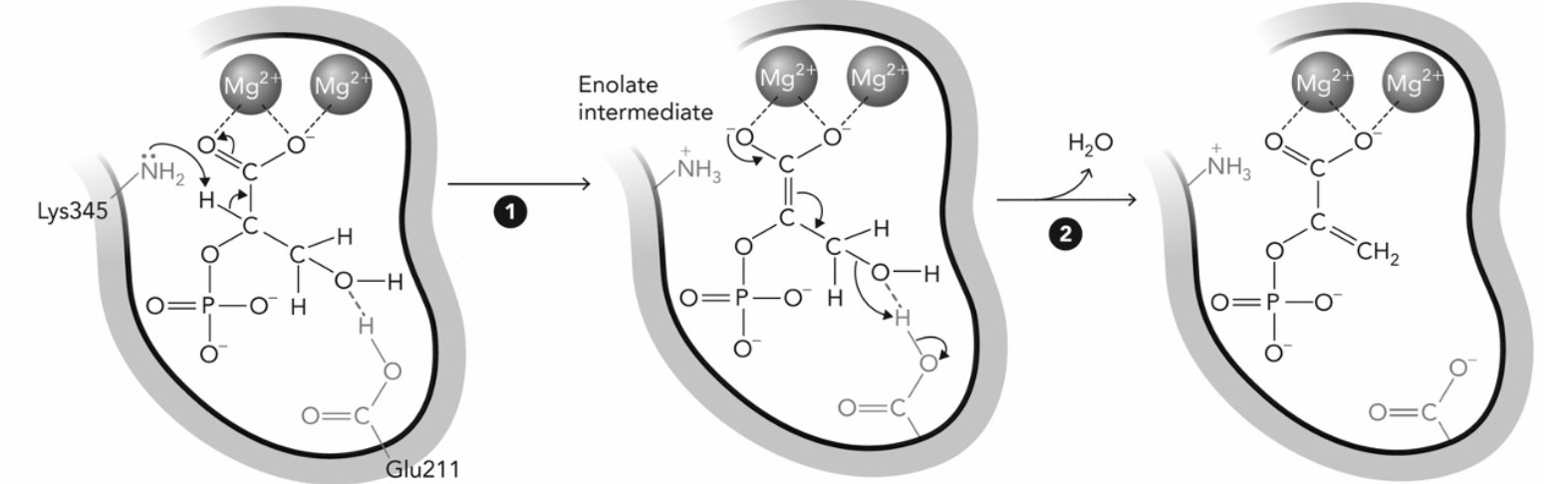
In the enolase reaction, the Lys 345 and Glu 211 residues participate in the reaction to convert 2-phosphoglycerate (2-PGA) to phosphoenolpyruvate (PEP). Based on the reaction scheme shown in the figure below, which statement below best describes the roles of Lys 345 and Glu 211 in the enolase reaction?
Lys 345 functions as general base and Glu 211 functions as a general acid.
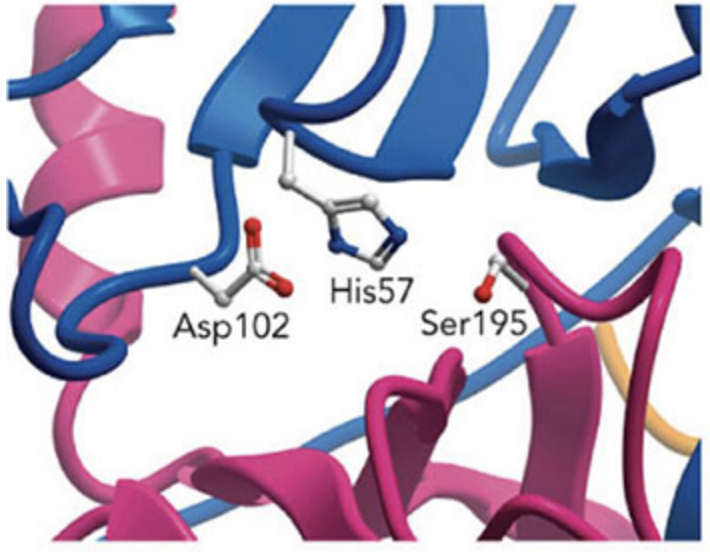
Which amino acid(s) in the catalytic triad of the chymotrypsin active site forms an enzyme-substrate covalent bond prior to cleavage?
only Ser195
Which of the following is a negative effector for oxygen binding to hemoglobin?
CO2
Why do elevated levels of 2,3-BPG in red blood cells at high altitude (14,800 feet above sea level) lead to more efficient delivery of O2 to the tissues?
Because more 2,3-BPG at high altitudes leads to a higher release of O2 in tissues owing to a larger shift to the T state than under normal conditions.
The effect of pH on O2 binding in the tissues is significant, whereas the effect of pH on O2 binding in the lungs is minimal (very little change in O2 binding as a function of pH in the lungs). Which statement below best explains this observation?
Because tissues have higher CO2 concentrations than the lungs, which lowers the pH in the tissues and shifts the equilibrium to the T state as described by the Bohr effect.
Enzymes A (EnzA) and B (EnzB) have nearly identical turnover numbers (kcat) but EnzB has a lower Km. Which enzyme has the highest catalytic efficiency (specificity constant) and why?
EnzB has the highest catalytic efficiency because it reaches ½ vmax at a lower substrate concentration.
Acetylcholinesterase is an important enzyme in the nervous system. Acetylcholinesterase activity is blocked by the nerve agent sarin gas, which forms a covalent bond with a Ser in the active site of the enzyme. Sarin gas is a(n)__________________.
irreversible inhibitor.
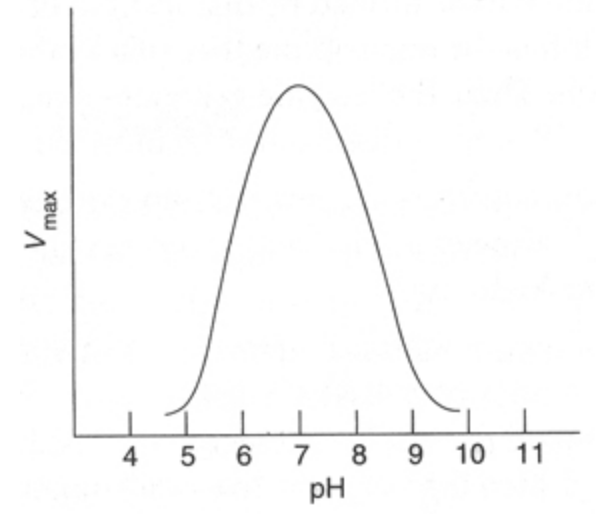
A pH/enzyme activity curve is shown above. Which of the following pairs of amino acids would be likely candidates as catalytic groups?
His and Cys
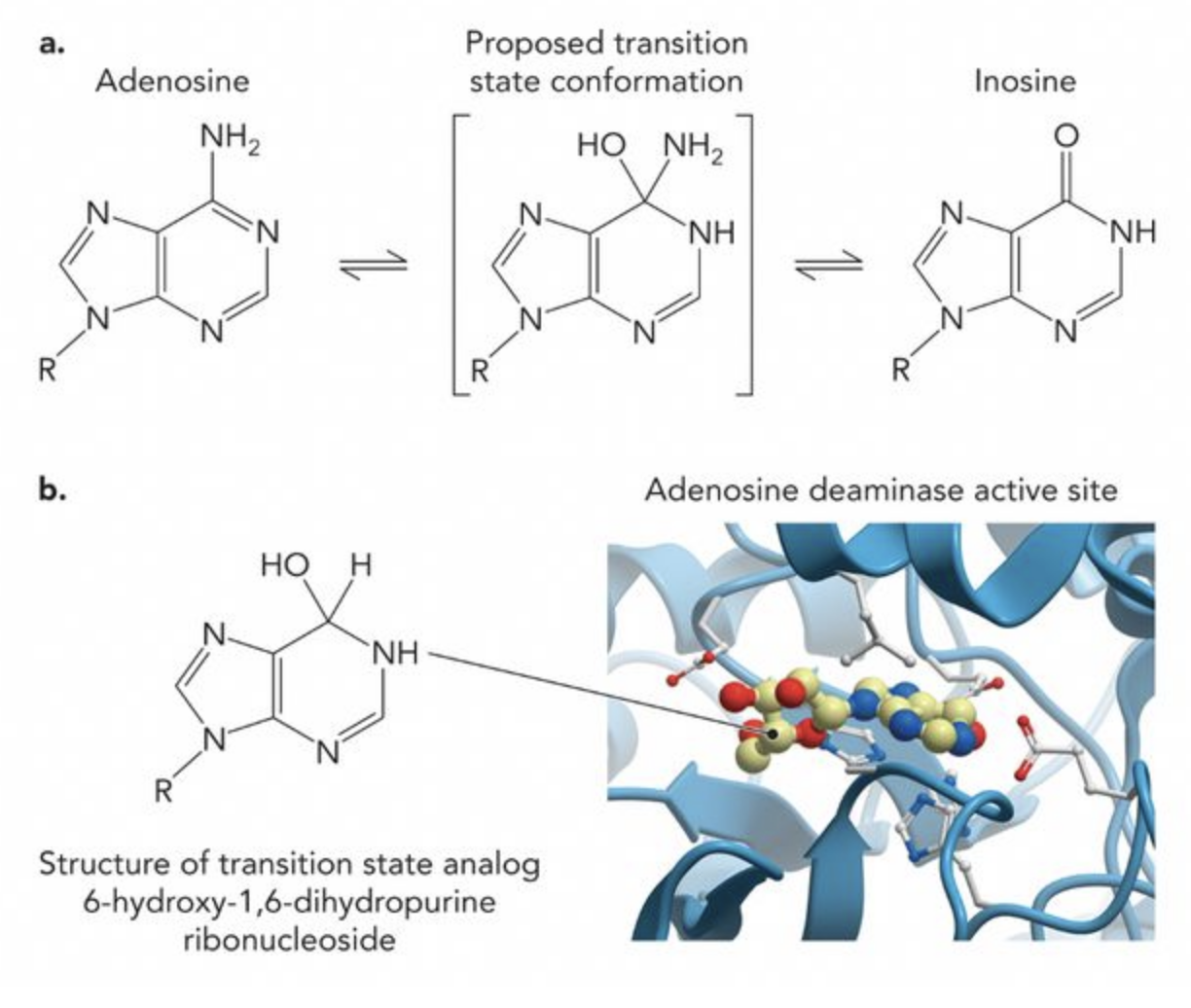
Why does it make sense that small molecules functioning as inactive transition state analogs are the most effect enzyme inhibitors?
Because the transition state conformation has the most interactions in the active site, and if the analog is inactive, then the enzyme is "stuck."
For an uncatalyzed reaction in which Substrate is converted to Product, S<-->P, there is a forward rate constant, kF, of 10-5/s, and a reverse rate constant, kR, of 10-2/s. In addition, there is a forward rate constant in the presence of catalyst, kF(cat), of 107/s. Answer the two questions below based on this information.
Remember that Keq = kF/kR = k1/k-1.
a) What is the Keq for the uncatalyzed reaction?
b) What is the rate enhancement for the catalyzed forward reaction kF(cat) over the uncatalyzed reaction kF?
a) 10-3, b) 1012
What is the rate enhancement as a result of the presence of an enzyme if the uncatalyzed rate of the reaction is 1.2 x 10² mmol/sec and the catalyzed rate is 2.4 x 10⁴ mmol/sec?
200
Two enzymes, E₁ and E₂, catalyze the same reaction under identical conditions.
E₁ reaches ½ vmax at a substrate concentration of 2 mM, whereas E₂ reaches ½ vmax at 0.2 mM.
Which conclusion best explains the difference between the two enzymes?
E₂ has a lower Km and therefore reaches high catalytic rates even at low substrate concentration.
Which one of the findings below would provide support for the transition state theory of enzyme catalysis?
Transition state analogs bind tightly to enzyme active sites
What is the rate enhancement as a result of the presence of an enzyme if the uncatalyzed rate of the reaction is 0.6 × 10² mmol/sec and the catalyzed rate is 2.4 × 10⁴ mmol/sec?
400
Histidine has a pKa of 6.0 with an imidazole group that is readily ionizable at pH 7. How is this chemical property exploited in enzyme reaction mechanisms?
Histidine can function as both a proton donor and proton acceptor in the same reaction.
In an uncatalyzed reaction, kF(uncatalyzed) = 2.5 X 10⁻⁸/s and Keq is 5 X 10². For the same reaction in the presence of an enzyme, kF(catalyzed) = 2.5 X 10²/s.
Remember that Keq = kF/kR = k1/k-1.
(a) What is the rate enhancement of the catalyzed reaction in the forward direction?
(b) What is the value for kR(uncatalyzed)?
(a) 1x10¹⁰; (b) 5x10-11/s
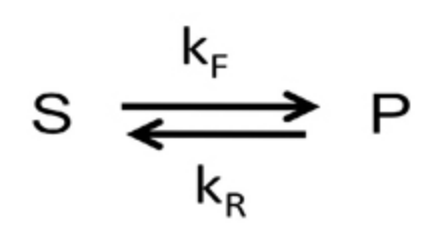
Consider the reaction above to answer the two questions below based on the following information.
For the uncatalyzed reaction, kF(uncatalyzed) = 5 X 10⁻⁴ s-1 and Keq is 2.5 X 10². For the same reaction in the presence of an enzyme, kF(catalyzed) is 5 X 10⁵ s-1.
Remember that Keq = kF/kR = k1/k-1.
A.) What is the rate enhancement of the catalyzed reaction in the forward direction?
B.) What is the value for kR(catalyzed)?
1X10⁹; 2X10³ s-1
Select the one TRUE statement regarding how catalysts increase reaction rates.
Catalysts lower the amount of energy required to reach the transition state.
Which answer correctly pairs the enzyme class with the type of reaction catalyzed?
isomerase; intramolecular rearrangements
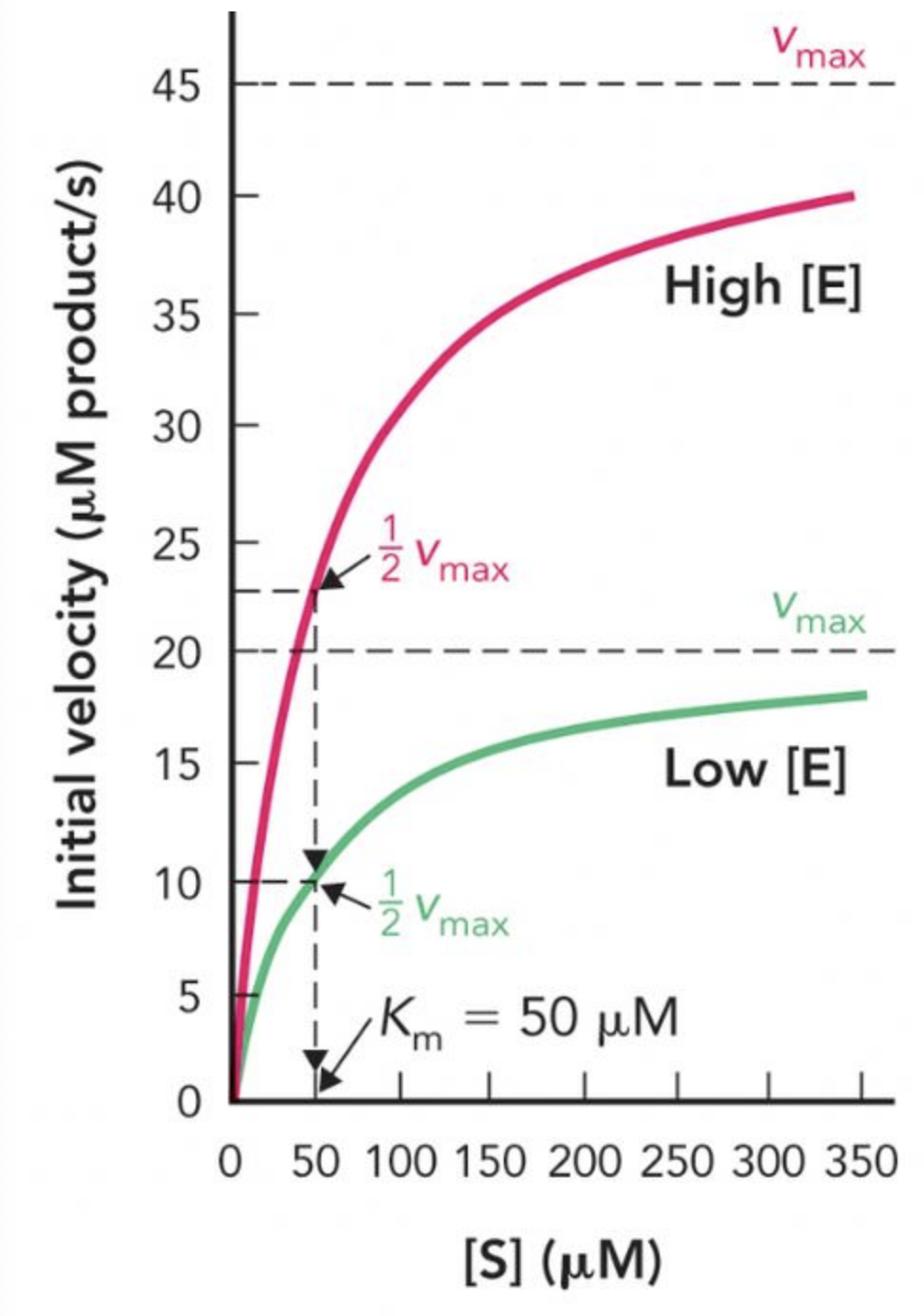
The value of Km is defined as the (1) __________ concentration at which the reaction rate is 1/2 vmax; a low value of Km means that an enzyme has (2) _________ catalytic activity at a (3) ________ substrate concentration.
(1) substrate, (2) high, (3) low