emt
 Call Kai
 Learn
Learn Practice Test
 Spaced Repetition
 Match
Match Flashcards
 Knowt Play
1/97

There's no tags or description
Looks like no tags are added yet.
Name | Mastery | Learn | Test | Matching | Spaced | Call with Kai |
|---|
No analytics yet
Send a link to your students to track their progress
98 Terms
Ab , ad
out from midline, towards (if its duction its movement towards)
leuk/o
white
cyrthro/o
red
cirrho/o
yellow
hypo
below
endo
within
supra,epi
above
fowler
semi-45, high-90 degree sitting
superior, inferior
near head, near feet
lateral,medial
away mid line, towards mid line
proximal,distal
closer, farther
ventral/anterior, dorsal/posterior
belly side, backside
prone,supine
facedown, on back
-ia
condition of
dys-
abnormal
ap-
absence
-pnea
breathing
emesis
vomiting
aden
gland
anter
front
brachi
arm
col
colon
cyt
cell
enceph
brain
gynec
female
hemat
blood
hist/histi
blood
lapar, flank, loin
abdomen, lower back
my
muscle
neur
nerve
ocul,opthalm
eye, eyes
or
mouth
ot
ear
peri
around
path
disease
pneumo
air
sept
infection
thorac
chest/thorax
trich
hair
ventr
front of body
viscer
internal organs
brady-
slow
Co-, con-, com-
together
De-
down
bi-,di-
two
Extro- extra-
outside of
Hemi-, semi-
half of
Infra-
below
Inter-
between
Intro-
within
pro-
before
Retro-
behind
Tachy-
fast
Trans-
through
-ac, -ic, -al, -ous
related to
-ate, -ize
to do
-ent, -er, -ist
person
-genic
produced by
-gram
written record
-graphy
Process of recording
itis
Inflammation
oma
tumor
-scopy
Process of visual examination
traveling wiht unresponsive or pregnant
place on left side
older adults
many have
atherosclerosis (build up of calcium and cholesterol causing blockage partial or full of blood flow)
decline in cardiac out put
more fragile chest
higher blood pressure
worse kidney
less responsive pupils
Early adults/early adult
19-40
~70 bpm
12-20 breaths per min
90-120 mmHg ( blood pressure)
98.6F
Adolescents
12-18
60-100 bpm
12-20 breaths per min
90-110 mmHg
98.6F
School children
6-12
pre conventional-avoid punishment
conventional-follow peers
post conventional- follow consccious
70-120 bpm
15-20 breaths per min
80-110 mmhg
98.6F
Toddler
1-3
90-150 beats per min
20-30 breaths per min
80-100 mmhg
96.8-99.6 F
looses passive immunity
Preschooler
3-6
80-140 bpm
20-25 breaths per min
80-100 mmhg
96.8-99.6 F
Infant
1 month-1year
100-160bpm
25-50 breaths per min
70-95 mmhg
96.8-99.6 F
neonate vital
100-180 bpm
30-60 breaths per min
50-70 mmHg
98-100 F
neonate nervous system
moro reflex-outstretched startle
rooting reflex-touching cheek will turn
if fontanelle (top and backs of skull that are not fused) is depressed likely dehydrated if bulging could be intracranial pressure
airway obstruction is more common
forceful ventilations can cause trauma in airway
airway can be more easily blocked by positioning
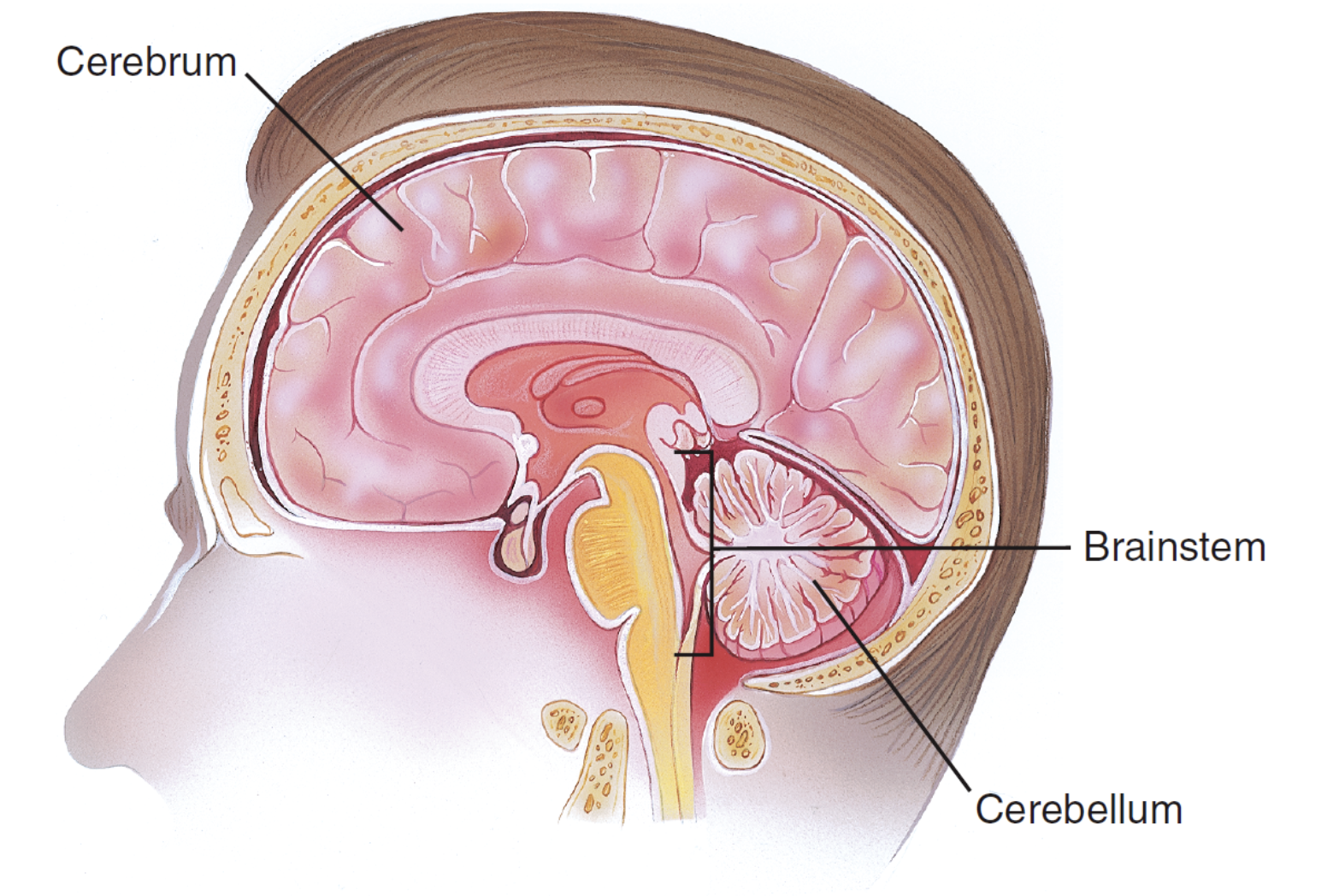
Brain anatomy
Cerebrum: responsible for your conscious thoughts
Cerebellum: coordinating voluntary movements, maintaining balance and posture, and regulating muscle tone.
gallblader
stores bile
spleen
stores and filters blood and makes white blood cells
pancreas
regulates blood sugar, secretes digestion hormones,
prostate gland
produces chemical that coats semen and helps with urine flow
thymus
trains t cells
thyroid
responsible for metabolism hormones
pituatary gland
base of brain underneath hypothalmus, produces various hormones
hypothalmus
maintain homeostasis—keeping your body's internal systems (like temperature and heart rate) in a stable, balanced equilibrium
pineal gland
produces sleep hormone, circadian rythm etc
parathyroid
produces pth which regulates calcium
adrenal glands
spleen
filters blood, stores blood, contains white blood cells, saves it as iron
coronal plane, transverse, sagittal
front/back, top/bottom,left/right
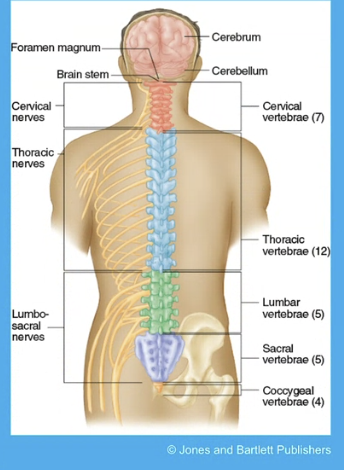
axial skeleton
where arms and legs are attached (which you refer to as upper and lower extremities or (LUE) LeftUpperEextremity etc) includes skull, spinal column,
skull
cranium has 4 bones
face has 14
spinal column
cervical vertebrae is neck to shoulders 7, then thoracic to middle back 12, lumbar 5, sacrum 5, 4 cocyx
thorax
sternal notch is middle of clavical then ribs, the anterior ribs are cartilige which is usually what separates when you hear cracking which is okay!
appendicular skeleton
arms and legs and pelvis
types of muscle
smooth/involuntary , skeletal/volunary or strided and cardiac/involuntary
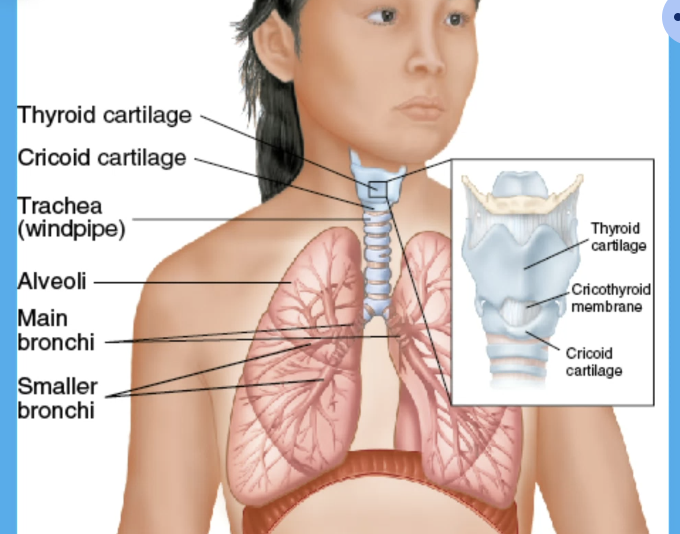
lung anatomy
tidal volume
depth of breaths
heart
receives blood from aorta
right side receives deoxygenated blood from veins
left side receives oxygenated blood from the lungs
stroke volume
amount of blood moved by one beat
cardiac output
amount of blood moved in 1 minute
=Heart rate *Stroke volume