Unit 3 -Sensory receptors
 Call Kai
 Learn
Learn Practice Test
 Spaced Repetition
 Match
Match Flashcards
 Knowt Play
1/12

There's no tags or description
Looks like no tags are added yet.
Name | Mastery | Learn | Test | Matching | Spaced | Call with Kai |
|---|
No analytics yet
Send a link to your students to track their progress
13 Terms
Receptors
Stimulated by stimuli and they in turn stimulate sensory neurons which send messages to the brain for interpretation. Grouped according to the kind of stimulus they receive
Photoreceptor
Respond to visible wavelength of light
Mechanoreceptor
Sensitive to mechanical energy
Thermoreceptor
Sensitive to heat and cold
Osmoreceptor
Detect changes in the concentration of solutes in body fluids
Chemoreceptor
Sensitive to specific chemicals such as the concentration of oxygen in the blood
Nociceptor
A pain receptor that is sensitive to tissue damage
Proprioceptors
Found in muscles, tendons and joints and provide information about body position to the brain
Taste
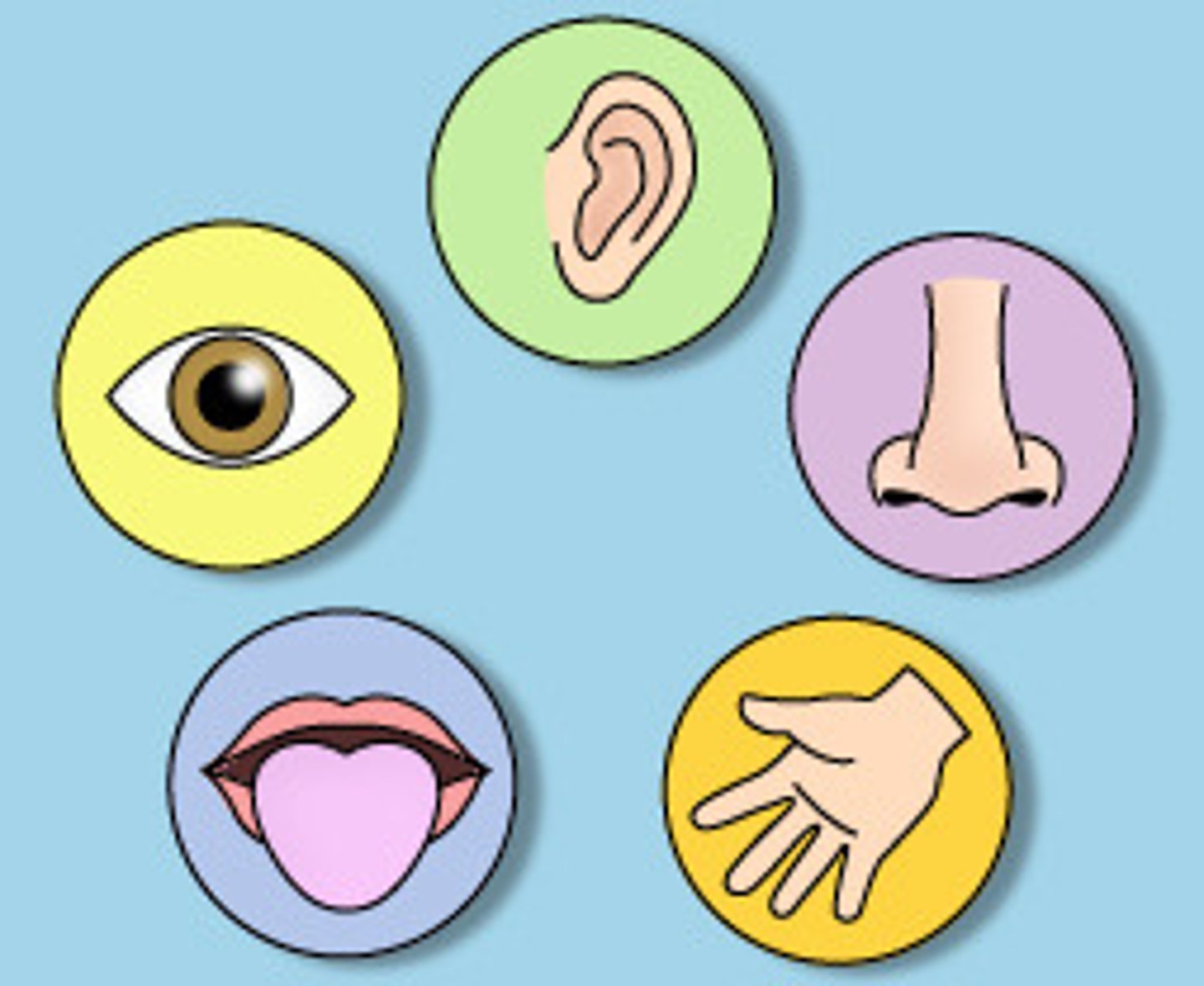
Tongue contains chemoreceptors called taste buds. 4 kinds of receptor cells in taste buds that correspond to 4 basic tastes: sour, sweet, salty, and bitter. Perception result of information received from parts of tongue and sensory neurons in nose. Info sent to parietal lobe of the brain
Smell
Olfactory cells are chemoreceptors. Different chemicals in air stimulate olfactory cells and trigger an action potential.
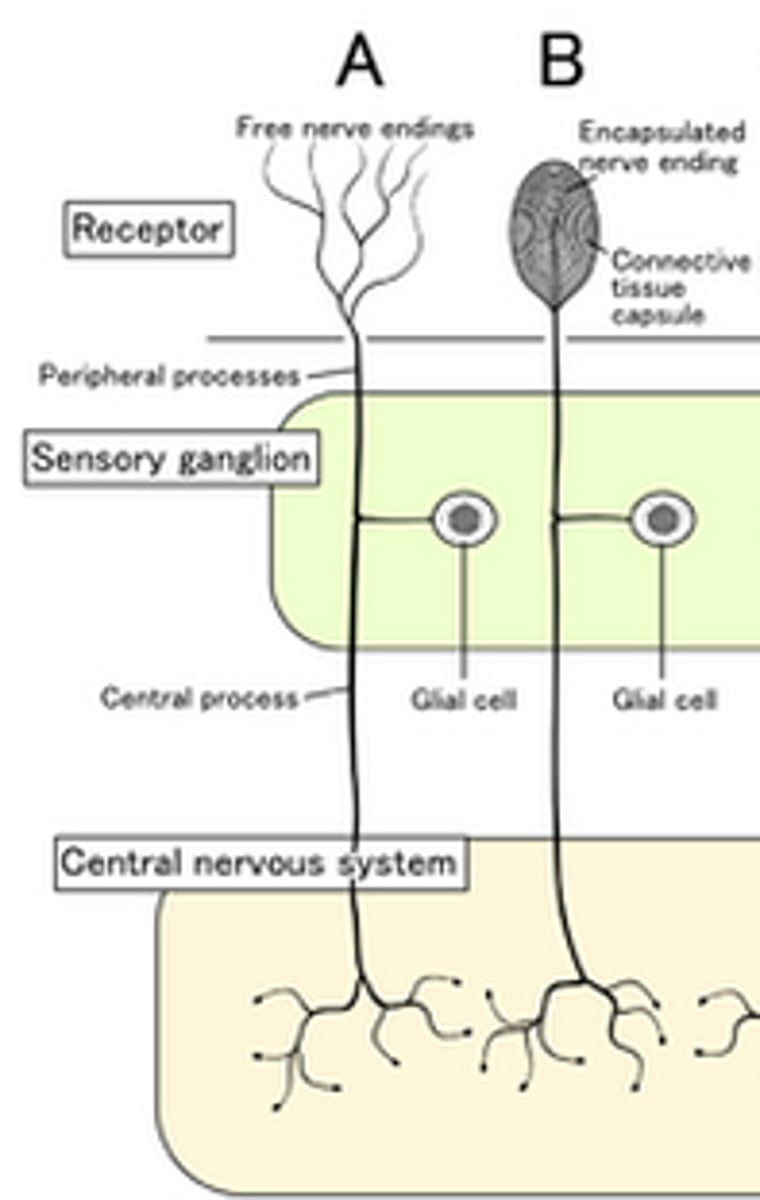
Free nerve endings
Simple receptors with little or not specialised structures at the end.
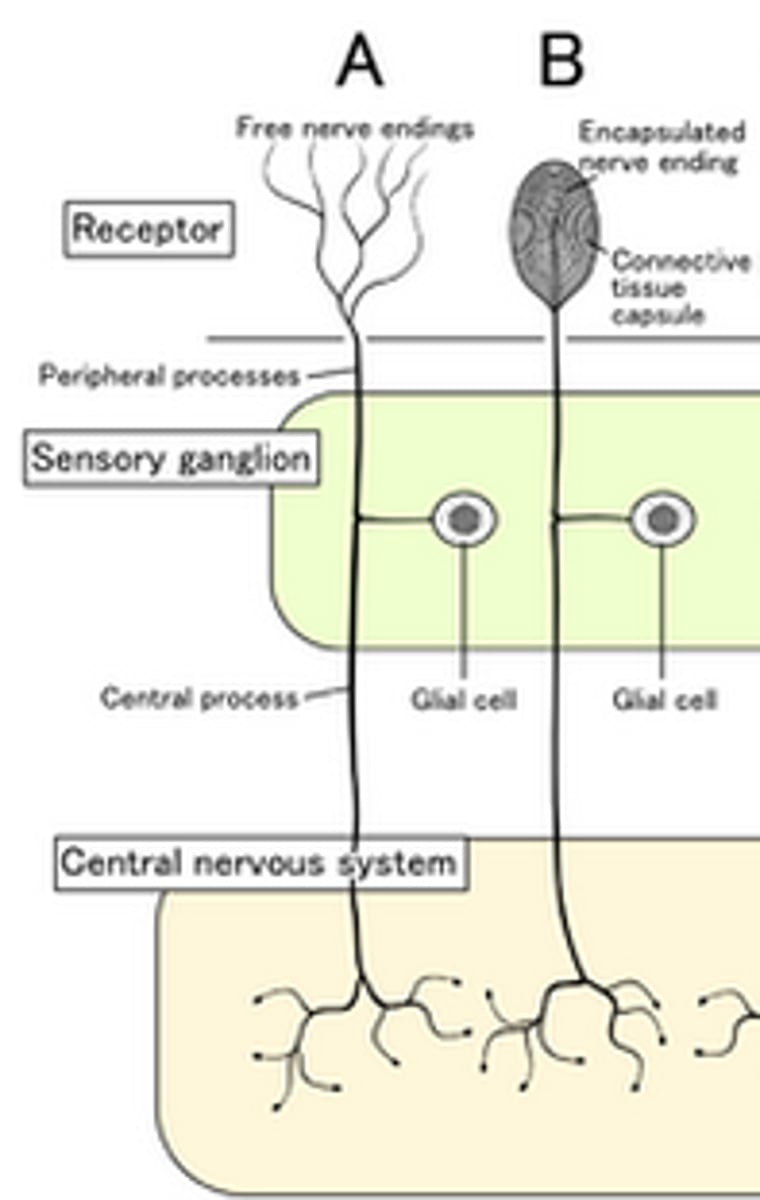
Encapsulated nerve endings
Nerve cells end in enclosed capsules of connective tissue.
Sense organs
Contain specialised receptors and sensory neurons. For example eyes, ears.