Classics Midterm 2
 Call Kai
 Learn
Learn Practice Test
 Spaced Repetition
 Match
Match Flashcards
 Knowt Play
1/66

There's no tags or description
Looks like no tags are added yet.
Name | Mastery | Learn | Test | Matching | Spaced | Call with Kai |
|---|
No analytics yet
Send a link to your students to track their progress
67 Terms
Thetis
Mother of Achilles, wife of Peleus
Achilles
Most powerful Greek warrior in the Trojan War
Agamemnon
Commander of Greeks, King of Mycenae, brother of Menelaus
Menelaus
Husband of Helen, King of Sparta
Helen
Wife of Menelaus, daughter of Tyndareus/Zeus, lover of Paris
Pairs
Trojan to whom Helen was promised, brother of Hector
Hector
Son of Priam, leading Trojan warrior
Priam
King of Troy, father of Hector
Hecuba
Wife of Priam, mother of Hector
Andromache
Wife of Hector, mother of their son Astyanax
Odysseus/Ulysses
King of Ithaca, a leading Greek warrior and commander
Clytemnestra
Wife of Agamemnon, remains at Mycenae, kills Agamemnon
Iphigeneia
Daughter of Agamemnon, sacrificed so Greeks could sail
Patroclus
Comrade of Achilles in the Iliad; killed by Hector
Ajax
Greek warrior; commits suicide when denied the armor of Achilles
Herakles/Hercules
Hero, son of Zeus and Alkmena, husband of Megara and Deianeira
Amphitryon
Husband of Alkmena, human “father” of Heracles
Alcmena
Mother of Heracles
Nessus
Centaur who attempts to rape Deianeira; killed by Heracles
Deianeira
Second wife of Herakles
Achelous
River, and river-god, in western Greece; loved Deianeira
Pythagoras
Greek philosopher: immortality of soul, vegetarianism
Sinuhe
High officer in Egypt; flees Egypt but later returns
Amusinenshi
Ruler in Syria whom Sinuhe serves while in exile
Senwosret
Pharaoh of Egypt, son of Amenemhet, inherits throne from father
Arjuna
Warrior in Bhagavad Gita
Krishna
Avatar (= incarnation of) the deity Vishnu, advises Arjuna
Jason
Son of Aeson; leads Argonauts; elopes with Medea from Colchis
Medea
Daughter of Aeetes, king of Colchis; magical powers
Creon
King of Corinth; his daughter planned to marry Jason, but . . .
kleos
Fame, especially from renown in epic poetry
time
Honor, public esteem (pronounced tee-may)
apotheosis
Becoming a god
psyche
soul
Aetiologies
Social institutions, religious practices, natural phenomena.
Patterns of Heroism
What qualities define heroism for men and women? Physical or intellectual abilities, or a mix? Transcending limits; civilization vs. nature. What models of masculinity are offered to men?
Patterns: separation, reintegration. Patterns of narrative, symbolism.
Coming of age (relations with parents, esp. father-son), marriage, death & rebirth.
Psychological or Structural patterns.
Tragic patterns among heroes: ate, hybris, nemesis; pathos, mathos
Tragic irony: characters are unaware of things that we, the audience, know.
Comparison with Egyptian tales and Hindu mythology.
Fate, Death and Free Will
Human beings continue to be victims of the gods, suffering because of capricious decisions made on Mt. Olympus. In some cases, people are helpless through bad luck. Or have the gods simply foretold, perhaps through oracles, what would happen anyway? Either way, men are powerless to avoid it. Irony: people don’t know. Occasionally some are able to exercise free will; this may entail making a “statement” by committing suicide. Ideas of death can affect how we look at life.
The Role of Women
Are they to be seen as dangerous and seductive, a threat to male society, or are they merely victims, representative of the destruction that men can wreak? Can they be autonomous and independent, or must they be married off? What roles and qualities are allowable in women? Can they be a voice of reason otherwise unheard? Do they help men reintegrate into society?
Homer
Focuses on the heroic code of the warriors at Troy, and the problems that code brings with it. A complex study of human relationships.
Ovid
Metamorphoses. A witty, provocative account in poetry of miscellaneous acts of love, anger, daring and iniquity among gods and mortal human beings. Motivations are sometimes generous, often cynical. Reliance on stock motifs; self-conscious about the nature of poetry and creativity. Emphasis on nature vs. culture themes; dubious value of technology and civilization.
Euripides
Tragedy. De-heroization of figures in myth, both human and divine. Questions the morality of divine behavior; human beings can be crafty and amoral; they might use slick, sophistic rhetoric.
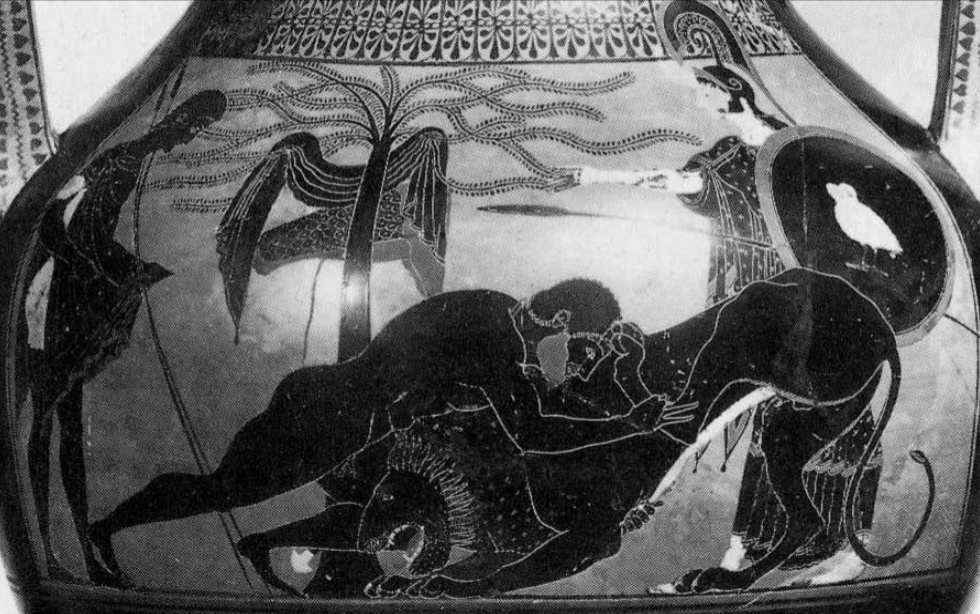
Herakles & Nemean Lion
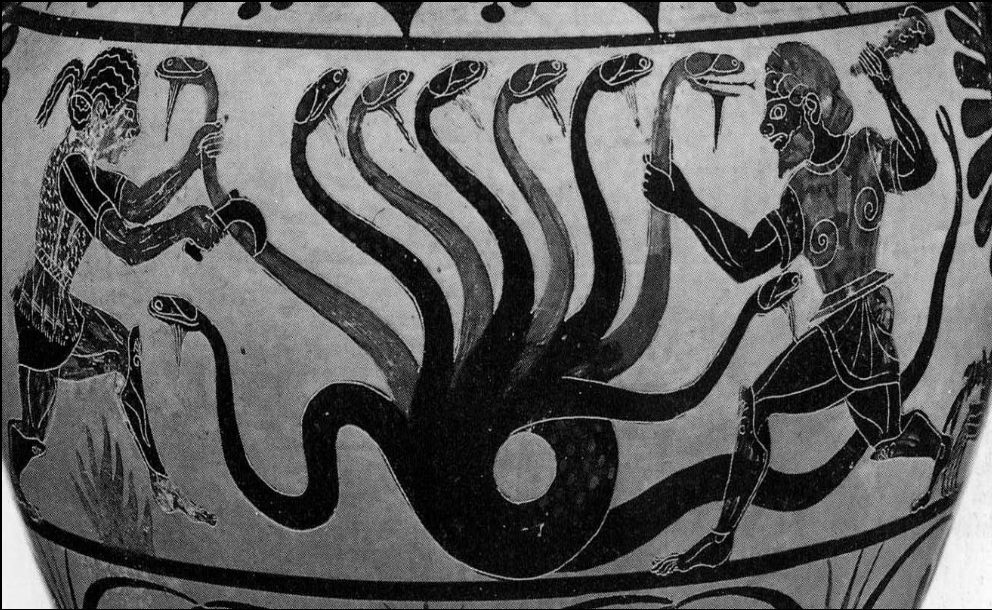
Herakles & the Hydra
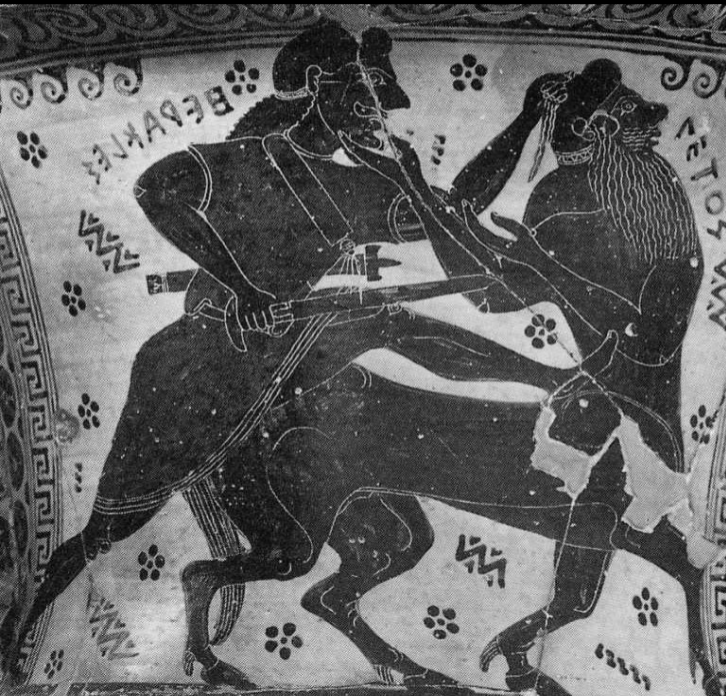
Heracles and Nessus
Herakles’ Apotheosis
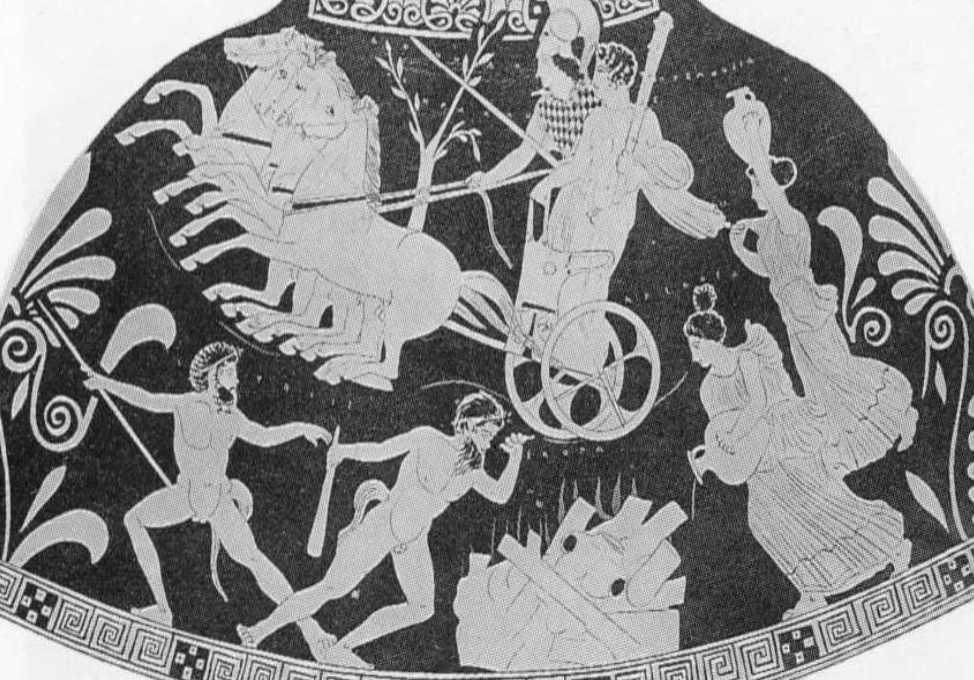
The Judgement of Paris
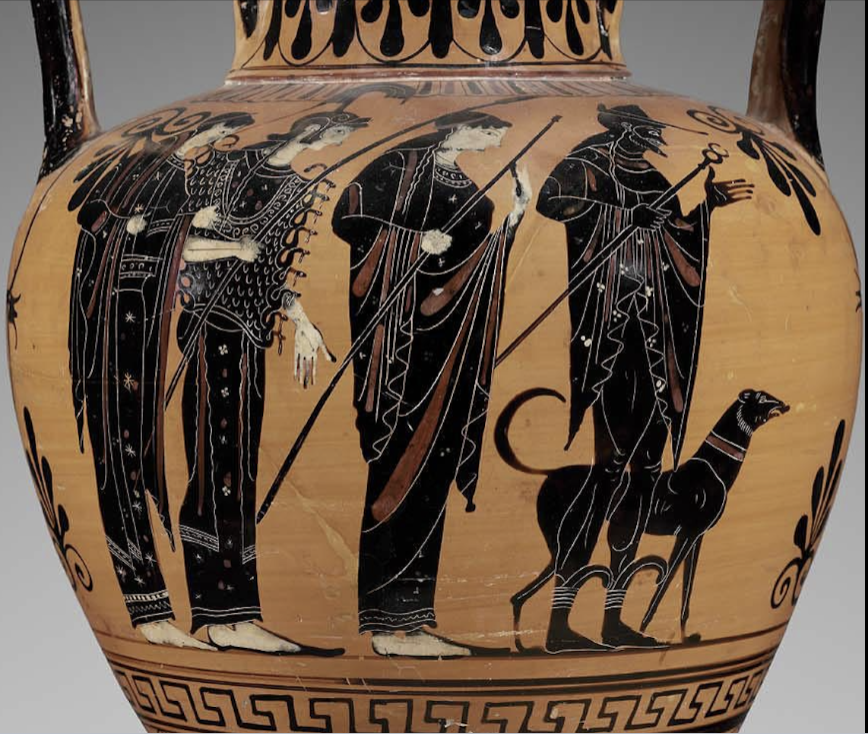
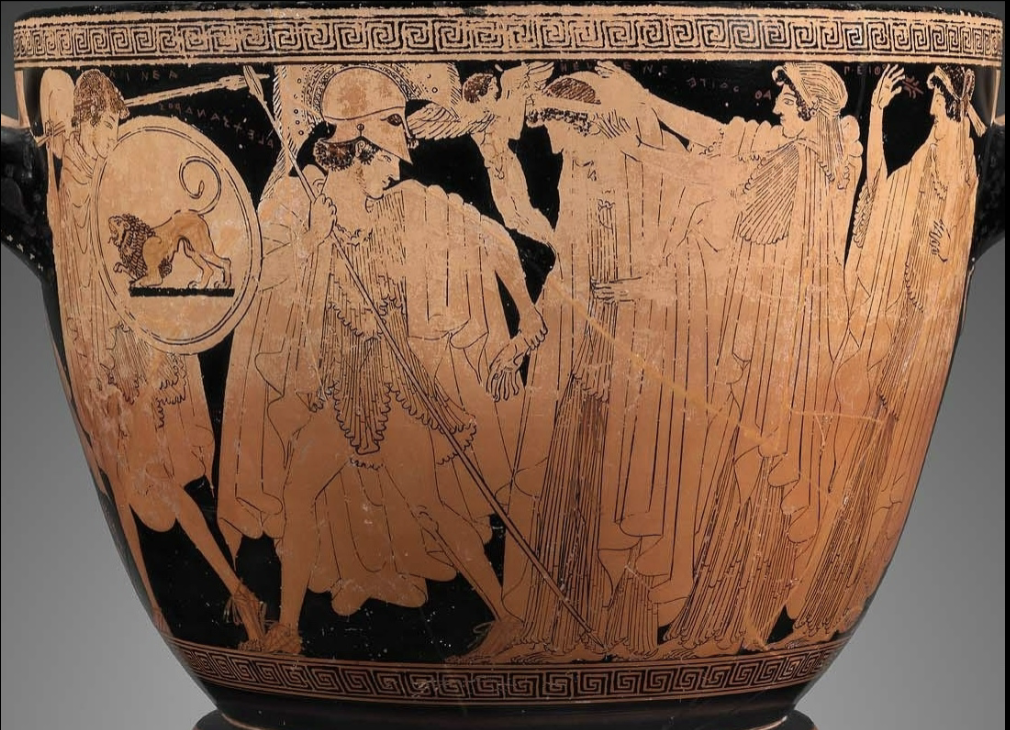
Paris Leads Helen MFA (color)
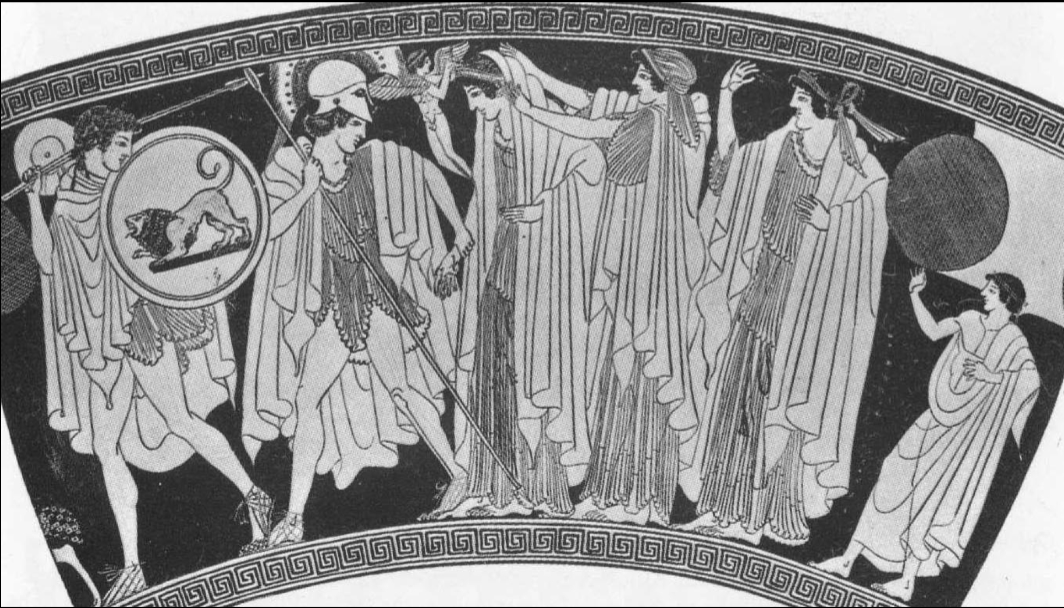
Paris Leads Helen: MFA (b&w, unrolled)
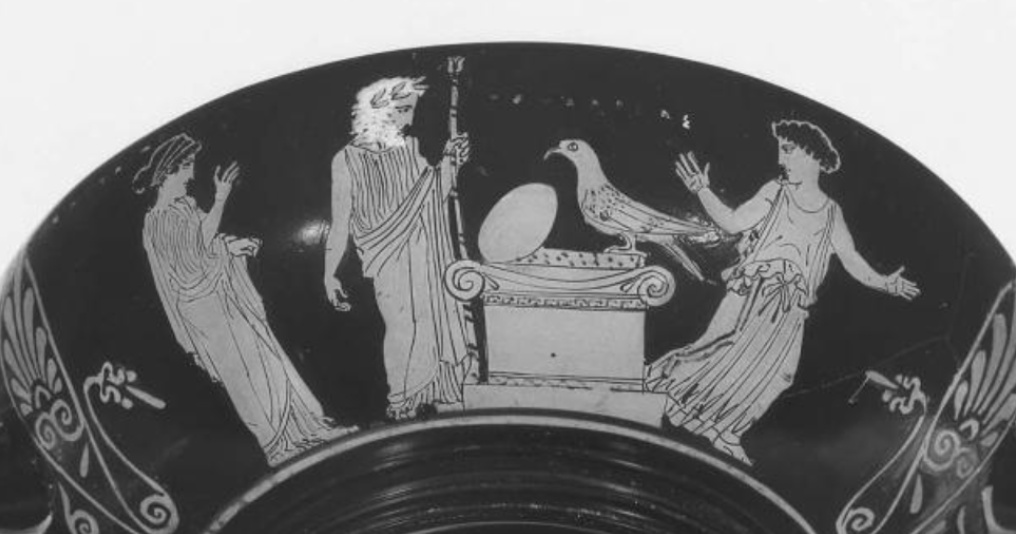
Leda’s Egg
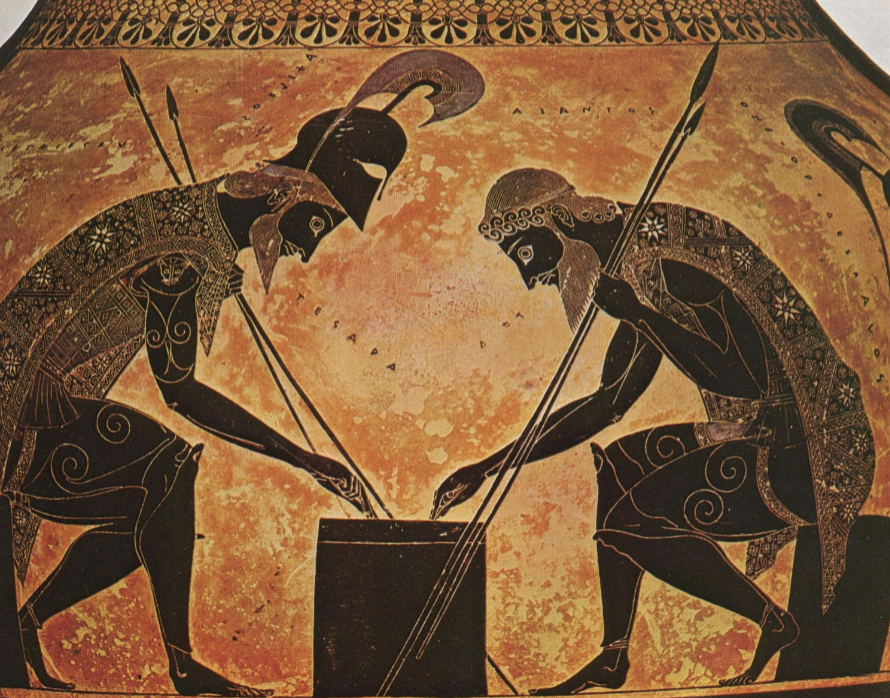
Achilles & Ajax at Play
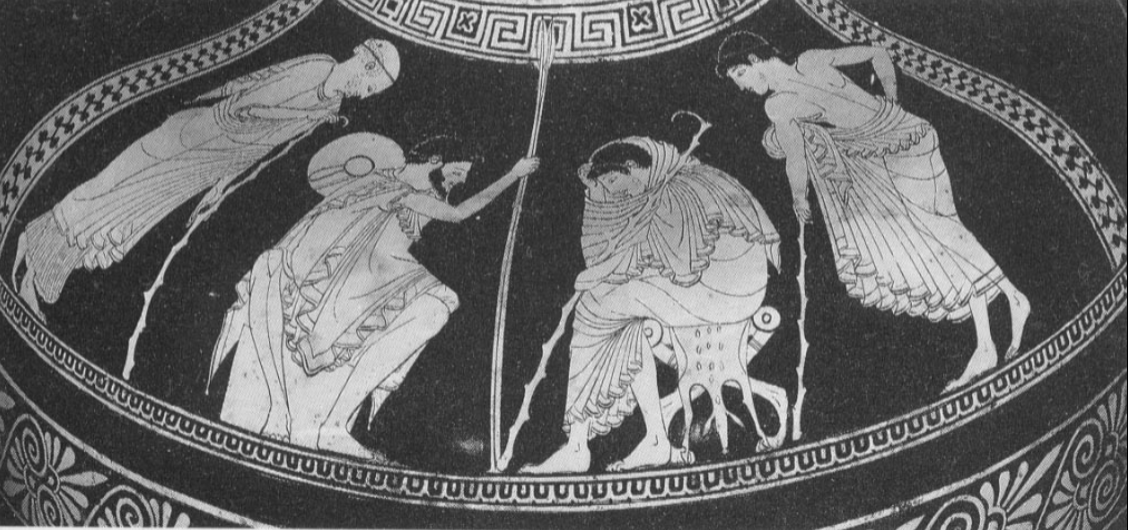
Mission (“Embassy”) to Achilles
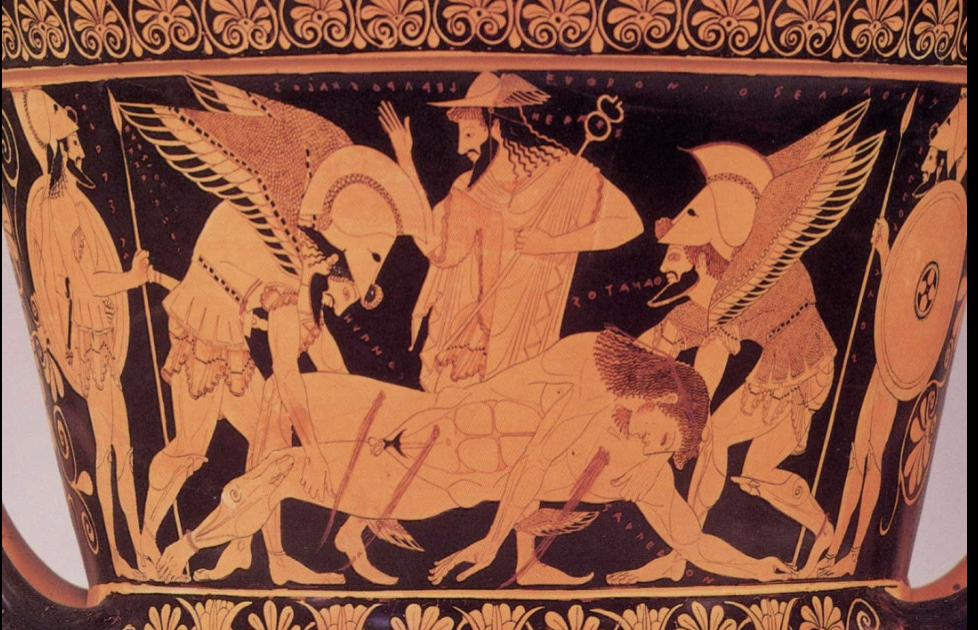
The “Euphronios Krater”
Hephaestus, Thetis and Achilles’ Armor
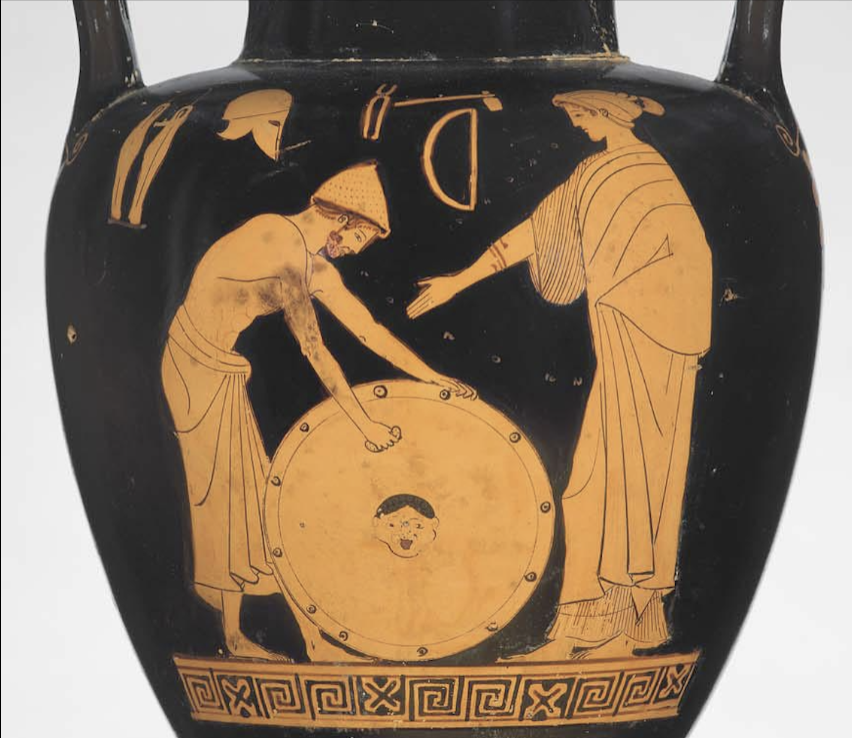
Achilles and Hector
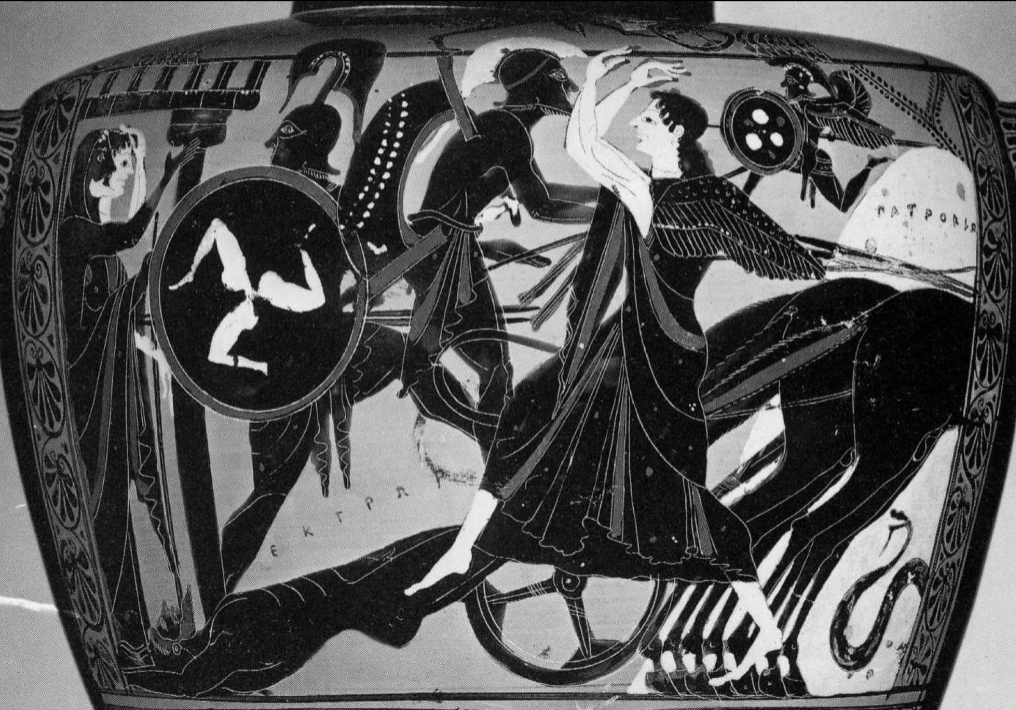
Achilles and Penthesilea
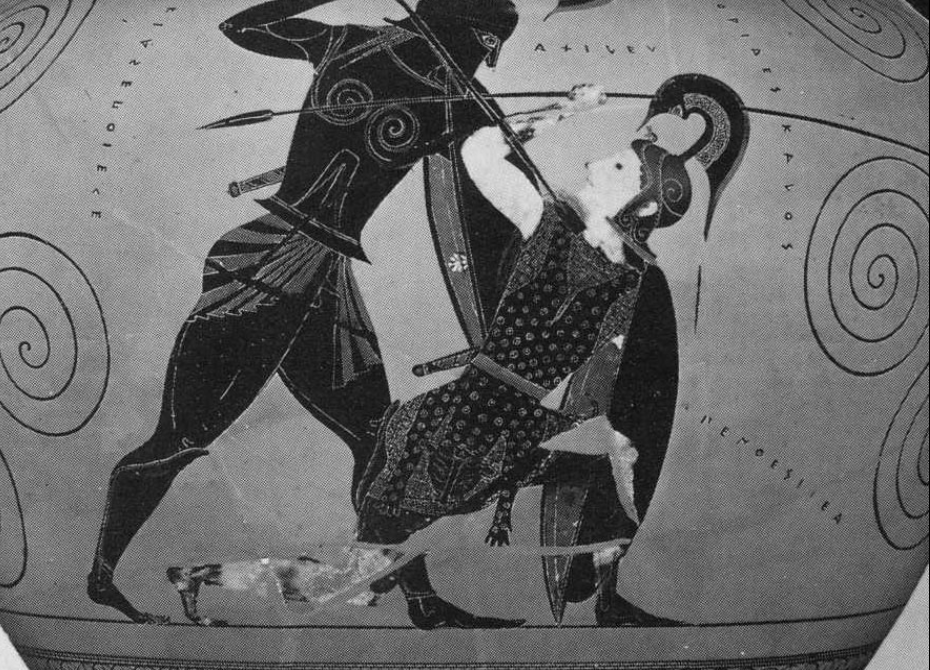
Fight for Achilles’ Body
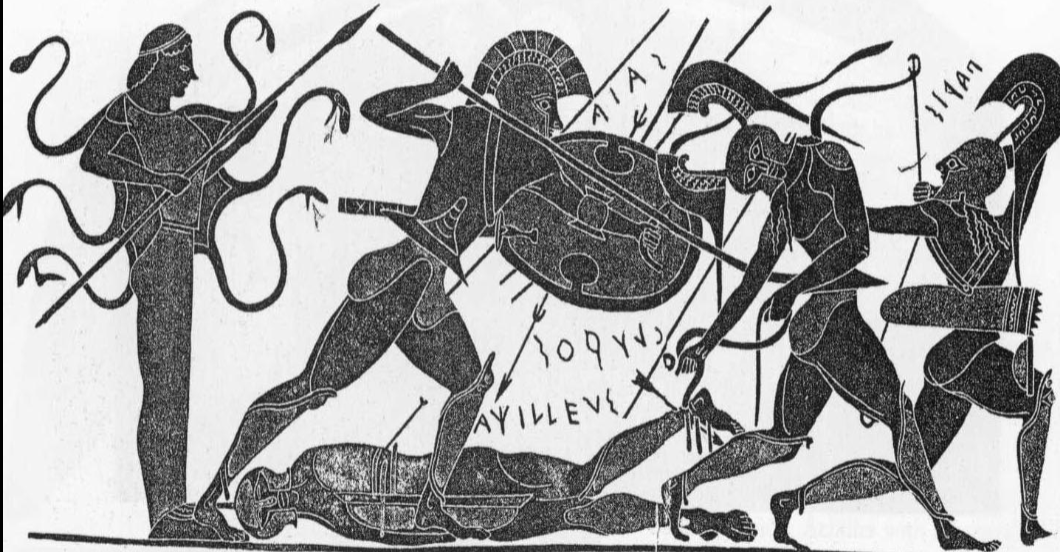
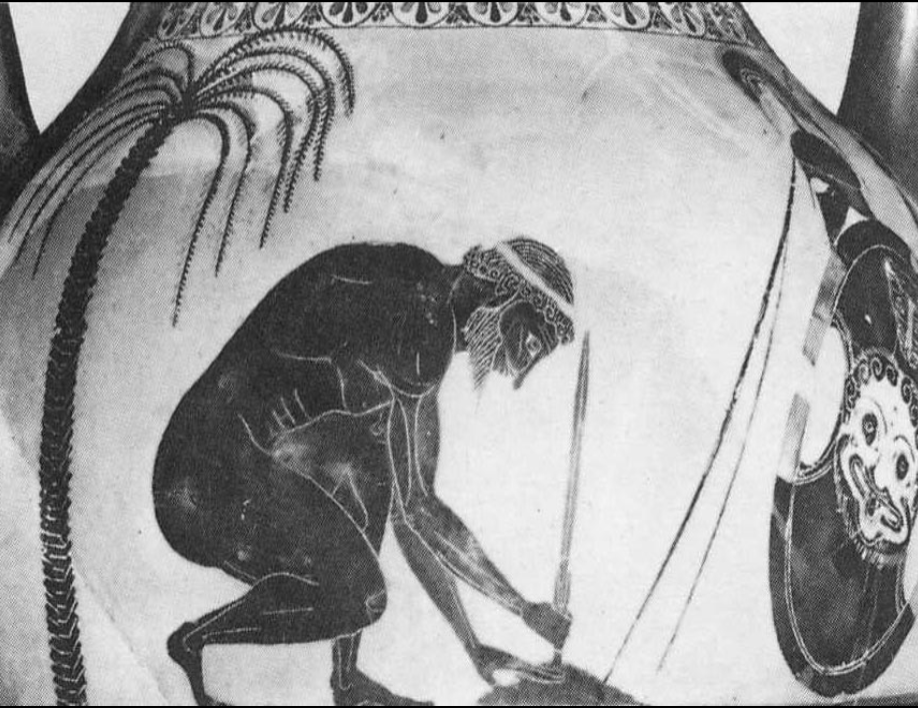
The Suicide of Ajax
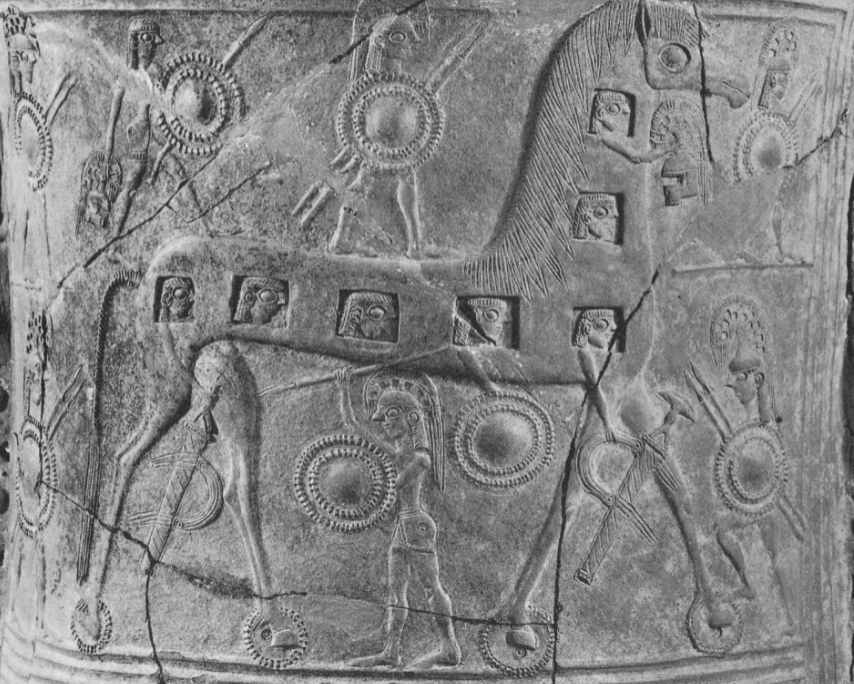
Trojan Horse
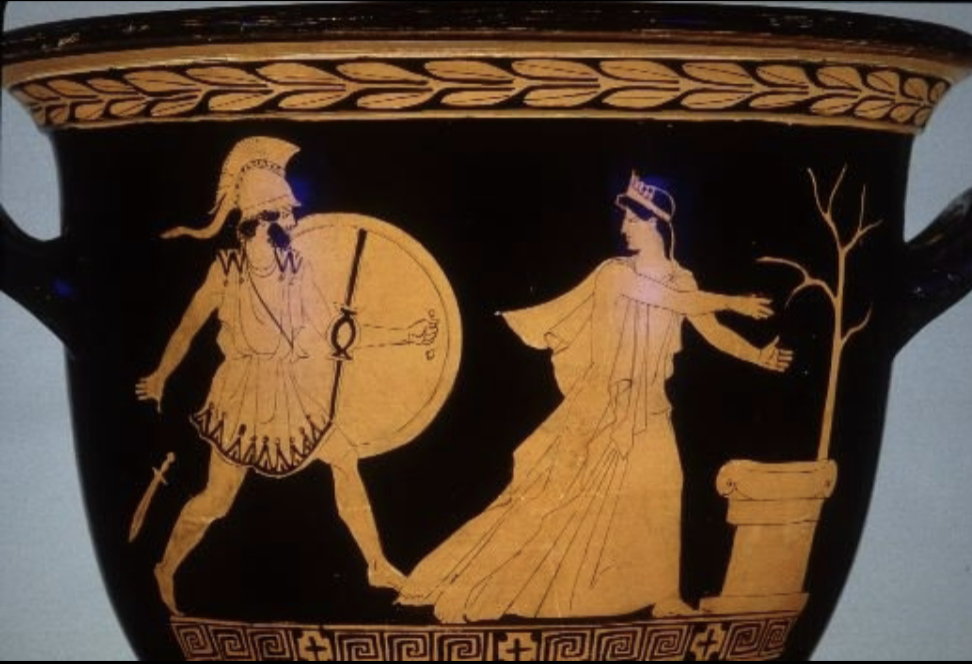
Helen and Menelaus
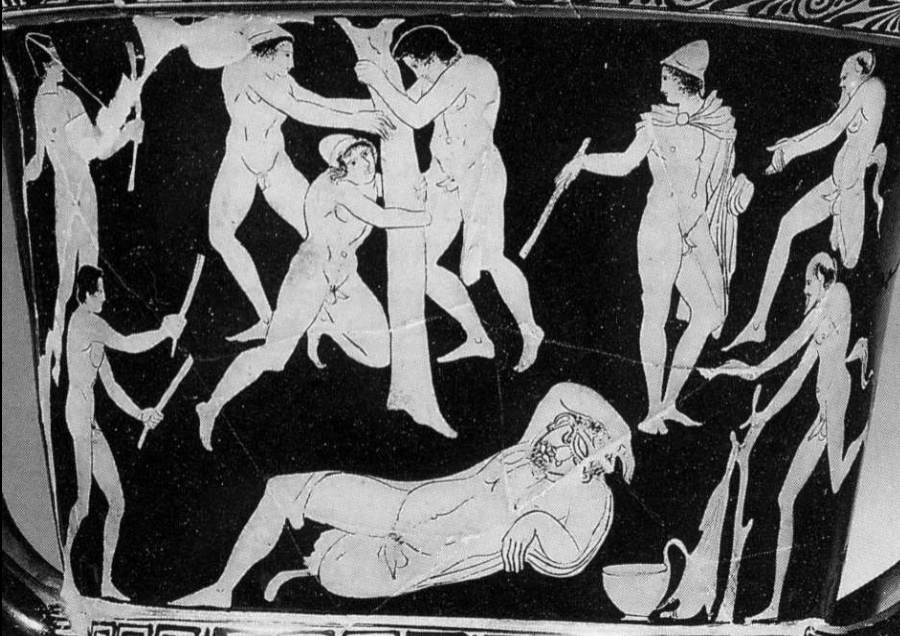
Odysseus & Polyphemus
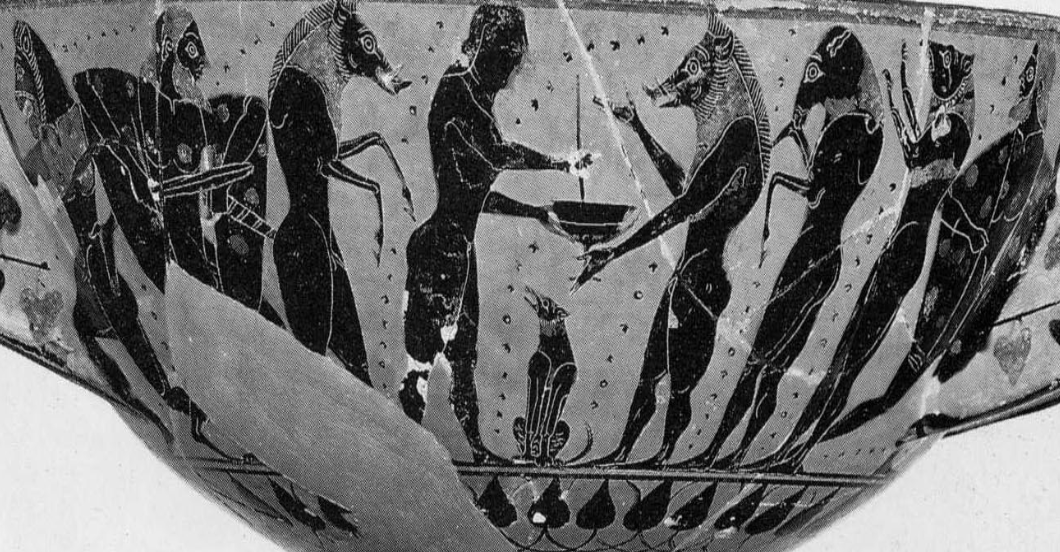
Odysseus and Circe
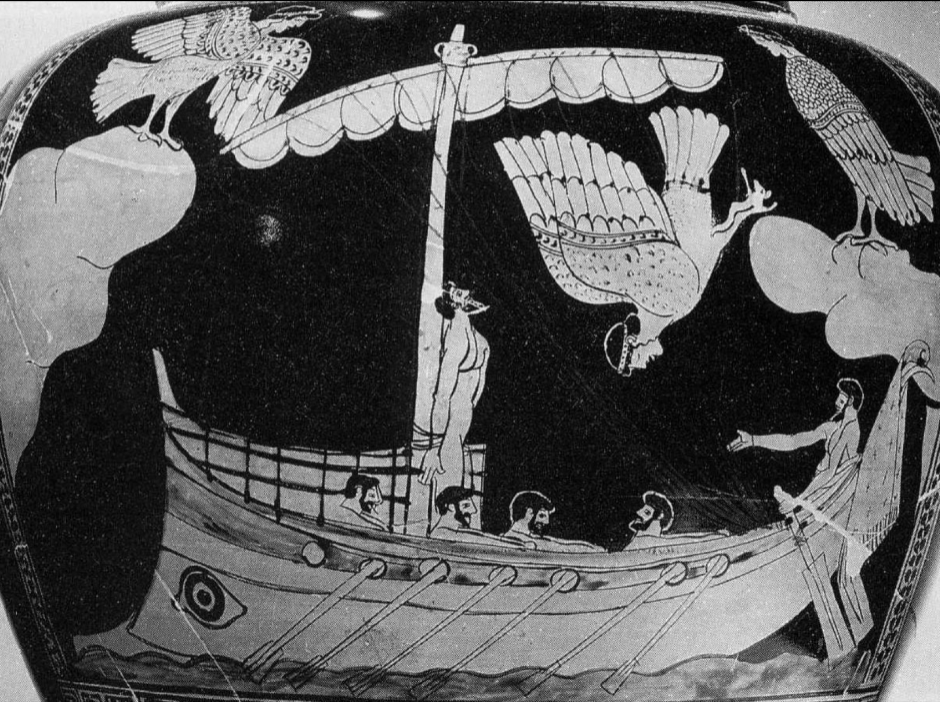
Odysseus and Sirens
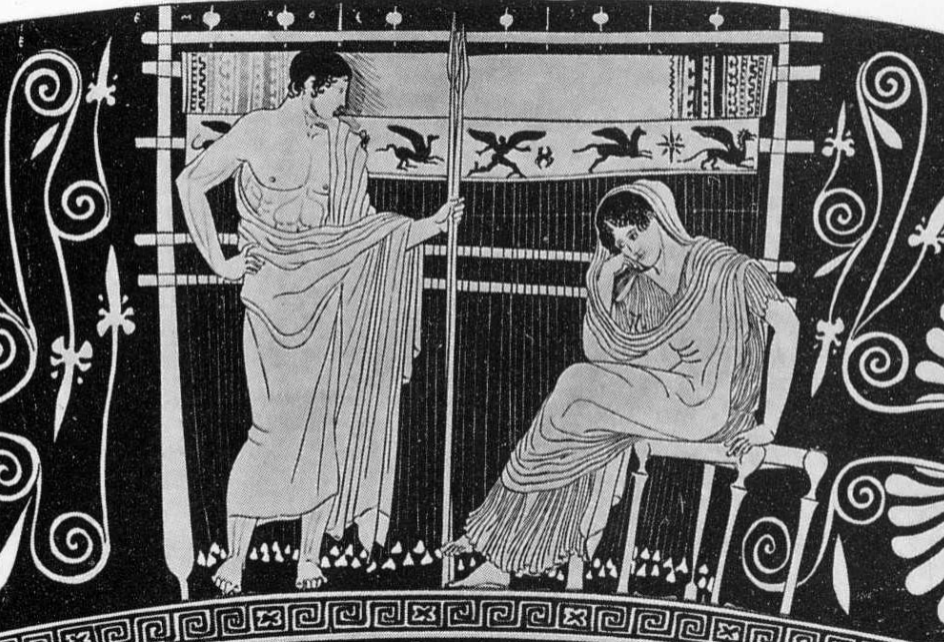
Penelope & Telemachus
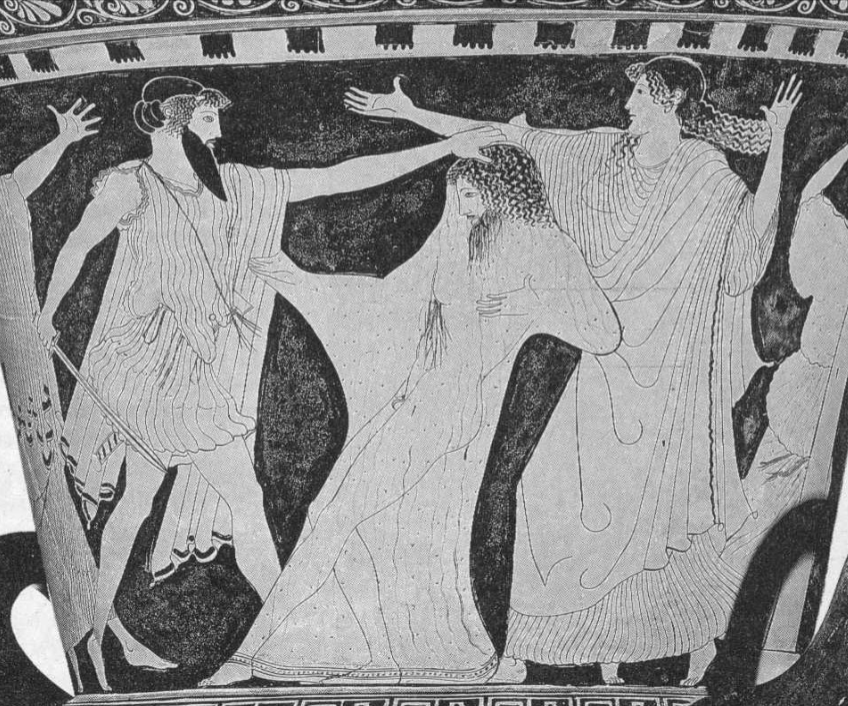
Aegisthus & Agamemnon
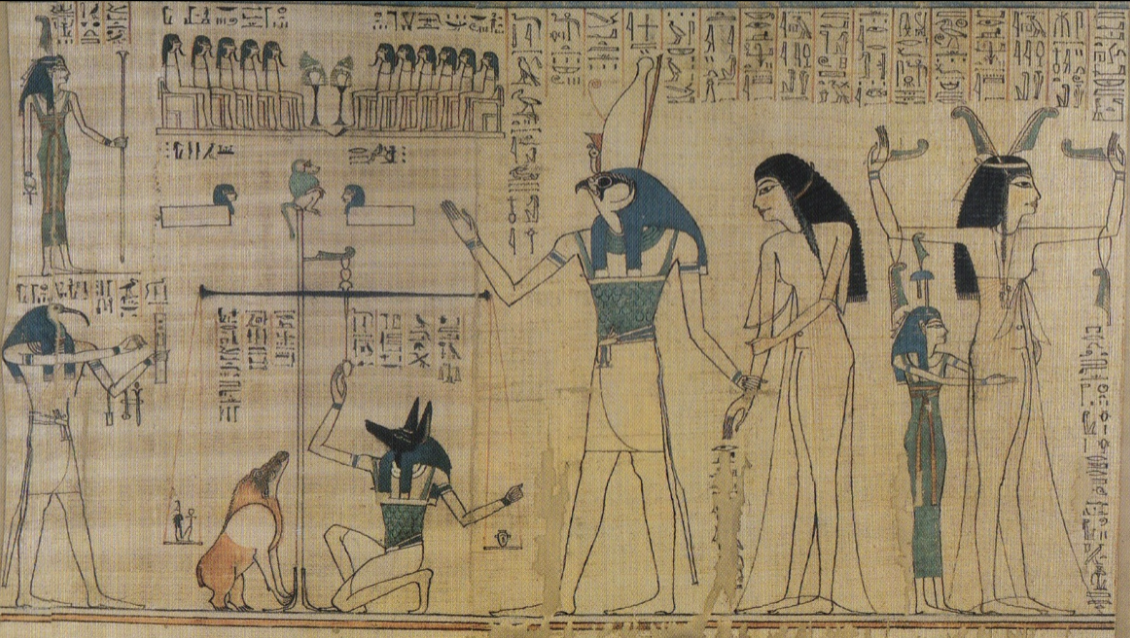
Heart Weighed Against Feather of Maat