Final conclusion
 Call Kai
 Learn
Learn Practice Test
 Spaced Repetition
 Match
Match Flashcards
 Knowt Play
1/301

There's no tags or description
Looks like no tags are added yet.
Name | Mastery | Learn | Test | Matching | Spaced | Call with Kai |
|---|
No analytics yet
Send a link to your students to track their progress
302 Terms
Why do mafic magmas tend to reach the surface much more often than felsic magmas?
Felsic magma (which is higher in silica content) is more viscous than mafic magma.
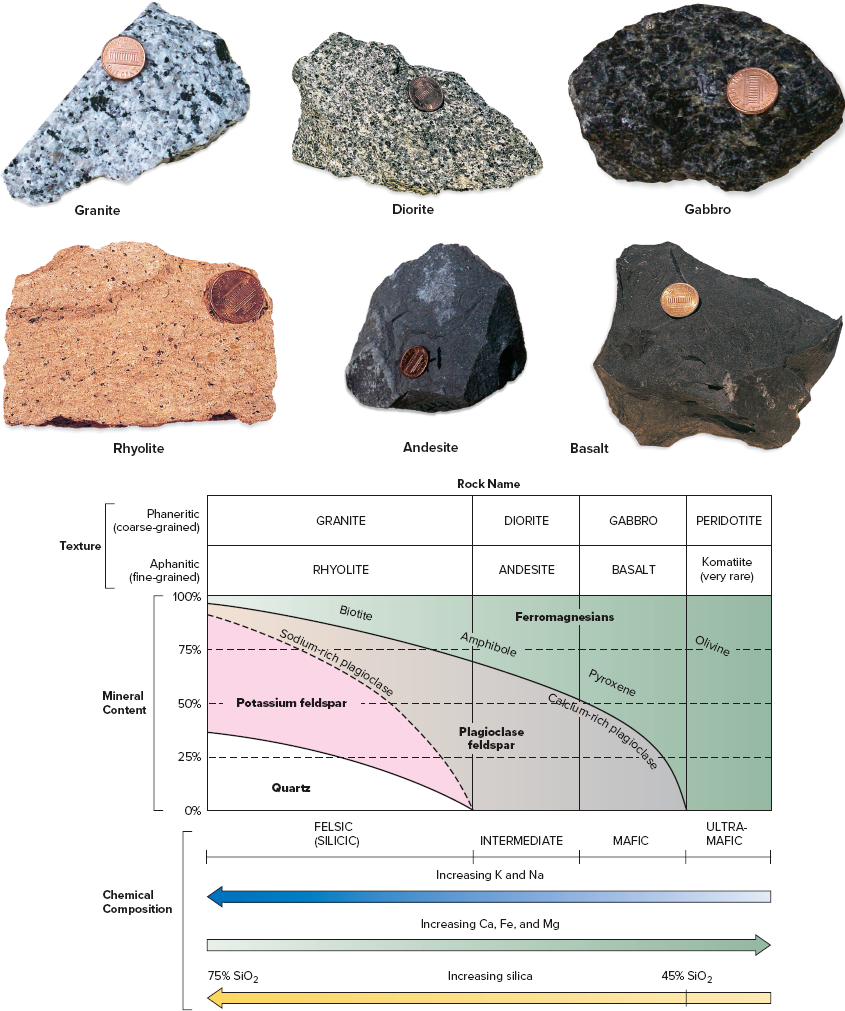
How would you distinguish, on the basis of minerals present, among granite, gabbro, and diorite
Granite has a wide range of compositions, but it usually contains quartz or potassium feldspar, in addition to other minerals. Diorite and gabbro both contain ferromagnesians and plagioclase feldspar, but diorite has more amphibole and gabbro has more pyroxene.
Why is a higher temperature required to form magma at the oceanic ridges than in the continental crust?
According to the section “Explaining Igneous Activity by Plate Tectonics”, subsection “Igneous Processes at Convergent Boundaries”, paragraph titled “The Origin of Granite”, the melting point of silicic rocks is lower than that of mafic rock, especially if water is present. (If water is present it’s called “flux melting”.)
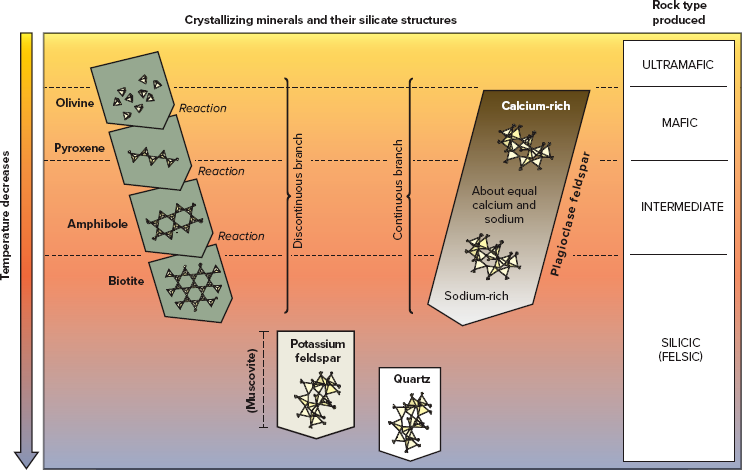
Describe the differences between the continuous and the discontinuous branches of Bowen’s reaction series.
The discontinuous branch is on the left; the continuous branch is on the right. Quartz and potassium feldspar belong to both branches.
The major difference between intrusive igneous rocks and extrusive igneous rocks is
where they solidify.
chemical composition.
type of minerals.
all of the preceding
where they solidify
Which is not an intrusive igneous rock?
gabbro
diorite
rhyolite
peridotite
rhyolite
Flux melting occurs when
water is added to the asthenosphere.
a mantle plume increases the temperature of the asthenosphere.
mantle material undergoes depression.
water is added to the asthenosphere
The continuous branch of Bowen’s reaction series contains the mineral
pyroxene.
plagioclase.
amphibole.
quartz
plagioclase
The discontinuous branch of Bowen’s reaction series contains the mineral
pyroxene.
amphibole.
olivine.
all of the above
all of the above
By definition, stocks differ from batholiths in
shape.
size.
chemical composition.
age.
size
A discordant shallow intrusive structure is called a
stock.
dike.
sill.
laccolith.
dike
The most common igneous rock of the continents is
basalt.
granite.
rhyolite.
peridotite.
granite
Mafic magma is generated at divergent boundaries because of
decompression melting
What would happen, according to Bowen’s reaction series, under the following circumstances: olivine crystals form and only the surface of each crystal reacts with the melt to form a coating of pyroxene that prevents the interior of olivine from reacting with the melt?
This is basically what happened with the mineral sample that I showed you in class: a layer of olivine remains at the bottom, and then the other layers form above it. Most of the sample consists of quartz, which is the last mineral formed.
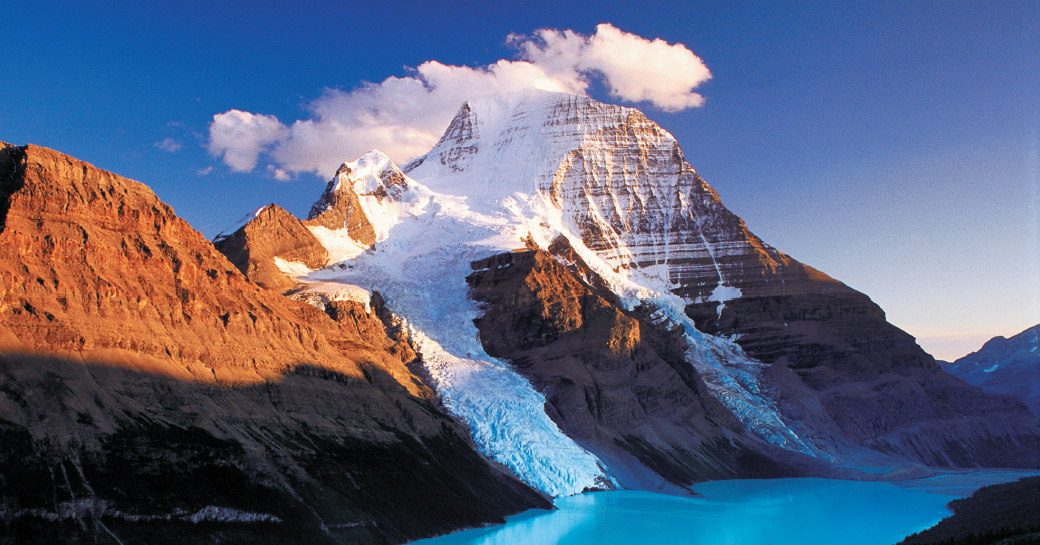
Examine the photo of the Canadian Rockies on the first page of this chapter. Which of the four Earth systems can you see? How are they interacting with each other?
Biosphere, geosphere, hydrosphere, atmosphere. All four Earth systems are visible in this photograph. The clouds are part of the atmosphere; the glacier and lake are part of the hydrosphere; the grass and trees are part of the biosphere; and the rocks are part of the geosphere.
Draw a cross section of the Earth and label each of the compositional layers and mechanical layers.
Igneous rock, metamorphic rocks, Sedimentary rocks
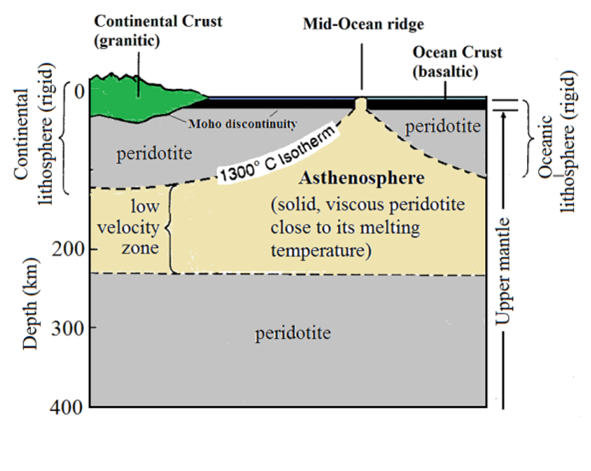
What are the relationships among the mantle, the crust, the asthenosphere, and the lithosphere?
The crust is the very top layer with oceanic and continental crust. The mantle is the second layer. The lithosphere is the mantle and the crust. While the asthenosphere is below the lithospher
What tectonic plate are you currently on? Where is the nearest plate boundary, and what kind of boundary is it?
We are on the North American Plate. The nearest plate boundary is the Mid-Atlantic Ridge. It is a divergent boundary
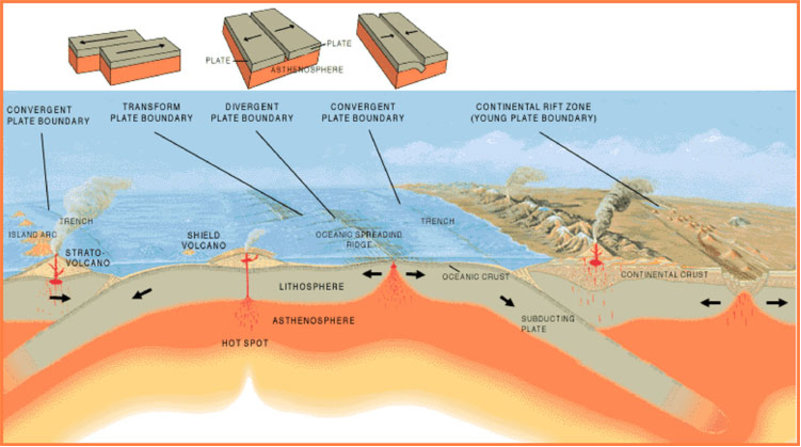
Draw a sketch of each of the major types of plate boundaries. Show the direction of plate motion and label important features.
Convergent boundary, transform boundary, divergent boundary
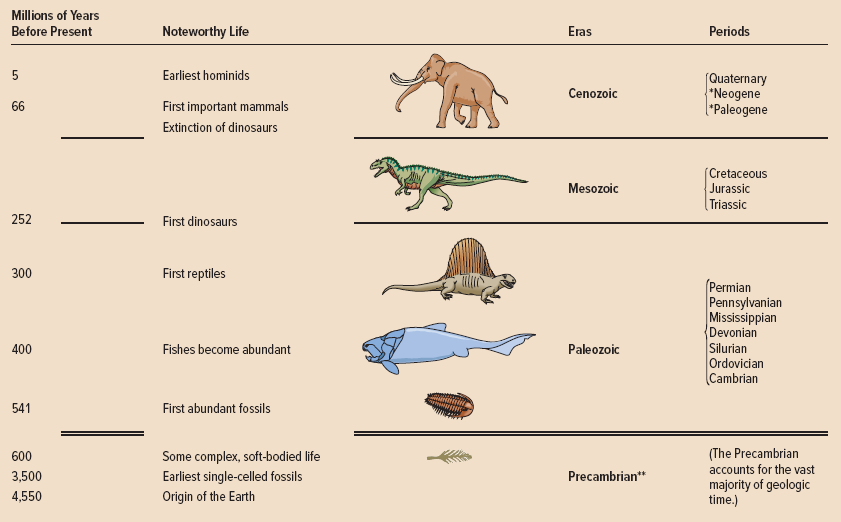
Explain why prehistoric cave dwellers never saw a dinosaur.
dinosaurs became extinct 70 million years ago, and hominids didn’t appear until 5 million years ago.
Plate tectonics is a result of Earth’s internal heat engine, powered by (choose all that apply)
the magnetic field.
the Sun.
gravity.
heat flowing from Earth’s interior outward
gravity and heat flowing from the earths interior outward
A typical rate of plate motion is
3–4 meters per year.
1 kilometer per year.
1–10 centimeters per year.
1,000 kilometers per year.
1-10 centimeter per year
Oceanic and continental crust differ in
composition.
density.
thickness.
all of the preceding.
all of the preceding.
The lithosphere is
the same as the crust.
the layer beneath the crust.
the crust and uppermost mantle.
only part of the mantle.
the crust and uppermost mantle
Why are some parts of the lower mantle hotter than other parts?
Because there are regions that have a greater concentration of radioactive materials, and these generate a greater amount of heat
According to plate tectonic theory, where are crustal rocks created? Why doesn’t Earth keep getting larger if rock is continually created?
Crustal rocks are created at the spreading centers (divergent plate boundaries) but they melt back into the mantle ant convergent plate boundaries.
What percentage of geologic time is accounted for by the last century?
(100 years)/(4.5 billion years)×(100%) = 2.2×10⁻⁶ %
What are some of the technical difficulties you would expect to encounter if you tried to drill a hole to the center of the Earth?
Extreme pressure and Extremely high temperature
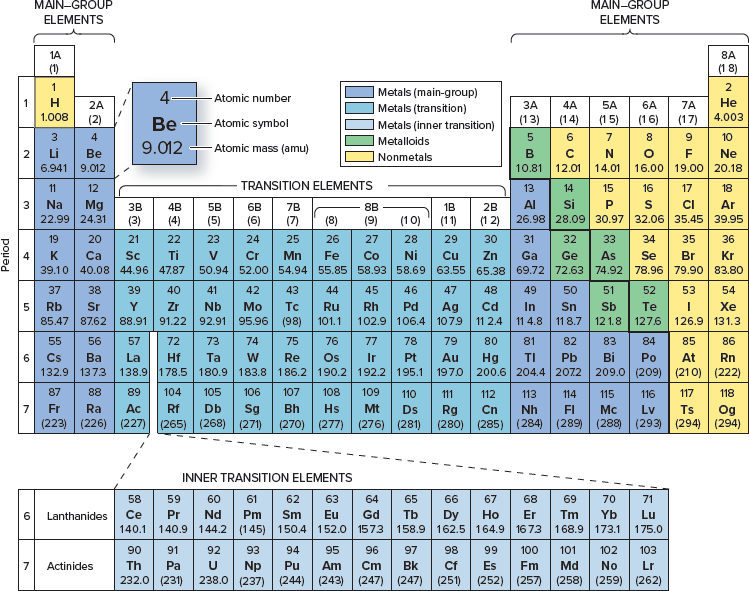
Which element has an atomic number of 24?
Chromium
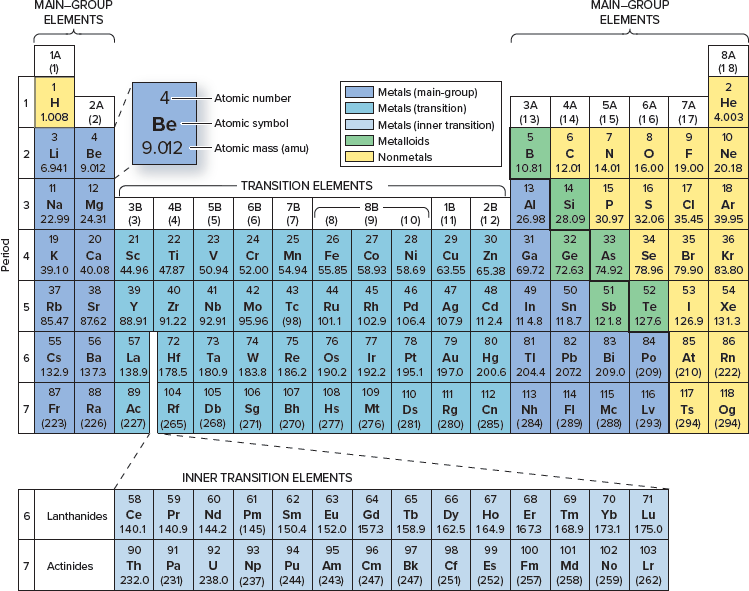
How many neutrons does it have?
28
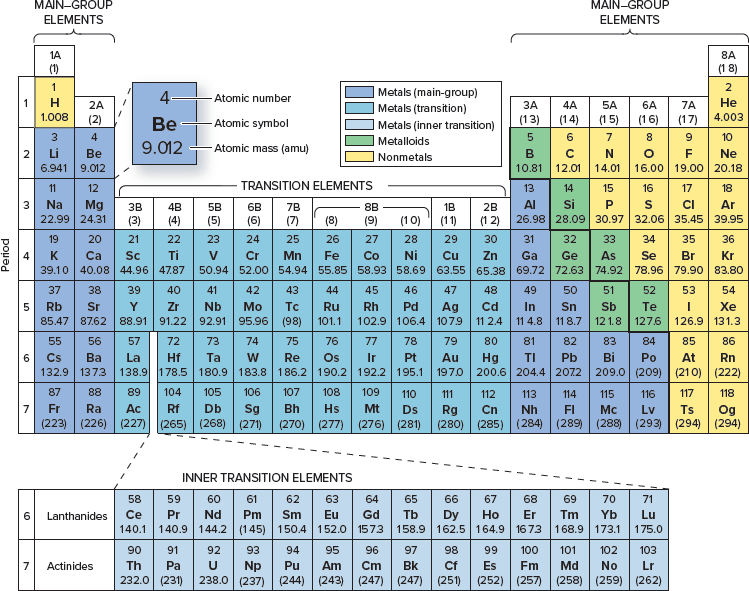
How many electrons does a neutral atom of this element have?
24
The mineral fluorite (CaF2) is composed of calcium (Ca2+) and fluorine (F−). What kind of bonding holds them together? Explain how you know this.
It’s an ionic bond because calcium has only two electrons in its outermost shell and fluorine has seven. So when calcium and fluorine bond together the outermost calcium electrons spend most of their time going around the fluorine atoms, creating a positive ion and a negative ion.
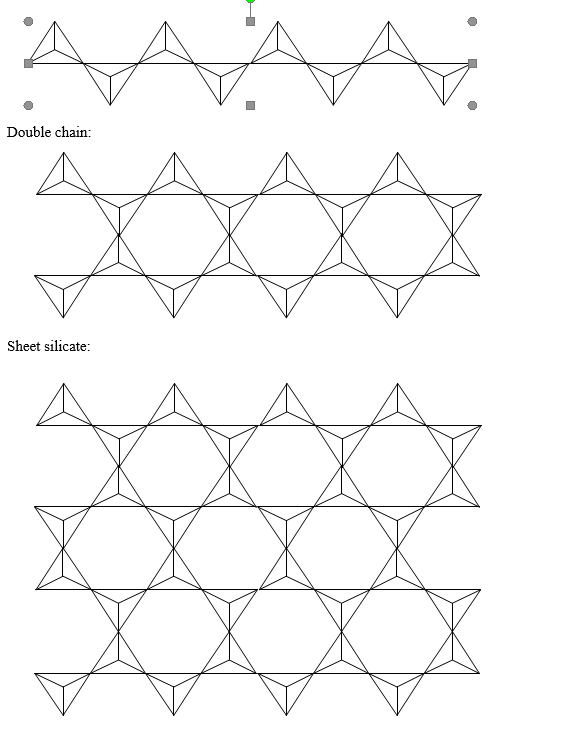
Using triangles to represent silica tetrahedra, start with a single triangle (to represent isolated silicate structure) and, by drawing more triangles, build on the triangle to show a single-chain silicate structure. By adding more triangles, convert that to a double-chain structure. Turn your double-chain structure into a sheet silicate structure.
Isolated: single triangle
Single chain: one row
Double chain: two linked rows
Sheet: many rows forming a flat layer
How do the crystal structures of pyroxenes and amphiboles differ from one another? Which physical property is used to distinguish between them?
Pyroxenes and amphiboles differ in how their silicate tetrahedra are linked, and this structural difference directly controls their cleavage,
Pyroxenes have a single-chain silicate structure. Each SiO₄ tetrahedron shares two oxygen atoms, forming long, straight chains. have two directions of cleavage that intersect at nearly 90° (about 87° and 93°).
Amphiboles have a double-chain silicate structure. This produces two cleavage directions that intersect at oblique angles, approximately 56° and 124°.
Write out the definitions for the terms element, mineral, and rock; then for each of the following substances, determine whether it is an element, a mineral, or a rock: Iron
Element: A pure substance made of only one type of atom. An element cannot be broken down into simpler substances by chemical means.
Mineral: A naturally occurring, inorganic solid with a definite chemical composition and an ordered internal (crystalline) structure.
Rock: A naturally occurring solid made up of one or more minerals (or mineraloids). Rocks do not have a fixed chemical composition.
Classification: its an element
Write out the definitions for the terms element, mineral, and rock; then for each of the following substances, determine whether it is an element, a mineral, or a rock: Quartz
Classification: is a mineral.
Write out the definitions for the terms element, mineral, and rock; then for each of the following substances, determine whether it is an element, a mineral, or a rock: Carbon
Classification: is an element.
Write out the definitions for the terms element, mineral, and rock; then for each of the following substances, determine whether it is an element, a mineral, or a rock: Diamond
Classification: is a mineral
Write out the definitions for the terms element, mineral, and rock; then for each of the following substances, determine whether it is an element, a mineral, or a rock: Obsidian
Classification: is a rock.
Write out the definitions for the terms element, mineral, and rock; then for each of the following substances, determine whether it is an element, a mineral, or a rock: Calcite
Classification: is a mineral.
Write out the definitions for the terms element, mineral, and rock; then for each of the following substances, determine whether it is an element, a mineral, or a rock: calcium
Classification: is an element.
Write out the definitions for the terms element, mineral, and rock; then for each of the following substances, determine whether it is an element, a mineral, or a rock: Limestone
Classification: is a rock.
Write out the definitions for the terms element, mineral, and rock; then for each of the following substances, determine whether it is an element, a mineral, or a rock: Granite
Classification: is a rock
How would you distinguish between the following pairs of minerals on the basis of physical properties? olivine/pyroxene
Olivine has poor or no cleavage
Pyroxene has two distinct cleavage directions that intersect at nearly 90°
How would you distinguish between the following pairs of minerals on the basis of physical properties? calcite/quartz
Calcite has three directions of cleavage that do not meet at right angles.
Quartz has no cleavage
How would you distinguish between the following pairs of minerals on the basis of physical properties? mica/halite
Mica has perfect cleavage in one direction, allowing it to split into very thin, flexible sheets.
Halite has three directions of cleavage that intersect at 90 degrees,
How would you distinguish between the following pairs of minerals on the basis of physical properties? amphibole/hematite
Amphibole typically appears dark green to black and has two directions of cleavage
Hematite can appear distinctive reddish-brown streak.
Name the nonsilicate mineral groups and describe their defining chemical characteristics
Carbonates contain the carbonate ion (CO₃²⁻).
Sulfates contain the sulfate ion (SO₄²⁻).
Sulfides contain sulfur (S²⁻) but no oxygen.
Oxides consist of oxygen bonded to a metal, but the oxygen is not bonded to silicon, carbon, or sulfur.
chlorides contain Cl but no O
Native elements consist of only one element.
A substance that cannot be broken down into other substances by ordinary chemical methods is a(n)
crystal.
element.
molecule.
acid.
element
Which of these is not part of the definition of a mineral?
Organic
Crystalline
Specific chemical composition
Naturally occurring
Organic
The subatomic particle that contributes a single negative electrical charge is the
proton.
neutron.
electron.
electron
Atoms of an element containing different numbers of neutrons but the same number of protons are called
ions.
covalent.
isotopes.
neutral.
isotopes
Atoms with either a positive or a negative charge are called
compounds.
ions.
elements.
isotopes.
ions
The bonding between Cl and Na in halite is
ionic.
covalent.
metallic
Ionic
Which is not true of a single silica tetrahedron?
The atoms of the tetrahedron are strongly bonded together.
It has a net negative charge.
The formula is SiO4.
It has four silicon atoms.
four silicon atom
In a single chain silicate, how many of the oxygen atoms in each silica tetrahedron are shared with neighboring silica tetrahedra?
None
One
Two
Three
Four
Two
Which of these common minerals is not a silicate?
Quartz
Feldspar
Gypsum
Mica
Gypsum
The ability of a mineral to break along preferred directions is called
fracture.
crystal form.
hardness.
cleavage.
cleavage
Crystalline substances are always
ionically bonded.
minerals.
made of repeating patterns of atoms.
made of glass.
made of repeating patterns of atoms
Which of these minerals commonly forms as an evaporite (precipitate from evaporating water)?
Quartz
Hematite
Halite
Feldspar
Halite
How does oxygen in the atmosphere differ from oxygen in rocks and minerals?
Oxygen atoms in the atmosphere are bonded with other oxygen atoms (O2 or O3) or with carbon atoms (CO2).
What happens to the atoms in water when it freezes? Is ice a mineral? Is a glacier a rock?
The hydrogen atoms in a water molecule have a slight positive charge, while the oxygen atom has a slight negative charge. When water freezes the molecules bond together in a hexagonal lattice, with the hydrogen atoms of each molecule being attracted to the oxygen atoms of neighboring molecules. Ice is a mineral and a glacier is a rock.
How would you expect the appearance of a rock high in iron and magnesium to differ from a rock with very little iron and magnesium?
A rock high in iron and magnesium will be darker in color. In class I showed you a sample of biotite, which is a type of mica that is high in iron and magnesium, and a sample of muscovite, which is not high in iron and magnesium. These are both varieties of mica, but the biotite is darker in color.
What might explain the remarkable alignment of the Cascade volcanoes?
The volcanoes are the result of the collision of the Juan de Fuca plate with the North American plate. The lava erupts when the subducted plate reaches a certain depth
Why are volcanic eruptions at convergent plate boundaries typically more explosive than those at divergent plate boundaries?
Convergent plate boundaries give rise to felsic volcanoes, which have viscous lava, while divergent boundaries produce mafic lava
Why are there no active volcanoes in the eastern parts of the United States and Canada?
There are no active volcanoes in the eastern United States because the nearest plate boundary is thousands of miles away and there are no “hot spots”, or mantle plumes, nearby.
What do pillow lavas indicate about the environment of volcanism?
eruption took place underwater.
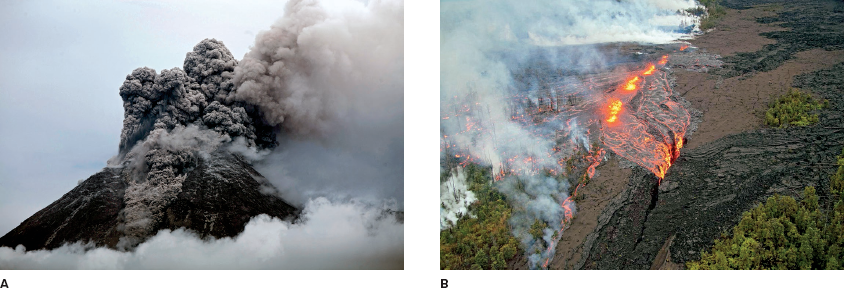
Consider the eruption of Mount Merapi, described at the beginning of this chapter and shown in figure 4.1. What kind of volcano is Merapi? What evidence did you use to determine this? Based upon your answer, what do you think the plate-tectonic setting is of Mount Merapi? What composition of lava do you think it mostly erupts?
is a composite volcano, as described in section “Types of Volcanoes”, subsection “Composite Volcanoes”. We know this because it produced pyroclastic flows. Most composite volcanoes are located near convergent plate boundaries, where one plate dives underneath the other. And in fact its near the boundary between the Eurasian plate and the Indian-Australian plate. Composite volcanoes erupt mostly felsic lava, with a high proportion of silicates.
Which of the following is an example of a shield volcano?
Mount St. Helens, Washington State
Mount Merapi, Indonesia
Mauna Loa, Hawaii
Cerro Negro, Nicaragua
Mauna Loa, Hawaii
The gas most commonly released during a volcanic eruption is
water vapor.
carbon dioxide.
sulfur dioxide.
hydrogen sulfide.
oxygen.
water vapor
_____ is a rock composed of frothy volcanic glass
Obsidian
Basalt
Tuff
Pumice
Volcanic breccia
Pumice
A lava flow with a ropy or billowy surface is called
pahoehoe
a′a
pillow lava
lahar
lava tube
pahoehoe
Which of these is not a type of pyroclastic material?
ash
dust
lapilli
a′a
bomb
a’a
Which of these is not a major type of volcano?
shield
cinder cone
composite
stratovolcano
spatter cone
spatter cone
An example of a composite volcano is
Mount Rainier.
Fujiyama.
Mount Vesuvius.
all of the preceding.
all of the preceding
Which volcano is not usually made of basalt?
shield
composite cone
spatter cone
cinder cone
composite cone
What factors control whether a rock behaves as a brittle material or a ductile material?
According to figure 15.4, all rocks behave elastically when the stress is relatively low. But when the stress exceeds a certain level, some rocks exhibit brittle behavior, which means they break, and others exhibit ductile behavior, which means they bend. The difference between the two depends on the type of rock and also on the temperature and pressure, as explained in chapter 7, section “Metamorphism”, paragraph 8
What is the difference between strike, direction of dip, and angle of dip?
The “strike” is the intersection of the rock layer with an imaginary horizontal plane.
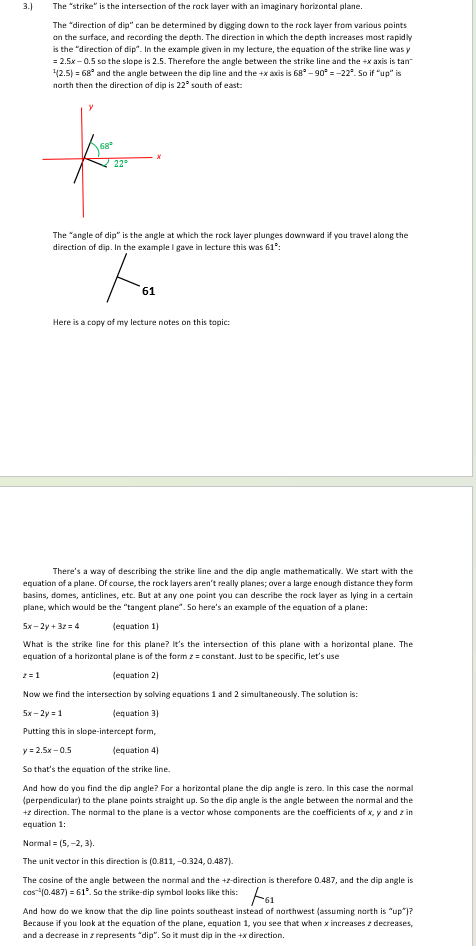
The “direction of dip” can be determined by digging down to the rock layer from various points on the surface, and recording the depth. The direction in which the depth increases most rapidly is the “direction of dip”. In the example given in my lecture, the equation of the strike line was y = 2.5x – 0.5 so the slope is 2.5. Therefore the angle between the strike line and the +x axis is tan–1(2.5) = 68° and the angle between the dip line and the +x axis is 68° – 90° = –22°. So if “up” is north then the direction of dip is 22° south of east:
The “angle of dip” is the angle at which the rock layer plunges downward if you travel along the direction of dip. In the example I gave in lecture this was 61°:
Here is a copy of my lecture notes on this topic:
There’s a way of describing the strike line and the dip angle mathematically. We start with the equation of a plane. Of course, the rock layers aren’t really planes; over a large enough distance they form basins, domes, anticlines, etc. But at any one point you can describe the rock layer as lying in a certain plane, which would be the “tangent plane”. So here’s an example of the equation of a plane:
5x – 2y + 3z = 4 (equation 1)
What is the strike line for this plane? It’s the intersection of this plane with a horizontal plane. The equation of a horizontal plane is of the form z = constant. Just to be specific, let’s use
z = 1 (equation 2)
Now we find the intersection by solving equations 1 and 2 simultaneously. The solution is:
5x – 2y = 1 (equation 3)
Putting this in slope-intercept form,
y = 2.5x – 0.5 (equation 4)
So that’s the equation of the strike line.
And how do you find the dip angle? For a horizontal plane the dip angle is zero. In this case the normal (perpendicular) to the plane points straight up. So the dip angle is the angle between the normal and the +z direction. The normal to the plane is a vector whose components are the coefficients of x, y and z in equation 1:
Normal = (5, –2, 3).
The unit vector in this direction is (0.811, –0.324, 0.487).
The cosine of the angle between the normal and the +z-direction is therefore 0.487, and the dip angle is cos–1(0.487) = 61°. So the strike-dip symbol looks like this:
And how do we know that the dip line points southeast instead of northwest (assuming north is “up”)? Because if you look at the equation of the plane, equation 1, you see that when x increases z decreases, and a decrease in z represents “dip”. So it must dip in the +x direction.
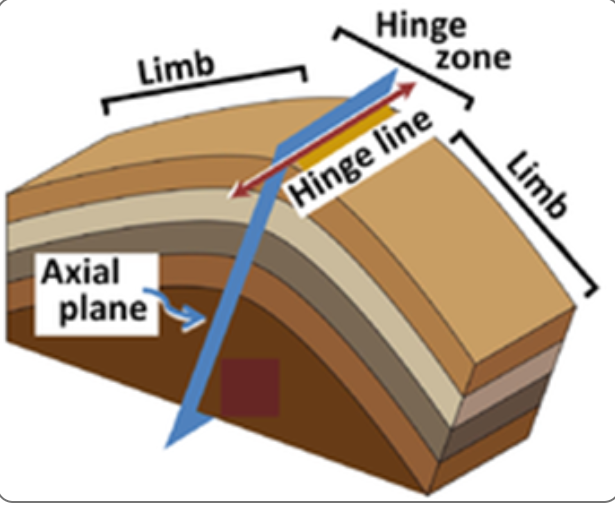
Draw a sketch of an anticline and label the limbs, axial plane, and hinge line.
Here’s the diagram from my lecture notes (thanks to Wikipedia):
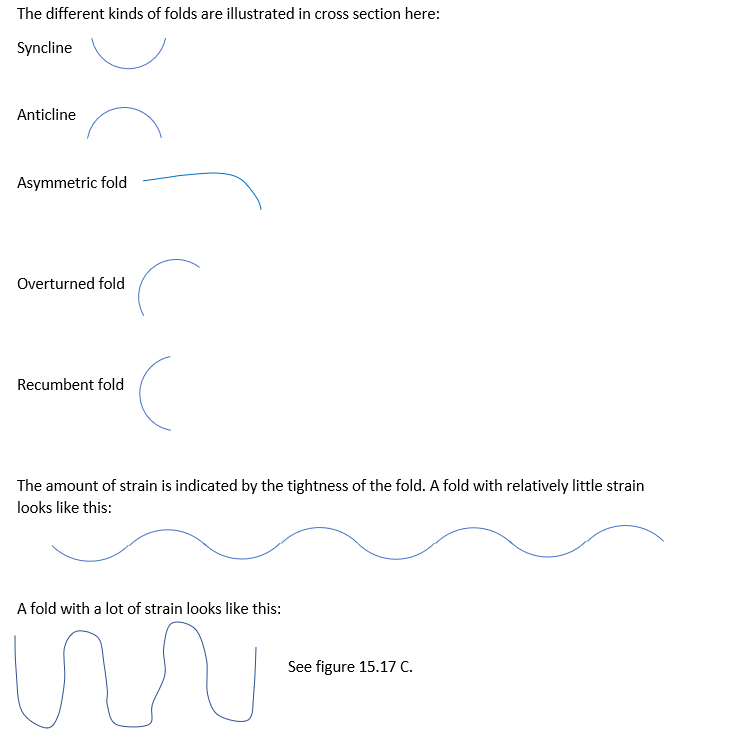
Sketch and describe the different types of folds, and explain how the shape and orientation of folds is used to interpret strain.
The different kinds of folds are illustrated in cross section here:
Syncline
Anticline
Asymmetric fold
Overturned fold
Recumbent fold
The amount of strain is indicated by the tightness of the fold. A fold with relatively little strain looks like this:
A fold with a lot of strain looks like this:
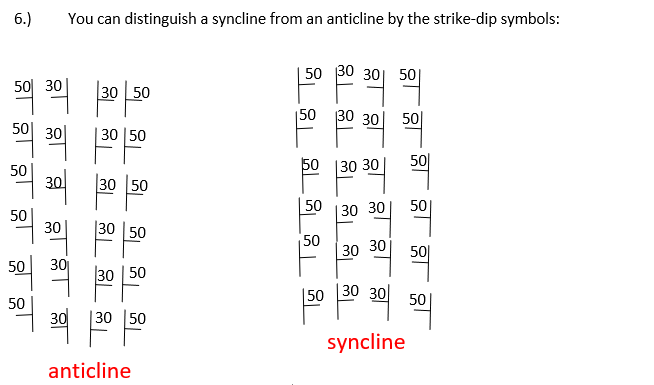
On a geologic map, if no cross sections were available, how could you distinguish an anticline from a syncline?
You can distinguish a syncline from an anticline by the strike-dip symbols:
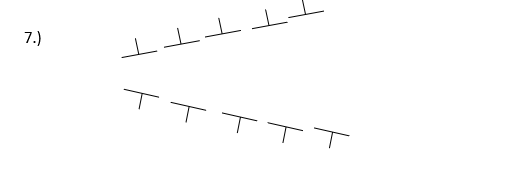
Draw a simple geologic map using strike and dip symbols for a syncline plunging to the west.
Assuming that north is “up”, you can see that this plunges west because the dip symbols point a little bit west of north and a little bit west of south.
How does a structural dome differ from a plunging anticline?
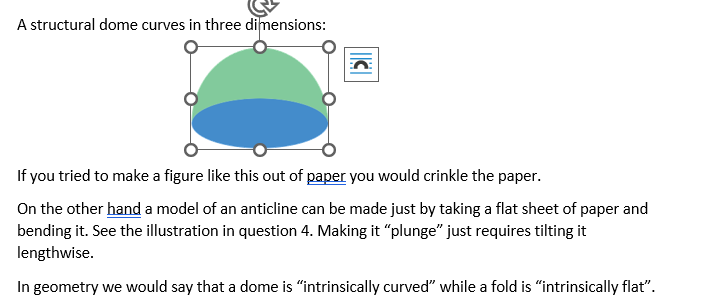
A structural dome curves in three dimensions:
If you tried to make a figure like this out of paper you would crinkle the paper.
On the other hand a model of an anticline can be made just by taking a flat sheet of paper and bending it. See the illustration in question 4. Making it “plunge” just requires tilting it lengthwise.
In geometry we would say that a dome is “intrinsically curved” while a fold is “intrinsically flat”.
What is the difference between a joint and a fault?
A joint is just a fracture or crack in a rock. If the rock moves in different directions on different sides of the rock then it’s a “fault”.
Folds in a rock show that the rock behaved in a _____ way.
ductile
elastic
brittle
all of the preceding
ductile
The compass direction of a line formed by the intersection of an inclined plane with a horizontal plane is called
strike.
direction of dip.
angle of dip.
axis.
strike
An anticline is
a fold shaped like an arch with the youngest rocks exposed in the center of the fold.
a trough-shaped fold with the oldest rocks exposed in the center of the fold.
a fold shaped like an arch with the oldest rocks exposed in the center of the fold.
a trough-shaped fold with the youngest rocks exposed in the center of the fold.
a fold shaped like an arch with the oldest rocks exposed in the center of the fold
A syncline is
a fold shaped like an arch with the youngest rocks exposed in the center of the fold.
a trough-shaped fold with the oldest rocks exposed in the center of the fold.
a fold shaped like an arch with the oldest rocks exposed in the center of the fold.
a trough-shaped fold with the youngest rocks exposed in the center of the fold.
a trough-shaped fold with the youngest rocks exposed in the center of the fold.
A structure in which the beds dip away from a central point and the oldest rocks are exposed in the center is called a(n)
basin.
anticline.
structural dome.
syncline.
structural dome.
Which is not a type of fold?
open
isoclinal
overturned
recumbent
thrust
thrust
Fractures in bedrock along which movement has taken place are called
joints.
faults.
cracks.
folds.
faults
If you locate a dip-slip fault while doing field work, what kind of evidence would you look for to determine whether the fault is normal or reverse?
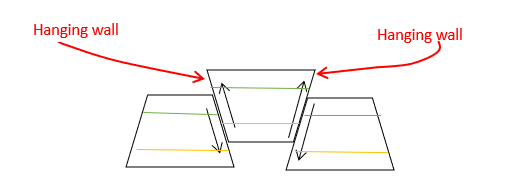
You look at corresponding rock layers on opposite sides of the fault. If the rock layers in the hanging wall have moved downward relative to the footwall then it’s a normal fault. If they’ve moved upward relative to the footwall then it’s a reverse fault. Reverse faults are usually due to compressional forces. Here’s the diagram of the St. Croix horst from the lecture:
Notice that the green layer in the middle section is higher than the green layer in the side sections and the yellow layer in the middle section is above the yellow layer in the side sections. The middle section has the “hanging walls” because they ride on top of the “footwalls” in the side sections. So the St. Croix horst has reverse faults on both sides.
In a normal fault, the hanging-wall block has moved _____ relative to the footwall block.
upward
downward
sideways
downward
Normal faults occur where
there is horizontal shortening.
there is horizontal extension.
the hanging wall moves up.
the footwall moves down.
there is horizontal extension.
Why do some rocks fold while others are faulted?
If the rock is ductile it folds; if it’s brittle it faults. Rocks become ductile when the temperature and pressure are high enough.
In what parts of North America would you expect to find the most intensely folded rock?
In North America the most intensely folded rock is found in the western region, which has convergent plate boundaries
A subduction zone can be regarded as a very large example of what type of fault?
A subduction zone can be regarded as a very large example of a thrust fault. See figure 1.12 B in chapter 1.
Name and describe the various types of seismic waves.
P waves: longitudinal body waves.
S waves: transverse body waves.
Love waves: transverse surface waves, with the ground moving side-to-side.
Rayleigh waves: elliptical surface waves that cause the ground to “roll”.
Describe in detail how earthquake epicenters are located by seismograph stations.
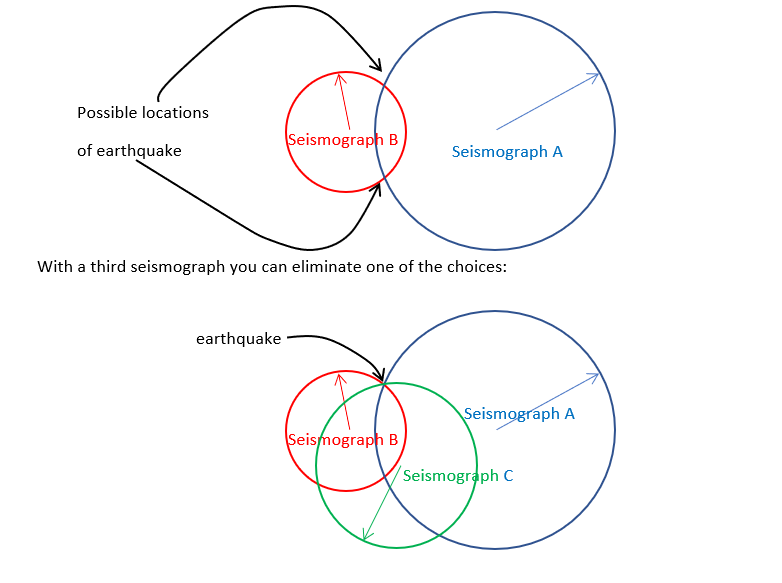
The distance to the epicenter is determined by the time delay between the P wave and the S wave. Once we know the distance we can locate the epicenter on a circle whose radius is the known distance. With two seismic stations we have two circles with the epicenter lying on one of the intersections:
With a third seismograph you can eliminate one of the choices:
How do earthquakes cause tsunami?
A tsunami is a very long-wavelength wave where the elliptical motion illustrated in figure 14.3 reaches all the way to the bottom of the ocean. It can be caused by earthquakes when they occur on the ocean floor.