BIOL 2160 EXAM 2 - CHAPTER 5
 Call Kai
 Learn
Learn Practice Test
 Spaced Repetition
 Match
Match Flashcards
 Knowt Play
1/58

There's no tags or description
Looks like no tags are added yet.
Name | Mastery | Learn | Test | Matching | Spaced | Call with Kai |
|---|
No analytics yet
Send a link to your students to track their progress
59 Terms
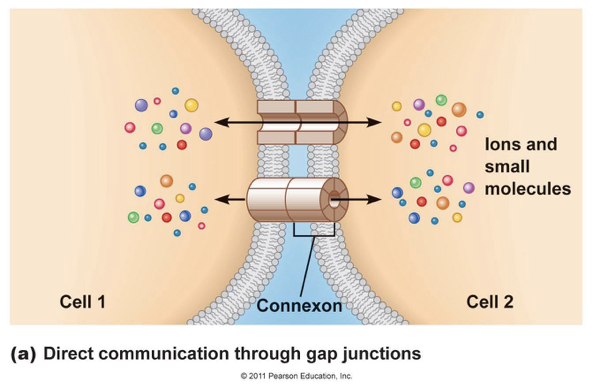
what is connexon?
a protein channel that connects 2 cells in a gap junction
what is connexon used for?
for short-distance signaling in direct intercellular communication
what is indirect intercellular communication?
in which a secretory cell releases a chemical messenger that binds to a receptor on a target cell
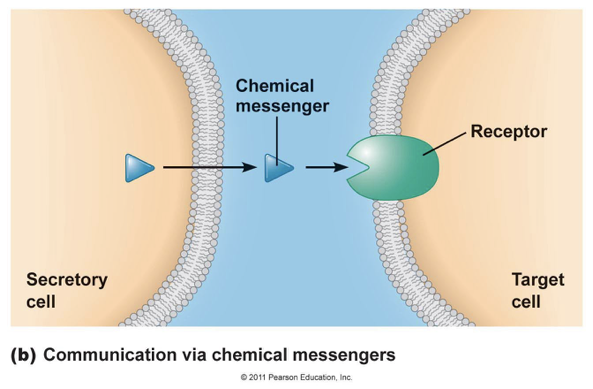
what other signalings are under indirect intercellular communication?
paracrine signaling, neurotransmitter signaling, and hormone “endocrine signaling”
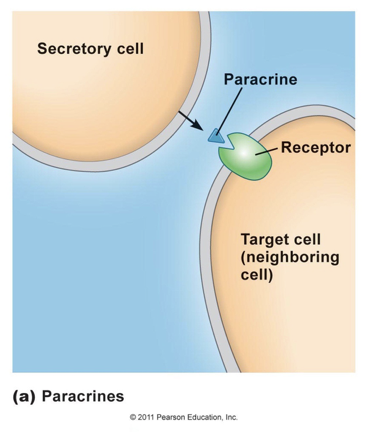
what is paracrine signaling?
involves 2 cells that are very close to each other, but are not touching
what is neurotransmitter signaling?
where the secretory cells will ALWAYS be a neuron and the target cell will either be another neuron, a gland, or a muscle
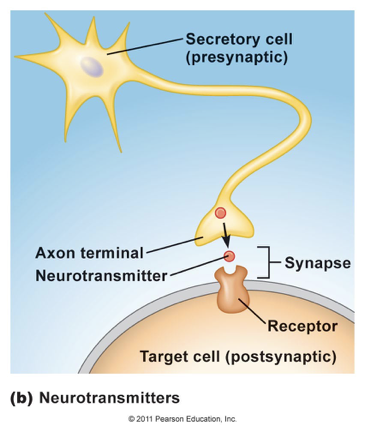
what is an example of neurotransmitter signaling?
touching your hand on a hot stove and immediately taking your hand off
what is endocrine signaling?
involves a hormone being released into the bloodstream
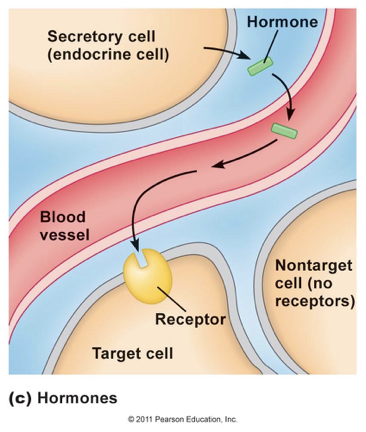
what are the benefits of endocrine signaling?
It’s great for long distance signaling. A hormone released from the pancreas can affect cells in your feet.
It lasts longer than paracrine or neurotransmitter signaling. Insulin will lower your blood sugar for hours.
what is the downsides of endocrine signaling?
It’s slow to take effect.
This means endocrine signaling is not the ideal way to control things like your reflexes, that require speed.
what are paracrines, neurotransmitters, and hormones considered as?
ligands
if the endocrine messenger is hydrophilic, what will happen?
it will dissolve in the bloodstream because blood is mostly water
If the messenger is hydrophobic, what will happen?
it will mostly be bound to carrier proteins to shield the messenger from the water in the blood
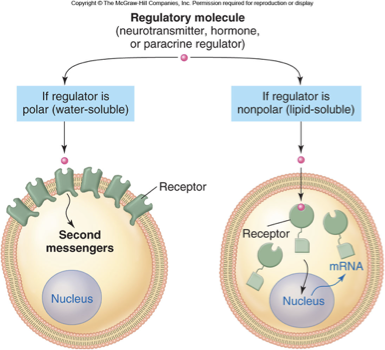
where would the receptor for polar messengers will be found on?
will be found on the outside of the plasma membrane on a target cell because polar messengers cannot dissolve through the plasma membrane
where would the receptor for small, nonpolar messengers will be found on?
the receptor in a target cell is found INSIDE the cell, because these messengers can actually dissolve through the plasma membrane
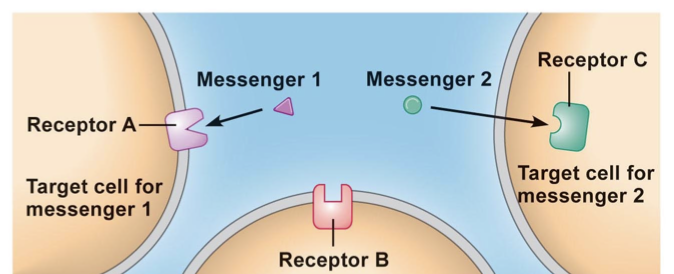
what is this an example of?
receptor specificity
what does receptor activation depend on?
concentration of ligand, expression level of receptor, and affinity for ligand
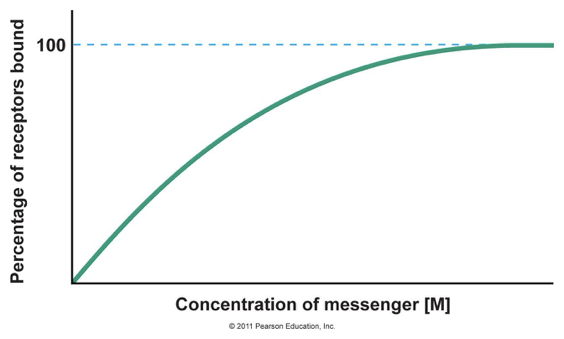
what does the blue dotted line mean?
means that once all of the receptors are bound, adding more ligand will not have any effect
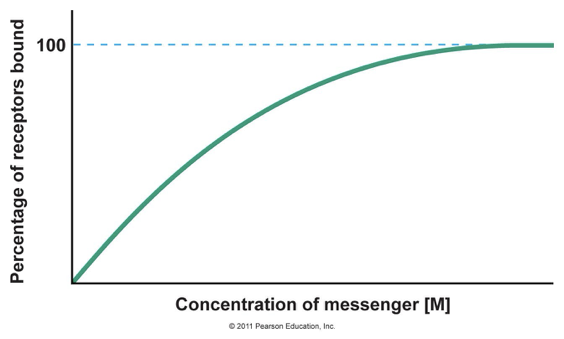
what relationship does this represent?
that if you add more ligand you will activate more receptors
what does synthesis mean?
making more receptors
what does turnover mean?
destroying these receptors by sending them to the lysosome where they are broken apart
what does upregulation and downregulation deal with?
both deal with receptor synthesis, NOT turnover
what is upregulation?
Increase in receptor synthesis
what is downregulation?
Decrease in receptor synthesis
What amount is considered normal between receptors and ligands?
both are equal amounts of each other
what amount is considered upregulation between receptors and ligands?
in some cases, if more ligands becomes available, a cell wil make receptors more quickly
what amount is considered downregulation between receptors and ligands?
most of the time, cells will make receptors more slowly if less ligand becomes available
what are all addictive drugs classified as and what do they do?
artificial ligands; bind to receptors for ligands that are already in the body
what do the binding of the addictive drug to these receptors activate?
activates a network of dopaminergic cells in the mesolimbic region of the brain that are involved in emotional reward
when addictive drugs bind to receptors over and over, a part of the brain that is involved in compulsive behavior (like addiction) becomes overly active and produces excess dopamine, making it more difficult to quit. What is this an example of?
positive feedback mechanism
what are opiates?
painkillers such as codeine, morphine, oxycodone, oxycontin, heroin, etc
what are endorphins?
found in the human body to help you deal with MINOR pain, like a toothache or stubbing your toe, or running 5 miles
why are endorphins found in very low concentrations?
It tells us to stop doing what we’re doing before we kill ourselves hence why we feel pain
how do opiates work?
they bind to ALL endorphin receptors (on the first time)
how does opiate addiction works?
the body downregulates endorphin receptors because the high of opiates if from the bind of all the receptors, but since the person won’t feel the “high” as much, they take more opiates but it’ll make it harder for them to feel a high as they continue to do this
what is the most addictive drug?
nicotine
how does nicotine addiction work?
nicotine actually has a higher affinity for the acetylcholine receptor than acetylcholine does but your body needs acetylcholine so there’s a upregulation of these receptors causing you to want more nicotine
how does a person that first smoked differ from someone who has smoked for 20 years?
non-smoker will have extremely high levels of nicotine in their blood, while the 20-year smoker will have hardly any nicotine at all because they were able to metabolize the drug before it reached their receptors
what does the increase use of nicotine result to the individual?
increased ability of an individual to metabolize nicotine and results in a shorter half-life of the drug.
also upregulates extracellular mechanisms for degrading the drug
what is pharmacokinetic tolerance?
the result of lower concentrations of a drug actually reaching the receptor. Could be caused by degradation, or increased metabolism of the drug. (nicotine)
what is pharmacodynamic tolerance?
cellular mechanism that results in receptor downregulation/turnover(opiates), or upregulation (nicotine)
what is an agonist?
Ligands that bind to receptors and cause a biological response
what is an example of an agonist?
acetylcholine
what is an antagonist?wha
Ligands that bind to receptors and do not cause a biological response
what is an example of an antagonist?
nicotine
what is signal transduction?
the series of events that occur once a ligand binds to the receptor or it can also refer to intracellular mechanisms that mediate response of target cell to chemical messenger
what does lipophilic mean?
“lipid loving”. Anything that likes lipids will not like water (hydrophobic)
what does lipophobic mean?
”lipid-fearing”. Anything that fears lipids will like water (hydrophilic)
where are lipophilic messengers found on?
receptors typically intracellular
where are lipophobic messengers found on?
receptors on membrane surface
what is downstream of receptor-ligand binding?
signal transduction
what is a second messenger?
An intracellular messenger produced by the binding of an extracellular messenger.
why is there a second messenger?
because the first messenger is polar so all it is able to do is bind to a receptor on the cell membrane instead of being able to carry the signal to the nucleus
do hydrophobic / lipophilic messengers need second messengers?
no because they can go straight to the nucleus themselves
what is lipophilic signaling?
when the lipophilic / hydrophobic messenger can cross the membrane and either bind to a receptor in the cytoplasm, or enter the nucleus directly
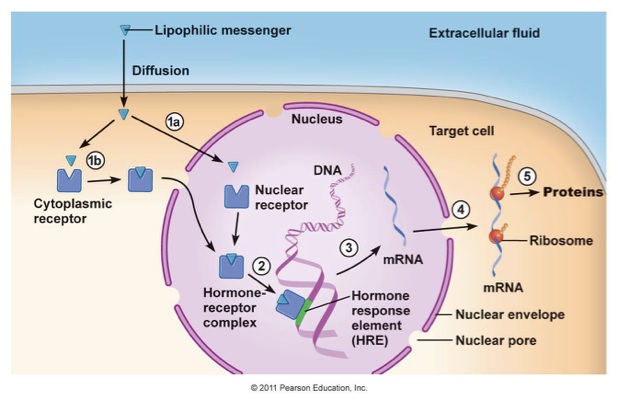
what is the result of lipophilic signaling?
cell increases gene expression / protein synthesis (proteins)
what are the membrane receptor-mediated signal transduction pathways?
fast channel-linked, enzyme-linked, g-proteins