Infectious Diseases of the Nervous System: Microbiology and Pathogenesis
 Call Kai
 Learn
Learn Practice Test
 Spaced Repetition
 Match
Match Flashcards
 Knowt Play
1/163

There's no tags or description
Looks like no tags are added yet.
Name | Mastery | Learn | Test | Matching | Spaced | Call with Kai |
|---|
No analytics yet
Send a link to your students to track their progress
164 Terms
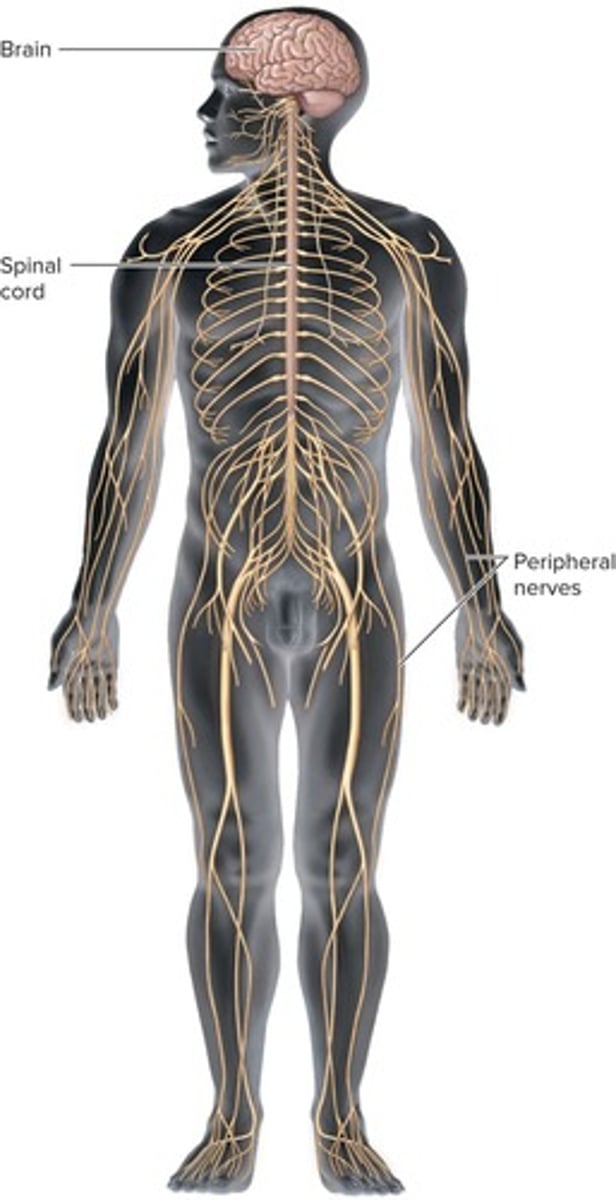
What are the two main components of the nervous system?
Central nervous system (CNS) and peripheral nervous system (PNS)
What is the primary function of sensory receptors in the nervous system?
To generate nerve impulses transmitted to the CNS
What are the three important functions of the nervous system?
Sensory, integrative, and motor functions
What are the three layers of meninges surrounding the brain and spinal cord?
Dura mater, arachnoid mater, and pia mater
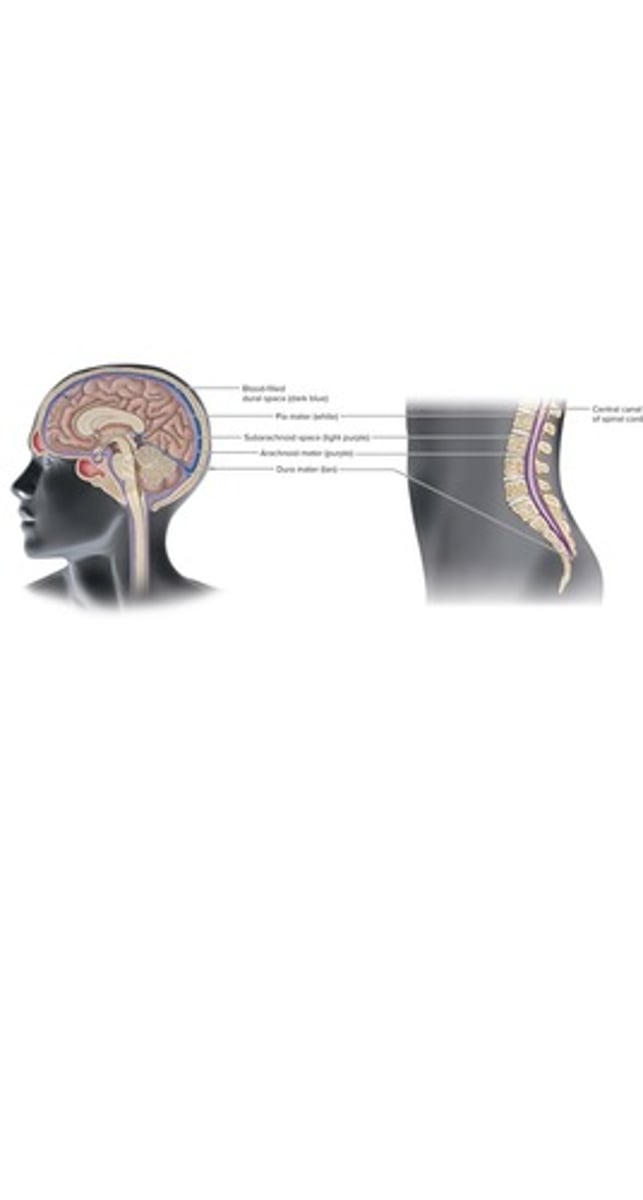
What is the role of cerebrospinal fluid (CSF)?
Provides nutrition and a liquid cushion for the CNS
What is a ganglion?
A swelling in the nerve where cell bodies of neurons aggregate
What is the blood-brain barrier?
A vascular interface that restricts most molecules from entering the CNS
What does it mean that the CNS is 'immunologically privileged'?
It can mount only a partial immune response to avoid damage from normal immune reactions
What are microglia?
Phagocytic cells in the CNS that have reduced activity compared to other phagocytic cells
What is the significance of dormant herpesviruses in the nervous system?
They are not considered normal microbiota, but they can reside in the nervous system
What is meningitis?
Inflammation of the meninges, often caused by various microorganisms
What are common symptoms of meningitis?
Severe headache, stiff neck, fever, nausea, vomiting, and photophobia
What is the most common causative agent of acute bacterial meningitis?
Neisseria meningitidis
How is Neisseria meningitidis transmitted?
Through close contact with secretions or droplets from infected individuals
What diagnostic techniques are used for suspected meningitis?
Lumbar puncture, Gram stain, and culture of cerebrospinal fluid
What is the treatment for bacterial meningitis?
Immediate administration of broad-spectrum antibiotics
What are the signs of severe Neisseria meningitidis infection?
Fever over 40°C, sore throat, chills, delirium, and widespread bleeding under the skin
What is the epidemiology of Neisseria meningitidis?
Sporadic or epidemic incidence, particularly in late winter or early spring
What are the high-risk groups for Neisseria meningitidis infection?
Young children, older children, and young adults living in close quarters
What are the virulence factors of Neisseria meningitidis?
Endotoxin release, IgA protease production, and a protective capsule
What is the role of the gut microbiome in relation to the nervous system?
It influences brain development, blood-brain barrier formation, and peripheral nerve construction
What is the difference between the oral polio vaccine and the inactivated polio vaccine?
The oral vaccine is live attenuated, while the inactivated vaccine is killed virus; each is used in different circumstances
What are the symptoms of rabies?
Fever, headache, confusion, agitation, and hydrophobia leading to paralysis and death
What distinguishes tetanus from botulism?
Tetanus causes muscle rigidity and spasms, while botulism leads to muscle weakness and paralysis
What is the function of neurotransmitters in the nervous system?
They facilitate communication between neurons across synapses
What are the common diagnostic tests for meningitis?
CSF analysis through lumbar puncture, Gram staining, and culture
What is the significance of the subarachnoid space?
It is filled with cerebrospinal fluid and located between the arachnoid and pia mater
What is the primary role of the PNS?
To transmit signals between the CNS and the rest of the body
What is the impact of cytokines released during Neisseria meningitidis infection?
They can cause vascular collapse, hemorrhage, and petechiae
What is the infection rate of Neisseria meningitidis in most populations?
1%, indicating a well-developed natural immunity.
What is the mortality rate of treated meningococcemial disease?
15%.
What is the recommended antibiotic therapy for Neisseria meningitidis?
High doses of penicillin G given intravenously.
What preventive therapy should individuals in close contact with infected patients receive?
Rifampin or tetracycline.
What is the most frequent cause of community-acquired meningitis?
Streptococcus pneumoniae.
What is the appearance of Streptococcus pneumoniae under a microscope?
Small, gram-positive flattened coccus that appears in end-to-end pairs.
What is the initial treatment for pneumococcal meningitis?
Vancomycin + ceftriaxone.
What are the two vaccines available for Streptococcus pneumoniae?
Prevnar (13-valent) and Pneumovax 23 (23-valent).
What is the causative agent of severe meningitis that has decreased in the U.S. since 1988?
Haemophilus influenzae.
What is the morphology of Listeria monocytogenes?
Gram-positive bacterium ranging from coccobacilli to long filaments.
What is a significant risk factor for Listeria monocytogenes infection?
Pregnant women are especially susceptible.
What are the first choices for antibiotic treatment of listeriosis?
Ampicillin and trimethoprim-sulfamethoxazole.
What is the primary ecological niche for Cryptococcus neoformans?
The bird population, particularly in urban areas with pigeons.
What are the common symptoms of meningitis caused by Cryptococcus neoformans?
Headache, nausea, and neck stiffness.
What is the causative agent of Valley Fever?
Coccidioides species.
What is the most serious manifestation of coccidioidomycosis?
Coccidioidomycosis of the meninges.
What is the highest incidence of coccidioidomycosis associated with?
Farming activity, archaeological digs, construction, and mining.
What is aseptic meningitis?
A type of meningitis where no bacteria, protozoa, nor fungi are found in the CSF.
What percentage of meningitis cases are caused by viruses?
Viruses cause 4 out of 5 cases of meningitis.
What is the role of the polysaccharide capsule in Streptococcus pneumoniae?
It protects the bacterium against phagocytosis.
What is a common complication in patients with pneumococcal meningitis?
25% of patients will also have pneumococcal pneumonia.
What is a significant characteristic of Listeria monocytogenes regarding its environment?
It is resistant to cold, heat, salt, pH extremes, and bile.
What is the death rate associated with Listeria monocytogenes infections in vulnerable populations?
Around 30%.
What is the method used to isolate Listeria monocytogenes in culture?
Cold enrichment.
What are the symptoms of mild Listeria monocytogenes infection in healthy adults?
Nonspecific symptoms like fever, diarrhea, and sore throat.
What are the two main types of vaccines for pneumococcal disease?
Prevnar (for children) and Pneumovax 23 (for adults).
What is the significance of herd immunity in relation to Haemophilus influenzae?
Failure to vaccinate can compromise herd immunity.
What is the treatment approach for shock and intravascular clotting in meningococcal disease?
May require additional treatment beyond antibiotics.
What percentage of viral meningitis cases are caused by enteroviruses?
90%
What is a common cause of viral meningitis associated with genital infections?
Initial infection with HSV-2
How does viral meningitis generally compare to bacterial or fungal meningitis in terms of severity?
Generally milder
What is the typical resolution time for viral meningitis?
Usually resolved within 2 weeks
What is the mortality rate for viral meningitis?
Less than 1%
How is viral meningitis diagnosed?
By the failure to find bacteria, fungi, or protozoa in the CSF, confirmed by viral culture or specific antigen tests.
Is treatment usually required for viral meningitis?
In most cases, no treatment is needed.
What is the most common cause of neonatal meningitis?
Streptococcus agalactiae (Group B streptococcus)
What is a significant risk factor for neonatal meningitis?
Immature immune systems, especially in premature babies.
What is the causative agent of neonatal meningitis that colonizes female genital tracts?
Group B streptococci
What is the drug of choice for treating neonatal meningitis caused by Streptococcus agalactiae?
Penicillin
What is the mortality rate for neonatal meningitis caused by Escherichia coli?
20 to 30% even with aggressive treatment.
What combination of antibiotics is typically used for treating neonatal meningitis caused by Escherichia coli?
Ceftazidime or cefepime +/- gentamicin.
What is Cronobacter sakazakii formerly known as?
Enterobacter sakazakii
How is Cronobacter sakazakii implicated in neonatal meningitis outbreaks?
Transmitted via contaminated powdered infant formula.
What is the mortality rate associated with Cronobacter sakazakii infections?
Can reach 40%.
What is the relationship between premature babies and neonatal meningitis?
As more premature babies survive, rates of neonatal meningitis increase.
What is the significance of screening women for Group B streptococcus during pregnancy?
Women considered high risk are usually screened between 35 to 37 weeks' gestation.
What is the primary mode of transmission for neonatal meningitis caused by Escherichia coli?
Usually transmitted via the mother's birth canal.
What is the typical treatment for high-risk women in labor regarding Group B streptococcus?
Intravenous antibiotics are given at the beginning of active labor.
What does the FDA and CDC recommend for hospitals regarding infant formula?
Use ready-to-feed and concentrated liquid formulas, practice careful hand washing, clean feeding equipment, use fresh formula, and discard leftover formula.
What is microcephaly?
A condition where babies are born with abnormally small heads, often associated with congenital Zika virus syndrome.
What is the causative agent of Zika virus disease?
Zika virus, which belongs to the Flaviviridae family.
What are common signs and symptoms of Zika virus in adults?
Symptoms can range from none to skin rash, conjunctivitis, muscle and joint pain, and it can trigger Guillain-Barré syndrome.
How is Zika virus transmitted?
Through the bite of the Aedes mosquito, sexual intercourse with infected individuals, and vertically in utero.
What percentage of Zika infections are asymptomatic?
Eighty percent of infections are asymptomatic.
What is the current status of Zika virus vaccination?
No vaccine is currently available for Zika virus.
What is poliomyelitis commonly known as?
Infantile paralysis.
What are the short-term symptoms of poliomyelitis?
Mild viremias, fever, headache, nausea, sore throat, and myalgia.
What can happen if poliovirus persists in the bloodstream?
It can lead to paralysis by infiltrating motor neurons in the spinal cord.
What is the causative agent of poliomyelitis?
Poliovirus, which is a nonenveloped, nonsegmented RNA virus in the Picornaviridae family.
How is poliovirus transmitted?
Through food, water, hands, objects contaminated with feces, and mechanical vectors.
What is the primary prevention method for poliomyelitis?
Vaccination as early in life as possible, usually starting at 2 months of age.
What are the two forms of poliovirus vaccine?
Inactivated poliovirus vaccine (IPV) and oral poliovirus vaccine (OPV).
What is meningoencephalitis caused by Naegleria fowleri?
A rare but severe infection caused by an amoeba that burrows into the nasal mucosa and migrates to the brain.
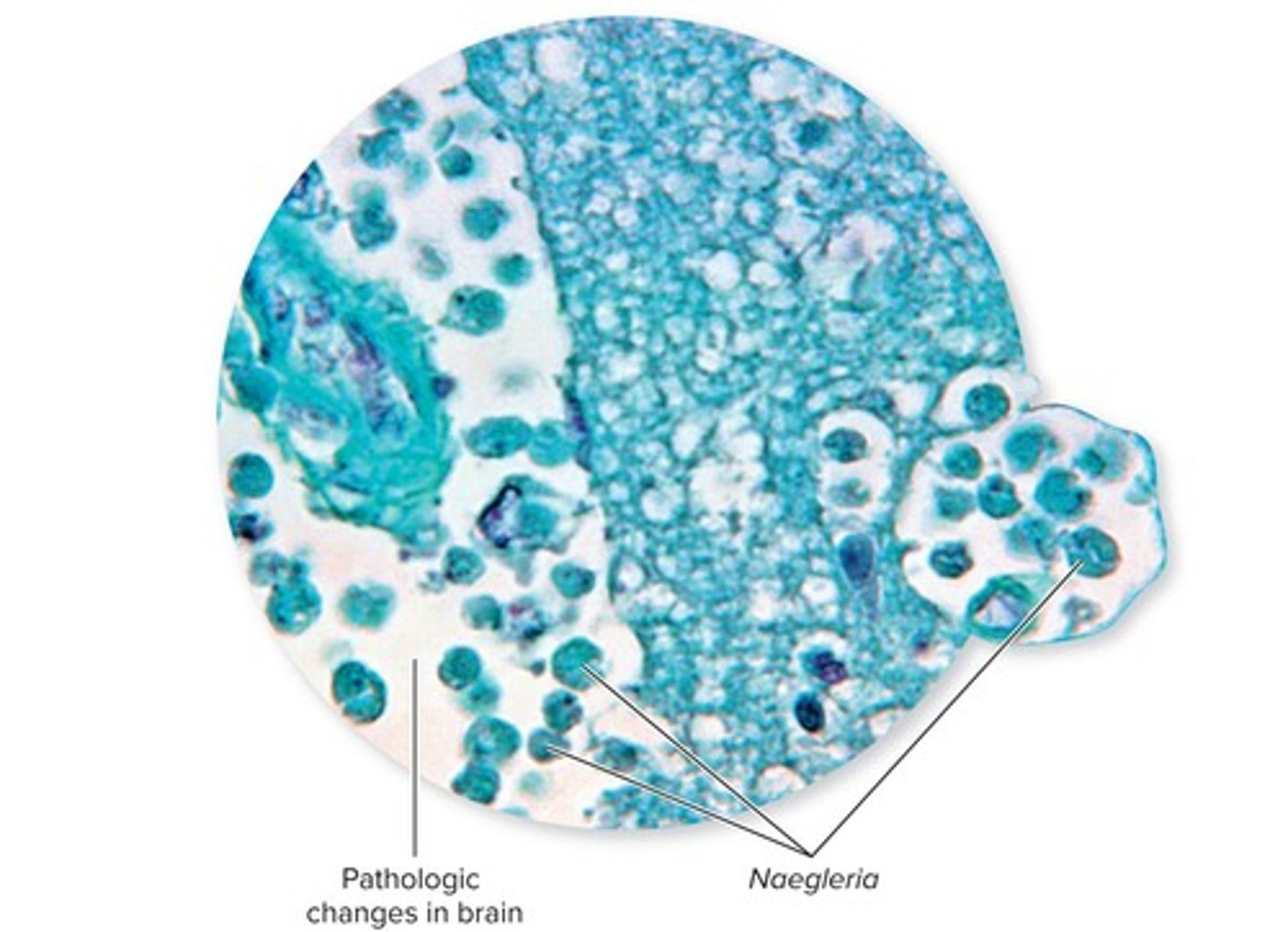
What is the typical outcome of Naegleria fowleri infection?
Massive destruction of brain and spinal tissue leading to death within a week.
What is granulomatous amoebic meningoencephalitis (GAM)?
A disease caused by Acanthamoeba, characterized by a lengthier course of infection similar to Naegleria fowleri.
What is acute encephalitis?
Inflammation of the brain, often caused by viruses borne by insects (arboviruses) or other viral agents.
What are common signs of acute encephalitis?
Behavior changes, confusion, decreased consciousness, seizures, and symptoms of meningitis.
What is the recommended treatment for herpesvirus encephalitis?
Empiric treatment with acyclovir.
What is the role of intensive physical therapy in Guillain-Barré syndrome caused by Zika?
It is recommended to support recovery and may be necessary for patients with severe symptoms.
What are the symptoms of congenital Zika virus syndrome in babies?
Small head, vision problems, involuntary movements, seizures, irritability, and swallowing problems.
What is the significance of the WHO campaign against poliomyelitis?
It aimed to eradicate all remaining wild polioviruses, but complete eradication was not achieved by the targeted years.