L5 - Antigen recognition: T cells
 Call Kai
 Learn
Learn Practice Test
 Spaced Repetition
 Match
Match Flashcards
 Knowt Play
1/18

There's no tags or description
Looks like no tags are added yet.
Name | Mastery | Learn | Test | Matching | Spaced | Call with Kai |
|---|
No analytics yet
Send a link to your students to track their progress
19 Terms
what is the equivalnet of antibody on T cell
T cell receptor (TCR)
How do they look TCR
have variable region at top
constant region
Have alpha and beta chains for Alpha- Beta T cells → most common (also gamma-delta T cells)
trasnmembrane like in BCR
Key difference between BCR and TCR
BCR at some point can change into plamsma cell and then secreate its antibody (when B cell secreates receptor its now called antibody)
TCR cannot do this - stays in transmembrane region
both start as tarsnmemebrane
How do we get diversity in TCR
Multiple germ line genes
V-j and VDJ recombination
recombination inaccuracies
Nucleoidal addition by TdT
Chain combinations - not as much as only a and b chain
(so somatic hypermutation)
What are the chains found on antbody, TCR ab and TCR gd
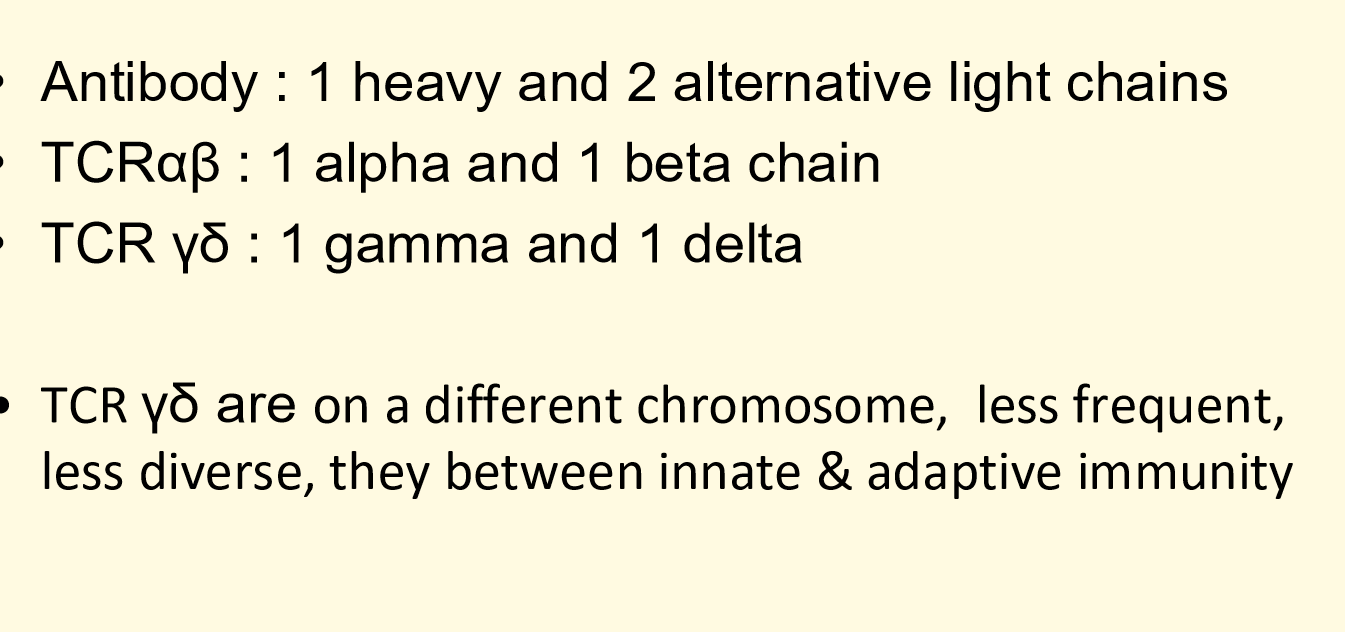
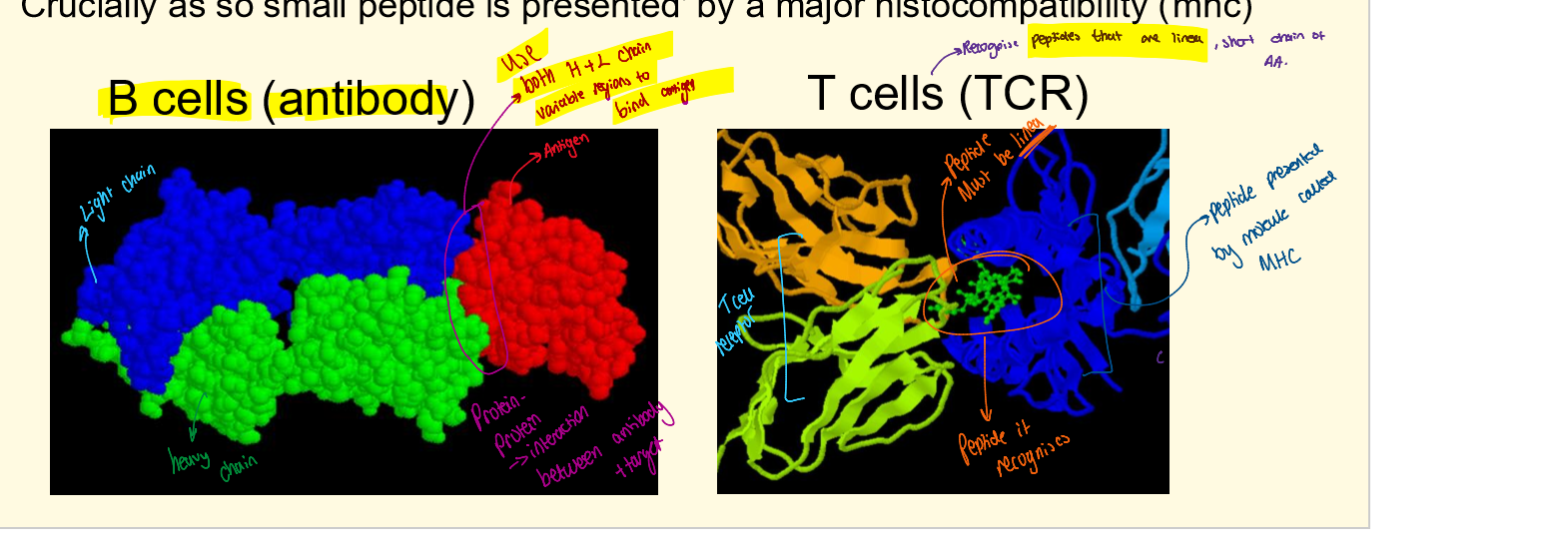
Diffrences between B cell and T cell - cell recognition
B cell
Varibale region of both heavy and light chain bind to antigen, proetin protein interaction
T cell
TCR binds to linea peptides (small) that have been presented by MHC
MHC
2 differnet types 1 and 2
Both are bound to cell surface - base extends through memebaren into cell to hold it in pace
allow holding of peptide to present to TCR
MHC has 2 subunits called Alpha and beta → looks similar to MHC1 but both have different jobs
MHC binding groove
have 2 alpha helicase iwth channel inbetween where peptide sits
space for peptide with 9 - 12 amino acids
groove allows stablisazation of peptide
MHC1 → groove slightly closed → smaller peptides
MHC2 → more open → longer peptides
MHC TCR bidning
TCR has CDRs like in B cells
TCR has conserved regiosn that bind to MHC
CDR3 binds to peptide → where VDJ all overlap - most diverse part
How can MHC bind to multiple peptides
binds to main chain of peptides - shared across all peptides
some special MHCs binds to peptides that have tweird twists in them
Different types of MHC
class 1 , 2
non classical 1, 2
class 3 → not alwyas immunological
Genes that code for MHC
MHC1
A
B
C
MHC2
DQA1
DQB1
DPA1
DPB1
DRA
DRB1
What is the 2 pathway model for antigen presentation in T cells
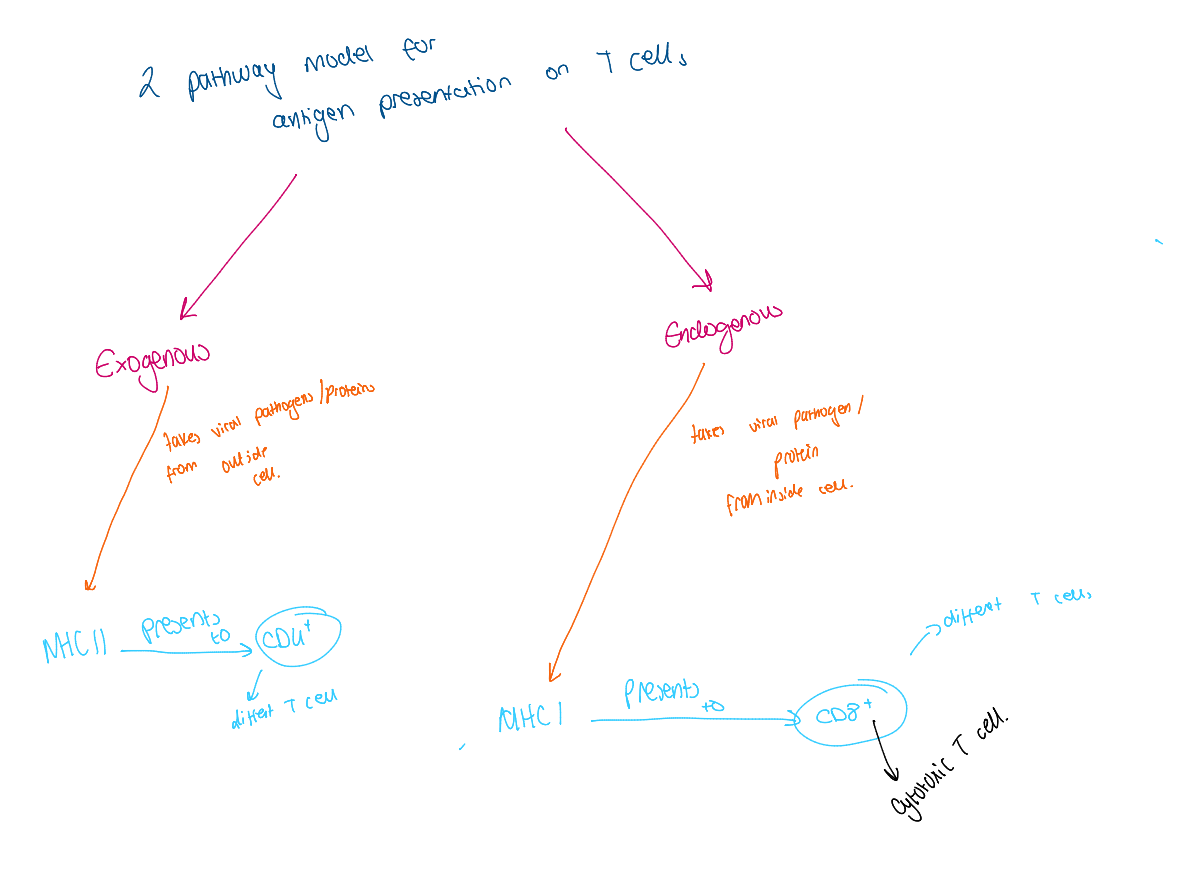
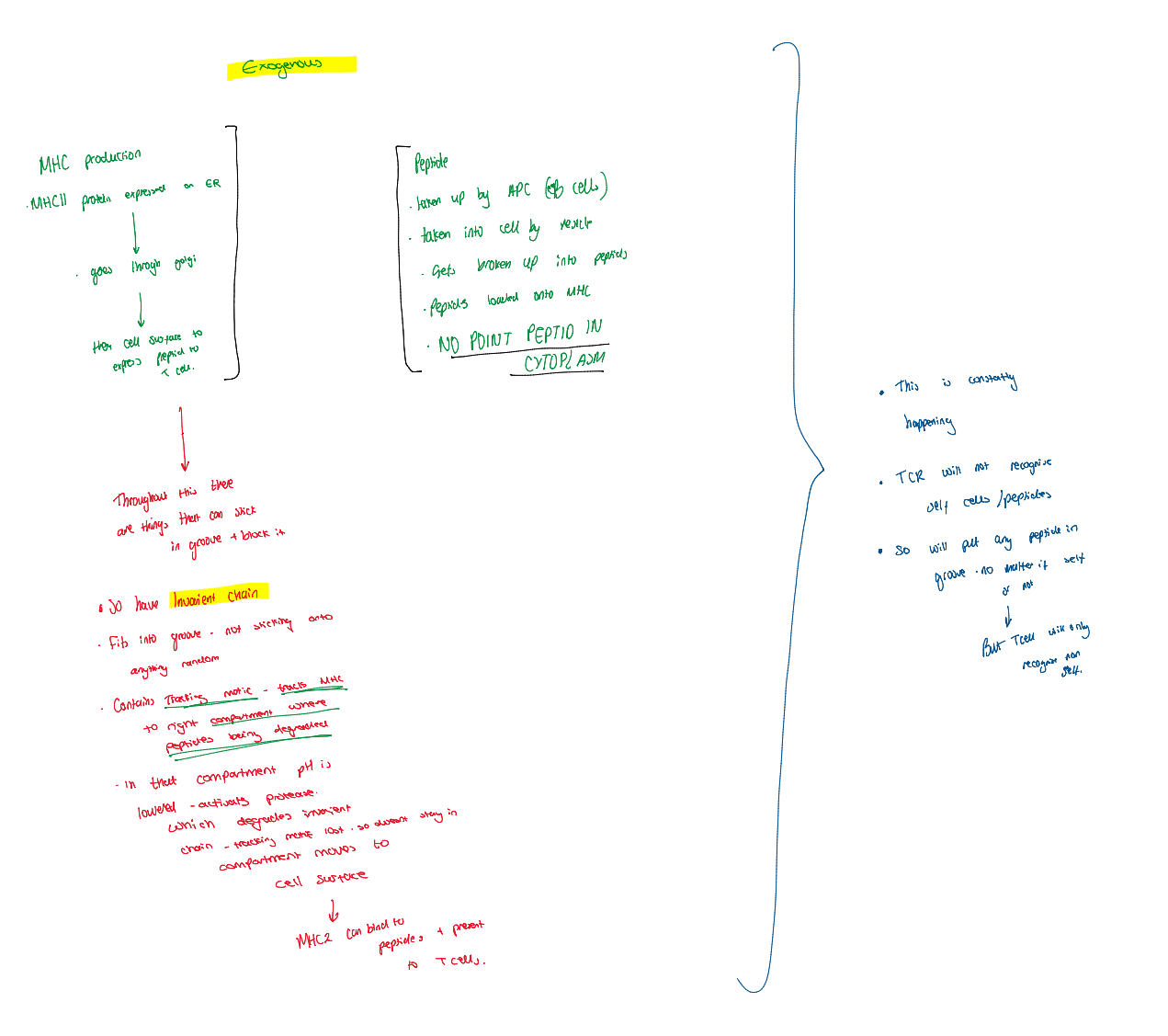
Exogenous pathway
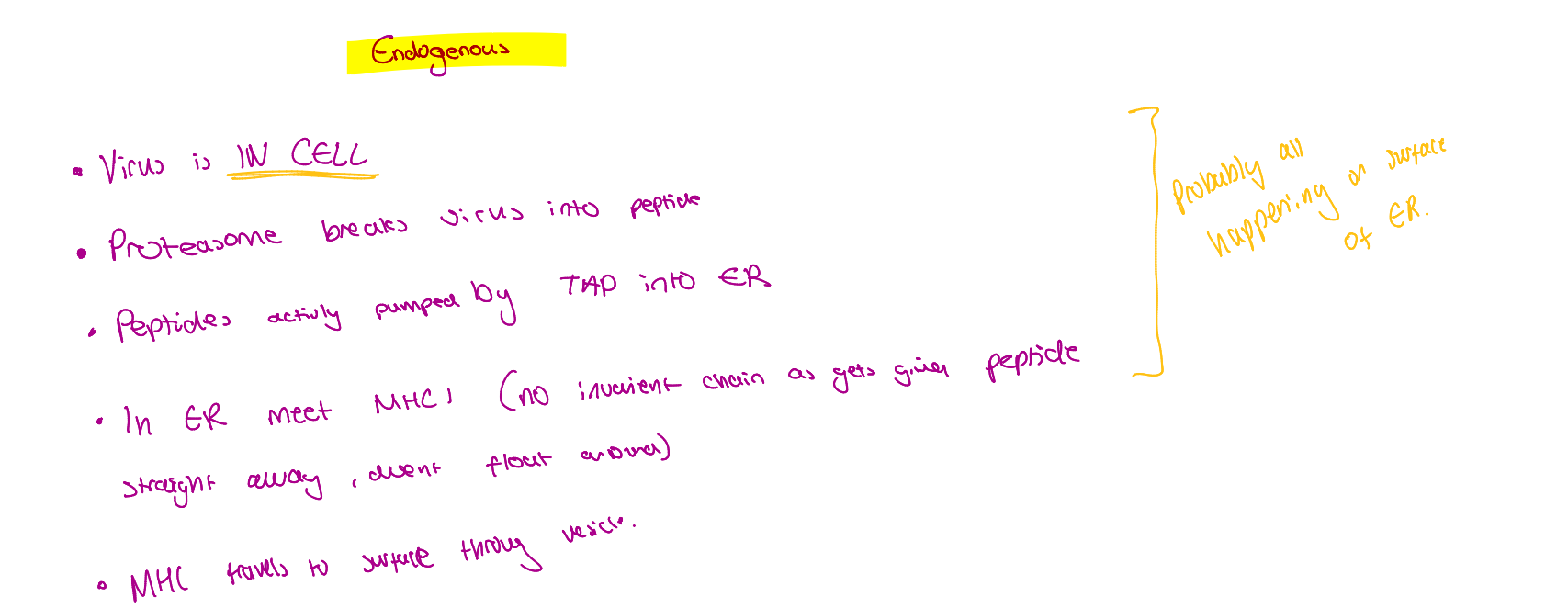
Endogenous pathway
How do tumours change
they downregulate MHC1 so not recognised by CD8 cells
how do viruses interfere with antigen presnettaion
usually have protein thats whole job is to interphere with this process as aloows them to grow and rpelicate without being detected by immune system
CD3
have acessory proetins that come to help amplify signal between TCR and MHC peptide molecuel
done through T cell reptor complemx called CD3 made up of delpta, gamma and zelta amplify signal
CD4 not associated with CD3 complex
what else do we need for activation
need co stimulattion, good blance between positve and negtaive signal to tell T cell repseptor to respond