Anatomy UCF Lab Practical 1
 Call Kai
 Learn
Learn Practice Test
 Spaced Repetition
 Match
Match Flashcards
 Knowt Play
1/298

There's no tags or description
Looks like no tags are added yet.
Name | Mastery | Learn | Test | Matching | Spaced | Call with Kai |
|---|
No analytics yet
Send a link to your students to track their progress
299 Terms
calvaria
skull cap
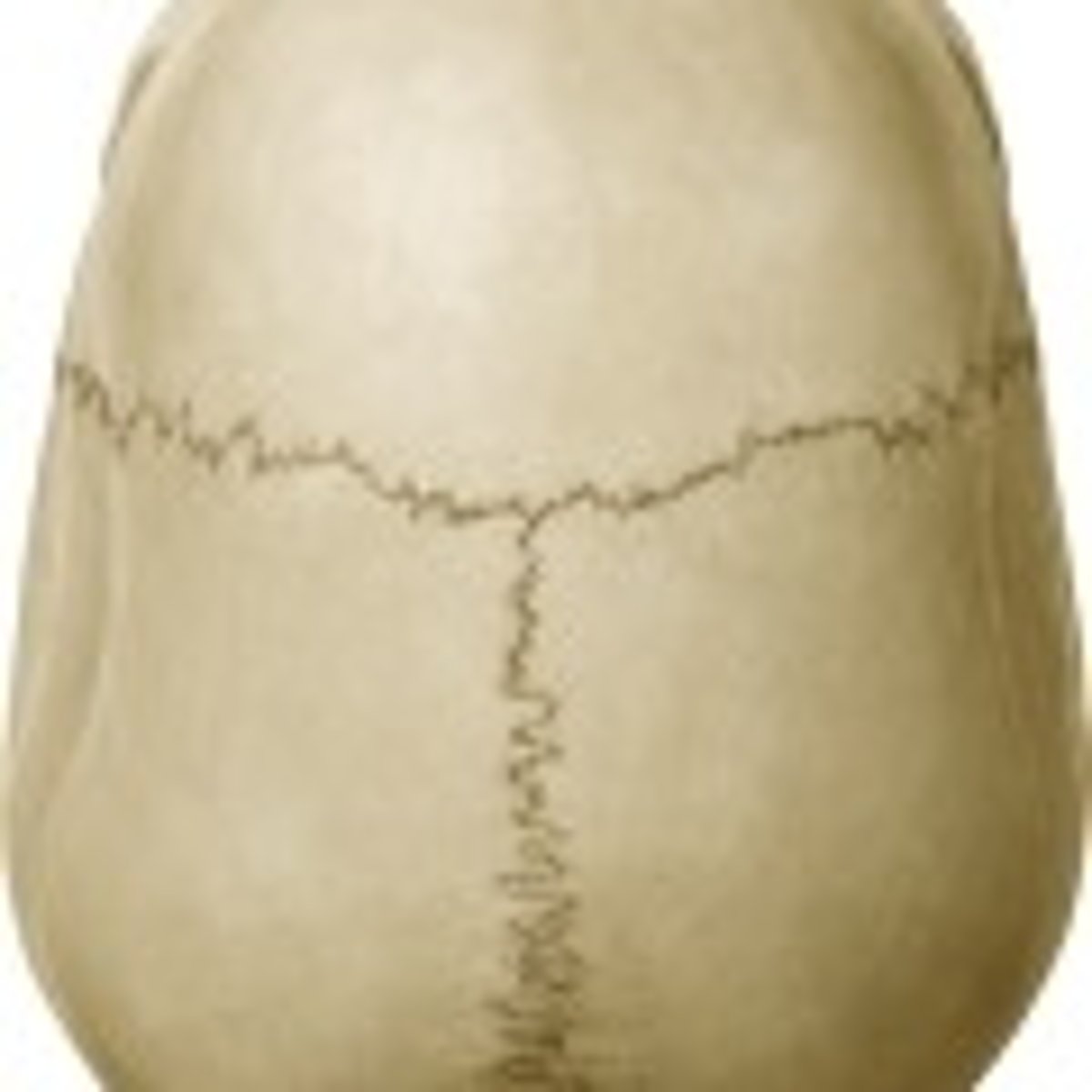
frontal bone
forms the forehead
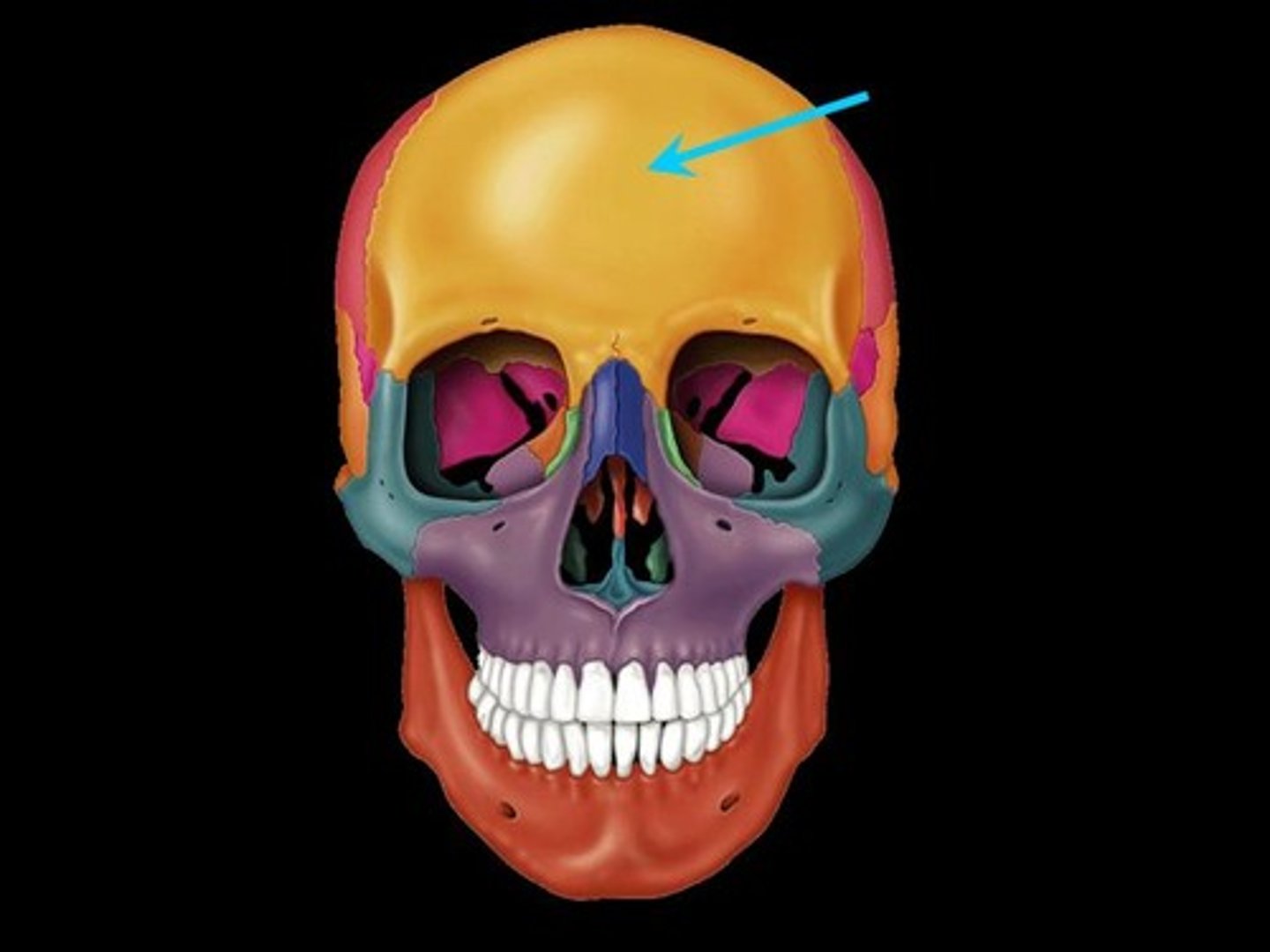
temporal bone
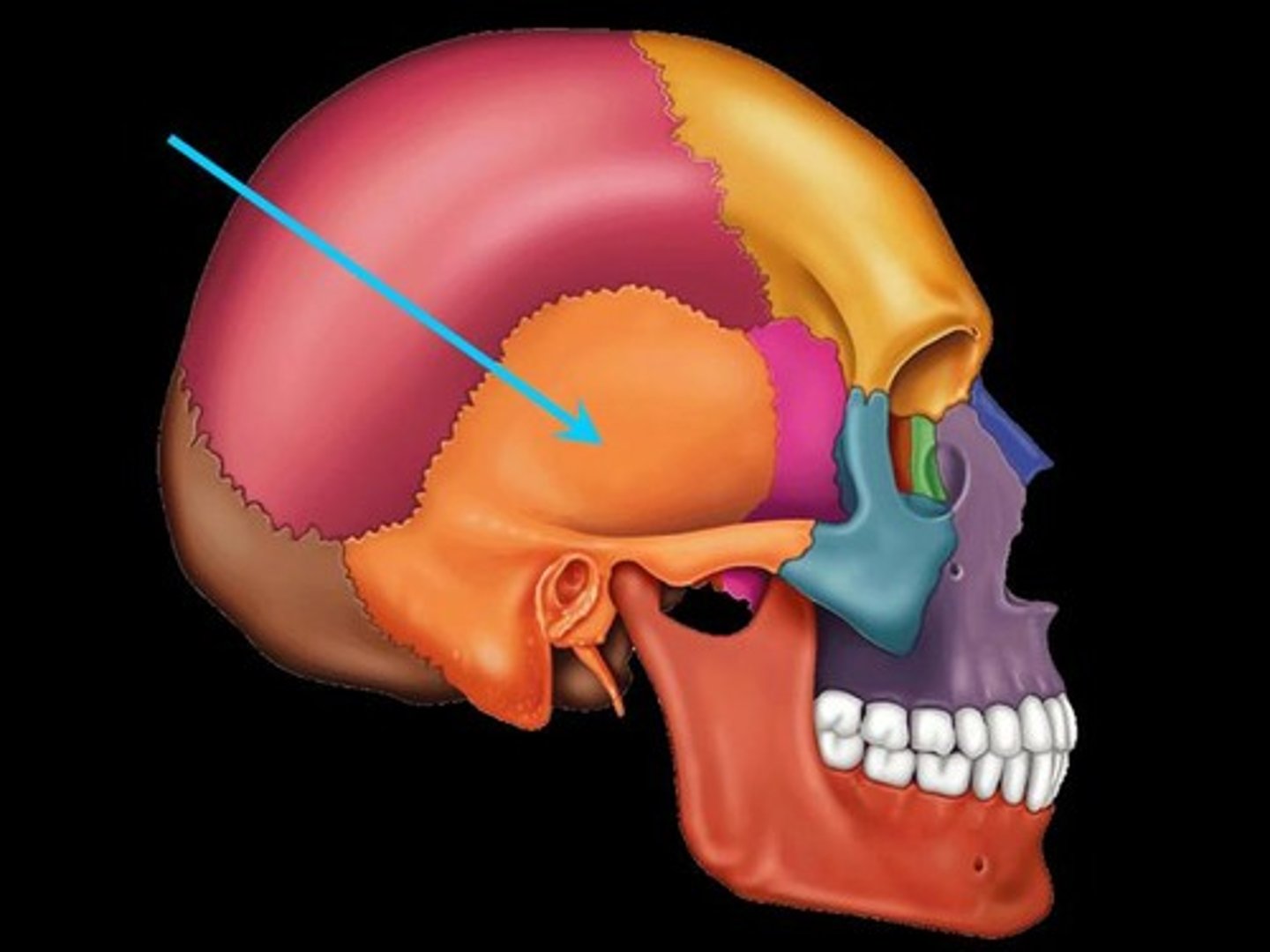
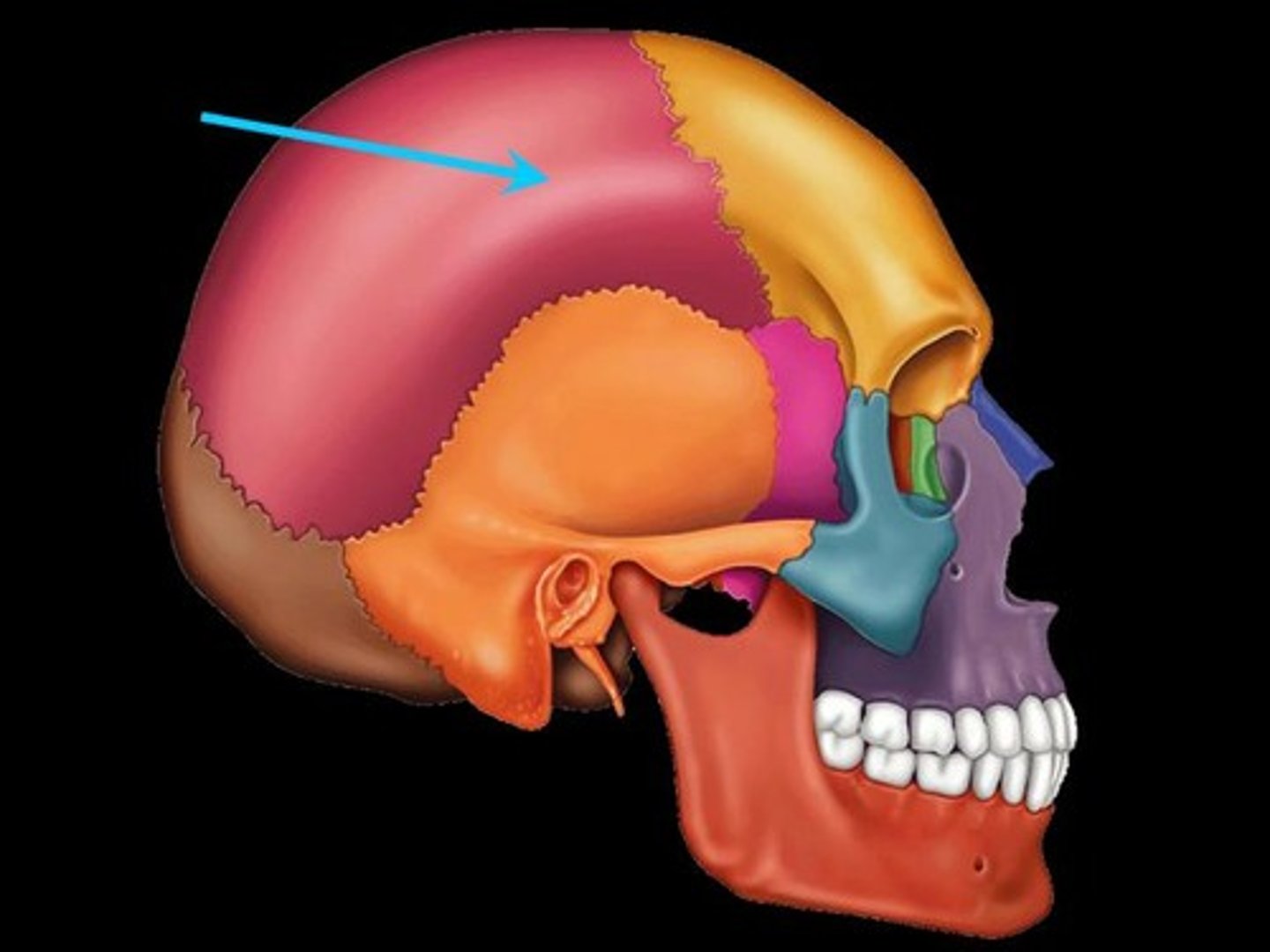
parietal bone
a bone forming the central side and upper back part of each side of the skull.
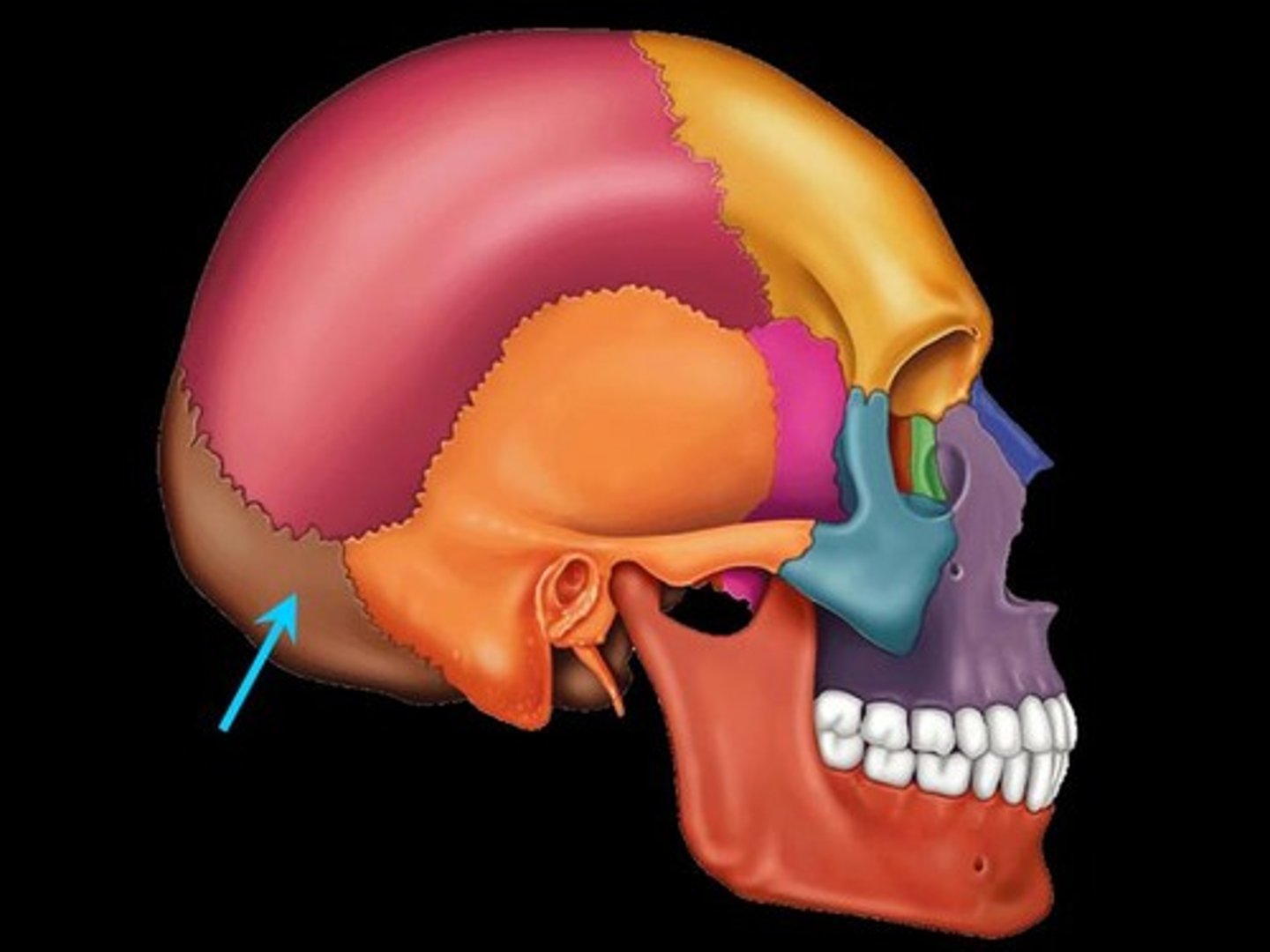
occipital bone
back of head
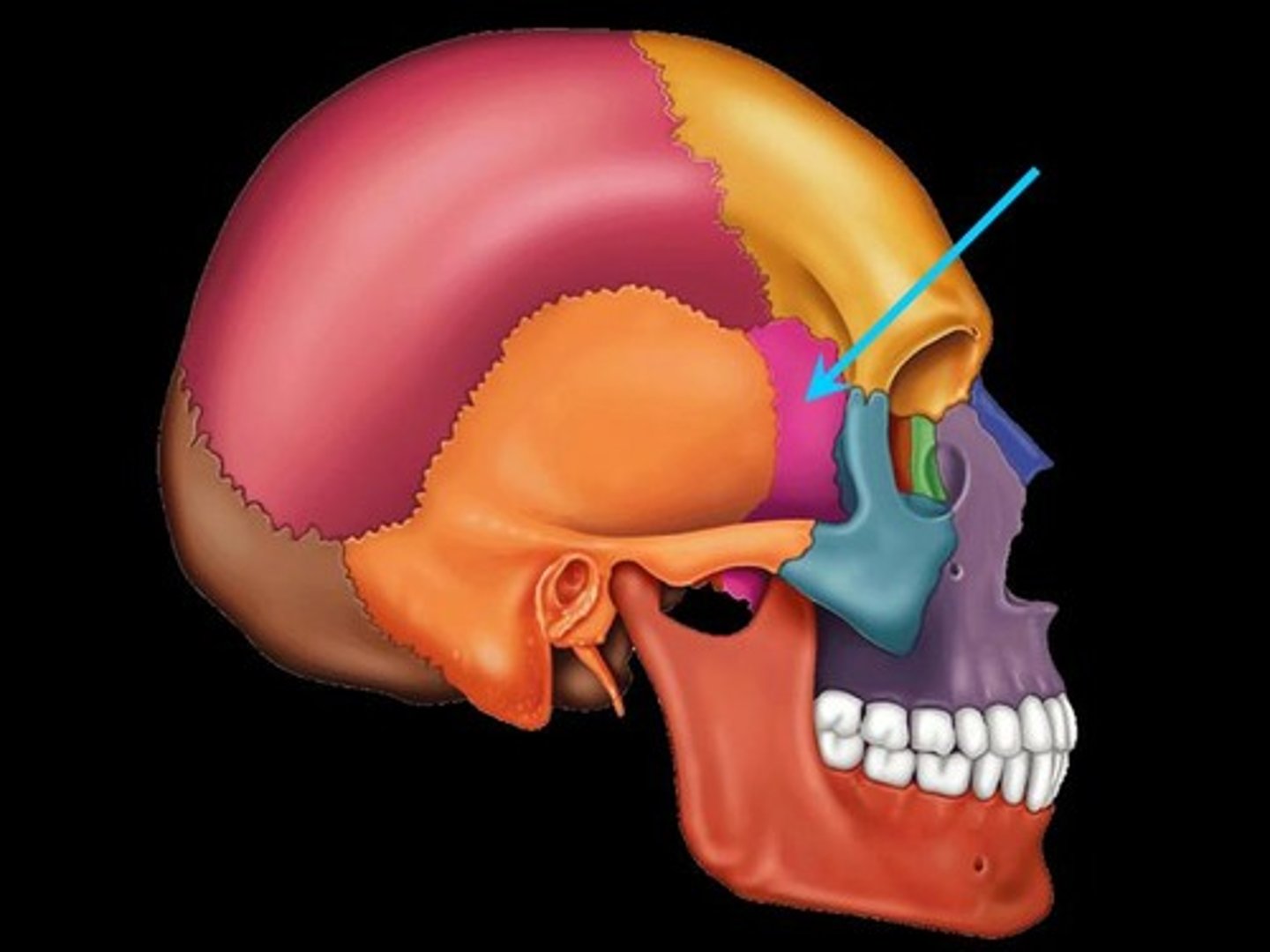
sphenoid bone
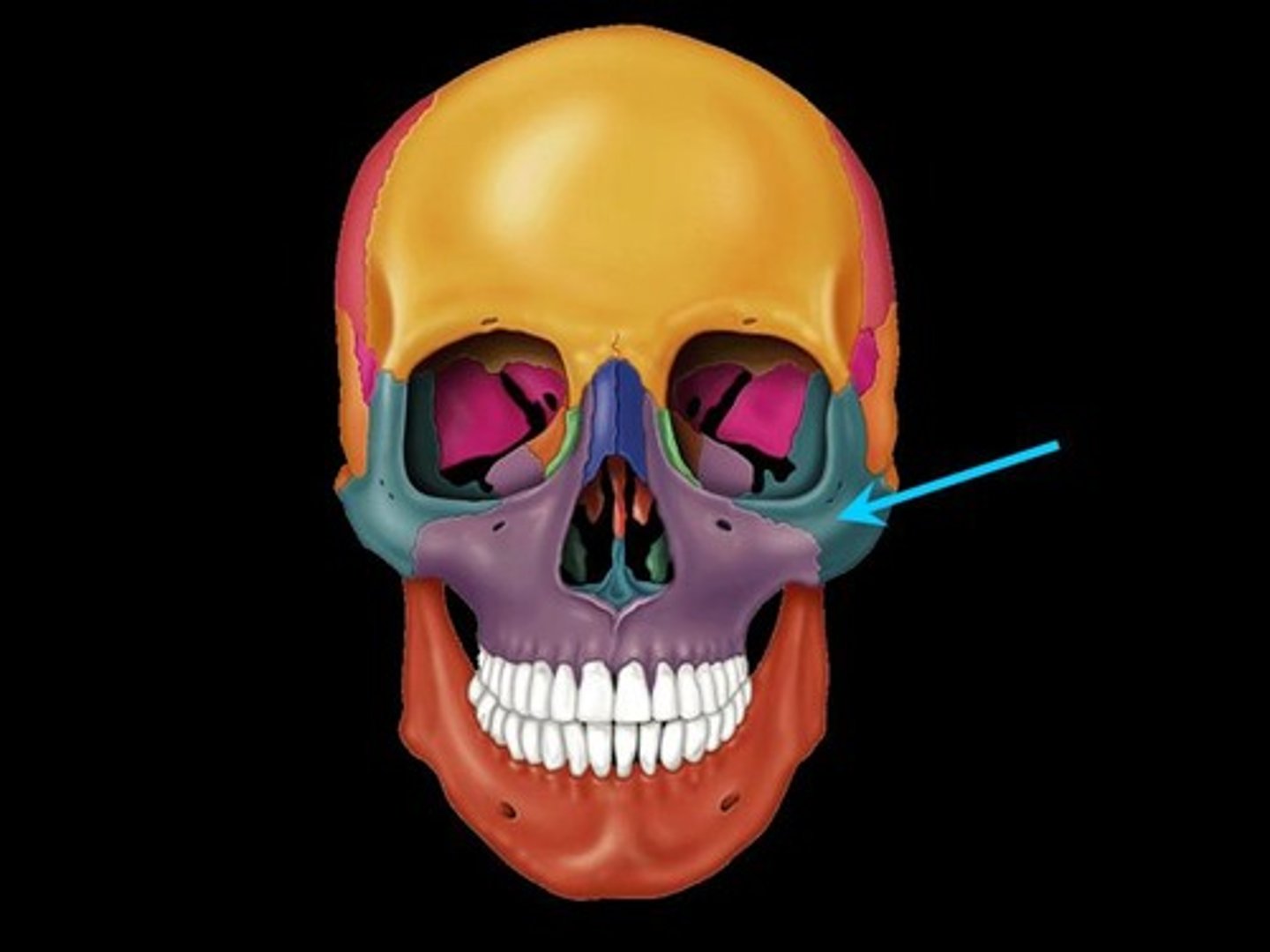
Zygomatic bone
cheek bone
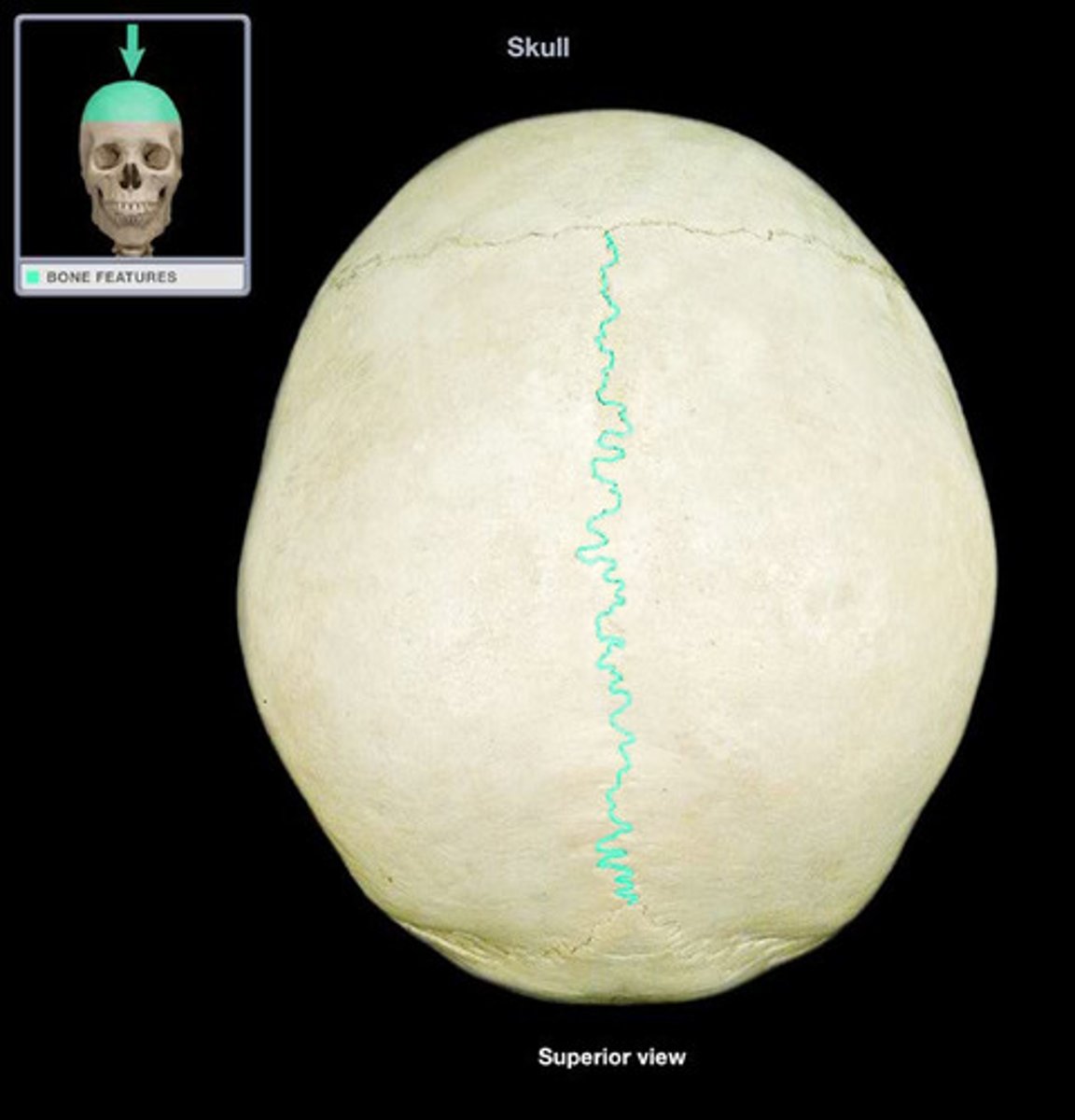
sagittal suture
between parietal bones
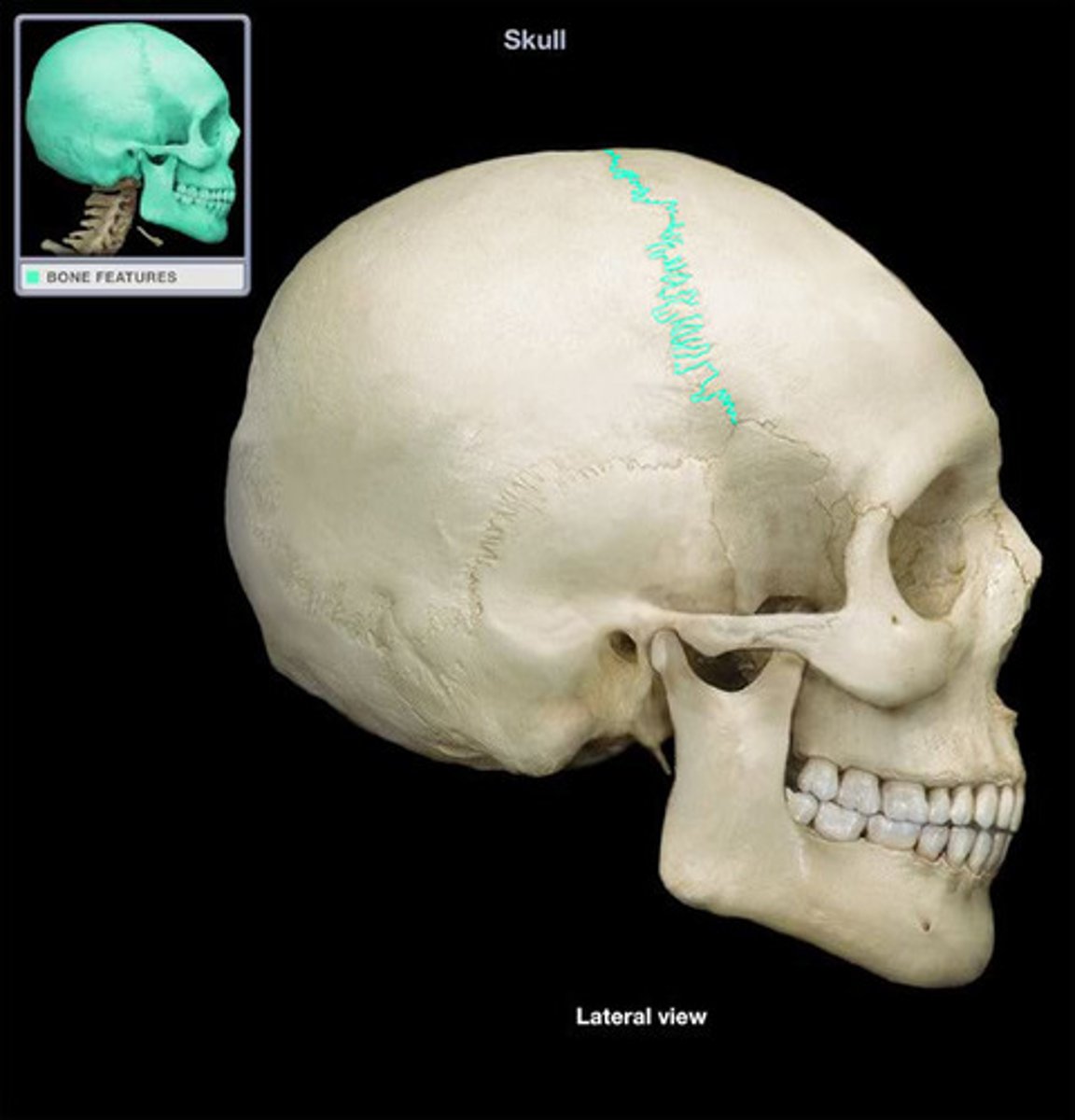
coronal/frontal suture
between frontal and parietal bones
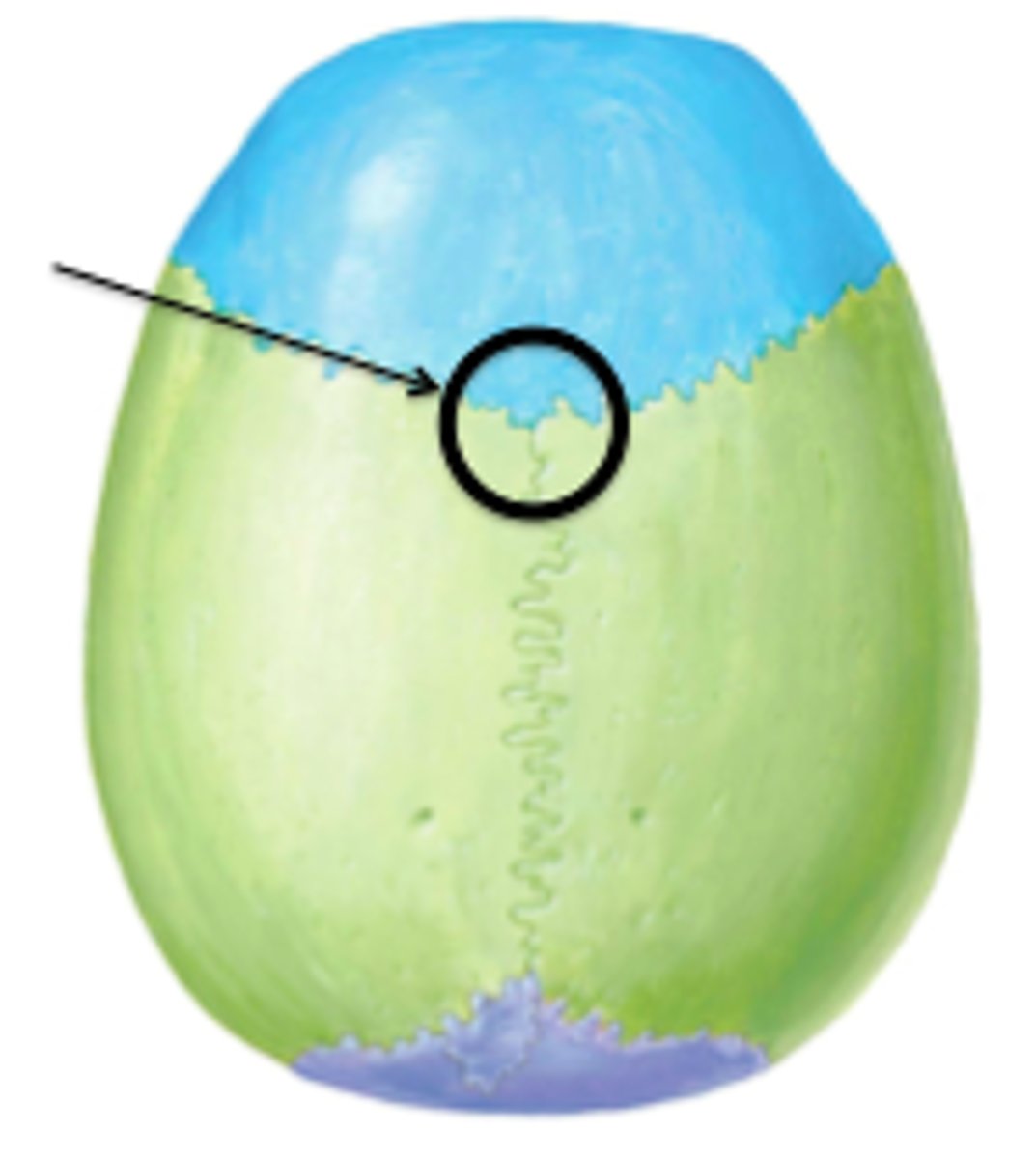
bregma
Intersection of Coronal & Sagittal Sutures
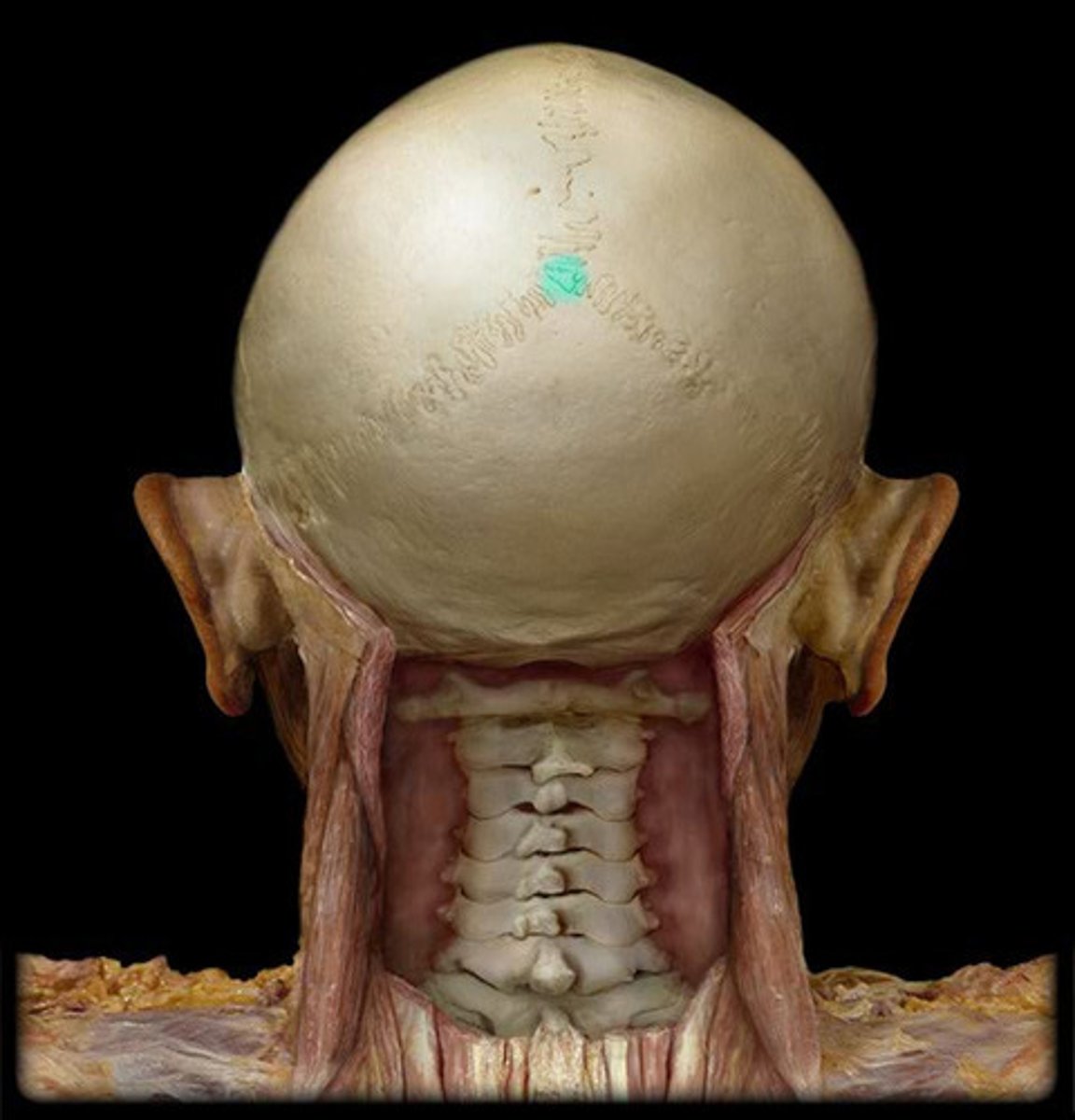
lambda
junction of sagittal and lambdoidal sutures
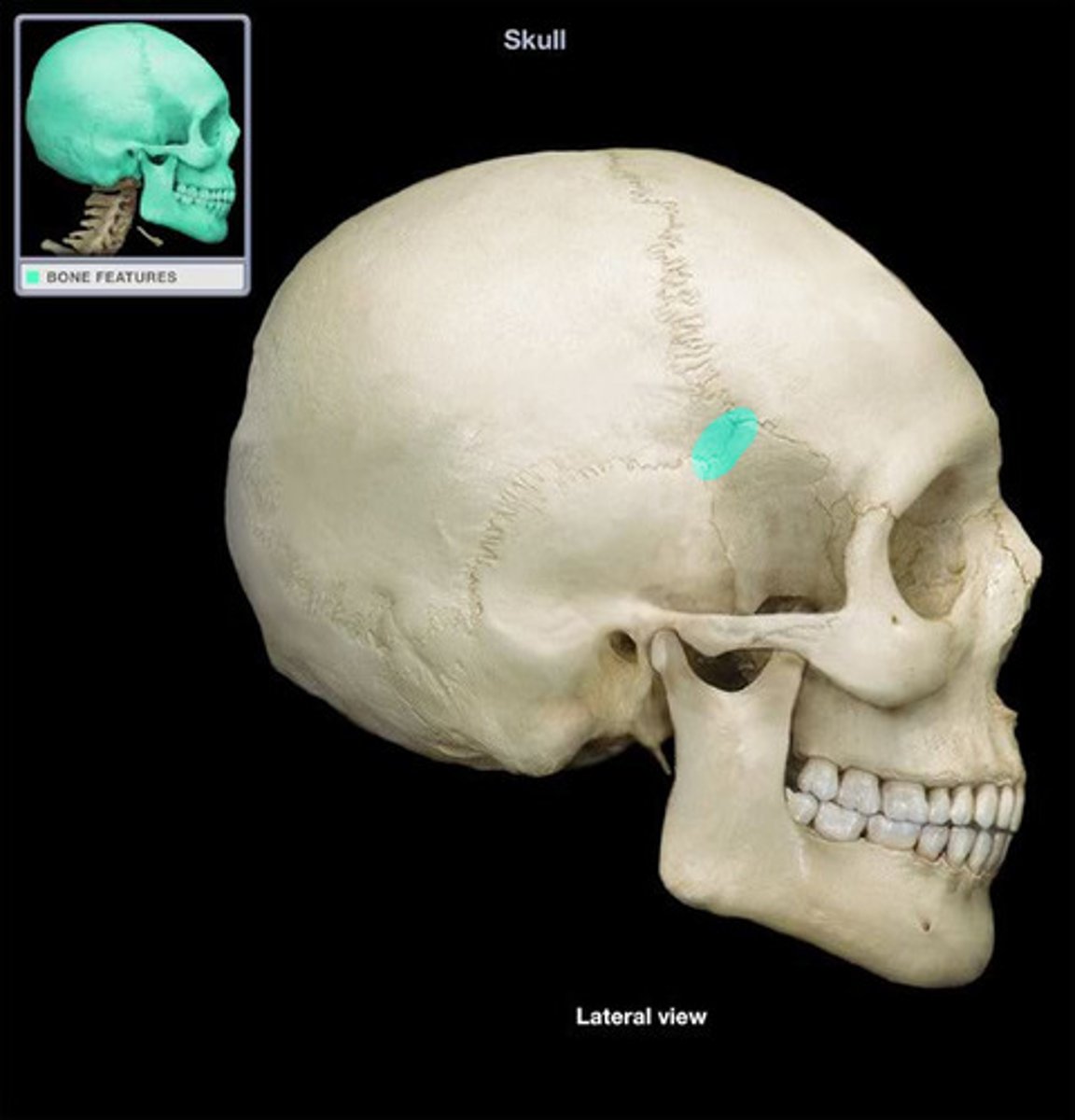
pterion
Junction of frontal, parietal, sphenoid, and temporal bones
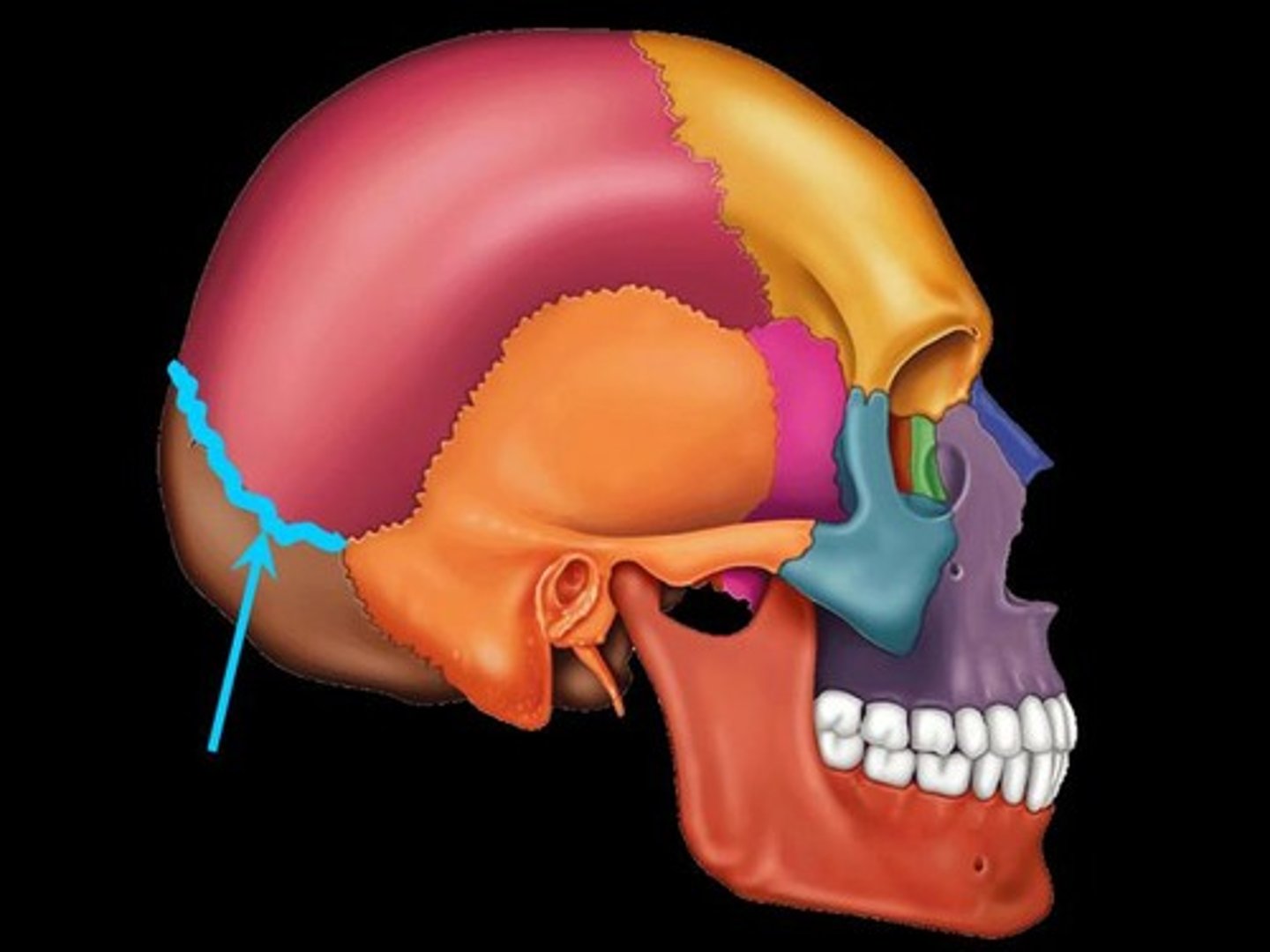
lambdoid suture
between parietal bones and occipital bone
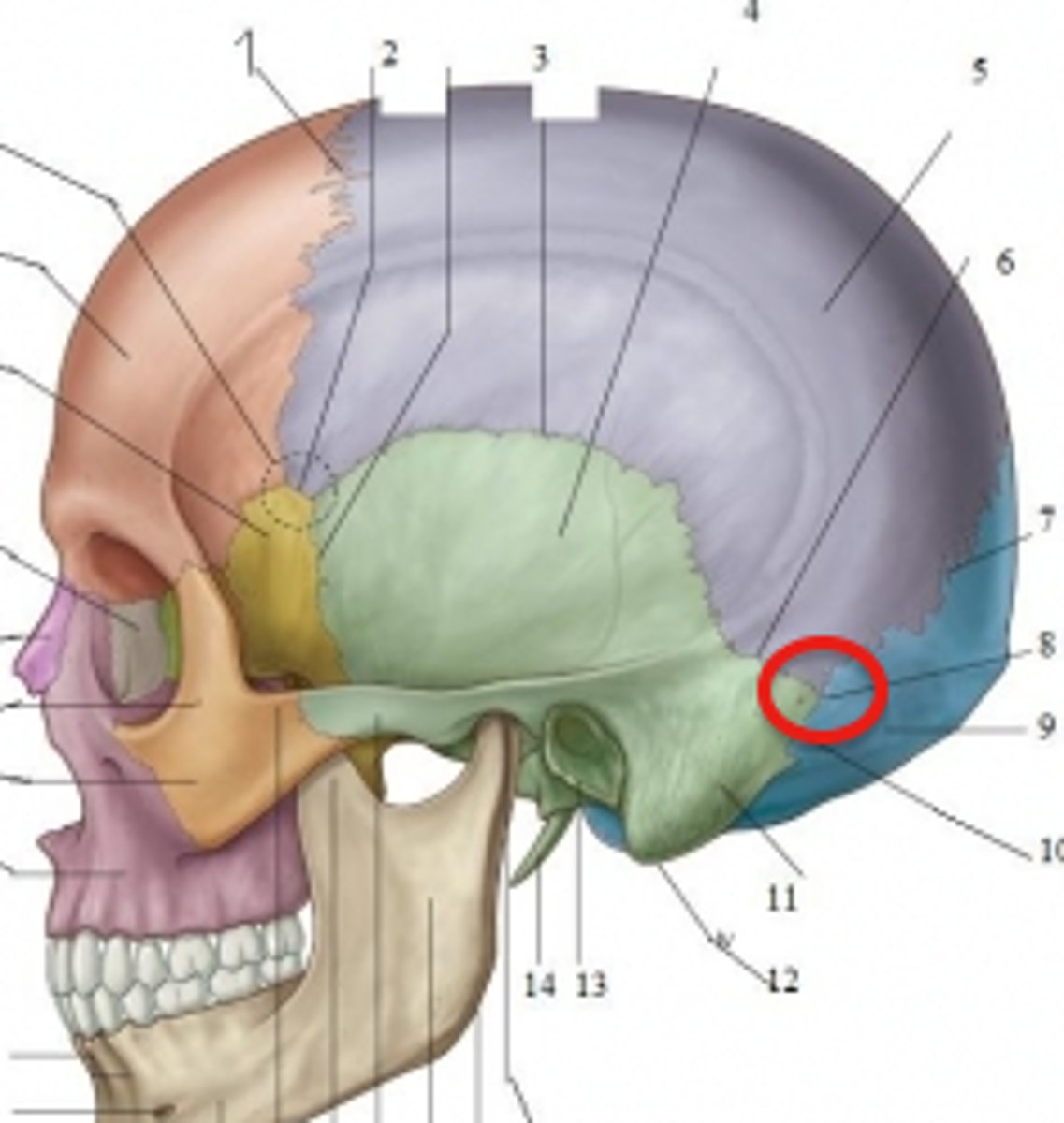
asterion
Where Parietal, Occipital, and Temporal Bones meet
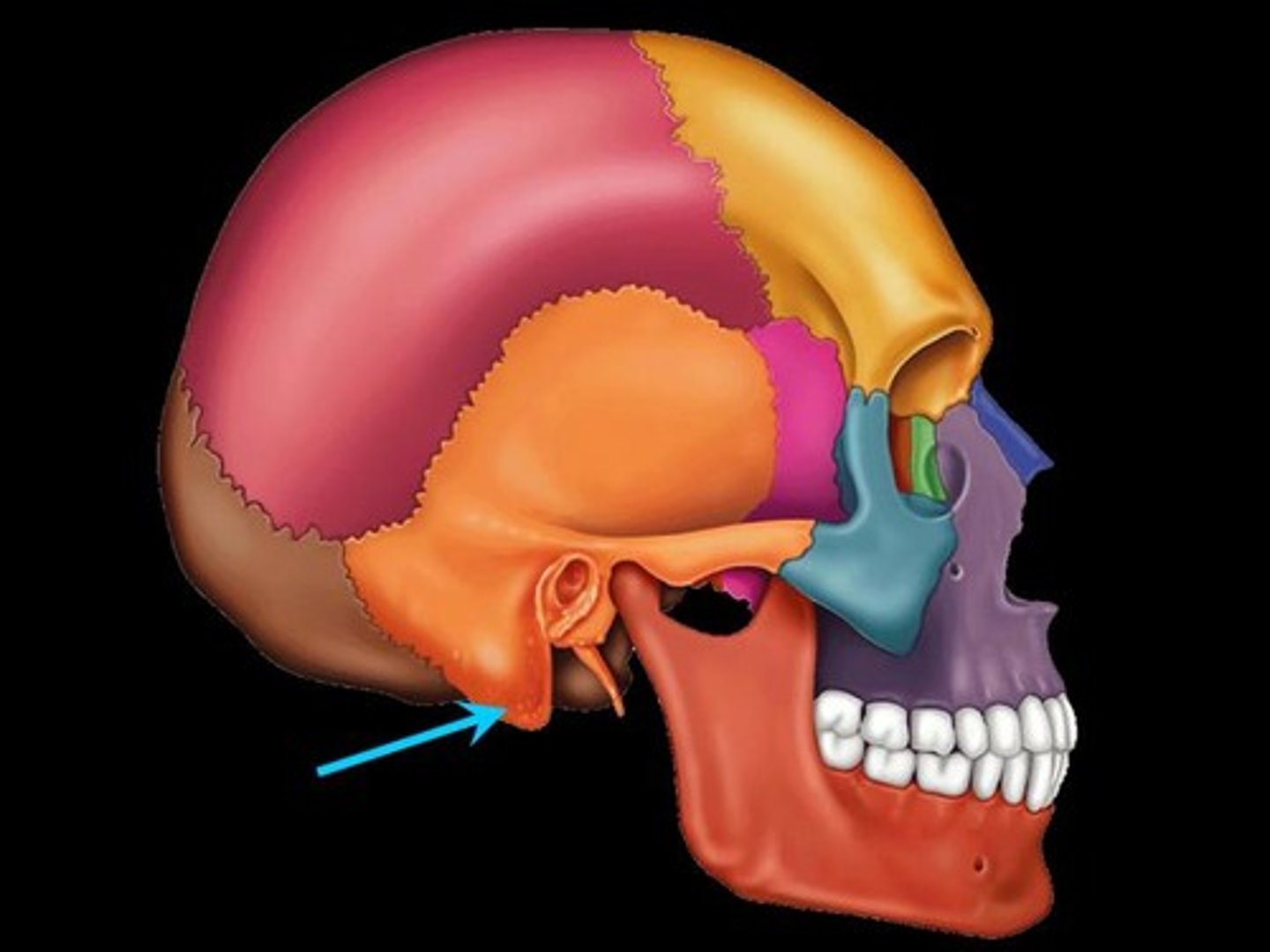
mastoid process
round projection on the temporal bone behind the ear
styloid process
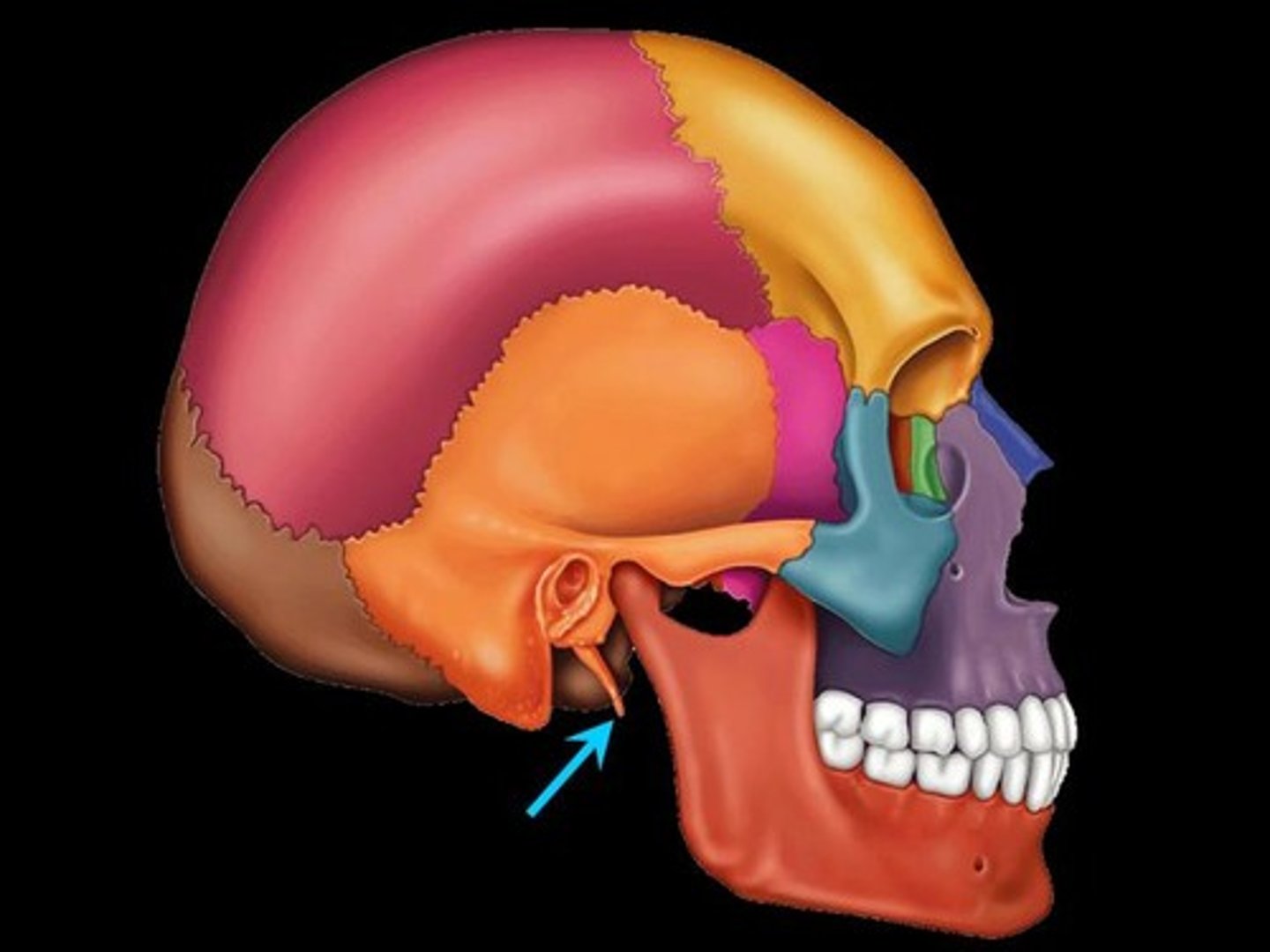
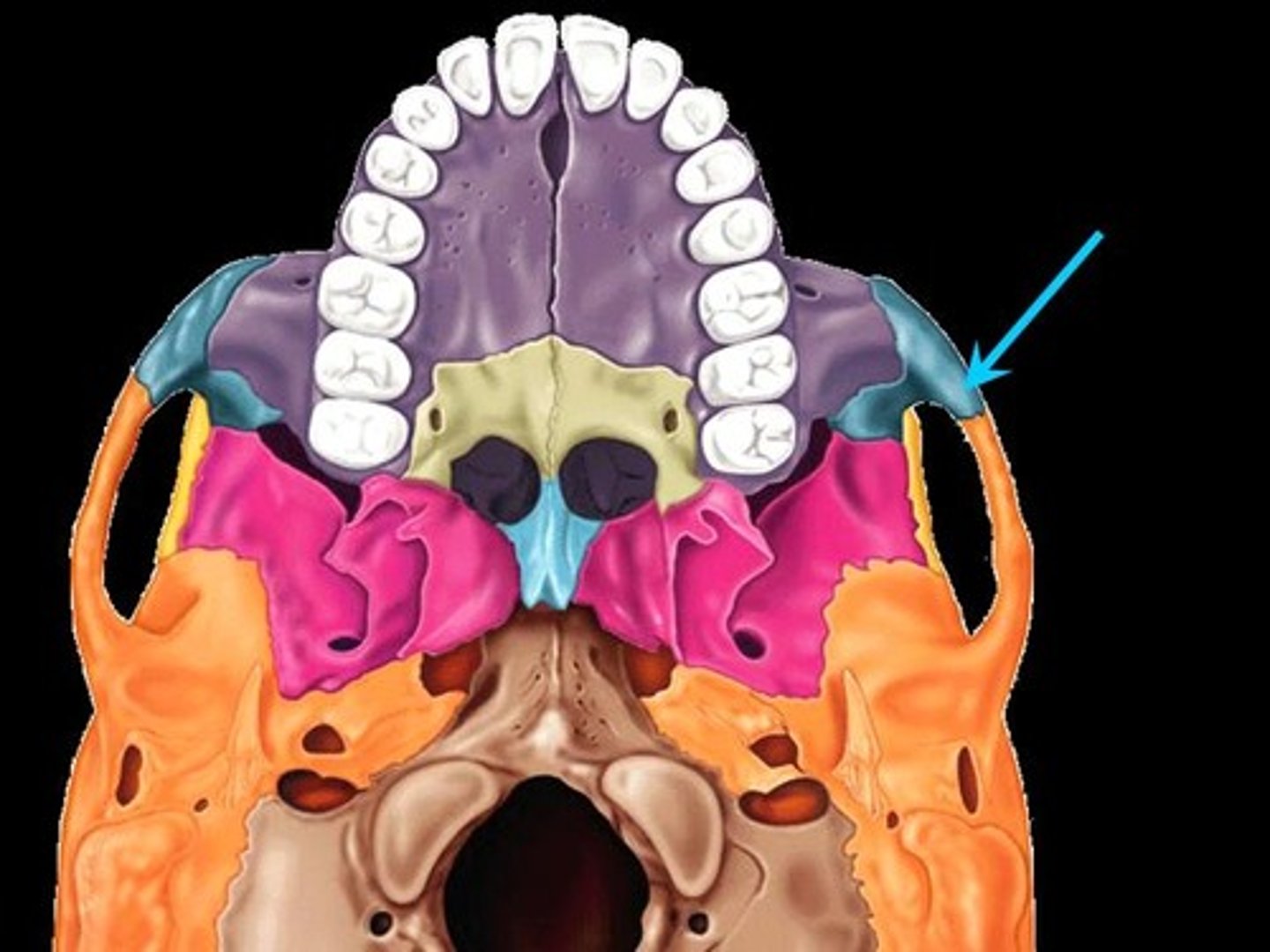
temporal process of zygomatic bone
points posteriorly and articulates with the zygomatic process of the temporal bone
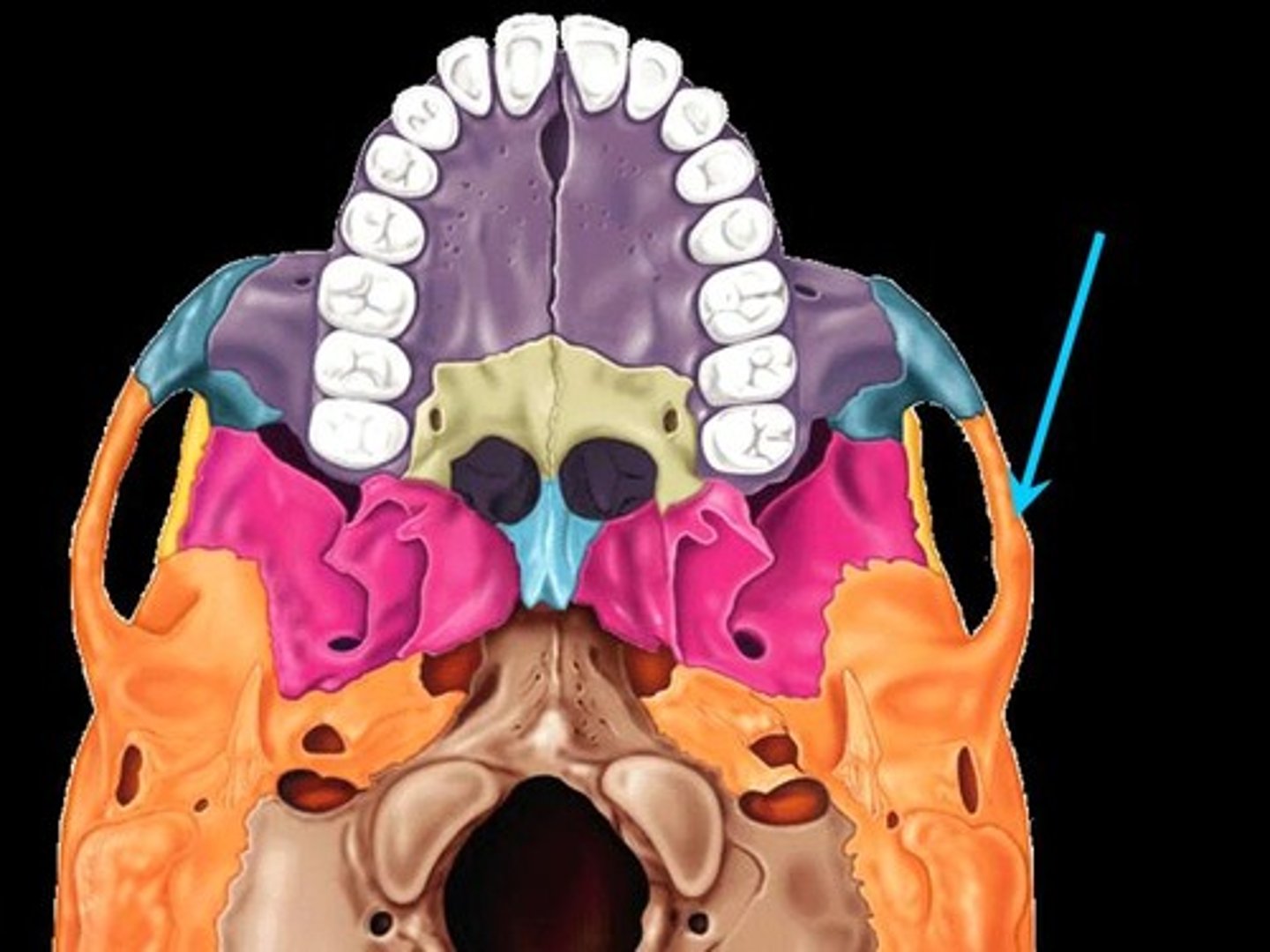
zygomatic process of temporal bone
extension from the temporal bone that forms the posterior portion of the zygomatic arch
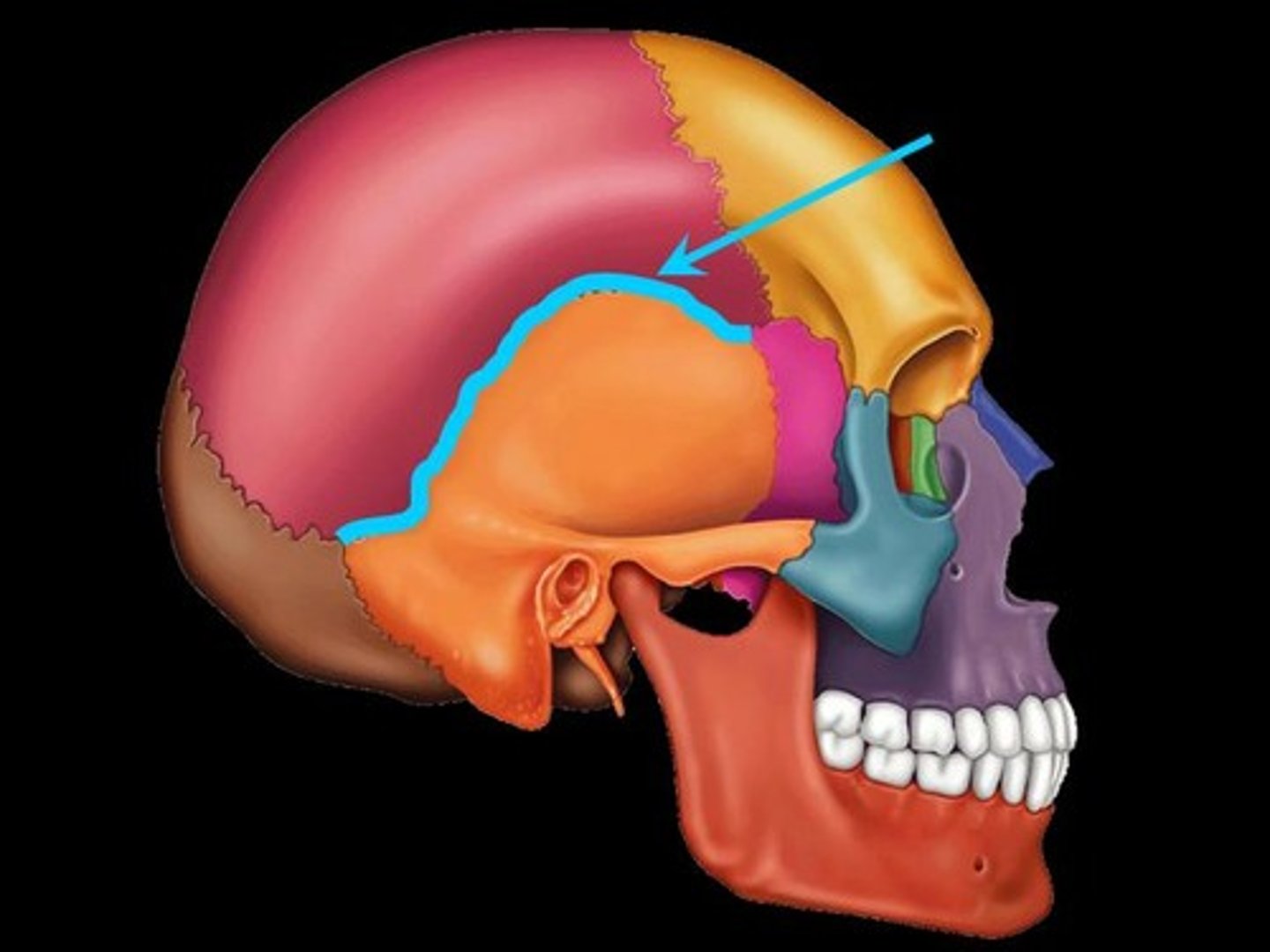
squamous suture
Between parietal and temporal bones
zygomatic arch
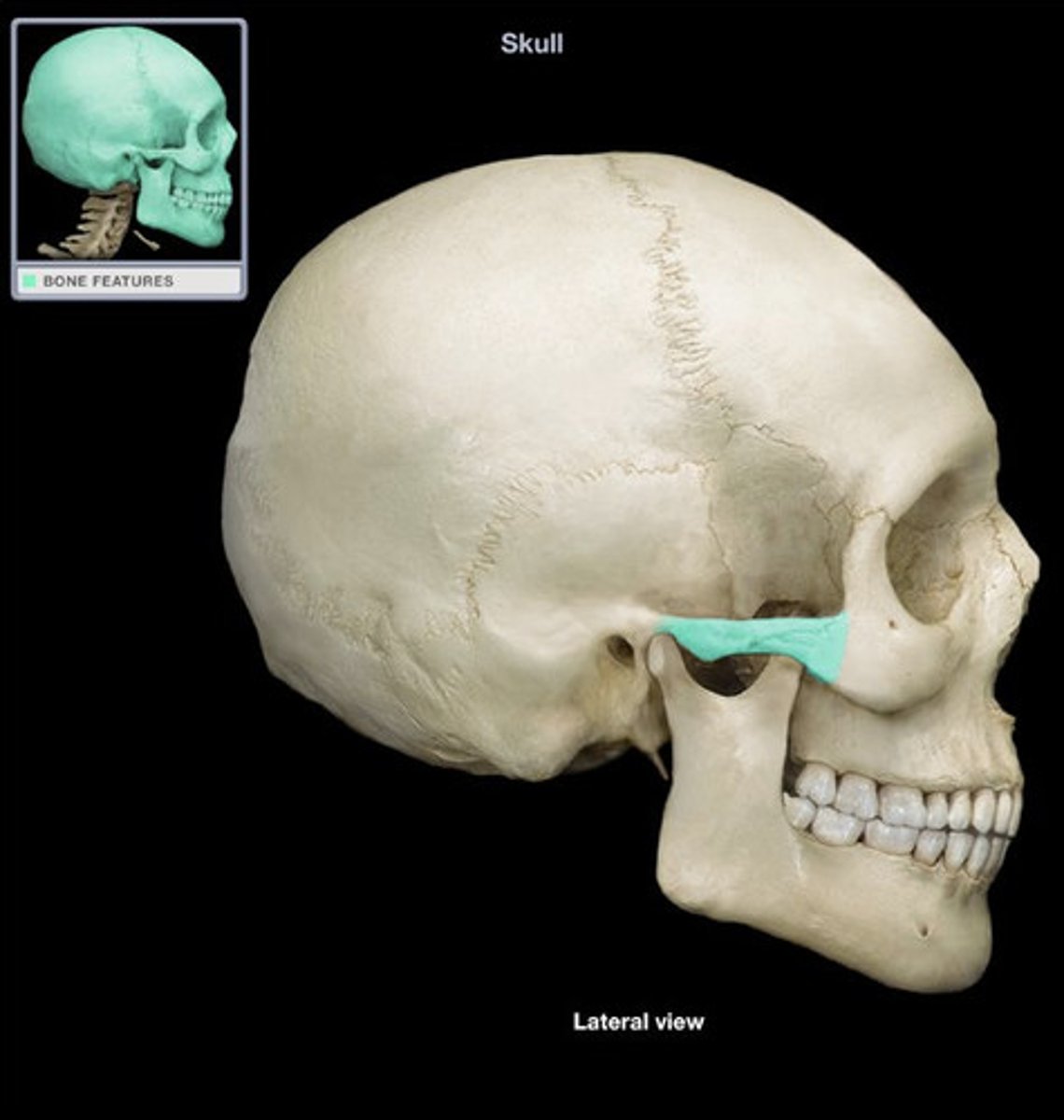
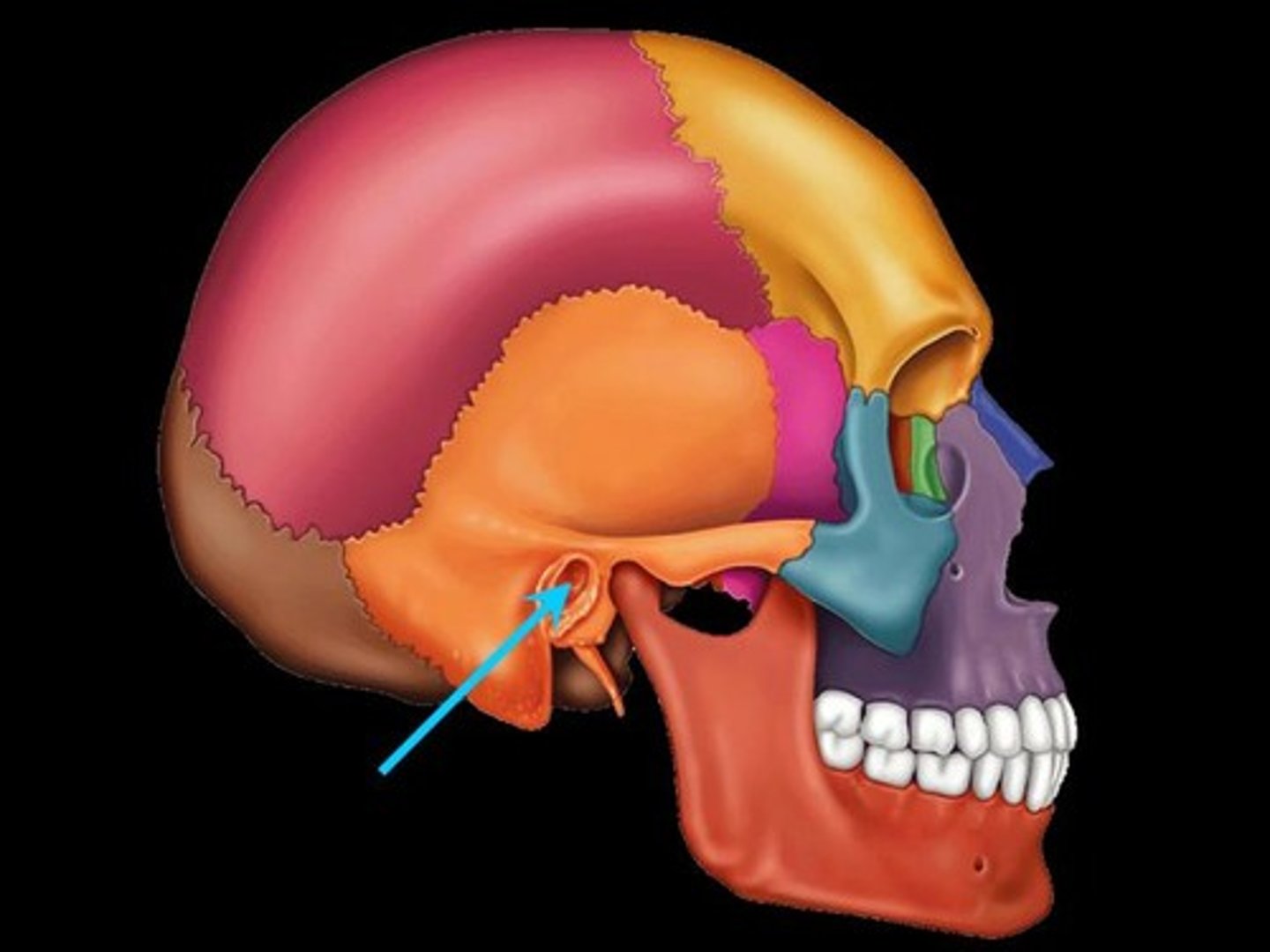
External acoustic (auditory) meatus
opening of the ear
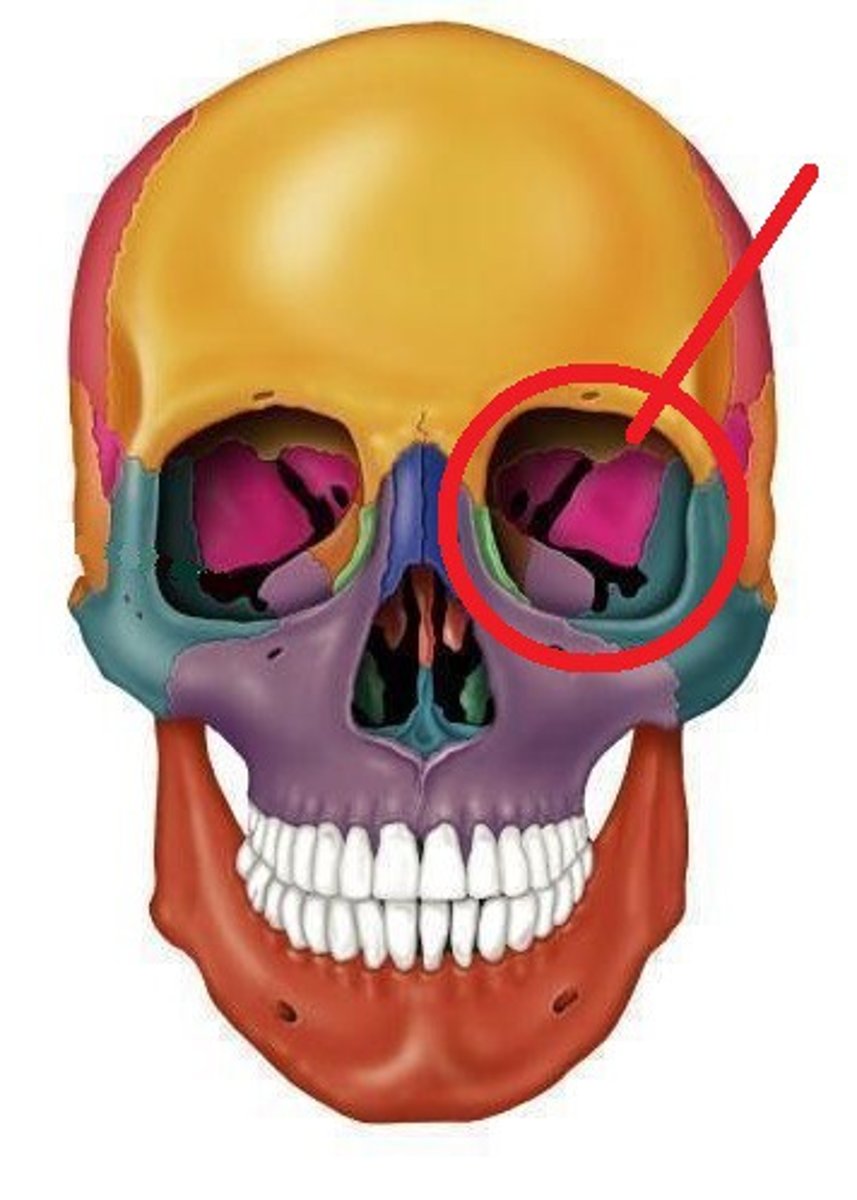
orbits
eye sockets
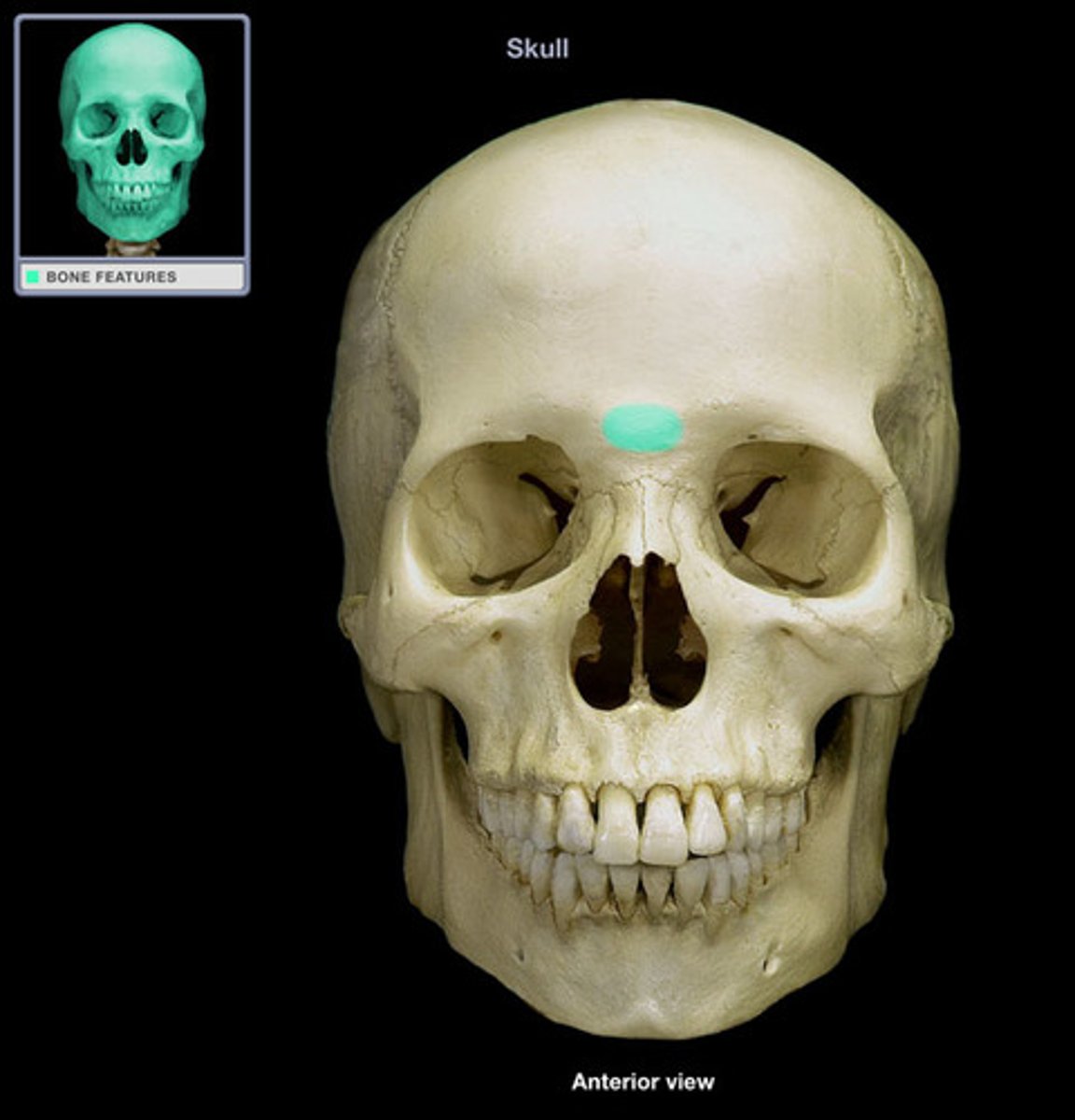
glabella
between eyebrows
nasal bone
bridge of nose
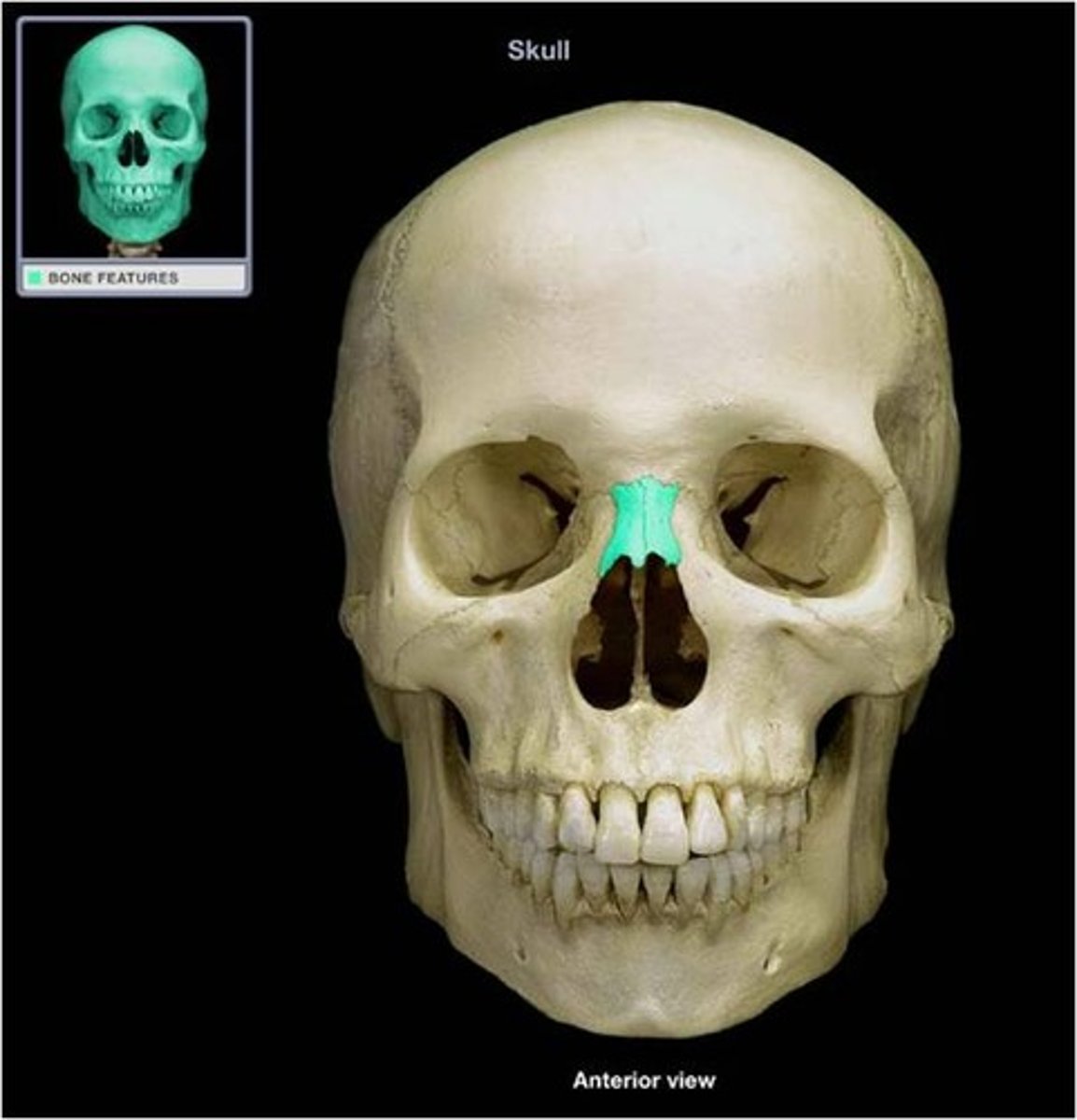
maxilla
upper jaw
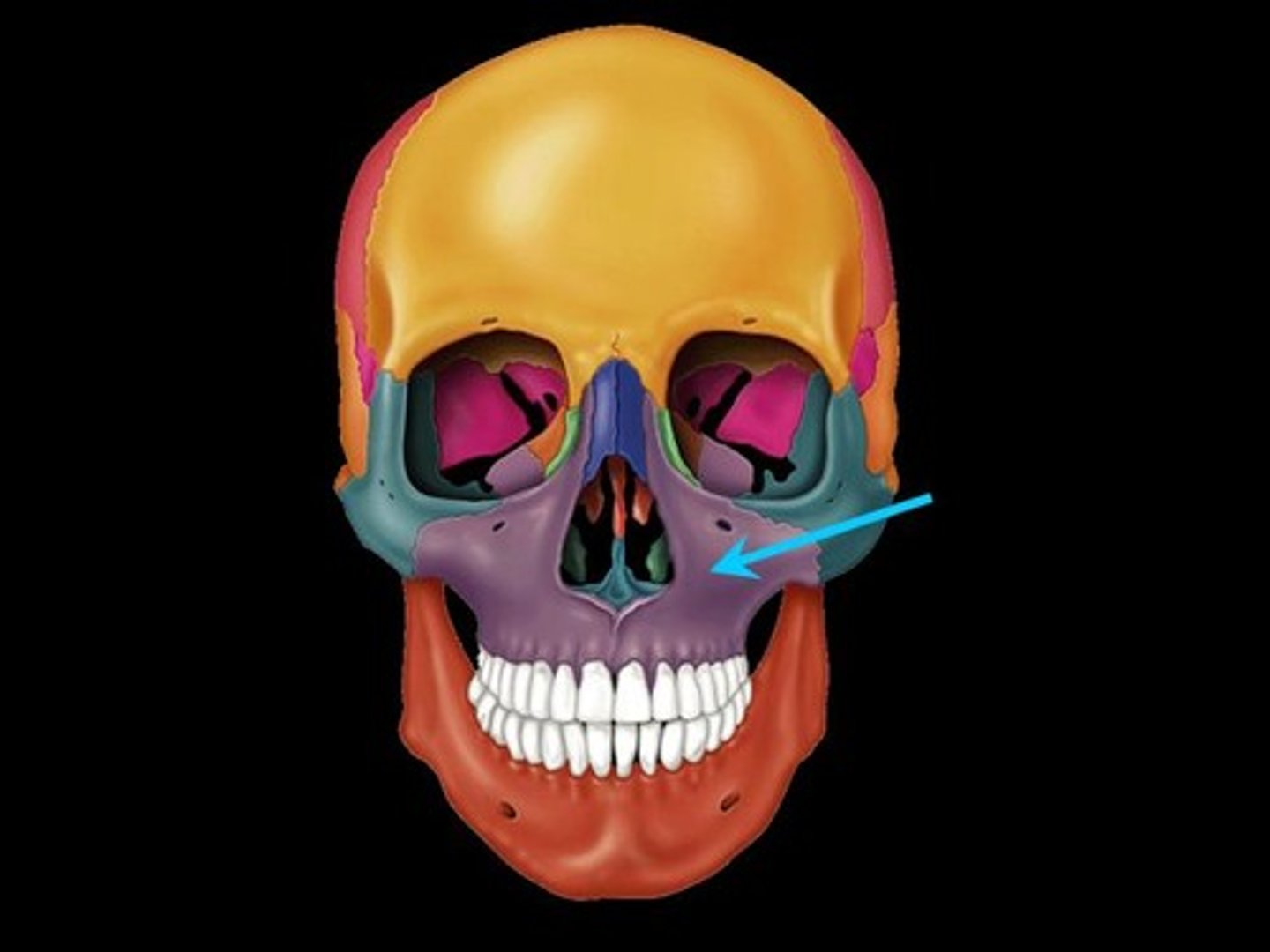
lacrimal bone
small fragile bone making up part of the front inner walls of each eye socket and providing room for the passage of the lacrimal ducts
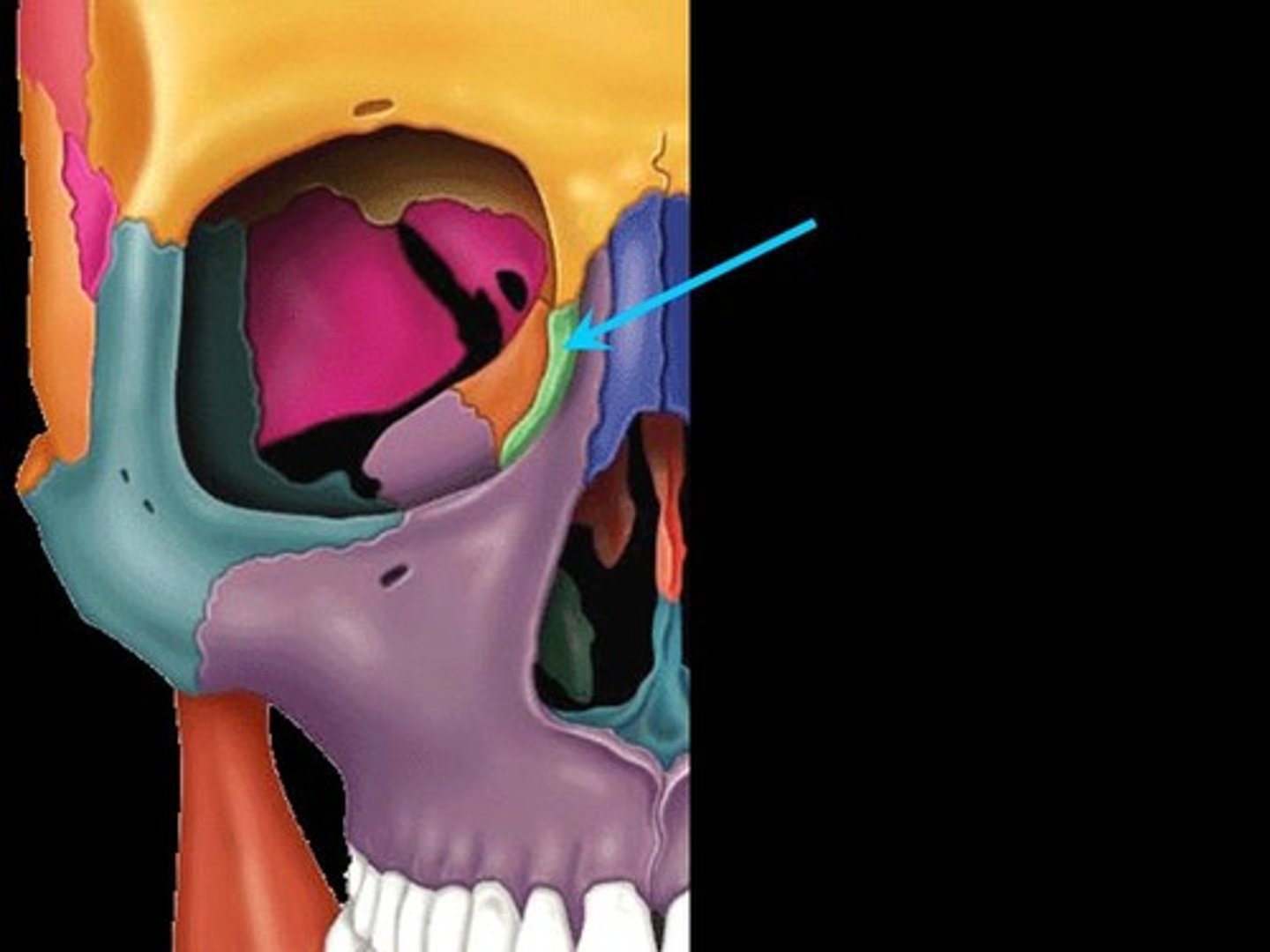
fossa for the lacrimal sac
houses lacrimal sac
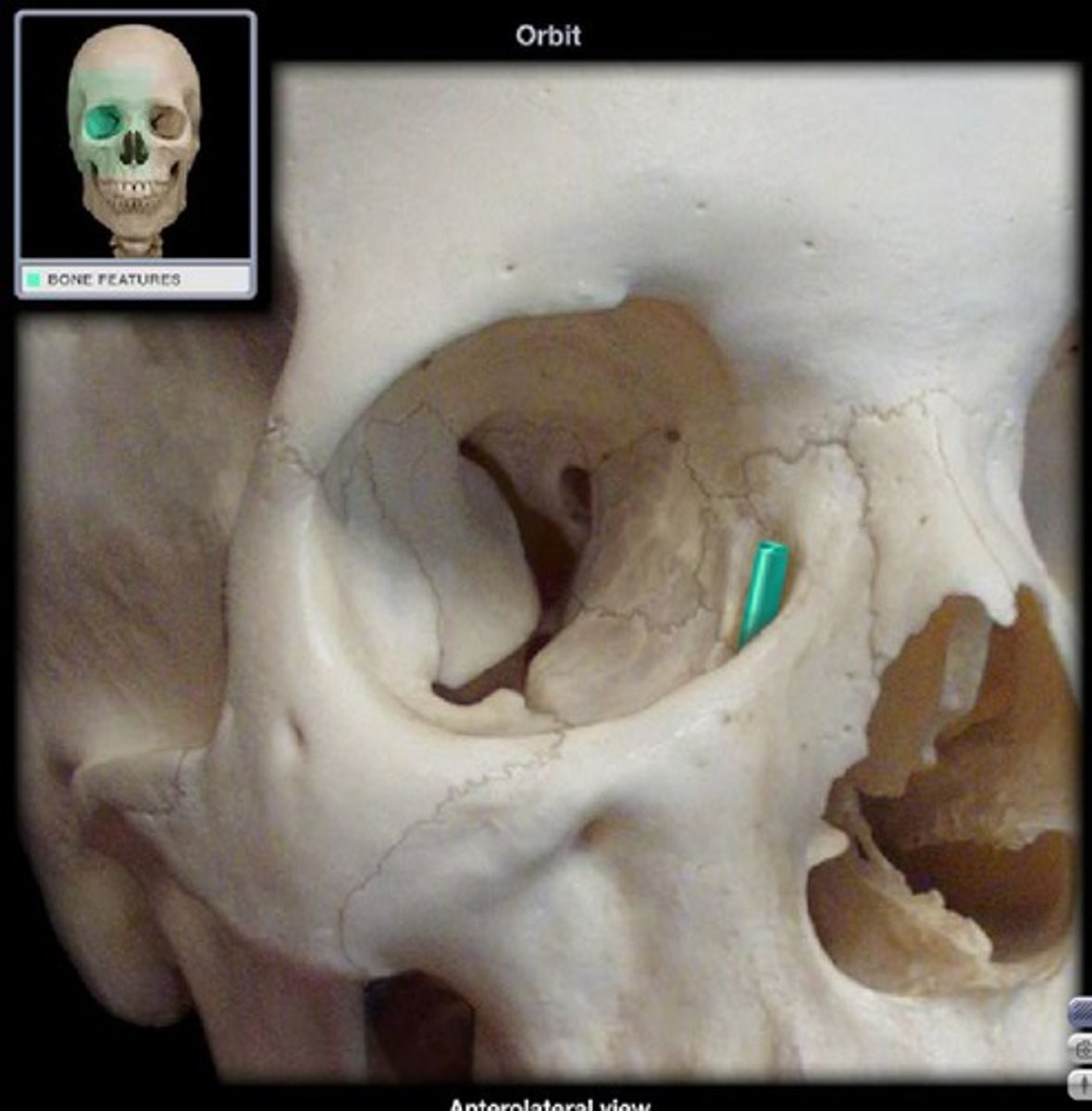
ethmoid bone
Light spongy bone between the eye sockets; forms part of the nasal cavities.
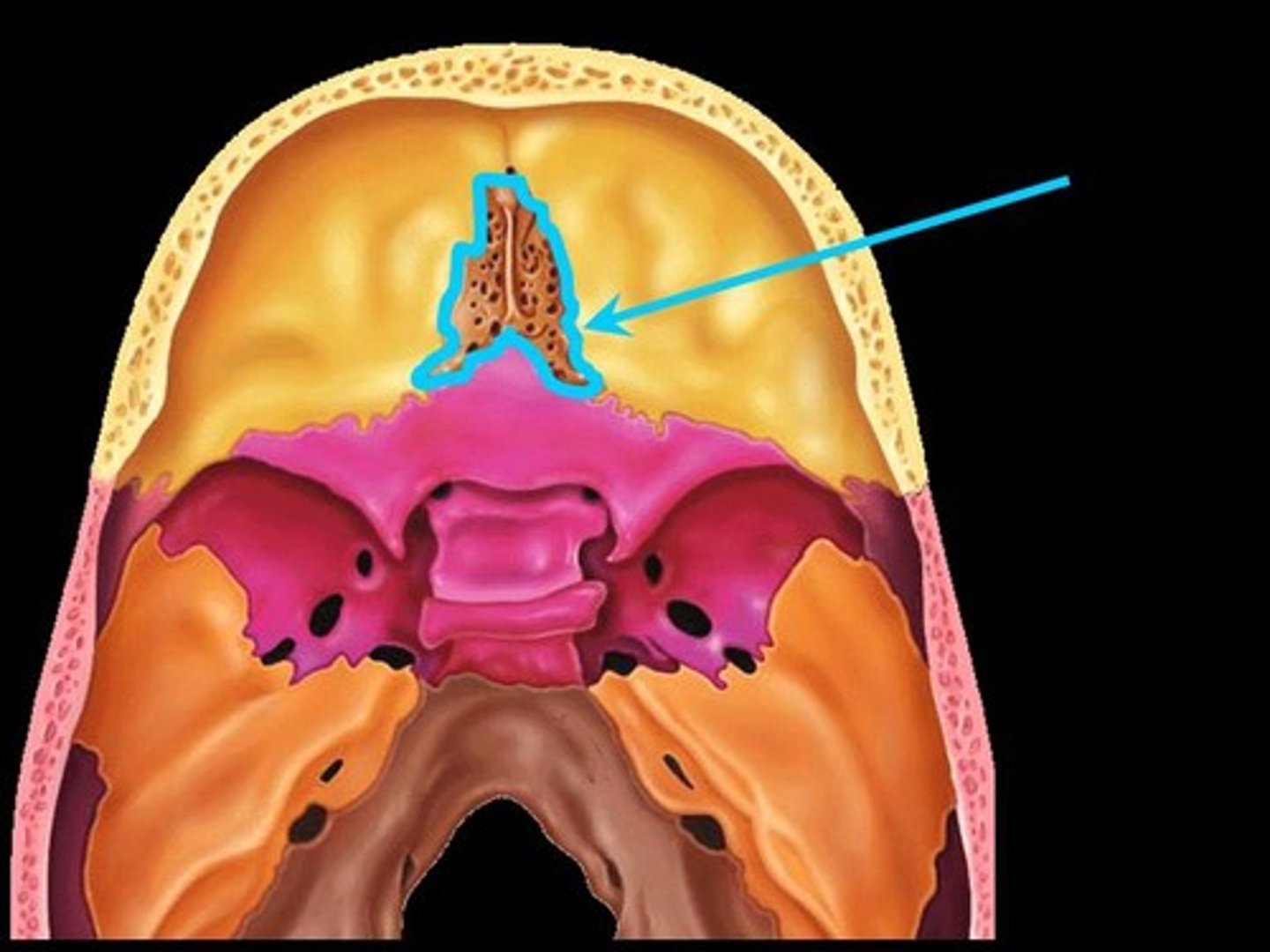
perpendicular plate of ethmoid bone
superior portion of the bony nasal septum
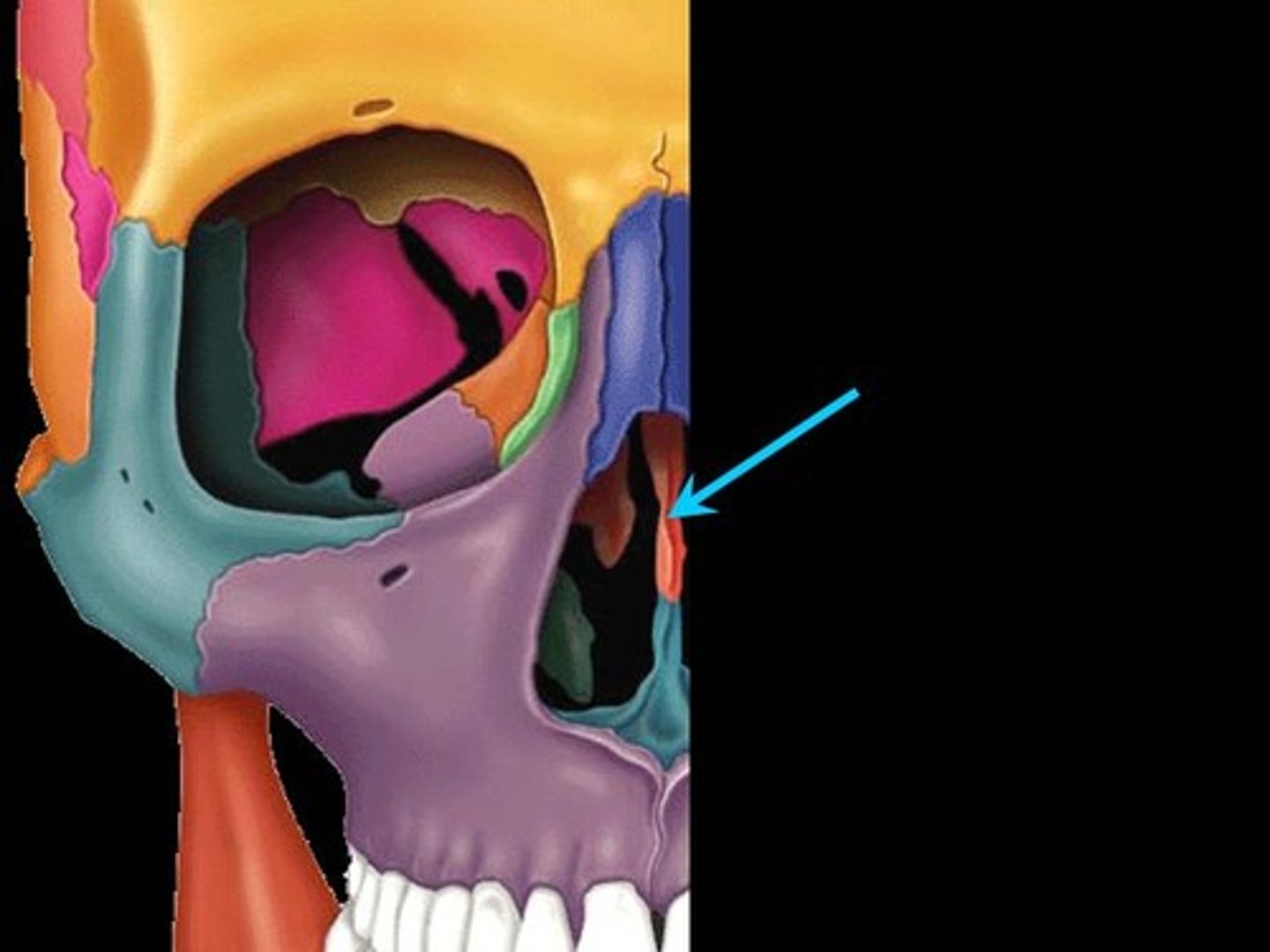
vomer
forms the inferior portion of the nasal septum
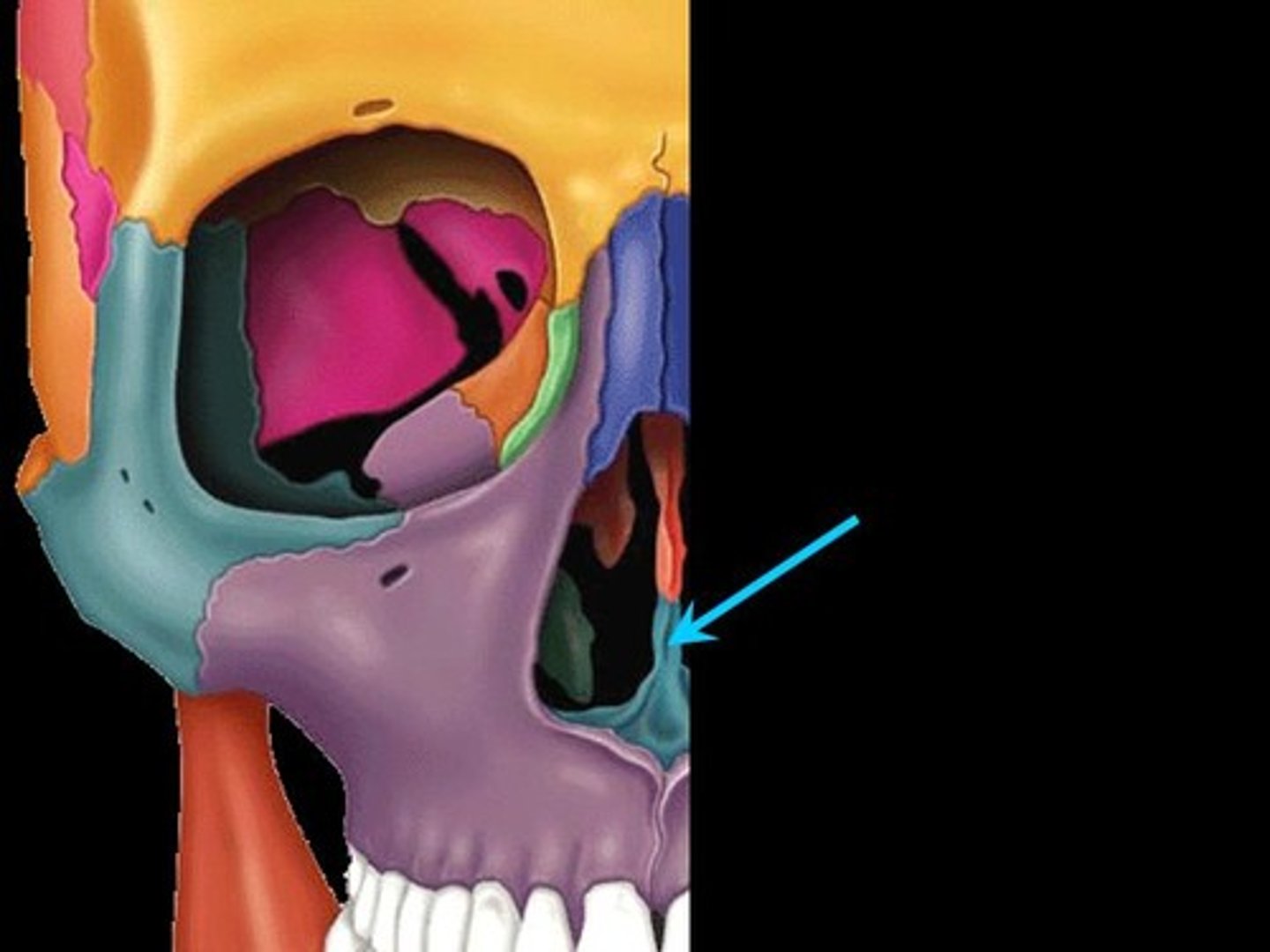
supraorbital margin
The superior rim of the eye socket located on the frontal bone.
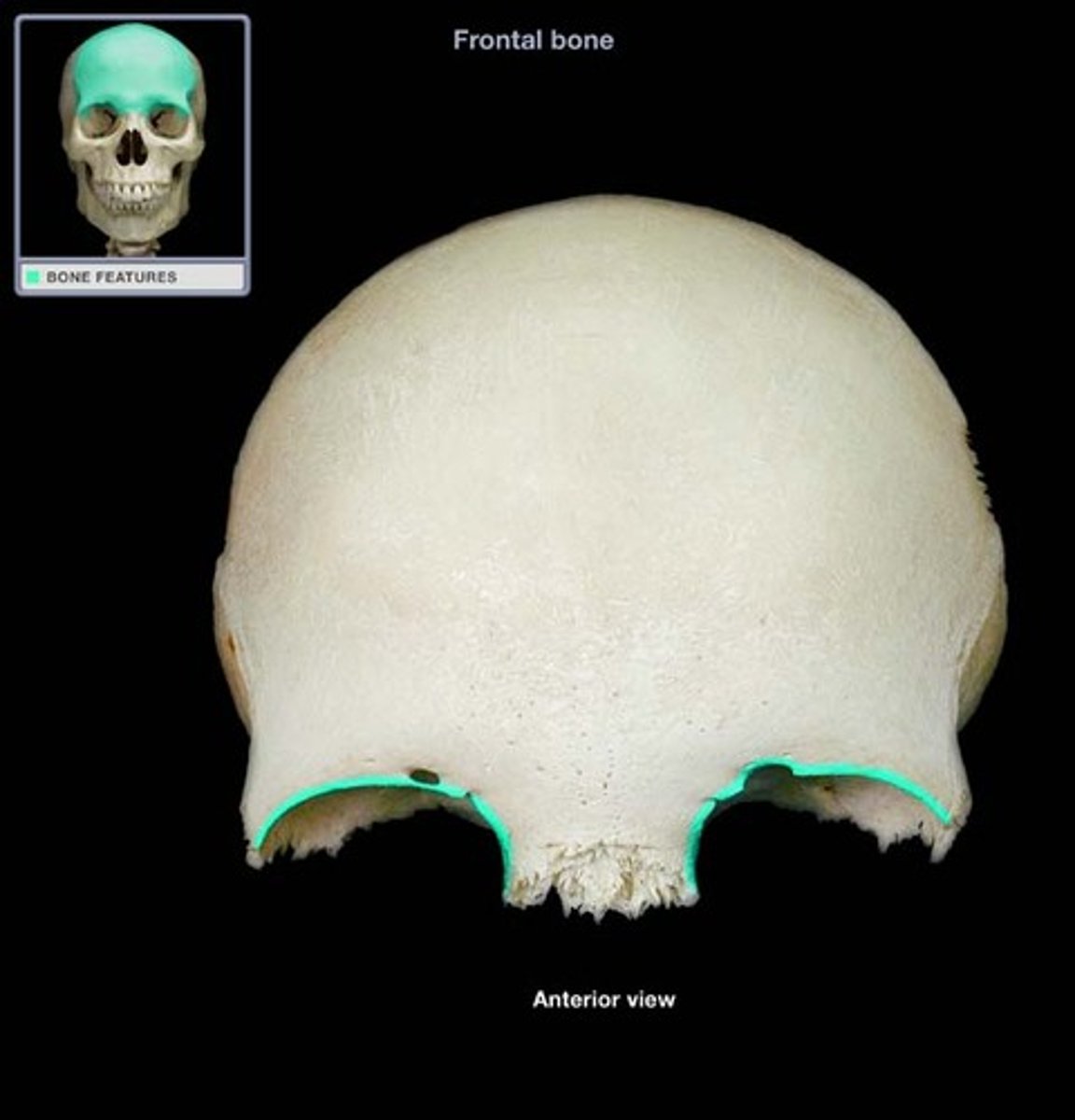
infraorbital margin
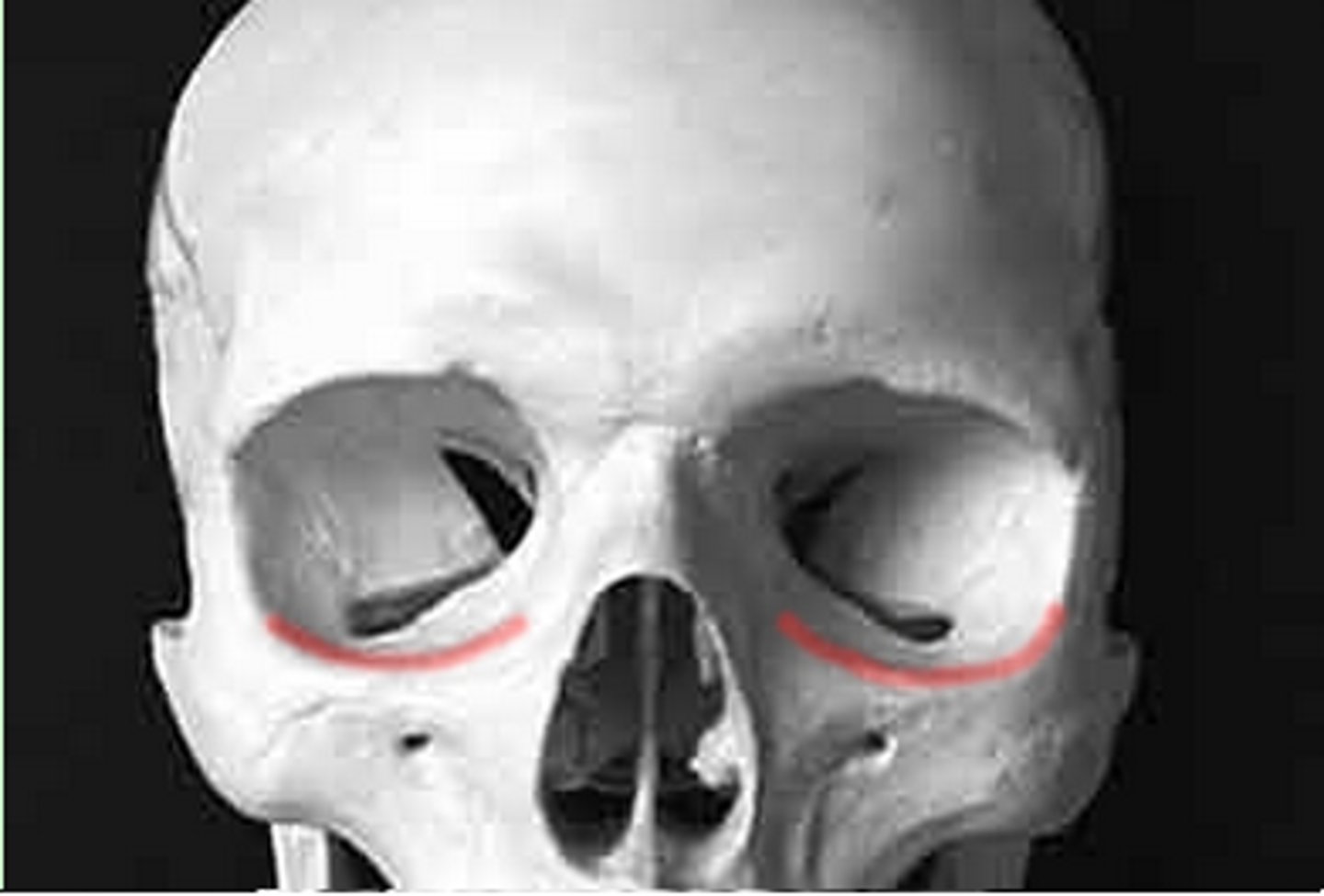
lower rim of orbit
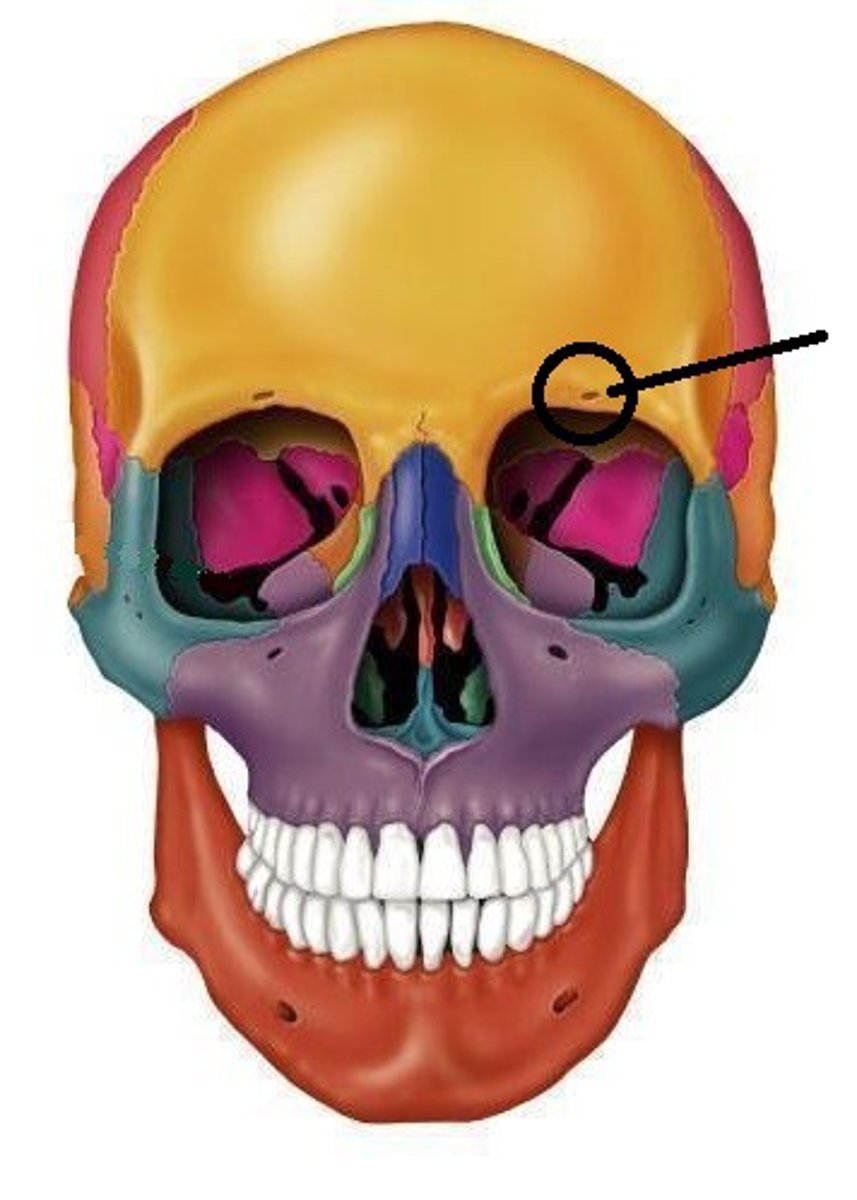
supraorbital notch or foramen
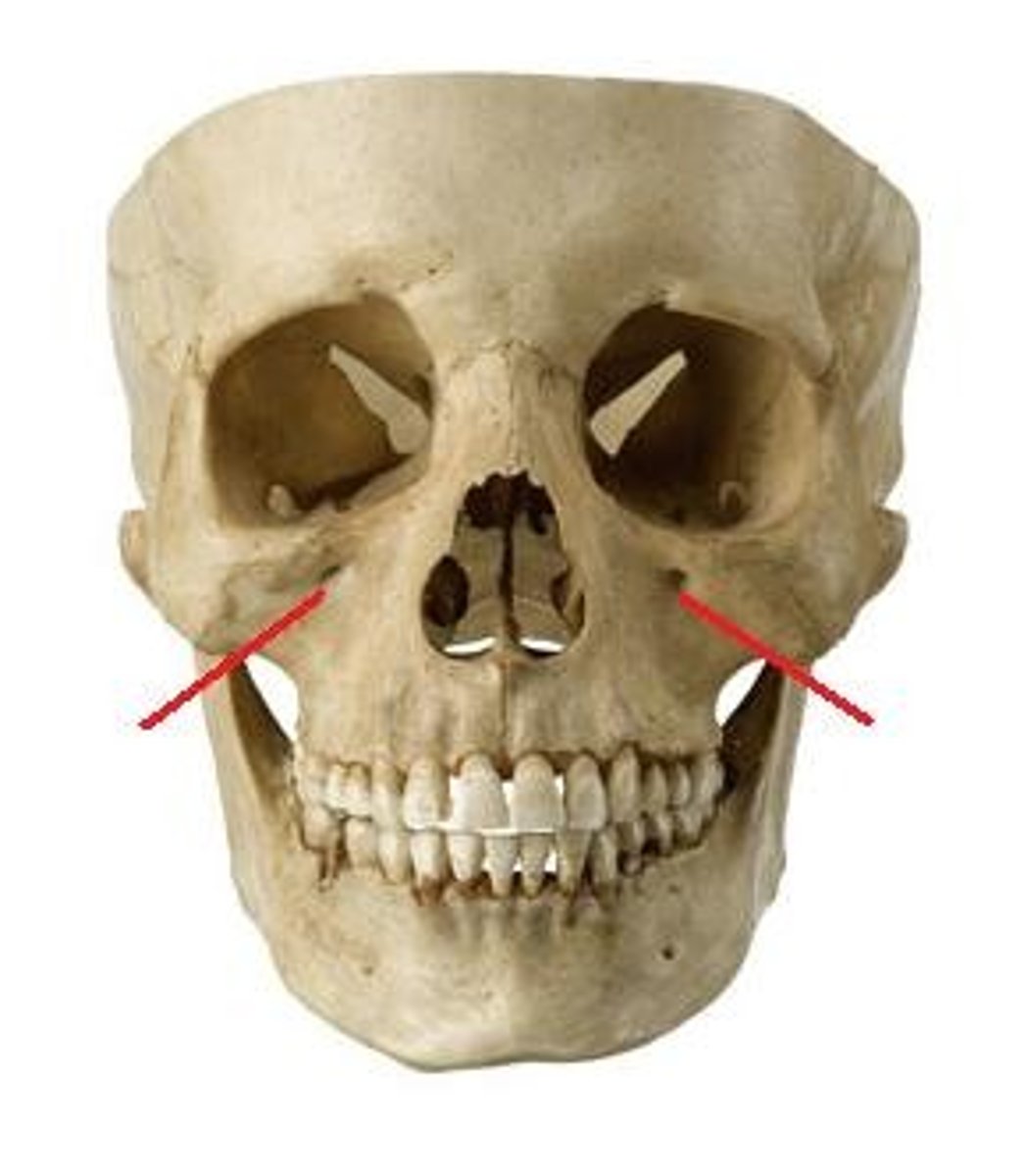
infraorbital foramen
superior nasal concha
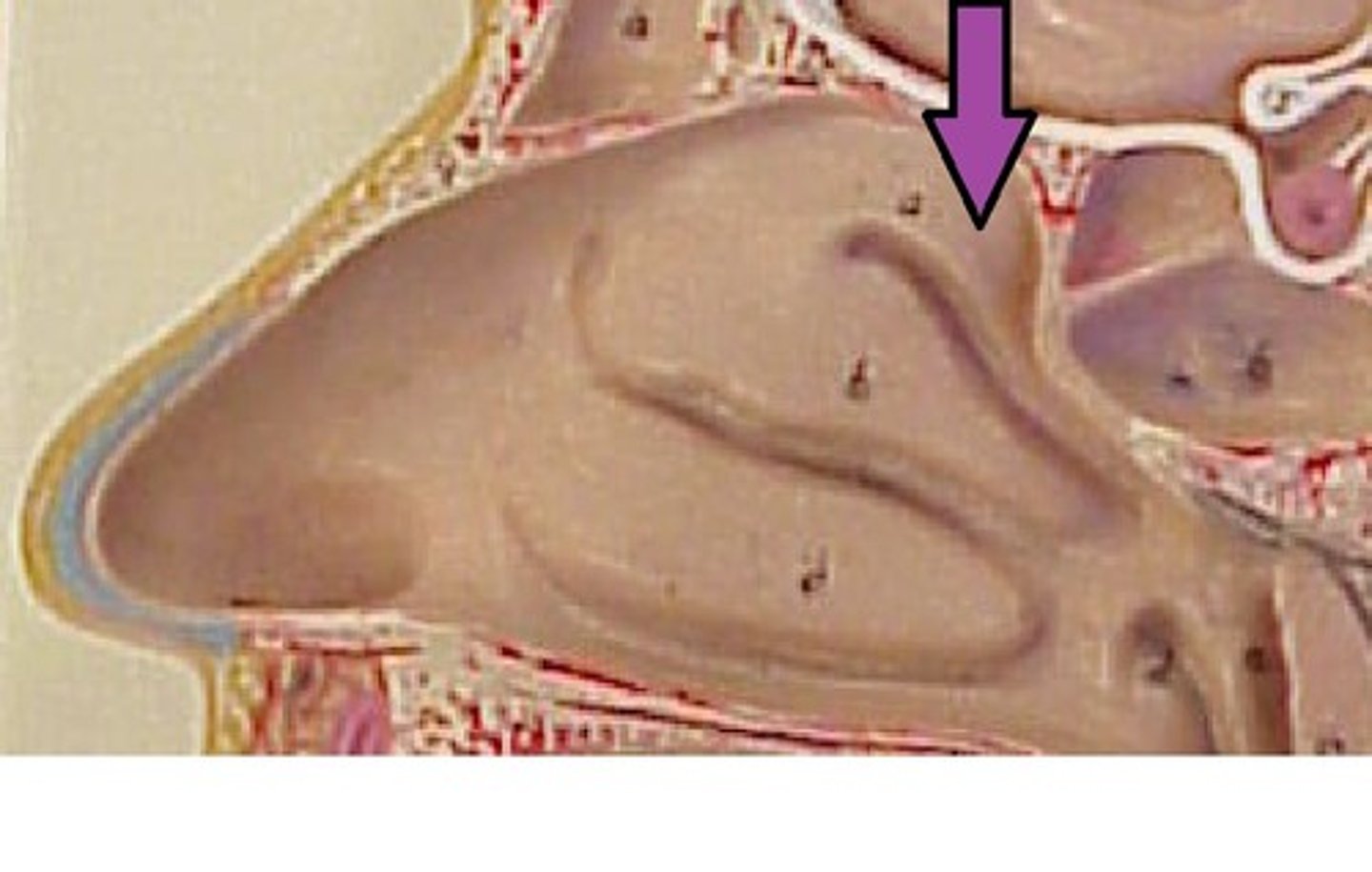
middle nasal concha
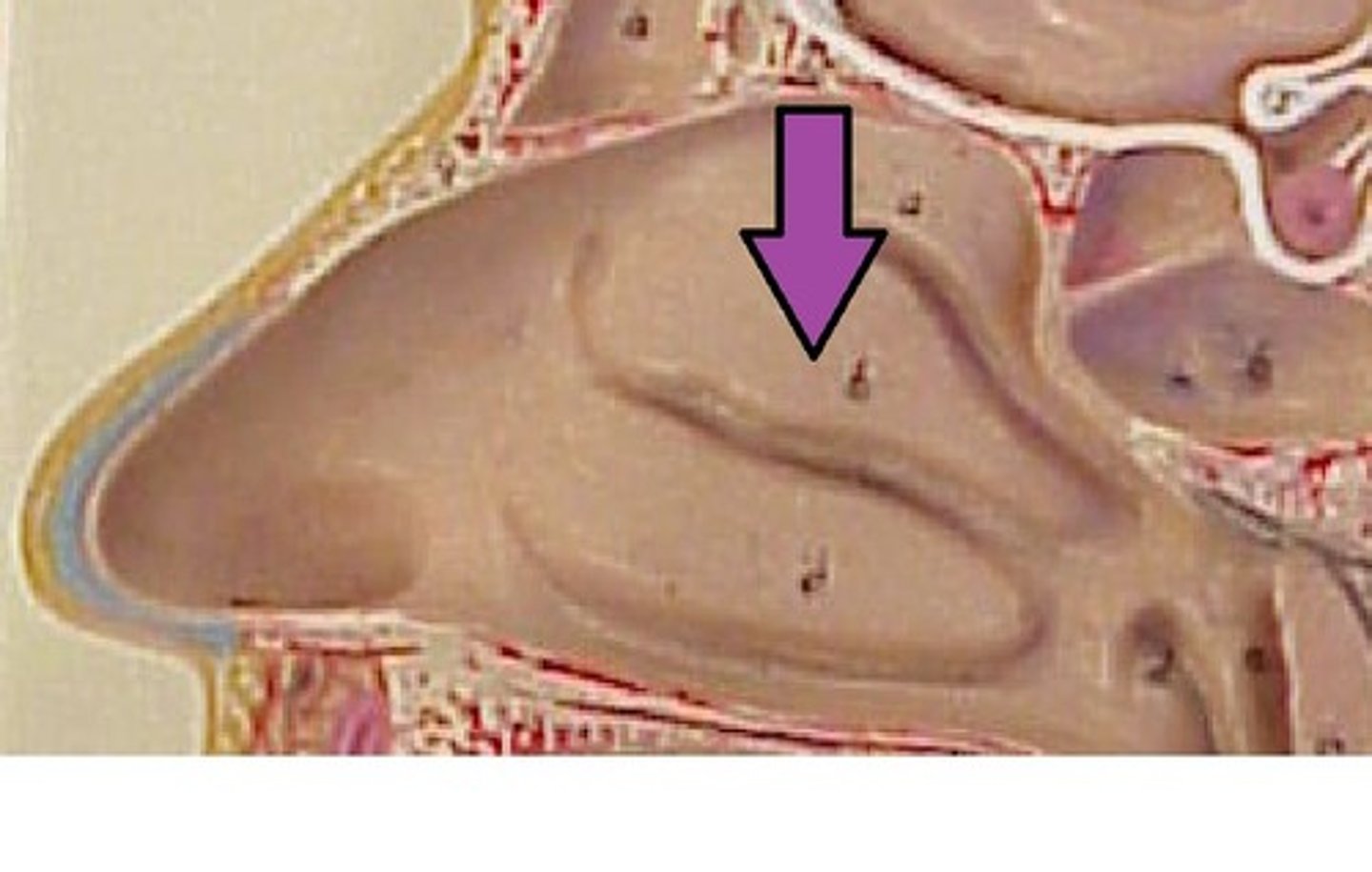
inferior nasal concha
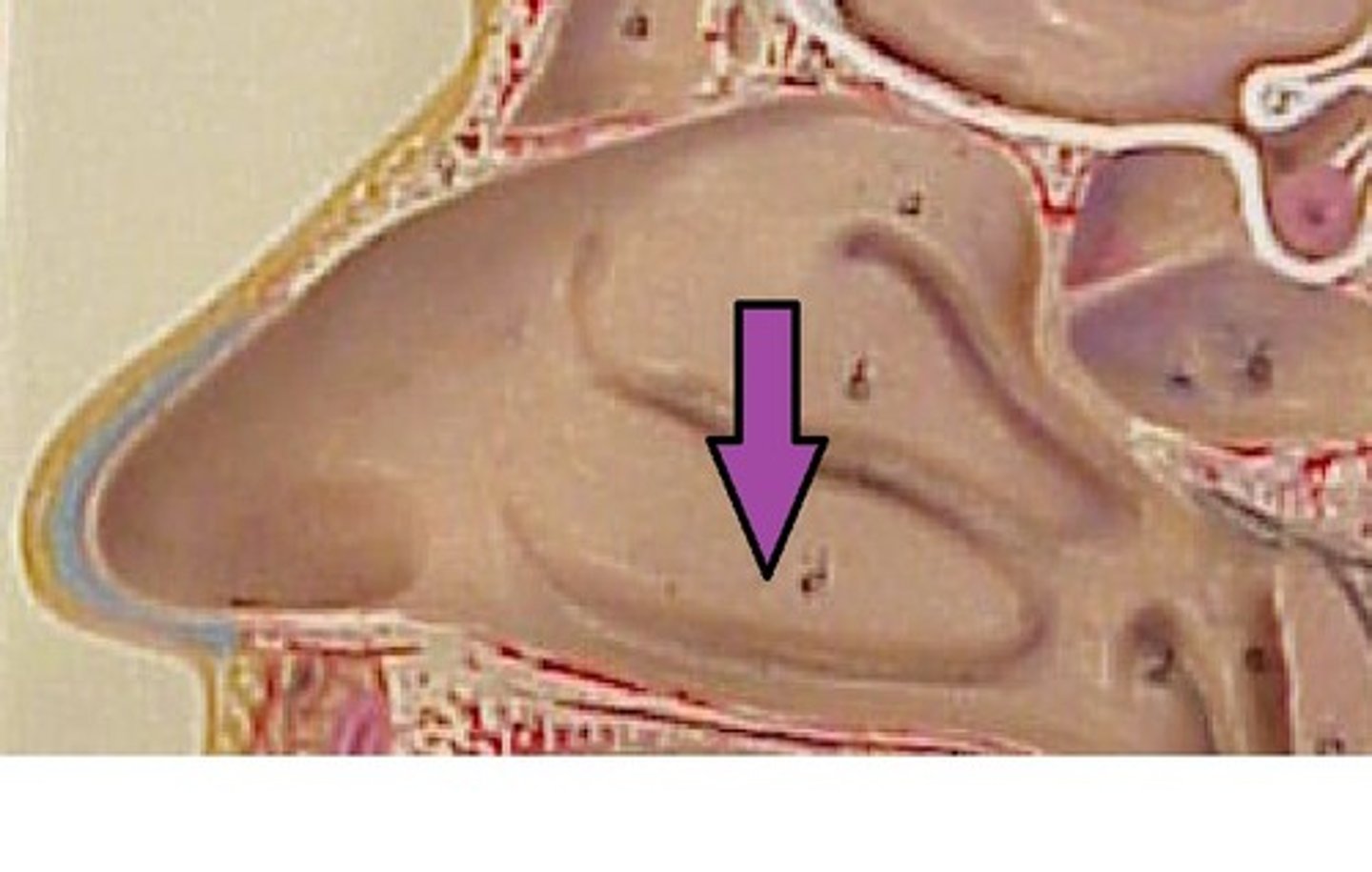
superior nasal meatus
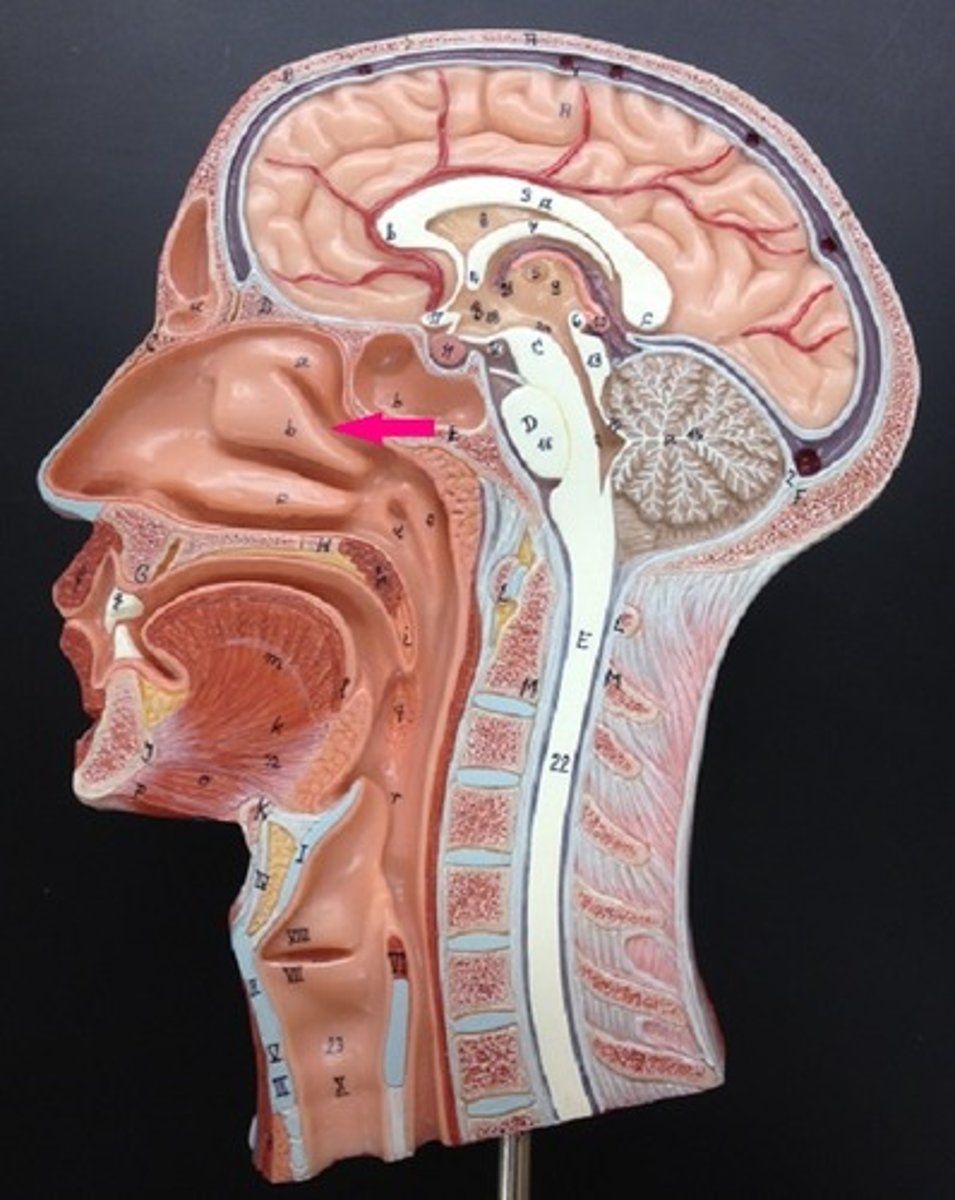
middle nasal meatus
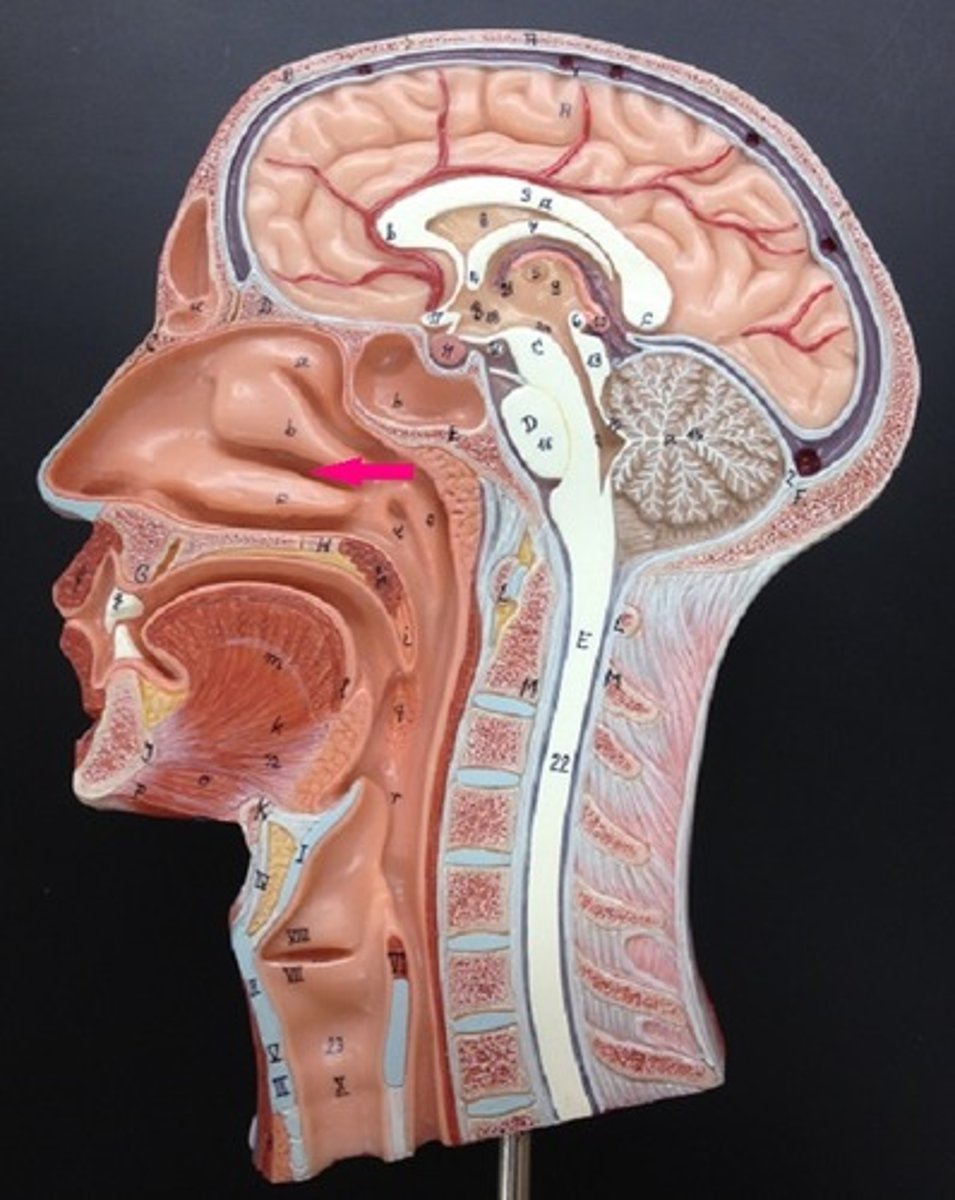
inferior nasal meatus
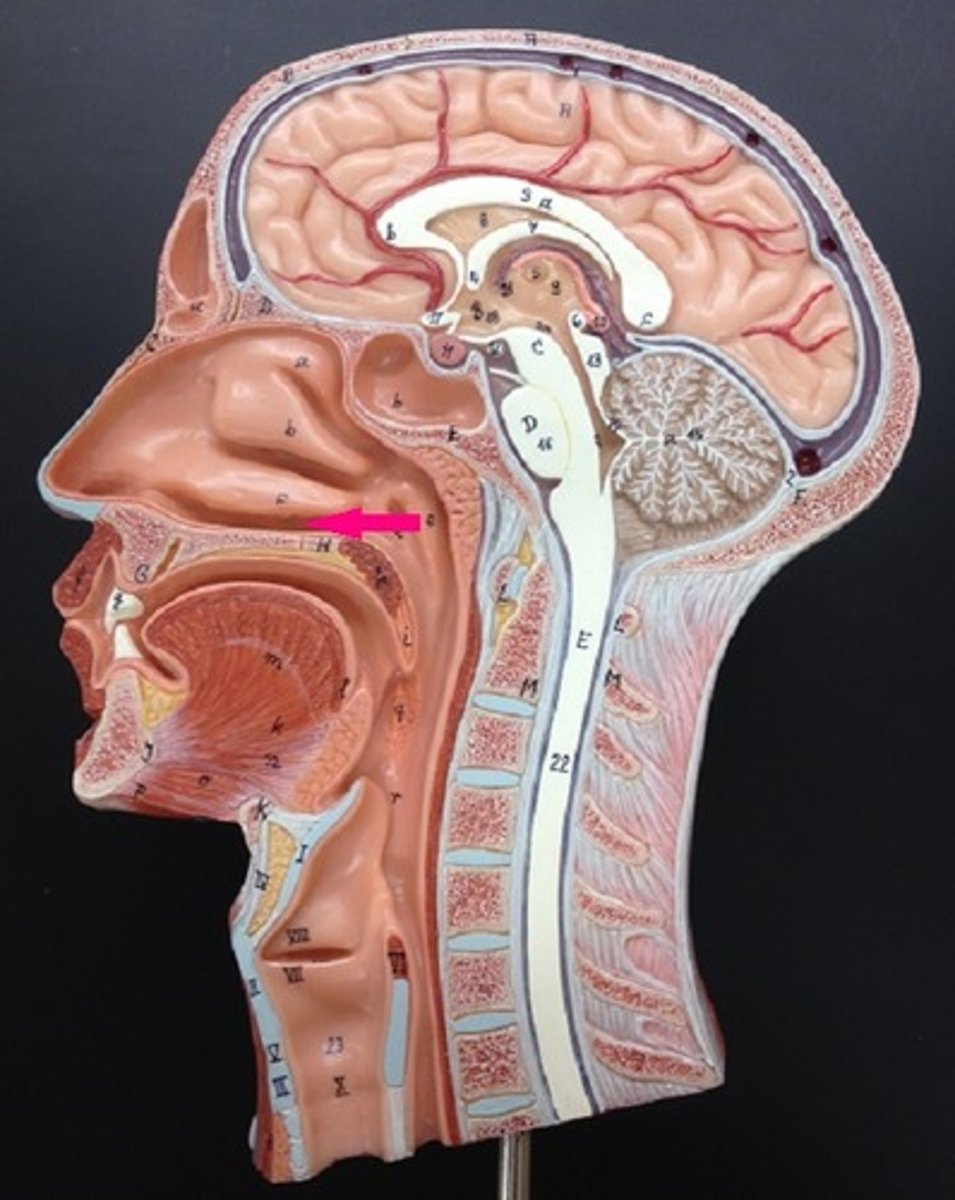
superior orbital fissure
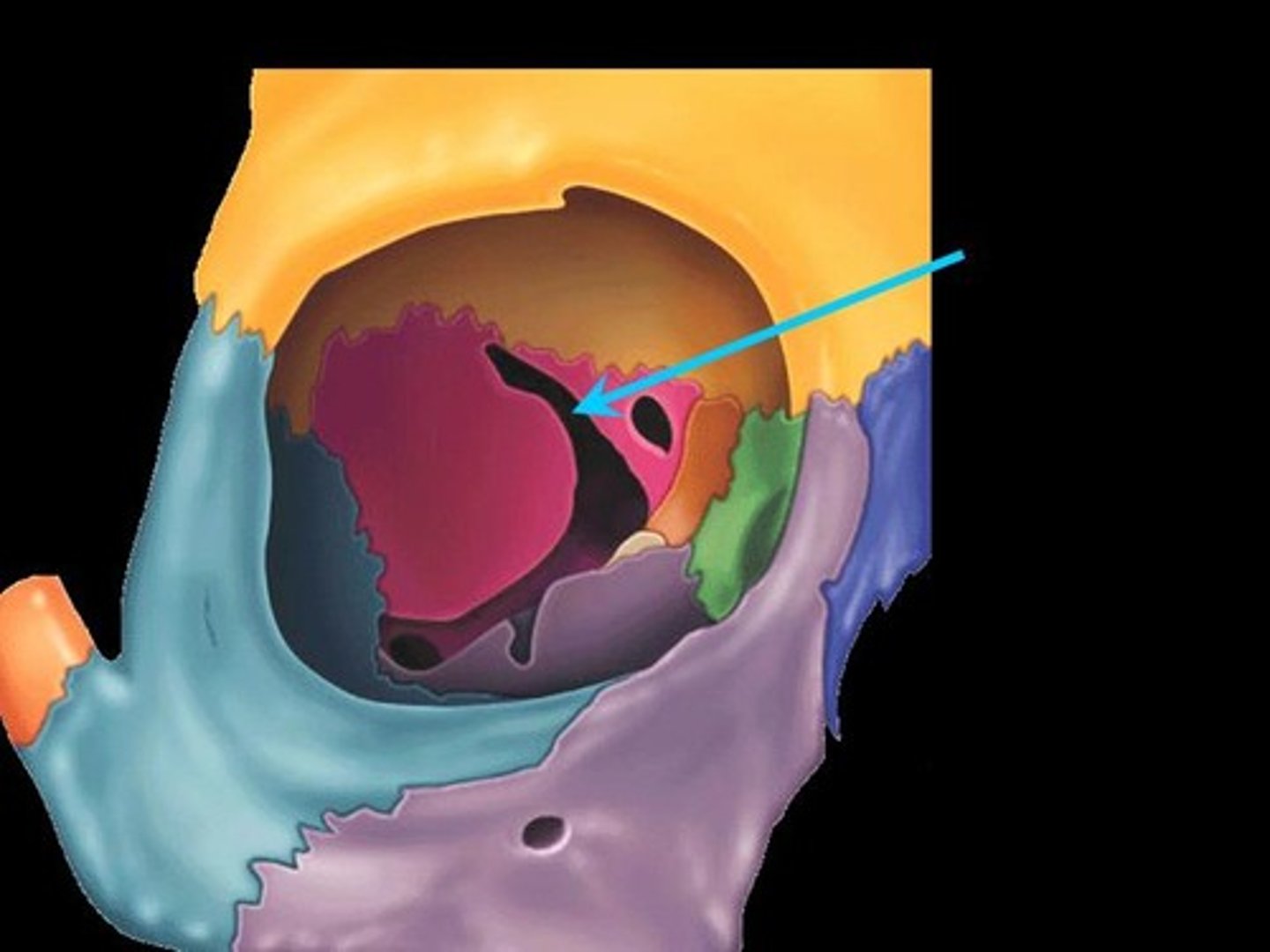
inferior orbital fissure
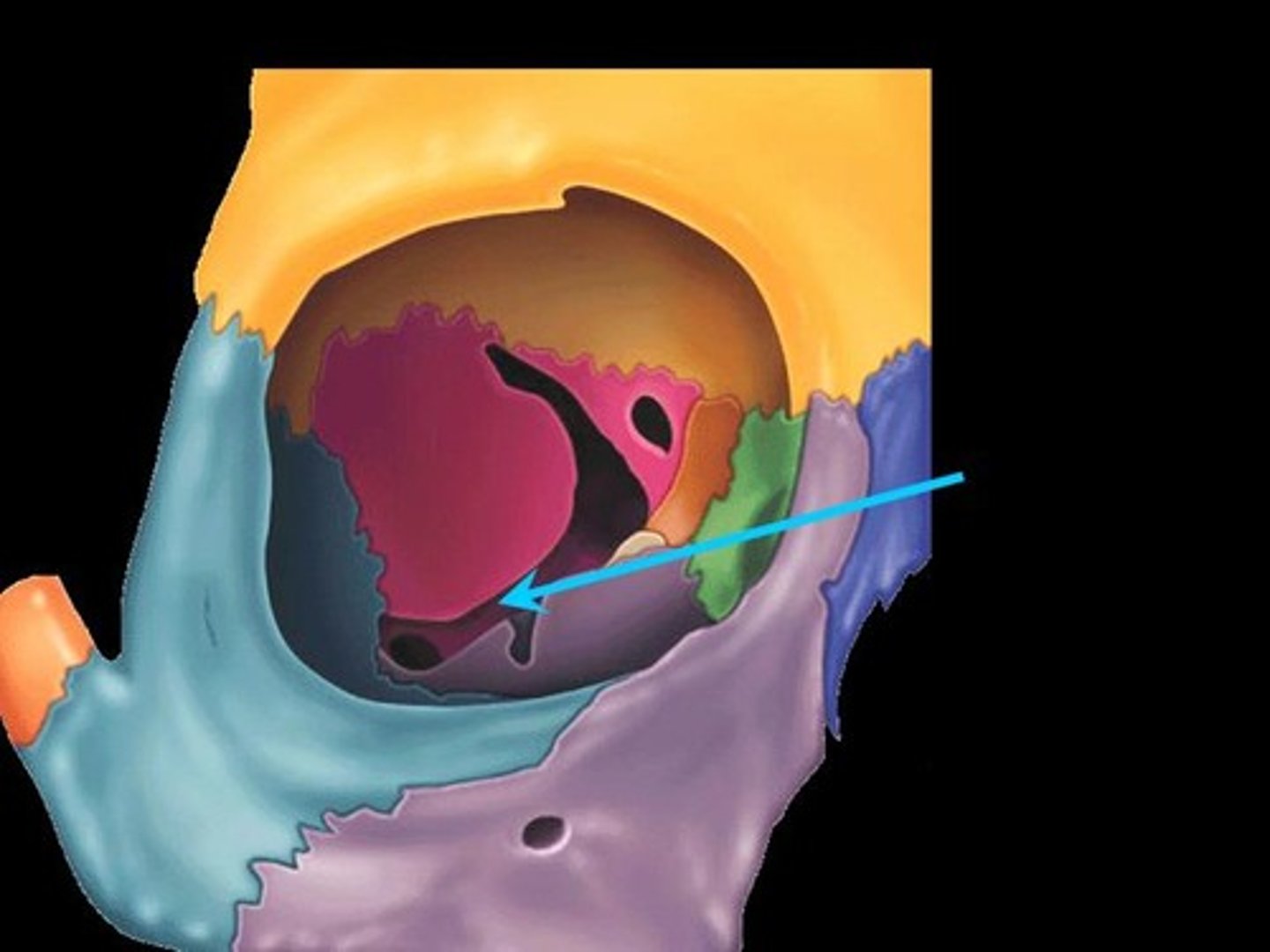
optic canal
allows the optic nerve to pass to the eye
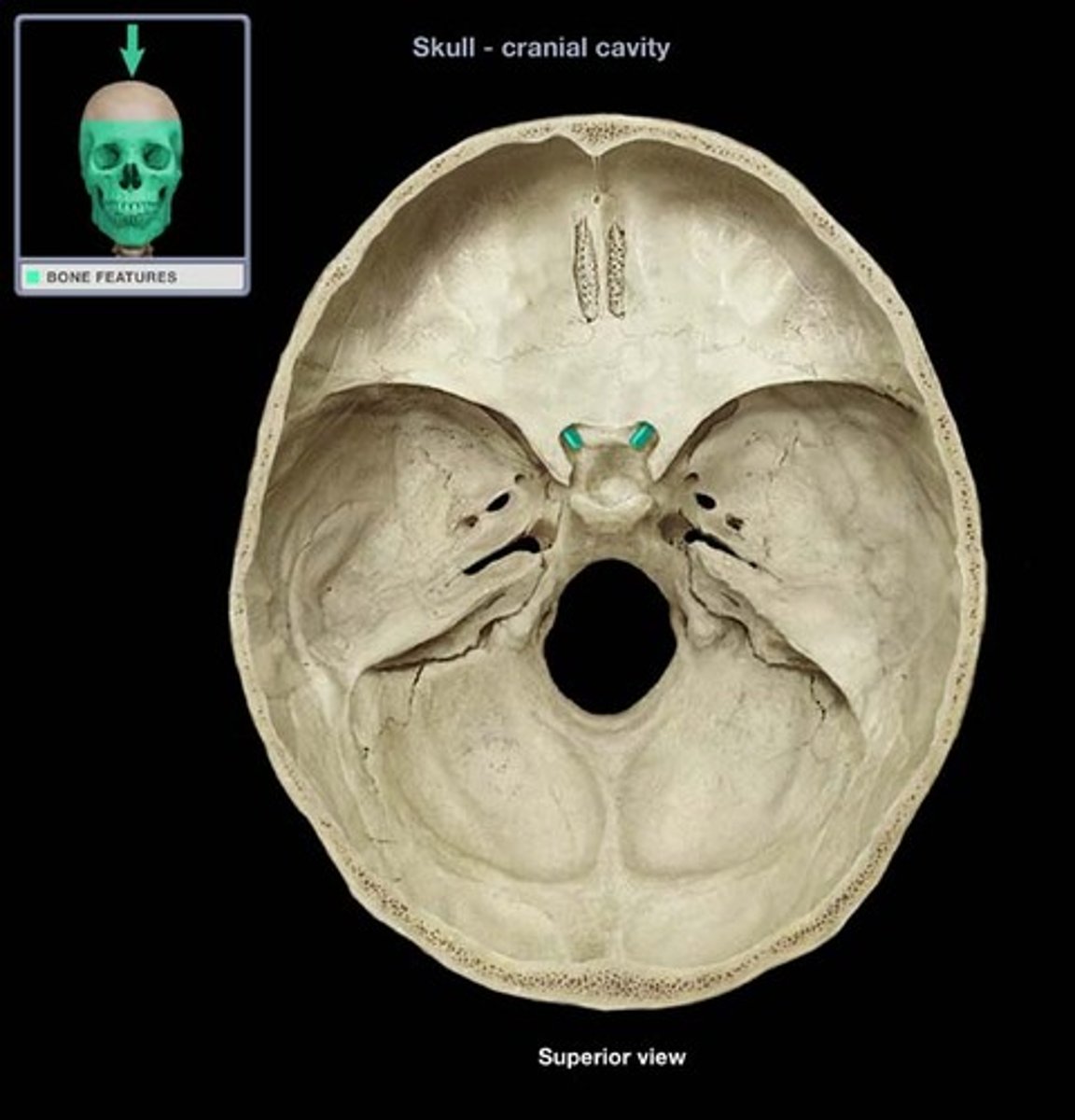
cribiform plate
superior surface of the ethmoid; perforated by a foramina which allows passage of the olfactory nerves, which provide sense of smell
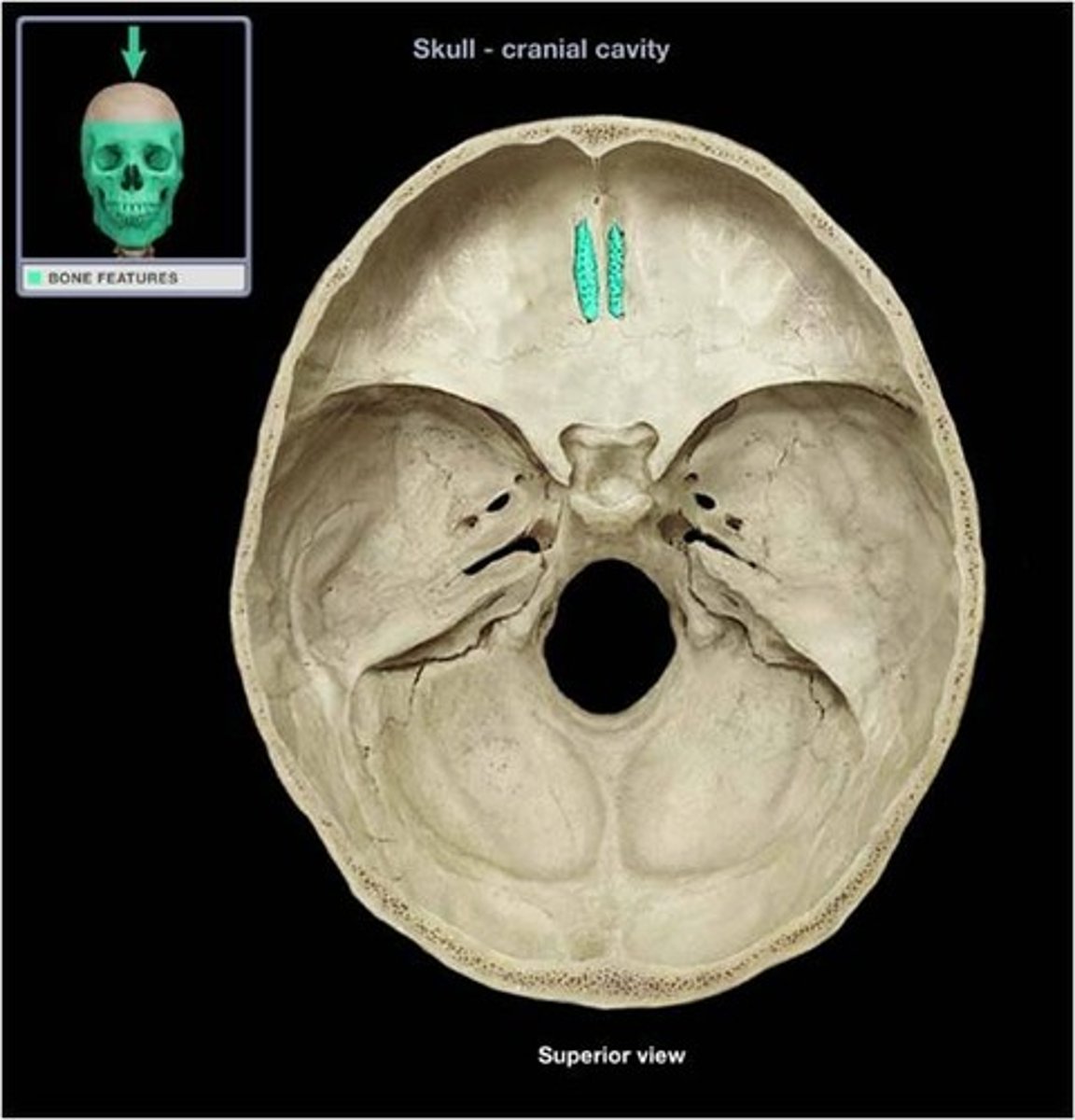
crista galli
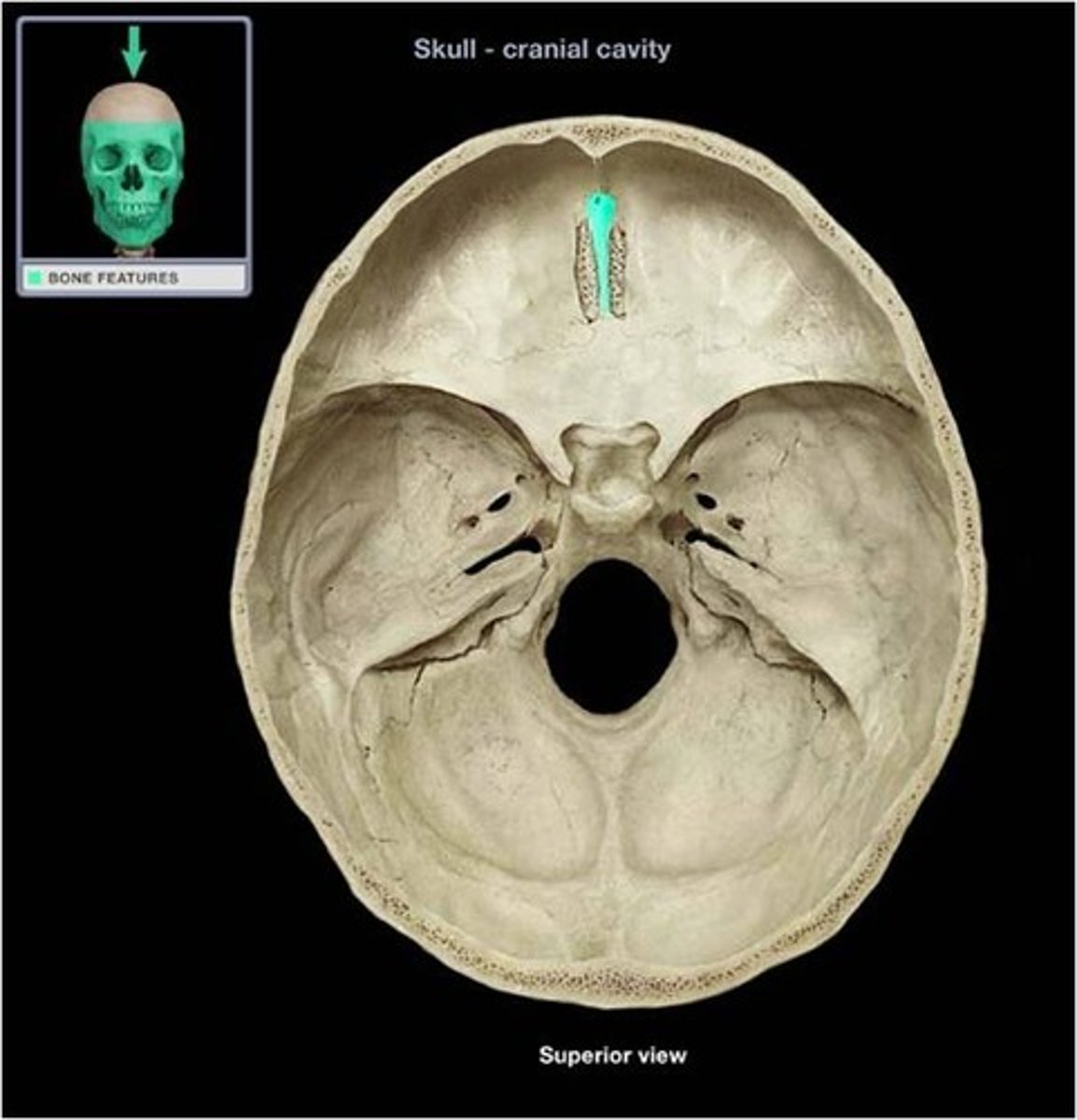
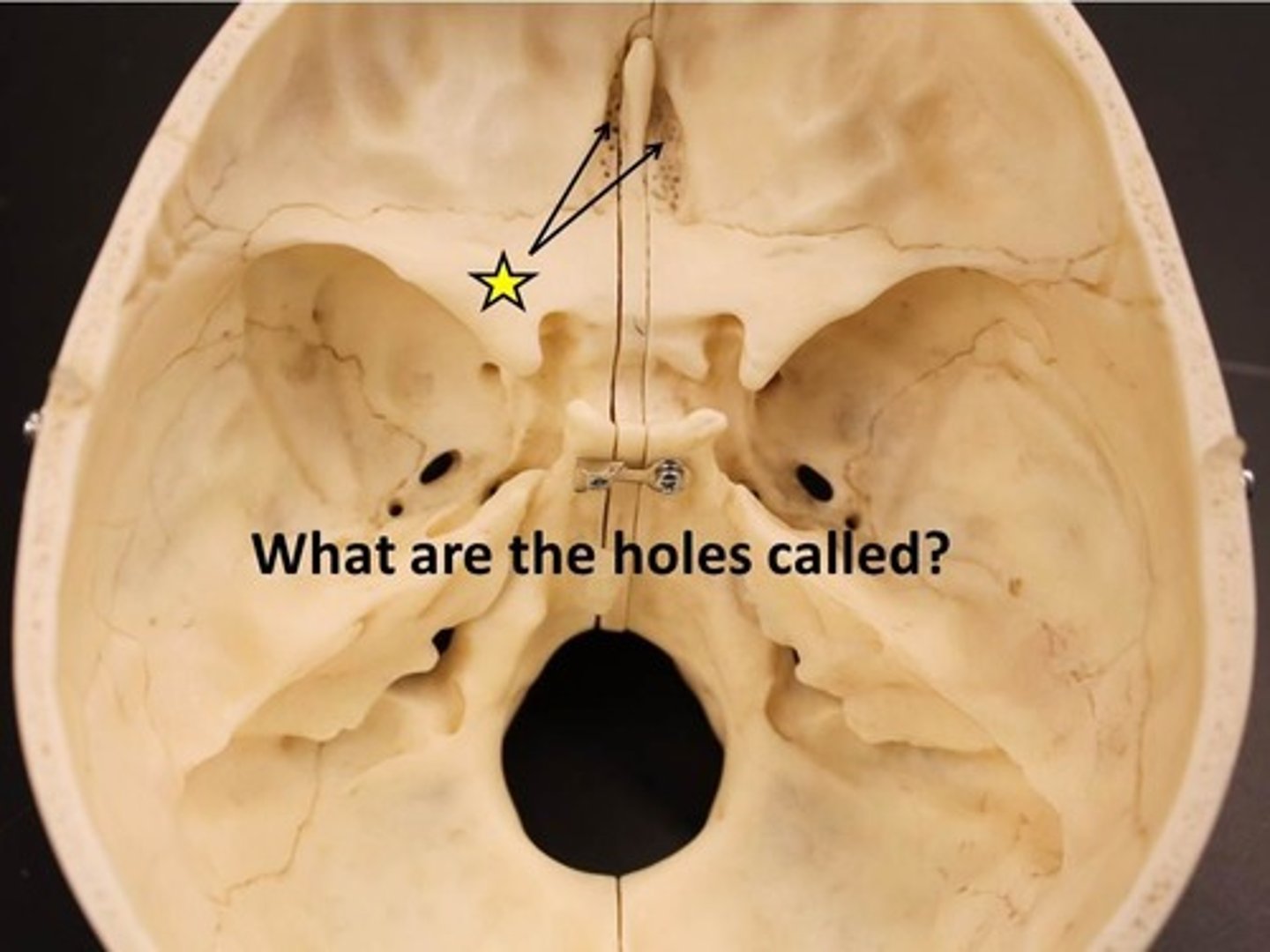
olfactory foramina
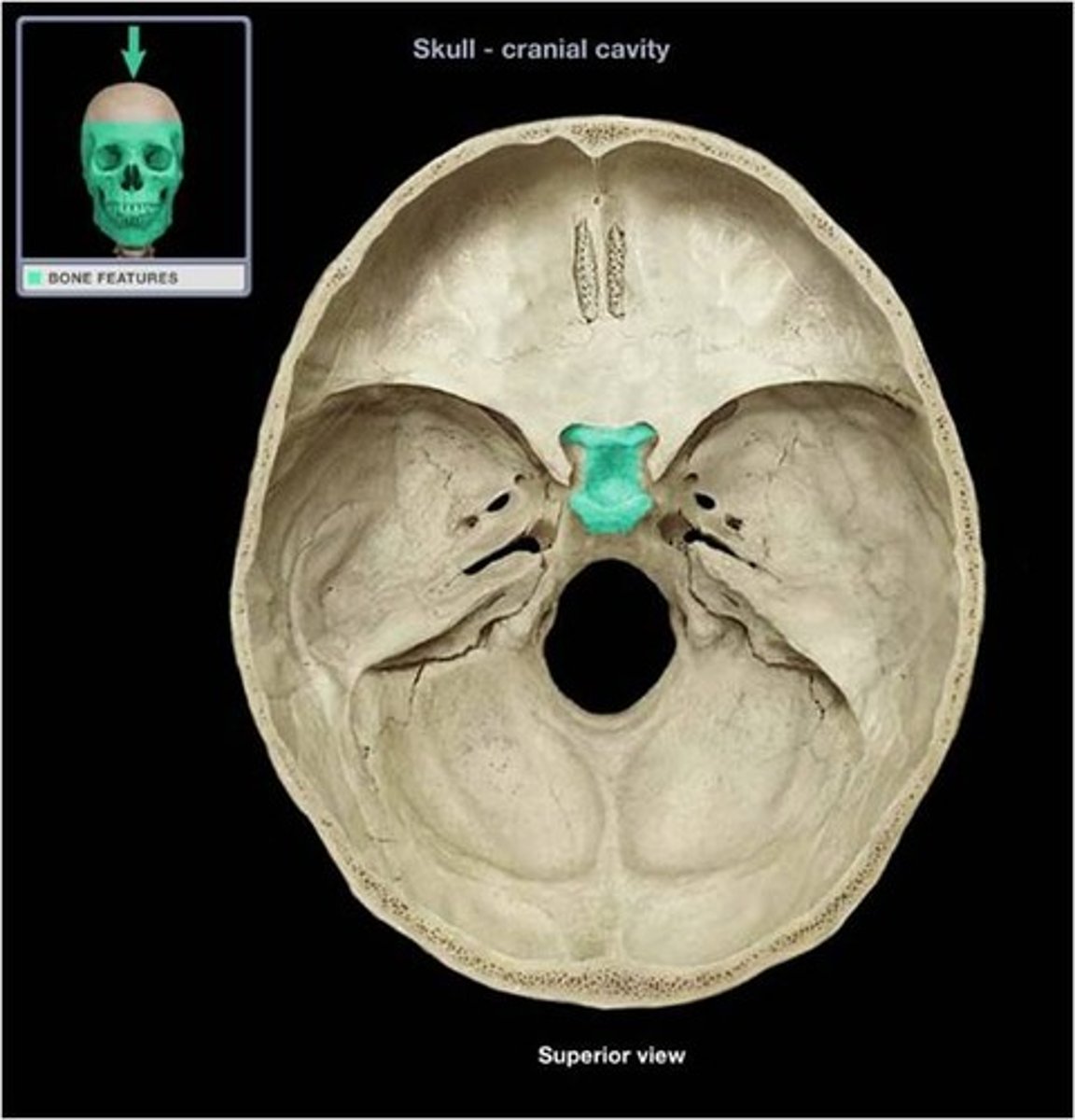
sella turcica
depression in the sphenoid bone where the pituitary gland is located
greater wing of sphenoid bone
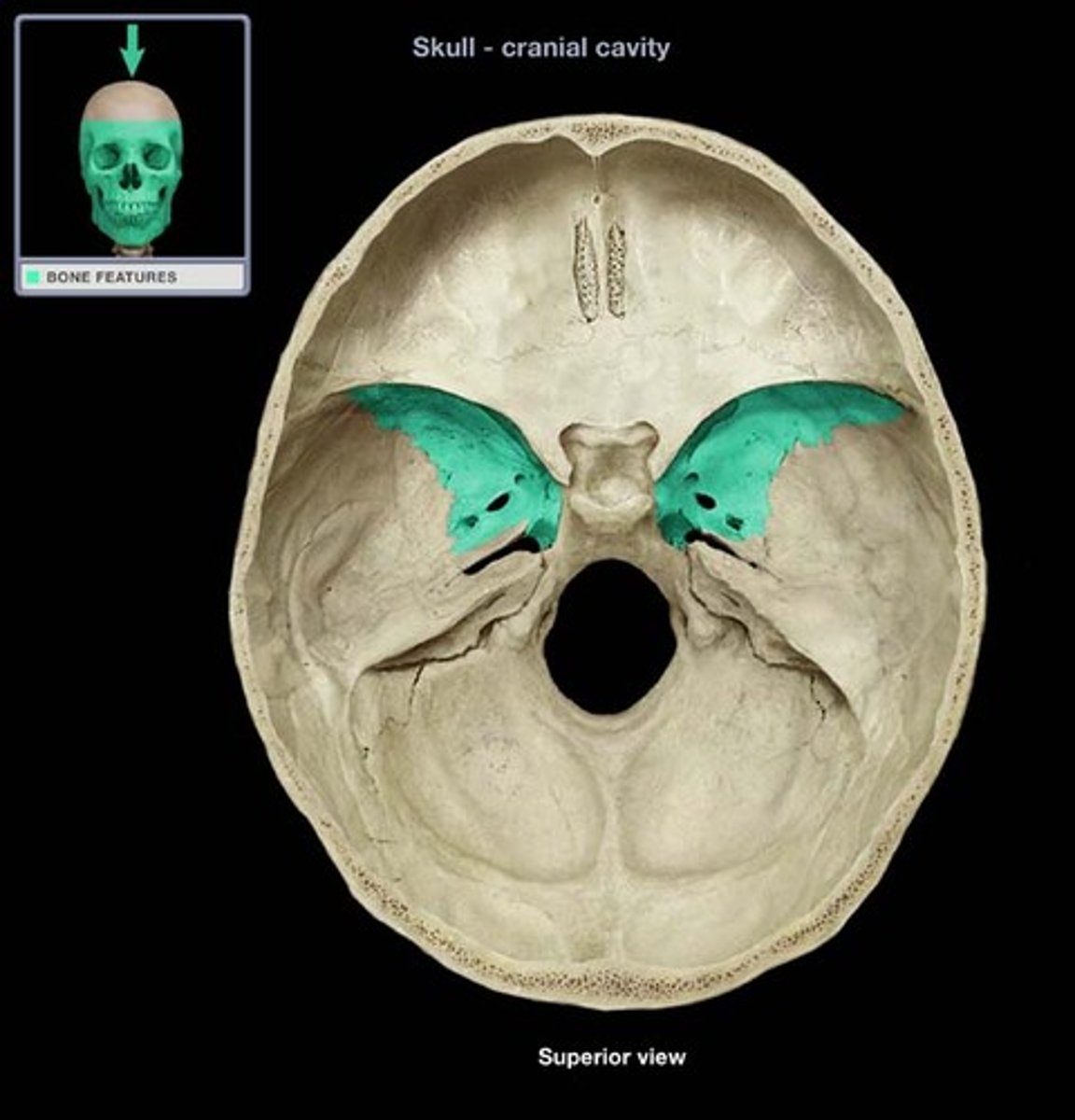
lesser wing of sphenoid bone
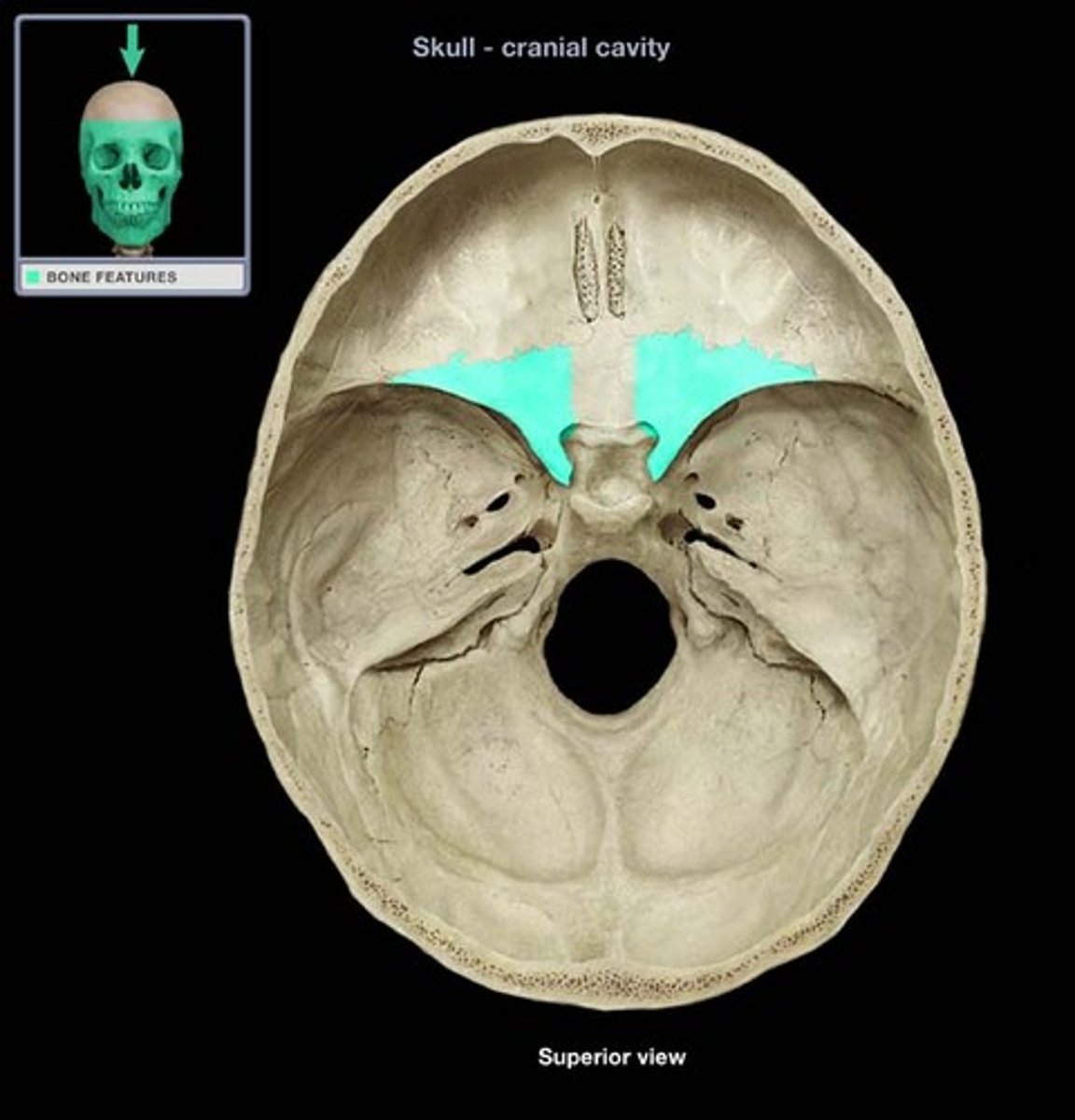
foramen rotundum
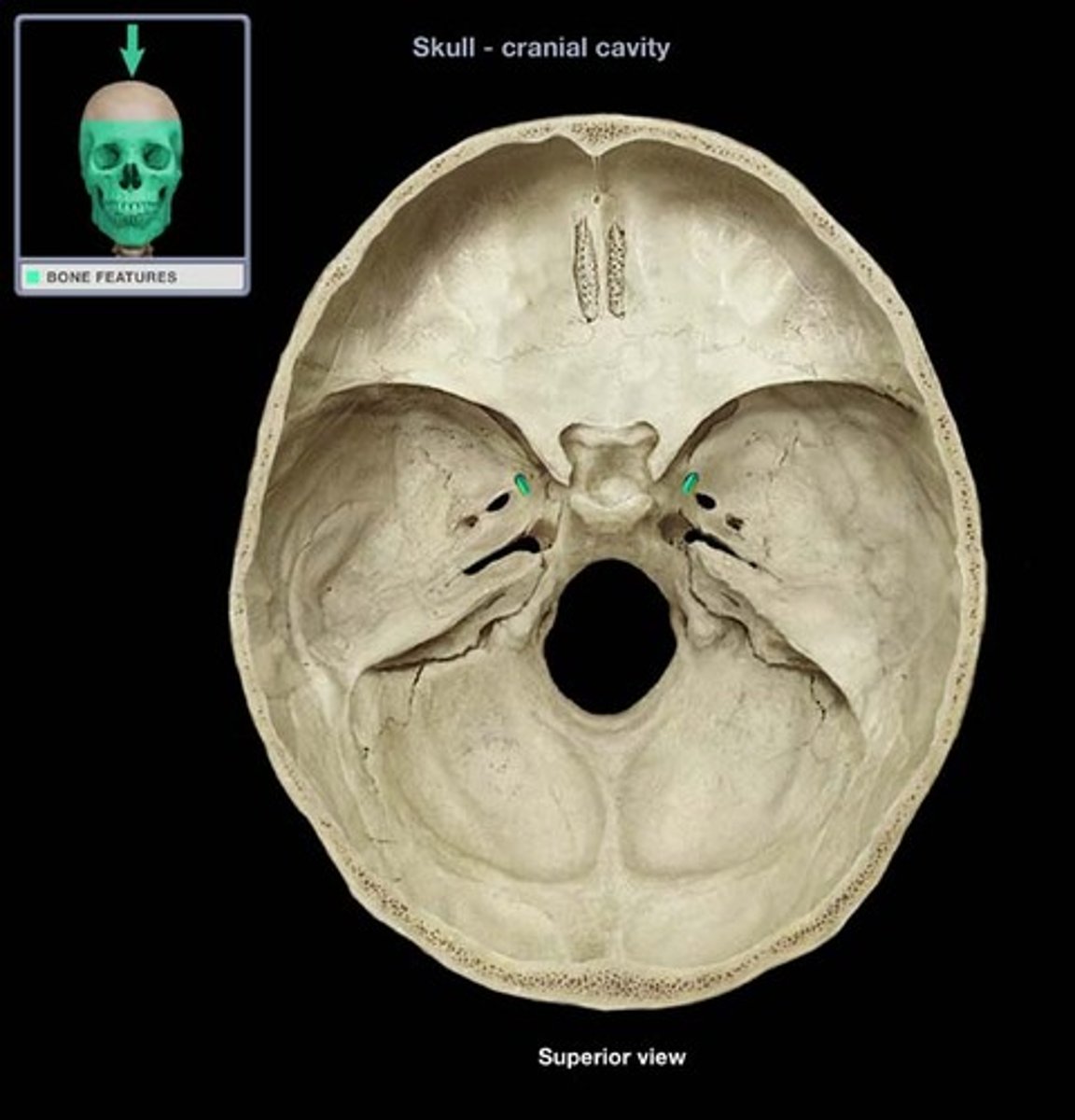
foramen ovale
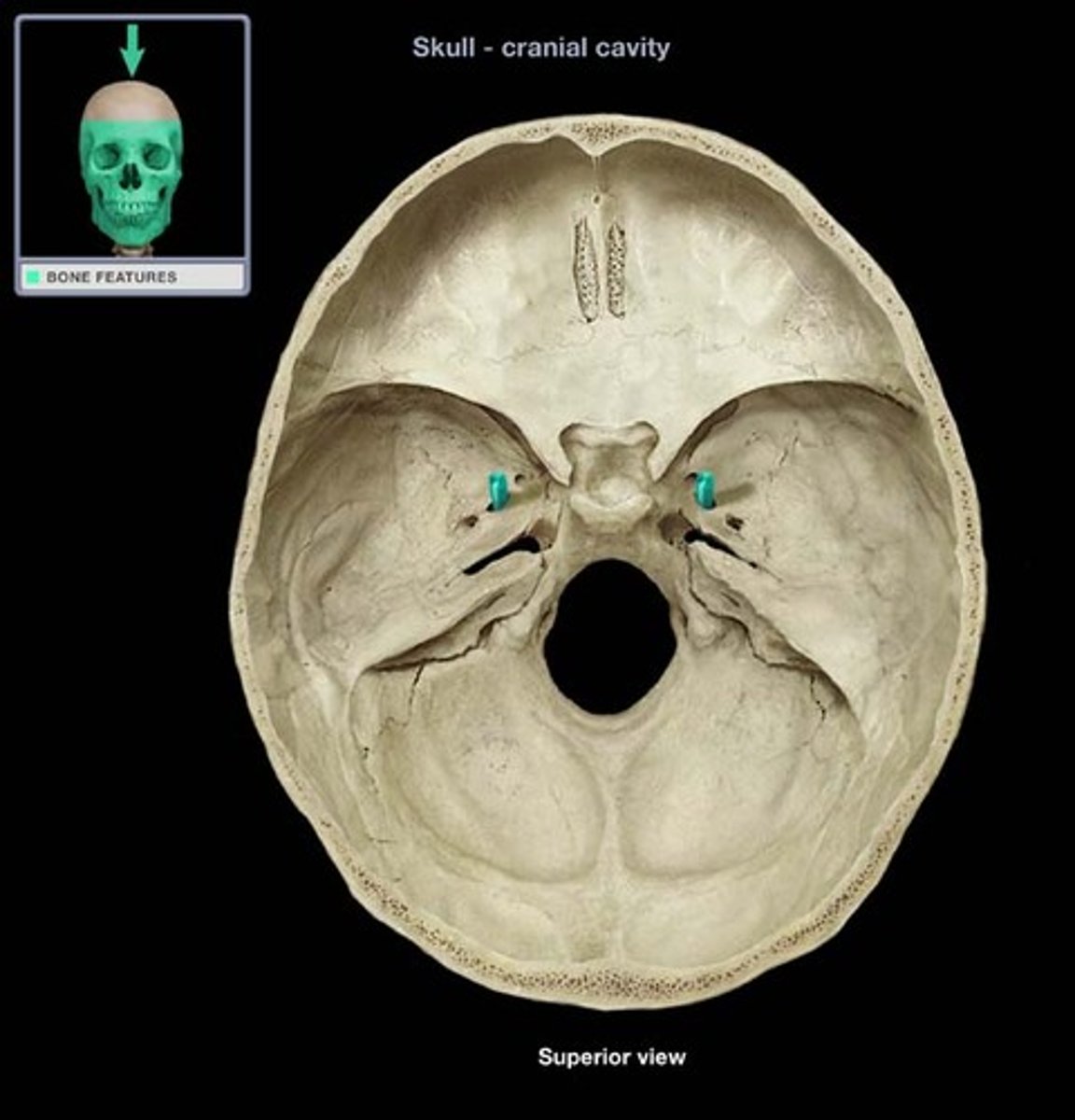
foramen lacerum
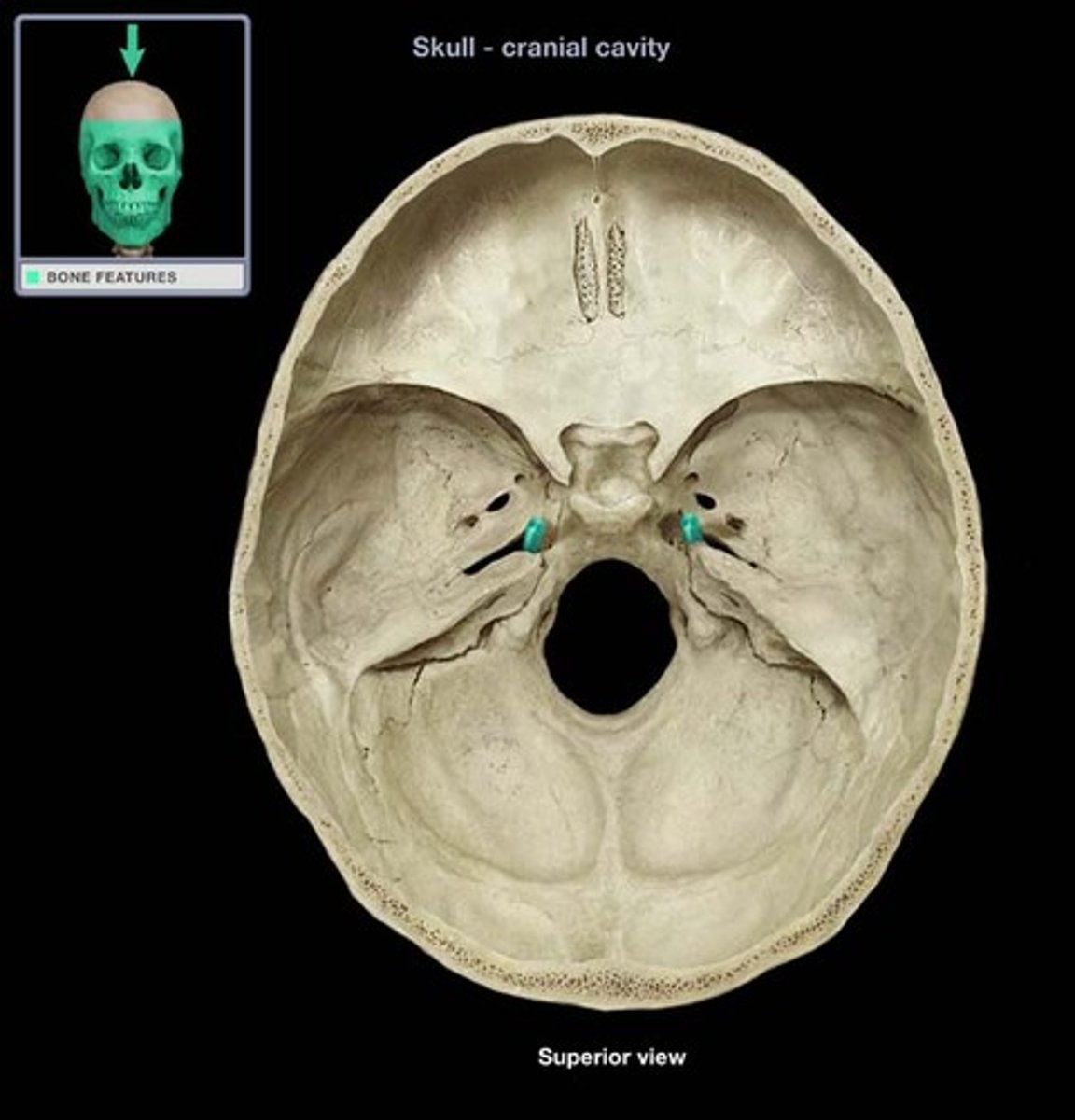
foramen spinosum
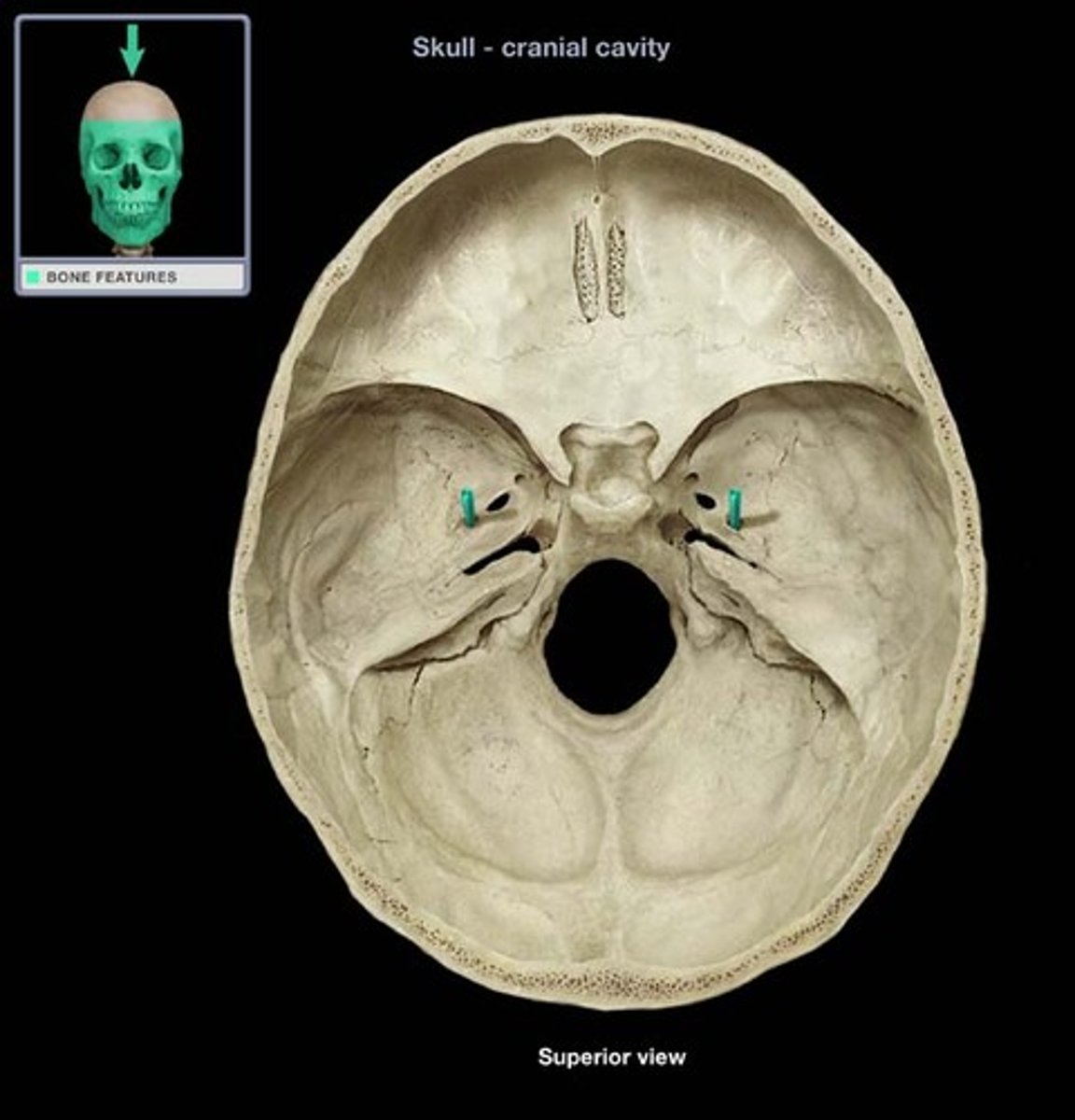
anterior clinoid process
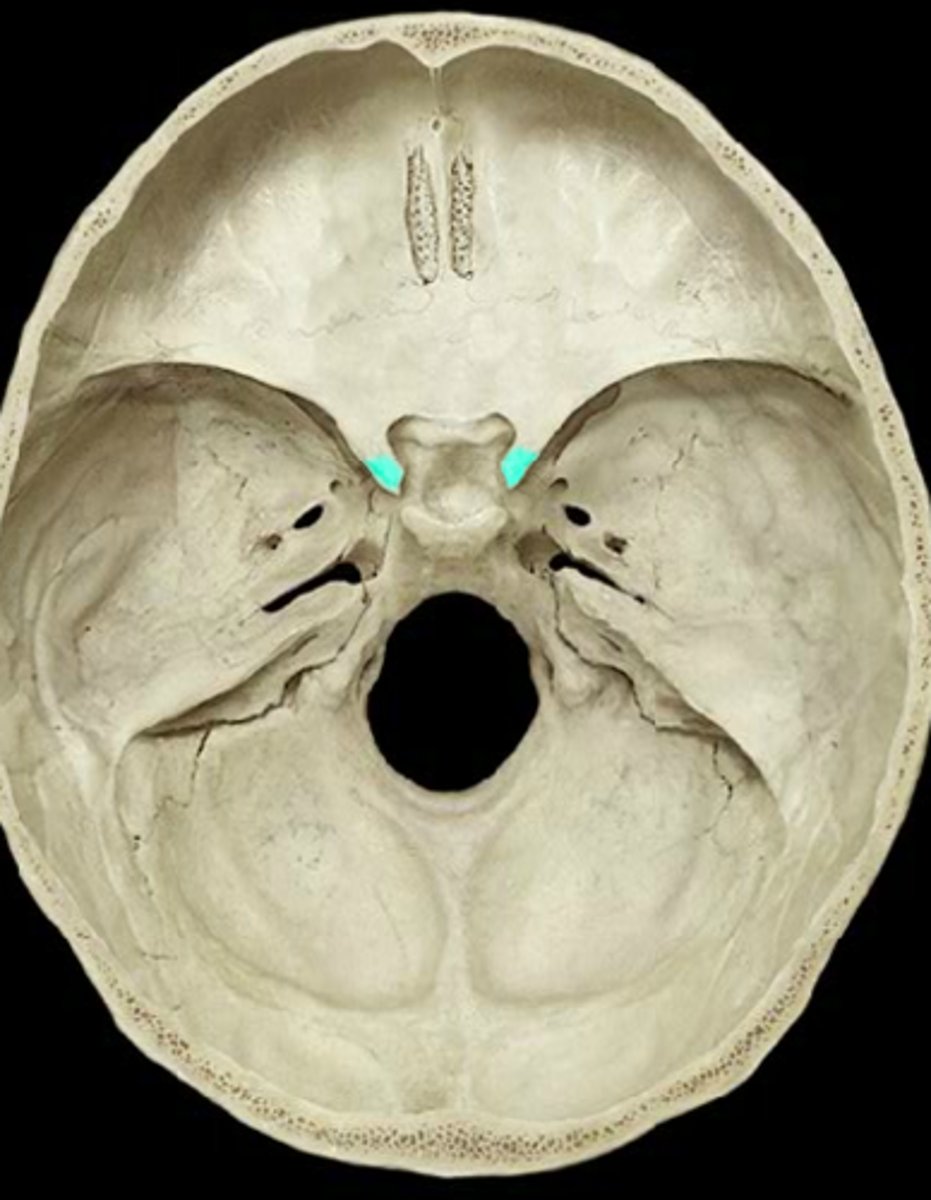
posterior clinoid process
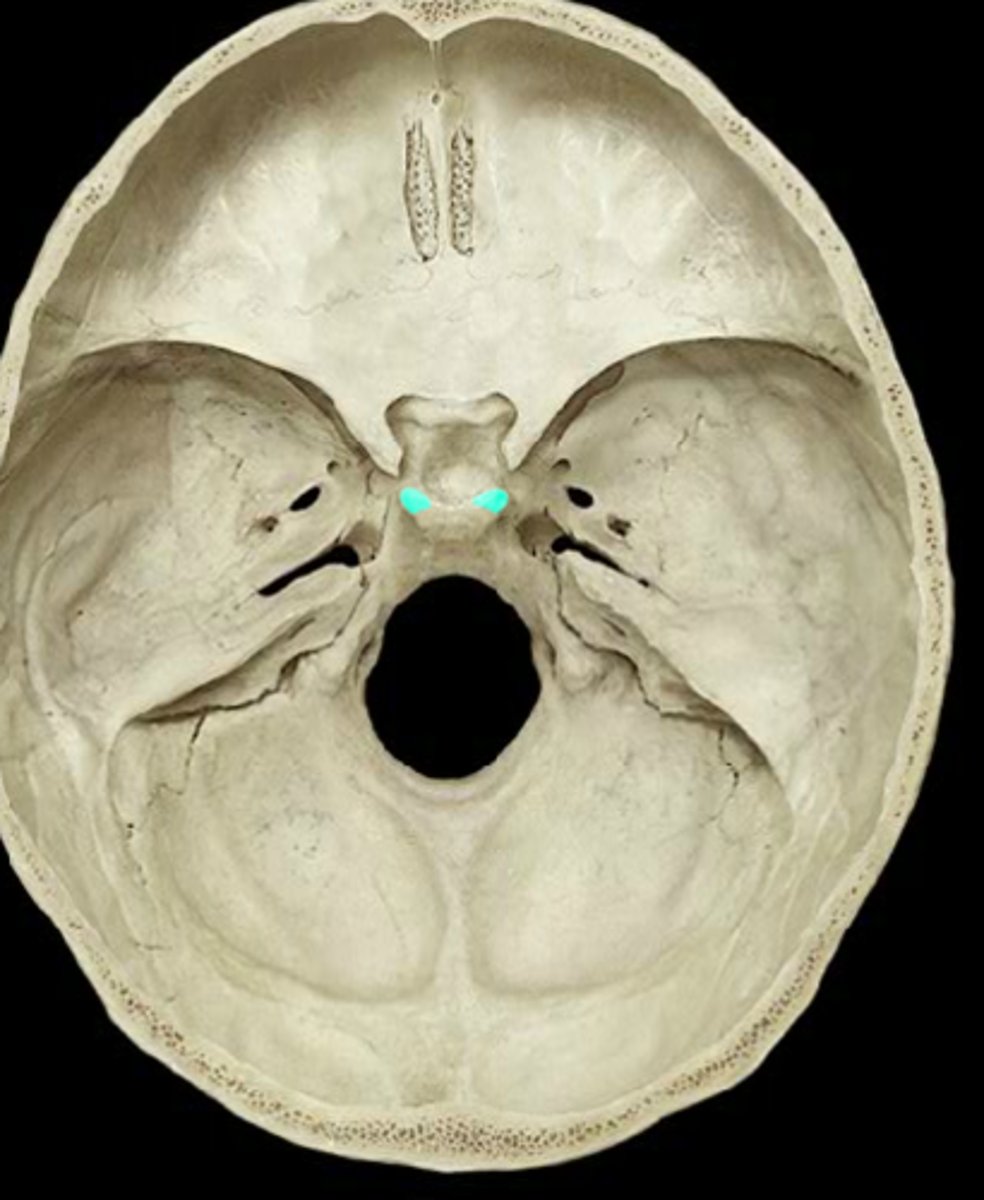
medial pterygoid plate
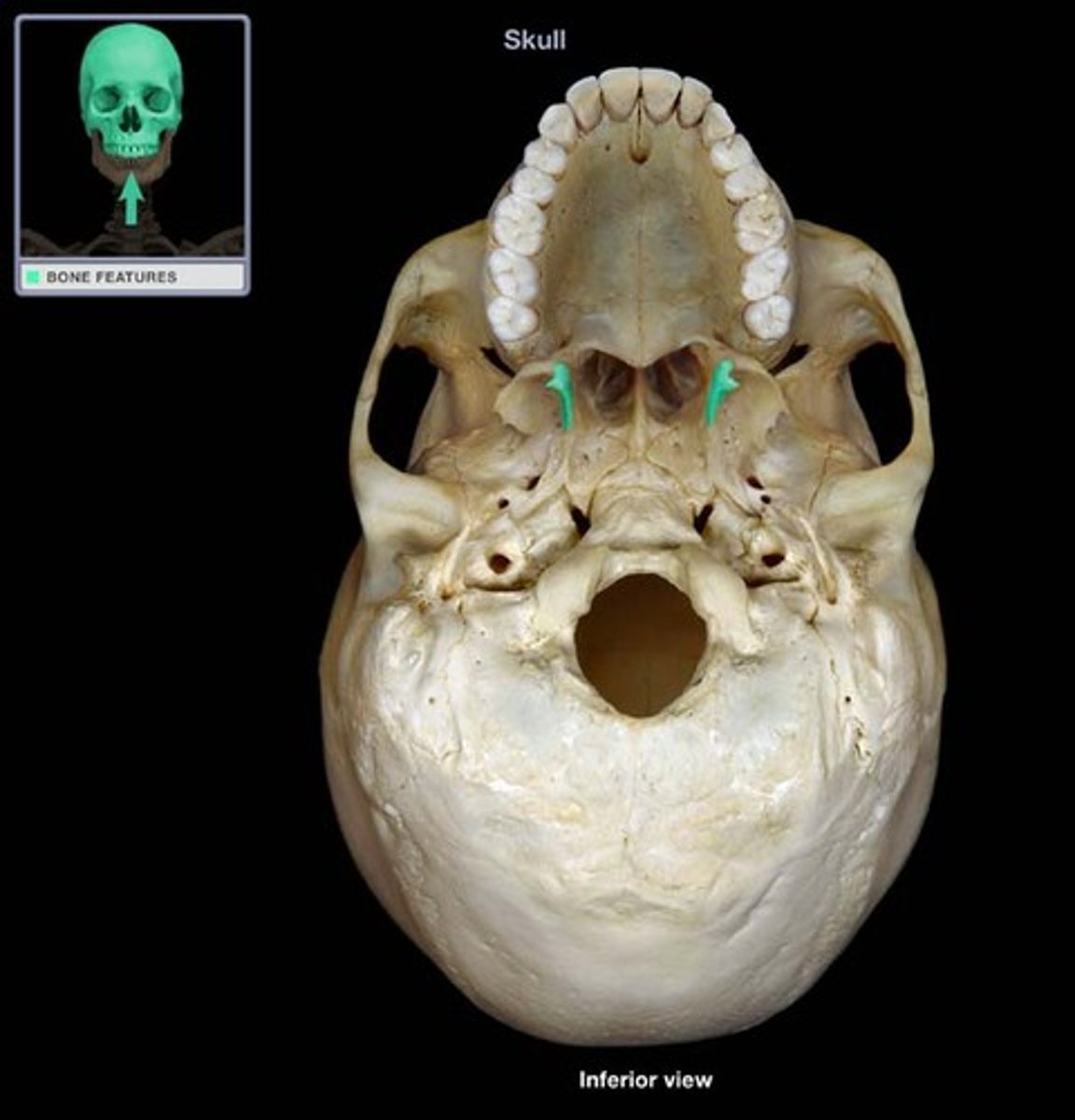
lateral pterygoid plate
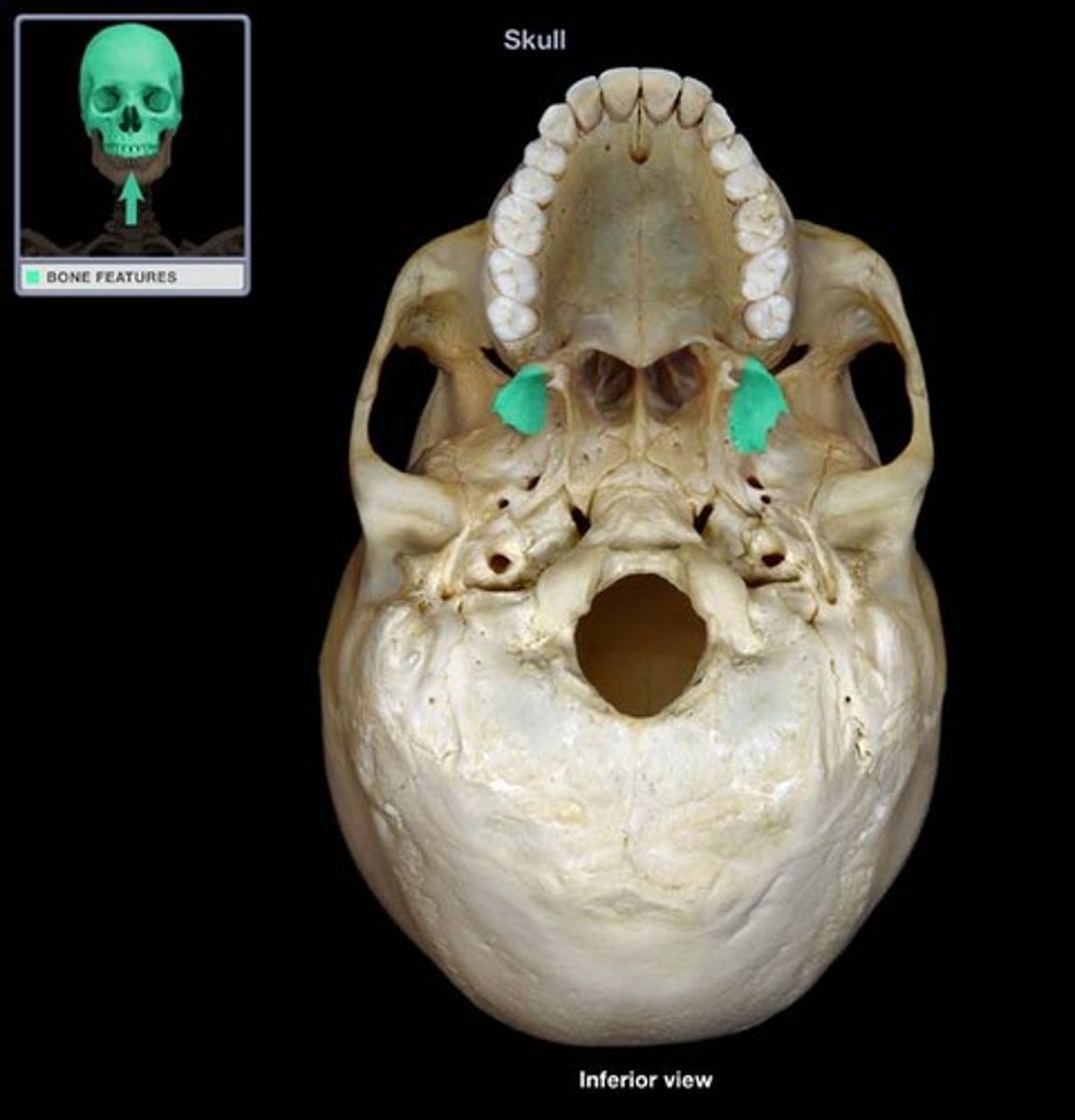
petrous portion
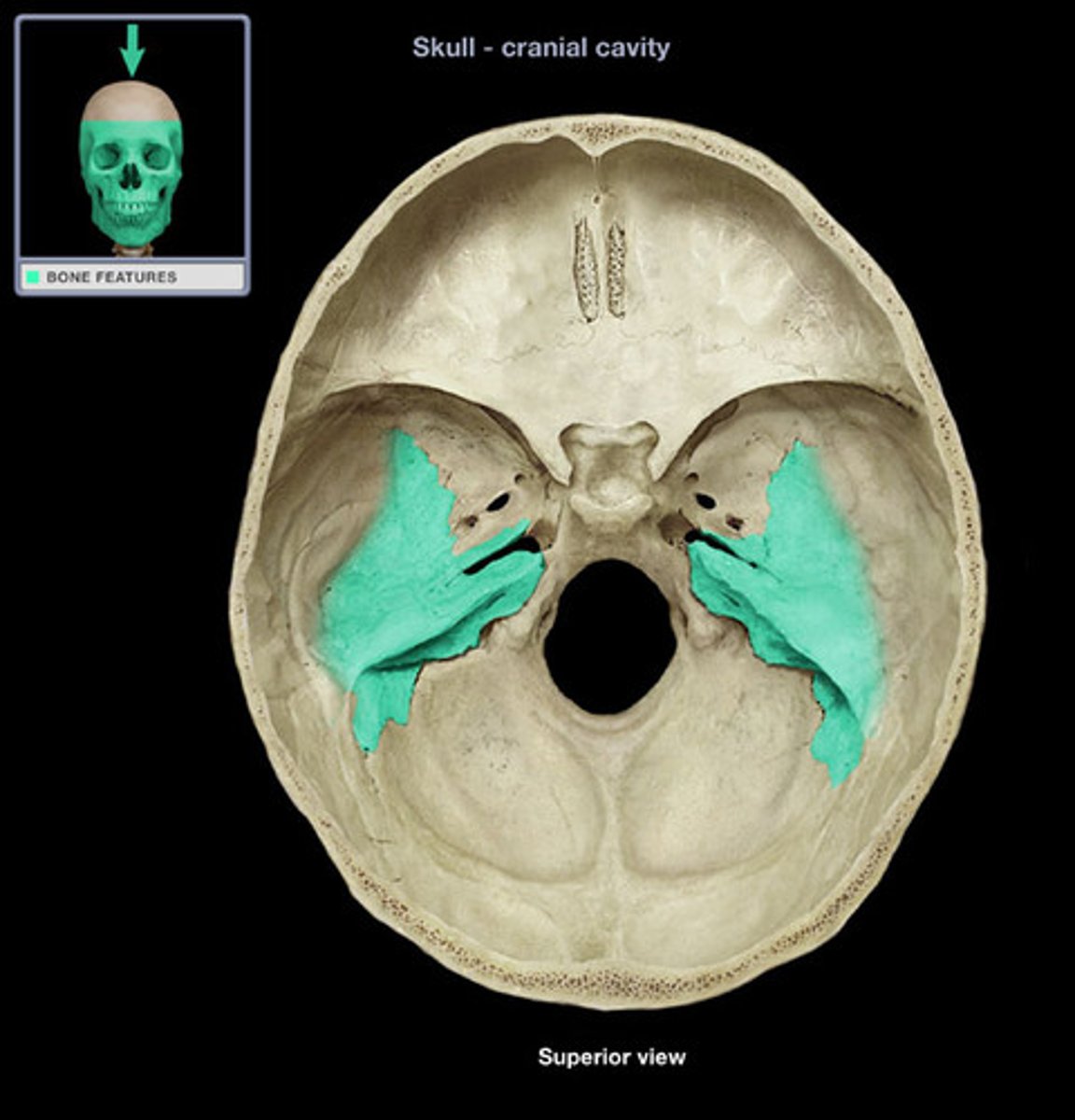
stylomastoid foramen
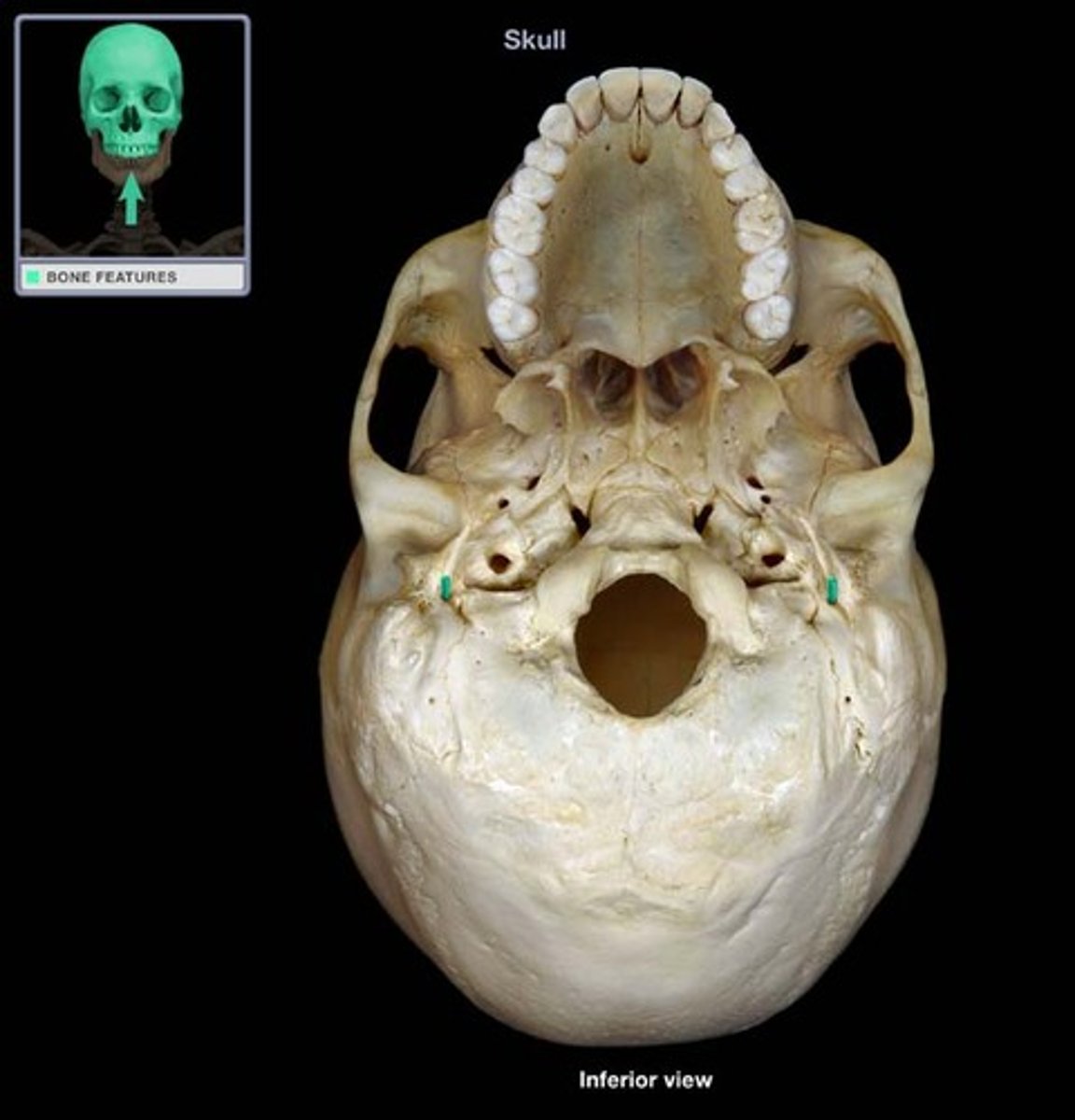
carotid canal
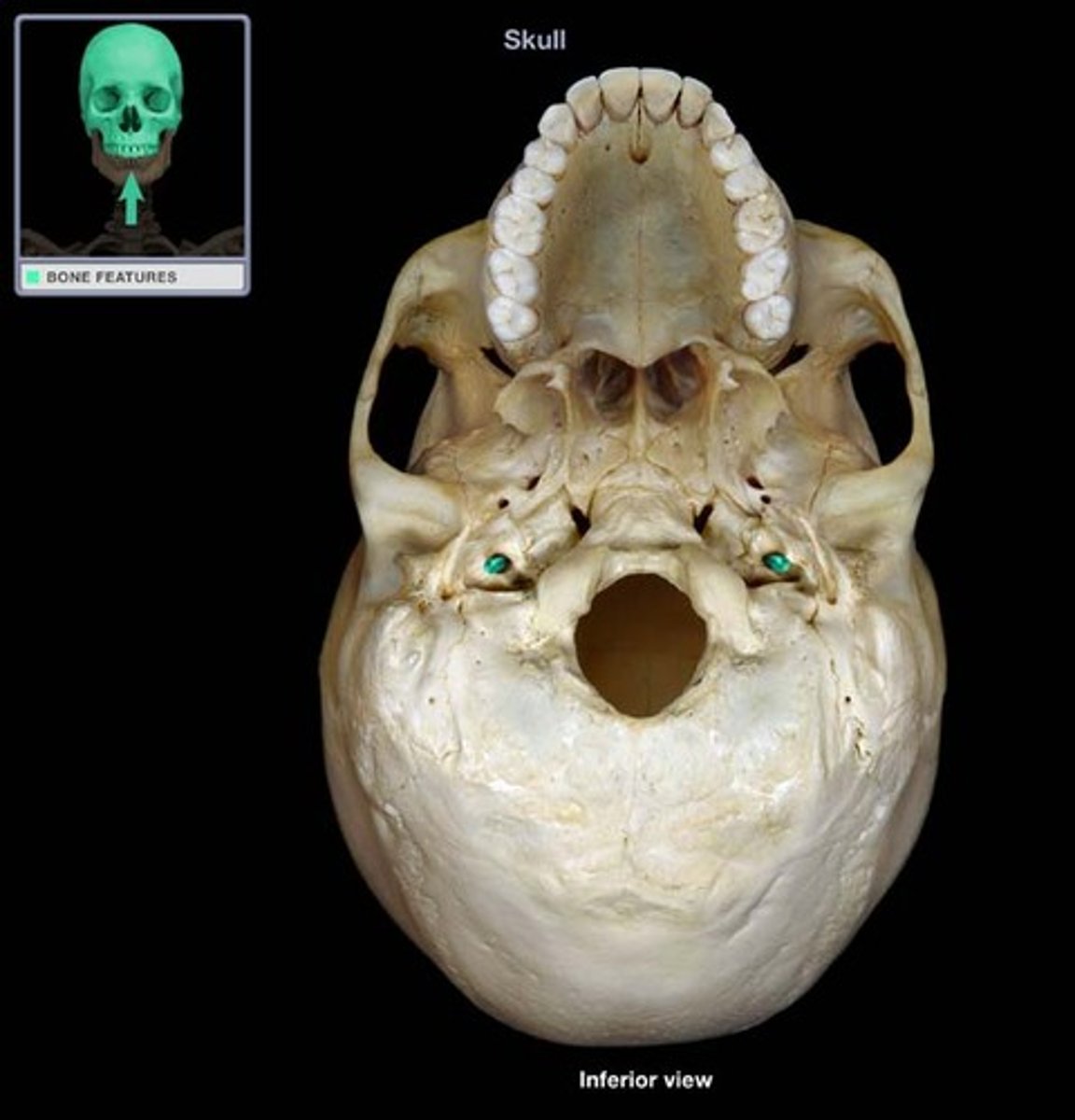
internal acoustic/auditory meatus
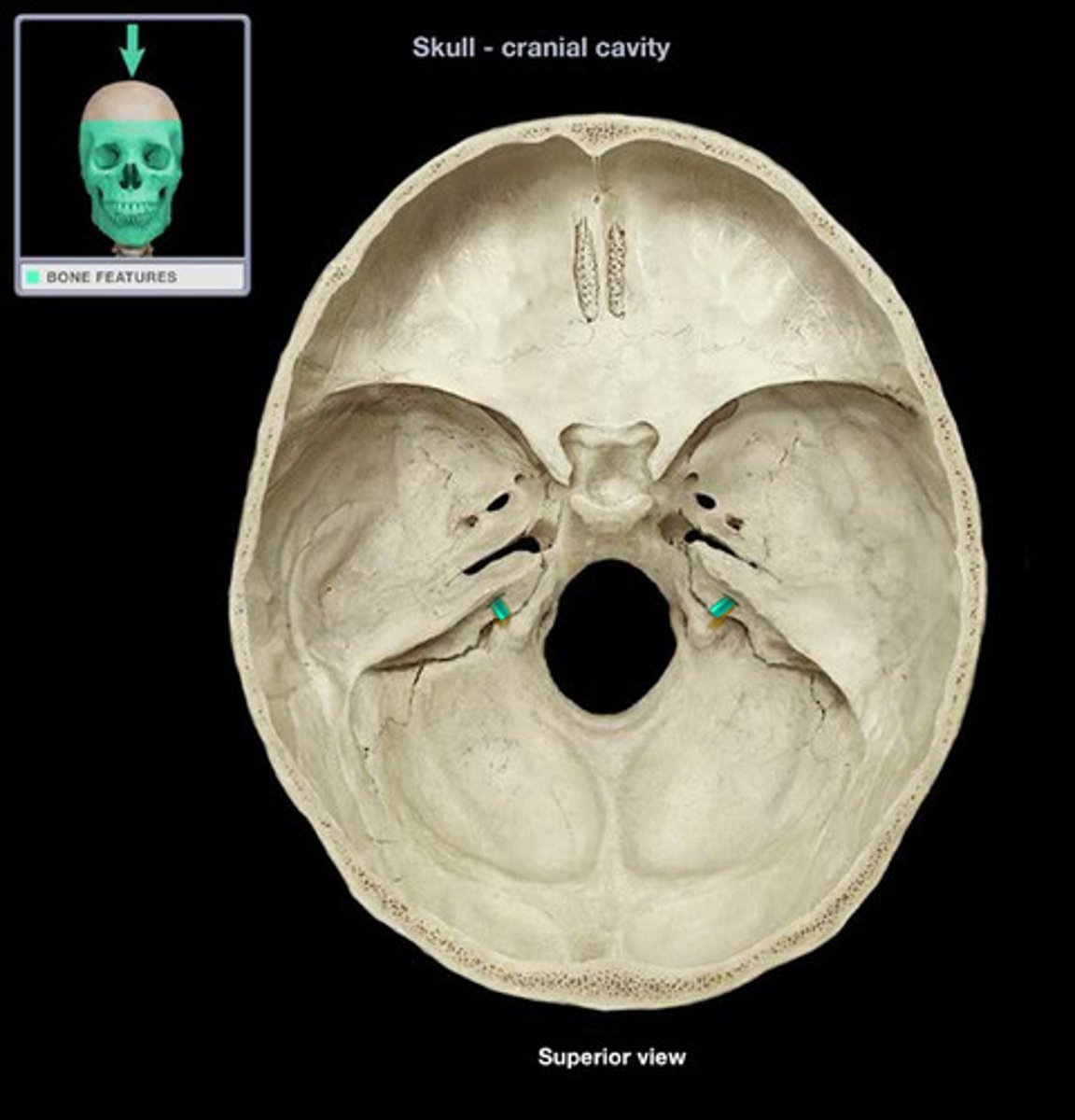
jugular foramen
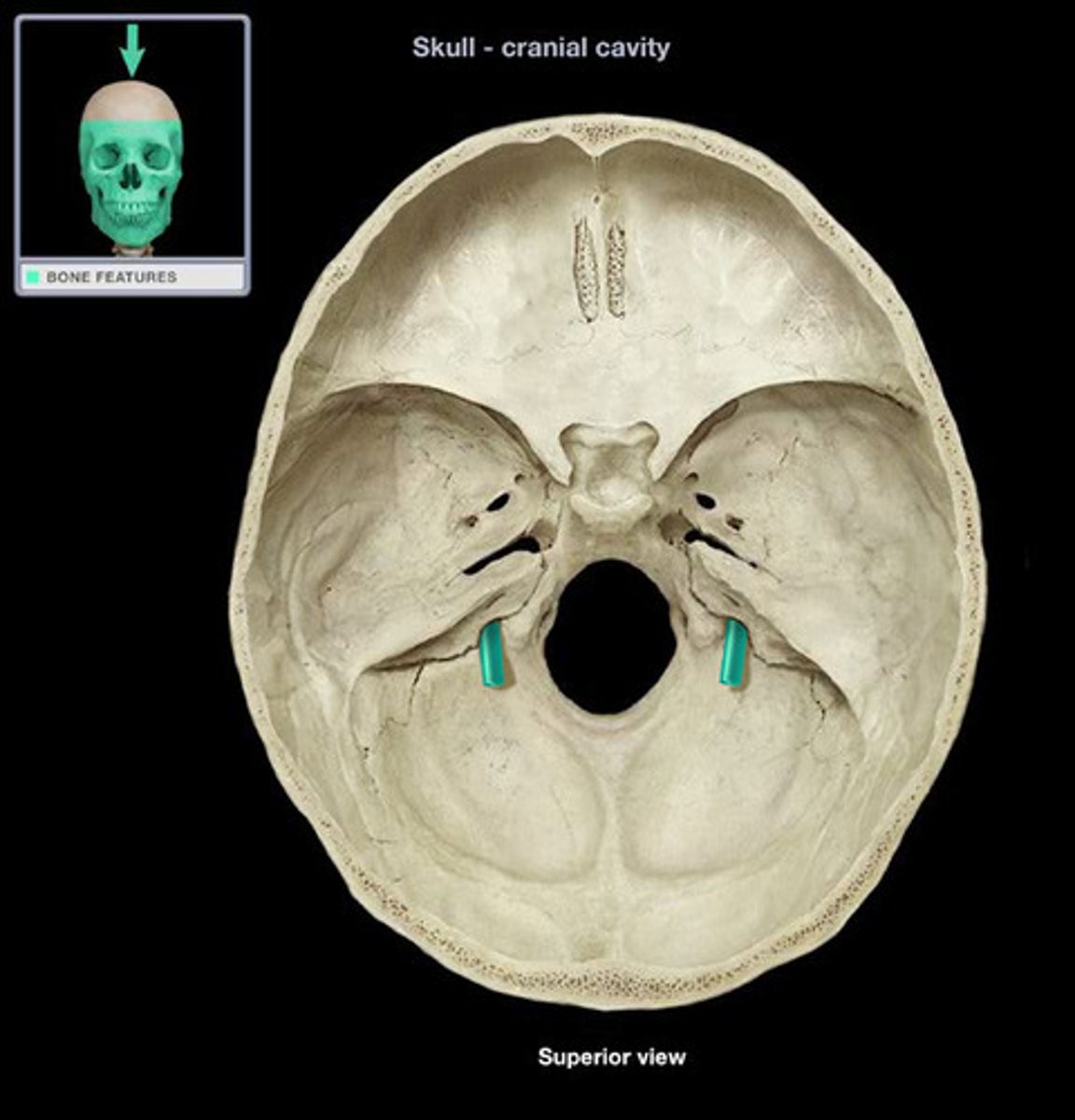
clivus
slope
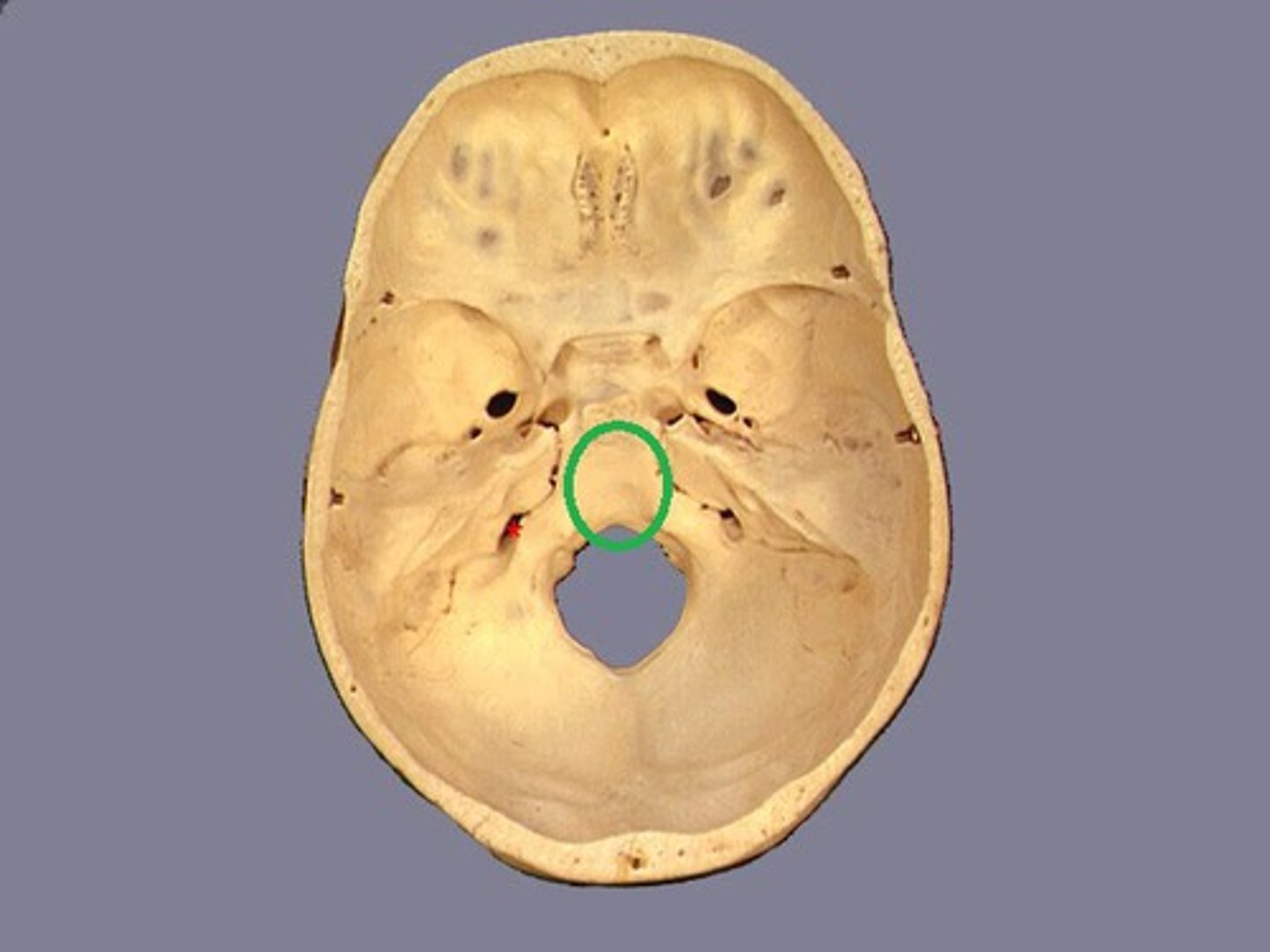
external occipital protuberance
bump on back of head
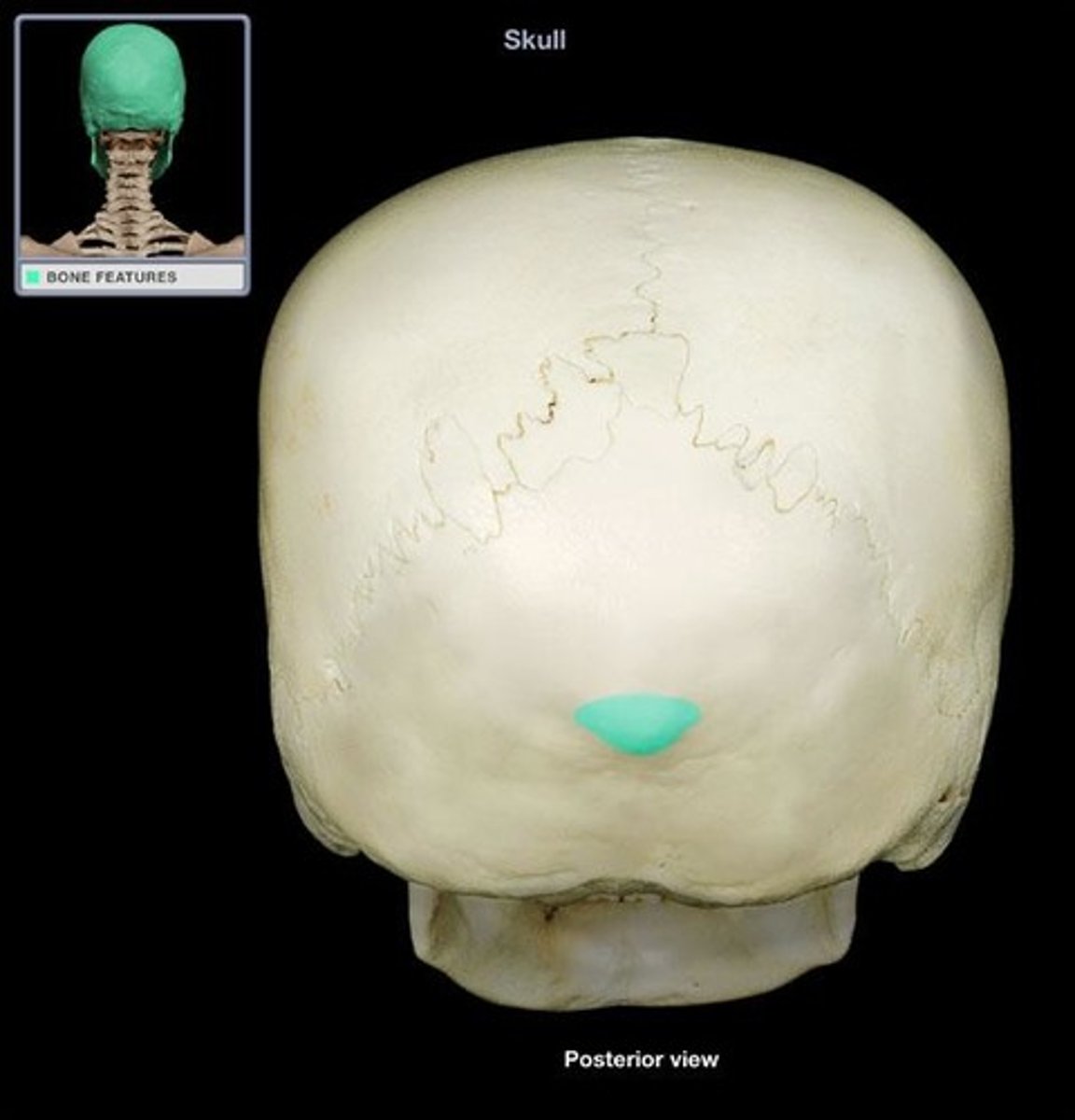
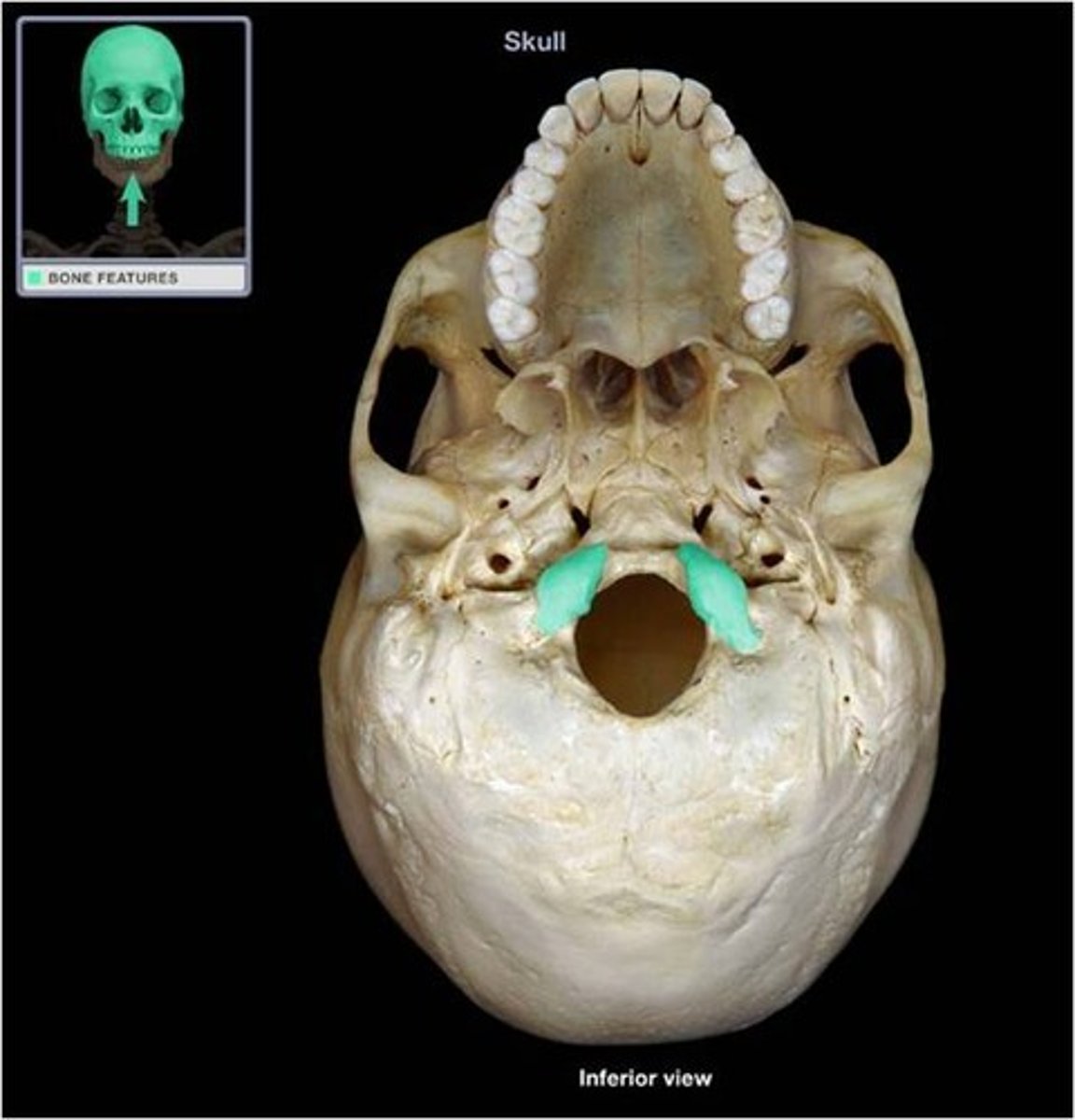
occipital condyles
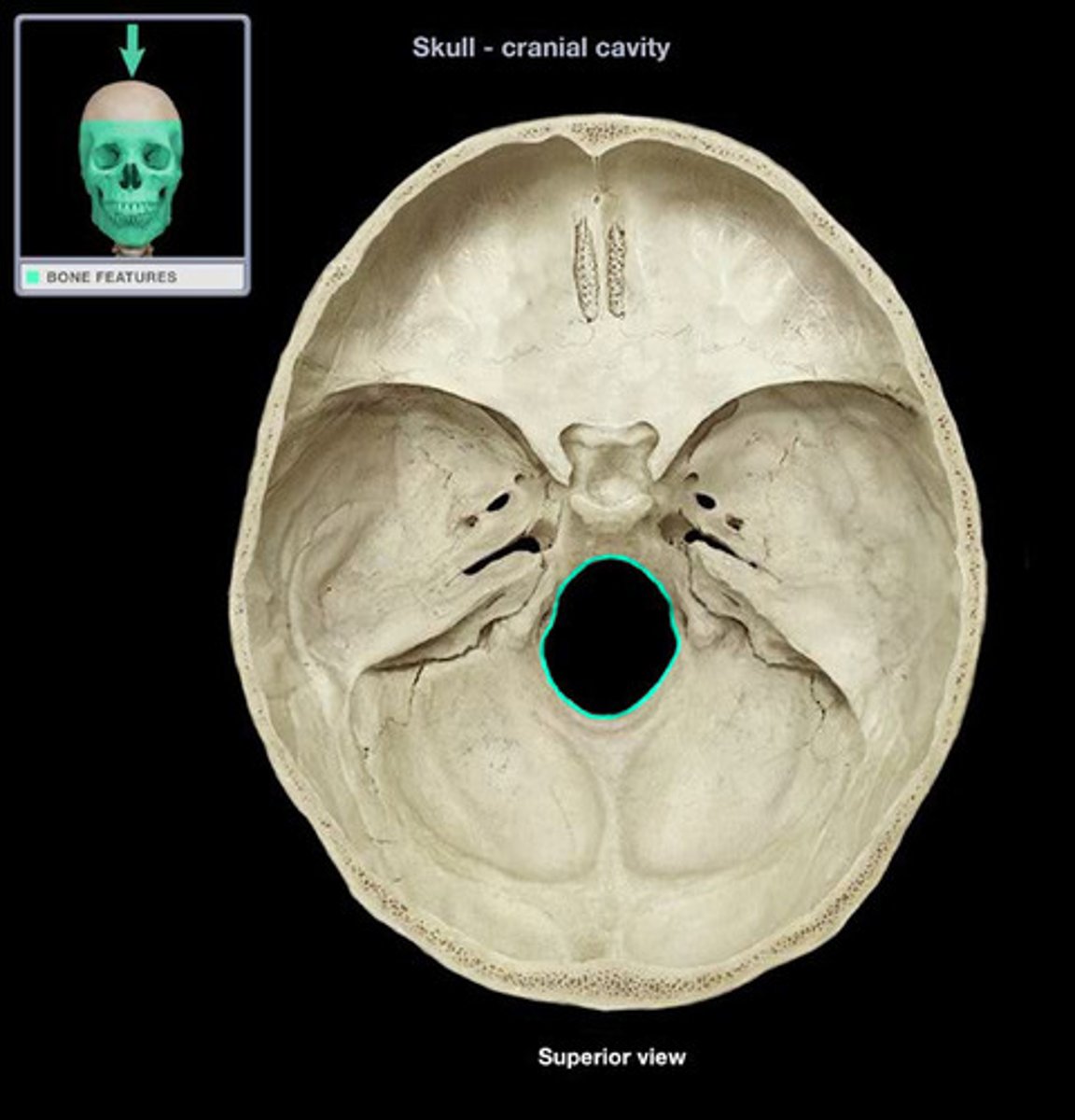
foramen magnum
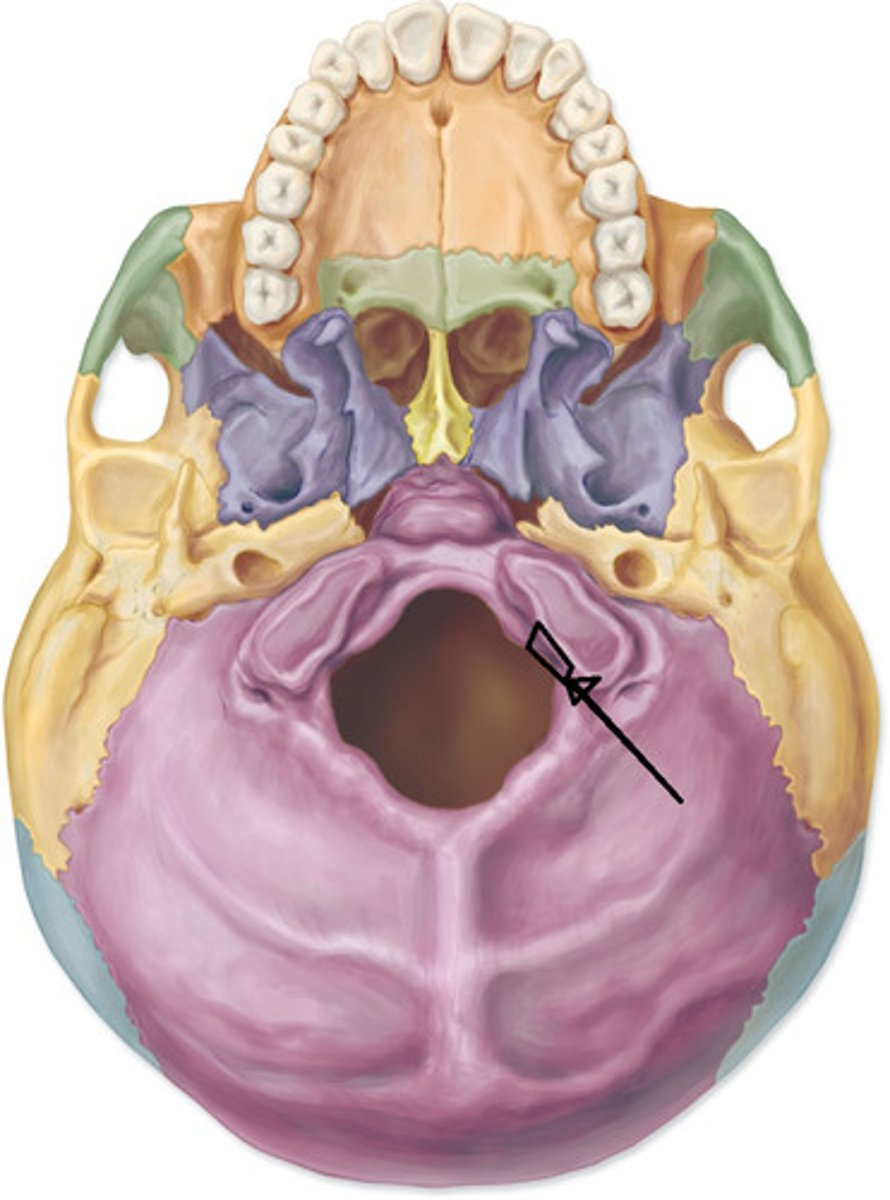
hypoglossal canal
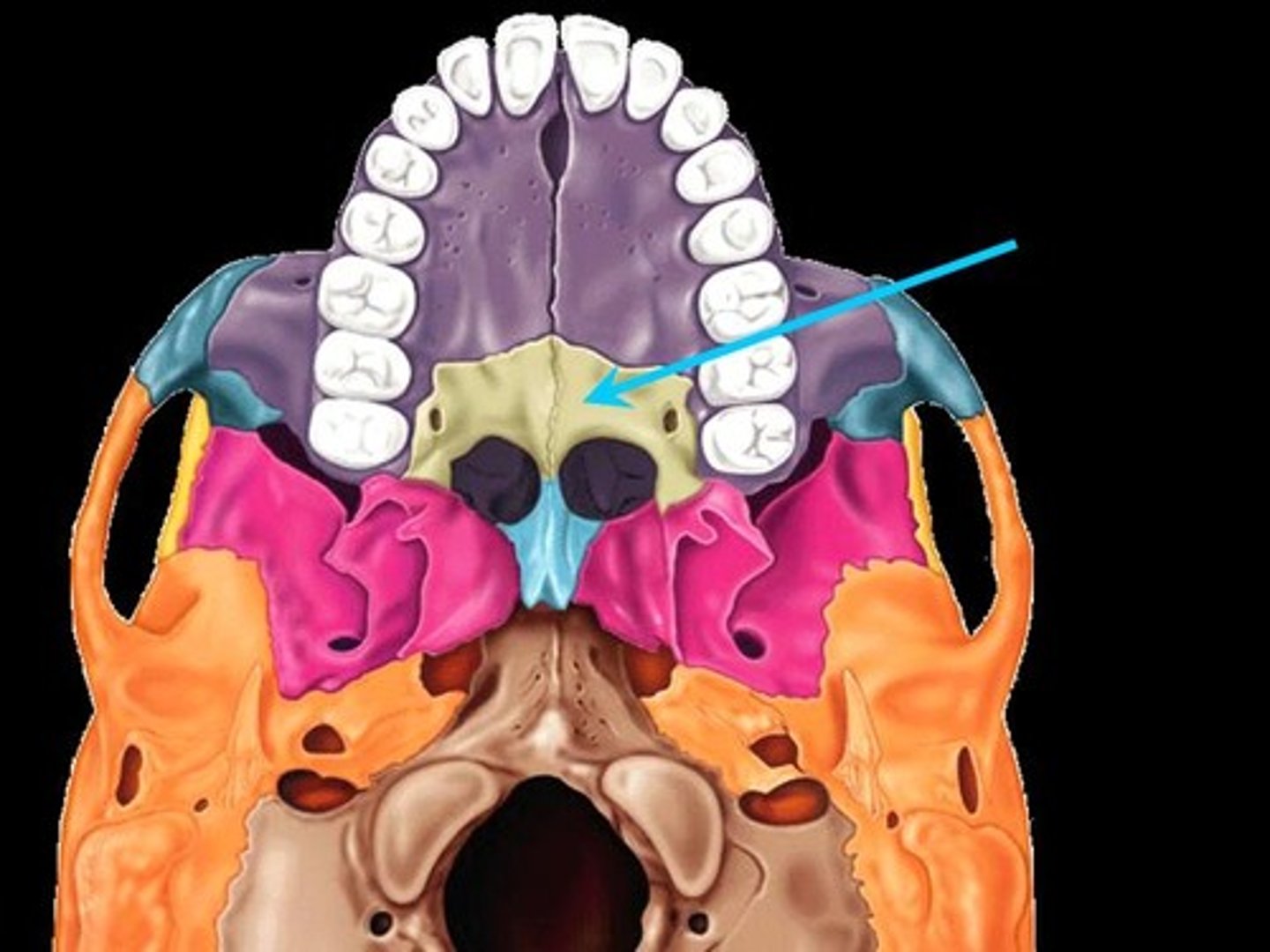
palatine bone
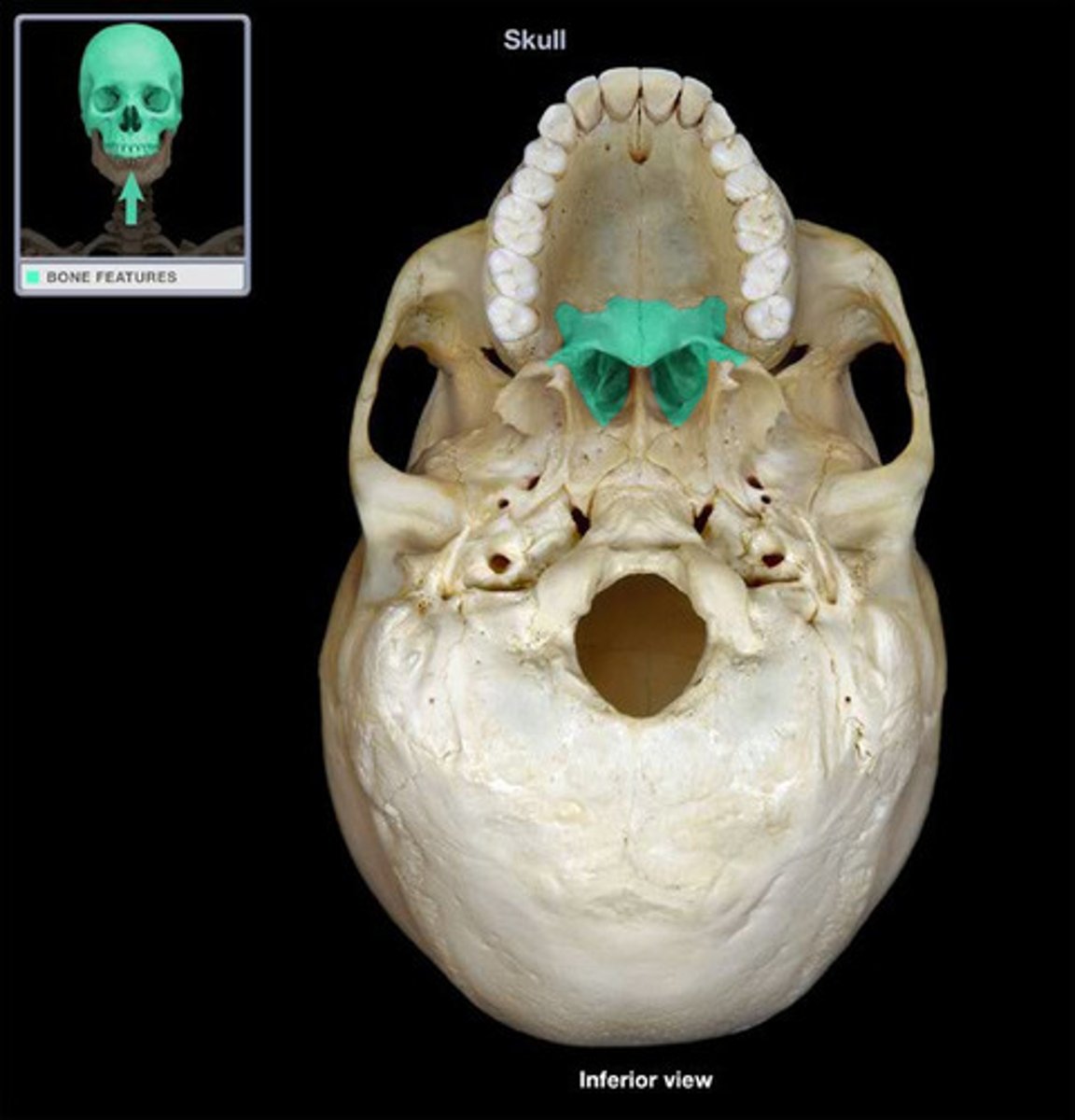
horizontal plate of palatine bone
forms posterior part of hard palate
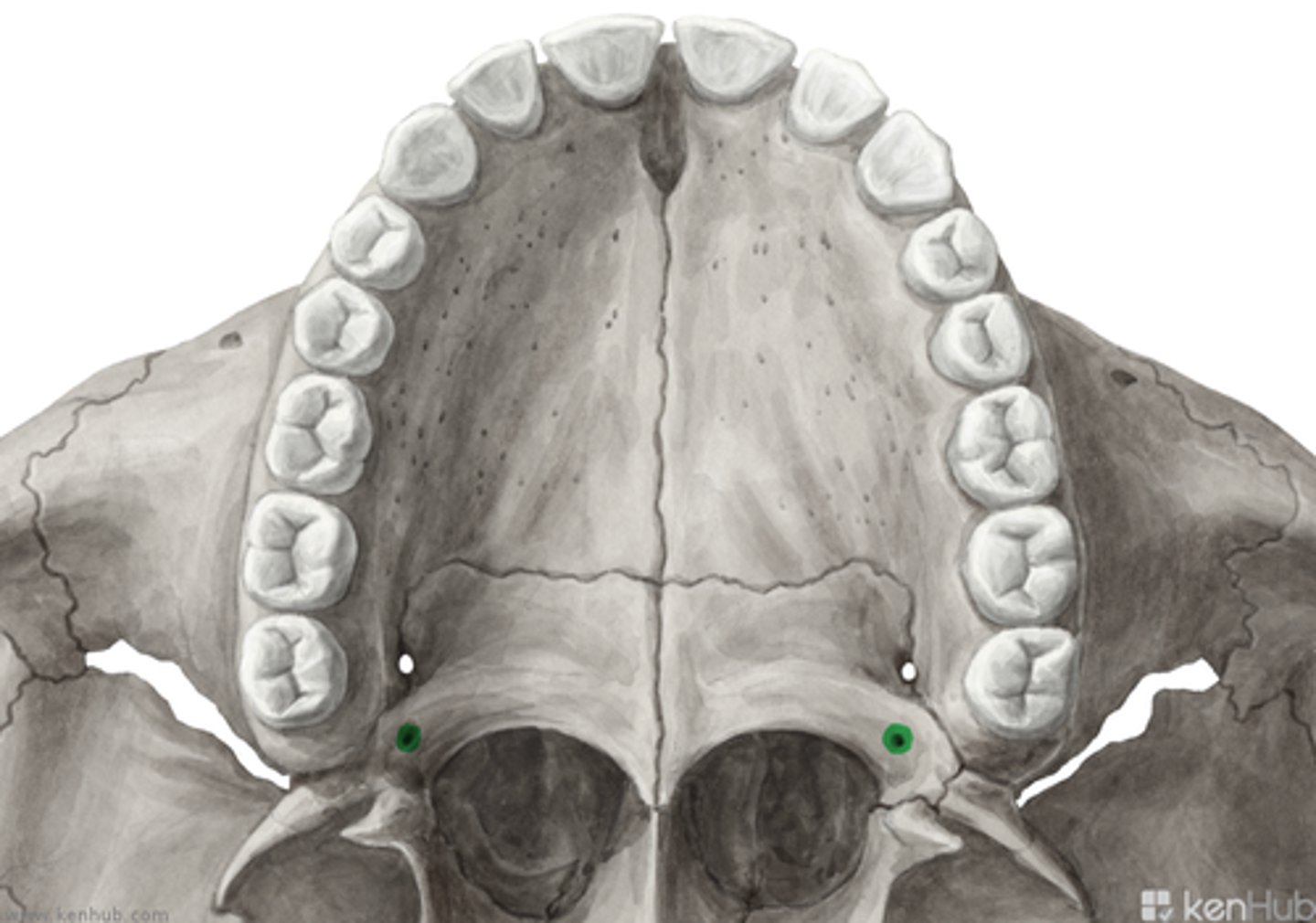
greater palatine foramen
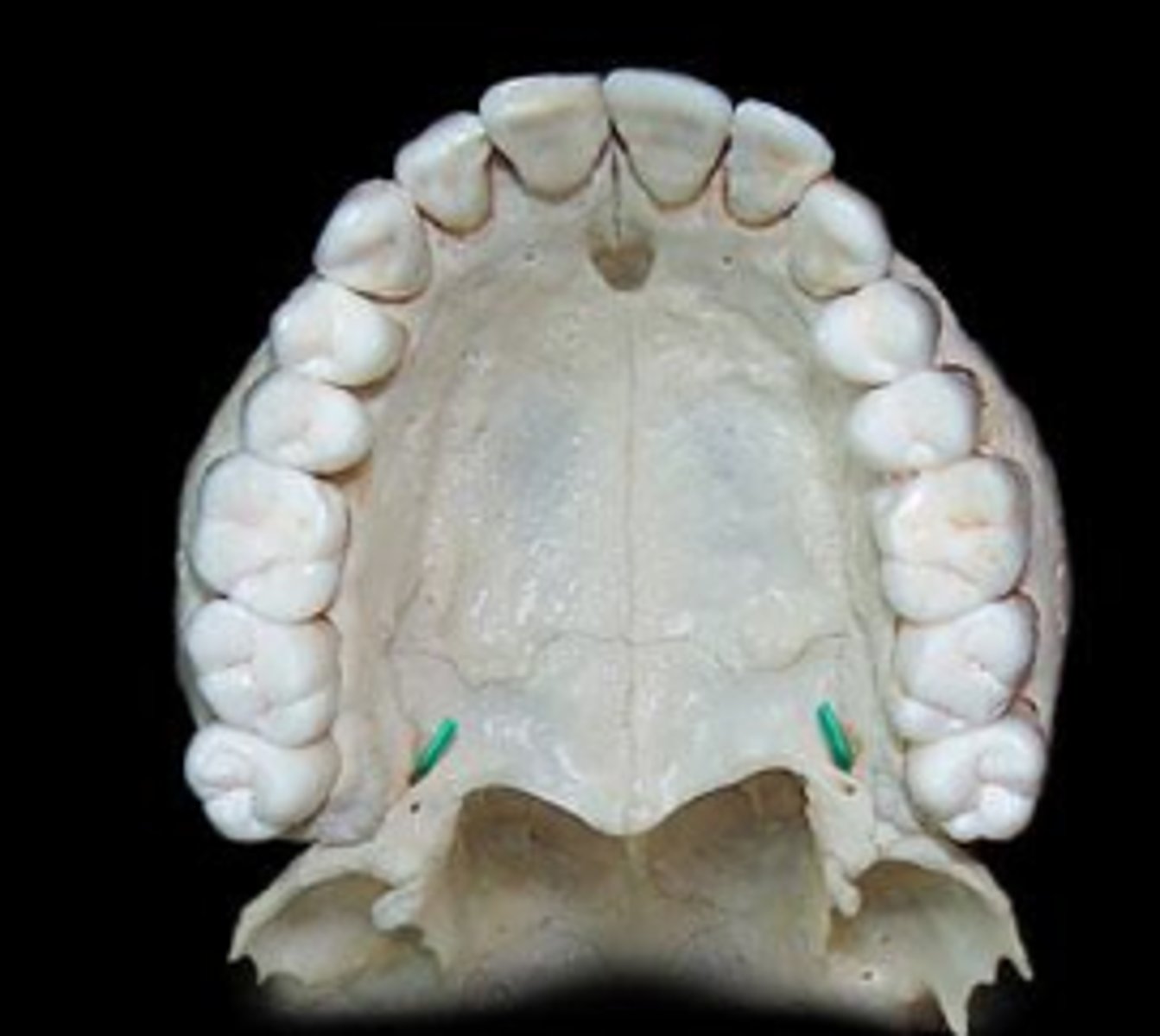
lesser palatine foramen
palatine process of maxilla
roof of the mouth
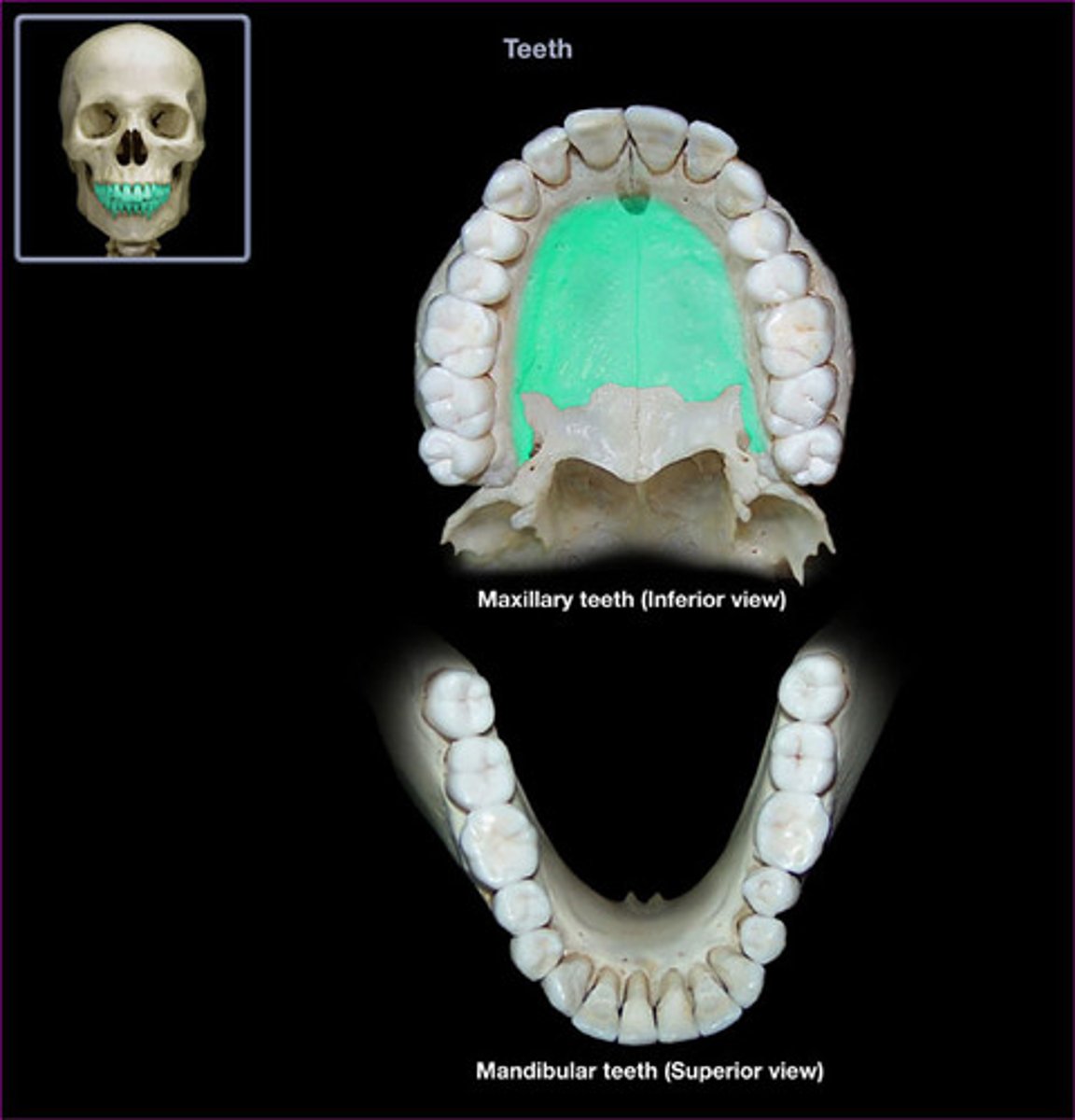
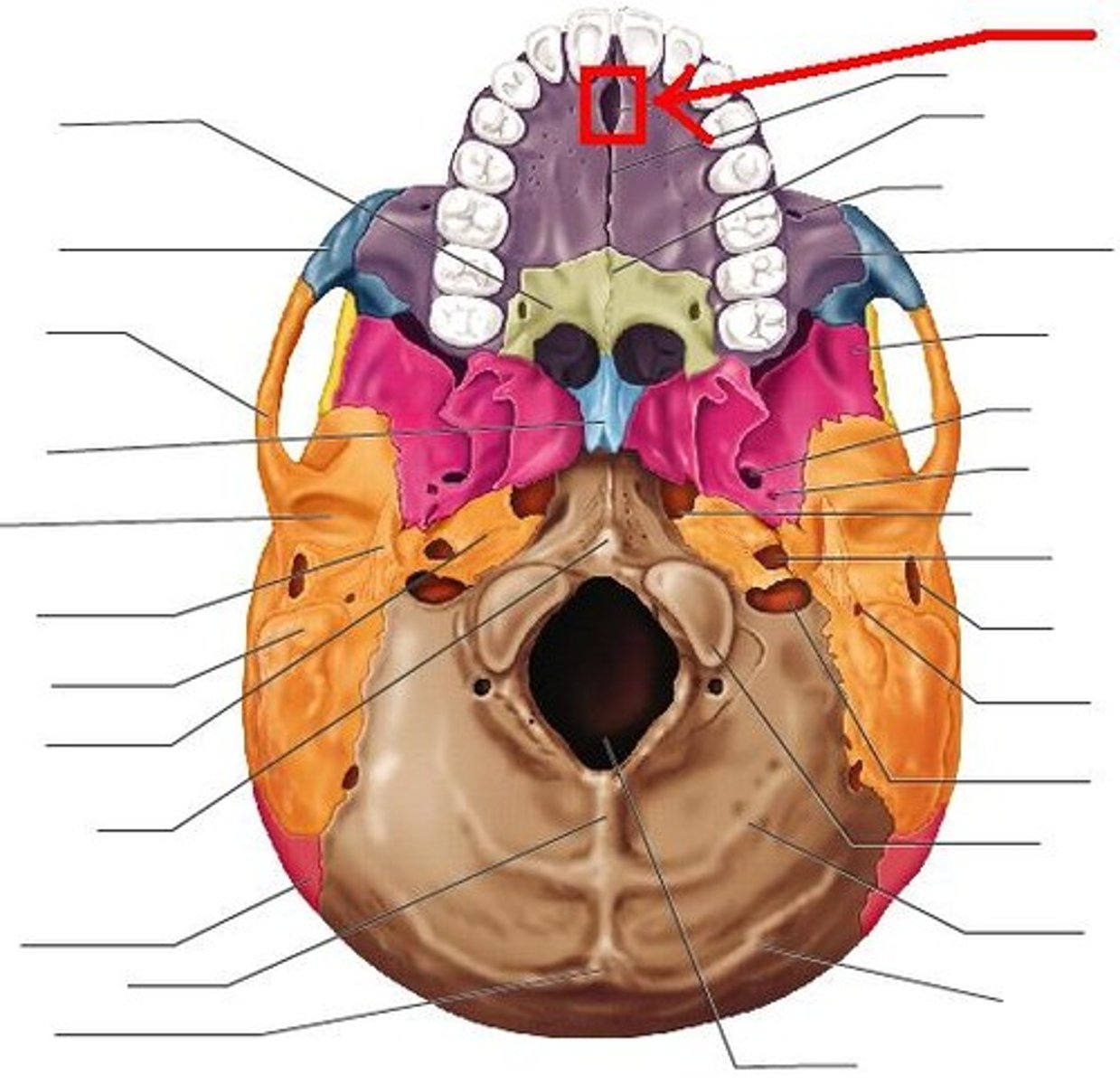
incisive foramen
mandible
lower jaw
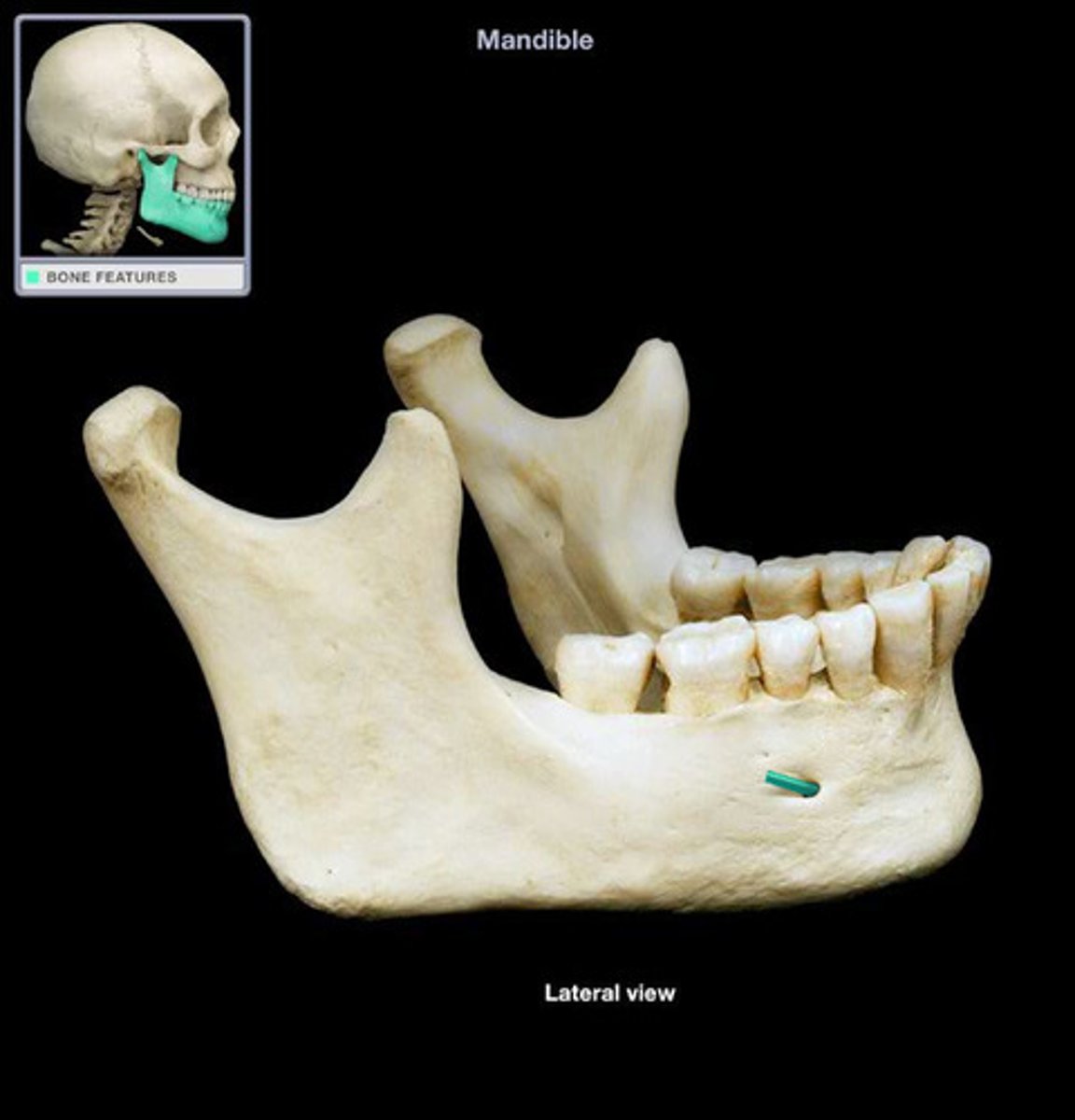
mental foramen
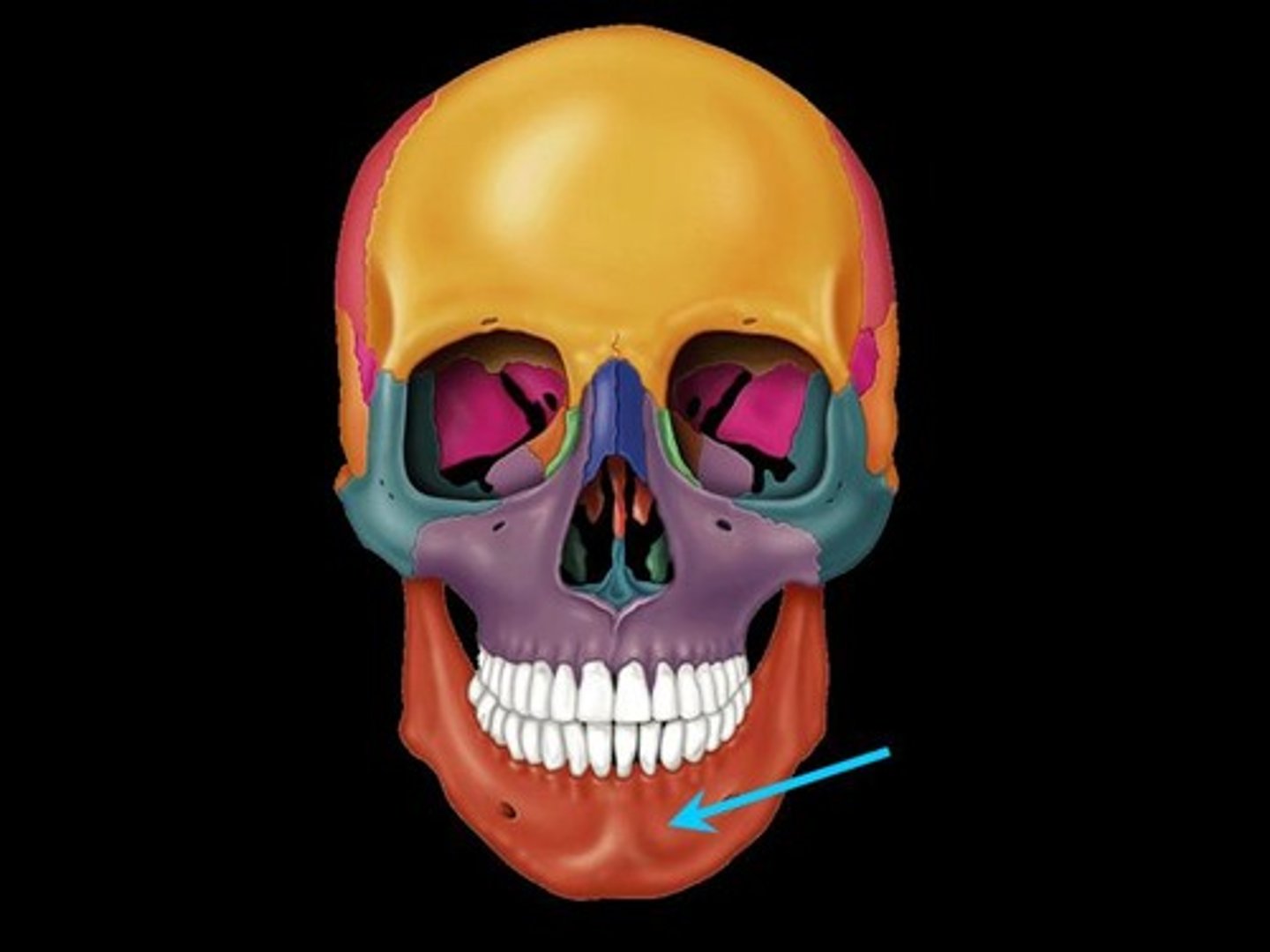
mental protuberance
point of chin
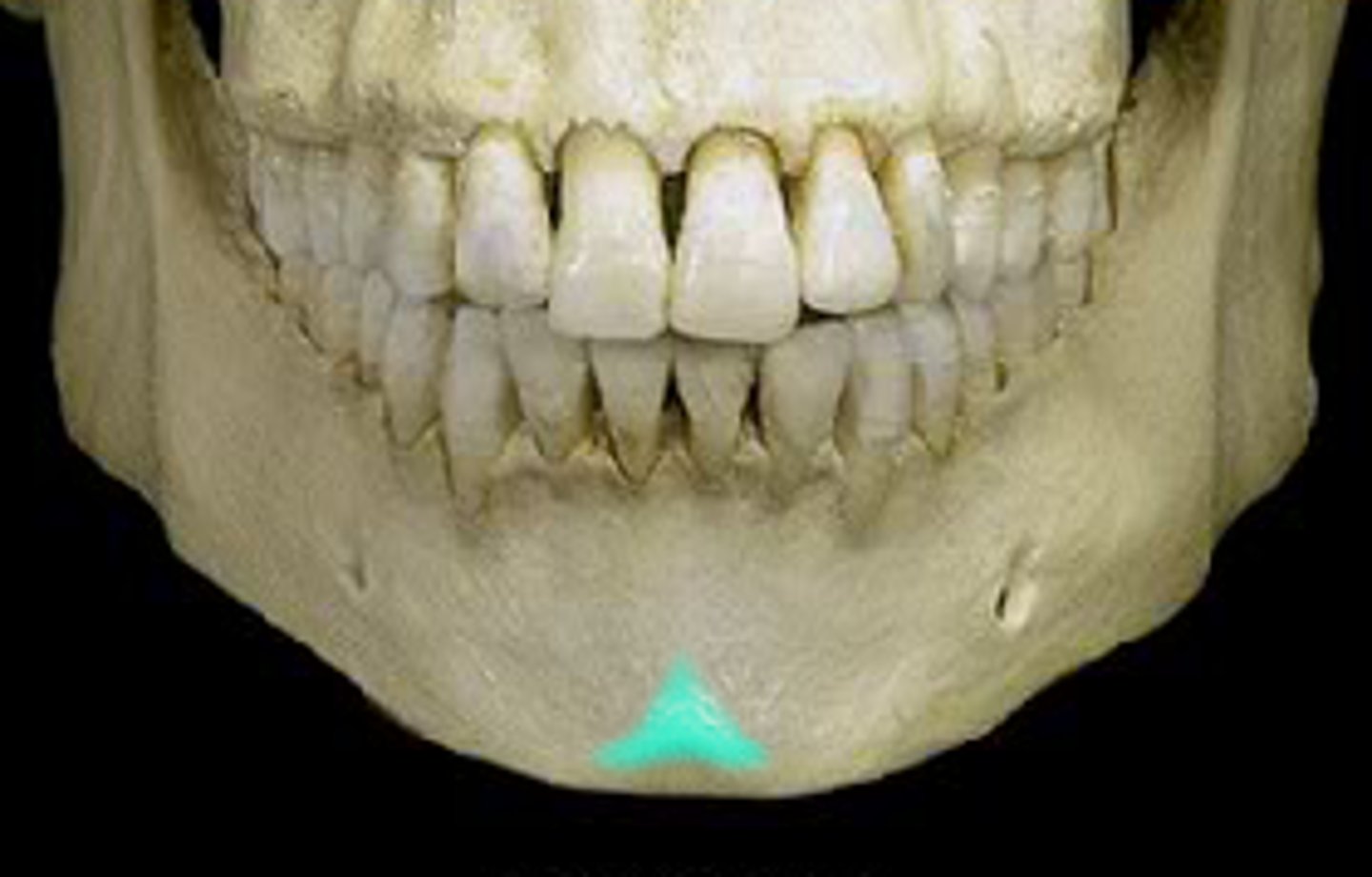
mental symphysis
the point at which the two halves of the mandible are joined
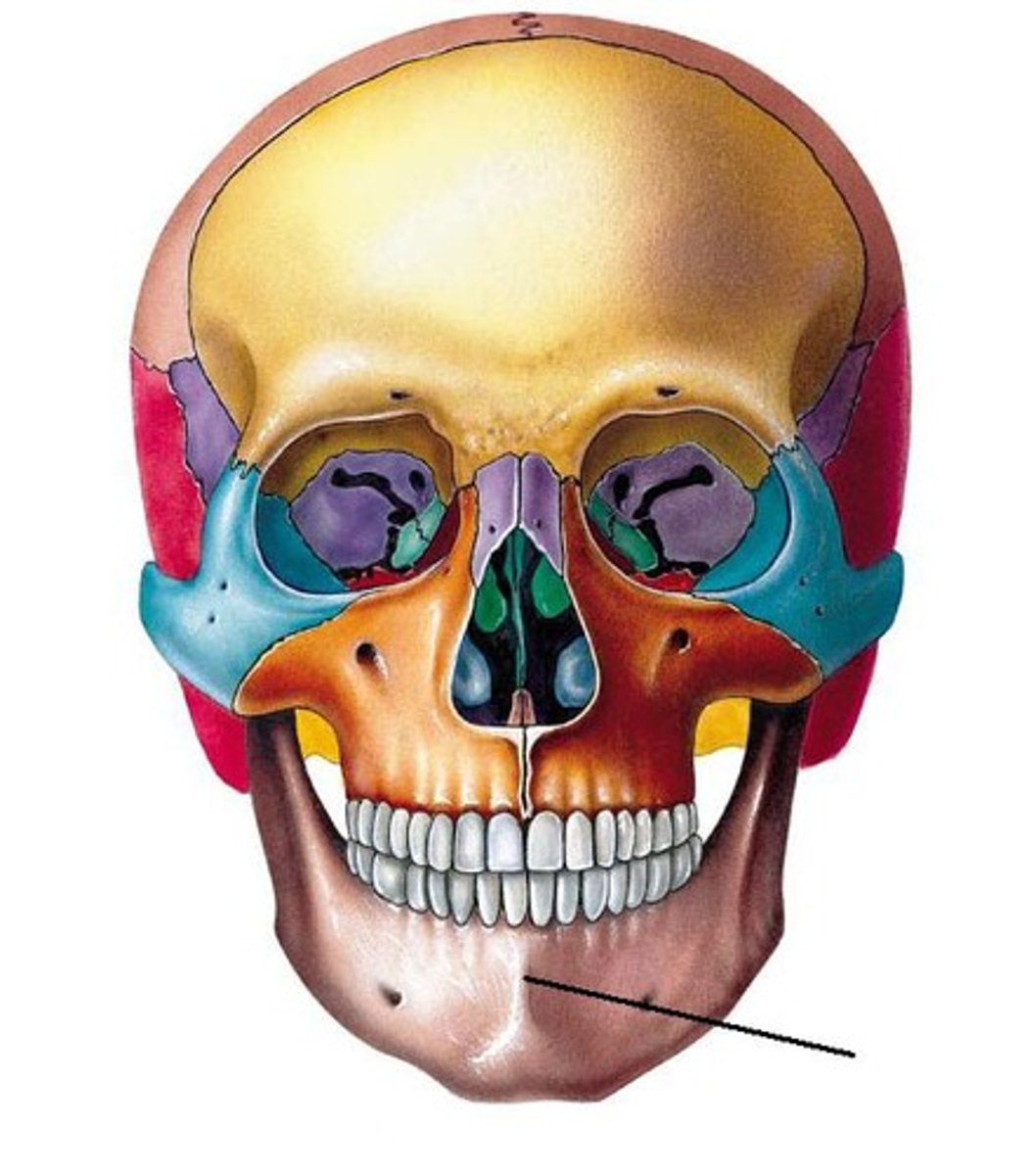
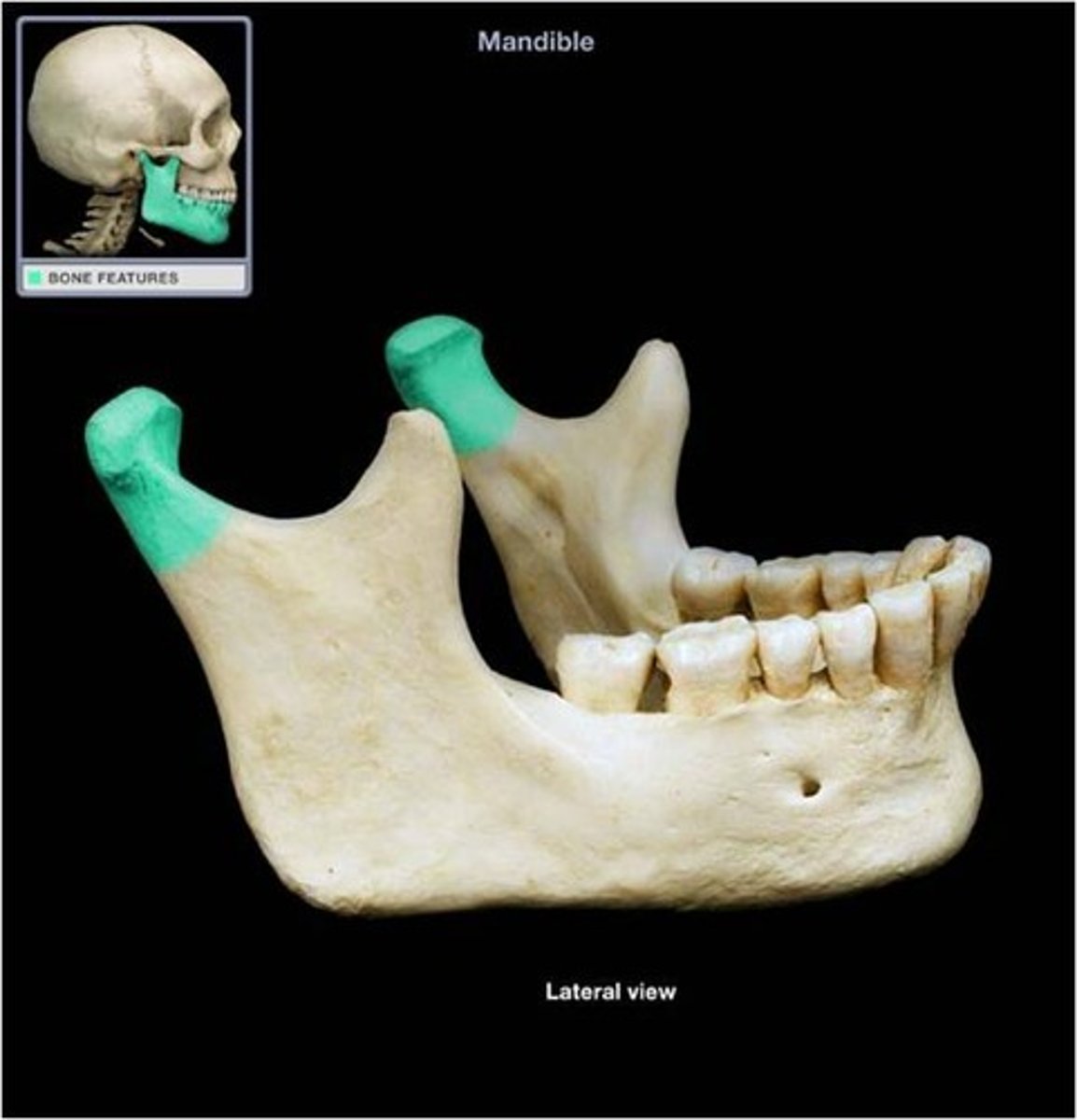
condylar process
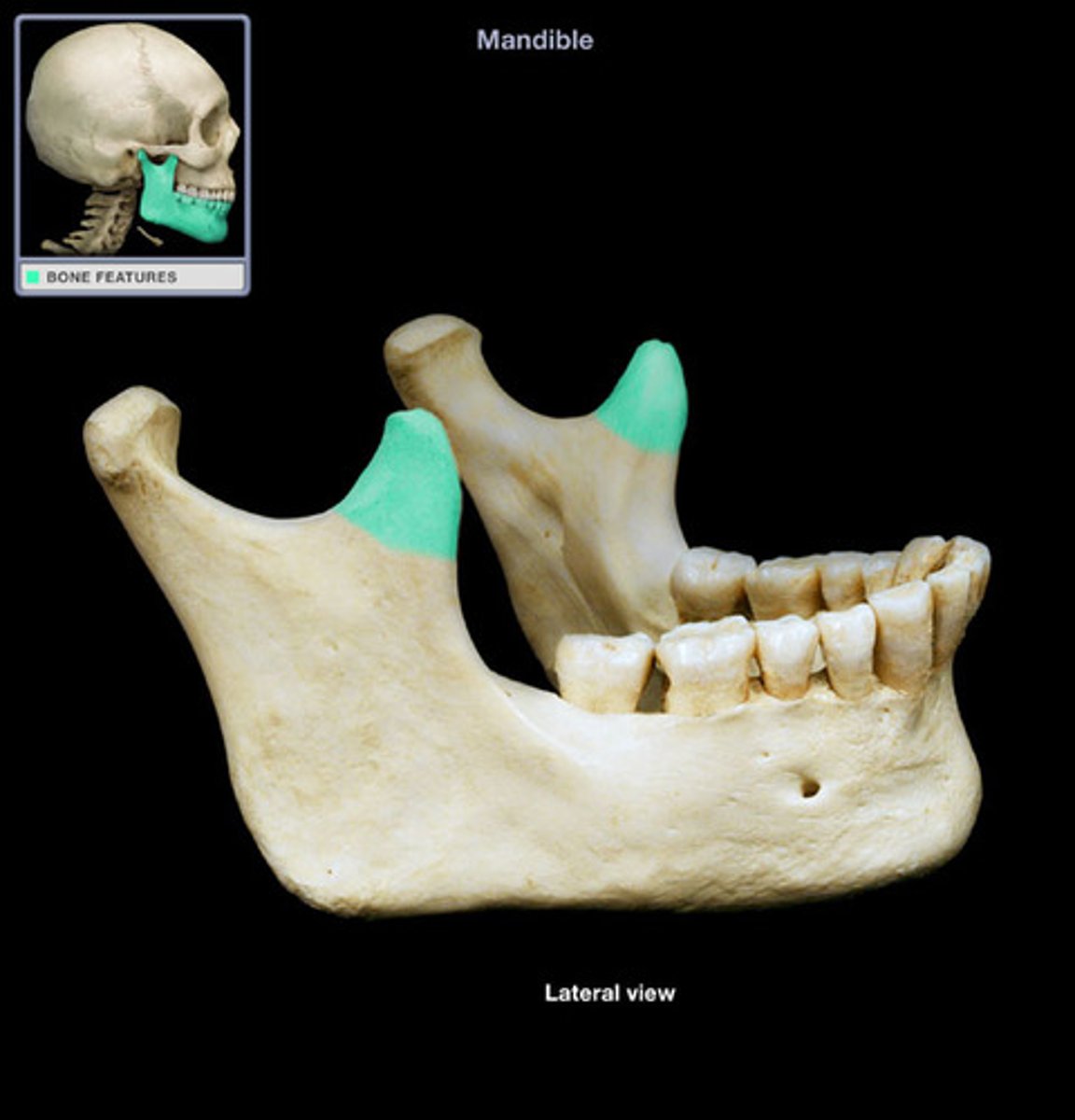
coronoid process
mandibular notch
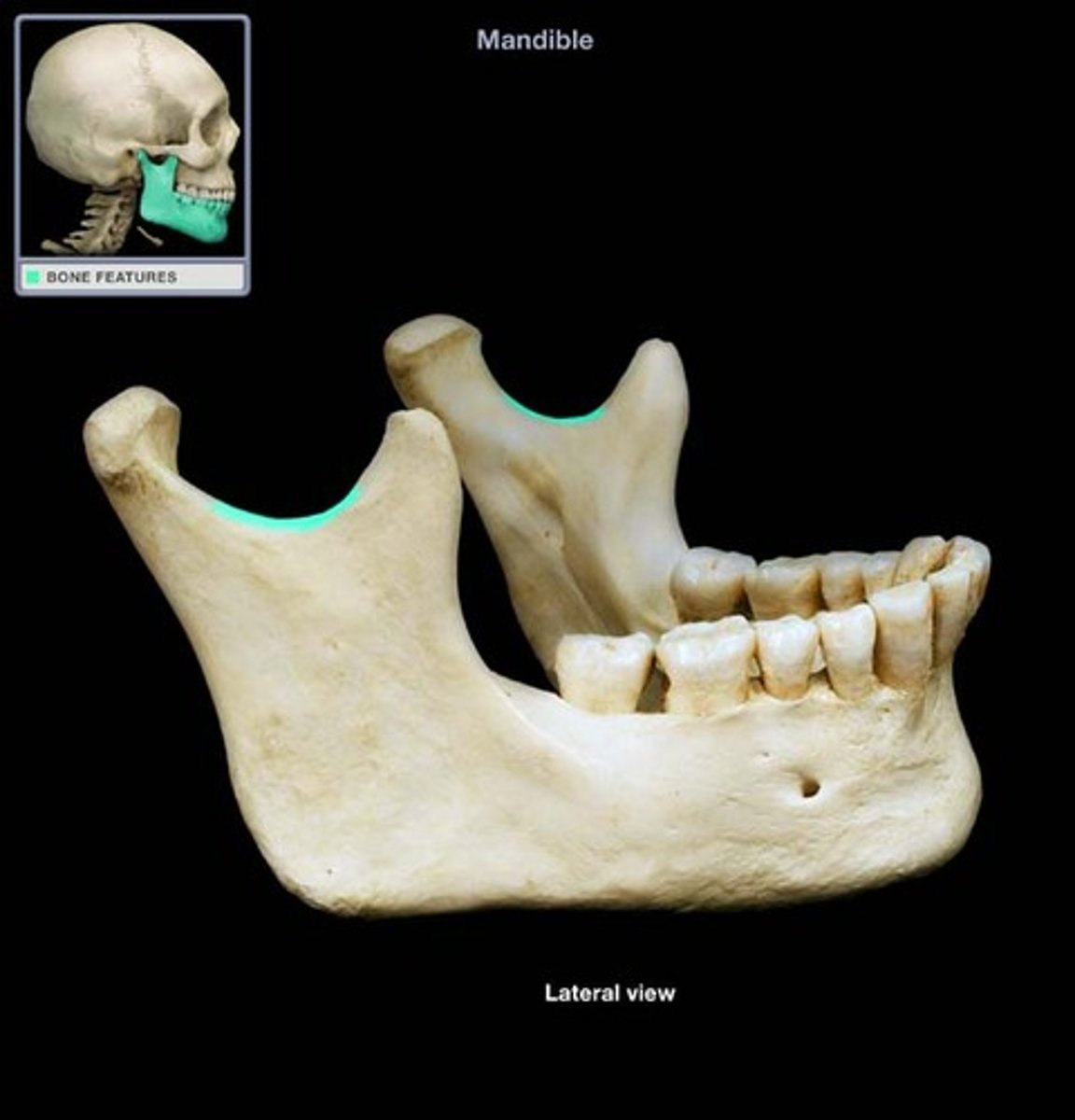
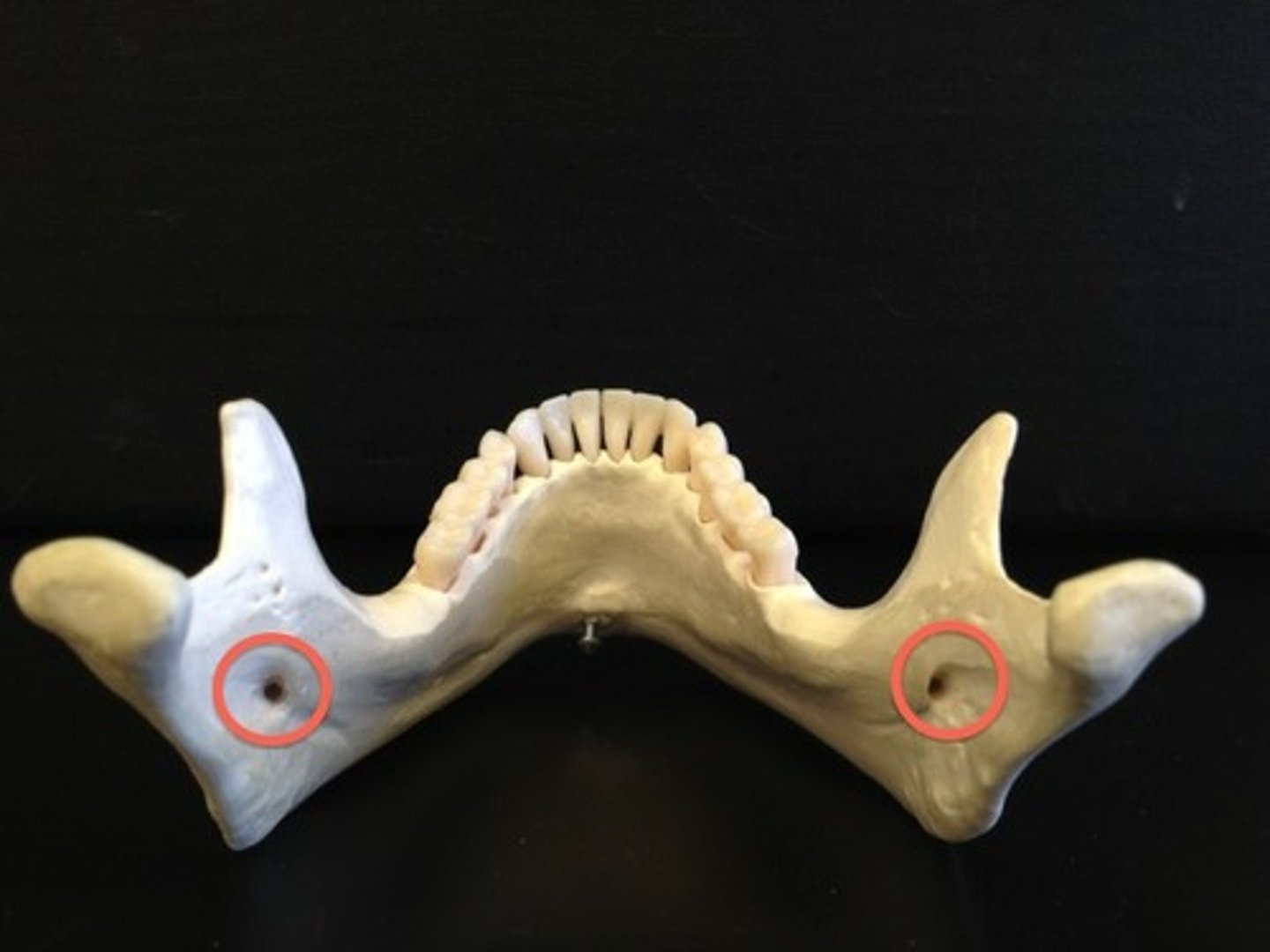
mandibular foramen
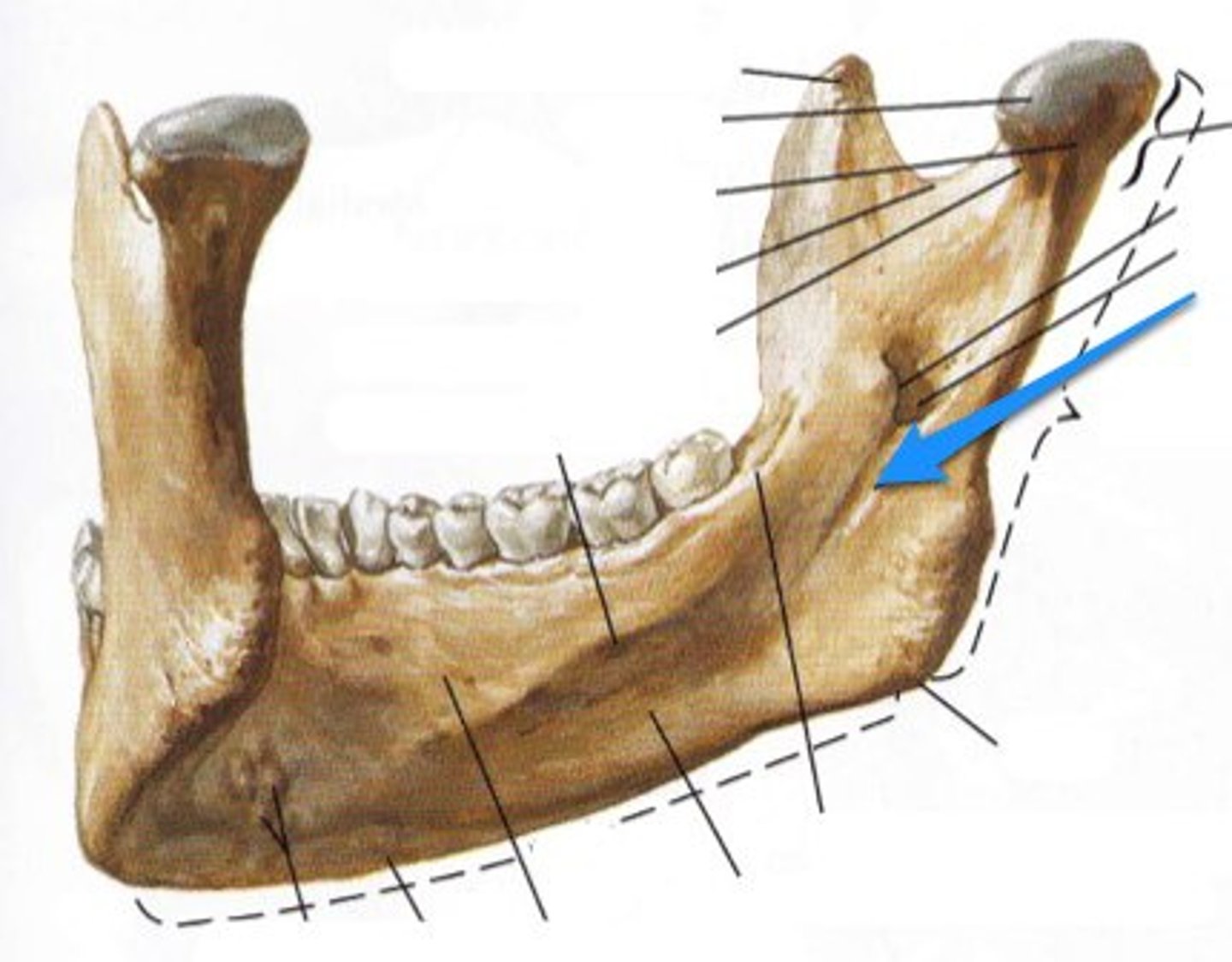
groove for the mylohyoid
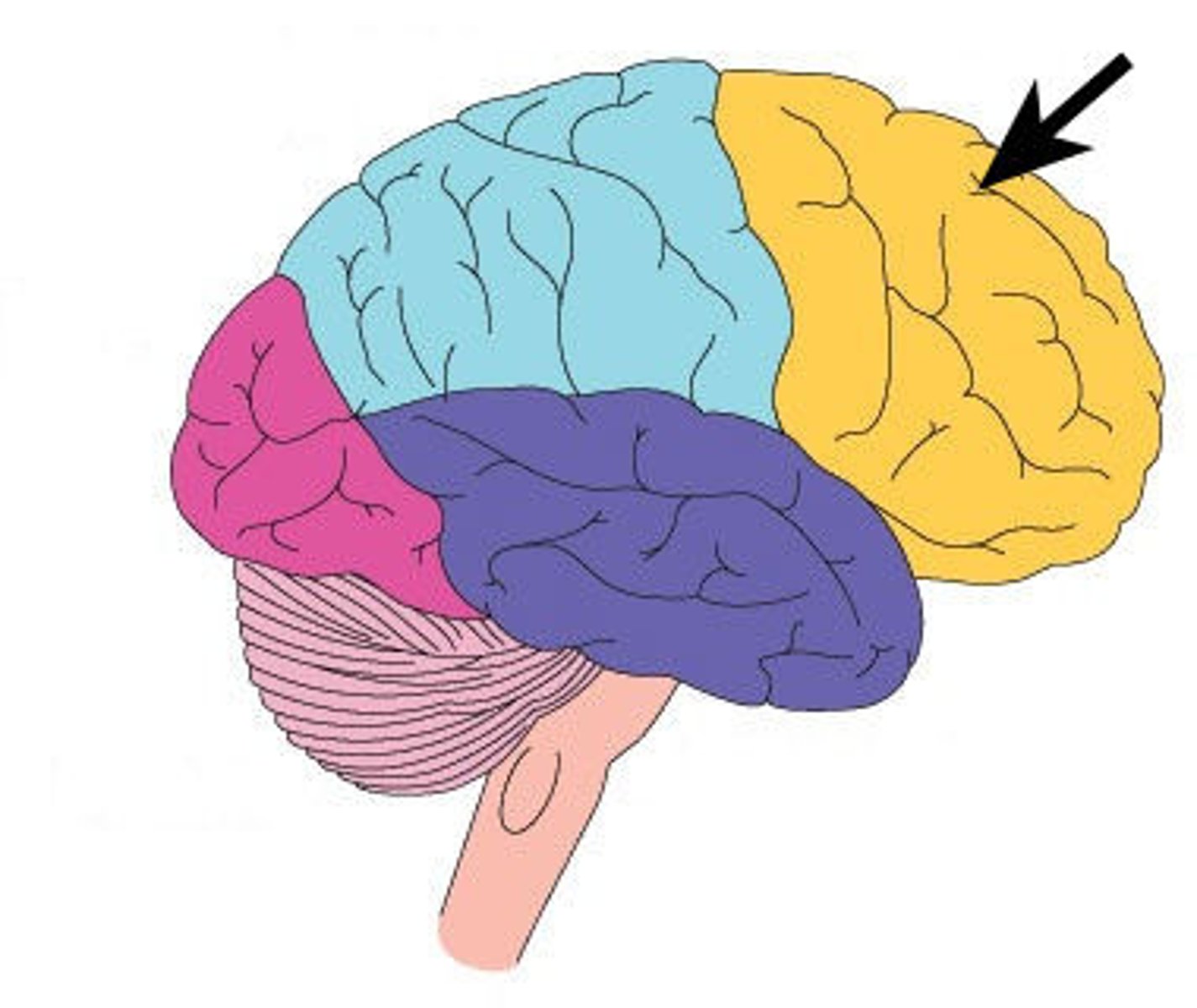
frontal lobe
parietal lobe
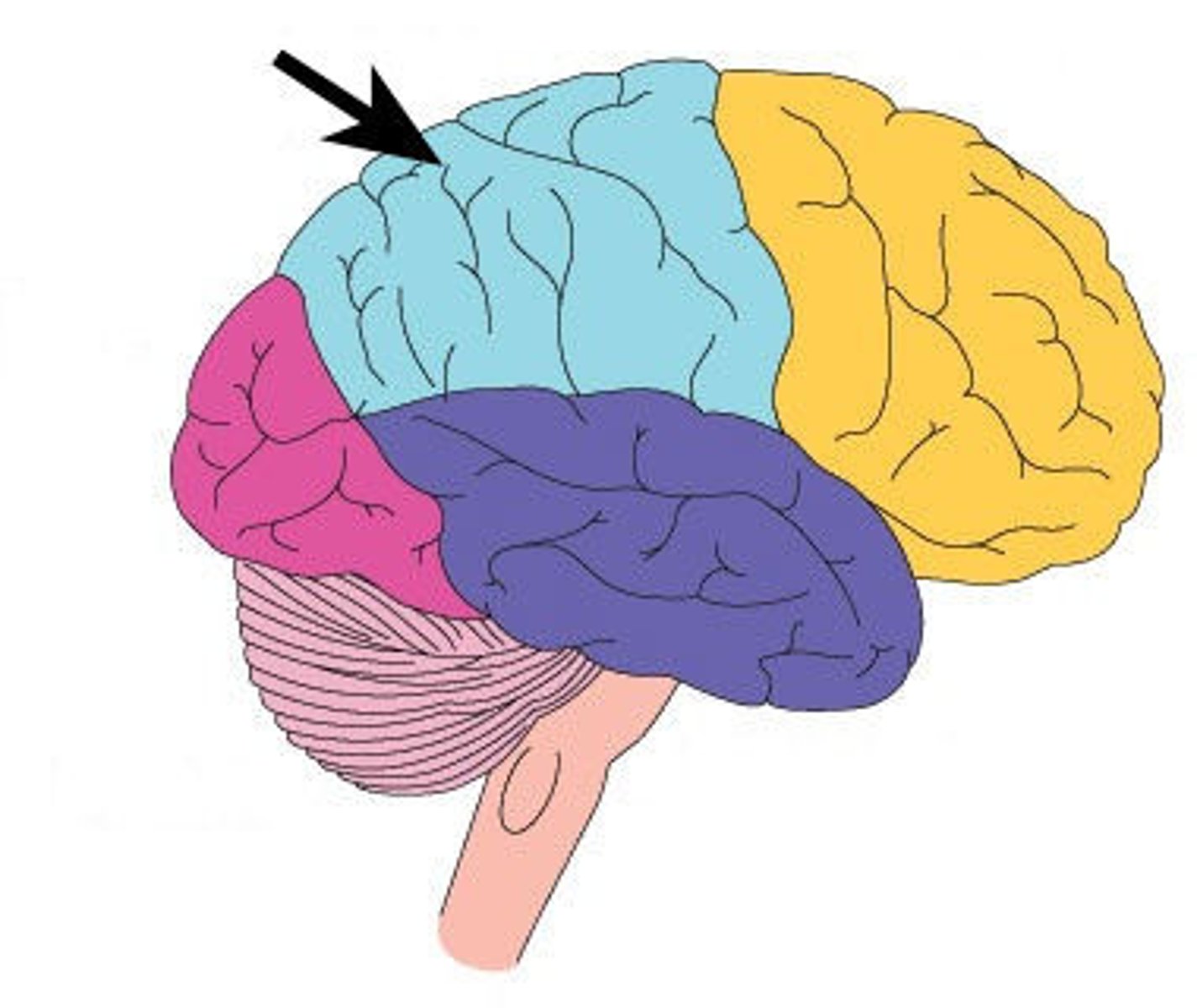
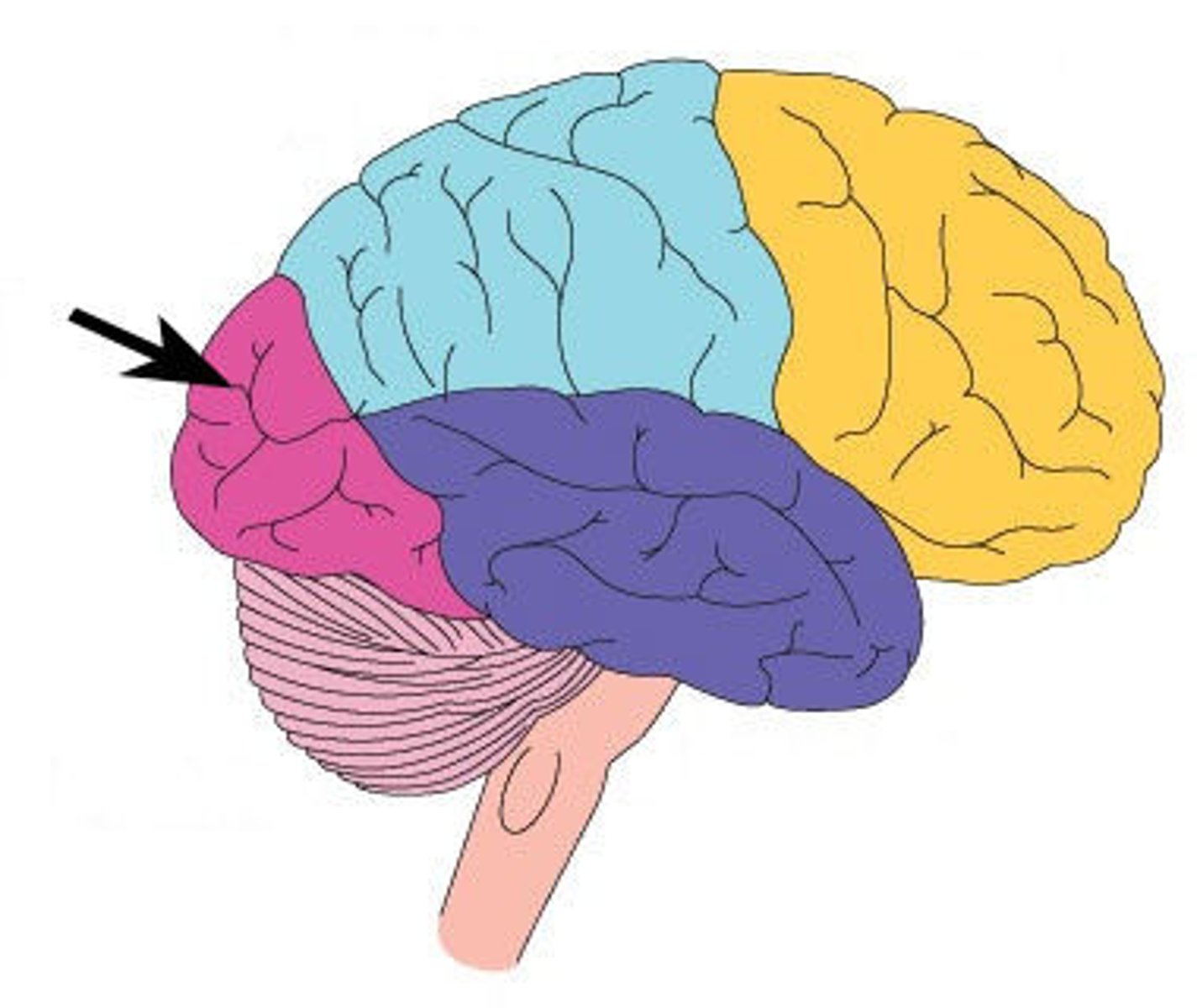
occipital lobe
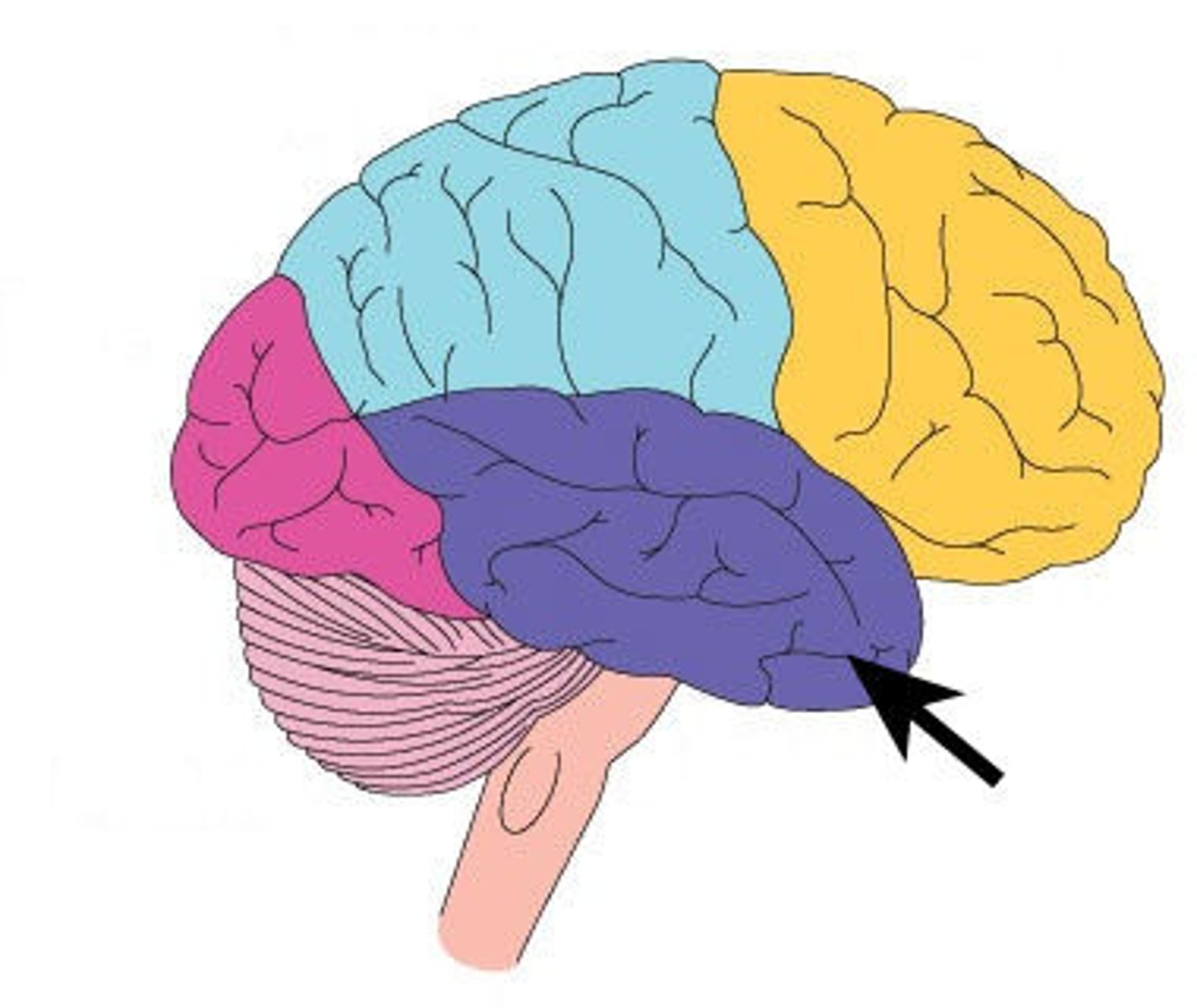
temporal lobe
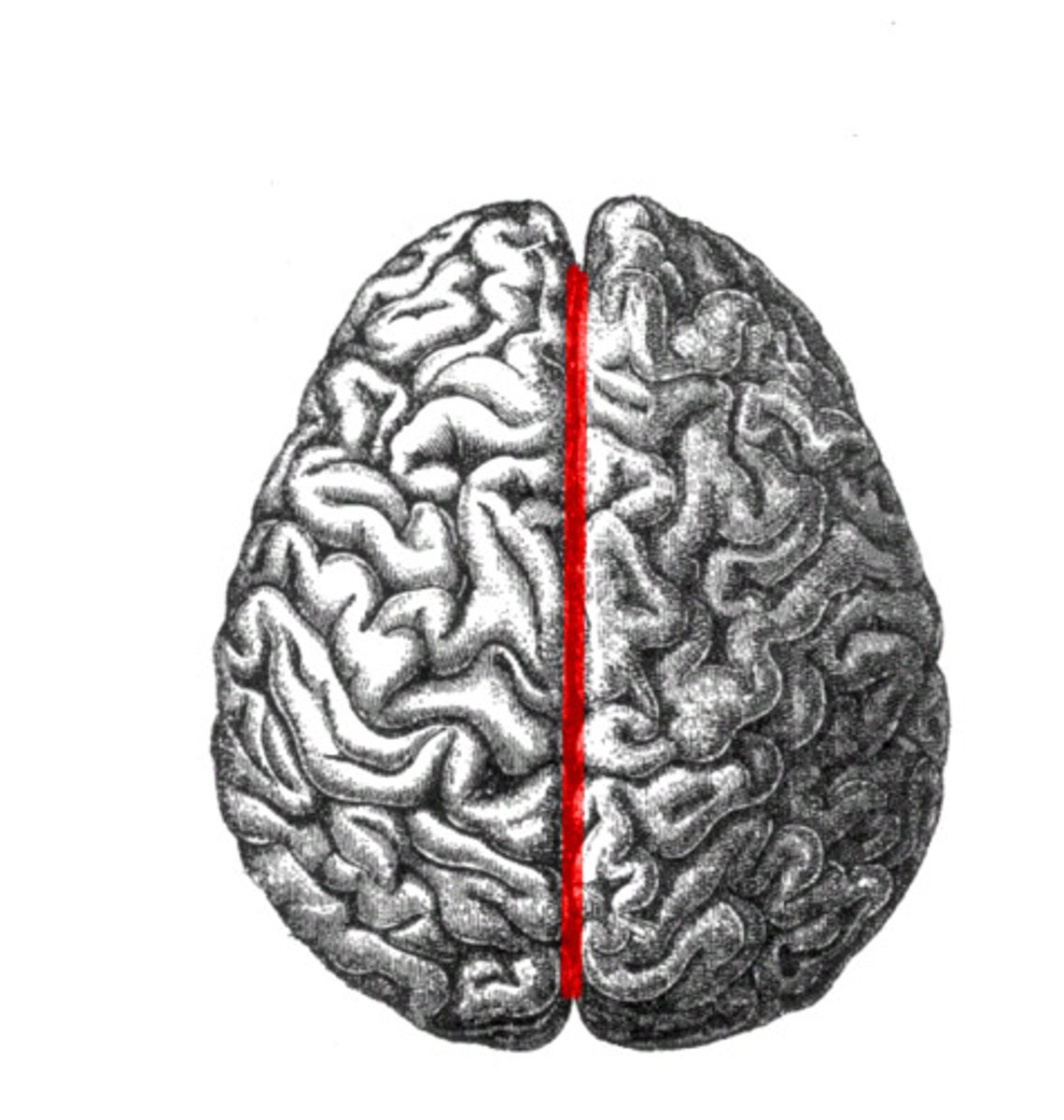
longitudinal fissure
separates left and right hemispheres
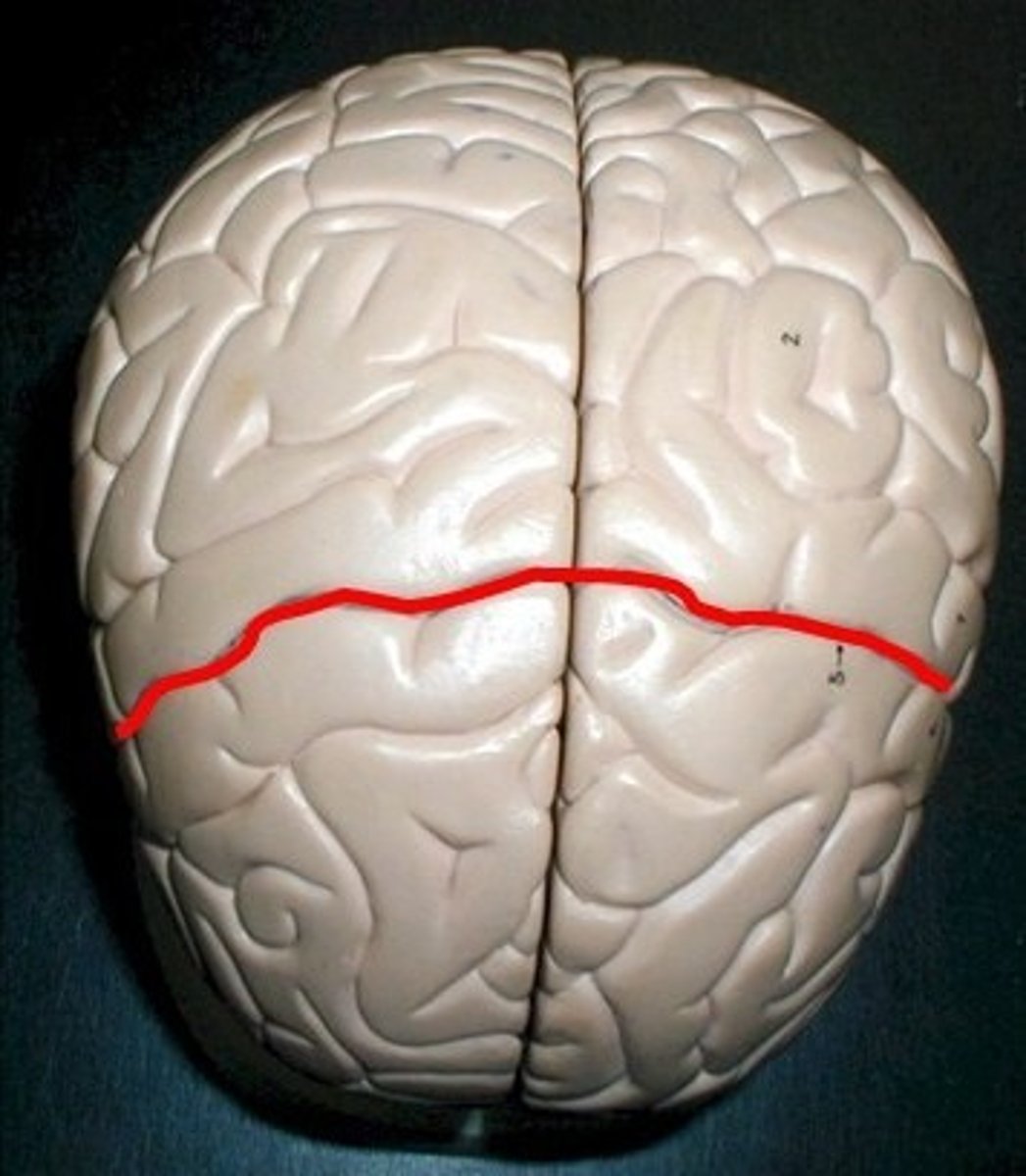
central sulcus
separates frontal and parietal lobes
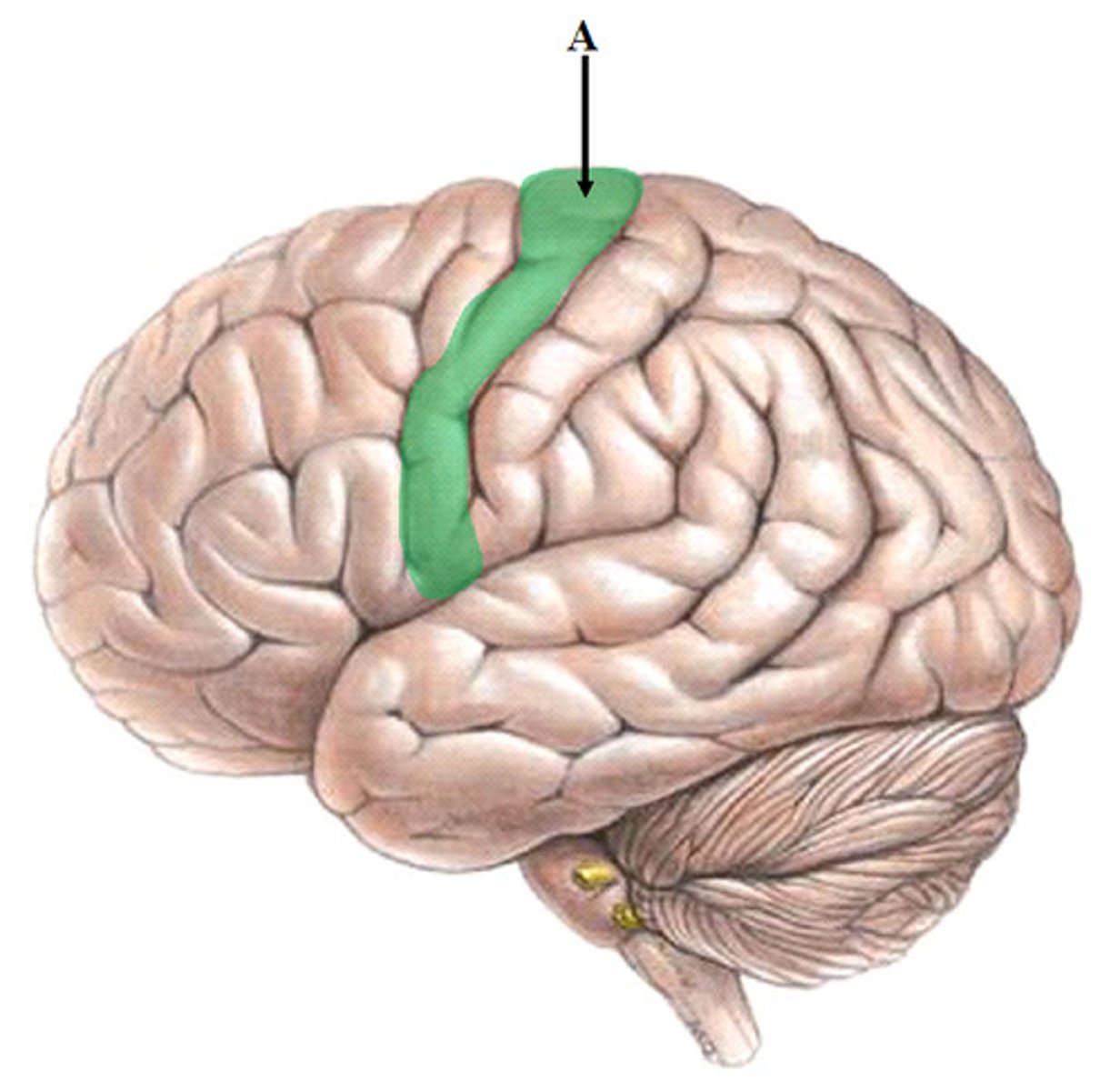
precentral gyrus
the strip of frontal cortex, just in front of the central sulcus, that is crucial for motor control
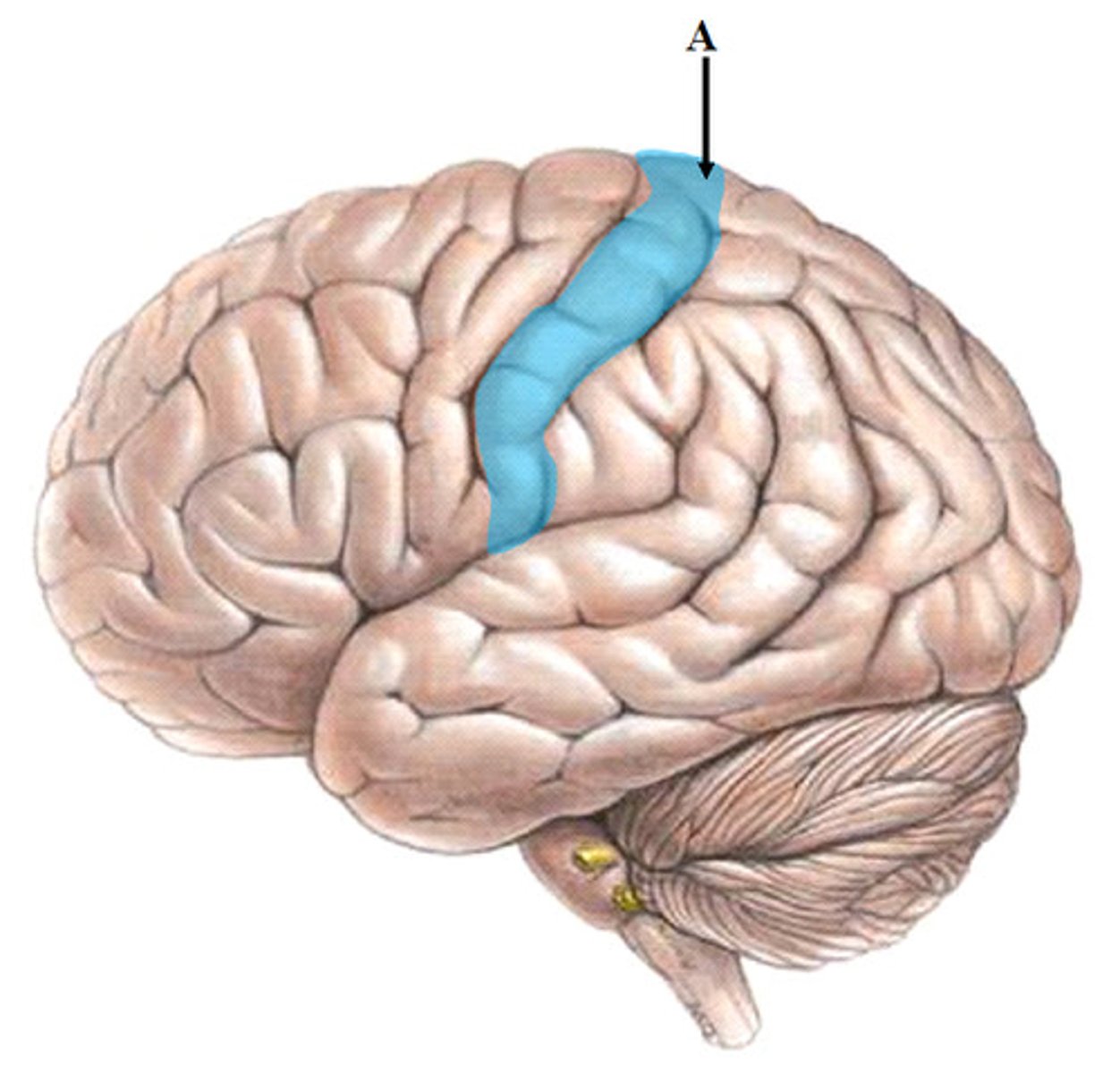
postcentral gyrus
the strip of parietal cortex, just behind the central sulcus, that receives somatosensory information from the entire body
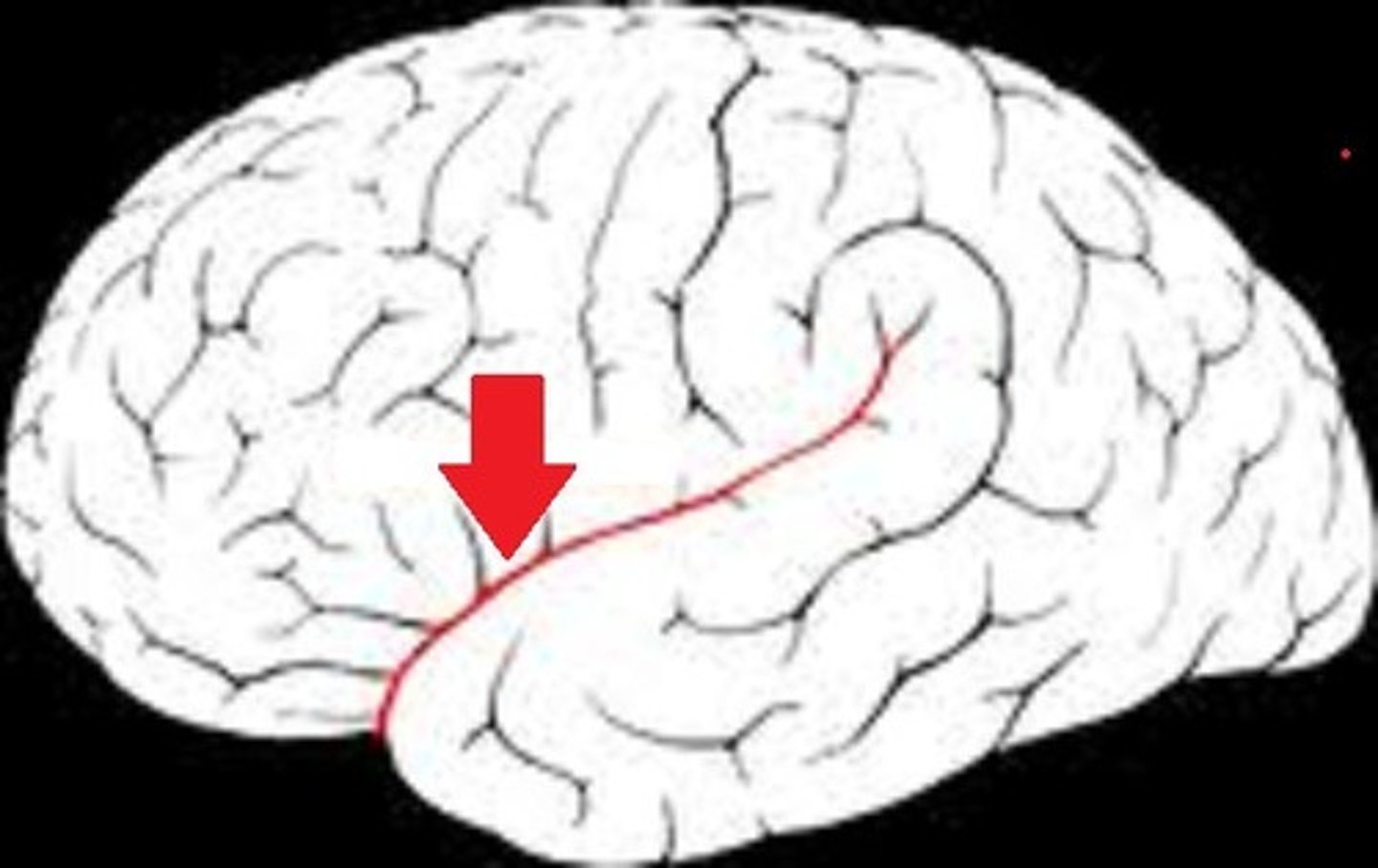
lateral sulcus
Separates temporal lobe from parietal and frontal lobes
cerebellum
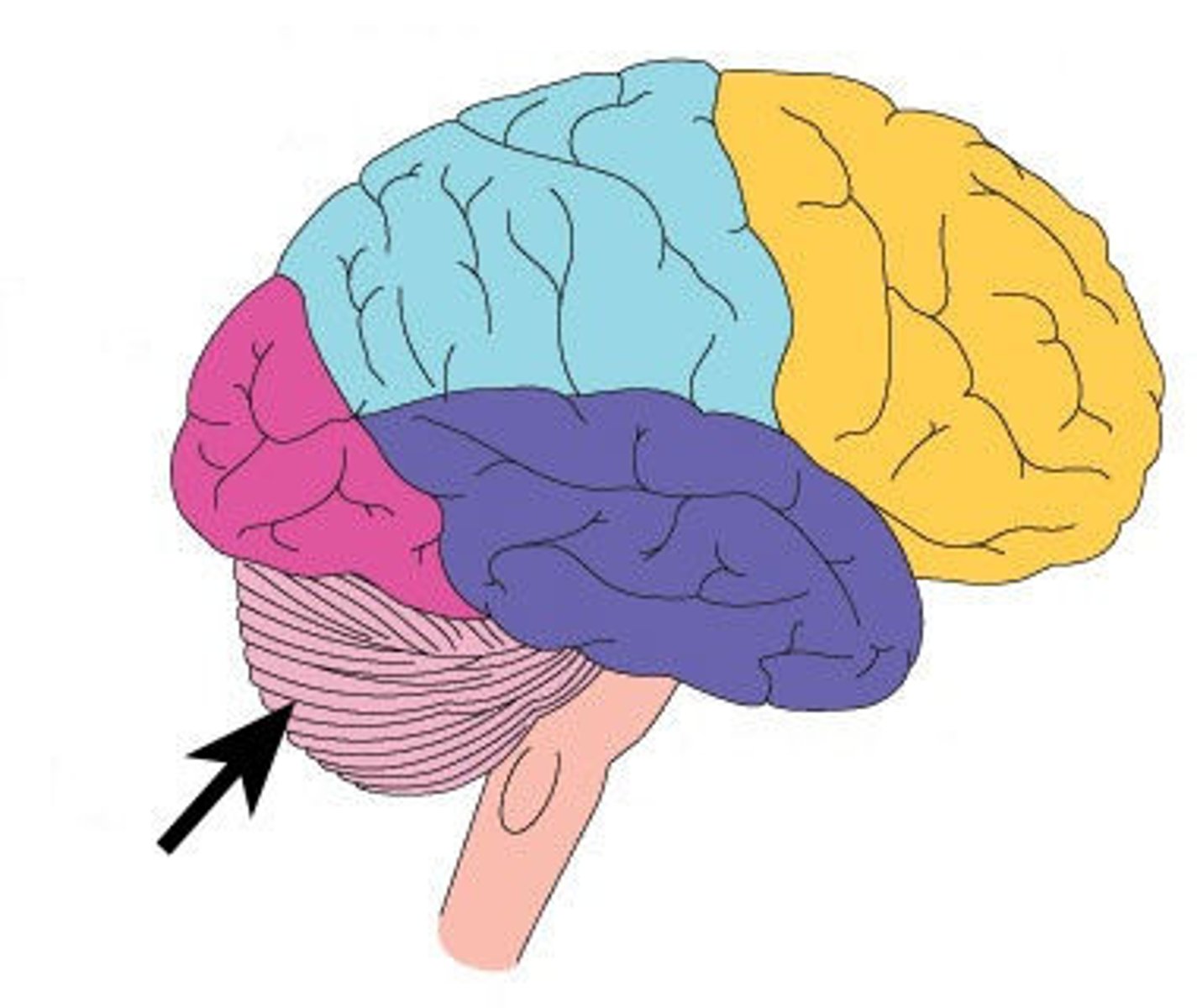
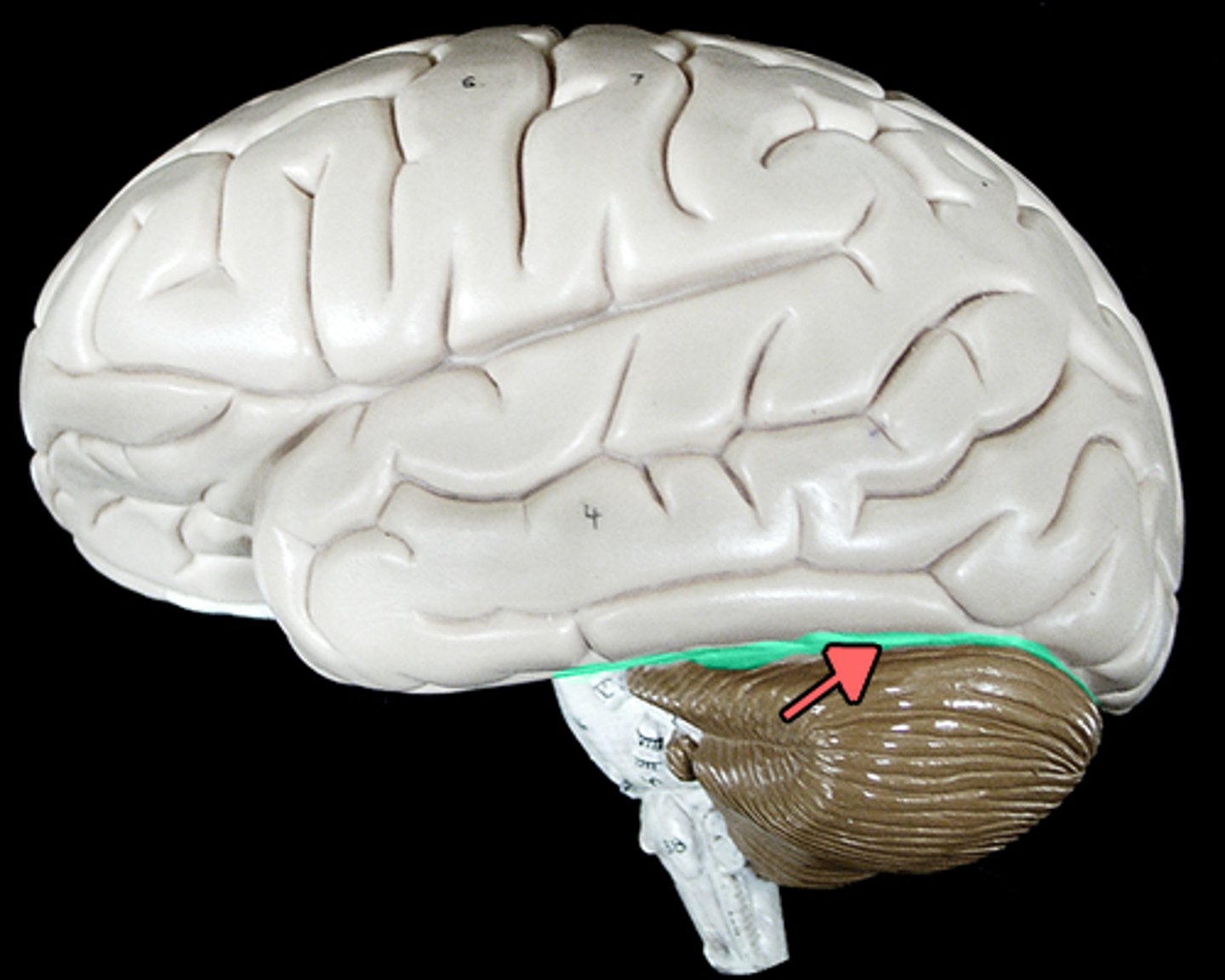
transverse fissure
separates cerebrum from cerebellum
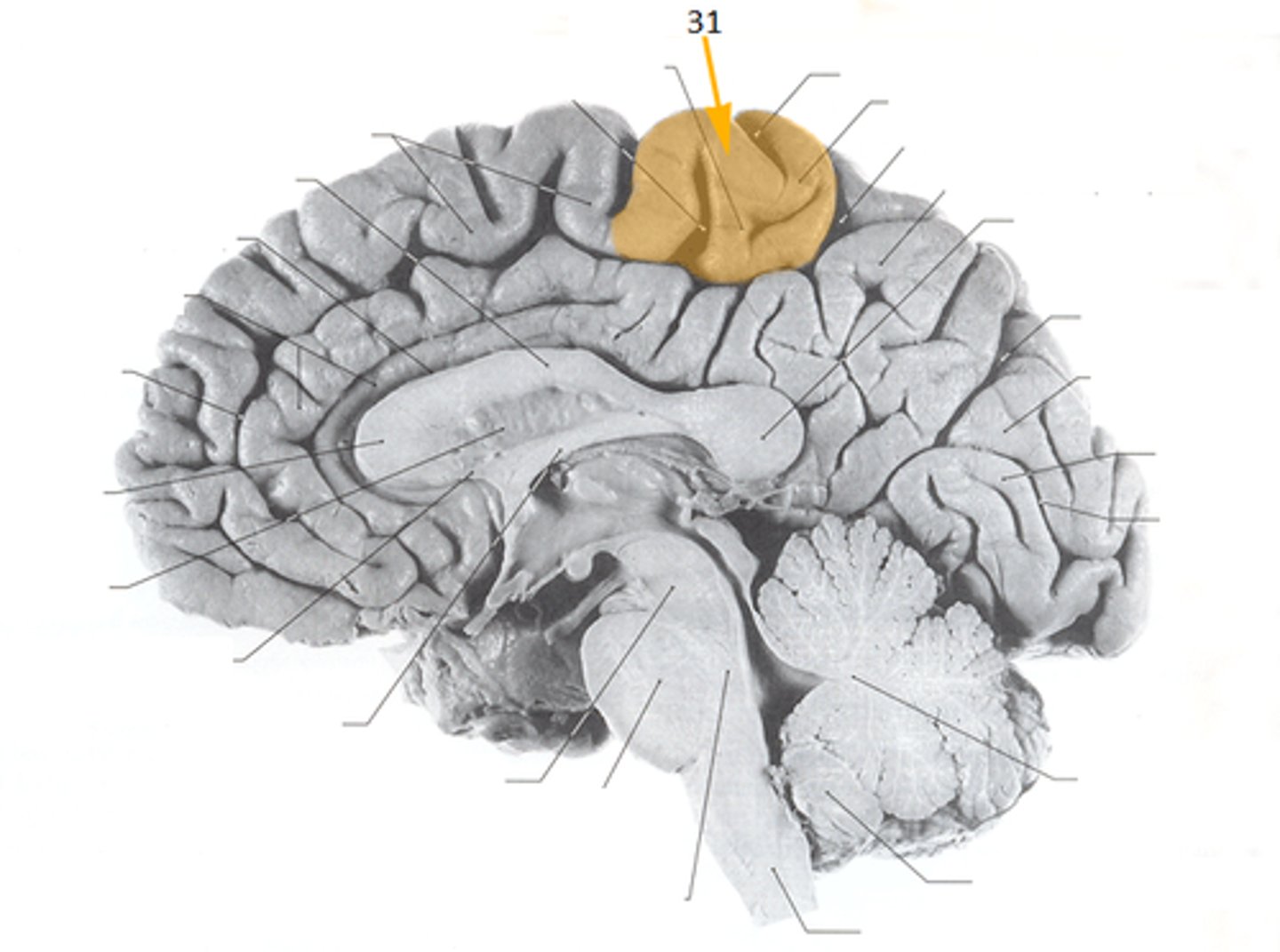
paracentral lobule
union of precentral and postcentral gyri of frontal and parietal lobes
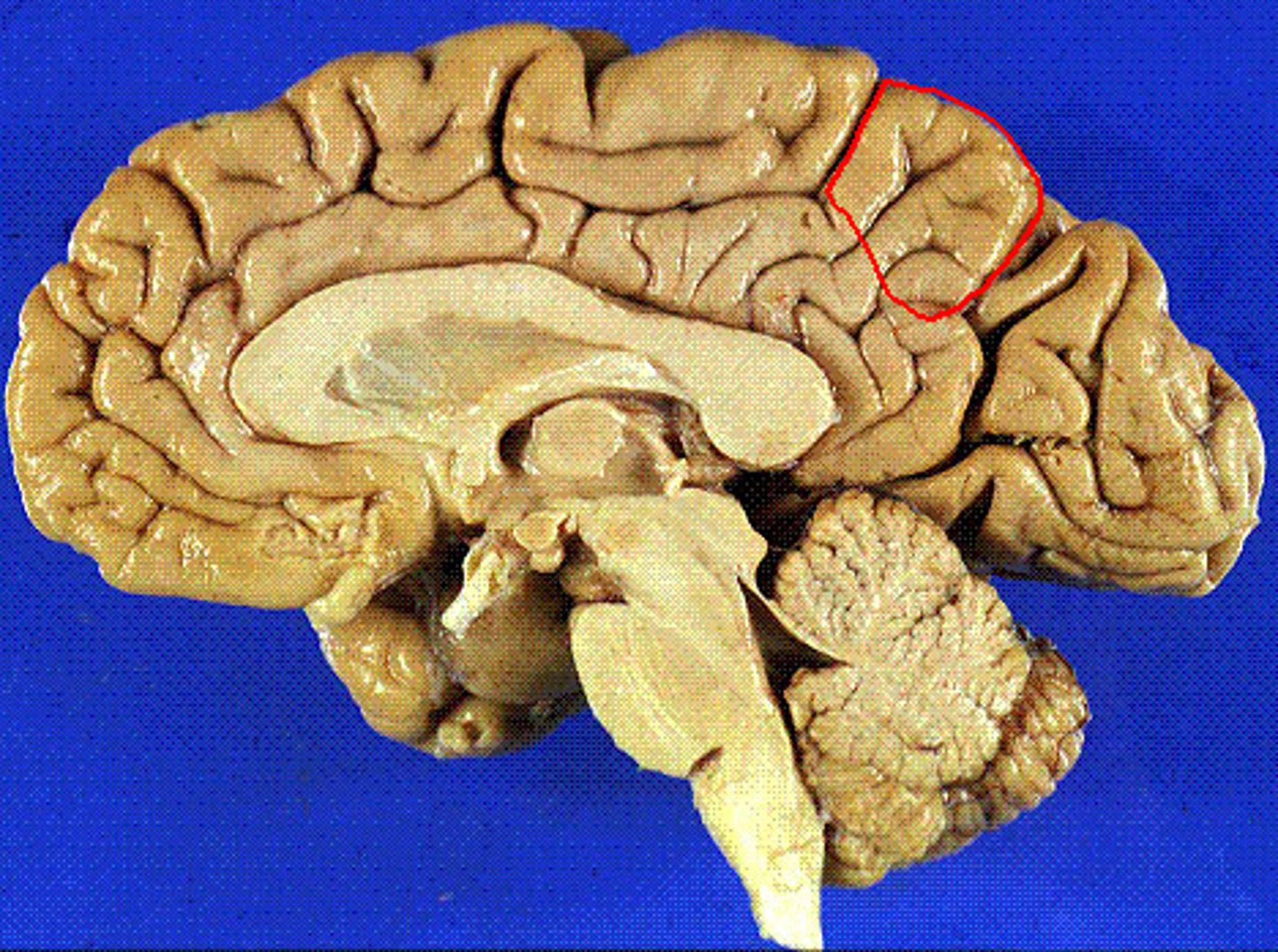
precuneus
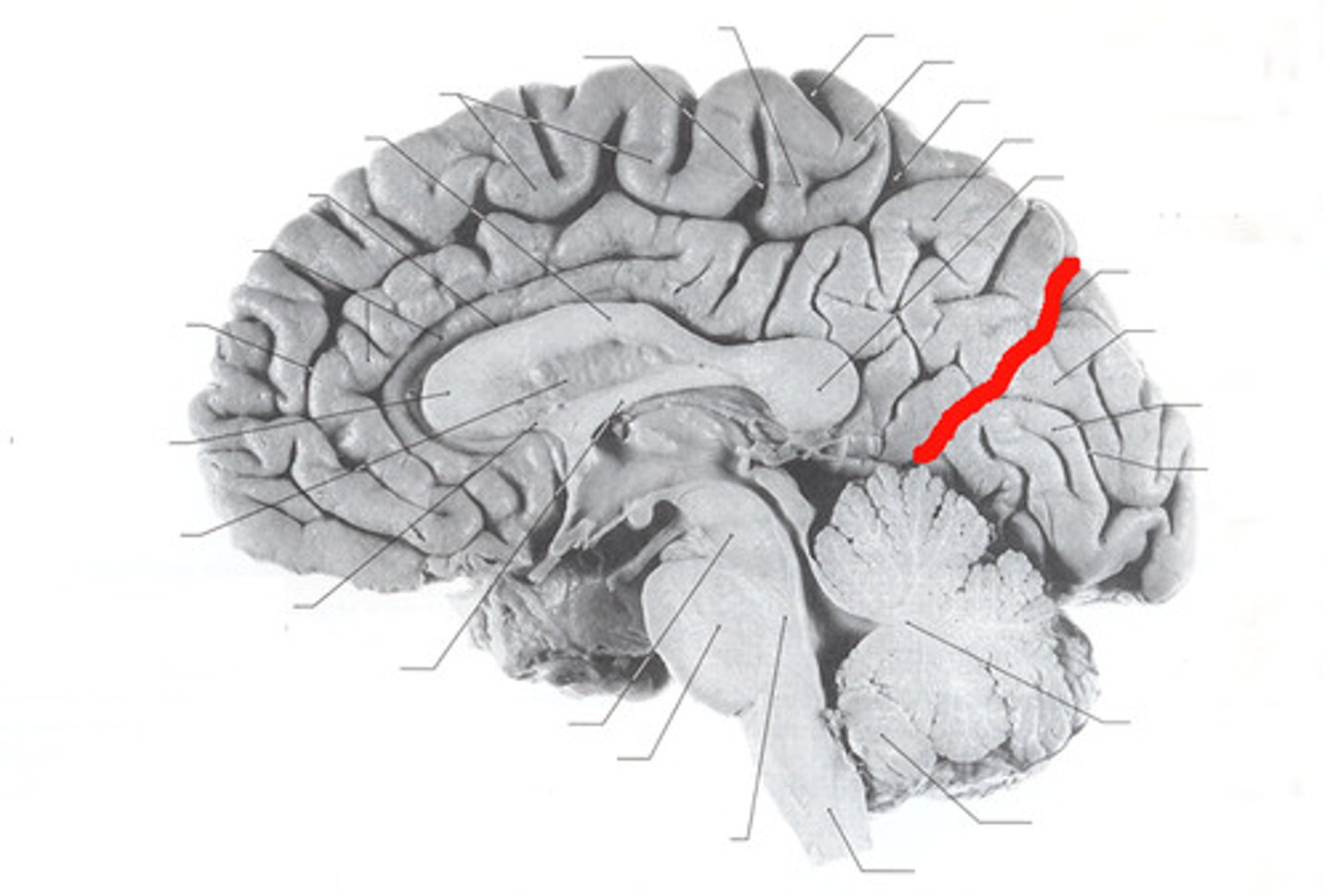
parieto-occipital sulcus
separates parietal and occipital lobes
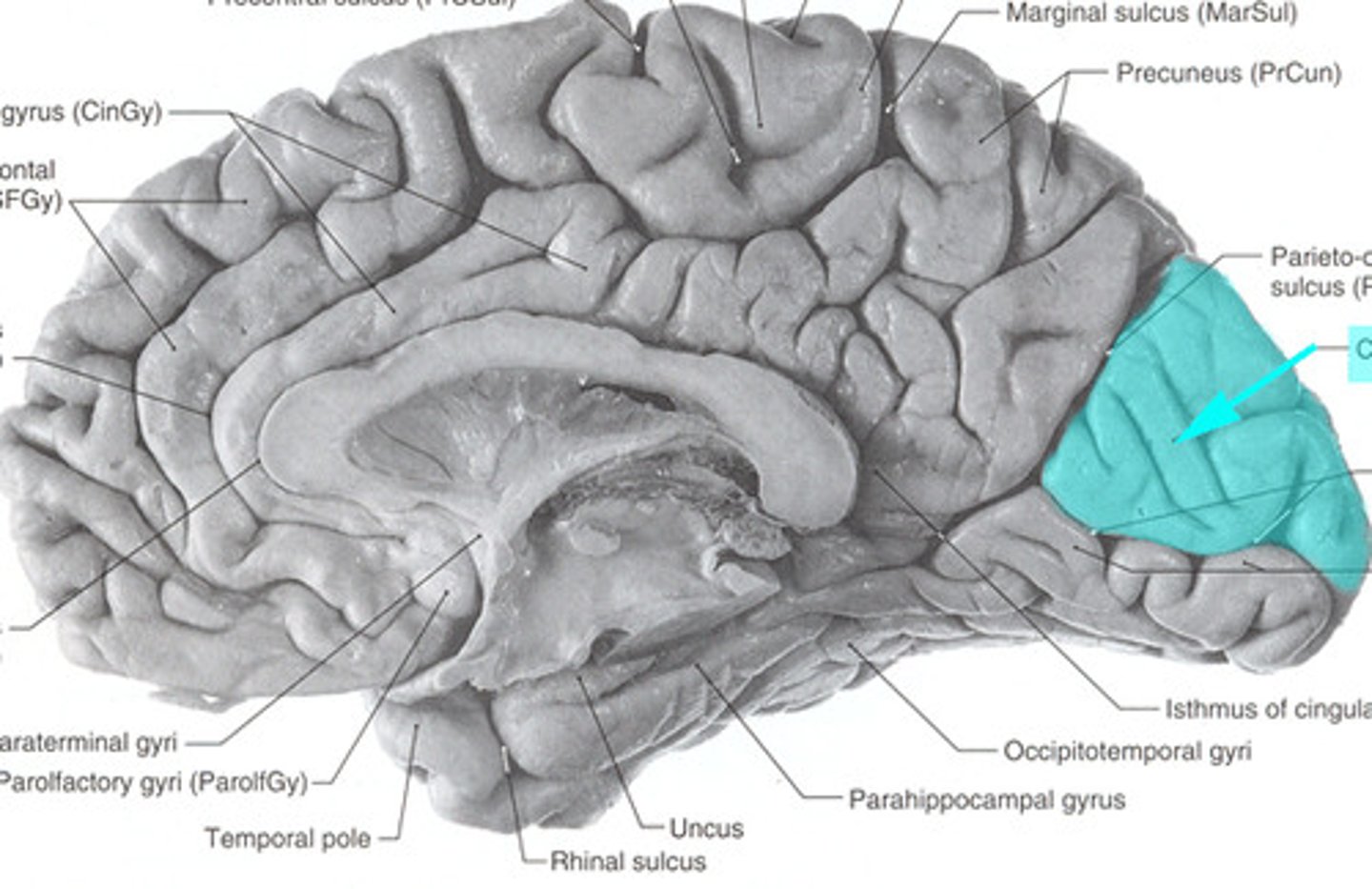
cuneus
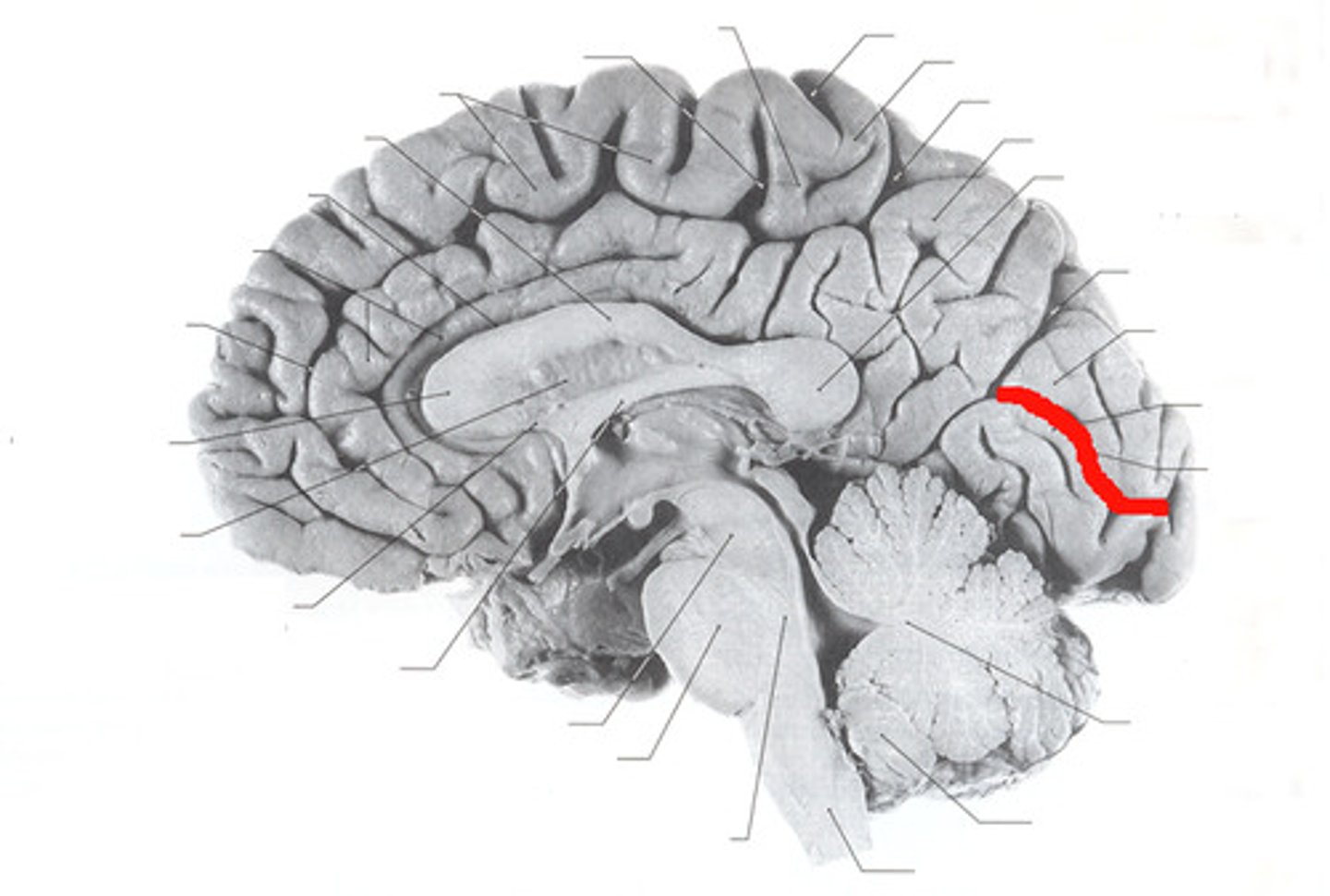
calcarine sulcus
separates the occipital lobe into superior and inferior halves
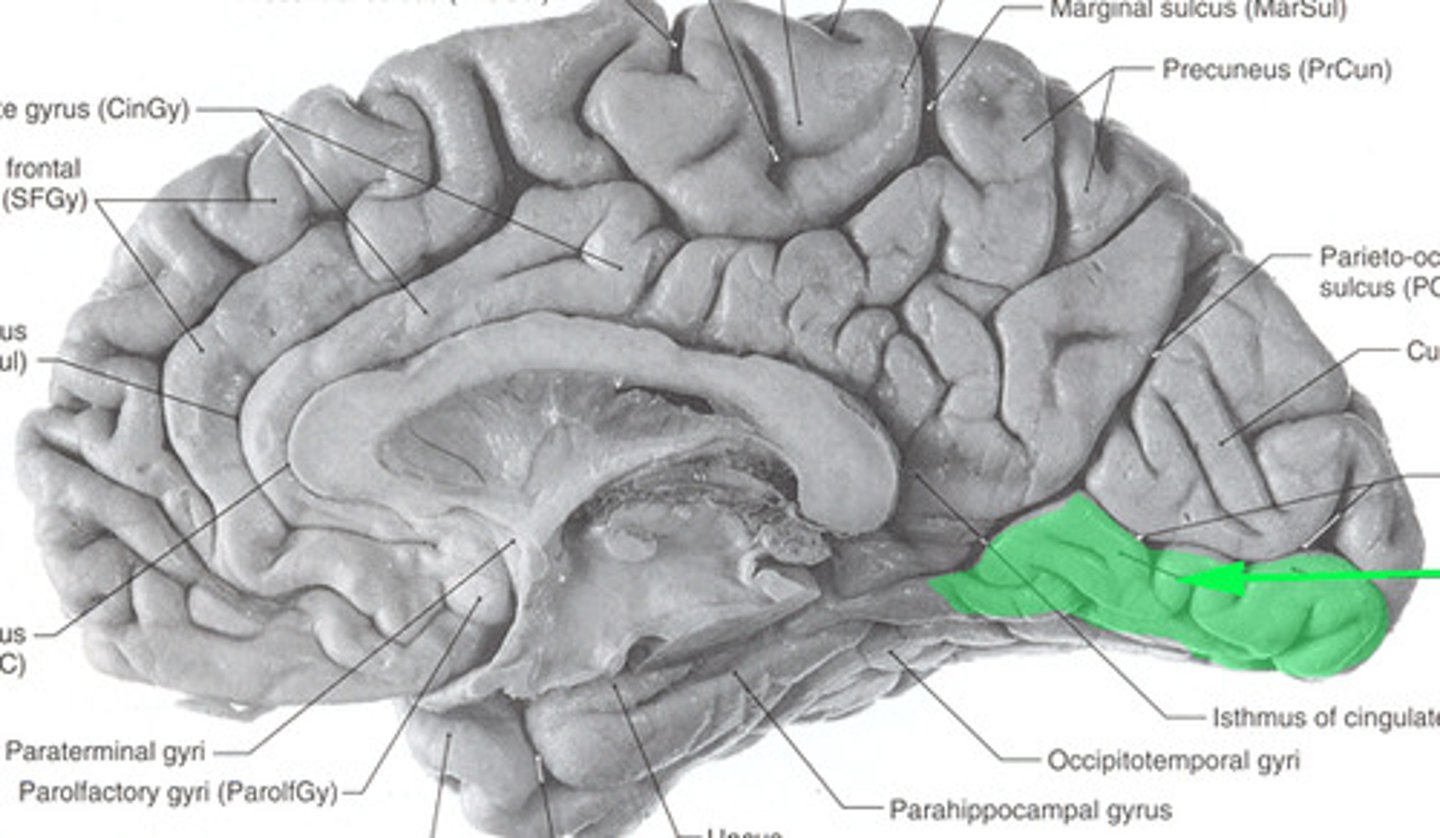
lingual gyrus
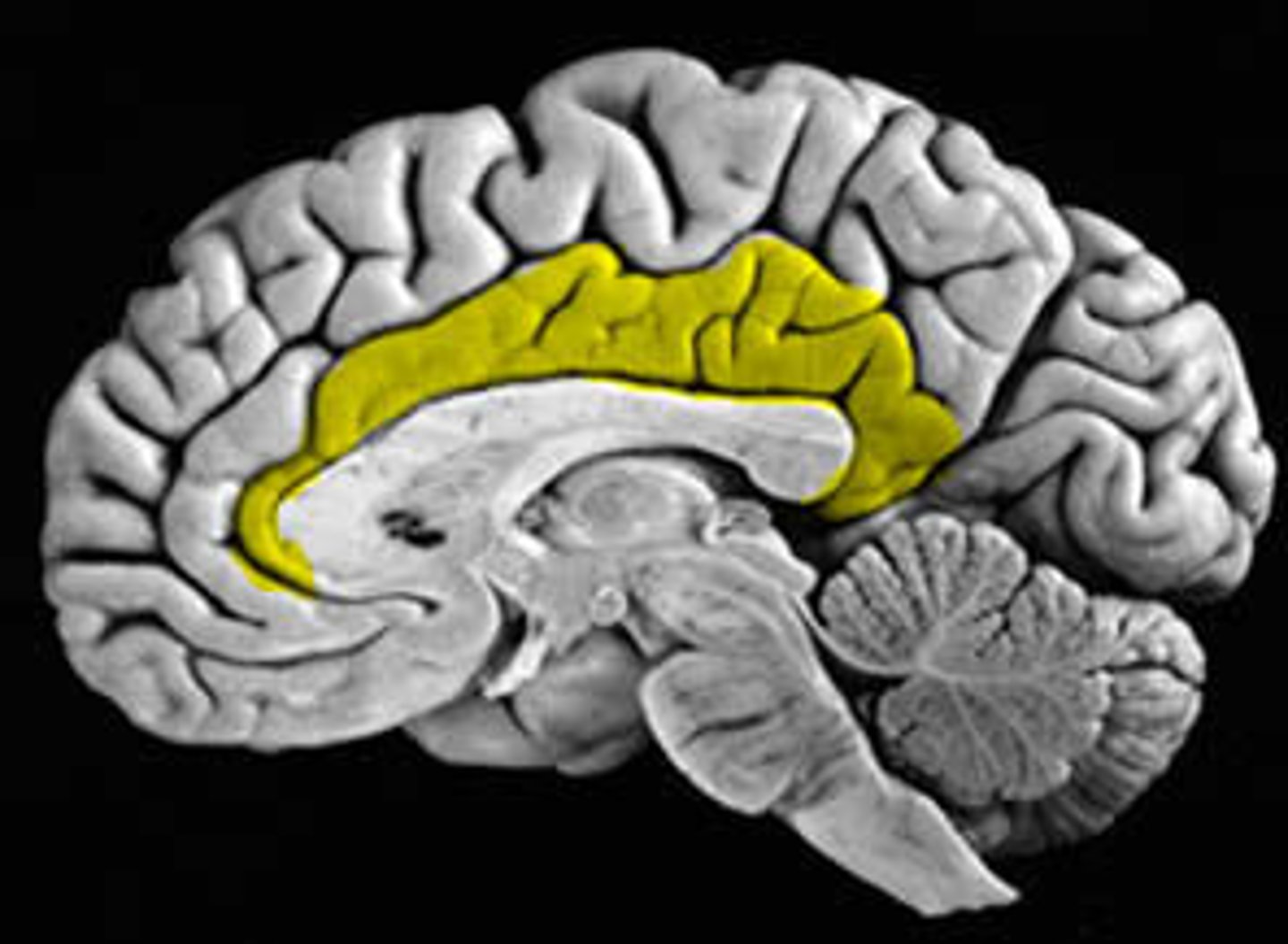
cingulate gyrus