Biology Module 4
 Call Kai
 Learn
Learn Practice Test
 Spaced Repetition
 Match
Match Flashcards
 Knowt Play
1/20

There's no tags or description
Looks like no tags are added yet.
Name | Mastery | Learn | Test | Matching | Spaced | Call with Kai |
|---|
No analytics yet
Send a link to your students to track their progress
21 Terms
define populations, communities, ecosystems
population: individuals of same species in a given area
community: population + population of other species
ecosystem: community + abiotic environment
what does size & health of environment indicate?
ecosystem’s condition
decline in population = change in ecosystem
what is impacted by seasonal changes?
seasons in northerm hemisphere (e.g. NA, Europe) are unpredictable, winter = harsh, spring = new organism growth
rapid increase each Spring breeding season
population declines each year due to predators, disease, old age
many die in winter every year
what do plants produce & why is it an issue? give an example
allelochemicals
released by plants & concentrate in soil
inhibit growth of other plants in the area & give the plant competitive advantage
e.g. eucalyptus & casuarinas show allelopathy → produce chemicals that inhibit growht & development of neighbouring plants
define predator & what they impact
organism which kills & eats another organism (prey) for sustenance
affects abundance of prey; prey needs to reproduce as fast as it is predated upon to maintain constant population size
give examples of how interspecies interaction limits population size
prey population size depends on food availability
high predator population causes prey numbers to drop
low prey population suppresses predator numbers
label the food pyramid & give examples
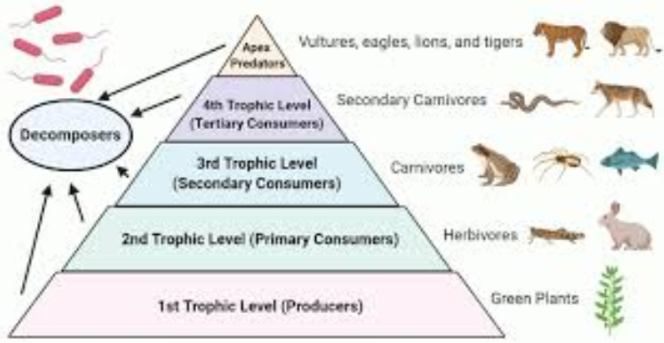
how do food chains transfer energy?
when animal eats plant, it uses energy stored in plant to form its own body cells
most energy lost in conversion from plant tissue to animal tissue
10% moves to next trophic level
90% lost via metabolism & waste
what are the 2 main subcategories for competition?
intraspecies: between members of same species
interspecies: between members of different species
what do plants compete for?
water: keep tissue rigid & supported, photosynthesis
light: for photosynthesis; make food using energy from sun
minerals & nutrients from soil: for plants to make chemical needed in cells
space: plants shed seeds far away so parent plant is not in competition with offspring
what do animals compete for?
resources (food & water)
mates
habitat
space & shelter (e.g. nesting sites)
what happens if an organism dies in competition?
move areas, adopt new strategies, become extinct/die
define symbiotic relationships
type of interaction where different species live together in close association
what are the 3 basic modes of symbiosis? give examples
parasitism (+ -): trophic relationship where parasite feeds on host’s tissue or food in host’s gut, parasite benefits but host may be harmed (e.g. ticks, fleas on rats)
mutualism (+ +): relationship occurs when 2 different species derive some benefit from coexisting together, neither can live without the other (e.g. sea anemones & clownfish → clownfish lures fish toward anemone & eats dead tentacles, keeping anemone & area around it clean while anemone’s poisonous tentacles provide protection from predator)
commensalism (+ 0): relationship where one organism benefits & other is neither benefited nor harmed (e.g. sharks & remora)
define ecological niche & what it encompasses
organism’s role within its ecosystem
encompasses its food source, habitat, physiology, behaviour
what happens when two species in the same ecosystem overlap niches?
results in interspecific competition
what does the competitive exclusion principle state?
two species cannot have identical niches in an ecosystem
competing species may coexist but cannot do so in a stable manner, eventually resulting in one species becoming locally extinct or adapting itself to different ecological niche
what do endangered species become threatened from? give an example
from inability to adapt to different ecological niches when competition arises
e.g. Australian koala (phascolarctos cinereus)
only east foliage from few eucalyptus trees
locally specific in diet (e.g. koalas in NSW forage on different eucalypts than koalas in Victoria)
ecosystems can only support limited number of koalas due to dietary preferences; thus species comes under threat when ecosystem becomes unbalanced (e.g. eucalypt forests cleared for development → koalas have fewer eucalypt trees → trees/koalas perish)
are populations dynamic & why do they respond to variation in environment?
dynamic & respond to variations in environment because it is influenced by abotioc & biotic factors
what are populations measured in?
size: number of individuals in population
density: number of individuals per unit area
growth rate: change in number of individuals per unit time
when is population size & distribution in space & time apparent?
when each population measurement is known