Comprehensive Guide to Joints: Types, Structures, and Movements in Human Anatomy
 Call Kai
 Learn
Learn Practice Test
 Spaced Repetition
 Match
Match Flashcards
 Knowt Play
1/26

There's no tags or description
Looks like no tags are added yet.
Name | Mastery | Learn | Test | Matching | Spaced | Call with Kai |
|---|
No analytics yet
Send a link to your students to track their progress
27 Terms
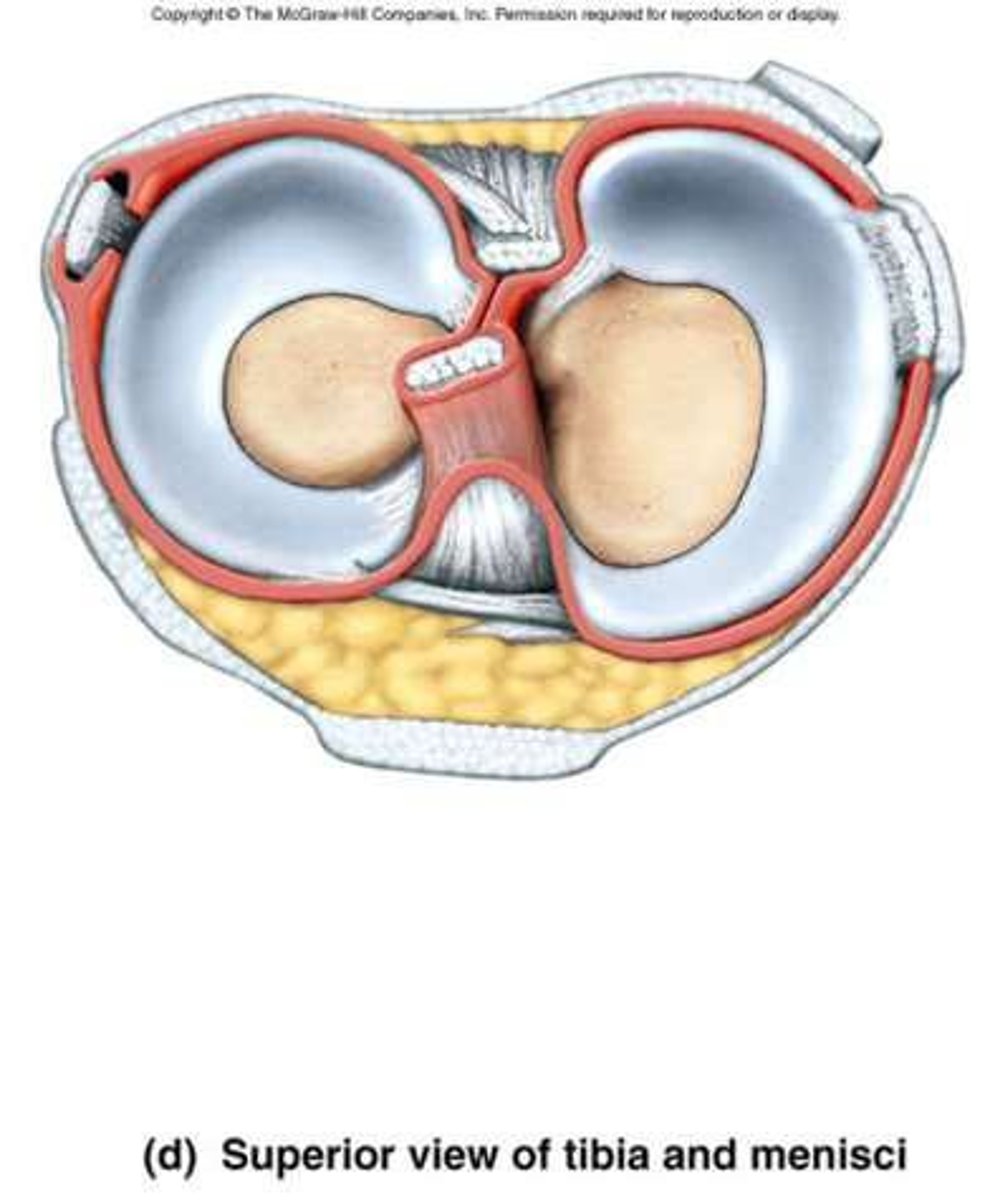
What is the function of menisci in the knee joint?
They absorb shock and help shape the joint.
What is the study of joints called?
Arthrology
What is the study of musculoskeletal movement called?
Kinesiology
How are joints named?
From the names of the bones involved.
Define a joint.
Any place where two bones come together.
What are the general functions of joints?
Hold the skeleton together and allow for increased mobility and flexibility.
How can joints be classified based on function?
Into synarthroses (no movement), amphiarthroses (partial movement), and diarthroses (freely movable).
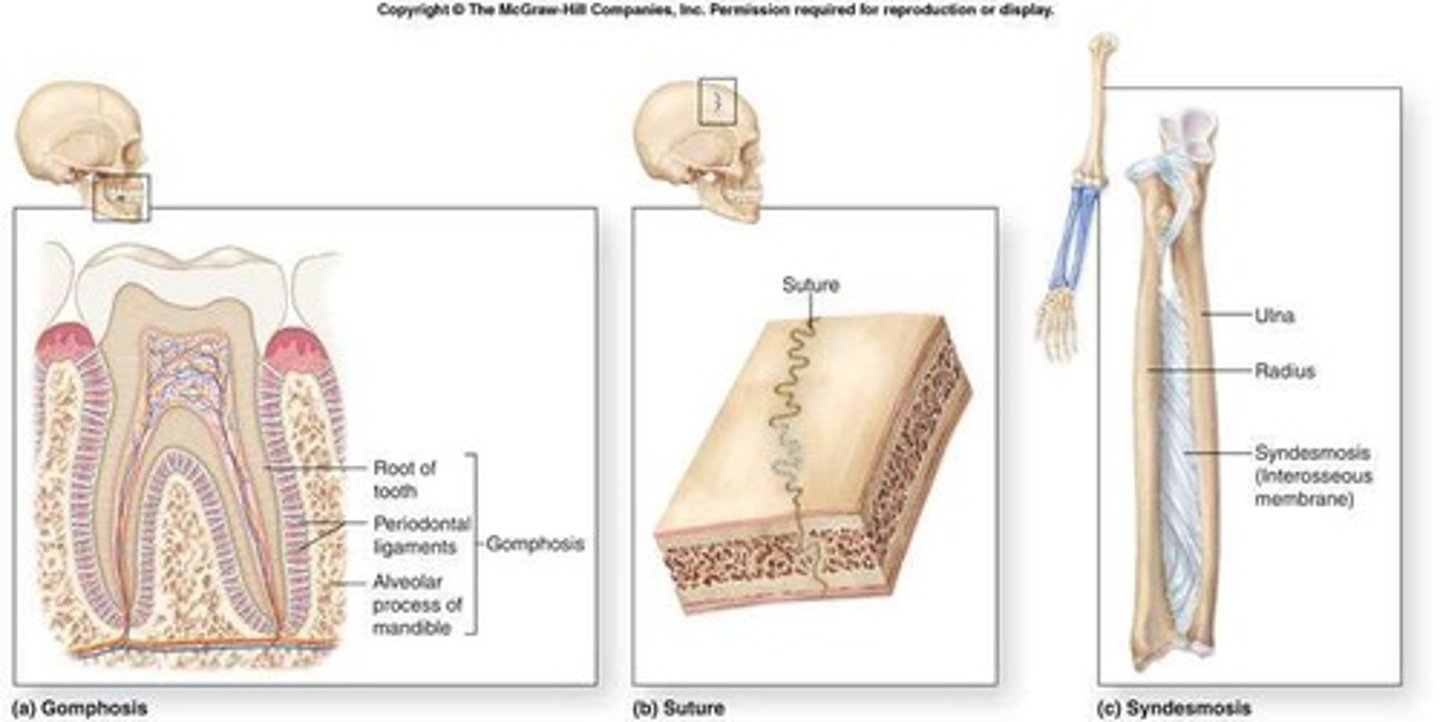
What are fibrous joints?
Joints where adjacent bones are joined by collagen fibers, classified as synarthroses.
What are the three types of fibrous joints?
Sutures, gomphoses, and syndesmoses.
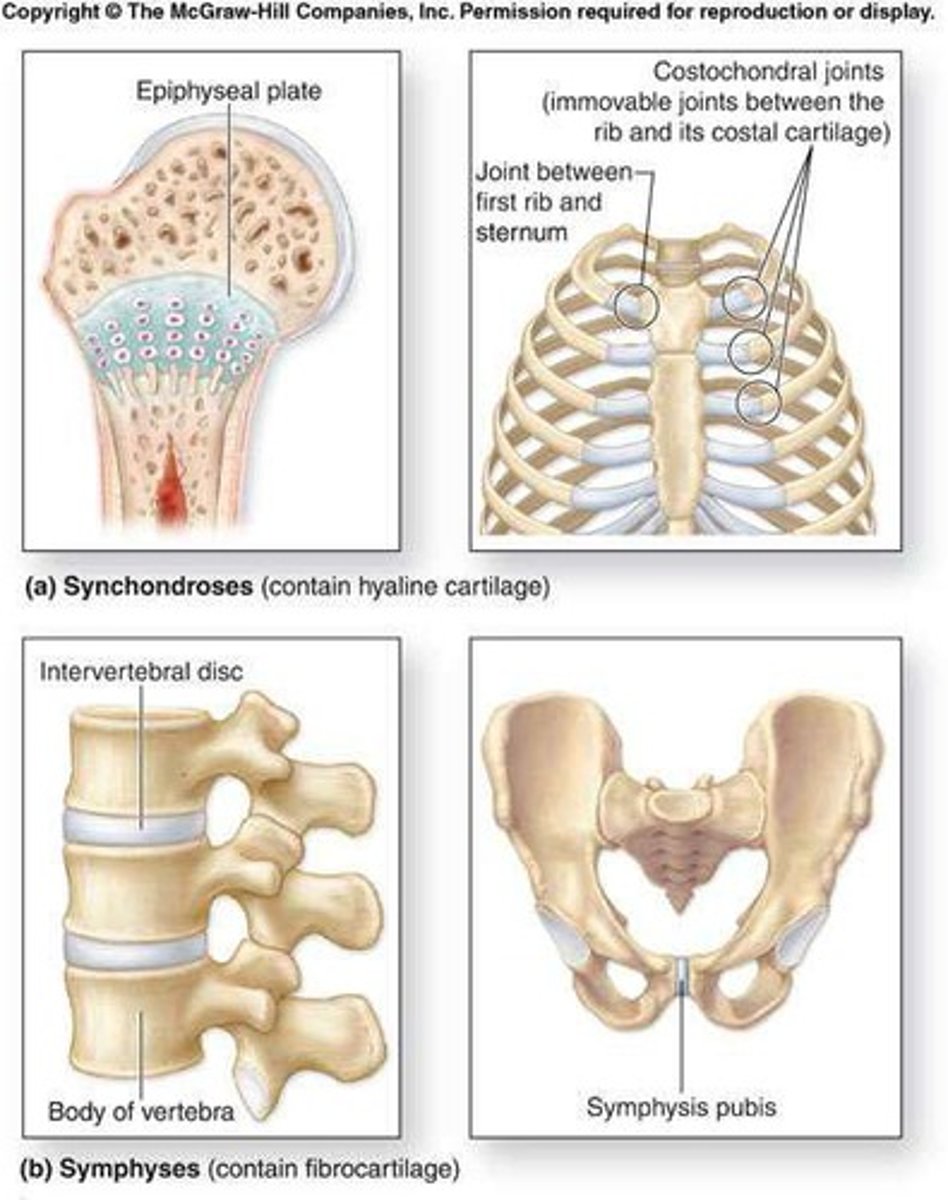
What are cartilaginous joints?
Joints where two bones are joined by cartilage, classified as amphiarthroses.
What are the two types of cartilaginous joints?
Synchondroses and symphyses.
What are synovial joints?
Freely movable joints and the most common type in the body.
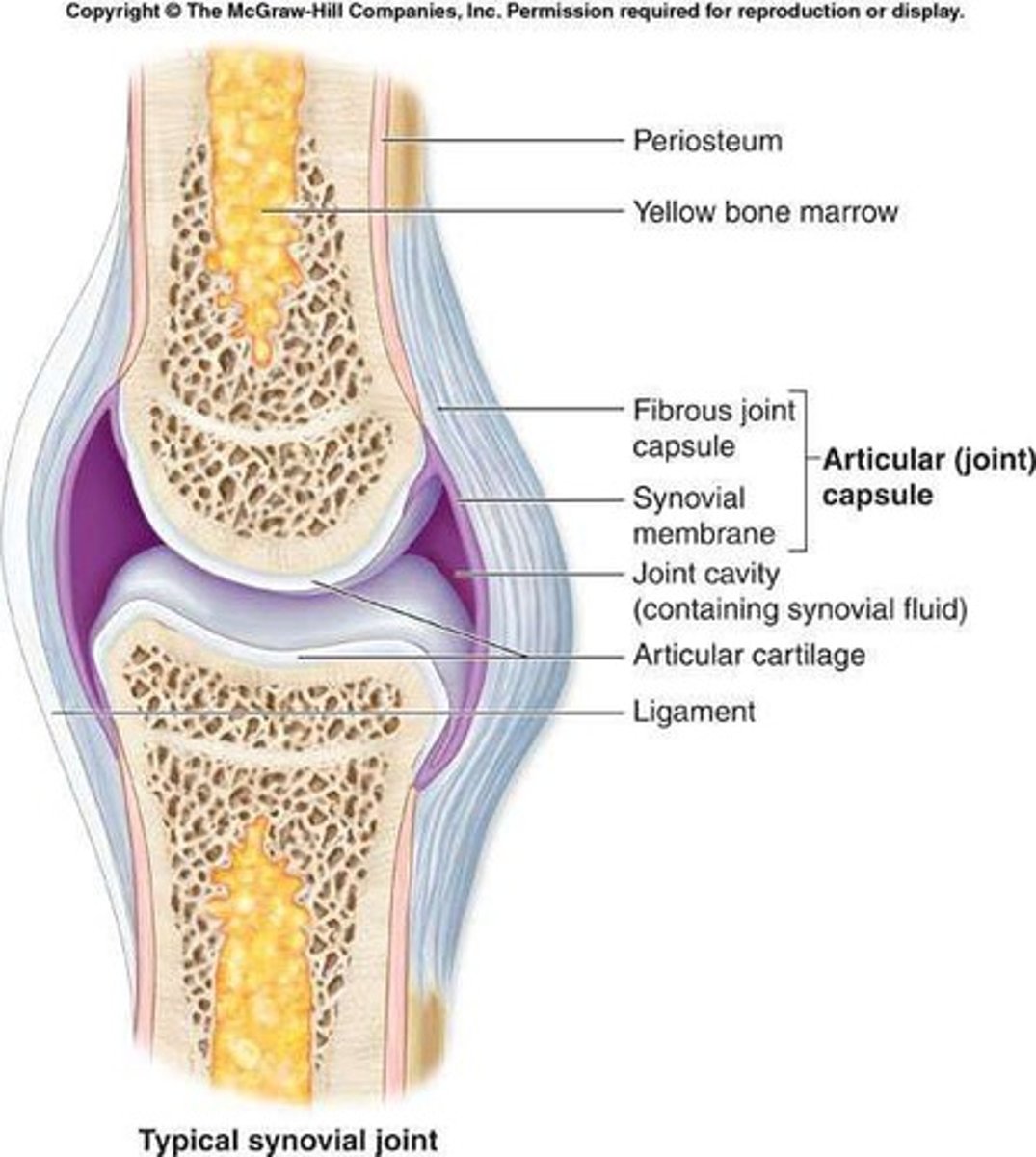
What is the main characteristic of synovial joints?
They have a joint cavity filled with synovial fluid.
Name a type of synovial joint.
Examples include hinge joints, ball and socket joints, and pivot joints.
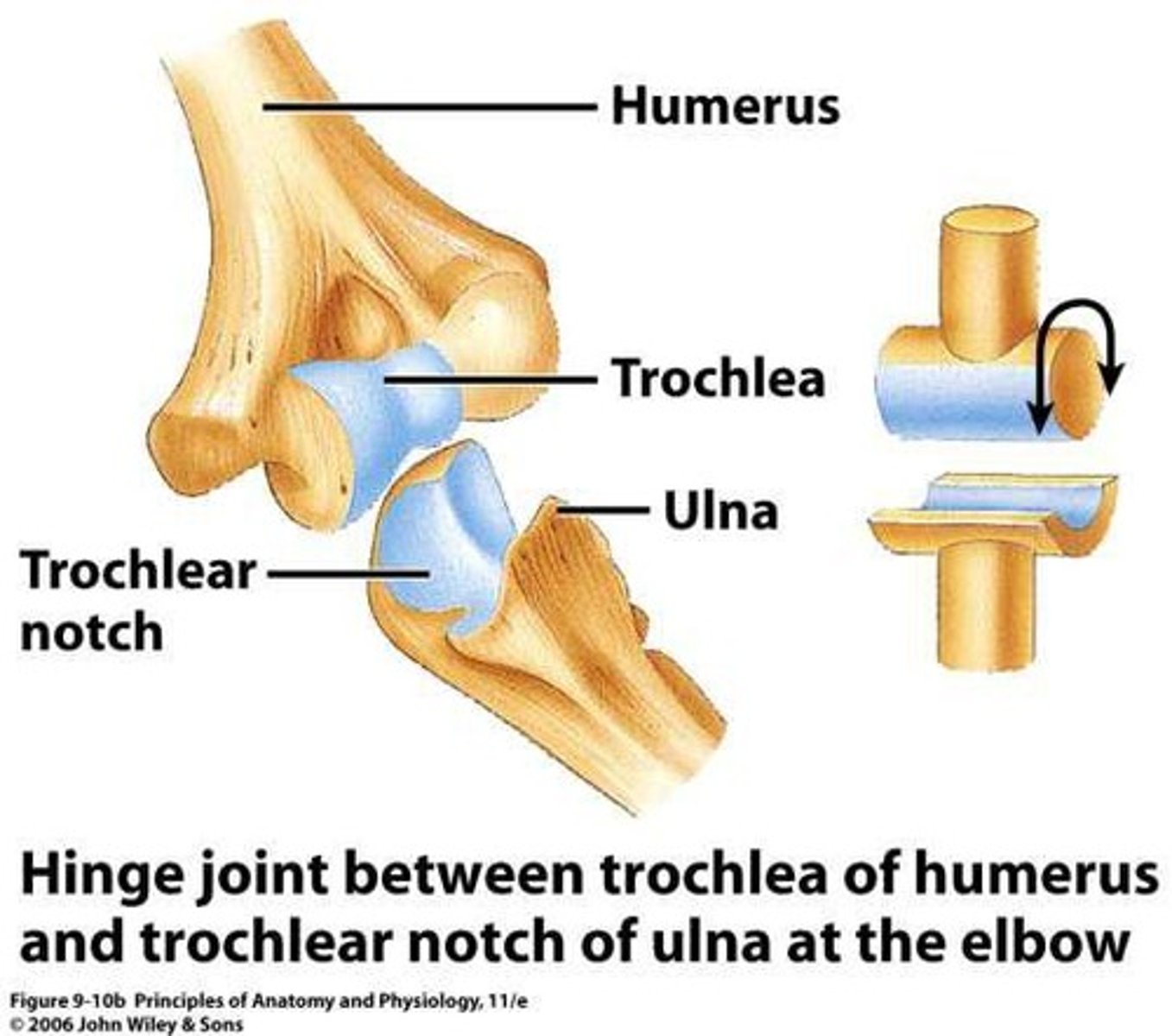
What is the role of ligaments in joints?
They join bones to bones and provide reinforcement and strength.
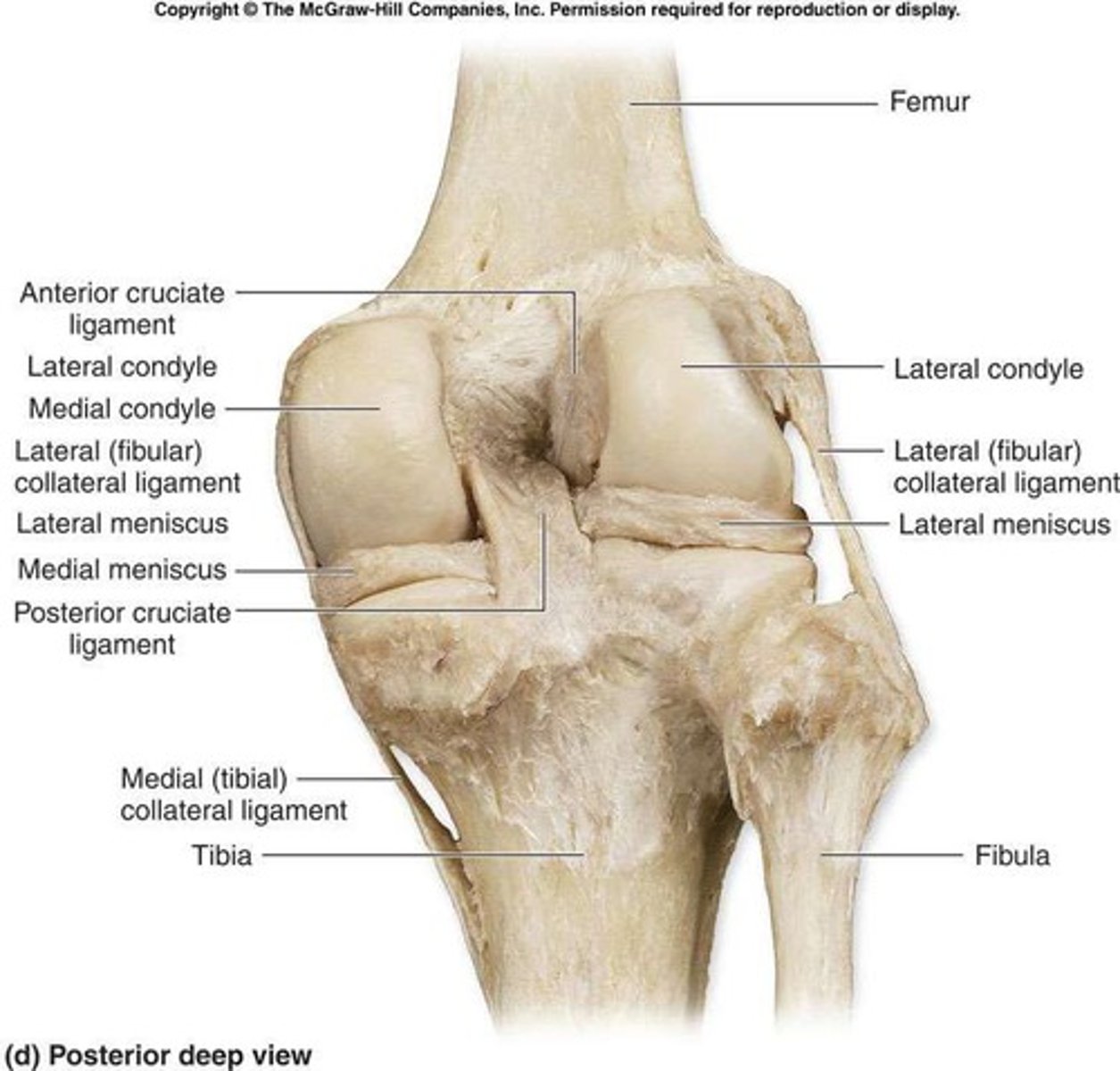
What is the function of bursae in joints?
They decrease friction during movement.
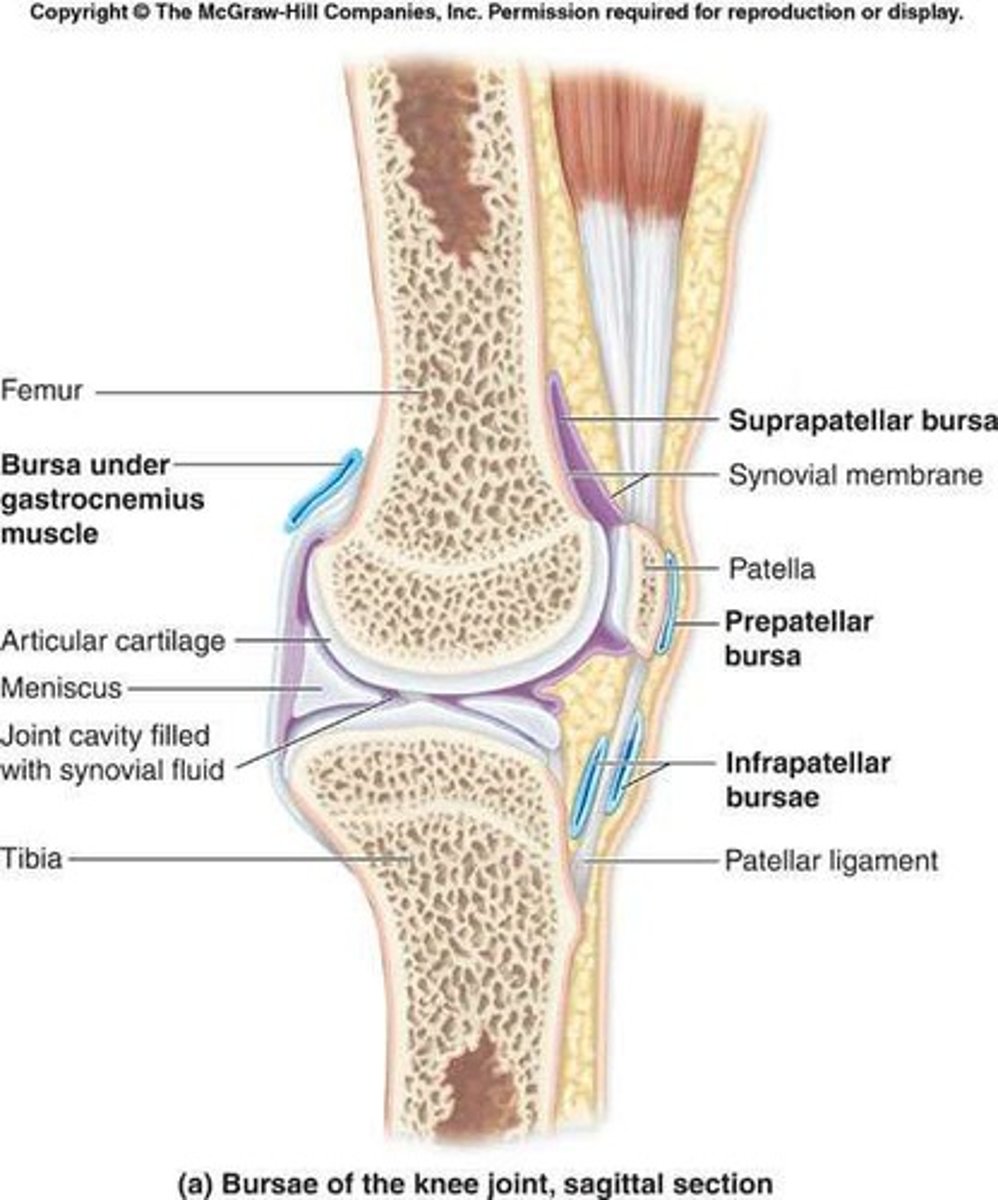
What is the role of synovial fluid?
It lubricates the joint and nourishes the cartilage.
What type of movement does a hinge joint allow?
Back and forth movement, like a door.
What is supination?
Rotation of the forearm so that the palm faces forward.
What is pronation?
Rotation of the forearm so that the palm faces to the rear.
What type of joint is the shoulder?
Ball and socket joint.
What is flexion?
A bending movement that decreases the angle between two body parts.
What is extension?
Movement that increases the angle between two body parts, opposite of flexion.
What does abduction refer to?
Moving a body part away from the longitudinal axis.
What does adduction refer to?
Moving a body part toward the longitudinal axis.
What is circumduction?
Movement of a limb in a circular motion, describing a cone.
What is the difference between inversion and eversion?
Inversion turns the sole of the foot medially, while eversion turns it laterally.