Passive Care - Exam 2
 Call Kai
 Learn
Learn Practice Test
 Spaced Repetition
 Match
Match Flashcards
 Knowt Play
1/160

There's no tags or description
Looks like no tags are added yet.
Name | Mastery | Learn | Test | Matching | Spaced | Call with Kai |
|---|
No analytics yet
Send a link to your students to track their progress
161 Terms
Ultrasound uses _____ at high frequencies (acoustical energy)
sound waves
Sound waves in an US are generated by
vibration of the crystal (quartz, lead zirconate, lead titanate, barium titanate)
What is the audible range that humans can hear
15-20,000Hz
The frequencies of US and their uses
1 MHz = deep
3.3 MHz = superficial
What are the two duty cycles used in US
continuous (100%) - tissue heating
pulsed (50% or 20%) - mechanical/non-thermal effects
Piezoelectric effect
mechanical deformation of a crystal causes an electrical current to form
Reverse Piezoelectric effect (indirect)
alternating current is passed through a crystal
results in very fast contraction and expansion of crystal
vibration produces high frequency sound waves
US uses what type of piezoelectric effect
Reverse Piezoelectric effect (indirect)
Ultrasound beam characteristics
near field = treatment area/ Fresnel zone
far field = Franhofer zone
Spatial peak intensity (Isp)
peak/maximum intensity
Watts per cm2
Spatial average intensity (Isa)
average intensity
Isp x duty cycle
Quality of US machines
ERA = effective radiating area
BNR = bean nonuniformity ratio
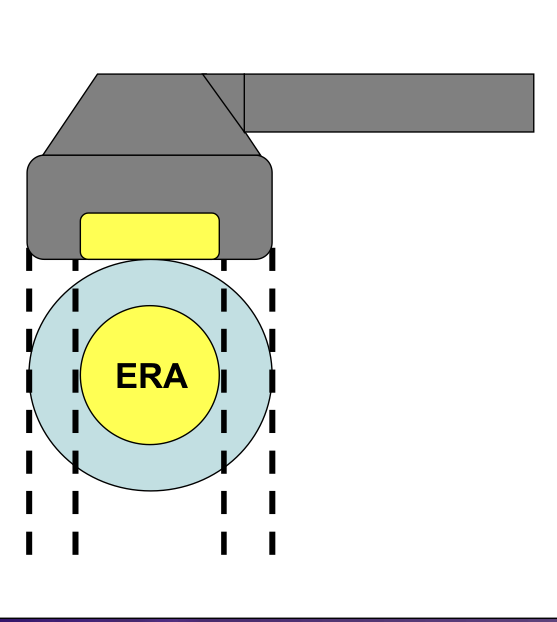
Effective radiating area (ERA)
area of sound head that produces sound energy
always smaller than the size of US head
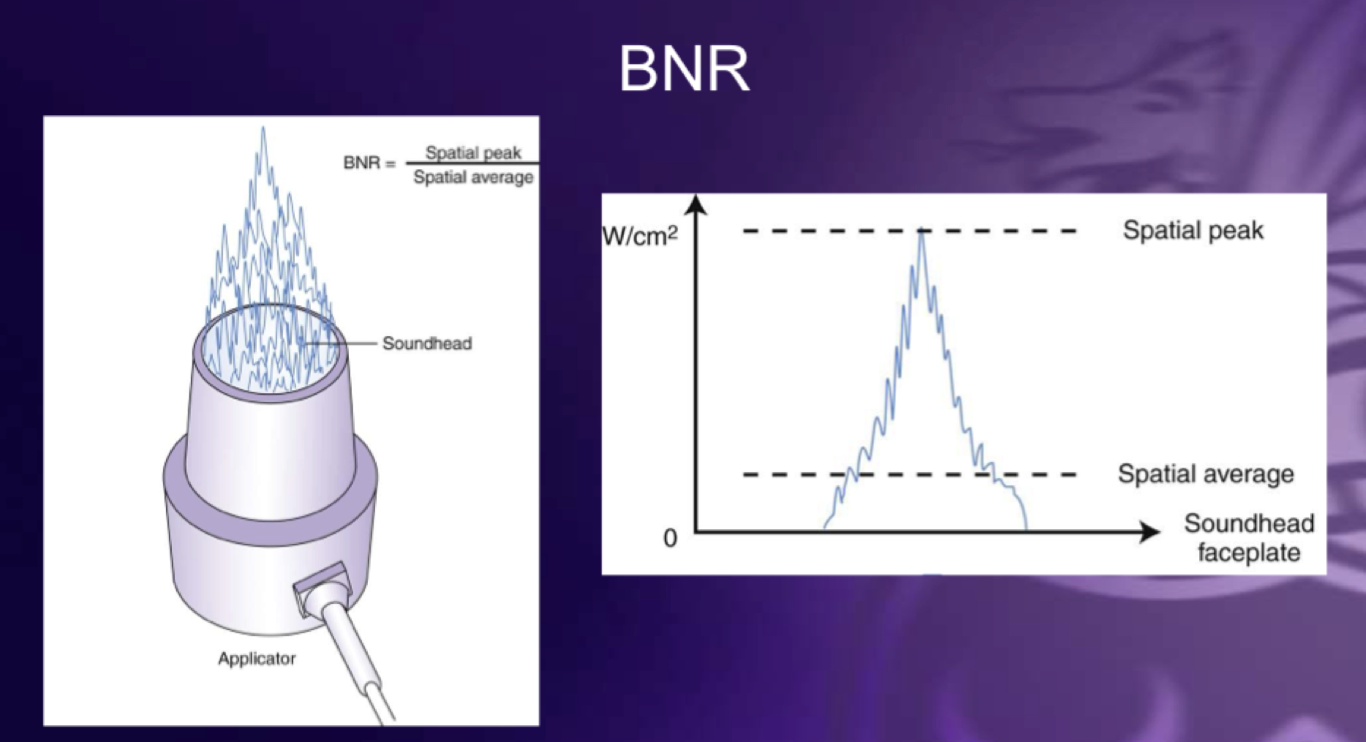
Beam nonuniformity ratio (BNR)
US beams are not uniform across the head
BNR = amount of variability of the beam
ratio btw peak intensity of beam / average intensity of beam
Ideal BNR is 1, but within the range of 2:1-8:1 is acceptable, however, the _____ the BNR the more uniform the intensity of the sound wave
lower
Why is a lower BNR better
eliminated hot spots
allows for higher dosage without discomfort
allows for greatest comfort and safety
____ is a poor conductor of ultrasound
air
Conducting media for US
coupling medium (gel) = prevents reflection of sound waves by air
keep sound head flat against skin
Underwater US
indirect ultrasound
plastic bucket
0.5-3.0 cm
wipe bubbles from skin and sound head occasionally during tx
More watts means more heating NOT
greater penetration
Absorption in tissue (US) - protein and higher density
higher absorption
Bone, tendon, cartilage, ligaments, and joint capsules absorb the _____ US waves
MOST
Skin and fat absorb the _____ US waves
LEAST
Scattering of US
when US wave encounters a boundary btw tissues, energy will scatter by reflection or refraction
Reflection
reversal of the direction of propagation of the US wave
low reflection in muscle, fat, water
high reflection in soft tissue-bone interface (inc. heating/dose)
Refraction
change of US wave from a straight path when passing obliquely from one medium to another
bending of US energy within tissue can lead to concentrations of US at point of refraction (where tendon joins bone!!)
Tissue heating via US benefits
increase in metabolic activity → increases oxygen demand → increase blood flow
1 deg C increase in temperature via US is associated with
an increase in metabolic activity
2-3 deg C increase in temperature via US is associated with
reduction in muscle spasm
increase blood flow
reduction of chronic inflammation
4 deg C increase in temperature via US alters
viscoelastic properties of collagen (stretchiness)
____ treatment times are needed when lower intensities are used
longer
Therapeutic effects of US
increase extensibility of collagen fibers of tendons and joint capsules
increase blood flow
increase cell metabolism
increase collagen synthesis
decrease joint stiffness
decrease muscle spasm
enhanced tendon, ligament, muscle healing
Thermal effect of US is only temporary, so any tissue manipulation or stretching should be performed
immediately after US treatment
Pulsed US effects (acoustical streaming/nano motions + stable cavitation)
stimulation of fibroblast activity
increase blood flow
increase protein associated w/injury repair
Acoustical streaming (nano motions)
movement of fluids along cell membranes due to mechanical pressure exerted by sound waves
movement in direction of sound waves
facilitates fluid movement + increases cell membrane permeability
Cavitation
Stable - rhythmic expansion and contraction of bubbles during repeated pressure changes
facilitates fluid movement and membrane transport
Unstable - collapse of gas bubbles which may cause tissue damage
associated w/low frequency high intensity US
Contraindications to US
malignancy, hemorrhage, ischemia, thrombus, infection
gonads, eye, pregnant women’s abdomen
spinal cord after laminectomy
plastic, cemented, electronic implants
unknown etiology
Risks of US
bony prominences
epiphyseal plate
Treatment time of US
generally 5-8 minutes
can be as little as 1-2 minutes
NEVER more than 15 minutes
Phonophoresis/Sonophoresis
uses sound energy to drive medication into tissue
medication does not need to have a charge
US combo
used for - trigger points, epicondylitis, superficial pain areas, decrease adhesions
US head = treating electrode
Low intensity pulsed US (LIPUS)
stimulation of fracture healing
home units (self-adhesive applicators)
Diathermy
high frequency electromagnetic energy
generate heat in body tissues
shortwave and microwave generators
FCC regulated
What is the MC type of unit in diathermy
shortwave (27.12 MHz, 11 meter)
Microwave diathermy
2450 MHz
not as safe as shortwave
Thermal effects of diathermy
dipole rotation (water molecules rotate)
ionic oscillation (ions (Na, K, Cl) in solution oscillate)
kinetic energy of rotation produces thermal energy
Types of electrodes in diathermy
capacitor electrodes produce electrical field
induction electrodes produce magnetic field
Capacitive/Capacitance technique (plates, pads)
tissues are placed in an electric field
greatest absorption in tissues w/low electrolyte and water content (adipose)
knee, foot, hand, shoulder (low subquanteous fat areas)
thin patients
Inductive/Inductance technique (drum, cables, garment)
tissues are placed in an oscillating Magnetic field
great absorption in high electrolyte, high dipole (water) tissue (Muscle, tendon, joint)
patients with more subcutaneous fat/ obese patients
Arndt-Schultz law (dose vs response)
low dose (<500Hz) = stimulates
hIgh dose (>500Hz) = Inhibits
Grotthuss-Draper Law (absorption vs therapeutic effect)
distortion occurs the deeper the tissue (has to be absorbed to have an effect)
Inverse Square Law (dose vs divergence)
the further away the diathermy lamp is to the pt, the lower the dose (vice versa)
intensity vs distance
Cosine Law/ Lambert’s Cosine Law (angle of application)
reduced energy if angle is increased
(cosine of angle will tell how much get into tissue)
Interactions diathermy can have within tissues
transmission, refraction (tissue interface), absorption (effect tissue), reflection, scattering
Pulsed shortwave diathermy
common
heat vs no heat
heat = pain relief, wound management, joint contracture
Indications of shortwave diathermy
osteoarthritis
neck/back pain
ankle pain
dermal wounds
MSK pain
Contraindications of shortwave diathermy
loss of sensation
electronic or metal implants
jewelry, copper IUDs
over cancerous areas, hemorrhagic areas, ischemic areas
pregnant pts
testes, eyes, open growth plates in children
Risks for diathermy
operator should not be exposed for long periods
other pts near device (10ft distance)
other EPA devices (10ft distance)
mentally confused pts
Application of diathermy
test cold/warm sensation first
2-3cm layer of towels for spacing
advise pt to remain still
Visible light wavelengths
400-700nm
Principles of laser generation
adding energy to electrons causes them to move to a higher energy orbit (atom is in excited state)
if electron gives up energy it moves to a lower energy orbit (atom is in ground state)
Giving up energy (excited atoms release photon of light) and return to ground state is called
spontaneous emission
Production of a laser
1) pumping of active medium
2) population inversion
3) spontaneous emission
4) stimulated emission
5) amplification
Pumping of active medium
application of an external source of power to the lasing medium
causes population inversion
Population inversion
number of excited atoms outweighs the number at ground state
Stimulated emission
photon interacts with another excited atom releasing another photon
these have identical frequency, direction, phase
both photons continue to cause release as long as excited atoms are present
Amplification
photons travel back and forth in resonance chamber
reflect btw the reflective/semi-reflective mirrors at the ends of chamber
amplifies stimulated emissions triggering more and more identical photons
resonance chamber reaches max capacity to store photons
beam of laser light is emitted when amplification process is max
Photons escape the chamber of the laser through the
semi-reflective mirror
Coherence
same wavelength and all in phase
light is emitted in an organized fashion
Monochromatic
single color (same wavelength)
Collimation
photons move in parallel fashion and do NOT diverge
Wavelength - Longer (lower frequency) =
deeper penetration
Types of lasers
gas, solid, liquid, semiconductor (two layers of material in silicon matrix)
The layer interface in a semiconductor is
reflective
Laser is absorbed by
water, hemoglobin, melanin
As the concentration of melanin or hemoglobin increases, the depth of penetration of the light
decreases
The _______ of the light will determine the overall depth of penetration the photons will attain
wavelength
Types of lasers
Helium-Neon (HeNe) - semiconductor, short wavelength (superficial penetration)
Indium-Gallium-Aluminum-Phosphide (InGaAIP) - semiconductor
Gallium-Aluminum-Arsenide (GaAIAs) - semiconductor
Gallium-Arsenide (GaAs) - semiconductor, long wavelength (deeper penetration)
Gridding technique of laser application
cover each square cm of the treatment area
Scanning technique (non-contact) of laser application
hold laser 5-10mm from skin
energy level decreases w/distance (have to alter intensity)
Scanning technique (contact) of laser application
move laser emitter while in contact (like US)
Photobiomodulation (photochemical effects)
effect is from absorption of photons of light by cells
pain management, tendinopathy management, wound management
Photobiostimulation
lower doses of laser
Photoinhibition
higher doses of laser
Chromophores
molecules which accept energy from photons
Cytochromes (respiratory chain enzymes)
in mitochondria
sensitive to light photons
absorption of photons trigger biochemical reactions
1*, 2*, and 3* effects of photobiostimulation
1* - due to direct interaction of photons w/cytochromes
2* - in same cell in which photons produced primary effects (cell proliferation, protein synthesis)
3* - indirect responses of distant cells to changes in other cells that have interacted directly w/photons (least predictable)
Primary, secondary, and tertiary events of photostimulation summate to produce
phototherapeutic activity
Indications of low level laser therapy
AID HEALING
inflammatory phase = decrease pain and inflammation
proliferation phase = enhance angiogenesis, formation of granular tissue, collagen synthesis
FDA classifications of low level lasers
Class 1 - exempt invisible lasers
Class 1M - wavelengths btw 302.5nm-4000nm
Class 2 - low power visible lasers
Class 3 - mod risk to retina (operator and pt must wear PPE for eyes)
Class 4 - high power cause damage to eyes, skin burns, fire hazard
Protective eyewear is recommended when using which lasers
ALL
Contraindications to low level lasers
cancer, over areas of active hemorrhage, over thyroid
pregnancy
direct exposure to eyes, open wounds
epileptic pts
Precautions for lasers
infection, testicles
sympathetic ganglia, vagus N, cardiac region (heart disease pt)
open growth plates, bruises, photosensitive skin
Laser dose (Joules2) depends on
output of laser in mWatts
number of diodes
time of exposure in seconds
beam surface of laser in cm2
Super pulsed laser
the frequency pulses (not wavelength)
pulses/bursts of energy w/higher peak power and less thermal effects
more directed energy delivered to target tissue
greater safety and enhanced clinical outcomes
Frequency is defined as the number of
impulses per second
Lower frequencies/Bio-stimulatory (smaller energy dose) benefits
repair and regeneration of tissue
immune response
anti-inflammatory effects
Acute injuries (first 48hrs)
stimulate healing (low dose) vs inhibit pain (high dose)
smaller and more frequent doses are better
tx time 3 min
Chronic injuries
stimulate healing (low dose) ONLY
larger doses are better
tx time 5-10 min
Ultraviolet therapy
treatment of dermatoses