Plant Disease Management: Fungicides, Resistance, and Application Strategies
 Call Kai
 Learn
Learn Practice Test
 Spaced Repetition
 Match
Match Flashcards
 Knowt Play
1/47

There's no tags or description
Looks like no tags are added yet.
Name | Mastery | Learn | Test | Matching | Spaced | Call with Kai | Chat |
|---|
No analytics yet
Send a link to your students to track their progress
48 Terms
Fungicide
A chemical substance that destroys or inhibits the growth of fungi.
Product name
Every fungicide has a product name or a trade name.
Active ingredient
The active component of a fungicide, and is that moiety which is patented, synthesized, and registered by the manufacturer.
Trade Name
Folicur®
Common name
Tebuconazole
Integrated management system
Ideally fungicides should be used as part of a larger Integrated management system.
Fungicide Label
By law, certain kinds of information must appear on a fungicide label.
Legal responsibility
People who use fungicides have the LEGAL responsibility to read, understand and follow the label directions.
Types of information on label
Includes hazards to humans and animals, environment, agricultural use requirements, storage and disposal, management - resistance, spray drift, spraying and mixing, tank mix compatibility.
Fungicide mobility
Fungicides have two types of mobility: contact and penetrant/systemic.
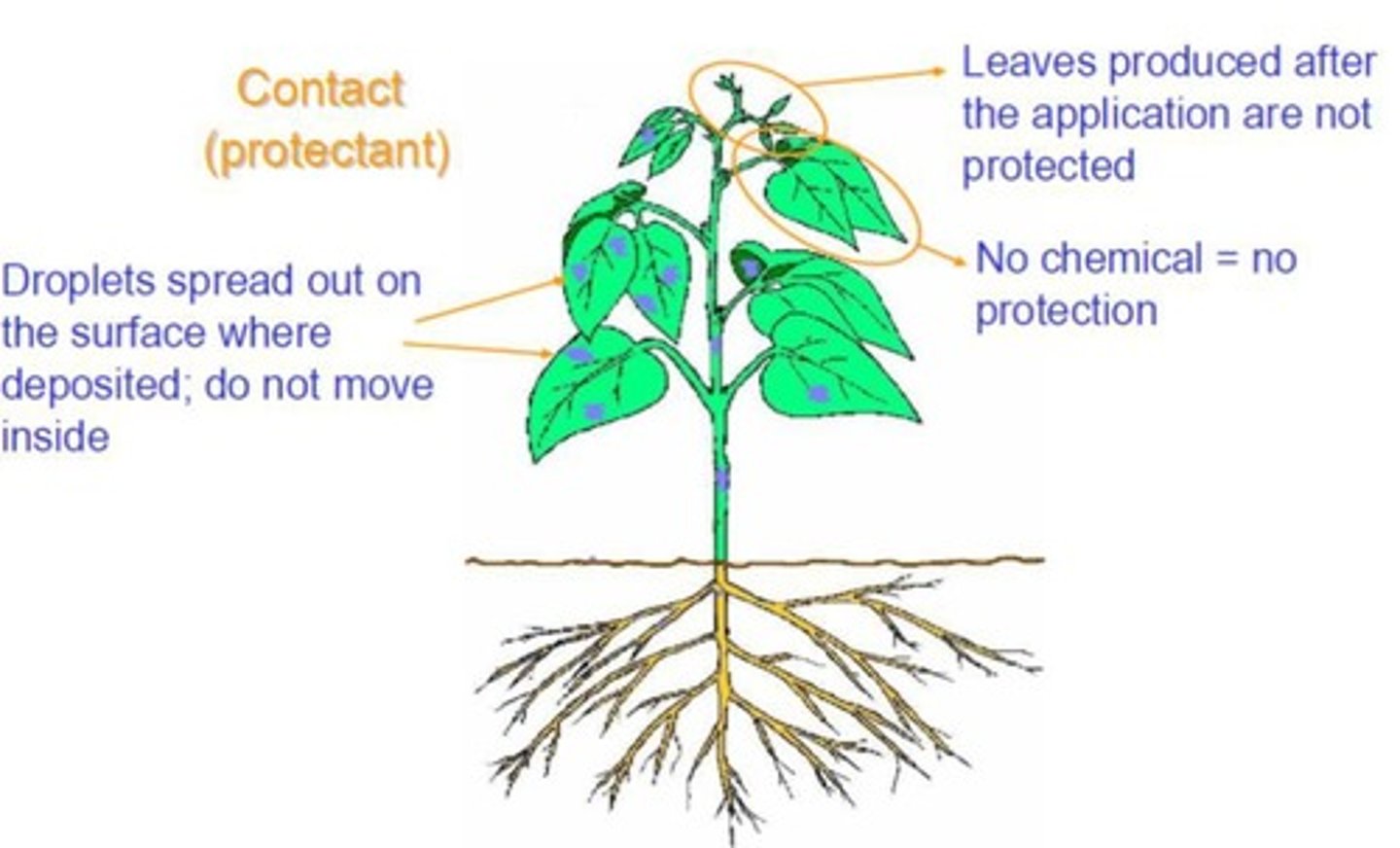
Contact fungicides
Applied to the surface of a plant and do not move into plant tissue.
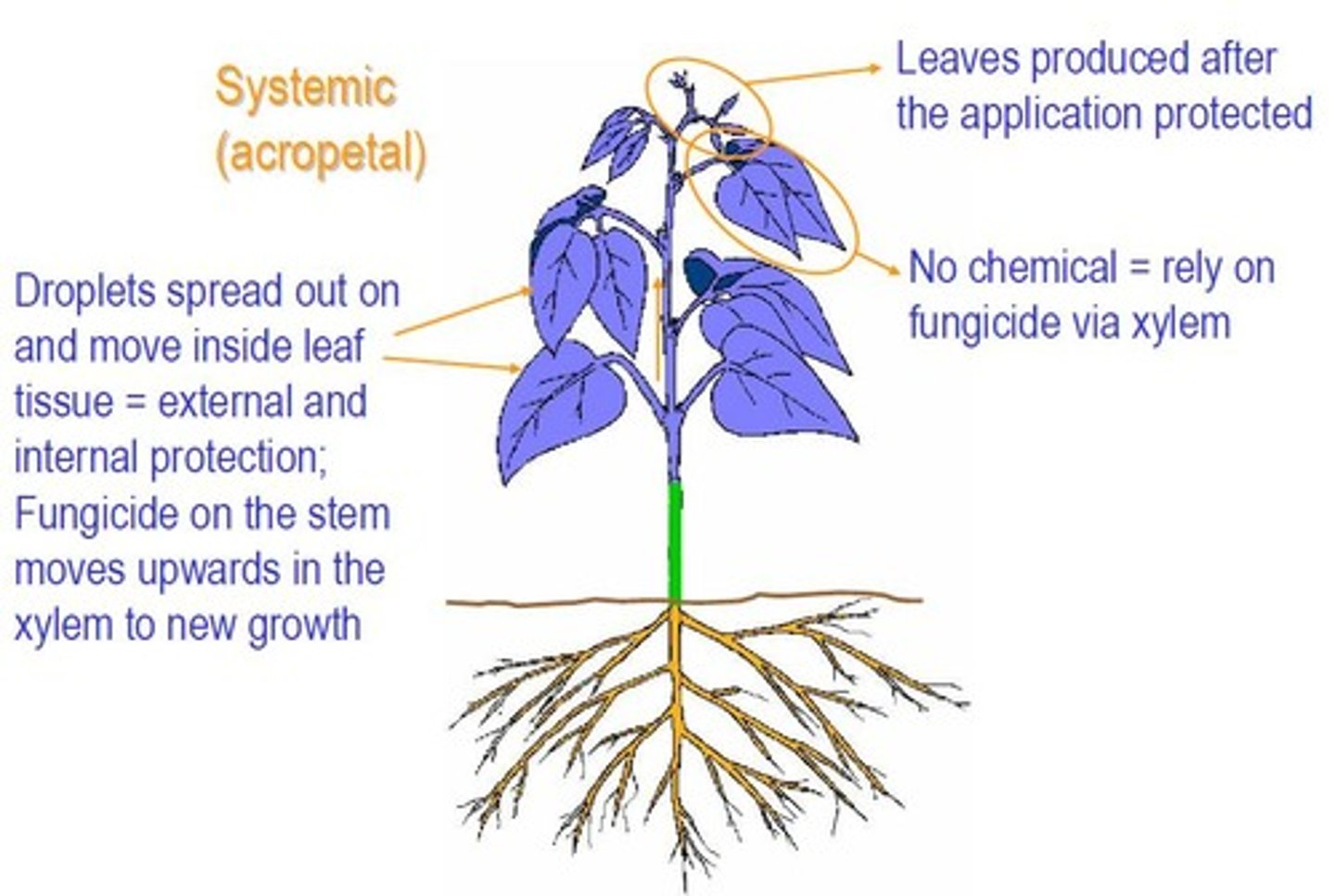
Penetrant/Systemic fungicides
Can move into plants after being applied to the surface.
Local penetrant fungicides
Move just short distances, such as into the waxy plant cuticle and remain in that location.
Translaminar penetrants
Can move through the cuticle between cells toward the opposite side of the leaf.
Acropetal penetrants
Are xylem-mobile and move between cells along a water potential gradient, moving only upwards in plants.
Systemic penetrants
Move through cells and follow sugar gradients in plants, allowing movement upward and downward.
Single-site fungicides
Active against only one point in one metabolic pathway in a pathogen or against a single critical enzyme or protein needed by the fungus.
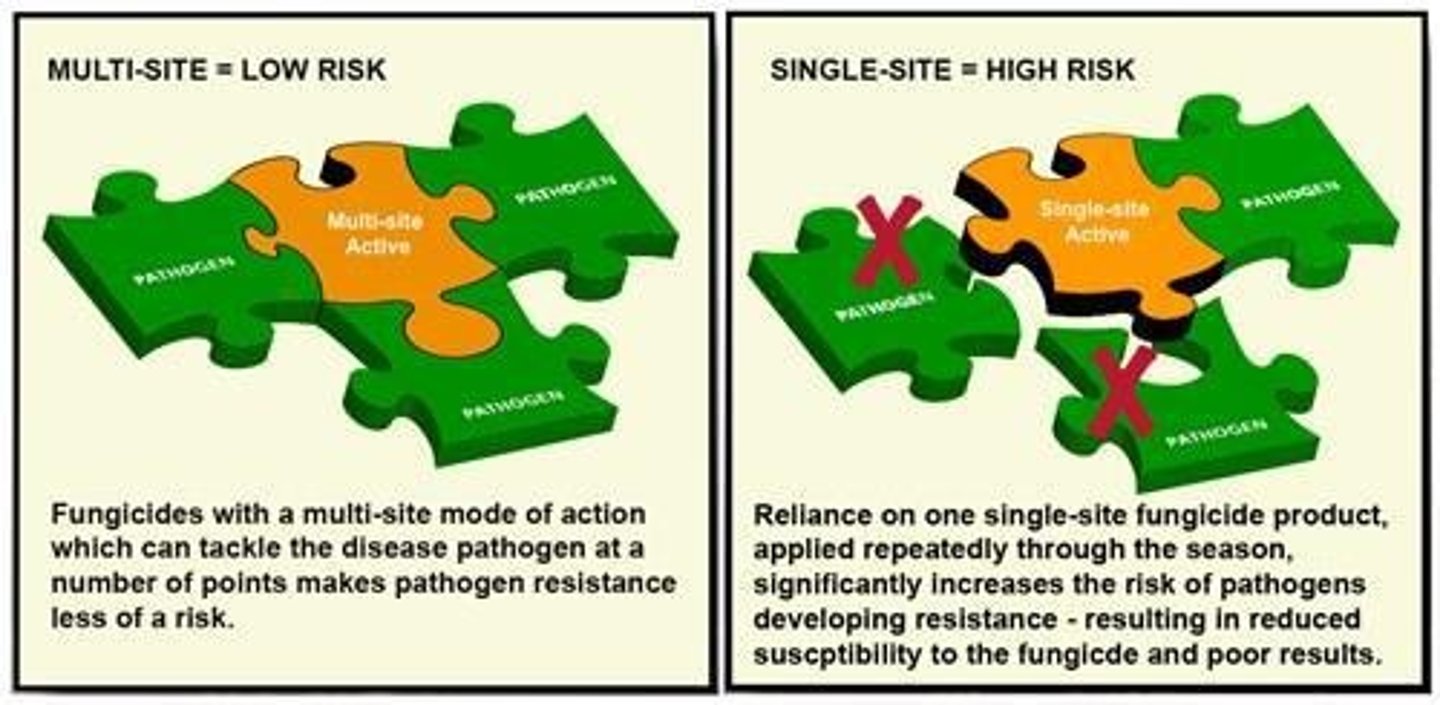
Multi-site fungicides
Affect more than one biochemical process within the pathogen.
Mode of Action (MOA)
Fungicides inhibit fungal growth by interfering with critical cellular processes.
Fungicide Resistance Action Committee (FRAC)
Currently lists at least 10 modes of action in fungicides.
Demethylation inhibitor (DMI)
A fungicide group that inhibits a specific enzyme in fungi that plays a role in sterol production.
Sterols
Necessary for the development of cell membrane in fungi.
Effects of DMIs
Results in abnormal fungal growth, repressed growth, and in some cases death.
DMI fungicides
Fungicides that result in abnormal fungal growth, repressed growth, and in some cases death.
QoI fungicides
Chemical compounds that act at the Quinol outer binding site of the cytochrome bc1 complex, inhibiting fungal mitochondrial respiration.
Fungicide resistance
Genetic mutations in fungi that result in resistance, occurring at low frequency and governed by one or multiple genes.
Qualitative resistance
Sudden loss of control resulting from a single mutation in one gene.
Quantitative resistance
Gradual reduction in control resulting from mutations in several genes that interact.
Cross resistance
When a pathogen resistant to one fungicide exhibits resistance to other fungicides in the same chemical class, even without exposure.
Multiple resistance
When a pathogen independently develops resistance to fungicides in different chemical classes.
Mode of reproduction
A factor influencing the ability of a fungal population to develop fungicide resistance.
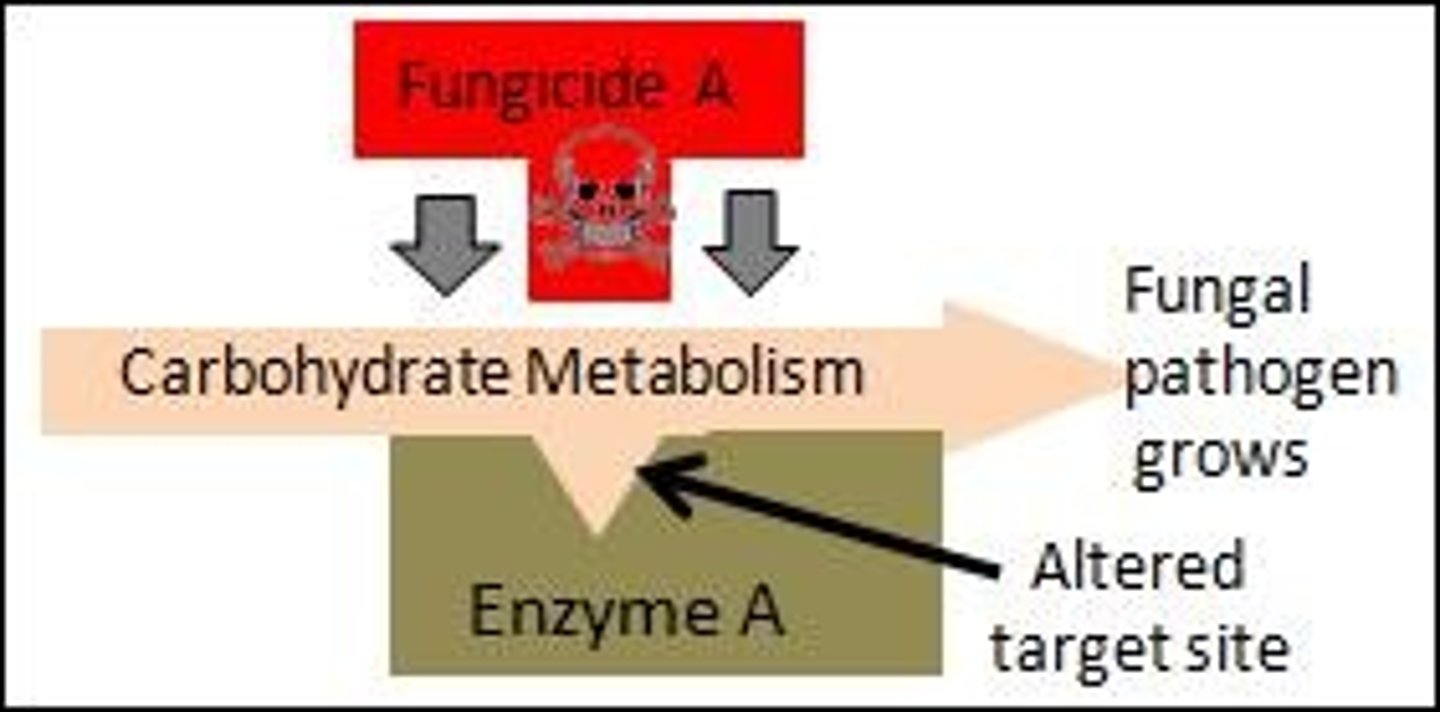
Altered target site
A mechanism of resistance where the target site is altered, preventing the fungicide from binding and exerting its toxic effect.
Overexpression of the target
A mechanism where increased production of the target site enzyme helps overcome the effect of fungicides.
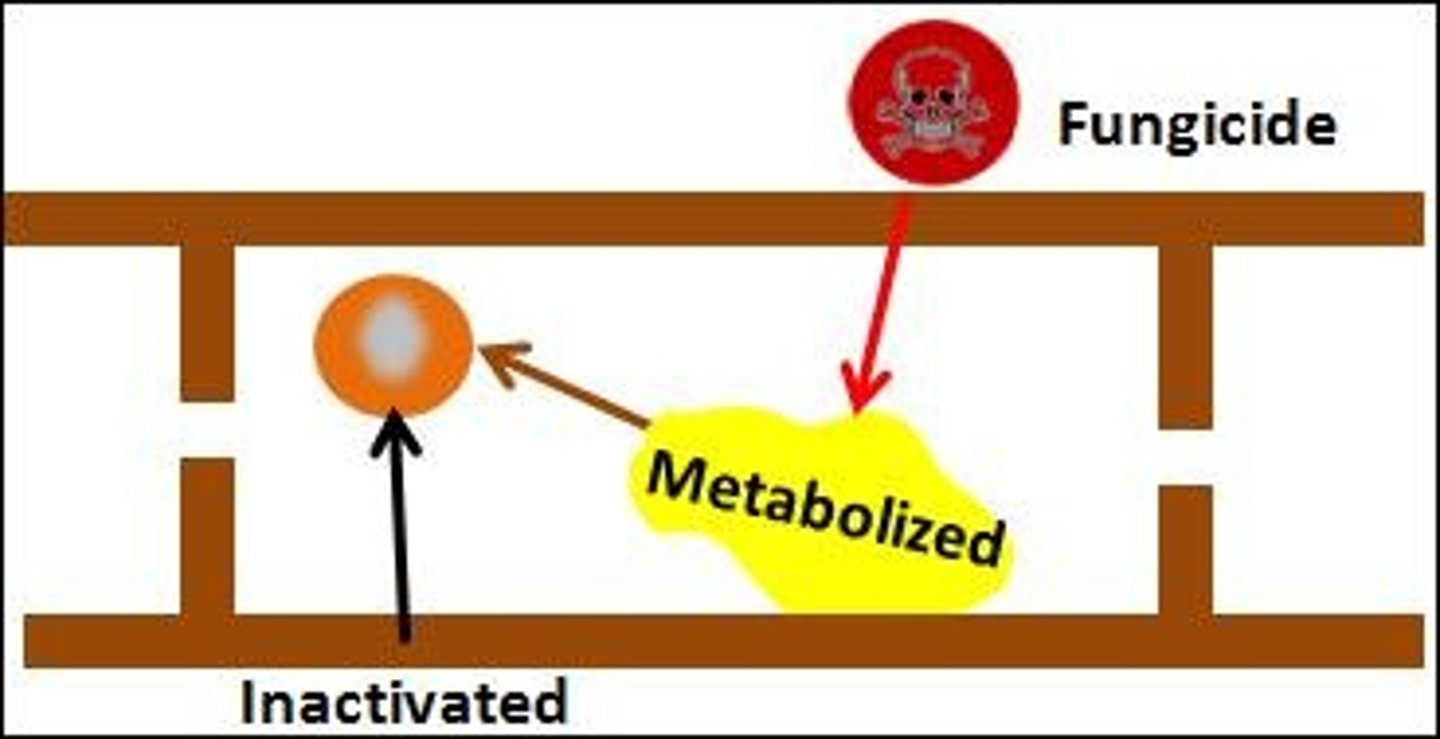
Detoxification or metabolism
A mechanism where a fungus degrades a fungicide quickly, inactivating it before it reaches its site of action.
Removal/exclusion from the target site
A mechanism where a fungal cell exports the fungicide rapidly before it can reach the target site.
Reduced uptake of fungicide
A mechanism where the resistant pathogen absorbs the fungicide much more slowly than the susceptible type.
Poor timing
Reasons for fungicide control failures include starting applications too late, long spray intervals, and missed sprays.
Spotty coverage
Reasons for control failures due to sprayer calibration issues or inadequate spray volume for canopy.
Wrong rate of fungicide
Using a rate too low for the disease, which can be avoided by reading the label.
Dense canopy
A factor that can contribute to fungicide control failures.
Wind during spraying
A condition that can negatively affect fungicide application.
Integrated disease management
A practice to reduce fungicide resistance development.
Disease-resistant varieties
Planting varieties that are resistant to diseases as a control measure.
Cultural controls
Practices such as good canopy management and sanitation to manage diseases.
Preventative applications
Applying fungicides before disease symptoms appear to prevent resistance.
Mixing fungicides
Combining fungicides with different modes of action to reduce resistance risk.
Best practice spraying guidelines
Guidelines to maximize spray coverage and effectiveness.
Monitoring disease control performance
The practice of tracking efficacy and reporting any suspected loss of efficacy.