Unit 1 - Introduction to Business Management
 Call Kai
 Learn
Learn Practice Test
 Spaced Repetition
 Match
Match Flashcards
 Knowt Play
1/111

There's no tags or description
Looks like no tags are added yet.
Name | Mastery | Learn | Test | Matching | Spaced | Call with Kai |
|---|
No analytics yet
Send a link to your students to track their progress
112 Terms
Primary sector
Any businesses involved with extracting natural resources/raw materials from Earth
Secondary Sector
Businesses involved with manufacturing or constructing finished products
Tertiary Sector (service)
Businesses that provide the finished product or service to the customer
Quaternary Sector
Sub-category of tertiary sector, high knowledge/skill based sector that generate information and involves highly skilled procedures
Business
A decision making organisation involved with inputting knowledge/resources to provide a product/service
How sectors are spread throughout nations
Primary: nations specialise in different areas of the primary sector (depends on geography)
Secondary: Usually large in middle-income countries, accounts for most of country’s output
Tertiary/Quaternary: concentrated in wealthy nations as wealthy populations have lots of disposable income
Product
Goods and services
Goods
Physical products
Services
Intangible products
Entrepreneur
Individual who plans, organises and manages a business and its operations, taking on financial risks while doing so
Opportunities of entrepreneurship
Profit/financial rewards
Achievement → personal growth, challenge
Self-employment
Transference to children
Autonomy → self-managed
Challenges of entrepreneurship
High start-up costs
Established competition
High promotion cost (marketing)
Heavy workload
Lack of finance available (banks don’t trust you)
Possible losses
Entrepreneurship
Action of setting up a new business venture
Visionary
A type of entrepreneur who is able to foresee opportunities like in market changes/trends
Features of being an entrepreneur
Self-employed or holds position of CEO of an organisation
Economic success and growth is dependent on the entrepreneurial spirit of the country e.g more taxes, more jobs
Involves taking risks in pursuit of profit
Characteristics of an entrepreneur
Creativity
Flexibility
Hard-working
Strategic
Leadership
Public Sector
Organisations owned and controlled by a regional and/or national government, which provides essential goods and services for the public
e.g police, libraries, public schools
Why does the government own the public sector?
Satisfy the citizens
Helps provide jobs
To ensure safety and security
Ensures no competition
Makes sure everyone has access to vital services → people who cannot afford it won’t have access otherwise
Private sector
Businesses run and owned by private individuals and organisations that usually, but not always, aim to earn a profit
*Usually aims to make profit, but NGO’s, charities and social enterprises have other aims
Sole trader (Private)
Owned by a single person and is the only owner of the business even if they employ more people
Sole trader advantages
Quickest and easiest to set up → can avoid costly and complicated start-up costs
All profits go to the owner
Decision making is quick as you are the boss
Sole trader disadvantages
High and heavy workload
Unlimited liability
Pressure to stay debt-free → or kept to a minimum
Partnerships (private)
Owned by 2 or more people, strives to earn a profit for its owners
*Usually has max of 20 partners, but can vary depending on country or business type
Deed of partnership
Legal contract signed by all partners likely to include:
Finance contributed by each partner
Roles and obligations
How profit/loss is shared
Procedures of ending the partnership
*Can help solve potential disagreements!
Unincorporated
Owner is the same legal entity as the business itself
Unlimited liability
No limit to financial responsibility so long as business remains unincorporated
Advantages of partnerships
Can raise more finance the more partners there are
Workload is shared
Can benefit from specialisation and division of labour
Increased resources → compared to sole trader
Disadvantages of partnerships
Unlimited liability
Profits must be shared
Slow decision making
Potential conflicts and disagreements
Lack of continuance → if a partner leaves/passes away, deed is invalid and must be written again
Incorporated businesses
Incorporation = new legal entity called a COMPANY
What can companies do?
Sell shares of ownership to raise capital
Take on debt and borrow money
Have their own bank account and contracts not tied to share holders
Sue and be sued
Become separate entity from their owners
Limited liability
Own assets
Pay tax
Private limited company/Privately held companies
A limited liability company that cannot raise share capital from general public stock market, and instead shares are sold privately and must be approved by board
Must hold AGM + have BOD
Board of Directors (BOD)
Elected by shareholders to run the company on their behalf,
Annual General Meeting (AGM)
Held with owners/shareholders so they have a say in the running of a business, includes:
Voting on business resolutions
Re-election of BOD
Queries to the CEO regarding the company
Approve previous year’s financial accounts
Advantages of Private LTD
Limited liability
Better control over shares
Can raise capital more easily than sole traders/partnerships
EOS
Disadvantages of Private LTD
More expensive to operate, higher legal fees
Can become target of takeovers
Cannot sell shares to public → limits amount that can be raised
Shareholder can vote on decisions → poor decisions can be made
Public limited company/Publically held companies
Shares are sold to the public on the stock market, and financial accounts must be available to the government and public
Flotation
When public LTD first sells parts or all of their business to external investors → known as Initial Public Offering (IPO)
Initial Public Offering
Makes public LTD registered on public stock exchange
Advantages of Public LTD
More finance can be raised through shares on the stock market
It is easier to borrow money from bank loans → trust
Limited liability
Continuity even if a major shareholder leaves/dies
EOS!
Disadvantages of Public LTD
Most expensive and admin work heavy
Shareholders expect dividends
Can become targets of takeovers if anyone buys a controlling share
Financial information is public for potential investors, the press and competitors
For Profit Social Enterprises
Business that aim to achieve a social or environmental mission, while also generating a profit
*Usually reinvests a portion of their profits to further their social/environmental mission
Social Enterprises
Revenue-generating businesses with social objectives at the core of their operations
Difference between for-profit business and for-profit social enterprise
Business = Strives to return profit to owners
Social Enterprise = Return a surplus for social gain rather than personal gain
Social enterprise goals
To achieve social objectives
Earn revenues in excess of costs
Benefits of social enterprises
Financial surpluses are to benefit others in society
Employment opportunities → improves economic and social conditions of local communities
Run transparently → provides tangible benefits + heaving clean conscience for social mission
Private sector companies (social enterprise)
Aims for profit + ethical objectives in the private sector
Revenue is for socially responsible activities
Can be sole trader, partnerships, private limited companies
Aims for triple bottom line
Triple bottom line
Economic aims → earn profit and to reinvest back into business for social benefits
Social aims → provide benefits to people in society like job openings and support minorities in society
Environmental aims → to protect the planet by acting sustainably
Public sector companies/State Owned Enterprises (social enterprise)
For-profit social enterprises that are partially or wholly owned by the government and formed through legal means
Aims to fulfil social needs like tourism and entertainment
Tries to be profitable, provide jobs and to support the economy
Cooperatives (social enterprise)
For-profit owned and run by their members (staff or customers), aiming to create value and better conditions for their members
Operates in many industries e.g retail, financial services etc.
Consumer cooperatives
Owned by customers who buy the goods/services from cooperative for personal use e.g food, childcare, housing
Members get access to products at lower prices
Worker cooperatives
Set up, owned and organised by their employee members e.g cafés, printers
Producer cooperatives
Cooperatives that join and support each other to process and/or market their products e.g farmer cooperatives join up to buy equipment collectively → all benefit from bulk purchase
Advantages of cooperatives
Incentives to work → staff are loyal and have interest
Decision-making power → staff have a say in how business is run
Social benefits → creates social gains for rest of society
Public support → tends to gain support as people believe in what cooperative stands for
Staff are happy to share opinions in business’ interest
Disadvantages of cooperatives
Slow decision making → all staff can vote and votes may be made for personal gain
Limited source of finance → cannot raise funds via stock market + bank may not trust
Disincentive effects → lack of effective structure + funds may lead to low salaries
Decisions made may be poor without manager → reduce competitiveness
Less promotional opportunities → flatter organisational structures, and staff rarely can progress professionally
Not For Profit Social Enterprise
Profit is not the main goal, and surplus revenue is turned to achieve their social goals. Main type is NGO’s
e.g public libraries, state schools
NGO
Non-governmental organisations (formerly charities)
Private organisations that pursue activities to relieve suffering, promote interest of the poor, protect environment and provide basic social services
*Private sector
Operational NGOs
Provides physical support and services, established from a given objective or purpose e.g Mother’s Choice
Advocacy NGO
Promotes or defends a particular cause aggressively to raise awareness via direct action
e.g Greenpeace
Vision
Very long-term
An inspiring or aspirational declaration of what an organisation strive to be → indicates core values
“What do we want to become?“
Mission
Long-term
A succinct and motivating declaration of an organisation’s core purpose, identity and focus
“What is our business?“
Advantages of Vision and Mission
Enhances brand image
Can help give senior managers direction → sets framework
Disadvantages of Vision and Mission
Often very vague → lacks practical application
Usually just PR statements for public’s consumption and marketing
V + M usually just mixed together
Objectives
Goals or targets an organisation strives to achieve, more specific and quantifiable (measureable)
Growth objective
Increase in size of a business and its operations
Benefits of growth objectives
Higher sales revenue and profits
EOS
Reduced risks
Helps adapt to ever-changing world + remain competitive
Internal growth
Expanding without help from an external partner firm, using its own resources e.g retained profits to invest in production facilities
External growth
Expansion and evolution through third party resources
Ways to measure growth
Sales revenue, sales volume, profits etc.
Profitability Objective
To have a positive difference between sales revenue and costs, acts as a reward and provides internal source to further develop the business
*Also incentive for entrepreneurs to take risks or for current staff to remain in business to grow even more
Protecting shareholder value
Safeguarding interest of the owners of a limited liability company, primarily the CEO’s and BOD’s responsibility
*Contains both long and short term objectives
Strategic objectives
Medium - long-term
Goals that the whole organisation continually strives to achieve, used to achieve overall goal/mission/vision
Requires greater level of investment in human and financial resources than tactics
Often related to what the owners of a business want to focus on
Tactical objectives
Short-term
Specific goals of a business with definitive timelines for specific functional areas of an organisation
Easier to change/reverse than strategical objective
Usually has pre-determined time frame of less than a year
Delegated to lower ranked staff
Ethical objectives
Based on moral principles (what is right or wrong) for the wider world
e.g using ethical supplies, fair treatment of all staff, environmental objectives
Ethical
Moral principles that guide decision-making and business strategy, concerned with what is considered right or wrong
Advantages of ethical objectives
Improves corporate image → enhances reputation for doing good
Increased customer loyalty
Can avoid litigation costs → expenses associated with legal action taken against a business
Improved staff moral and motivation → attract and retain highly motivated staff
Disadvantages of ethical objectives
Compliance costs are high → e.g staying organic, paying everyone fairly
Lower profits → less maximisation of profit
Stakeholder conflict → not all stakeholders will agree as they receive less profit
Types of tactics
Survival → new businesses want to stay relevant while large businesses want to survive during recessions
Sales revenue maximisation → strive to maximise sales to establish themselves in the market place
Types of strategies
Market standing → extent to which a business has presence in the industry
Diversification of markets/products
Overseas expansion
Improve image and reputation
Corporate Social Responsiblity
Values, decisions and actions taken by a business that impacts society in a positive way, considering ethical and environmental practices. Obligation to act morally towards all stakeholder groups.
Internal factors causing objectives to change
Corporate culture → more flexible culture are likely to have creative objectives that change over time
Type and size of organisation → change in legal status of business entity can cause a large change
Private or Public sector → profit maximisation or provide service?
Finance → amount of available finance determines scope of objective
Risk profile → risk-takers will likely make ambitious objectives, and new firms would prioritise survival
External factors causing objectives to change
State of the economy → boom provides opportunities while recession threatens survival
Governmental laws → regulations may limit creativity or lowers profit maximisation by increasing cost of compliance
Presence of pressure groups → can force business to review their approach
New technology → can generate new opportunities
Stakeholders
A person, group or an organisation who are affected by a business’ actions
Internal stakeholders
Employees, owners/shareholders, senior managers/directors
External stakeholders
Customers, suppliers, governments, banks, competitors, pressure groups, trade unions
Employees
Want: high salary, good work condition and environment, perks e.g fringe benefit
Shareholders/Owners
Want: More dividends, business success, profitability, vote in key issues
Senior managers
Want: Business to grow and become more profitable so they get higher pay, good working conditions, staff happiness and productivity
Customers
Want: Low prices and high quality, good customer service, value for money, reliable service
Competitors
Want: Interest in behaviour of competitor to borrow ideas/outplay them, improve own service for advantage, want to see business fail for customer turnover
Governments
Want: Businesses to actually follow regulations, growth in the economy for higher tax, be paid tax
Suppliers
Want: On-going business relationships to repeat sales, punctual and full payment on profitable prices
Pressure groups
Want: to raise awareness about a business’ behaviour in order to make behaviour change, make a positive change in society
Banks and financial institutions
Want: Business to succeed and pay back loans, charge interest on loans, business to deposit earnings
Stakeholder conflict
Differences in varying needs and priorities of the various stakeholder groups
Things to consider with stakeholder conflicts
Type of organisation/size
Aims and objectives
Source and degree of power from stakeholders
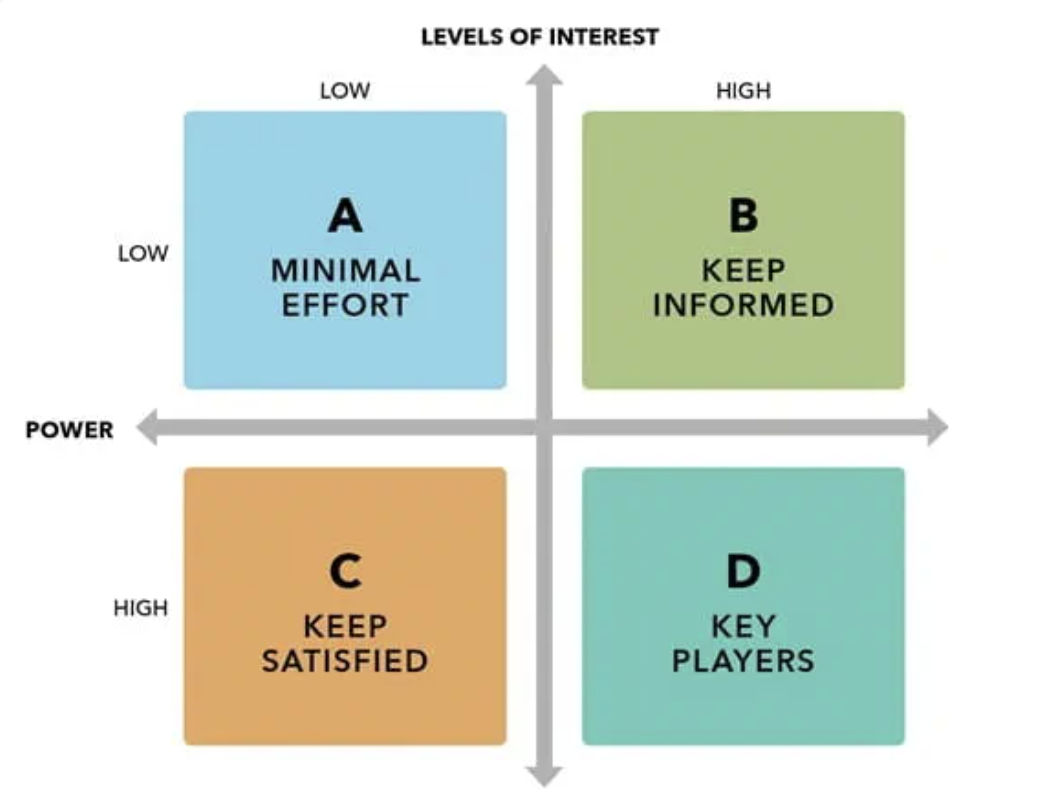
Stakeholder mapping
Considers relative interest and power of stakeholders
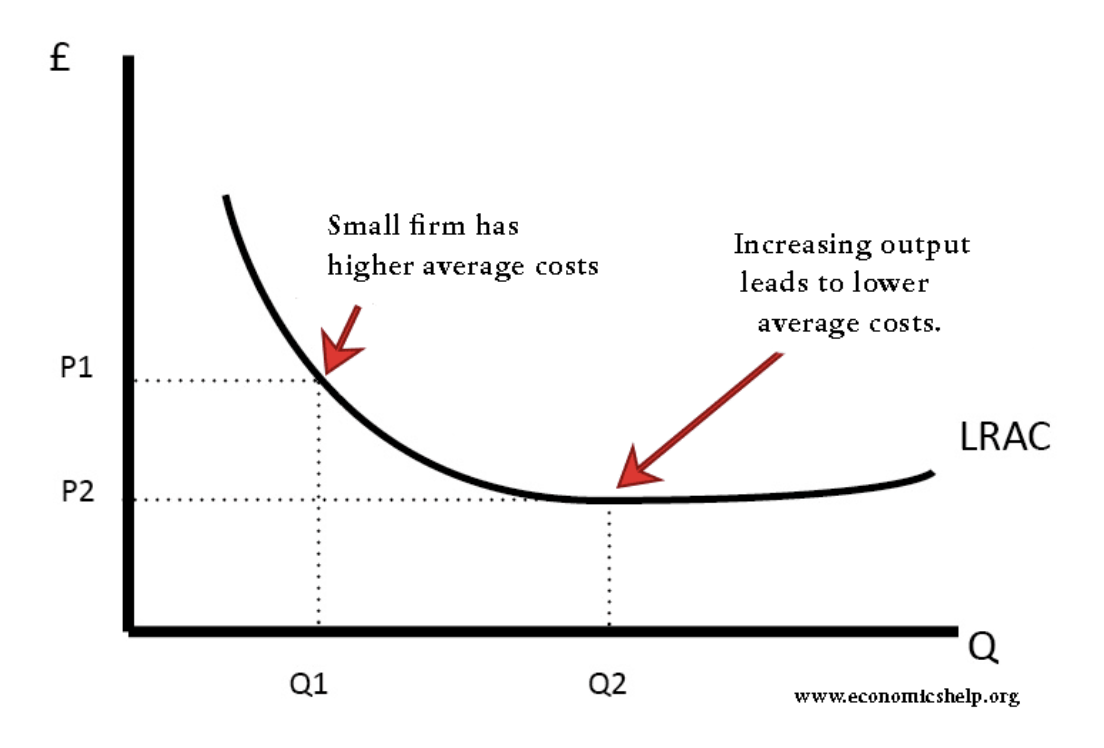
Economies of Scale (EOS)
Lower average cost of production as firm operates on a larger scale/more efficiently
Purchasing EOS
Internal
Buying in bulk → more units you buy means you can negotiate with suppliers
Larger firms = better rates when buying raw materials
Average cost
Cost per unit of output
Total cost/Quantity of output = Average cost
Financial EOS
Internal
Larger firms find it easier and cheaper to raise money/finance
Can borrow large sums at lower rates as they are less risky