Lec 19 - Endocrine & Reproductive Changes
 Call Kai
 Learn
Learn Practice Test
 Spaced Repetition
 Match
Match Flashcards
 Knowt Play
1/49

There's no tags or description
Looks like no tags are added yet.
Name | Mastery | Learn | Test | Matching | Spaced | Call with Kai |
|---|
No analytics yet
Send a link to your students to track their progress
50 Terms
What endocrine changes happen with aging? (3)
Decreased response of the hypothalamus and anterior pituitary
Atrophy of the pituitary
Decreased secretions
Non-tropic glands
Atrophy and fibrosis
Decreased hormone release
Also decreased break-down
Decreased sensitivity of target organs
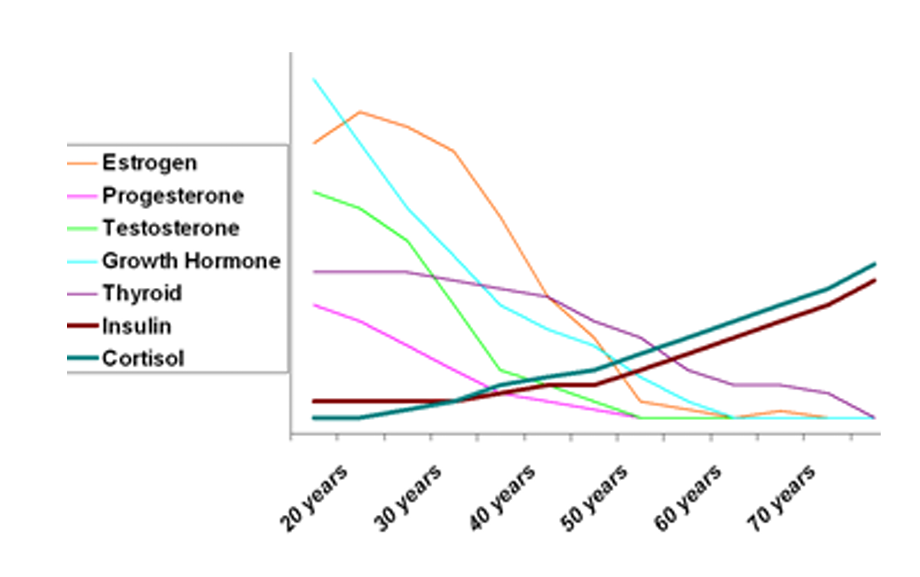
how do hormone levels change with aging? **exam
all hormones go down with aging except cortisol and insulin (they both increase)
What is ADH?
Anti-diuretic hormone
What happens with decreased levels of ADH? (3) at night?
Can’t concentrate the urine
Higher urine output
Dehydration
Doesn’t increase at night as much
Nocturia (night time urination)
What happens to thyroid hormone with aging? what does that result in?
Decreased levels with aging
Hypothyroidism more common in women
Auto-immune in 3-4% of people over 65
Thyroid often enlarges (goiter)
Inflammation response
growth hormone with aging? results in? (4)
GH decreases by 50+% by age 65 (compared to age 20)
Results in
Cellular aging and necrosis
Muscle atrophy (sarcopenia)
Decreased bone (osteoporosis)
Thinner skin
what might GH be responsible for according to a study?
GH might be responsible in part for decreased muscle and bone in elderly
What are effects of GH treatment?
increased mortality…
Attributed to:
Decreased immune function
Increased insulin resistance
Multi-Organ Failure
What happens to cortisol with age and why? where is cortisol made?
Cortisol levels rise with age (due to decreased removal)
Adrenal Gland makes cortisol
How does body respond to high levels of cortisol?
Decreased response to hormone
Reduced immune response
Less able to handle stressors
May contribute to dementias
Increased aging of neurons?
What is another hormone made by adrenal glans? What happens to it?
Aldosterone
less as aging
may cause Na+ imbalance and increased urine
Why does insulin increase with age? Body response?
Insulin levels rise with age
Reduced removal
Reduced response
Pancreas inflammation
Cells less responsive
Type II diabetes
What happens to female reproduction with aging?
A woman’s reproductive potential decreases with age
Decline starts after age 30
Reproductive potential lost well before menopause
What happens to miscarriage rates?
Increase with aging
What is happening to women and conceiving? Why?
Women having children later in life
1/3 of women aged 35+ have problems conceiving
< 30% of women aged 40+ conceive naturally
Why?
Quality of oocyte declines with age
FSH increases with age - difficulty conceiving
If they do, miscarriage is more likely
What oocyte changes happen with aging?
Declining Follicular Reserve
Change in microtubule and chromosome placement in meiosis
Increased aneuploidy (unbalanced chromosomes) seen in offspring of older women
Eg. Down’s Syndrome
What is menopause?
Halting of menstruation
ages 45 – 55
Decreased estrogen / FSH
35% by age 40
95% by age 55
Menopause symptoms? (5)
Hot flashes
Night sweats
Vaginal dryness
Depression
Sleep disorders
What changes can happen to menstrual flow?
Changes inflow and frequency are common:
Lighter bleeding
Heavier bleeding •
Blood clots
Duration of bleeding
Cycle length Skipped menstrual periods
What is abnormal uterine bleeding (AUB)?
Abnormal uterine bleeding (AUB) if:
If blood loss more than 100 mL (plus mucous)
Bleeding last more than 7 days
If time between bleeding is <21 days
What are hot flashes like? How common?
75% of menopausal women experience hot flashes
5-10 years…..can continue
Often at night – night sweats
What kind of a response is hot flash?
Vasomotor response
Sympathetic – increase body temp
Higher heart rate
Vasodilation
face and neck
Sweating
What happens to estrogen with aging? Result of this? (6)
Estrogen changes (decrease) in menopause result in:
Increased fat, decreased muscle
Decreased bone strength
Elevated cholesterol (CV disease)
Atrophy in the labia, clitoris, and vagina
Vaginal Dryness, increased infections
Uterus, fallopian tubes and ovaries become smaller – more fibrotic
What does estrogen + progestin hormone replacement therapy increase risk of? (5) Decrease risk of? (3)
Increases Risk of:
Breast Cancer
Heart Disease
Stroke
Blood Clots
Dementia
Decreased Risk of:
Hip Fractures (Osteoporosis)
Colon Cancer
Relieves symptoms of menopause
What are other treatments for menopause? (7)
Sleep aids / anti-depressants / melatonin
Iron (to help with iron loss with bleeding) / vitamins
Topical progesterone
Herbal meds – St. John’s wort, cranberry, etc.
Avoid hot flash triggers
caffeine, alcohol, spicy food
Keep cool
Dress in layers / cool rooms / cold drinks / fans
Reduce sexual and vaginal discomfort
lubricants
Does exercise help with menopause? What kind?
No conclusive study on whether exercise can reduce the symptoms
But general health benefits should help the transition
Women report symptoms decrease with exercise
Relaxation exercises
Pelvic floor exercises
Proper diet
What is uterine prolapse? Symptoms? (4) Treatment? (2)
Uterus protrudes into vagina
Symptoms:
Heaviness in pelvis
Urinary stress
Dysuria
Low back pain
Treatment:
Hysterectomy
pessary
What is vaginal prolapse? How?
Vagina everts
often after hysterectomy
What are treatments for prolapses? (2)
Removable pessaries
Hold organs in place
Surgical meshes
What is cystocele? Symptoms? (3)
Herniation (protusion) of urinary bladder through anterior vaginal wall
Symptoms:
Pelvic pressure
Urinary urgency
incontinence
What is rectocele? Symptoms? (3) treatment?
Herniation of rectum through posterior vaginal wall
Symptoms:
Discomfort
Constipation
Fecal incontinence
Treatment:
Surgical repair
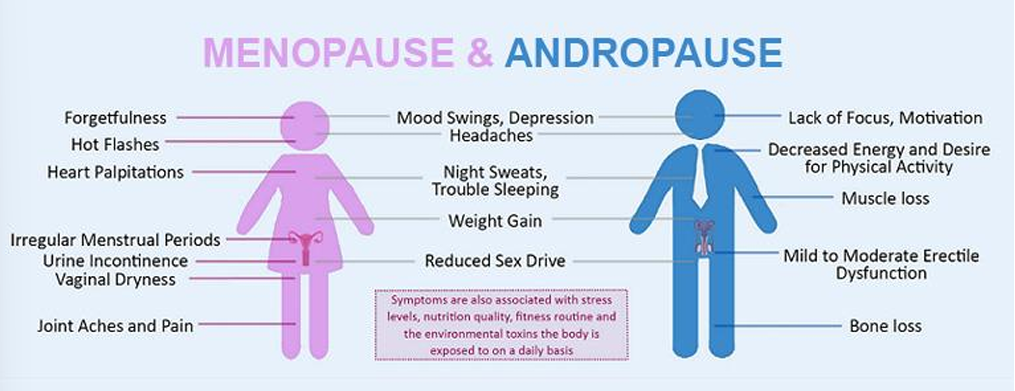
Menopause vs Andropause symptoms?
Maximal symptoms peak at age 50 for both
What is andropause?
Aging of the male reproductive system
Decrease in testosterone
1% / year after age 30
Male function may remain normal until 80
What is andropause associated with? (4)
Associated with
Impotence
Gynecomastica
Hypertrophic prostate
Testicular and prostate cancer
What happens to male fertility with aging? (3)
Loss of libido
Reduced blood flow to penis
Number and motility of sperm decrease
Decreased volume of ejaculate
Less forceful ejaculation
Longer refractory period (“reset” time)
What happens If a male partner is >50 years in terms of conceiving?
If a male partner is >50 years, fertility decreases and rate of miscarriage increases
Age of both partners is important
What is benign prostatic hyperplasis?
Growth of prostate from age 40 to death
Affects 50% of men over 50
Affects 95% of men over 70
Obstruction of urethra
RF for benign prostatic hyperplasia? (7) What can this condition be a higher risk for?
Aging
Use of anabolic steroids
Genetic predisposition
Environmental toxins
Smoking, alcohol
Sexually transmitted diseases
Diet (high animal fats)
Higher risk for prostate cancer
Who develops prostate cancer?
Most men develop prostate cancer in old age
How to reduce risk of prostate cancer?
Frequent Ejaculation May Reduce Risk of Prostate Cancer
Men with more than 20 monthly ejaculations was 33 percent less likely to develop prostate cancer
Activity may flush out toxins in the prostate
Less crystallization
What is erectile dysfunction? Causes? (7)
Inability to get or maintain an erection
Causes
Aging and disease
Kidney failure, liver failure, CV failure \
Psychological
Neural or endocrine
Vascular (leading cause)
Drug-induced
Obesity and Diabetes
Smoking
What can really increase rates of erectile dysfunction?
Rates are higher with smoking and alcohol
Higher rates with stress and hypertension
Higher rates with obesity
Treatments for erectile dysfunction? (6)
Medications (eg. Viagra, Cialus)
Lose weight, stop smoking
Change hypertension meds (some are causal)
Surgery
Implants
Injections, gels
How does Viagra/Cialis work?
Inhibit the break-down of Nitric oxide
So prolonged vasodilation effect
Studies showed lower blood pressure
Viagra/Cialis effect on Alzheimer?
Good effects for Alzheimer’s disease
decrease in disease
less tangles and plaques
less inflammation
better cognitive function
What can cause sexual dysfunction among older people? (6)
Medical conditions can cause sexual dysfunction among older people, including:
Heart Disease
Diabetes
Depression
Breast and prostate cancers
HIV/AIDS
Dementia
Relationship between heart disease and sexual health?
In a study of postmenopausal women the presence of coronary heart disease was significantly associated with
lack of sexual interest
inability to relax during sexual activity
arousal and orgasmic disorders
general discomfort with sex
For men
ED prevalent with heart disease
decline in sexual activity
Diabetes and sexual health?
40% of diabetes over age 65 report sexual dysfunction
Erectile dysfunction
Orgasm
Pelvic floor exercise and sexual dysfunction?
Helps to strengthen the bulbocavernosus muscle
Allows the penis to fill with blood during erection
Pumps during ejaculation
Helps empty the urethra after urination
Aerobic exercise and sexual dysfunction?
Aerobic exercise
Improves blood flow (ED and orgasms)
Decreases obesity
Improves general cardiovascular health
This will result in reduced sexual dysfunction
30 minutes; 3-4 times per week