Ecological niches - B4.2
 Call Kai
 Learn
Learn Practice Test
 Spaced Repetition
 Match
Match Flashcards
 Knowt Play
1/38

There's no tags or description
Looks like no tags are added yet.
Name | Mastery | Learn | Test | Matching | Spaced | Call with Kai |
|---|
No analytics yet
Send a link to your students to track their progress
39 Terms
ecological niche definition
the role of a species in an ecosystem
made up of many factors → unless all the dimensions of a niche are satisfied in an ecosystem a species will not be able to survive, grow or reproduce
biotic factors that influence growth, survival and reproduction → ecological niche
e.g food supply → autotrophic or heterotrophic.
To minimize competition species become specialists in sourcing food. → adaptations are required
e.g utilization of other species to provide a wide range of services such as pollination of flowers
abiotic factors that influence growth, survival and reproduction → ecological niche
zones of tolerances for abiotic variables determines the habitat of a species → where it lives in an ecosystem
obligate aerobes
need oxygen as they cannot ferment or respire anaerobically.
They gather at the top of a tube with water where oxygen concentration is the highest
e.g all plants + animals
obligate anaerobes
poisoned by oxygen
gather at the bottom of a tube with water where the oxygen concentration is the lowest
facultative anaerobes
can metabolise energy aerobically or anaerobically
gather mostly at the top of a tube with water as aerobic respiration generates more ATP than fermentation
Photosynthesis
energy from light is used for fixing carbon dioxide and making carbon compounds such as sugars and amino acids which create the basis of life.
3 groups of organisms that use photosynthesis
plants
eukaryotic algae
cyanobacteria (bluegreen bacteria)
heterotrophic nutrition
gain a source of organic molecules by consuming another source of organic molecules
all animals are heterotrophic
Holozoic nutrition
food is ingested, digested internally, absorbed and assimilated
sub group of heterotrophic nutrition
Autotrophic nutrition
gains nutrition by using a source of energy to convert inorganic molecules (carbon dioxide, water) into organic molecules (glucose)
Mixotrophs definition
organisms that can obtain energy and carbon through both autotrophic and heterotrophic nutrition. e.g Euglena
facultative mixotroph
can function as autotrophs, heterotrophs or both. Depending on environmental conditions
obligate mixotroph
require both autotrophic and heterotrophic nutrition in order to survive
mixotrophy advantages
flexibility: Organisms can adapt to nutrient availability, surviving in both nutrient-rich and nutrient-poor environments.
Energy Efficiency: Mixotrophs maximize energy intake by switching between modes as conditions change.
Saprotrophic nutrition
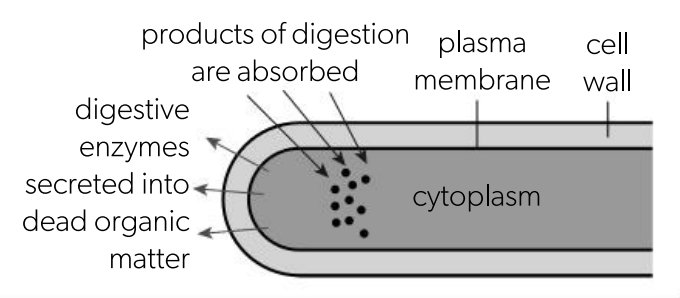
a mode of heterotrophic nutrition where organisms gain nutrition by feeding on dead or decaying organic material by secreting digestive enzymes into the food source (extracellular digestion) and absorbing the products of digestion.
fungi + bacteria that use saprotrophic nutrition can be referred to as decomposers
Archaea
one of the 3 domains of life (Bacteria, Eukaryotes, Archaea)
metabolically very diverse
group of micro-organisms that are similar to, but evolutionarily distinct from bacteria
use either light, oxidation of inorganic chemicals or oxidation of carbon compounds to provide energy for ATP production
Chemoheterotrophs
obtain energy through oxidation of carbon compounds obtained from other organisms
carbon compounds are obtained through other organisms (not photosynthesis)
Photoheterotrophs
obtain energy through absorption of light using pigments (not chlorophyll)
obtain carbon compounds from other organisms (not photosynthesis)
Chemoautotrophs
obtain energy through oxidation of inorganic chemicals (chemical reactions)
obtain carbon compounds through anabolic reactions from carbon dioxide
Paranthropus robustus - members of Hominidae family
lived 1-2.6 million years ago
Large molars
Wide large lower jaw
skull has sagittal crest along the midline → suggests strong chewing muscles
broad herbivorous teeth
→ suggests that they ate plant foods and tough grasses and seeds
Homo floresiensis - members of Hominidae family
lived 50,000-20000 years ago
reduction in molar size + teeth (still bigger than homo sapiens)
→ suggests that they ate uncooked plant foods and meat
Homo sapiens → members of Hominidae family
flat molars at back of mouth → crush food
sharper canines + incisors
→ suggests that they eat both plants + meat
Sap-feeding herbivores
Aphids
piercing mouthparts → allow piercing of plant shoot + feeding on phloem sap
Chewing herbivores
Beetles
jaw-like mouth parts
tough mandibles for biting off, chewing and ingesting leaves
Plant defenses against herbivory
sharp spines + thorns (e.g Roses) that can injure herbivores
secondary metabolites that act as repellents or toxins (Acacia trees)
mutualistic relationships with ants to repel herbivores (Acacia trees)
herbivore counter adaptions
some herbivores have evolved metabolic adaptations to counteract plant defenses.
detoxification of enzymes → neutralise toxic compounds
Specialised feeding habits → feed on specific plants
vampire bats physical, behavioural and chemical adaptations
physical:
razor sharp teeth
expandable stomach → can quickly process food
Behavioural:
target sleeping animals + often return to the same individual
Chemical:
saliva contains anticoagulants which prevents preys blood from clotting
black mamba physical, behavioural and chemical adaptations
Physical: fast (19 km/h) → can pursue prey
Behavioural: bite + release prey to avoid injury from struggling animals
Chemical: rapid acting neurotoxins causing rapid paralysis of prey.
Koala physical, behavioural and chemical adaptations
Physical: sharp claws + teeth for protection against predators
Behavioural: Arboreal life-style → avoid ground dwelling predators
Chemical: eat toxic leaves that other animals are unable to digest → taste unpleasant to potential predators
adaptations of trees in canopy layer for harvesting light
thin trunks + rapid vertical growth
crowns spread widely to maximize surface area exposure to sunlight
adaptations of lianas for harvesting light
use existing trees for support → use tendrils + hooks to reach the canopy without investing in structural growth.
fast vertical growth → bypass competition on forest floor
adaptations of epiphytes growing on tree branches for harvesting light
waxy + thick leaves → minimize water loss
aerial roots → absorb moisture + nutrients from air
long leaves → maximize light absorption
adaptations of strangler epiphytes for harvesting light
develop aggressive root systems that encircle and outgrow the host tree causing the tree to die leaving only the epiphyte.
adaptations of shade tolerant shrubs/herbs on forest floor for harvesting light
large thin leaves → maximize surface area for light absorption
high chlorophyll content → efficient photosynthesis
slow metabolism → reduces energy demand
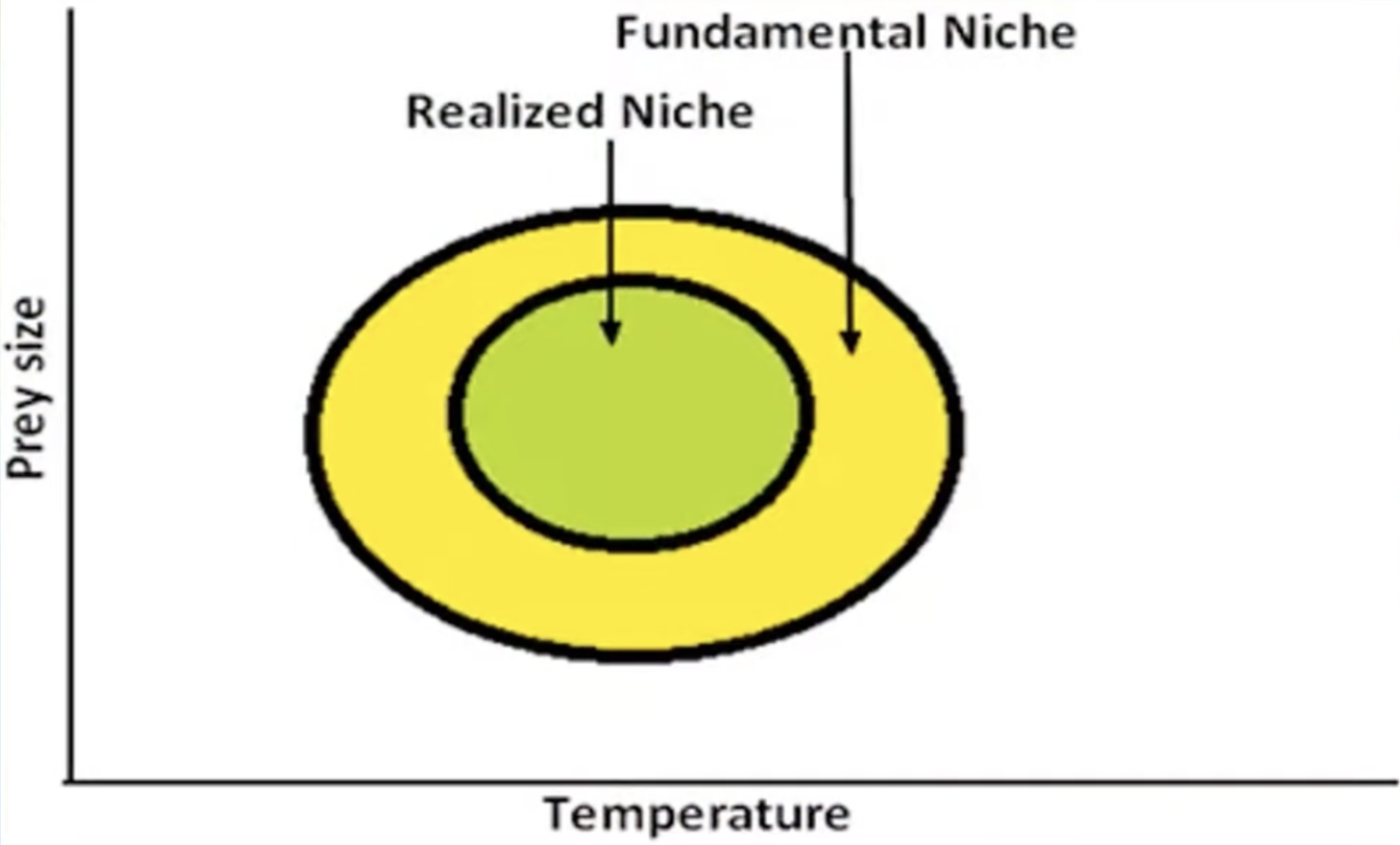
fundamental niche
the potential of a species based on adaptations and tolerance limits
species cannot survive beyond fundamental niche
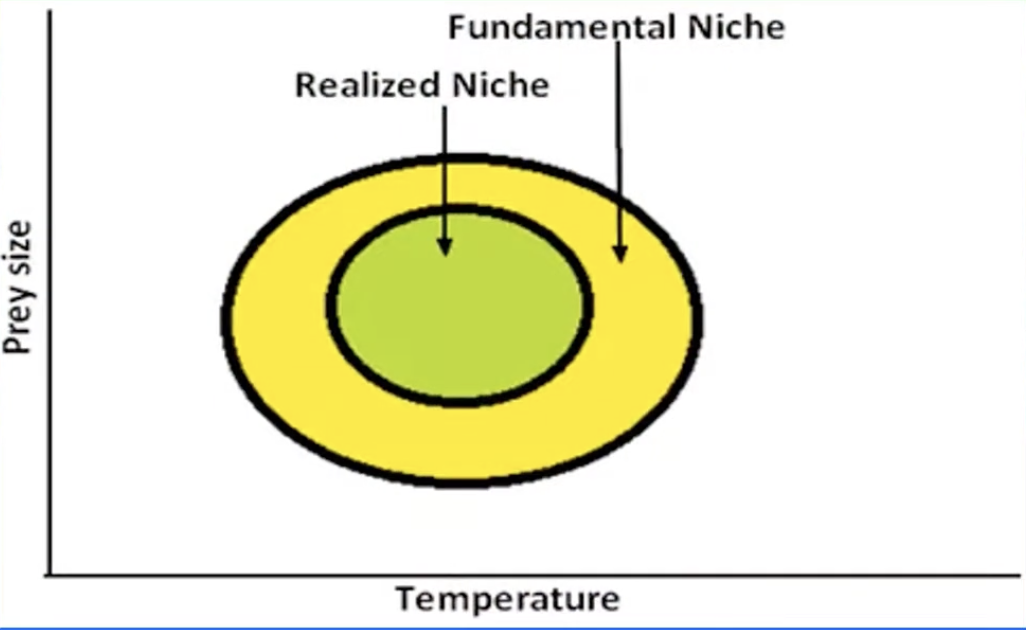
realized niche
the actual extent of a species niche when in competition with other species
competitive exclusion principle
In every ecosystem, species compete for limited resources such as food, water, space, and light.
If two species depend on the same resource in the same way, one will eventually outcompete the other or will lead to the restriction of both species to a part of their fundamental niche.
niche partitioning
the process by which natural selection drives competing species into different patterns of resource use or different niches. (e.g using different areas of the same resource, temporal partitioning)