DAT chem 4 - GASES
 Call Kai
 Learn
Learn Practice Test
 Spaced Repetition
 Match
Match Flashcards
 Knowt Play
1/19

There's no tags or description
Looks like no tags are added yet.
Name | Mastery | Learn | Test | Matching | Spaced | Call with Kai |
|---|
No analytics yet
Send a link to your students to track their progress
20 Terms
Do gasses have definite volume
No, like liquids, they fill the container they are in, but unlike liquids, they do not have a definite volume
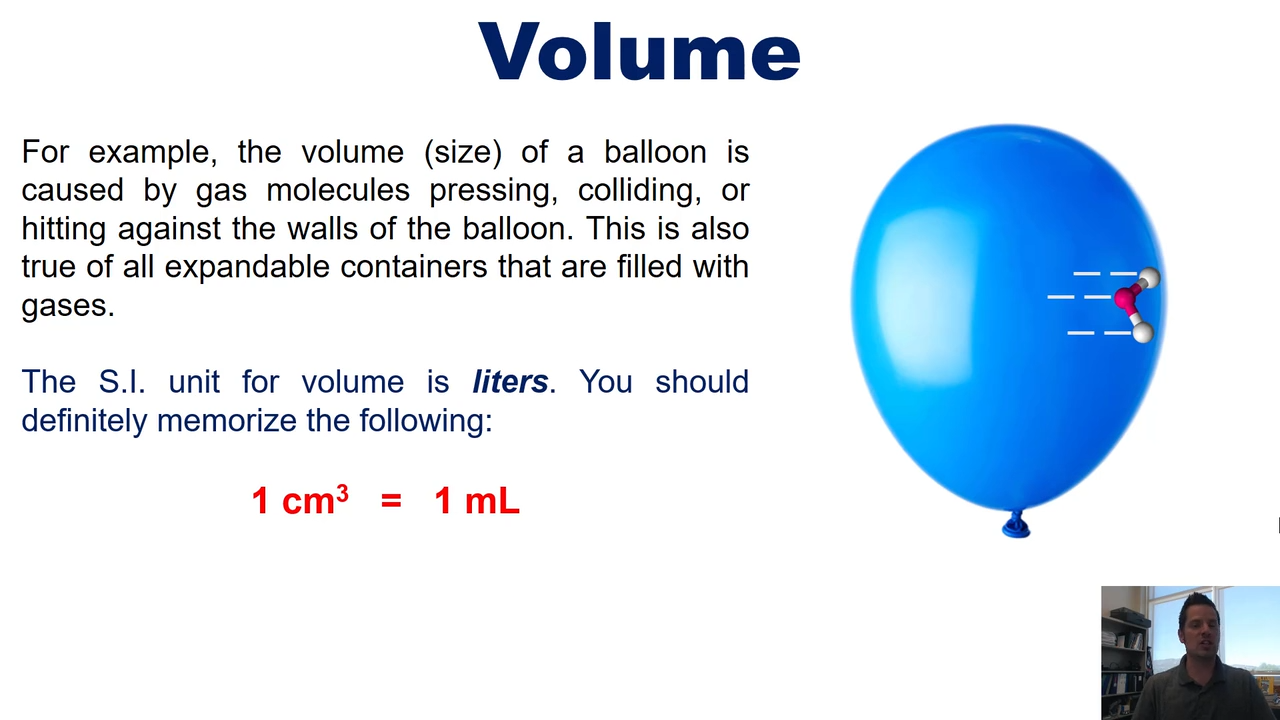
SI unit for volume
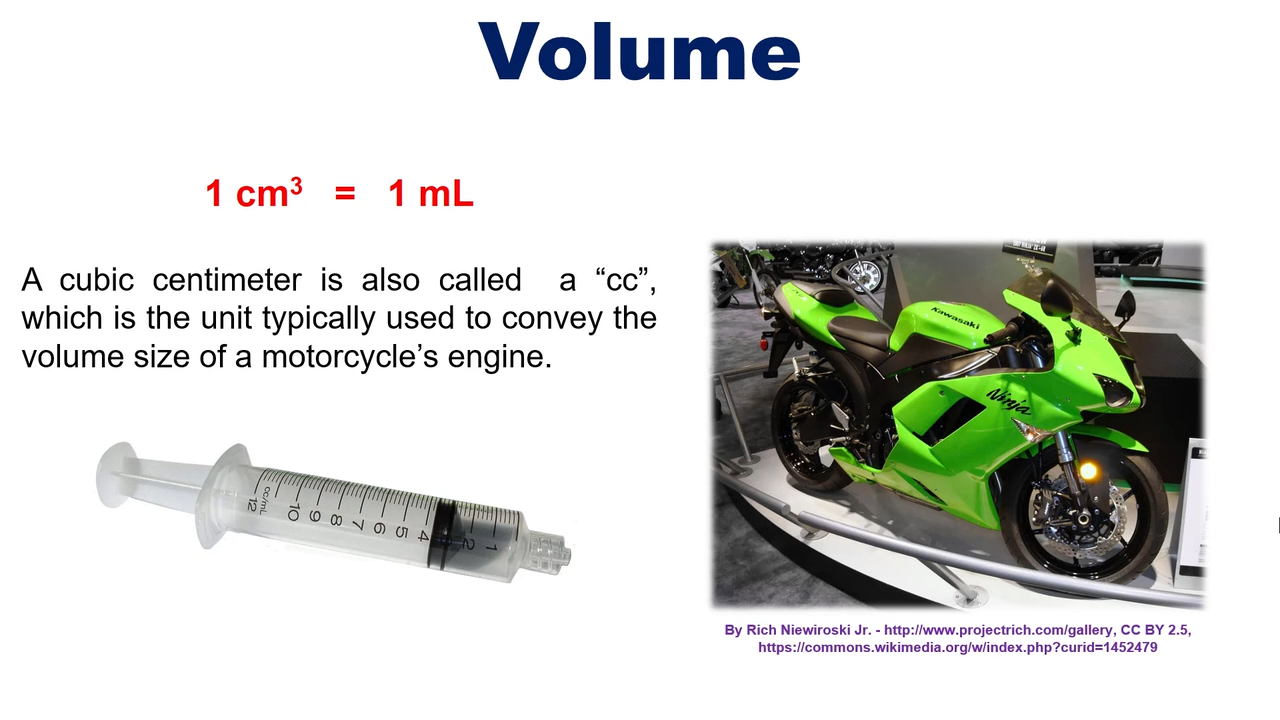
liter, 1 liter is equal to 1 cm³
Pressure formula
force/area
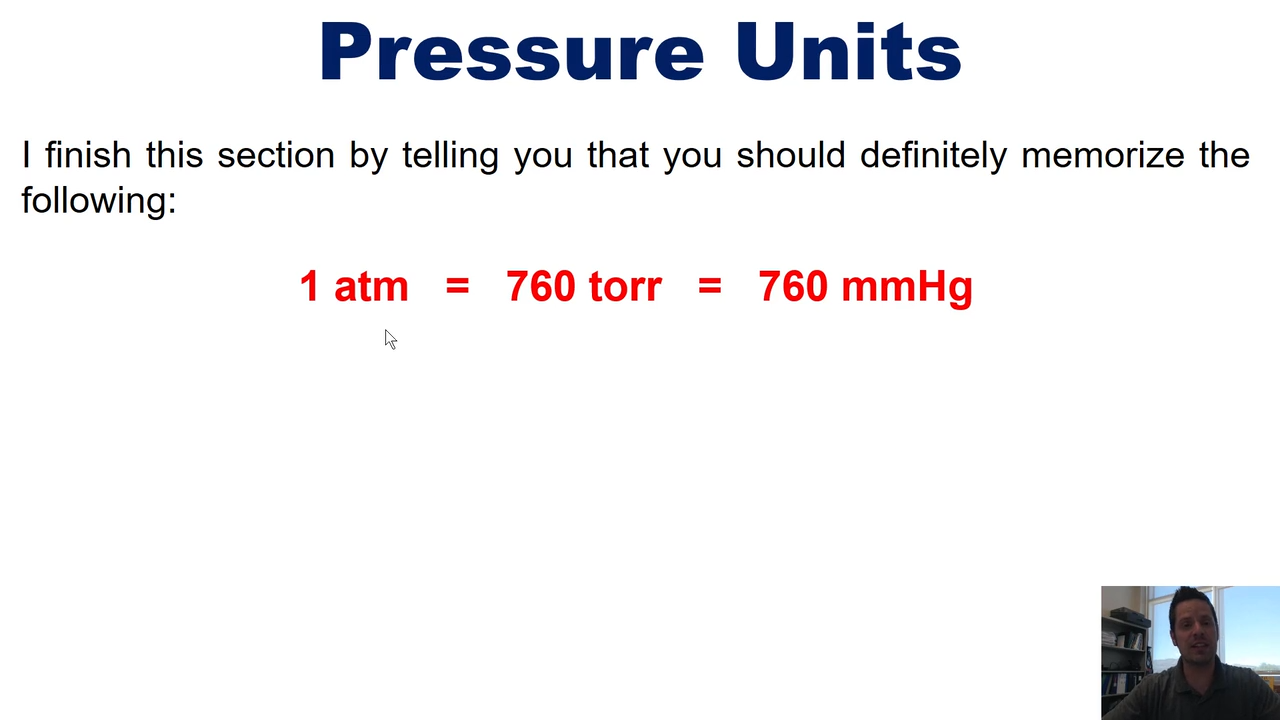
Pressure units
1 atm = 760 torr = 760 mmhg
What is an ideal gas
a gas that can be explained using the ideal gas law
Under what condtions is a gas ideal?
at high temp and low pressure
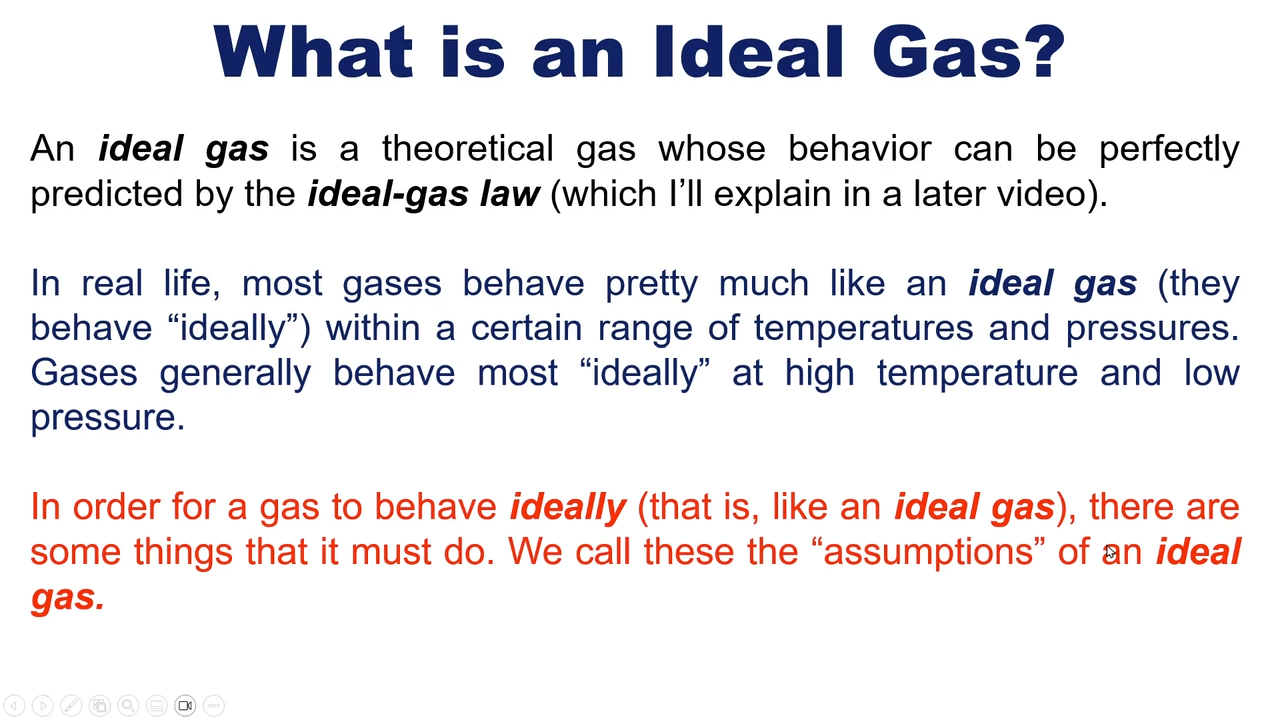
Ideal gass assumptions
the volume of a gas particle is insignificant compared to the space between them
gases expierience zero intermolecular forces between them and their containers
Gases are always in random motion
they are perfectly elastic, so there is zero KE loss or gain when they collide with each other
the avg KE of a gas depends on the temp of the system
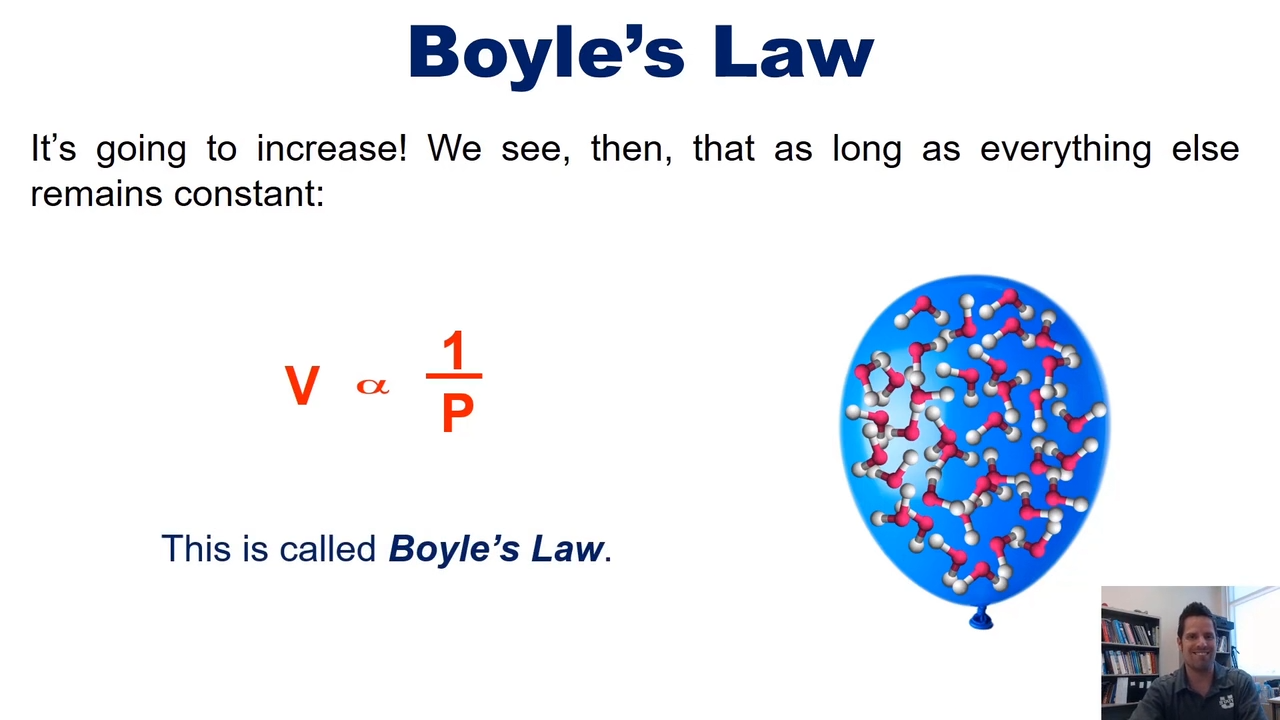
Boyle’s law
volume is inversely proportional to pressure
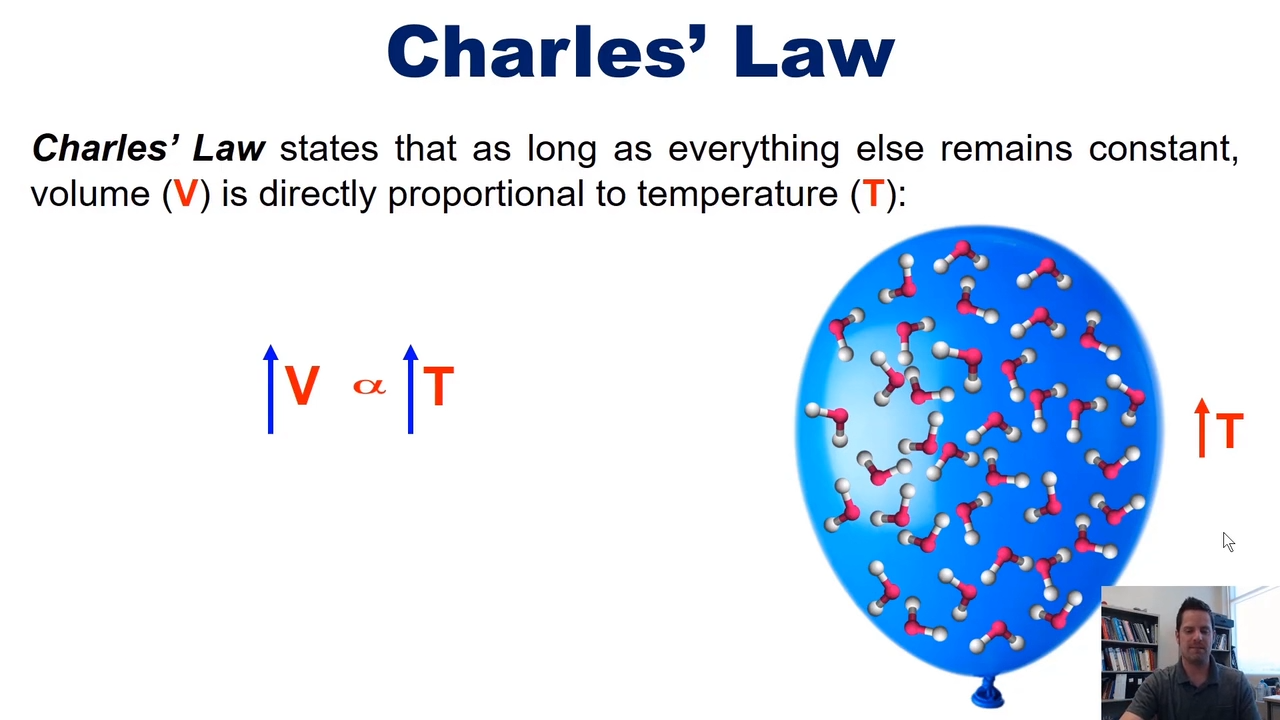
Charle’s law
Volume is proportional to temperature
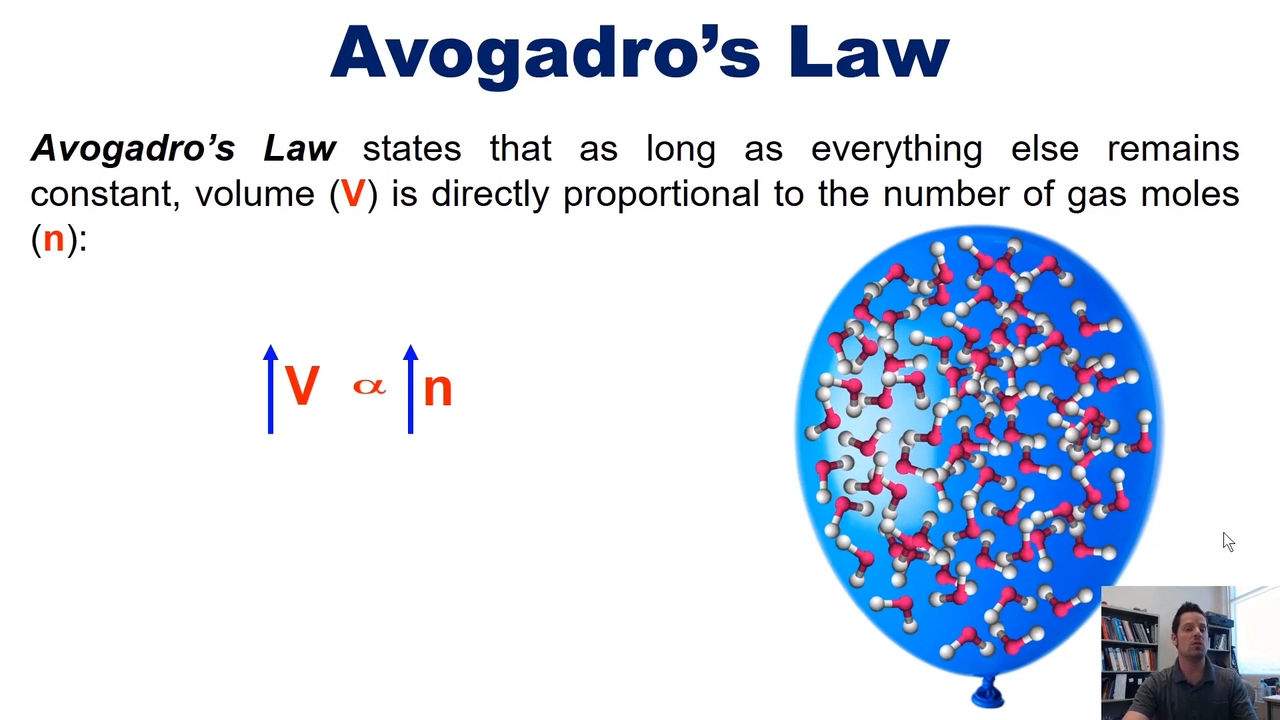
Avogadro’s law
Volume is proportional to gas moles
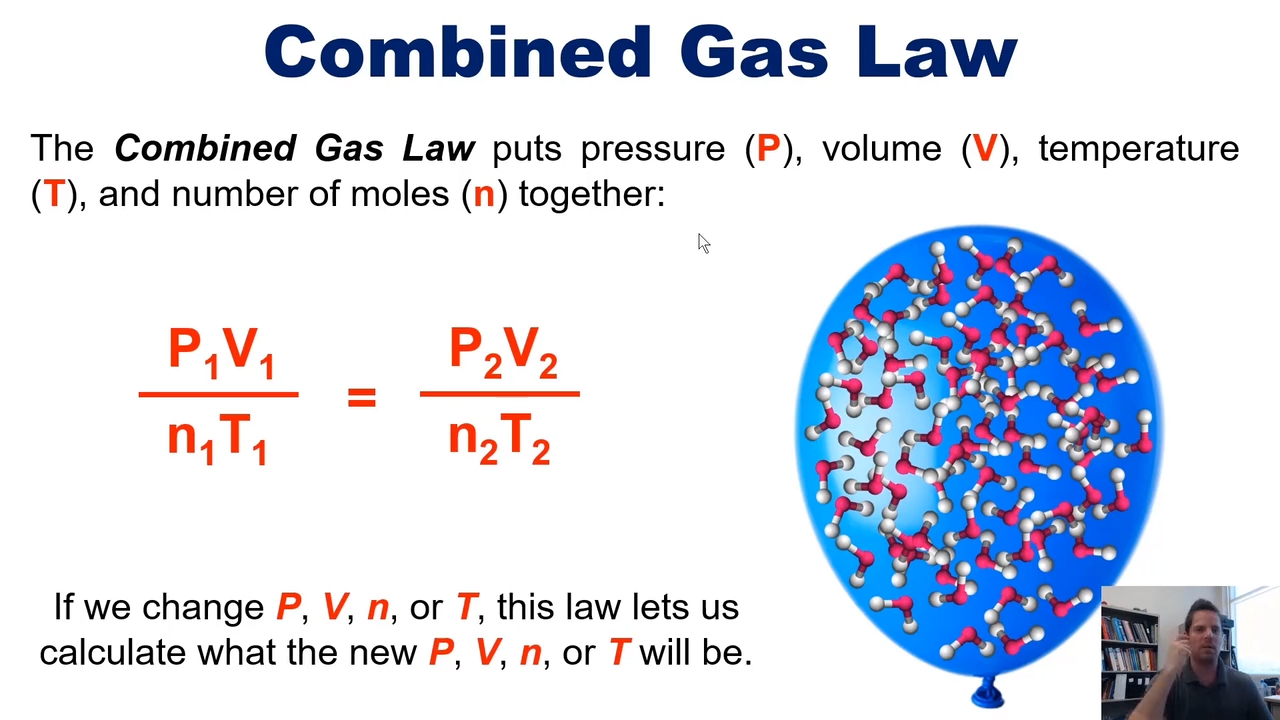
Combined gas law
(P1V1)/(T1n1) = (P2V2)/(T2n2)
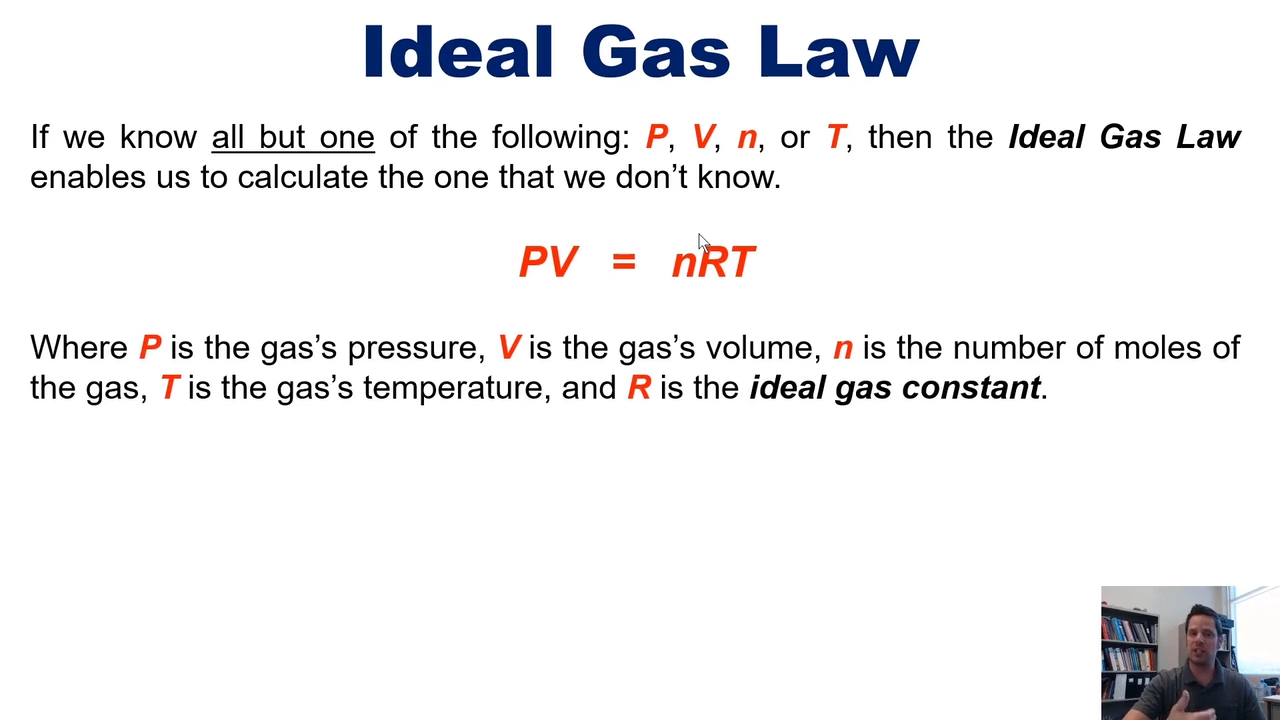
Ideal gas law
PV=nRT
ideal gas constant
0.0821 L*atm/mol*K
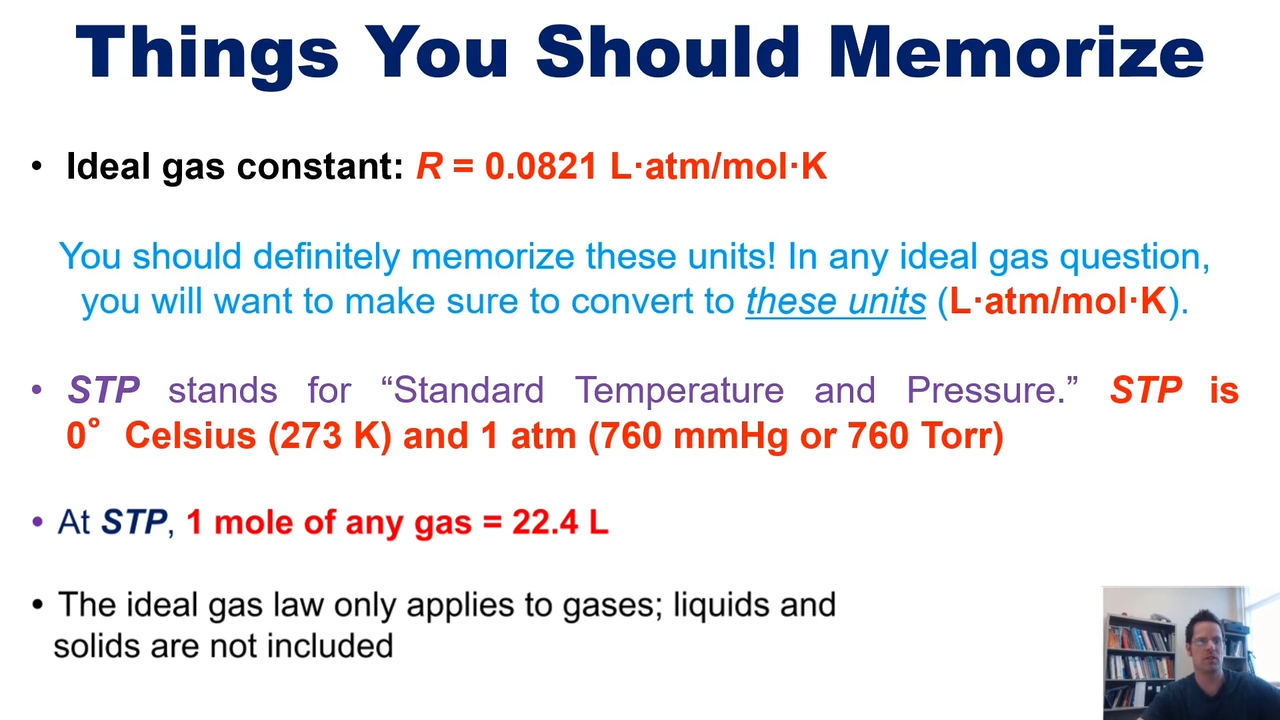
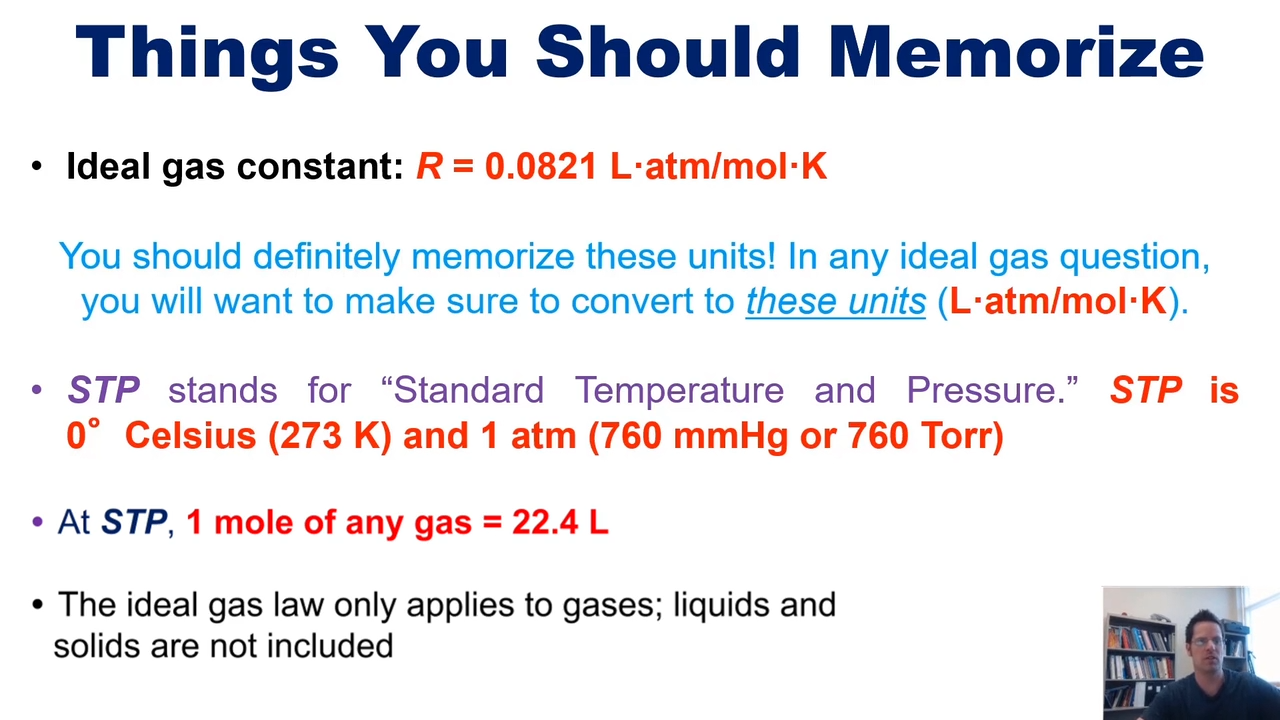
STP
273 kelvin and 1 atm (760 torr, 760 mmhg)
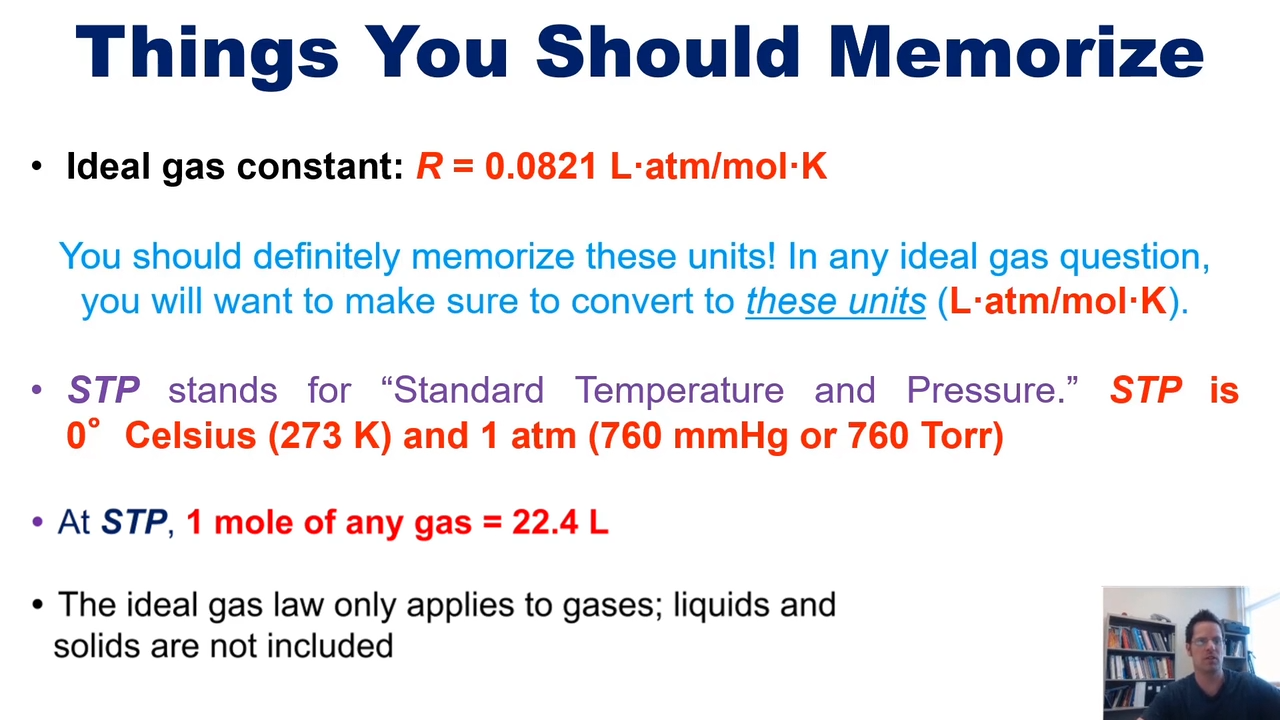
how much is one mol of gas at STP
1 mole of gas = 22.4L
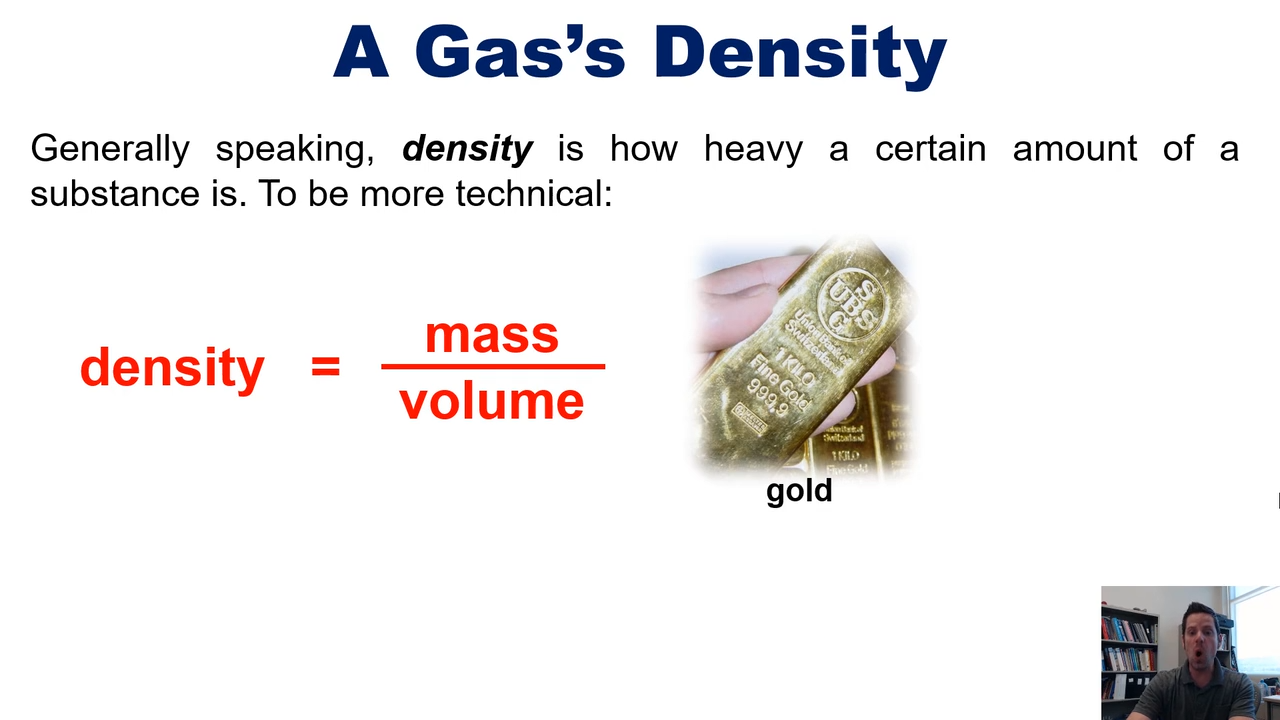
density formula
mass/volume
Density for gasses formula
density = (P*molar mass)/RT
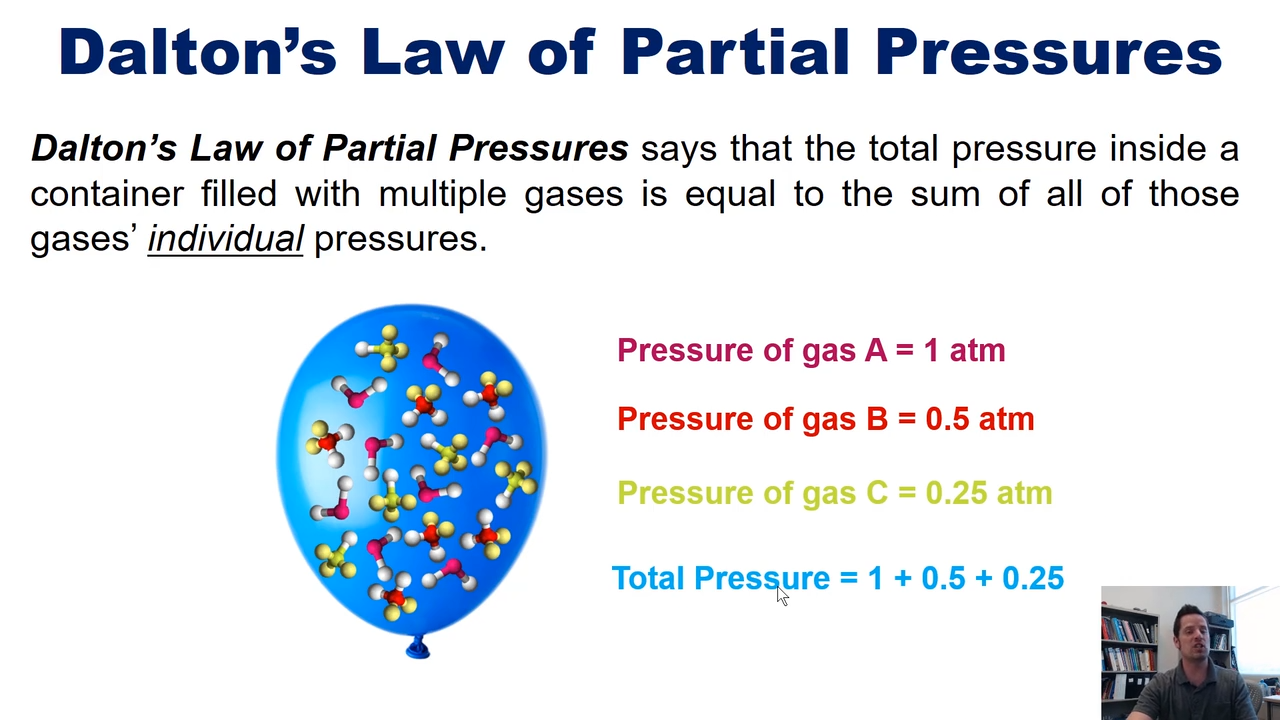
Daltons law of partial pressures
Total pressure inside a container with multiple gases is equal to the sum of the pressures
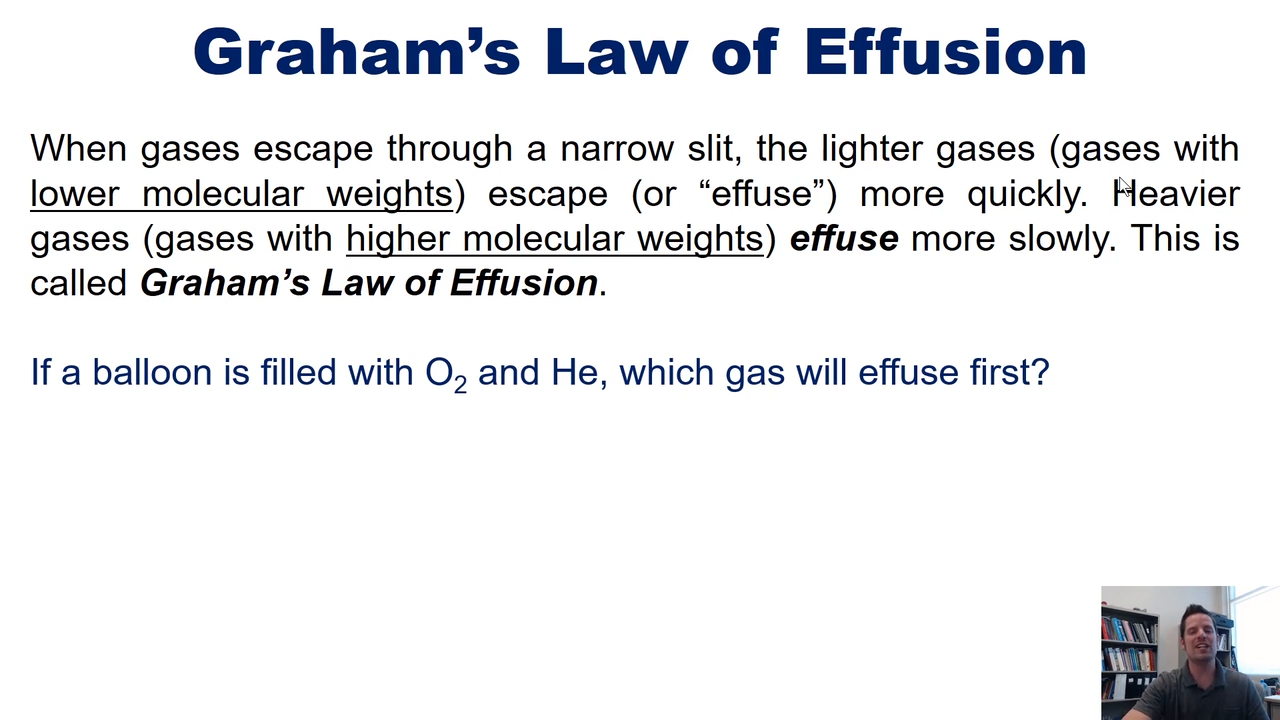
Graham’s law of effusion
when esccaping through a narrow slit, lighter gasses effuse (escape) faster than heavier gasses
due to the fact that KE = ½ mass * velocity²
The lighter ones move faster, as they have the same average KE due to being the same temp
Graham’s law of effusion formula
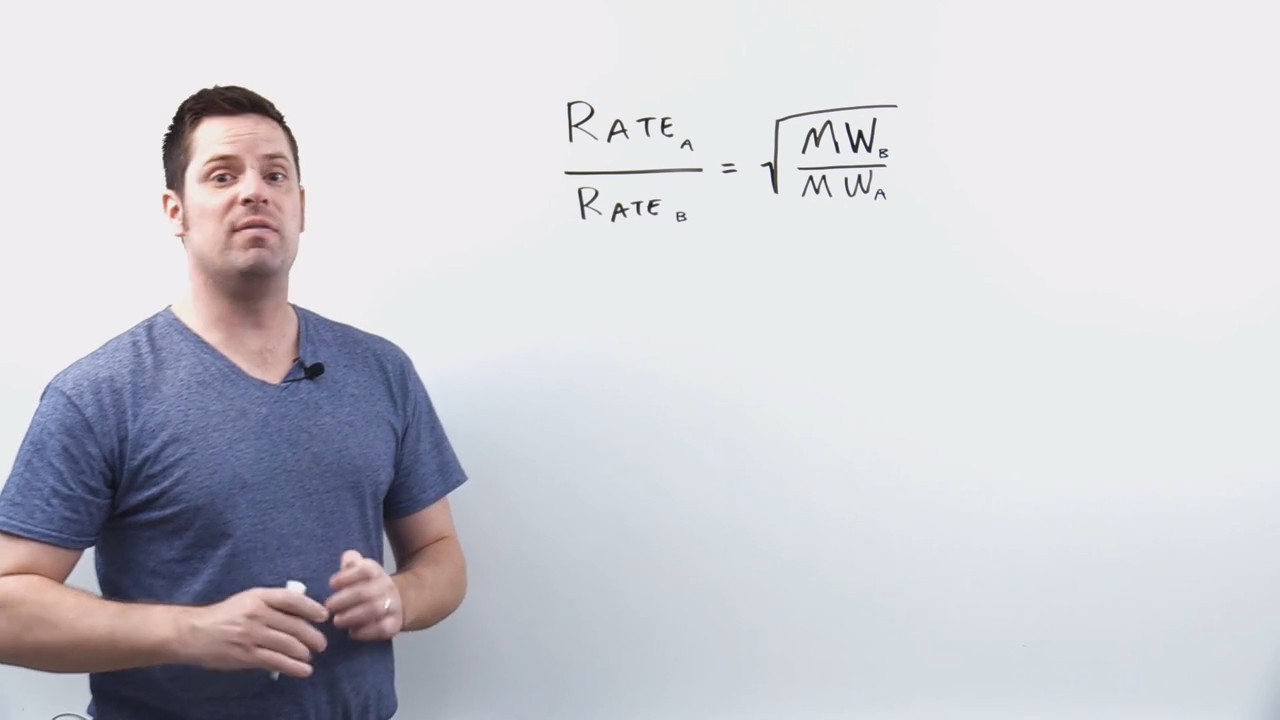
Rate 1/rate 2 = Sqrt(Molecular weight 2/Molecular weight 1)