Ecology Ch.8
 Call Kai
 Learn
Learn Practice Test
 Spaced Repetition
 Match
Match Flashcards
 Knowt Play
1/30

There's no tags or description
Looks like no tags are added yet.
Name | Mastery | Learn | Test | Matching | Spaced | Call with Kai |
|---|
No analytics yet
Send a link to your students to track their progress
31 Terms
What is behavioral ecology and the four types of behavior?
The study of ecological and evolutionary basis of animal behavior
acquiring food, avoiding predation, mating behavior, maintaining homeostasis
What is an example of behavior being inheritable?
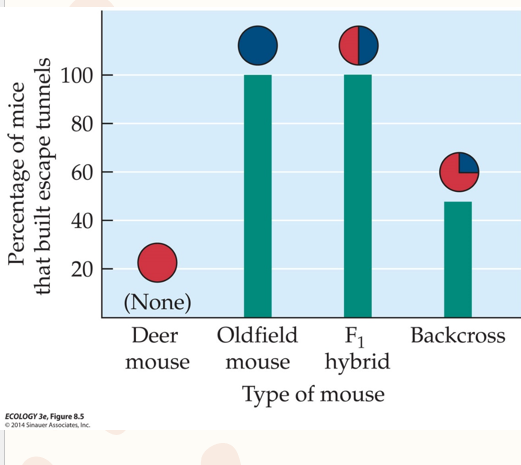
Oldfield mice making tunnels with an escape tunnel while deer mouse do not.
For natural selection to act on behavior, behavior must be inhertiable.
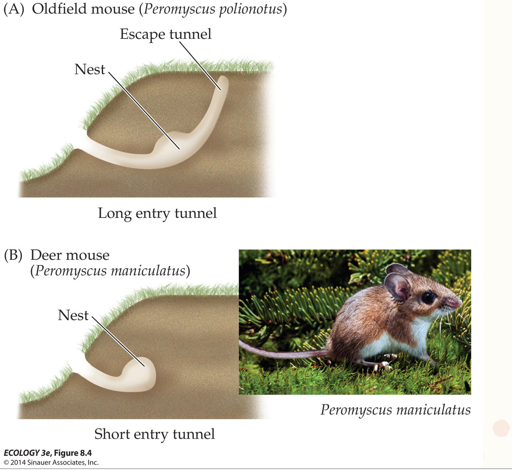
What is the genetic evidence for the escape tunnel?
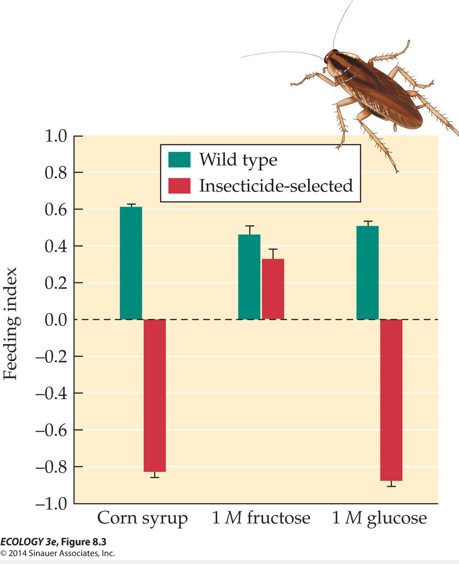
What is an example of selection acting on variation?
Cockroaches exposed to traps with bait containing insecticide plus glucose. Cockroaches that survived had glucose aversion, which is controlled by a single gene.
Surviving cockroaches prefer fructose and avoid glucose and corn syrup
Can be disadvantageous or advantageous depending on selection pressures
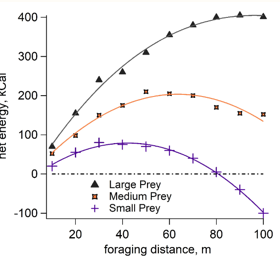
What is optimal foraging theory?
How organisms maximize the energy-to-cost ratio
Food gives energy, but searching for food has costs (calories spent)
The graph shows that if prey size increases, traveling farther is worth the energy cost
Example: optimal size that oyster catcher fish should eat
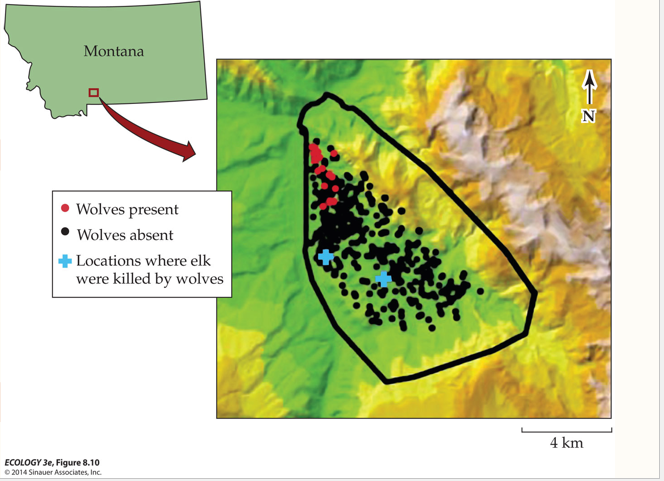
What is an example of how behavior can affect distribution of populations/ communities?
Elks are mainly present where wolves are absent
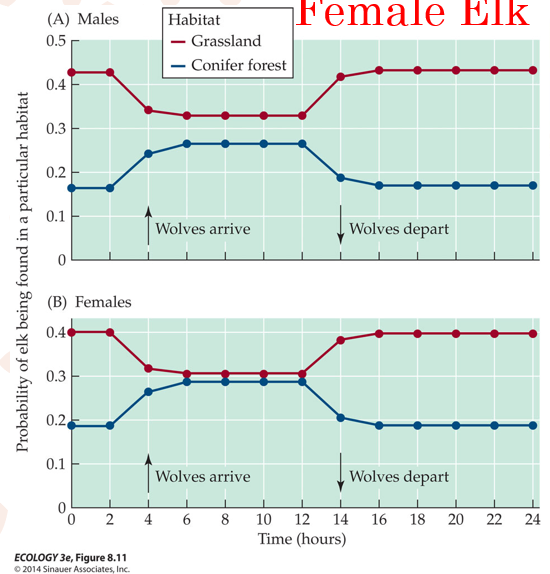
Describe the difference of behaviors between male and female elk
Male elks slightly less risk-averse, while females are more risk-averse.
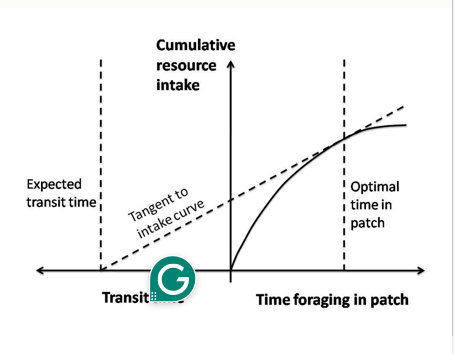
What is the marginal value theorem?
Subtheory of OFT
Idea that the longer an organism feeds in a patch, the more net gains diminish.
Prey dwindles, prey alters behavior, travel time
Assumes organisms behave optimally ( Organisms can’t always know what state the patch is or how far to another patch)
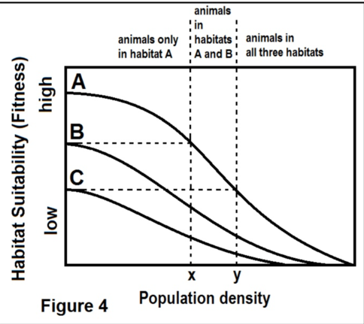
What is the ideal free distribution and its 6 assumptions?
Assumption:
Each patch has varying quality determined by the amount of resources available. (good)
Individuals can assess patch quality based on the resources available to them.( meh)
Assumes individuals can freely move to the highest quality patch (bad)
Individuals know the value of each patch and can choose the ideal patch (bad)
The more individuals in a patch, the lower the quality of the patch (good)
All individuals are competitively equal ( bad)
As more organisms fill patches, each patch will eventually become the same quality despite initial differences in quality
The highest quality patch will be filled first and fall to the quality of patch two
Describe how sexual selection evolved
Asexual reproduction results in offspring that are carbon copies
Sexual selection has disadvantages: Requires twice the fitness
Sexual selection is adaptible: sexual offspring may be more genetically variable —> better in unpredictable environments
This genetic variation helps thwart pathogen
What is the Red Queen Hypothesis and the evidence for it?
Predators and competitors are constantly evolving new adaptations and you must also evolve or go extinct.
Evolutionary zero-sum game where no species gains a long term advantage.

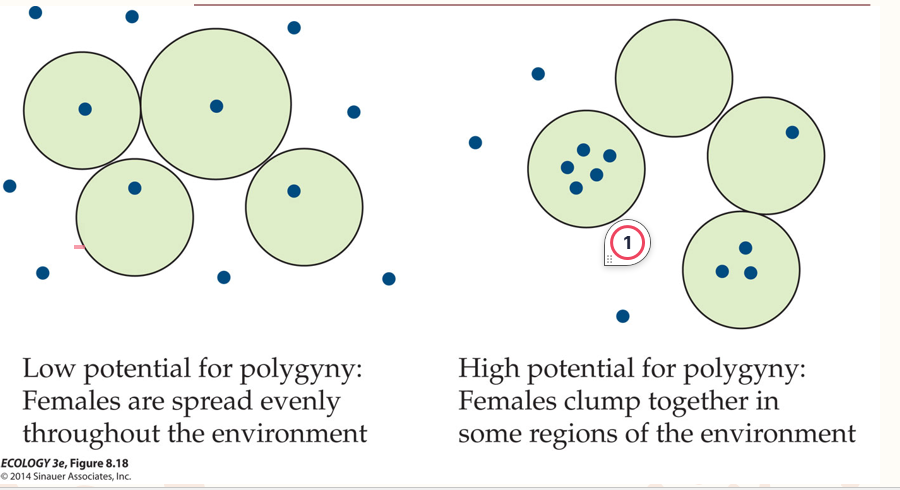
Describe the different mating systems (monogamy, polygamy, polyandry, polgyny)
Monogamy- sex ratio is 1:1
Polygamy: unequal sex ratio
Polyandry- several males per female
Polygyny- several females per male
Polygamy occurs when resources are patchy or limited,
How is polygamy affected by geographical factors?
What is sexual selection?
The sex with the most parental investment is usually choosy (females). This usually results in intersexual selection
Males compete against each other based on coloration, behavior, or best territory (intrasexual selection)
Leads to males being showy and females being drab
Usually easier to select based on secondary sexual characteristics than territory quality.
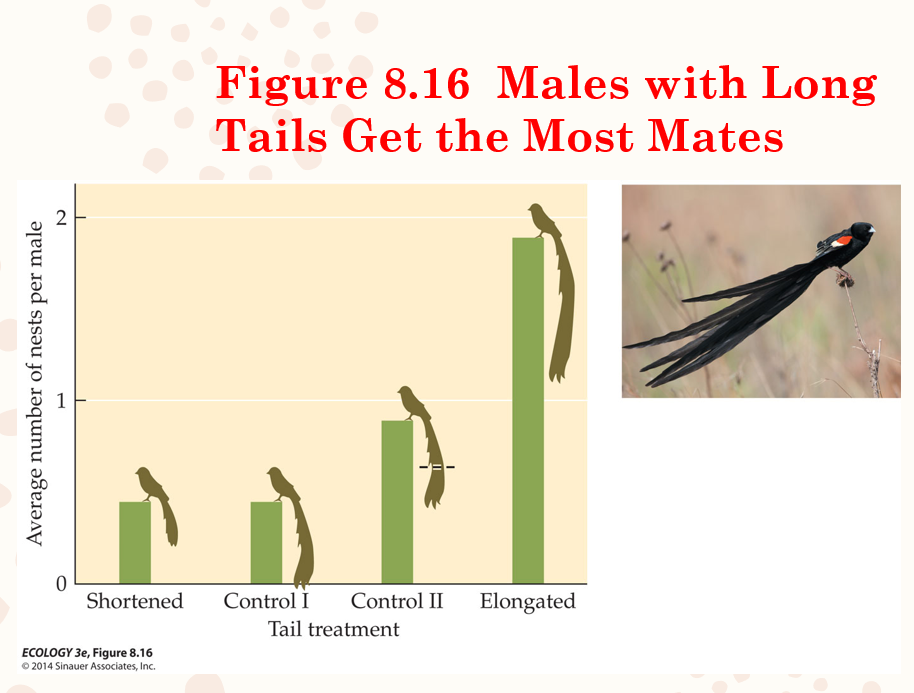
What are the two theories about why sex favors brighter colors?
Handicap hypothesis- you have to be fit to survive, having a bright color as a handicap
Sexy son hypothesis- I find bright colors attractive. This means that other females will find my bright colored son attractive.
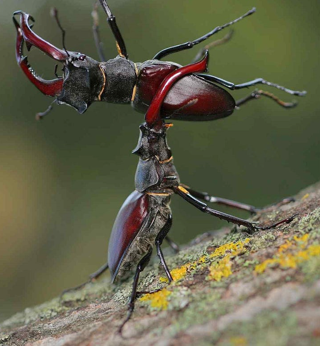
What is intrasexual selection?
Competition between males
Involves displays, fighting, etc.
Usually a single dominant strategy
What is an example of trait divergence in intrasexual selection?
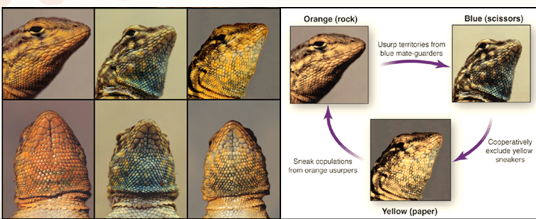
Rock, paper, scissors in side blotched lizards
Orange = highly competitive and can have a large territory with many mates
Blue= less competitive, smaller territory, keeps mates close
yellow= unable to hold territory, looks like females (femboys)
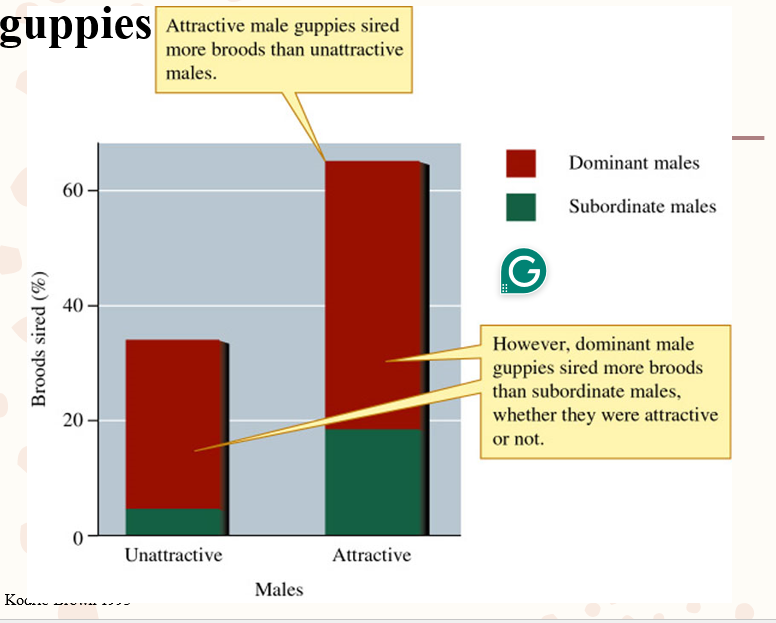
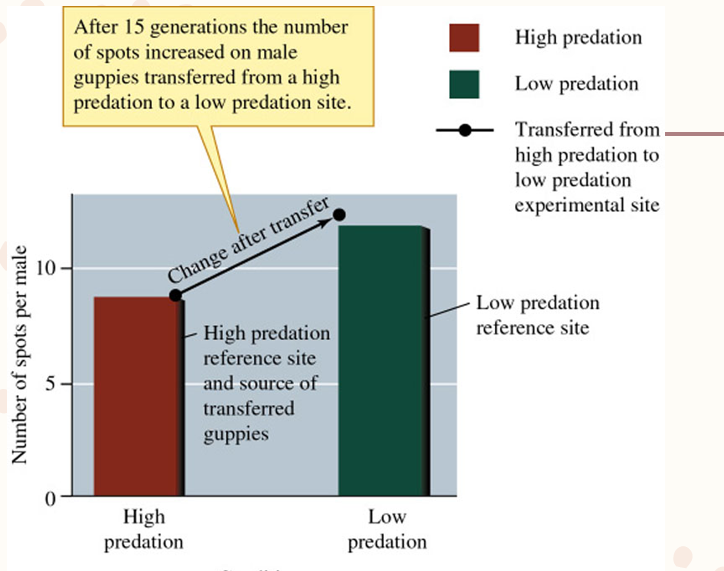
Describe Endler’s Guppies study on sexual selection
Females select attractive males who are behaviorally dominant.
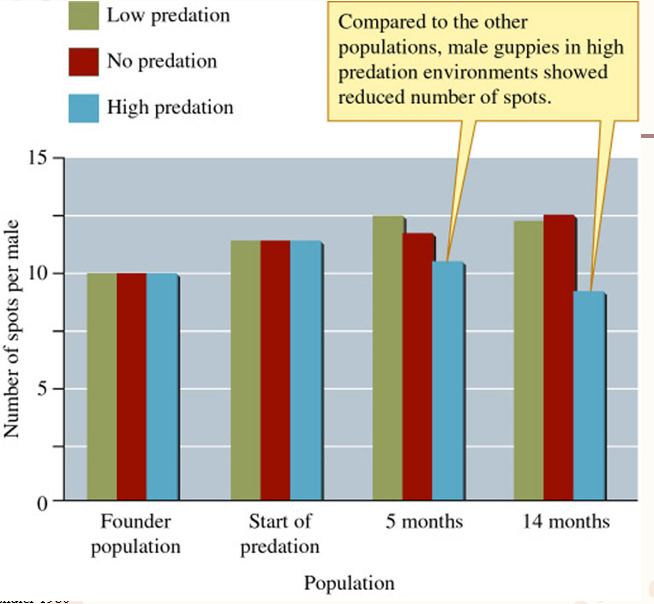
Male coloration is a tradeoff with predation risk.
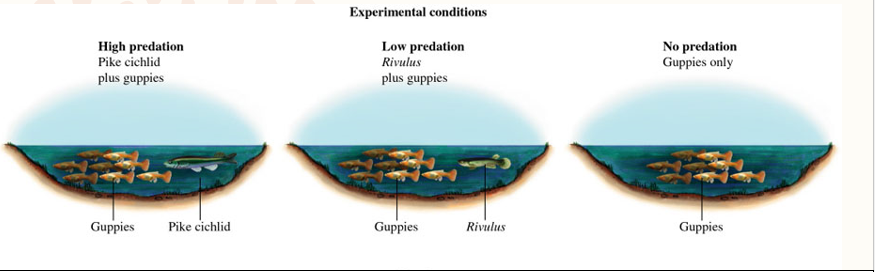
What is the greenhosue experimental design?
3 treatments
Ponds with pike cichlids and guppies- high predation
Ponds with Rivulus- lower predation
Ponds without predators- no predation
What was the result from the greenhouse experiment design?
What is the field experiment for guppy transfer and the results?
Basically the same as the greenhouse experiment design except for in the wild
Describe the mating attitudes between choosy and nonchoosy sex?
nonchoosy sex- wants to mate as much as possible to insure more offspirng. Greater chance of survival regardless of genetic qualtiy
choosy sex- wants to have best offspring because of larger resource investment and higher likelihood of higher quality sex surviving
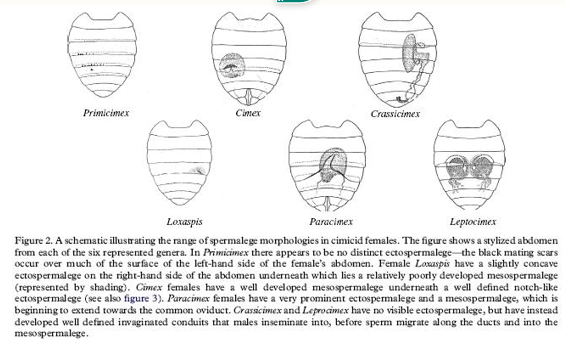
How does the male subject the female attitude to reproduction?
Evolutionary arms race between sexes in bedbugs
What is kin selection?
Increasing the fitness of relatives increases the chance that your genes are passed on. ( lots of shared genetic material)
What is inclusive fitness?
Personal fitness +( r multiplied by (relative’s fitness) )
What is Eusociality?
Example in hymenoptera- haplodiploidy
females are 2N (fertilized eggs) and males are N (unfertilized egg)
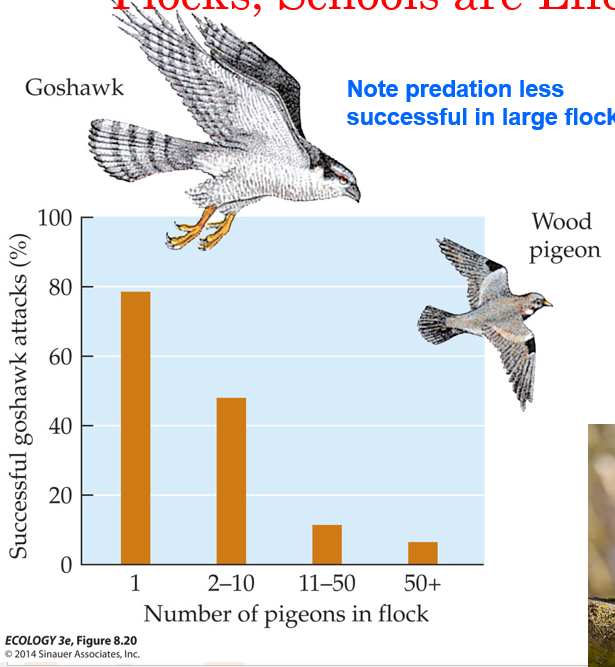
Why are prey animals social?
Flocks and schools are effective predator deterrents
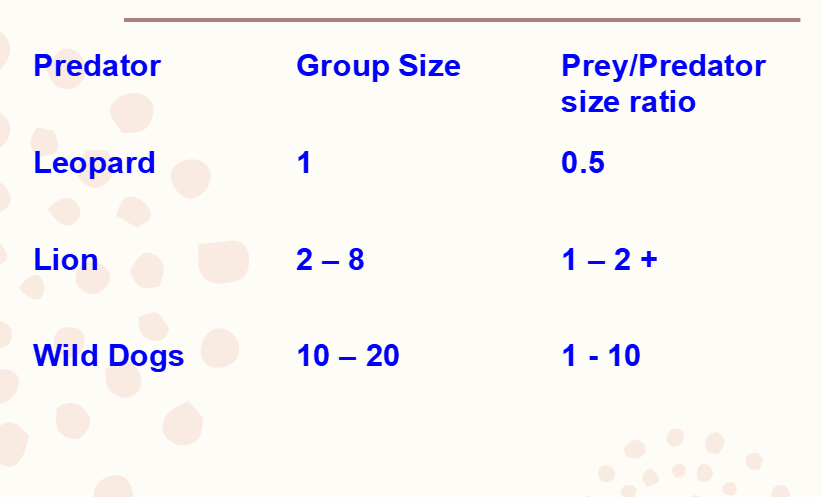
Why are predators social?
Can hunt larger prey —> more efficiency
There is an optimal group size
What is group selection?
Explain how Eusociality in social hymenoptera increases inclusive through kin selection
females are diploid (2N)
males develop from unfertilized eggs and are haploid (N).
This creates an unusual genetic situation: sisters share 75% of their genes (compared to the normal 50% between siblings), while a female shares only 50% with her own offspring.
This means a female worker maximizes her inclusive fitness by raising sisters rather than producing offspring herself. They're propagating more of their genes by tending their sisters than they would by reproducing directly.
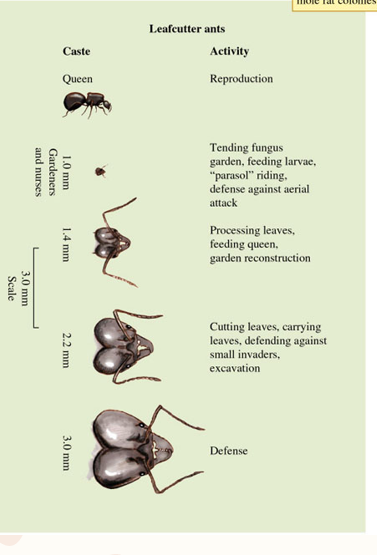
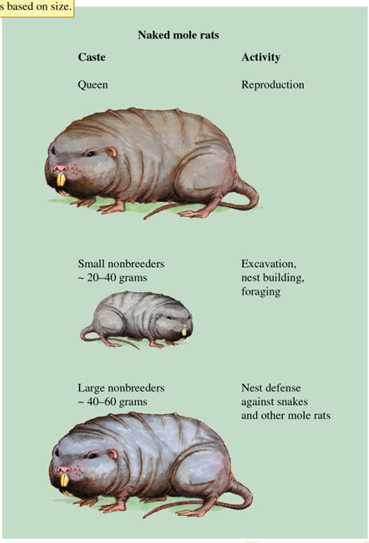
Explain how sociality in naked mole rats/ diploid organisms increases inclusive fitness
Yet naked mole rats have a single reproductive queen, sterile workers, and nest defenders. The explanation is that inbreeding in underground colonies is so extreme that the average genetic relatedness within a colony is r = 0.81