5BBM0218 Physiology and Pharmacology of the Central Nervous System - Revision
 Call Kai
 Learn
Learn Practice Test
 Spaced Repetition
 Match
Match Flashcards
 Knowt Play
1/321

There's no tags or description
Looks like no tags are added yet.
Name | Mastery | Learn | Test | Matching | Spaced | Call with Kai |
|---|
No analytics yet
Send a link to your students to track their progress
322 Terms
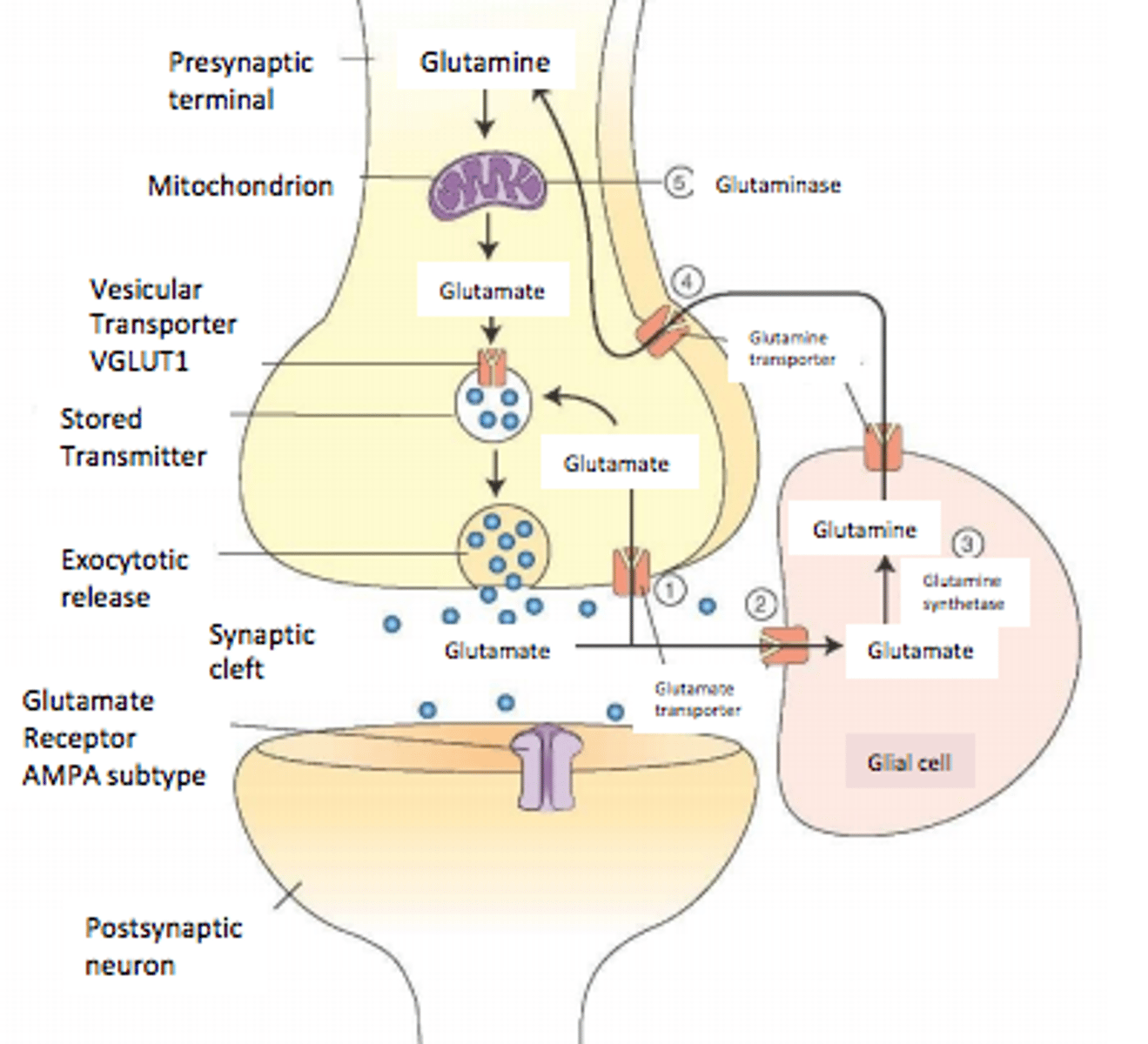
Which of the following is true regarding neurotransmitter release?
a) All types of neurotransmitter release require calcium
b) Some neurotransmitters can be released through non-traditional mechanisms like reverse transport or leak channels
c) Only action potentials can trigger the release of neurotransmitters
d) None of the above
b) Some neurotransmitters can be released through non-traditional mechanisms like reverse transport or leak channels
Which of the following is true regarding glial cells?
a) They are electrically excitable
b) They are capable of generating action potentials
c) They cannot propagate through a neuronal network
d) None of the above
c) They cannot propagate through a neuronal network
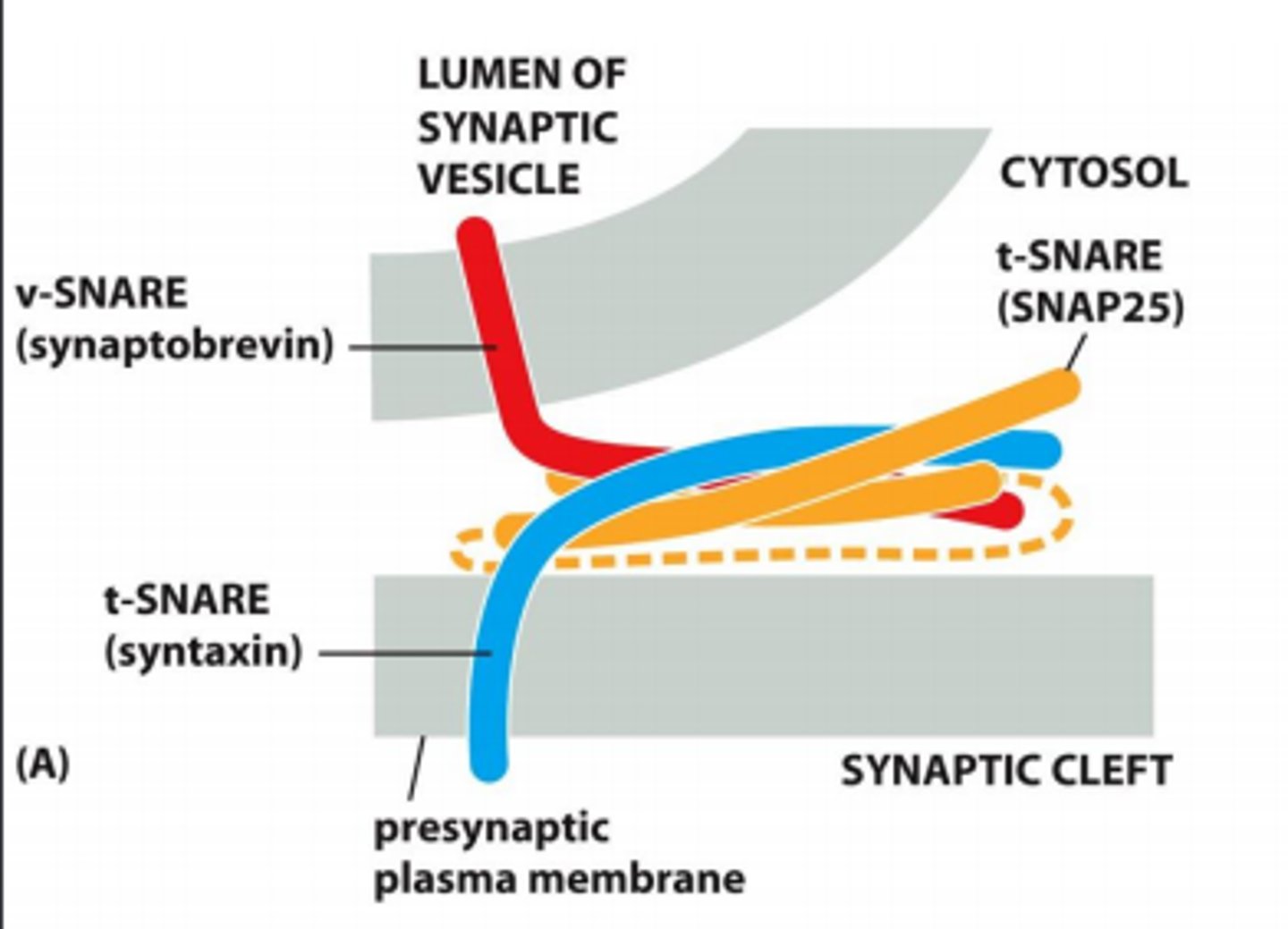
What is the role of SNARE proteins in neurotransmitter release?
a) They bind to calcium ions and trigger the release of neurotransmitters
b) They are responsible for the fusion of synaptic vesicles with the presynaptic membrane
c) They act as neurotransmitters themselves
d) None of the above
b) They are responsible for the fusion of synaptic vesicles with the presynaptic membrane
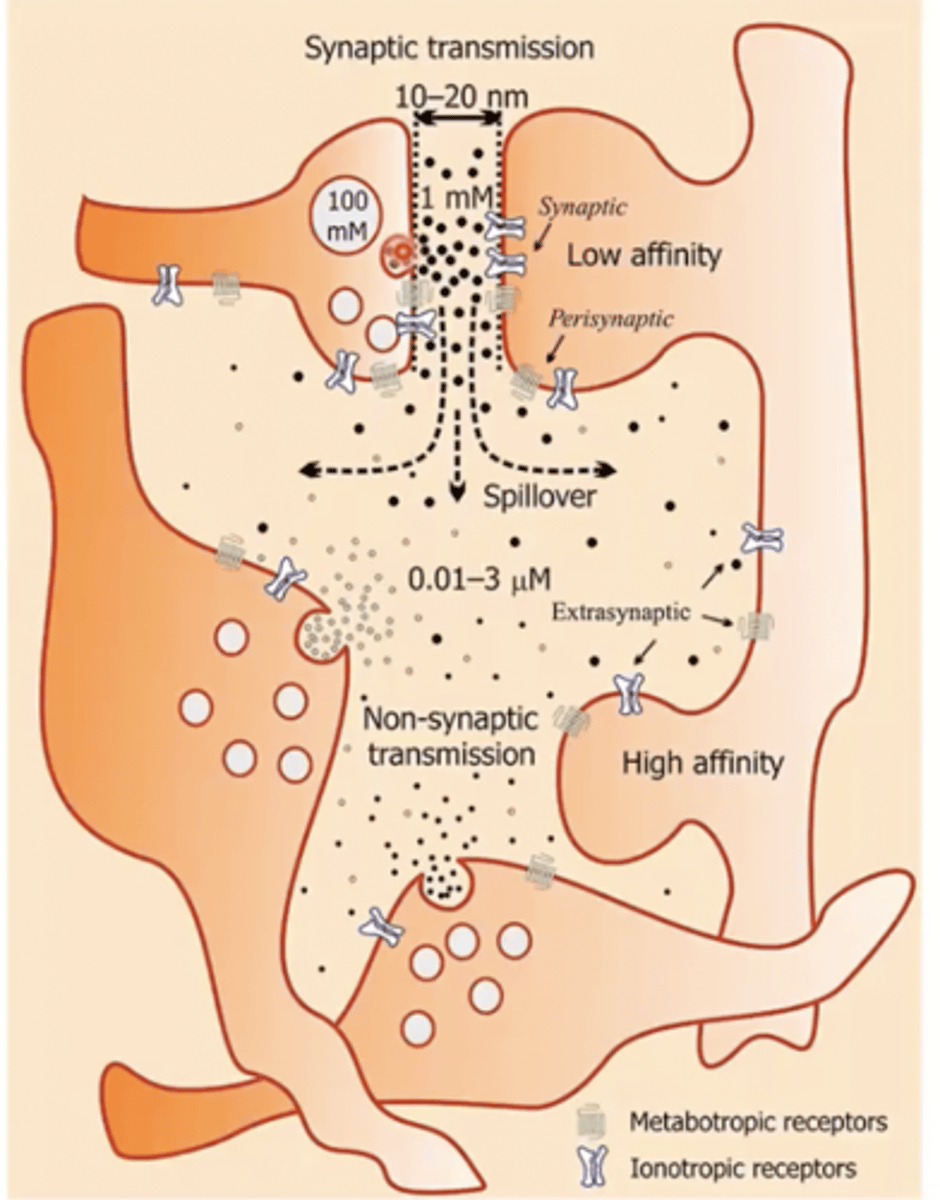
Which of the following is an example of a non-traditional mechanism of neurotransmitter release?
a) Release through exocytosis of vesicular compartments
b) Release through calcium-dependent exocytosis
c) Release through volume transmission
d) None of the above
c) Release through volume transmission
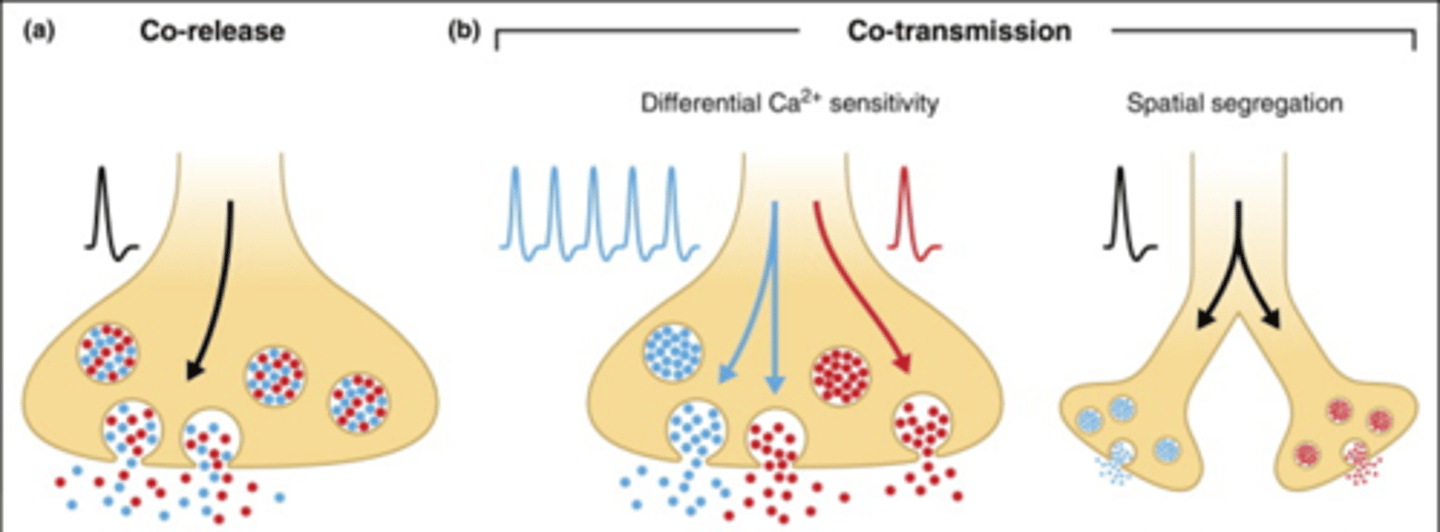
Which of the following is true regarding co-release of neurotransmitters?
a) It refers to the release of multiple types of neurotransmitters by a single neuron
b) It occurs through a process called volume transmission
c) It is always calcium-dependent
d) None of the above
a) It refers to the release of multiple types of neurotransmitters by a single neuron
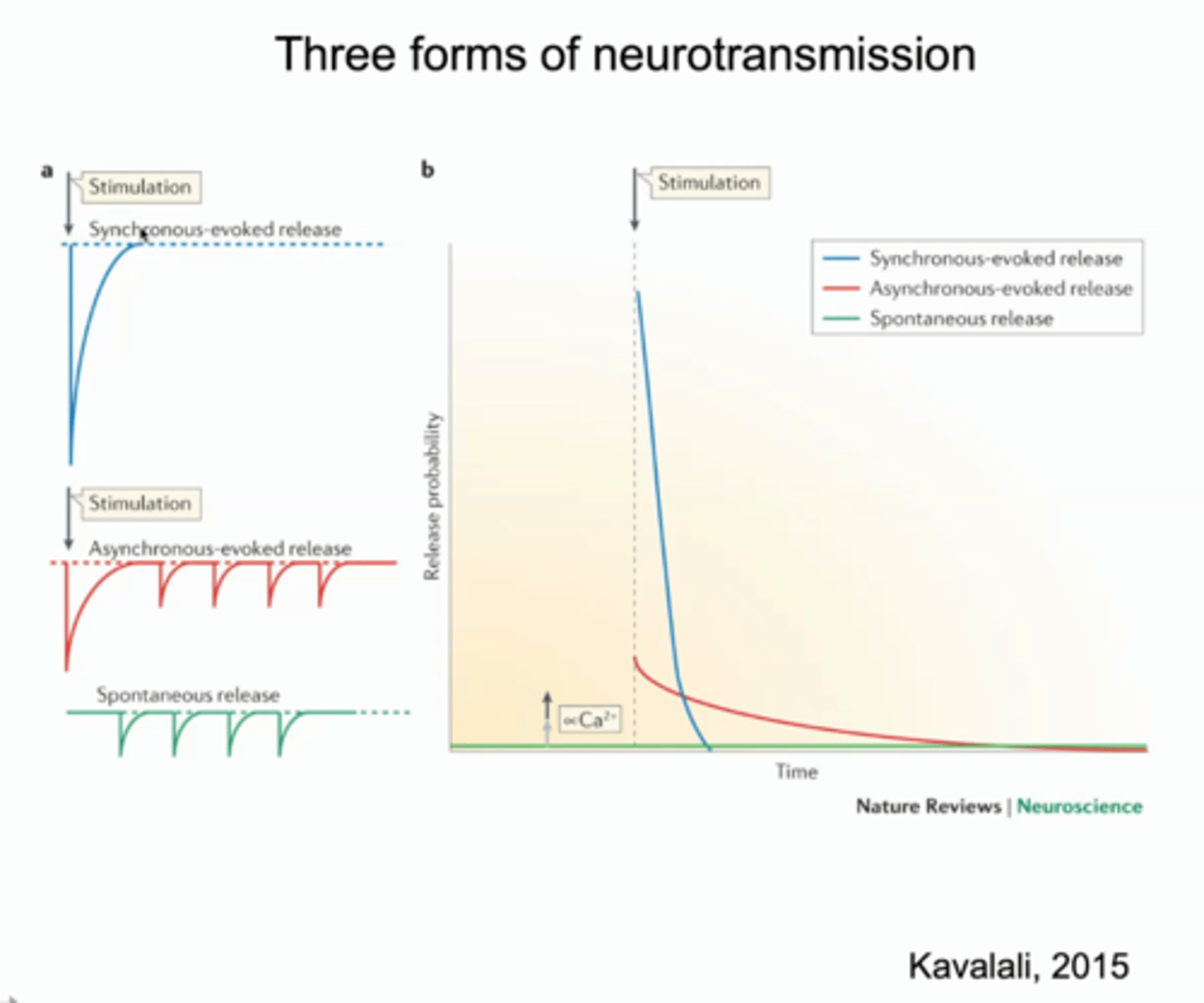
Which type of neurotransmitter release is not dependent on calcium?
a) Spontaneous release
b) Asynchronous release
c) Synchronous release
d) Calcium-independent release
d) Calcium-independent release
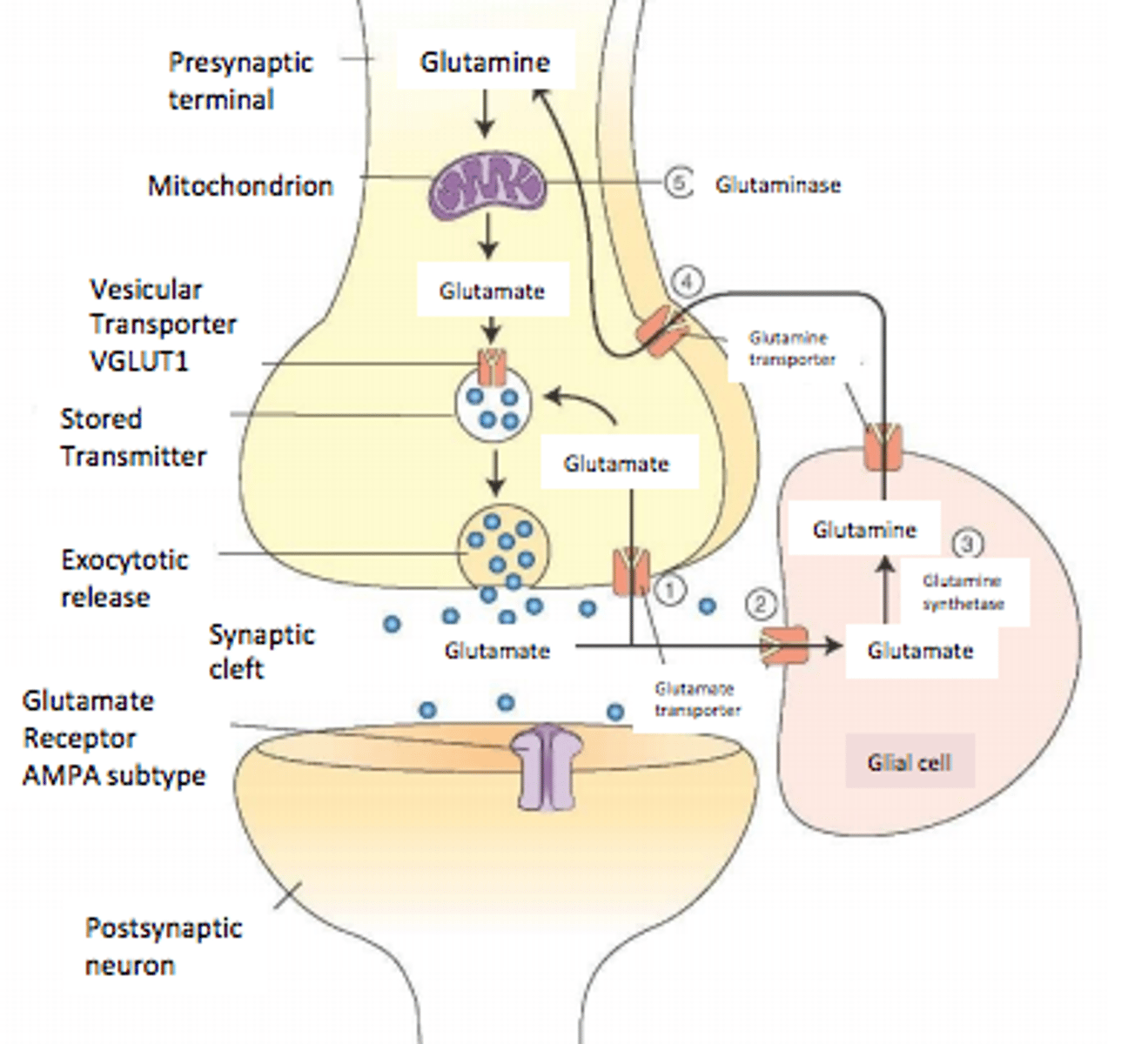
What is the mechanism of calcium-dependent neurotransmitter release?
a) The influx of sodium ions into the presynaptic terminal
b) The influx of calcium ions into the presynaptic terminal
c) The efflux of calcium ions from the presynaptic terminal
d) The efflux of sodium ions from the presynaptic terminal
b) The influx of calcium ions into the presynaptic terminal
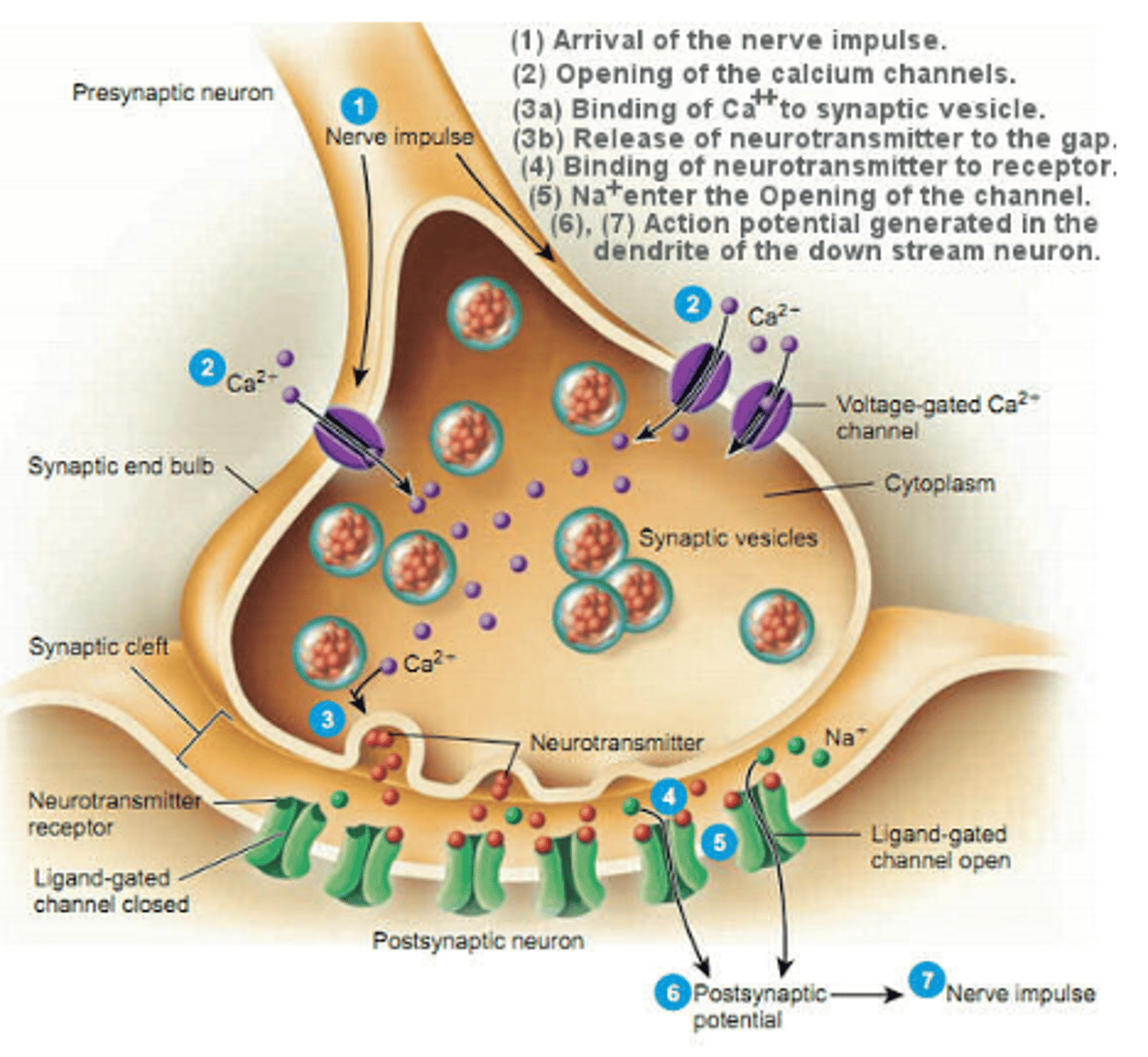
Which type of neurotransmitter release is calcium-independent?
a) Spontaneous release
b) Asynchronous release
c) Synchronous release
d) All of the above
d) All of the above
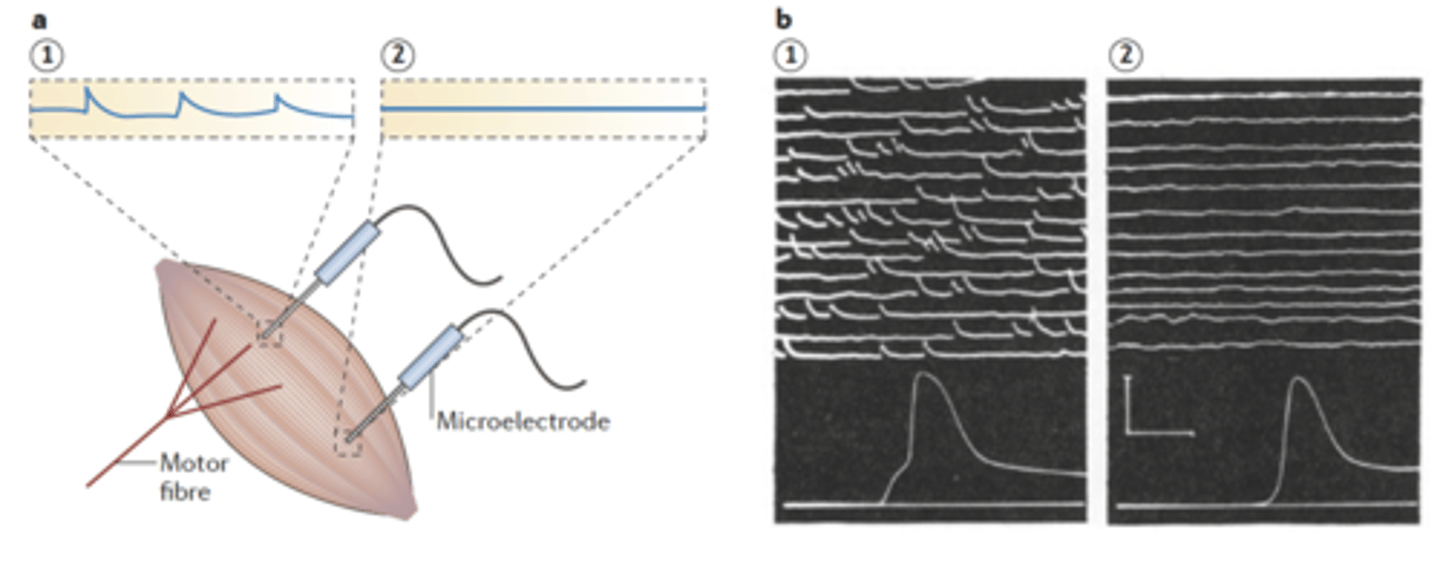
Which of the following statements about spontaneous neurotransmitter release is true?
a) It always involves an action potential
b) It is always calcium-independent
c) It occurs without an action potential and is calcium-dependent
d) It occurs without an action potential and is calcium-independent
c) It occurs without an action potential and is calcium-dependent
Which type of neurotransmitter release can involve an action potential but not always in time with the release?
a) Spontaneous release
b) Asynchronous release
c) Synchronous release
d) Calcium-independent release
b) Asynchronous release
What is the primary trigger for calcium-dependent neurotransmitter release? a) The presence of neurotransmitters in the synaptic cleft
b) The influx of sodium ions into the presynaptic terminal
c) The influx of calcium ions into the presynaptic terminal
d) The efflux of calcium ions from the postsynaptic terminal
c) The influx of calcium ions into the presynaptic terminal
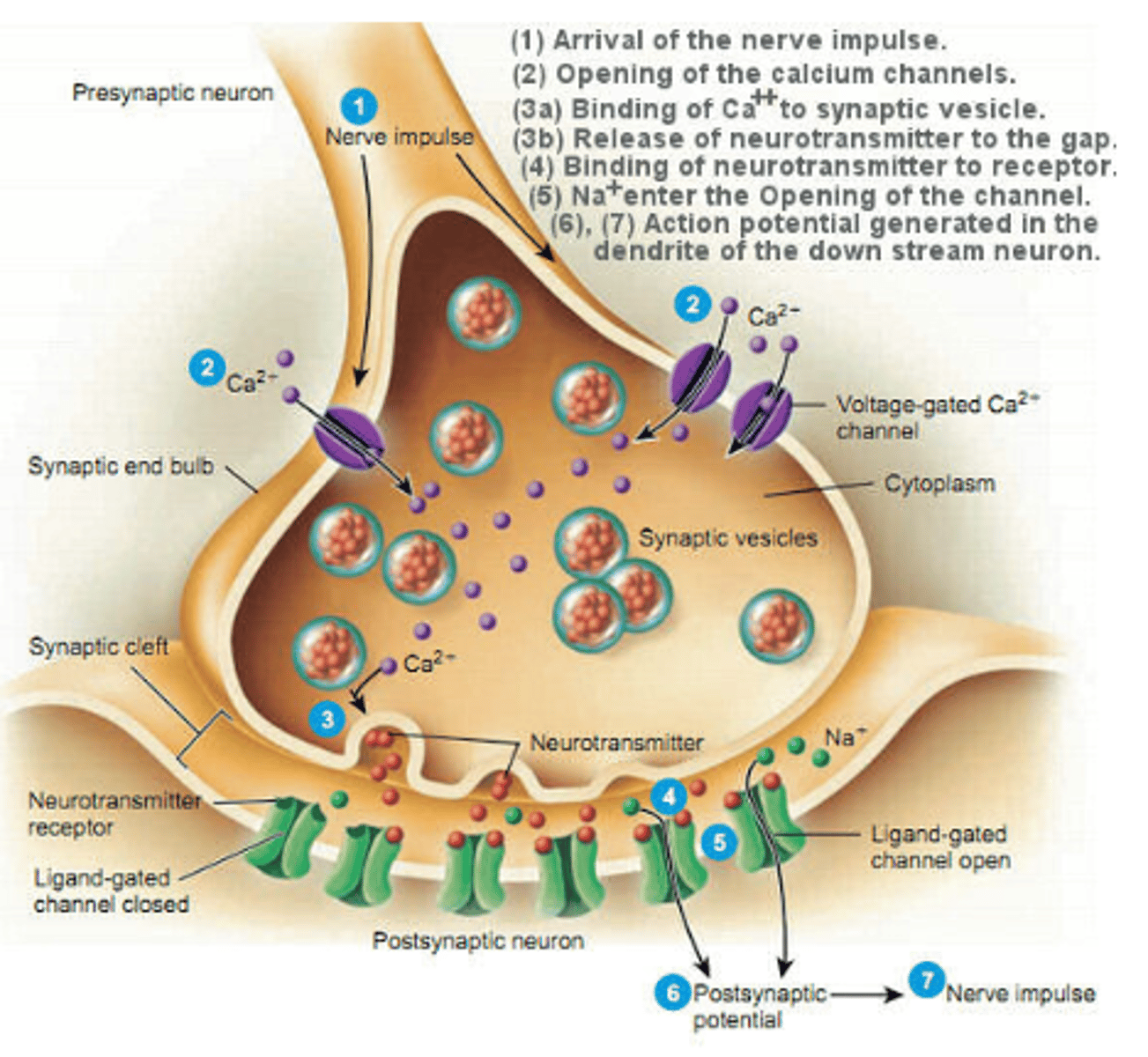
What is synchronous neurotransmitter release?
a. Release of neurotransmitters without an action potential
b. Release of neurotransmitters in response to an action potential
c. Release of neurotransmitters in the absence of calcium ions
d. Release of neurotransmitters through reverse transport
b. Release of neurotransmitters in response to an action potential
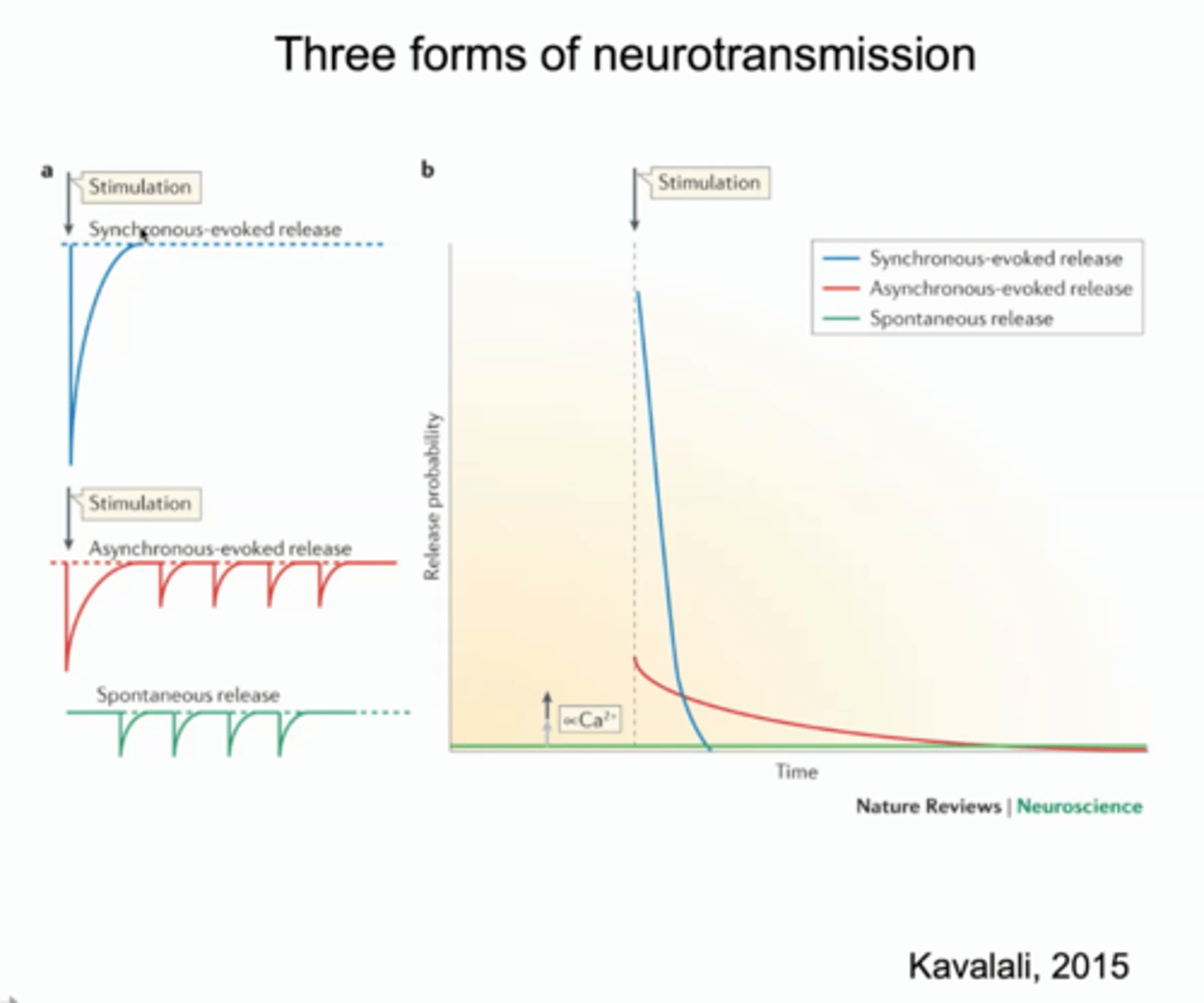
What triggers vesicle movement and priming in synchronous neurotransmitter release?
a. Depolarization of the postsynaptic terminal
b. Entry of calcium ions into the presynaptic terminal
c. Binding of neurotransmitters to postsynaptic receptors
d. Repolarization of the presynaptic terminal
b. Entry of calcium ions into the presynaptic terminal
What is the role of voltage-gated calcium channels in synchronous neurotransmitter release?
a. They facilitate entry of calcium ions into the postsynaptic terminal
b. They facilitate entry of calcium ions into the presynaptic terminal
c. They trigger vesicle movement and priming
d. They recycle empty vesicles back into the presynaptic terminal
b. They facilitate entry of calcium ions into the presynaptic terminal
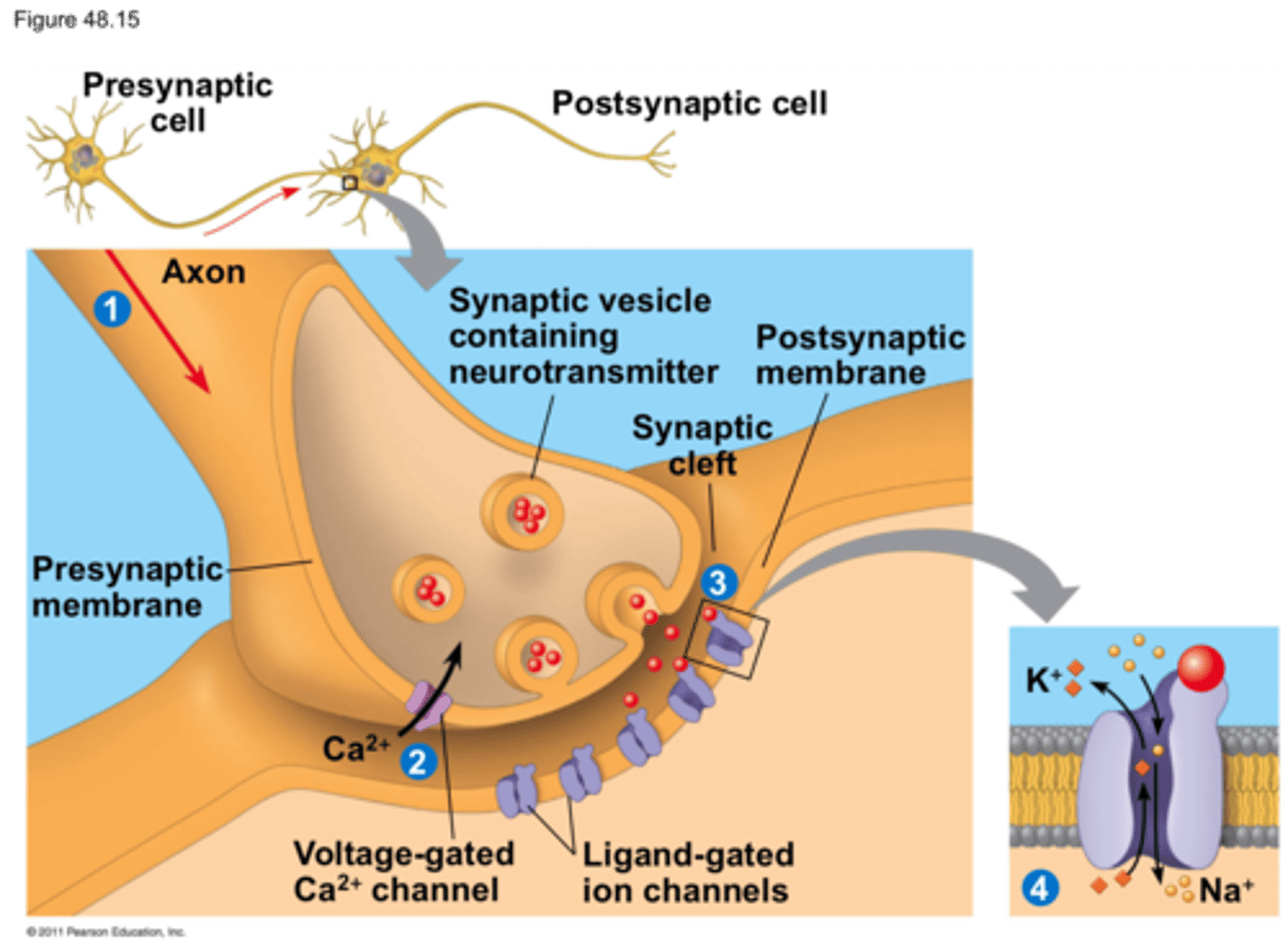
What happens to empty vesicles after neurotransmitter release?
a. They are destroyed and recycled as waste products
b. They are released into the extracellular matrix
c. They are retrieved and recycled back into the presynaptic terminal
d. They are transported to the postsynaptic terminal for reuse
c. They are retrieved and recycled back into the presynaptic terminal
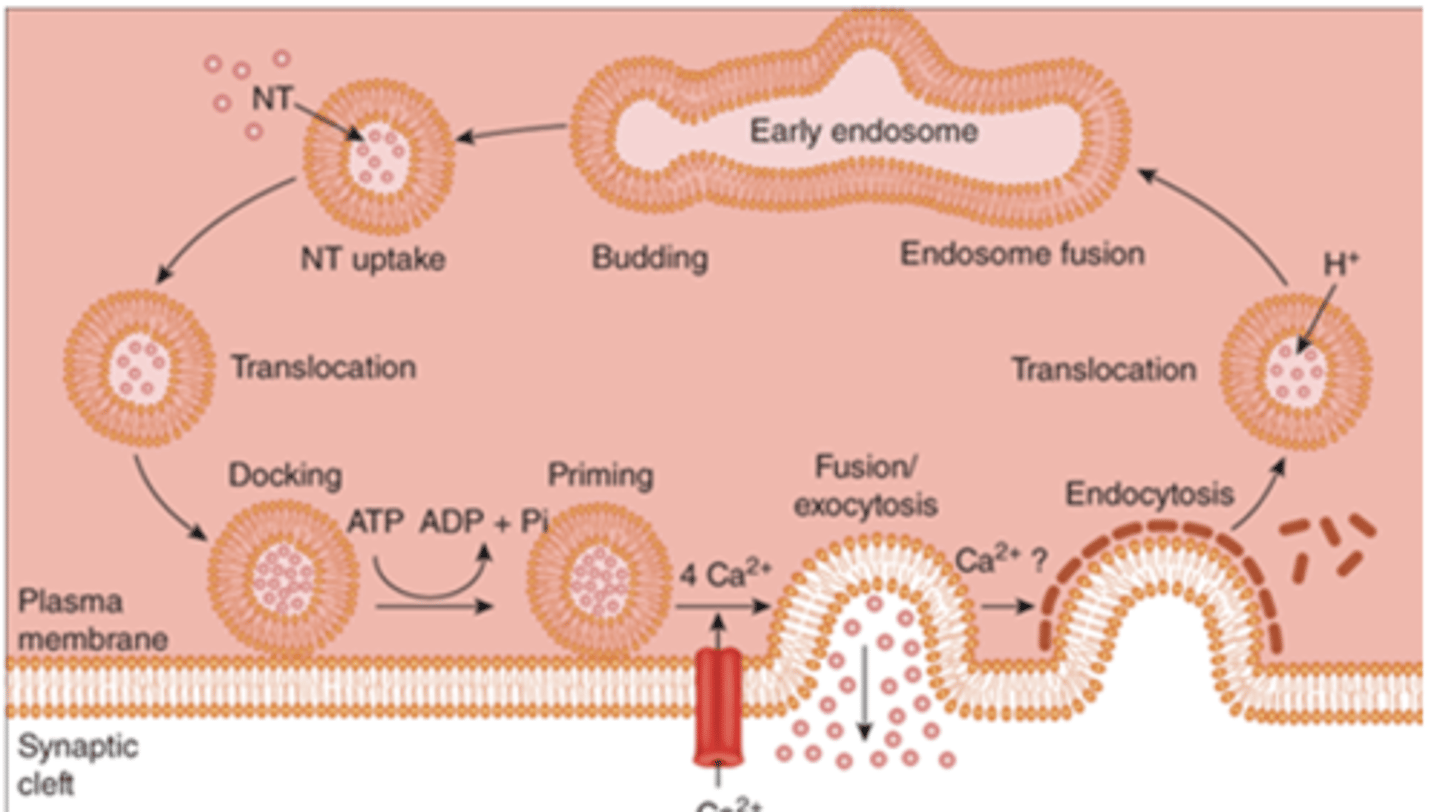
Which of the following is true regarding calcium-dependent neurotransmitter release?
a) It occurs independently of an action potential
b) It involves voltage-gated sodium channels
c) Calcium ions trigger neurotransmitter release
d) It only involves vesicle movement
c) Calcium ions trigger neurotransmitter release
Which of the following is an example of a neurotransmitter released through calcium-independent mechanisms?
a) Glutamate
b) Acetylcholine
c) Dopamine
d) Nitric oxide
d) Nitric oxide
How does ion entry at the presynaptic terminal differ from ion entry at the nodes of Ranvier?
a) It involves voltage-gated potassium channels
b) It is not dependent on an action potential
c) It is facilitated by voltage-gated calcium channels
d) It occurs through passive diffusion
c) It is facilitated by voltage-gated calcium channels
How do voltage-gated ion channels contribute to neurotransmitter release?
a) They cause depolarization of the postsynaptic membrane
b) They regulate the amount of neurotransmitter released
c) They facilitate the entry of calcium ions into the presynaptic terminal
d) They inhibit the release of neurotransmitters
c) They facilitate the entry of calcium ions into the presynaptic terminal
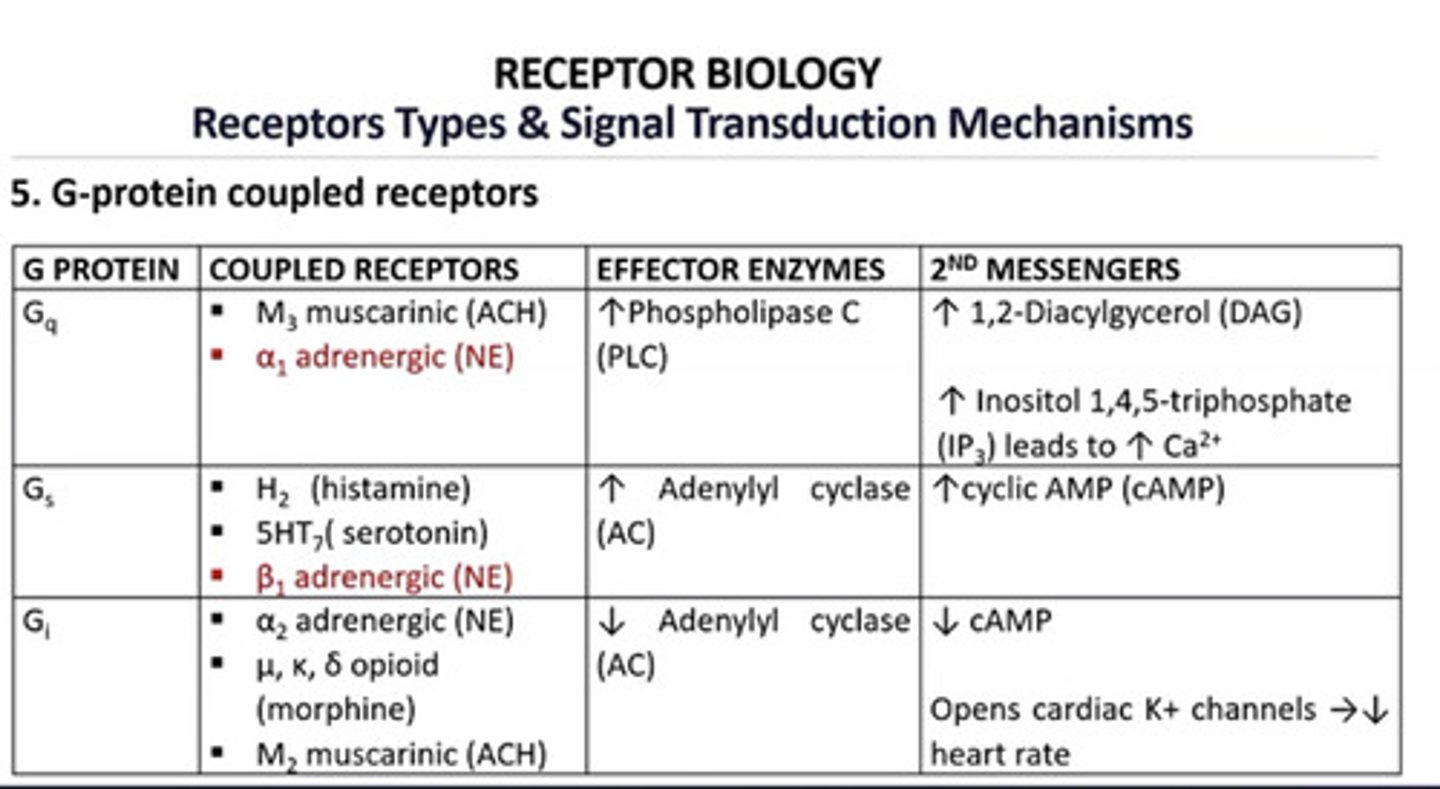
Which G-protein subtype is involved in the regulation of neurotransmitter release?
a) Gq
b) Gi
c) Gs
d) G12/13
a) Gq
What is vesicular priming and its role in neurotransmitter release?
a) The process of vesicle formation in the cytoplasm of the neuron.
b) The process of preparing vesicles for fusion with the presynaptic membrane.
c) The process of neurotransmitter binding to postsynaptic receptors.
d) The process of degrading neurotransmitters in the synaptic cleft.
b) The process of preparing vesicles for fusion with the presynaptic membrane.
What is the difference between positional priming and molecular priming?
a) Positional priming is the process of vesicle fusion with the presynaptic membrane, while molecular priming is the process of preparing vesicles for fusion.
b) Positional priming involves the interaction between vesicles and specific sites on the presynaptic membrane, while molecular priming involves changes in vesicle proteins and lipids.
c) Positional priming occurs after molecular priming, while molecular priming occurs before vesicle docking.
d) Positional priming is necessary for efficient neurotransmitter release, while molecular priming is not.
b) Positional priming involves the interaction between vesicles and specific sites on the presynaptic membrane, while molecular priming involves changes in vesicle proteins and lipids.
Why is vesicular priming essential for efficient neurotransmitter release?
a) It ensures the release of a specific neurotransmitter.
b) It increases the amount of neurotransmitter released from each vesicle.
c) It allows for precise control of the timing and amount of neurotransmitter release.
d) It prevents the degradation of neurotransmitters in the synaptic cleft.
c) It allows for precise control of the timing and amount of neurotransmitter release
What are the steps involved in vesicle docking and fusion with the presynaptic membrane?
a) Endocytosis, exocytosis, and diffusion.
b) Binding of vesicles to specific sites on the presynaptic membrane, formation of the SNARE complex, and fusion of vesicles with the membrane.
c) Depolarization, neurotransmitter release, and reuptake.
d) Binding of neurotransmitters to postsynaptic receptors, activation of intracellular signaling pathways, and changes in gene expression.
b) Binding of vesicles to specific sites on the presynaptic membrane, formation of the SNARE complex, and fusion of vesicles with the membrane.
Why is proper vesicle docking and fusion important for efficient synaptic transmission?
a) It ensures the release of a specific neurotransmitter.
b) It increases the amount of neurotransmitter released from each vesicle.
c) It allows for precise control of the timing and amount of neurotransmitter release.
d) It prevents the degradation of neurotransmitters in the synaptic cleft.
c) It allows for precise control of the timing and amount of neurotransmitter release.
What is the role of SNARE proteins in vesicular docking and fusion in neurons?
a. They trigger vesicular fusion
b. They form a complex that is responsible for vesicular docking
c. They interact with PIP2 on the presynaptic membrane
d. They cause a change in the conformation of synaptotagmin-1
b. They form a complex that is responsible for vesicular docking
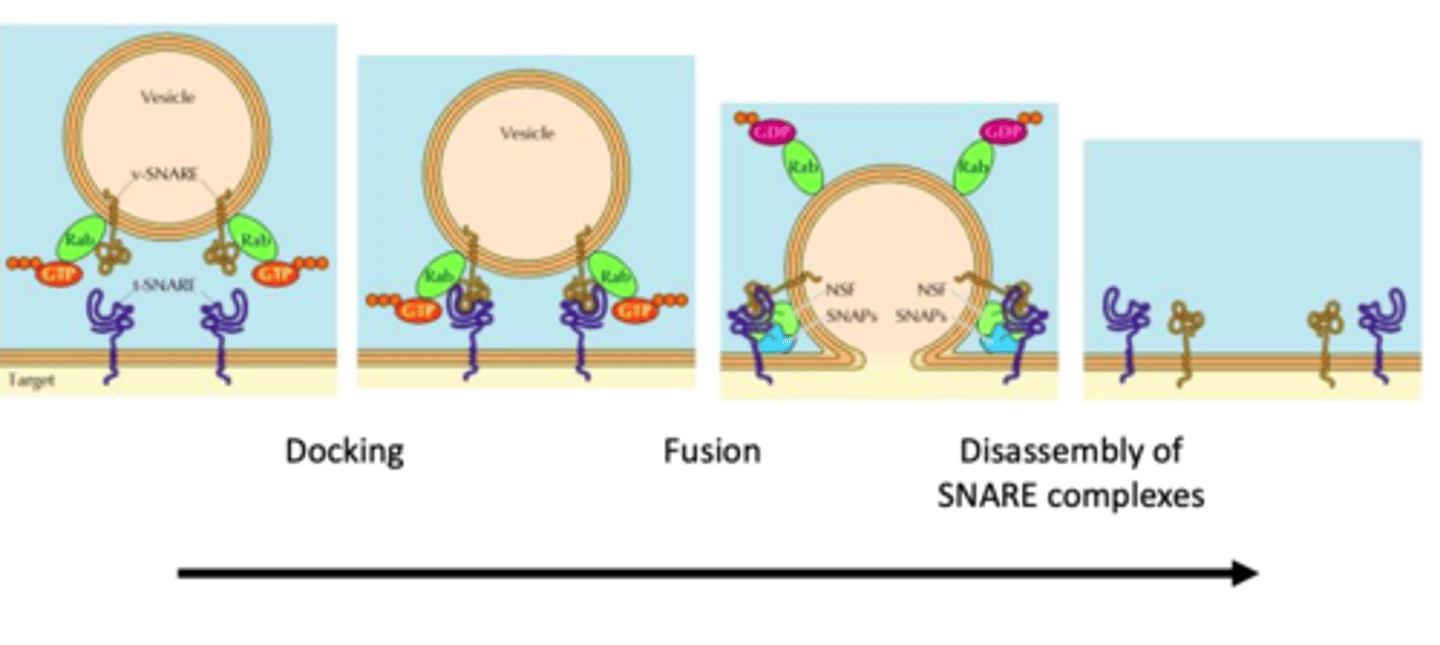
Which of the following proteins is not involved in vesicular docking in neurons?
a. Synaptobrevin
b. Syntaxin-1
c. SNAP-25
d. Synaptotagmin-1
d. Synaptotagmin-1
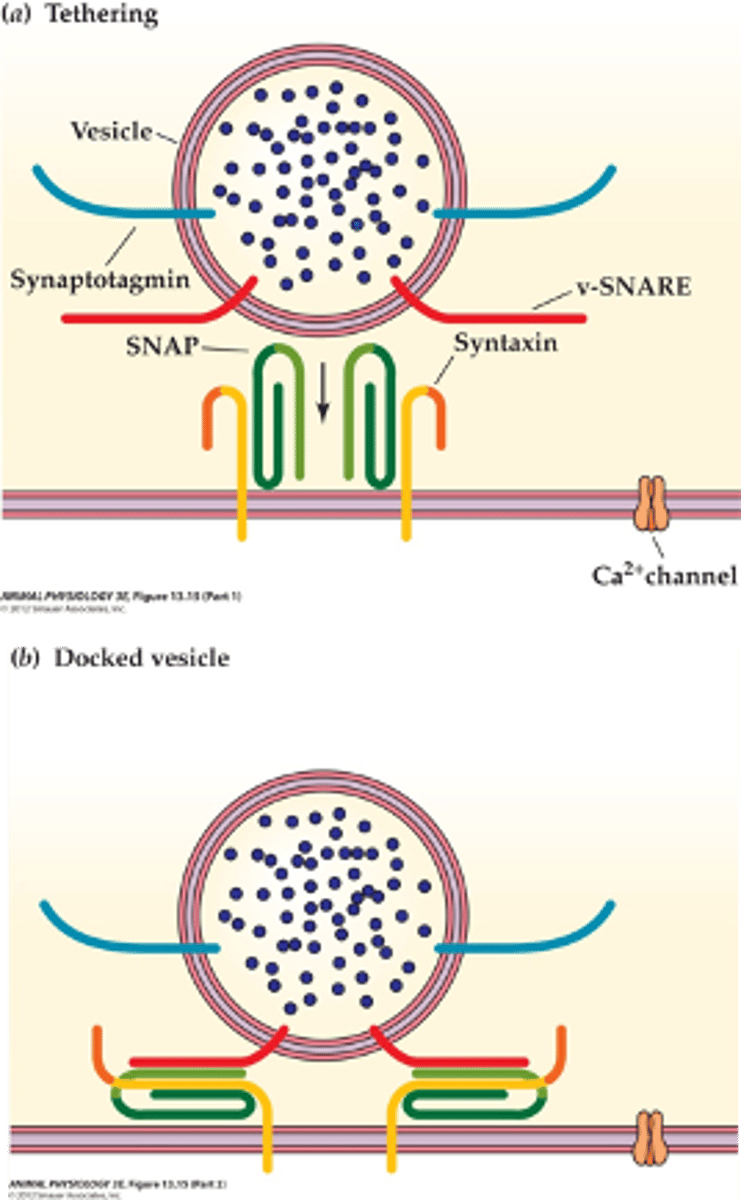
What is the role of synaptotagmin-1 in vesicular fusion in neurons?
a. It triggers vesicular fusion
b. It interacts with PIP2 on the presynaptic membrane
c. It forms a complex that is responsible for vesicular docking
d. It causes a change in the conformation of the SNARE complex
a. It triggers vesicular fusion
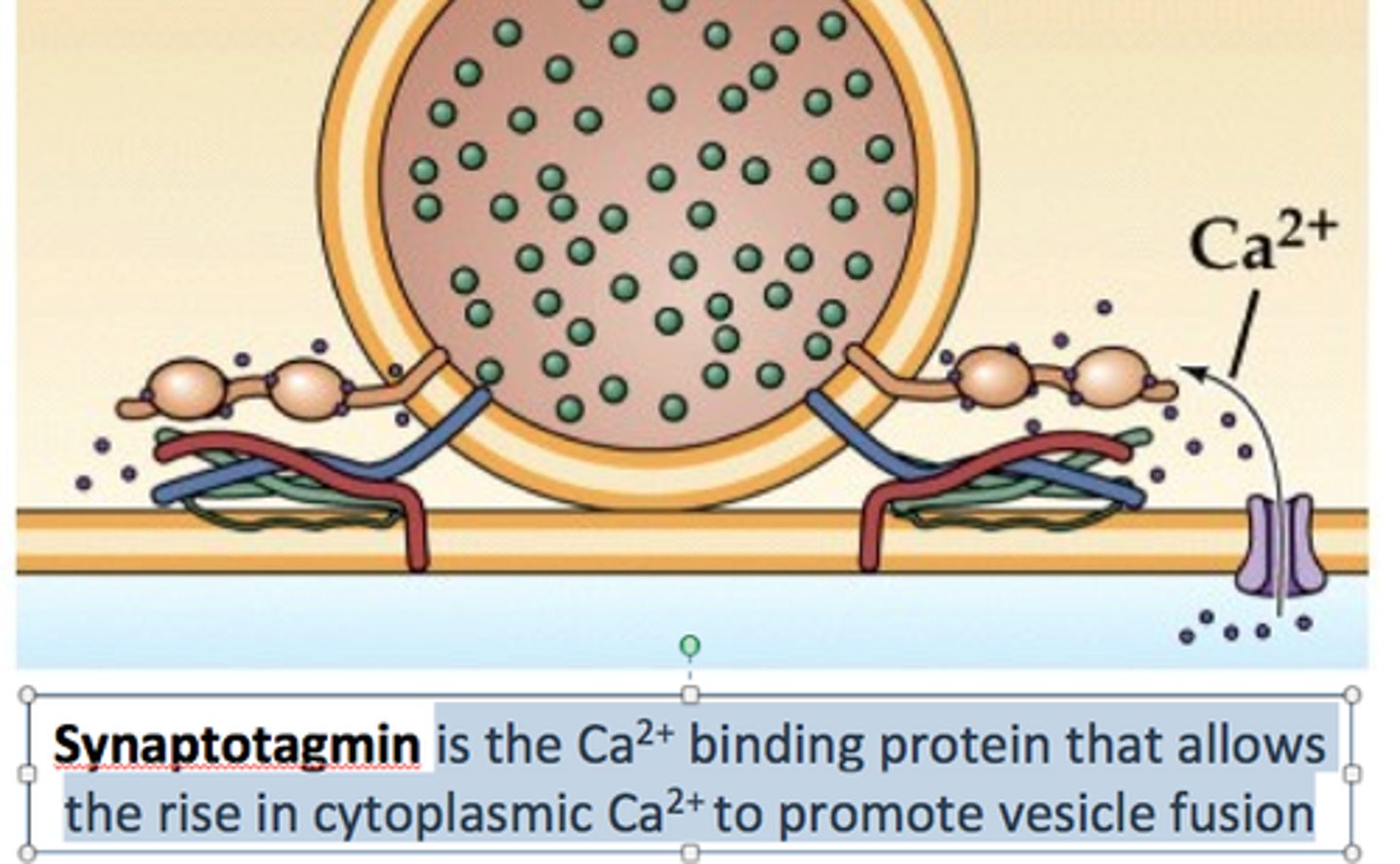
What is the composition of the SNARE complex responsible for vesicular docking in neurons?
a. Synaptobrevin, syntaxin-1, and synaptotagmin-1
b. Synaptobrevin, syntaxin-1, and PIP2
c. Synaptobrevin, syntaxin-1, and SNAP-25
d. Synaptobrevin, SNAP-25, and PIP2
c. Synaptobrevin, syntaxin-1, and SNAP-25
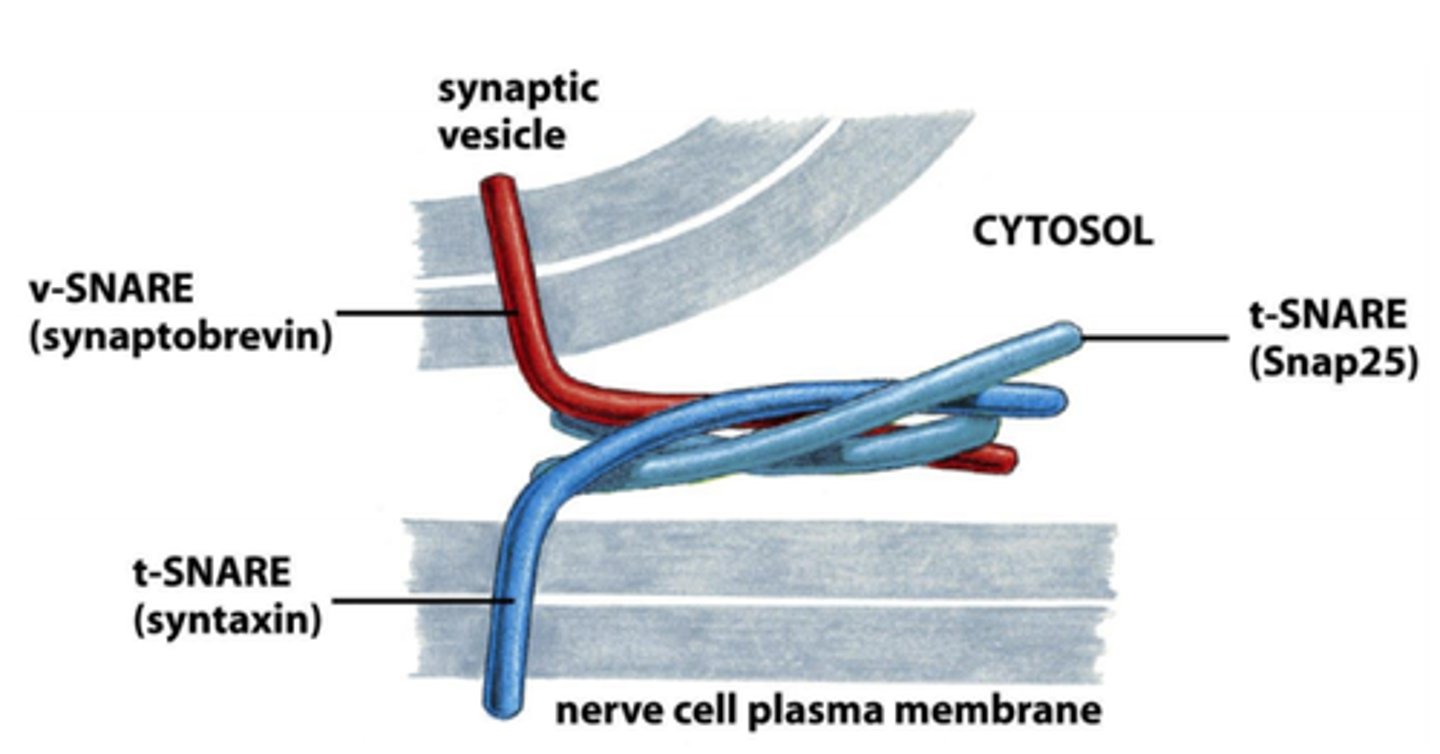
Where can SNARE proteins be located?
- Synaptic vesicles
- Presynaptic membrane
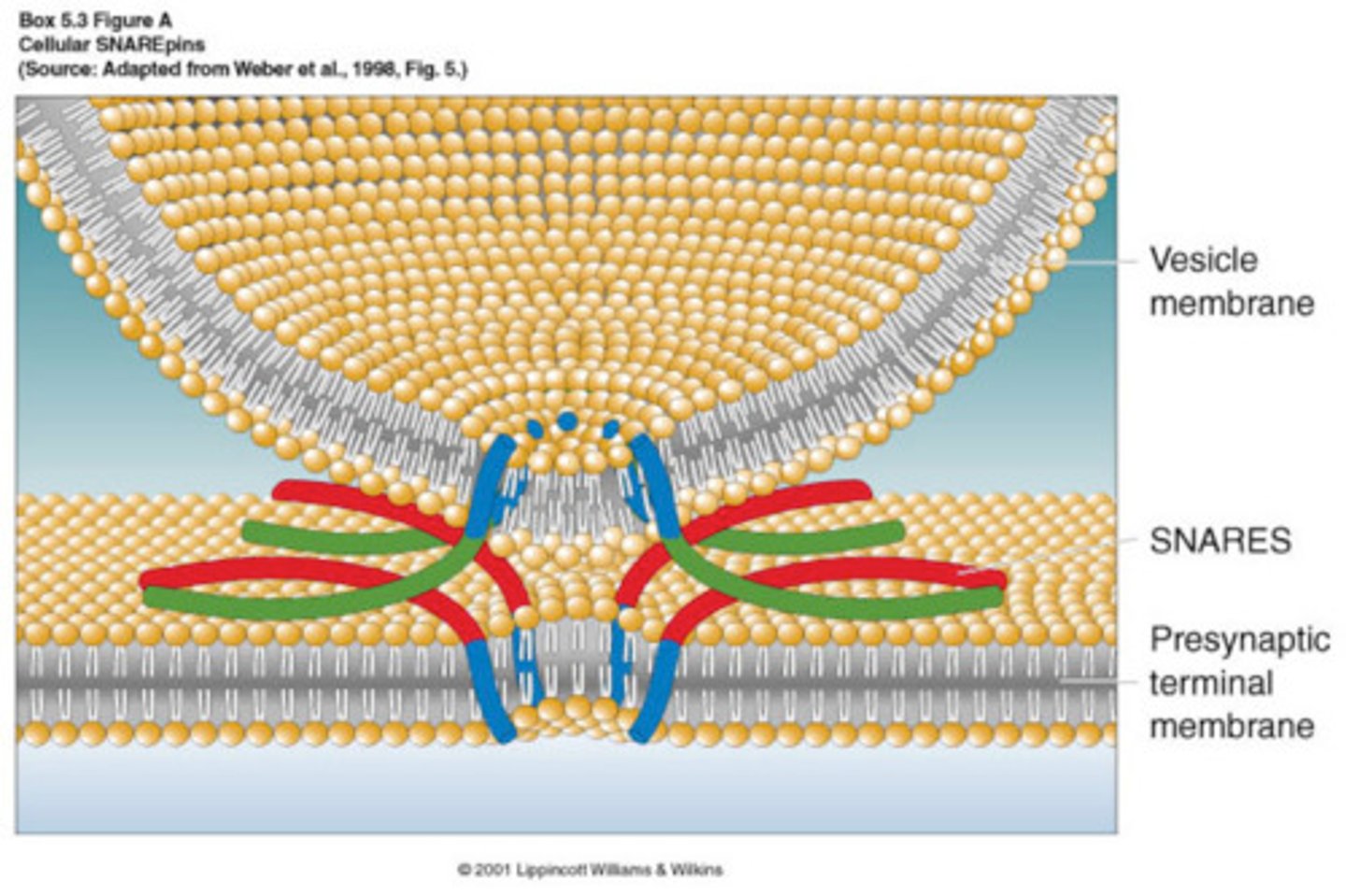
As well as proteins, what other compounds are involved in vesicular fusion?
A) Lipids
B) Sugars
C) Nucleic acids
D) All of the above
A) Lipids
What is co-release of neurotransmitters?
A) The release of a single neurotransmitter from multiple vesicles
B) The release of multiple neurotransmitters from a single vesicle
C) The release of neurotransmitters from both pre- and post-synaptic neurons
D) The release of neurotransmitters from multiple synapses onto a single neuron
B) The release of multiple neurotransmitters from a single vesicle
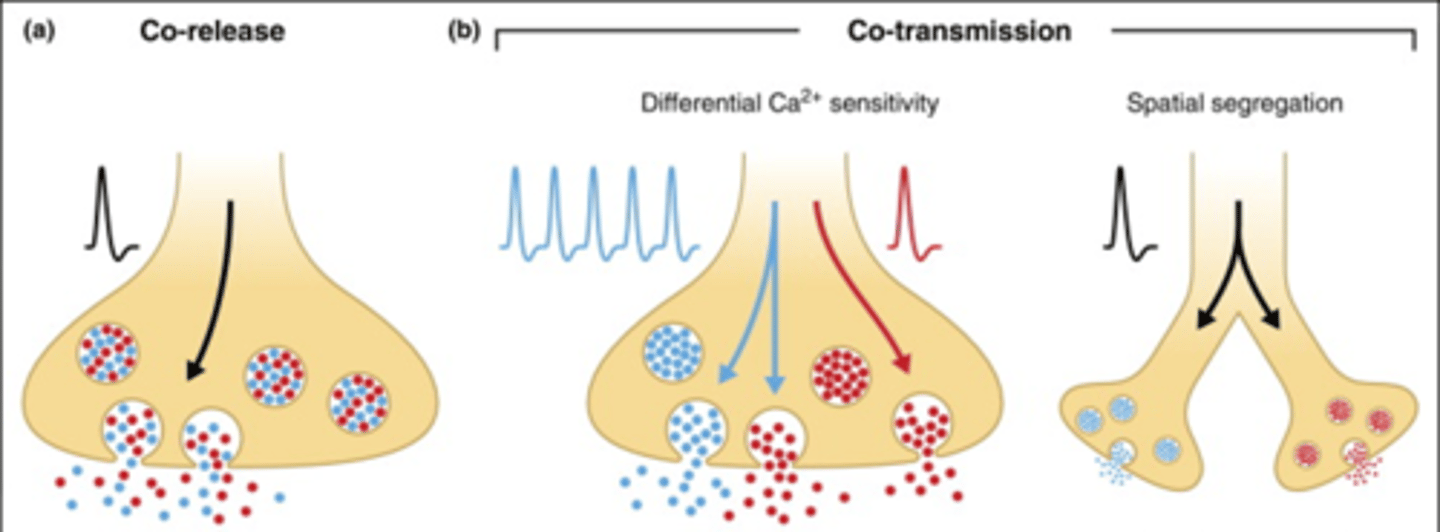
What is co-transmission of neurotransmitters?
A) The release of a single neurotransmitter from multiple vesicles
B) The release of multiple neurotransmitters from a single vesicle
C) The release of neurotransmitters from both pre- and post-synaptic neurons
D) The release of neurotransmitters from multiple synapses onto a single neuron
A) The release of a single neurotransmitter from multiple vesicles
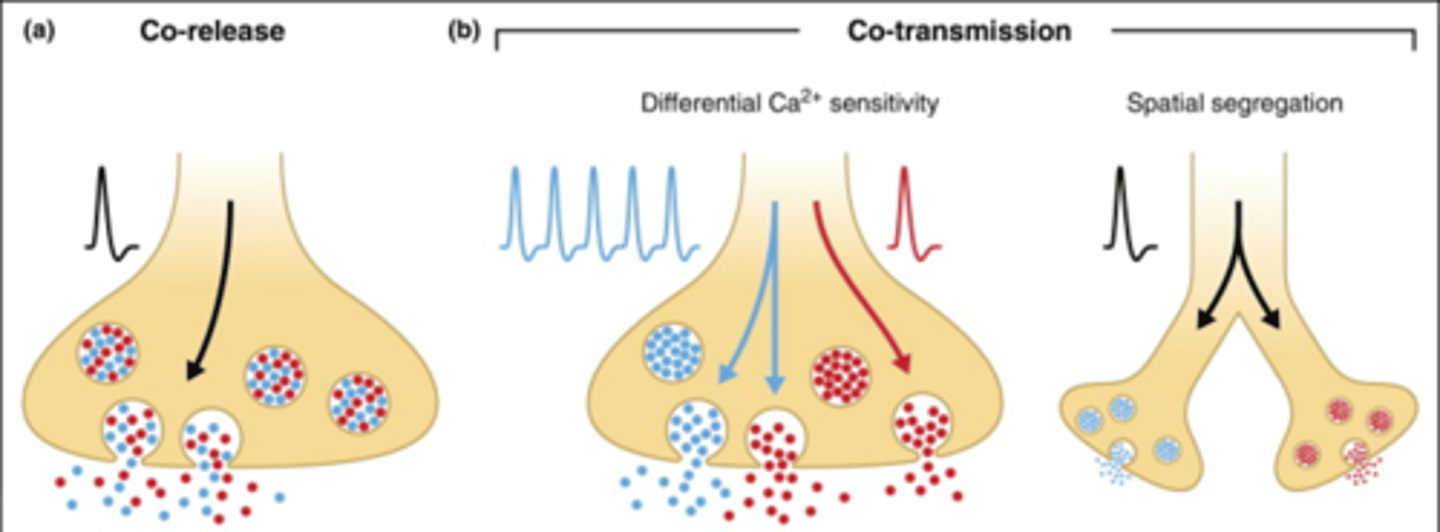
How are both neurotransmitters packaged in co-release?
A) In distinct populations of synaptic vesicles
B) In the same set of synaptic vesicles
C) In different boutons
D) In different postsynaptic targets
B) In the same set of synaptic vesicles
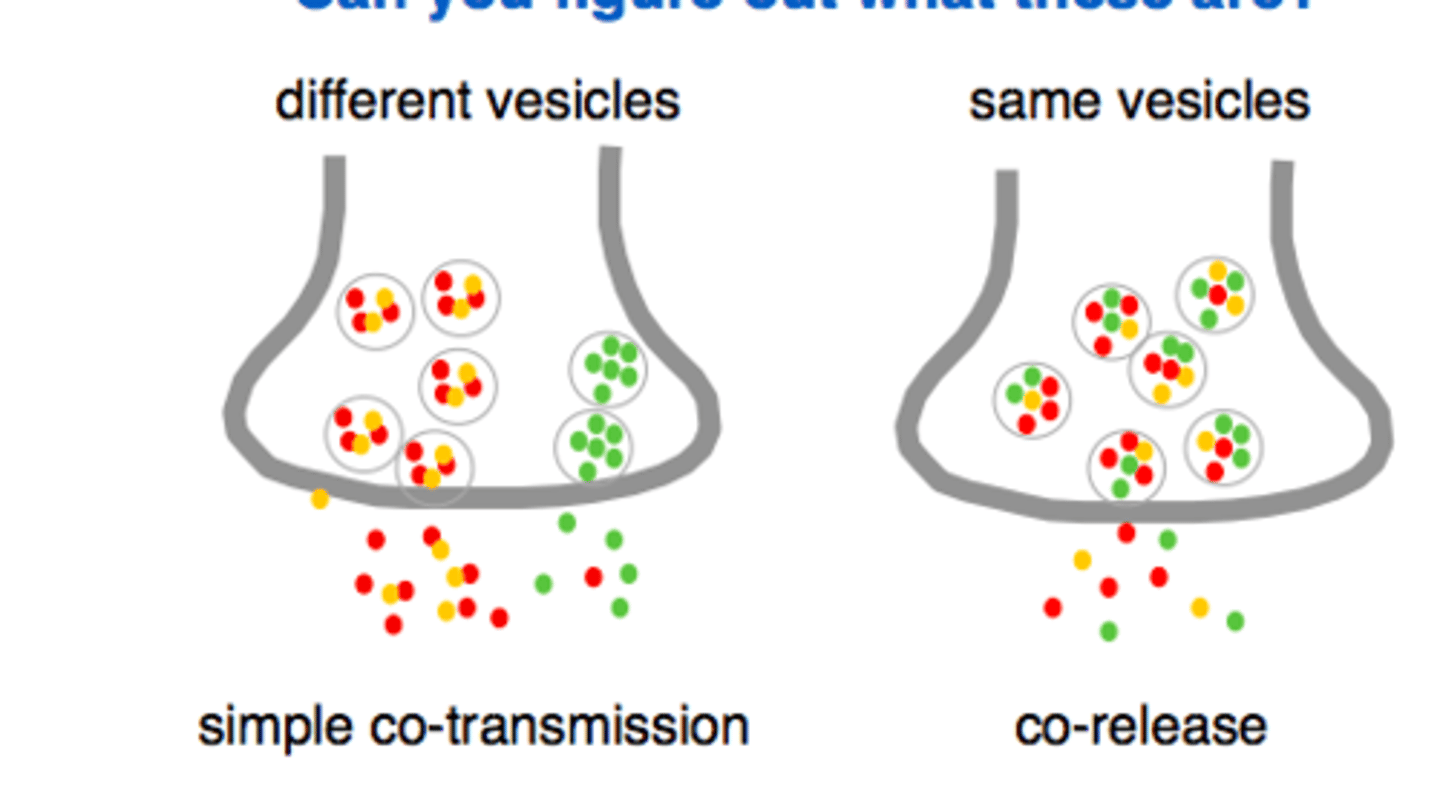
How are neurotransmitters sequestered in co-transmission?
A) In distinct populations of synaptic vesicles
B) In the same set of synaptic vesicles
C) In different boutons
D) In different postsynaptic targets
A) In distinct populations of synaptic vesicles
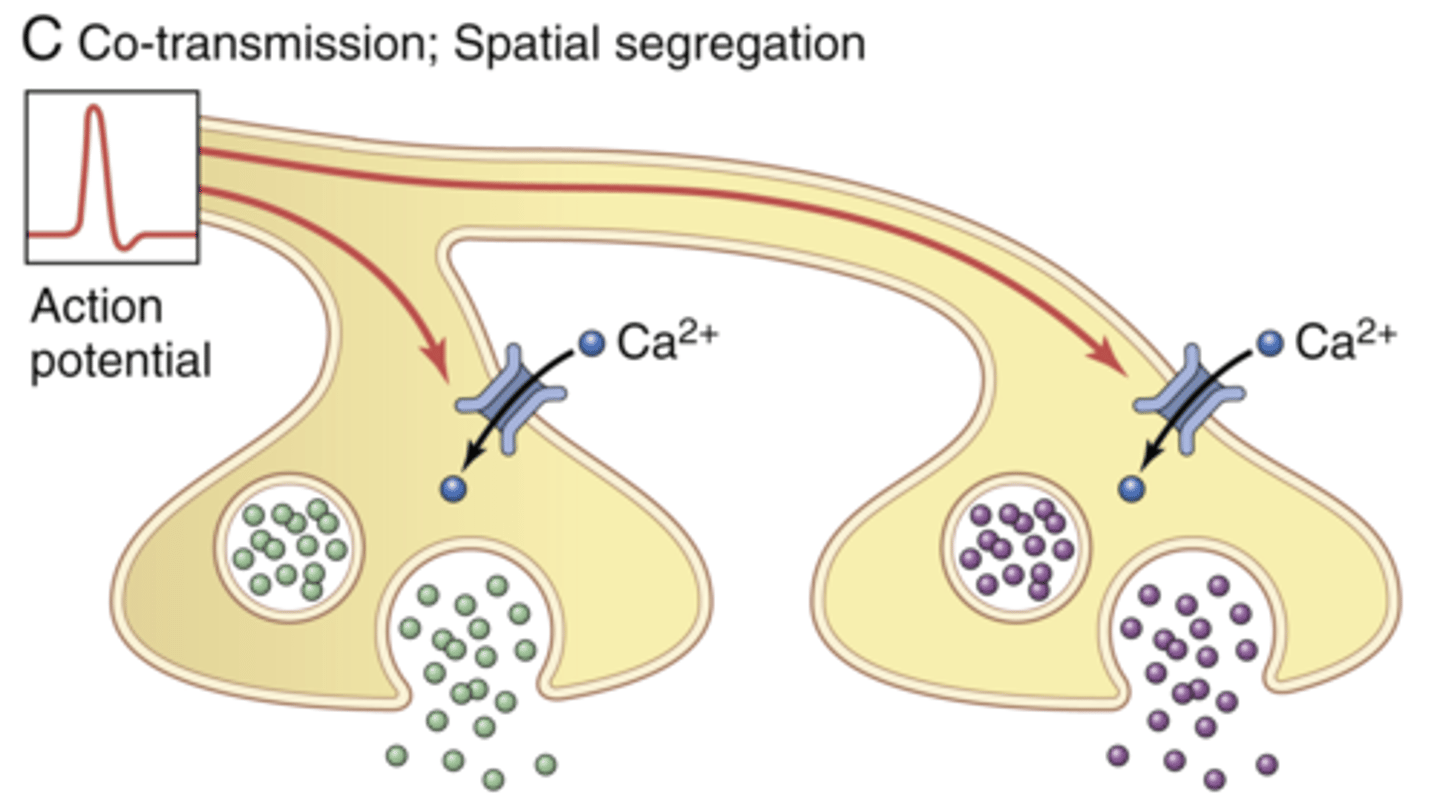
How is unique information transmitted to different postsynaptic targets in co-transmission?
A) Through differential Ca2+ sensitivities of distinct populations of synaptic vesicles
B) Through spatial segregation of vesicle populations to different boutons
C) Through packaging of both neurotransmitters in the same set of synaptic vesicles
D) Through release of both neurotransmitters from different presynaptic neurons
B) Through spatial segregation of vesicle populations to different boutons
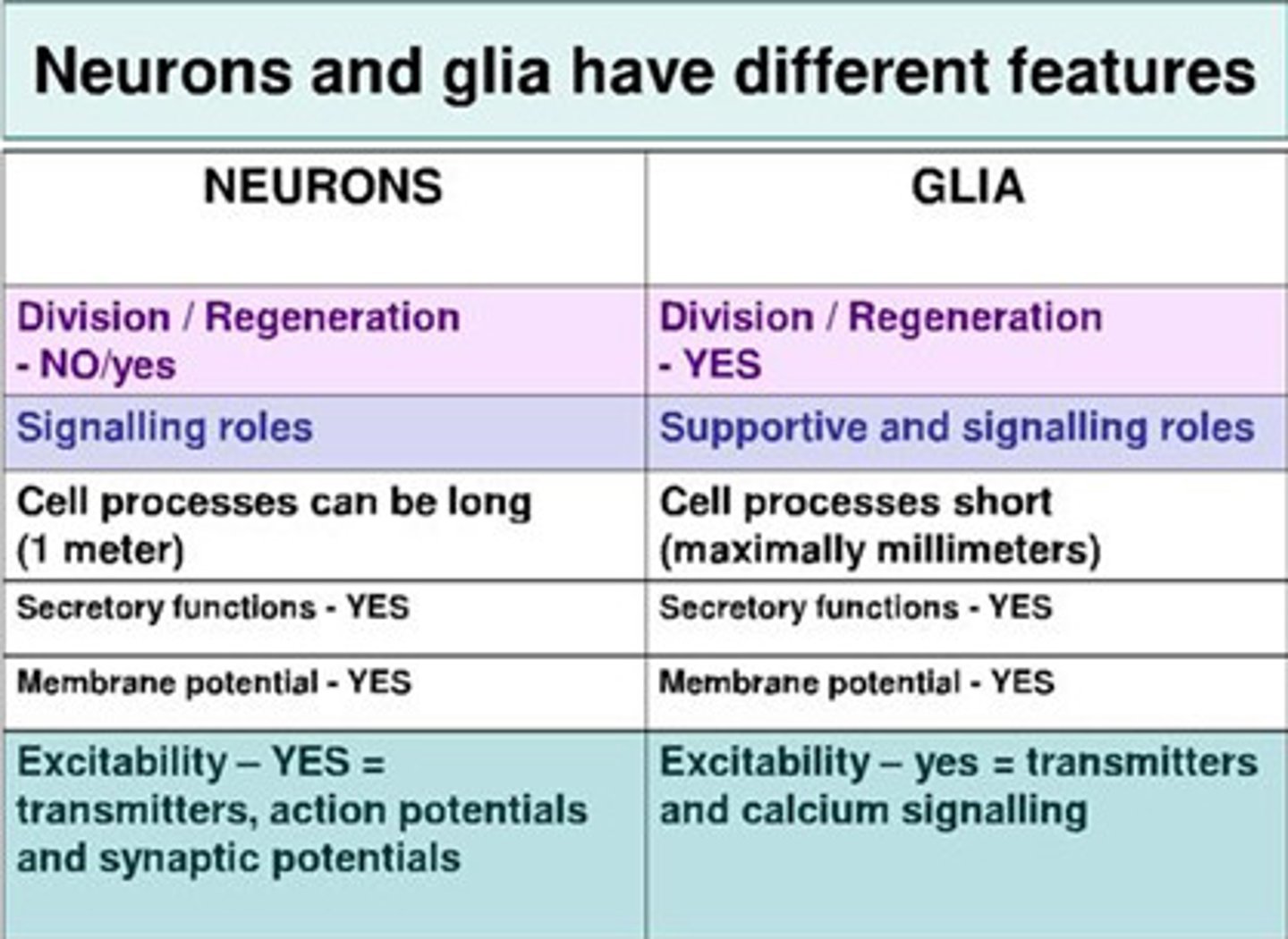
Which of the following best describes the main difference between neurons and glial cells?
A) Neurons are specialized to transmit electrical and chemical signals, while glial cells support and protect neurons.
B) Neurons are found only in the brain, while glial cells are found throughout the body.
C) Neurons are larger and more numerous than glial cells.
D) Neurons are responsible for generating myelin, while glial cells are responsible for transmitting signals between neurons.
A) Neurons are specialized to transmit electrical and chemical signals, while glial cells support and protect neurons.
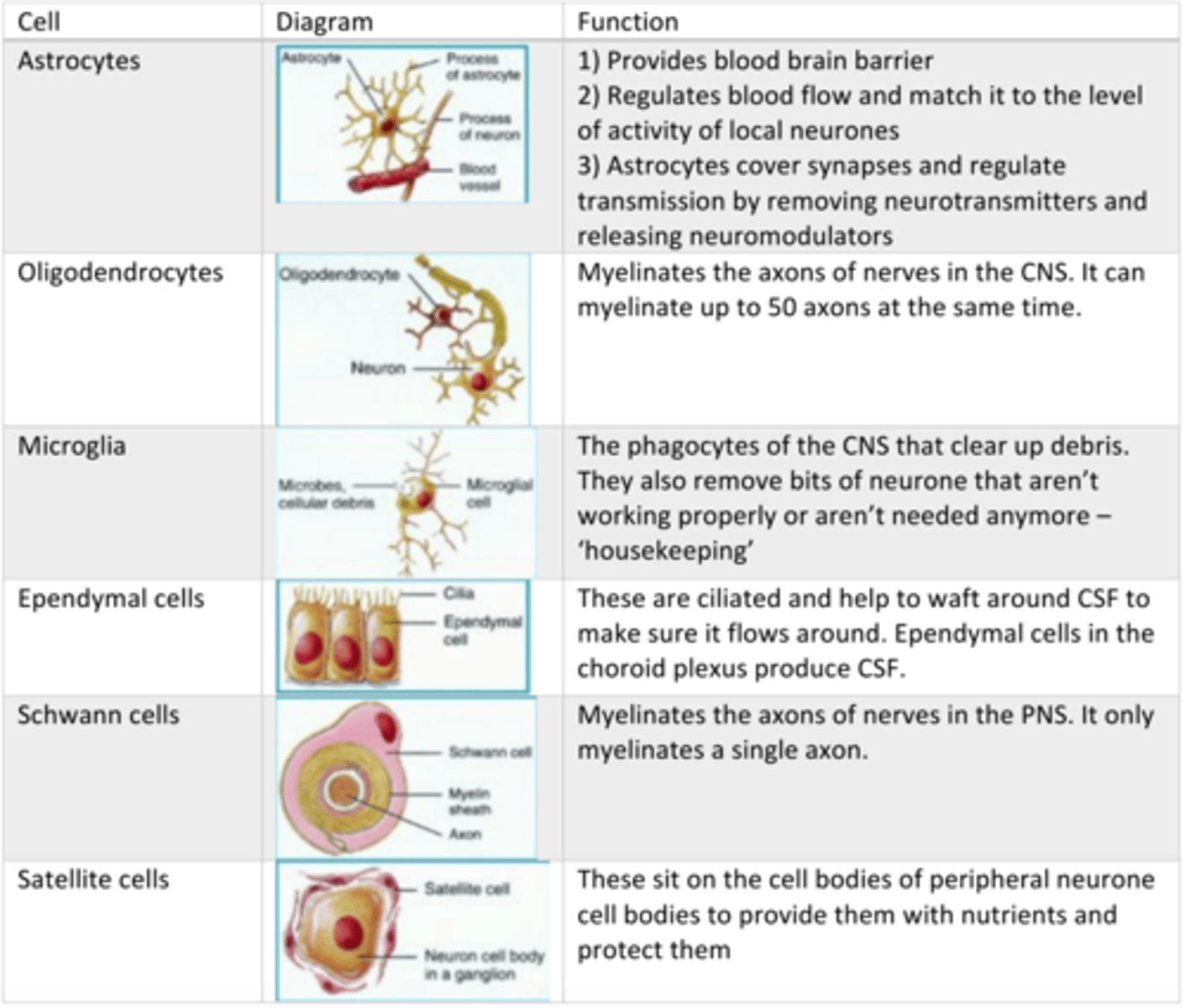
Which of the following options accurately describes the main types of glial cells found in the central and peripheral nervous system and their lineages?
A) In the CNS, there are oligodendrocytes, astrocytes, microglia, and ependymal cells; in the PNS, there are Schwann cells and satellite cells.
B) In the CNS, there are Schwann cells, astrocytes, microglia, and ependymal cells; in the PNS, there are oligodendrocytes and satellite cells.
C) In the CNS, there are oligodendrocytes, astrocytes, microglia, and satellite cells; in the PNS, there are Schwann cells and ependymal cells.
D) In the CNS, there are Schwann cells, astrocytes, microglia, and satellite cells; in the PNS, there are oligodendrocytes and ependymal cells.
A) In the CNS, there are oligodendrocytes, astrocytes, microglia, and ependymal cells; in the PNS, there are Schwann cells and satellite cells.
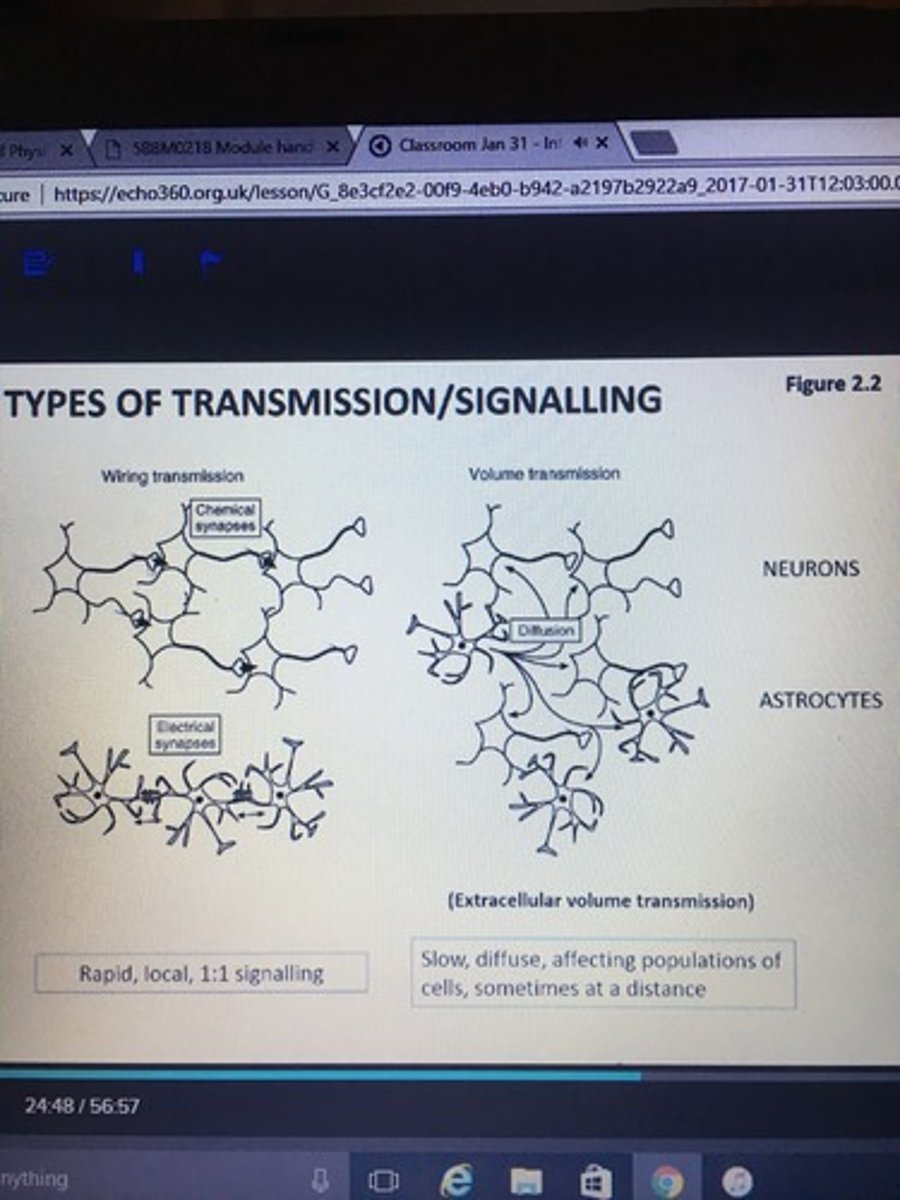
Which of the following options accurately distinguishes between 'wiring' and 'volume' transmission in the nervous system?
A) Wiring transmission involves the release of neurotransmitters into the bloodstream, while volume transmission involves the direct transfer of information between neurons.
B) Wiring transmission involves the direct transfer of information between neurons, while volume transmission involves the diffusion of neurotransmitters into the extracellular fluid.
C) Wiring transmission involves the release of neurotransmitters into the extracellular fluid, while volume transmission involves the direct transfer of information between neurons.
D) Wiring transmission involves the diffusion of neurotransmitters into the extracellular fluid, while volume transmission involves the binding of neurotransmitters to receptors on the surface of neurons.
B) Wiring transmission involves the direct transfer of information between neurons, while volume transmission involves the diffusion of neurotransmitters into the extracellular fluid.
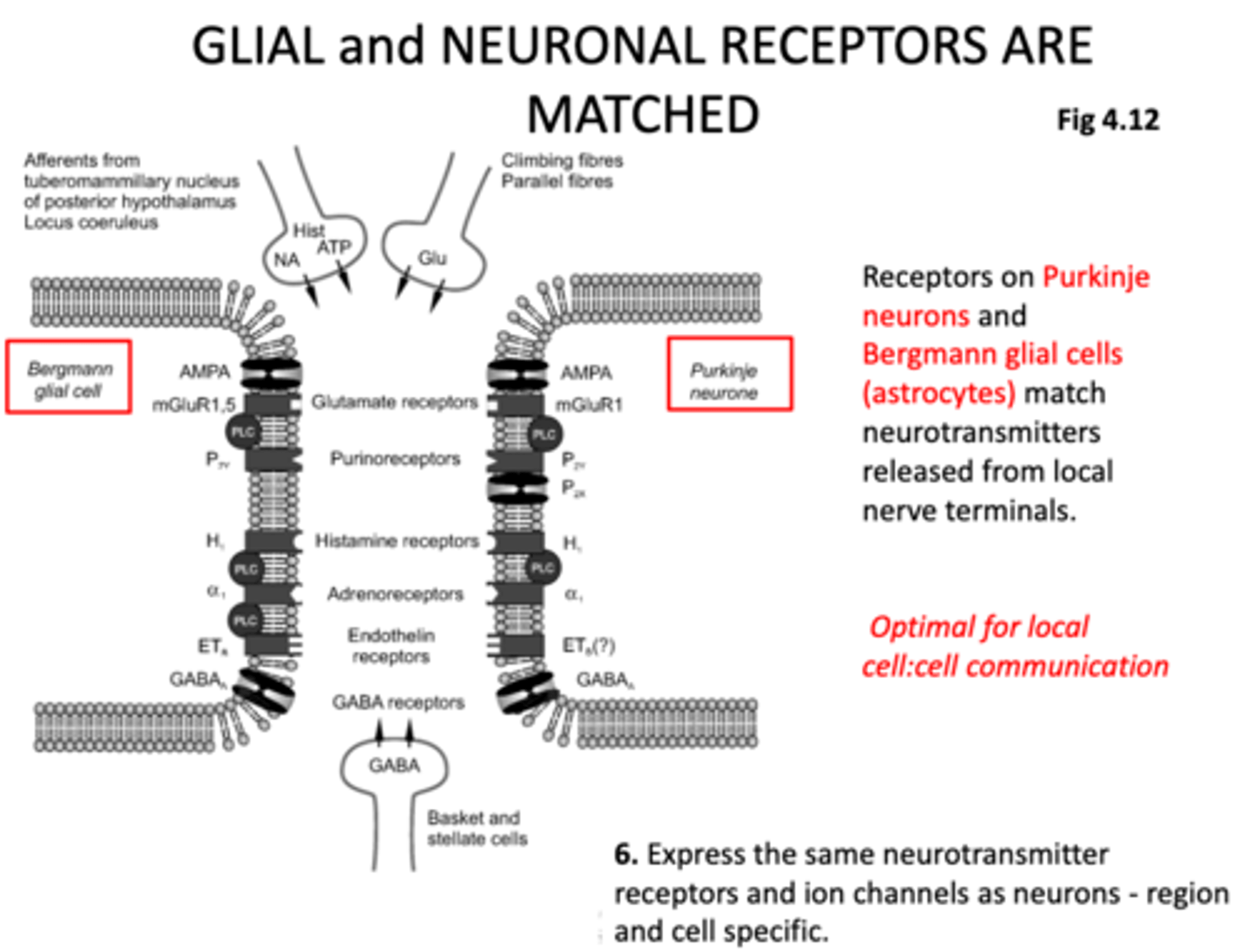
Which of the following accurately describes the main types of glial ion channels, water channels, and receptors?
A) Glial cells do not have ion channels, water channels, or receptors.
B) The main types of ion channels found in glial cells are voltage-gated sodium channels, calcium-activated potassium channels, and GABA receptors.
C) The main types of water channels found in glial cells are aquaporin 1, aquaporin 4, and aquaporin 9.
D) Glial cells express a wide range of ion channels, including voltage-gated and ligand-gated channels, as well as water channels such as aquaporins. They also express various types of receptors, including neurotransmitter receptors and hormone receptors.
D) Glial cells express a wide range of ion channels, including voltage-gated and ligand-gated channels, as well as water channels such as aquaporins. They also express various types of receptors, including neurotransmitter receptors and hormone receptors.
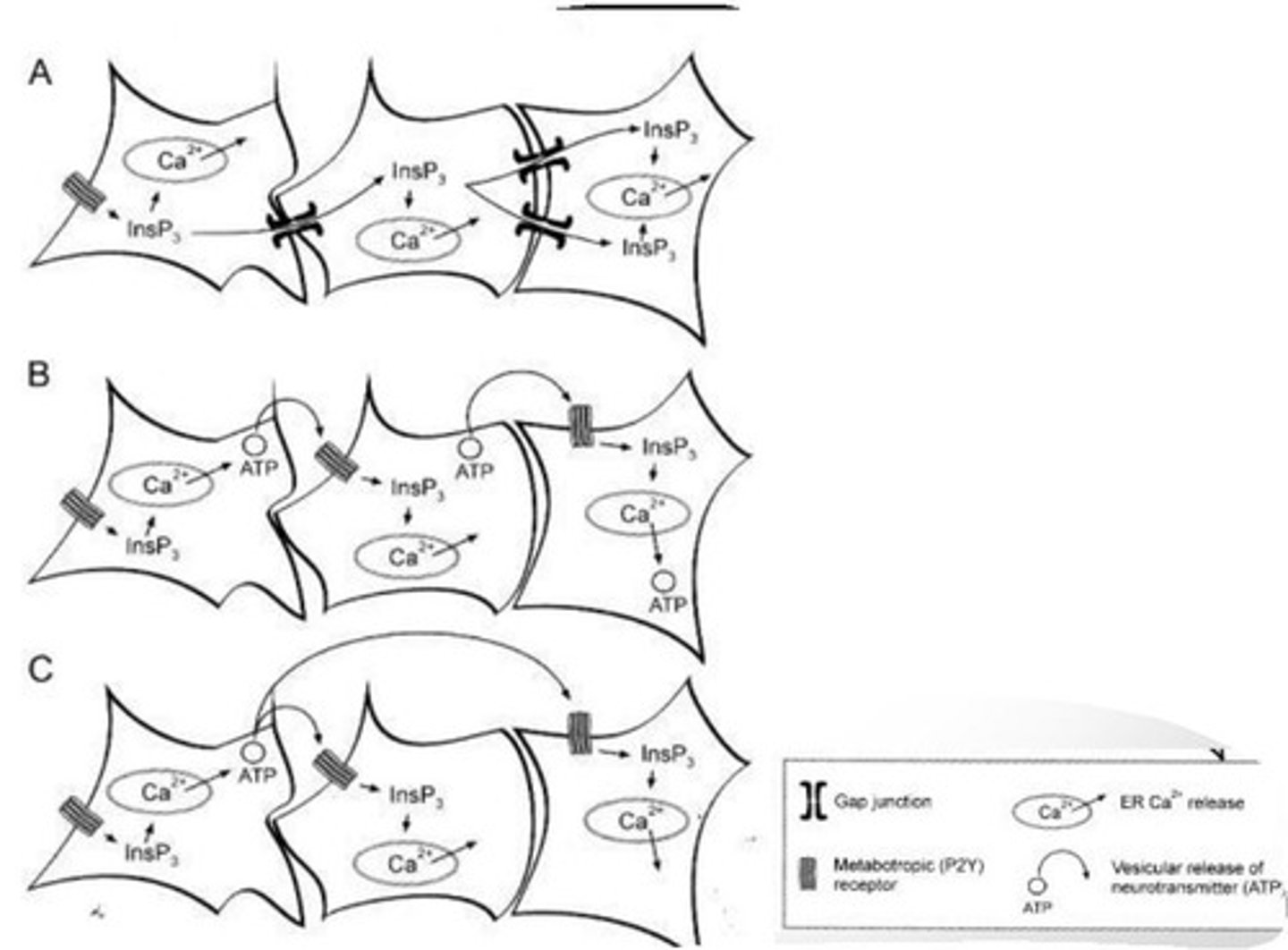
Which of the following accurately outlines the mechanisms by which calcium waves can spread between astrocytes?
A) Calcium waves are not able to spread between astrocytes.
B) Calcium waves spread between astrocytes through the opening of gap junctions, which allows for the diffusion of calcium ions between cells.
C) Calcium waves spread between astrocytes through the release of neurotransmitters, which activate receptors on neighboring cells and trigger the release of calcium ions from intracellular stores.
D) Calcium waves spread between astrocytes through the release of ATP, which activates purinergic receptors on neighboring cells and triggers the release of calcium ions from intracellular stores.
B) Calcium waves spread between astrocytes through the opening of gap junctions, which allows for the diffusion of calcium ions between cells.
Which of the following best describes the function of the astrocytic syncytium?
A) To provide structural support for neurons
B) To regulate ion and neurotransmitter concentrations
C) To modulate synaptic transmission
D) All of the above
B) To regulate ion and neurotransmitter concentrations
What is the astrocytic syncytium and how is it formed?
A) The astrocytic syncytium is a type of glial cell that regulates neurotransmitter concentrations, and it is formed through the secretion of extracellular matrix proteins.
B) The astrocytic syncytium is a network of astrocytes that are connected by specialized protein channels called gap junctions.
C) The astrocytic syncytium is a type of neuronal synapse that allows for the release of neurotransmitters, and it is formed through the activation of adjacent astrocytes.
D) The astrocytic syncytium is a type of immune cell that regulates inflammation in the brain, and it is formed through the aggregation of adjacent astrocytes.
B) The astrocytic syncytium is a network of astrocytes that are connected by specialized protein channels called gap junctions.
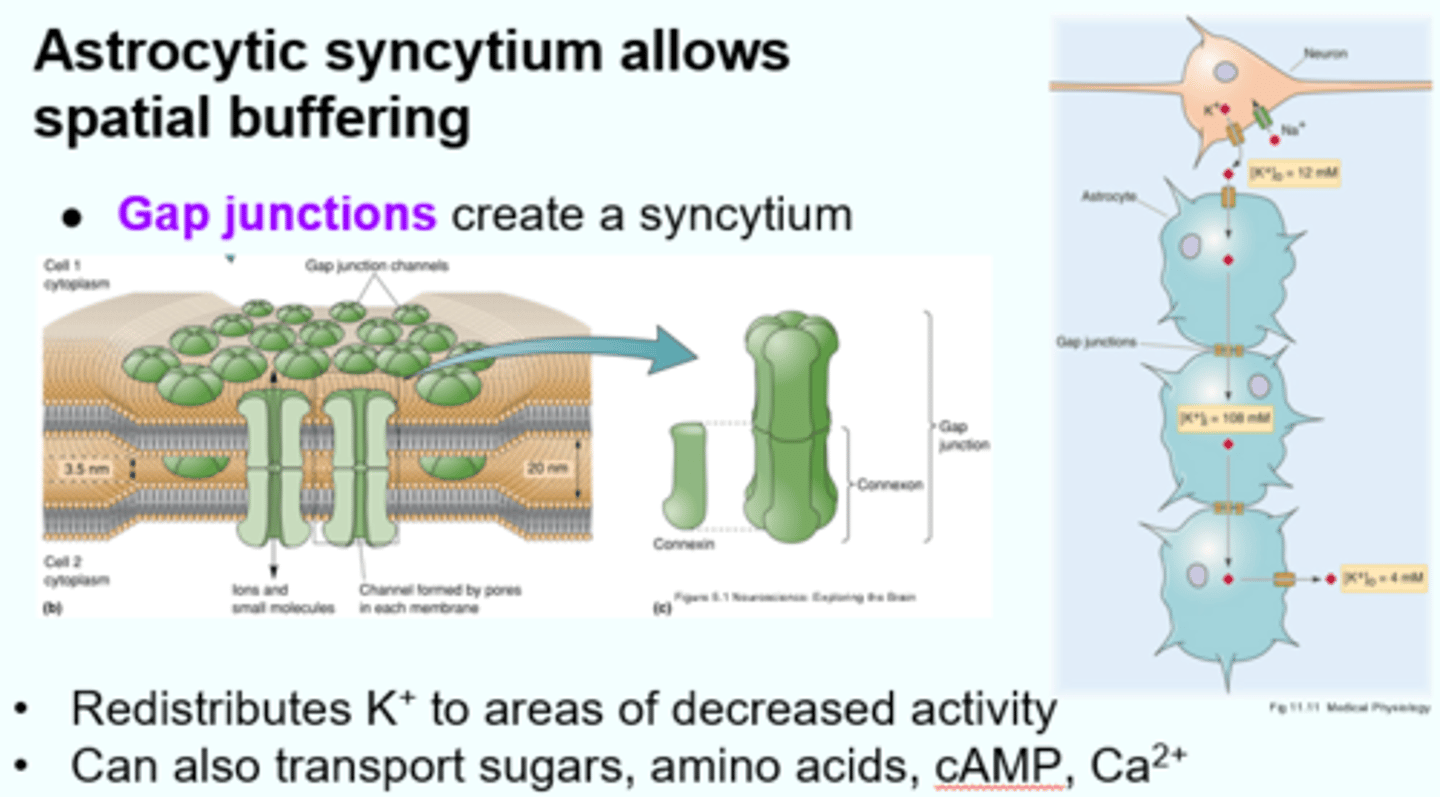
Which of the following statements is true regarding the formation of the astrocytic syncytium?
A) The astrocytic syncytium is formed through the secretion of neurotransmitters by astrocytes.
B) The astrocytic syncytium is formed through the aggregation of astrocytes in close proximity.
C) The astrocytic syncytium is formed through the connection of adjacent astrocytes via specialized channels called gap junctions.
D) The astrocytic syncytium is formed through the action of microglial cells in the central nervous system.
C) The astrocytic syncytium is formed through the connection of adjacent astrocytes via specialized channels called gap junctions.
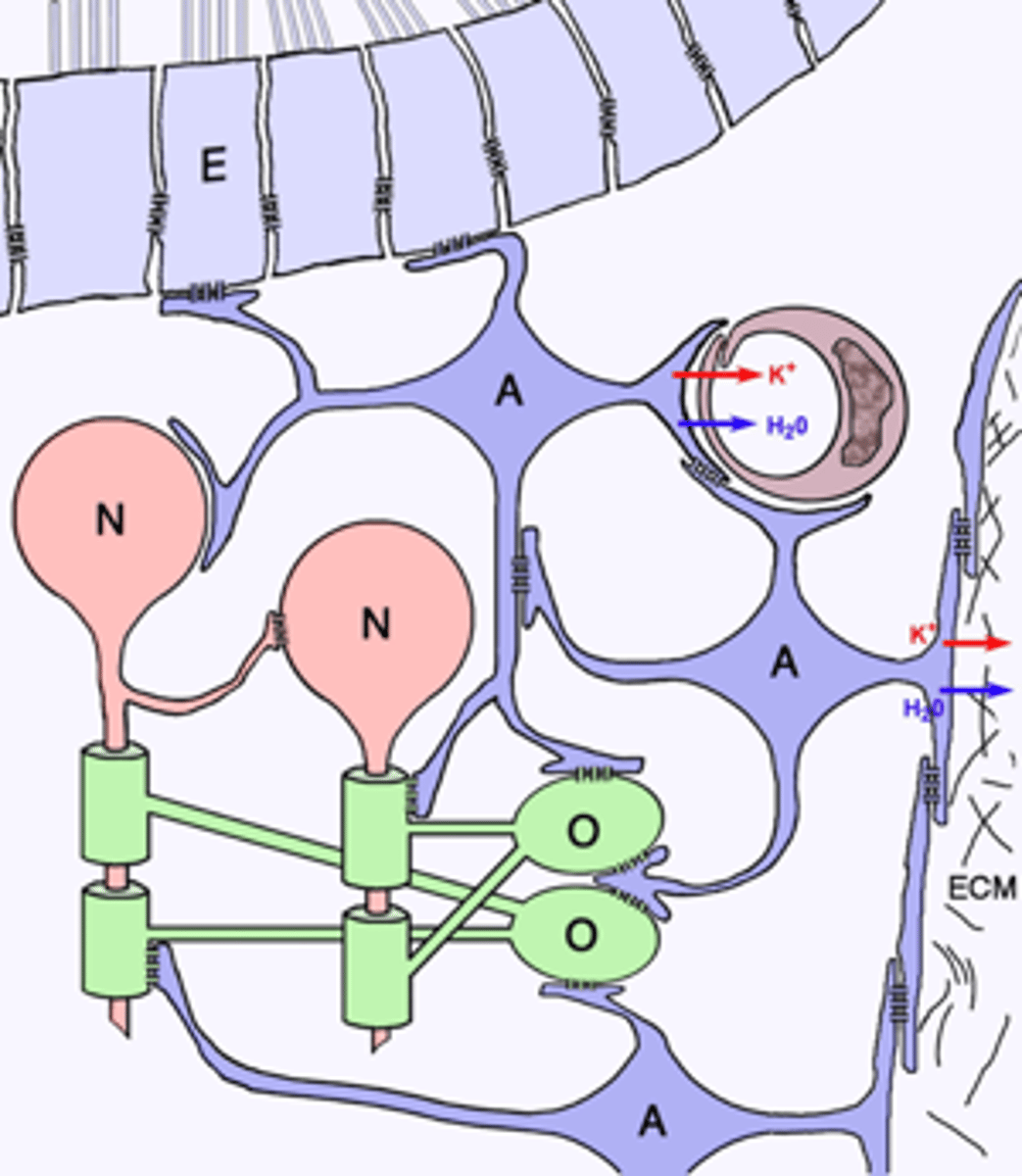
Which of the following is NOT a main function of glial cells?
A) Regulation of ion homeostasis in the nervous system.
B) Maintenance of water homeostasis in the nervous system.
C) Supply of energy to neurons in the form of glucose.
D) Direct regulation of neuronal activity via neurotransmitter release.
D) Direct regulation of neuronal activity via neurotransmitter release.
What is the main function of astrocytes in providing lactate to neurons?
A) To provide neurons with a direct source of energy in the form of ATP.
B) To help neurons store glucose for later use.
C) To help neurons regulate their own gene expression.
D) To provide neurons with a secondary source of energy in the form of pyruvate.
D) To provide neurons with a secondary source of energy in the form of pyruvate.
What are the two major classes of cells in the brain that are responsible for its function?
A) Neurons and synapses
B) Astrocytes and microglia
C) Glia and oligodendrocytes
D) Neurons and glia
D) Neurons and glia
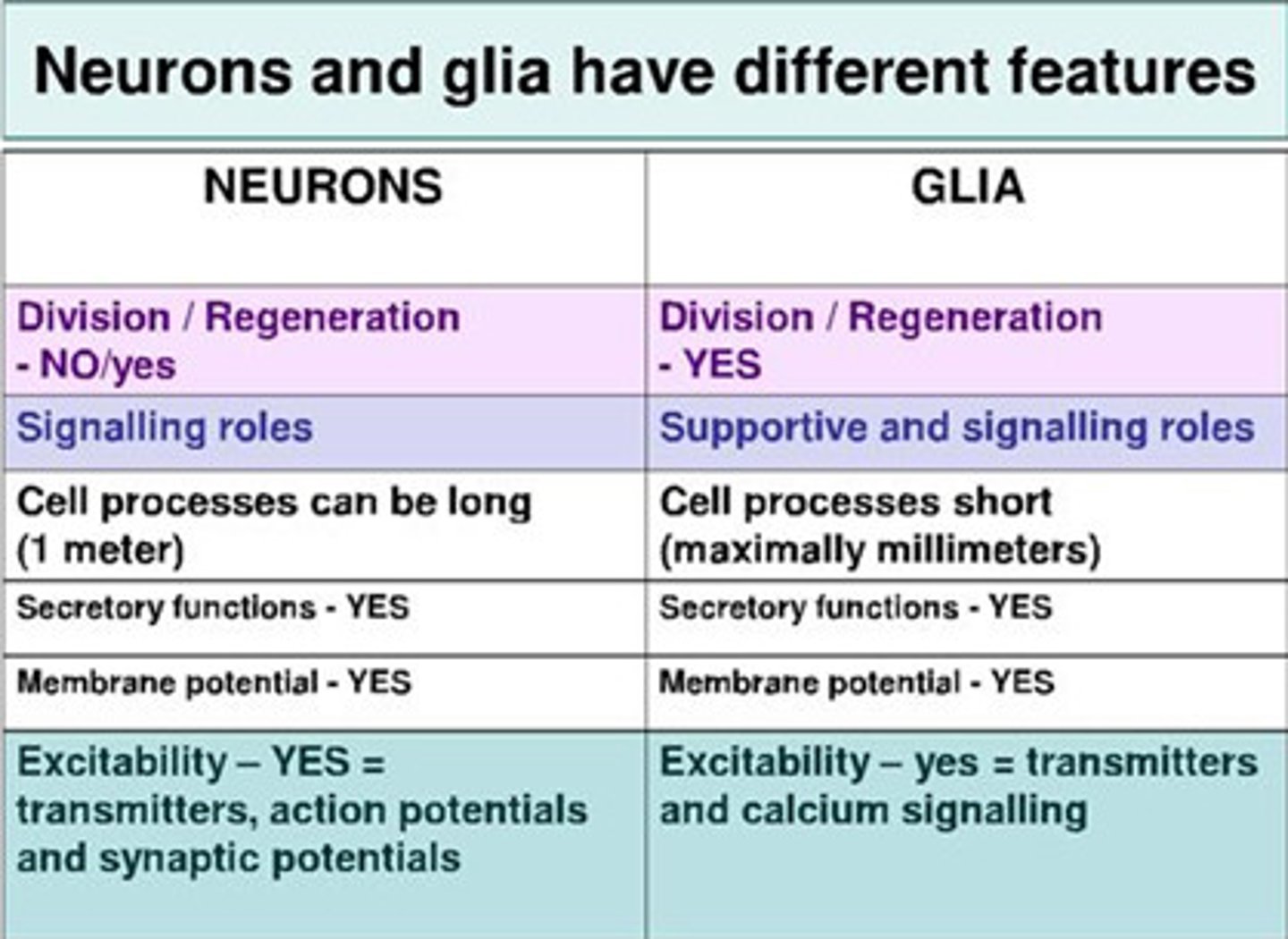
What is the main function of neurons in the nervous system?
A) To support and maintain the health of other cells in the nervous system
B) To produce and secrete neurotransmitters that regulate neural activity
C) To transmit information and signals throughout the nervous system
D) To form the physical structure of the nervous system
C) To transmit information and signals throughout the nervous system
What is the main function of glial cells in the nervous system?
A) To generate and transmit electrical impulses throughout the body
B) To produce and secrete neurotransmitters that regulate neural activity
C) To support and maintain the health and functioning of neurons
D) To provide structural support and protection for the nervous system
C) To support and maintain the health and functioning of neurons
Which of the following is a function of glial cells in the nervous system?
A) Producing and secreting neurotransmitters
B) Generating and transmitting electrical impulses
C) Regulating ion, pH and water balance
D) Synthesizing proteins and lipids for neuronal growth
C) Regulating ion, pH and water balance
Which of the following statements is true regarding the electrical properties of glial cells in the nervous system?
A) Glial cells are electrically excitable and can generate action potentials.
B) Glial cells are electrically non-excitable and unable to generate action potentials.
C) Glial cells are electrically excitable but unable to generate action potentials.
D) Glial cells have no effect on the electrical properties of neurons in the nervous system.
B) Glial cells are electrically non-excitable and unable to generate action potentials.
Which of the following statements is true regarding the electrical properties of neurons in the nervous system?
A) Neurons are electrically non-excitable and unable to respond to external stimulation.
B) Neurons are electrically excitable and able to respond to external stimulation by generating an all-or-none action potential.
C) Neurons are electrically excitable but unable to generate action potentials.
D) Neurons have no effect on the electrical properties of glial cells in the nervous system.
B) Neurons are electrically excitable and able to respond to external stimulation by generating an all-or-none action potential.
What is the general morphology of astrocytes?
a) Pyramidal
b) Stellate
c) Bipolar
d) Fusiform
b) Stellate
Which type of cells have long branching processes?
a) Neurons
b) Astrocytes
c) Oligodendrocytes
d) Microglia
b) Astrocytes
What is the main protein found in astrocytes?
a) GFAP
b) Actin
c) Tubulin
d) Myosin
a) GFAP (Glial fibrillary acidic protein).
What is the main function of astrocytes in the nervous system?
a) Signal transmission
b) Structural support
c) Immune defense
d) Hormone regulation
b) Structural support
Where do astrocytes form a surface in the brain?
a) Under the dura mater
b) Under the arachnoid mater
c) Under the pia mater
d) Under the subarachnoid space
c) Under the pia mater
What is the term used to describe a single astrocyte contacting multiple dendrites of a single neuron?
a) Synaptic transmission
b) Neurotransmitter release
c) Tripartite synapse
d) Axonal myelination
c) Tripartite synapse
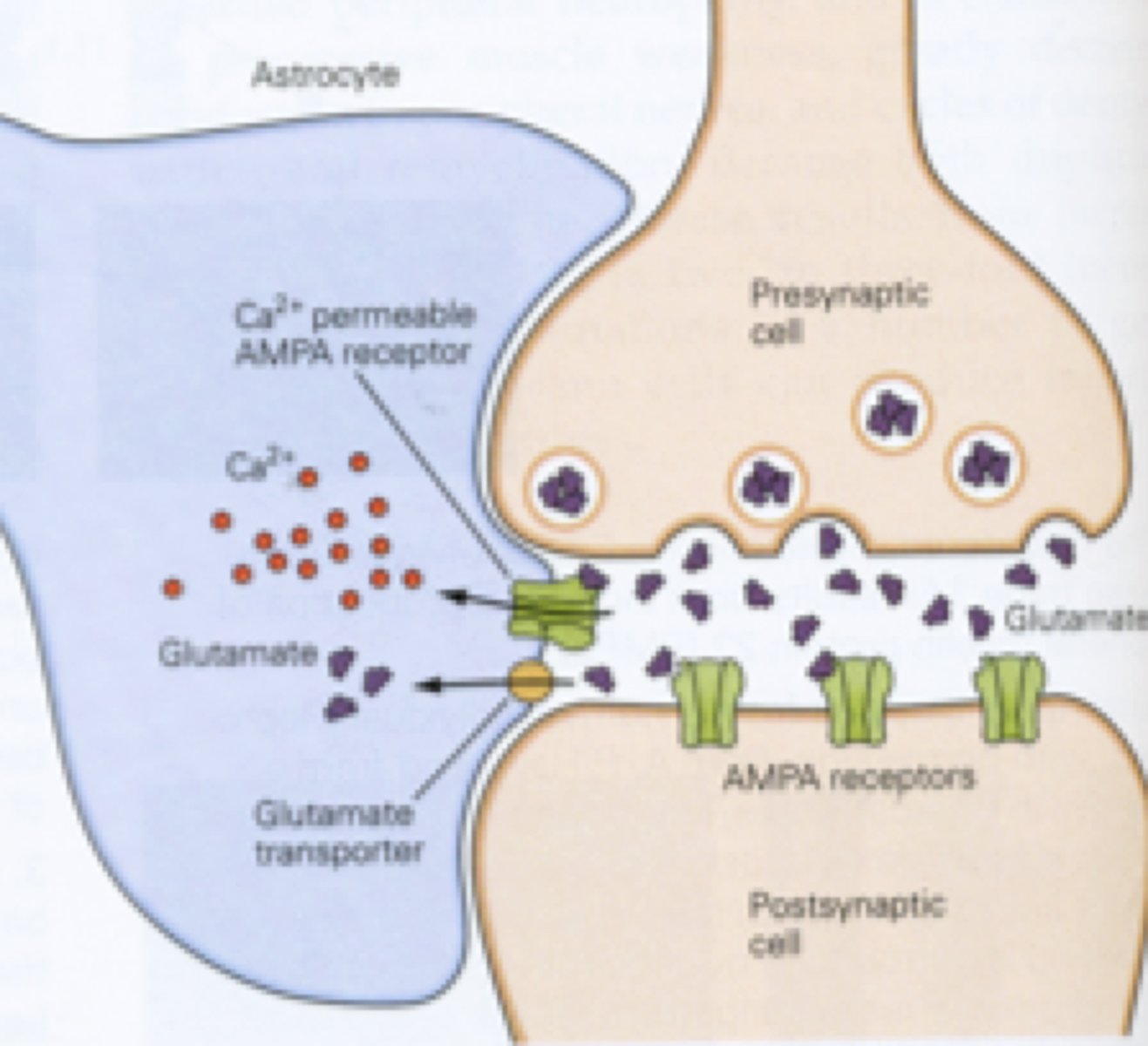
What is the term used to describe single neurons being associated with multiple astrocytes?
a) Tripartite synapse
b) Oligodendrocyte association
c) Microglial interaction
d) Synaptic plasticity
a) Tripartite synapse
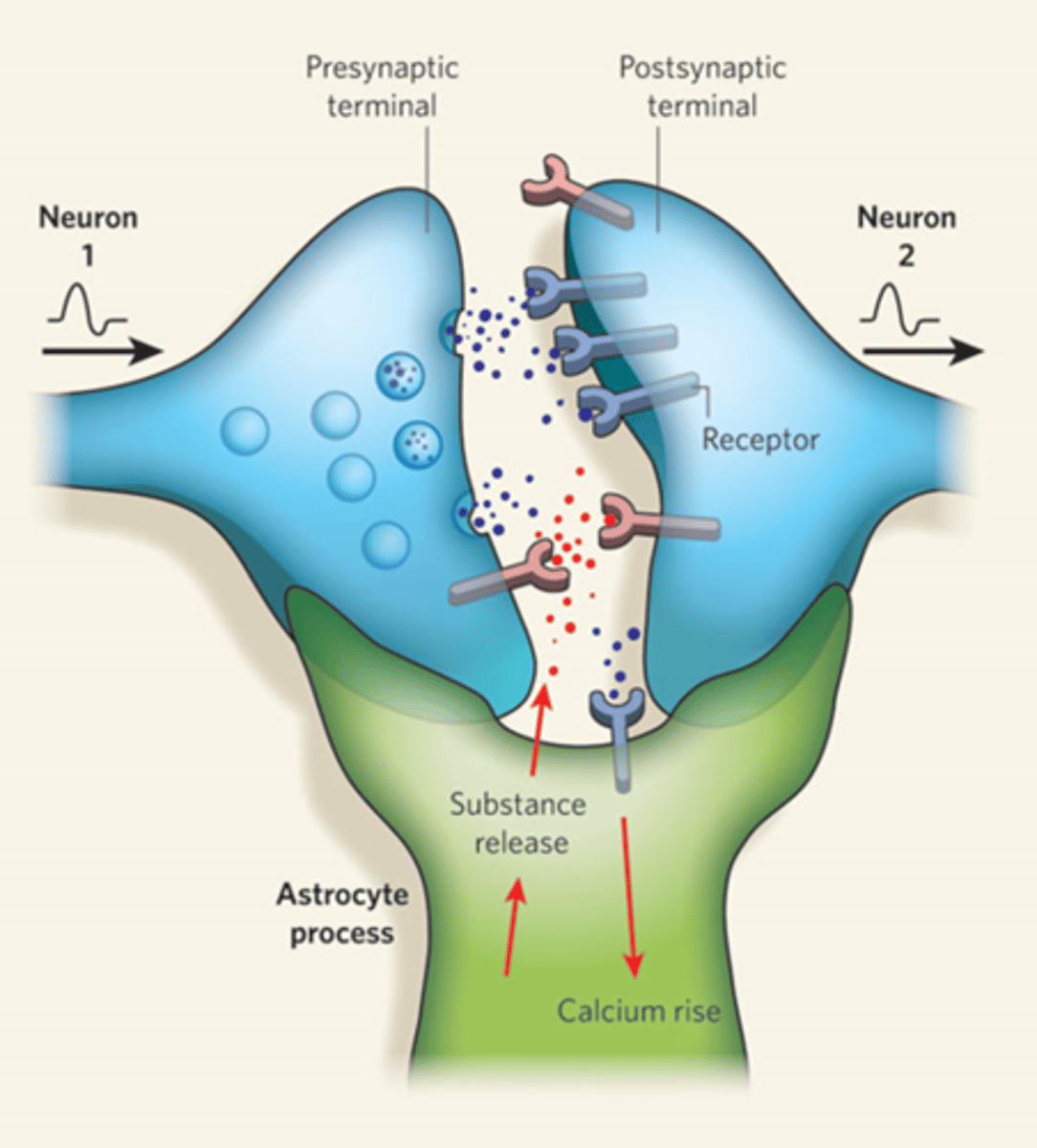
What is the main function of astrocyte-neuron interactions in the nervous system?
a) Regulation of neurotransmitter release
b) Axonal myelination
c) Immune defense
d) Hormone regulation
a) Regulation of neurotransmitter release
What is the term used to describe the structurally organized non-overlapping domains of the astrocytic network?
a) Astrocyte network
b) Astrocytic tiling
c) Astrocyte domain
d) Astrocytic network architecture
What is the main advantage of the non-overlapping domains of the astrocytic network?
a) Increased metabolic activity
b) Decreased metabolic demand
c) Increased structural support
d) Decreased competition for resources
b) Decreased metabolic demand
What is the term used to describe the distinct volume (domain) occupied by a single astrocyte?
a) Astrocytic volume
b) Astrocytic domain
c) Astrocyte network
d) Astrocytic tiling
b) Astrocytic domain
Which part of the neuron do oligodendrocytes provide support to?
a) Axon
b) Dendrite
c) Soma
d) Synapse
a) Axon
What is the main function of oligodendrocytes in the nervous system?
a) Signal transmission
b) Structural support
c) Immune defense
d) Myelination
d) Myelination
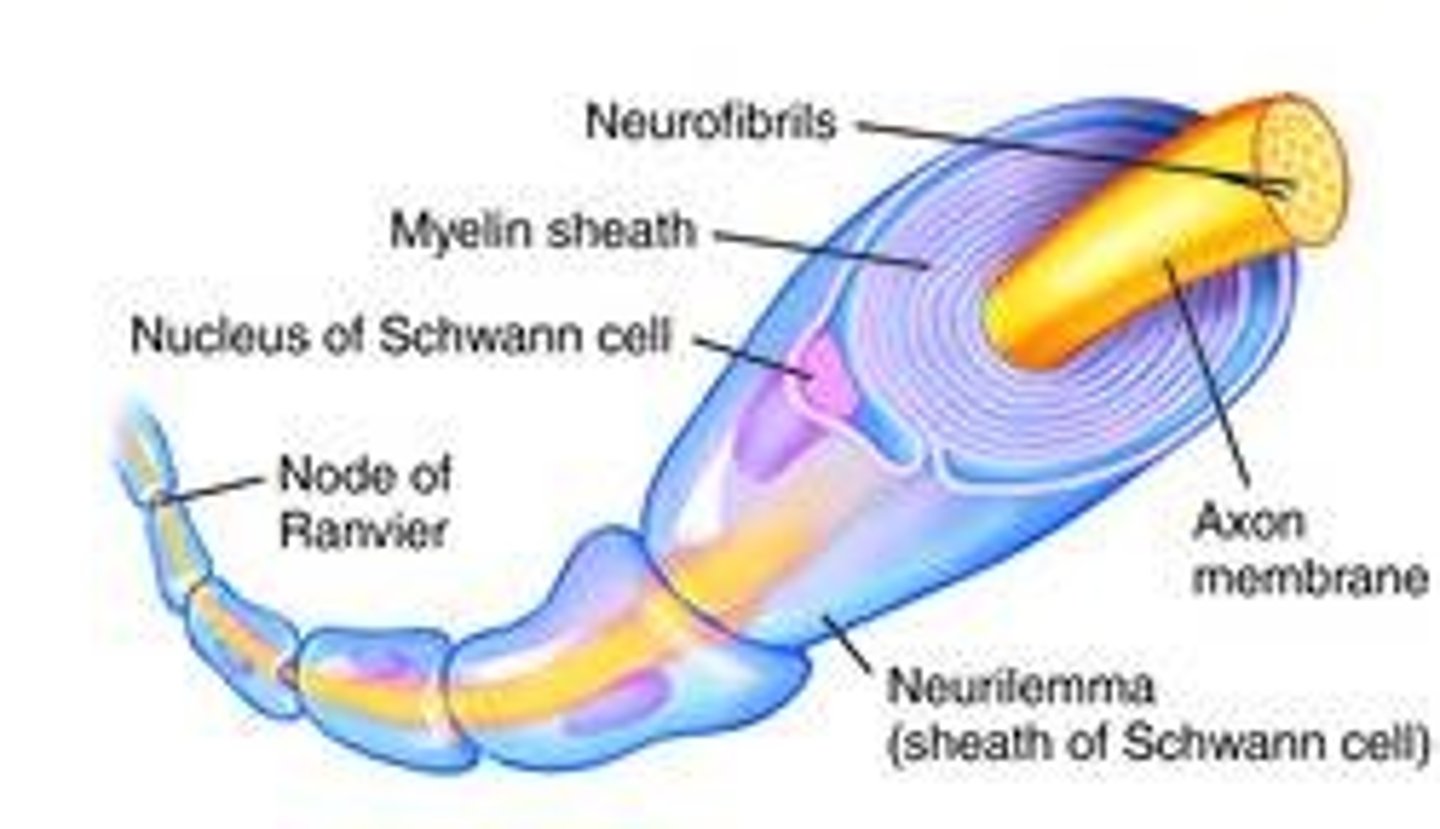
What is the structure that is formed by the fine processes of oligodendrocytes wrapping around axons?
a) Nodes of Ranvier
b) Axonal segments
c) Myelin sheaths
d) Dendritic spines
c) Myelin sheaths
What is NG2?
a) A neurotransmitter
b) A type of glial cell
c) A protein involved in myelination
d) An ion channel
b) A type of glial cell
What is the source of NG2-expressing glia?
a) Astrocytes
b) Schwann cells
c) Oligodendrocyte precursor cells
d) Microglia
c) Oligodendrocyte precursor cells
What is the main function of NG2-expressing glia?
a) Myelination
b) Synaptic transmission
c) Immune defense
d) Multipotent stem cell activation
d) Multipotent stem cell activation
What is the origin of microglia?
a) Neuroectodermal
b) Ectodermal
c) Mesodermal
d) Endodermal
c) Mesodermal
What is the function of microglia in the CNS?
a) Signal transmission
b) Myelination
c) Immune defense
d) Structural support
c) Immune defense
What activates microglia in the brain?
a) Neurotransmitters
b) Infection
c) Injury and disease
d) Metabolic changes
c) Injury and disease
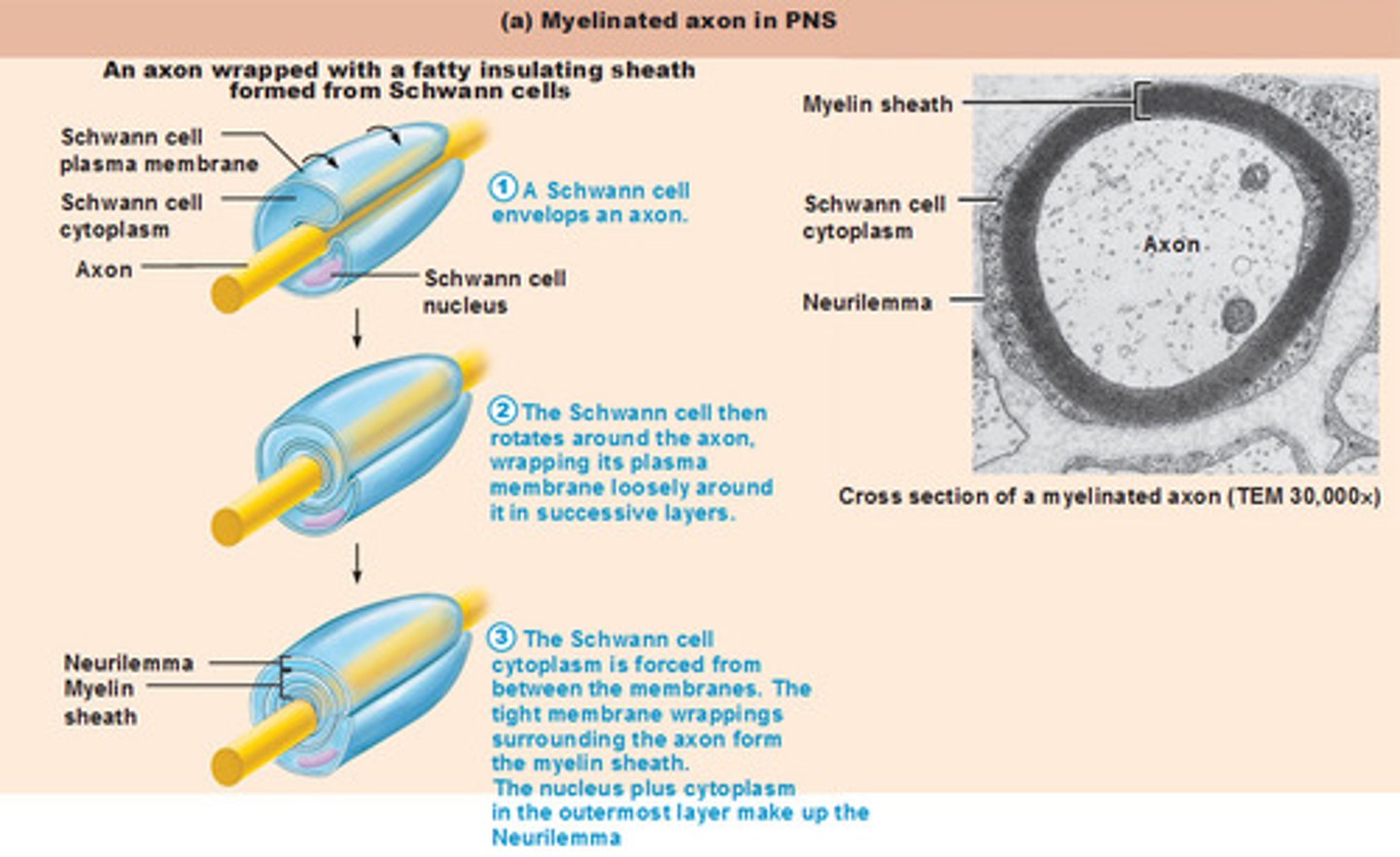
What is the main function of Schwann cells?
a) Myelination of axons in the CNS
b) Myelination of axons in the PNS
c) Structural support in the CNS
d) Immune defense in the PNS
b) Myelination of axons in the PNS
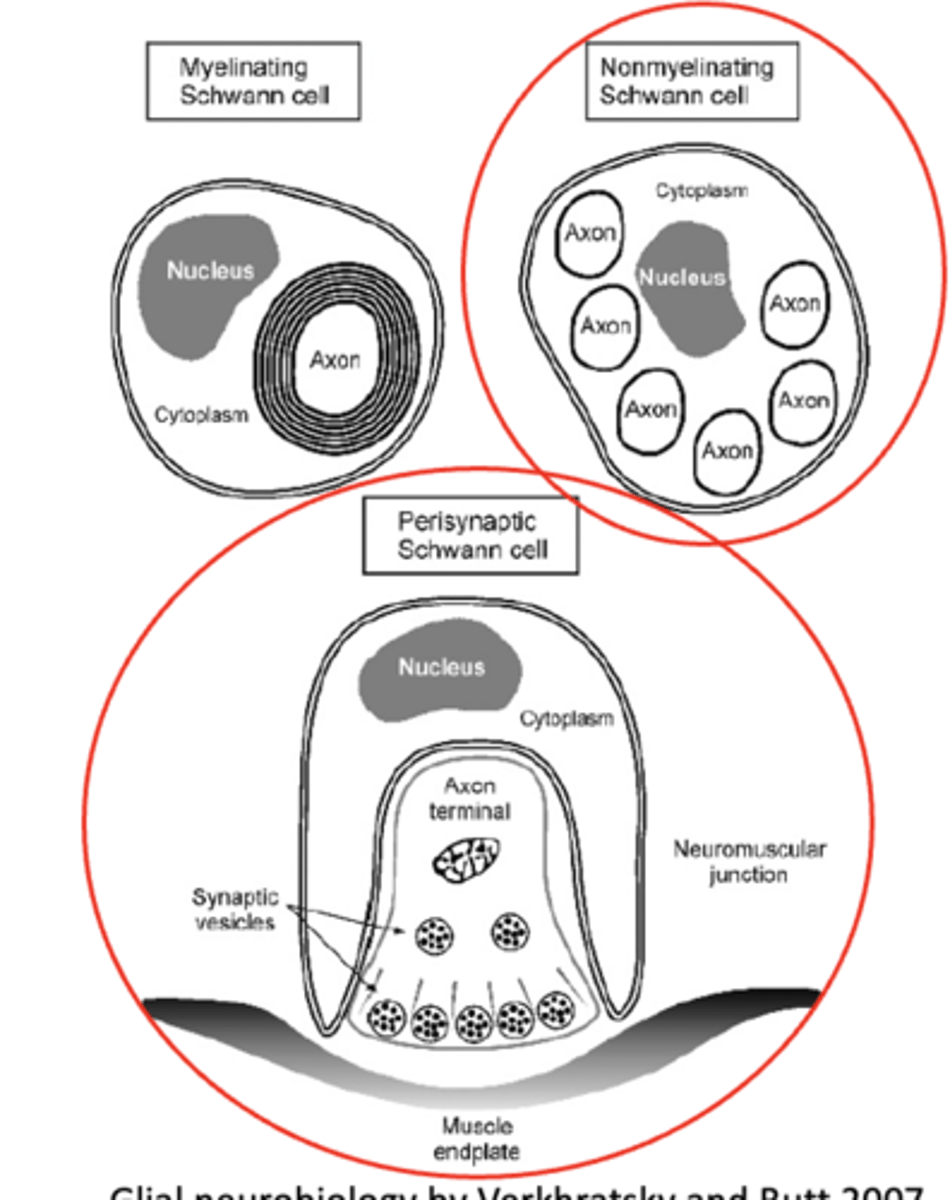
Which type of Schwann cells ensheath terminal axon branches and synaptic boutons at the neuromuscular junction?
a) Myelinating Schwann cells
b) Nonmyelinating Schwann cells
c) Perisynaptic Schwann cells
d) Oligodendrocytes
c) Perisynaptic Schwann cells
What is the origin of Schwann cells?
a) Ectodermal
b) Mesodermal
c) Endodermal
d) Neural crest
d) Neural crest
What is a chemical synapse?
a) A synapse where electrical signals are transmitted
b) A synapse where chemical messengers are released
c) A synapse that is impermeable to ions
d) A synapse that only occurs in the PNS
b) A synapse where chemical messengers are released
What is the main function of chemical synapses? a) To transmit electrical signals between neurons b) To transmit chemical signals between neurons c) To regulate the permeability of the synaptic cleft d) To protect neurons from damage
How do astrocytes respond to neurotransmitters such as glutamate?
a) They fire action potentials
b) They release neurotransmitters
c) They use Ca2+ signaling
d) They use Na+ signaling
c) They use Ca2+ signaling
What is the role of calcium in astrocyte excitability?
a) Calcium decreases astrocyte excitability
b) Calcium increases astrocyte excitability
c) Calcium has no effect on astrocyte excitability
d) Calcium only affects astrocyte morphology
b) Calcium increases astrocyte excitability
Do astrocytes fire action potentials?
a) Yes
b) No
b) No
What is the Ca2+ wave?
a) A form of action potential
b) A process of signal transduction
c) A type of glial cell
d) A neurotransmitter
b) A process of signal transduction
How does the Ca2+ spread through the cell?
a) In a random pattern
b) In a straight line
c) In the form of a wave
d) In the form of a spiral
c) In the form of a wave
Which of the following is NOT a gliotransmitter?
a) ATP
b) D-serine
c) Glutamate
d) Dopamine
d) Dopamine
What are gliotransmitters?
a) Chemicals released from glial cells that facilitate neuronal communication
b) Hormones secreted by glial cells
c) Signals that trigger apoptosis in cells
d) Chemicals involved in the formation of myelin
a) Chemicals released from glial cells that facilitate neuronal communication
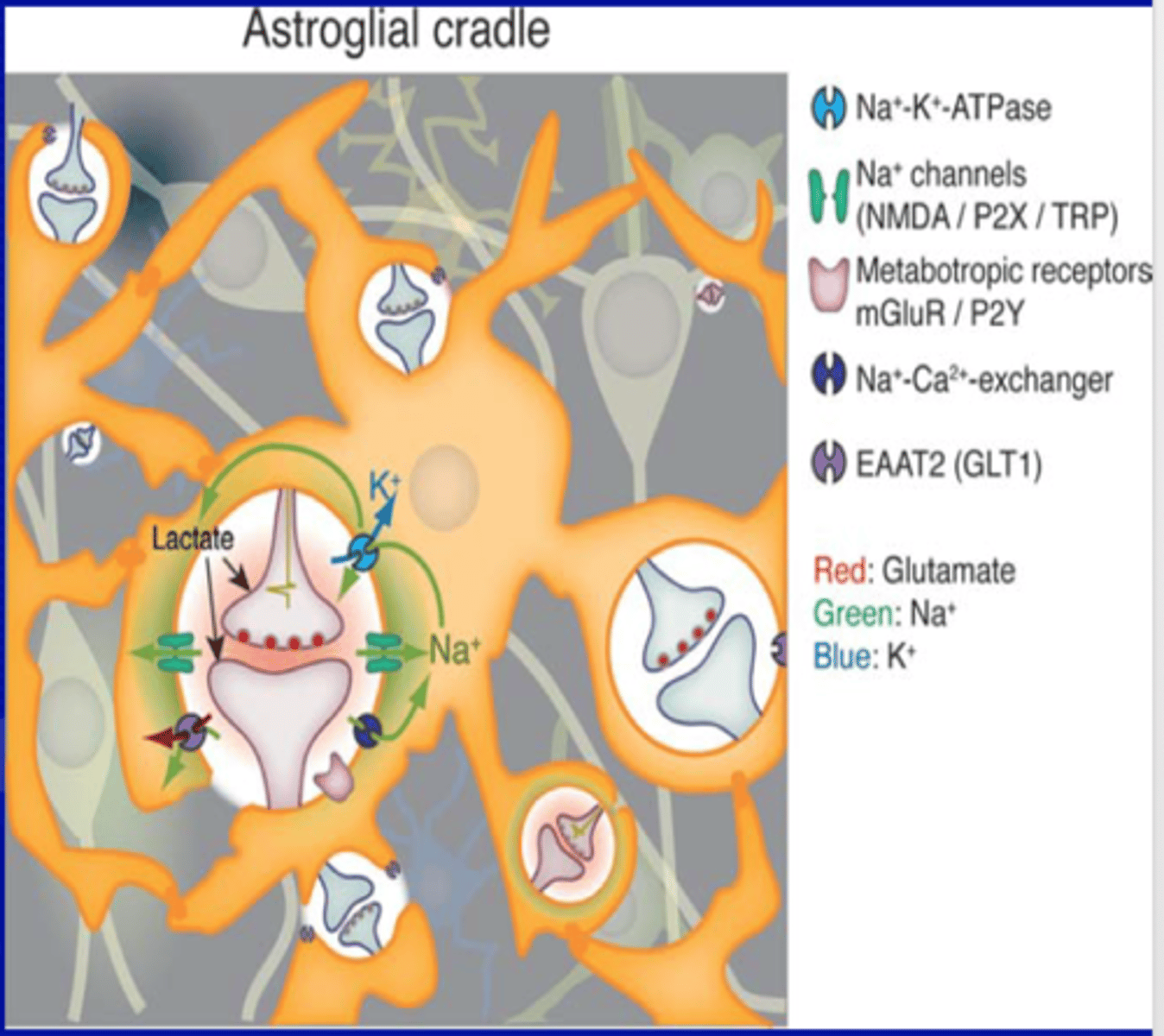
Which of the following is a gliotransmitter?
a) Dopamine
b) Serotonin
c) Glutamate
d) GABA
c) Glutamate
Which neurotransmitter can also be defined as a gliotransmitter due to its ability to increase cytosolic Ca2+ concentrations in astrocytes?
a) Glutamate
b) ATP
c) GABA
d) Dopamine
a) Glutamate
Which type of glial cell is responsible for providing support in the central nervous system?
a) Oligodendrocytes
b) Schwann cells
c) Astrocytes
d) Microglia
c) Astrocytes
Which type of glial cell is responsible for neurotransmitter uptake in the central nervous system?
a) Oligodendrocytes
b) Schwann cells
c) Astrocytes
d) Microglia
c) Astrocytes
Which type of glial cell is responsible for maintaining the blood-brain barrier in the central nervous system?
a) Oligodendrocytes
b) Schwann cells
c) Astrocytes
d) Microglia
c) Astrocytes
What is the main function of astrocytes in transport and metabolism in the central nervous system?
a) Synthesizing myelin
b) Phagocytosis and immune functions
c) Regulating cerebral blood flow and respiration
d) Transport and metabolism of molecules and ions
d) Transport and metabolism of molecules and ions
What is homeostasis?
a) The study of stars and galaxies
b) The process by which cells divide and multiply
c) The body's ability to maintain a stable internal environment
d) The movement of water across a semipermeable membrane
c) The body's ability to maintain a stable internal environment
What are astrocytes?
a) Cells found in the lungs responsible for oxygen exchange
b) Cells in the liver that help detoxify chemicals
c) Cells in the nervous system that support and regulate neurons
d) Cells in the skin that produce pigment
c) Cells in the nervous system that support and regulate neurons
What is K+ buffering?
a) The process of regulating the concentration of potassium ions
b) The process of converting kinetic energy into potential energy
c) The process of converting glucose into ATP
d) The process of breaking down proteins into amino acids
a) The process of regulating the concentration of potassium ions
What is the main function of astrocytes in K+ buffering?
a) To regulate the movement of water across cell membranes
b) To store excess potassium ions for later use
c) To remove excess potassium ions from the extracellular space
d) To secrete enzymes that break down potassium ions
c) To remove excess potassium ions from the extracellular space
How do astrocytes help in water regulation?
a) By producing and releasing hormones that control water balance
b) By actively pumping water across cell membranes
c) By regulating the concentration of solutes in the blood
d) By maintaining the integrity of the blood-brain barrier
How do astrocytes contribute to maintaining extracellular pH?
a) By releasing enzymes that break down hydrogen ions
b) By actively pumping hydrogen ions across cell membranes
c) By producing bicarbonate ions to neutralize excess hydrogen ions
d) By converting hydrogen ions into oxygen ions
c) By producing bicarbonate ions to neutralize excess hydrogen ions
What is bicarbonate?
a) An enzyme that breaks down acids
b) A hormone that regulates pH balance in the body
c) A molecule that acts as a buffer to regulate pH
d) A receptor that senses changes in blood pH
c) A molecule that acts as a buffer to regulate pH
What is Aquaporin-4 (AQP4) in the context of astrocytes?
a) An enzyme that breaks down water molecules
b) A hormone that regulates water balance in the body
c) A channel protein that facilitates the movement of water across cell membranes
d) A receptor that senses changes in blood pH
c) A channel protein that facilitates the movement of water across cell membranes
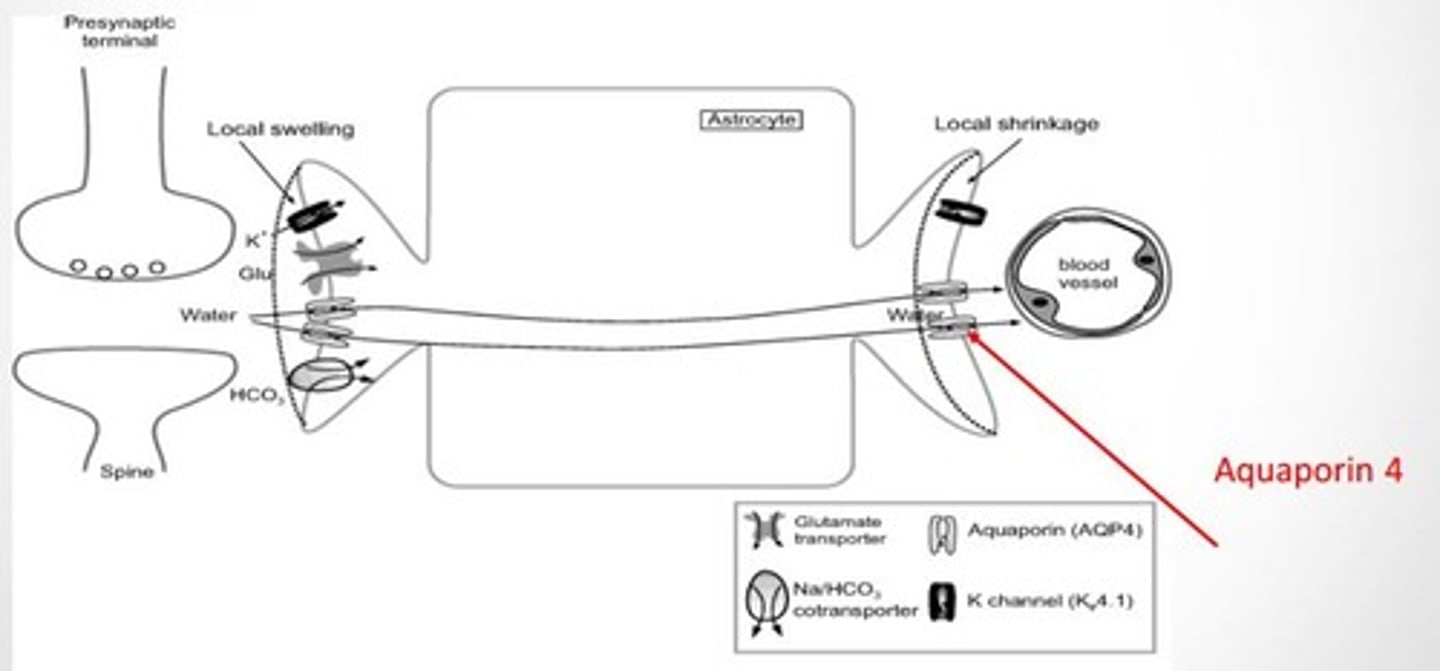
How does Aquaporin-4 (AQP4) contribute to water regulation?
a) By actively pumping water across cell membranes
b) By producing and releasing hormones that control water balance
c) By facilitating the movement of water across cell membranes
d) By regulating the concentration of solutes in the blood
c) By facilitating the movement of water across cell membranes
What is the role of Aquaporin-4 (AQP4) in the astrocytes?
a) To regulate water balance in the blood
b) To facilitate the movement of water across the blood-brain barrier
c) To convert water into glucose for energy production
d) To pump excess water out of brain cells
b) To facilitate the movement of water across the blood-brain barrier