CHEM 121 Module 5
 Call Kai
 Learn
Learn Practice Test
 Spaced Repetition
 Match
Match Flashcards
 Knowt Play
1/47

Earn XP
Description and Tags
CHEM 121 Foundations of General Chemistry
Name | Mastery | Learn | Test | Matching | Spaced | Call with Kai |
|---|
No analytics yet
Send a link to your students to track their progress
48 Terms
pressure
The force exerted on a given area.
Is directly proportional to force and inversely proportional to area. Pressure can be increased either by increasing the amount of force or by decreasing the area over which it is applied; pressure can be decreased by decreasing the force or increasing the area.
pascal (Pa)
SI unit of pressure.
= 1 N/m2, where N is the newton.
pounds per square inch (psi)
Pressure is often measured in pounds of force on an area of one square inch
atmosphere (atm)
Pressure can also be measured using.
Represented the average sea level air pressure at the approximate latitude of Paris (45°).
ideal gas
Hypothetical construct that real gases approximate under certain conditions
ideal gas law
Relates gas quantities for gases and is quite accurate for low pressures and moderate temperatures
if the temperature is on the Kelvin scale
Then P and T are directly proportional (again, when volume and moles of gas are held constant)
Guillaume Amontons
First to empirically establish the relationship between the pressure and the temperature of a gas (~1700)
Joseph Louis Gay-Lussac
Determined the relationship more precisely (~1800)
Amontons’s/Gay-Lussac’s law
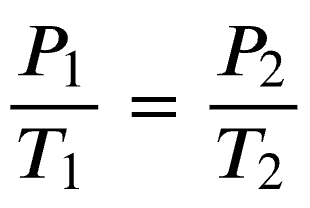
Amontons’s law or Gay-Lussac’s law
The P-T relationship for gases.
Pressure and temperature relationship for gases, the pressure of a given amount of gas is directly proportional to its temperature on the Kelvin scale when the volume is held constant.
absolute zero
0 on the Kelvin scale and the lowest possible temperature
Jacques Alexandre César Charles
French scientist and balloon flight pioneer
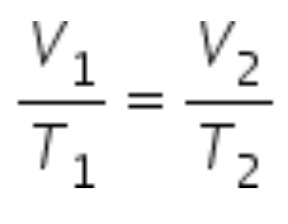
Charles’s law
The relationship between the volume and temperature of a given amount of gas at constant pressure.
The volume of a given amount of gas is directly proportional to its temperature on the Kelvin scale when the pressure is held constant.
Charles’s law
Robert Boyle
Rnglish natural philosopher
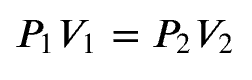
Boyle’s law
The relationship between the volume and pressure of a given amount of gas at constant temperature.
The volume of a given amount of gas held at constant temperature is inversely proportional to the pressure under which it is measured.
Boyle’s law
Amedeo Avogadro
Italian scientist, advanced a hypothesis in 1811 to account for the behavior of gases, stating that equal volumes of all gases, measured under the same conditions of temperature and pressure, contain the same number of molecules
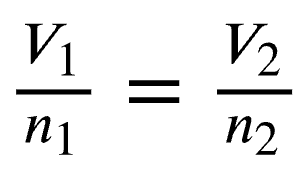
Avogadro’s law
For a confined gas, the volume (V) and number of moles (n) are directly proportional if the pressure and temperature both remain constant
Avogadro’s law
Boyle’s law
PV = constant at constant T and n
Amontons’s law
P/T = constant at constant V and n
Charles’s law
V/T = constant at constant P and n
Avogadro’s law
V/n = constant at constant P and T
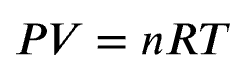
Ideal Gas law
ideal gas law
relation between the pressure, volume, temperature, and number of moles of a gas
ideal gas constant or universal gas constant
P is the pressure of a gas, V is its volume, n is the number of moles of the gas, T is its temperature on the Kelvin scale, and R is a constant
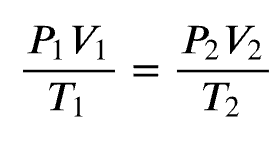
Combined Gas law
standard temperature and pressure (STP)
reporting properties of gases:
273.15 K
1 atm (101.325 kPa)
standard molar volume
one mole of an ideal gas has a volume of about 22.4 L
Antoine Lavoisier
French nobleman, widely regarded as the “father of modern chemistry,”
partial pressure
Pressure exerted by each individual gas in a mixture
Dalton’s law of partial pressures
The total pressure of a mixture of ideal gases is equal to the sum of the partial pressures of the component gases
mole fraction (X)
Partial pressure of gas A is related to the total pressure of the gas mixture.
A unit of concentration defined as the number of moles of a component of a solution divided by the total number of moles of all components.
vapor pressure of water
The pressure exerted by water vapor in equilibrium with liquid water in a closed container, depends on the temperature
mean free path
Average distance a molecule travels between collisions
diffusion
Molecules disperse in space in response to differences in concentration
rate of diffusion
Amount of gas passing through some area per unit time:
Effusion
escape of gas molecules through a tiny hole such as a pinhole in a balloon into a vacuum
Graham’s law of effusion
The rate of effusion of a gas is inversely proportional to the square root of the mass of its particles
kinetic molecular theory (KMT)
Simple microscopic model that effectively explains the gas laws
five postulates
Gases are composed of molecules that are in continuous motion, traveling in straight lines and changing direction only when they collide with other molecules or with the walls of a container
The molecules composing the gas are negligibly small compared to the distances between them
The pressure exerted by a gas in a container results from collisions between the gas molecules and the container walls
Gas molecules exert no attractive or repulsive forces on each other or the container walls; therefore, their collisions are elastic (do not involve a loss of energy)
The average kinetic energy of the gas molecules is proportional to the kelvin temperature of the gas
KMT explains Amontons’s law
If the temperature is increased, the average speed and kinetic energy of the gas molecules increase. If the volume is held constant, the increased speed of the gas molecules results in more frequent and more forceful collisions with the walls of the container, therefore, increasing the pressure
KMT explains Charles’s law
If the temperature of a gas is increased, a constant pressure may be maintained only if the volume occupied by the gas increases. This will result in greater average distances traveled by the molecules to reach the container walls, as well as increased wall surface area. These conditions will decrease both the frequency of molecule-wall collisions and the number of collisions per unit area, the combined effects of which balance the effect of increased collision forces due to the greater kinetic energy at the higher temperature
KMT explains Boyle’s law
If the gas volume of a given amount of gas at a given temperature is decreased (that is, if the gas is compressed), the molecules will be exposed to a decreased container wall area. Collisions with the container wall will, therefore, occur more frequently, and the pressure exerted by the gas will increase
KMT explains Avogadro’s law
At constant pressure and temperature, the frequency and force of molecule-wall collisions are constant. Under such conditions, increasing the number of gaseous molecules will require a proportional increase in the container volume in order to yield a decrease in the number of collisions per unit area to compensate for the increased frequency of collisions
KMT explains Dalton’s Law
Due to the large distances between them, the molecules of one gas in a mixture bombard the container walls with the same frequency whether other gases are present or not, and the total pressure of a gas mixture equals the sum of the (partial) pressures of the individual gases