Comparitive Biomechanics Exam 2
 Call Kai
 Learn
Learn Practice Test
 Spaced Repetition
 Match
Match Flashcards
 Knowt Play
1/73

There's no tags or description
Looks like no tags are added yet.
Name | Mastery | Learn | Test | Matching | Spaced | Call with Kai |
|---|
No analytics yet
Send a link to your students to track their progress
74 Terms
Viscosity
Relating to thickness; resistance to internal friction and change in shape
Turbulence
Chaotic movement in a fluid
Laminar Flow
Flowing parallel, smoothly at the same speed
Turbulent Flow
Flowing in many directions including swirls at different speeds
How does speed, size, and viscosity affect turbulence?
Increased speed, size, and density, paired with low viscosity results in more turbulence
Reynold’s Number
Reynold’s number describes the relationship between density, velocity, length, and viscosity of a fluid by measuring when it will be laminar or turbulent
Reynold’s Number Formula
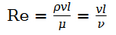
Reynold’s Number Definitions
High number: Turbulent
Low number: Laminar
What does fluid flow depend on?
Speed, object size, fluid viscosity, and fluid density
What is laminar flow characterized by?
Slower speeds, smaller object size, high fluid viscosity, and low fluid density
What is turbulent flow characterized by?
Faster speeds, larger object size, low fluid viscosity, and high fluid density
Drag
A resistive force that acts opposite of the motion and object is moving through a fluid
What is necessary for flight?
Lift and thrust, in which the thrust is greater than drag and lift is greater than gravity
How do flight and swimming differ?
Lift is eliminated in swimming
Frictional Drag
When air sticks to the object that it is propelling, creating resistance opposite to the direction of motion
Vortex Drag
A form of pressure drag that results when vacuum like air swirls, due to a lack of forces pushing or pulling on the back of an object
How do birds fly?
They must lift and thrust simultaneously to achieve flight
Thrust
A forward and upward motion that overcomes drag in flight and swimming
Particle Velocimetry
Imaging technology that utilizes lights and lasers to aid in flow identification through the visualization of object movement (measurement of velocity and direction) through a fluid
Vortices
Fluid regions where flow is circular in motion, indicating turbulence
Hydrostatic Skeleton
Fluid filled object (tube) wrapped in muscle that enables movement
eg. worm
Hydrostatic Organ
Fluid filled object (tube) wrapped in connective tissue to prevent bending, that can inflate or deflate
eg. penis and fish swim bladder
Muscle Hydrostat
Muscle filled object (tube lacking fluid, in which the muscles move in all directions
eg. elephant trunk, tongue, and tentacles
Fluid Filled Systems
Hydraulic: Compressed fluid
Pneumatic: Compressed air
Where do the input forces come from for biological levers?
Muscles
Do all muscles work the same way?
Due to differing categorizations, smooth, cardiac, and skeletal, all muscles do not work the same way
Muscle Structure
Muscle, fascicles, muscle fiber, myofibril, sarcomere
Types of Skeletal Muscle
Circular, convergent (fan shaped), fusiform (tapering spindle), parallel
Pennate Skeletal Muscles
Feather-like compact muscles (a large number of muscle fibers in a compact space) that attach at a central tendon
Types of Pennate Skeletal Muscle
Unipennate: Connects to one side of a tendon
Bipennate: Connects to two sides of a tendon
Multipennate: Connects to multiple sides of a tendon
What trade offs do pennate muscles have?
They can be stronger, but have less ROM or speed
Parallel Skeletal Muscles
Muscles that run from one tendon to the other (end to end)
What is the significance of modeling movement?
It can provide visualizations of how muscles move and their strength, utilizing computer simulations
Can the stiffness of things change?
Yes, muscles can change in stiffness depending on how much the muscle flexes
Amputees are the exception, although they can change the speed at which they move, they can not alter the stiffness of their legs
Feet Categorizations
Biped: Walk on two feet
Quadruped: Walk on four feet
Decapods: Walk on 10 feet → Crustaceans
Hexapods: Walk on 6 feet → Insects
Myriapoda: Walk on many feet → Millipede, centipede, etc.
Human locomotion is . . .
Very efficient
Examples of the efficient locomotion
Persistence hunting: Humans pursuing an animal until they are exhausted
Dogs are similarly efficient
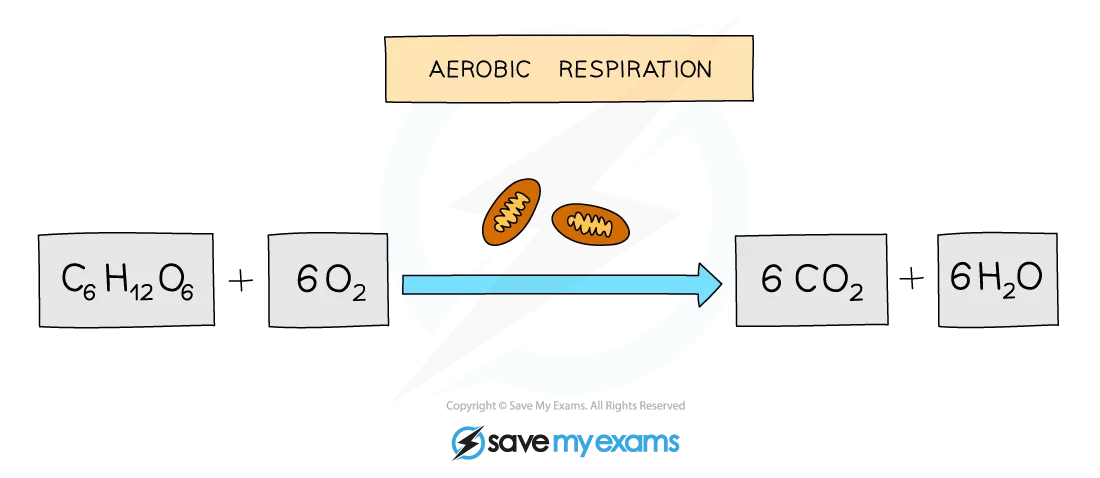
Aerobic Respiration Formula
What changes occur when shifting from walking to running?
Stride length and speed change
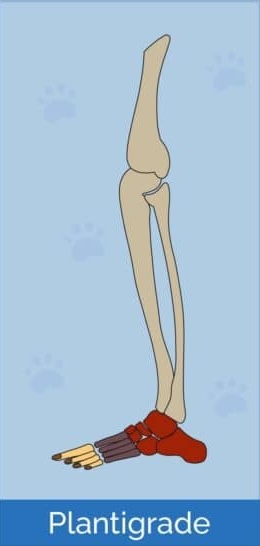
Plantigrade
Walking on the soles of the feet
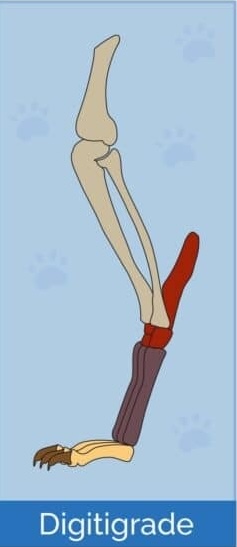
Digitigrade
Walking on the toes and the ball of the feet
Unguligrade
Walking on the tips of the toes
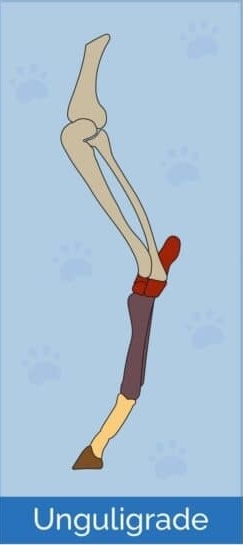
What form of animal locomotion most efficient?
Hopping
List gait types and how they differ?
Walk, trot, canter, lope, gallop, and pace. These differ in the leg swing and ground contact pattern.
What do ground plates measure?
Locomotion output forces, or ground reaction forces
Inverse Dynamics
Uses dots on joints and video to track how body parts move, given this data force calculations can be estimated
Forward Dynamics
Given a skeleton, estimates of muscle forces and joint torques are acquired
Conservation of Momentum
Applies to Newton’s third law due to the trade off between mass and velocity, in which forces are equal and opposite (constant; neither created or destroyed)
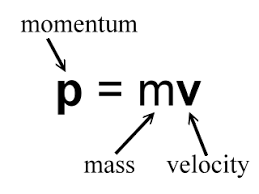
Conservation of Momentum Trade-Off
Large mass = Slow velocity
Small mass = Fast velocity
Moment of Intertia
The ability to resist rotation relates to both Newton’s third law and the conservation of momentum
What concepts are related to cats landing on their feet?
Conservation of (Angular) Momentum
Moment of Inertia
This also applies to satellite technology
Exaptation
When a preexisting trait changes to serve a new purpose, also known as pre-adaptation
Eg. Feathers in dinosaurs for warmth, now used mating and flight in birds, and waterproofing in ducks
How can variation be explained?
By adaptation and constraint
Constraint
Factors limiting an organism, causing it to recycle a preexisting trait
Traits are recycled because organisms cannot introduce new traits by themselves
Convergent Evolution
When unrelated or distantly related organisms evolve or adapt similarly
How are comparative and human biomechanics related?
They are interrelated, and studying either could aid in the understanding of the other
Adaptive Radiations
The rapid evolutionary diversification of a single ancestor into numerous species, each specialized to a distinct ecological niche
Directional Adaptation
A mode of natural selection favoring one phenotype over the others, occurring when organisms adapt in terms of their environment and ecological needs
This is a driver of adaptive radiation
Vestigial
Body parts that are no longer serving a purpose, and is therefore reduced but still apparent
Why is biomechanics significant?
It can be used to make predictions about ecology, behavior, and evolution. However, it cannot fully inform the previous factors of an organism, thus other data is necessary