Bio Unit 1 chapter 1
 Call Kai
 Learn
Learn Practice Test
 Spaced Repetition
 Match
Match Flashcards
 Knowt Play
1/85

There's no tags or description
Looks like no tags are added yet.
Name | Mastery | Learn | Test | Matching | Spaced | Call with Kai |
|---|
No analytics yet
Send a link to your students to track their progress
86 Terms
Cell
The basic structural unit of all life forms on Earth
Organelle
A specialised structure or compartment within a cell that has a specific function.
Structure VS Function
Structure: What does it look like? What is it made from?
Function: What does it do? What is its job?
Characteristics of living things
MRS GREEN
Movement
Respiration
Sensitivity
Growth
Reproduction
Excretion
Equilibrium
Nutrition
Cell Theory
The cell is the smallest unit of life (nothing smaller than a cell is considered to be living – e.g. viruses are not alive)
All living things are composed of cells (or cellular products) – i.e. living organisms may be unicellular or multicellular
Cells arise from pre-existing cells – life cannot spontaneously generate
Organism
Any living thing that performs all the functions of life and can operate as an independent entity.
Prokaryotic cells
No membrane-bound organelles
No nucleus (DNA in nucleoid region).
Unicellular
Tend to be smaller and simpler than eukaryotic cells
Found in bacteria and archaea
Eukaryotes
Have membrane-bound organelles.
Have a nucleus containing DNA.
More complex
Tend to be larger than prokaryotic cells
Unicellular or multicellular
Found in animals, plants, protists and fungi
Similarities between eukaryotic cells and prokaryotic cells
Both can be unicellular
Contain plasma membrane, cytoplasm and ribosomes
Use DNA to store genetic material
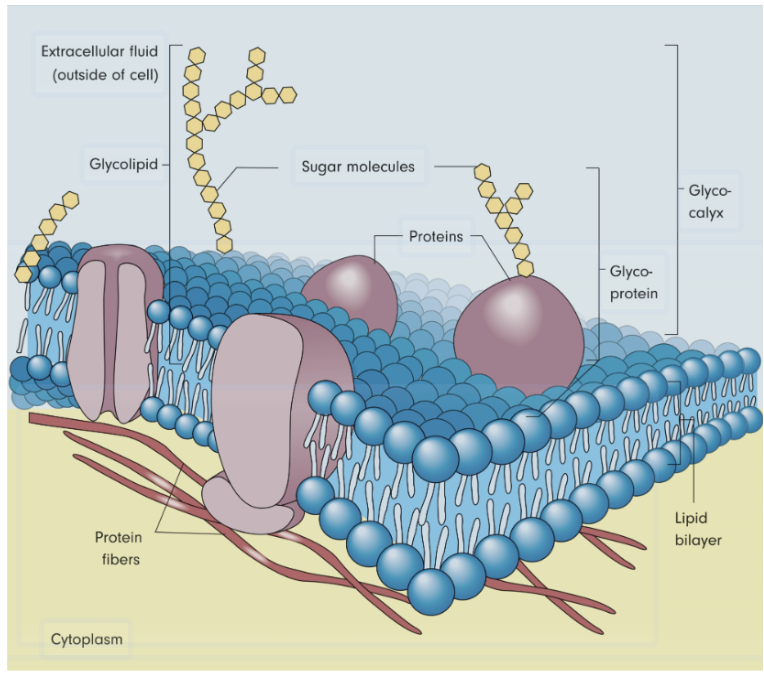
Plasma membrane
All cells are surrounded by it
Selectively permeable barrier.
Separates the intracellular environment with the extracellular environment.
Made of a phospholipid bilayer
The 6 kingdoms of life
Bacteria, Archaea, Protists, Fungi, Plants, Animals
What is SA:V?
Ratio of surface area (2D) to volume (3D)
Describes how much membrane is available to service cell contents
How does size affect SA:V?
As cell size increases, the volume increases more than surface area.
The inside of the cell becomes bigger than the membrane can efficiently support.
Result: SA:V decreases
Cells with a larger surface-area-to-volume ratio can obtain nutrients and remove wastes more efficiently.
Why is a high SA:V important?
Faster exchange of:
Nutrients
Gases
Wastes
Therefore, cells with high SA:V are more efficient
How does shape affect SA:V?
Shape can increase SA without much increase in volume
Sphere = lowest SA:V
Long, thin or flat cells = higher SA:V
Cells have adaptations to maximise SA:V
What is compartmentalisation and why is it important in eukaryotic cells?
the use of internal membranes to create specialized, enclosed regions (organelles) within a eukaryotic cell.
This allows:
Different chemical reactions to occur simultaneously
Greater efficiency
Increased internal surface area
Enables cell specialisation and complex multicellular life.
How does the nucleus coordinate cell activities?
Contains DNA, organised into chromosomes.
DNA codes for proteins.
By controlling which proteins are made, the nucleus:
Regulates cell structure
Controls metabolic processes
Enables cell specialisation
Surrounded by a porous nuclear membrane.
What is the function of mitochondria?
Site of aerobic cellular respiration.
Break down glucose using oxygen.
Produce:
Carbon dioxide
Water
ATP (energy storage molecule)
ATP provides energy for cellular processes.
Folded inner membrane (cristae) increases surface area for ATP production.
How does structure relate to function in organelles?
Membranes create specialised environments.
Increased surface area improves efficiency (e.g., cristae).
DNA in the nucleus allows regulation of protein synthesis.
Organelles work together to maintain cellular function.
Cytosol
The part of the cytoplasm containing highly organized fluid material with dissolved substances; excluding the organelles
Chromosome
A structure made of a DNA molecule
Nuclear membrane
The membrane surrounding the nucleus
Nucleolus
small structure found in nucleus
A site for assembling protein and RNA that will later form ribosomes
Ribonucleic acid (RNA)
The single-stranded nucleic acid that functions in transcribing and translating information from DNA into proteins
Cellular respiration
Cellular chemical equation
Inputs: Glucose + Oxygen
Outputs: Carbon Dioxide + Water + Energy (ATP)
The energy released is used to convert ADP and inorganic phosphate into ATP
Mitochondrion (singular)
Primary method to supply ATP (energy) to the cell to allow it to function.
They are known as sites of aerobic cellular respiration.
Contains their own circular DNA and ribosomes.
Has a highly folded inner membrane surrounded by a second membrane
Nucleus
Coordinates all activities in a cell.
DNA (deoxyribonucleic acid) main molecule found within the nucleus.
DNA compacted and tightened into chromosomes that code for production of proteins and contains ‘blueprint’ of the organism.
These proteins carry out a variety of activities within the cell.
Cytoplasm and cytosol
Cytosol is the internal area or ‘free’ space of a cell.
Chemical reactions are carried out in the cytoplasm.
Cytoplasm contains a fluid part called the cytosol which does not contain organelles
Cytoplasm = cytosol + all cell organelles dispersed through it (excluding nucleus)
Ribosomes
Ribosomes make proteins by putting together small building blocks of amino acids.
Proteins are needed for cell growth, repair and general cell functioning
Float freely in the cytosol or attached to the rough endoplasmic reticulum.
Endoplasmic Reticulum
Is made of membrane-bound flattened sacs and tubules
Attached to the nucleus
Main jobs:
Transport the proteins made at the ribosomes around the cell
Transport proteins from one cell to another
There are 2 types of ER
Smooth ER = without ribosomes
Rough ER = with ribosomes attached
The ER is basically a highway that connects and delivers proteins to different parts of the cell city
Rough Endoplasmic Reticulum
An interconnecting system of flattened membrane sacs coated with ribosomes (rough).
Synthesises and modifies proteins.
An intracellular transport system.
Positioned close to the nucleus
Golgi apparatus
Stacks of flattened sacs.
Sites of protein sorting, packaging and modification.
Proteins are then used in the cell or exported from the cell in vesicles that move to the plasma membrane, where they join to the membrane and discharge their contents to the outside of the cell.
Lysosome
Membrane-bound vesicle.
Contains digestive enzymes.
Breaks down cell waste and toxins, acting like a garbage disposal.
Cytoskeleton
Large network of protein filaments starting at nucleus extend towards plasma membrane.
Maintaining shape and transporting vesicles around the cell.
Components of the cytoskeleton
Plasma membrane, endoplasmic reticulum, microtube, mitochondria, microfilaments
Vacuole
Membrane-bound sac.
Used for water and solute storage.
Maintains plant cell structure.
Found in plant and fungal cells. Some protists, animal, and bacterial cells.
Plant cells usually have one large vacuole
Animal cells have multiple small vacuoles
Cell Wall
Sturdy border outside the plasma membrane.
Provides strength and structure to plant, bacterial and fungal cells. Some protists.
Chloroplast
Double-membrane-bound organelle.
Contains flattened, fluid-filled sacs.
Site of photosynthesis.
Contains its own circular DNA and ribosomes.
Found in plant and algae cells.
Photosynthesis
The process by which plants convert light energy into chemical energy (sugars) to fuel cellular activities
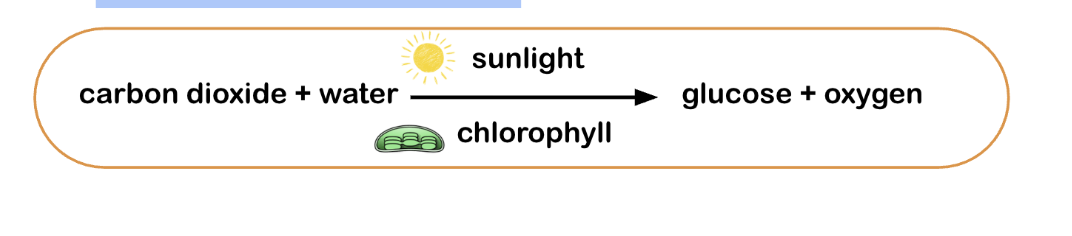
Chlorophyll
A green pigment contained in thylakoid membranes
It absorbs light to energise reactions in the chemical reaction of photosynthesis
Glucose is then used in cellular respiration to:
Build cell walls
Carry out metabolic (chemical) reactions
What is the primary role of the plasma membrane?
Forms the boundary between the internal and external environment of the cell, the cytoplasm and its environment
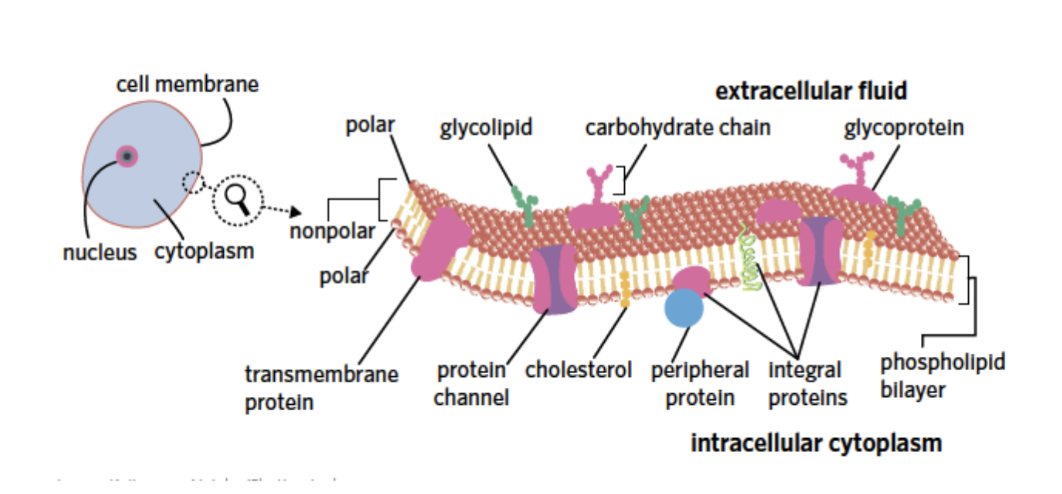
Composed of a double layer of phospholipid molecules, each of which can be represented by a head and two tails
Found in both eukaryotes and prokaryotes.
Selectively permeable- allows some substances to pass across it but not others
Cell Wall vs. Membrane
Cell Wall: (Plants, fungi, bacteria) is fully permeable and provides structural support.
Plasma Membrane: (All cells) is selectively permeable and regulates transport.
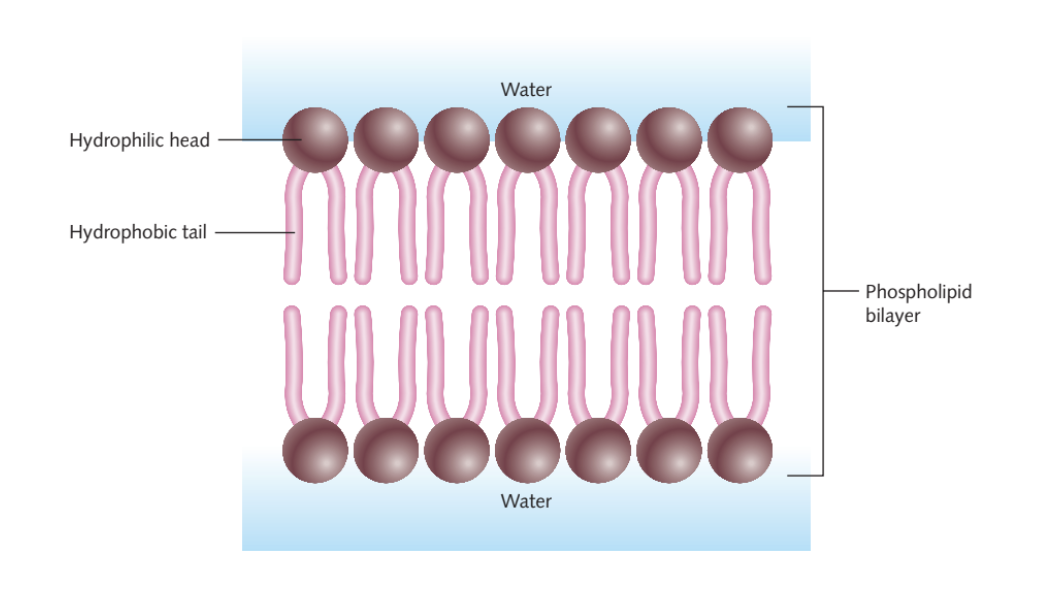
The Phospholipid Molecule
Phosphate Head: Polar and hydrophilic ("water-loving"). It faces the watery environments inside and outside the cell.
Fatty Acid Tails: Non-polar and hydrophobic ("water-fearing"). They face inwards, away from water.
The Bilayer: These properties force phospholipids to form a double layer (bilayer) where tails are shielded in the middle.
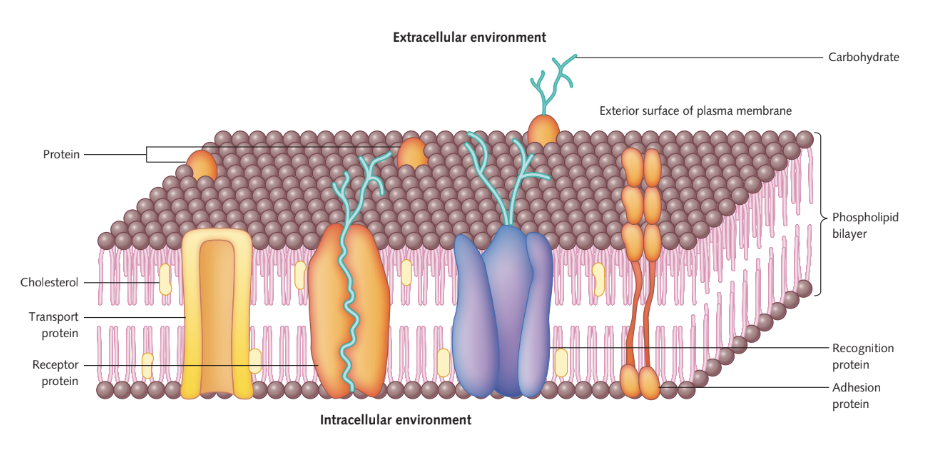
Why is the membrane described as a "Fluid Mosaic"?
Fluid: The phospholipids are not bonded together; they move laterally (sideways) like a liquid. This allows the cell to change shape and form vesicles.
Mosaic: A variety of different proteins are embedded or attached to the bilayer, creating a "pattern" or mosaic.
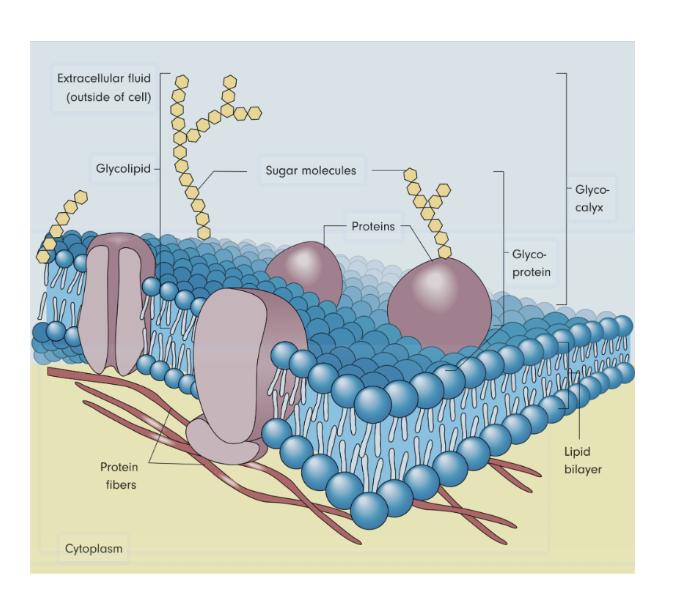
Transport (Transmembrane)Proteins:
Regulate the movement of substances (like ions or glucose) across the membrane.
They span the entire width of the phospholipid bilayer.
Receptor Proteins:
They are transmembrane proteins that span the entire bilayer.
Have specific binding sites for signaling molecules (like hormones).
Essential for cellular communication, allowing the cell to “receive”messages
Recognition Proteins (Glycoproteins)
Act as markers to identify "self" vs "non-self" (immune function).
A transmembrane protein with a branched carbohydrate chain attached to the extracellular surface.
Adhesion Proteins
Link cells together to form tissues.
Lipid
A diverse group of organic, non-polar compounds composed mainly of carbon, hydrogen, and oxygen that are largely insoluble in water
Hydrophilic
H2O attracted
Polar molecules (charged)
May need assistance to cross the membrane through a protein channel
E.g. glucose, amino acids, ions
Hydrophobic
H2O repelling
Non-polar molecules (no charge)
Can easily cross the plasma membrane
E.g. alcohol, lipids, gases
Cholesterol
Type of lipid
Embedded in between the fatty acid tails.
Acts as a buffer against temperature fluctuations to keep the membrane stable.
At high temperatures, it reduces the motion of the phospholipid tails, decreasing fluidity so the membrane doesn't become too liquid.
At low temperatures, it prevents phospholipids from clustering too closely, increasing fluidity so the membrane doesn't freeze or become too solid.
Found in animal cells
Transmembrane
Proteins that spans both sides of the membrane
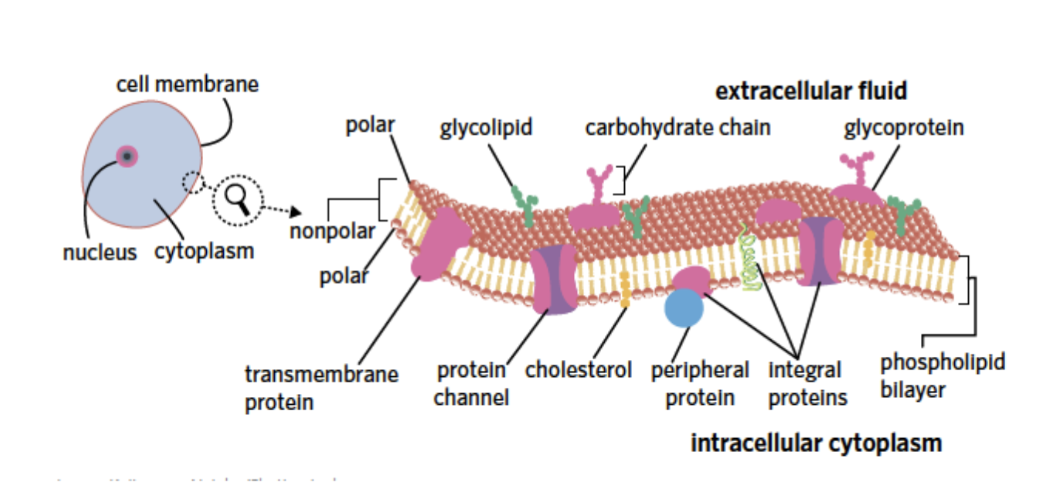
Integral
Proteins embedded within the plasma membrane
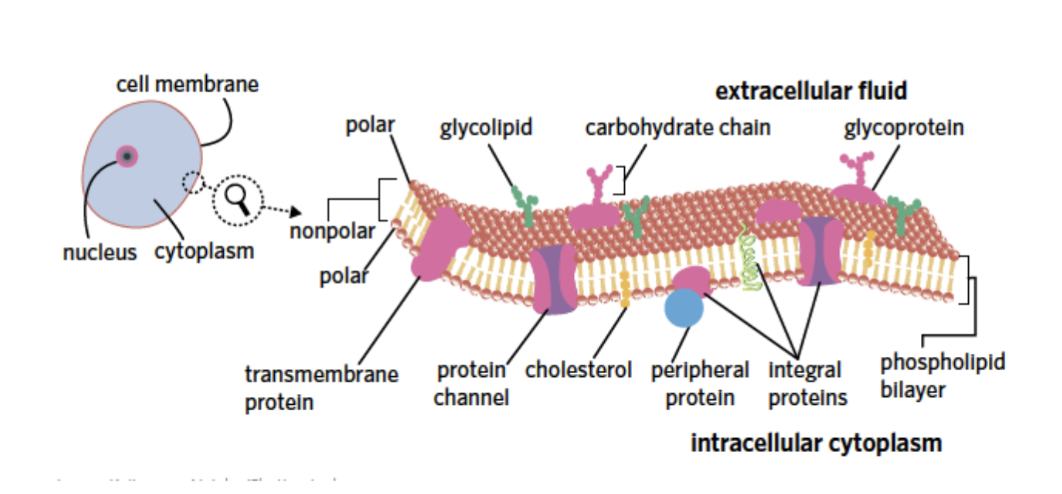
Peripheral
Proteins attached to the membrane but are not embedded in it.
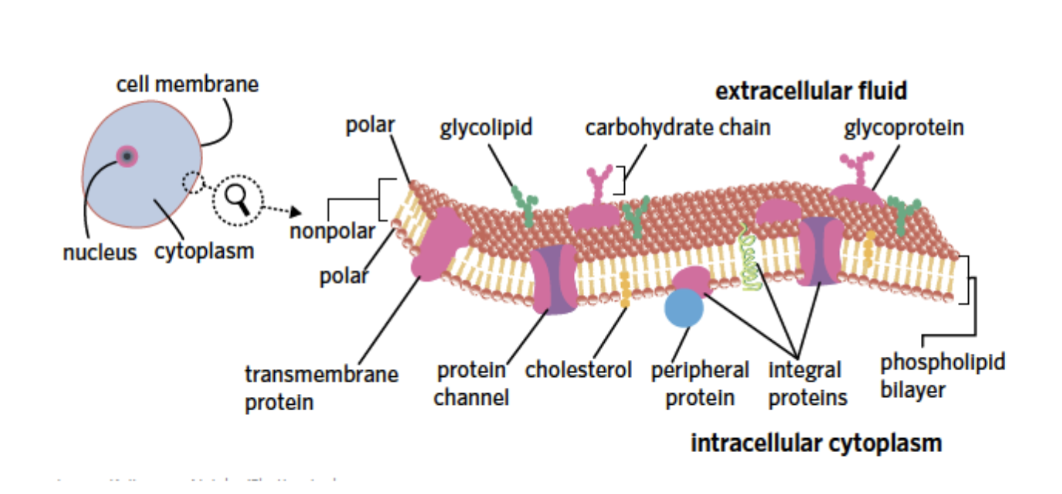
Glycolipid
Carbohydrate chain attached to a lipid
Extracellular
The environment outside the cell.
Intracellular
The environment inside the cell (cytoplasm/cytosol).
Permeable
allows liquids or gases to pass through it easily
Selectively Permeable
only allows certain substances to pass through while blocking others
Diffusion
The movement of particles from a region of high concentration to a region of low concentration until equilibrium is reached.
The bigger the difference in concentration, the faster it will move
High to low concentration
No protein required
No energy required
Equilibrium
The point where particles are distributed evenly and move at equal rates in all directions.
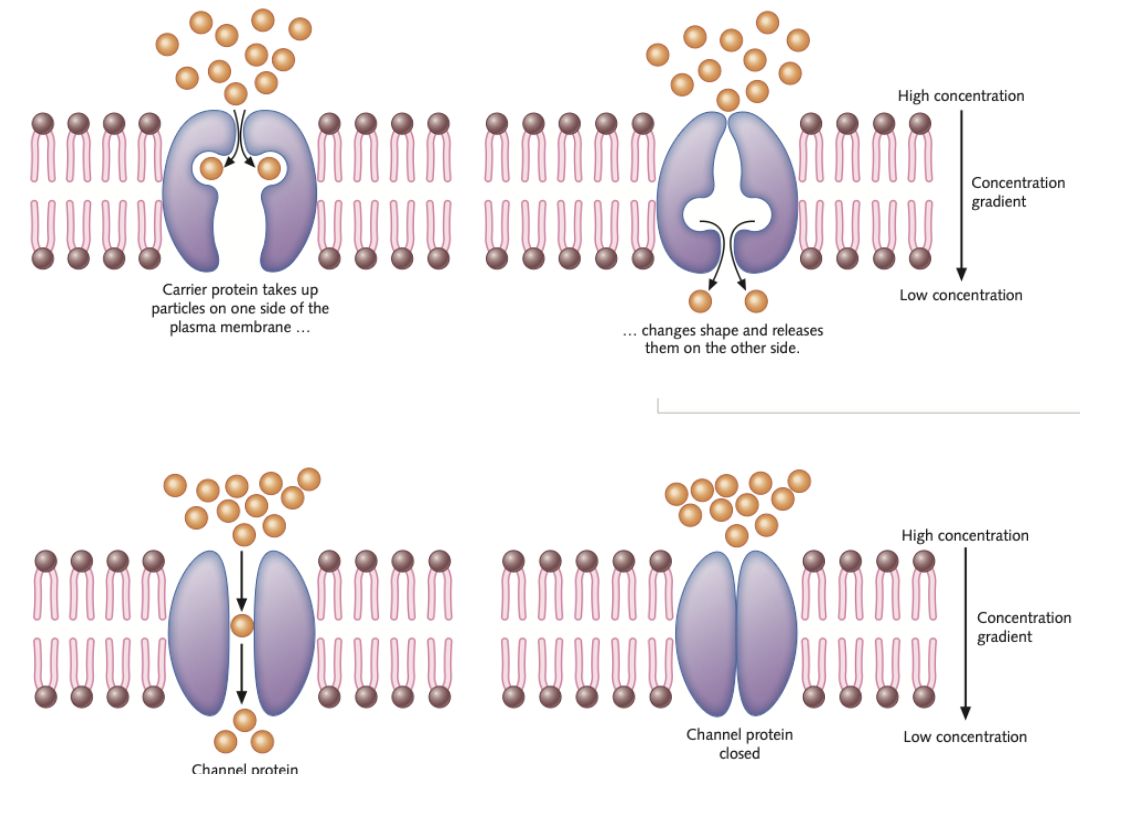
Facilitated Diffusion
Charged particles (ions) and large molecules (like glucose) are repelled by the hydrophobic lipid tails and need help
The "Helpers": Specific transport proteins assist these molecules:
Channel Proteins: Form narrow, water-filled "tunnels" for water-soluble substances.
Carrier Proteins: Bind to a specific molecule(e.g. glucose), change shape, and release it on the other side of the molecule
Polar/hydrophilic molecules transported
Large molecules
High to low concentration
Protein required
No energy required
Simple Diffusion
Small, uncharged, or hydrophobic(oxygen, co2) molecules slip directly between phospholipids.
High to low concentration
No protein required
No energy required
What are the factors of the rate of diffusion
The process is faster when there is a
greater concentration gradient
Increase in temperature
Osmosis
Diffusion of water molecules from an area of high H2O concentration to an area of low H2O concentration through a semi-permeable membrane without the use of energy.
Direction: from hypotonic to hypertonic solution
Protein is sometimes required
No energy required
Tonicity
A measure of the relative concentration of solutes on either side of a semipermeable membrane.
Described as hypertonic, hypotonic, or isotonic
Hypertonic
A solution with a higher solute concentration than the cell (water leaves)
Hypotonic
A solution with a lower solute concentration than the cell (water enters).
Isotonic
A solution with the same solute concentration as the cell (no net water movement).
Osmosis in Animal Cells (red blood cells)
In a hypotonic solution (like pure water), they will swell and burst.
lysis occurs
it refers to the breakdown, destruction, or rupturing of the outer plasma membrane of a cell, resulting in the release of its internal contents and the death of the cell.
Osmosis in Plant Cells
They do not burst because they have a tough, external cell wall.
When water enters, the vacuole swells and pushes against the cell wall, making the cell turgid (firm).
Solute
The substance that is dissolved in a liquid (e.g., salt or sugar).
Passive Transport
Movement across a membrane that does not require energy(ATP)
Moves substances down the concentration gradient (from High to Low).
Simple diffusion, facilitated diffusion, and osmosis
ATP (Adenosine Triphosphate)
The main cellular source of chemical energy used to power active transport.
Carrier Protein
A protein that changes shape to move molecules across the membrane
used in facilitated diffusion & active transport
Channel Protein
A protein that forms a watery "tunnel" for specific ions; used only in facilitated diffusion.
Concentration Gradient
The difference in particle concentration between two regions.
Active Transport
The movement of particles up a concentration gradient (from low concentration to high concentration).
Requires ATP to power the carrier protein to force the molecule against the concentration gradient
Counteracts the natural push of diffusion.
Uses specific carrier proteins in the plasma membrane that work as "one-way valves."
Individual small molecules/ions (like Glucose or Na+)
Endocytosis
An active process where the plasma membrane surrounds a large particle or liquid to form a vesicle, bringing it into the cell.
2 types: phagocytosis and pinocytosis
Requires ATP to change the shape of the membrane and move the vesicles.
Phagocytosis
A specific form of endocytosis-"cell eating."
It is the process by which a cell engulfs large, solid particles or even entire foreign cells (like bacteria) from the external environment.
(e.g., an Amoeba eating prey or a human white blood cell engulfing bacteria).
Pinocytosis
A specific form of endocytosis (bulk transport) known as "cell drinking."
It is the process by which a cell takes in extracellular fluid and the dissolved substances (solutes) it contains.
Exocytosis
The process by which large molecules held in vesicles are transported out of the cell.
Mechanism: A vesicle moves to the plasma membrane, fuses with it, and releases its contents to the external environment.
The Golgi apparatus is responsible for packaging these substances into vesicles for export.
Vesicle
A small, membrane-bound sac used to transport, store, or digest substances.
Metabolism
The total sum of all chemical reactions occurring within a cell.
Bulk Transport
(Endocytosis/Exocytosis) is for large volumes or large particles moving via membrane folding and vesicles.