Microbiology: Ch. 7 Vectors, bacteriophage, and Viral Pathogens
 Call Kai
 Learn
Learn Practice Test
 Spaced Repetition
 Match
Match Flashcards
 Knowt Play
1/128

There's no tags or description
Looks like no tags are added yet.
Name | Mastery | Learn | Test | Matching | Spaced | Call with Kai | Chat |
|---|
No analytics yet
Send a link to your students to track their progress
129 Terms
Why are vectors important in the transmission of disease?
Vectors act as intermediaries that transport pathogens (like bacteria, viruses, or parasites) from one host to another. They are essential because they:
Bridge the gap between hosts that do not come into direct contact.
Facilitate biological cycles, as some pathogens must undergo a stage of development or multiplication inside the vector before they can infect a new host.
List some of the most common arthropod vectors.
1.Mosquitoes (e.g., transmitting Malaria, Zika, West Nile Virus)
Ticks (e.g., transmitting Lyme disease)
Fleas (e.g., transmitting Plague)
Flies (e.g., Sandflies or Tsetse flies)
Lice
Most arthropod vectors are haematophagous. What does this mean?
Haematophagous - the organism feeds on blood.
This behavior is the primary mechanism for disease transmission, as the vector ingests pathogens while taking a blood meal from an infected host and injects them into a new host during a subsequent feeding.
Characteristics for viruses
Cellular Organization | Acellular (They are not made of cells; they consist of genetic material encased in a protein shell). |
Nutrition | None (They do not consume food; they "replicate" by hijacking a host cell's machinery). |
Respiration | None (They do not carry out metabolic processes like cellular respiration). |
Metabolism | None: They have no internal metabolism of their own and cannot produce energy (ATP). |
Homeostasis | None: They do not maintain a stable internal environment. |
Irritability | None: They do not respond to stimuli in the environment outside of a host cell. |
Growth and Development | None: They do not grow in size; they are assembled in their mature form within a host. |
Movement | Passive: They do not move on their own; they rely on external forces (like air, water, or blood) to reach a host. |
Adaptation to Change | Yes: They can mutate and evolve rapidly over generations to adapt to host defenses. |
Reproduction | Host-dependent: They cannot reproduce on their own; they must infect a living host cell to replicate. |
Are viruses cellular or noncellular? Explain your answer.
noncellular.
They lack the fundamental components of cells, such as a cytoplasm, organelles, and a plasma membrane. They are essentially genetic material (DNA or RNA) encased in a protein coat.
How abundant are viruses.
Viruses are the most abundant biological entities on Earth. It is estimated that there are approximately 10^31 (refers to the estimated total number of virus particles (virions) present on Earth) viruses on the planet, outnumbering bacteria by about ten to one.
Viruses are obligate intracellular parasites. Explain.
This means viruses cannot reproduce or carry out metabolic processes outside of a host cell
. They must "obligate" (force) their way into a living cell and use that cell's machinery (ribosomes, enzymes, etc.) to replicate.
Are viruses living or not?
Arguments for "Living": They contain genetic material, they evolve through natural selection, and they can reproduce (albeit only inside a host).
Arguments for "Nonliving": They are inert outside a host, they do not grow, they lack a metabolism, and they cannot maintain homeostasis on their own. Most scientists currently classify them as complex "biological entities" rather than living organisms.
Why is the mutation rate in RNA viruses higher than in DNA viruses? Explain.
RNA viruses have higher mutation rates because the enzymes that copy RNA (RNA polymerases) generally lack the proofreading mechanismsfound in DNA polymerases. Consequently, errors made during replication are not corrected.
Describe the genetic material of viruses.
Unlike cellular life, which always uses double-stranded DNA, viral genomes can be DNA or RNA, and they can be single-stranded or double-stranded. The genome can also be linear or circular.
Describe the capsid of viruses.
The capsid is the protective protein shell that encloses the viral genome. It is composed of protein subunits called capsomeres. Capsids usually have specific shapes, such as helical or icosahedral (20-sided).
Where do enveloped viruses get their envelope from?
Enveloped viruses "steal" their envelope from the host cell's membrane (either the outer plasma membrane or internal membranes like the nuclear envelope) as they exit the cell through a process called budding.
If a single phage virus is added to 10 billion E coli, in 2 hours there will be ten trillion phage virus and 0.1% of the E. coli still living. What does this tell you about the reproductive rate of viruses?
This scenario demonstrates that the reproductive rate of viruses is extraordinarily rapid and exponential. While the host cells (bacteria) are being destroyed, a single virus can produce billions of offspring in a very short window of time, far outpacing the reproductive speed of cellular organisms.
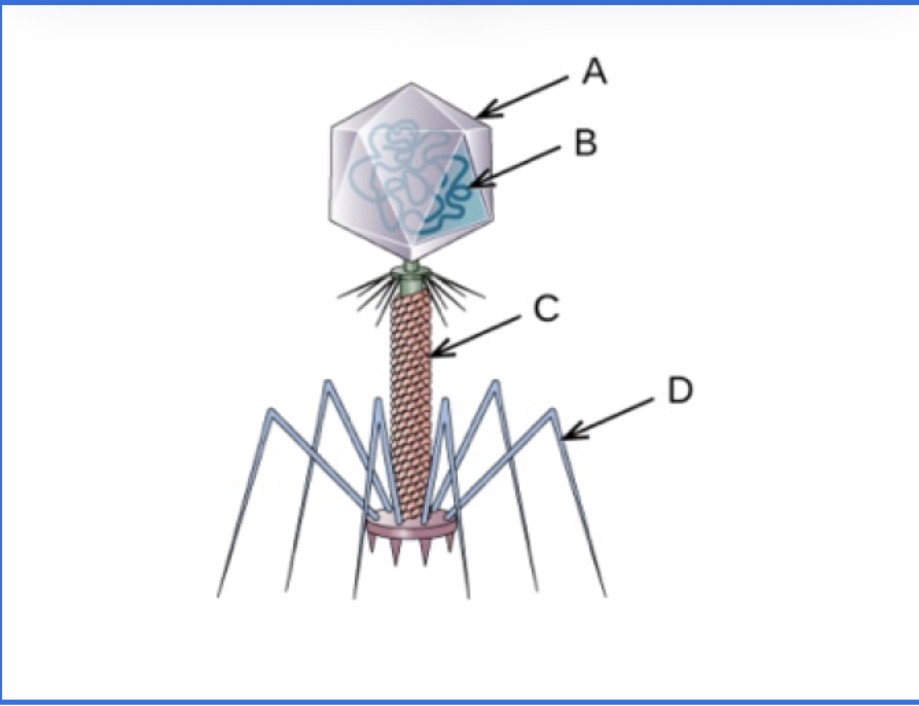
Label the phage diagram
A Protein
B DNA
C Sheath
D Tail fibers
Attachment meaning during lysis cycle
The phage attaches itself to the surface of a bacteria surface receptor in order to inject its DNA into the cell.
Penetration meaning during lysis cycle
Phage injects its DNA into the host cell by penetrating through the cell membrane.
biosynthesis meanin during lysis cycle
The phage DNA replicates inside the cell, synthesizing new phage DNA and protein.
maturation meaning during lysis cycle
Replicated material assembles into fully formed viral phages during this phase.
release meaning during lysis cycle
Newly formed phages are released from the infected cell to seek out new host cells to infect.
stages of lysis cycle
Maturation
attachment
biosynthesis
release
penetration
Replicated material assembles into fully formed viral phages during which phase.
Assembly (or Maturation) phase.
The phage attaches itself to the surface of bacteria surface receptor in order to inject its DNA into the cell.
the adsorption (or attachment) phase.
The phage DNA replicates inside the cell, synthesizing new phage DNA and protein. What phase of lysis cycle is this?
Biosynthesis (or Replication) phase.
Newly formed phages are released from the infected cell to seek out new host cells to infect. What phase is this in the lysis cycle
Release (or Lysis) phase.
Phage injects its DNA into the host cell by penetrating through the cell membrane. What phase is this in the lysis cycle
Penetration (or Entry) phase.
What is a viral plaque?
a clear area on a lawn of bacteria (growing on an agar plate) where the bacteria have been lysed (killed) by a viral infection. Each plaque typically originates from a single infectious virus particle.
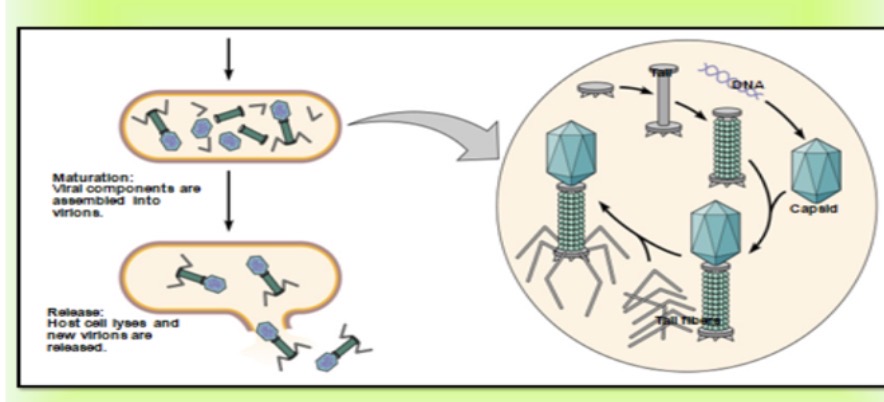
Describe the lytic cycle?
where the bacteriophage takes over a host cell's machinery to produce new virions, ultimately causing the host cell to burst (lyse) and die to release the new progeny. It consists of five main steps: Adsorption, Penetration, Biosynthesis, and Assembly, and Release.
Why is the lysogenic cycle so different from the lytic cycle? Explain.
The key difference is the fate of the host cell:
Lytic Cycle: The virus immediately hijacks the host's machinery to create new virions, ultimately causing the host cell to burst (lyse) and die to release them.
Lysogenic Cycle: The virus integrates its DNA into the host's genome (becoming a prophage). It remains dormant, allowing the host cell to survive and replicate normally, passing the viral DNA to its offspring until a trigger causes it to enter the lytic cycle.
Briefly explain each type of viral infections
-acute
A rapid onset of disease with symptoms that last a short time (e.g., the common cold or influenza). The immune system typically clears the virus quickly.
Briefly explain each type of viral infections
-latent
The virus remains completely inactive or dormant within the host's cells for long periods. There are no symptoms until the virus is "reactivated" (e.g., Cold sores from Herpes Simplex).
Briefly explain each type of viral infections
-persistent (chronic)
A long-term infection where the virus is produced continuously or at low levels over a long duration. Symptoms may be mild or absent for a long time but can become serious (e.g., Hepatitis B).
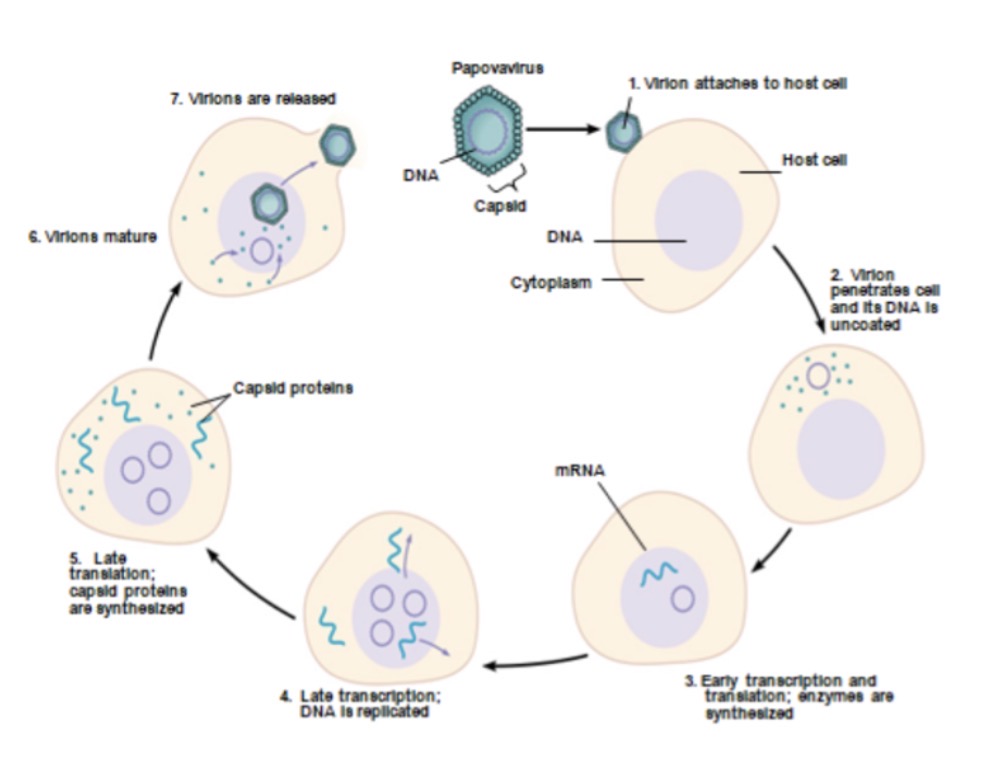
Describe each step in the Synthesis of Papillomavirus (causes warts).
-Attachment
The virion attaches to the host cell surface.
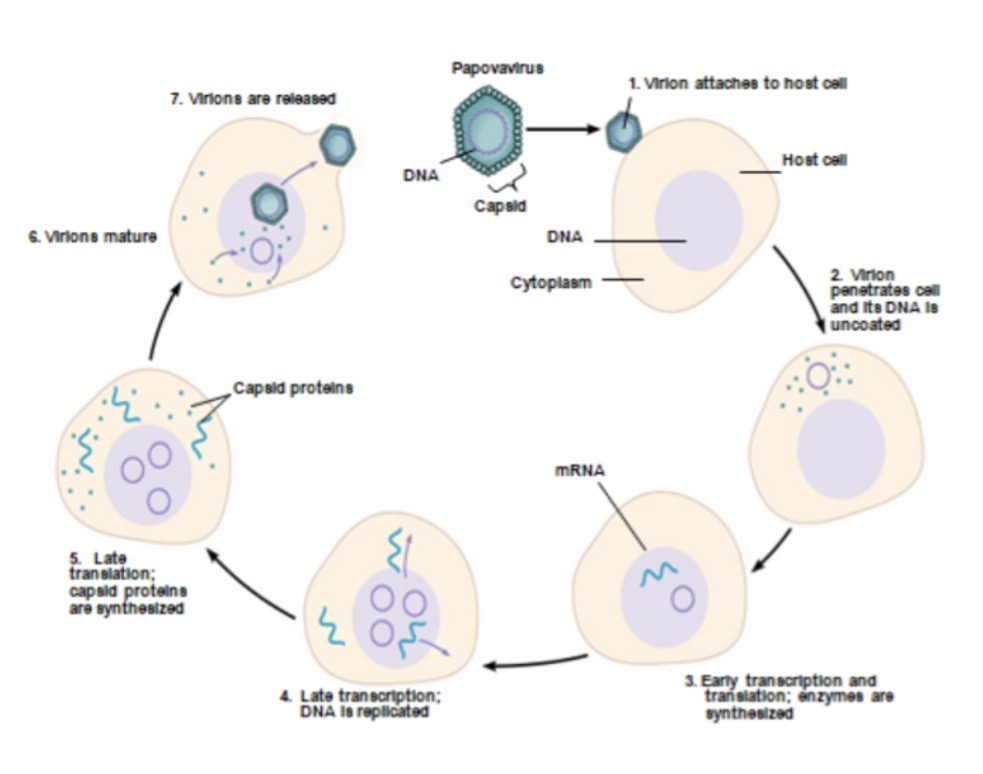
Describe each step in the Synthesis of Papillomavirus (causes warts).
-penetration
The virion penetrates the cell, and its DNA is uncoated as it enters the nucleus.
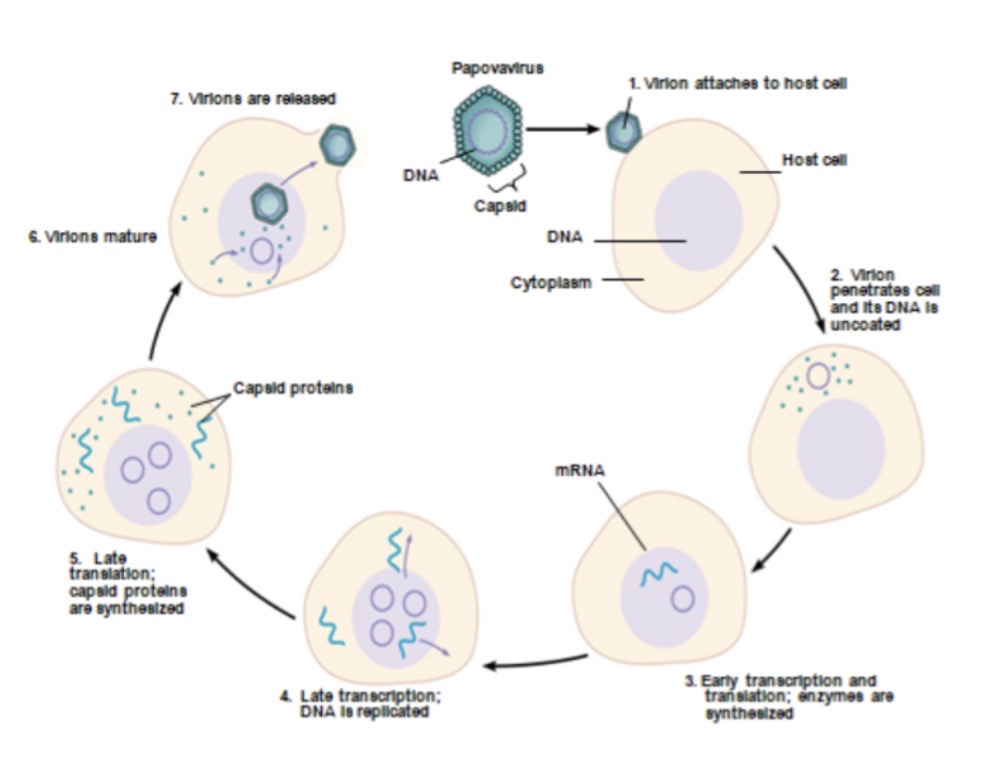
Describe each step in the Synthesis of Papillomavirus (causes warts).
-Early transcription and translation
Viral DNA is transcribed into mRNA. This mRNA is translated in the cytoplasm to synthesize early proteins (enzymes) required for DNA replication.
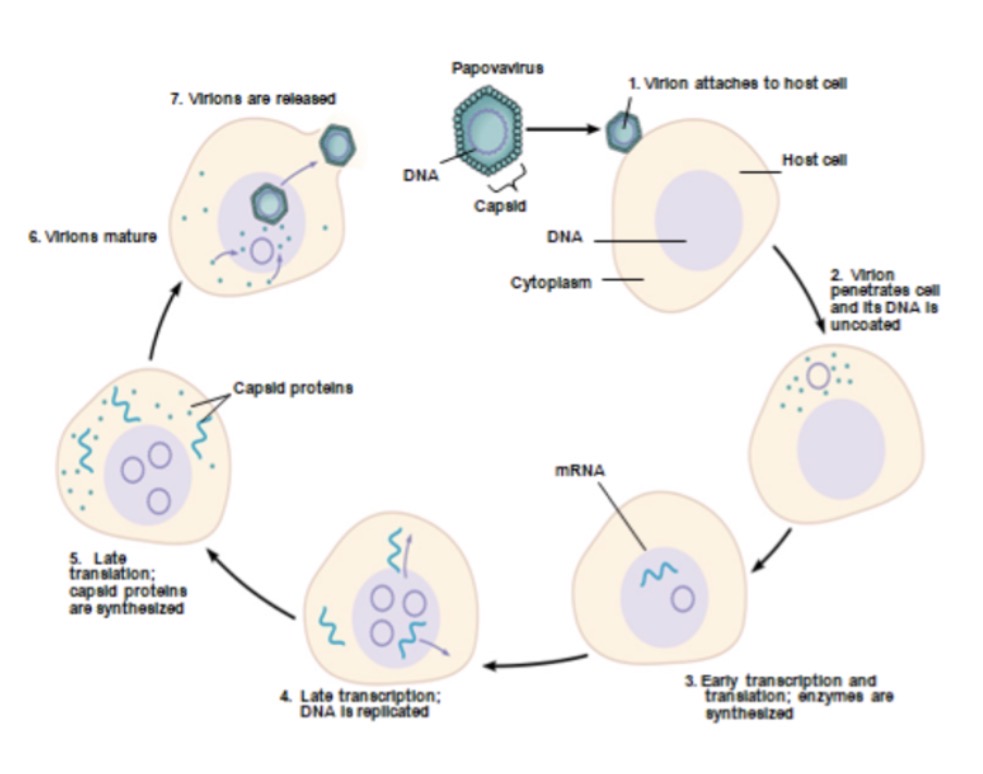
Describe each step in the Synthesis of Papillomavirus (causes warts).
-DNA Replication and Late transcription
The viral DNA is replicated in the nucleus. "Late" transcription then occurs to produce mRNA for structural proteins.
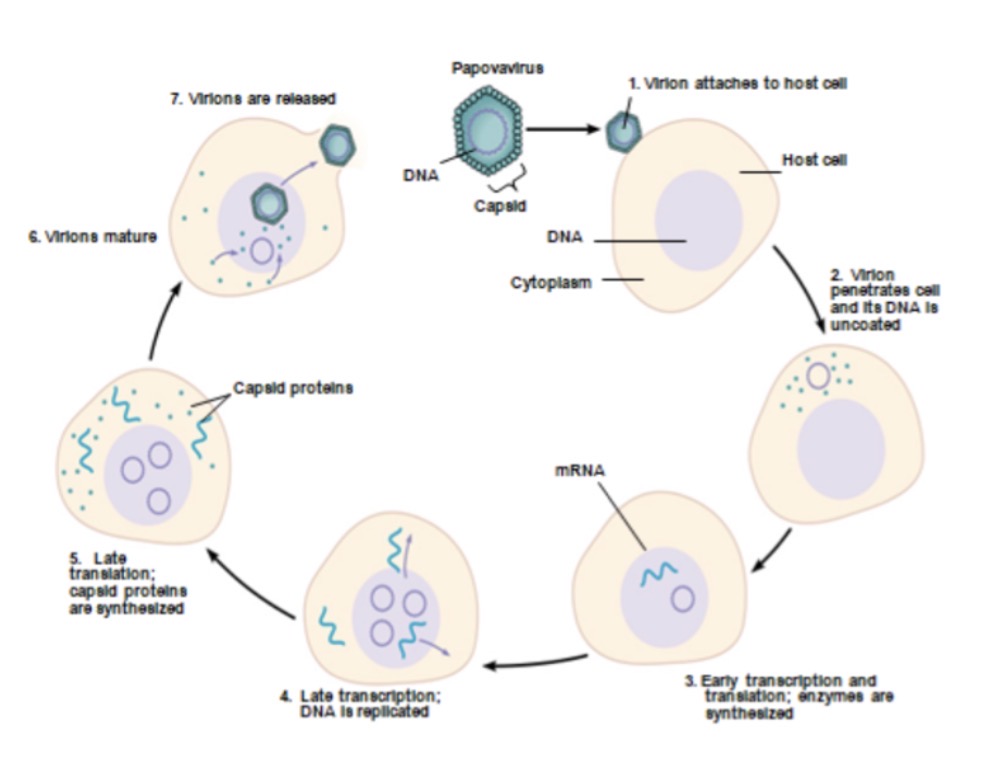
Describe each step in the Synthesis of Papillomavirus (causes warts).
-Late translation of capsid proteins
Late mRNA is translated in the cytoplasm to produce capsid proteins, which then migrate back into the nucleus.
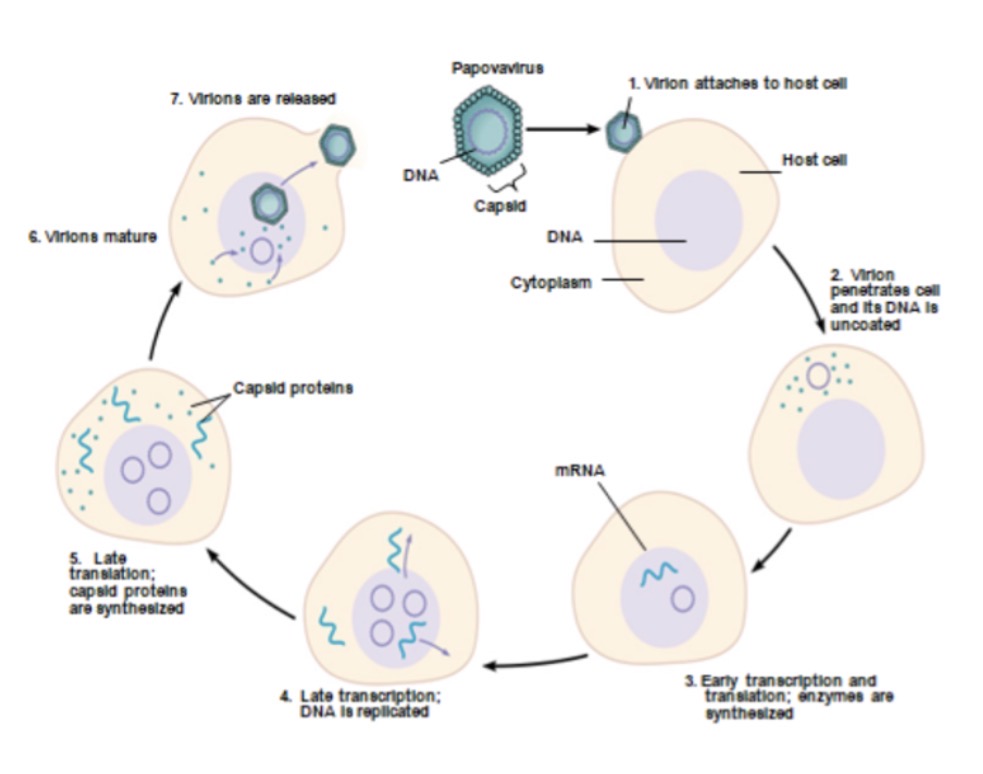
Describe each step in the Synthesis of Papillomavirus (causes warts).
-Mature virion
The newly synthesized DNA and capsid proteins assemble in the nucleus to form mature virions.
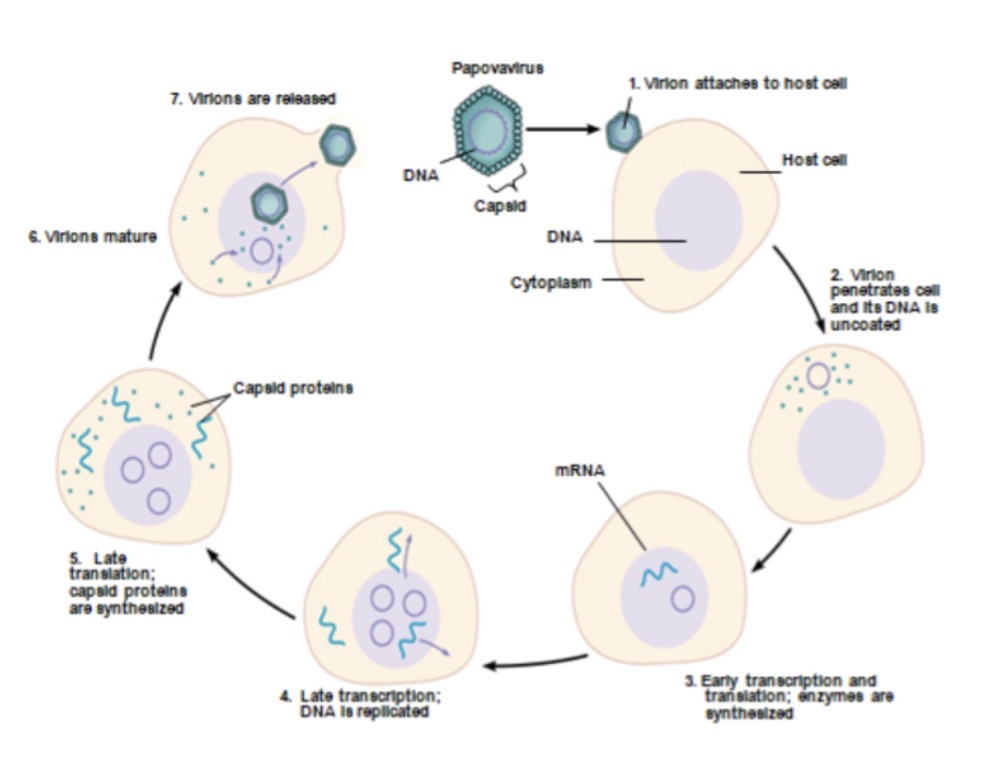
Describe each step in the Synthesis of Papillomavirus (causes warts).
-release
The mature virions are released from the host cell to infect new cells.
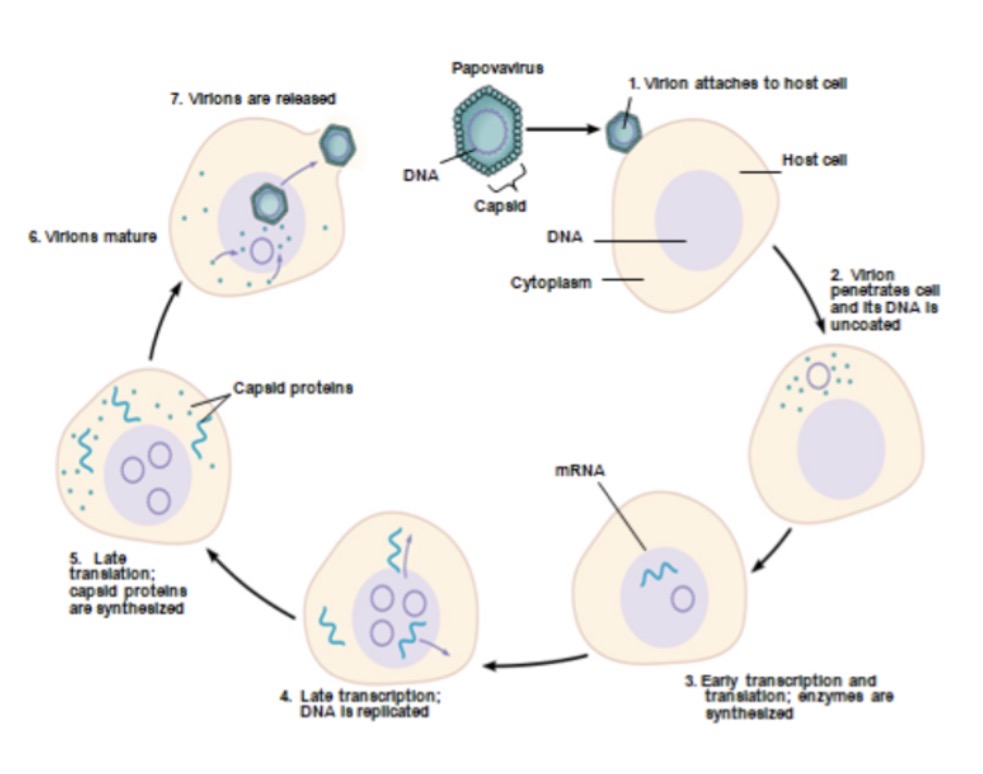
Describe each step in the Synthesis of Papillomavirus (causes warts).
attachment
Penetration
Early transcription and translation
DNA Replication and Late transcription
Late translation of capsid proteins
Mature virion
Release
Discuss the three ways viruses leave the cell.
-exocytosis
-budding
-lysis
Discuss the three ways viruses leave the cell.
-lysis
This process involves the bursting of the host cell membrane. It is typical of non-enveloped viruses and usually results in the death of the host cell as the new viral particles are released all at once.
Discuss the three ways viruses leave the cell.
-budding
Frequently used by enveloped viruses, the virus pushes through the host's plasma membrane, "pinching off" a portion of it to create its own viral envelope. The host cell often remains alive during this process.
Discuss the three ways viruses leave the cell.
-lysis
This process involves the bursting of the host cell membrane. It is typical of non-enveloped viruses and usually results in the death of the host cell as the new viral particles are released all at once.
Describe each type of human papillomavirus (HPV)
HPV type 1
HPV type 2
HPV 6 and 11
HBV 16 and 18
Describe each type of human papillomavirus (HPV)
-HPV type 1
Primarily associated with deep plantar warts (found on the soles of the feet), which can be painful due to inward growth from pressure.
Describe each type of human papillomavirus (HPV)
-HPV type 2
Most commonly causes common warts (verruca vulgaris), typically found on the hands, fingers, or knees.
Describe each type of human papillomavirus (HPV)
-HPV type 6 and 11
These are "low-risk" mucosal types. They are responsible for approximately 90% of genital warts and can cause respiratory papillomatosis, but they rarely lead to cancer.
Describe each type of human papillomavirus (HPV)
-HPV type 16 and 18
These are "high-risk" mucosal types. They are the primary causes of cervical cancer and are also linked to other anogenital and oropharyngeal cancers.
What is a papilloma?
a benign (non-cancerous) growth or tumor of the skin or mucous membranes, commonly known as a wart. They are caused by the human papillomavirus (HPV).
Besides warts, what other conditions do papilloma viruses cause?
certain high-risk strains of HPV can cause several types of cancer, most notably cervical cancer. They are also linked to cancers of the anus, throat (oropharyngeal), vulva, vagina, and penis.
Adenoviruses is the most common cause which illnesses?
Adenoviruses most commonly cause respiratory illnesses, ranging from the common cold to more severe conditions like pneumonia, croup, and bronchitis. They are also a frequent cause of conjunctivitis (pink eye) and gastroenteritis.
How are Adenoviruses spread?
They are highly contagious and spread through:
Respiratory droplets from coughing or sneezing.
Direct contact like shaking hands or touching an infected person.
Indirect contact by touching contaminated surfaces (fomites) and then touching your eyes, nose, or mouth.
Fecal-oral route, particularly in types that cause intestinal infections.
What is the smallpox virus?
a serious, highly contagious, and often fatal infectious disease caused by the variola virus. It is a member of the Orthopoxvirus family. For centuries, it was one of the world's most devastating diseases, characterized by high fever and a distinctive, progressive skin rash.
Both variola major and variola minor cause smallpox. Discuss each type.
-Variola Major
The most common and severe form. It causes a more extensive rash and higher fever, with a historical fatality rate of approximately 30%.
Both variola major and variola minor cause smallpox. Discuss each type
-Variola minor
A much less common and less severe strain. The symptoms were milder, and it was far less likely to be fatal, with death occurring in less than 1% of cases.
What are the symptoms of smallpox?
Incubation Period: 7 to 19 days (no symptoms, not contagious).
Initial Symptoms (Prodrome): High fever, head and body aches, and sometimes vomiting.
Early Rash: Small red spots appear in the mouth and on the tongue. As these sores break, the virus spreads into the throat, and a rash appears on the skin, starting on the face and spreading to the arms, legs, hands, and feet.
Pustular Rash and Scabs: The rash bumps become raised and fill with thick fluid (pustules). They eventually form crusts and scabs.
Resolution: Scabs fall off, often leaving deep, pitted scars (pockmarks).
What is the good news about smallpox?
It has been eradicated. Following a massive global vaccination campaign led by the World Health Organization (WHO), the last naturally occurring case was diagnosed in 1977. In 1980, it was officially declared the first human infectious disease to be wiped out from the planet.
When settlers first came to the Americas, they brought with them smallpox. Native Americans were never exposed to this virus. Go online and find out the outcome of Native American when they encountered this virus for the first time. Summarize what happened.
When European settlers brought smallpox to the Americas, it had a catastrophic effect on Native American populations. Because they had no prior exposure to the virus, they had no "acquired immunity."
Outcome: The virus spread rapidly through indigenous communities, leading to "virgin soil epidemics."
Summary: It is estimated that smallpox and other introduced diseases killed up to 90% of some Native American populations, leading to the collapse of many societies and making it easier for European colonization to succeed.
Although smallpox has been eradicated, there are samples of this virus at the CDC and VECTOR labs.
Why would they want to save samples of such a destructive virus?
Although eradicated in the wild, samples are stored at the CDC (USA) and VECTOR (Russia) for several reasons:
Research: To develop and test new antiviral drugs and even better vaccines in case the virus is ever released.
Security: To stay prepared against the threat of bioterrorism, where the virus could potentially be used as a weapon.
Scientific Study: To understand the virus's genetics and how it interacts with the human immune system.
Each of the following viruses belongs to the herpes simplex group. Discuss each type.
HSV-1 (Herpes Simples Virus type 1):
Primarily causes oral herpes, commonly appearing as "cold sores" or fever blisters around the mouth. It is typically transmitted through oral-to-oral contact, though it can also cause genital herpes through oral-genital contact.
Each of the following viruses belongs to the herpes simplex group. Discuss each type.
HSV-2 (Herpes Simplex Virus Type 2):
Primarily causes genital herpes. It is almost exclusively sexually transmitted through skin-to-skin contact. It can cause sores, itching, and pain in the genital or anal area.
You contract chicken pox as a teen and it goes away. Years later you contact shingles. What is going on? Does the chicken pox virus ever go away? Explain.
Both diseases are caused by the Varicella-Zoster Virus (VZV). When you first catch it, it causes chickenpox. After the illness passes, the virus doesn't leave; it enters a latent (dormant) state in your nerve tissues. Years later, often due to aging or a weakened immune system, the virus can "wake up" and travel back down the nerve fibers to the skin, causing the painful rash known as shingles.
Does the virus ever go away? No. Once you are infected with VZV, the virus remains in your body for life, hiding in the dorsal root ganglia (nerve cells near the spinal cord).
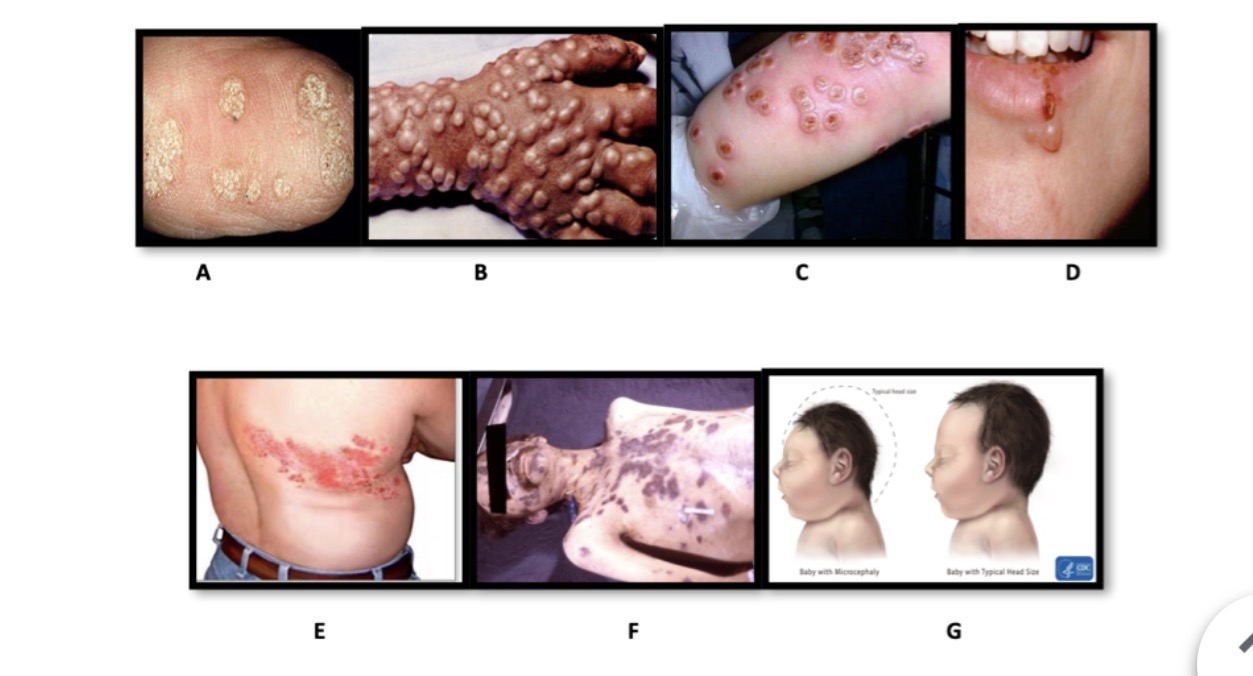
Identify the disease underneath each condition.
-picture A
A: Likely Oral Herpes (HSV-1) — indicated by the cold sore on the lip.
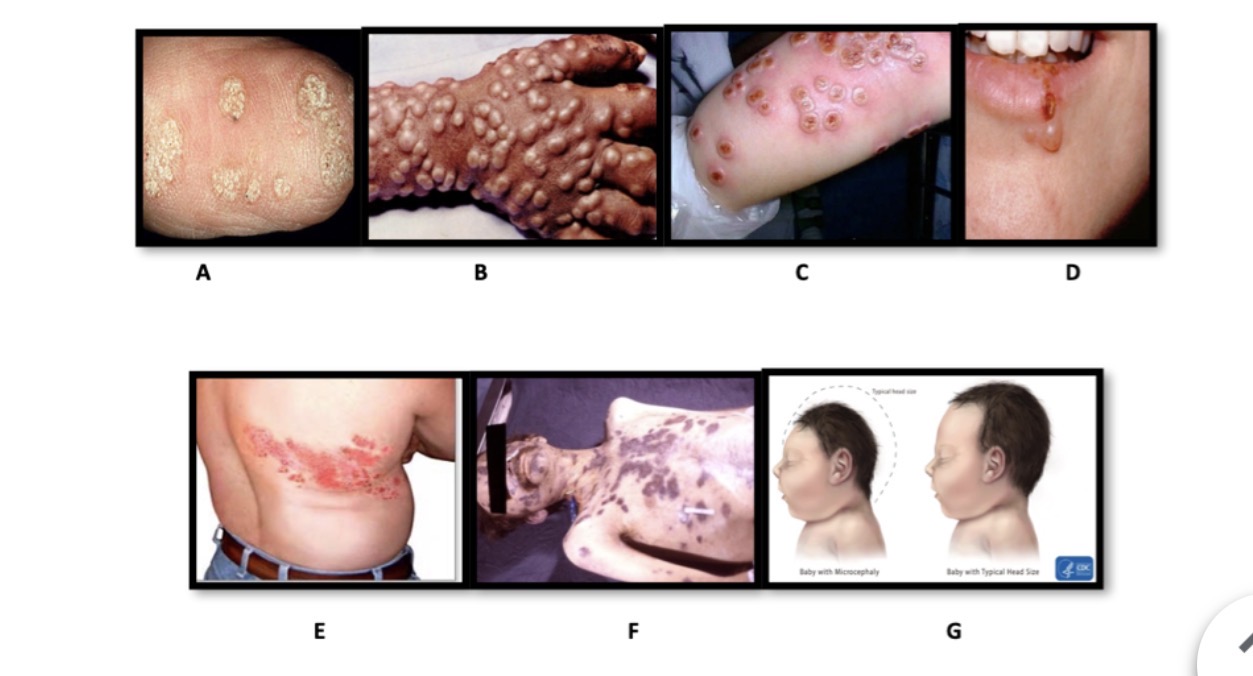
Identify the disease underneath each condition.
-picture B
Likely Smallpox — indicated by the dense, raised pustules across the skin.
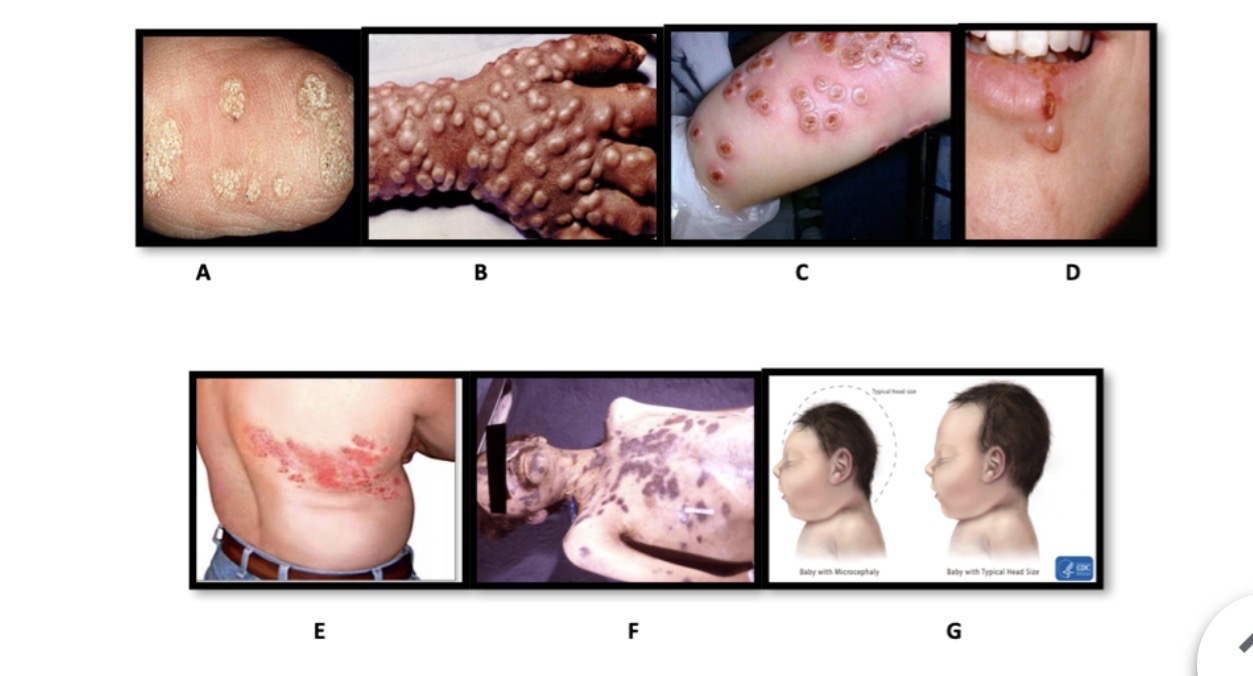
Identify the disease underneath each condition.
-picture C
Likely Genital Herpes (displayed on the skin) or Syphilis.
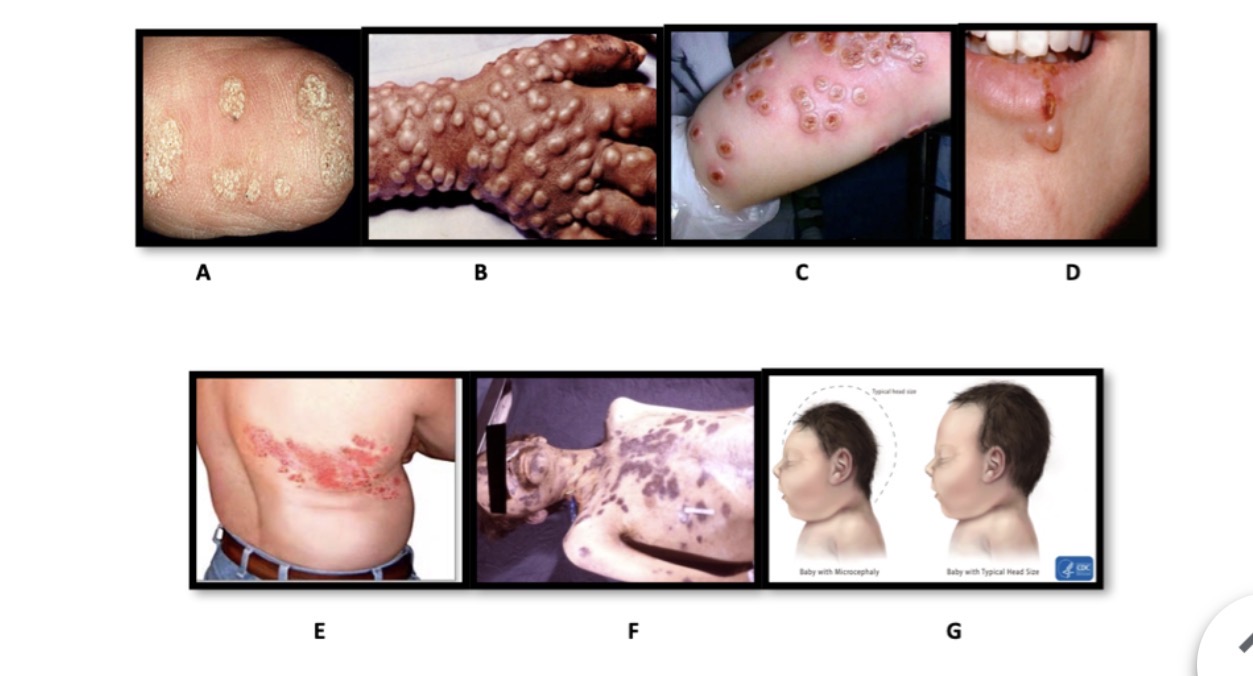
Identify the disease underneath each condition.
-picture D
Hand, Foot, and Mouth Disease or another oral lesion.
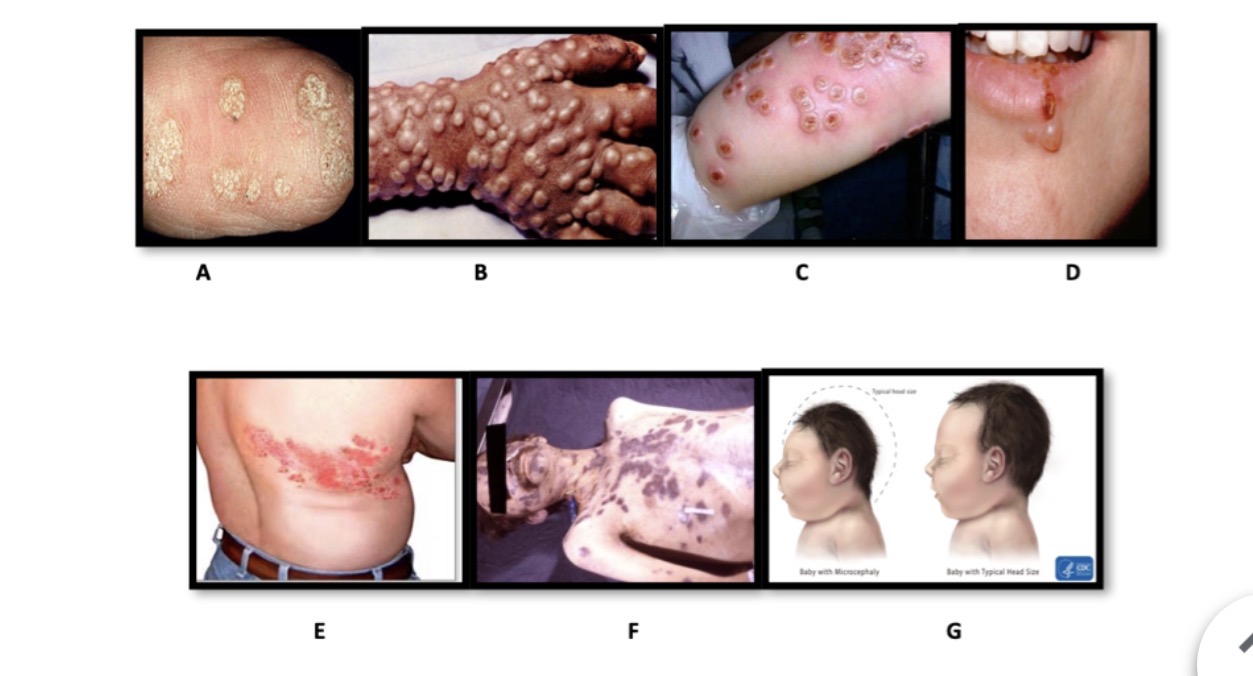
Identify the disease underneath each condition.
-picture E
Shingles — clearly shown as a "stripe" of blisters following a specific nerve path (dermatome) on the torso.
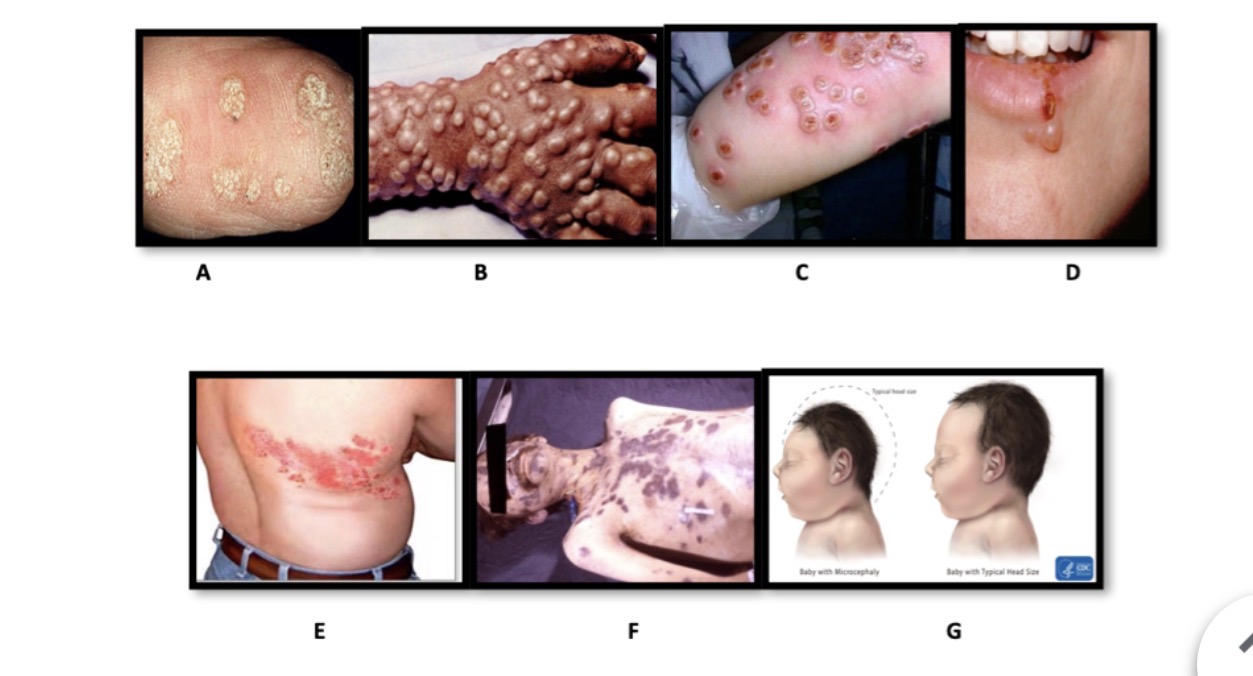
Identify the disease underneath each condition.
-picture F
Measles or Chickenpox — characterized by a widespread, itchy red rash.
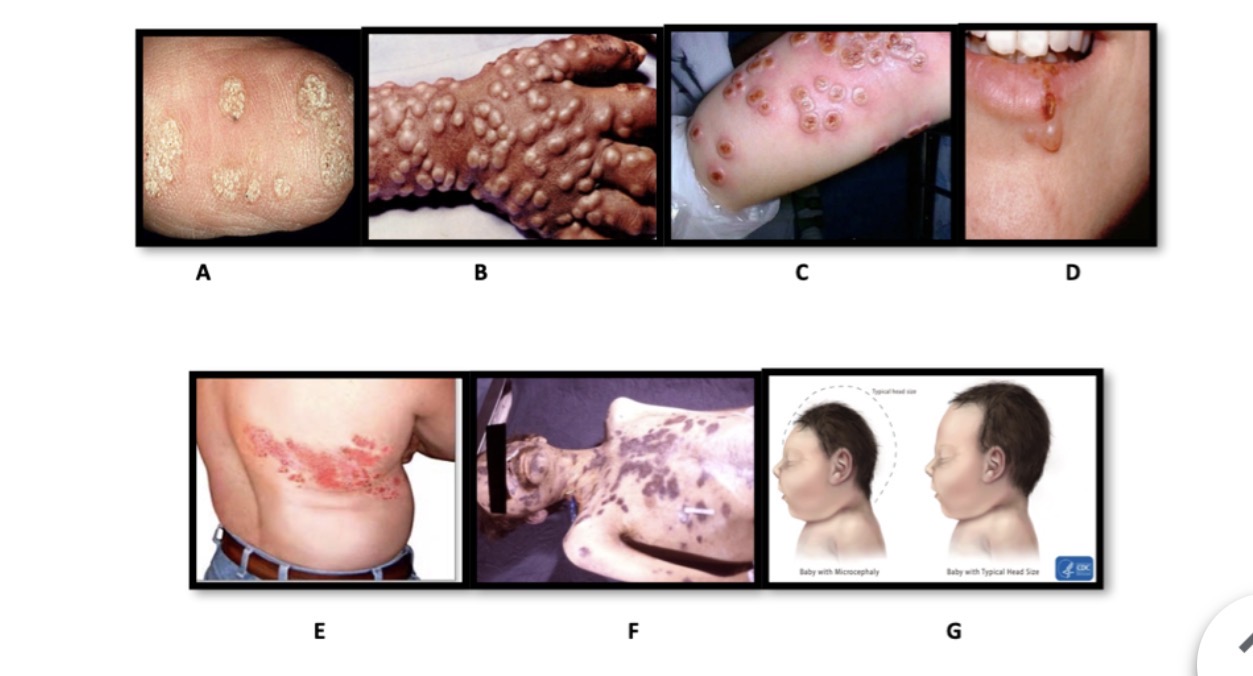
Identify the disease underneath each condition.
-picture G
Mumps — indicated by the significant swelling of the parotid (salivary) glands in the neck/jaw area.
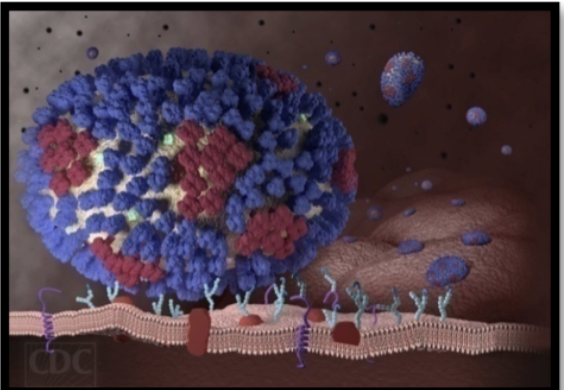
The bird, pig, and human share the influenza virus. Why is this important to know?
It is important to know that birds, pigs, and humans share the influenza virus because these species can act as "mixing vessels." Specifically, pigs can be infected by both avian (bird) and human flu viruses simultaneously. This allow the different viruses to swap genetic material, leading to the emergence of entirely new strains that humans have no immunity against.
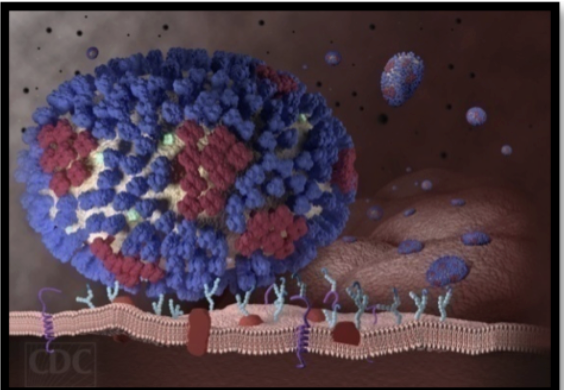
What are the functions of hemagglutinin and neuraminidase?
(H):
This protein acts like a "key" that allows the virus to bind to and enter a host cell. It is the primary target for antibodies created by vaccines.
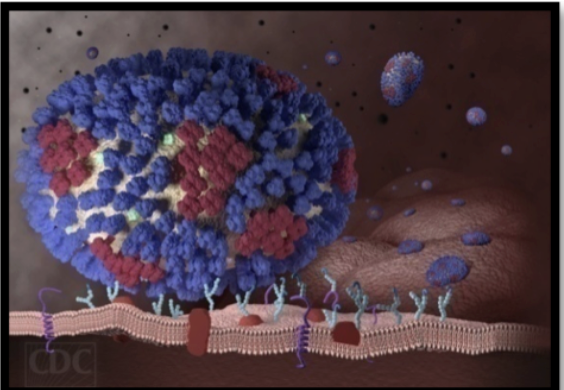
What are the functions of hemagglutinin and neuraminidase?
(N):
This enzyme acts like "scissors." It helps newly formed virus particles break away from the host cell so they can go on to infect other cells.
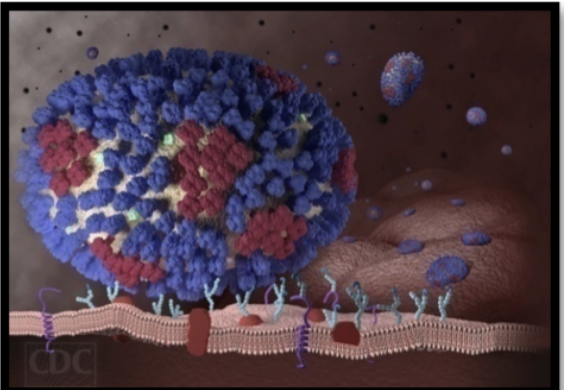
The influenza virus is constantly undergoing antigenic shift. What is the cause of this phenomenon?
Antigenic shift is caused by genetic reassortment. This occurs when two different influenza strains (e.g., a bird flu and a human flu) infect the same cell at the same time and exchange entire RNA segments. This results in a sudden, major change in the virus's surface proteins, often leading to pandemics.
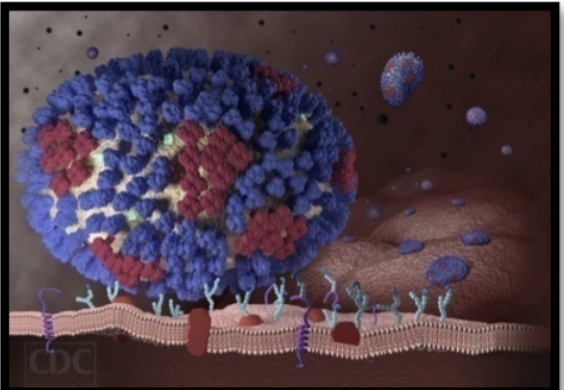
Why is the influenza vaccine modifed before each flu season?
The vaccine is modified annually because of antigenic drift. This involves small, gradual mutations in the virus's genes as it replicates. Over time, these small changes add up, eventually creating a "new" version of the virus that is no longer recognized by the antibodies produced from previous vaccinations or infections.
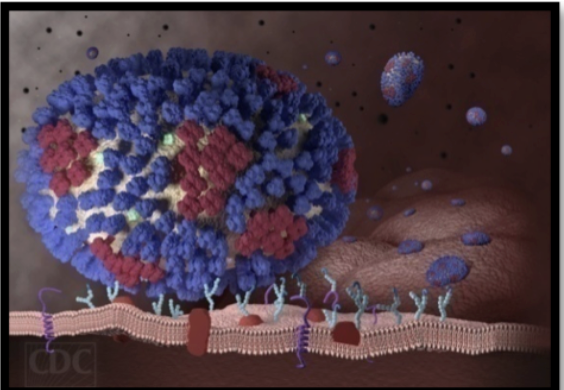
The H1N1 virus has been reconstituted in the laboratory. Do you think this is a wise move? Explain.
Arguments for: It allows researchers to study the specific mutations that made the 1918 strain so deadly, which helps in developing better vaccines and antiviral drugs for future pandemics.
Arguments against: It poses a significant biosafety risk. If the virus were to leak from a lab, it could cause a global pandemic, as modern populations may lack immunity to that specific ancestral strain.
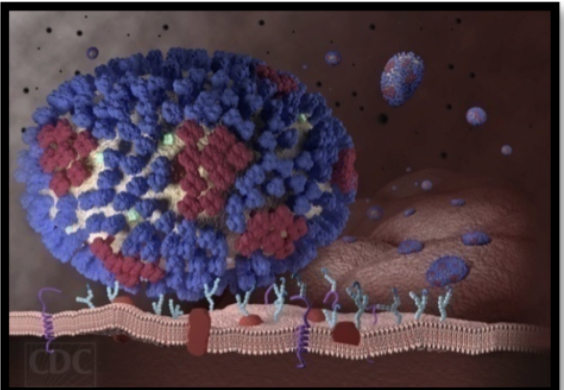
Discuss each influenza outbreak
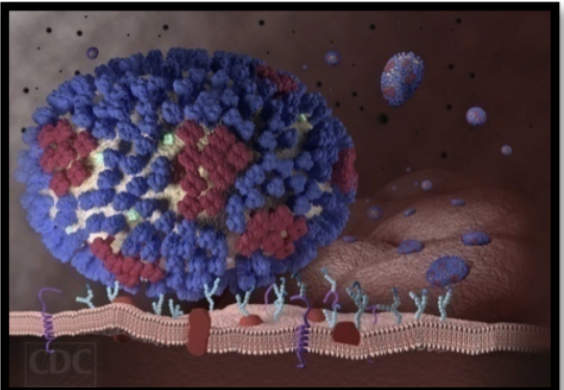
1968-69 "Hong Kong flu" H3N2
This pandemic was caused by an H3N2 strain of the Influenza A virus. It was highly contagious and spread globally, resulting in an estimated 1 million deaths worldwide. It evolved from the 1957 H2N2 virus through a process called antigenic shift.
Discuss each influenza outbreak
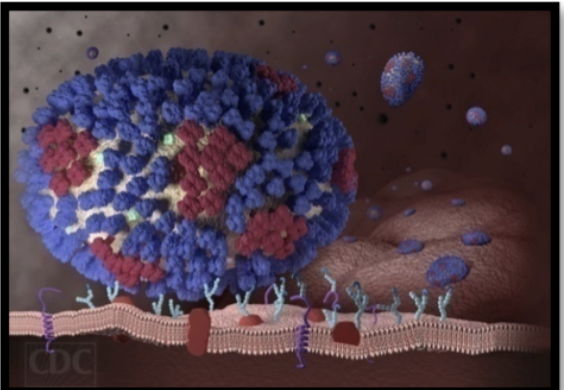
1997 "Avian flu"H5N1
This was the first documented instance of direct H5N1 transmission from birds to humans, occurring in Hong Kong. While it had a very high mortality rate, it did not spread easily between people.
Discuss each influenza outbreak
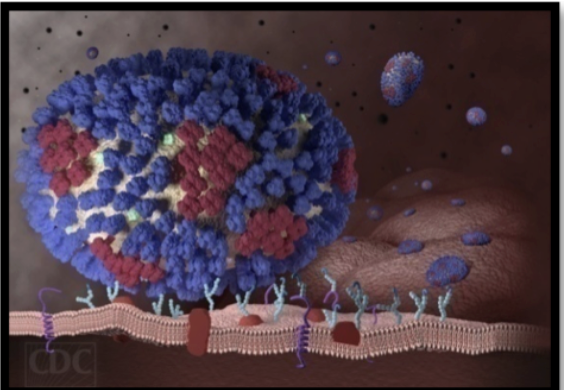
2009 "Swine flu" H1N1
This pandemic involved a new strain of H1N1 that contained a combination of gene segments from human, bird, and swine influenza viruses. It was highly transmissible among humans but generally less lethal than Avian flu and Hong Kong flu
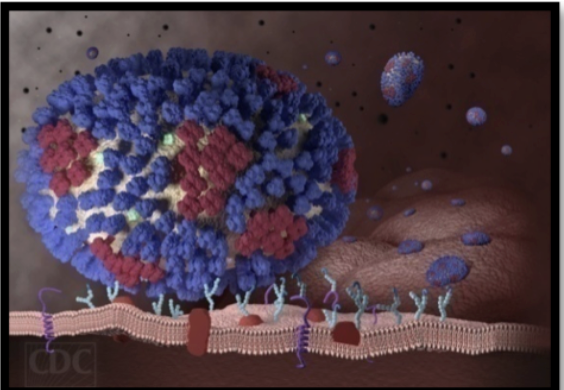
The H5N1 avian flu virus is extremely dangerous but it is a bird flu. Why is it uncommon for individuals to contract this virus?
The H5N1 virus is adapted to bind to receptors found deep in the respiratory tracts of birds. Humans lack the specific surface receptors in their upper respiratory tracts that the virus needs to attach to easily. Most human cases occur only after prolonged, close contact with infected poultry.
The H5N1 avian flu virus is extremely dangerous but it is a bird flu. Is there a possibility that the H5N1 could someday be a human virus? Explain.
Yes. There is a significant concern that the virus could undergo reassortment (exchanging genes with a human flu virus) or develop specific mutations that allow it to bind to human upper respiratory receptors. If it gains the ability for efficient human-to-human transmission, it could trigger a global pandemic.
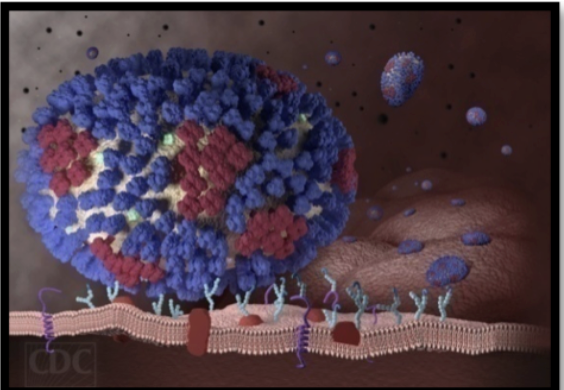
What illness does the poliomyelitis virus cause?
Polio, an infectious disease that can affect the central nervous system and, in severe cases, cause temporary or permanent paralysis.
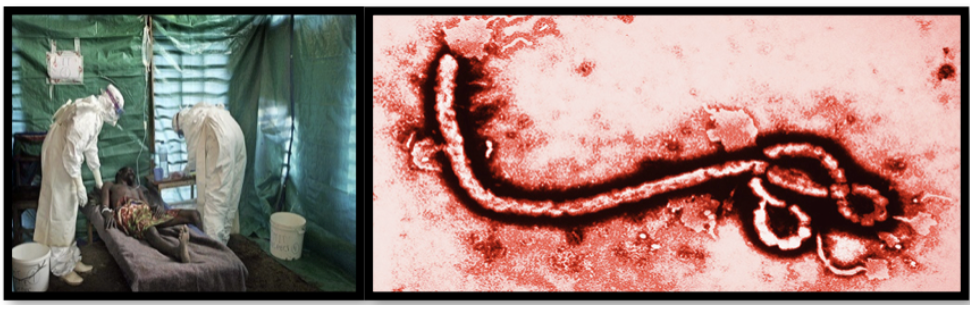
How dangerous is Ebola hemorrhagic fever?
This disease is caused by the Ebola virus. it is characterized by high fever, severe internal and external bleeding (hemorrhaging), and organ failure. It is transmitted to humans through wild animals and spreads through human-to-human transmission via direct contact with infected bodily fluids.
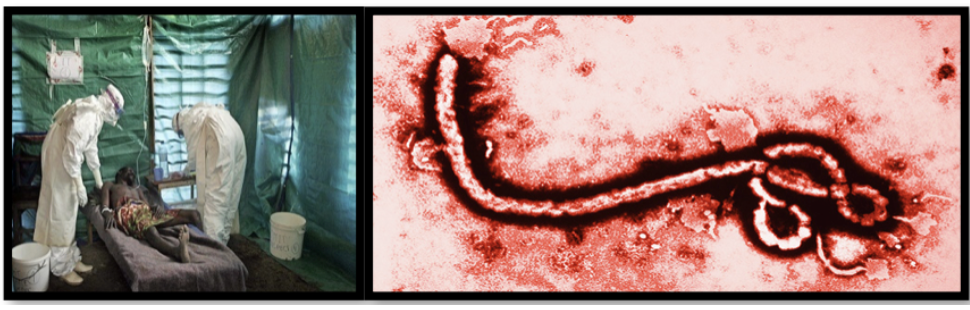
What are its symptoms of Ebola hemorrhagic fever
Initial Symptoms: Sudden onset of high fever, severe headache, muscle pain, and weakness.
Progressive Symptoms: Sore throat, vomiting, diarrhea, and a characteristic rash.
Severe Complications: Internal and external bleeding (hemorrhaging), impaired kidney and liver function, and multi-organ failure.
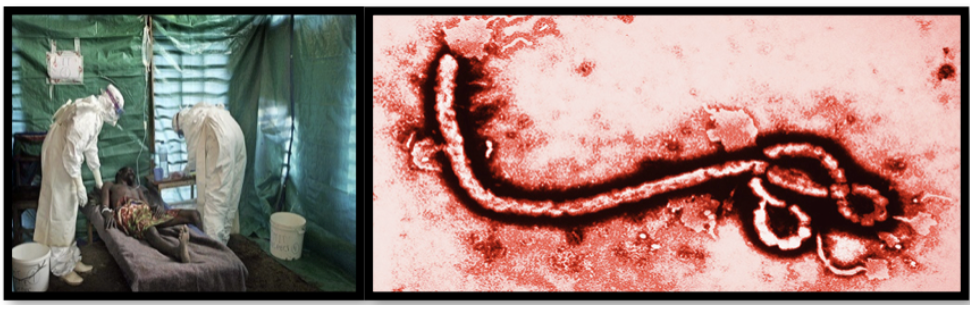
hat is the prognosis of this disease, Ebola hemorrhagic fever?
generally poor, as Ebola is a highly lethal disease. Case fatality rates are very high, historically ranging from 50% to 90% depending on the virus strain and the quality of supportive care available. Early medical intervention is critical for survival.
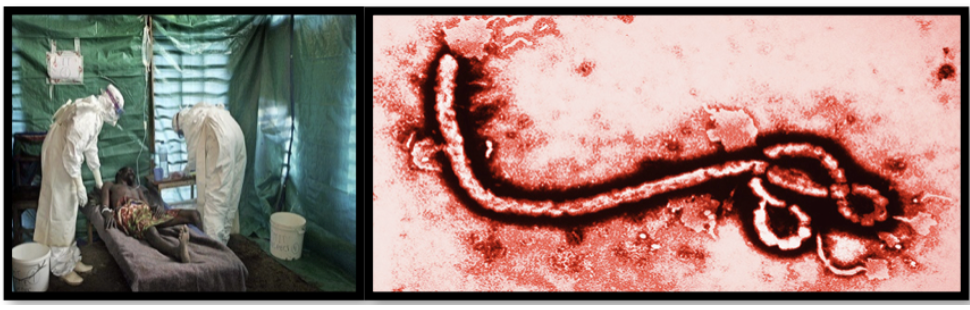
How is Ebola contracted?
From Animals: Initially through contact with the blood, secretions, or organs of infected wild animals (such as fruit bats, monkeys, or chimpanzees).
Human-to-Human: Through direct contact with the blood, secretions, or other bodily fluids (such as sweat, saliva, or urine) of infected people, or with surfaces/materials contaminated with these fluids.
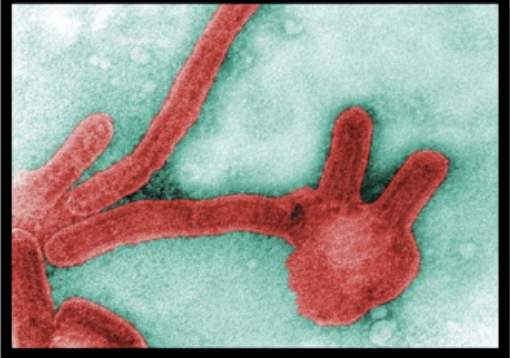
The Marburg virus is similar to the Ebola virus,
What makes them similar?
Both are members of the Filoviridae family (filoviruses). They are clinically similar because they both cause viral hemorrhagic fever, characterized by high fever, severe bleeding, and potentially fatal organ failure. They also share a similar filamentous (thread-like) structure under a microscope.
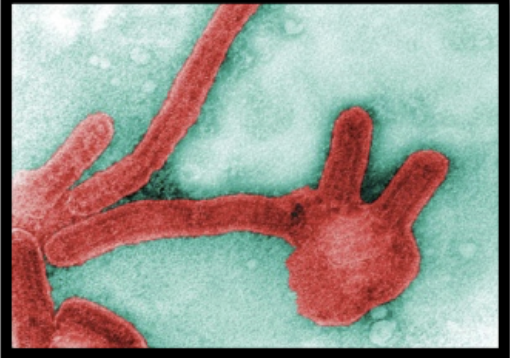
The Marburg virus is similar to the Ebola virus.
Does it have a vector? If so, Identify the vector.
While often transmitted to humans from animals, the primary natural reservoir (host) for the Marburg virus is the Egyptian rousette bat(Rousettus aegyptiacus). Humans can contract the virus through direct contact with these bats or their excreta (like in caves or mines).
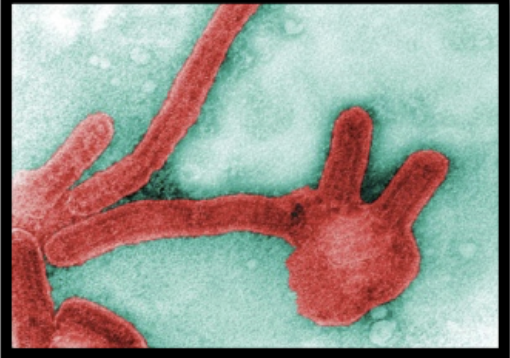
How dangerous is the Marburg virus?
It is extremely dangerous, with case fatality rates ranging from 24% to 88% in past outbreaks. It is classified as a Risk Group 4 pathogen because it is highly infectious, often fatal, and currently has no widely licensed vaccines or specific antiviral treatments.
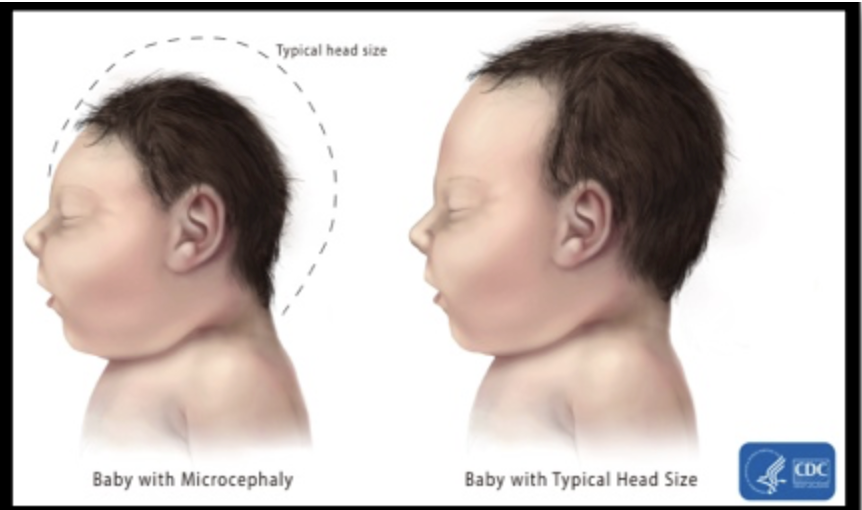
How is the Zeka virus contracted?
through the bite of an infected Aedes species mosquito (A. aegypti and A. albopictus). It can also be transmitted from a pregnant woman to her fetus, through sexual contact, or via blood transfusions.
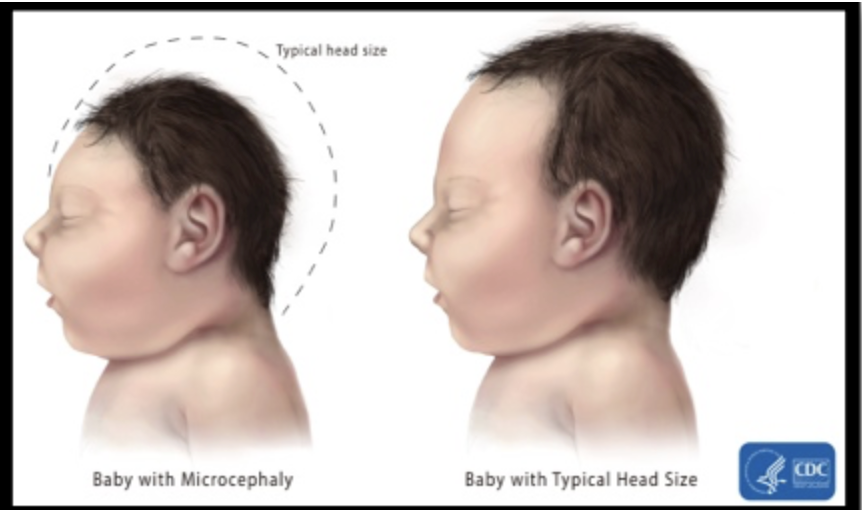
How does microcephaly occur?
a medical condition where a baby’s head is much smaller than expected compared to babies of the same sex and age. It often occurs because the baby’s brain has not developed properly during pregnancy or has stopped growing after birth.
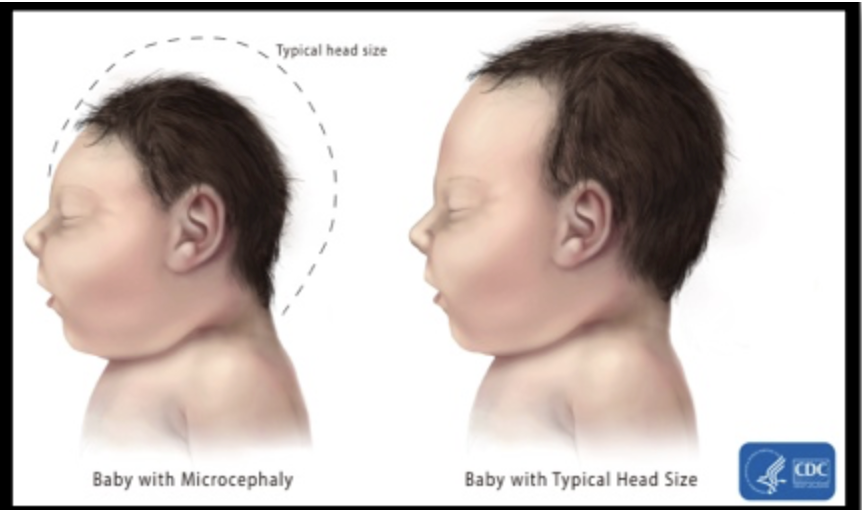
Does microcephaly have a vector? If so, Identify the vector.
Yes. The primary vector is the Aedes species mosquito (specifically Aedes aegypti and Aedes albopictus).
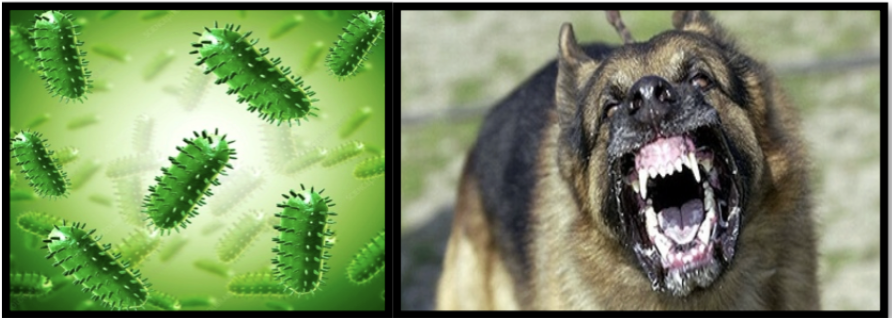
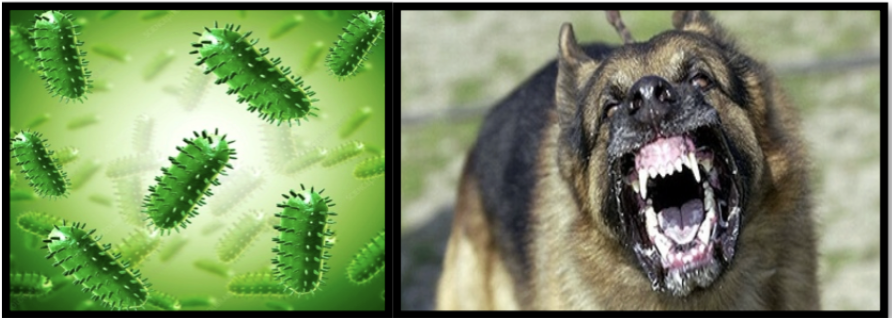
How is rabies spread?
the saliva of an infected animal, usually via a bite. It can also be transmitted if infected saliva gets into an open wound or mucous membranes (like the eyes or mouth).
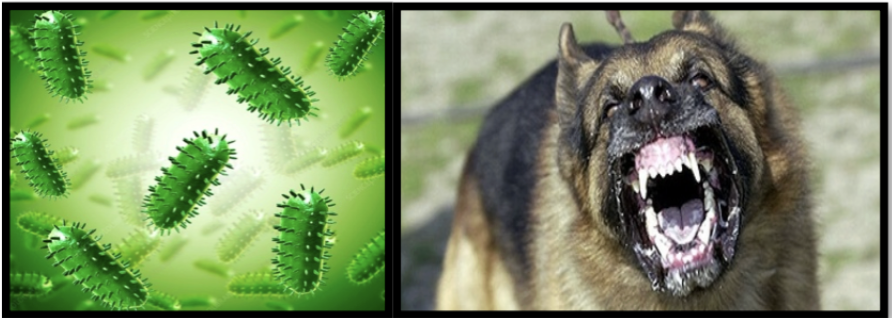
What are the symptoms of rabies?
Early symptoms: Flu-like effects including fever, headache, and muscle aches, often with a tingling or itching sensation at the site of the bite.
Progressive symptoms: Anxiety, confusion, agitation, hallucinations, and difficulty swallowing (which leads to "foaming at the mouth").
Distinctive sign: Hydrophobia (fear of water) due to painful throat spasms when trying to drink.
How fatal is rabies
100% fatal once symptoms show
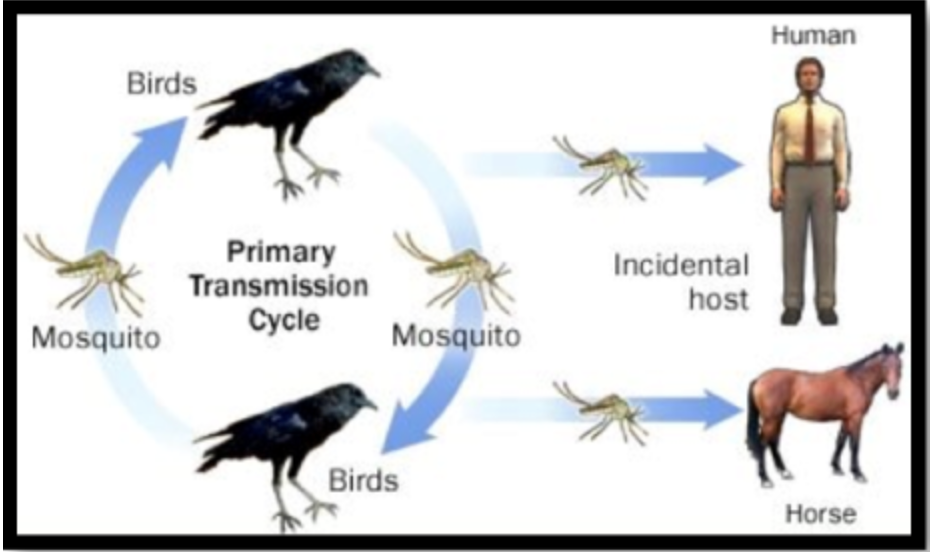
How does eastern equine encephalitis virus (Triple E) spread?
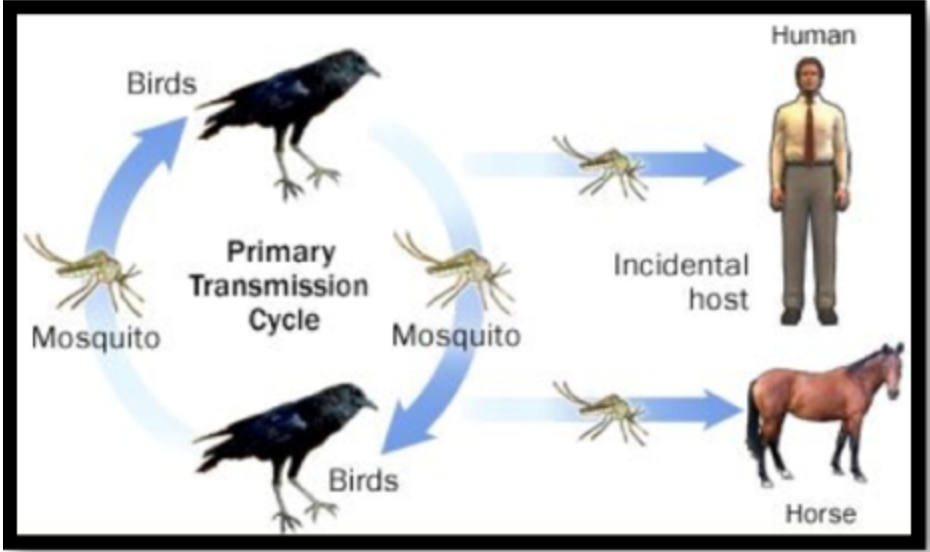
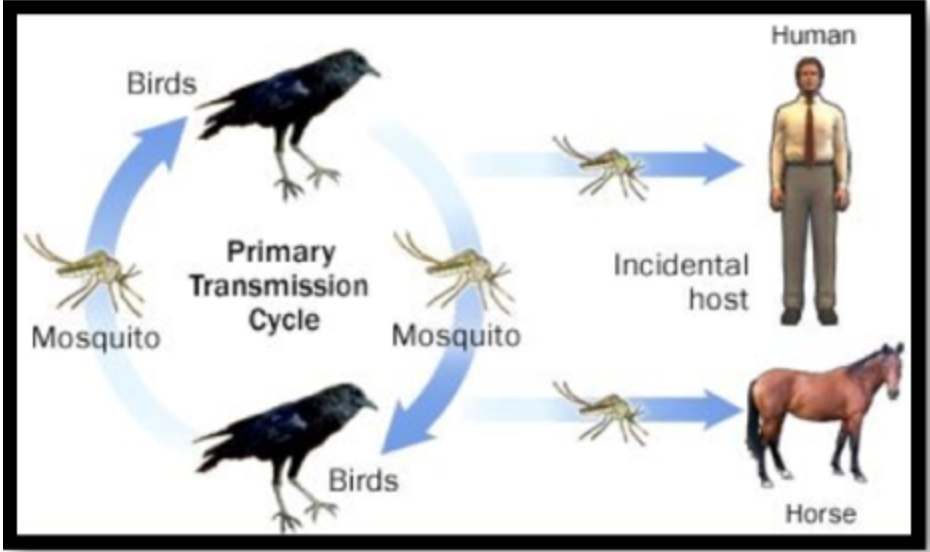
EEEV is spread through the bite of an infected mosquito. The primary cycle involves mosquitoes transmitting the virus among wild bird populations. Occasionally, mosquitoes transmit the virus to humans or horses.
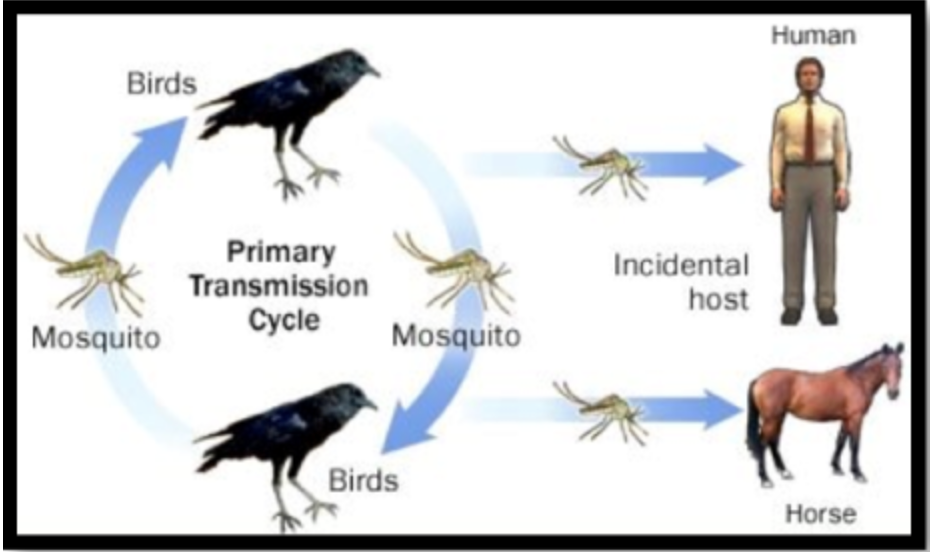
In the transmission of Triple E there is a bridge vector. What is a bridge vector?
A bridge vector is a mosquito species that bites both the primary reservoir (birds) and the incidental hosts (humans or horses). While some mosquitoes stay in the swamp and only bite birds, bridge vectors "bridge" the gap between the bird-cycle and other species, bringing the virus to humans and horses.
Horses and humans are considered “dead-end” hosts for EEEV. Explain?
Humans and horses are called dead-end hosts because they do not develop enough virus in their blood (low viremia) to infect a mosquito that bites them. This means the transmission cycle stops with them; they cannot pass the virus back to the mosquito population.
What role does the bird play in the transmission of EEEV?
Birds serve as the reservoir (or amplifying) hosts. They carry high levels of the virus in their blood without usually becoming seriously ill. When a mosquito bites an infected bird, it picks up the virus and can then spread it to other birds or incidental hosts.
What is congenital rubella syndrome? (CRS):
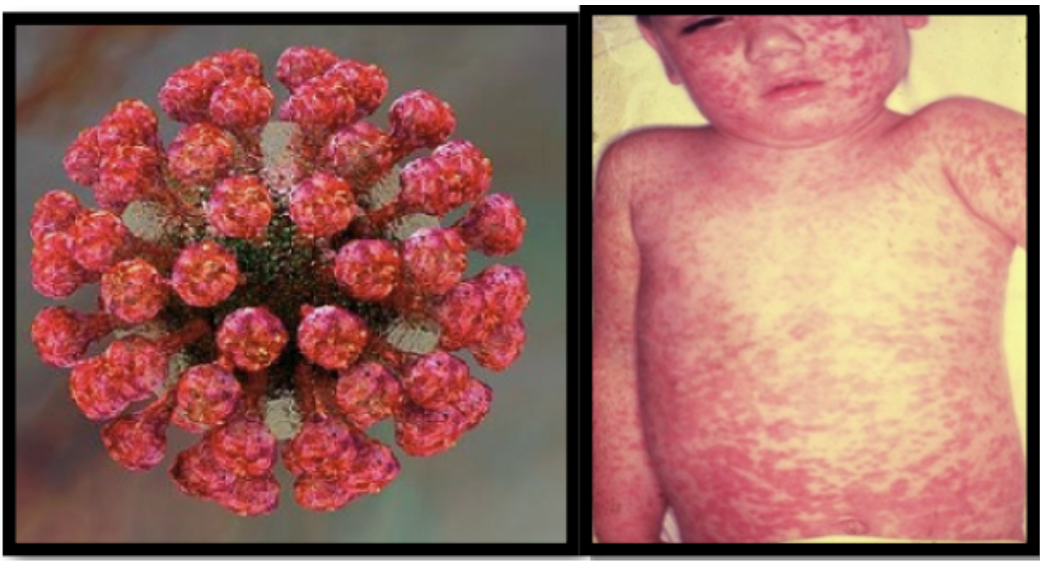
a condition that occurs in a developing fetus when a pregnant woman is infected with the rubella virus, particularly during the first trimester. CRS can lead to serious birth defects, including heart problems, loss of hearing (deafness), eye abnormalities (cataracts), and intellectual disabilities.
What are the symptoms of German measles?
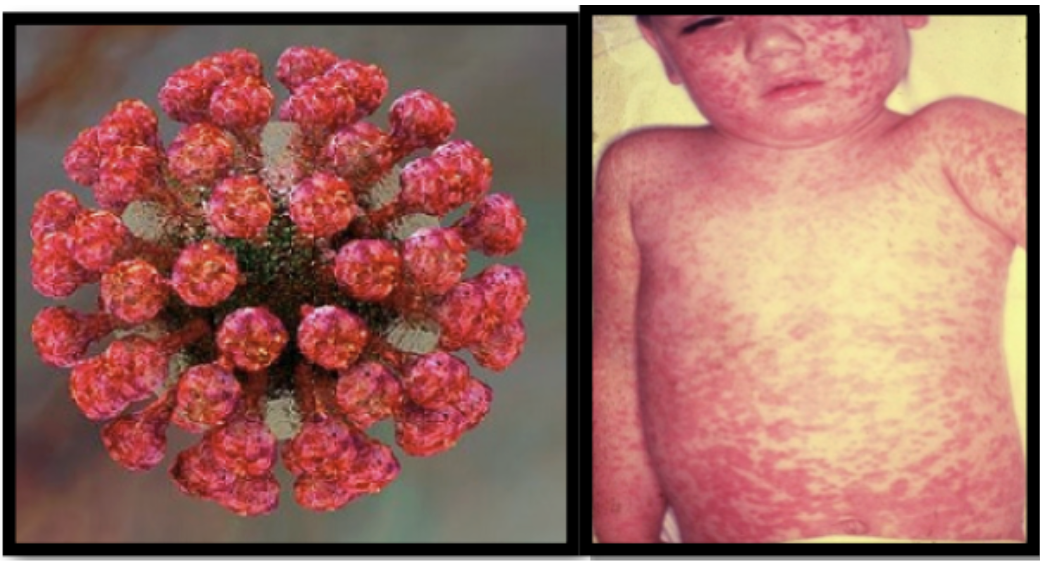
Rash: A pink or red rash that typically starts on the face and spreads downward to the rest of the body.
Fever: Often a mild or low-grade fever.
Swollen Glands: Especially the lymph nodes behind the ears and at the base of the skull.
Other common symptoms: Headache, sore throat, runny nose, and red eyes (conjunctivitis). Adults may also experience joint pain or swelling.