Cell: structure, functions, communication (wk 1/2)
 Call Kai
 Learn
Learn Practice Test
 Spaced Repetition
 Match
Match Flashcards
 Knowt Play
1/49

There's no tags or description
Looks like no tags are added yet.
Name | Mastery | Learn | Test | Matching | Spaced | Call with Kai |
|---|
No analytics yet
Send a link to your students to track their progress
50 Terms
Cell Theory
1. All living things are made up of cells
2. Cells are the basic units of life
3. Cells come from pre-existing cells that have multiplied
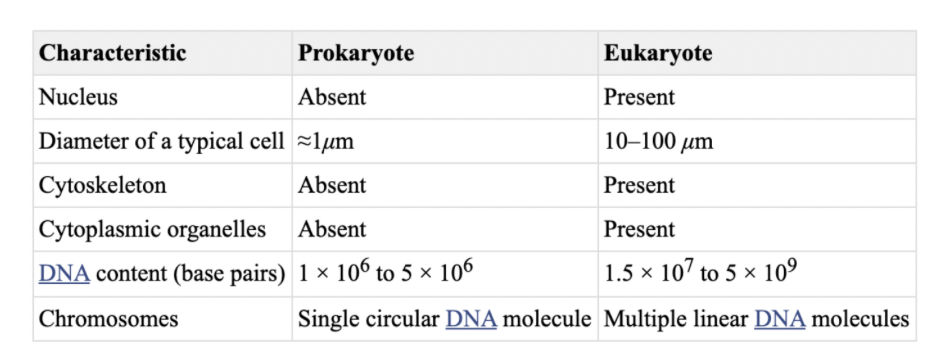
Prokaryotes vs Eukaryotes
Prokaryotes - lack membrane bound organelles
Eukaryotes - contain membrane bound organelles
What is cell diversity
many different types of cells → in multicellular organisms to keep it alive
structure of cell depends on its function
e.g. biconcave disk for RBCs
what is the Organisation of living things
Cells -> tissues -> organs -> organ systems -> organisms
What are cells
→ plus impact of certain cells on weight
Smallest unit of life
Humans are made of cells and water
The number of cells of one type have no correlation with out much they impact our weight
Most of our cells are red blood cells -> but they don’t contribute much to our weight
Muscle cells contribute the most to our weight
what are tissues + types
Tissue are made up of similar cells types that have a common function
Epithelial Tissue - lines our skin and muscles
Connective Tissue - connects and provides padding for other tissue
Muscle tissue - for movement
Nervous tissue - to send messages throughout the body
What are Organs
The many types of basic tissues types that go together to form organs
Two, three, or four of the tissues described above
E.g. Stomach -> made of nervous (nerves) tissue to trigger digestion, muscle cells to contract stomach, and epithelial cells (stomach cells release digestive enzymes)
What are Organ systems
Different organs work together to achieve a common purpose
E.g. The digestive system: mouth, oesophagus, stomach, and intestines
E.g. Integumentary system: skin, nails, glands, hair
We have different organ systems within the body (e.g., nervous, cardiovascular and respiratory systems).
What are Organisms
When all structural levels work together to aid living
Cells within organ systems provide the basis for body system interactions
Examples of body system interactions to sustain life:
Energy supply → digestive system, liver metabolism, mitochondria at the cellular level
Scaffold → skeletal system and connective tissue
Propulsion system → muscular system
Pumps, ventilation, plumbing → cardiovascular and respiratory systems
Purification plant → kidneys and liver
Protection → immune system and skin
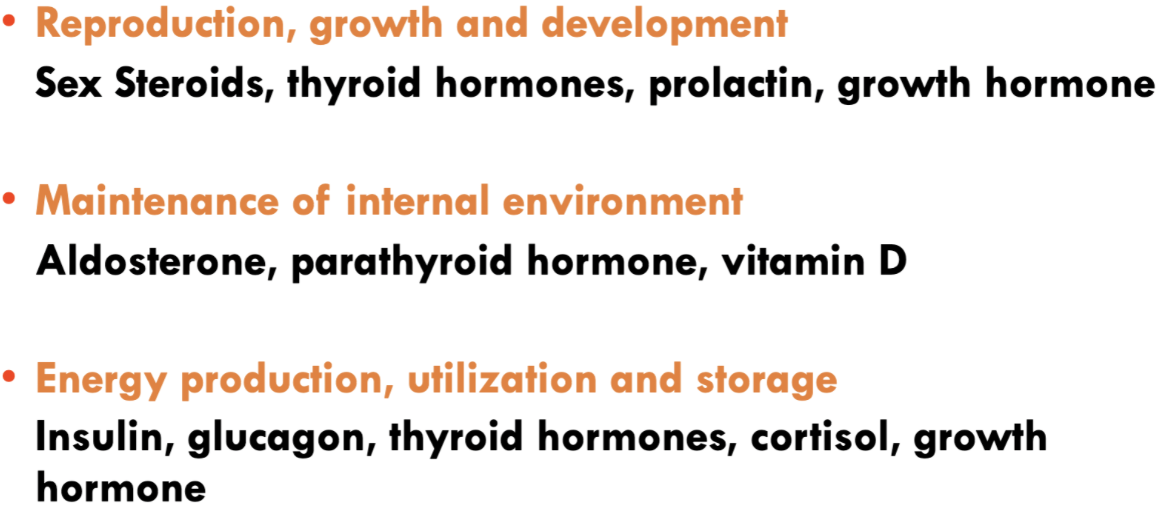
Control systems → nervous and endocrine systems
Create, construct and repair → growth, stem cells, tissue regeneration
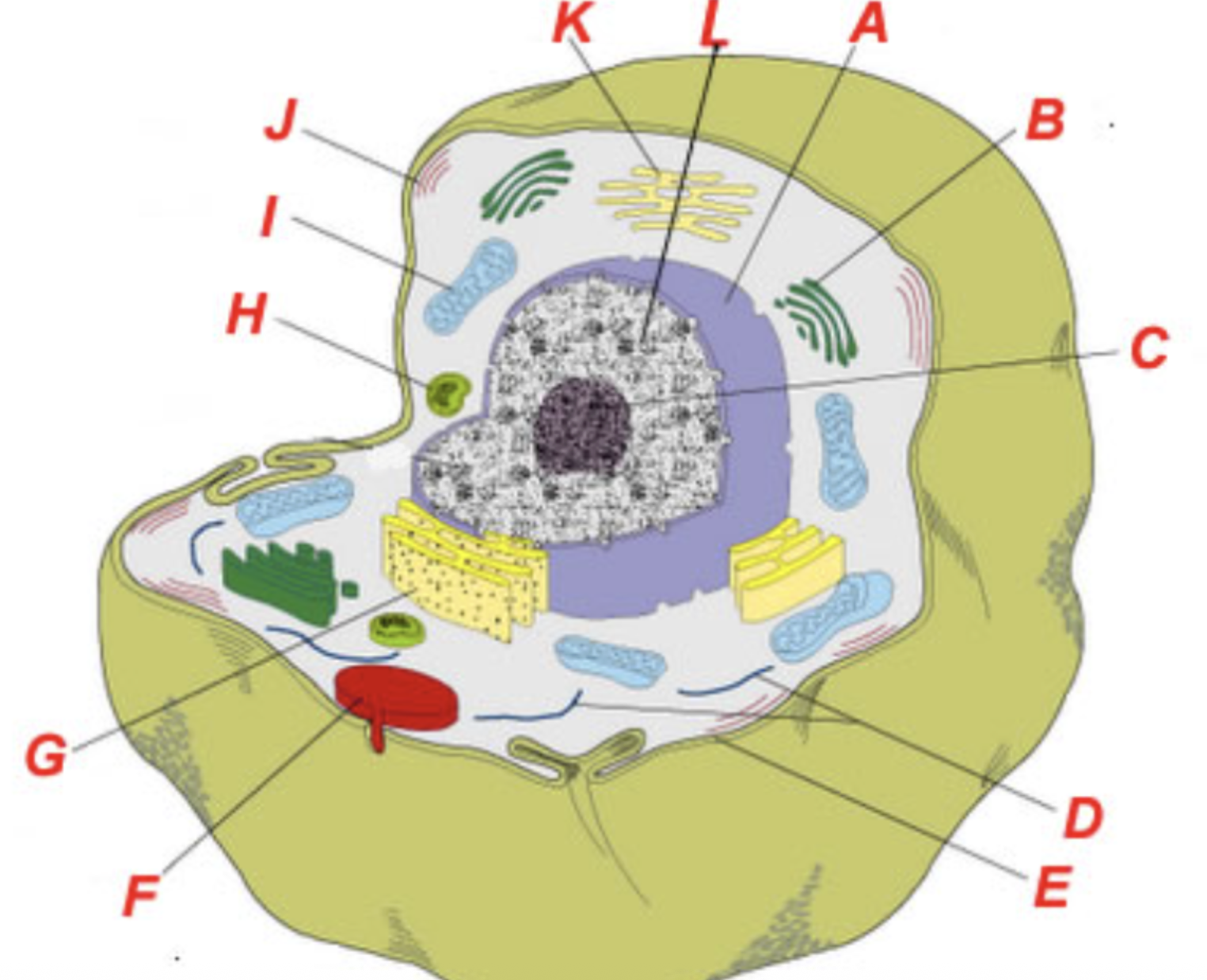
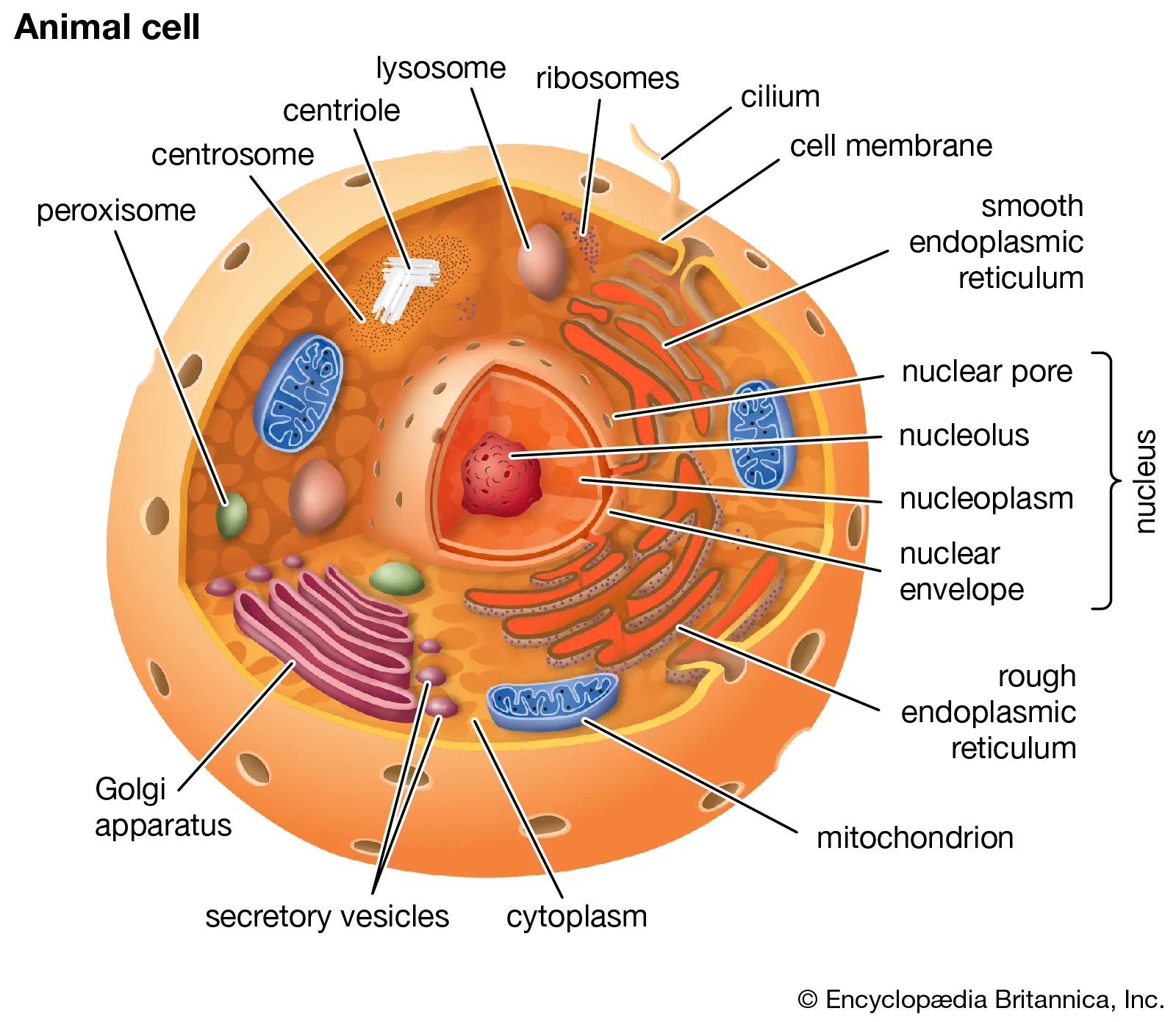
Nucleus
The control centre
Nucleoplasm of nucleus holds most of genome
Nucleolus - site of rRNA transcription in protein synthesis and makes ribosome
Rough endoplasmic reticulum (RER)
Contains ribosomes, which is where proteins are synthesised and folded in protein synthesis
Smooth endoplasmic reticulum (SER)
Lipid and steroid hormone production
Fun fact: its involved in breaking down alcohol, so the more you drink, the more SERs you have in your cells, but the byproduct of this breakdown is toxic to the liver
Golgi apparatus
Processes and packages the materials made by the SER and RER and sends them to other places in the cell
Like the post office
Seals these materials in vesicles
Moves proteins and lipids around
Mitochondria
Makes ATP (turns ADP into ATP)
Replicate by fission and contain their own DNA – maternal
Has two membranes: outer and inner
Scientists think that billions of years ago, mitochondria were bacteria that lived in cells and formed a symbiotic relationship with them
Lysosomes
Waste disposal of the cell
Engulf wastes in the cell (endocytosis)
Have strong digestive enzymes that break down the waste
Throw it out into the cell cytosol after (exocytosis)
These digested materials can either be used again by the cell (like if they are organic materials) or they can be removed from the body through other means systems (e.g. urea being urinated out)
Cytoskeleton
Provide structure, support and transport
Filaments and tubules - holds the cell up
Protein fibres - act as highways that move materials from one side of the cell to another
Motor proteins help move materials around cell
Cytoplasm
Everything inside the cell membrane except for the nucleus -> includes organelles
- Cytosol = the jelly substance
Genome
contains all the DNA (genes) of an organism
DNA provides the information that allows replication, growth, differentiation of the cell
~20,000 genes in humans
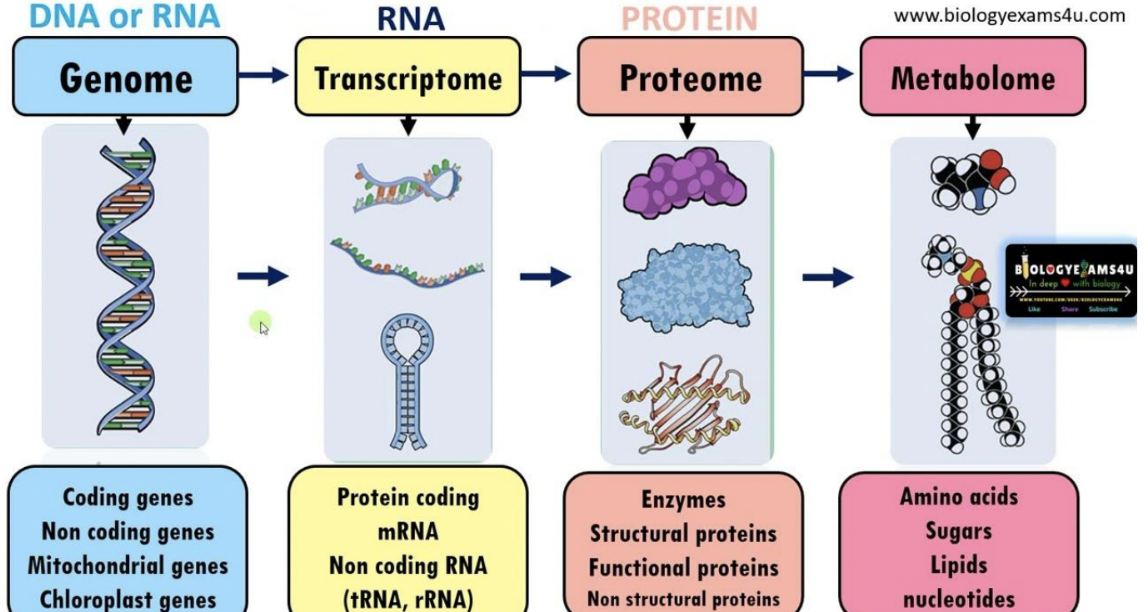
Proteome + example
all the proteins that an organism possesses
Each cell type has its characteristic set of proteins that are expressed to allow it to perform its specific function
60-80,000 proteins in humans created by these 20,000 genes
Metabolome - a subset of proteins in the proteome that make up the metabolic activity of organisms
Fluid in the cellular environment + importance
Cells live in fluids
2/3 of fluid in body is in the cells -> intracellular fluids
1/3 of fluid is extracellular fluids -> outside cells
Blood (e.g. plasma)
Interstitial fluid -> between cells
Doctors look at blood and measure its contents to get an idea of how well cells are functioning
Fluid content: tightly controlled, but quite a bit of variability around “normal”
Glucose increase = diabetes
Elevated electrolytes / CO2 = CV disease
K+ - over 7 mM you’re in heaven
Albumin drop = renal disease
Acid base balance
Too much CO2 = Acidosis= blood too acidic (low pH)
Too little CO2 = Alkalosis= blood too basic (high pH)
Cells like to live in a constant environment (homeostasis) so they can function as optimally as possible
Small deviations from normal pH can affect enzyme function, protein structures, ion channels and heart function
Structure of cell/plasma membrane
Made up of two layers of phospholipids -> called phospholipid bilayer
Hydrophilic head = phosphate
Hydrophobic tail = lipid
Even distribution of charge between the head and tail since they are both polar molecules
Polar molecule - have an uneven distribution of charge
Qualities of cell membrane
Is semipermeable = only lets some substances through but not others
Impermeable to most essential molecules and ions
E.g. Ions such as K+, Na+, Ca2+, Cl-, HCO3-'
E.g. Small water-soluble molecules like glucose -> dissolve in water but not lipids so they can't get through
E.g. Large molecules like proteins and RNA
Highly permeable to small non-polar molecules
E.g. O₂, CO₂, anaesthetics
Only slightly permeable to small uncharged polar molecules
E.g. water
Has proteins
Categorised as integral or peripheral
All transport proteins are integral proteins
Use these transport proteins to move substances in and out of cell (active transport) that are impermeable
Cell membranes are flexible (not rigid)
They move depending on water concentration
Passive vs active transport
Active | Passive | |
Movement opposes concentration gradient | Movement follows concentration gradient → keeps occurring until equilibrium is reached (no more gradient) | |
Requires ATP | Does not require energy | |
Requires transport proteins | Transport proteins sometimes used | |
Examples:
| Examples
|
Simple diffusion
Movement (of solute) from areas of high concentration to low concentration
When molecules move down the concentration gradient
Occurs until you have equilibrium (same amount on both sides)
When there is no gradient, no diffusion will occur
NO transport protein
E.g. dropping dye in water
E.g. smell permeating a room
Osmosis
Diffusion of a solvent
Move from high solvent concentration to low solvent concentration
OR move from area of low solute concentration to high solute concentration
Depends on tonicity
Occurs through semipermeable membrane
e.g. water → through aquoporins if cell moves lots of water like kidneys
Osmotic pressure - force to stop osmosis across the membrane
Facilitated diffusion
Diffusion of substances through a transport protein
Substance binds to protein
Protein opens and allows it to diffuse through
Protein acts as a pore that opens up the membrane to allow diffusion
Slow because it moves one/two molecules at a time
e.g. Glucose, other nutrients, some ions
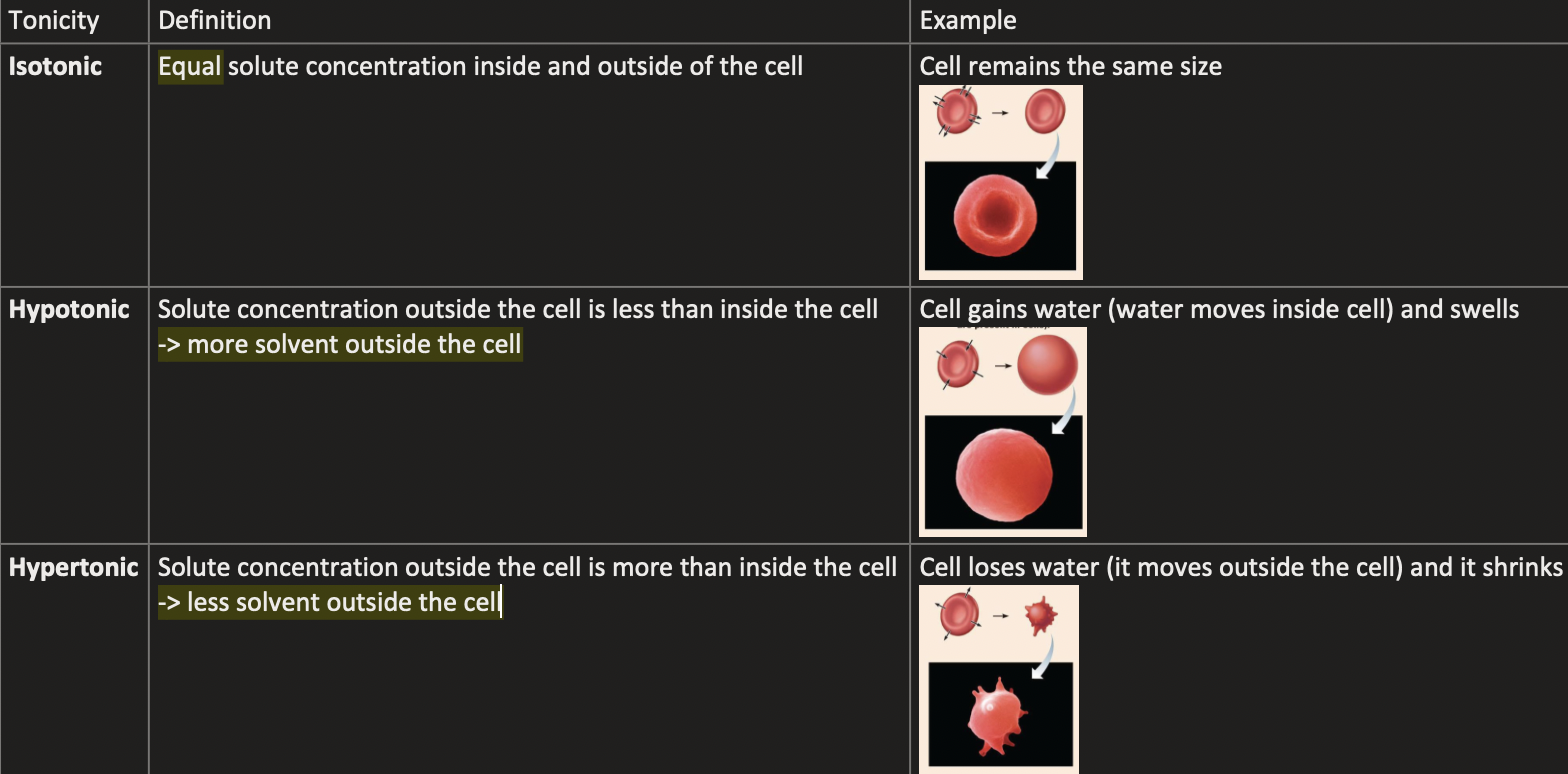
What is Tonicity
how a solution changes cell volume at equilibrium due to osmotic water movement across a semipermeable membrane
types of tonicity
Importance of Active Transport
Two types: primary and secondary
Requires membrane proteins
Used to maintain ion concentration inside and outside the cell
Ions carry charge = their movement changes the potential difference (voltage) between the cell and its environment
Potential difference to communicate info between cells, maintaining muscle function, etc…
Ubiquitous Sodium-Potassium Pump
Primary Active Transport:
Creates and maintains an electrochemical gradient (concentration and electrical differences across the membrane)
3 positive charges (sodium) move in to cell but two leave (potassium)
Net loss of one positive charge from outside environment per cycle
Makes cell slightly more positive inside than outside
Needed for transmitting electrical signals in nerve cells and muscle → through process of action potential
How it works
1. Phosphate binds to receptor in pump
2. Pump opens and allows three sodium ions to travel into cell
3. Then allows two potassium ions to travel out of cell
Sodium-Glucose Pump
Secondary Active Transport:
Driven by the concentration gradient created by primary active transport
Found in the gut
Facilitates the reabsorption of glucose in the kidneys
How it works
1. Sodium binds to pump
2. This creates a binding site for glucose that allows it to bind to pump as well
3. Pump closes on outside of cell and opens on inside of cell
4. Moves sodium and glucose inside cell
Vesicular Transport types + function
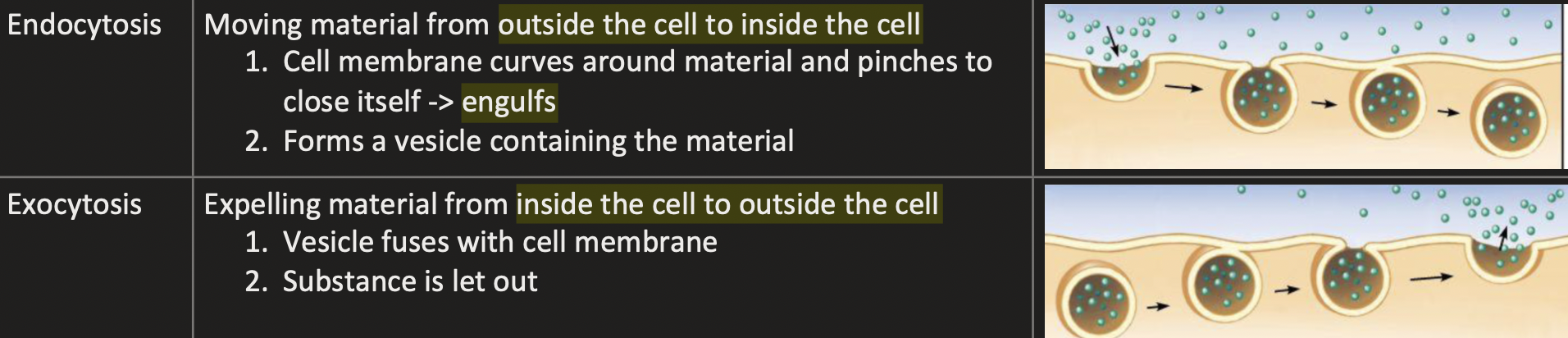
Phagocytosis
When immune cells (phagocytes: neutrophils and macrophages) engulf pathogens to kill them
• Curves around and engulfs pathogens
• Digestive enzymes break down and kills pathogen
→ type of endocytosis
Homeostasis
and how it is mantained
maintaining stability in an internal environment regardless of external factors
Keeping a constant state of balance
Restoring thing back to normal -> however there is a slight seesaw/deviation from the normal/desired level
Maintained primarily through negative feedback loops
Negative feedback tries to keep variables within certain limits (tolerance limits) to maintain optimal functioning
e.g. blood glucose levels, blood acidity, temp…
Negative feedback loops
Reduces deviations of controlled variables from their set points
• Restoring them toward equilibrium
• Encourages stability within a physiological range
• STOP STOP STOP
e.g. body temp, glucose regulation
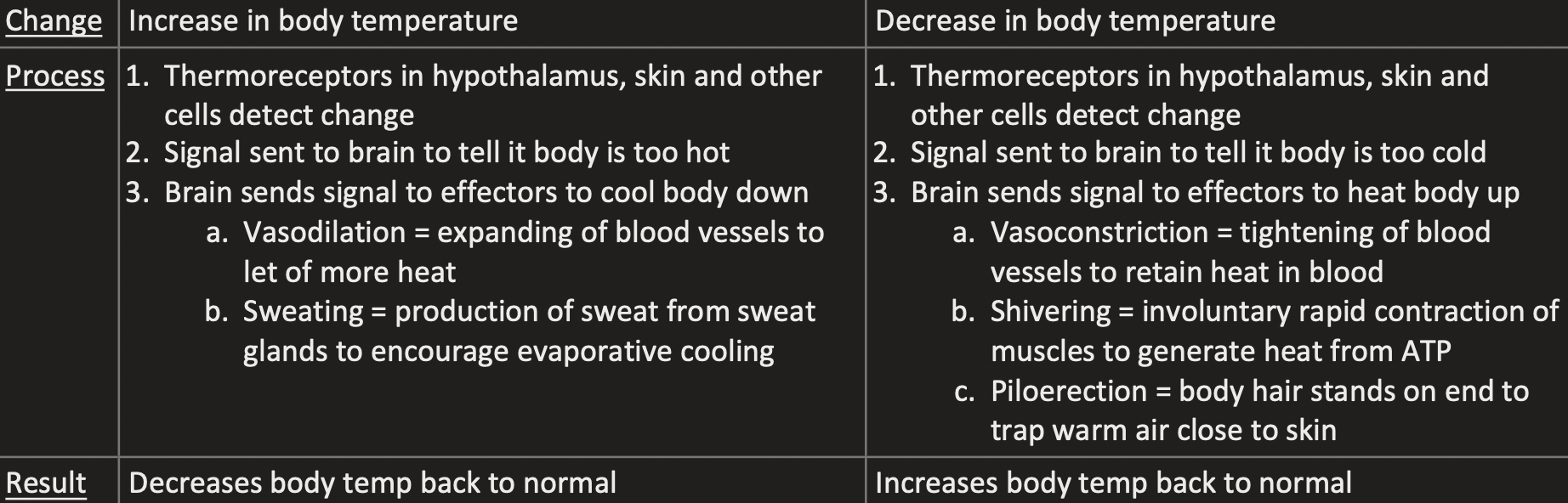
Body temp regulation
What are the Systems to maintain homeostasis
Nervous system
Set of neurons (peripheral), spine and brain (central)
Sends fast electric signals to our body
Electric signal travels through neurons
Endocrine system
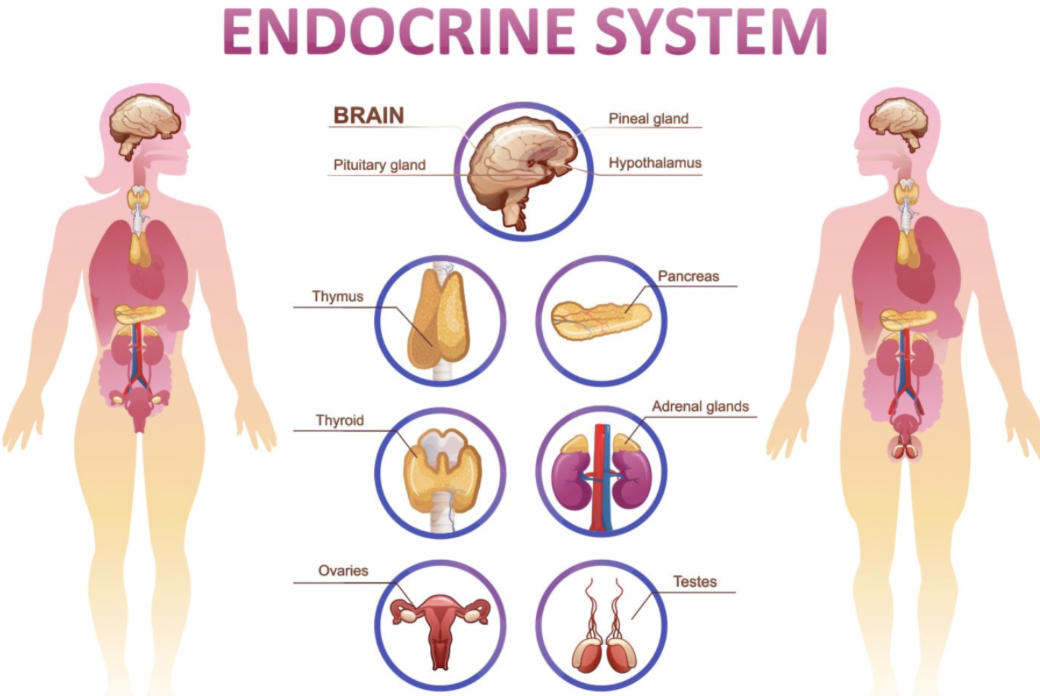
Group of glands that produce hormones
Slower acting chemical based (hormone) messaging
Hormones (chemical messengers) travel through blood stream and arrive at cells in our body
Hormones tell those cells how to behave and act
Hormone - a chemical/organic molecule messenger made by endocrine cells
endo vs exocrine
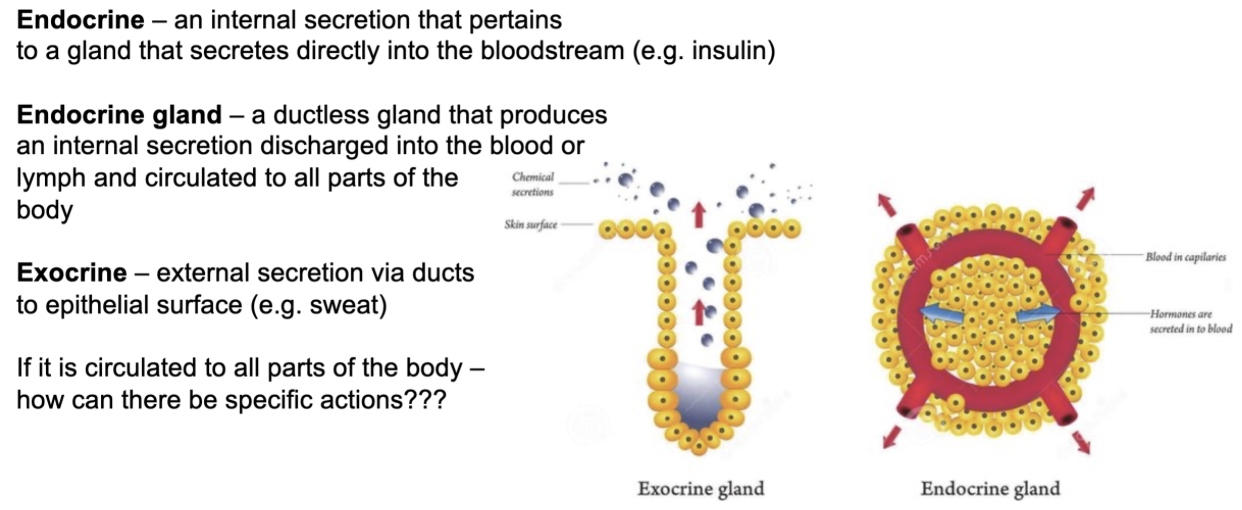
example of endocrine glands
function of hormones
The Pituitary Gland
In the brain
Normally works alongside hypothalamus to maintain homeostasis
Two parts: anterior and posterior
Anterior -> releases hormones that cause other cells to release hormones
§ Growth Hormone/GH
§ FSH and LH (in ovaries/testes)
§ Thyroid stimulating hormone/TSH (in thyroid gland)
Posterior -> releases hormones that act directly on targets
§ Oxytocin, antidiuretic hormone/ADH
Positive feedback loops
Amplifies deviations in a variable
Drives variable it further away from equilibrium rather than returning it toward a set point
Encourages instability and promotes the change
MORE MORE MORE
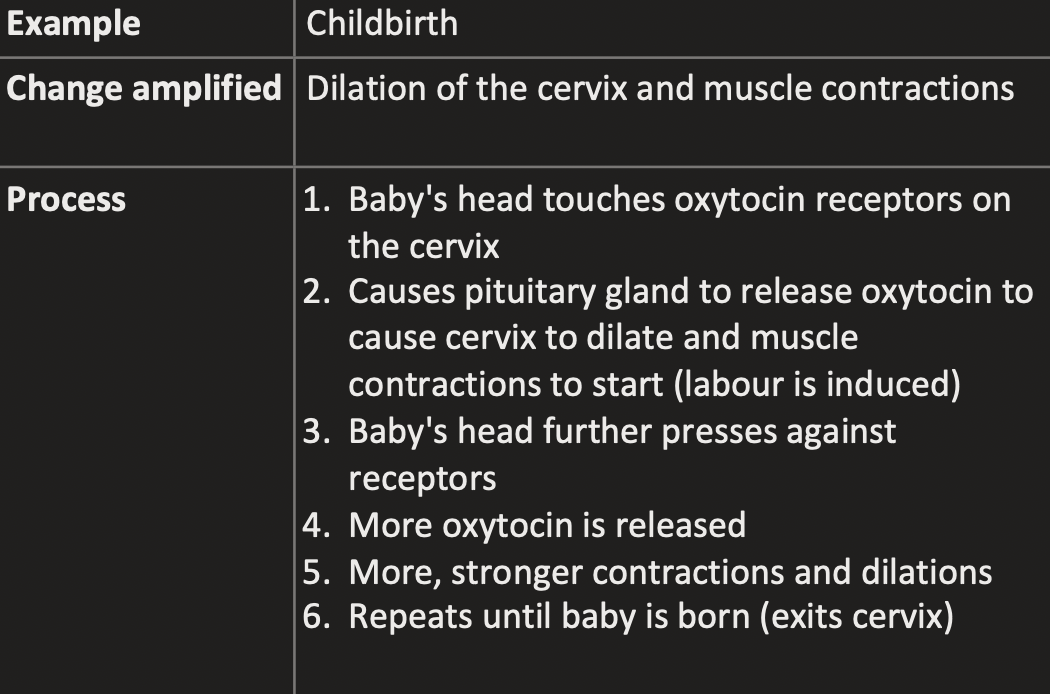
e.g. childbirth, blood clotting
Childbirth feedback loop
How do cells signal info to eachother
Endocrine system
1. Endocrine cell gland releases hormones into the blood
2. Hormones travel through blood to specific target cells (make up target tissue)
3. These target cells have a specific receptor that binds to the hormone
4. The binding causes the cell to produce a response
a. No bind = no response
What is Signal transduction
How the cell translates that signal (hormone or electric signal) into a response
• Convert extracellular signals into intracellular responses
• Use receptors, transducers, and second messengers
• Amplify small signals into large cellular effects
• Activate specific target proteins to produce a response
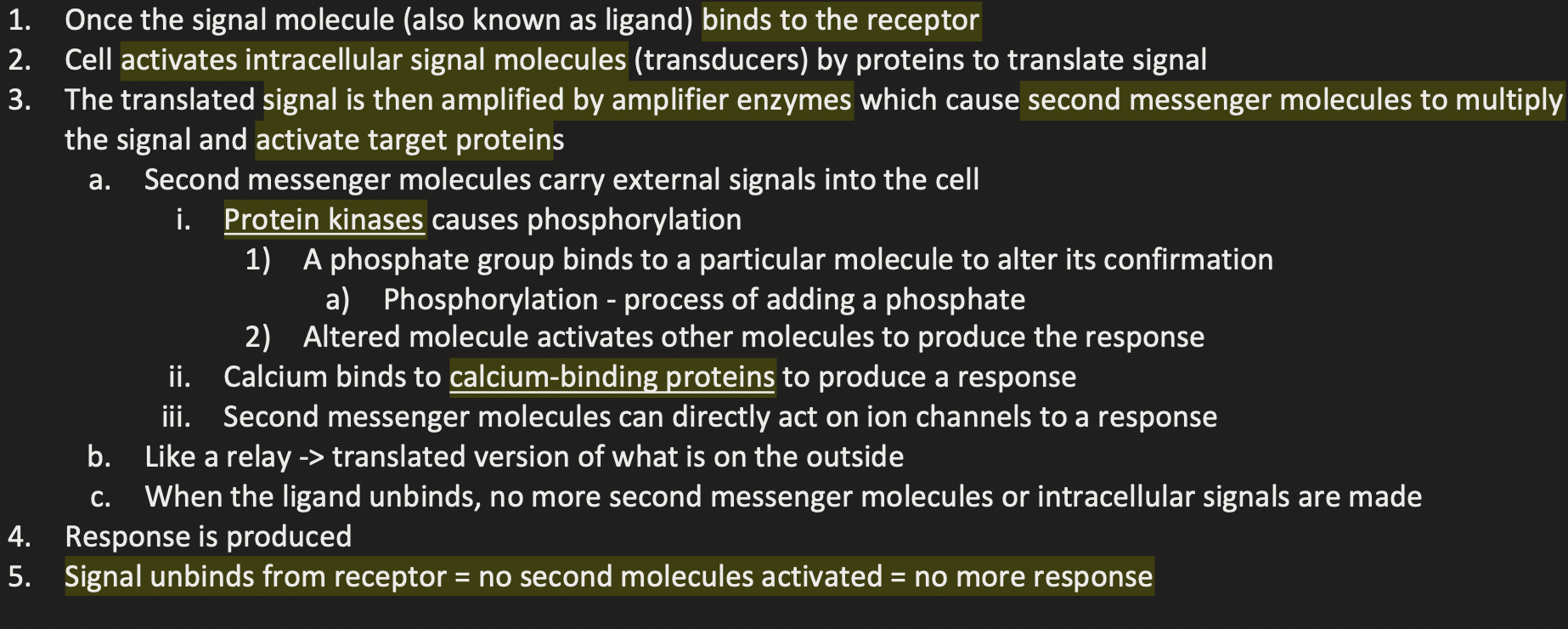
Process of signal transduction
Via signalling cascade → step by step activation of molecules in a cell to procure a response
and signal amplification → where a small amount of signal to produces a large response (due to this signalling cascade)
One activated receptor can activate multiple downstream signalling molecules
why do we need a signal transduction pathway for water soluble hormones
Water soluble hormones (e.g. glucagon) cannot cross cell membrane -> lipids are hydrophobic
Need to activate response from outside the cell -> through transmembrane receptors
Receptor then transduces signal
Glucose Regulation: Glucagon
Glucagon binds to G protein-coupled receptor on liver cells
Glucagon is made by alpha cells in pancreas when blood sugar levels are to low
Hypoglycaemia - large drop in blood sugar levels
G protein is activated
Causes ATP to be converted to cyclic AMP (cAMP)
cAMP activates protein kinase A
Causes phosphorylation to occur
Can produce lots/little amounts of phosphorylated proteins depending on desired scale of response
Phosphorylated proteins act on their target to produce a response
Convert glycogen stored in liver cells into glucose that is released into the blood stream
Increases blood sugar levels
When hormone is not bound = no second messengers = no more response is produced
Why is Calcium a 2nd messenger
Amount of calcium within cells is very low -> too much calcium = activation of too many things = lead to cell death
A slight increase in Calcium (Ca2+) above baseline can cause a powerful response
Ca2+ binds proteins -> changes conformation and activity
Rapid Ca2+ entry into cell or release of Ca2+ stored in ER release triggers cellular responses
E.g. Ca2+ triggers synaptic vesicle exocytosis.
Why are Steroid hormones different to water soluble hormones
Normally bound to proteins but when they aren't can diffuse through cell membrane -> i.e. are lipid soluble
Can enter cell and bind to a receptor without use of transport protein
only proteinless hormones can enter through transport proteins
Changes gene expression (genes are activated or repressed)
Causes a change in protein produced (increase or decrease)
New proteins drive a response
Slow but sustained effects -> takes a long time to see result of change in gene expression
Clinical example: corticosteroids reduce inflammation by suppressing inflammatory gene expression