psych cognition ch 12 problem solving and creativity
 Call Kai
 Learn
Learn Practice Test
 Spaced Repetition
 Match
Match Flashcards
 Knowt Play
1/70

There's no tags or description
Looks like no tags are added yet.
Name | Mastery | Learn | Test | Matching | Spaced | Call with Kai |
|---|
No analytics yet
Send a link to your students to track their progress
71 Terms
Problem solving
problem = state of the world you wish were true but currently isn’t
… and solving the problem you mean changing the world in your desired way but how to change isn’t immediately obvious
types of traditional problem solving
problem solving via SEARCH
problem solving as INSIGHT
problem solving using KNOWLDGE
Problem characterized by 3 things
goal: state of affairs you wished existed
current state: how the world is currently
actions/operators: things you can do to change the state of the world
problem space
problem states - possible states of the world that may be reached
and actions/operators
Ex: eight-tile puzzle
can involve the problem solving method of SEARCH
Problem solving by search
finding the correct ‘path’’ or ‘route’ thru the problem space
problem solving search heuristics for choosing the next operator include:
random search
picking moves at random.. inefficient
hill climbing
means/ends
working backwards
Hill climbing
one always chooses an operator such that the new state is CLOSER (or more similar) to the goal state than the current state
its like physically moving closer to the goal from where you are currently
hill climbing problems
it can word for some problems but moving CLOSER to the goal isn’t always the bestt thing
*local maximum
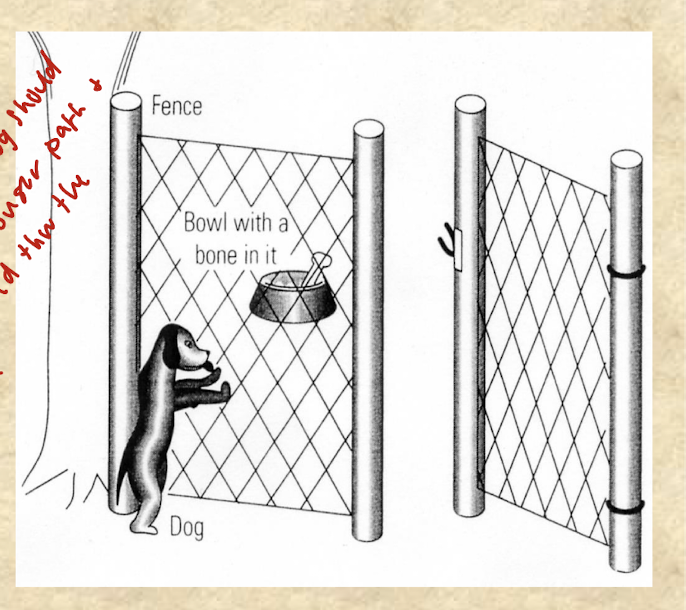
Local maximum
when moving in the direction of increasing similarity fails to each the goal
then you get stuck and reach a ‘point of no return’ an d actually end up further from the goal even tho it felt like you were moving closer
Hill climbing evidence
the 3 disk tower thingy
at some point, you have to make a move that feels counterintuitive and like you’re getting further from the goal, but actually that brings you closer to the goal!
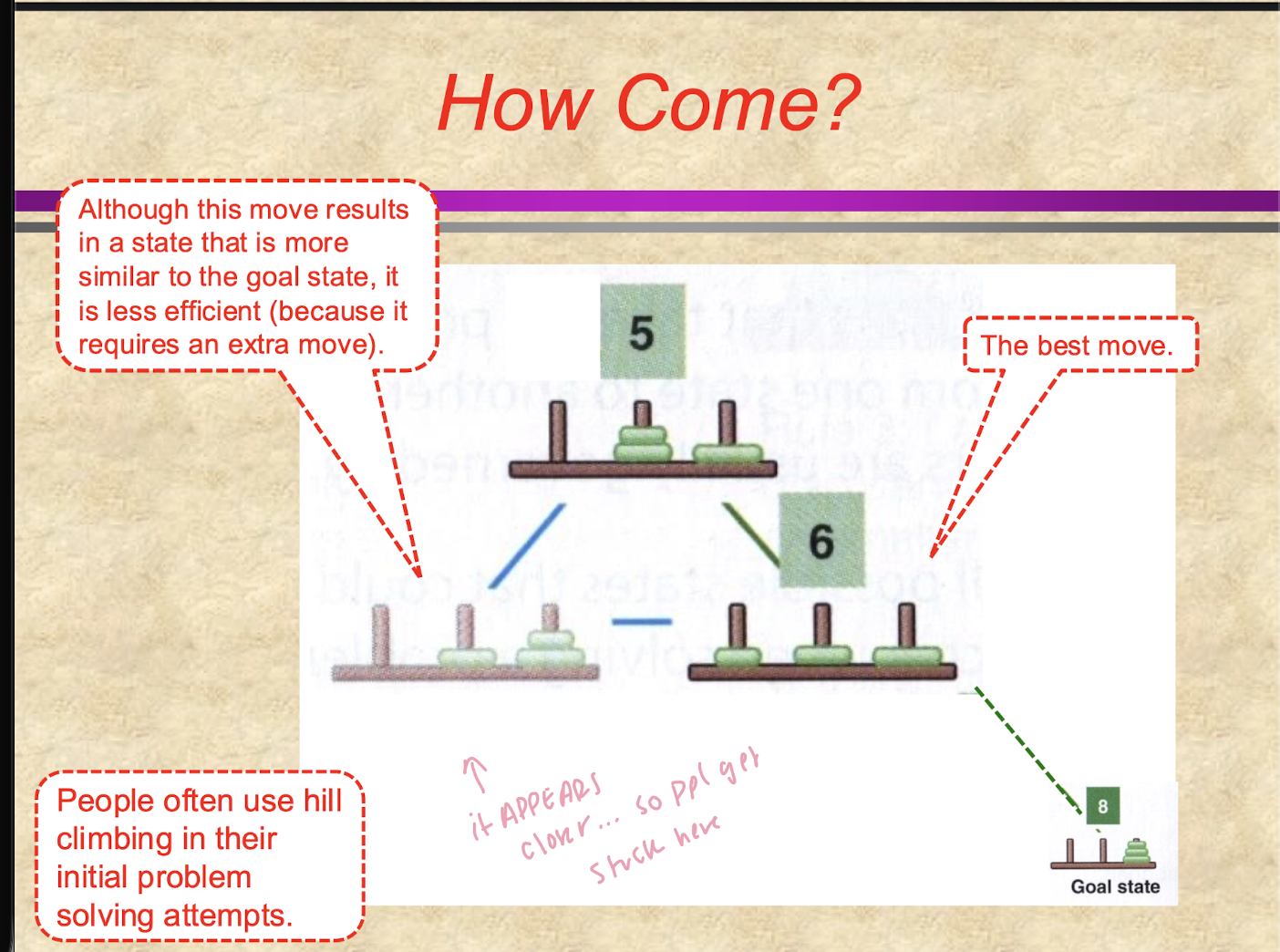
Means-End analysis
this allows the pursuit of SUBGOALS
they allow one to temporarily move away from the goal… in order to each it in the end
and it:
characterizes the biggest different between the current state and the goal
selet operator that reduces the difference
if the operator cannot be applied in the current conditions…. we create a SUBGOAL to change the conduits to allow the operator to be applied
Means-end example
Goal: want to take son to school from home
different: the distance from home to schoool
operator: car can reduce that distance
conditions: car is broken and doesn’t start
subgoal: need to fix the car
difference: need a new battery
operator: go to the mechanic to put in a new battery
conditions: mechanic isn’t present to do that
sub-sub-goal: need mechanic to put the battery in
difference: distance/klnowlegde
operator: phone can inform the emchanic
ETC
**mothod can be used to solve the tower of Hanoi on the first try
Means Ends analysis - tools
tool = means of achieving and END
acquiring. tool may be a subgoal one pursues in order to achieve the ultimate goal and to acquire the tool, you might have to move AWAY for the ultimate goal
Tool usage
tools used too be seen as unique to intelligent human behavior but that’s false
animal behavior were only thought to be related to learning-by-association
classical conditioning
trial-and-error
BUT Animals actually did learn to use tools like chimpanzees using sticks and boxes, and birds using hooks to reach food
Animal intelligence
they also do more than just hill climbing… they’re able to temporarily move away from their goal in order to achieve it (or to acquire a tool to achieve it)
Working backwards
one particular application of means-ends
planning a series of moves thru thinking in ‘reverse’, and where your large problem gets converted into a smaller one
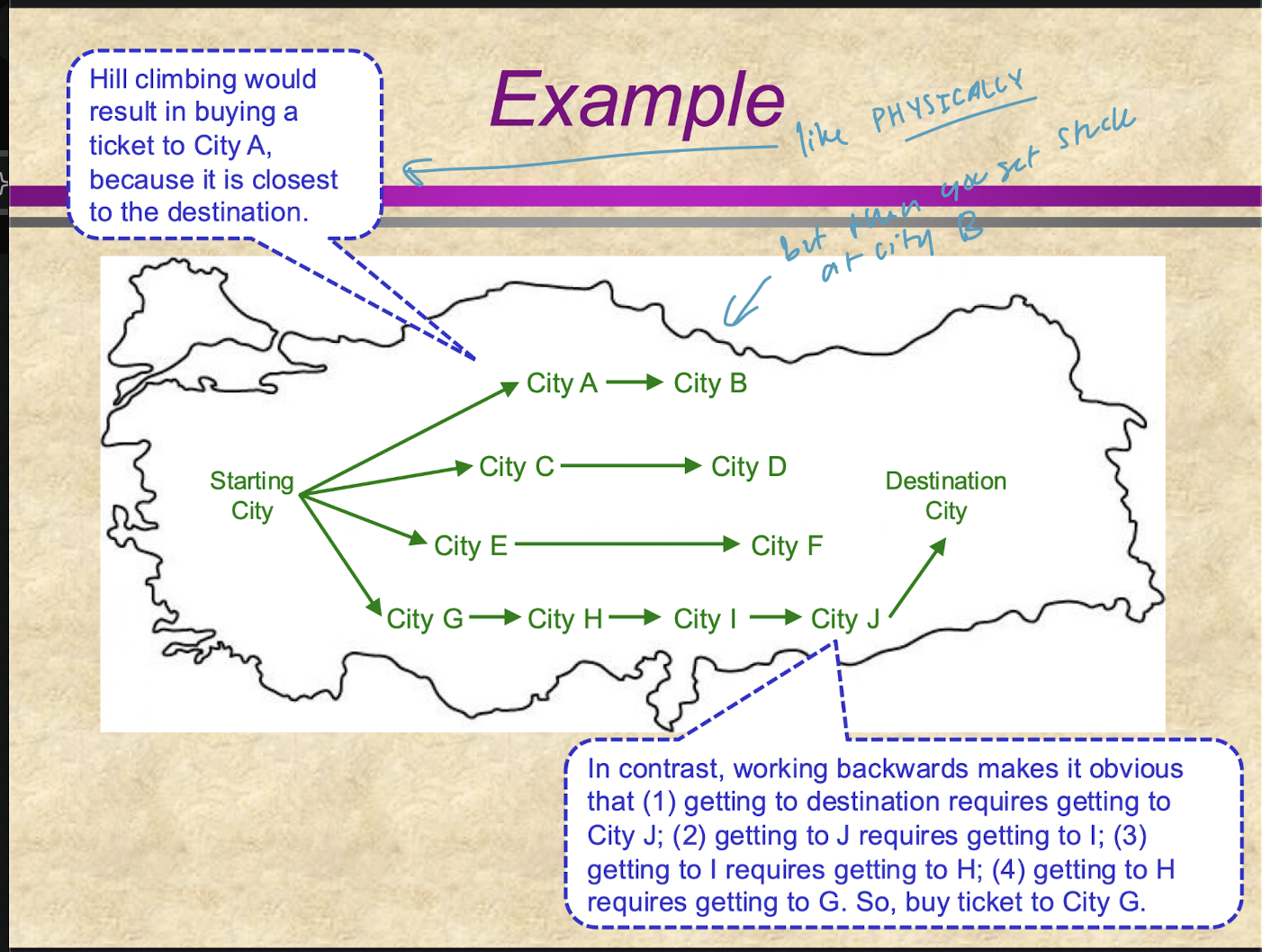
Problem solving by INSIGHT
sometimes you just need to find the right representation!
when you find the right representation, the solution appears immediately as an insight, a sudden realization. because the traditional ‘search’ didn’t work
insight problem - necklace
insight = using the all 3 links of one chain to join the other 3 chains - this is more unconventional and requires insight
insight example/experiment
Metcalfe and Wiebe
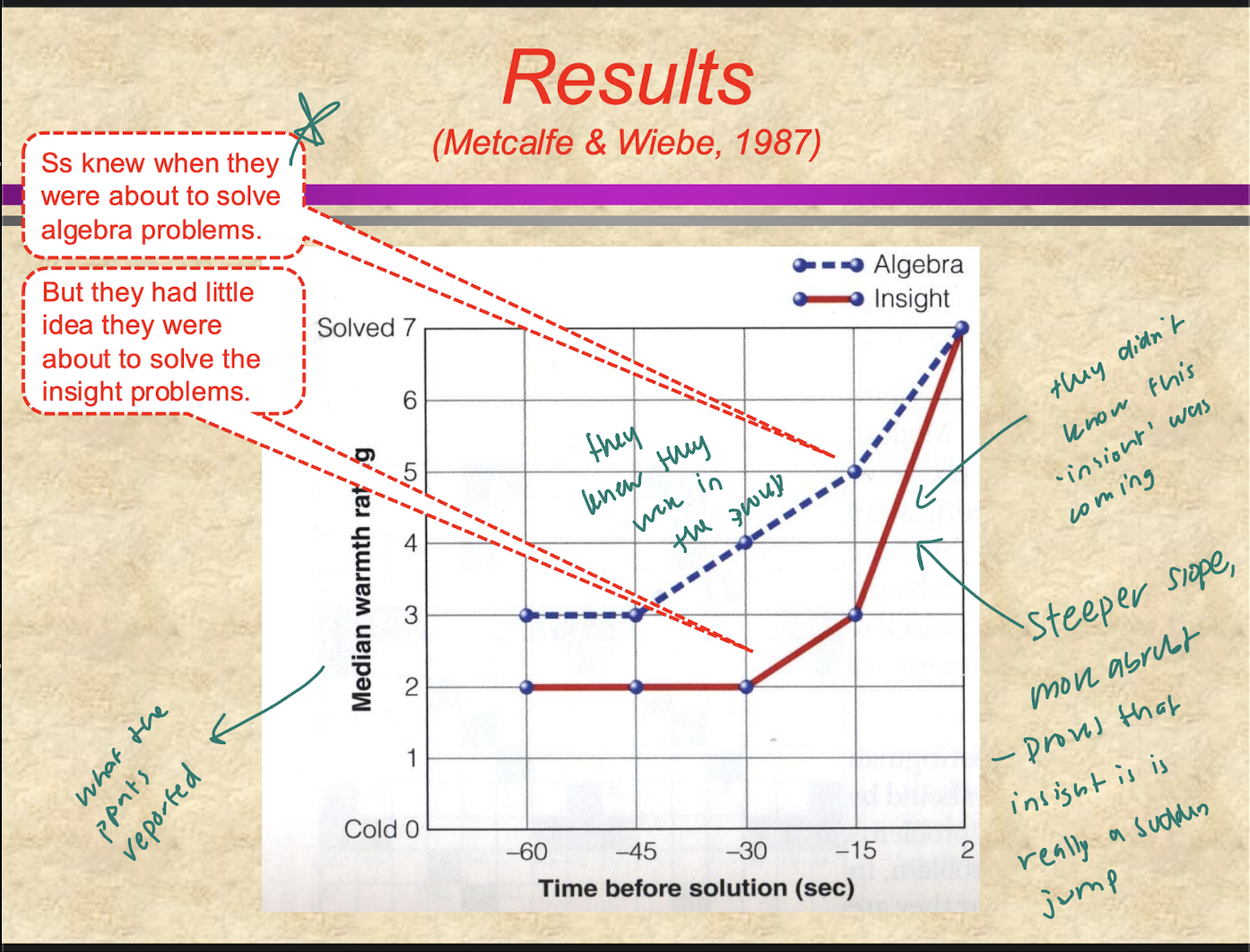
ppnts had insight and non insight problems and every 15 seconds they rated how ‘warm’/close they were to the solution
to see like if this problem solving really came suddenly/abruptly or if it actually happens gradually (and just w/o us noticing)
non insight: (like math problem)
in the algebra problem they knew each step gets them closer to the solution
insight (solutions require correct representation)
there’s a steeper slope between ‘warmth’ and the solution time because tis more abstract and this problem that insight IS A SUDDEN jump and different from the gradual other noninsight problems
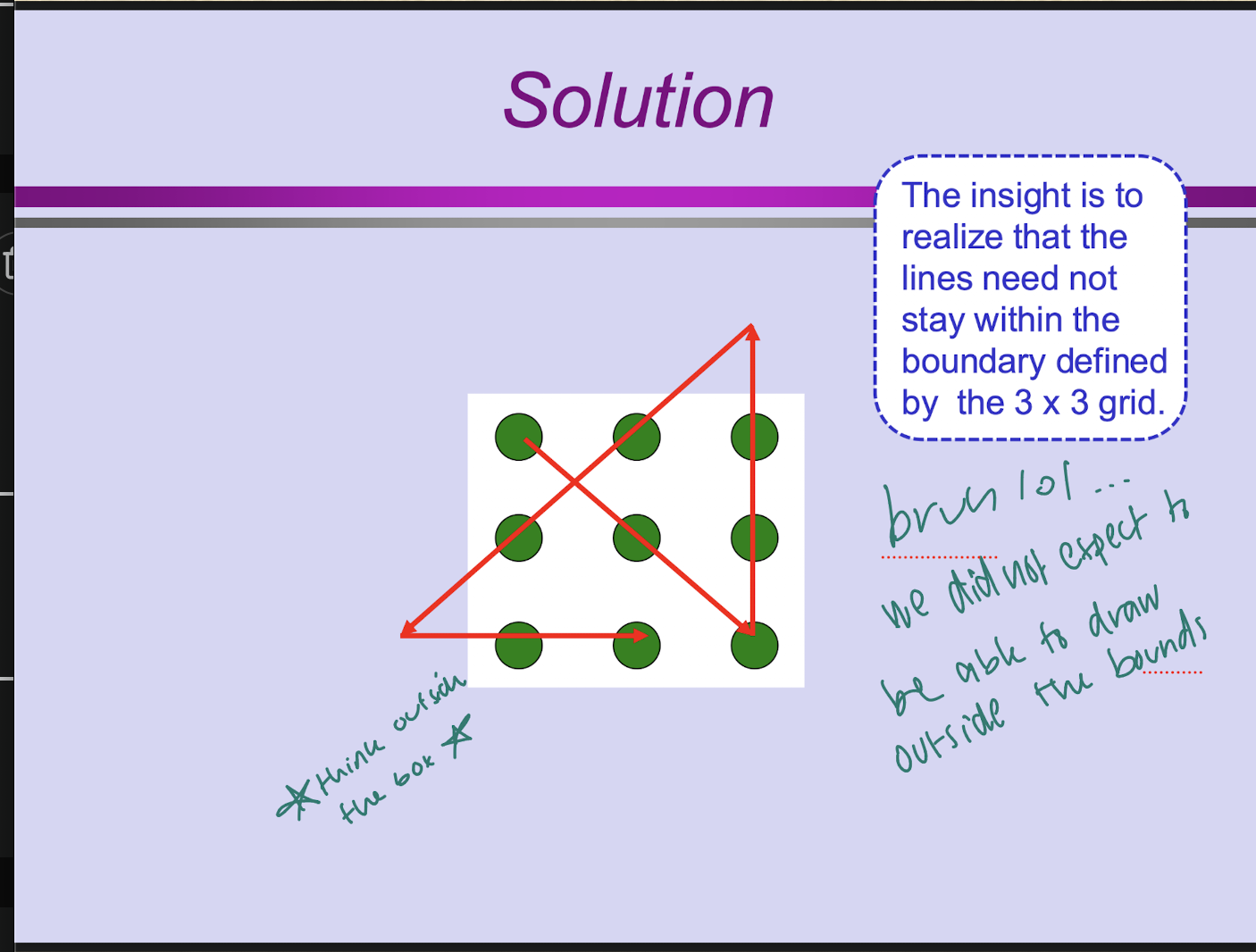
Thinking outside the box
solution can be easier or harder depending on how the problem is represented
there can be certain limitations/bounds suggested thru certain framings
Problem solving using knowledge
we often have knowledge relevant to a current problem, but it can be helpful or harmful
functional fixedness
tendency to use objects in customary/conventional ways
and it can prevent us from finding solutions to problems
and INSIHGT though, can help us realize the unconventional functions of objects that are the solution
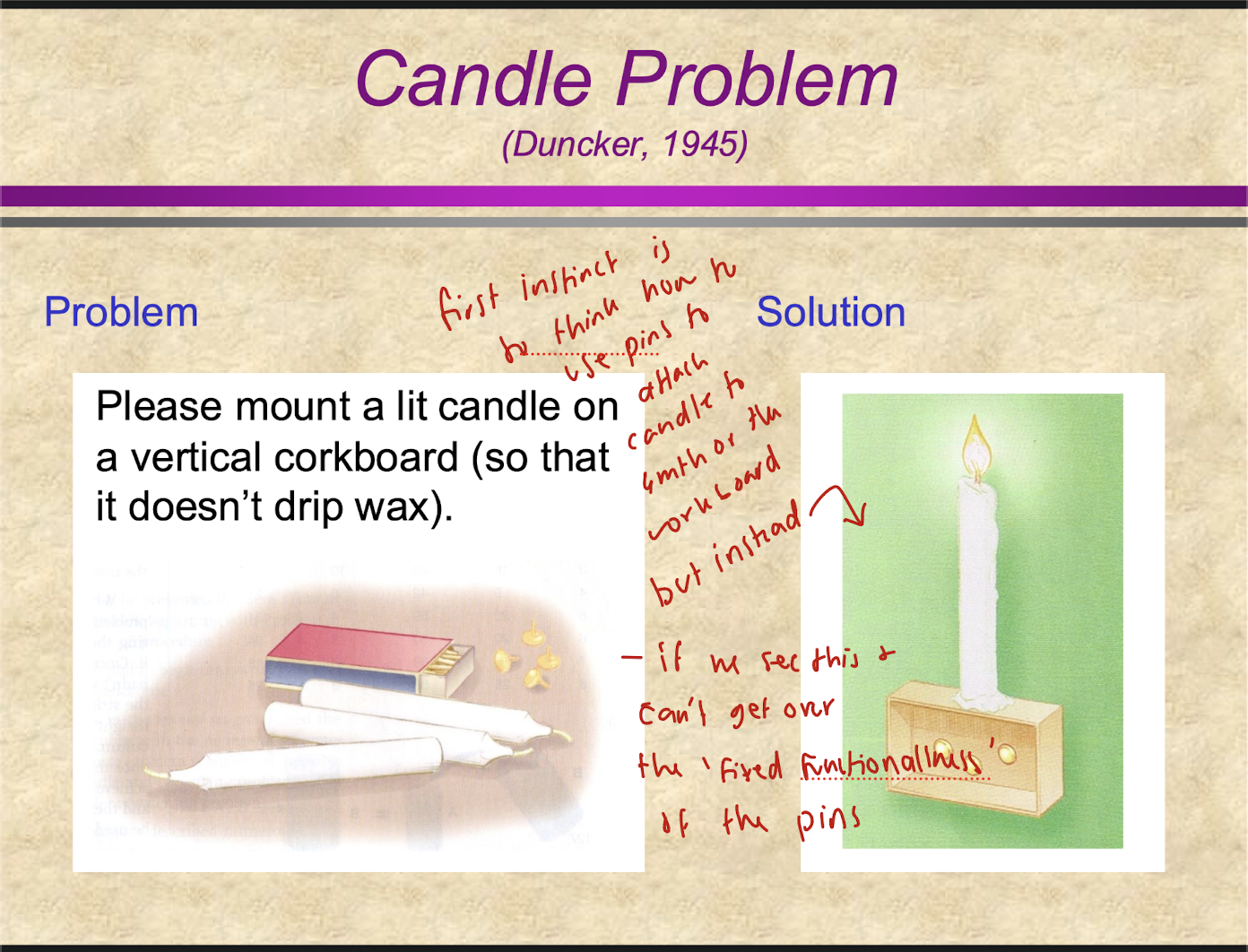
functional fixedness candle problem/experiment
boxes can be represented as containers
or boxes can be shown empty w materials outside the box…
when boxes shown as empty, % solving problem WAS SIGNIFICANTLY HIGHER because the usual/copventional function of the object was de-emphasized
Mental Set
habitual ways people have of thinking
box = container, not candle holder
paintbrush = painting, not as a weight in a pendulum, etc
it can be acquire as a result of repeatedly solving the SAME type of problem in the SAME way (almost like systematically)
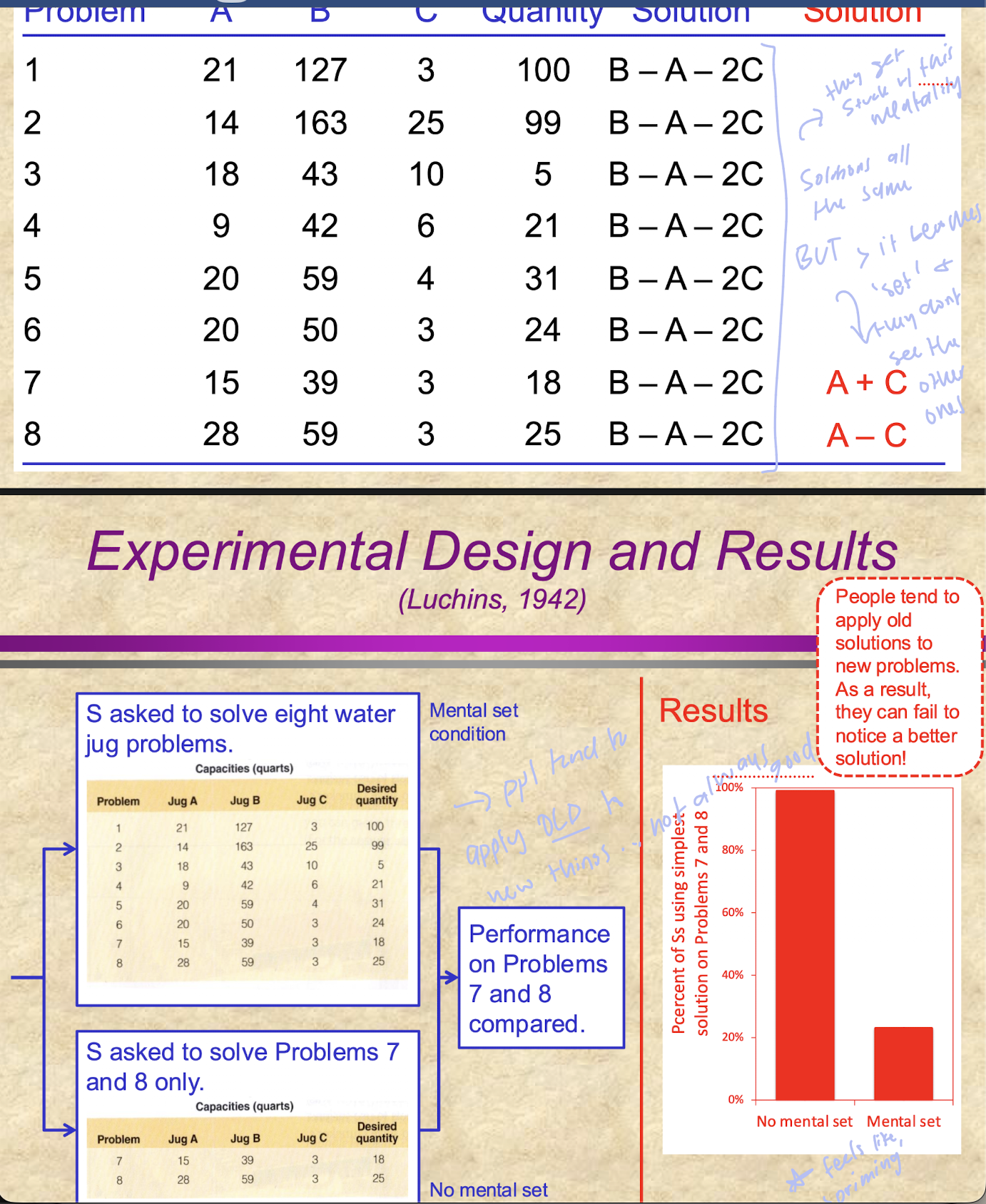
Water jug problems (mental set) experiment
6 problems = same abstract solution/method so the ppnts would ‘learn the way’
but 7 and 8 had simpler solutions (but could also be solved using the same previous method)
when ppl formed the mental set thru the first 6 problems, much less of them solved 7 and 8 using the easier solution, and those who solved only 7 and 8 (absent mental set) all solved the problem w the easier method
ppls tend to apply old solutions to new problems…. can be an issue
Effect of Problem Wording
it influences what knowledge if brought to bear
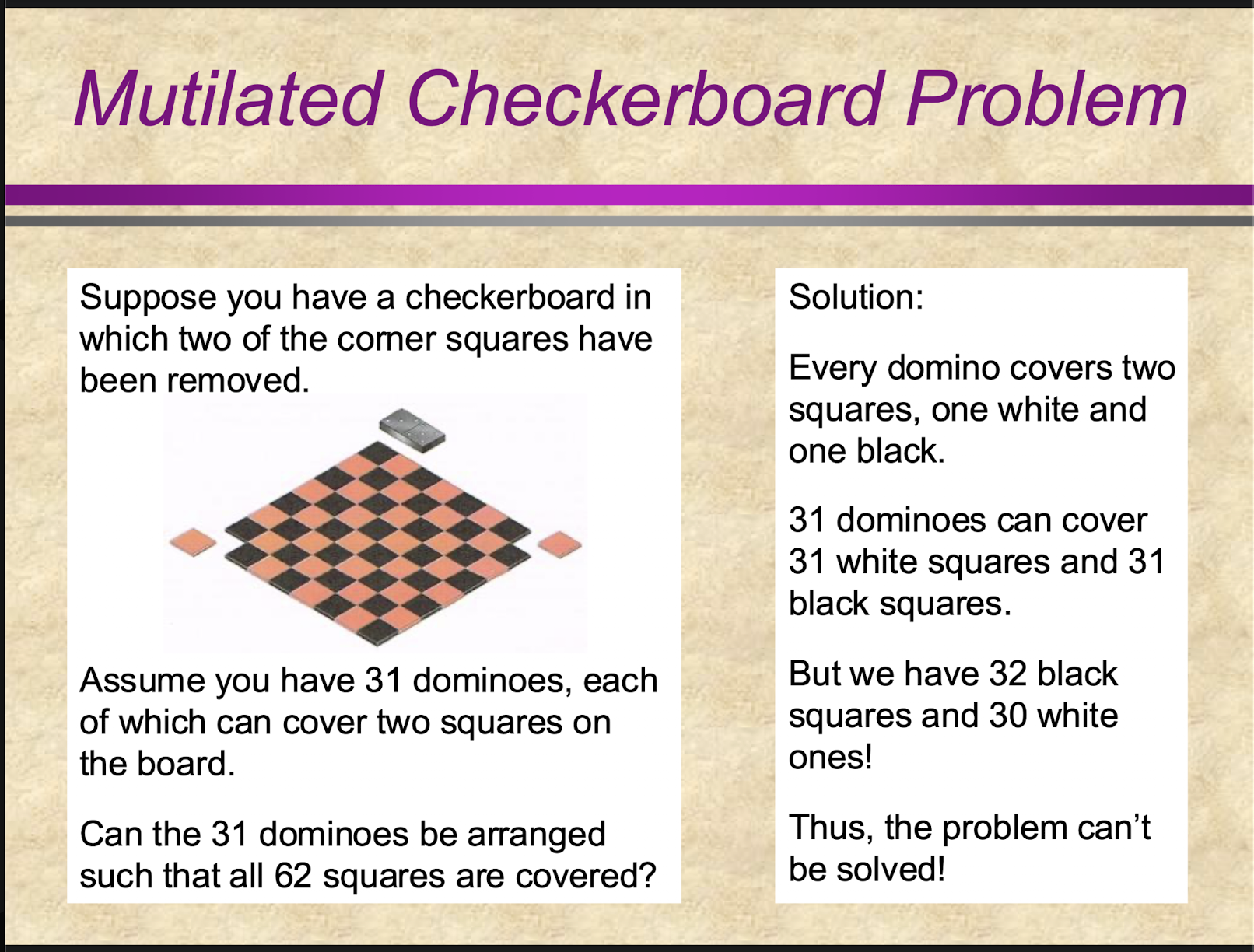
mutilated checkerboard problem (problem wording)
mutilated checkerboard experiment experiment
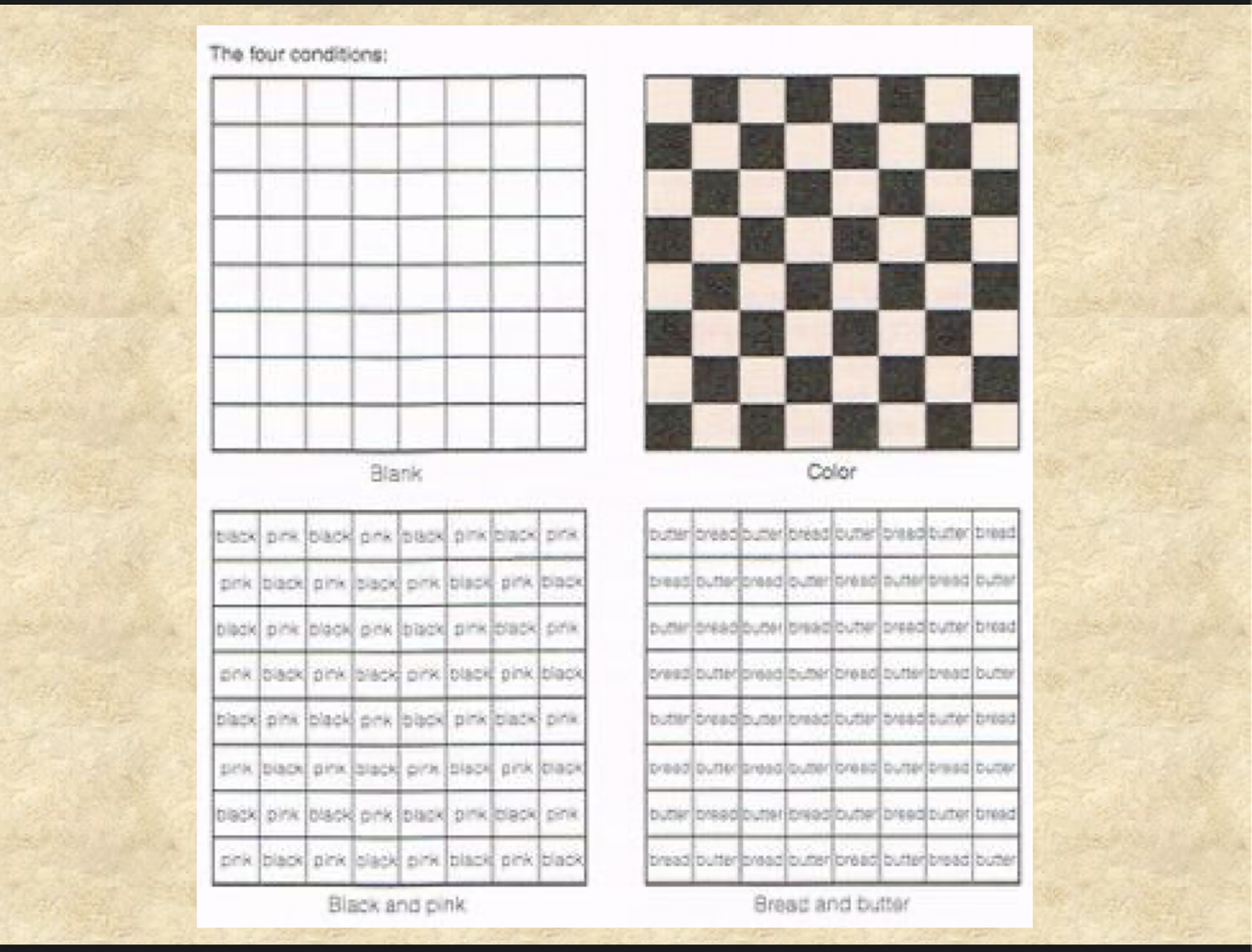
4 different wordings of checkerboard:
all squares blank
alternating squares black or pink
alternating squares LABELED black or pink
alternative squares labeled bread or butter
then they were given hints in 15 minute increments…
RESULTS:
blank condition took the LONGEST to solve the problems
both black/pink had the middle results
bread/butter had the SHORTEST time taken to solve
**ppnts solved problem faster when the wording led them to think abt two squares being in PAIRS (like bread and butter… black/pink would be less obvious as ‘pairs’)
Wording effect, Russian marriage problem
basically you have to create 31 HETEROsexual pairs, but 2 men die so where’s 32 women, but 30 men.. so it’s really not possible
its a lot more obvious here tho than the checkerboards maybe because of the wording!!!! even tho concept is technically the same
**this is an example of knowledge helping us see the solutions
Problem solving by ANALOGY
when a problem solver notes a correspondence between a NEW problem and an OLD one that suggest a new problem solution
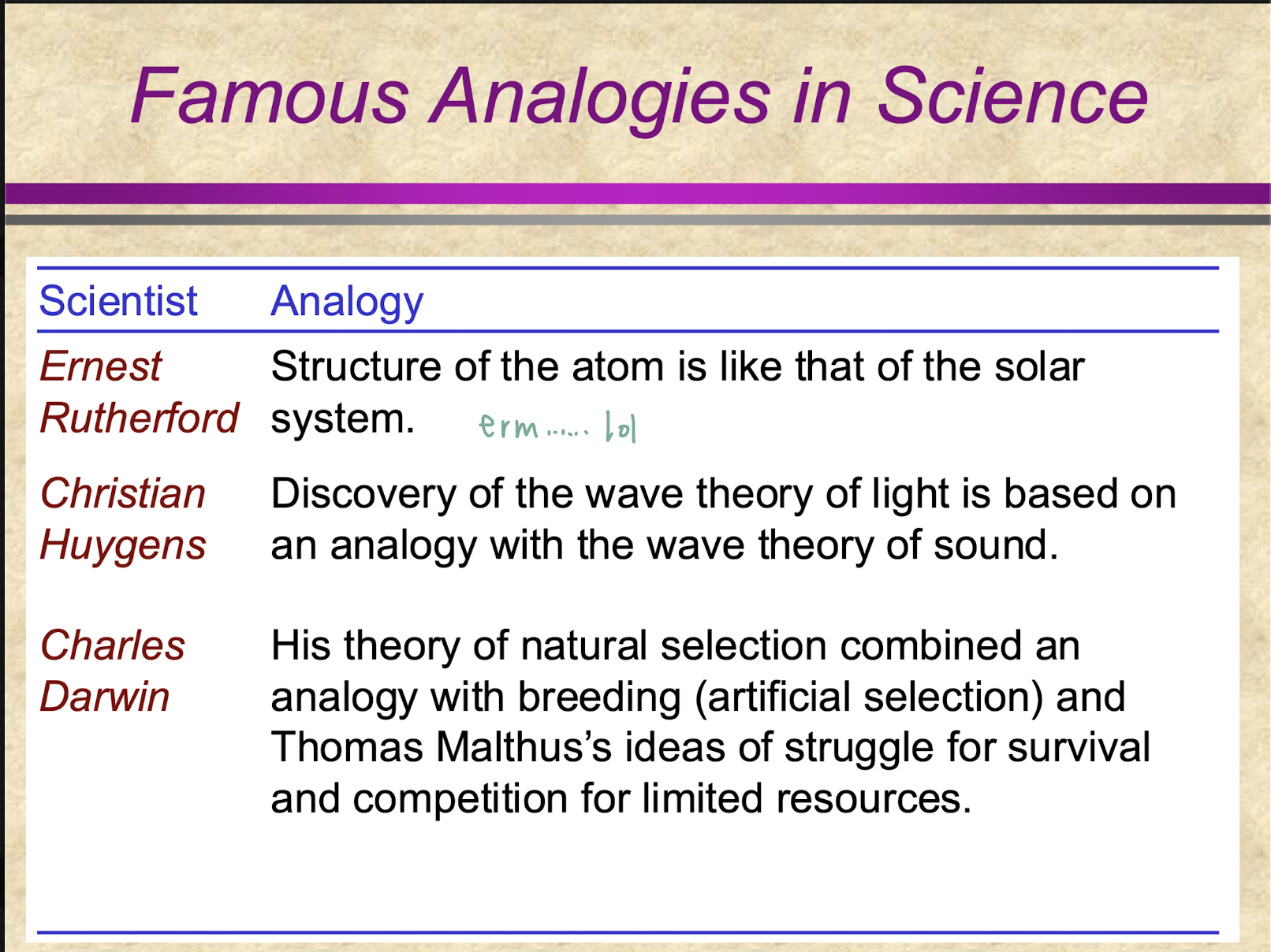
Famous analogies in science
also Mestral: invented velcro after noticing burrs sticking to his dog
2 Stages of analogically problem solving
observe correspondence between base (old) and target domain (new problem) **realizatoin occurs here
focus on overall system of relations rather than concrete elements or features (this makes sense lol)
then IMPORT knowledge from the base to the target
this is like when the building on existing info in the new problem occurs
Analogies experiment/test
Gick and Holyoak
ppnts read the General Story (base)
then asked to solve the Tumor Problem (new) (analog of the General Story)
2 conditions:
were aware that General Story could help solve the Tumor Problem
were not aware
RESULTS:
those with the hint/awareness = 90%+ correct vs no hint: 20%
ppnts could easily recognize the analogy/make correspondences when they were aware, but did NOT notice the analogy on their own
noticing analogies in different ways (experiment)
they:
provided an ABSTRACT summary of the General Story (gave them the general idea/principle)
provided diagrams summarizing the GS
gave TWO analogs (GS and another story w the Dif elements but same solution/idea)
Analogy via principle/general idea
2 conditions
told just the GS
told the GS AND the principle “if you need to accomplish smth big, you can apply small forces from many directions“
RESULTS: they had the same % correct solutions so IT DID NOT HELP ppnts see the analogy
Analogy via Diagram
2 conditions
story + diagram
story only
REUSLTS: no significant difference, diagram didn’t rly help ppnts see analogy
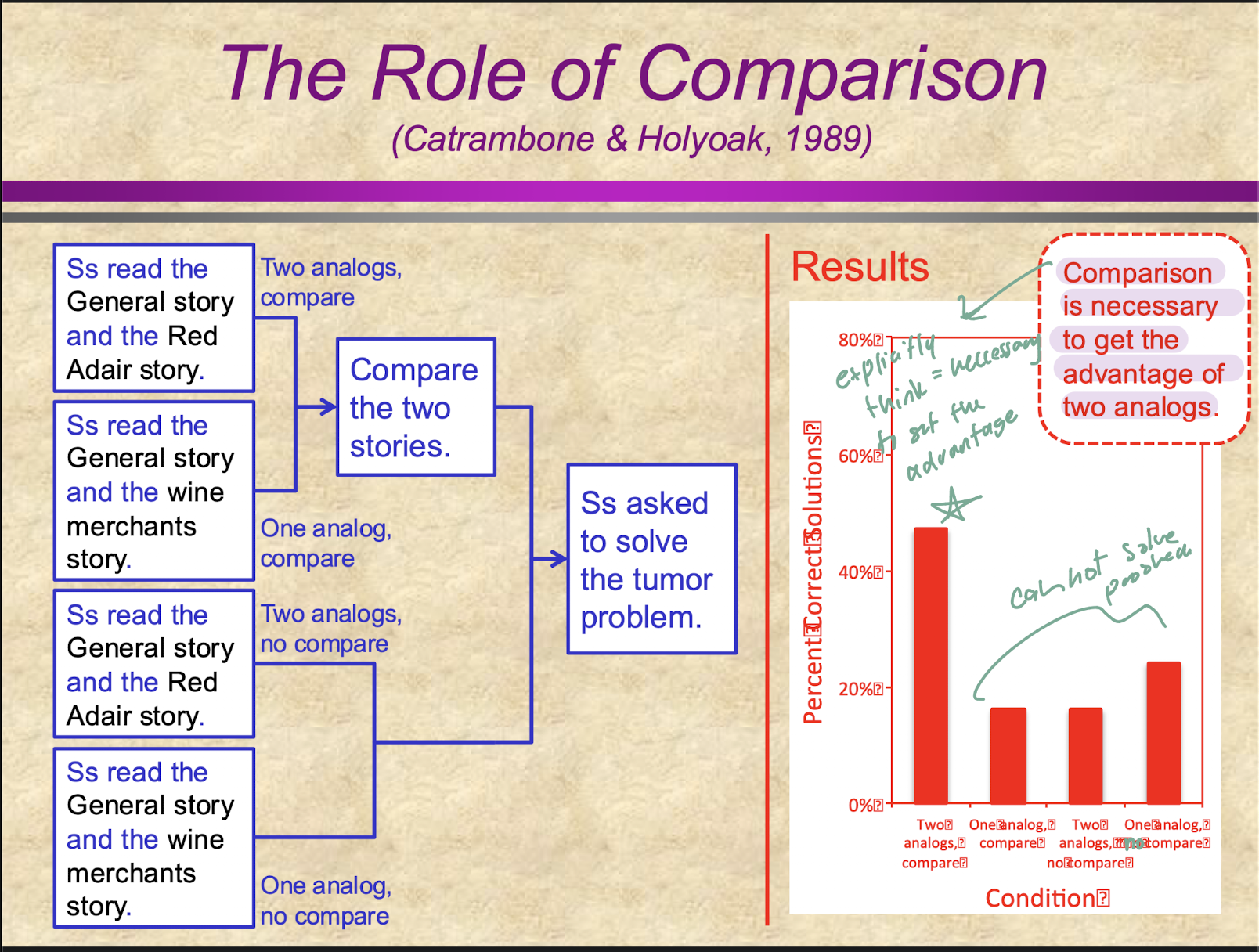
Analogy + second analog
2 conditions
GS (analog 1) + second analog
GS plus random other story (not an analog)
they were then asked to compare the two stories and solve the tumor problem
RESULTS: TWO ANALOGS performed significantly better than one… so comparing two analogs helped promote problem solving
because: its results in the creation of an abstract representation that can be applied to new problems (ppnts were able to extract info and represent the relations between different elements)
Role of Comparison
COMPARISON IS NECESSARY to get the advantage of two analogs
just having read the two stories isn’t enough… active comparison NEEDS to have occurred
PS by analogy summary
analogies = hard
ppl rarely notice the fact that the info from one story can help solve another
BUT comparison helps and promotes abstract representation and therefore problem solving by analogy
Creativity
involves divergent thinking (non normative thinking)
generate many solutions
generate different solutions
generatie solutions different from others
Insight and creativity…
many problems’ solutions (like related to insight) would be considered acts of creativity
Incubation
first you define the problem and gaining knowledge abt the problem area
THEN INCUBATE: when you work on something else/put your mind elsewhere
“I can’t remember now, it’ll come to me later“
sometimes getting the answer requires taking a break and letting it come to you later BECAUSE THIS allows for some other CUE to activate new pathways that might help what you’re looking for
Incubation as release from blocking
blocking - when you get stuck from using the same cue over and over again
so incubation can promote release from blocking because:
incubation allows old representations to be replace by new ones
there was one representation blocking the problem but now after incubation, we have room for a NEW representation, and thus a solution
Incubation test/experiment
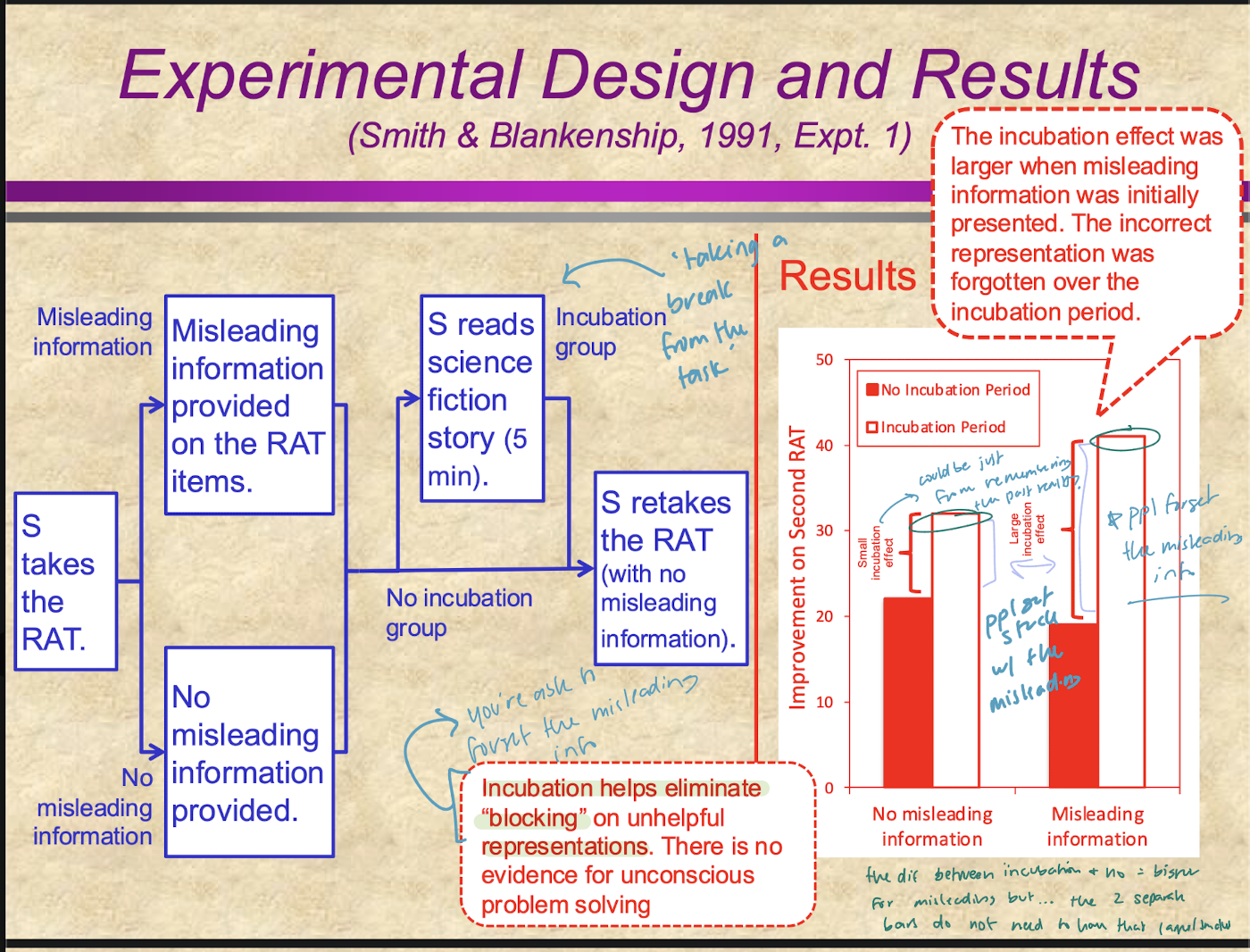
Smith and Blankenship
Conditions:
yes incubation period OR no incubation period
were given misleading info or NOT given misleading info
if misleading info causes blocking, then incubation should be effective
Remote Associates Test (RAT) experiment
you get seed words and need to find the 1 target word that would go with all the seed words (misleading hints would be given w the seeds)
between the 4 different groups... the main point is that there was a larger incubation effect when misleading information was given then when no misleading info (like between no incubation vs incubation)
what’s important is that PPL FORGET MISLEADING INFO, and the incubation effect was larger when misleading info was presented, but was forgotten during incubation
Barriers to Creativity
existing knowledge can block/inhibit creativity
The full creative process
creativity often involves a key insight, but the entire process of deleting a novel idea or product can involve many steps… SO BASICLLY insight yes is a component of creativity, but its not the same
Creativity as an interactive process
inventions require many iteratioins/ developments overtime… and if an insight does lead to some new invention, it’s likely followed up by iterations
Expertise/experts
those w exceptional problem solving skills in a domain
What makes experts better?
cognitive mechanisms? or experience/knowledge
Research into expertise
chess
physics
memory
Expertise in Chess
search tree = broad and deep
larger number of possible moves, and the game lasts for a lot of moves
hill climbing and means-end/subgoalign doesn’t work either because problem space is huge
chess exceeds WM because so many pieces and types and stuff
Reasons to study chess
involves:
complex skill
recorded games
International rating system (novice, master, etc)
Assessing Chess Experts experiment
chess is abt predicting what the other person will do in response to your move so experiment wanted to measure how many moves players considered, how far ahead, etc
Masters vs intermediates = same # moves considered, same # positions considered, same deepest move considered,
THE DIFFERENCE: masters had more ability to reconstruct chess positions
because its more about their ability to REMEMBER the game (like past examples and scenarios they’ve seen), and less differences about how they PLAY the game itself
Testing Chess Memory
Chase and Simon
2 conditions:
real valid chess positions/possibilies
completely random/imposisble chess positions
for random positions, chess experts vs masters vs beginners all had SAME results (low)
for REAL possibilities, MASTERS = MUCH BETTER at recalling chess boards
**chess experts have better memory for chess positions but not better memory in general
****and experts recalled more pieces in CHUNKS (they’re able to categorize more deeply bc of their knowledge)…. and also they evaluate positions faster because their retrieval is quicker
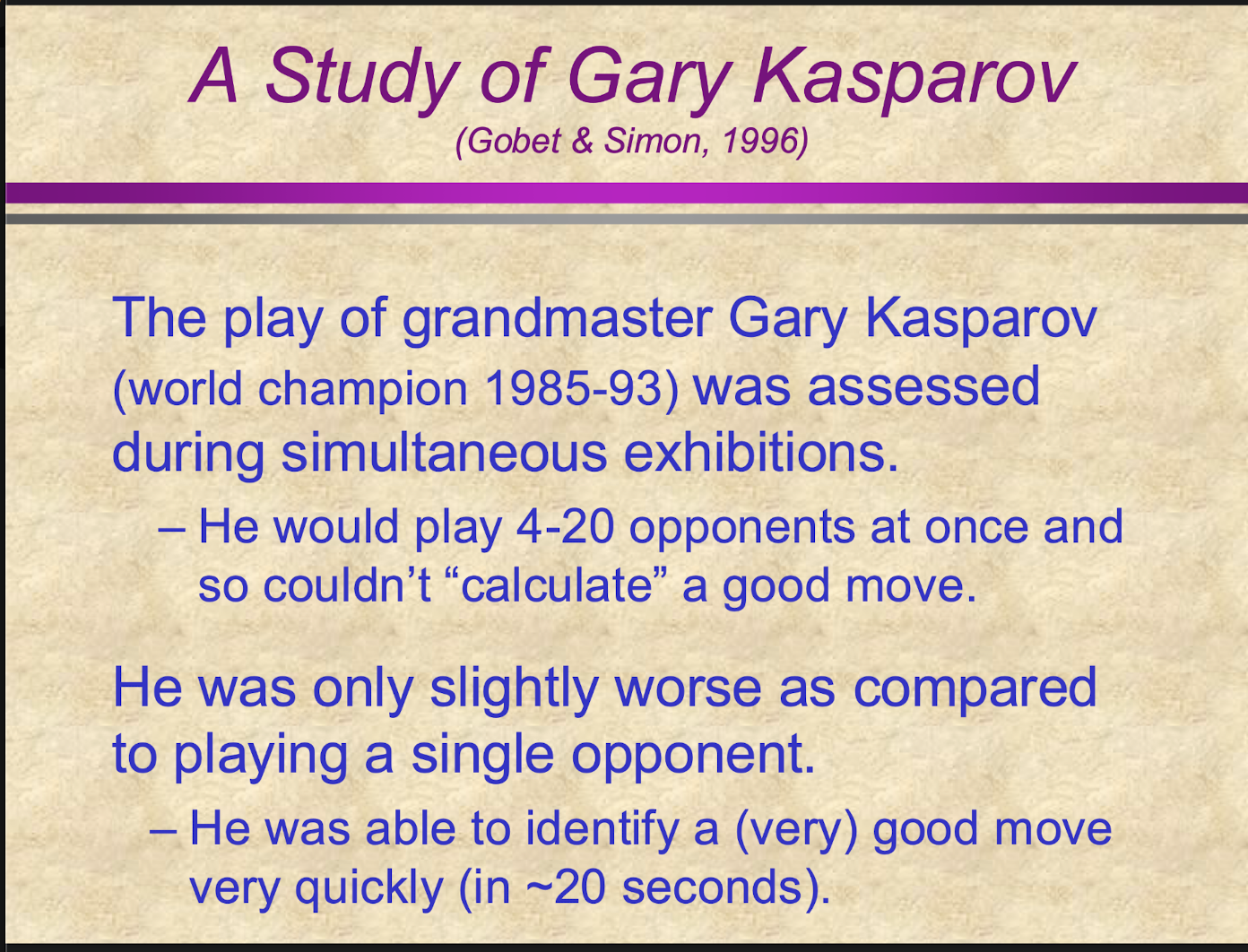
Gary Kasparov
Less Search w Expertise
As ppl acquire expertise, they do less and less search and rely more on KNOWLEDGE
the knowledge allows them to use better problem representations
which allow them to solve problems for little or no search
Memory Experts performance is also based on…
knowledge
SF
SF digit span was 7 ± 2 BUT he practiced and it became over 80 digits
he was a runner and used his knowledge of running to ‘chunk’ numbers as finishing times in races so
for ex: numbers between 346-420 = encoded running times for a mile
and over time, his encoding strategies became more and more elaborate to include ages and years?…
*it’s about organization of chinks and about developing elaborate knowledge structures that allow for superior encoding stuff
Rajan Mahadevan
recited 31811 digits of pi from memory
he started studying at 3yo
digit span is 43 but letter span is only 13… so it's about practice and expertise in a SPECIFIC TOPIC
IT DOESN’T APPLY TO ALL
Ten Year Rule
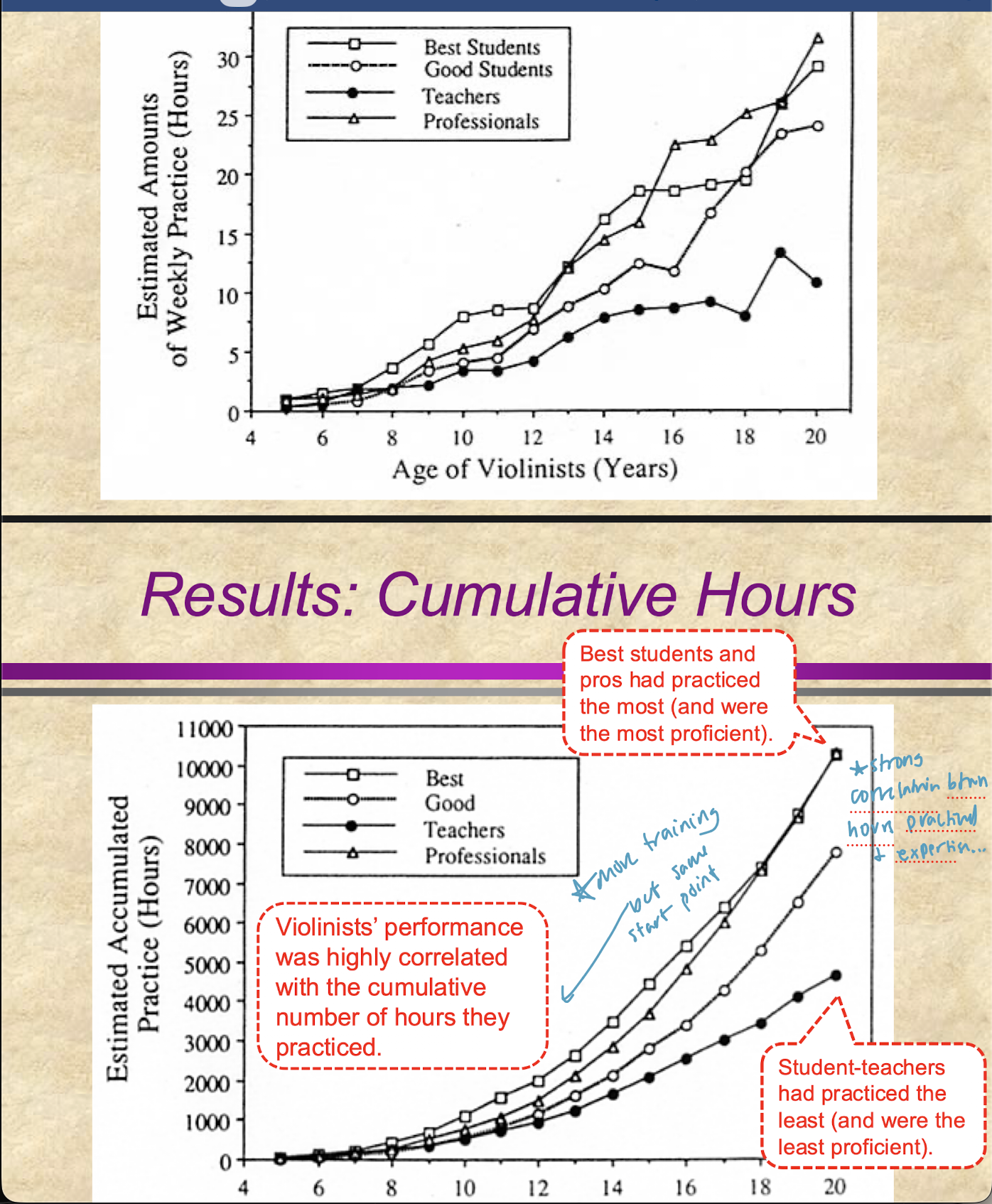
it takes ten years or ~10,000 hours of practice to become an expert
Child Prodigies??
they mostly just started practicing at a young age and did not reach their highest performance levels until after ~10yrs
Theory of deliberate practice
practice is ALL that matters for attaining expertise AND NO ONE IS ACTUALLY BORN W PARTICULAR TALENTS
Violin example
it was rly just about hours practiced.., but also sort of how serious/focused the practice was…?
Kinds of Practice
Deliberate practice = practice directed toward IMPROVING
Coaches and Mentors
they are able to instruct performers on best practice techniques and especially in early stages, you can rly only get as good as your instructor is so
limits on practice
motivational constraint
resource constraint
effort constraint
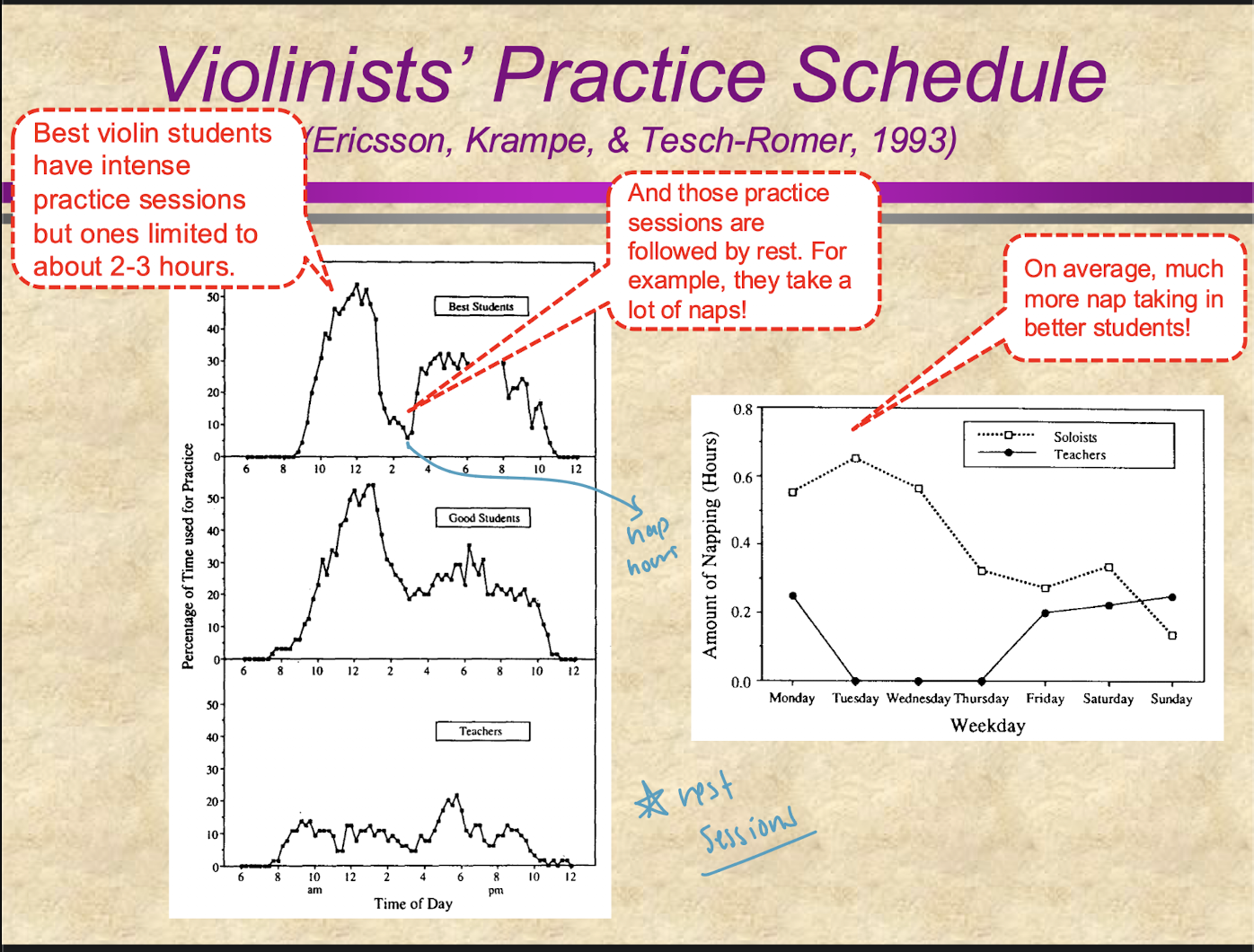
elite/masters have REST PERIODS in their schedules!
Practice vs talent
can be correlational, but some differences are ‘innate abilites’ (like height in basketball but)
well defined problems
starting states, goal states, operations that are well defined
ill-defined problem
starting and goal states and operations = unclear
ex: finding a mate, etc when there’s TOO MANY VARIABLES and no clarity