PSYC1101 - Memory
 Call Kai
 Learn
Learn Practice Test
 Spaced Repetition
 Match
Match Flashcards
 Knowt Play
1/66

There's no tags or description
Looks like no tags are added yet.
Name | Mastery | Learn | Test | Matching | Spaced | Call with Kai |
|---|
No analytics yet
Send a link to your students to track their progress
67 Terms
cognitive psychology
the study of mental processes
cognition
a process that helps us take in information from the environment, store it, and retrieve it later
attention
the process of concentrating on specific features of the environment or on certain thoughts / activities
selective attention
the ability to focus on one message and ignore others.
cocktail party effect
in a busy setting, we can selectively tune out all the background noise and focus on one conversation. If we hear information that is relevant to us (e.g. our name), we can still attend to it.
inattentional blindness
the failure to detect something in front of us because our attention is elsewhere
studied using eye-tracking tests
e.g. stop sign
change blindness
the failure to notice large and obvious changes because we fail to update our mental representations between views
e.g. the engine on the aeroplane illusion
why does attention fail us?
our attention span is limited - there is too much information in the world for us to process everything.
Attention works by prioritising important information and filtering out less important info
visual pop out
the idea that some basic features do not require attention to be seen
feature intergration theory
process of selecting and binding features together
the brain first notices simple features like colour or shape, then attention combines them into one complete object.
feature search
when an object stands out because of one unique feature
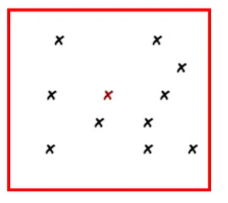
pop out effect
when an object immediately grabs attention because it is different from everything else
conjunction search
combining multiple features together to find the object
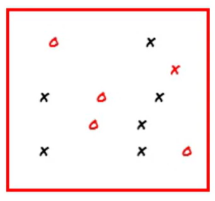
top down processing
is conscious, purposeful and strategic
our prior knowledge / context influences our perception of the stimulus
e.g. finding waldo
bottom up processing
with no prior knowledge/context, the stimulus influences our perception
some things seem to grab our attention on their own without conscious thought
e.g. loud noises often stand out in a crowd
attentional bias
we pay more attention towards emotionally negative images over neutral images
memory
the process of recording, storing and retrieving past experiences and information
encoding
taking information in from the environment and converting it to a form the brain can use
storage
keeping information retained over time
retrieval
bringing stored information back to be used in the conscious moment
process of memory
encoding -> storage -> retrieval
sensory memory - description
info received from sensory organs
info is stored/processed for a few seconds, before being lost or transferring to STM
sensory memory - characteristics
encoding: as a sense (vision, hearing, touch, etc)
capacity: very high
duration: 0.5s (iconic) to 10 seconds (echoic)
working memory - description
info is temporary stored and processed for use in the conscious moment
elaborative or maintenance rehearsal must occur, or info is lost
working memory - characteristics
encoding: mainly auditory
capacity: 7 +/- 2 items (george miller)
duration: 15-20 seconds
long term memory - description
info is stored semantically and can be used for future revival
can store an unlimited amount of info permanently (only lost when info is not used/rehearsed)
long term memory - characteristics
encoding: semantically
capacity: unlimited
duration: lifetime
phonological loop
processes spoken and written information
operates in the temporal lobe
visual sketchpad
processes visual and spatial information
operates in the occipital lobe
central executive
the control centre for the phonological loop and the visual sketchpad
decides what we pay attention to
prioritises important tasks when overloaded with information
switch attention between visual and auditory tasks.
episodic buffer
integrates information from long-term memory with current working memory
can process both visual and verbal information; is a “back up” store
consolidation / rehearsal
transfers info from working memory into long-term storage
serial position effect
we have better memory for first items and last items on an item list
primary effect: we remember first items better
Recency effect: we remember last items better
explicit memory
requires conscious or intentional memory retrieval
includes declarative, episodic and sematic memory
declarative memory
memory of factual information
episodic memory
memory of personal experiences / events
sematic
memory of general knowledge / facts
implict memory
memory that influences our behaviour without conscious awareness
procedural memory
memory of learnt skills / actions
structural processing
encoding of the physical qualities of a word (least effective)
phonemic processing
encoding the sounds of a word
sematic processing
encoding the deeper meaning of word
context dependent recall
better context cues help us remember info (cues in our external environment)
e.g. divers learning words on land vs underwater
state dependent recall
easier to remember events that match your mood
e.g. being angry triggers past memories of anger
songlines
indigenous people use song, storytelling, dance and painting to retain and pass on information over generations
flashbulb memories
vivid, emotional, detailed memories of important events
hippocampus
responsible for long term memory, declarative memory and memory consolidation
amygdala
responsible for emotional memories
cerebellum
responsible for procedural memories
thalamus
responsible for encoding & retrieval
prefrontal cortex
responsible for working memory
amnesia
temporary or permanent severe memory loss due to illness
retrograde amnesia
memory loss for events that occurred before the onset of amnesia
anterograde amnesia
memory loss for events that occurred after the onset of amnesia.
Infantile amnesia
memory loss for early experiences
dementia
impaired memory and cognitive deficits caused by brain degeneration.
alzheimer’s disease
progressive brain disorder caused by dementia
hyperthymestic syndrome
condition where you can vividly recall nearly all your memories in extreme details
method of loci / memory palace
items are mentally placed in familiar locations and you “walk through” that area to remember the items.
misinformation effect
An event happens, then there's another event afterwards that will distort your recall of the first event
memory as a constructive proces
information comes from many external and internal sources, which we mentally piece together
external: tv, conversations, events you witnessed
internal: thoughts, imagination, personal ideas
schemas
mental frameworks that help to group, organise and interpret information
based on past experiences
can lead us to encode and retrieve info in ways that fit in with our pre-existing assumptions
how schemas affect memory
schemas help fill in missing information, but they can also create memory errors.
the brain uses expectations to “fill gaps” in memory.
heuristics
mental shortcuts used for fast decision-making based on incomplete infomation
is intuitive and effective, but subject to bias
availability heuistic
if something comes to mind easily, we will think it is more common & important
recognition heuristic
if we are more familiar with something, we will think it is more important
anchoring & adjustment heuristic
relying on the first piece of information and adjusting from there