Exploring The Universe
 Call Kai
 Learn
Learn Practice Test
 Spaced Repetition
 Match
Match Flashcards
 Knowt Play
1/63

There's no tags or description
Looks like no tags are added yet.
Name | Mastery | Learn | Test | Matching | Spaced | Call with Kai |
|---|
No analytics yet
Send a link to your students to track their progress
64 Terms
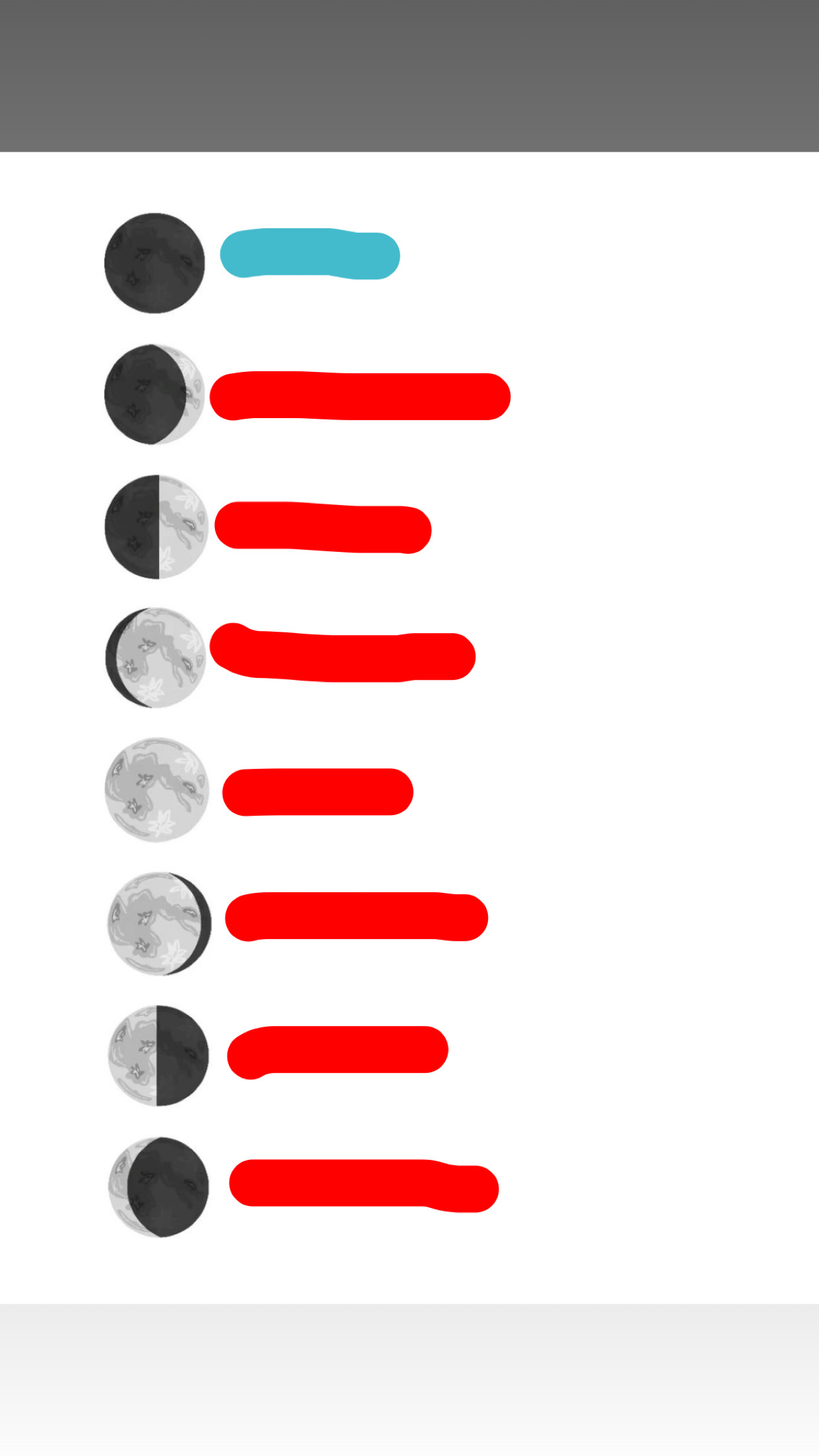
What phase is this?
New moon
Disc is dark and invisible. between sun and earth
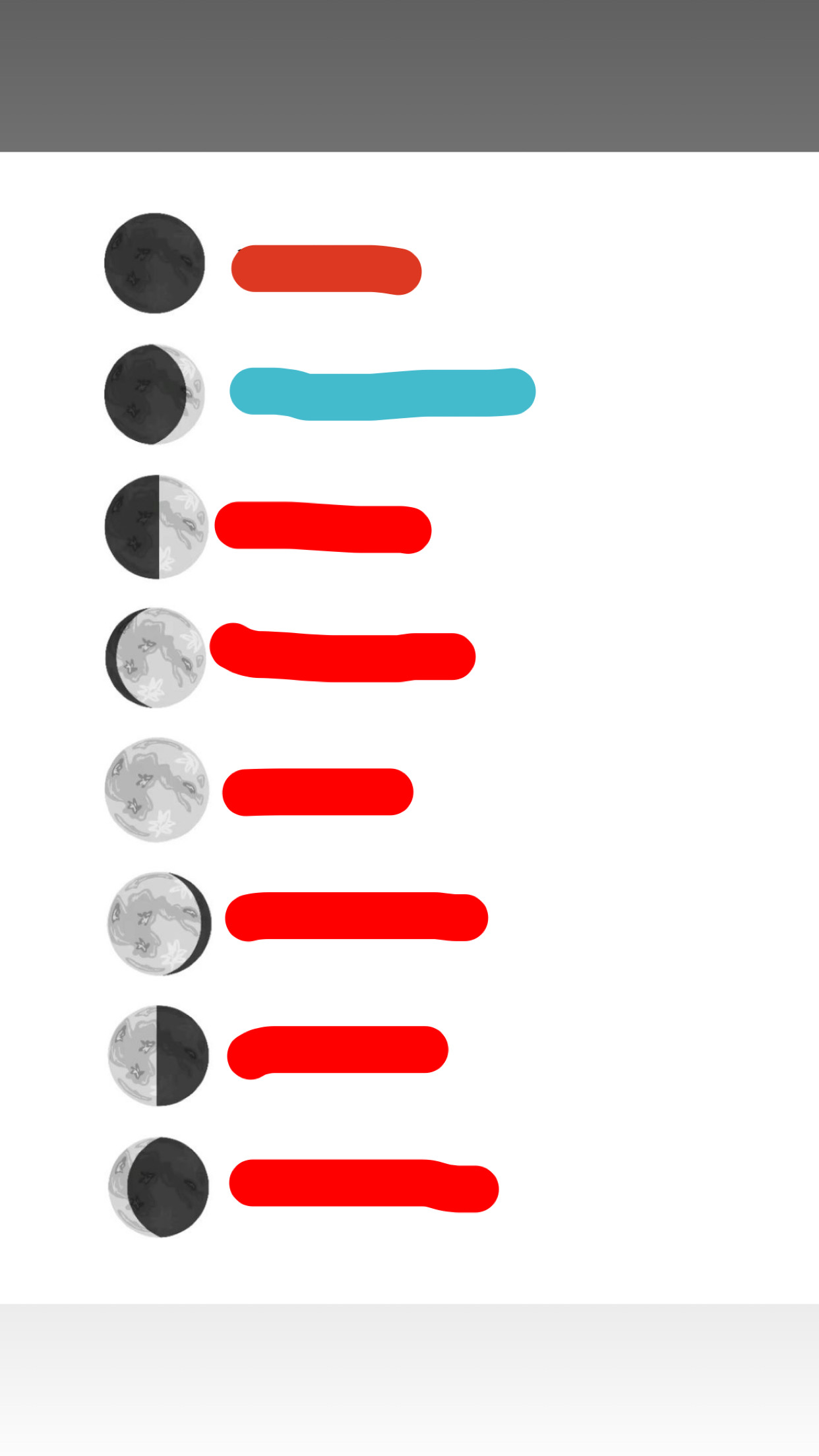
What phase is this?
Waxing crescent
Sliver of the moon’s disc is visible
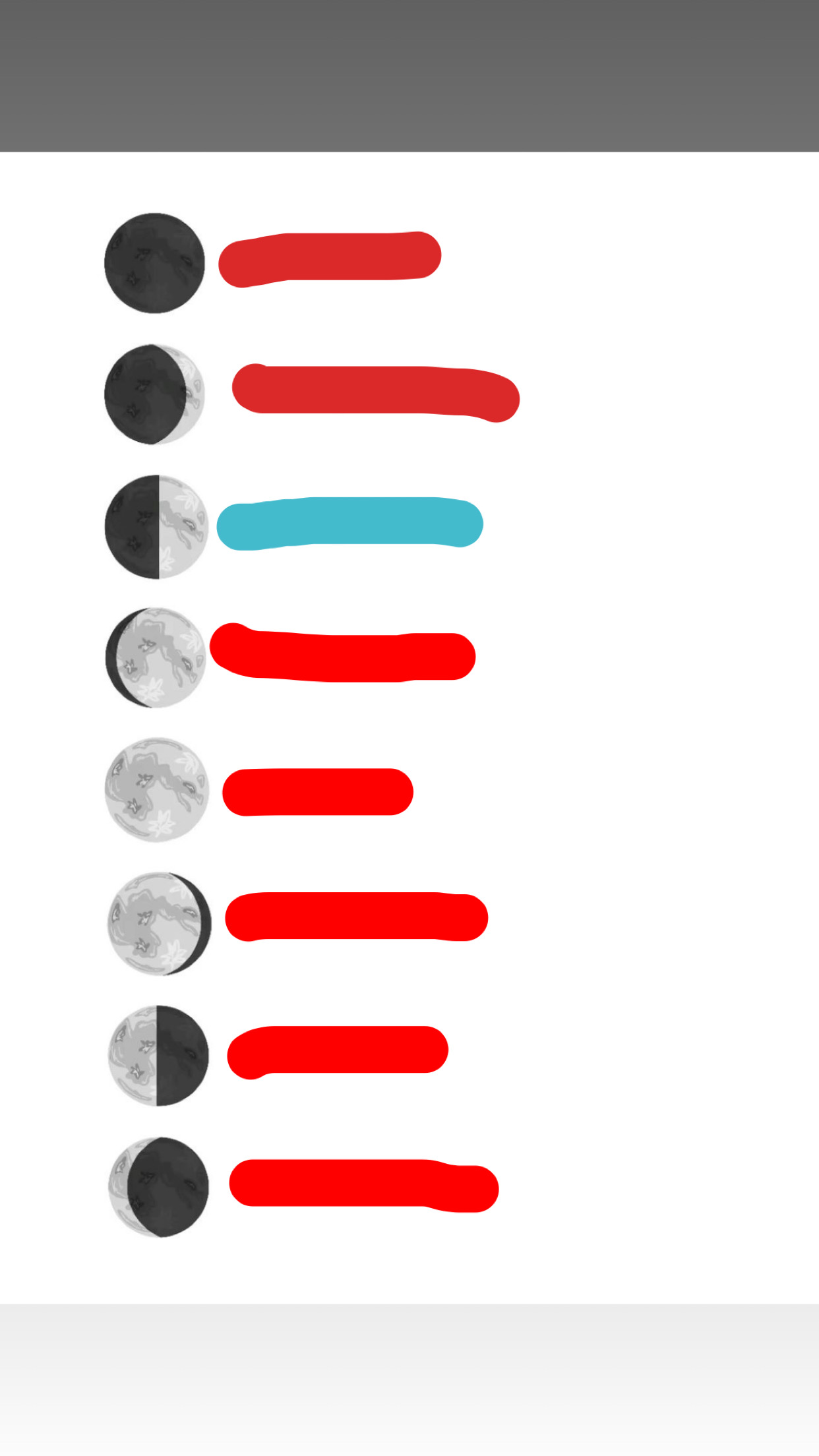
What phase is this?
First quarter
1/2 of the moon’s disc is lit
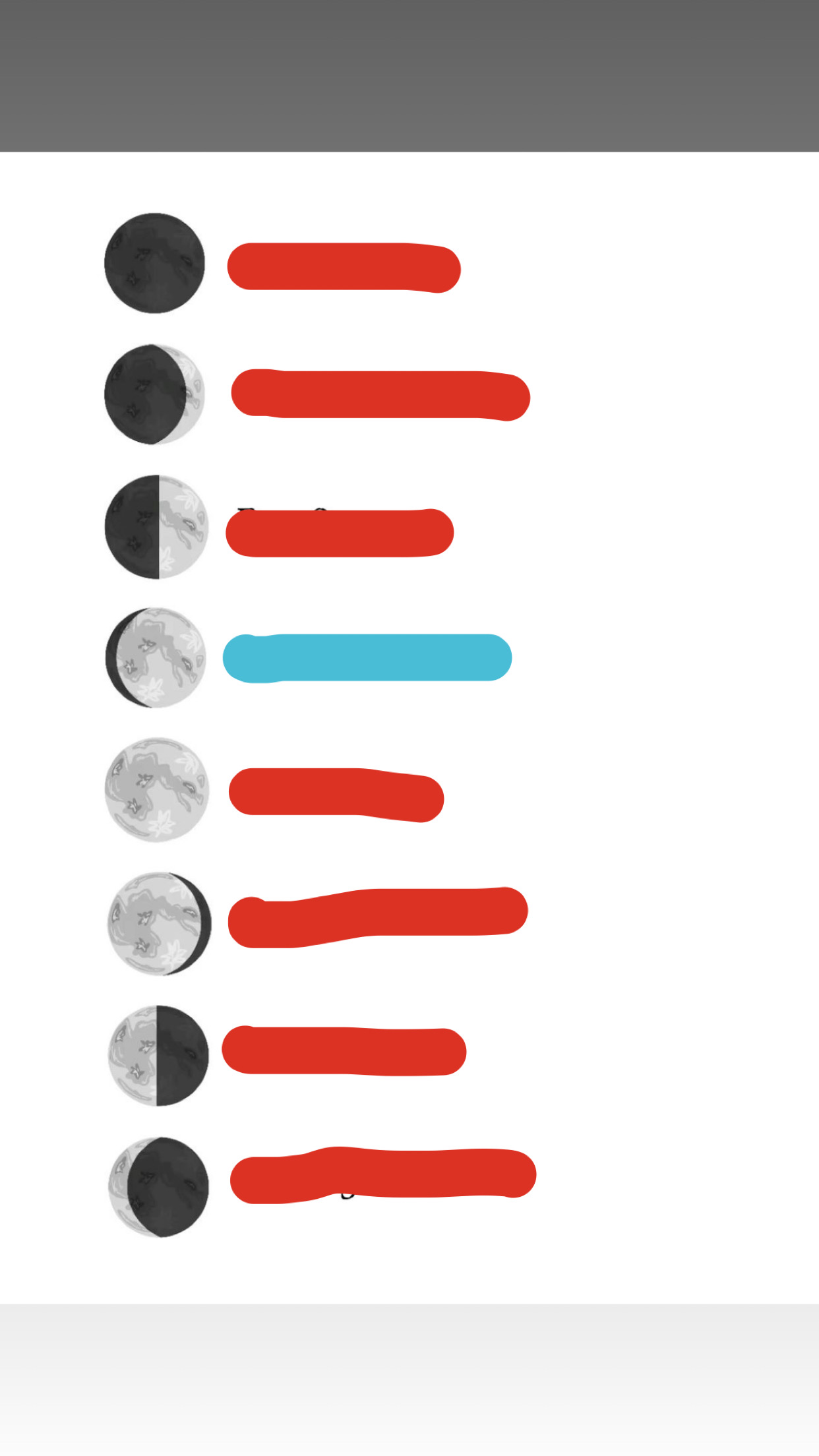
What phase is this?
Waxing gibbous
more than half the mood’s disc is lit and it’s shrinking
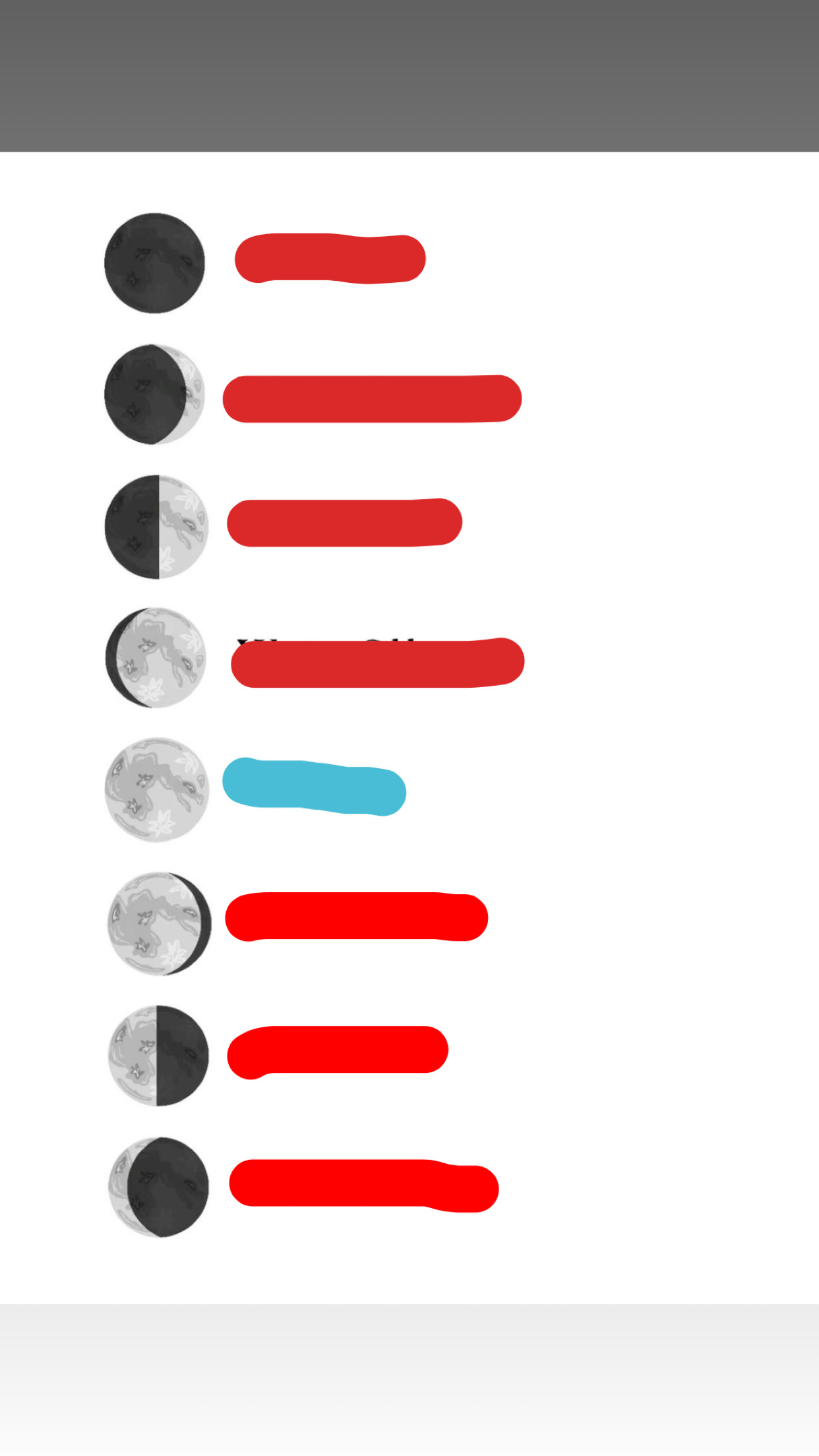
What phase is this?
Full moon
We see the entire face of the moon shining
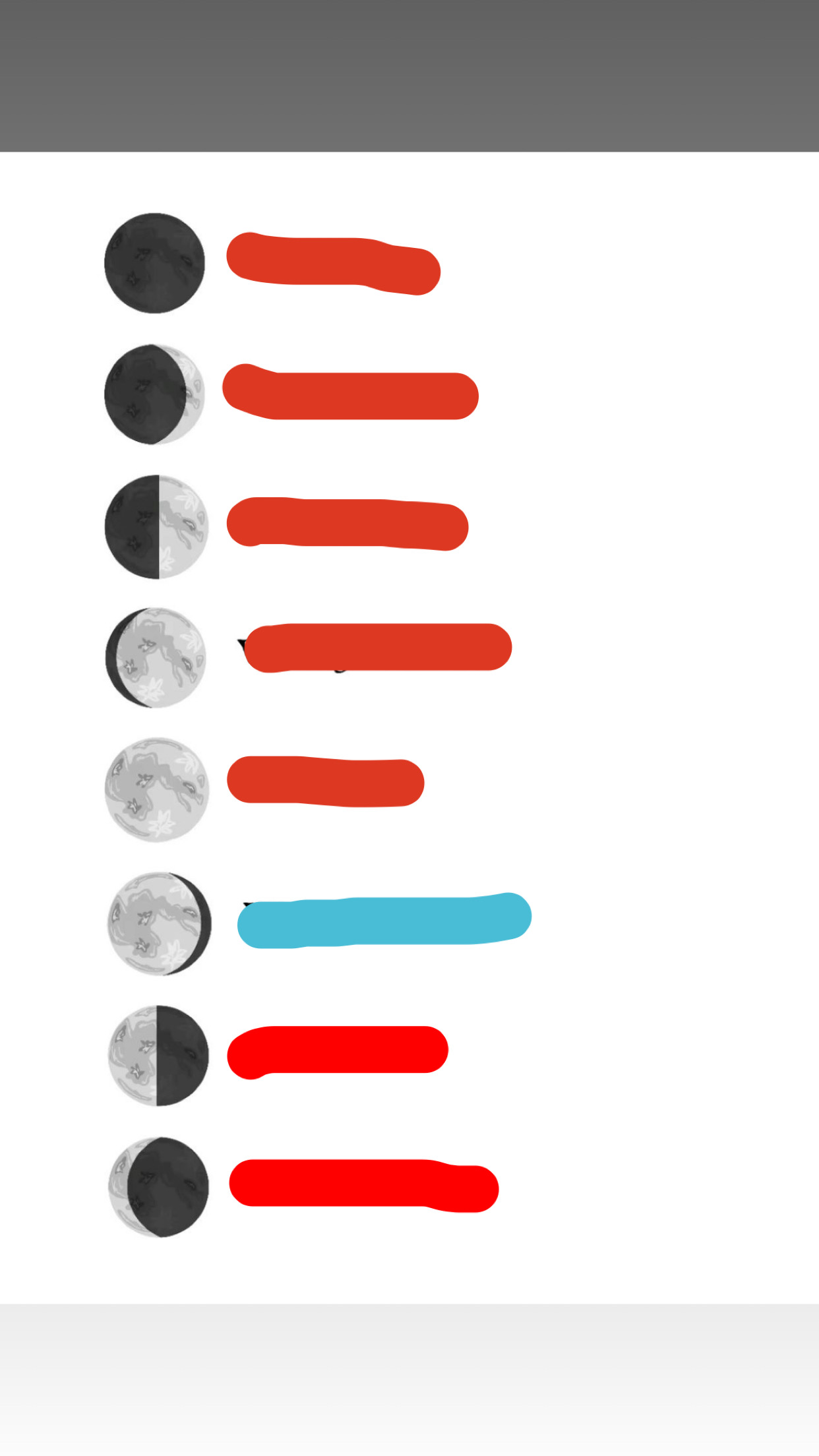
What phase is this?
Waning gibbous
We can see roughly 3/4 of the moons disk
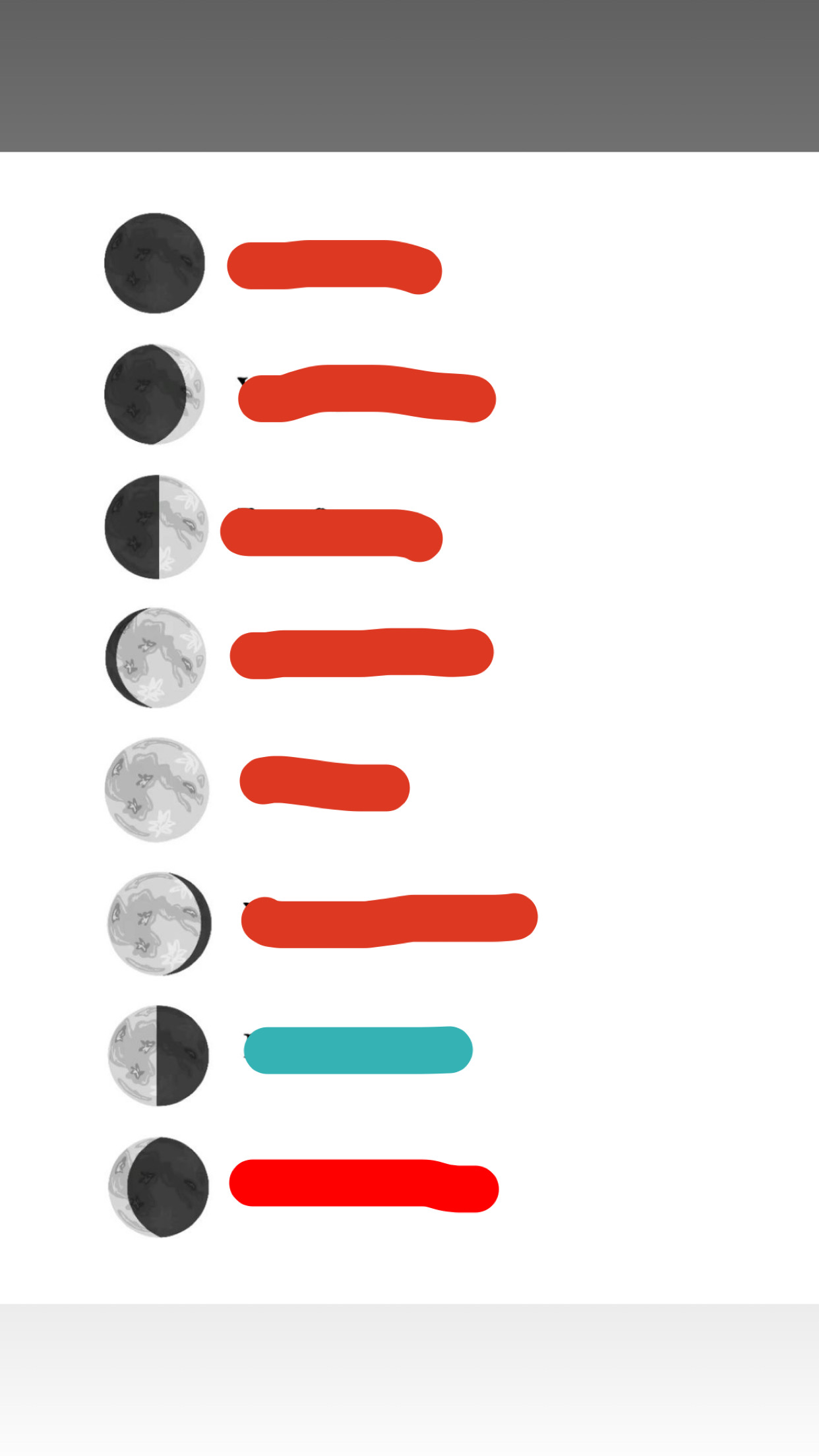
What phase is this?
Last quarter
½ of the moon’s disc is lit
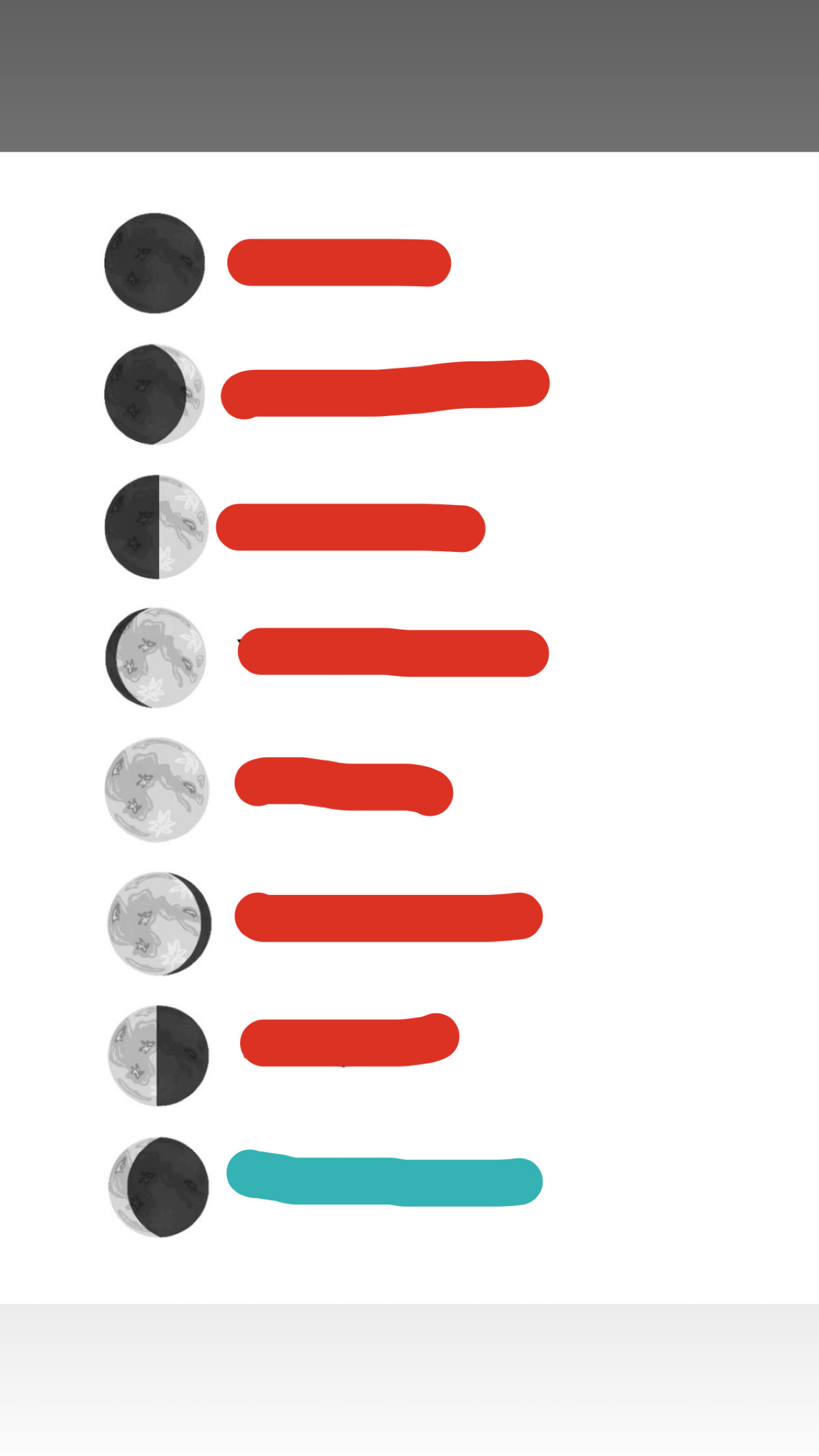
What phase is this?
Waiting Crescent
We can only see a sliver of the moon disk
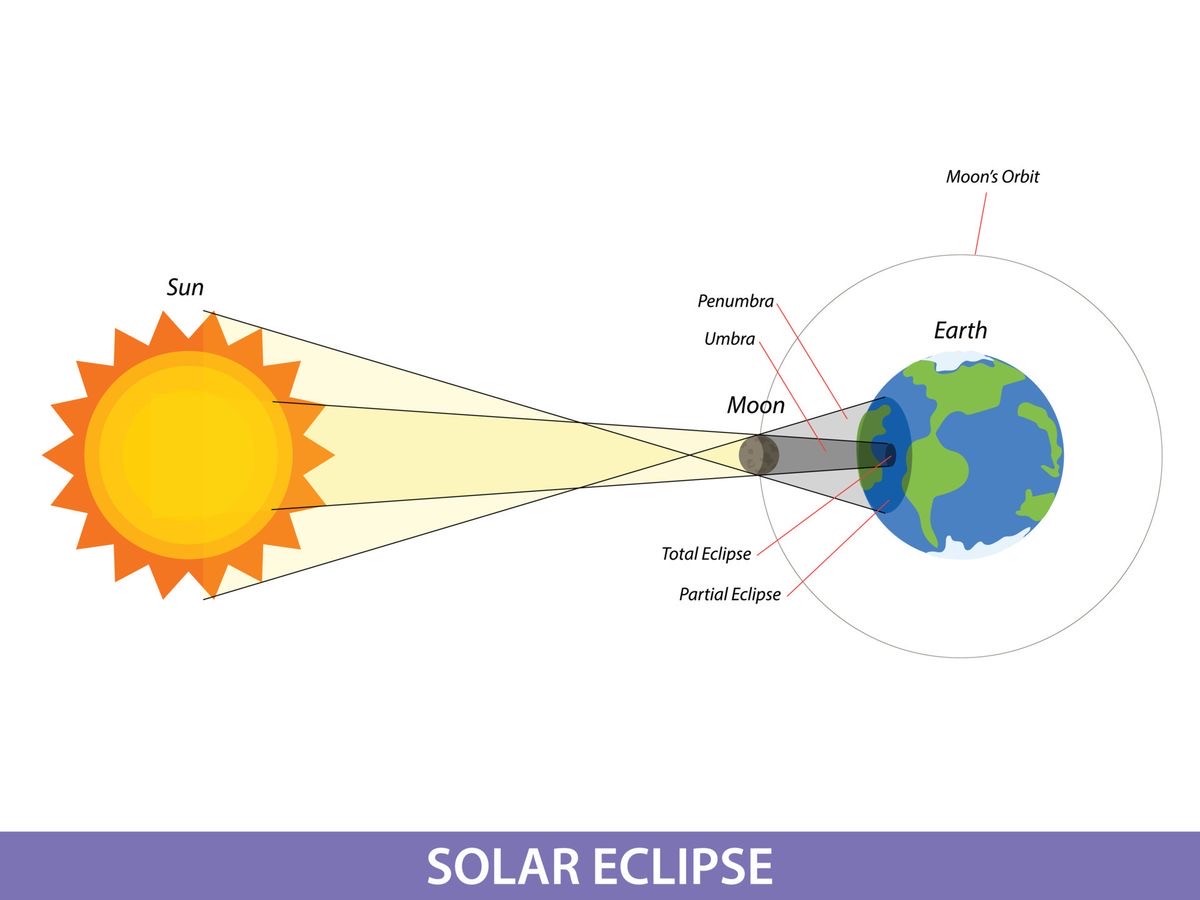
What is a solar eclipse?
occurs when the Moon passes between the Earth and the Sun, blocking the Sun’s light from Earth.
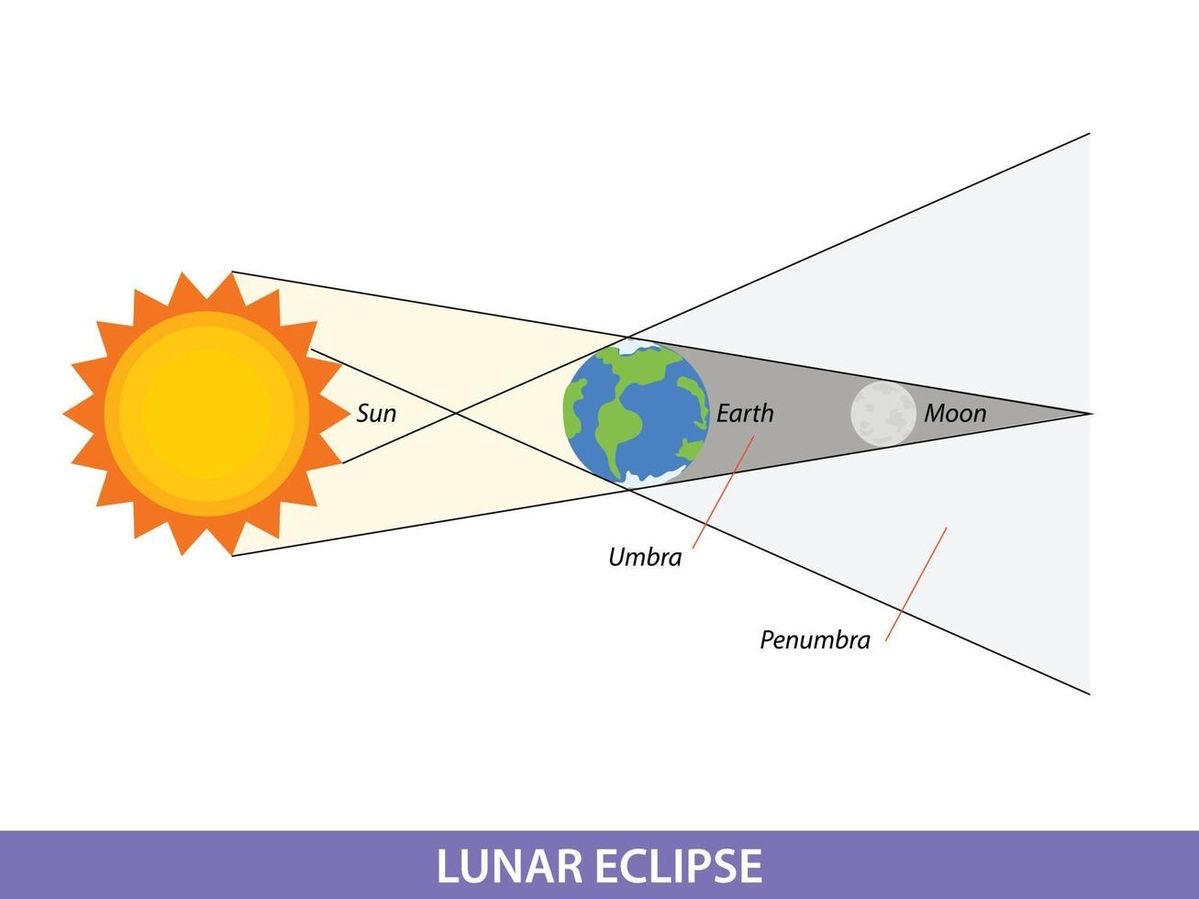
What is a lunar eclipse?
Occurs when earth passes between the sun and moon, casting a shadow on the moon
What causes the tides?
(Rise and fall of ocean water every 12.5 h)
Gravitational forces of the sun and moon pull on earths water
What are spring tides?
Occur when the sun, Earth and moon or aligned, resulting in higher high tides and lower low tides
What are neap tides?
When the sun and moon are at right angles to earth, giving less extreme title differences
What are title bulges?
Bunches of water on opposite side, sides of earth caused by gravitational pull
How would large asteroid impact affect life on earth?
Can cause tsunami’s earthquakes wildfires, potentially leading to mass extinction affecting plant and animal life
What is a meteoroid?
Small rock or metallic body in outer space
What is a meteor?
Meteorite that enters earth atmosphere and burn up creating a streak of light (Shooting star)
What is a meteorite?
Meteor that survives it’s passage through the atmosphere and on earths surface
What are meteor showers?
Occur when earth passes through the debris trail left by a common
What are terrestrial planets?
Small rocky planets with solid surfaces (Mercury Venus earth and Mars)
What are gas giants?
Large planets mostly made of gas with no solid surfaces (Jupiter, Saturn, Uranus Neptune)
What is a solar phenomena?
a natural event that occurs on the Sun, such as sunspots, solar flares, or solar eclipses.
What are solar flares?
Sudden inverse of energies and radiation from the sun
What are sunspots?
Darker cooler areas on the sun surface caused by magnetic activity
What causes the seasons on Earth?
The 23.5° tilt of Earth’s axis as it revolves around the Sun.
Why are models of the solar system difficult to make?
Because the planets are extremely far apart and their sizes and distances cannot be shown accurately at the same scale.
Why does the Moon have phases?
Because the Moon orbits Earth and we see different amounts of its sunlit side.
Name the eight phases of the Moon.
New Moon, Waxing Crescent, First Quarter, Waxing Gibbous, Full Moon, Waning Gibbous, Third (Last) Quarter, Waning Crescent.
What is a nebula?
A large cloud of gas and dust in space where stars form
What is a protostar?
The earliest stage of a star’s life.
What is a main sequence star?
A star that is fusing hydrogen into helium in its core
What happens when a low-mass star runs out of hydrogen fuel?
It expands into a red giant
What forms after a low-mass star becomes a red giant
A planetary nebula
What remains at the center of a planetary nebula?
A white dwarf
What is a white dwarf?
The hot, dense core left behind after a low-mass star dies
What is a black dwarf
A cooled white dwarf that no longer emits much heat or light
What happens when a high-mass star runs out of fuel
It expands into a red supergiant
what is a supernova
The explosion of a dying high-mass star
What is a neutron star
The extremely dense remnant left behind after some supernovas
What is a black hole
An object with gravity so strong that not even light can escape
Which stars can become black holes?
The most massive high-mass stars
What force causes gas and dust in a nebula to form a protostar?
Gravity
What is nuclear fusion?
The process where hydrogen atoms combine to form helium and release energy.
What is a terrestrial planet
A small, rocky planet with a solid surface
Name the terrestrial planets
Mercury, Venus, Earth, and Mars
What is a gas giant?
A large planet made mostly of gas with no solid surface
Name the gas giant planets
Jupiter, Saturn, Uranus, and Neptune
Which planet has the greatest temperature range?
Mercury
Which planet has the strongest hurricane-like storm?
Jupiter
Which planet has the most visible rings?
Saturn
What is an asteroid
A rocky object that orbits the Sun, mostly found in the asteroid belt
Where is the asteroid belt located
Between Mars and Jupiter
What is a comet
An icy object that orbits the Sun and forms a tail when near the Sun
What causes meteor showers
Earth passing through dust and debris left behind by a comet.
Why is space travel difficult and dangerous
Because of radiation, extreme temperatures, lack of air, and the vast distances involved
Name two dangers of living in space.
Exposure to radiation and limited supplies of food, water, and oxygen
What is a solar flare
A sudden burst of energy and radiation from the Sun.
How fast does light travel?
About 300,000 km/s.
What is a light-year?
The distance light travels in one year
Approximately how far is one light-year
About 9.5 trillion kilometres
What is a constellation
A group of stars that form a recognizable pattern in the sky.
What is Polaris?
The North Star, located at the end of the handle of the Little Dipper
Lifecycle of a low/medium mass star
Nebula → Protostar → Main Sequence → Red Giant → Planetary Nebula → White Dwarf → Black Dwarf
Lifecycle of a high mass star
Nebula → Protostar → Main Sequence → Red Supergiant → Supernova → Neutron Star or Black Hole