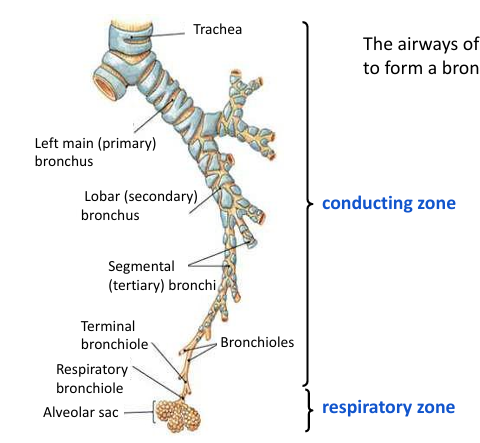
CONDUCTING ZONE - components of the respiratory system and related their structures to their functions
0.0(0)
Studied by 0 people Call Kai
 Learn
Learn Practice Test
 Spaced Repetition
 Match
Match Flashcards
 Knowt Play
Card Sorting
1/23

There's no tags or description
Looks like no tags are added yet.
Last updated 5:10 AM on 5/3/26
Name | Mastery | Learn | Test | Matching | Spaced | Call with Kai |
|---|
No analytics yet
Send a link to your students to track their progress
24 Terms
1
New cards
What is pulmonary ventilation?
movement of air into and out of the lungs, inhalation and exhalation, refreshes air in the alveoli
2
New cards
What occurs during external respiration?
gas exchange between alveoli and pulmonary capillaries, oxygen diffuses into blood, carbon dioxide diffuses into alveoli
3
New cards
What is gas transport?
movement of oxygen and carbon dioxide in the bloodstream, oxygen carried mainly by haemoglobin, carbon dioxide transported as bicarbonate dissolved CO2 or carbamino compounds
4
New cards
What happens during internal respiration?
gas exchange between systemic capillaries and body cells, oxygen diffuses into tissues, carbon dioxide diffuses into blood
5
New cards
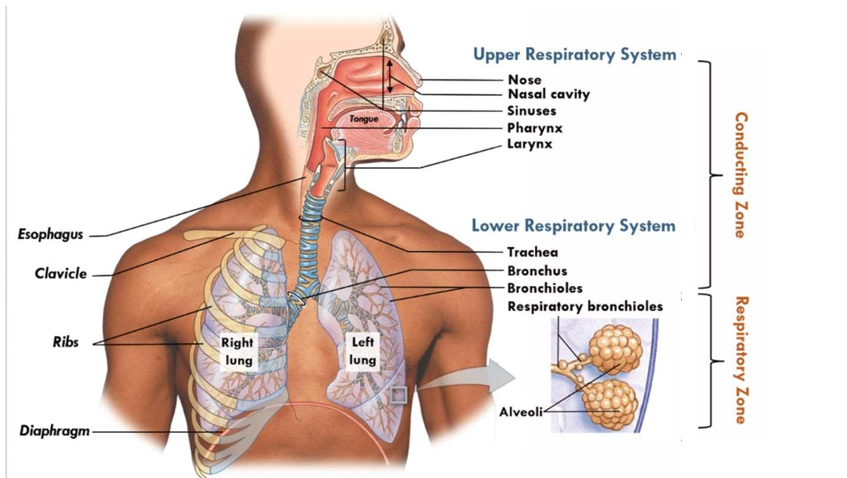
What structures make up the upper respiratory system?
nose, nasal cavity, sinuses, pharynx, larynx
6
New cards
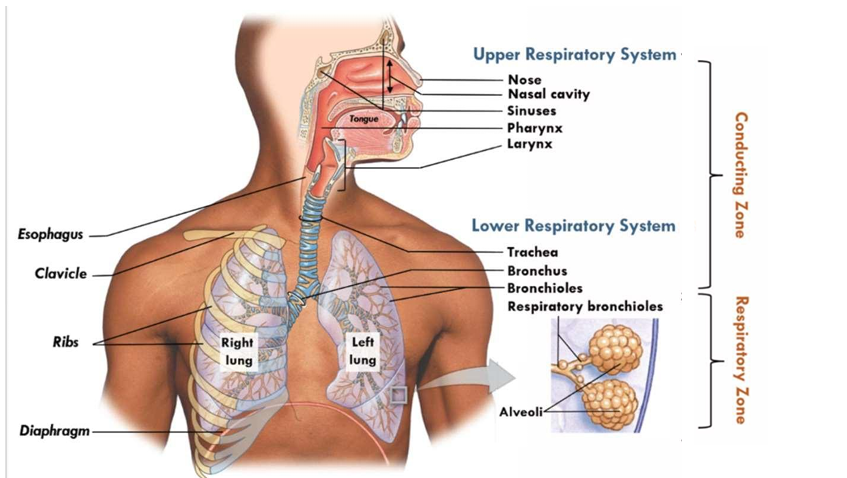
What structures make up the lower respiratory system?
trachea, bronchi, bronchioles, respiratory bronchioles, lungs
7
New cards
What is the conducting zone?
air passageway from nose to terminal bronchioles, conducts air but does not allow gas exchange
8
New cards
What is the respiratory zone?
site of gas exchange, includes respiratory bronchioles and alveoli
9
New cards
What is the only external structure of the respiratory system?
the nose
10
New cards
What is the function of nasal hairs?
filter large particles from inspired air
11
New cards
What are the functions of the nasal conchae?
increase surface area, warm and humidify air, create turbulence to trap particles
12
New cards
What types of epithelium are in the nasal cavity?
olfactory epithelium for smell, mucosal epithelium producing 1–1.5L mucus per day
13
New cards
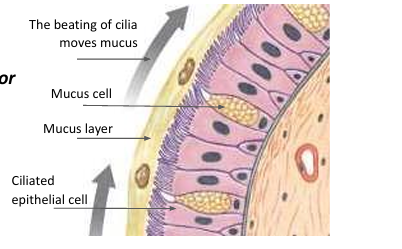
What is the role of mucosal epithelium?
humidifies air, traps particles, contains antibacterial compounds, forms mucociliary escalator
14
New cards
What is the mucociliary escalator?
coordinated movement of cilia moving mucus toward the throat, protects respiratory zone from damage and infection
15
New cards
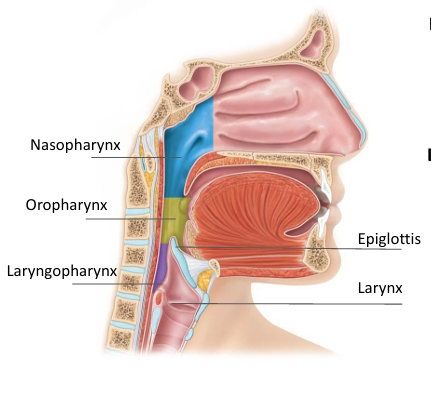
What is the function of the pharynx?
passageway for air and food
16
New cards
What is the function of the larynx?
passageway for air to reach the trachea, contains epiglottis to route food and air correctly
17
New cards
What is the role of the epiglottis?
prevents food entering the airway by directing it into the oesophagus
18
New cards
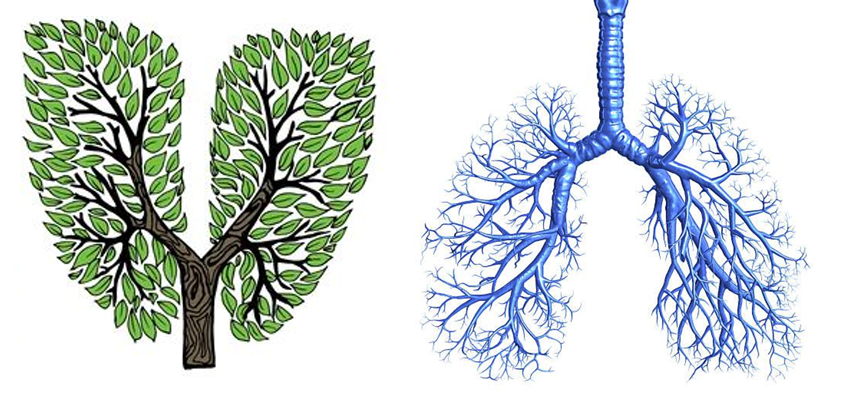
What is the respiratory tree?
branching airways of the lungs, includes trachea bronchi and bronchioles
19
New cards
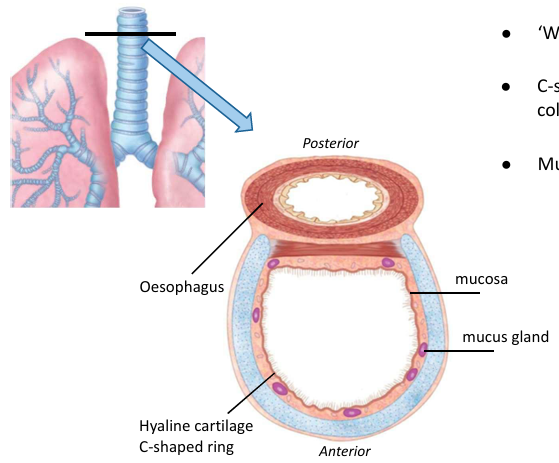
What is the function of the trachea?
windpipe conducting air to bronchi, supported by C shaped cartilage rings preventing collapse, contains mucociliary escalator
20
New cards
What do C shaped cartilage rings do?
prevent tracheal collapse during breathing
21
New cards
What is the bronchial tree?
branching system of airways from trachea to alveoli, includes primary secondary and tertiary bronchi bronchioles and alveolar structures
22
New cards
What is the conducting zone of the bronchial tree?
airways from trachea to terminal bronchioles where no gas exchange occurs
23
New cards
What is the respiratory zone of the bronchial tree?
respiratory bronchioles and alveoli where gas exchange occurs
24
New cards
How many times do lung airways branch?
approximately 23 generations of branching forming around 2400 km of airways