Sed Strat Week 14
 Call Kai
 Learn
Learn Practice Test
 Spaced Repetition
 Match
Match Flashcards
 Knowt Play
1/25

Earn XP
Description and Tags
seq strat
Name | Mastery | Learn | Test | Matching | Spaced | Call with Kai |
|---|
No analytics yet
Send a link to your students to track their progress
26 Terms
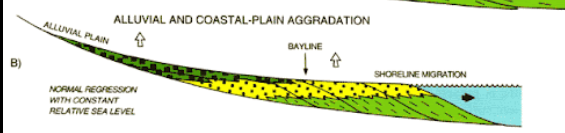
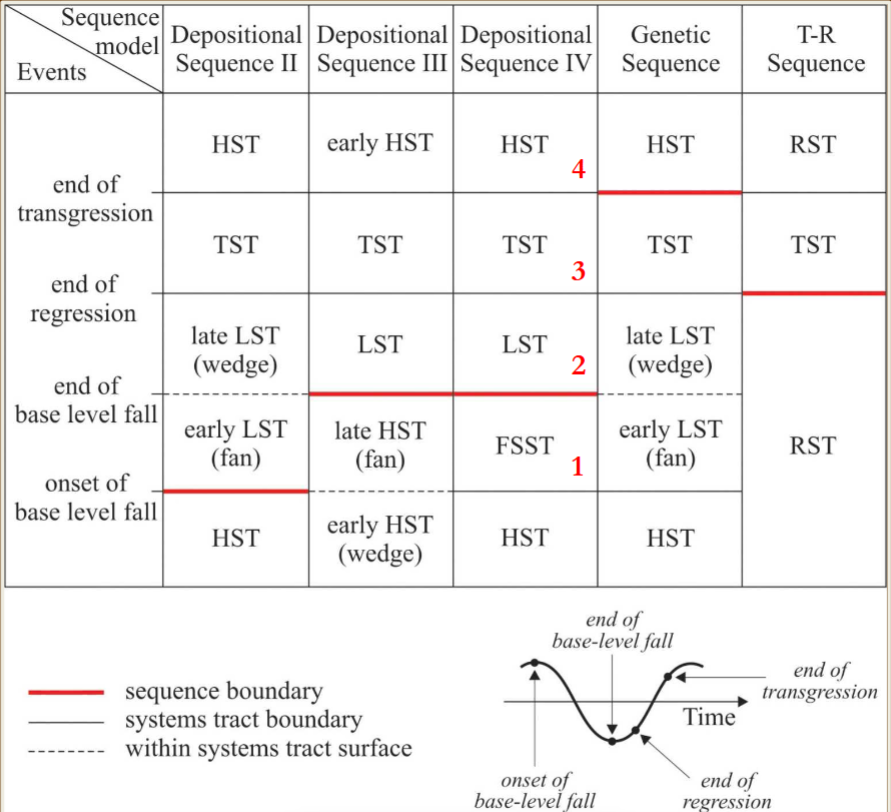
Normal regression (LST)
Shoreline recedes, but base level (SL) does not fall. Parasequences do not downstep
Forced regression (HST - FSST)
Shoreline recedes, and base level (SL) falls. Parasequences downstep
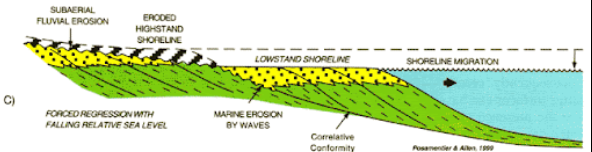
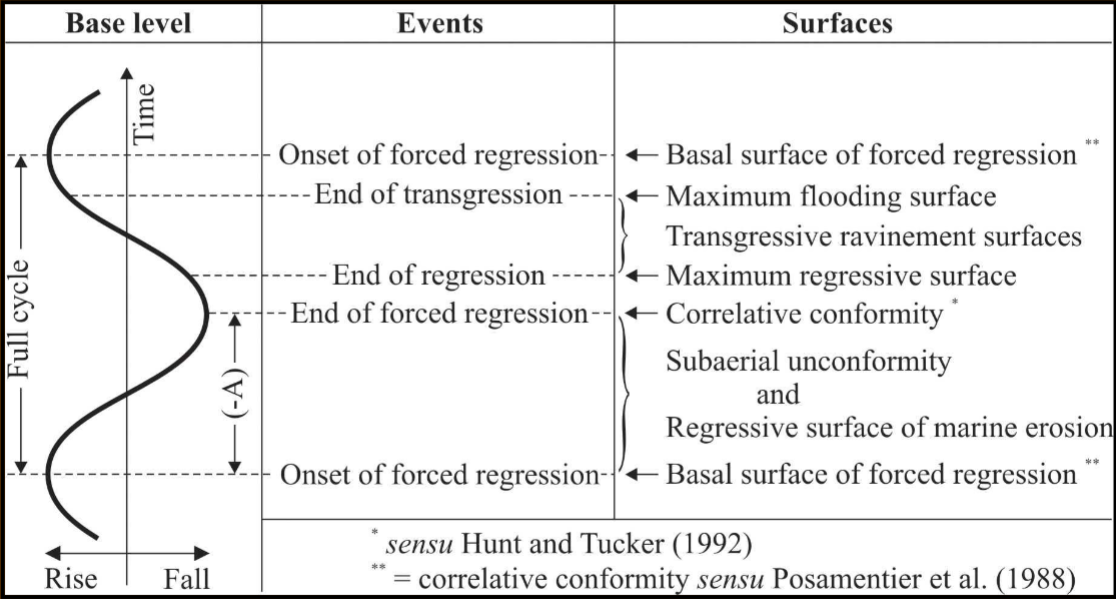
Correlative conformity (end of BLF)
A surface extending basin-ward on which there is no missing time. Correlates with an existing unconformity. May denote a sequence boundary
Subaerial unconformity (BLF)
Subaerial processes (cutting a channel, wind degradation, pedogenesis, etc) cause surface erosion extending basin-ward during forced regression
Basal surface of forced regression (BSFR)
Marks the paleo-seafloor at the moment forced regression begins. Marks end of HST and beginning of FSST.
Regressive surface of marine erosion (RSME)
Tidal energy scours the ocean bottom, truncating it and depositing sand unconformably on top of fine sediments. Occurs during forced regression.
Sharp, sudden contact
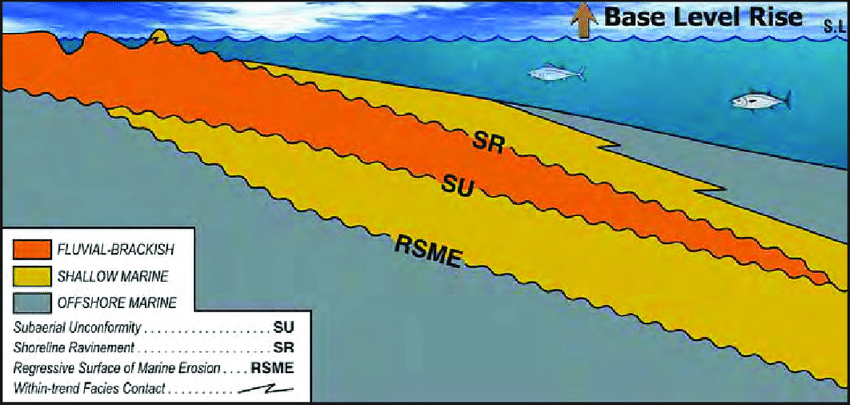
Transgressive ravinement surface (BLR)
Tidal action erodes a surface rather than exposure to the atmosphere, as you would see in a regression. Marine sediments overlie basal surface. Seen in a TST
Visualization of regressive and transgressive surfaces via seismic
image
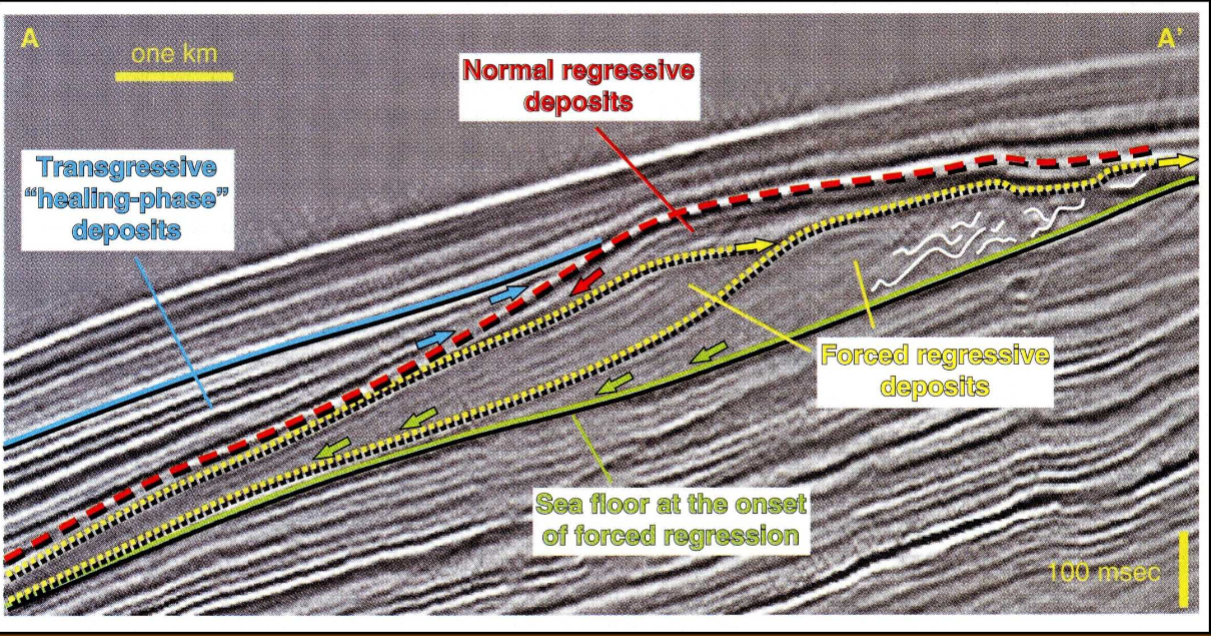
Prograde
stepping seaward
Retrograde
stepping landward
Aggrade
building vertically
Sequence graph
image
Causes of vertical subsidence
Crustal thinning/thickening, volcanic/tectonic loading, asthenospheric flow, differences in crustal density, crustal thermal history
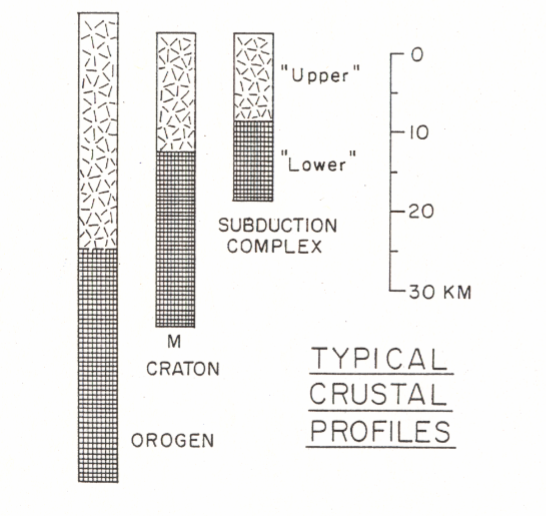
Crustal profiles in different basins
orogen, craton, subduction complex
orogen subsidence due to extensive sediment loading into the basin
Thermal contractive cooling
As the seafloor cools from a spreading center, it becomes more dense, taking up less space and causing subsidence
Basin fill may accumulate due to
Subsidence of shallow substrate (sinking substratum) OR the filling of a space below BL.
Most basins are a hybrid of these
Why rift basins are well preserved?
Sediment is pulled apart and accommodation space is created, filling the space with more sediment
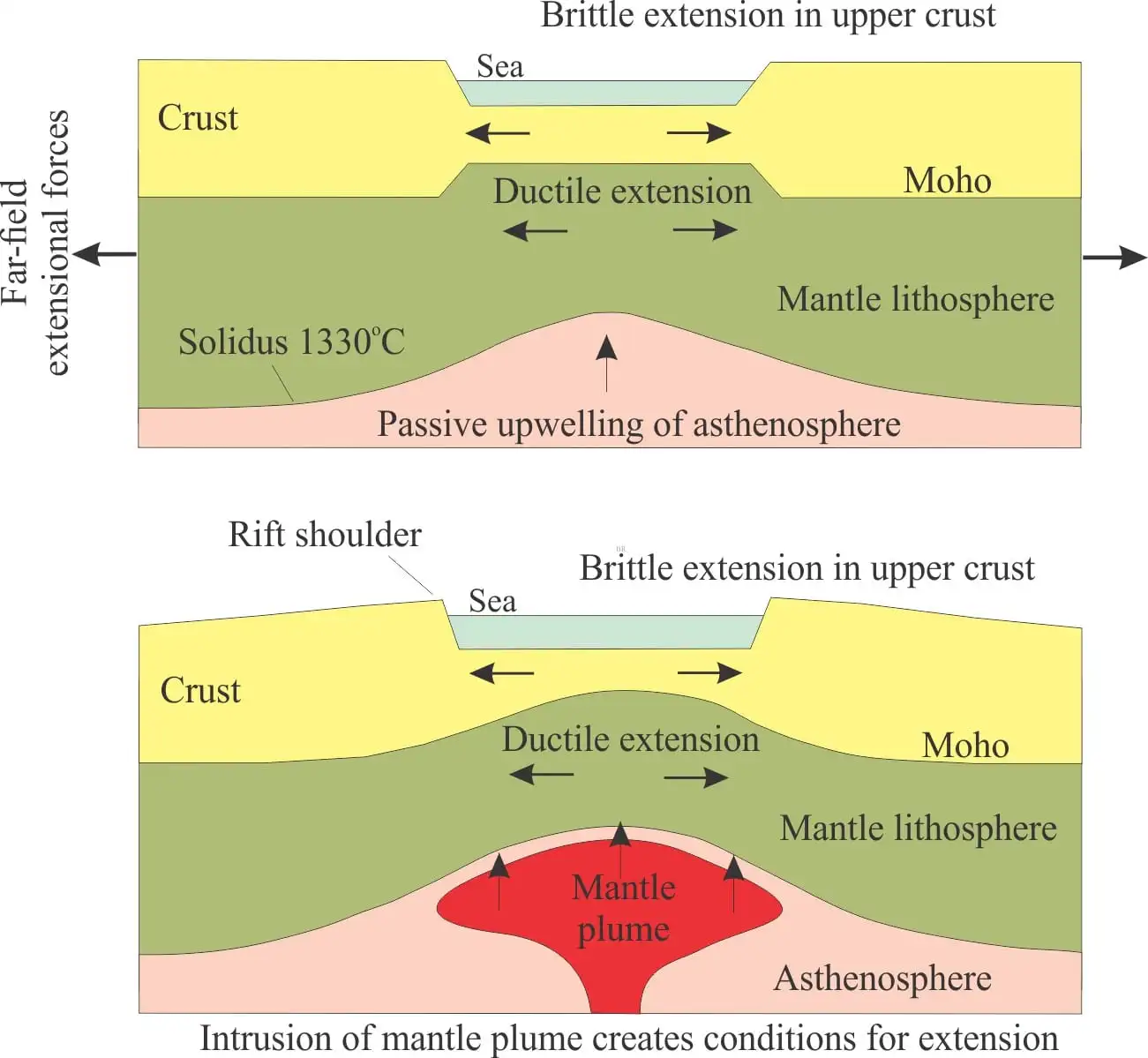
Extensional basin
Formed by the stretching and thinning of the Earth's crust (normal faults), forming grabens and thick layers
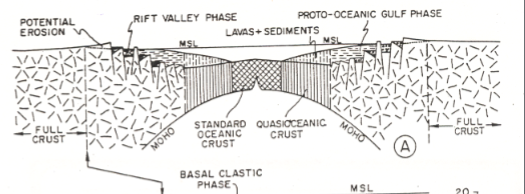
Rift → drift transition
A tectonically active rift setting with normal faulting, crustal thinning, volcanism, high subsidence, and heat flow transitions to a post rift setting; lithospheric cooling, thermal subsidence, and broad basins dominated by sediment loading
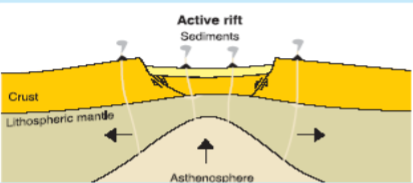
Active rift
Lithosphere extension is dominated by shallow asthenospheric processes, producing a thin crust and highly mafic/rhyolitic compositions. Regular normal faults
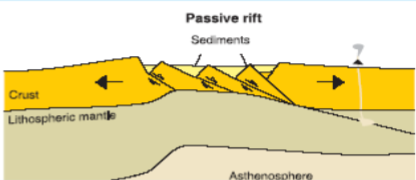
Passive rift
Lithosphere extension is dominated by tectonic stress on plate boundaries rather than asthenosphere. Synthetic normal faults and up-bulging of asthenospheric mantle
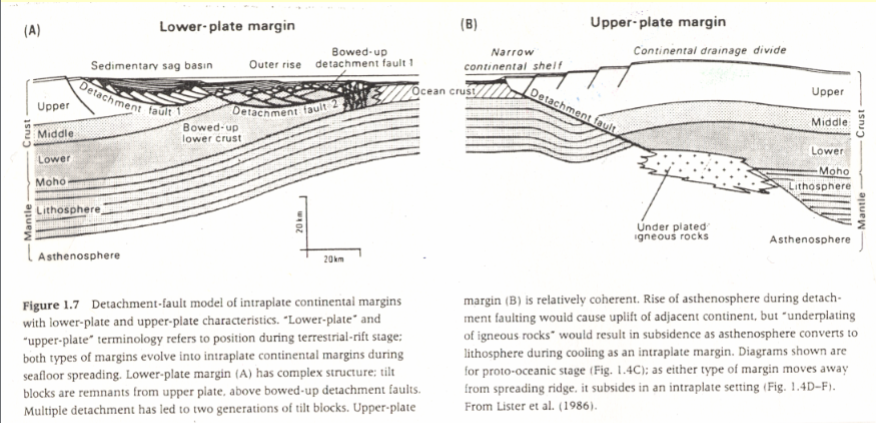
Detachment fault
Separates continental lithosphere into upper and lower plate, dip at low angle. Upper crustal rocks (hanging wall) are thick, thinly covered, and sedimentary, lower crustal rocks (footwall) are thin, thickly covered, and metamorphically deformed
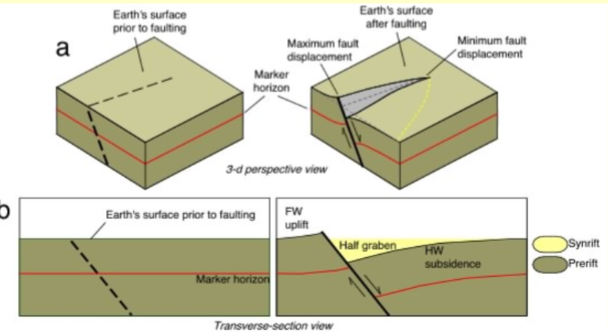
Rift basin
High heat flow extensional basin with normal faults. Interstratified lavas with evaporites on rift shoulders (Rio Grande Rift). Post-rift basins result from thermal subsidence
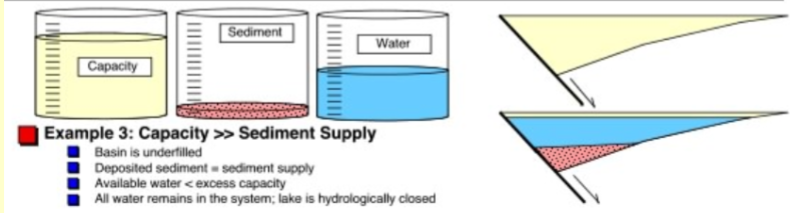
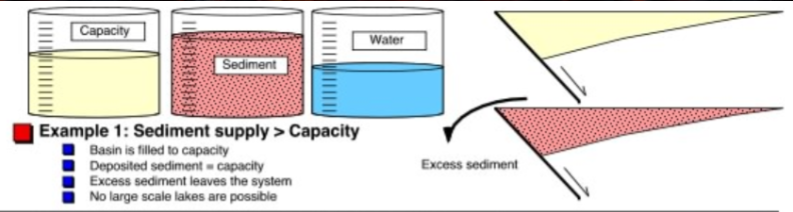
Overfilled basin
Basin is filled to capacity with sediment, causing excess to leave the system. No large scale lakes are possible
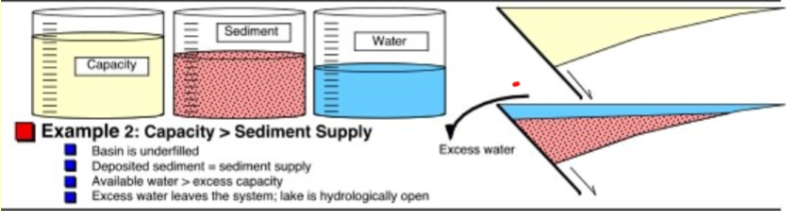
Underfilled basin
Basin is marginally underfilled with sediment and available water is greater than capacity. Excess water leaves the system and lake is open
Extremely underfilled basin
Basin is extremely underfilled with sediment and mainly dominated by water. Available water is less than capacity. As such, all water remains in the system and lake is closed