Sci elec quiz mod9
 Call Kai
 Learn
Learn Practice Test
 Spaced Repetition
 Match
Match Flashcards
 Knowt Play
1/42

There's no tags or description
Looks like no tags are added yet.
Name | Mastery | Learn | Test | Matching | Spaced | Call with Kai |
|---|
No analytics yet
Send a link to your students to track their progress
43 Terms
Blank-- is an interaction in population ecology, whereby members of the same species compete for limited resources.
Intraspecific competition
Sundews (Drosera spp.) are carnivorous plants that secrete a cocktail of BLANK from their tentacle glands to digest insect prey, enabling nutrient absorption (especially nitrogen and phosphorus) in nutrient-poor habitats. These enzymes operate in an acidic environment, typically provided by the mucilage secreted upon prey capture.
hydrolytic enzymes
Blank-occurs when members of different species compete for a shared resource
Interspecific competition
Blank and blank capture and feed on insects- each reducing the amount of food for each other
Wolf spiders and sundews (carnivorous plants)
THIS IS? “Whenever 2 species require the same limited resource to survive or reproduce, the better competitor will drive the less competitive species to extinction in that habitat”
Competitive Exclusion Principle
“Whenever 2 species require the same limited resource to survive or reproduce, the better competitor will drive the less competitive species to extinction in that habitat” THIS PRINCIPLE WAS SAID BY?
G.F. Gause
BLANK – BLANK – captures, kills and eat another organism- the BLANK
Predation
Predator
prey
An interaction where one organism kills another for food
Predation
The defense adaptation of porcupine
Porcupine-hair called
BLANK
Quills
BLANM-larvae
feed on poisonous
milkweed-bird will be sick by
eating it
Monarch Butterfly
Monarch butterfly (The model - distasteful species) BLANK (The mimic - palatable species)
Viceroy butterfly
Blank-one species resembles another organism
Mimicry-Mimic
Blank-blending with the environment to escape predators
Camouflage
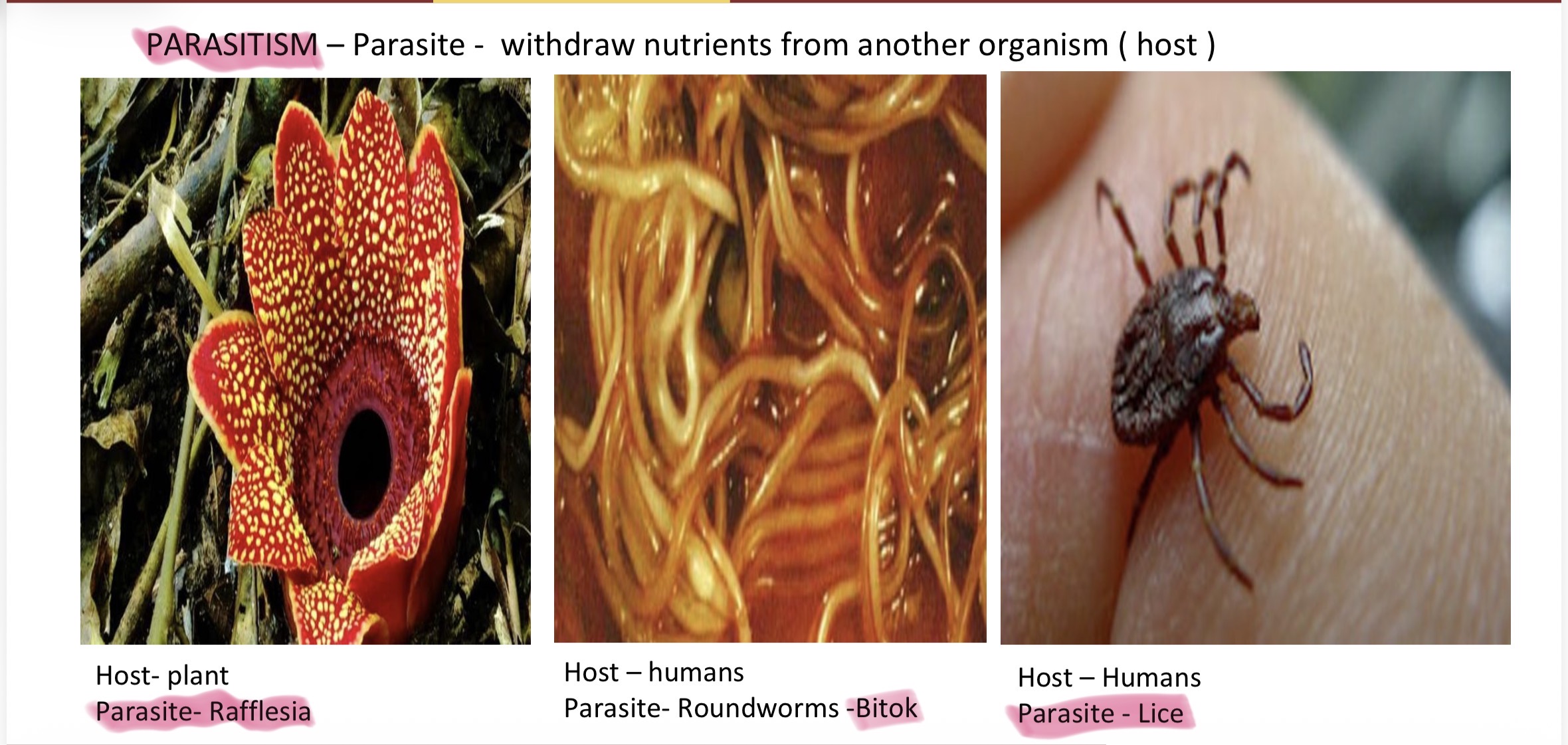
Blank-– Parasite - withdraw nutrients from another organism ( host )
Parasitism
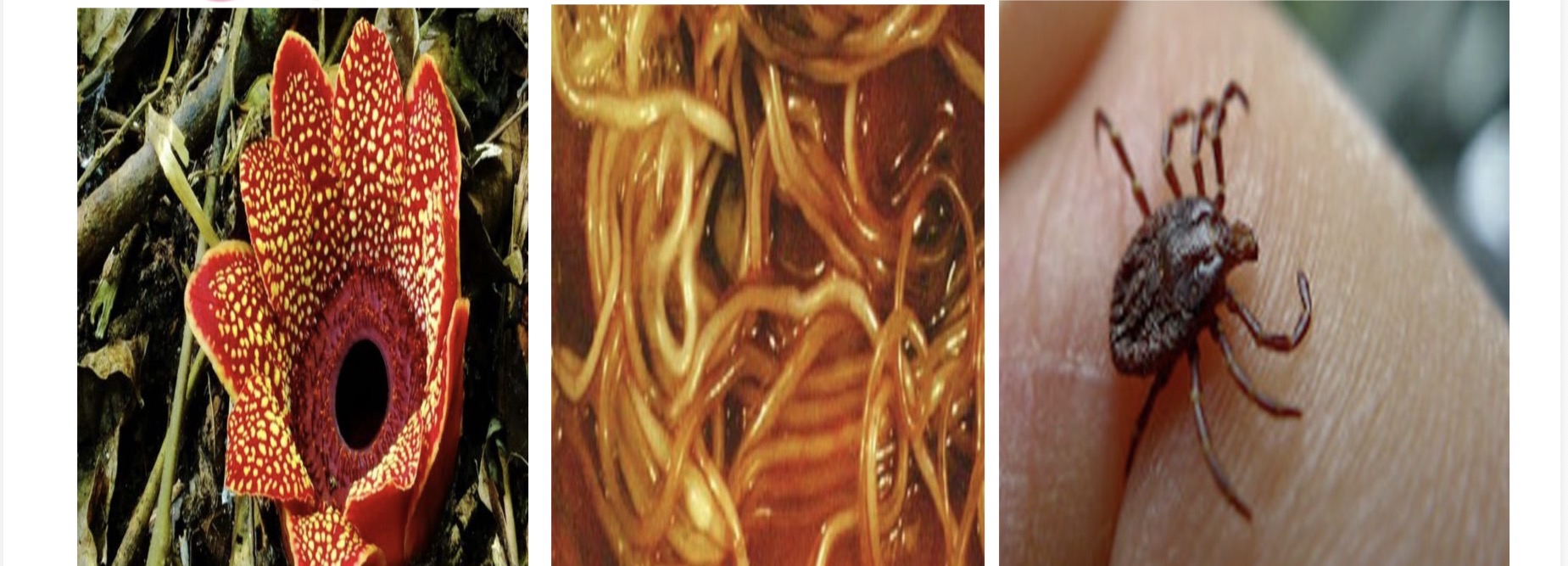
Identify who is the host and who is the parasite
Plant
Rafflesia
Then
Roundworms-bitok
Humans
Then,
Humans
Lice
Host-plant
Parasite-Rafflesia
Host-humans
Parasite-roundworms-bitok
Host-Humans
Parasite-Lice
Blank-is a type of symbiotic relationship between two organisms in which one benefits without affecting the other one in ANY WAY.
Commensalism
Blank-is a type of symbiotic relationship between two organisms in which one benefits without affecting the other one in ANY WAY.
Commensalism
a hard, keratinous plate or scale that covers the bony shell of a turtle or tortoise.
Scute
Blank-both organisms benefits from the interaction
Blank-is a biological interaction between two species wherein both the species benefit from each other
Mutualism
A unique relationship
Blank-steal parental care
Blank and blank-Play eggs on nest of other birds
Brood Parasites
Cuckoos and cowbirds
Blank-insects that lay their eggs inside other insects- Larvae devours host from the inside killing it
Parasitoids
BLANK – array of species gradually shifts over time as organisms alter their own habitat
Ecological Succession
Occurs after a natural or human disturbance removes the natural array of species.
- Ex. Fire destroys a forest, abandoned plowed field, volcanic eruptions
Secondary Succession
species that can colonize a new habitat
overtime organic wastes & remains build up adding volume & nutrients
to allow tall trees to take hold
Pioneer species
What is the life span of annual plants?
1 year
(2 Seasons)
Life Cycle: First year produces roots, stems, and leaves; second year produces flowers, seeds, and then dies.
Biennial Plants
BLANK (Multi-Season)
Life Cycle: Live for more than two years, often returning for many years.
Perennial Plants
most common herbs are actually blank
perennial plants
Yes, both BLANK and BLANK are considered perennial plants, meaning they can live for several years with proper care
Kalabo
Lubatic
BLANK is the type of ecological succession in which organisms colonize an essentially lifeless area. It occurs in regions where the substrate lacks soil. Examples include areas where lava recently flowed, a glacier retreated, or a sand dune formed.
Primary Succession
BLANK (+ / -): The BLANM gains, the BLANK is harmed.
Examples: Ticks/fleas on a dog, tapeworms in humans, mistletoe on trees.
BLANK (+ / 0): The BLANK gains, the BLANK is unaffected.
Examples: Barnacles on a whale, remora fish on sharks, bird nests in trees.
BLANK (+ / +): Both organisms benefit.
Examples: Bees and flowers, clownfish and anemones, gut bacteria in humans.
Parasitism
parasite
host
Commensalism
commensal
host
Mutualism
remora fish on sharks
Commensalism
Bees and flowers
Mutualism

Intraspecific competition

interspecific competition

Identify relationships
identify the roles of each organism
Predation
Predator:lion or tiger
prey:buffalo
predator:snake
prey:lizard
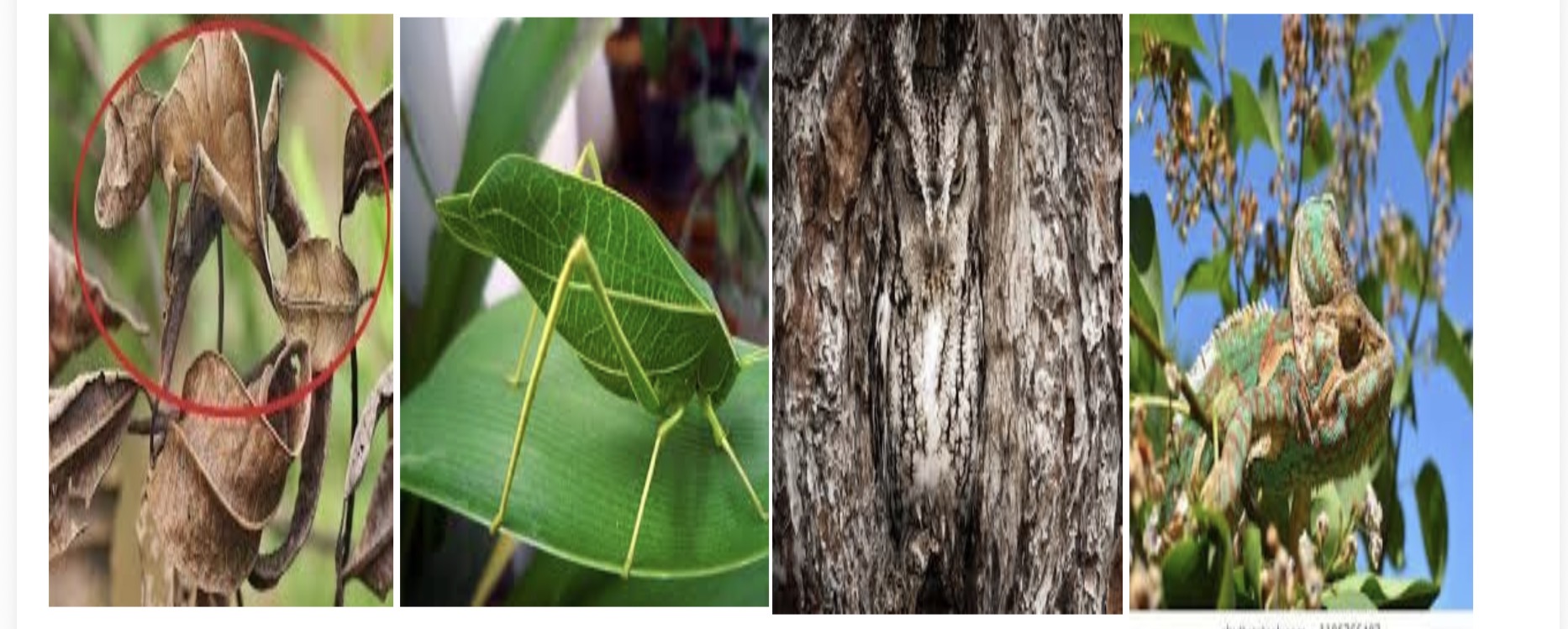
identify defensive adaptation
identify each organism
camouflage
dry leaves-ghost mantis
grasshopper
owl
chameleon

identify defensive adaptation
identify the roles and animals
mimicry
owl butterfly (the mimic)
owl (the model)
eastern coral snake (venomous-the model)
scarlet king snake (non-venomous, mimic)
viceroy butterfly (the mimic, palatable)
monarch butterfly (the model, distasteful)
identify relationship
roles and organisms

identify relationship
roles and organisms
commensalism
bird-benefits
deer-unharmed
remora-benefits
shark-unaffected

identify relationship
roles and organisms
mutualism
fish-benefits-getting food
human-benefits-getting cleaned
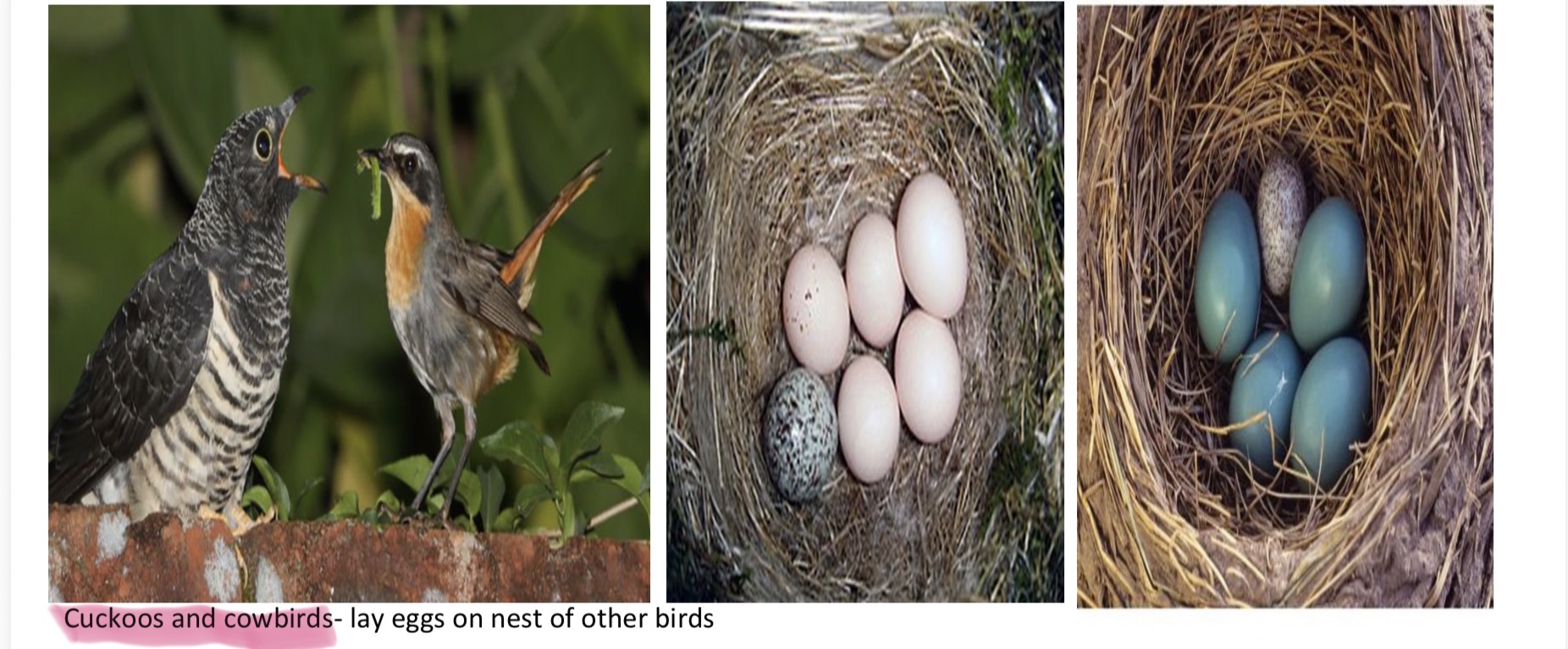
identify relationship
Brood parasites
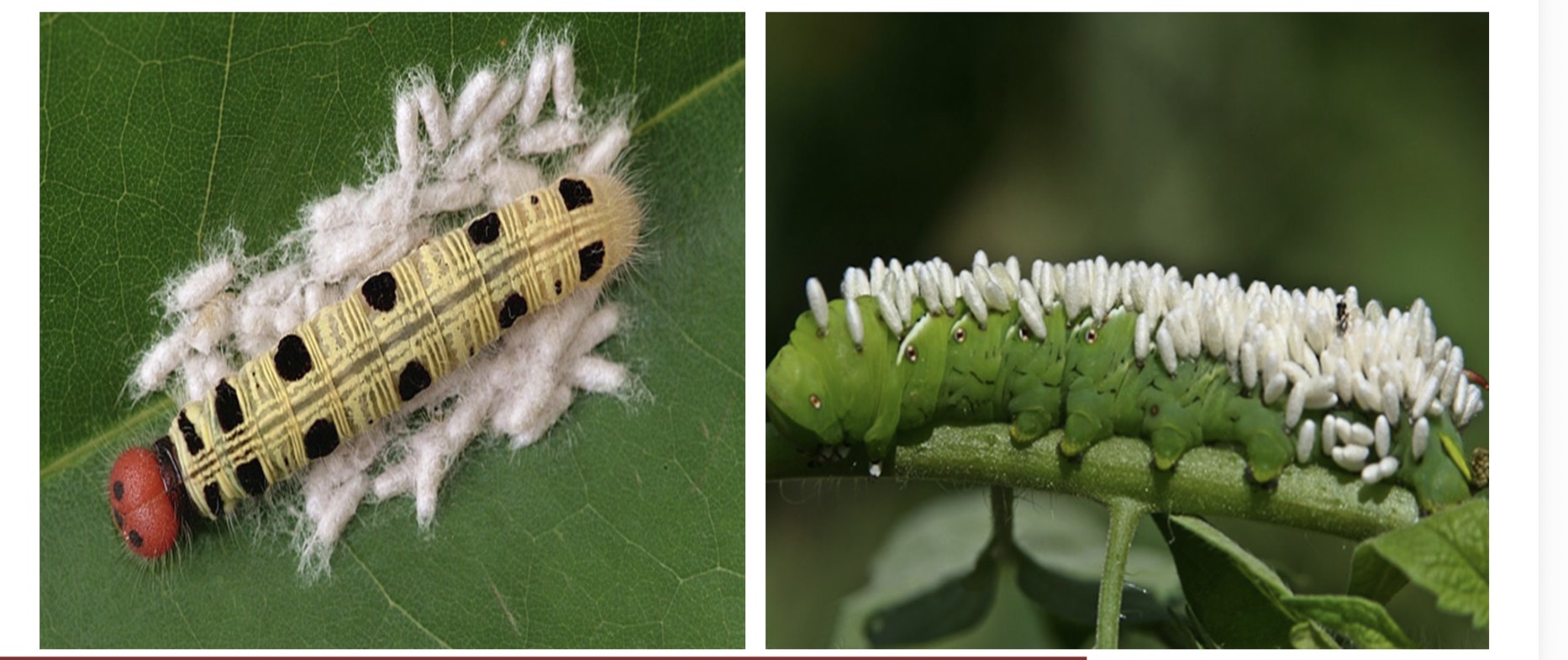
identify relationship
roles and organisms
2nd pic
eggs that turn to larva-parasite (not kill but add additional weight)
caterpillar-host