Histopathology ang Cytologic Techniques Moving Exam
 Call Kai
 Learn
Learn Practice Test
 Spaced Repetition
 Match
Match Flashcards
 Knowt Play
1/63

There's no tags or description
Looks like no tags are added yet.
Name | Mastery | Learn | Test | Matching | Spaced | Call with Kai |
|---|
No analytics yet
Send a link to your students to track their progress
64 Terms
"Histo" means
tissue
"Pathos" means
suffering
"Logos" means
study
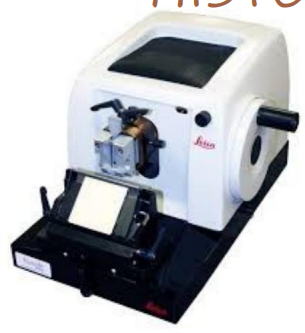
microtome
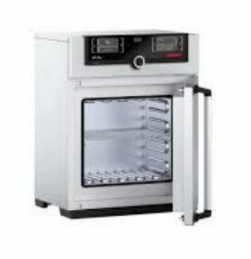
paraffin oven
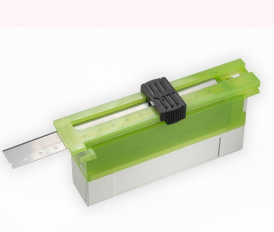
microtome knife
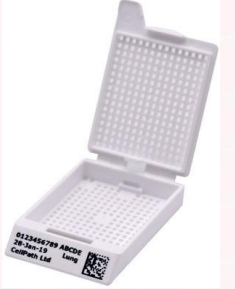
tissue cassette
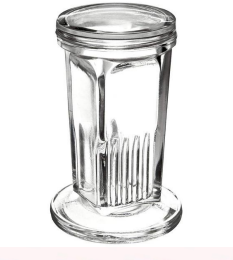
coplin jar
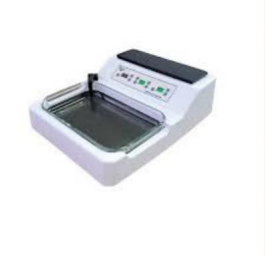
tissue floatation bath
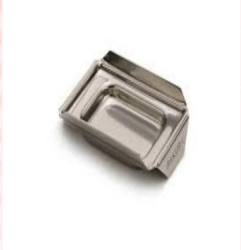
embedding mold
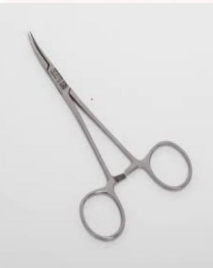
forceps
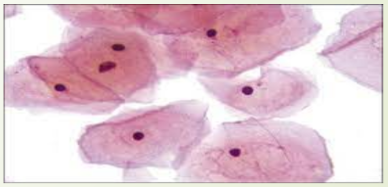
mature superficial cell
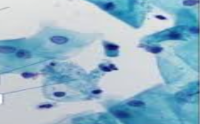
intermediate cells
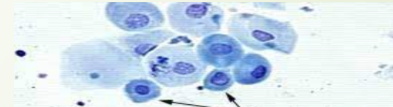
parabasal cells
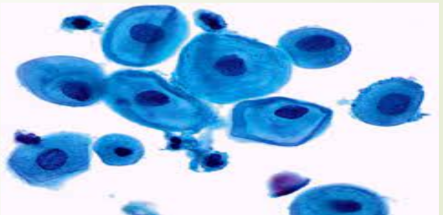
navicular cell
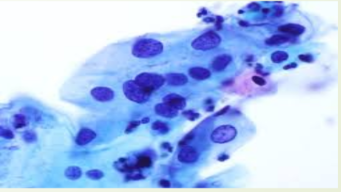
pregnancy cell
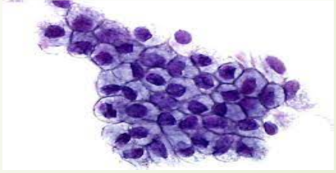
endocervical glandular cell
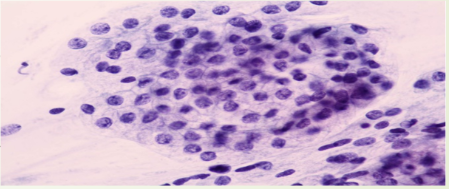
endometrial cells
-The tissue is immersed in isotonic solution in a watch glass and carefully dissected with a needle and separated using an applicator stick. -It is examined unstained or stained.
Teasing or Dissociation
-Small pieces of tissue is placed in a slide and forcibly compressed with another slide or a cover glass. -A supravital dye is added if necessary.
Squash Preparation (Crushing)
-USing anapplicatorstick or wire loop, thematerial is rapidlyandgently appliedinadirector zogzag linethroughout theslide.
Streaking
A selected portion of the material is transferred to a clean slide and mucus strands teased apart with an applicator stick leaving a moderately thick preparation on the slide
Spreading
-Done by placing a drop of secretion or sediment upon one slide and facing with another clean slide. it is then pulled apart in opposite directions ensuring a uniform distribution of specimen onto both slides.
Pull-Apart
-Surface of freshlycutpiece of tissueis broughtinto contact andpressedon to a surfaceof acleanglass slide.
TouchPreparation
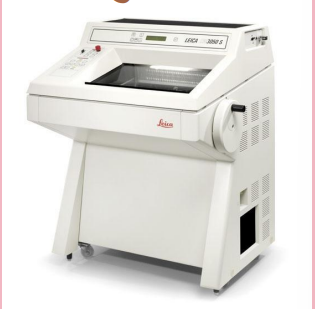
what is this ? what is the temp of this device and its optimum working temp.
Cryostat
-10 to -20’C
optimum temp: -18 to -20’C
state the conventional tissue processing
Fixation
Decalcification
Dehydration
Clearing
Impregnation
Embedding
Trimming
Section-Cutting
Staining
Mounting
Labeling
what is the ratio of fixative to specimen >
20:1
Main Factors Involved in Fixation
volume
hydrogen ion conc.
Temp.
Thickness of section
osmolality
Duration of fixation
Time interval
two basic mechanism involved in fixation
Additive Fixation
Non-additive Fixation
give Microanatomical Fixatives
10% formal saline
10% neutral buffered formalin
Heidenhain 's Susa
Zenker 's solution
Zenker-formal (Kelly 's solution)
Bouin's solution
Brasil's solution
give nuclear fixatives
Flemming's fluid
Carnoy's fluid
Bouin's fluid
Newcomer's fluid
Heidenhain's Susa
give cytoplasmic fixatives
Flemming's fluid without acetic acid
Kelly's fluidFormalin with "post-chroming"
Regaud 's fluid (Muller 's fluid)
Orth 's fluid
give histochemical fixatives
Formal Saline 10%
Absolute Ethyl Alcohol
Acetone
Newcomer's Fluid
most commonly used in routine histology for fixation
10% neutral buffered formalin
in fixation,
black to brown deposits seen in tissue under the microscope.??
it can be removed by ?
acid formaldehyde hematin
can be removed by alcoholic KOH
ratio of dehydrating agent and tissue
10:1
most commonly used clearing agent
xylene
in clearing what will happen if theres incomplete dehydration
it will turns milky
xylene substitutes includes:
toluene
terpenes
limolene
orange oil
coconut oil
bleached palm oil
melting point of paraffin wax in routine work is ?
56’C
paraffin oven is maintained at a temp of ?
55-60’C
give types of impregnating media
paraffin
celloidin
gelatin
plastic
substitute of paraffin wax
paraplast 56-57’C
Embeddol 56-58’C
Esterwax 46-48’C
Methods of Impregnation
Manual Processing
Automatic Tissue processing
Vacuum Embedding
h & e staining
nuclei
blue to blue black
h & e staining
karyosome
dark blue cytoplasm
h & e staining
proteins in edema fluid
pale pink
h & e staining
RBC, Eosinophilic granules, keratin
bright orange red
h & e staining
basophil cytoplasm, plasma cells, osteoblast
purplish pink
h & e staining
cartilage
pink or light blue to dark blue
h & e staining
calcium and calcified bone
purplish blue
rocking (cambridge) microtome
inventor:
year:
paldwell trefall
1881
rotary microtome
inventor:
year:
MInot
1885-56
sliding microtome
inventor:
year:
Adams
1789
Freezing microtome
inventor:
year:
queckett
1848
Types of Microtome knives and their lengths
Plane Concave - 25mm in length
Biconcave - 120mm in length
Plane Wedge - 100mm
microtome knives angle and degree
Clearance angle 5-15’
wedge angle 15’
bevel angle 27-32’
rake angle 90’
microtome parts
block holder
knife carrier and knife
pawl, ratchet feedwheel and adjustment screws
disposable molds
peel-away
plastic ice trays
paper boat
types of honing device
belgium yellow
arkansas
fine carborundrum
give aqueous media
apathy’s medium
farrant’s medium
glycerin jelly
resinous media
canada balsam
DPX
Clarite
XAM
indirect stain
mordant
potassium alum
ehrlich’s hematoxylin
iron-weigert hematoxylin
indirect stain
accentuator
KOH-loefflers methylene blue
Phenol-carbon thionine
fuschin