All MCAT Organic Chemistry Reactions Diagrams
 Call Kai
 Learn
Learn Practice Test
 Spaced Repetition
 Match
Match Flashcards
 Knowt Play
1/50

There's no tags or description
Looks like no tags are added yet.
Name | Mastery | Learn | Test | Matching | Spaced | Call with Kai |
|---|
No analytics yet
Send a link to your students to track their progress
51 Terms
Nucleophilic Addition
Reactions with Aldehydes and Ketones
Electrophilic Addition
Reactions with Alkenes and Alkynes
Activating or Activated
Activating a compound means making that compound reactive enough to illicit a reaction with another reagent. So when you activate a molecule you treat that molecule with another reagent to get it in the condition where it will be ready to react. The activating part is not the actual reaction we are interested in but the prelude to the reaction that preps the reagent for the reaction of interest. Like a runner jogging to warm up and get in the condition to run in the actual marathon. Activating is the reaction that usually gives reagents the charges (+) / (-) responsible for attacking other molecules or being coming attractive targets to get attacked by other molecules or making them stable enough to have leaving groups that are happy to leave - all these are ways in which the reagent is made ready to be reactive with in the main reaction.
H2 with Lindlar's catalyst
H2, Pb/CaCO3, Pb(OAc)2
Adds syn to alkyne
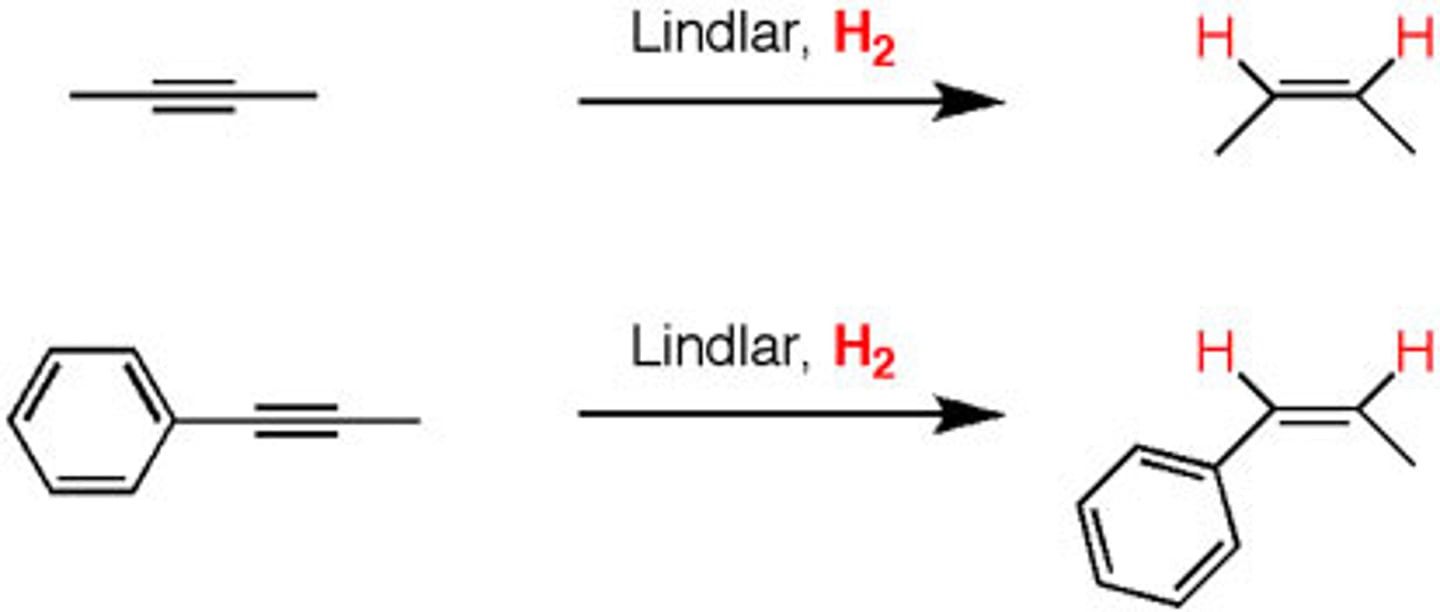
Alkyne to Alkene
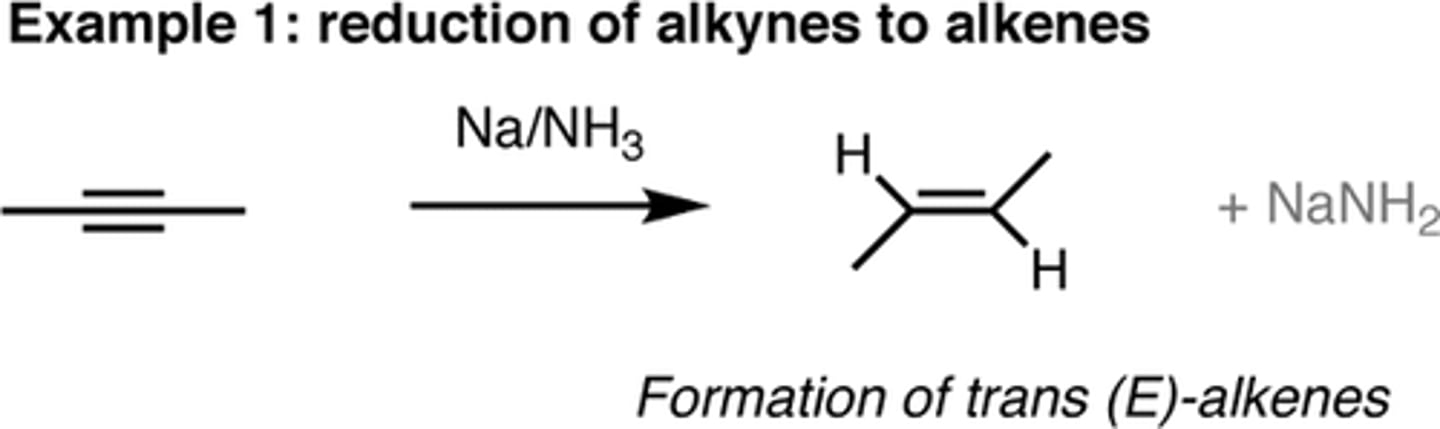
Adds trans to alkyne (Na/NH3 )
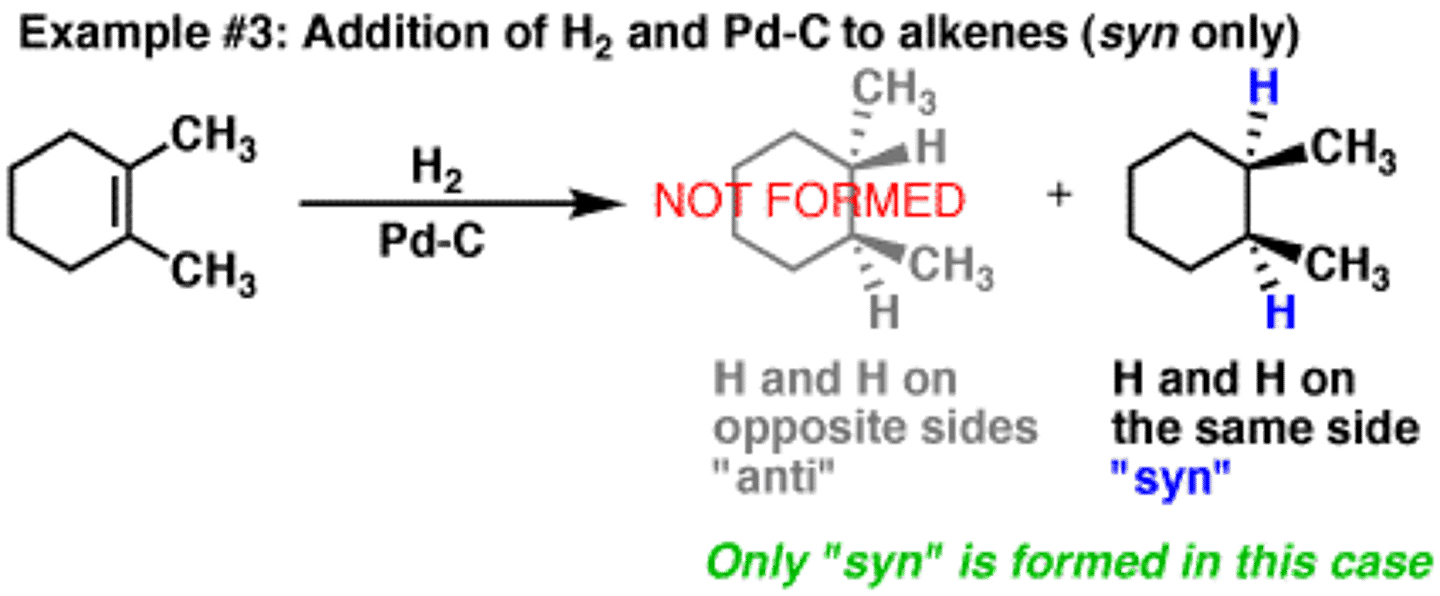
H2 addition to an alkene (syn)
Adds H2 syn to alkene or alkyne. +/-
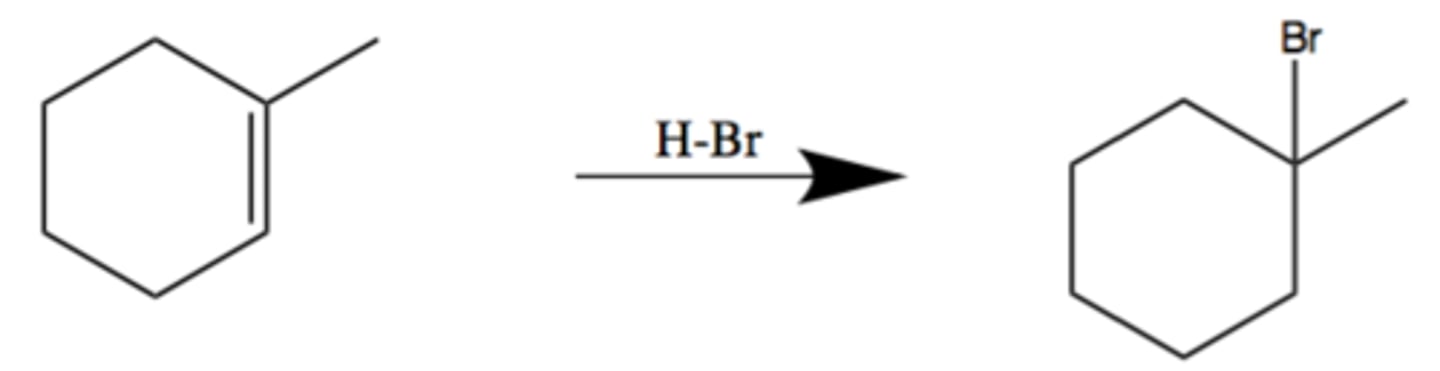
HBr addition to alkenes
Adds syn and anti. +/-
Markovnikov.
Rearrangements OK.
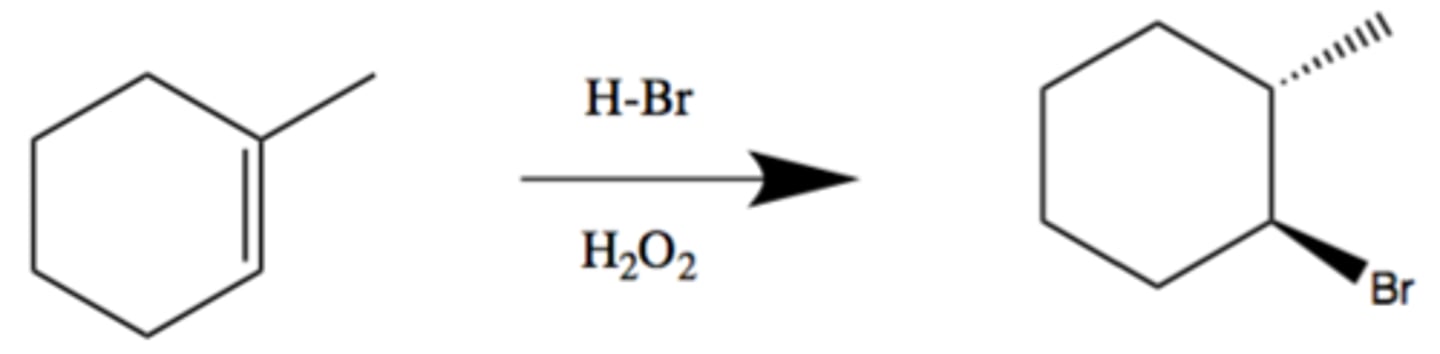
HBr addition to alkenes in H2O2
Br and H add syn. +/-
Anti-markovnikov.
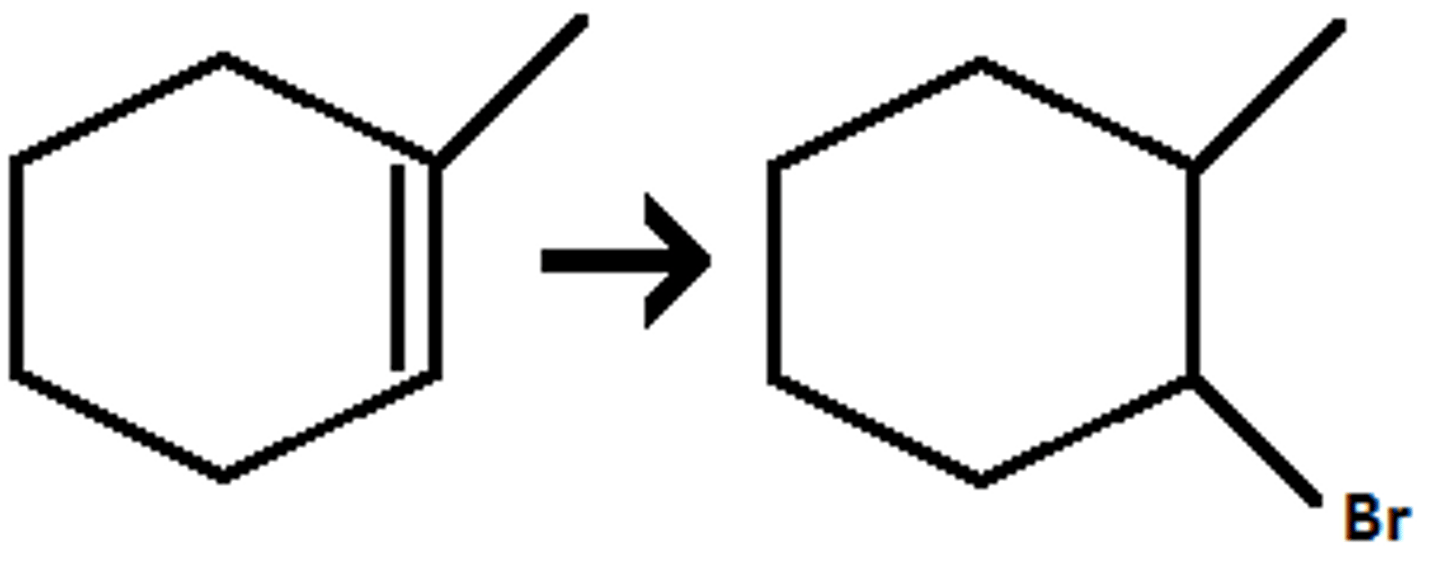
HBr addition to alkenes with ROOR
Adds syn and anti. +/-
Anti-markovnikov.
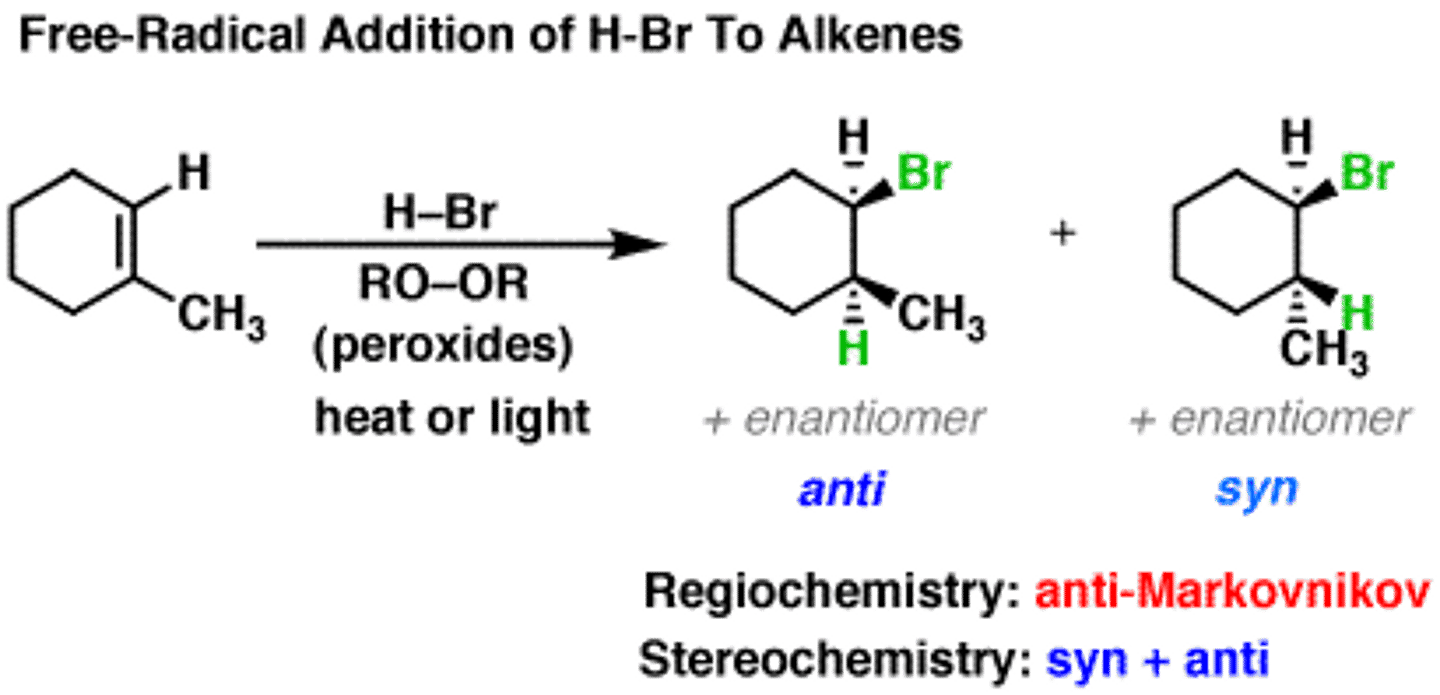
ROOR are peroxides
HBr addition to alkenes with Peroxides
Adds syn and anti. +/-
Anti-markovnikov.
HBr addition to conjugated alkenes at low temperature
Get kinetic product so adds markovnikov.

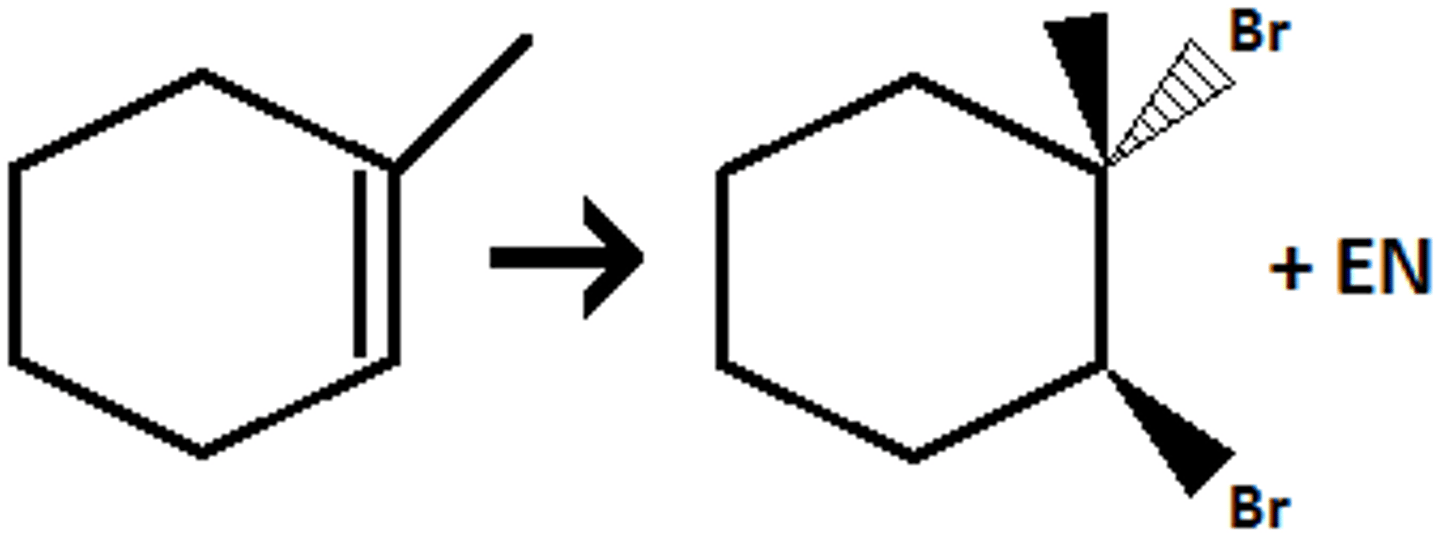
Br2 addition to an alkene
Adds anti. +/-
Can add syn when tertiary carbocation.
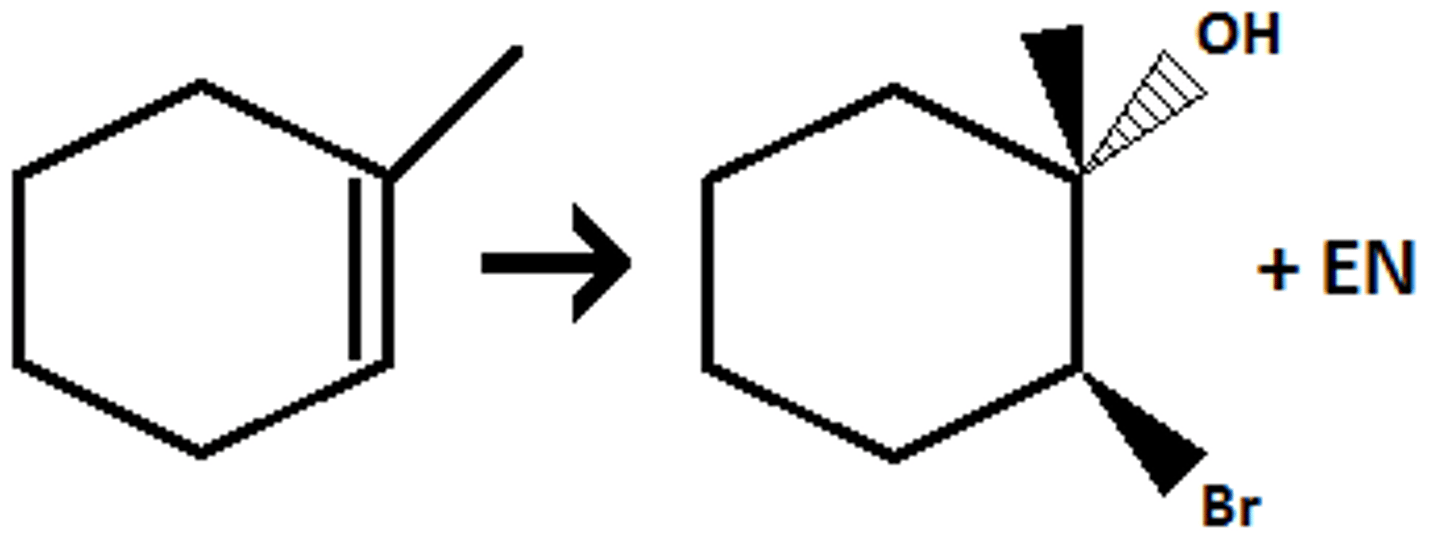
Br2, H2O addition to an alkene
Adds anti. +/-
OH adds markovnikov.
Can add syn when tertiary carbocation.
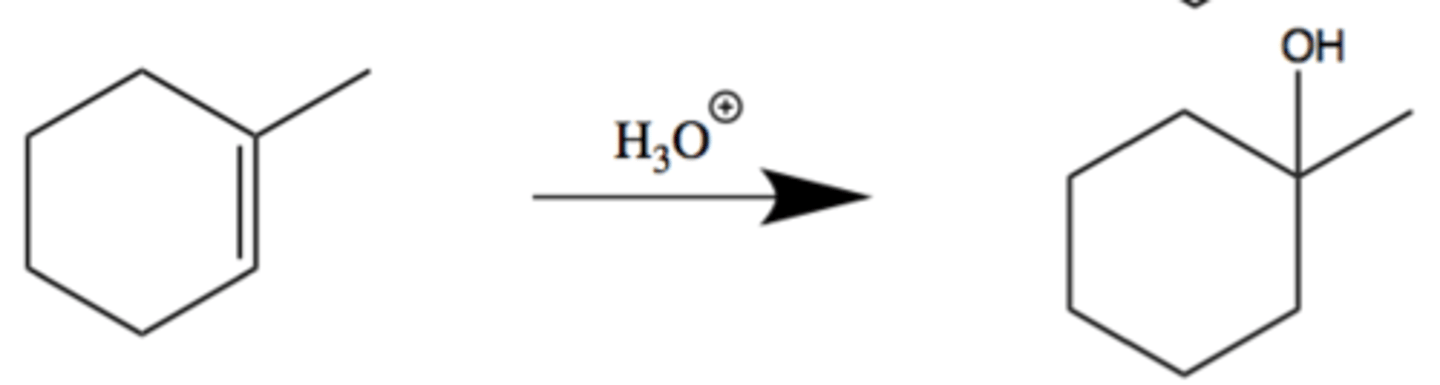
H3O+ addition to an alkene
Adds syn and anti. +/-
OH adds markovnikov.
Same as oxymercuration.
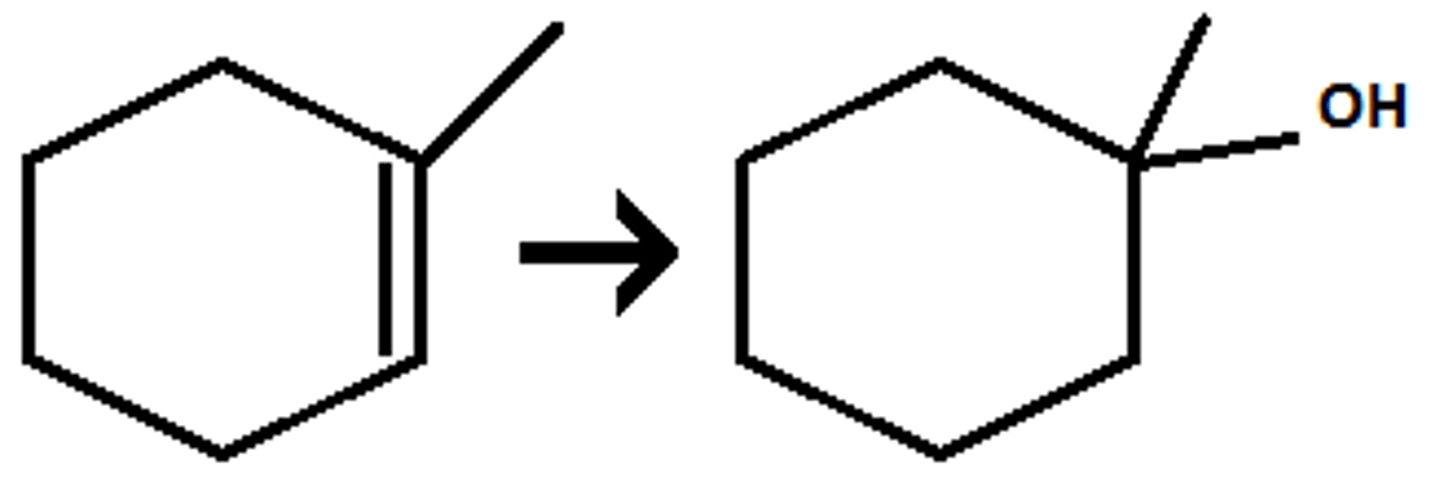
Oxymercuration
Adds syn and anti. +/-
OH adds markovnikov.
Same as H3O+.
Conditions are:
1. Hg(OAc)2, H2O.
2. NaBH4, OH-
Hydroboration
Adds syn. +/-
OH adds anti-markovnikov.
Conditions are:
1. BH3, THF.
2. H2O2, OH-
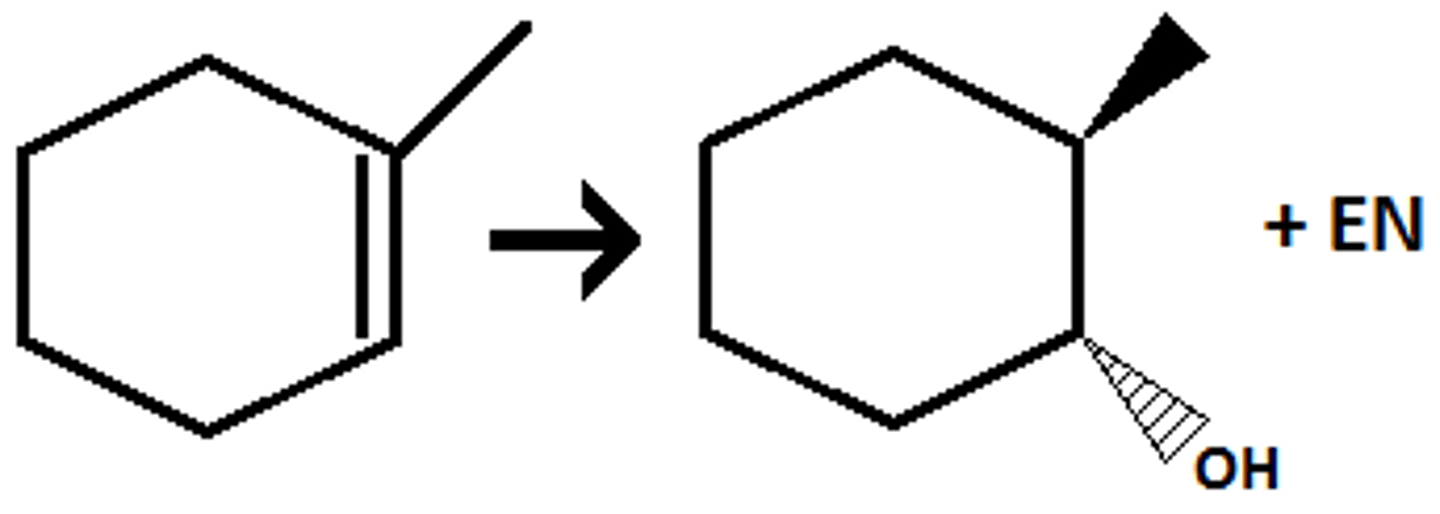
E1 reaction
Starts with OH attacking H to form H2O which is a good LG.
Want alkene to be most substituted.
Can also form rings.
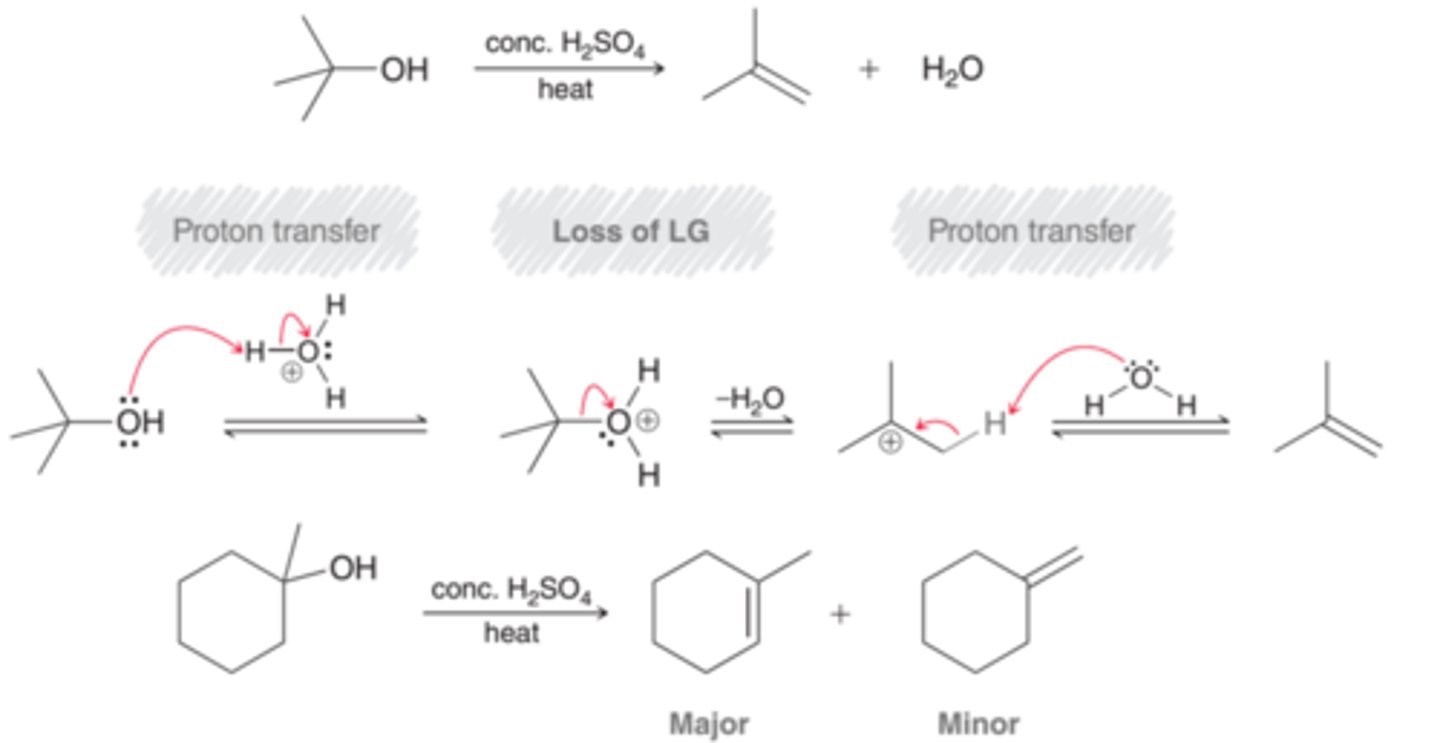
Alcohol to an Alkyl Chloride
Substitutes Cl for OH with inverted configuration. Cl is a good LG.
Anti.
Primary or secondary only.
Reagent SOCl2 (Thionyl Chloride)
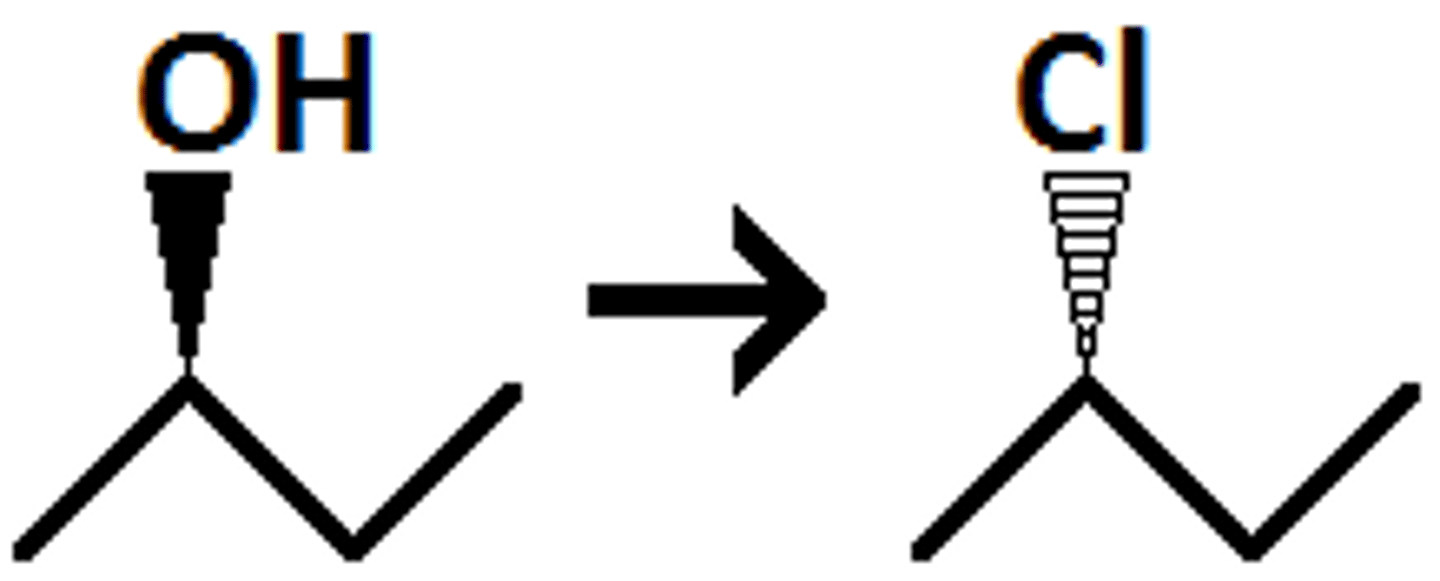
Alcohol to Alkyl Bromide
Substitutes Br for OH with inverted configuration. Br is a good LG.
Anti.
Primary or secondary only.
Reagent PBr3 (Phosphorus tribromide)
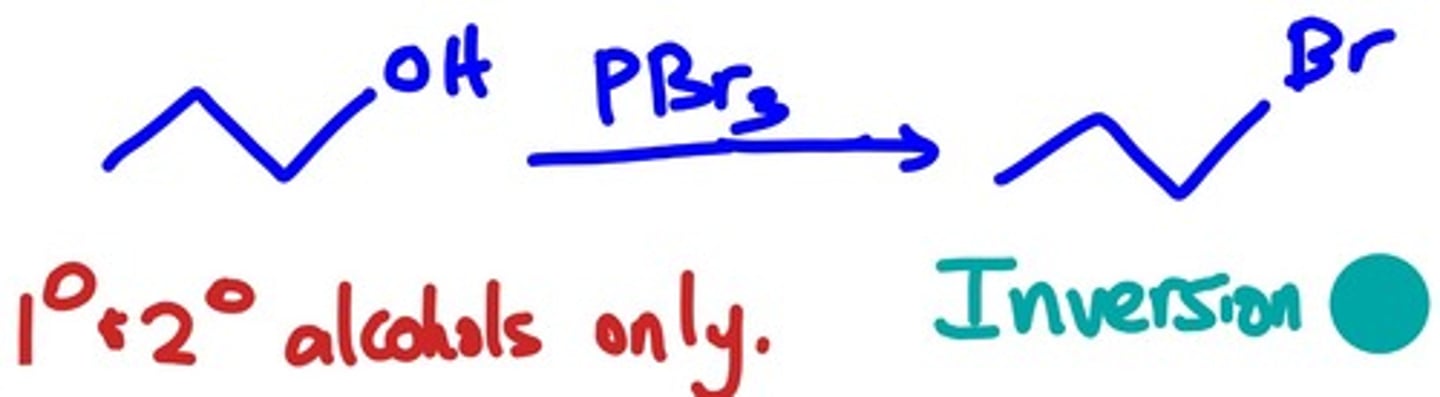
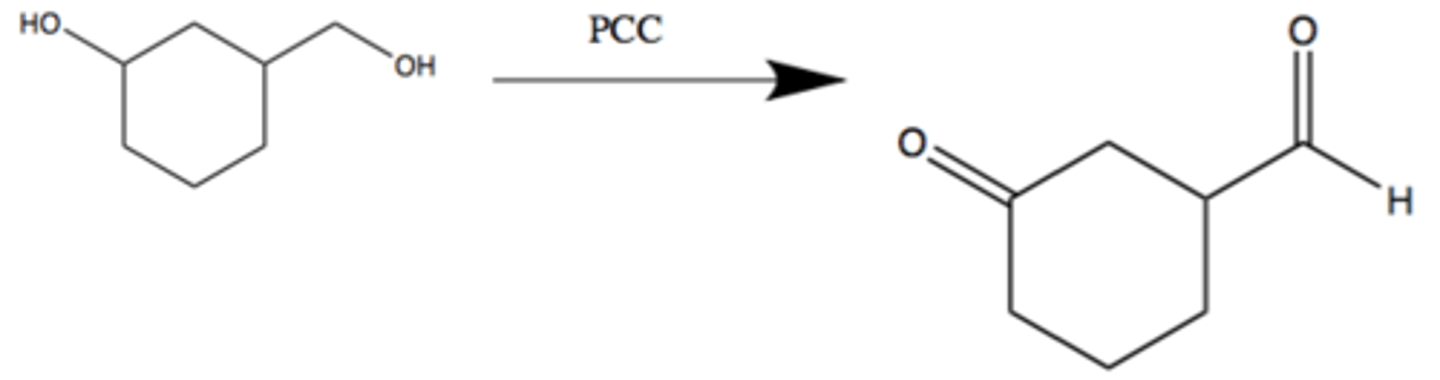
Primary alcohol to aldehyde and secondary alcohol to ketone
1) PCC
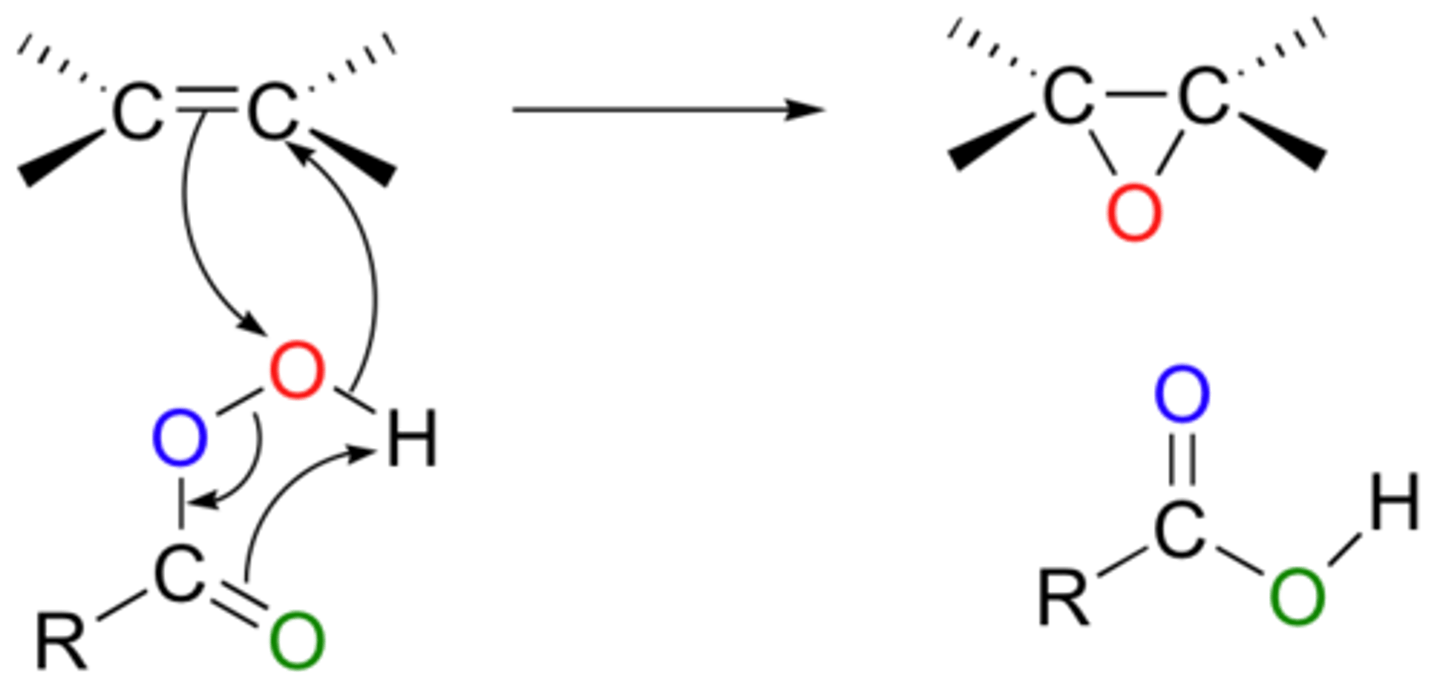
Epoxide formation from alkene
Syn.
Concerted mechanism.
Uses HCO3-
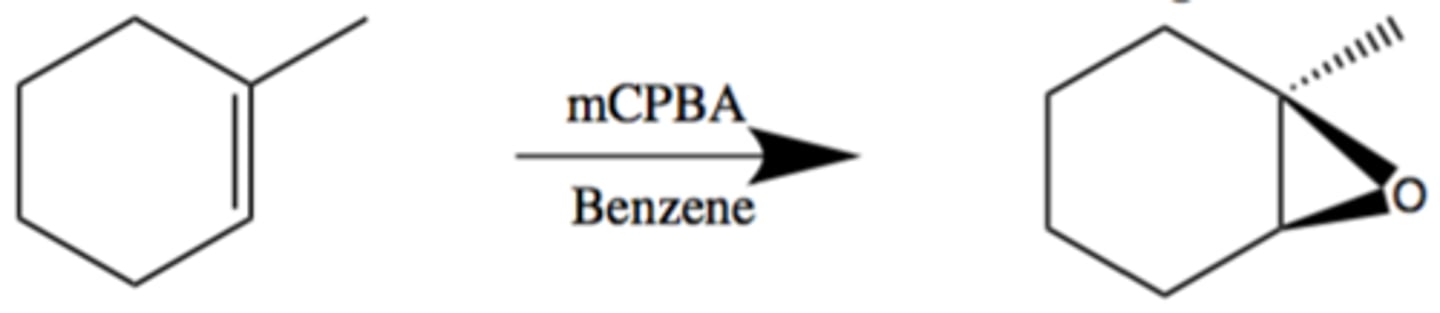
Epoxide formation from alkene
Syn. +/-
Solvent often benzene.
using mCPBA a Peroxy Acid (-COOH)
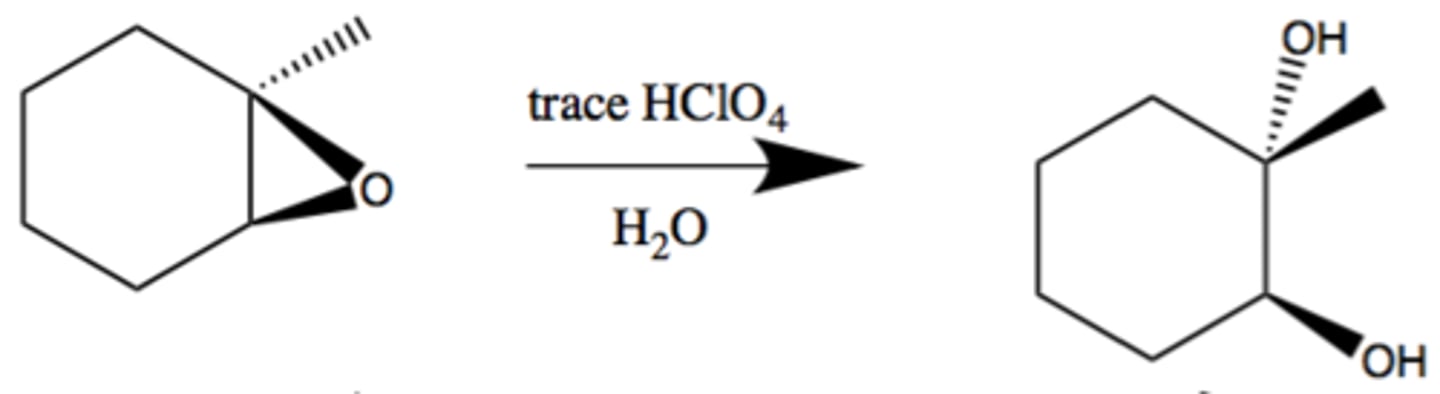
Epoxide cleavage
OH and OH add anti.
Solvent is H2O.
with trace HClO4
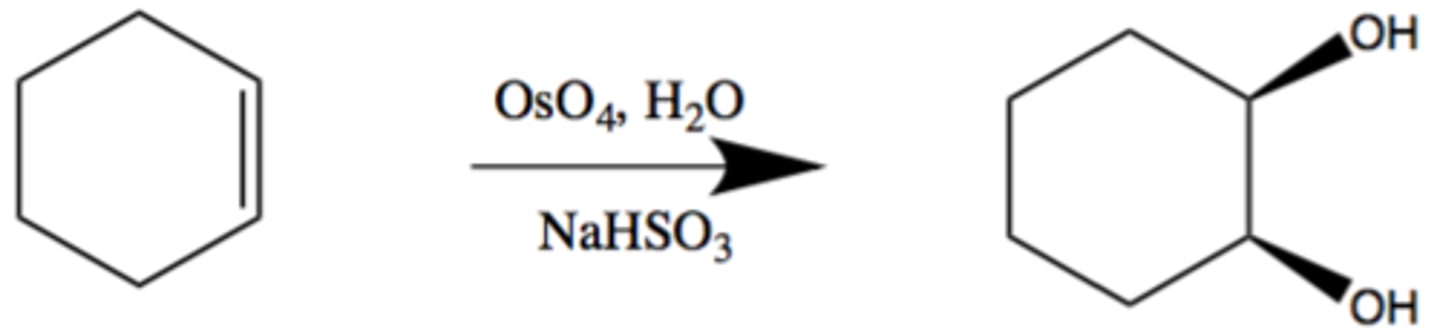
Oxidation of alkenes
OH and OH add syn. +/-.
Solvent is NaHSO3 with OsO4, H2O
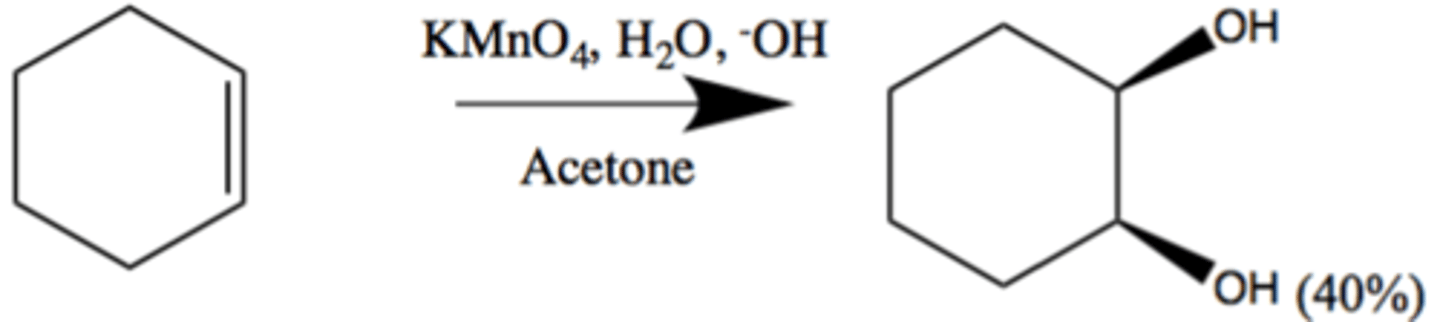
Oxidation of alkenes
OH and OH add syn. +/-.
Solvent is acetone with KMnO4, H2O, OH-
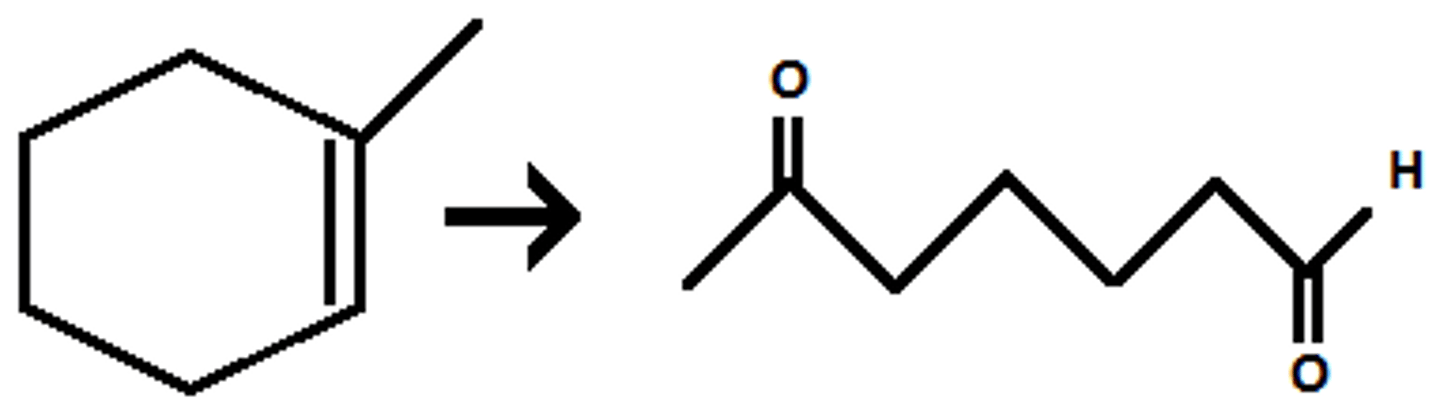
Ozonolysis with DMS - reducing
Carbonyls inserted in alkene.
1. O3, CH2Cl2, Zn
2. CH3COOH
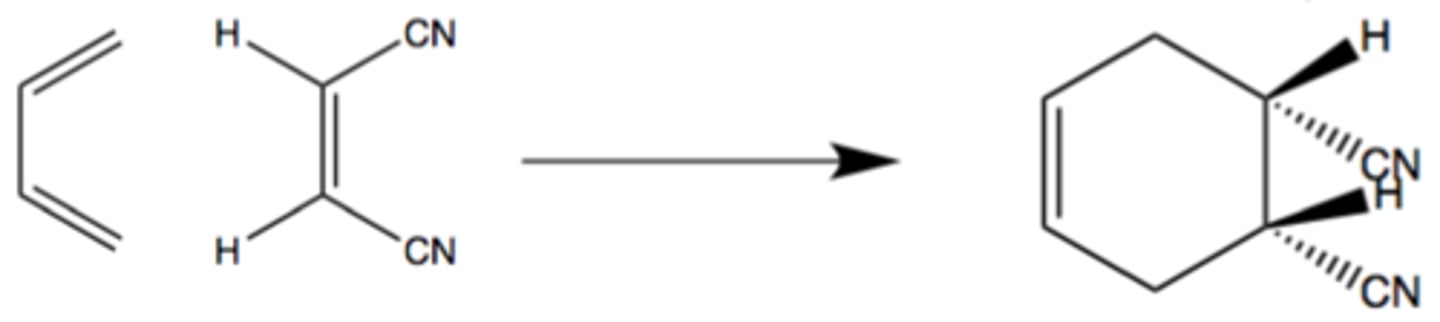
Diels-Alder reaction with alkene
Conjugated diene reacts with alkene to form cyclohexene.
S-trans dienes must switch to s-cis dienes before reacting.
Locked s-trans dienes won't react.
Stereochemistry of alkenes and dienes maintained. +/-
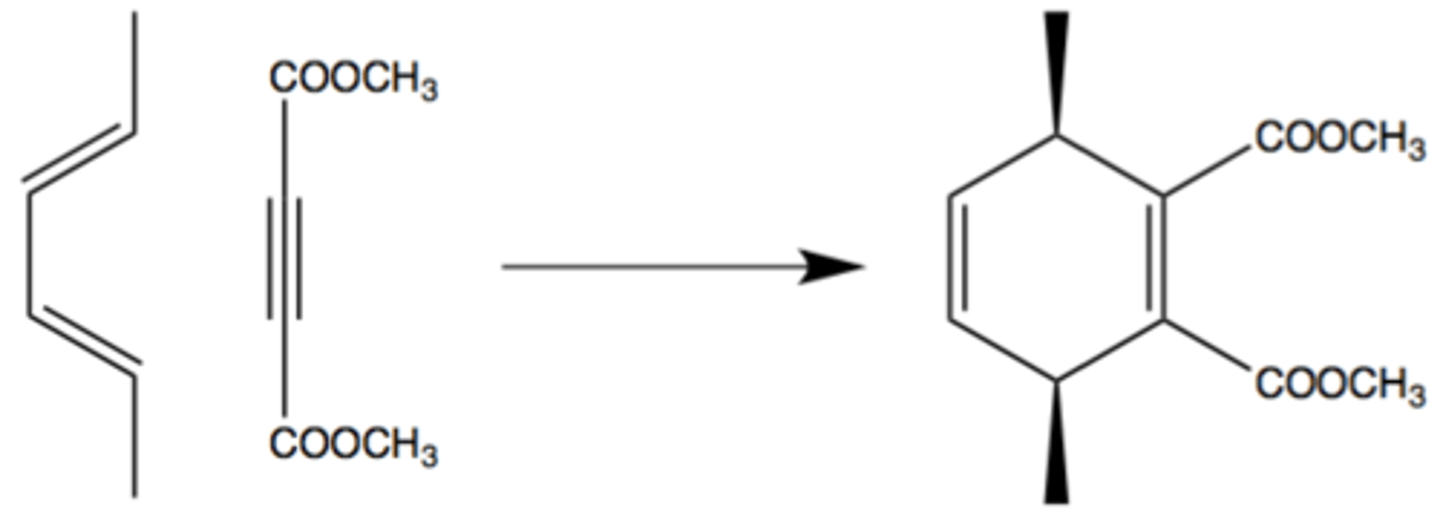
Diels-Alder reaction with alkyne
Conjugated diene reacts with alkyne to form cyclohexadiene.
Stereochemistry of alkenes and dienes maintaibed. +/-
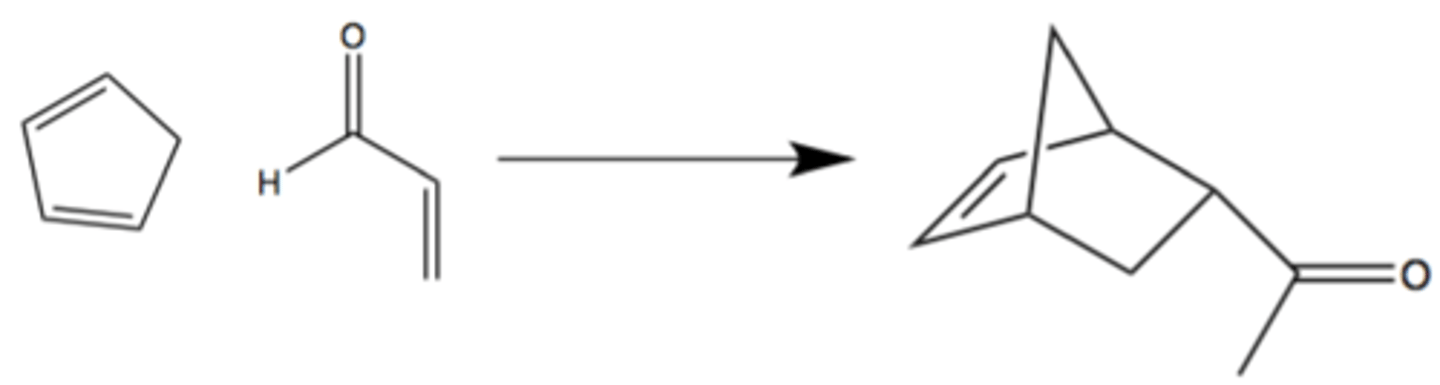
Diels-Alder reaction with cyclic diene
Can lead to bicyclic compounds.
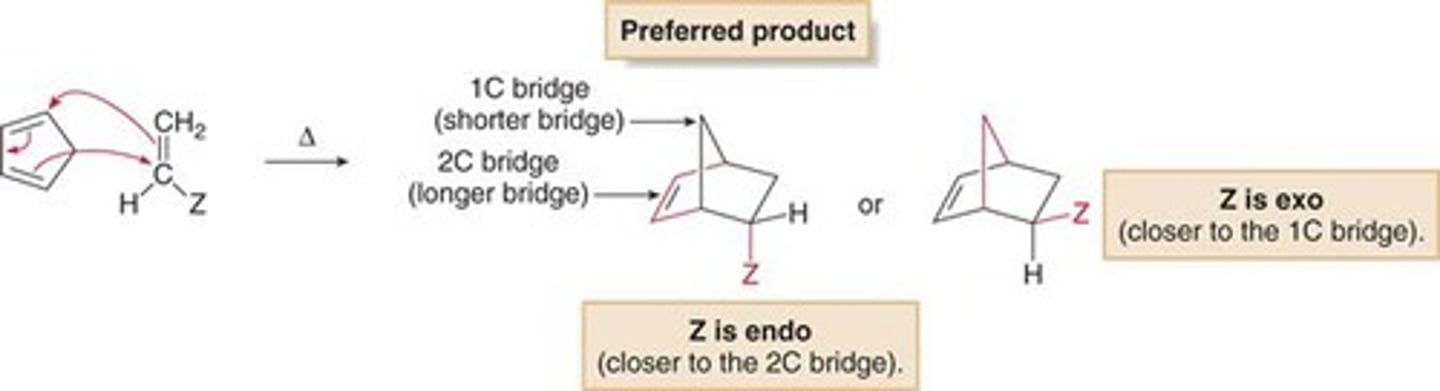
Endo product
Alkene R is cis to outer diene R0.
Favored over exo.
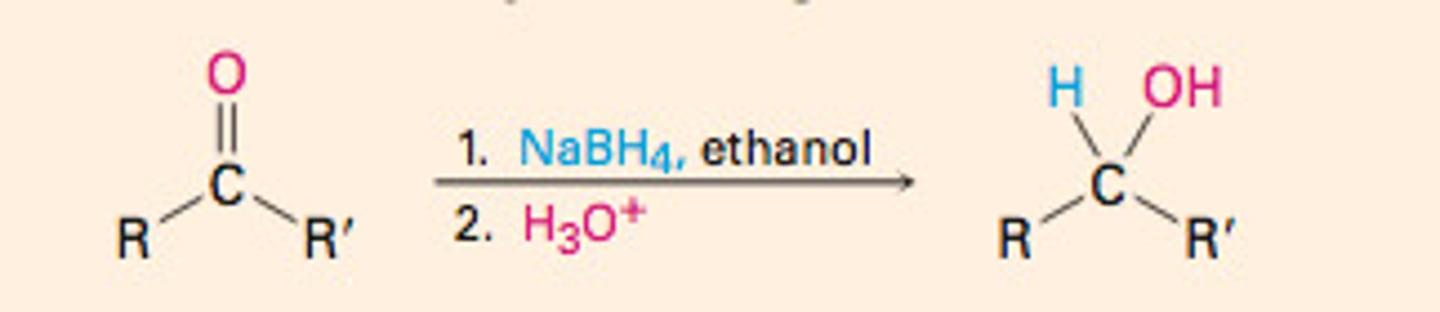
Hydride reduction of an aldehyde or ketone
1. NABH4, EtOH
2. H3O+
Acetal formation from an aldehyde or ketone
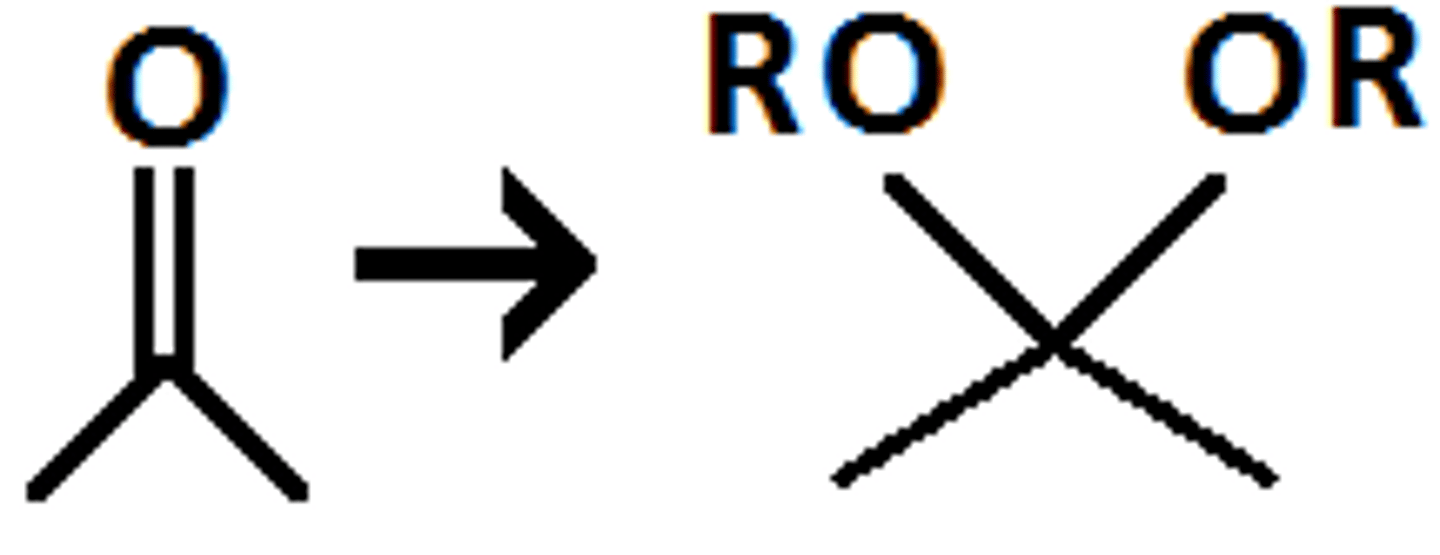
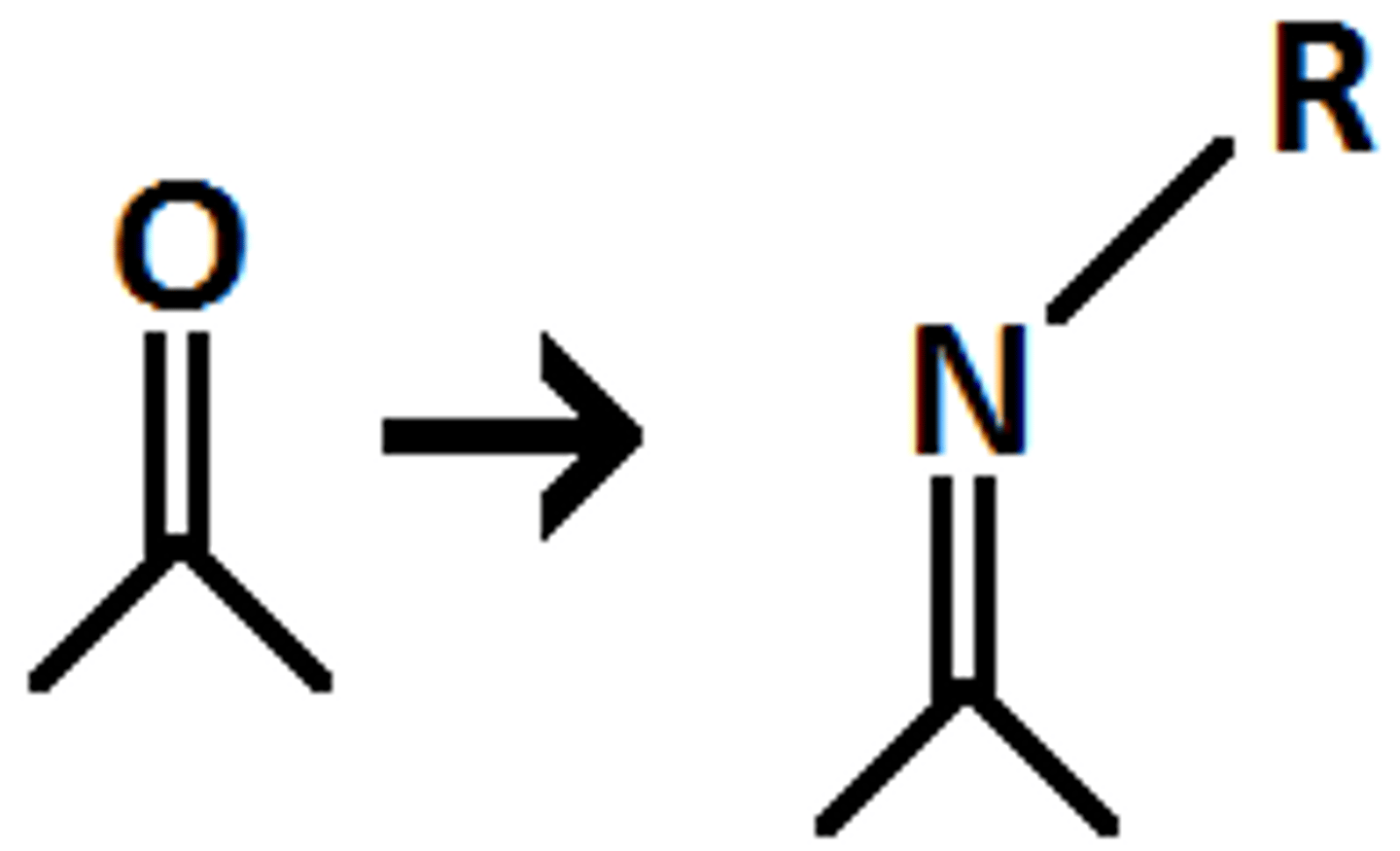
Imine formation from an aldehyde or ketone
1. RNH2
2. H+
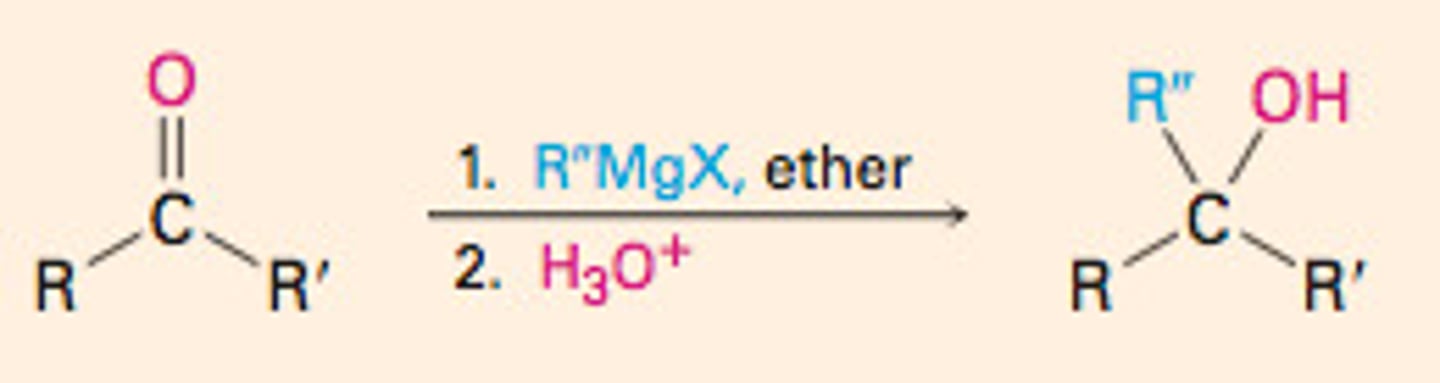
Grignard reaction
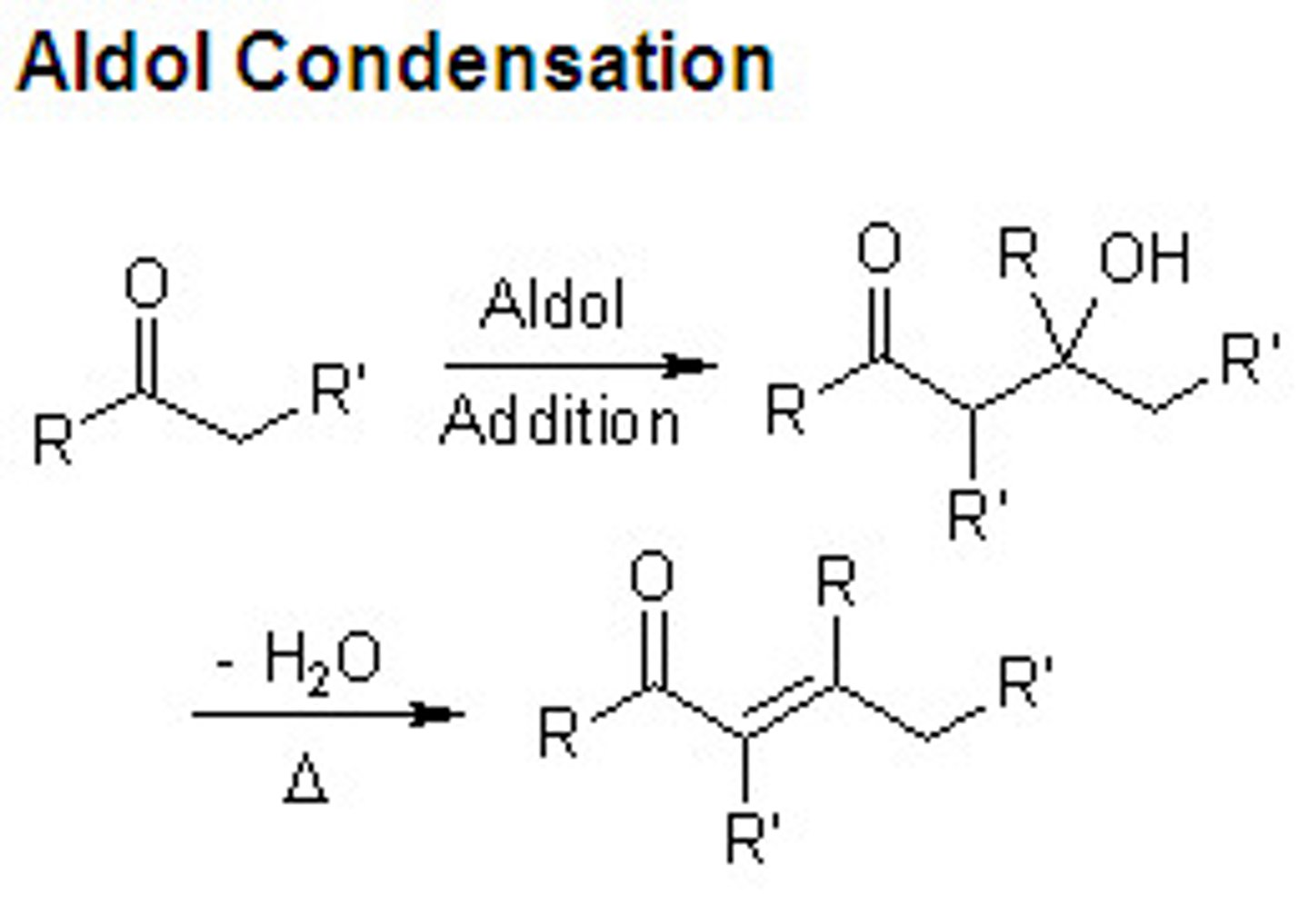
Aldol Condensation
1. NaOH
2. - H20 , Heat
Michael addition
1. Catalyst: EtO-Na+
2. Solvent: EtOH
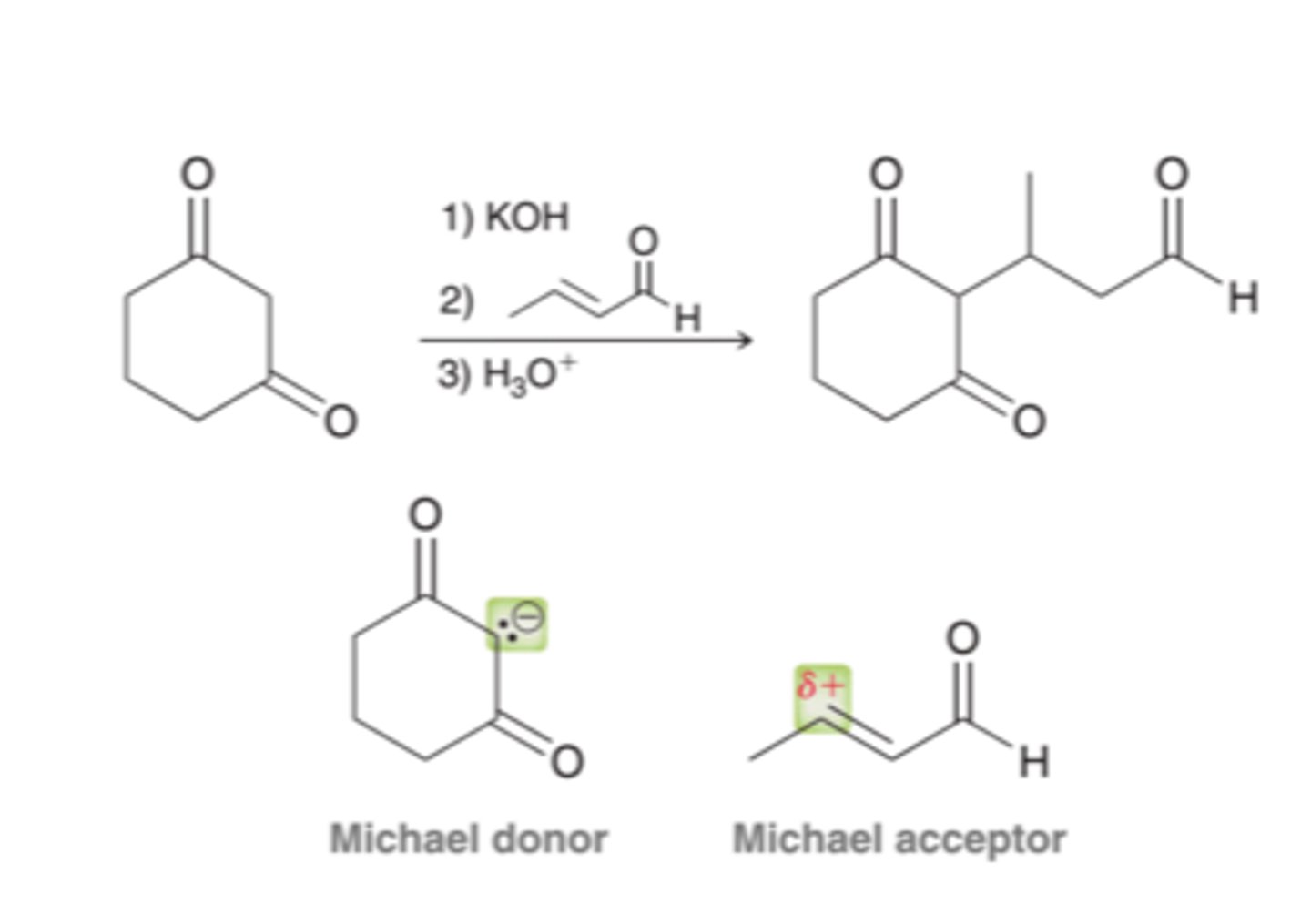
Michael addition
1. Catalyst: EtO-Na+
2. Solvent: EtOH
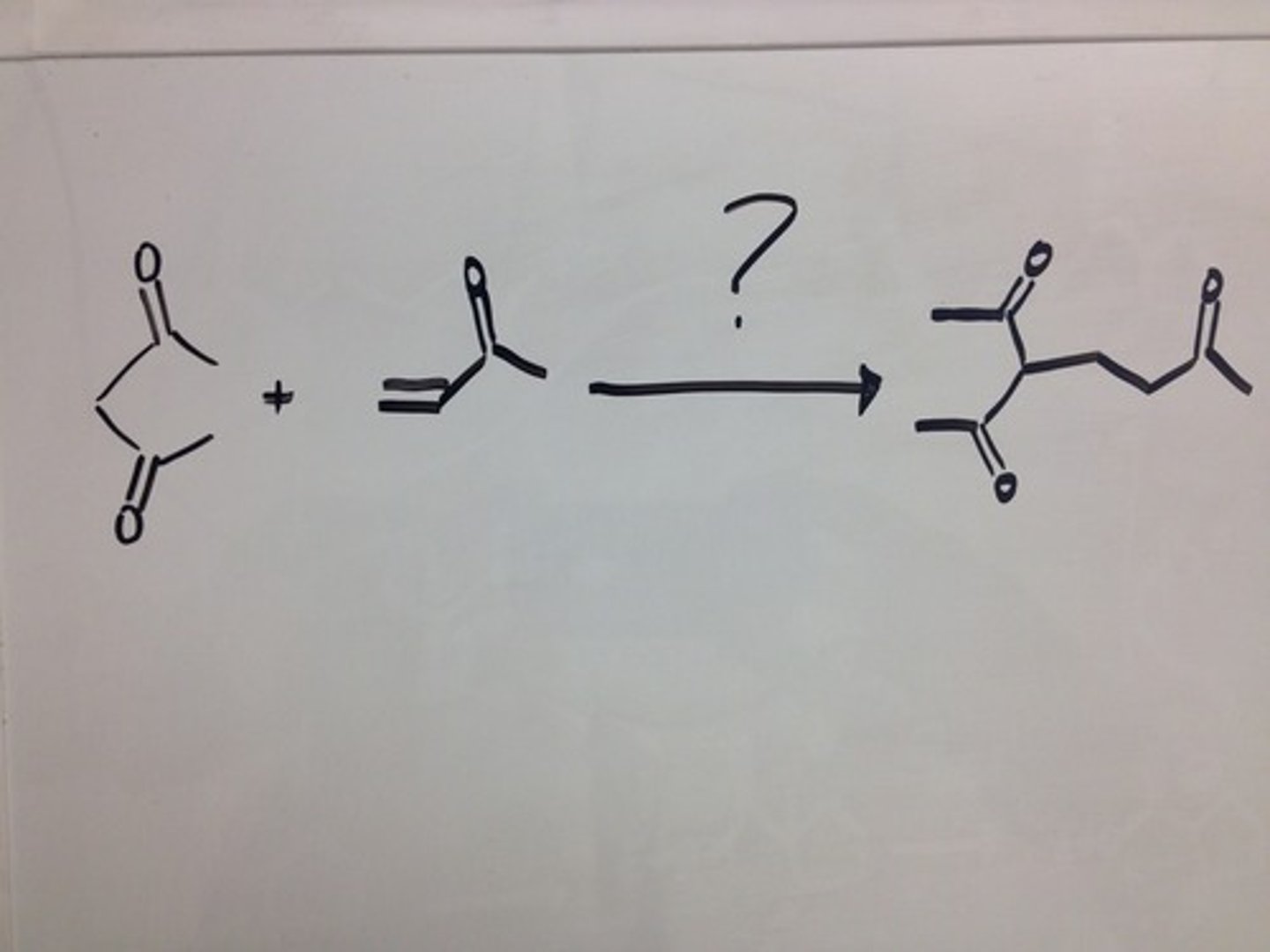
Michael addition
1. Catalyst: EtO-Na+
2. Solvent: EtOH
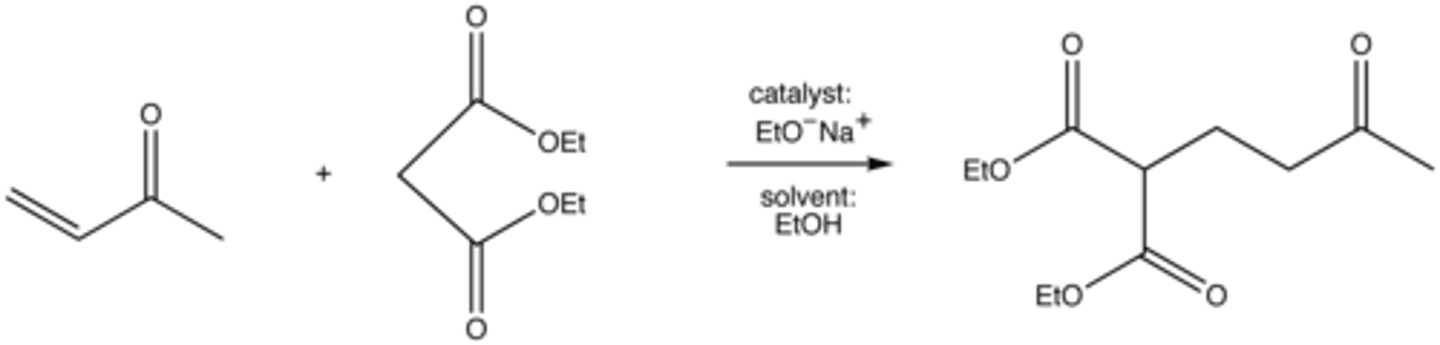
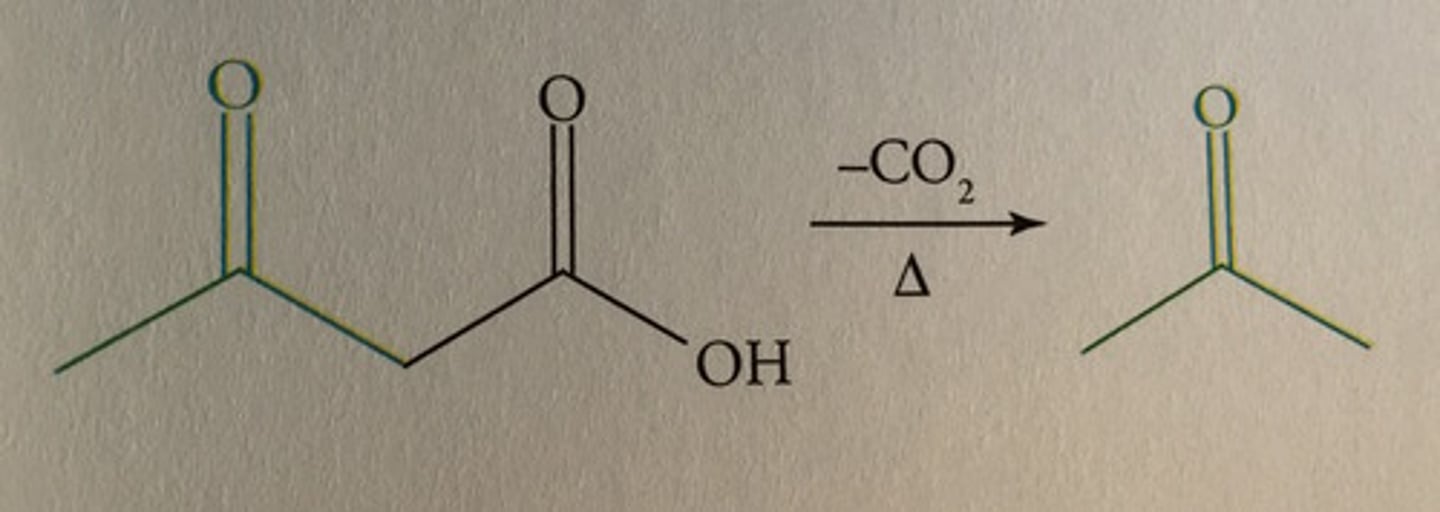
Decarboxylation
1. - CO2
2. Heat
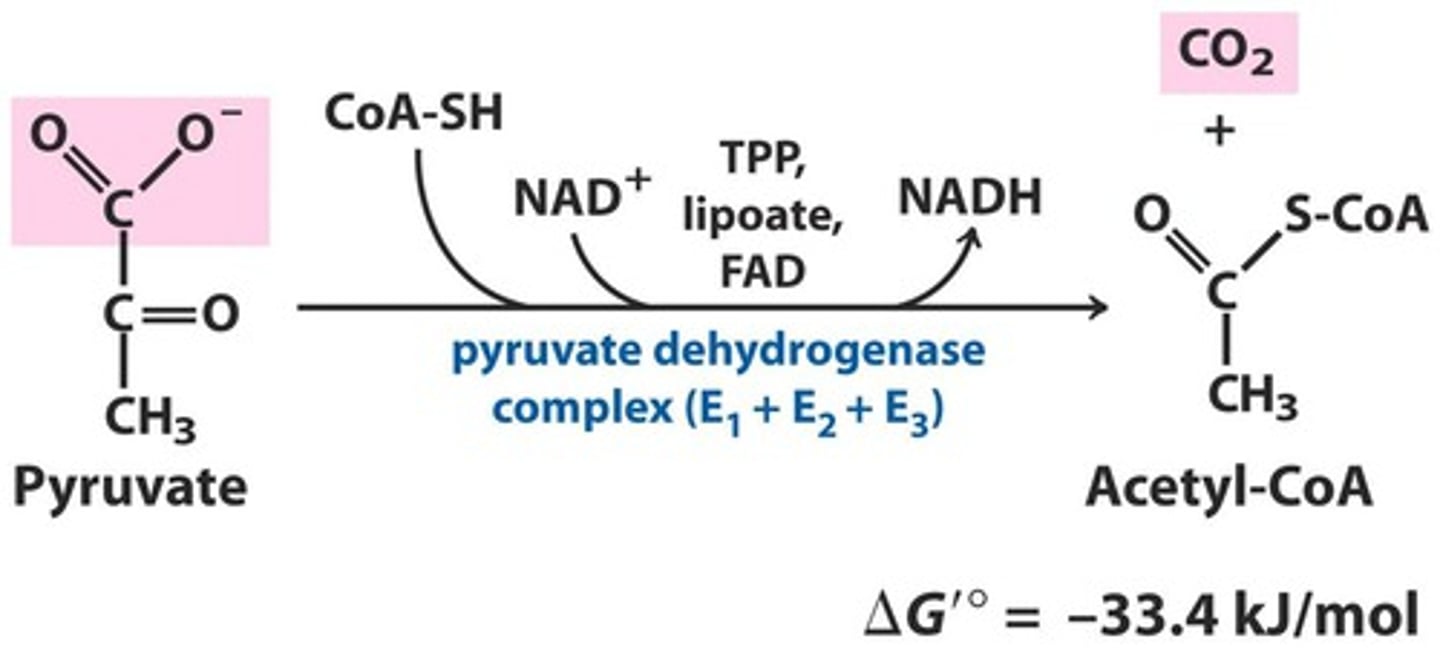
Decarboxylation
1. - CO2
2. Heat
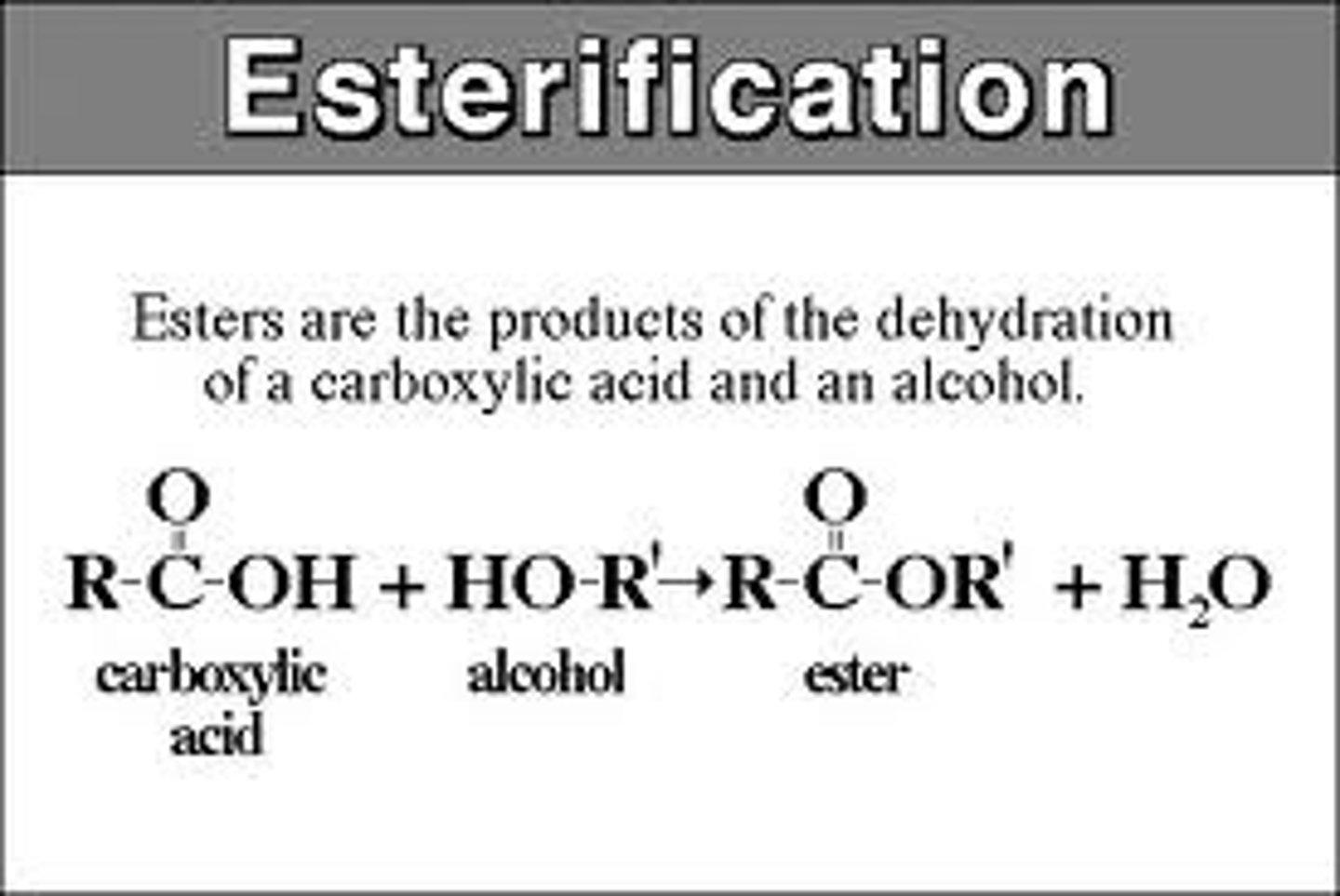
Esterification
1. H+
2. MeOH
Saponification
1. NaOH

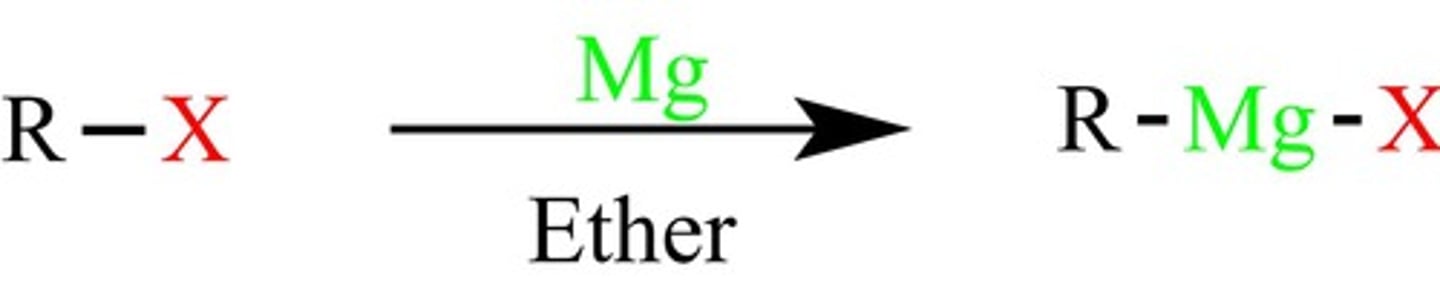
Grignard Reagent Formation
1. R-X, Mg
2. Ether (ROR)
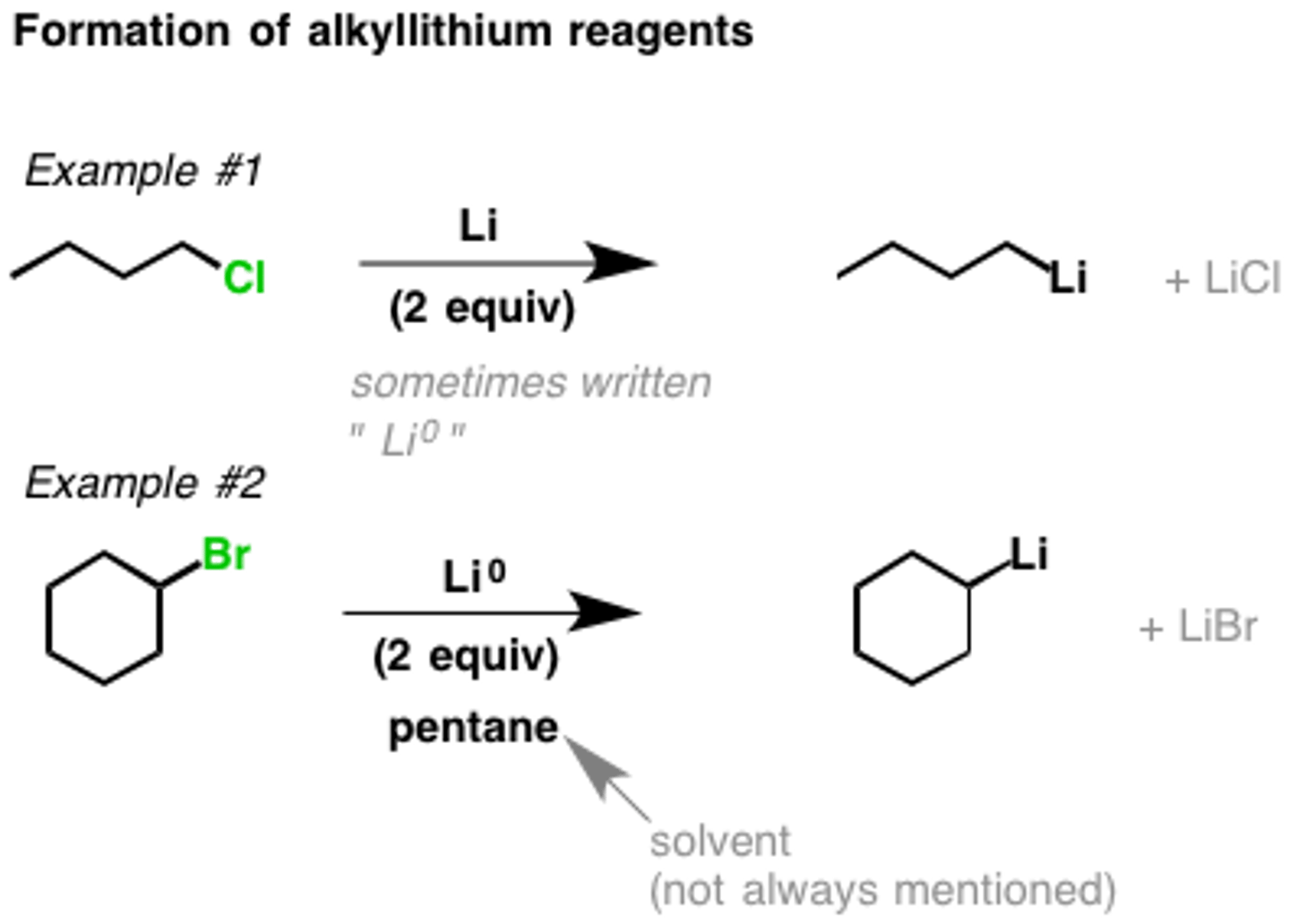
Lithium Reagent Formation
1. Pentane
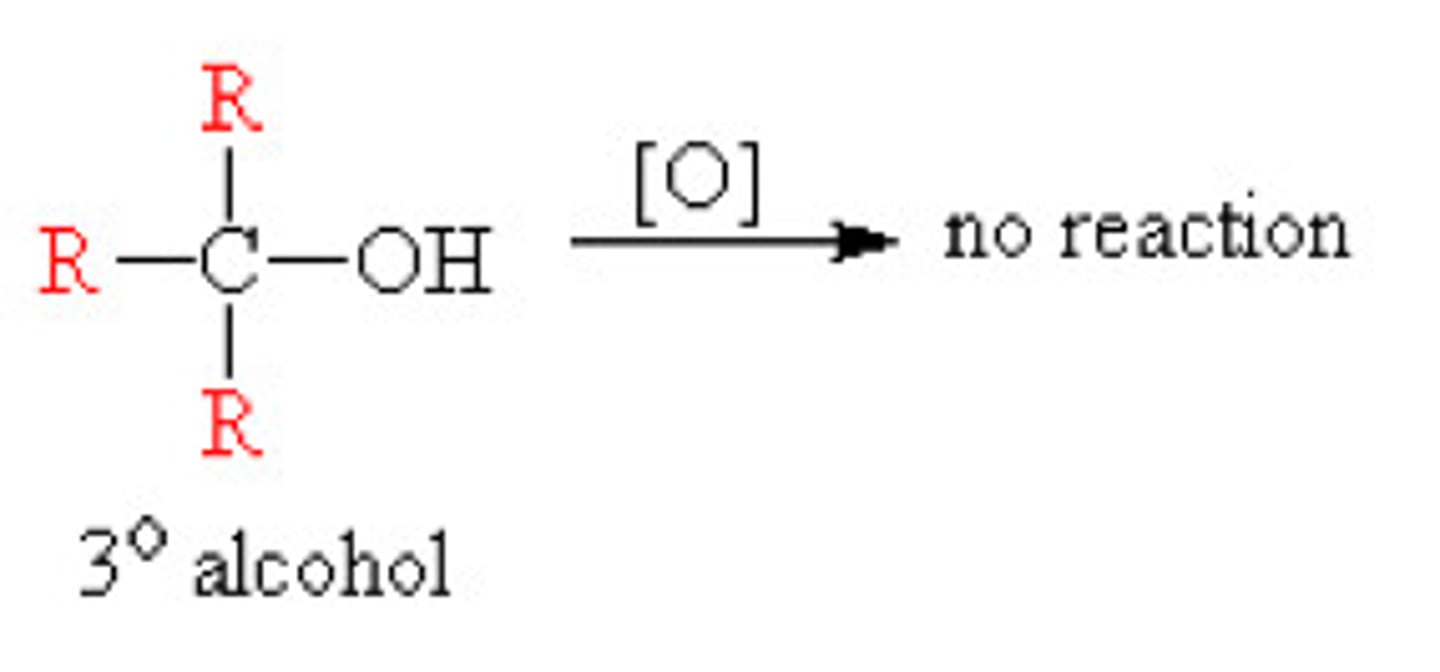
Oxidation of Alcohol (no reaction)
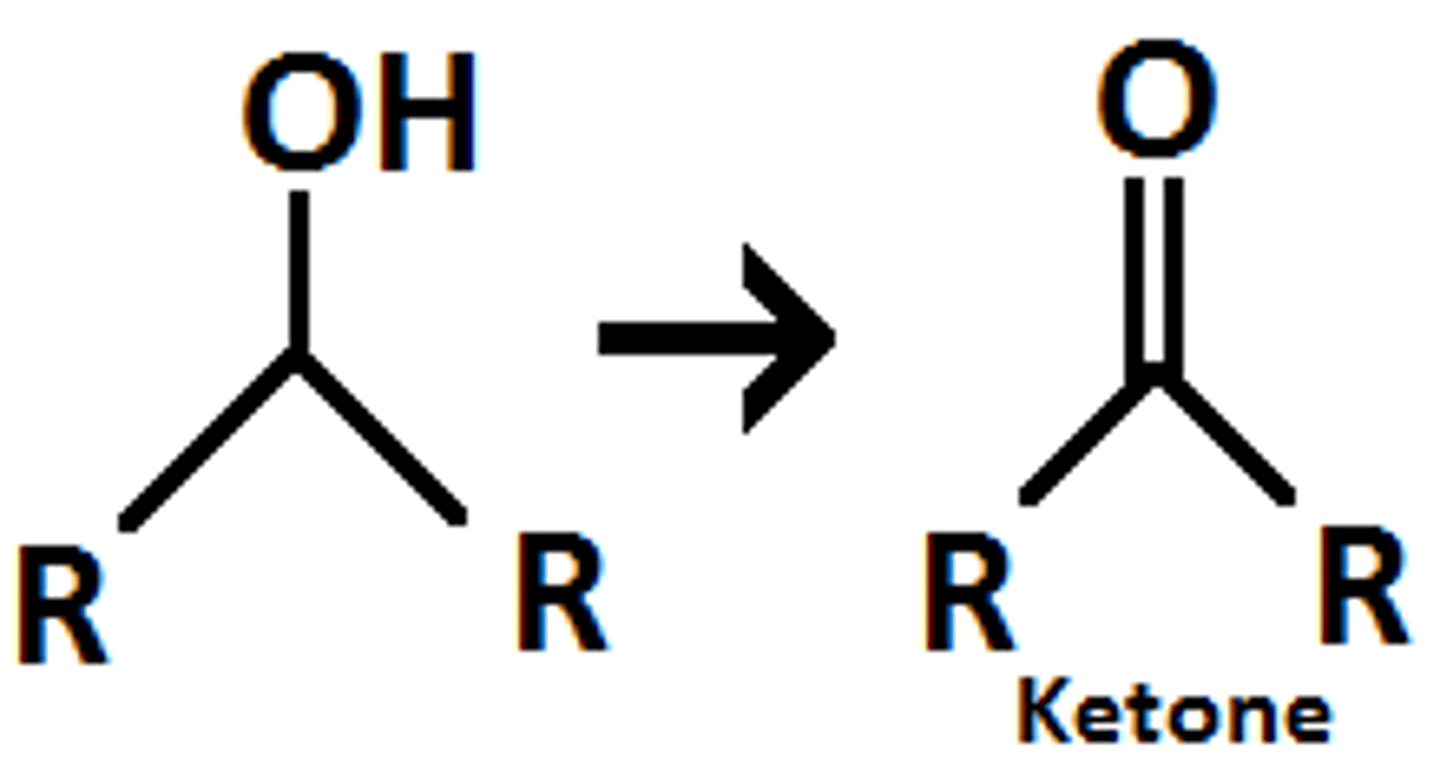
Oxidation of Alcohol to form an Ketone
1. PCC (oxidizing agent)
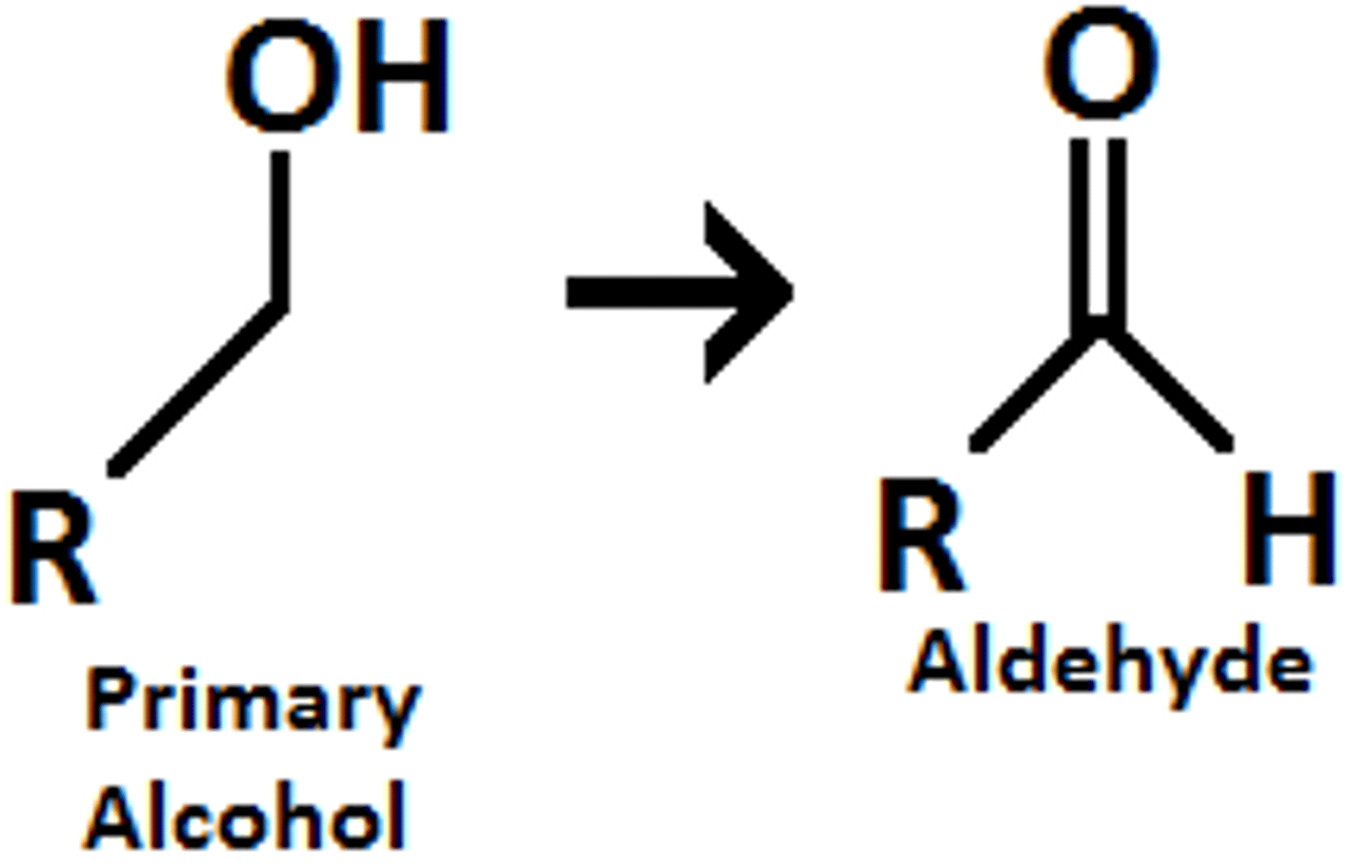
Oxidation of Alcohol to form an Aldehyde
1. KMnO4 (oxidizing agent)
or
1. NaCrO7, H2SO4
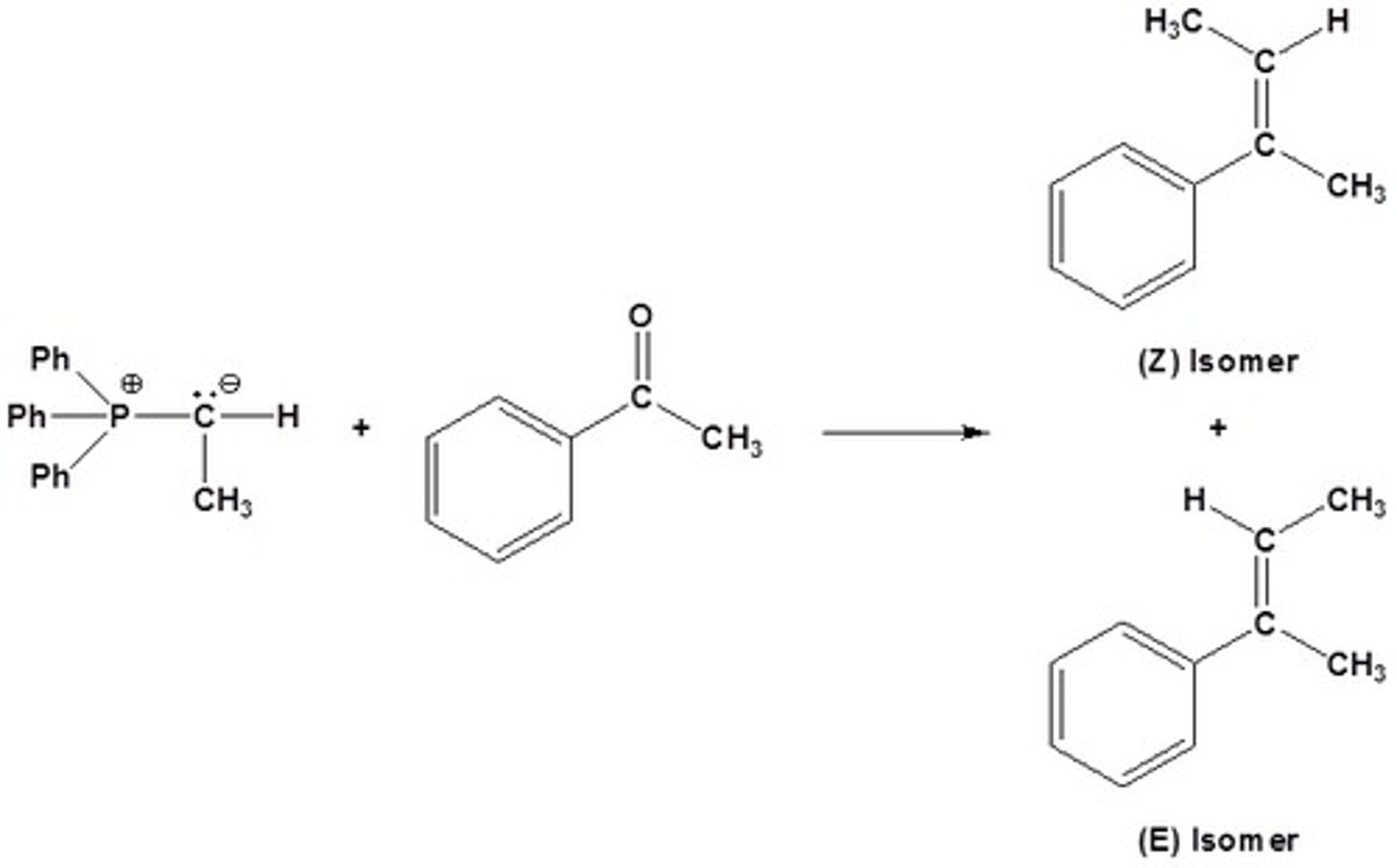
Witting Reaction
1. Ph3P-CH2 (phosphonium ylide)
DCC Coupling
1. Amine, Acid
2. DCC
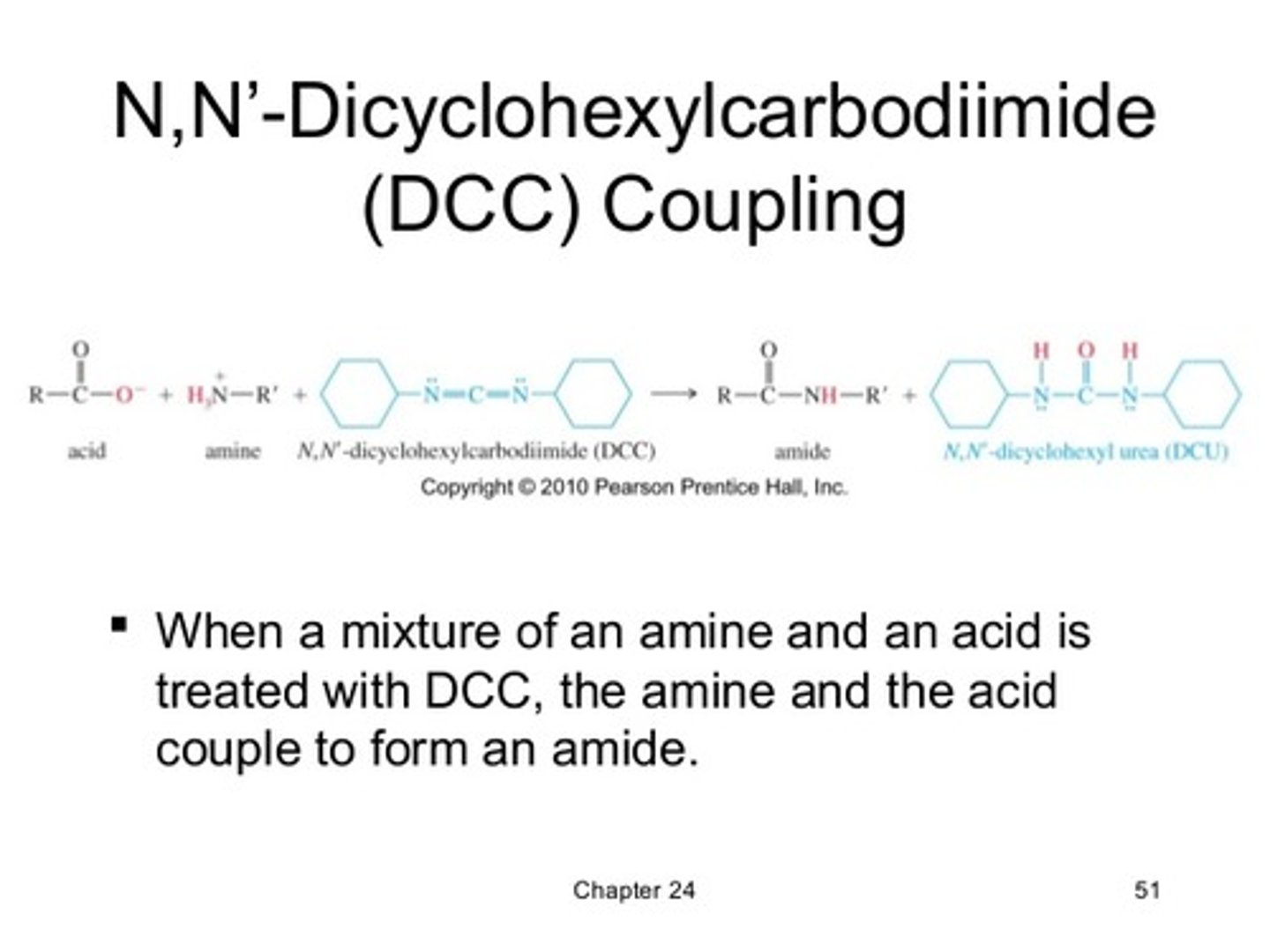
Add reactions with carboxylic acids from Princeton O-chem
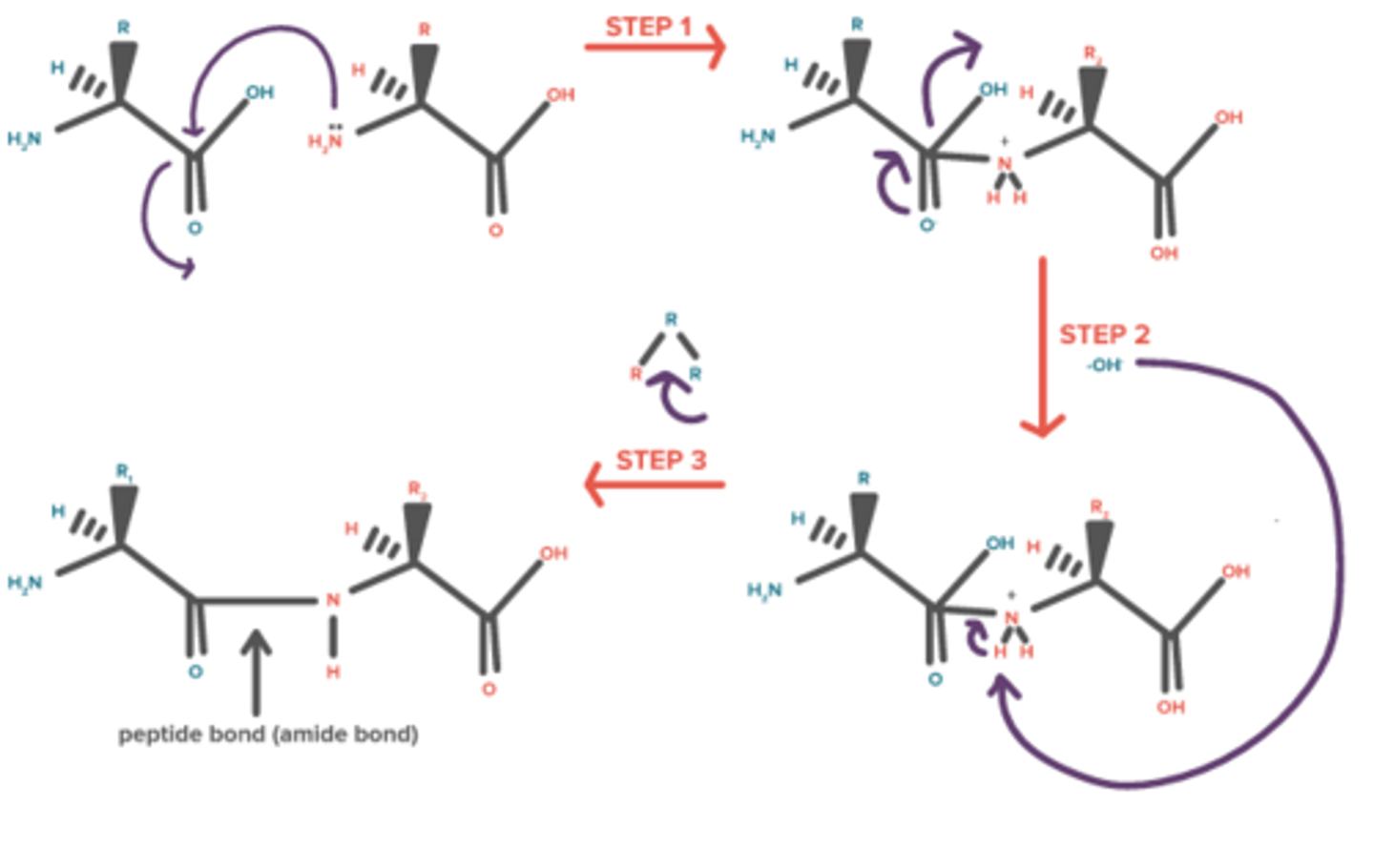
Peptide Bond Formation
Nucleophile: Amine
Electrophile : Carbonyl Carbon of Carboxyl