Greek Art Geometric Style and Orientalizing Style
 Call Kai
 Learn
Learn Practice Test
 Spaced Repetition
 Match
Match Flashcards
 Knowt Play
1/24

There's no tags or description
Looks like no tags are added yet.
Name | Mastery | Learn | Test | Matching | Spaced | Call with Kai |
|---|
No analytics yet
Send a link to your students to track their progress
25 Terms
Three sources of knowledge of Ancient Greece
The works themselves (not much left in existence), Roman copies of Greek originals (especially sculptures), and literature
Greek gods and goddesses-brothers and sisters
Zeus, Hera, and Poseidon
Children of Hera and Zeus
Ares (god of war), Hebe (goddess of youth), Hephaistos (god of metallurgy),
Children of Zeus (not with Hera)
Athena (goddess of crafts, war, wisdom, and Athens), Aphrodite (goddess of love), Apollo (god of music and poetry), Artemis (goddess of the hunt), Dionysus (god of altered states and fertility), Hermes (god of the under world).
Cosmos and Chaos
order and disorder
Geometric Style
2000 BCE
Groups that used geometric style
Dorians (Peloponnese), Ionians (Attica, Euboea, the Cyclades, central coast of Asia Minor), and Aeolians (northeast Aegean)
Amphora
A tall ancient greek or roman vase with two handles and a narrow neck
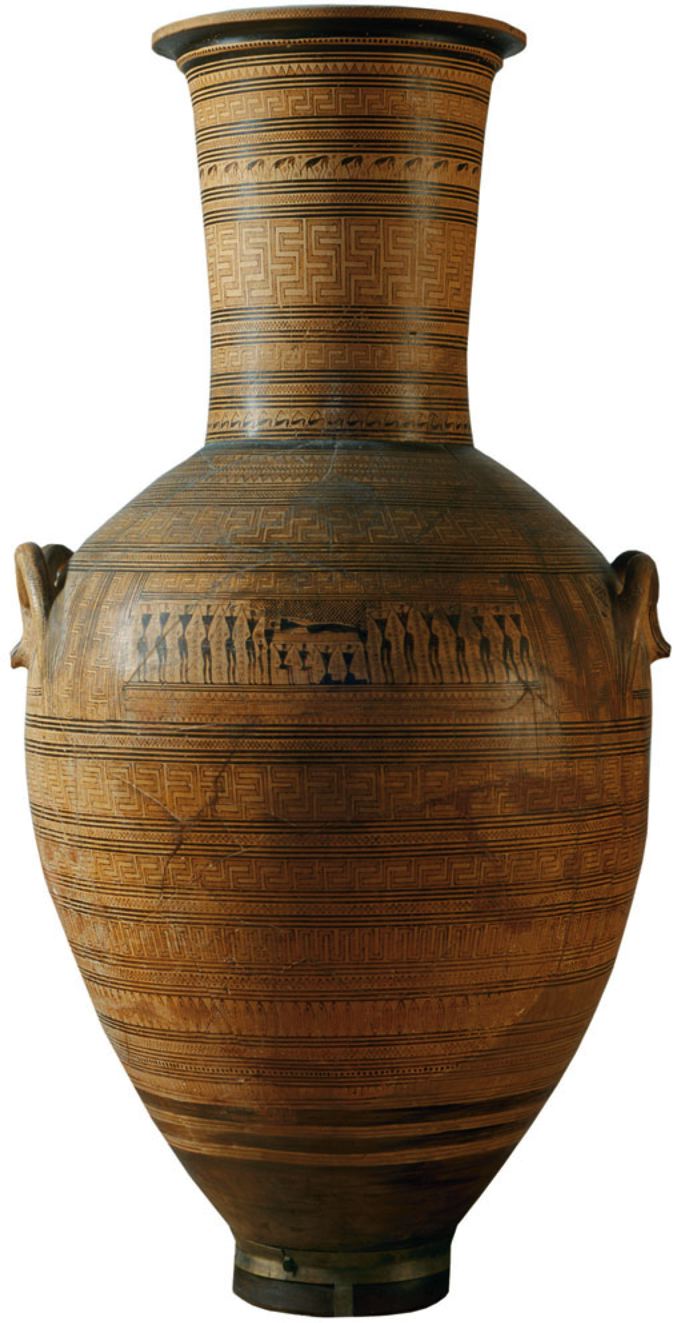
Dipylon Vase
Grave monument vase from Dipylon gate in northwestern Athens. Funeral marker.
Meander Pattern
A decorative motif of intricate, rectilinear character applied to architecture and sculpture. Also known as a maze or Greek key pattern
Prothesi
Athens funerary ritual where the dead person lay in state and public mourning took place
Homer Wrote the Odyssey and the Iliad
8th Century BCE
First Olympic Games
776 BCE
Rome Founded
753
Dipylon Vase
750 BCE
Orientalizing Style
725-650 BCE New Style of pottery/sculpture emerged, influenced by the near east and Egypt, i.e. hybrid creatures such as griffins and sphinxes.
Miniature Vessels
A specialisation of the city of Corinth
Aryballos
A perfume jar, generally small in size, and often minutely decorated. This was a favorite type of vessel for Corinthian vase-painters.
Guilloche Painting
A repeating pattern made up of two ribbons spiraling around a series of central points. A guilloche pattern is often used as a decorative device in Classical vase-painting.
Bronze tripod
Large vessels, mounted on three legs, dedicated to Greek gods
Protomes
A decorative, protruding attachment, often on a vessel. Greek bronze-workers attached griffin-shaped protomes to tripod cauldrons in the 7th century BCE.
Corinthian aryballos
680 BCE
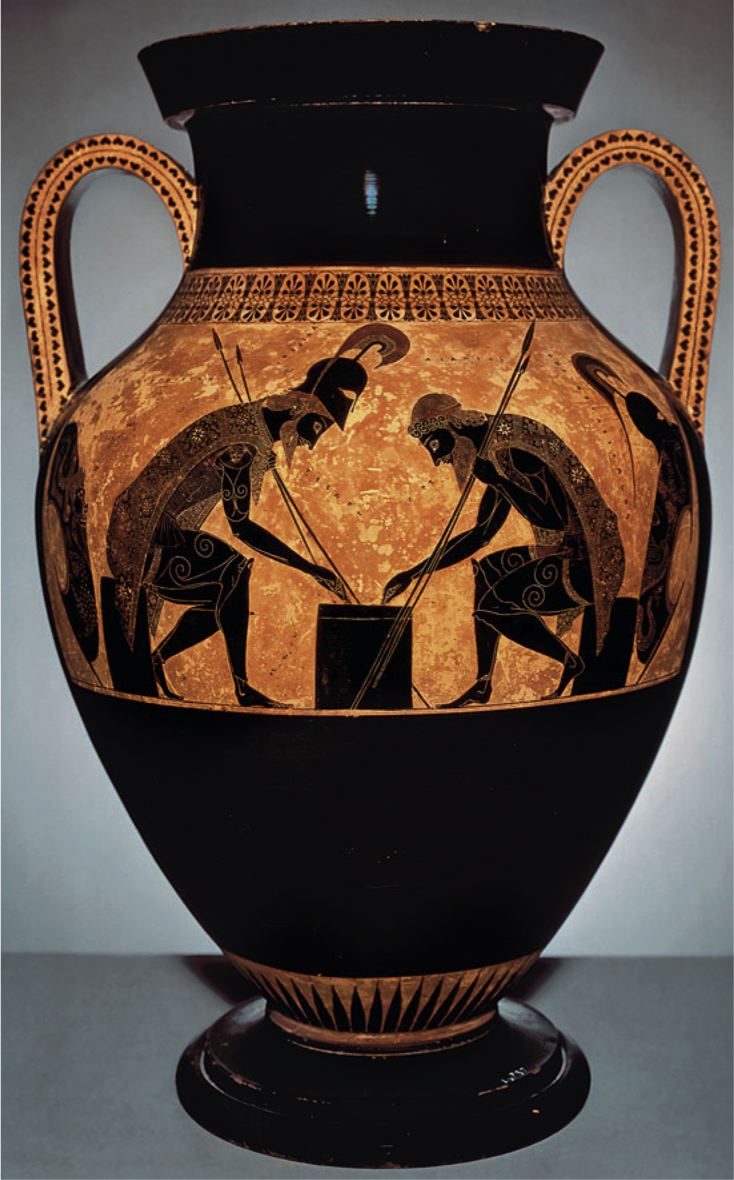
Black figure vase painting technique
Mid 7th Century BCE
Greeks establish trading posts in Egypt
650 BCE
Draco codefies Athenian laws
620 BCE