Spinal chord injury
 Call Kai
 Learn
Learn Practice Test
 Spaced Repetition
 Match
Match Flashcards
 Knowt Play
1/50

There's no tags or description
Looks like no tags are added yet.
Name | Mastery | Learn | Test | Matching | Spaced | Call with Kai |
|---|
No analytics yet
Send a link to your students to track their progress
51 Terms
What are the two main types of spinal cord injury/disease?
Traumatic and nontraumatic spinal cord injury/disease.
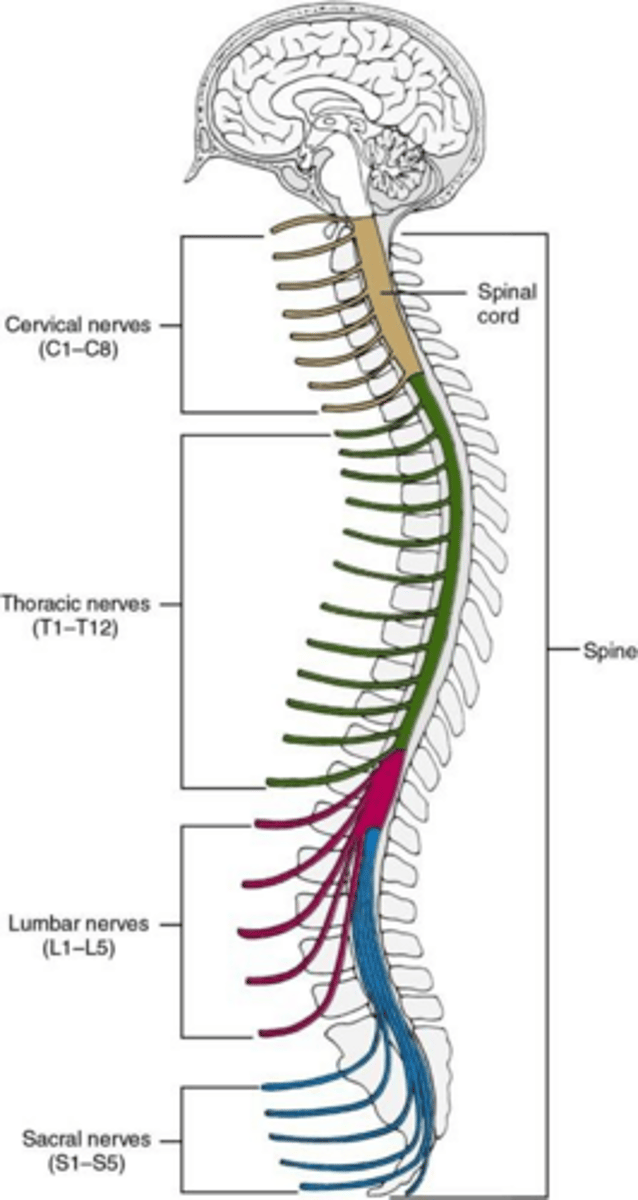
What is the difference between complete and incomplete spinal cord injury?
Complete spinal cord injury results in total loss of function below the injury level, while incomplete spinal cord injury allows for some preserved function.
What does the ASIA Impairment Scale measure?
It classifies spinal cord injuries based on the extent of motor and sensory function preserved.
What are the symptoms of anterior cord syndrome?
Loss of pain and temperature sensation below the injury level, with touch and proprioception relatively spared.
What is central cord syndrome characterized by?
Loss of arm function with some preservation of leg function, often with bowel and bladder impairment.
What defines posterior cord syndrome?
Loss of motor control with preserved pain and temperature sensation, impacting functional performance.
What is Brown-Séquard syndrome?
Damage to one side of the spinal cord resulting in loss of motor function on one side and loss of pain/temperature sensation on the opposite side.
What is cauda equina syndrome?
Damage to the cauda equina leading to partial or complete loss of movement and sensation below the injury level.
What is the ABCDE algorithm used for in spinal cord injury management?
It is a systematic approach for assessing and managing airway, breathing, circulation, disability, and exposure.
What are common causes of death in individuals with spinal cord injury?
Pneumonia and sepsis.
What are some impacts of spinal cord injury on mental functions?
Depression, motivation issues, and fatigue.
What is neurogenic bladder?
A condition where bladder function is impaired due to nerve damage, often requiring catheterization.
What is the role of occupational therapy in spinal cord injury?
To assist clients in achieving independence in daily activities and improving quality of life.
What is the significance of skin integrity in spinal cord injury patients?
Maintaining skin integrity is crucial to prevent pressure sores and infections.
What are the long-term goals for individuals with C1-C4 spinal cord injuries?
To achieve independence in direct self-care, driving power wheelchairs, and managing IADLs with technology.
What are some common functional issues faced by patients with central cord syndrome?
Greater impairment in upper extremities than lower extremities, affecting upper body ADLs.
What interventions might be prioritized for clients with spinal cord injuries?
Interventions may focus on mobility, self-care, and adaptive strategies for daily living.
What are the effects of spasticity in spinal cord injury patients?
Spasticity can lead to muscle stiffness and difficulty with movement, impacting rehabilitation.
What is the impact of spinal cord injury on reproductive functions?
It can affect sexual activity, lubrication in women, and erectile function in men.
What is the importance of patient and caregiver education in managing spinal cord injuries?
Education helps in understanding the condition, promoting safety, and enhancing care strategies.
What are the common pharmacological management strategies for muscle spasms?
Medications may include muscle relaxants and other pharmacological agents.
What is the role of external fixators in spinal cord injury management?
They are used to stabilize fractures and support the healing process.
What are the implications of orthostatic hypotension in spinal cord injury patients?
It can lead to dizziness and fainting upon standing, requiring careful management.
What is the significance of temperature sensitivity in spinal cord injury patients?
Altered temperature sensitivity can affect skin care and overall health management.
What are the strategies for managing neurogenic bowel?
Consistent routines involving physical activity, diet, hydration, and medication.
What is the role of pulmonary exercises in spinal cord injury rehabilitation?
They help prevent atelectasis and improve respiratory function.
What are preparatory methods/tasks in OT interventions?
Modalities, orthoses, assistive technology/environmental modifications, and wheeled mobility.
What is the primary focus of OT interventions for SCI/D levels C1-C4?
Education/training, advocacy/self-advocacy, and group interventions.
What movements are spared or gained at SCI/D level C5?
Head, neck, shoulder, and biceps brachii.
What ADLs can a person at SCI/D level C5 perform independently?
Direct bathing/dressing and driving a power wheelchair.
What are the IADLs that a person at SCI/D level C5 can perform?
Independently operate a smartphone and manage a bowel/bladder routine before sleep.
What movements are spared or gained at SCI/D level C6?
Latissimus dorsi, serratus anterior, wrist extensors, and pronation.
What is the level of independence for ADLs at SCI/D level C6?
Moderate independence in grooming, feeding, dressing, and bathing.
What IADLs can a person at SCI/D level C6 perform independently?
Prepare meals, navigate public transportation, and load a wheelchair into a van.
What movements are spared or gained at SCI/D level C7?
Wrist flexors and triceps.
What is the level of independence for ADLs at SCI/D level C7?
Moderate independence in grooming, dressing, and bathing.
What are the IADLs that a person at SCI/D level C7 can perform?
Moderate independence in household tasks, meal preparation, and grocery shopping.
What movements are spared or gained at SCI/D level C8-T1?
Strength and precision of fingers, finger flexors, and intrinsic muscles.
What ADLs can a person at SCI/D level C8-T1 perform independently?
Grooming, dressing, and bathing.
What IADLs can a person at SCI/D level C8-T1 perform independently?
Babysitting, driving with hand controls, and gardening.
What movements are spared or gained at SCI/D levels T2-T12?
Increased trunk, back, and core strength.
What is the level of independence for ADLs at SCI/D levels T2-T12?
Independently groom, moderate independence in dressing and bathing.
What IADLs can a person at SCI/D levels T2-T12 perform?
Moderate independence in sitting on the floor and household ambulation.
What movements are spared or gained at SCI/D levels L1 and below?
Hip flexion (L2), knee extension (L3), ankle dorsiflexion (L4), great toe extension (L5), and ankle plantar flexion (S1).
What ADLs can a person at SCI/D levels L1 and below perform independently?
Grooming and moderate independence in dressing and bathing.
What IADLs can a person at SCI/D levels L1 and below perform independently?
Drive a car with hand controls and community ambulation.
What are common occupational therapy settings?
Acute care, inpatient rehab, skilled nursing facilities, outpatient, and home health.
What are examples of incomplete spinal cord injuries?
Spina bifida and transverse myelitis.
What is Terry's motor level if he has a fracture of C5 with no motor function below C6?
C5.
What is Terry's sensory level if he has no sensation below C6 except for a small patch on the palms?
C6.
What is Terry's ASIA level if he has no motor function below C6?
ASIA-A.