NCLEX HIGH YIELD TOPICS
 Call Kai
 Learn
Learn Practice Test
 Spaced Repetition
 Match
Match Flashcards
 Knowt Play
1/344

There's no tags or description
Looks like no tags are added yet.
Name | Mastery | Learn | Test | Matching | Spaced | Call with Kai |
|---|
No analytics yet
Send a link to your students to track their progress
345 Terms
polyuria
fluid volume deficit---> shock
heart failure
pump not moving blood forward---> decreased blood to kidneys---> decreased UOP----> fluid retention
hypoxia
not enough oxygen to the tissues----> not enough oxygen to the brain---> anxious patient/change in LOC
QRST
- AV node
- ventricle
- controlled by potassium
P wave
- SA node
- atrial depolarization
- calcium
calculation of HR on ECG estimation
measure big boxes between R-R
300/# of big boxes between R-R
normal sinus rhythm
heart rhythm originating in the sinoatrial node with a rate in patients at rest of 60 to 100 beats per minute
sinus bradycardia
<60
normal sinus rhythm
give atropine (don't give to pt with glaucoma)
sinus tachycardia
>100 (100-150)
normal sinus rhythm
caused by:
- excessive caffeine
- anxiety
- dehydration
- hyperthyroidism
give beta blockers, be aware of bronchoconstriction and bronchospasm, contraindicated in asthma
atrial fibrillation
- SA node not firing properly
- absence of P wave, quivering P wave
- AV node fires irregularly because its waiting for SA node to work
- worried about clots
- calcium channel blockers work for a-fib because the atrium uses calcium to work (diltiazem, verapamil)
INR & warfarin
want it to be 2-3x the normal value except for when there is a valve replacement
heparin & warfarin homegoing
- don't go home on this, usually gradually introduce warfarin simultaneously so that they can go home on it instead (called bridging)
- wait for INR to get to 2-3, then d/c heparin and continue warfarin
potassium sparing diuretics and cardio
aldosterone antagonists
examples
- spironolactone
- eplerinone
aldosterone increases sodium--->decreases potassium
leads to decreased sodium and water, keeps potassium same
ACE inhibitors pneumonic
ACE-I
Angioedema
Cough
Excess K+
Instead, ARB's (still increased K+)
ACEs and ARBs are both
Teratogens
agents, such as chemicals and viruses, that can reach the embryo or fetus during prenatal development and cause harm
priority what am I freaking out about?? ASK GRAPH
A- airway
S- sepsis
K- potassium
G- glucose below 70
R- child with lethargy
A- altered mental status suddenly
P- peritonitis
H- hemorrhage
cushings vs addisons
Cushing is gushing cortisol.
Addison's patient's cortisol doesn't add up.
cushing's syndrome
A- increased appetite
B- increased blood pressure
I- increased insulin resistance
G- increased gluconeogenesis
F- decreased fibroblasts (healing factors)-->striae
I- decreased inflammatory process/immune system
B- decreased bone formation (osteoblasts)
physical symptoms
- buffalo hump
- moon face
- abdominal striae
- hirsutism ("hairy suit-ism")
- weight gain
- truncal obesity
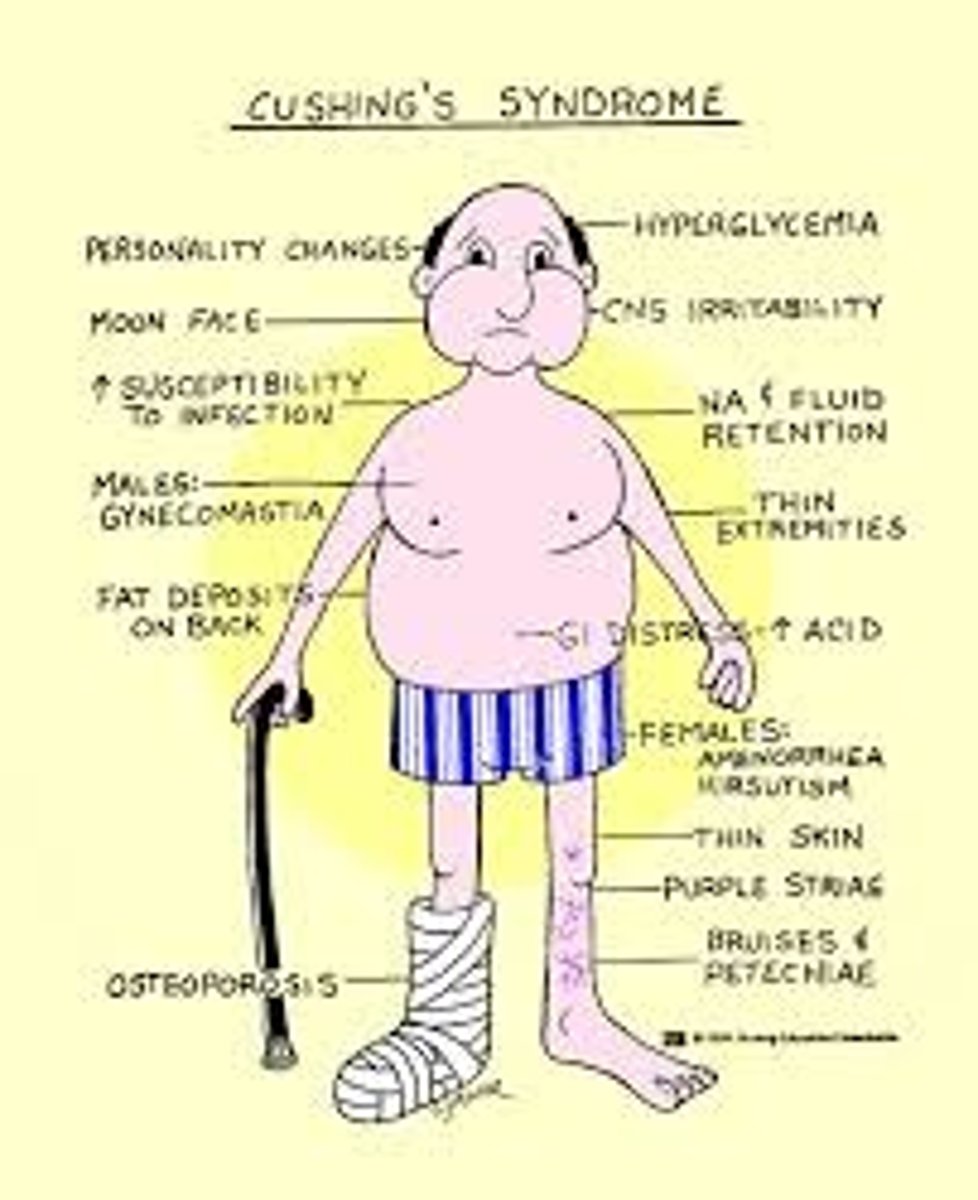
causes of cushing's disease
- steroids (long term therapy
- tumor (pituitary, adrenal)
- small cell lung cancer
treatment for cushings
cut out tumor or steroids (slowly decrease)
cortisol increased by ______
4 S's
Surgery
Stress
Sepsis
Strenuous activity
adrenal gland monitors ________
salt: regulates aldosterone
sugar: cortisol
sex: sex and hair
all increased in cushings, all decreased in addison's
addison's disease
occurs when the adrenal glands do not produce enough of the hormones cortisol or aldosterone
aldosterone knocked out:
- low salt and water---> low BP
- increased potassium--->hyperkalemia
cortisol knocked out:
- increased ACTH---> increased melanin production (bronze skin, hyperpigmentation)
androgens knocked out:
- decreased libido
- low sex drive
- erectile dysfunction
- infertility
nursing considerations
- monitor Na and H20
- monitor fluid volume
- give them cortisol
- give them estrogen and testosterone (these thicken the blood and makes person hyper-coagulable, monitor for clots to prevent DVTs and PE)
increased estrogen caused by:
- birth control
- obesity
- patient taking tamoxifin
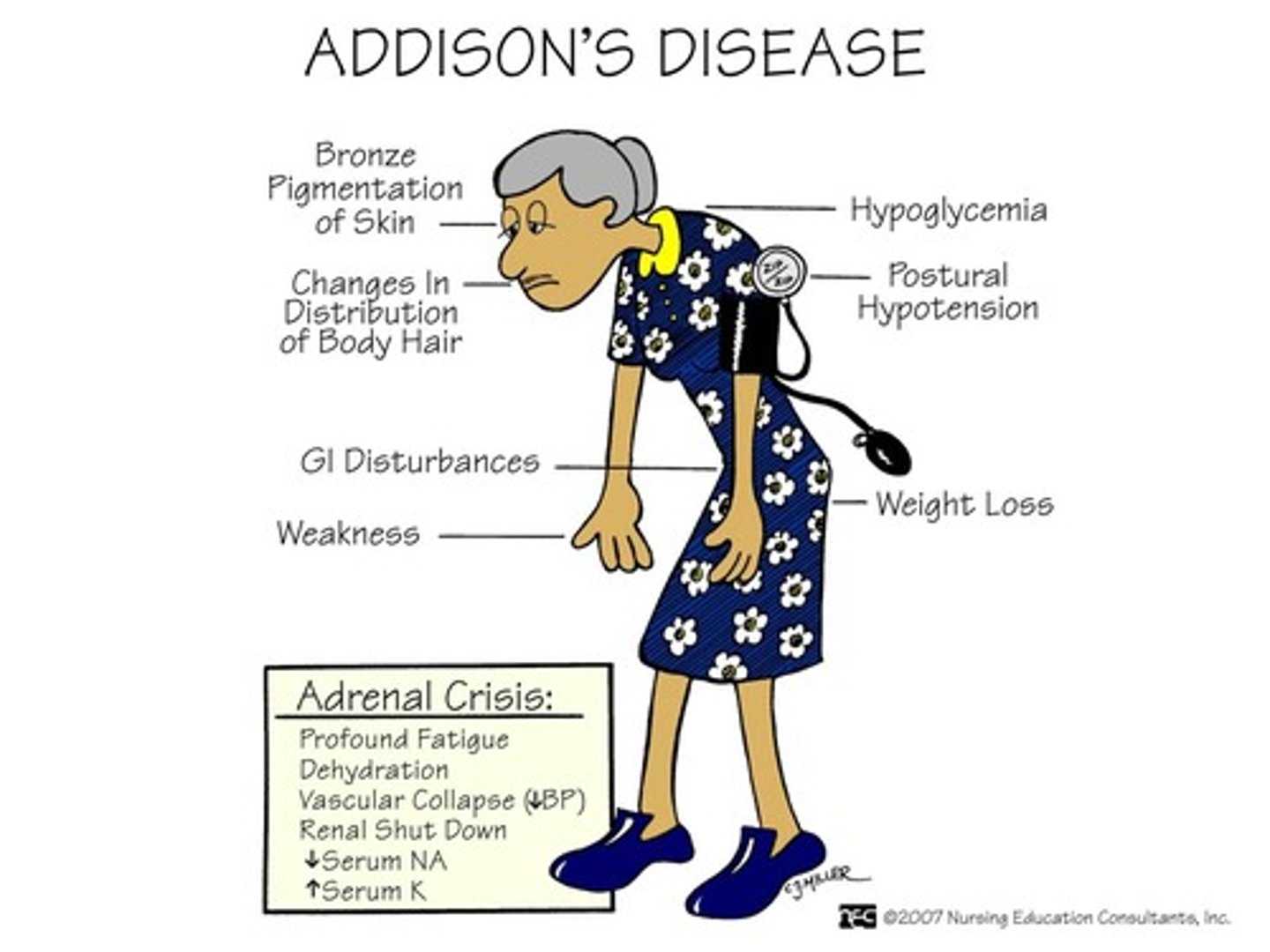
causes of addison's disease
A- autoimmune (body kills adrenals or pituitary
D- diseases (cancer, infections (TB/HIV)
D- damage (adrenal hemorrhage, trauma)
most common cause of addison's disease
tuberculosis
treat with RIPE
R- Rifampin (red expected)
I- Isoniazid (this is very hepatotoxic)
P- Pyozinimide
E- Ethambutol (E for eye, look for vision issues like diplopia, blurred vision)
addison's treatment
- add "-sones"
- diet high in protein, carbs, sodium
- dont abruptly stop steroids
- dont believe this medication will cure you
- lifelong hormone replacement
cushings sydrome
increased cortisol
- primary tumor (high cortisol, low ACTH)
- secondary tumor (high ACTH, high cortisol)
- exogenous (high cortisol, low ACTH)
infant growth
- rapid growth
- birth weight should double by 6 months and triple by 12 months
fontanelles
- posterior closes first - between 1 and 2 months
- anterior closes between 9 and 18 months
infant gross motor skills
- sitting up without support: 6-8 months
- rolling over: 6 months
- standing without support: 10-12 months
- first steps: 12 months
infant fine motor skills
- palmar grasp: 6 months
- pincer grasp: 9 months
- brings objects to mouth: 4 months
- transfers objects from hand to hand: 6-8 months
infant language
- first words: 12 months
- can understand "no": 11 months
- following simple directions: 12 months
infant psychosocial development
- trust vs mistrust
- sensorimotor ("taking it all in")
- social smile: 6-8 weeks
- object permanence: 9 months
- stranger anxiety: 9 months
therapeutic communication with infants
- speak in a soft voice
- warm hands before touching baby
always involve caregivers
- explain everything you are doing to them
- have them hold infant
- parents are your best team member. they know how to keep their child happy and calm.. it is hard to assess a screaming baby!
toddler growth
ages 1 to 3 years old
- growth slows
- language develops quickly
- height increases by 3 inches per year
- weight increases by 4-6 pounds per year
- head does not grow as rapidly as the body; head circumference should equal chest circumference by 1-2 years
- anterior fontanelle closes between 9 and 18 months
toddler fine and gross motor development
should be able to:
- hold crayons or pencils to color and draw
- copy a circle on paper
- build a tower of blocks 8-10 blocks high
- clap their hands
- button and unbutton
- work a zipper
- ride a tricycle - 3 years
- jump - 2 years
toddler language
should be able to:
- follow simple directions
- link words together: 2 years
- vocabulary of 300 words: 2 years
- identify objects
- identify body parts
toddler social and cognitive development
erikson stage:
- autonomy vs shame and doubt
- children seek to develop a sense of personal control over physical skills and a sense of independence
- when they are successful they feel independent and it leads to a sense of autonomy. when they are not successful, they feel they are a failure and it results in shame and self doubt
- task= toilet training- toddlers want to accomplish this to attain autonomy
parallel play
- children play adjacent to each other, but do not try to influence on another's behavior
symbolic play
- ability of children to use objects, actions or ideas to represent other objects, actions, or ideas as play
toddler toilet training
- important not to start before the child is ready - control of the sphincters does not happen until 18-24 months old
signs that child is ready
- wake up from nap dry
- tell you they need to go potty
- can stay dry for 2 hours during the day
during toilet training
- never leave the child on the toilet alone
- only sit on the toilet for 5-8 minutes at a time
- get their own toilet or a stool that will be the right size, their feet should be able to sit on the floor or a stool
- teach hand hygiene!!
toddler injury
common injuries at this age
- falls
- burns
- drowning
- poisoning
ways to help prevent injuries
- lock up dangerous substances: medications, cleaning supplies, laundry detergent, etc.
- put gates at the top and bottom of the stairs
- never leave a bathtub unsupervised- even if there is only a little bit of water in it!
- toddlers can drown in less than 2 inches of water
toddler nutrition
- toddlers are the classic "picky eaters"
- iron deficiency anemia is common due to a lack of iron rich foods
iron rich foods to offer
- iron-fortified cereals
- leafy greens
- red meats
- fish
- beans
- use full fat milk until 2 years old
- do not use food as a reward
preschoolers
ages 3-5 years old
- rapid social development
- rapid fine motor skills
- improving coordination
- getting ready for school
preschool growth
- height: increases 2-3 inches every year
- weight increases about 5 pounds every year
preschool gross motor development
- hops on one foot
- runs
- skips
- ride tricycle: 3 years
- ride bicycle: 5 years
preschool fine motor development
- pastes things onto paper
- complete puzzles with 5 or more pieces
- copy a circle onto a piece of paper
- cut out simple shapes with scissors
- uses spoon and fork
- can dress self
- brushes teeth
preschool language
- at 5 years age should have vocabulary of about 2,100 words
- speak in complete sentences (4-5 words at a minimum)
- can correctly name colors, objects, people
- tell stories and use fantasy
- know their name and address
preschool psychosocial and cognitive development
erikson stage: initiative vs guilt
- children start to assert control and power over their environment. success leads to initiative when they feel a sense of purpose, but children who try to exert too much power and experience disapproval end up feeling guilt
- important to involve the child when possible, such as giving them options, which helps develop initiative
cooperative play
- play that involves the division of efforts among children in order to reach a common goal
magical thinking
- the belief that one's own thoughts, wishes, or desires can influence the external world.
- do not yet have a concept of time
preschool therapeutic communication
poor concept of time
- avoid delays with treatment
fear bodily harm
- use bandages over any puncture sites
- bandages help them feel secure
magical thinking
- they may think that their actions or misbehaving caused them to become sick
- view sickness as a punishment
- help them understand this is not their fault
language
- their developing language skills make your word choice very important
- use simple, non-threatening terms
school age
- 6-12 years old
- physical growth gets slower
- social development is pronounced (friend groups, personal accomplishments)
school age growth
- gain 5-7 pounds each year
- grow about 2 inches per year
- begin to lose baby teeth
- brain will reach full adult size by 9-10 years old
school age motor development
- write in cursive
- ride a bike
- plays games
- swim
- roller skate
- jump rope
school age psychosocial and cognitive development
erikson stage: industry vs inferiority
- in this stage, children need to cope with new social and academic demands. when they are successful with this, they feel competency and achieve industry. when they are not successful they feel failure and it results in inferiority
- egocentrism decreases and importance of relationships increases
school age therapeutic communication
- asks lots of questions
- peer support
- allow time for discussion
- give them privacy when able
adolescents
- ages 13 to 18 years old
- puberty begins
- development of personal identity (peer groups, risky behavior)
adolescent puberty
female
- thelarche: breast development 11 years
- menarche: first menstruation 2 years after thelarche
male
- begins between 9-13 years
- period of rapid growth
- testicles enlarge
- voice deepens
adolescent motor development
- increased coordination
- prolonged endurance
- better distance judgement
- increased hand-eye coordination
adolescent psychosocial and cognitive development
erikson stage: identity vs role confusion
- adolescents develop a sense of personal identity. when they are successful it leads them to the ability to be true to themselves and have an identity they are proud of. when they are not successful there is role confusion and a weak sense of self
- risk behavior increases
- social interaction with peers prioritized over family
adolescent therapeutic communication
- give them as much privacy as possible
- peer support groups
- allow for free time
- support socializing when possible
- encourage questions and taking part in their own care
acting out
temper tantrum
projection
disguising one's own threatening impulses by attributing them to others
A-B
displacement
nurse johnny yells at nurse Meredith and then nurse Meredith yells at nurse Matthew
regression
A reversion to immature patterns of behavior
splitting
borderline disorder
extreme happy or extreme sad, no middle ground
ADHD (Attention-Deficit Hyperactivity Disorder)
usually noticed by teacher first
- identify low self esteem
- try behavioral therapy
treatment
- D-amphetamine/ methylphenidate
side effects of medication
- insomnia (take before 6 pm)
- weight loss (take after meals)
- hypertension
- tachycardia
autism spectrum disorder
- do not like change
- do not like stimulation
- keep furthest away from nurses station, noise can trigger
paranoid patients
- give packaged or sealed meals so they can open themselves
- let them get their food
borderline personality disorder
splitting ego defense
antisocial personality disorder
against society
- criminals, rapists
- no rules
- above 18 years old (less than 18 is conduct disorder)
asocial
dont want to hang out
histrionic personality disorder
- provocative
- attention seeking
- think instagram models
narcissistic personality disorder
- grandiose
- always has to be right
- will argue their point and think they're right all the time
dependent personality disorder
stage 5 clingers
- cant function without you
key words indicative of respiratory compromise
- stridor
- drooling
- accessory muscles
- grunting
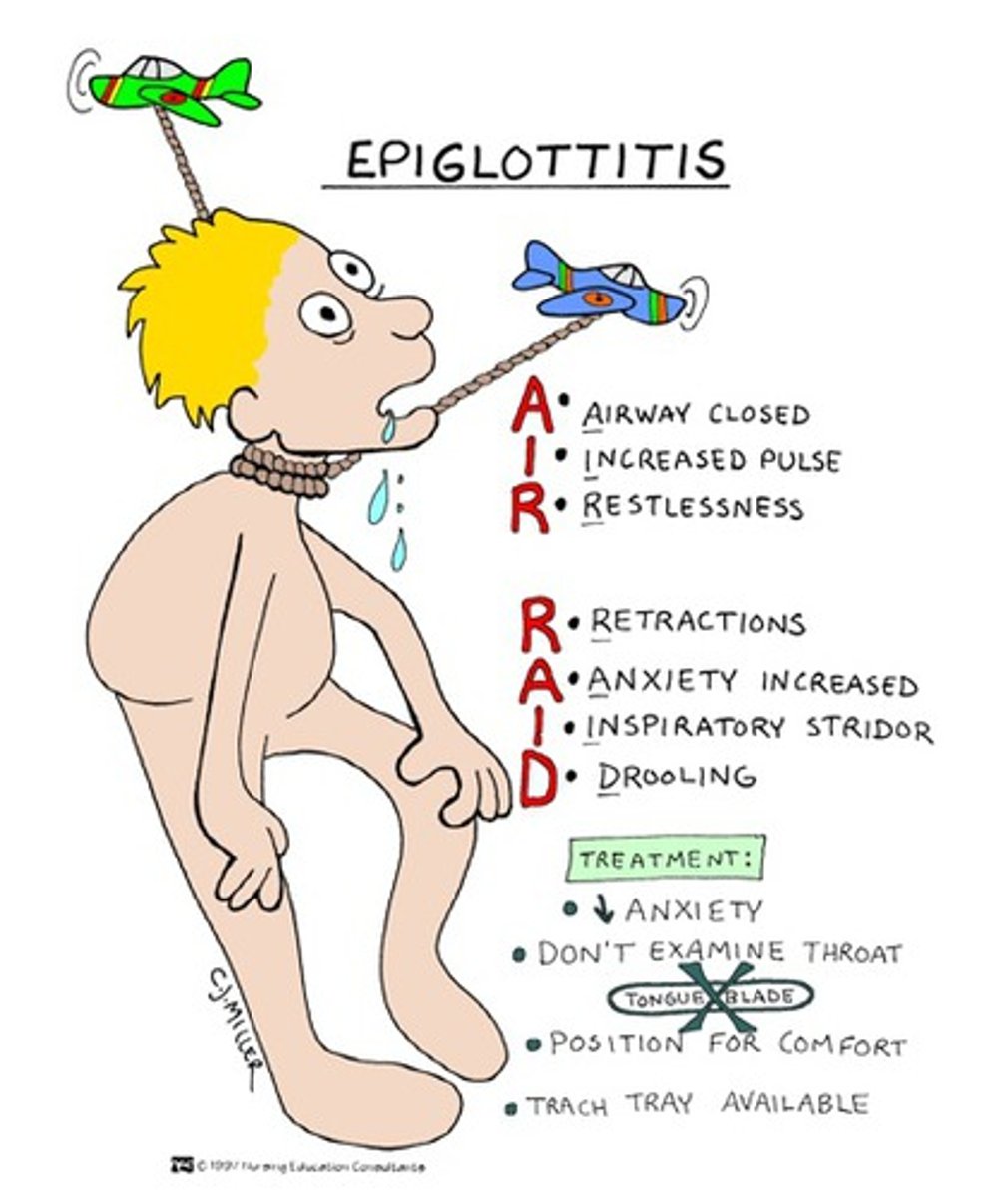
epiglottitis
inflammation of the epiglottis
- inspiratory stridor
- drooling
- tripod positioning (hunched over, hands on knees)
- most often caused by H. influenza type 3 (HIB)
treatment
- intubate
- bedside trach kit
pulmonary embolism
developed by:
F- fat (long bone fx, liposuction)
A- air embolism (starting a line)
T- thrombus (DVT)
B- bacteria (IV drug use)
A- amniotic fluid (during delivery)
T- tumor
- impaired gas exchange (increased CO2, decreased O2)
- pH acidic
- respiratory acidosis
risk factors of DVT's
- post-op (use incentive spirometry, get them to walk up)
- obesity
- smoking
- long trips
- contraceptives
- pregnancy
obstructive sleep apnea
causes
- typically seen in obese patients
- anatomical defects
education
- no drinking before sleep
- no napping before daytime
- avoid sleep aids or sleep meds
- educate on weight loss and how to eat
- don't smoke
treatment
- CPAP
negele's Rule
first day of last menstrual period - 3 months + 7 days
maternal weight gain during pregnancy
total weight gain is 28 lbs plus or minus 3
- first trimester 1 lb each month
- second trimester 1 lb a week
to calculate ideal pregnancy weight gain
week of gestation minus 9 = ideal weight gain in lbs
Fundus is not palpable until week?
12
thus, cannot palpate fundus in first trimester
when is fundus at umbilicus?
20-22 weeks of gestation
mother is priority until fundal height is
at or above the umbilicus
fetal heartbeat can be auscultated by
8 weeks (first)
10 weeks (most likely)
12 weeks (should)
when they say first, pick lowest part of range, most likely is middle of range, should is end of range
baby kicks by (quickening)
16 weeks
Chadwick, goodell and hegar signs occur in ____ order
alphabetical
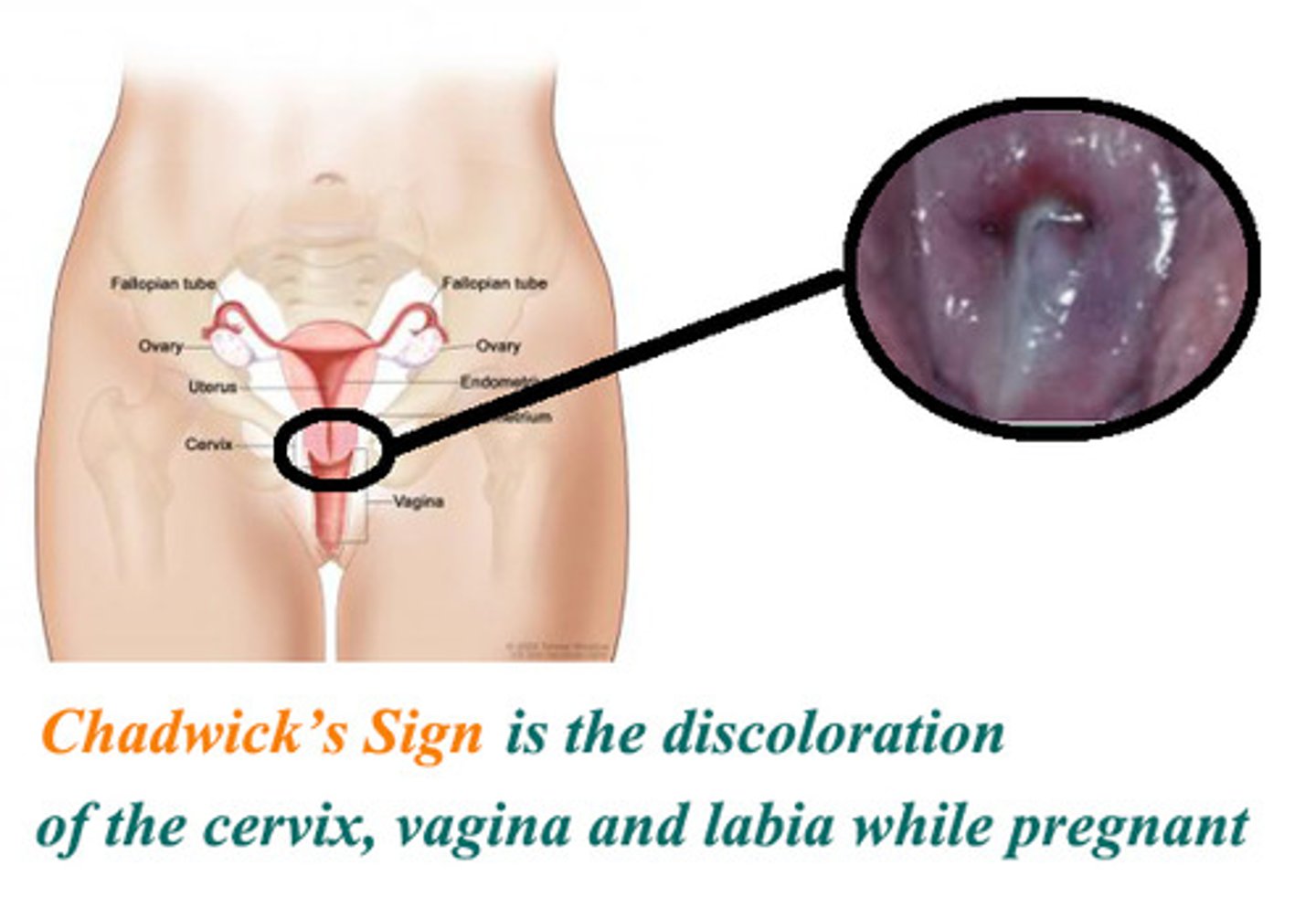
chadwick sign
cervical color change to cyanosis
goodell sign
cervical softening
hegar sign
uterine softening
positive pregnancy test
not a positive sign of pregnancy, only probable
prenatal care visits
- once a month until week 28
- then, once every two weeks until week 36
- then, once every week until delivery or week 42
- at week 42, c-section or induction
maternal pregnancy hemoglobin
can drop to 11 hgb and be normal
how do you treat morning sickness?
first trimester
dry carbohydrates before getting out of bed
how do you deal with urinary incontinence in pregnancy?
1st and 3rd trimesters
void every 2 hours all the way all through pregnancy
how do you deal with difficulty breathing in pregnancy?
tripod position
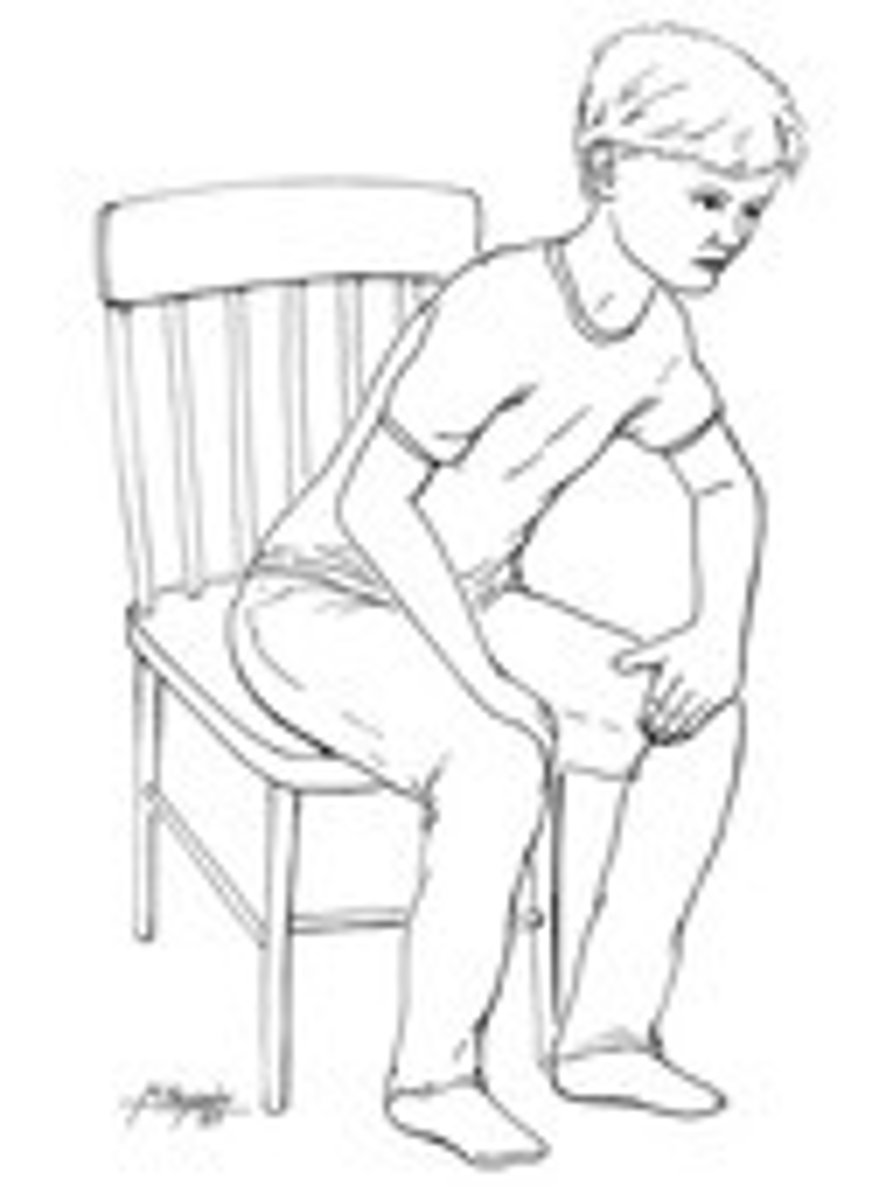
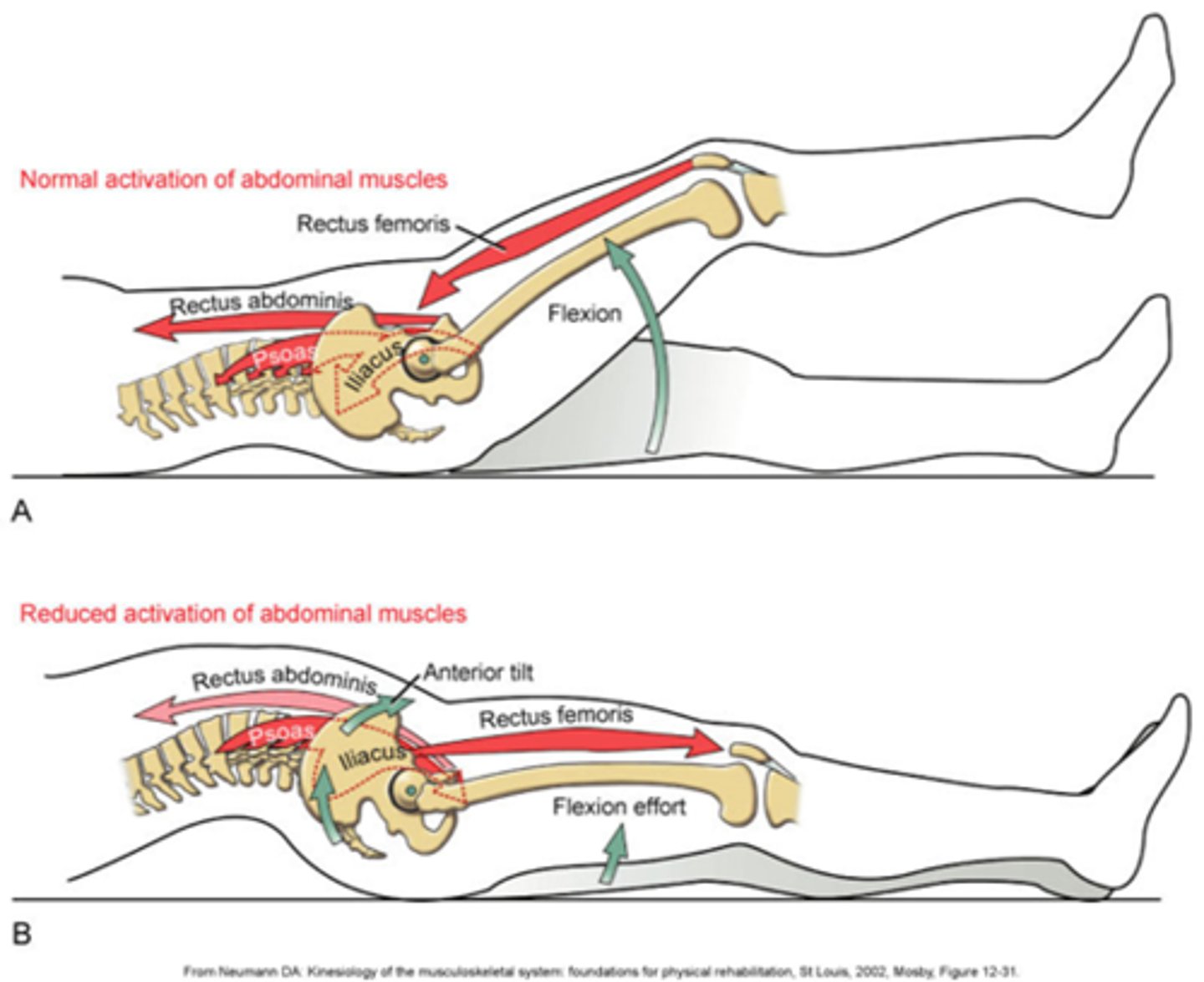
how do you deal with back pain in pregnancy?
second and third trimester
pelvic tilt exercises
most valid sign that a woman is in labor
onset of regular progressive contractions
dilation
opening of the cervix
0-10 centimeters
effacement
thinning of the cervix during labor
ischial spines
smallest diameter in which the baby has to fit in order to be born vaginally
vertical lie
GOOD