Week 7: Gut Microbiome & Immune System
 Call Kai
 Learn
Learn Practice Test
 Spaced Repetition
 Match
Match Flashcards
 Knowt Play
1/19

There's no tags or description
Looks like no tags are added yet.
Name | Mastery | Learn | Test | Matching | Spaced | Call with Kai |
|---|
No analytics yet
Send a link to your students to track their progress
20 Terms
Which of the following is not a component that contributes to human gut microbiome stability:
Direct bacterial defense against other bacterial species
Host immune system defense against specific of bacterial species
All of these answer choices are correct.
Bacterial niche specialization and colonization
Bacterial competition for resources
All of these answer choices are correct.
Choose the correct statement that describes the development of the human gut microbiome:
Humans have the same type and number of microorganism species present in their gut at birth and at death.
Humans are born with the least amount of unique microorganism species in their gut, but by the time they reach an elderly age they have the greatest amount of unique microorganism species.
Humans are born with the least amount of unique microorganism species in their gut and have greatest amount of unique species once they develop in to adulthood.
Humans are born with the greatest amount of unique microorganism species in their gut and as they get older specific microbial species are eliminated through competition for resources.
Humans are born with the least amount of unique microorganism species in their gut and have greatest amount of unique species once they develop in to adulthood.
Choose the correct statement that describes how humans gain a gut microbiota:
Humans gain a gut microbiota from the first foods they eat.
Humans gain a gut microbiota from the birthing process.
Bacteria can but usually don’t colonize the human gut during birth.
Bacteria colonize the human gut while they are in the womb
Humans gain a gut microbiota from the birthing process.
Milk-oriented Microbiota refers to:
The type of baby formula invented that includes human milk oligosaccharides.
The difference between lactose tolerant and lactose intolerant human microbiota
The presence of microbes in store bought milk made from dairy cows.
The enrichment of select microbes during development that can degrade human milk oligosaccharides.
The enrichment of select microbes during development that can degrade human milk oligosaccharides.
Choose the correct statement that refers to human gut microbiome resilience after antibiotic exposure:
Antibiotics can directly kill most of the bacterial species present in the gut but the ones that survive the antibiotic treatment can then increase their population sizes after the antibiotic treatment is finished
Antibiotics educate the host immune system to defend against only the bacteria that are causing the disease so after the antibiotic treatment only beneficial microbes are present.
Antibiotics can directly kill all of the bacterial species present in the gut and the observed resilience of the microbiota is due to new bacteria we introduce from the food we eat or other environmental exposure events.
Antibiotics are food sources for beneficial microbes only and allow their population sizes to increase due to the greater amount of food that is available for only these beneficial bacteria.
Antibiotics can directly kill most of the bacterial species present in the gut but the ones that survive the antibiotic treatment can then increase their population sizes after the antibiotic treatment is finished
Gut microbial food sources do not include:
Host epithelial cell components
Host produced intestinal mucosal complex sugars
Bacterial produced simple sugars
Host consumed complex sugars
Host epithelial cell components
Choose the correct statement that refers to either beneficial or pathogenic microbes:
All microbes are pathogenic but we still tolerate some species without showing disease symptoms.
Beneficial microbes develop a symbiotic relationship with the host and pathogenic microbes do not and cause disease symptoms in the host.
Pathogenic bacteria help hosts utilize food sources, which they are not normally able to use.
All microbes are beneficial but some are considered pathogenic because the host immune system does not recognize it.
Beneficial microbes develop a symbiotic relationship with the host and pathogenic microbes do not and cause disease symptoms in the host.
Bacteria are able to utilize energy sources present in their extracellular environment because:
They can absorb complex and simple sugars in their extracellular environment through simple diffusion.
They can consume complex and simple sugars through exocytosis
They can consume complex and simple sugars through specific transporters and enzymes present in their membrane.
They can consume complex and simple sugars through endocytosis
They can consume complex and simple sugars through specific transporters and enzymes present in their membrane.
Choose the correct statement that describes bacterial feeding strategies in the developing and mature microbiome:
Bacteria in the developing microbiome consume complex sugars and degrade them in to simple sugars in their intracellular environment while bacteria in the mature microbiome mostly degrade complex sugars in the extracellular environment and consume the simple sugars that result.
Bacteria present in the developing microbiome utilize a feeding strategy in which they degrade complex sugars in the extracellular environment and consume the simple sugars that result.
Humans are born with the greatest amount of unique microorganism Bacterial feeding strategies of the developing microbiome is the same as the mature microbiome
Bacteria present in the mature microbiome utilize a feeding strategy in which they consume complex sugars and degrade them in to simple sugars in their intracellular environment.
Bacteria in the developing microbiome consume complex sugars and degrade them in to simple sugars in their intracellular environment while bacteria in the mature microbiome mostly degrade complex sugars in the extracellular environment and consume the simple sugars that result.
Microbiome refers to:
All the functional genes within microorganisms that inhabit a location.
All the microorganisms that inhabit a location as well as all their functional genes and metabolites.
All the microorganisms that inhabit a location.
An organism and all its symbiotic microorganisms.
All the microorganisms that inhabit a location as well as all their functional genes and metabolites.
The sterile womb hypothesis refers to:
The distinct microbiota present in the developing fetus gut and the newborn child gut.
The strict maternal regulation of microorganism species that are able colonize a child before and after birth.
The absence of microorganisms in the environment of a developing fetus.
An old hypothesis that has been proven wrong by recent technological advancements in microbiology research.
The absence of microorganisms in the environment of a developing fetus.
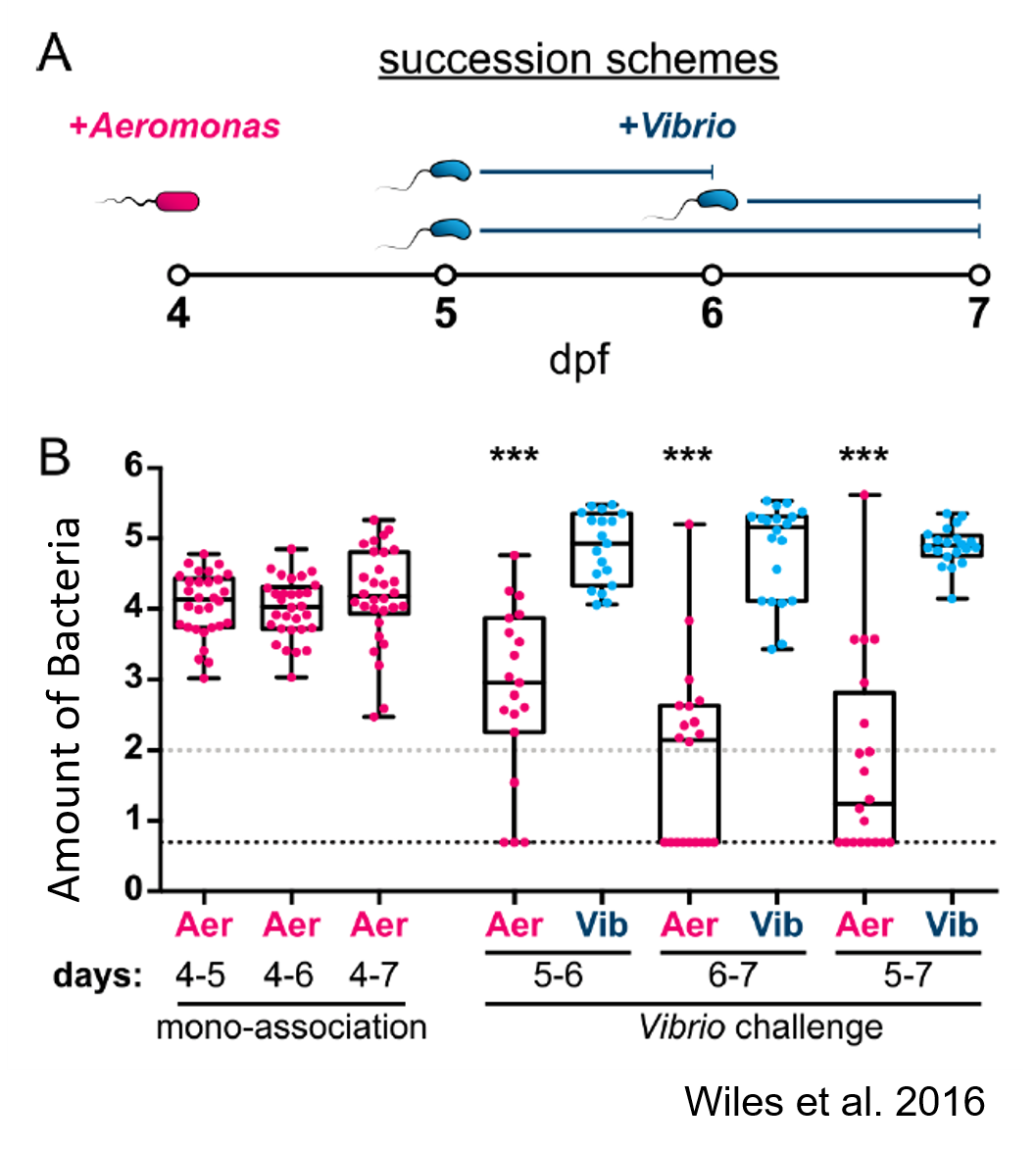
To determine if Aeromonas and Vibrio can co-exist in the Zebrafish gut you colonize germ free zebrafish larva with Aeromonas first and then expose the Zebrafish+Aeromonas to Vibrio. You sample and count the number of bacteria present in the gut at multiple times throughout the experiment. The results from your experiment are shown in log scale below:
Based on the data, Aeromonas are able to out compete Vibrio because they were the first to colonize the zebrafish gut.
True/False
Cannot be determined
False
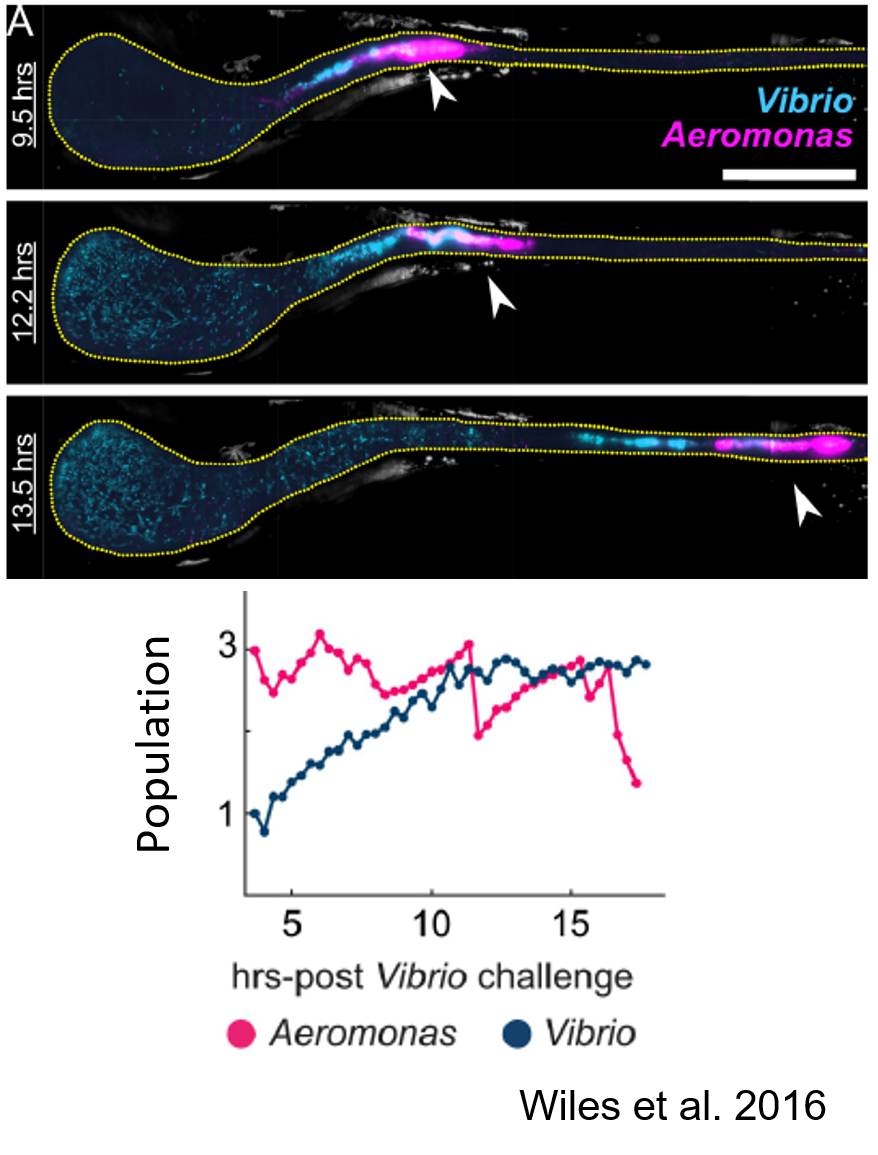
You are curious about the mechanism of competitive exclusion present in the larval zebrafish gut so you fluorescently label Vibrio and Aeromonas and run the same colonization challenge experiment as before but measure the presence of each species over a smaller time scale (hours vs. days). The results from your experiment are shown in log scale below:
Based on the data, the amount of Vibrio increases exponentially in the larval zebrafish gut.
True/False
Cannot be determined
False
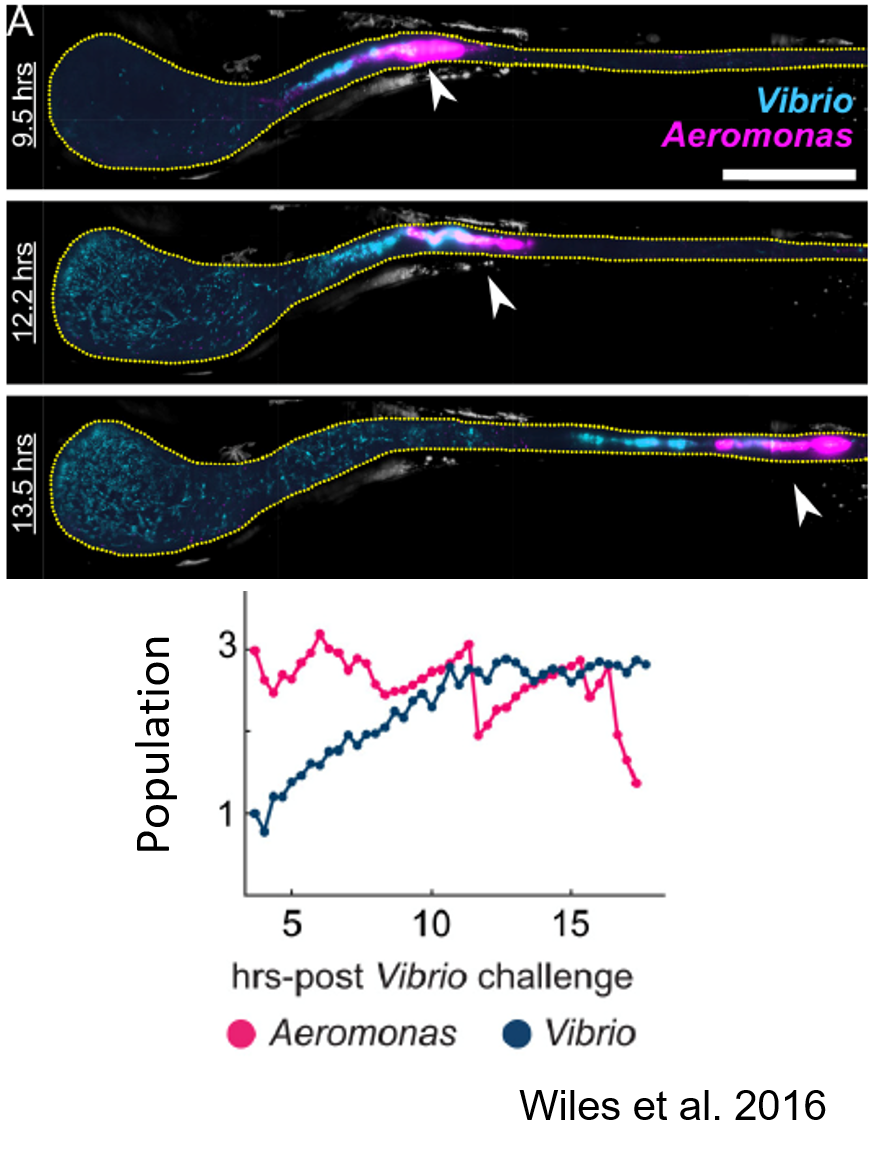
You are curious about the mechanism of competitive exclusion present in the larval zebrafish gut so you fluorescently label Vibrio and Aeromonas and run the same colonization challenge experiment as before but measure the presence of each species over a smaller time scale (hours vs. days). The results from your experiment are shown in log scale below:
For this experiment, Aeromonas were introduced before Vibrio into the larval zebrafish gut.
True/False
Cannot be determined
True
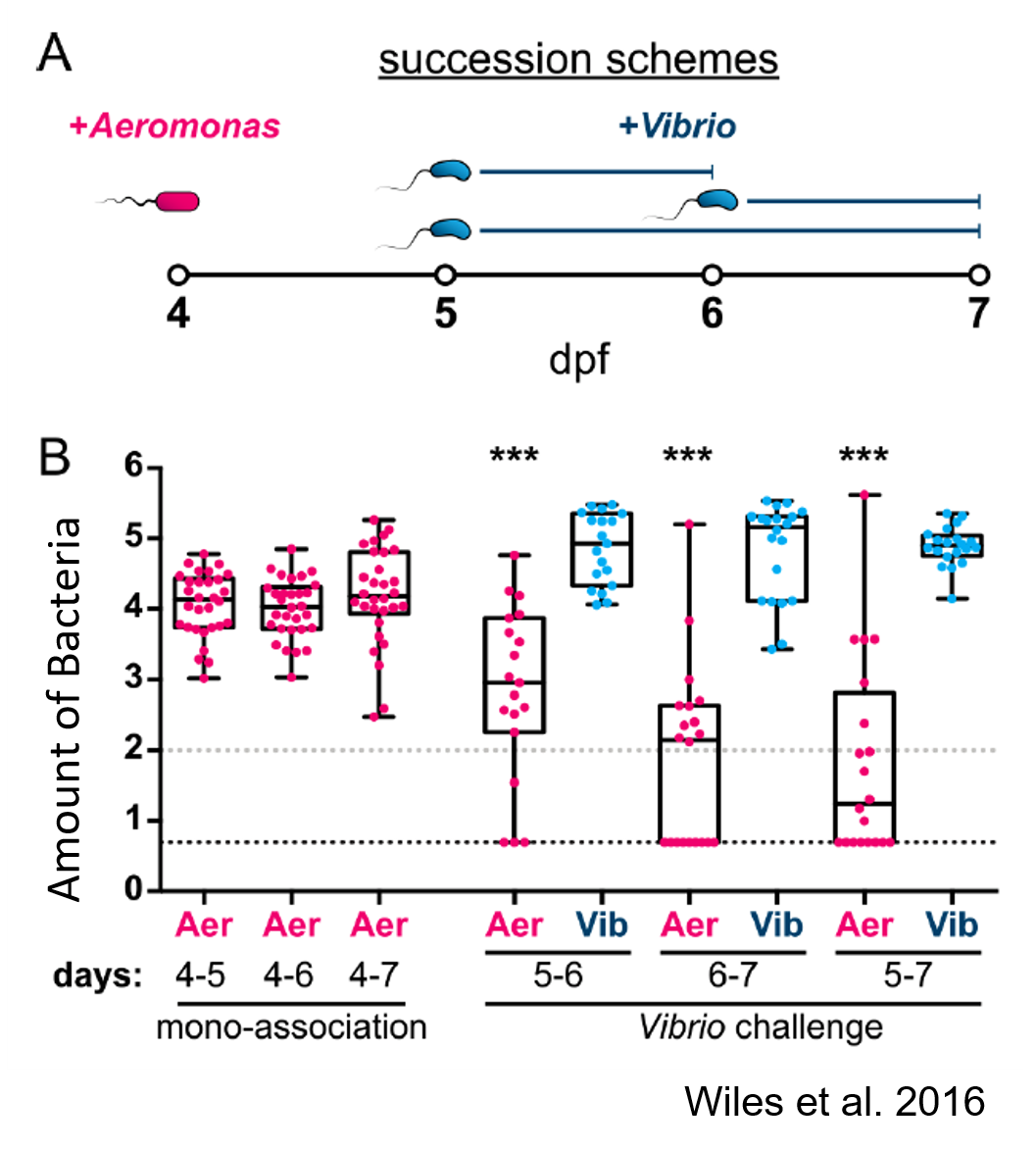
To determine if Aeromonas and Vibrio can co-exist in the Zebrafish gut you colonize germ free zebrafish larva with Aeromonas first and then expose the Zebrafish+Aeromonas to Vibrio. You sample and count the number of bacteria present in the gut at multiple times throughout the experiment. The results from your experiment are shown in log scale below:
Based on the data, Aeromonas can persistently exist in the larval zebrafish gut when Vibrio is not present.
True/False
Cannot be determined
True
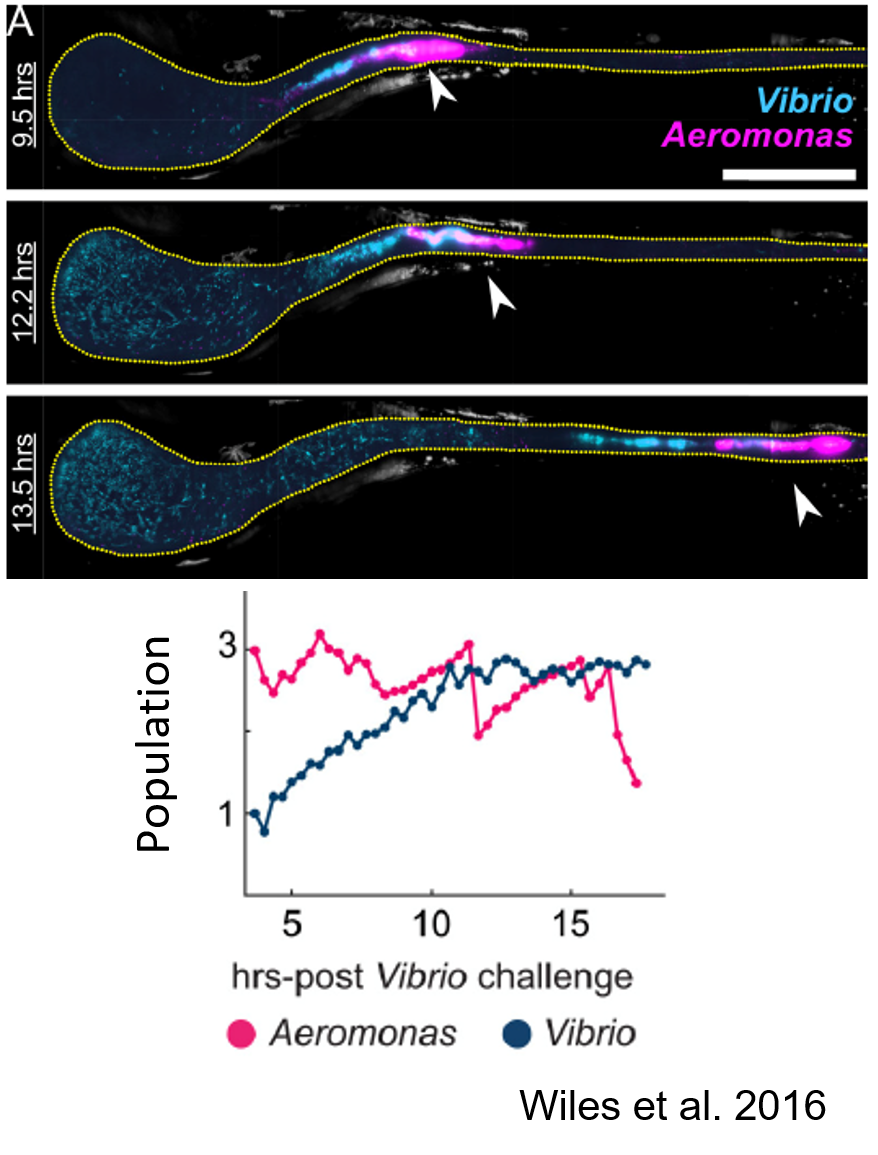
You are curious about the mechanism of competitive exclusion present in the larval zebrafish gut so you fluorescently label Vibrio and Aeromonas and run the same colonization challenge experiment as before but measure the presence of each species over a smaller time scale (hours vs. days). The results from your experiment are shown in log scale below:
Based on the data, the amount of Vibrio increases logarithmically in the larval zebrafish gut.
True/False
Cannot be determined
True
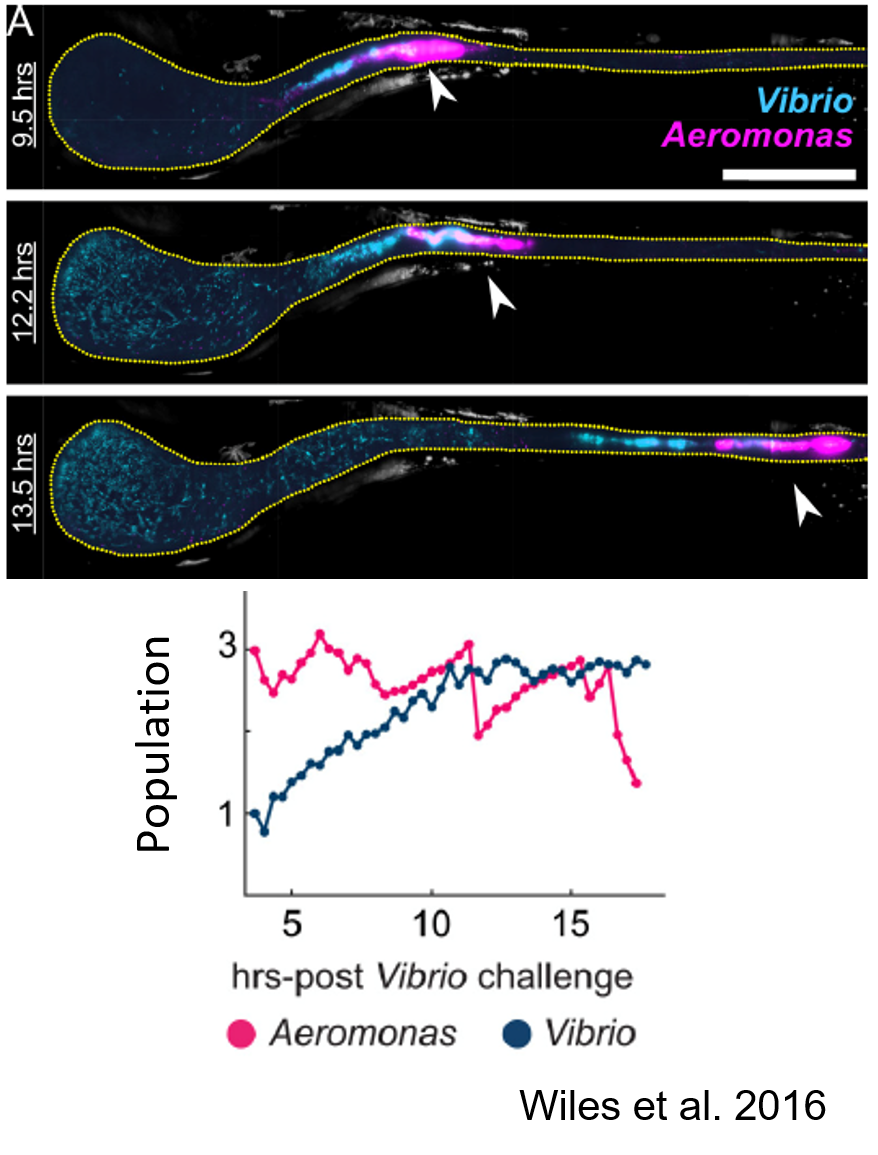
You are curious about the mechanism of competitive exclusion present in the larval zebrafish gut so you fluorescently label Vibrio and Aeromonas and run the same colonization challenge experiment as before but measure the presence of each species over a smaller time scale (hours vs. days). The results from your experiment are shown in log scale below:
What can you conclude based on this data?
The limiting factor that is keeping the population size down is nutrient availability.
That population size is limited once carrying capacity is reached.
That individuals are distributed evenly throughout their habitat.
The movement of individuals out of a population into another population at 15 hours post Vibrio challenge.
That population size is limited once carrying capacity is reached.
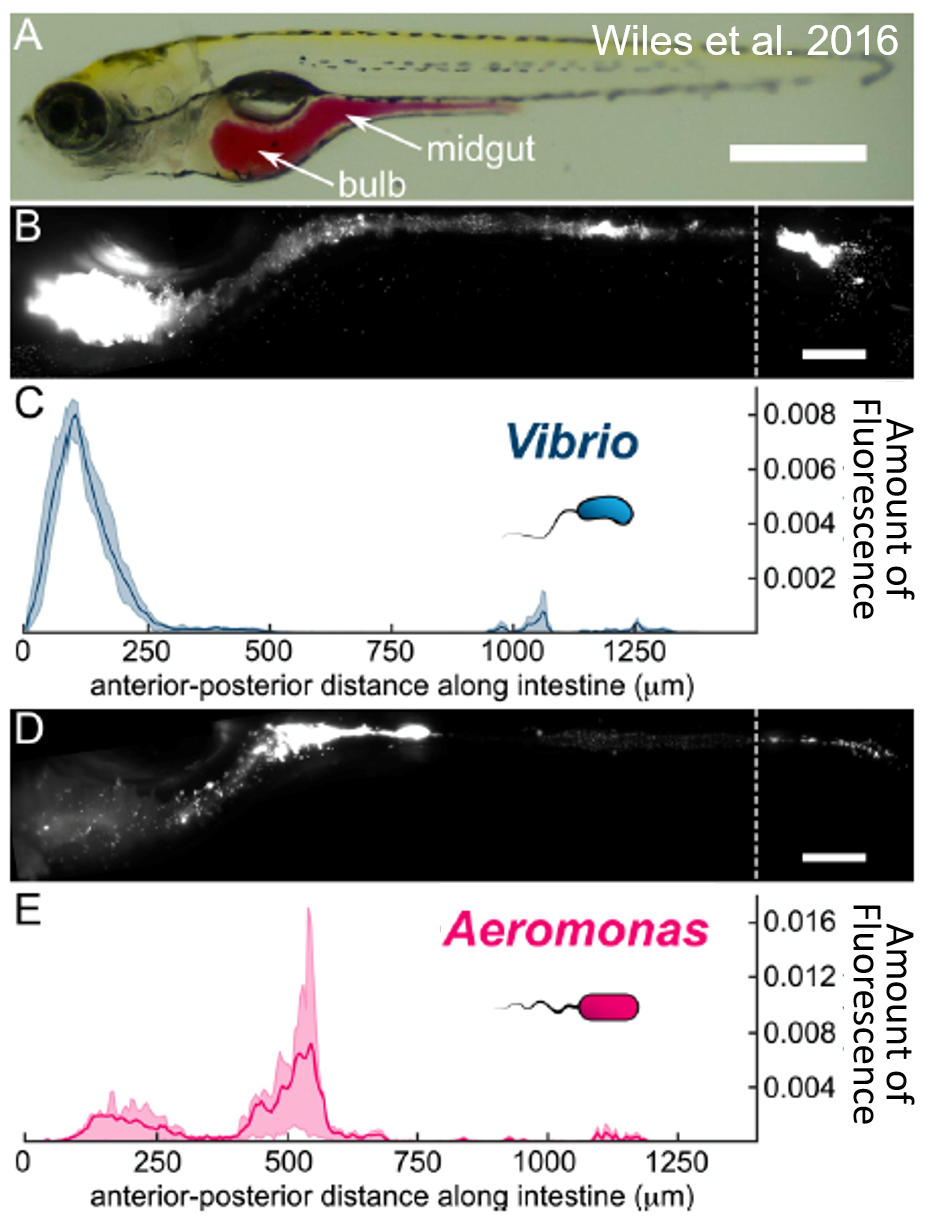
The figure below incorporates data generated to investigate host-microbe interactions. With a fluorescent marker, researchers were able to visualize species specific locations in the Zebrafish gut when colonized either Vibrio or Aeromonas.
Based on this data, we can estimate the total bacterial populations of Vibrio or Aeromonas based on the level of fluorescence detected in Figures C and E.
True/False
Cannot be determined
True
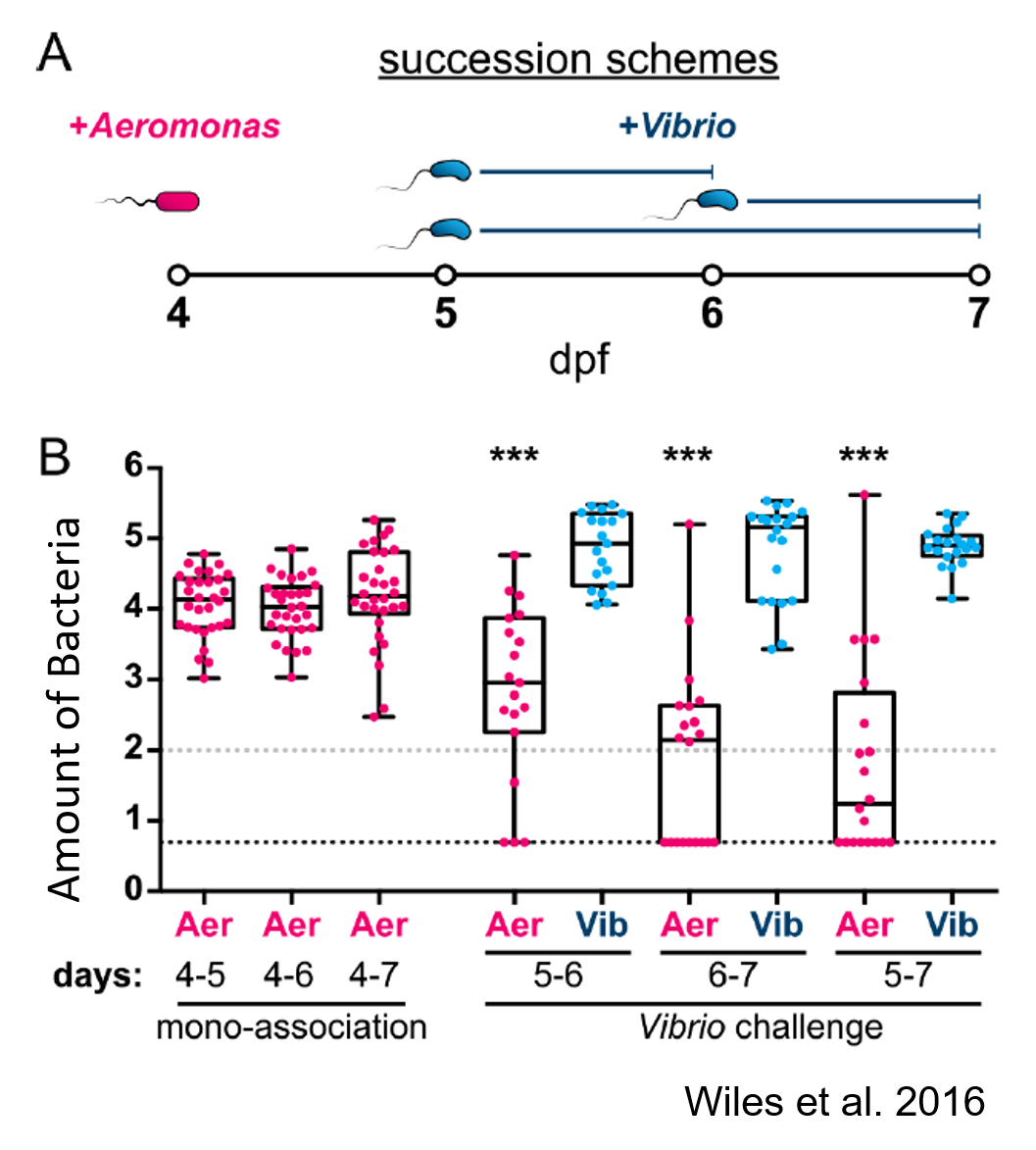
To determine if Aeromonas and Vibrio can co-exist in the Zebrafish gut you colonize germ free zebrafish larva with Aeromonas first and then expose the Zebrafish+Aeromonas to Vibrio. You sample and count the number of bacteria present in the gut at multiple times throughout the experiment. The results from your experiment are shown in log scale below:
Based on the data, Aeromonas are able to utilize different food sources present in the larval zebrafish gut better than Vibrio.
True/False
Cannot be determined
Cannot be determined
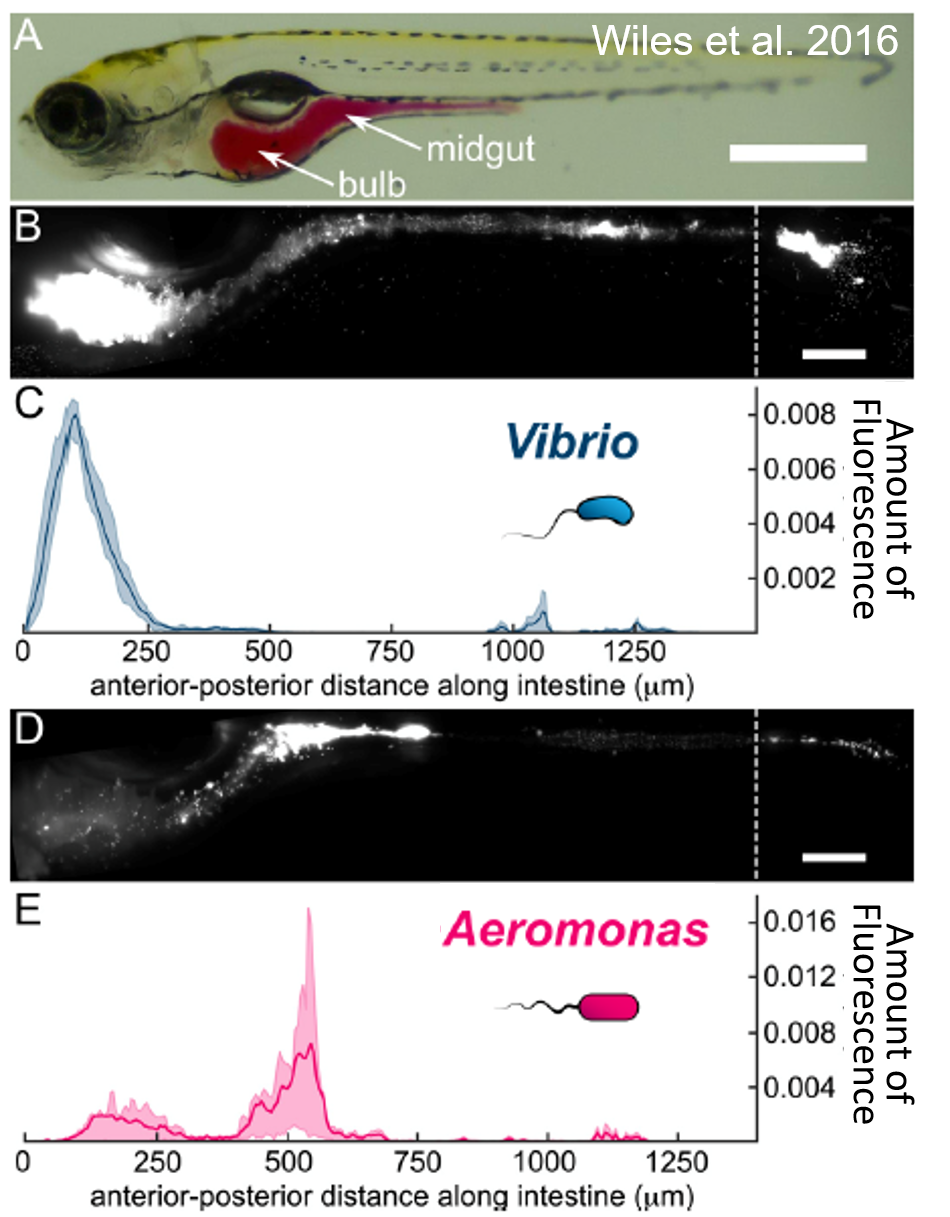
The figure below incorporates data generated to investigate host-microbe interactions. With a fluorescent marker, researchers were able to visualize species specific locations in the Zebrafish gut when colonized either Vibrio or Aeromonas. Based on this data, we can conclude:
T/F: Based on this data, Vibrio are localized mainly at the bulb region of the Zebrafish larval gut.
True