MG207 Purposeful
 Call Kai
 Learn
Learn Practice Test
 Spaced Repetition
 Match
Match Flashcards
 Knowt Play
1/138

There's no tags or description
Looks like no tags are added yet.
Name | Mastery | Learn | Test | Matching | Spaced | Call with Kai |
|---|
No analytics yet
Send a link to your students to track their progress
139 Terms
Budget Constraint Graphs
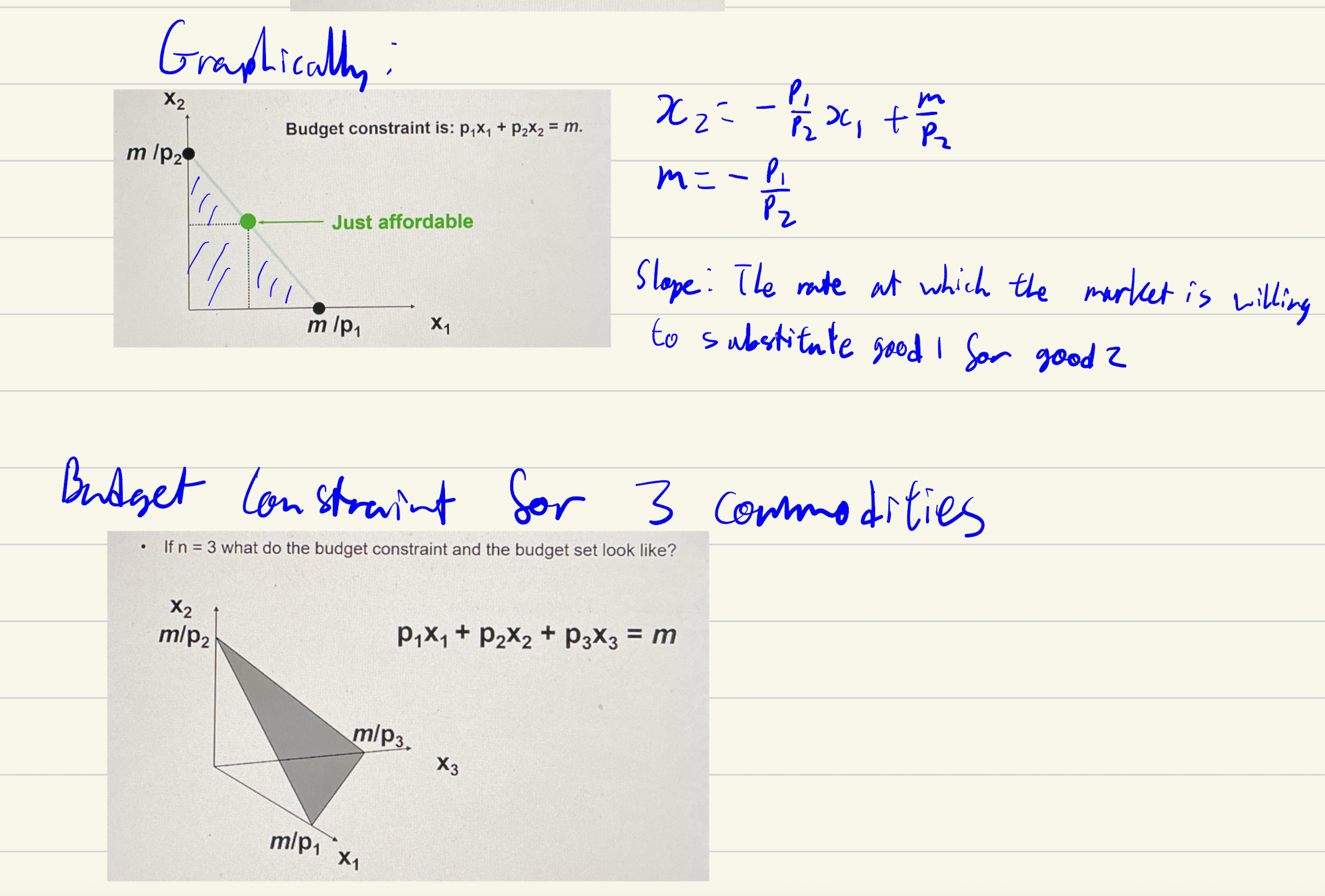
Consumption excange ratio
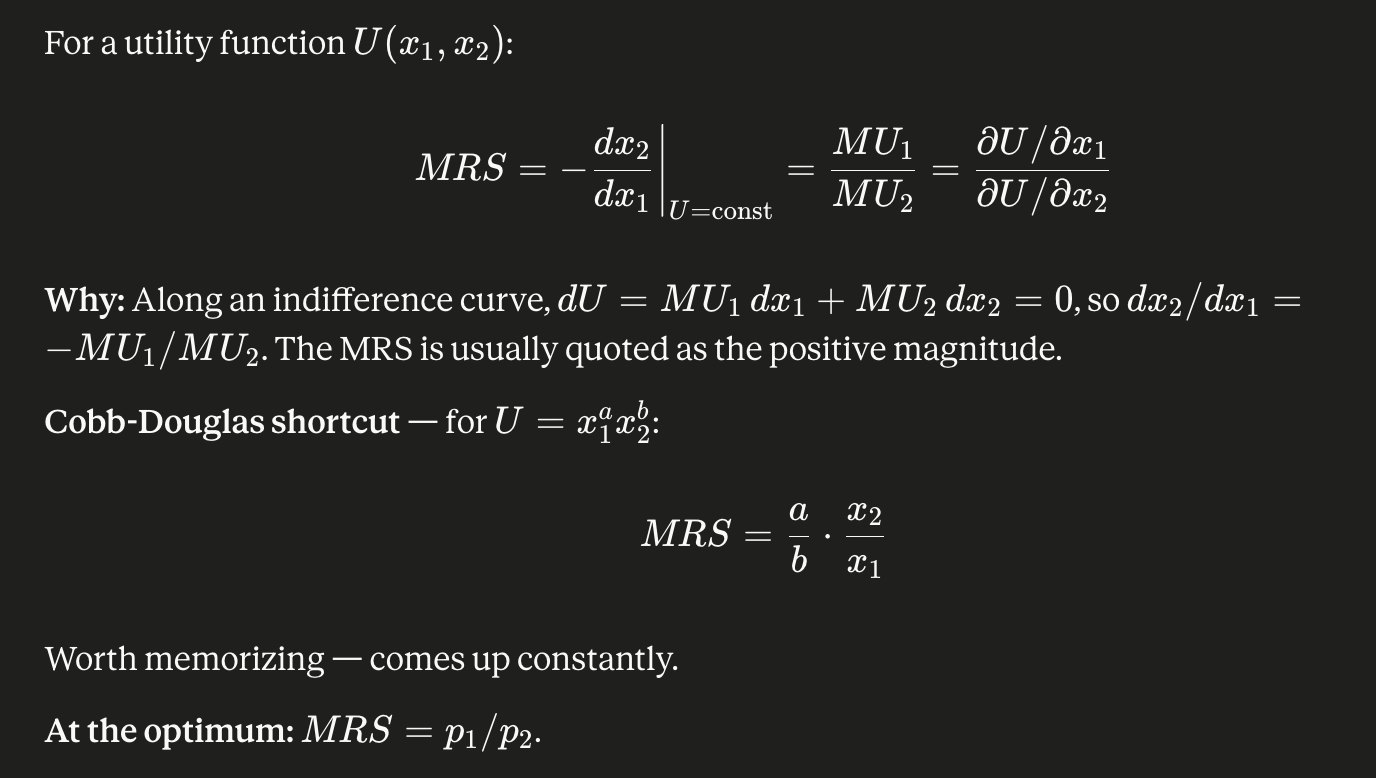
MRS tells you how much of good 2 the consumer is willing to give up to get one more unit of good 1 (while staying equally happy).
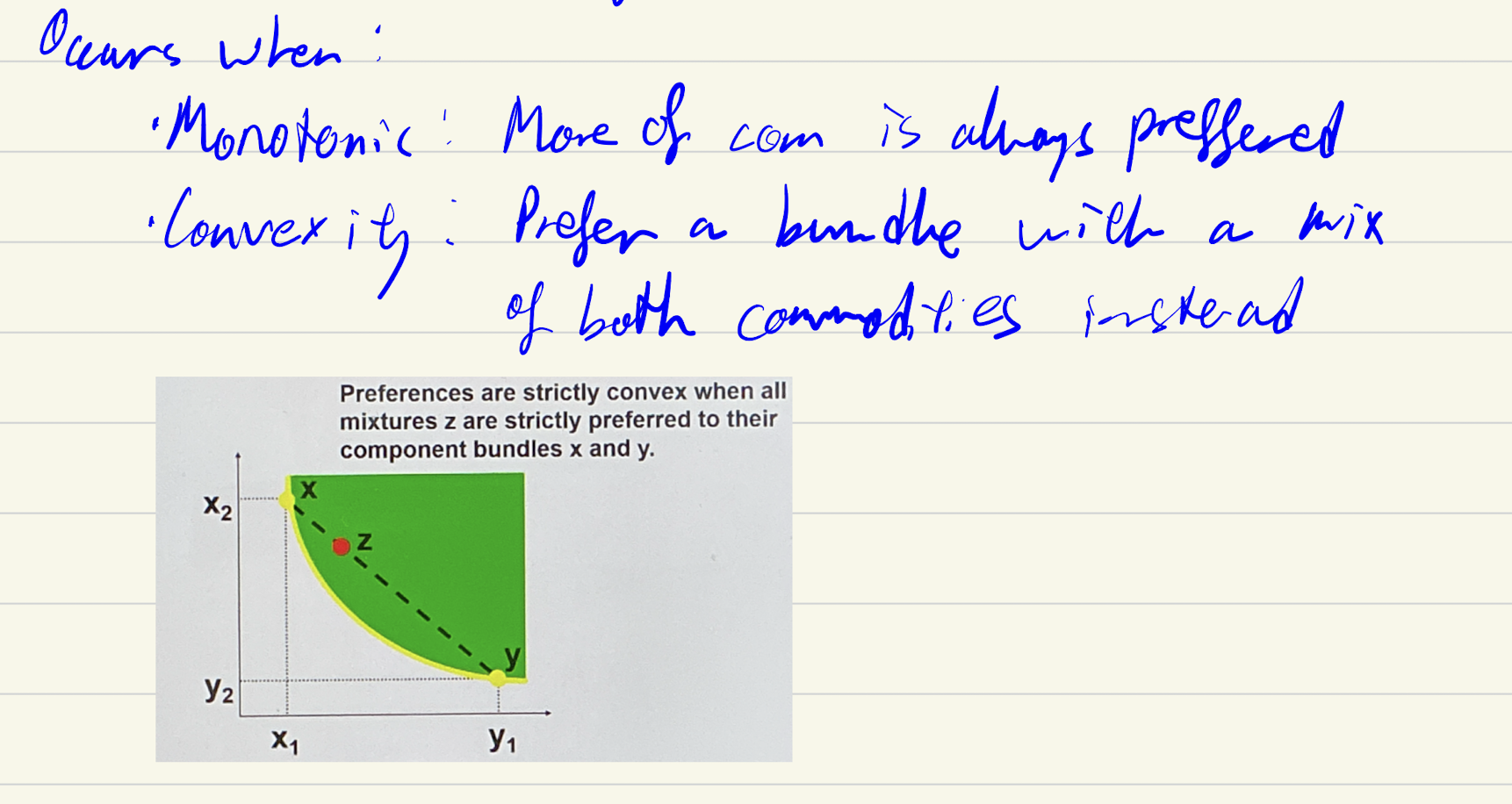
Consumer preferences assumptions; Axioms of consumer theory
Will choose most preferred alt from set of alt, preference relations (strict vs weak vs indifference), completeness, transivity, reflexivity, continuity,
Well behaved preferences
MRS
Changes along curve
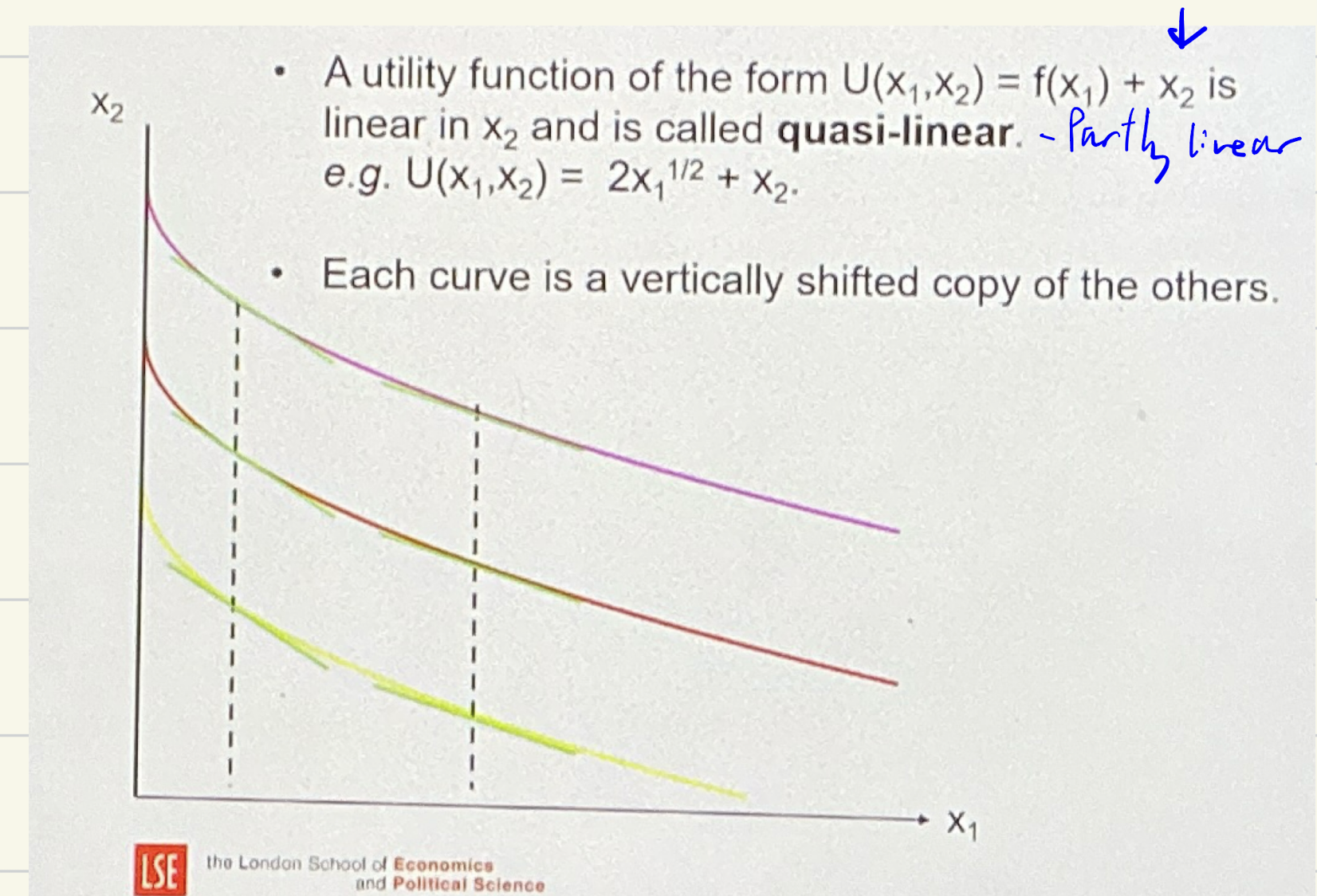
Quasi linear function
like increasing it upward when plugged in, partly linear
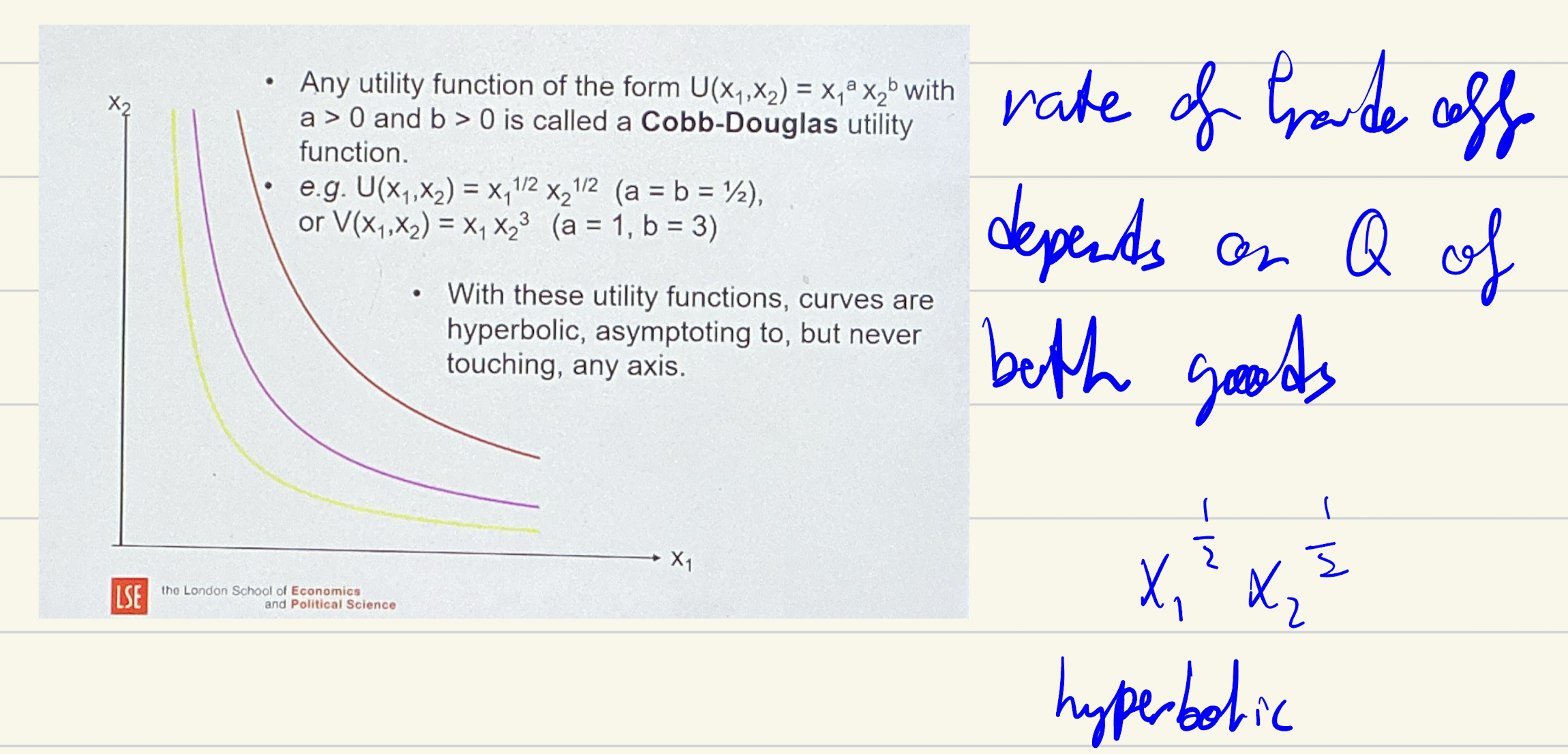
Cobb douglas indiff set
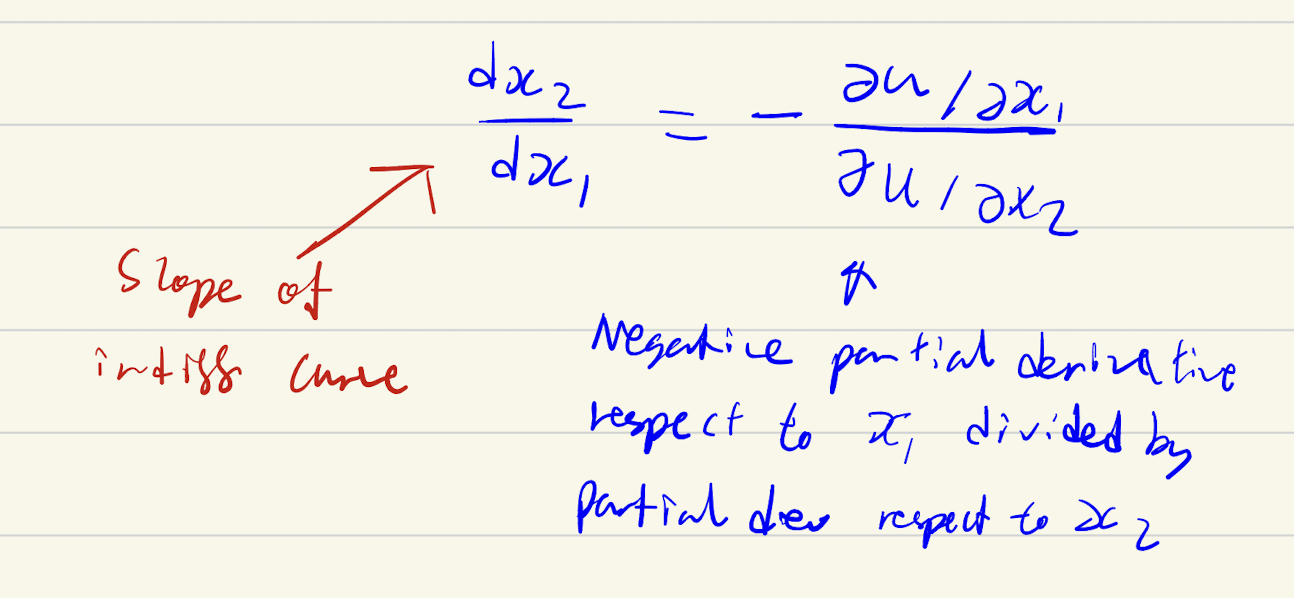
slope of indiff curve
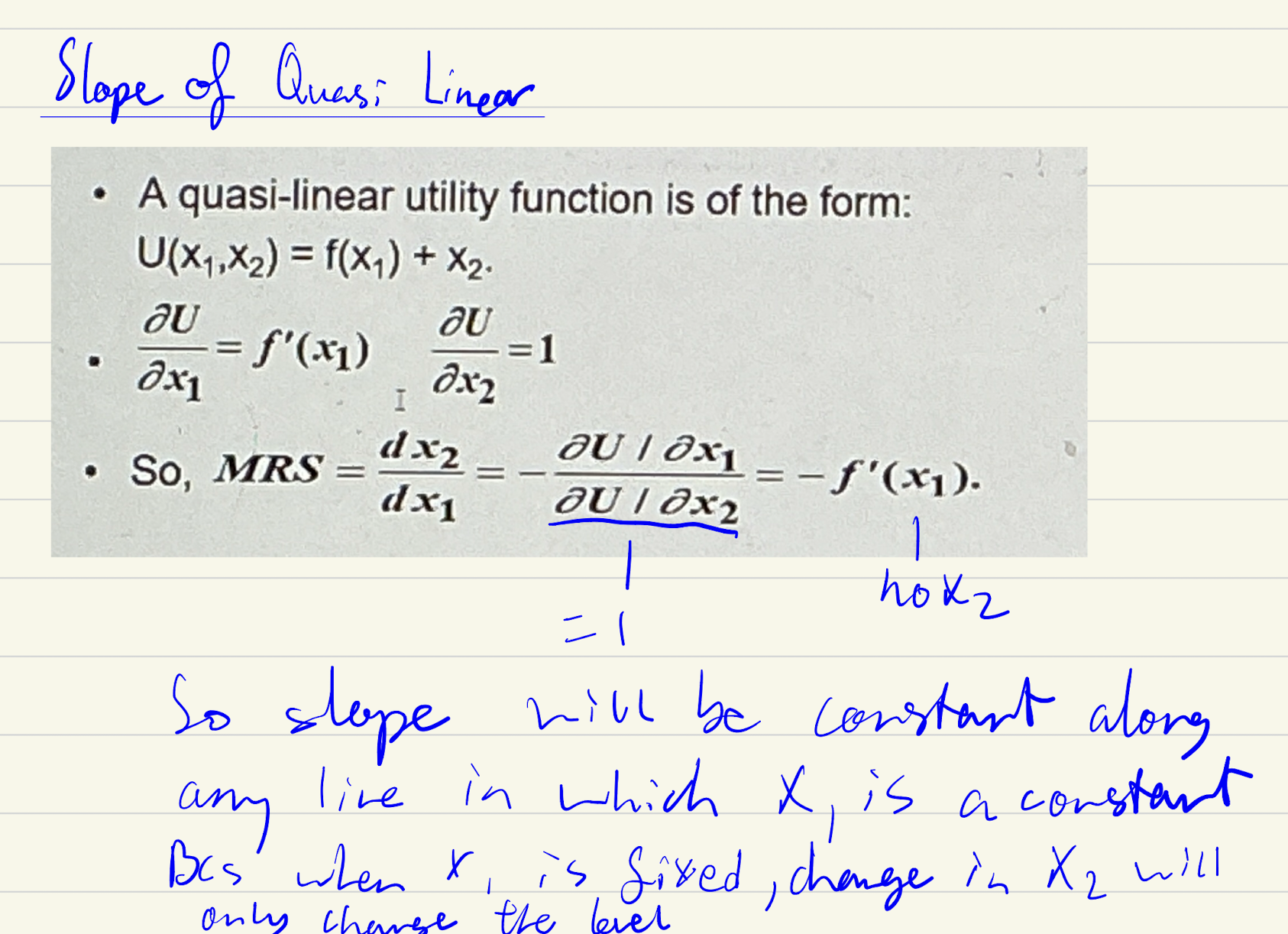
Slope of quasi linear
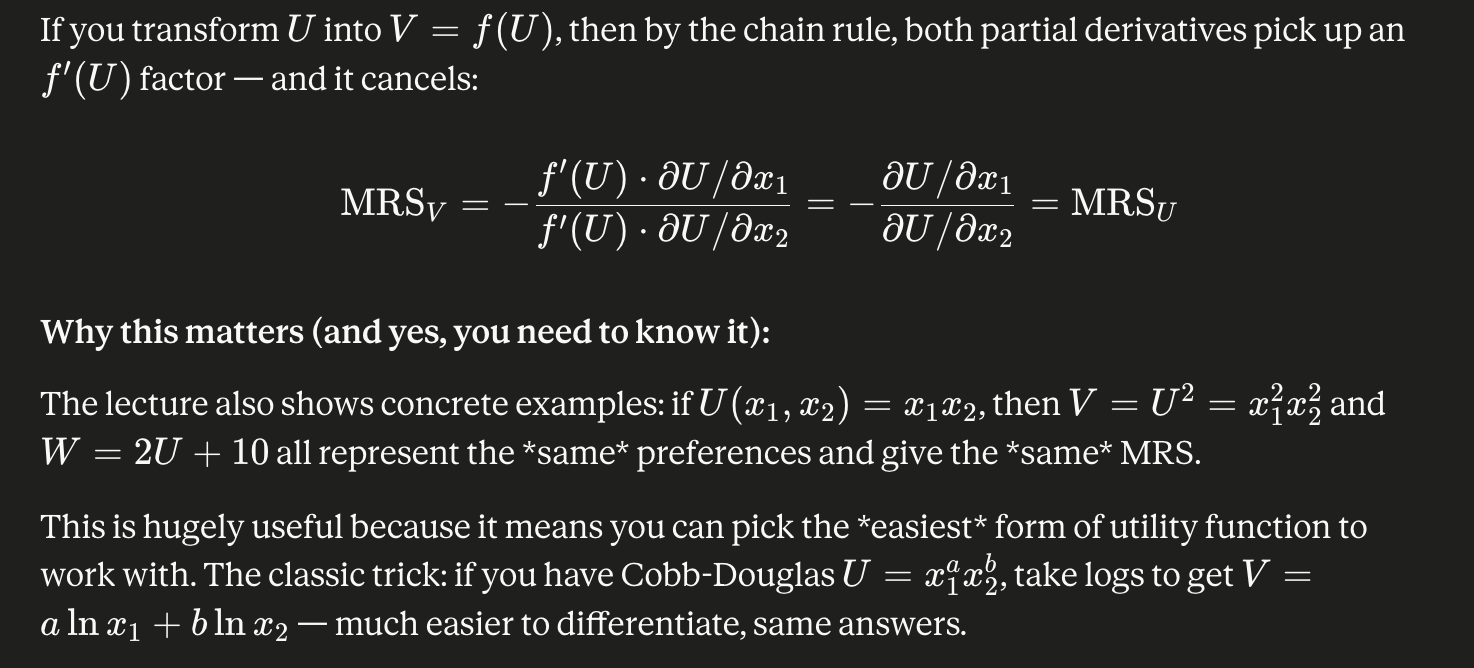
Monotonic transformationss
more of a feeling thing, need to spot it
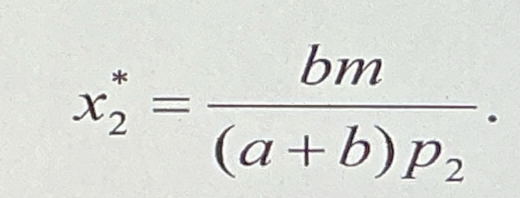
Know how to calc ordinary demand
Identify problem, set system of equations, solve mrs based on problem, solve system using mrs and system of equations
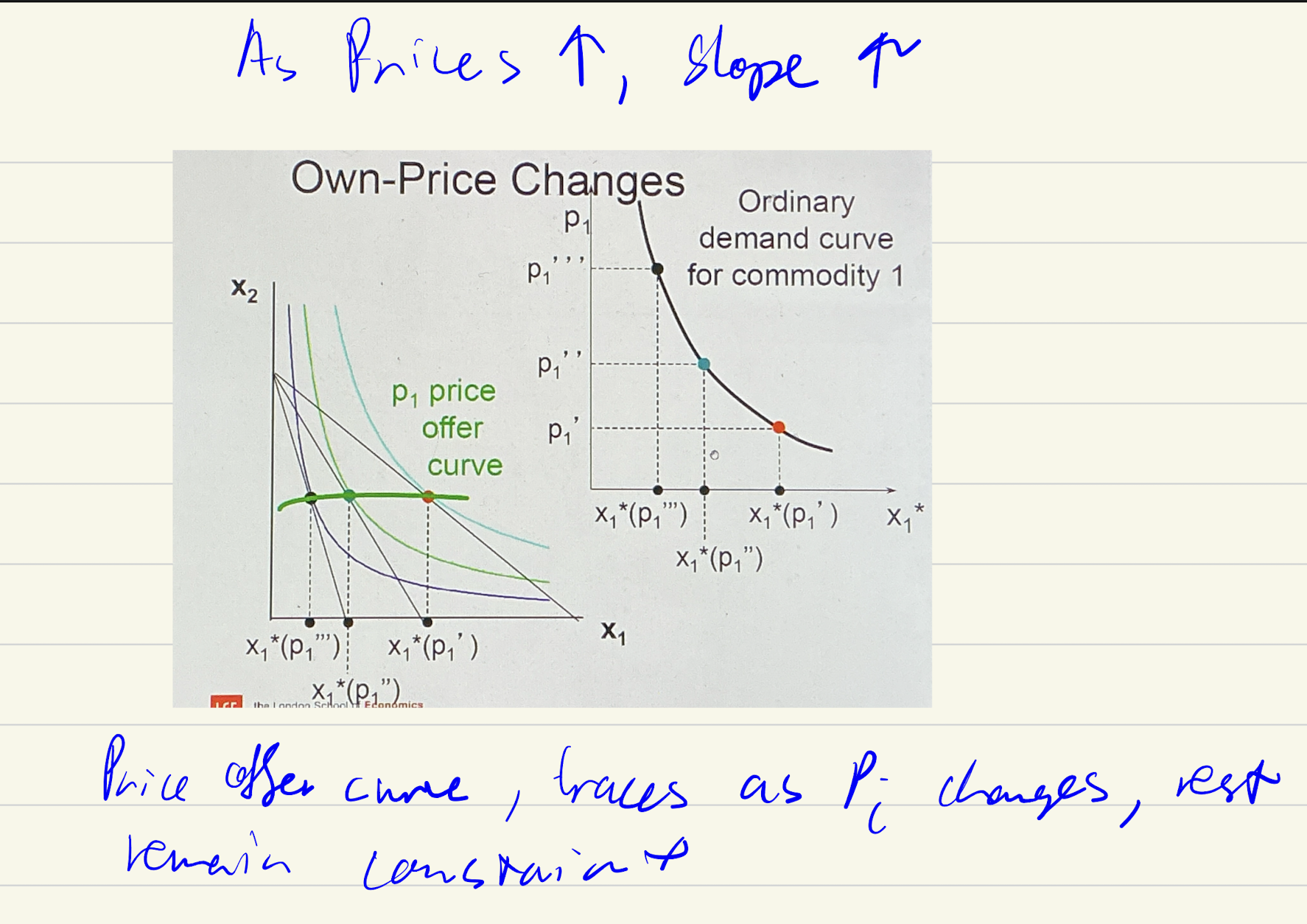
Price offer curve
budget line moves as price changes
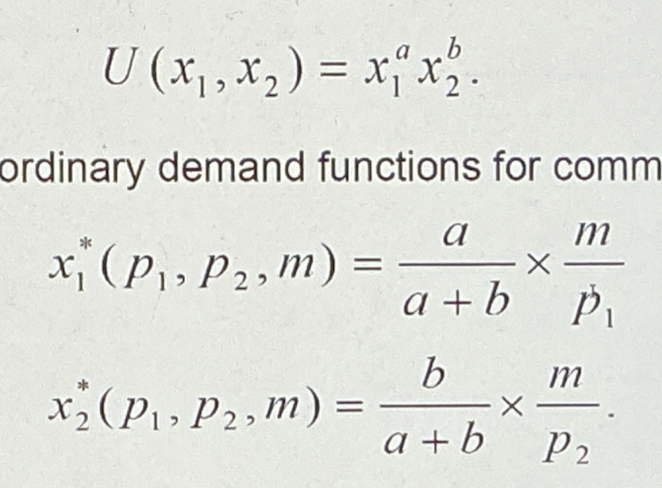
cobb douglas ordinary demand functions
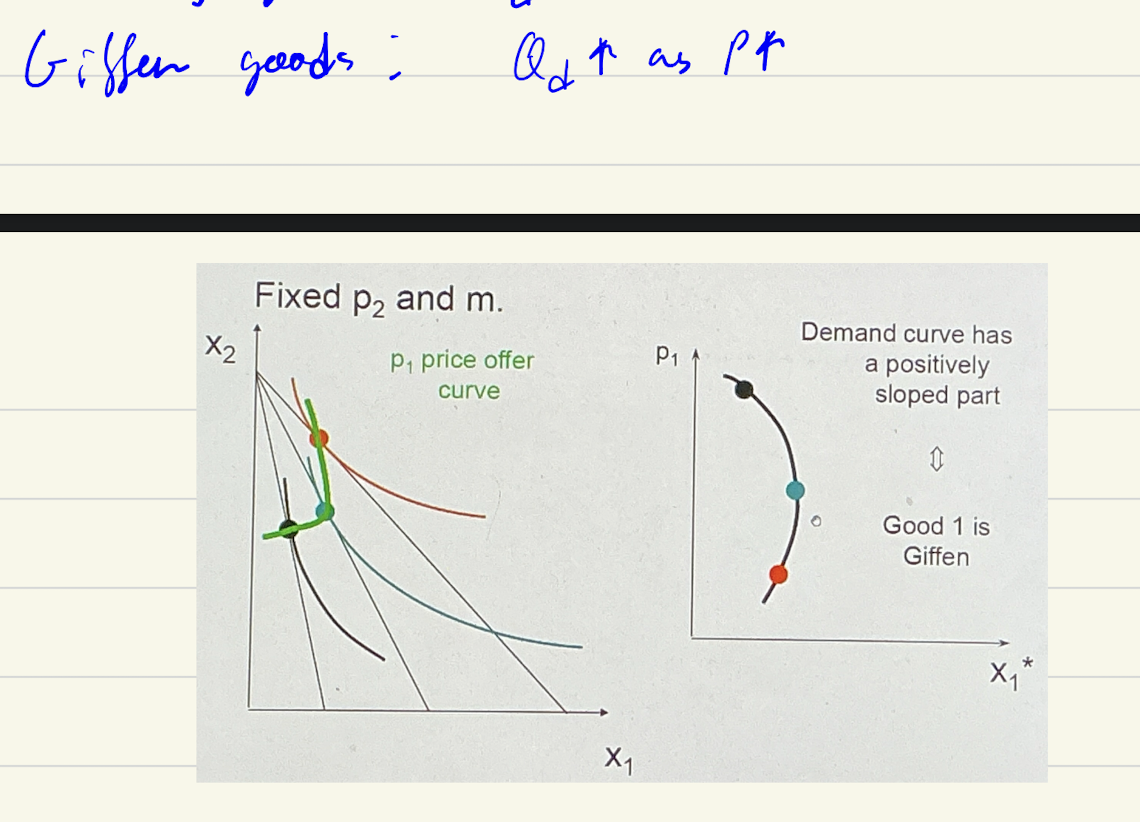
Giffen goods curve
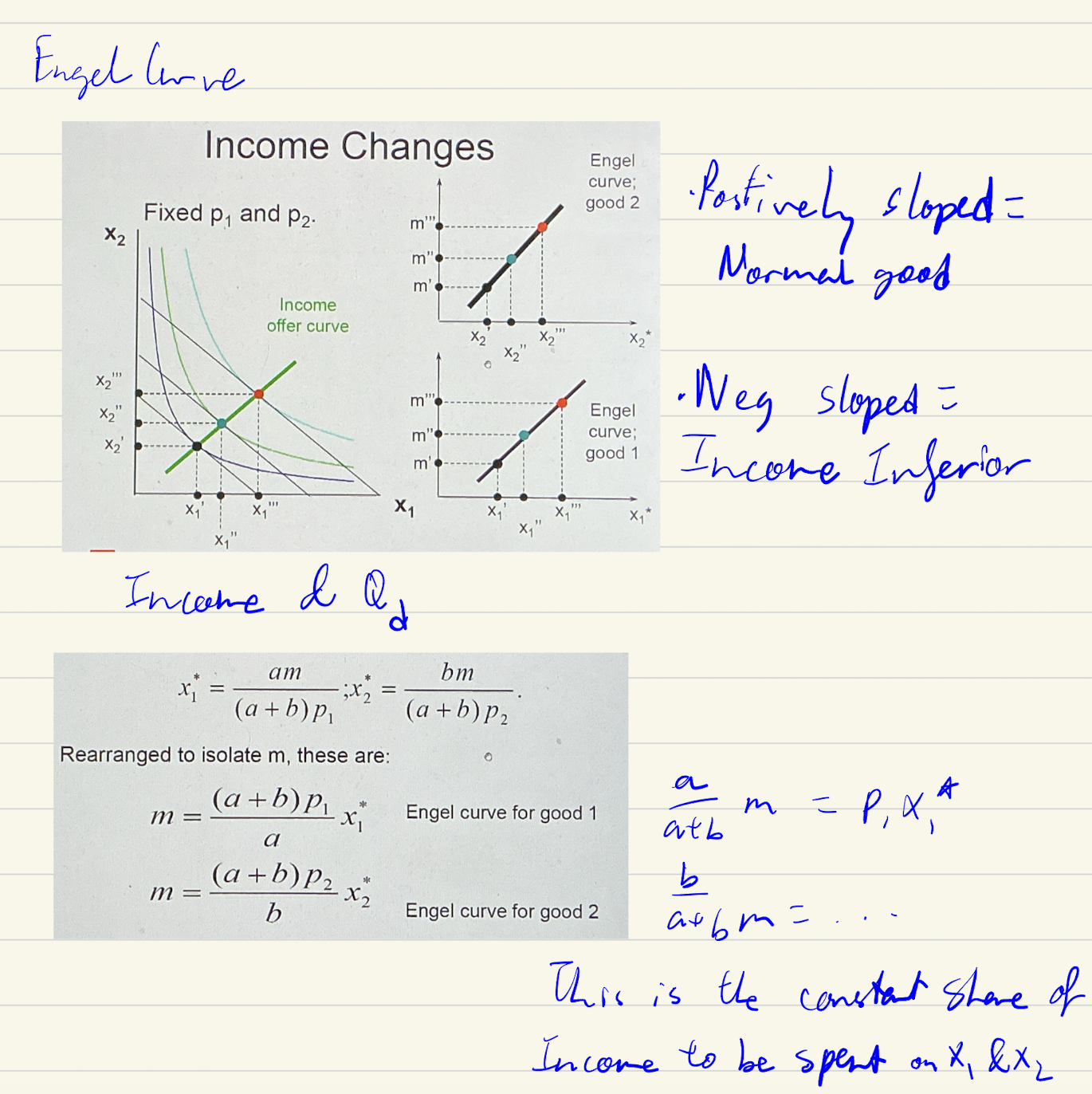
engel curve; income offer curve
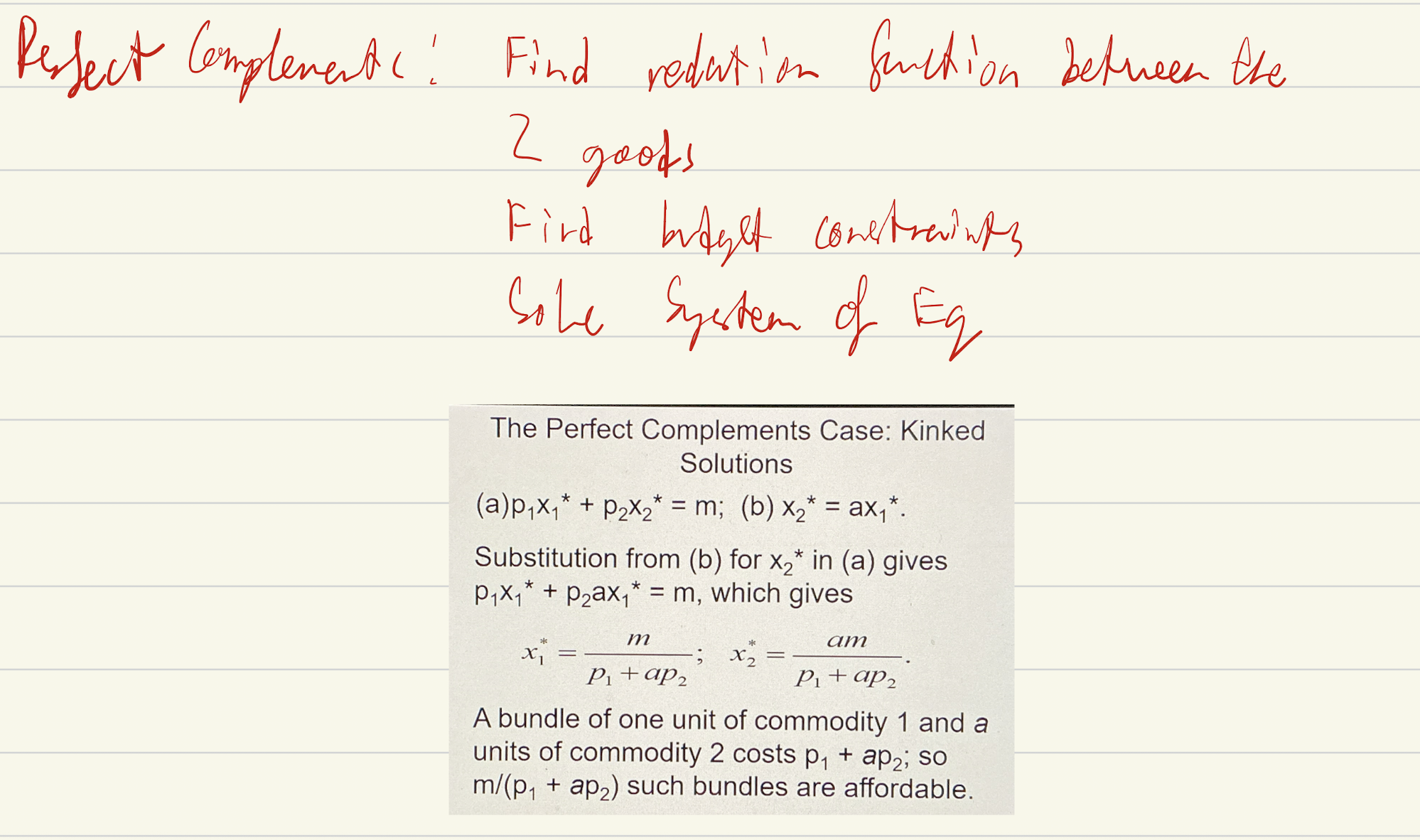
Solving ordinary demand of perfect compliments
Preffered bundle for perfect compliments; perfect substitutes
subs: corner solutions; comp: min combo
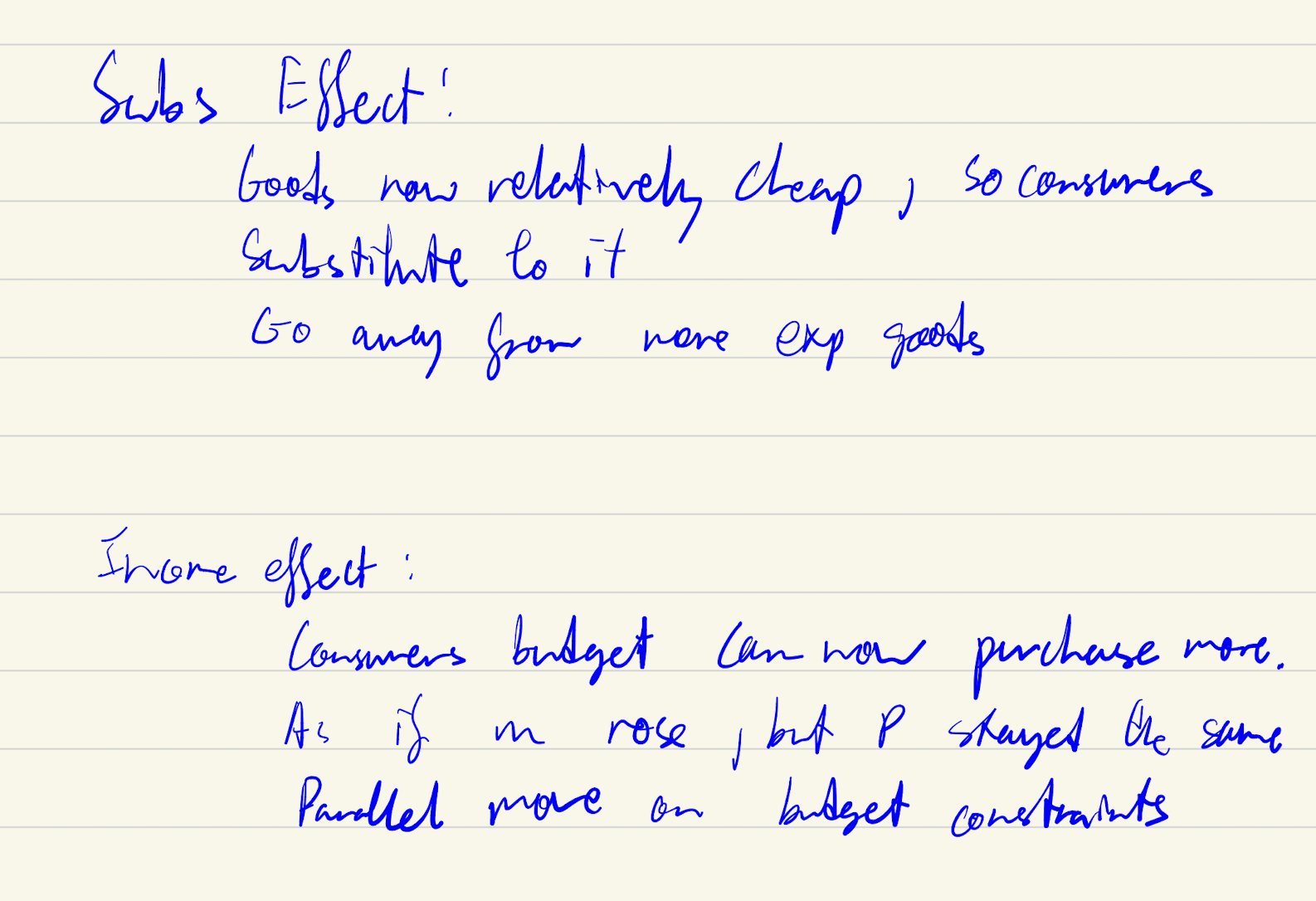
Effects of a price change on budget constraint
subs: parallel move of new line → tangent to old indiff curve, income effect → jump to the new final point
Endowments (impact on budget constraint), Endowment point
always revolve around endowment point regardless of p changes bcs thats when you don’t trade your endowment and just keep it
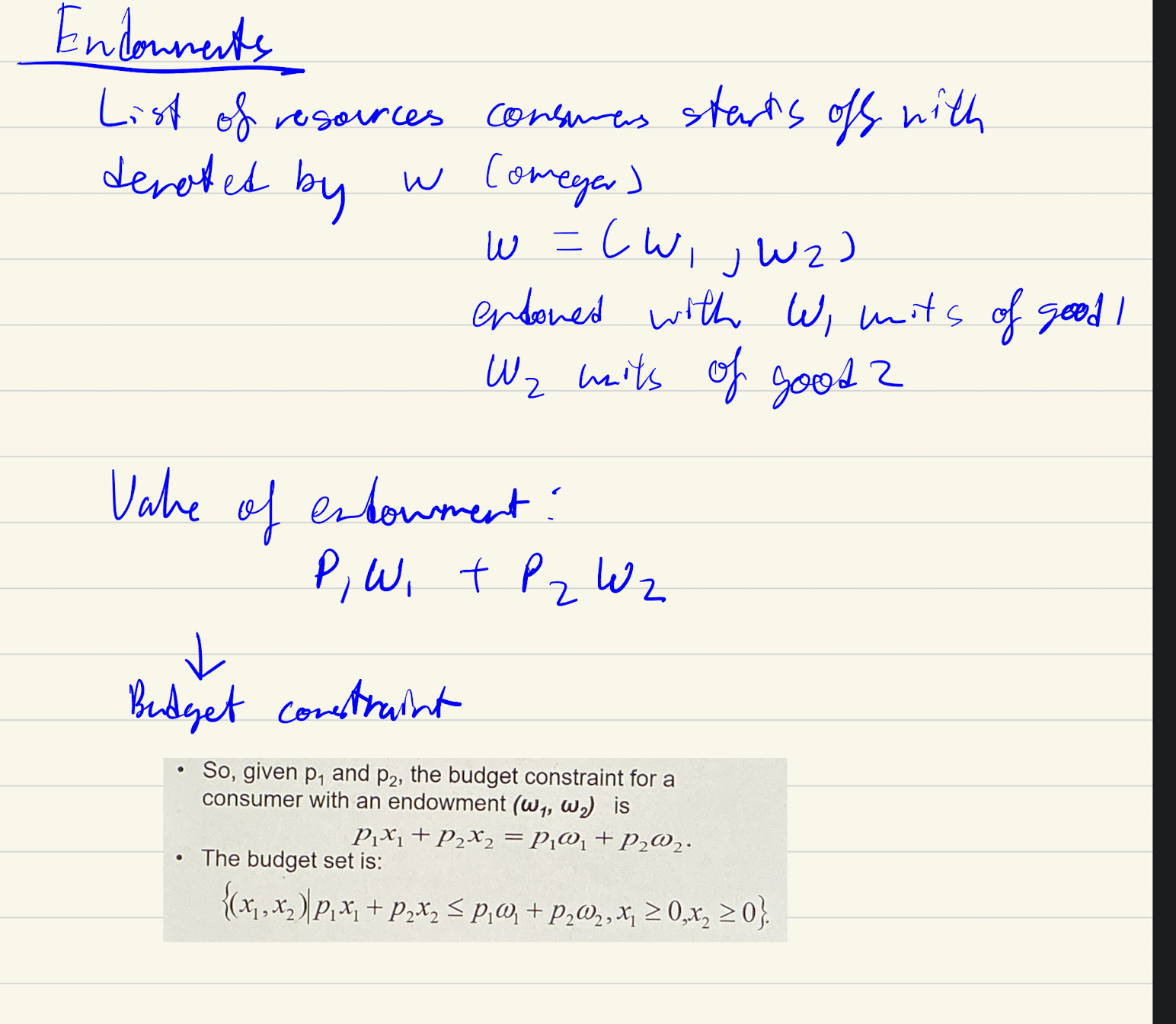
Slutsky identity
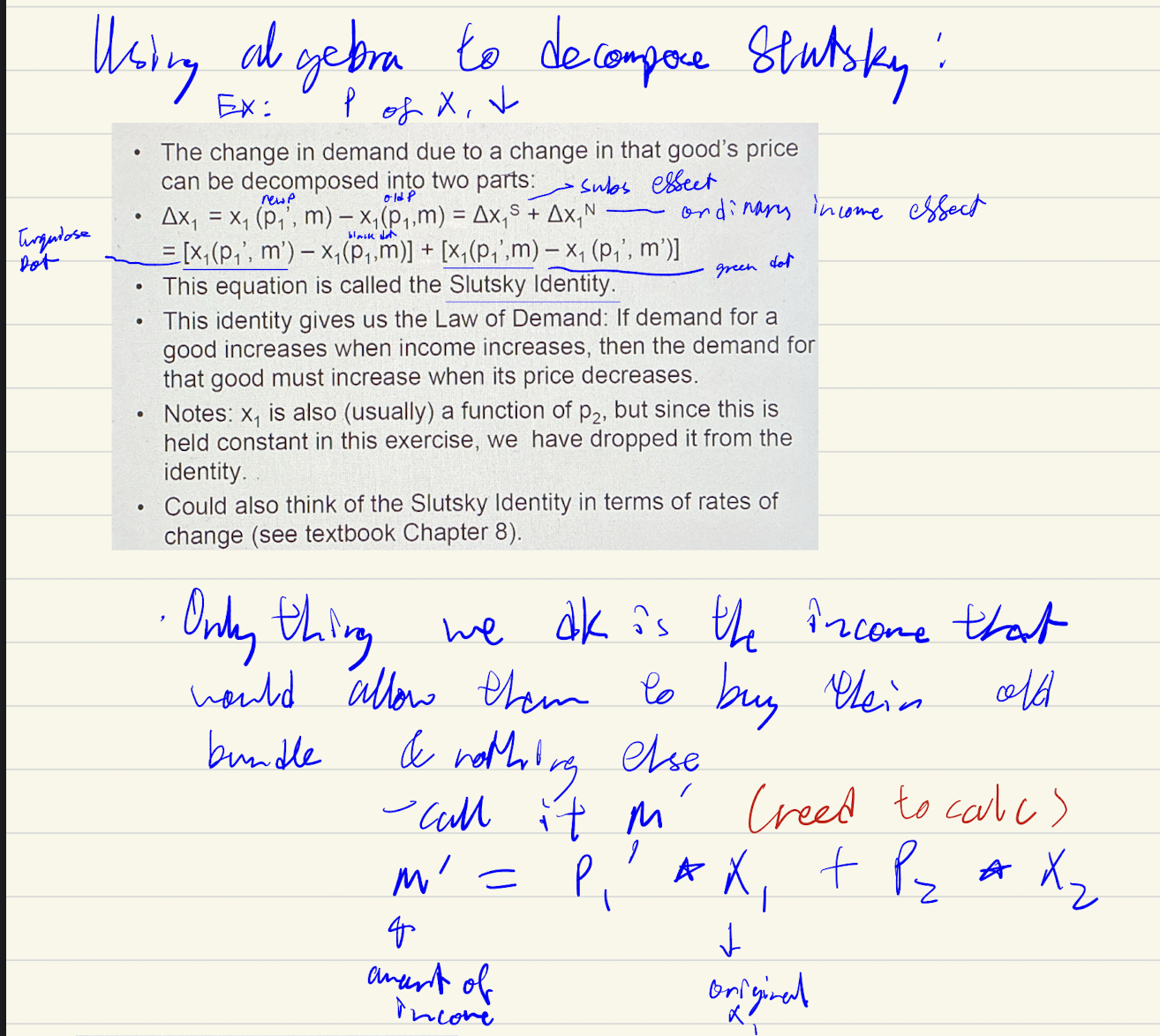
Endowment income effect
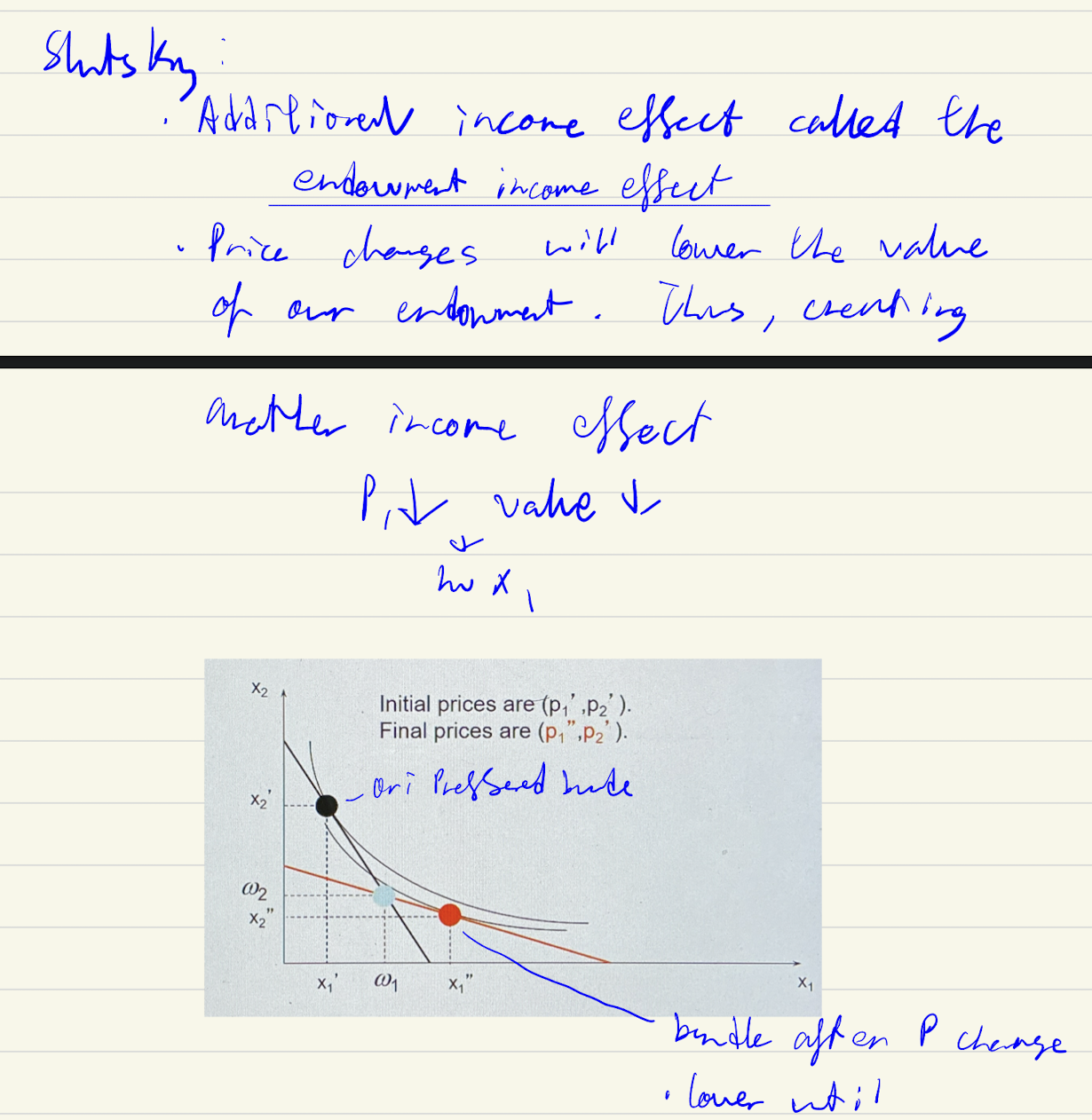
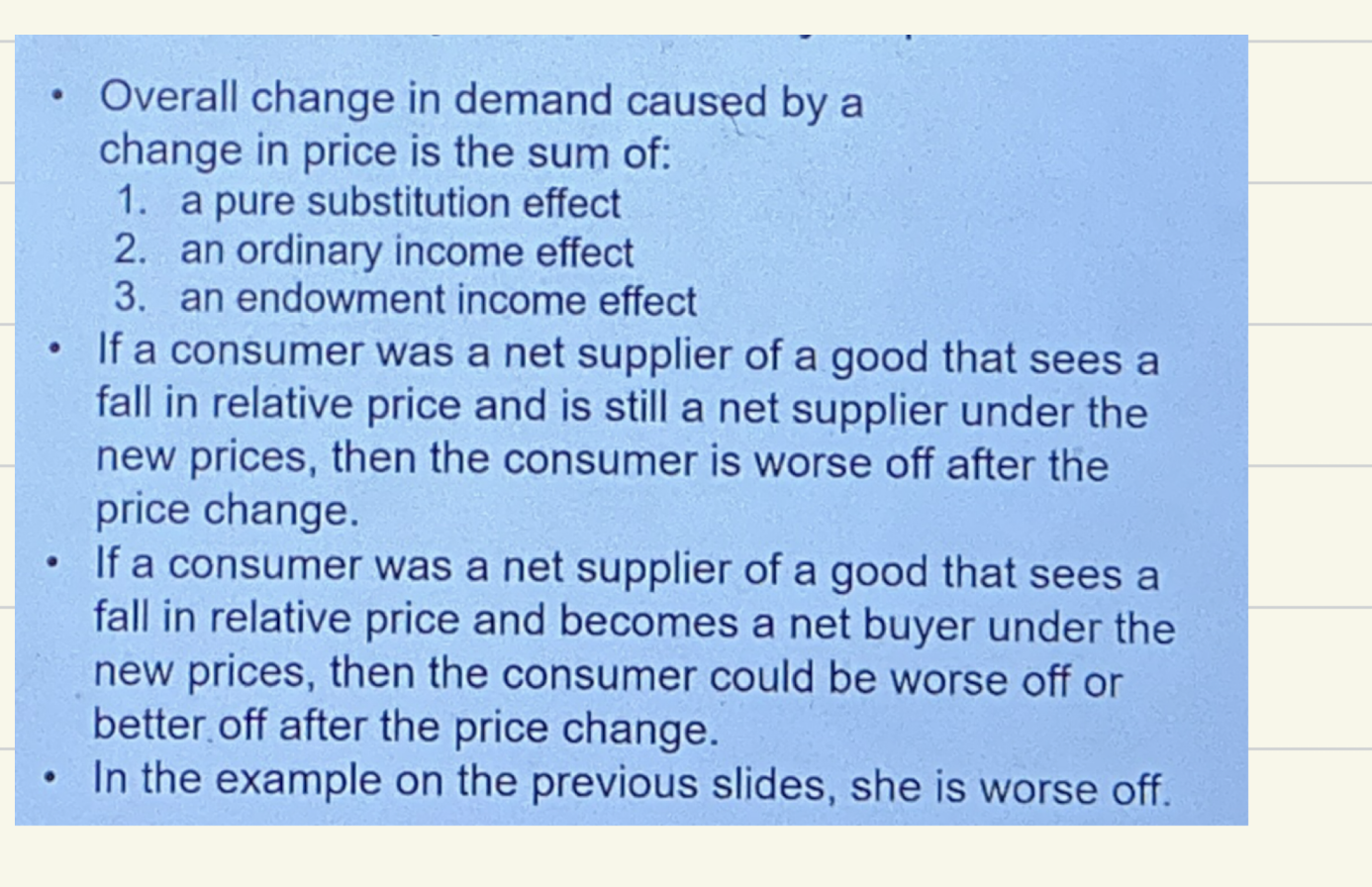
Subs, ordinary income, endowment income eff of endowment income effect
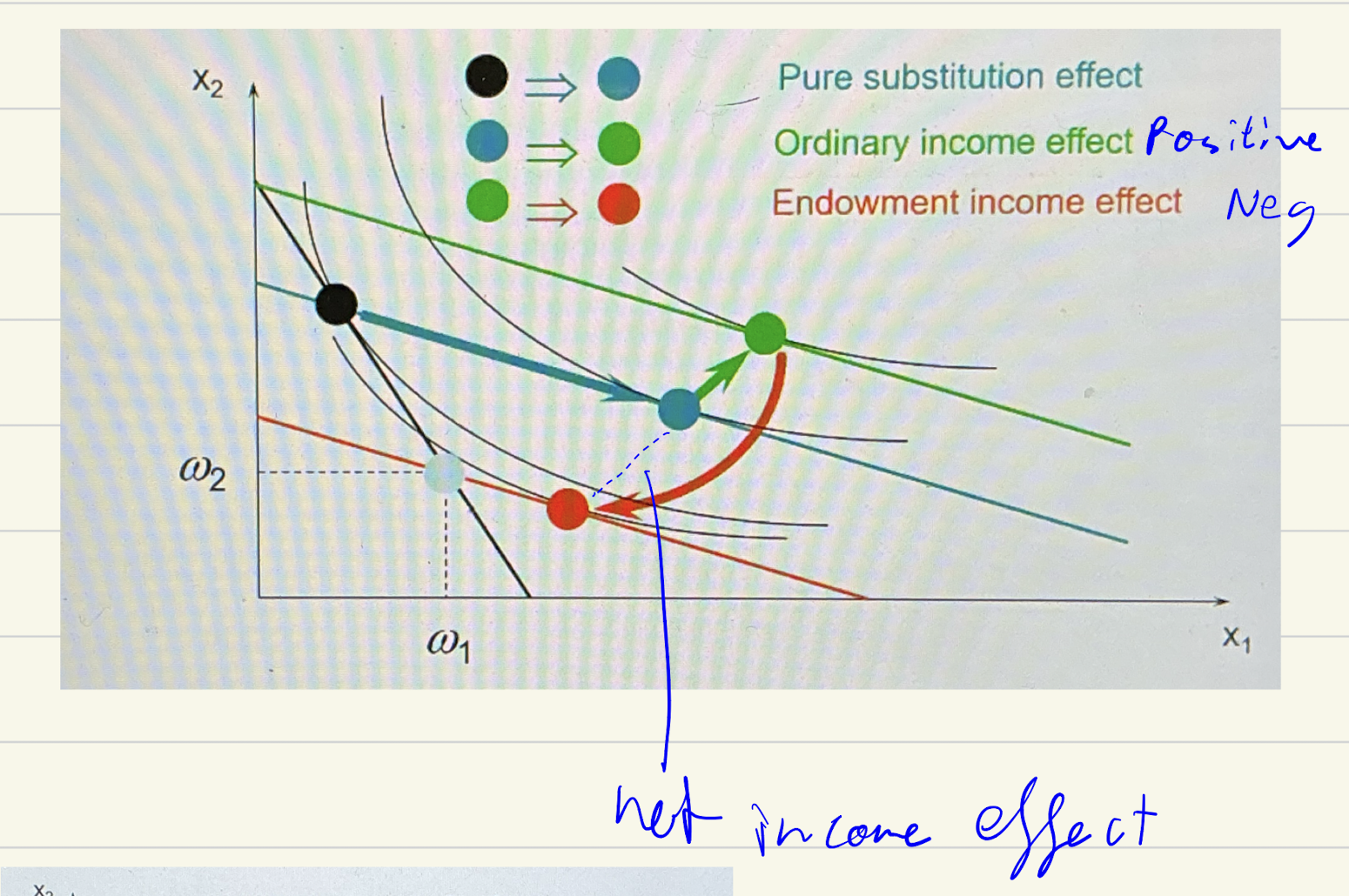
When is consumer worse off and better off in change in p with endowment
Worse off when: the new budget line cuts below the old consumption bundle (old bundle no longer affordable). Better off when: the new budget line passes above the old consumption bundle (old bundle still affordable, plus more). Ambiguous when: the consumer flips from net seller to net buyer of the good whose price changed.
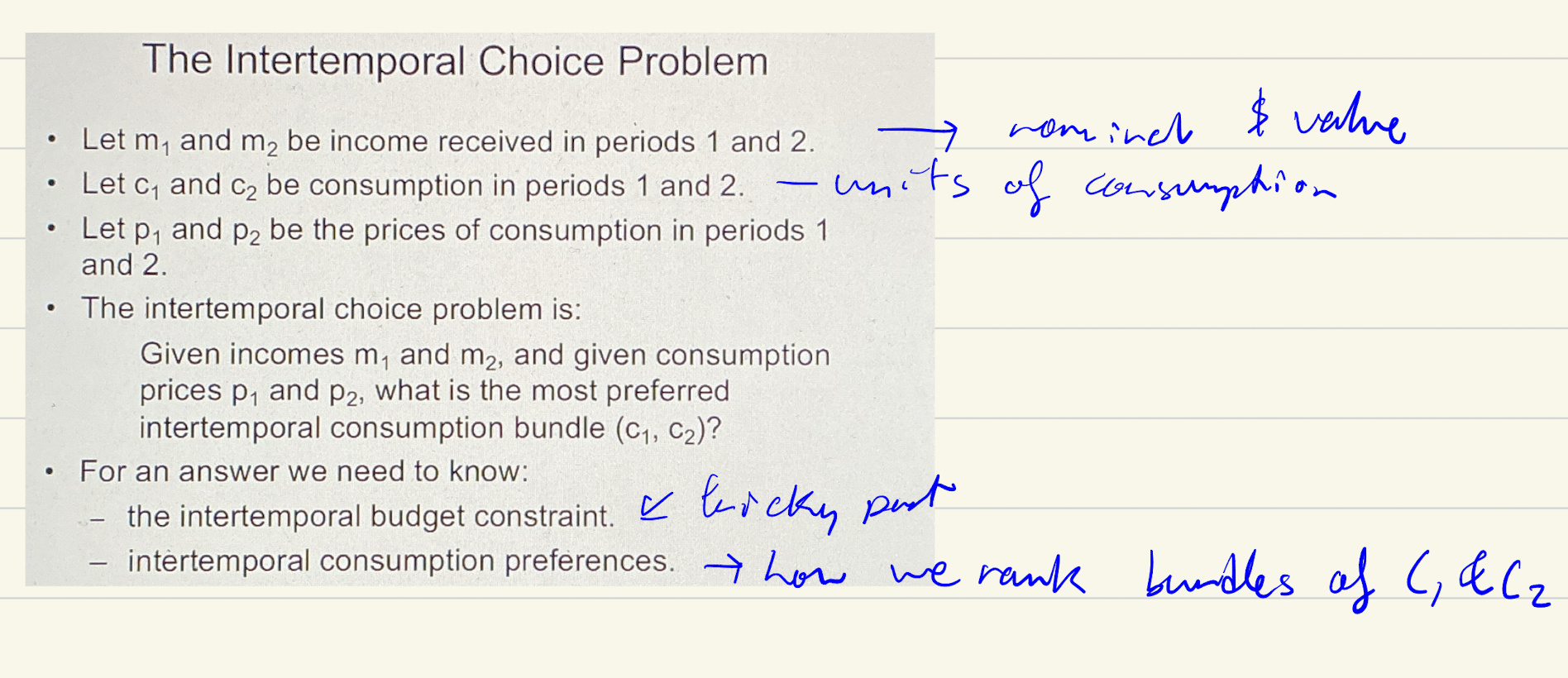
intertemporal choice
impacted by inflation and ir
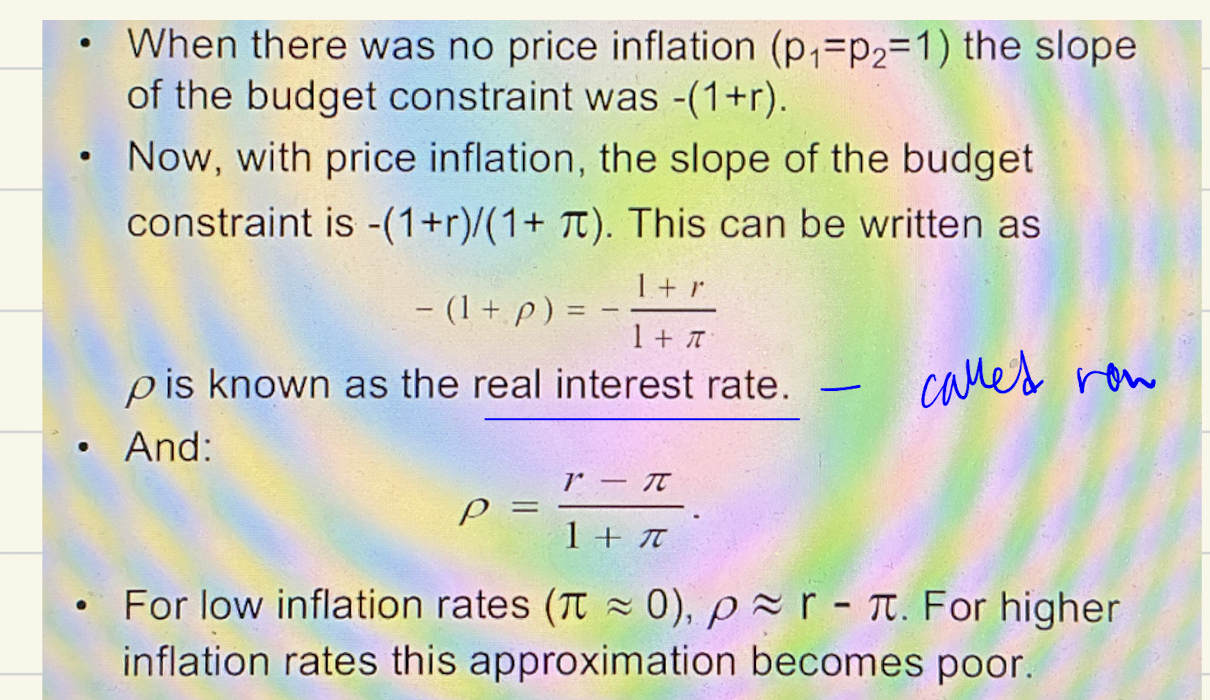
Slope of intertemporal budget constraint
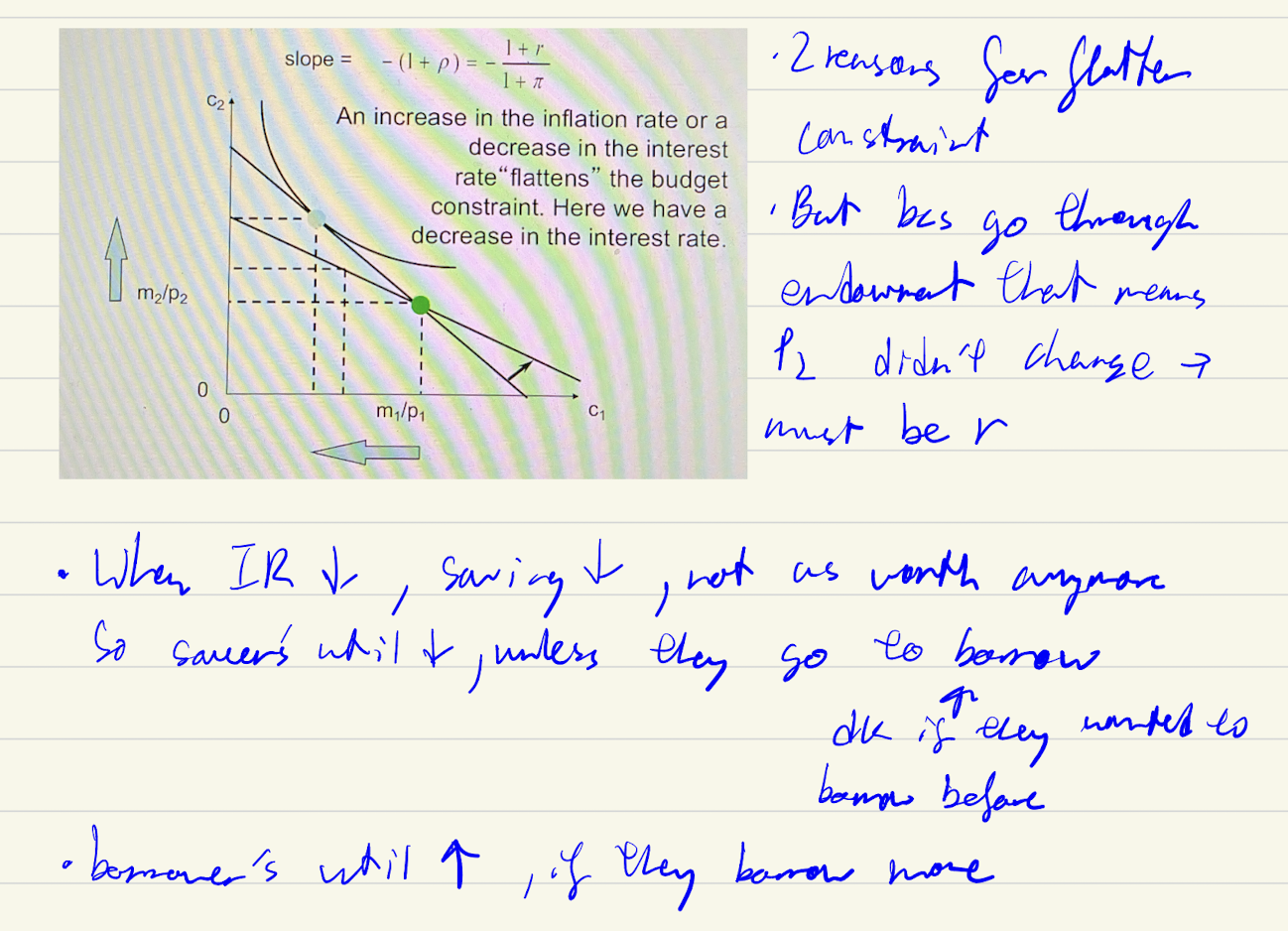
Changes in r and infla to budget constraint (what happens if revolve around endowment point)
How to find optimal consumption in intertemporal?
find budget constraint, find MRS, find tangent intersection
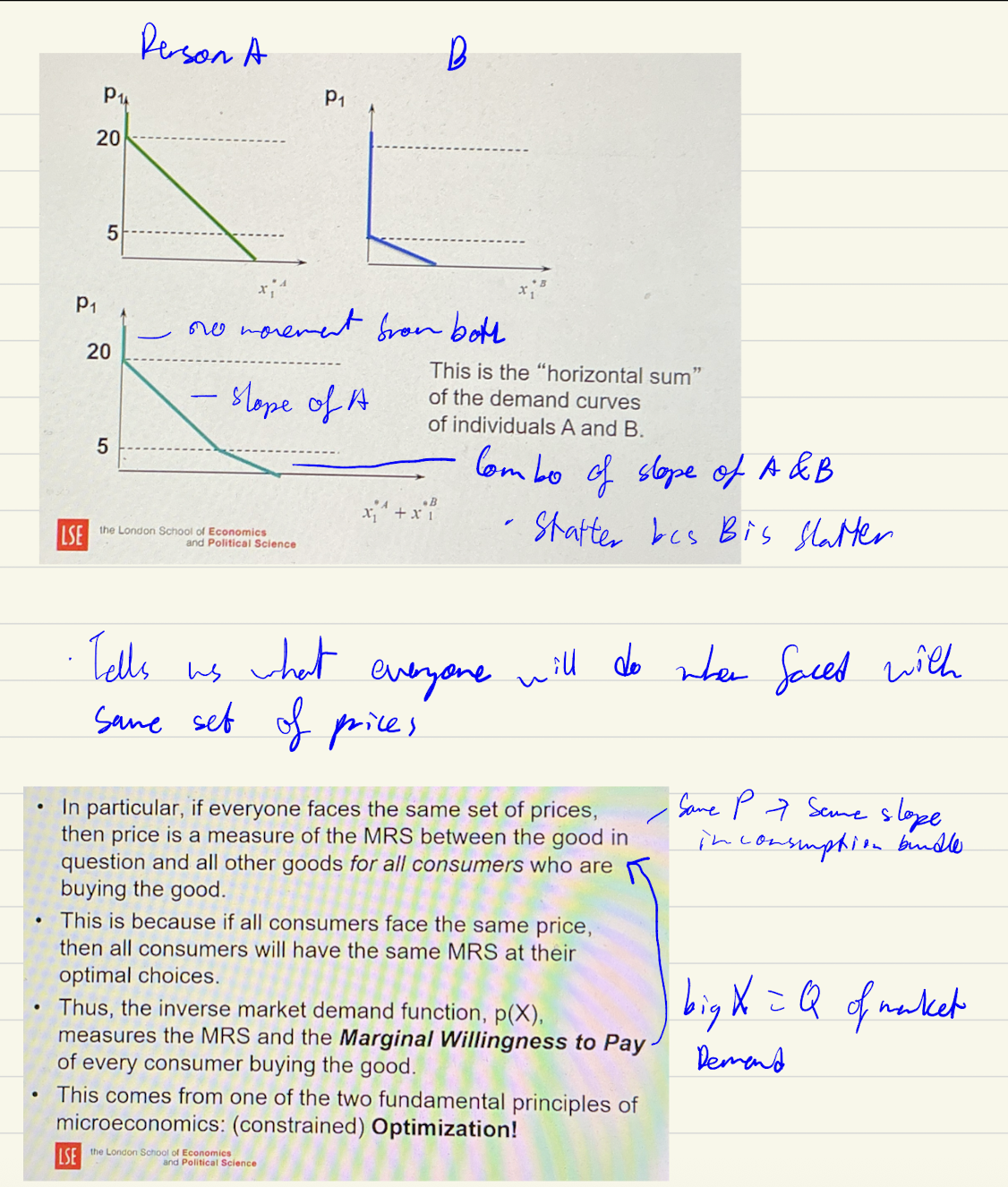
Market demand given individual firms
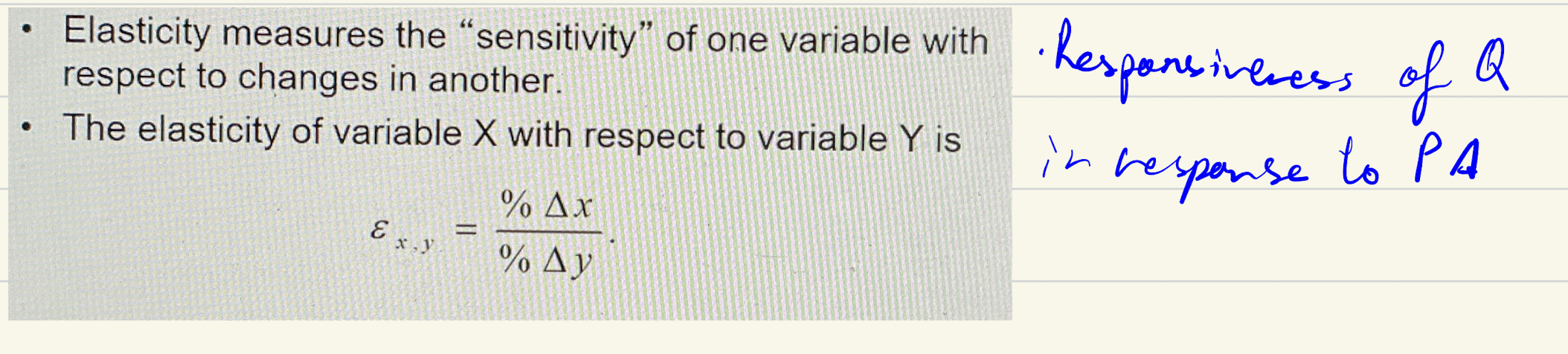
elasticity formula (own price vs cross price vs supply)
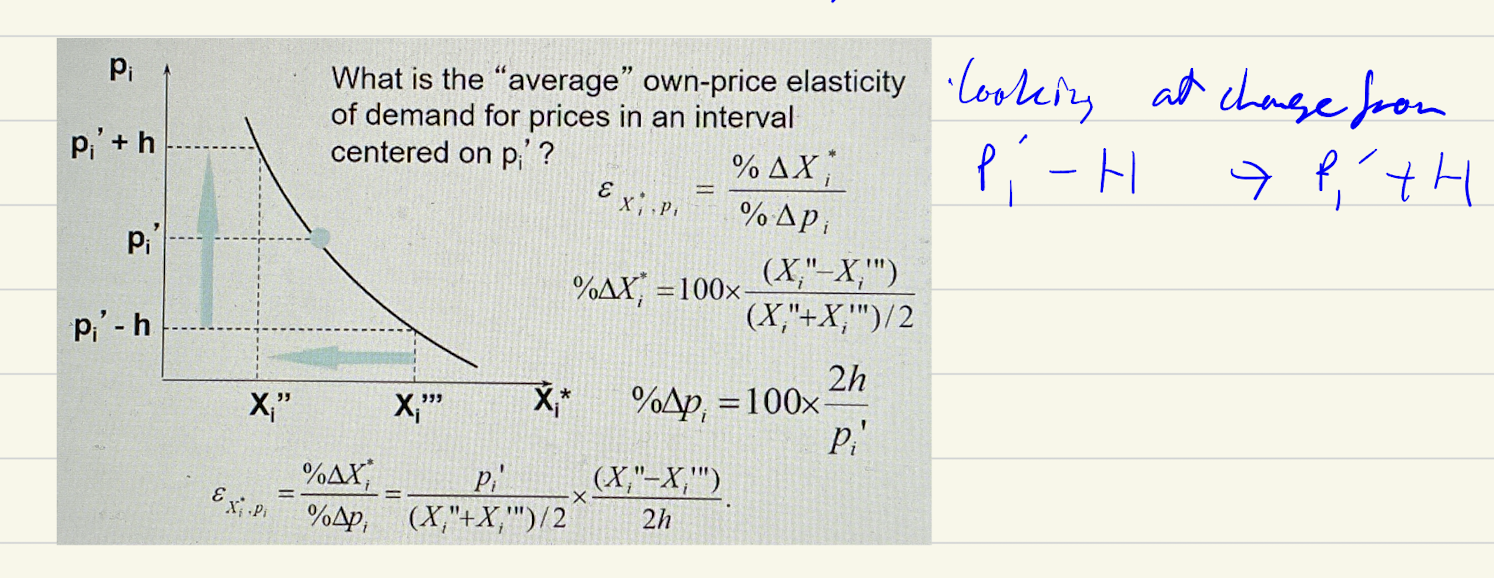
Elasticity in an interval
Take average of p and the average of q to act as base.
Why? or else diff base will cause diff changes and elasticities.
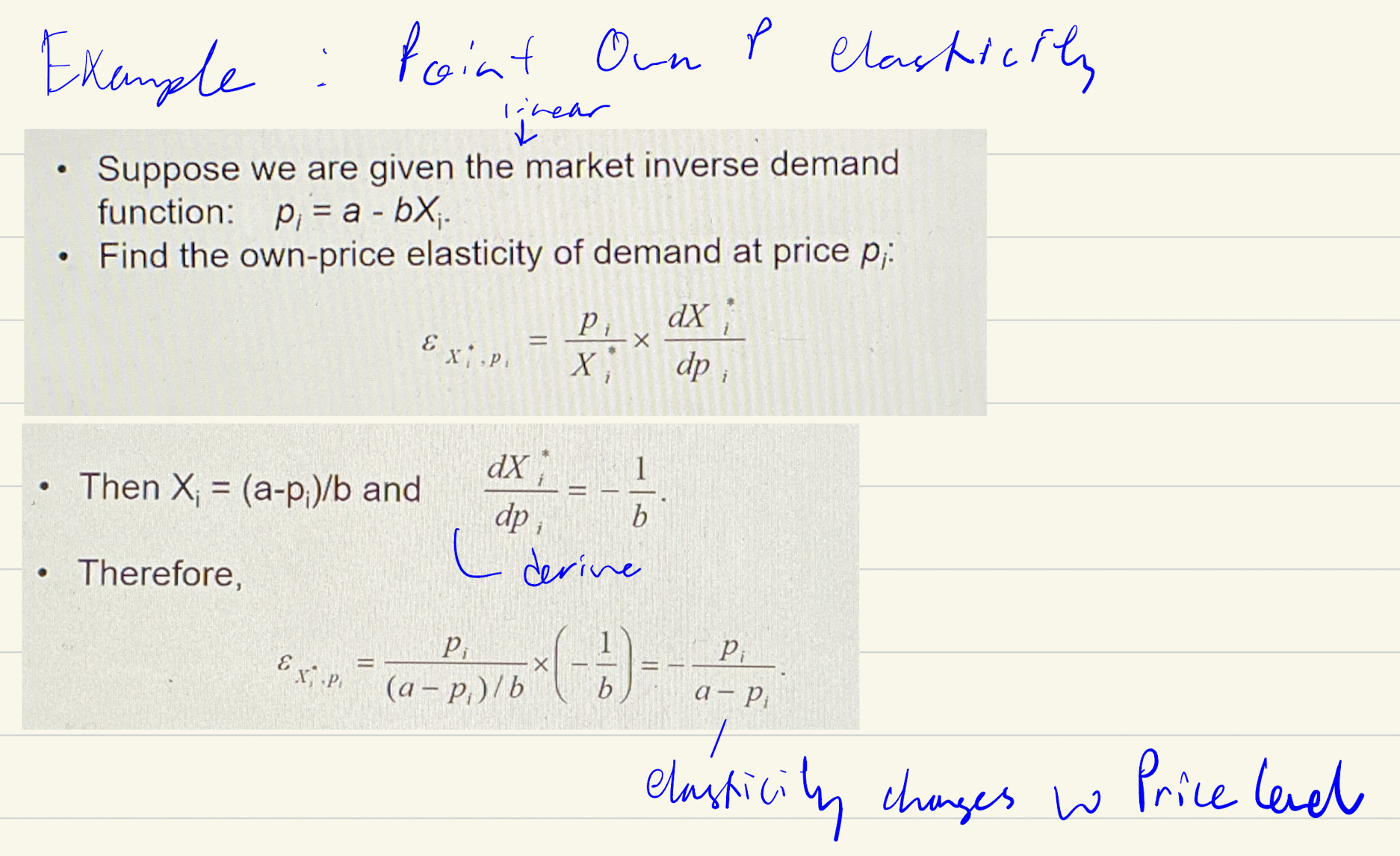
Point own price elasticity
3 cases:
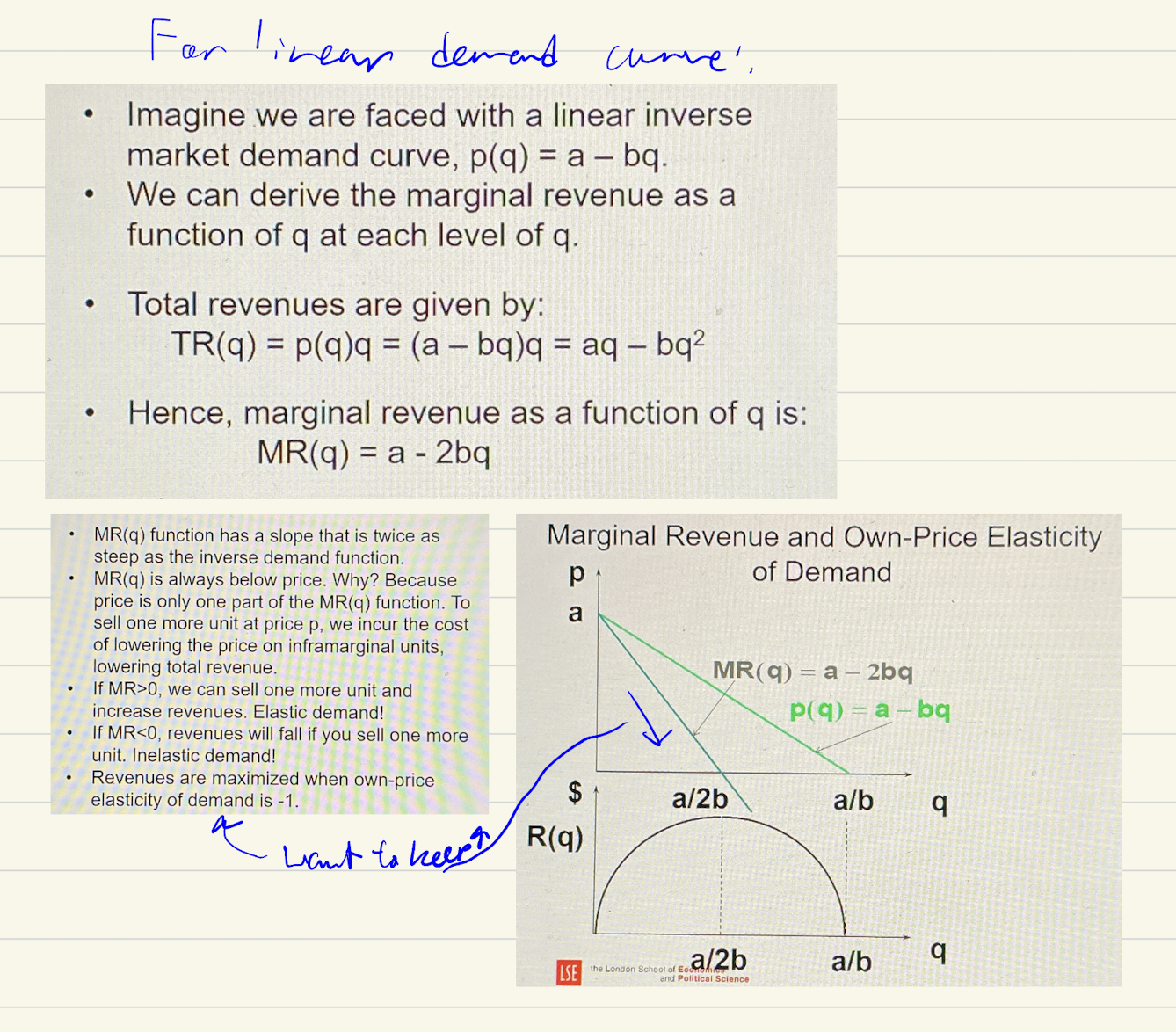
Linear Demand
Constant-elasticity demand (x = kpa) - elasticity is constant = a
Cobb douglas: -1
Elastic vs inelastic impact on revenues
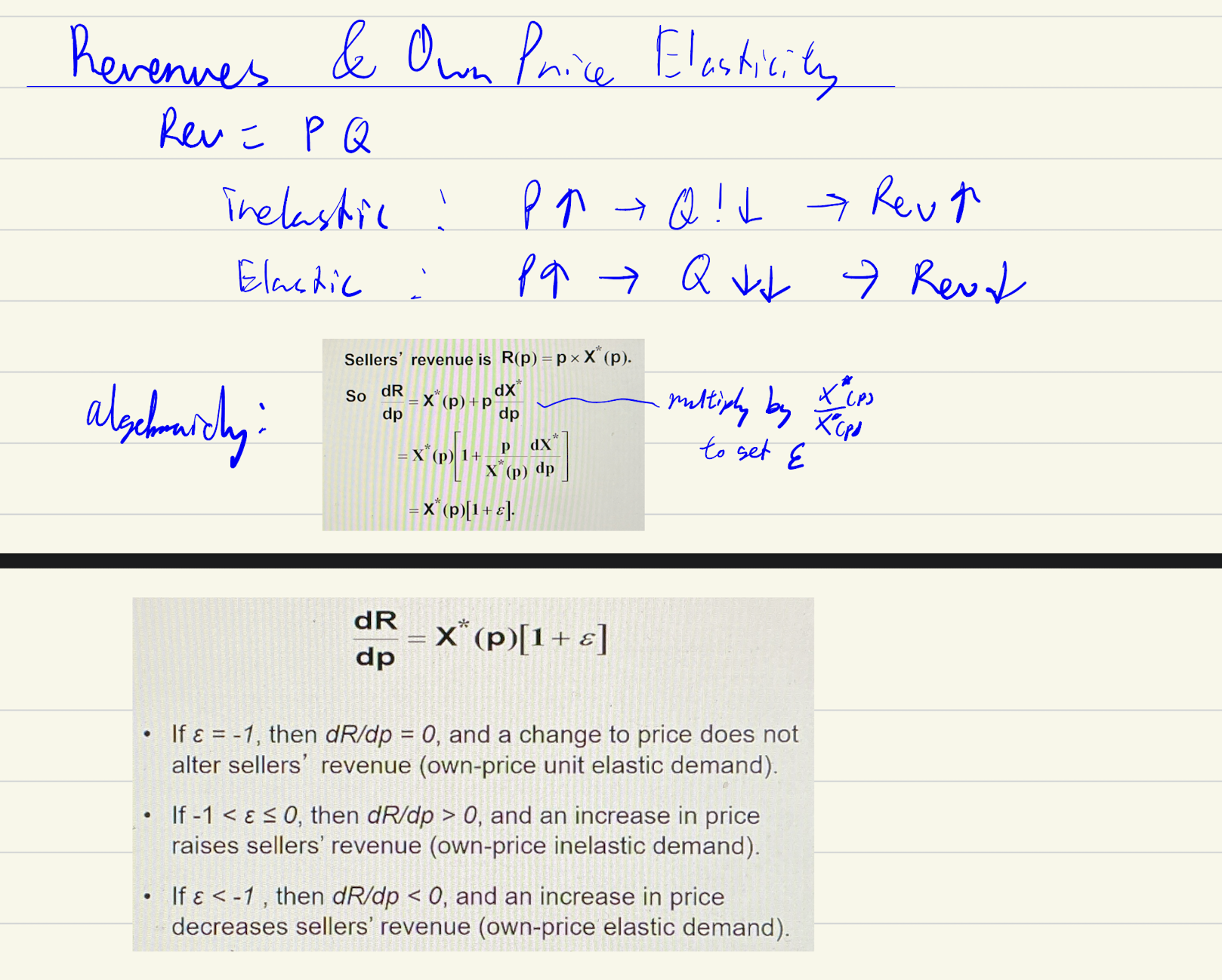
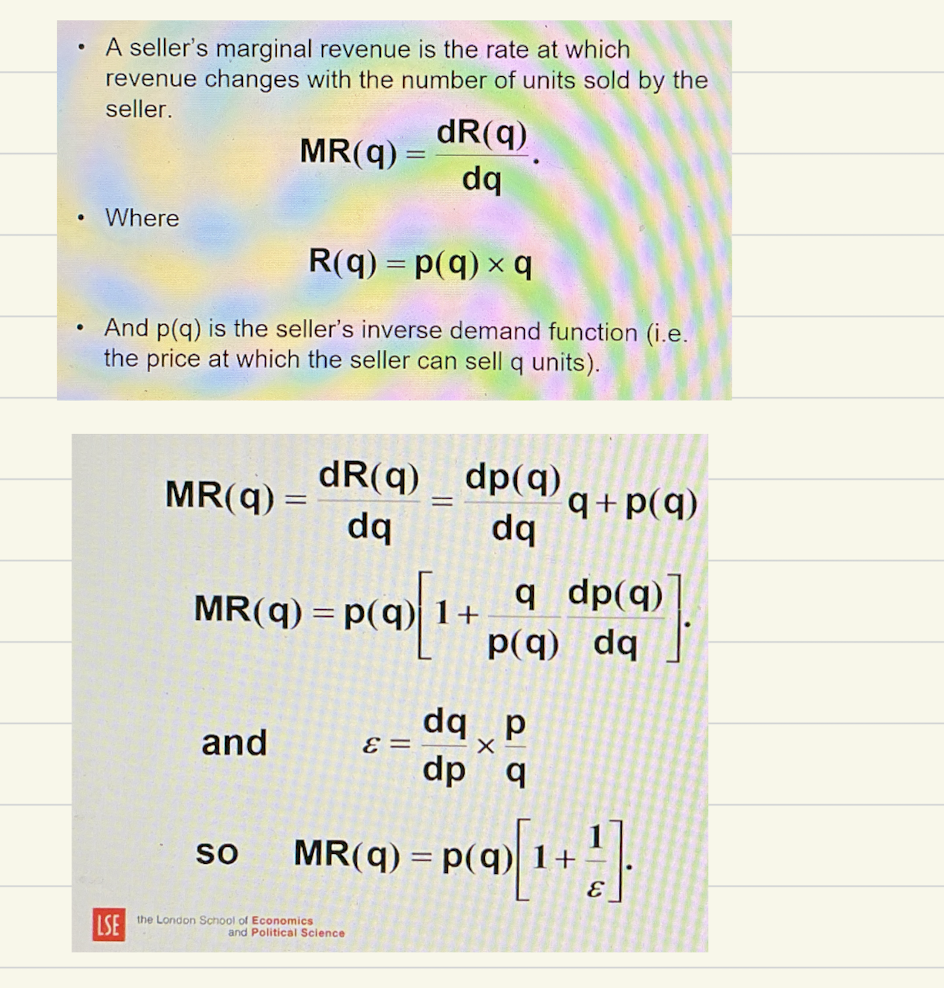
Marginal revenue formula
marginal rev (for linear demand curve)
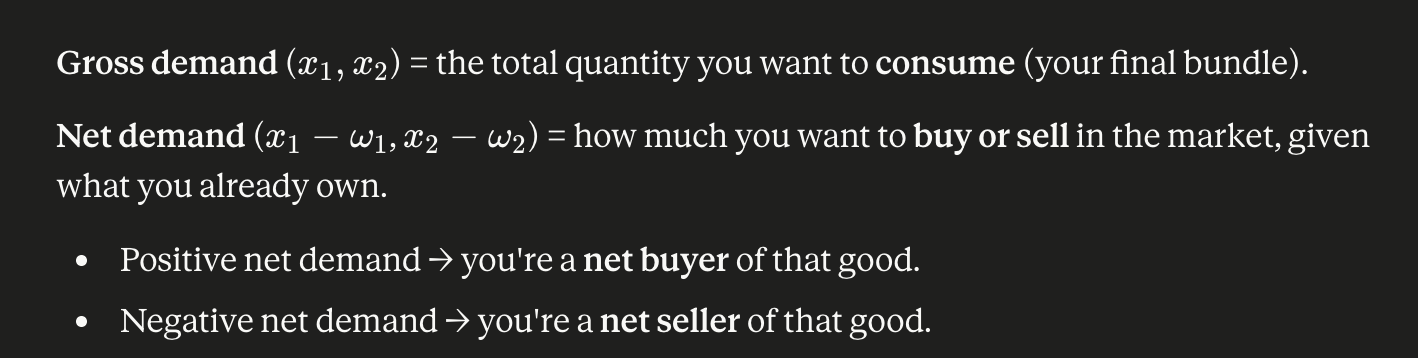
Net demand vs gross demand
Contrains for firms in markets
Set of choices from product side of market: prices, wages, cost (IR, rent), capital decision (how much to invest), market structure (how they should position within market against competitiors, technology (their production function - tech is a firm's production process that converts a set of inputs into outputs)
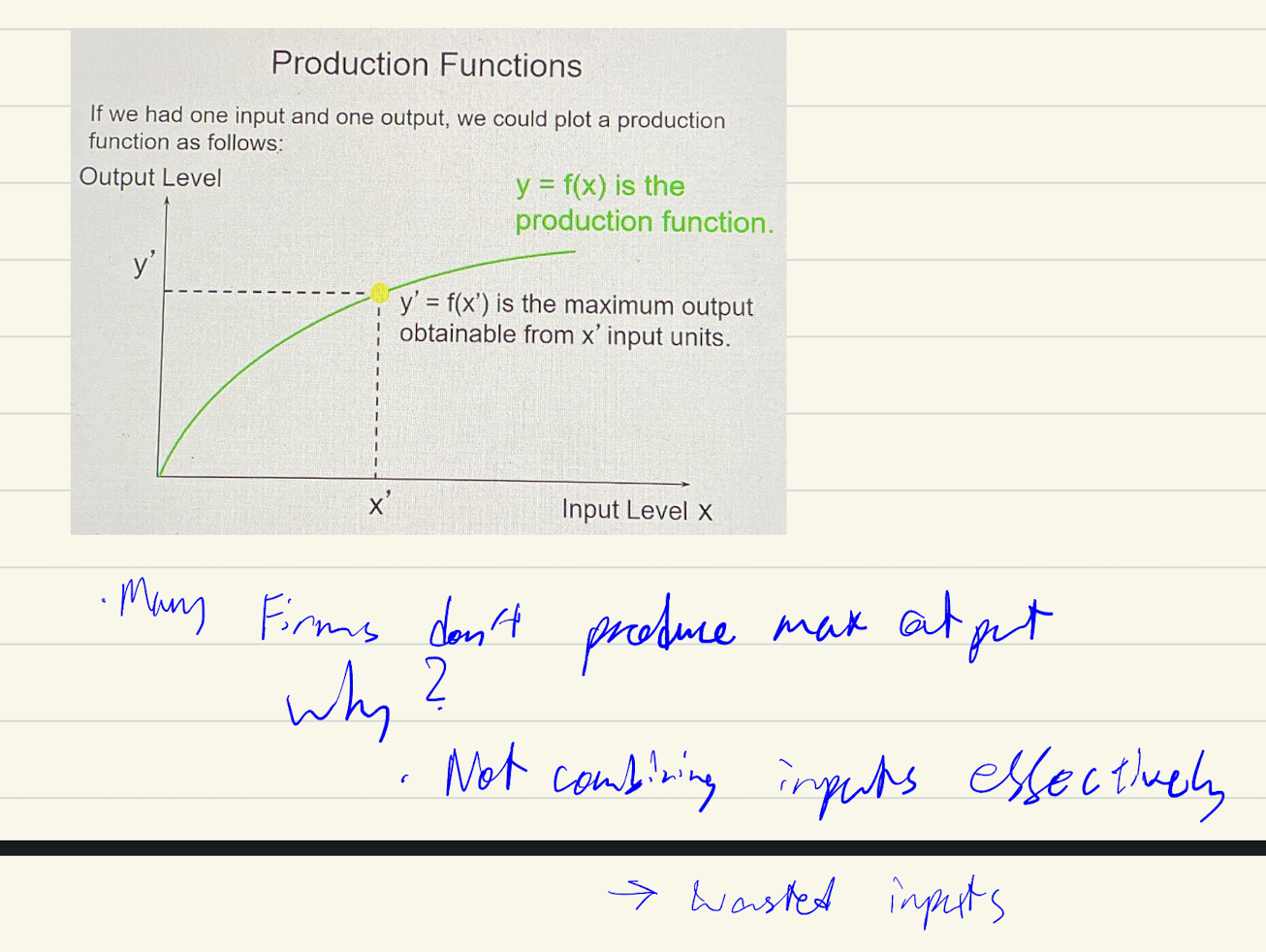
Production functions
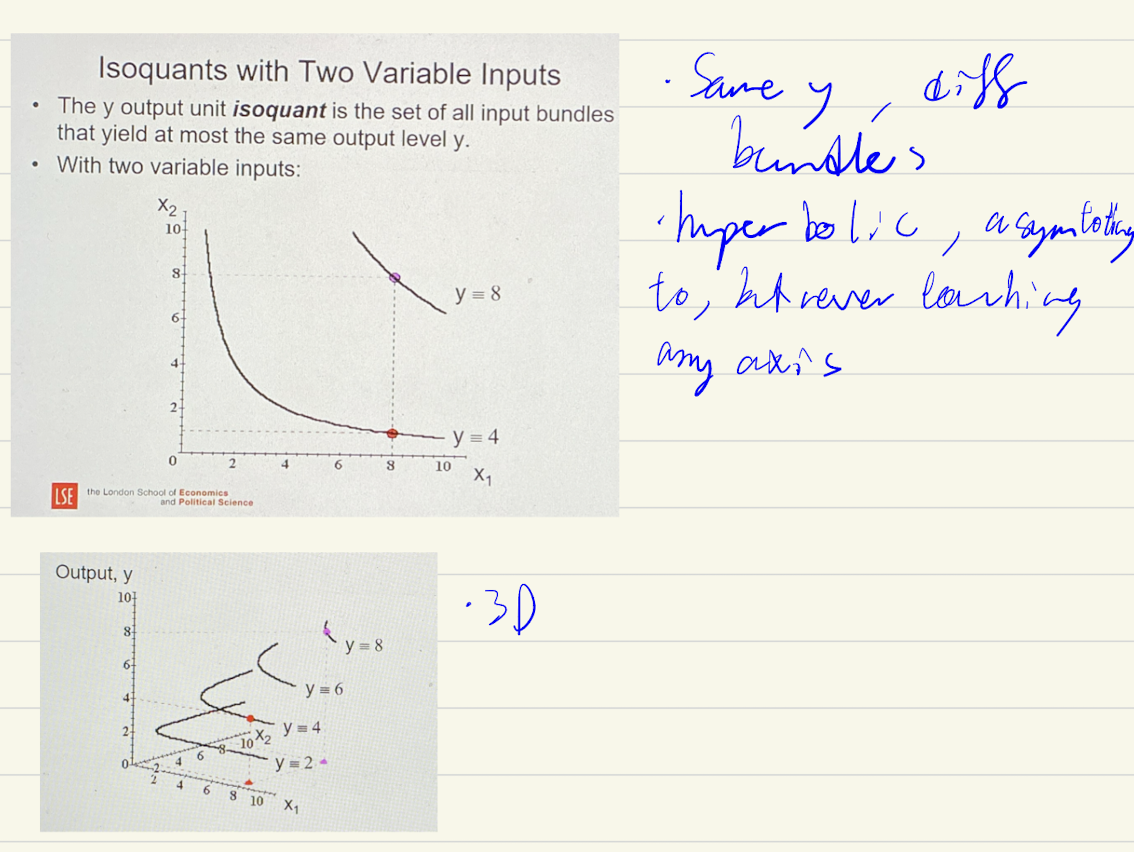
Isoquant (normal, perfect comp, perfect subs)
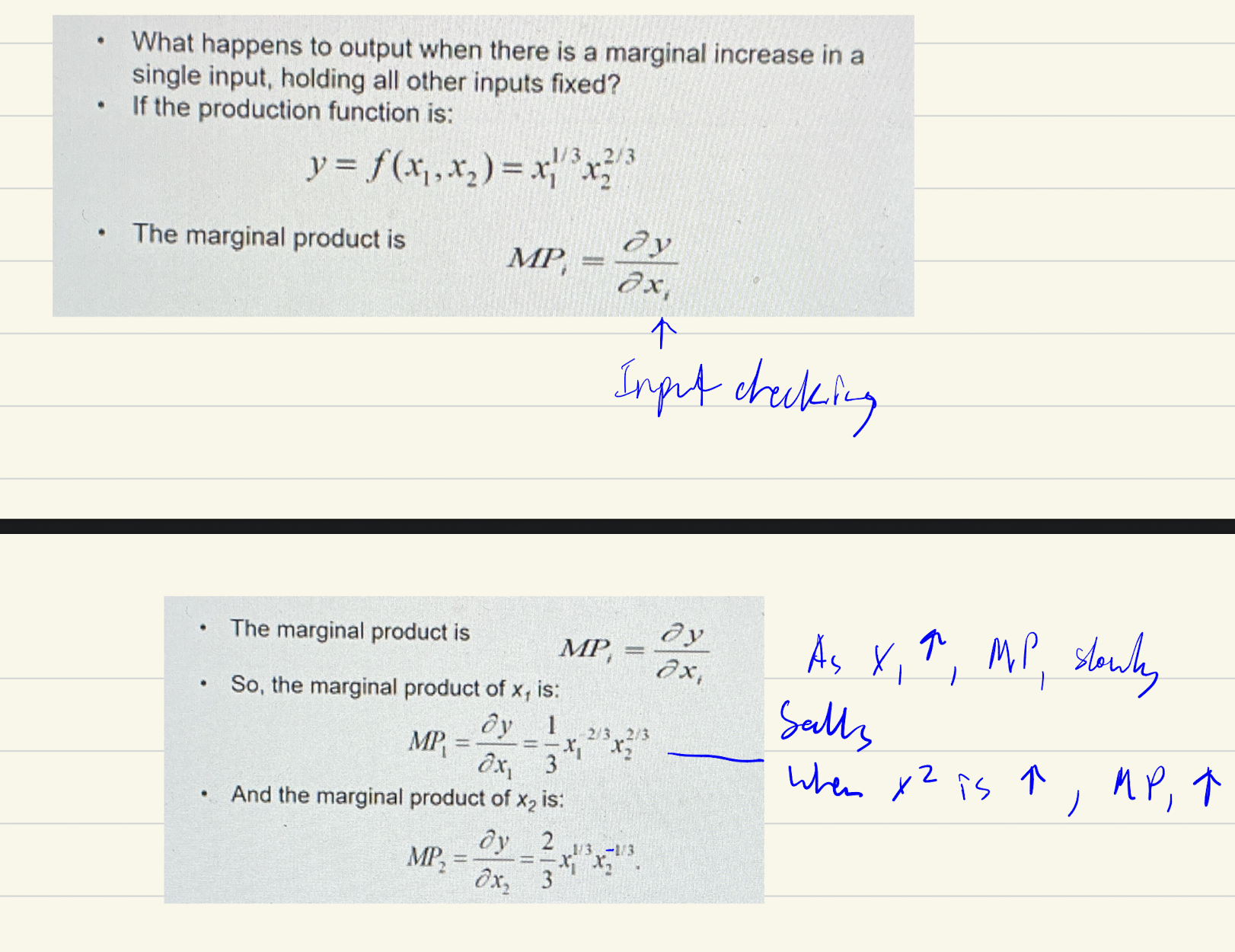
Marginal product (when is it diminishing)
diminishing when second derivative is negative - as get more of that input becomes less useful
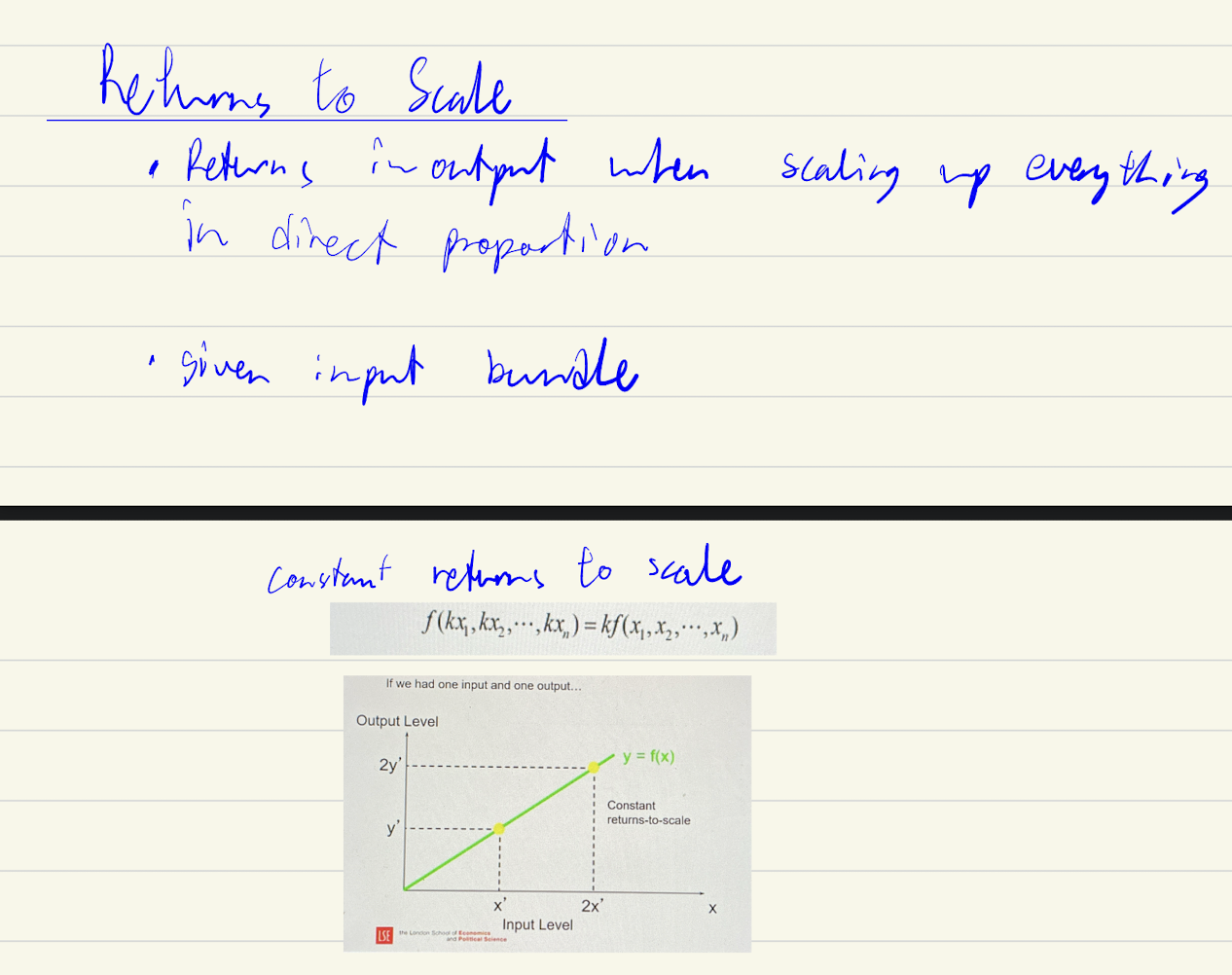
Returns to scale
dim, increa, constant.
Can change over different x inputs, not a fixed characteristic
SR firm production functions, profit func
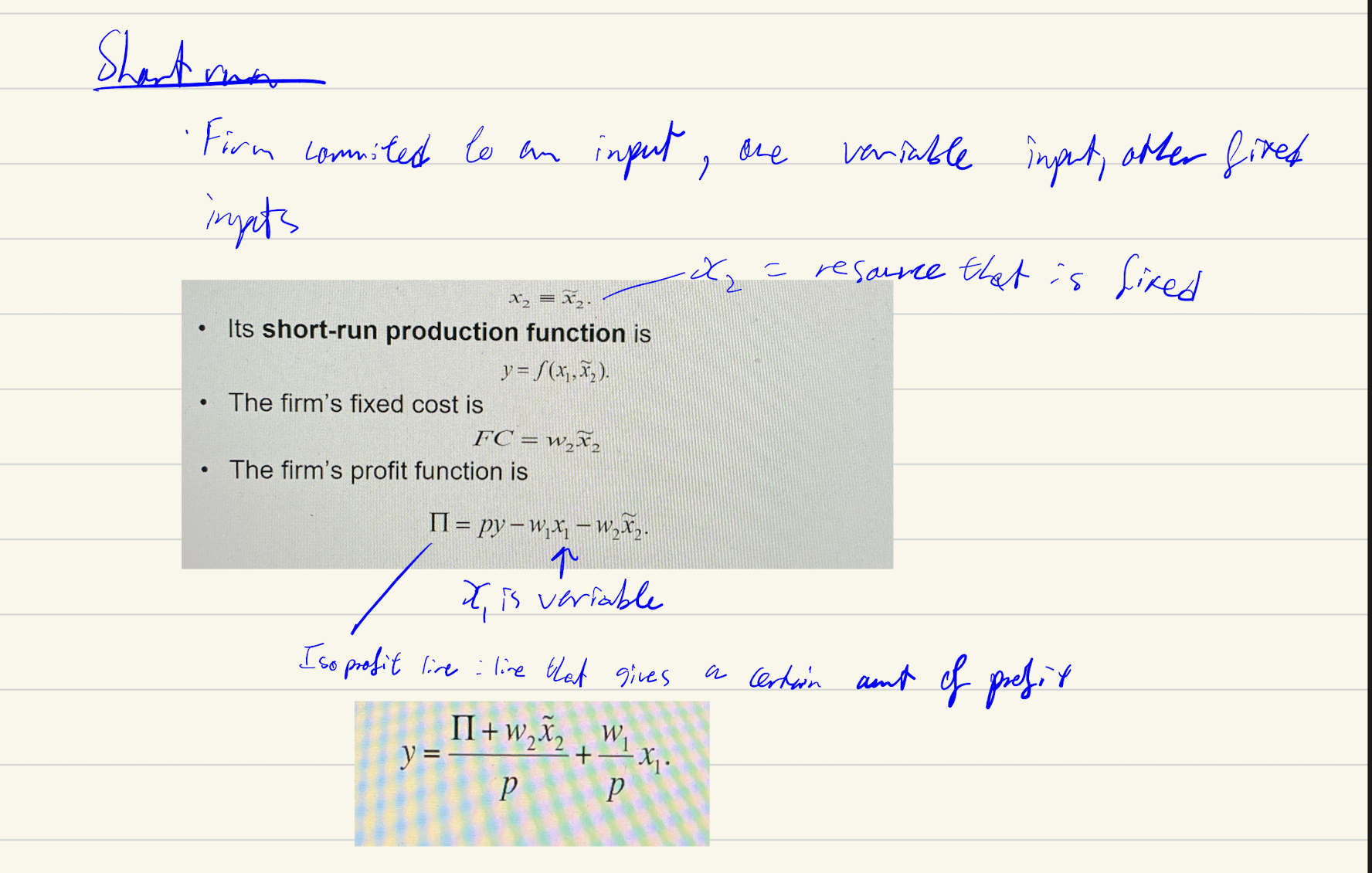
SR Isoprofit line
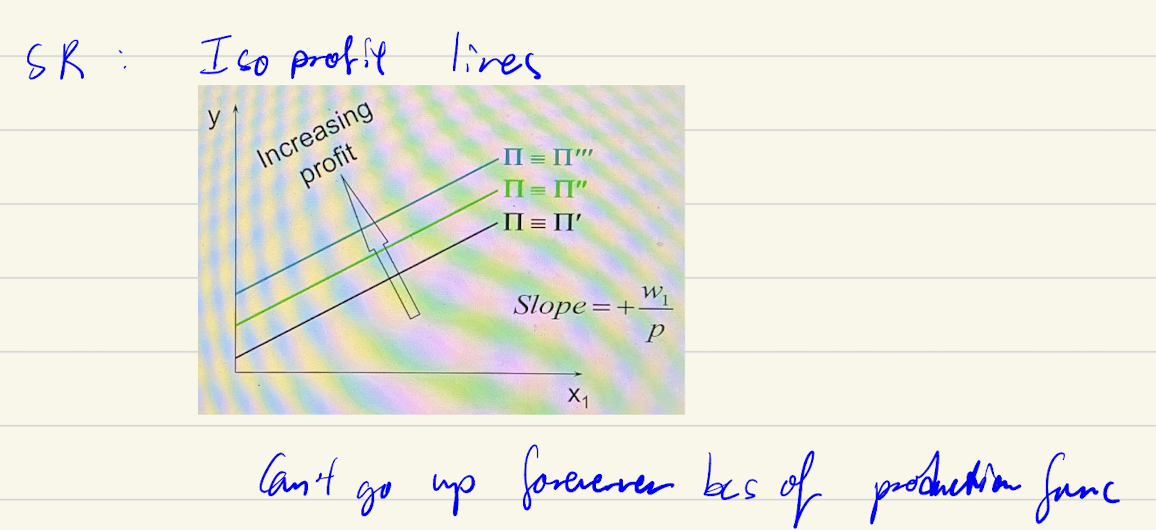
SR Profit Max
tangency point between isoprofit and production func. MP = Slope of isoprofit
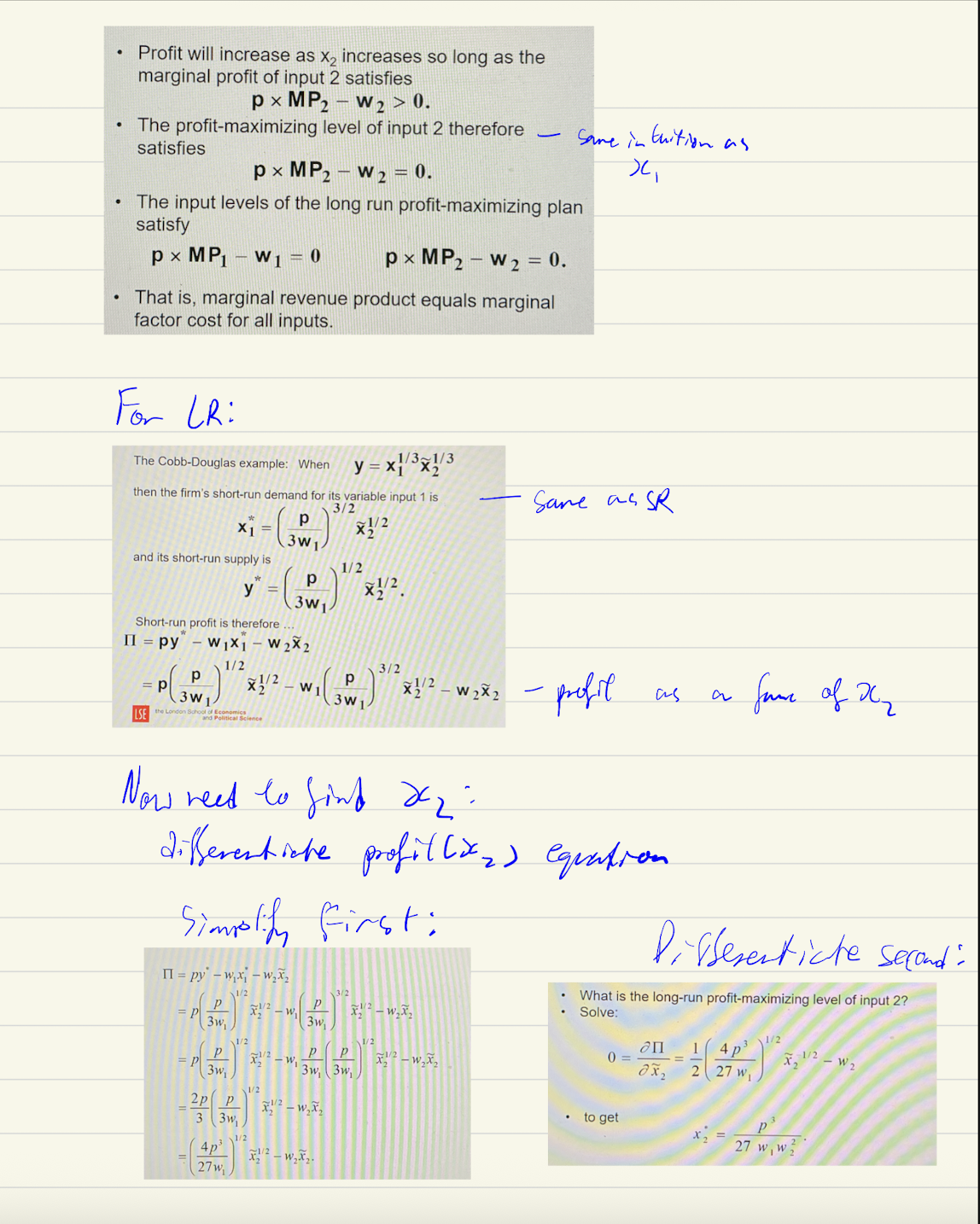
LR production func, profit max
choose x1 that max profits then find x2 thatll max profits.
Find X1* and Y, same as SR → then simplify SR profit equation → differentiate against X2 → solve for X2* → Plug X2* into Y to get Y*
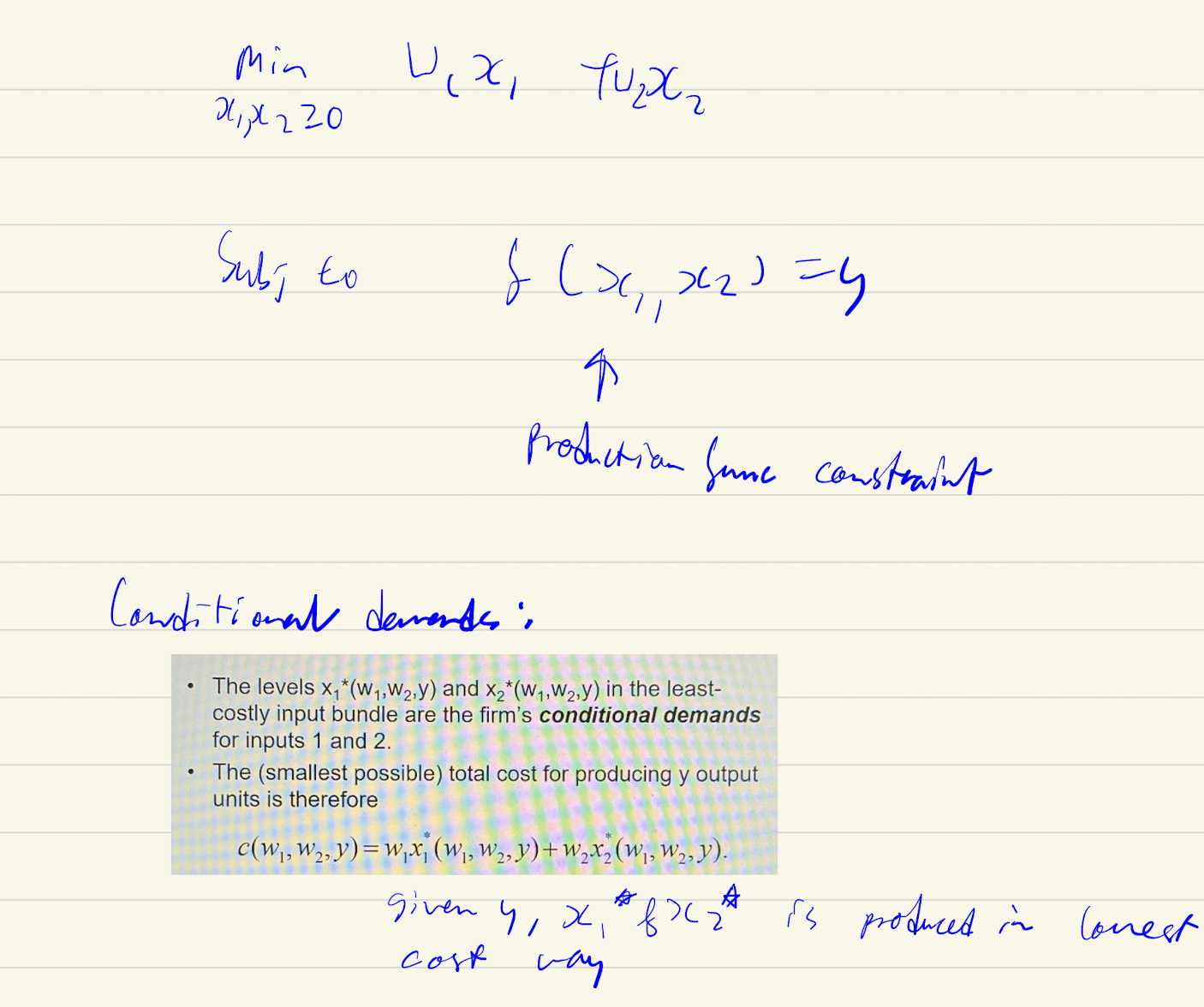
Cost minimisation method + conditional demands
Another method for profit max where we minimise cost
Slope of isocost (all ways production costs=-w1/w2) = slope of isoquant (all ways firm can produce-TRS=-mp1/mp2) → Find X2* and plug into production func → solve of X1*, Plug X1* into X2* → now you will know combination given how much (y) want to produce
Isocosts
want to minimize
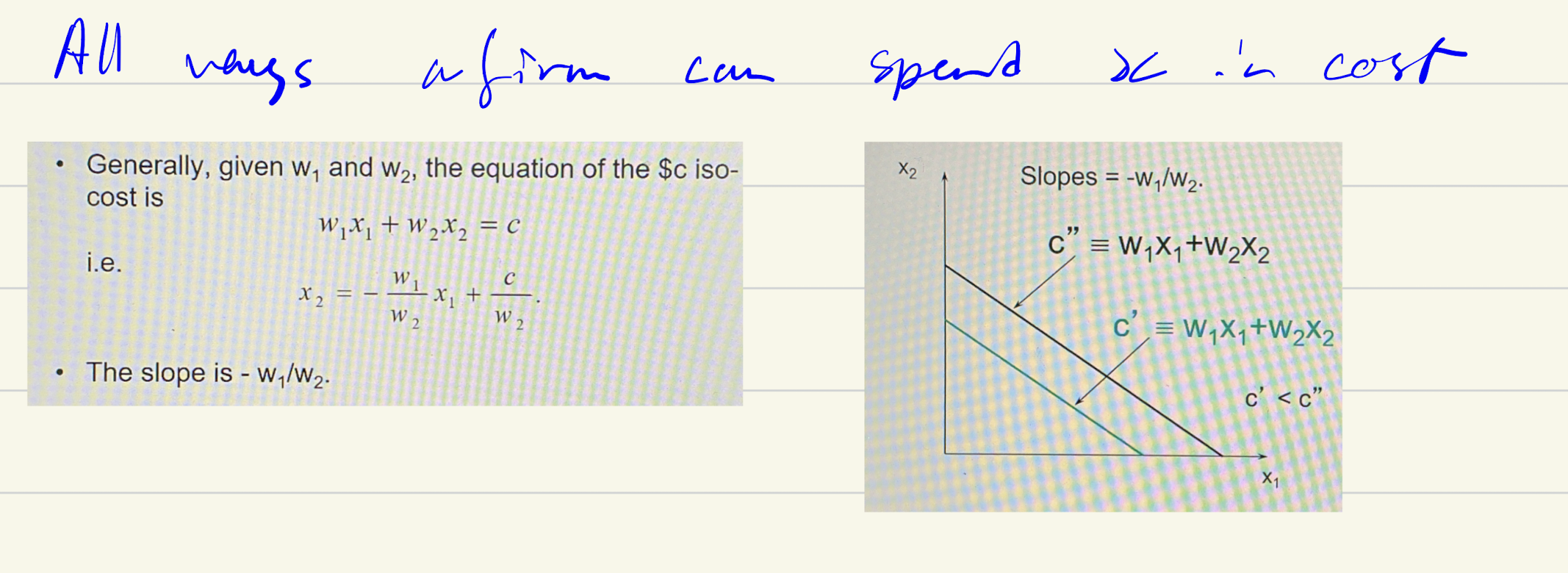
TRS of isoquant and isocost
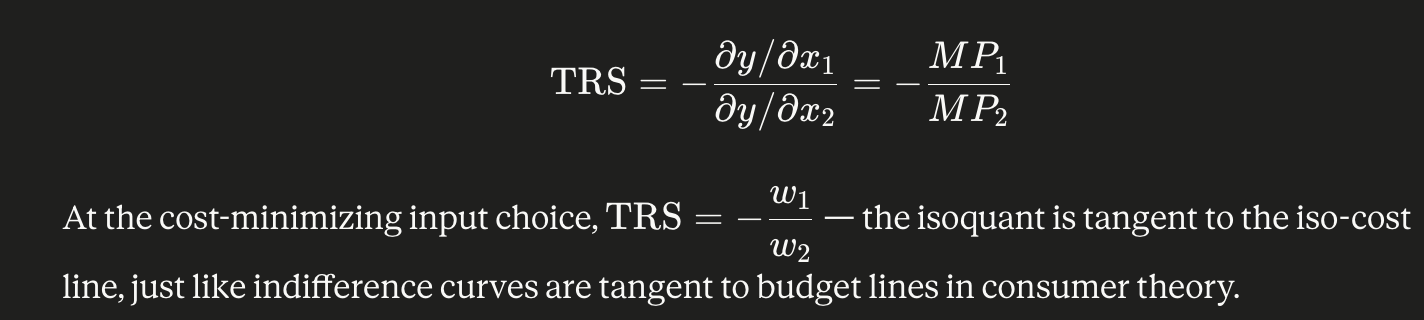
Avg total cost function
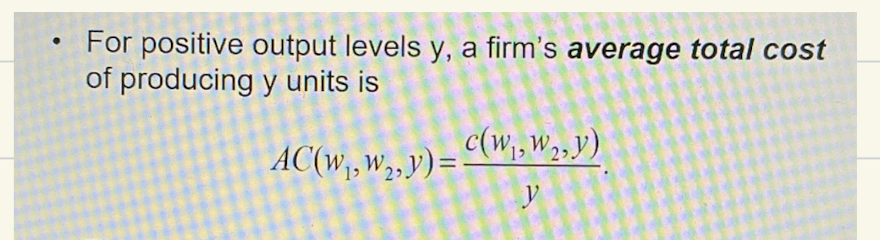
SR vs LR Cost Minimization problem
SR: when input is fixed, then constrained by that input
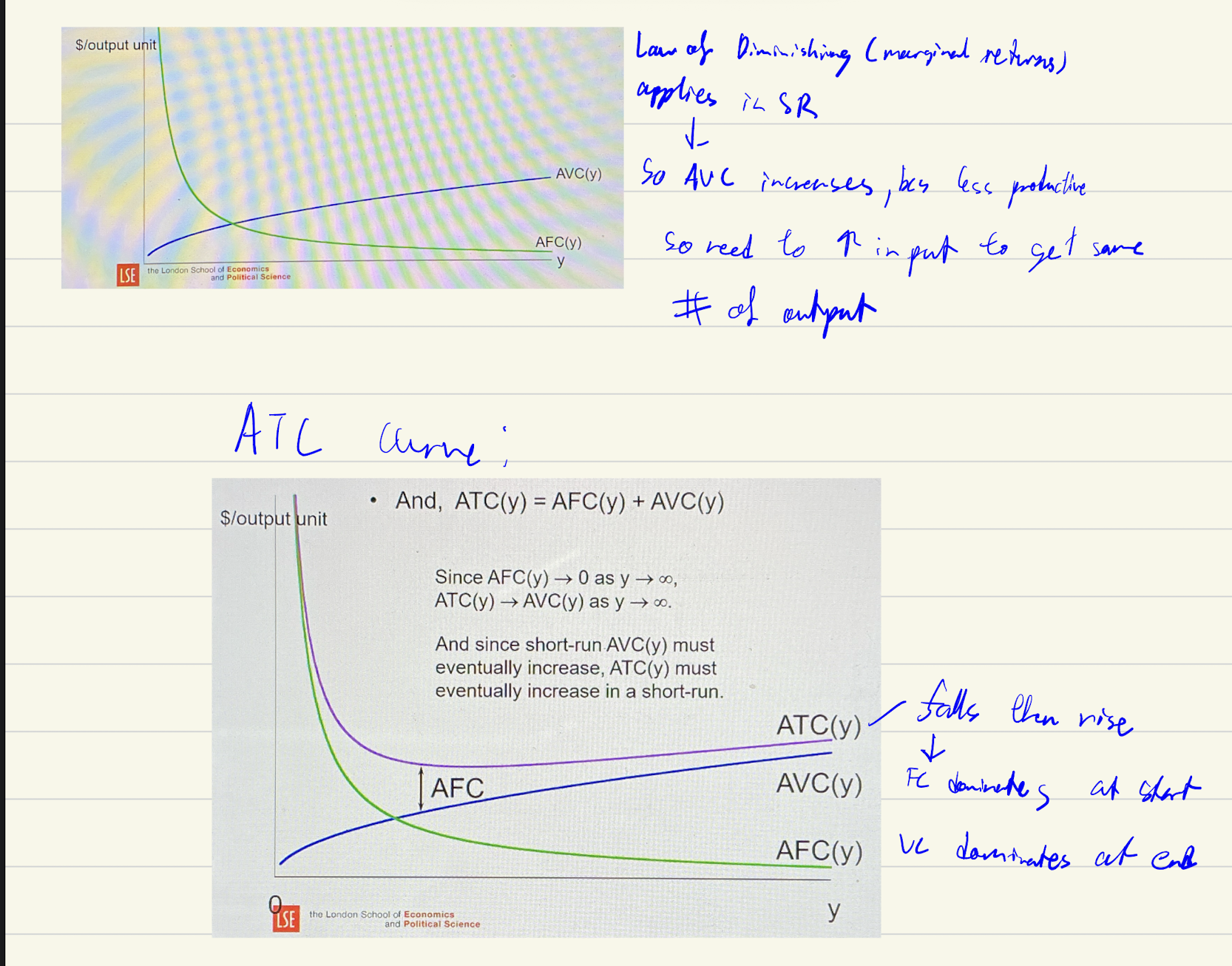
ATC, AVC, AFC SR Functions
this is for a diminishing MP from y=0 (start of prodcution), so AVC keeps increasing
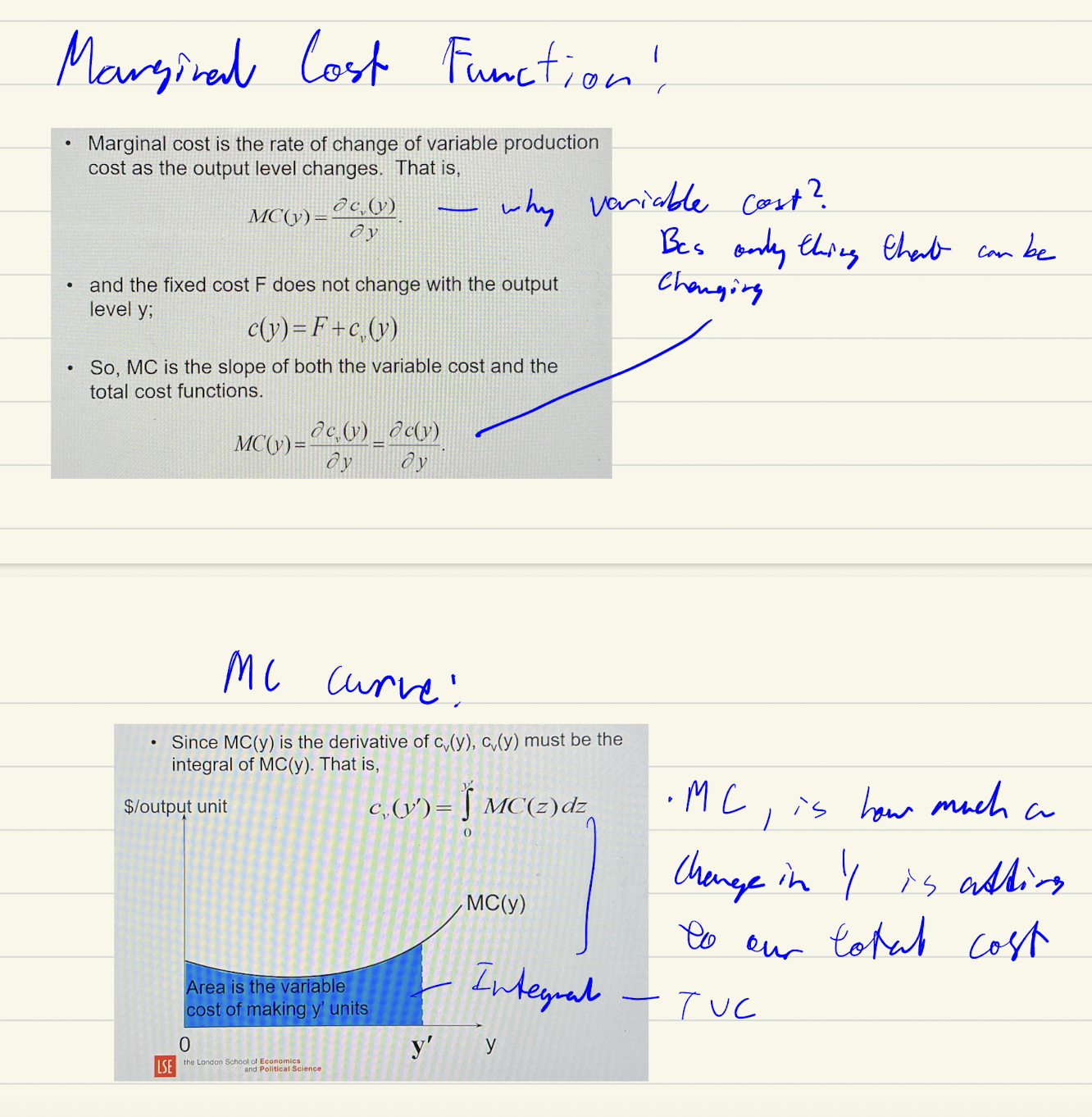
Marginal cost function
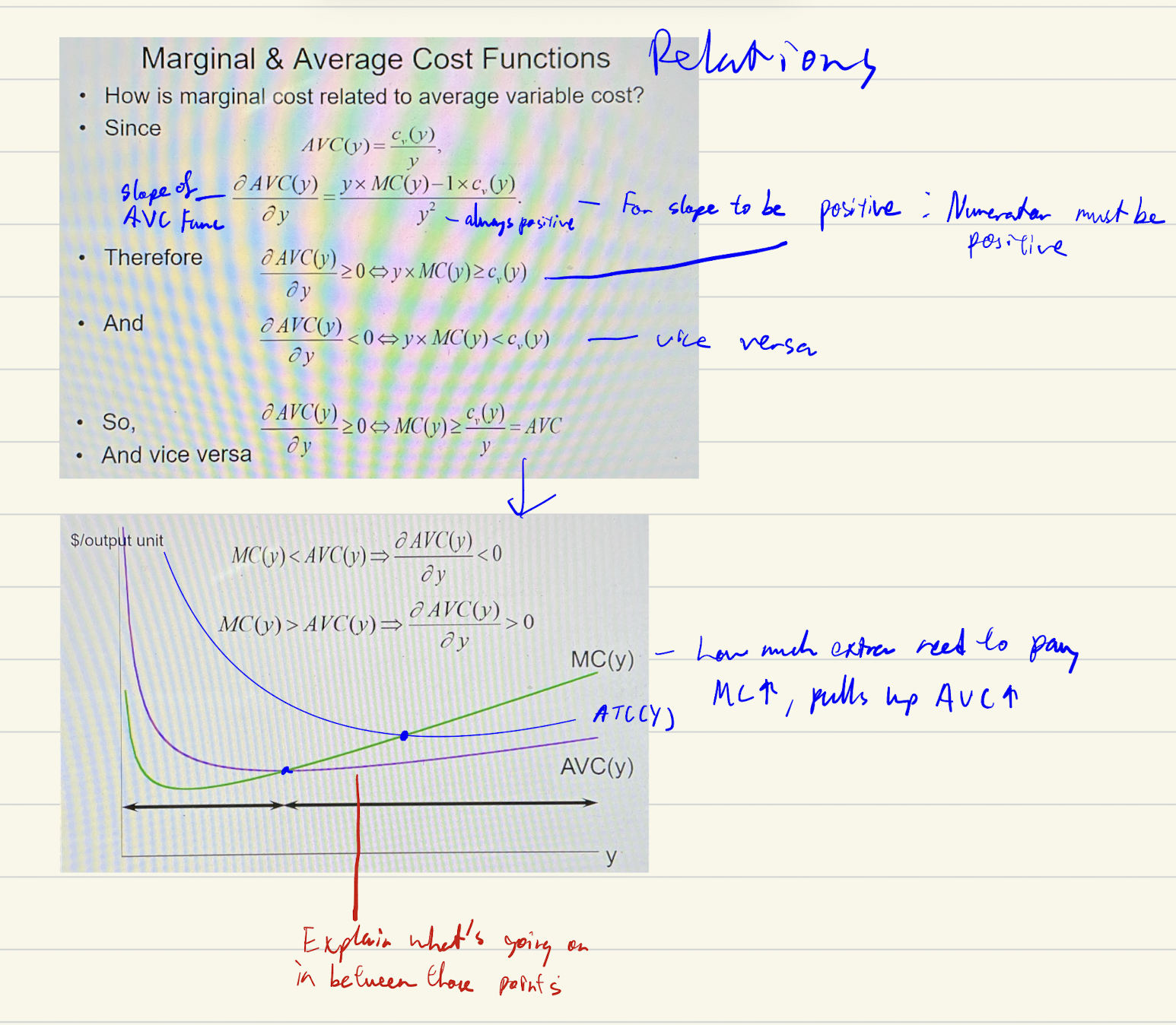
Marginal cost and relation to ATC and AVC (graph for normal case (diminishing mp after certain point))
MV crosses ATC at ATC’s min
MC>AVC⟺AVC is rising
MC<AVC⟺AVC is falling
MC=AVC⟺AVC is at its minimum
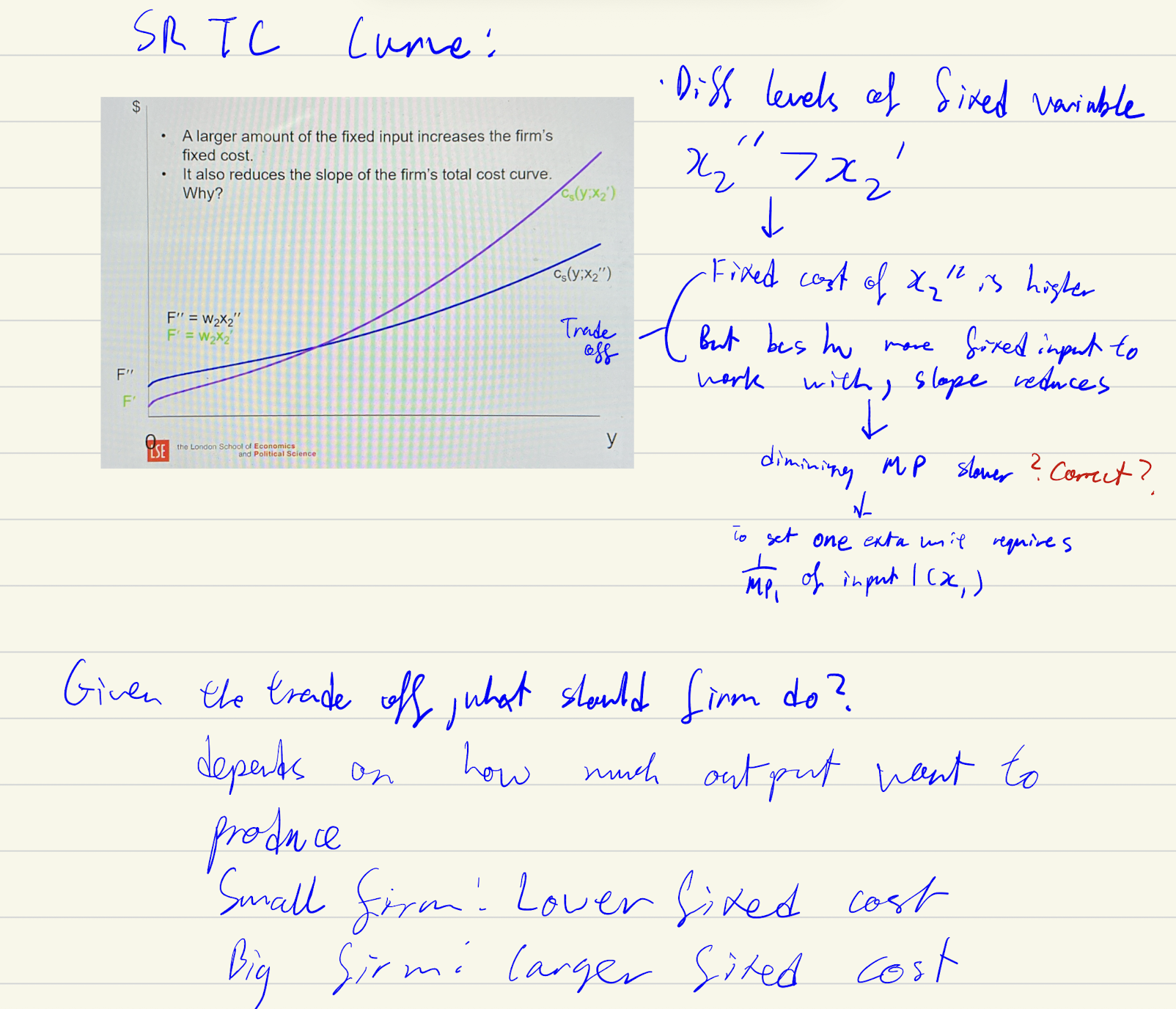
Impact of large vs small fixed input amount on Total Cost
Long Run Total Cost Curve
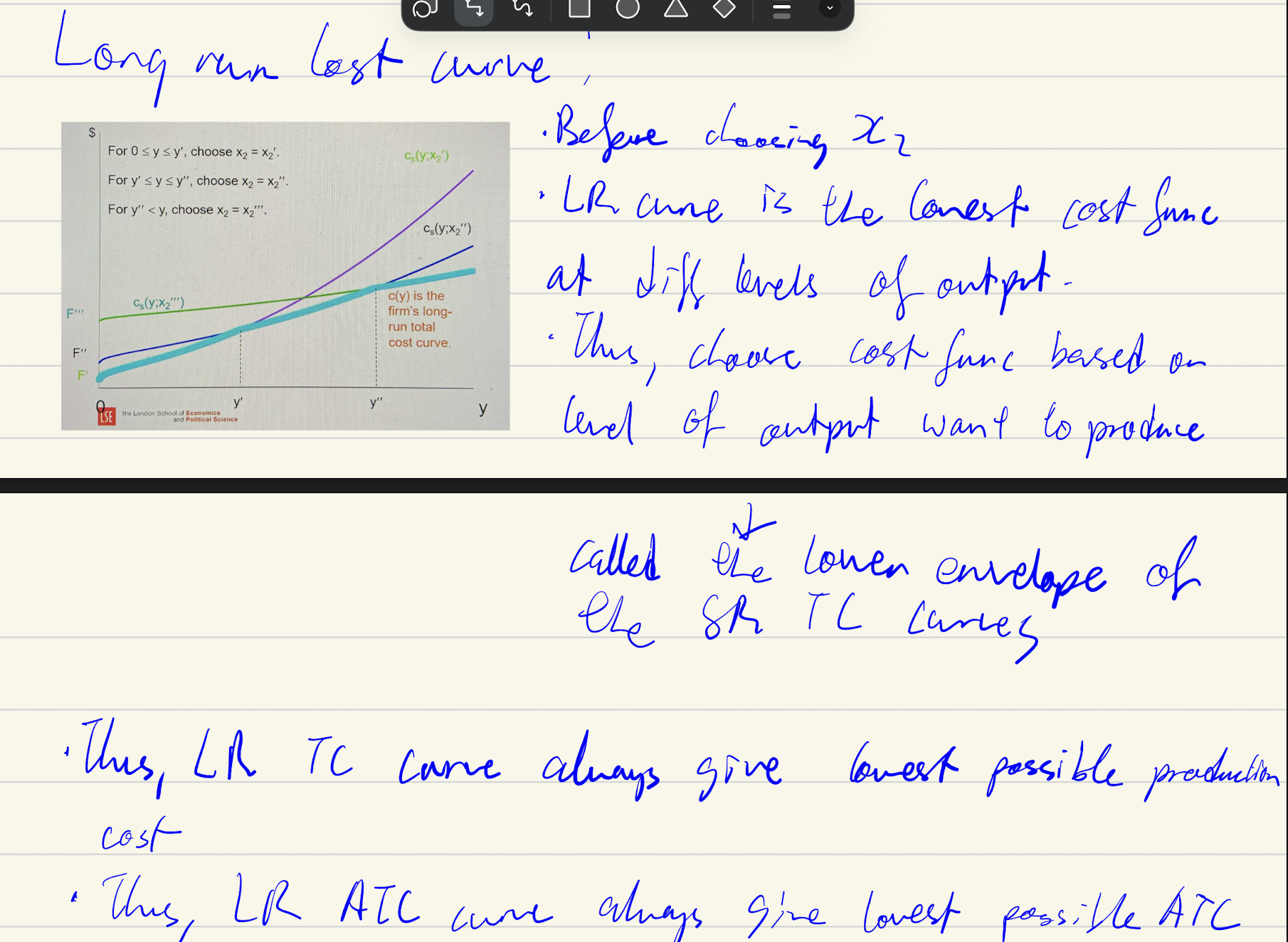
LR ATC, MC
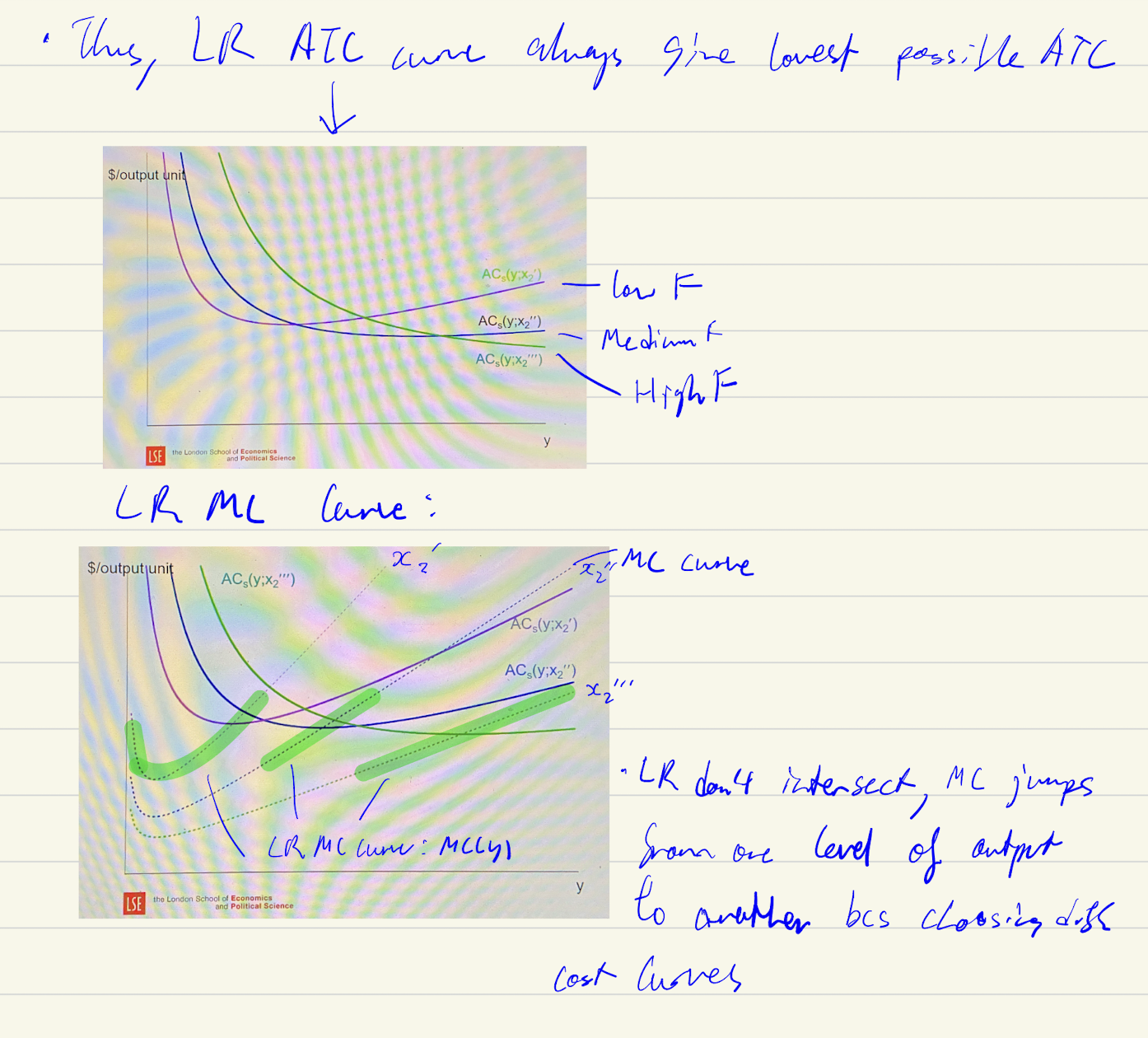
Pure Competition - Demand Supply Graph
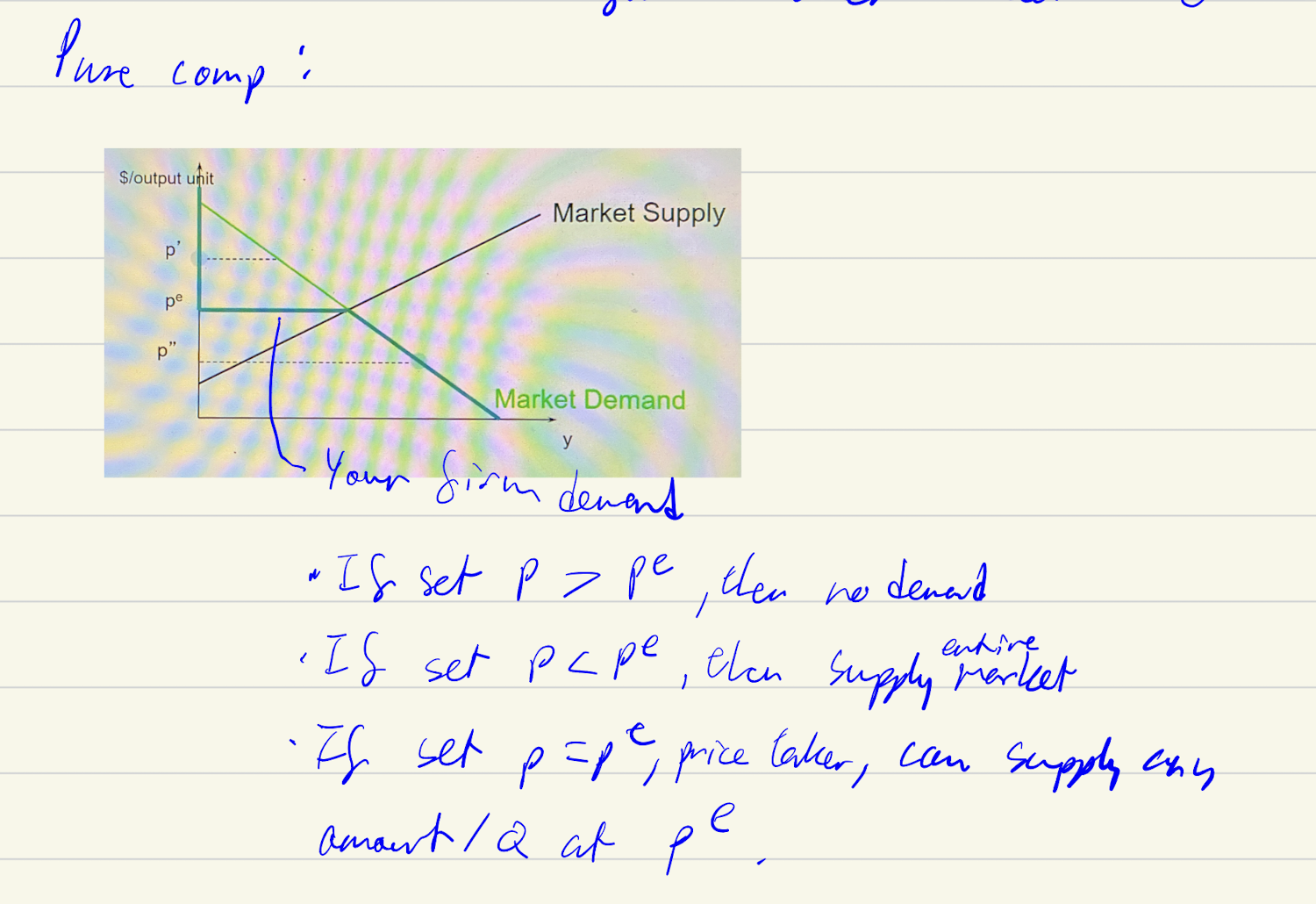
Pure Competition - Profit Max
differentiate → = 0 → p = mc
2 conditions → =0 (Interior case) Or SOC is negative, & (for interior case) MC curve must be upward sloping (slope must be positive, if negative it is actually profit minimising)
2 cases → don’t produce at all or produce
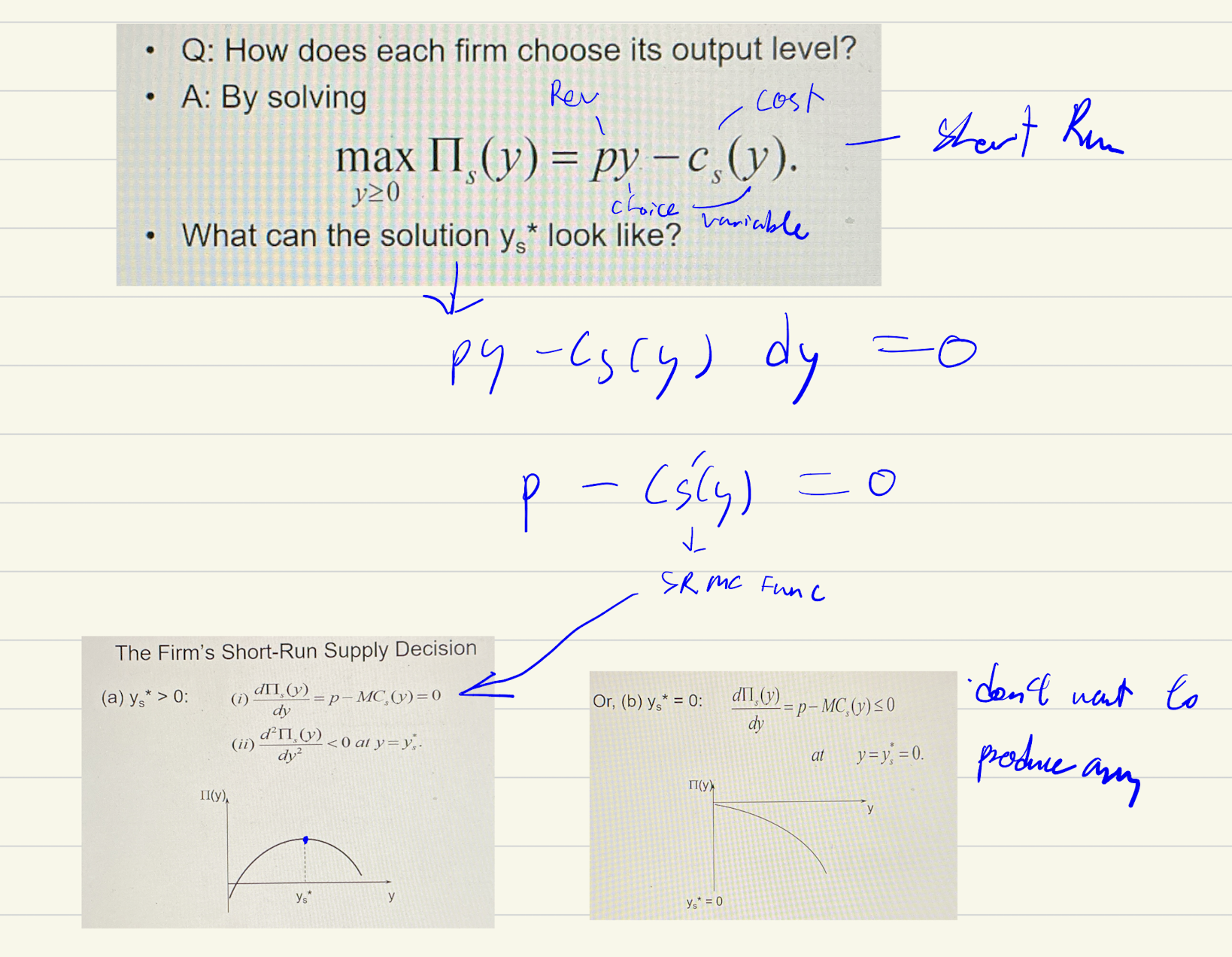
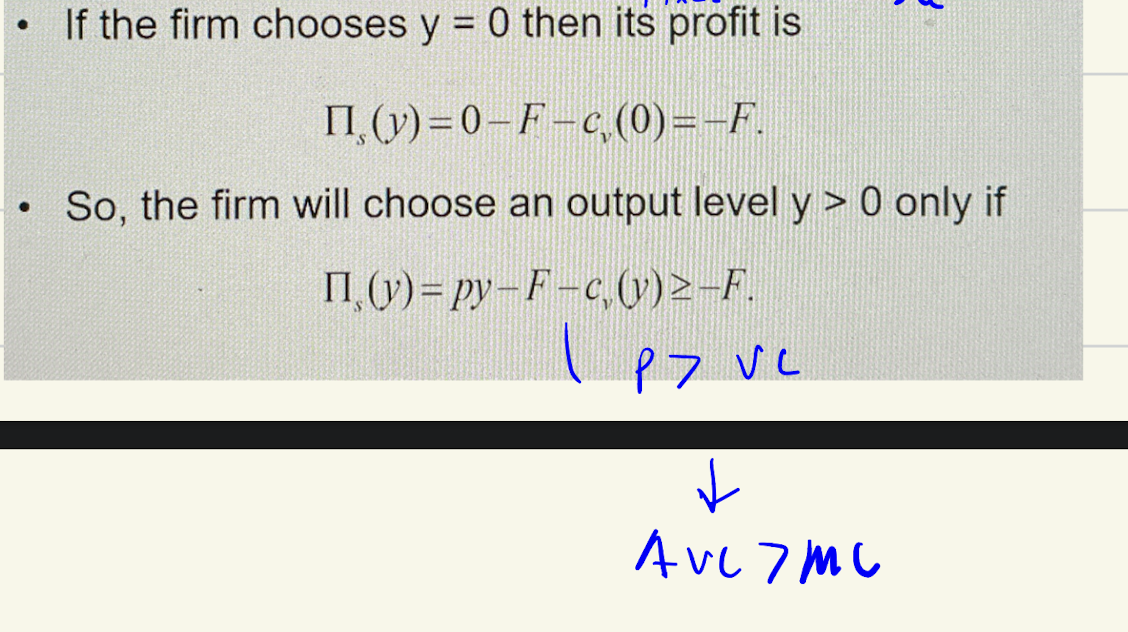
Condition for firm to produce SR
P>AVC
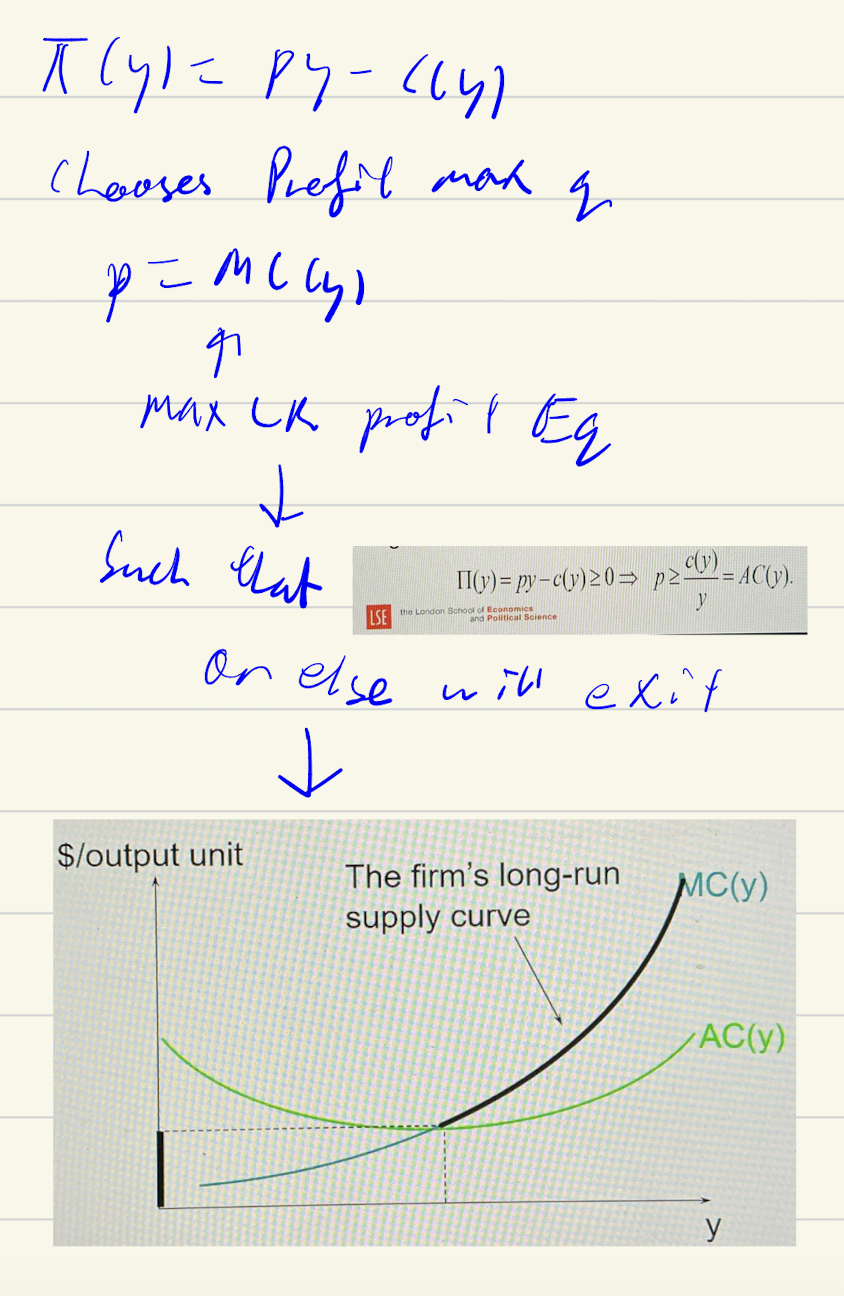
LR
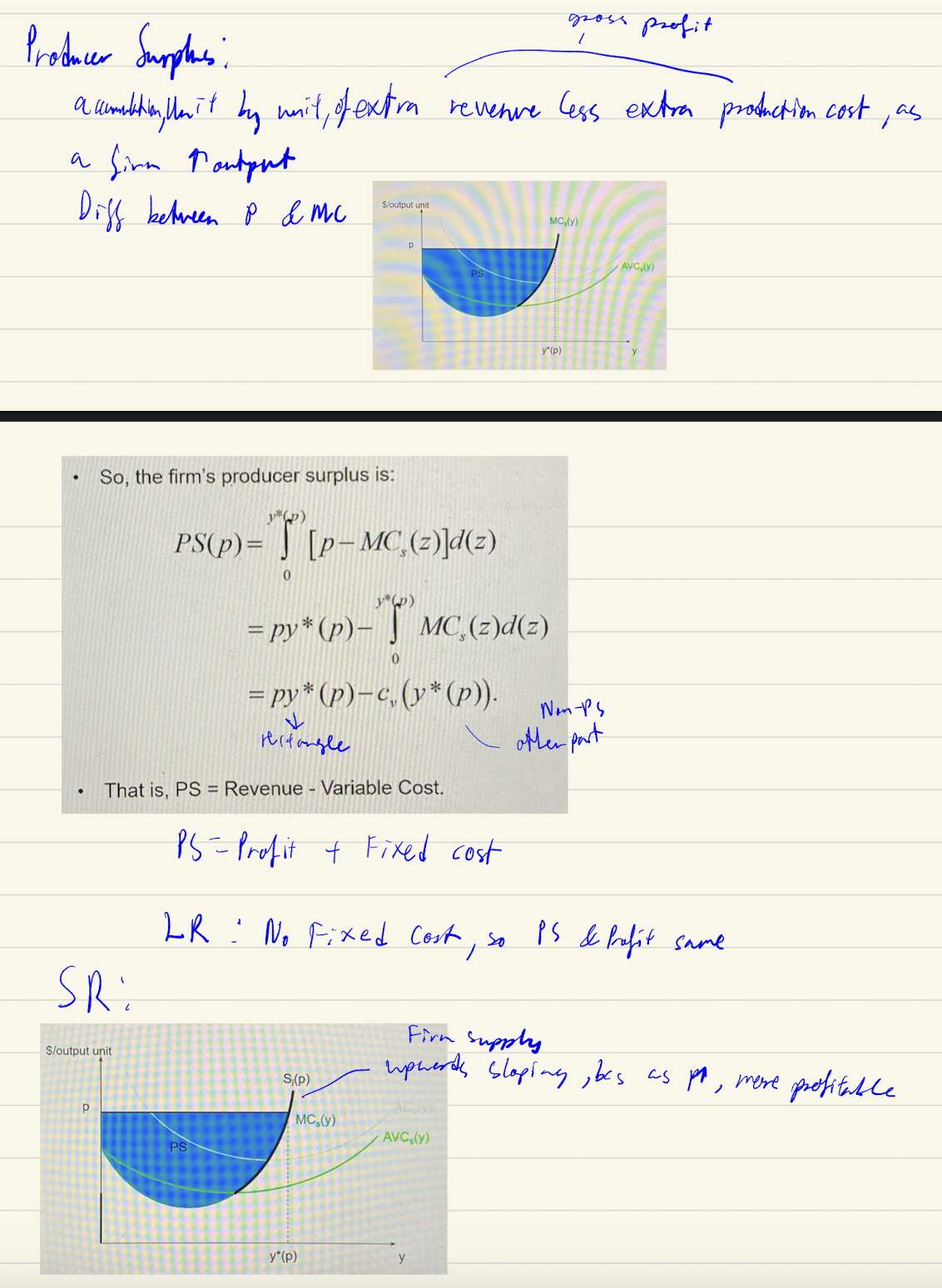
No fixed cost
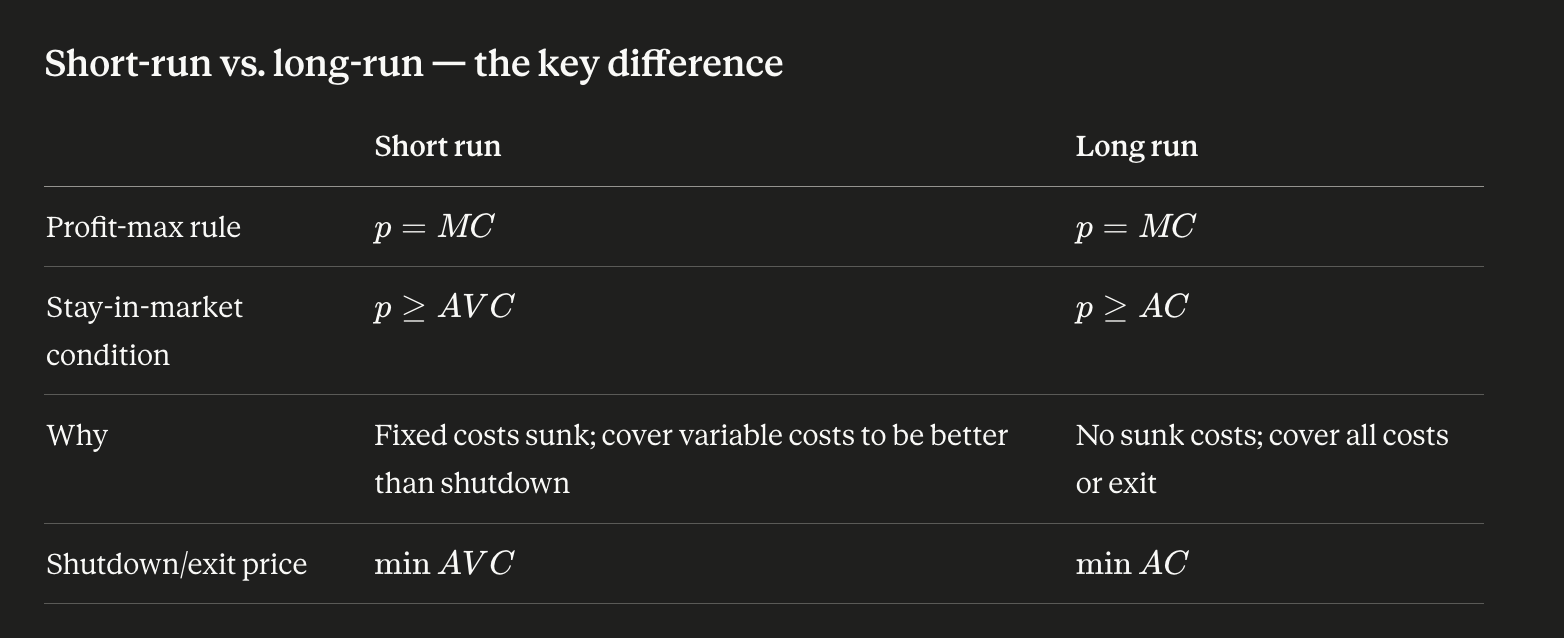
LR VS SR Profit Max
Producer surplus
LR Industry supply impacts and demand and profitability
No fixed factors so can enter and exit easily
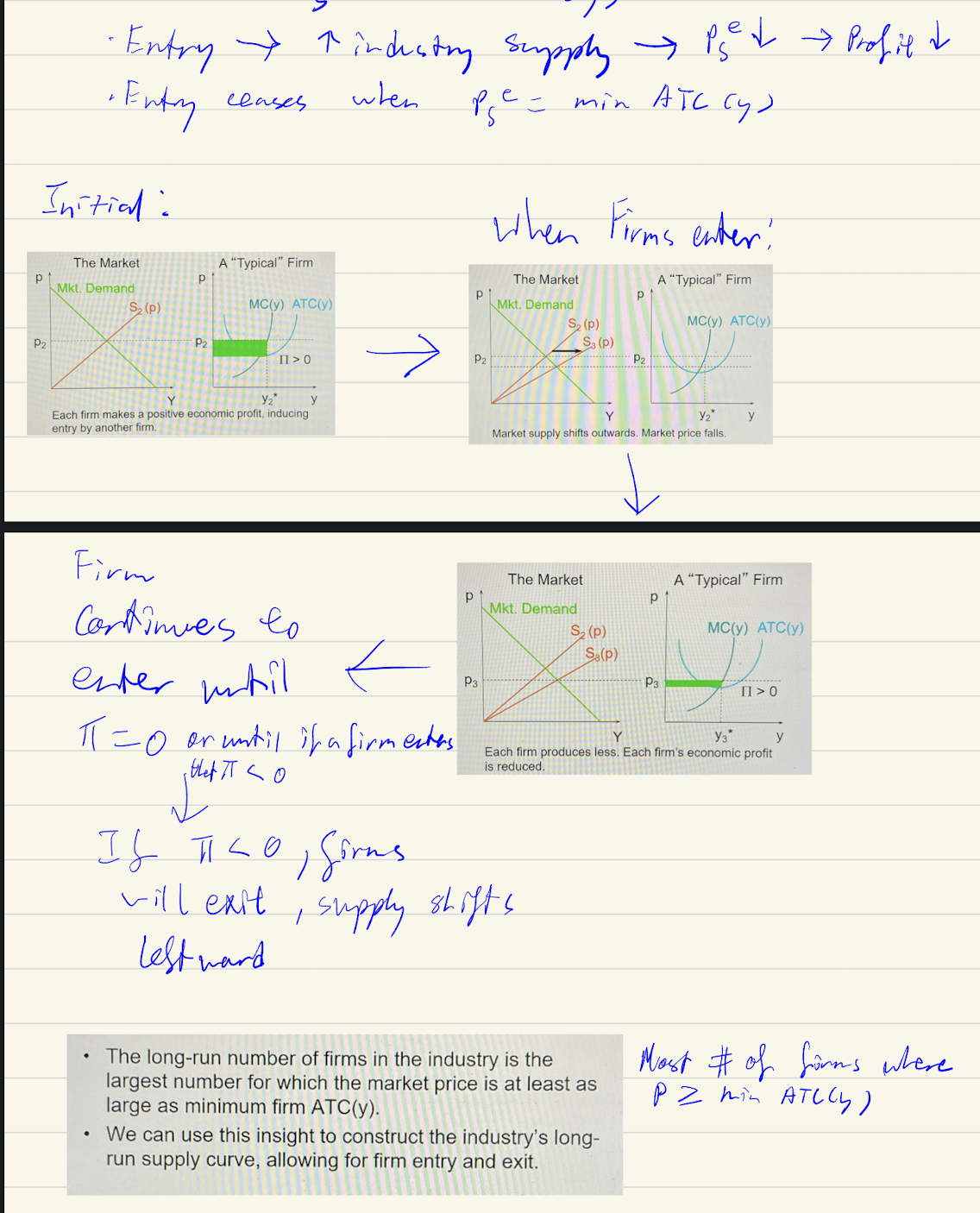
LR supply curve (competitve market)
LR EQ: price = Min ATC
Favors consumers as PS=0 → all firms break even
Firms hope new tech can reduce their ATC or want to go somewhere else where they can have market power
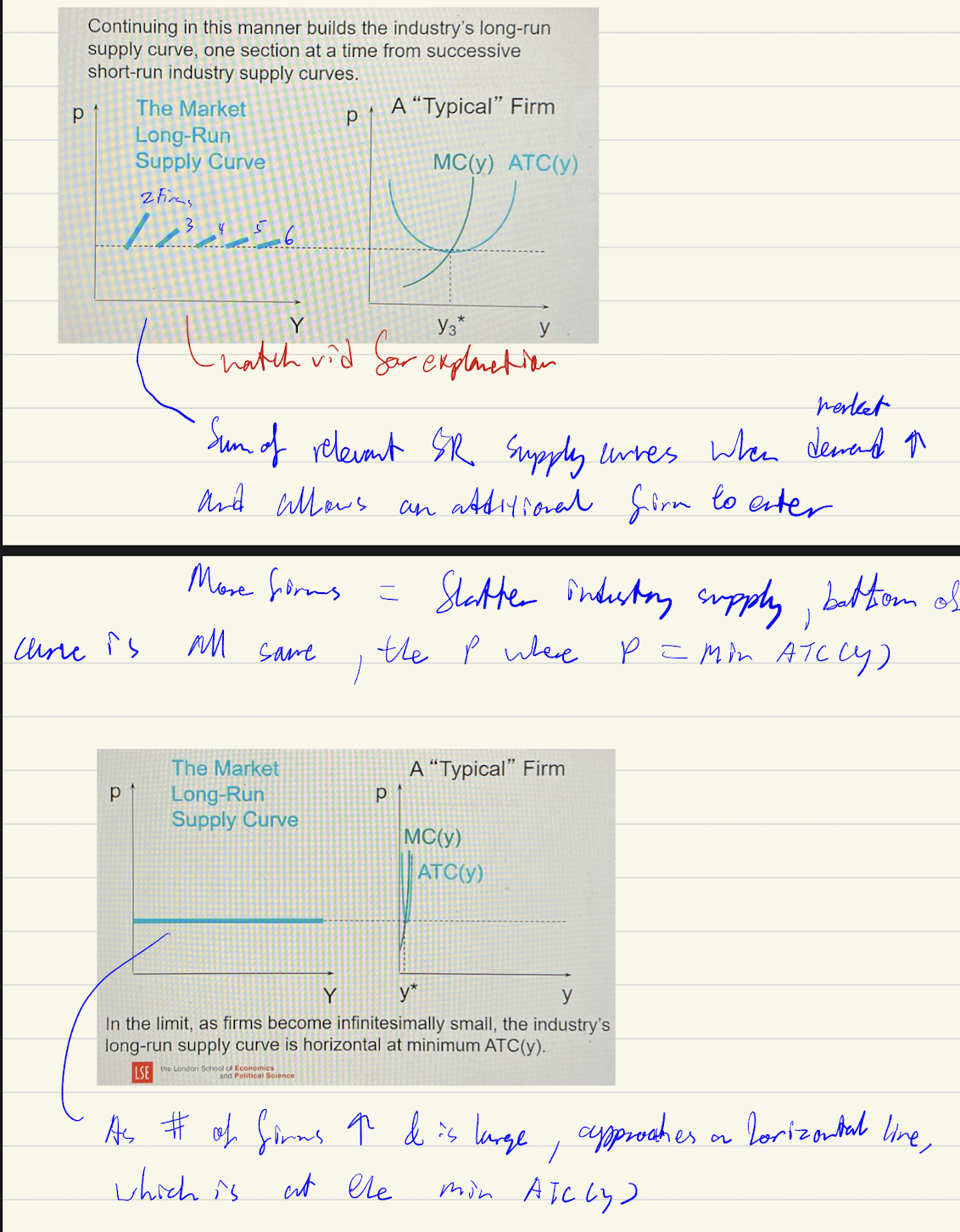
Profit maximisation of a monopolist
When MR = MC
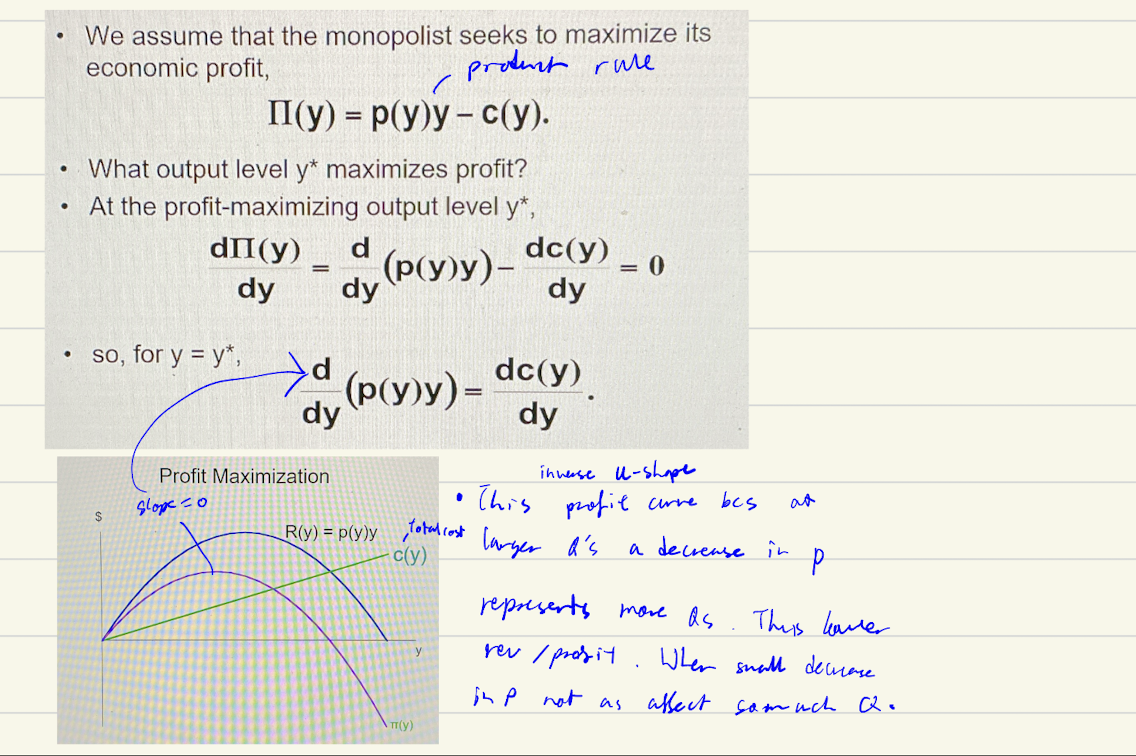
MR of Monopoly, Graph + rev max
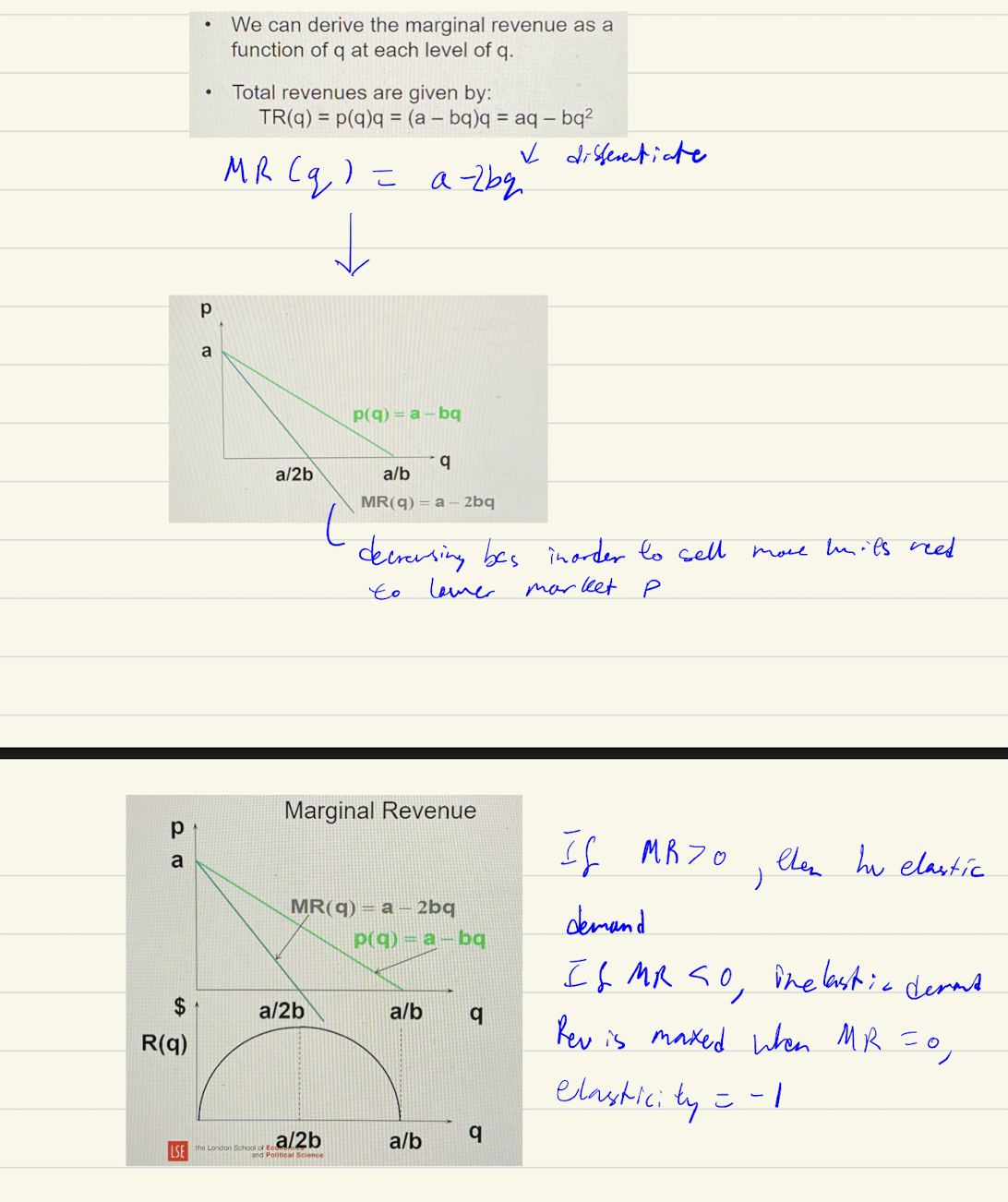
MC Curve of Monopoly
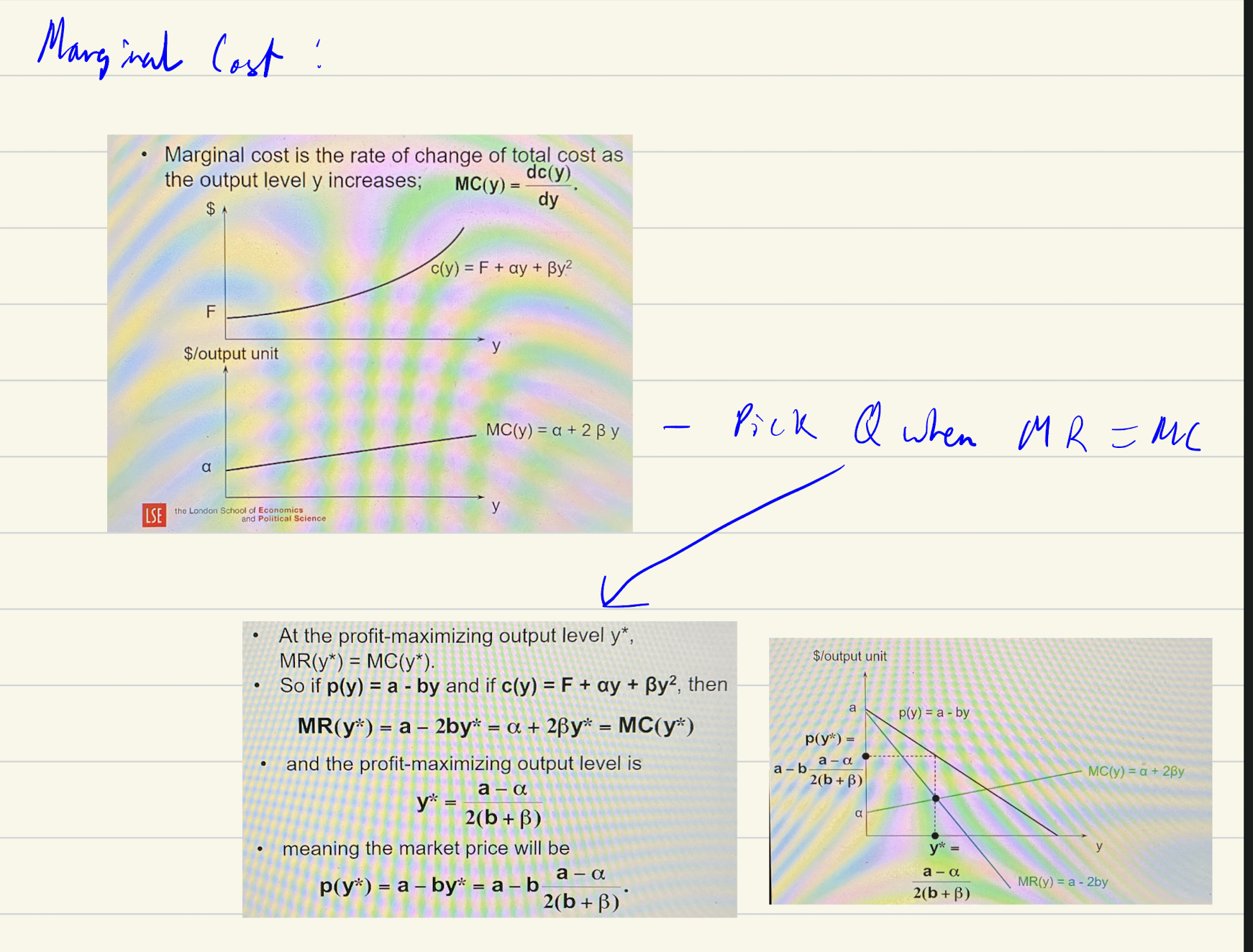
Impact of Elasticities on Monopoly
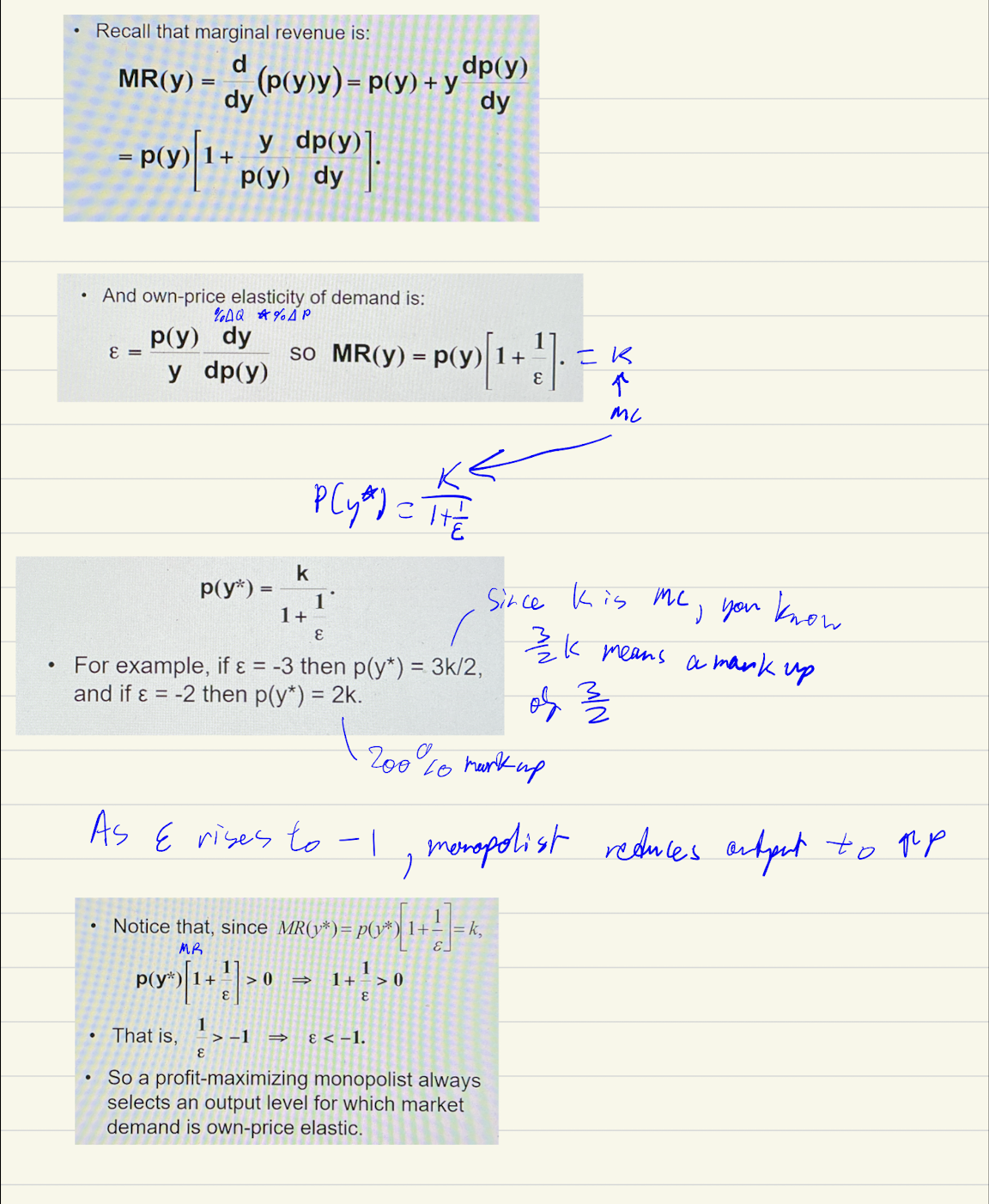
Deadweight loss of monopoly
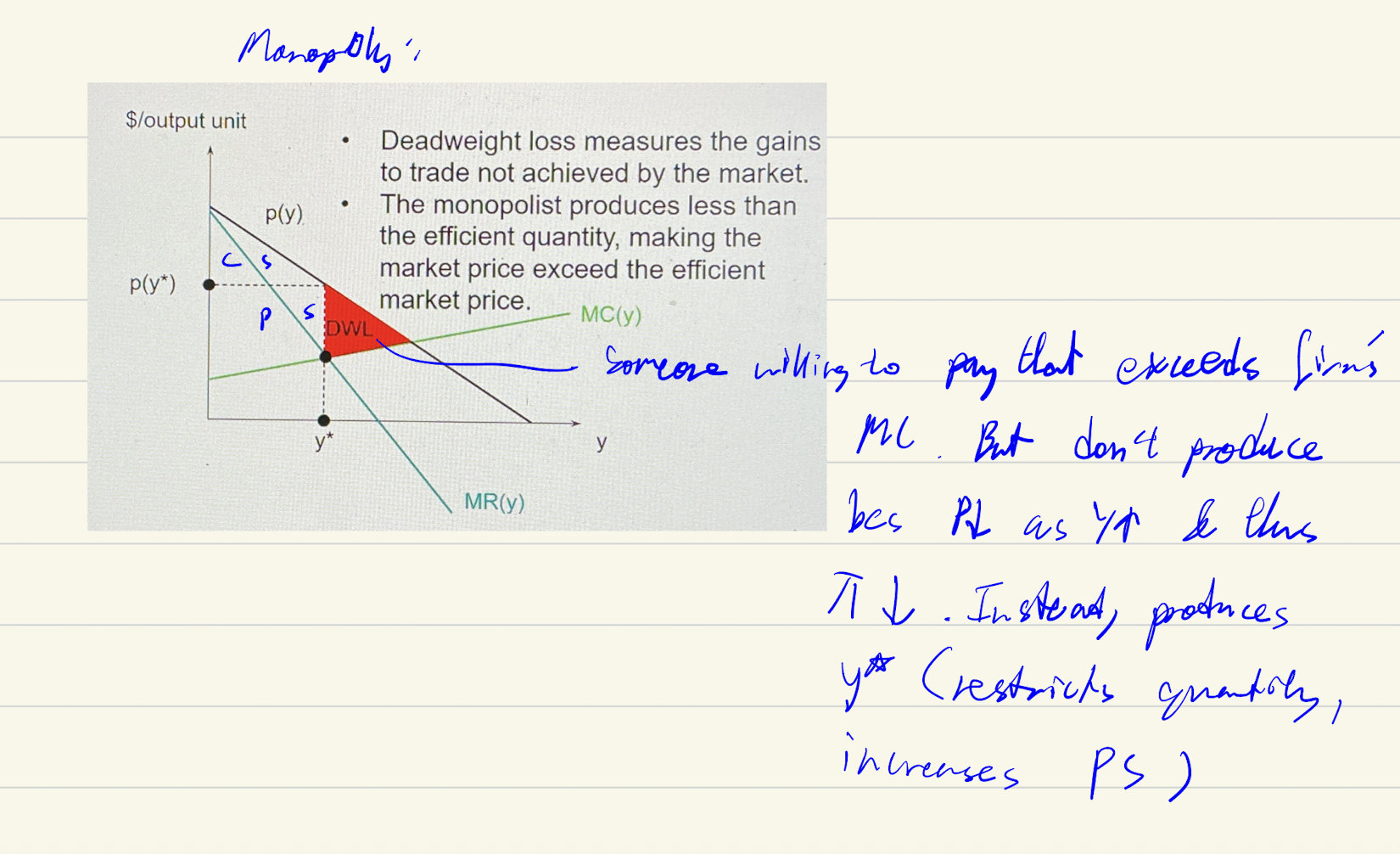
Natural monopoly def
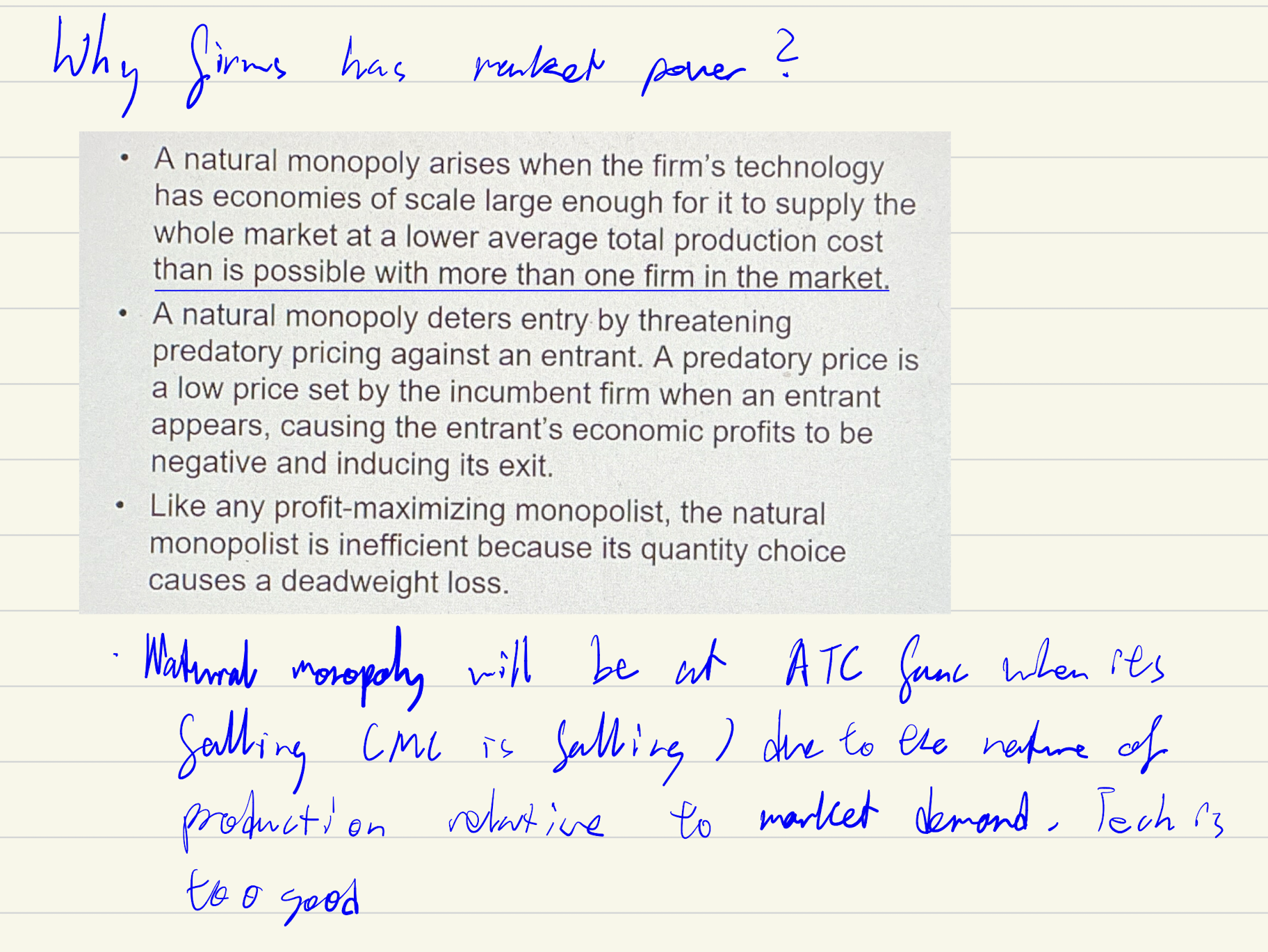
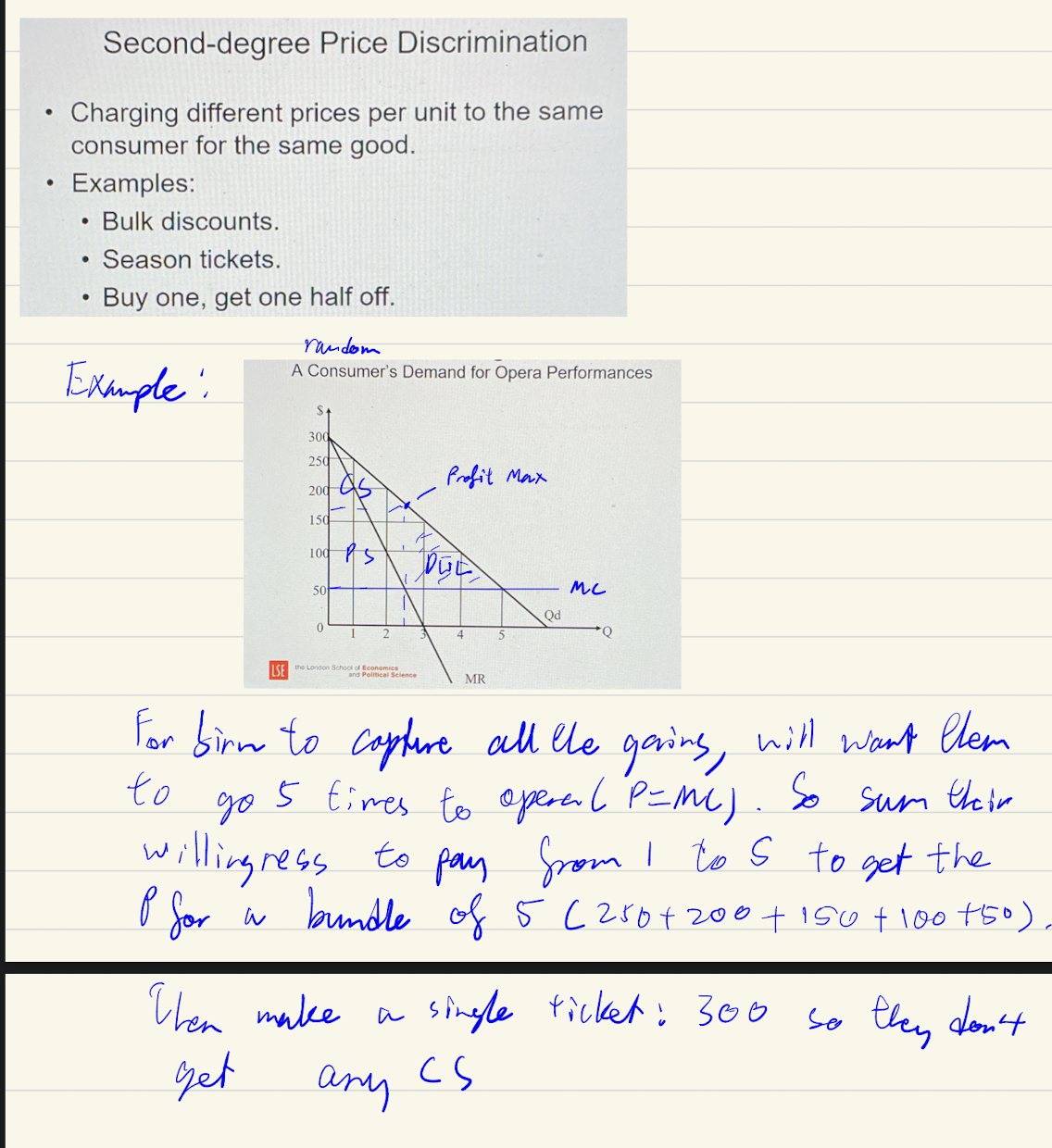
Why forcing monopolies to produce at efficient quantity doesn’t work
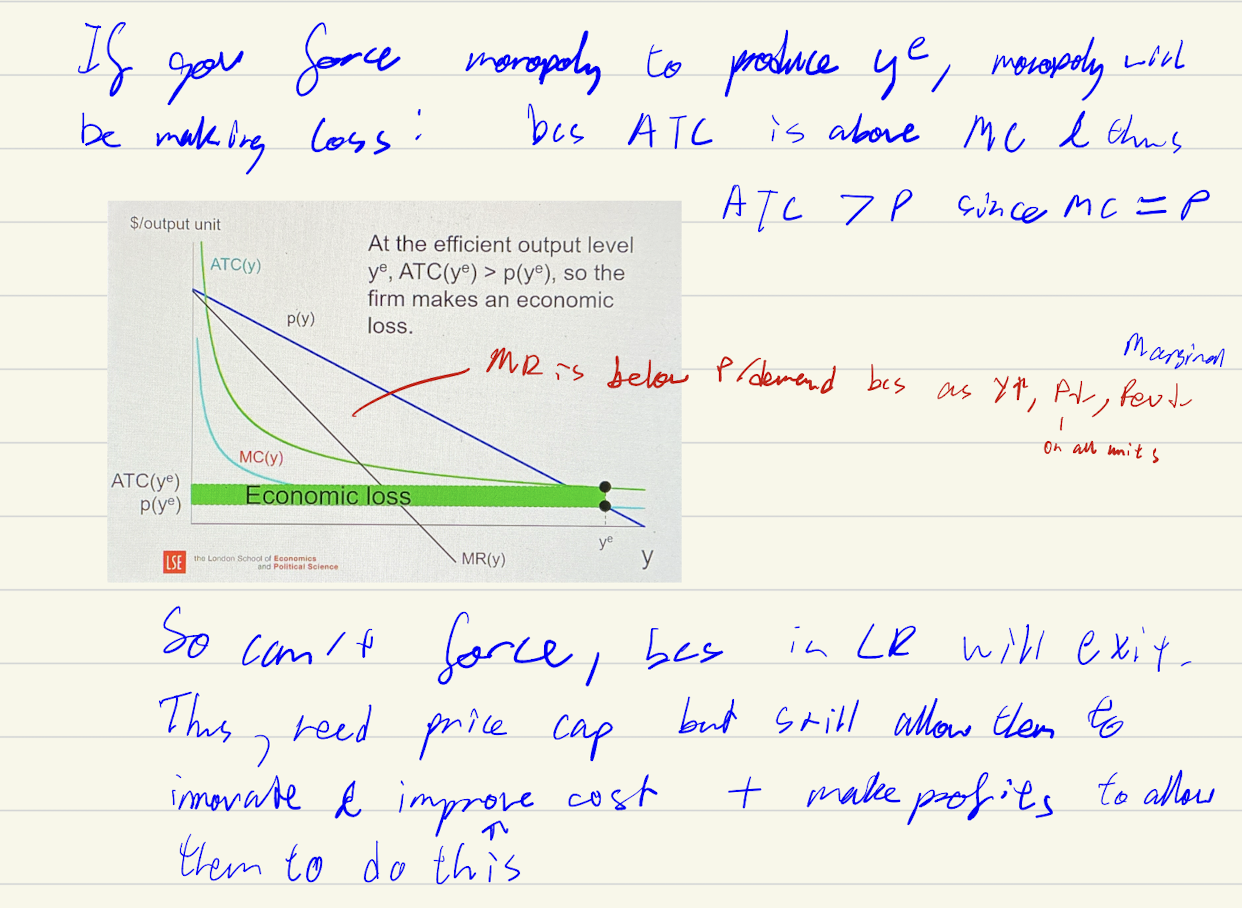
Types of price discrimination
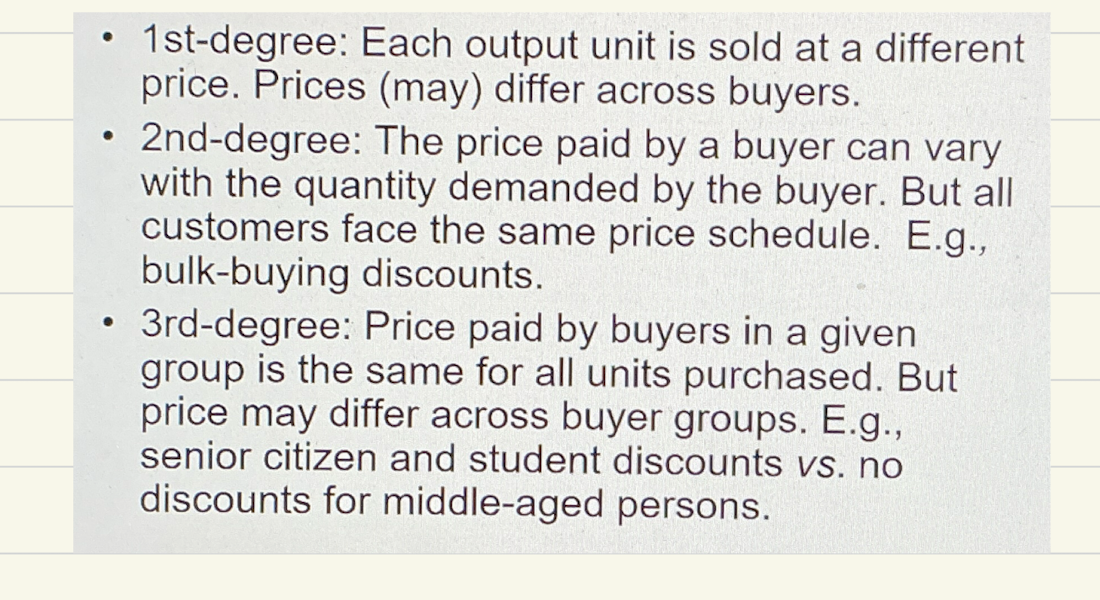
First degree graph and producer surplus
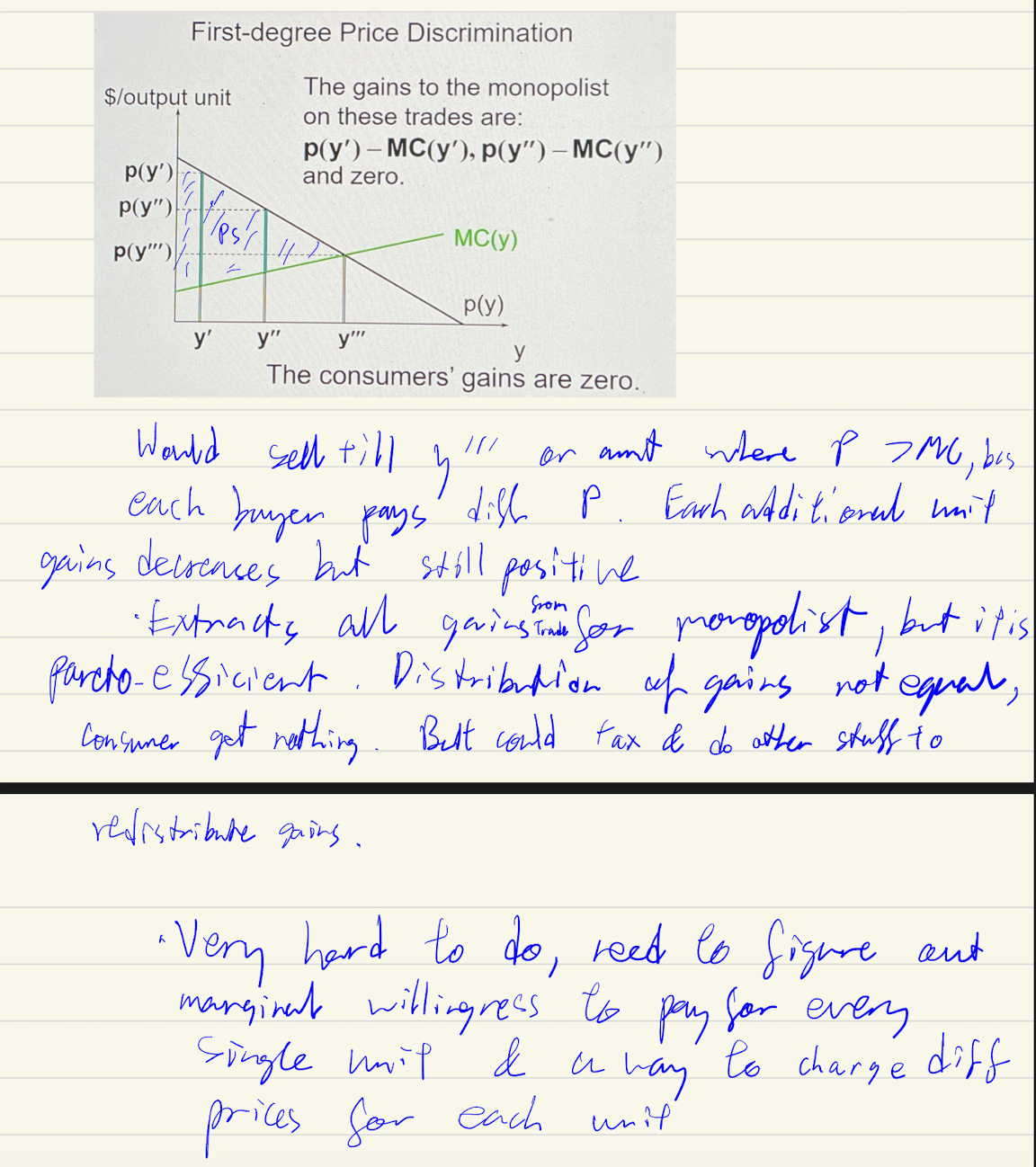
2nd degree graph
?? ask help
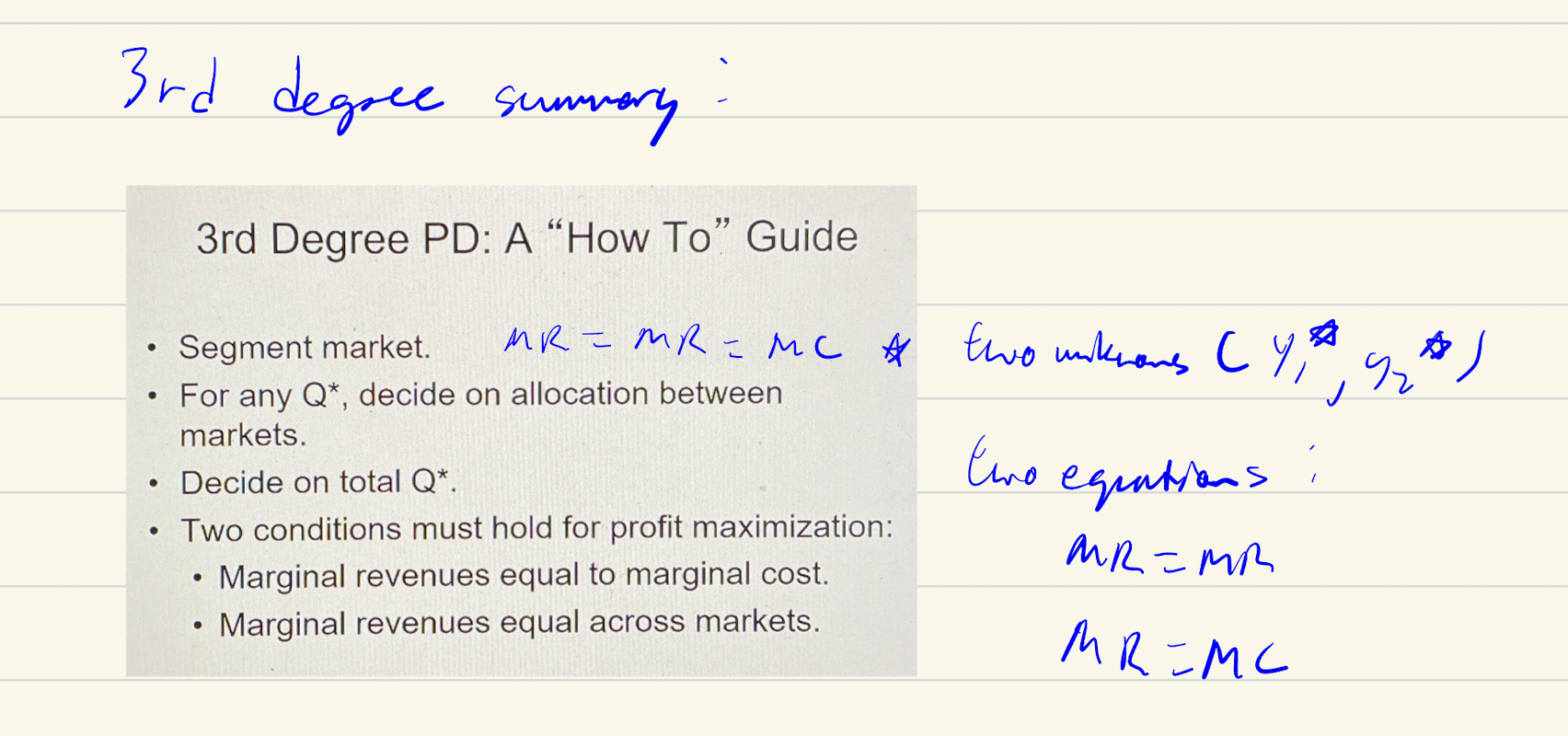
3rd Degree Price discrimination - finding p and q
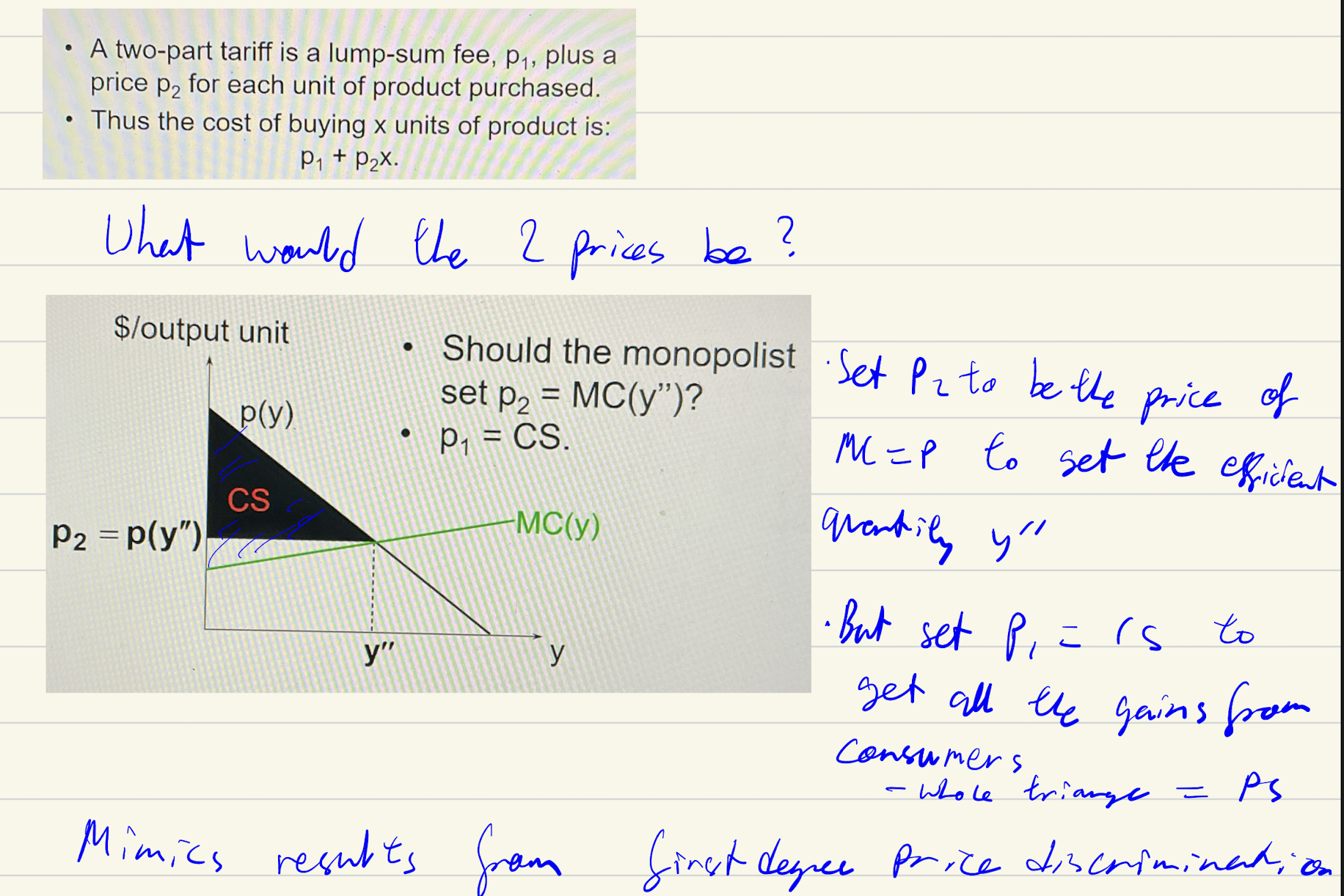
Two Part Tariff
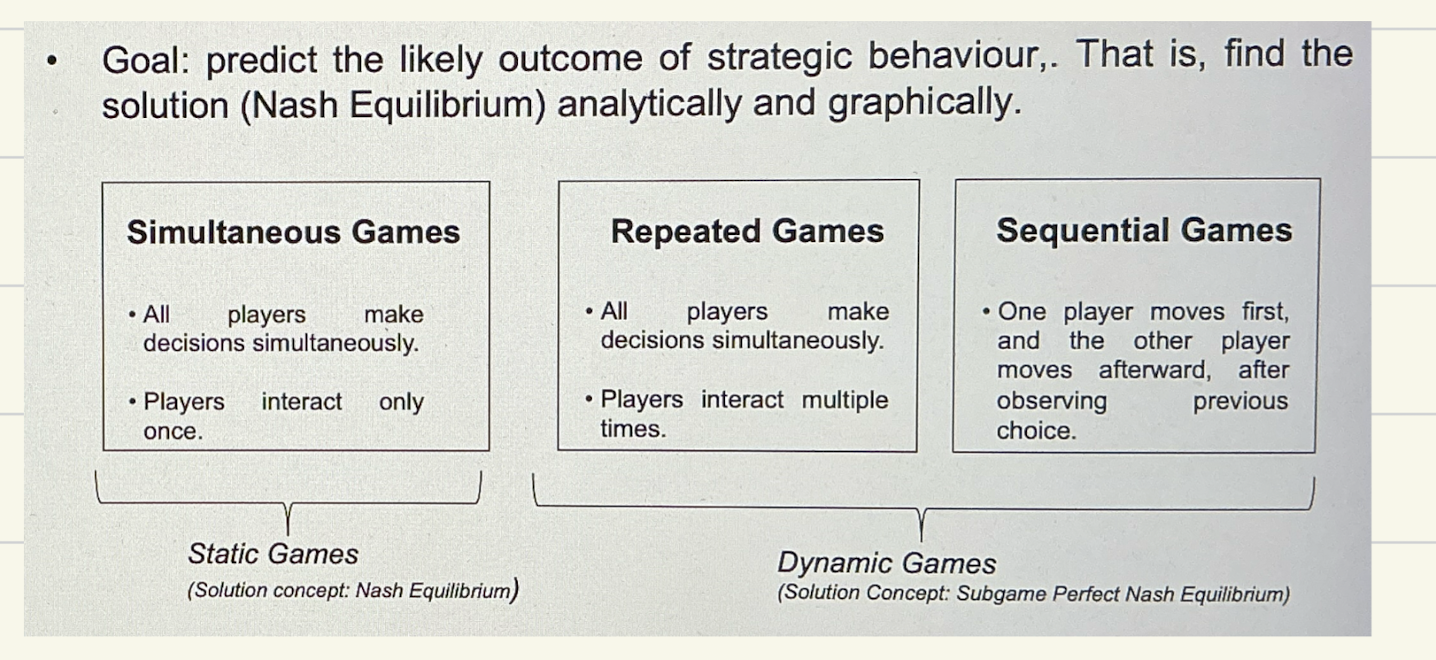
Sequential, simultaneous, vs repeated games
Dominant strategy vs weakly dominant vs strictly preffered vs dominated def
weakly: greater or equal
Strictly preffered: another strategy is strictly preffered to another strategy (yield higher payoffs in all scenarios) - then that strategy is dominated

Prisoners dilema def
dominant + pareto ineff
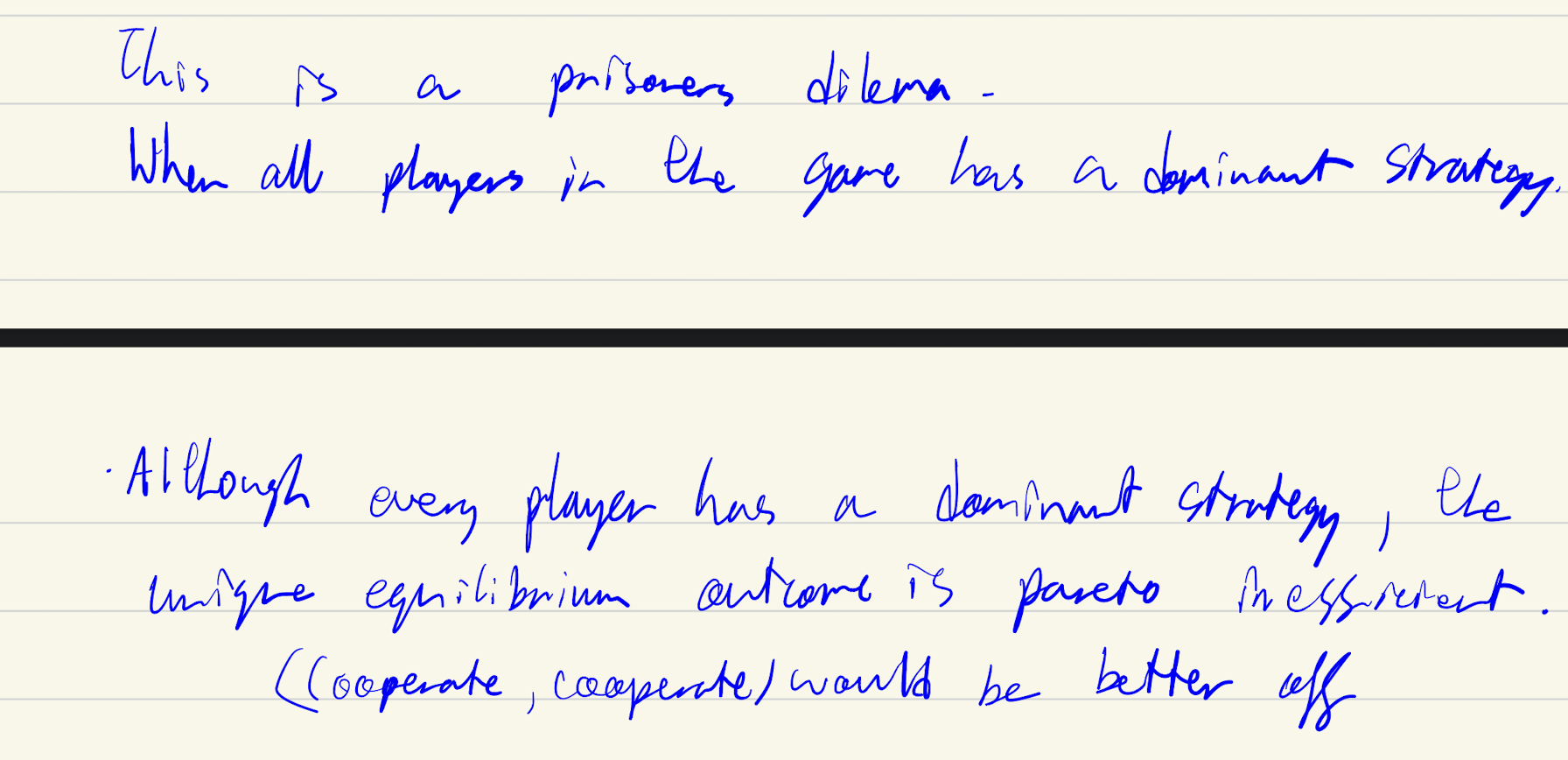
Pareto eff def in game theory
An outcome is Pareto efficient if there is no other outcome that makes at least one player better off without making any other player worse off.
Equivalently: an outcome is Pareto inefficient (or "Pareto dominated") if there exists some alternative outcome where everyone is at least as well off, and at least one person is strictly better off.
Iterative deletion of dominated strategies (+assumptions
Assumes rationality and belief of rationality of others. May lead to imprecise predictions
NE
use when there is no dominated strat
Best response(s) is the best strategy a player can follow given their belief of the other players strategy
when they mutually best respond to each other → NE → when have no reason to deviate

Mixed strategy NE (How to find probs)
When there is a prob dist among the player’s pure strats, creating unpredictability
Find expected payoffs given probabilities → find q and p, the mixed strat NE → find best responses, draw graph
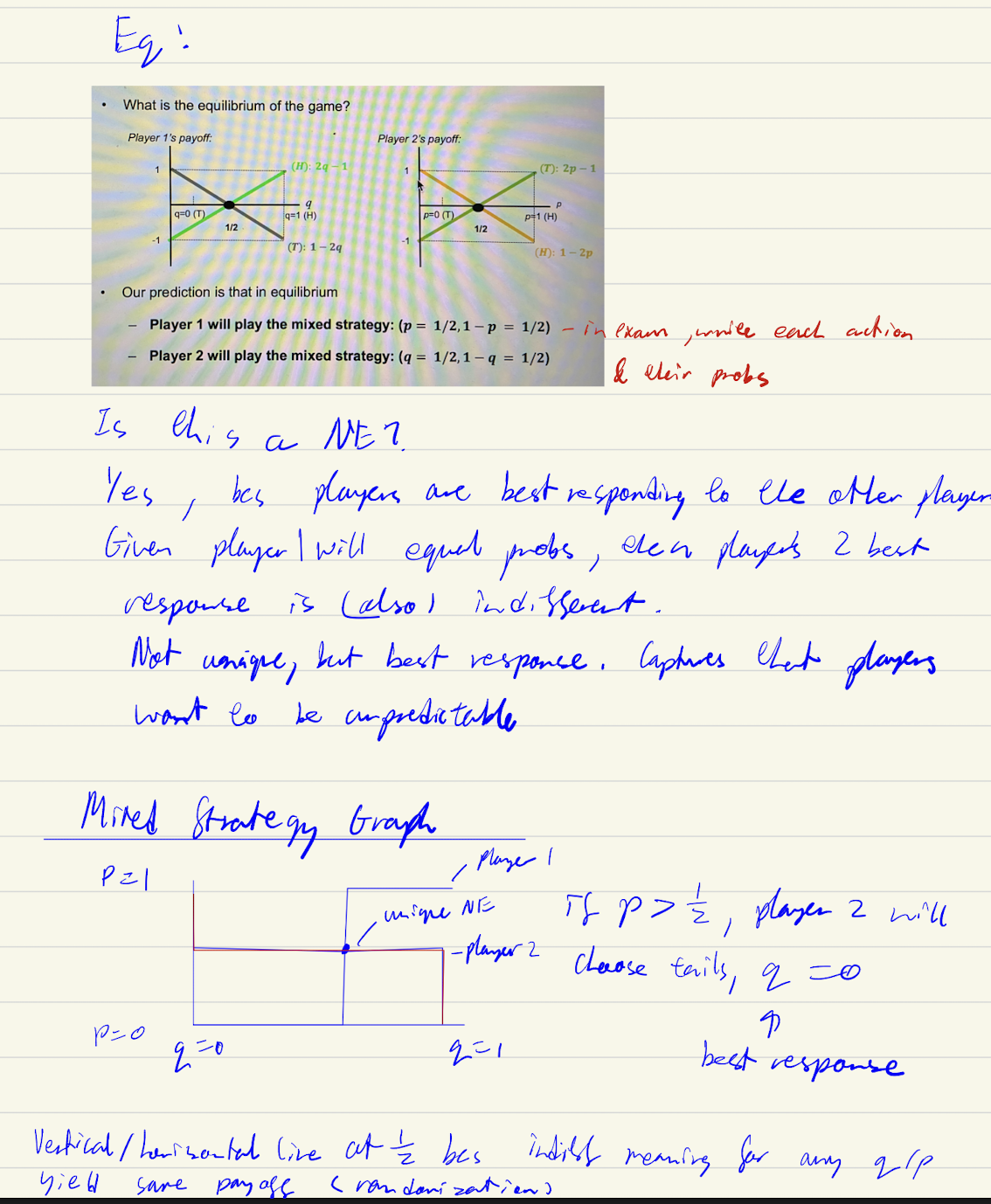
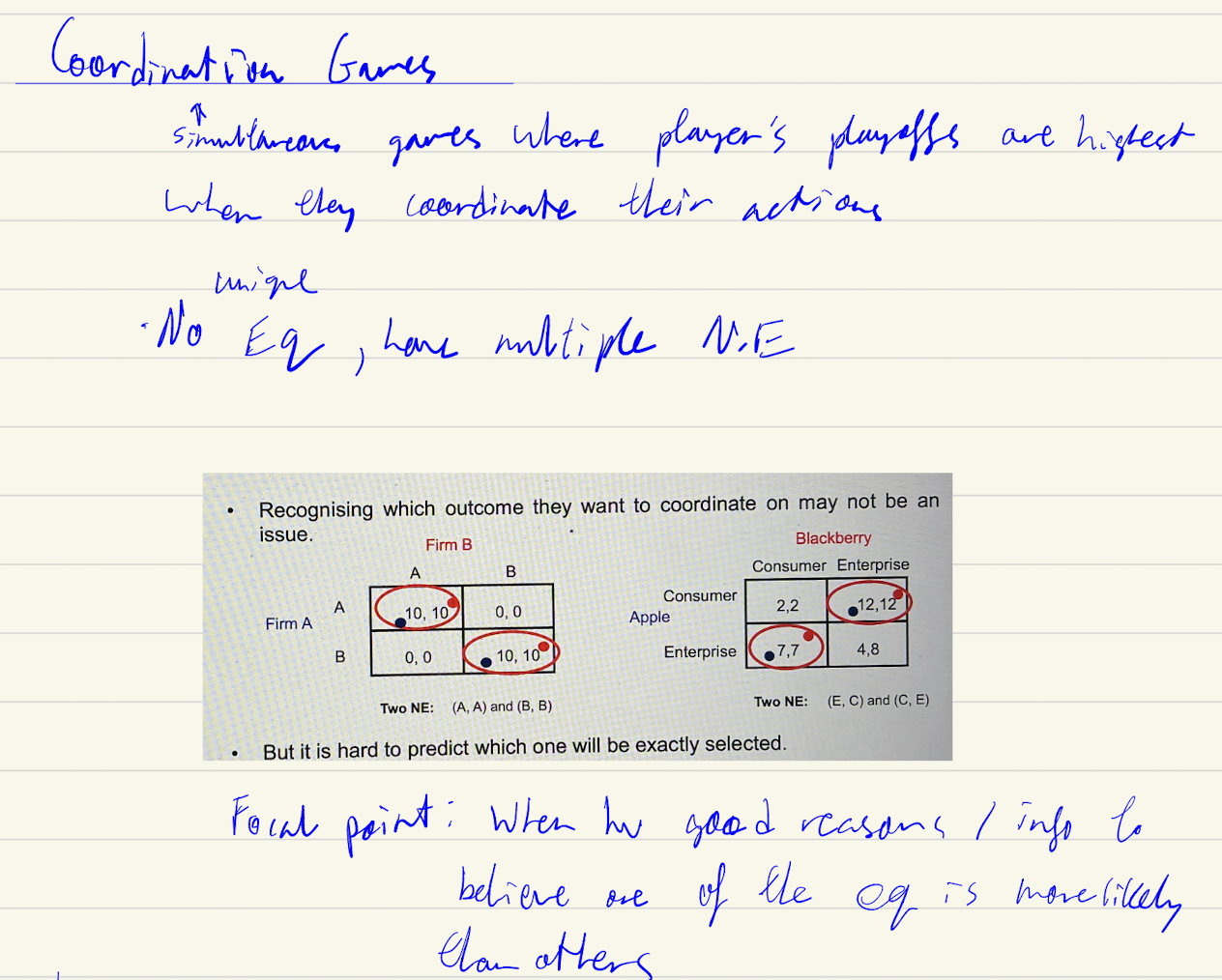
Coordination games
Even if one NE is giving strictly better payoffs for both parties, this doesn’t mean the other NE can be disregarded as need certainty the pareto eff outcome will be chosen
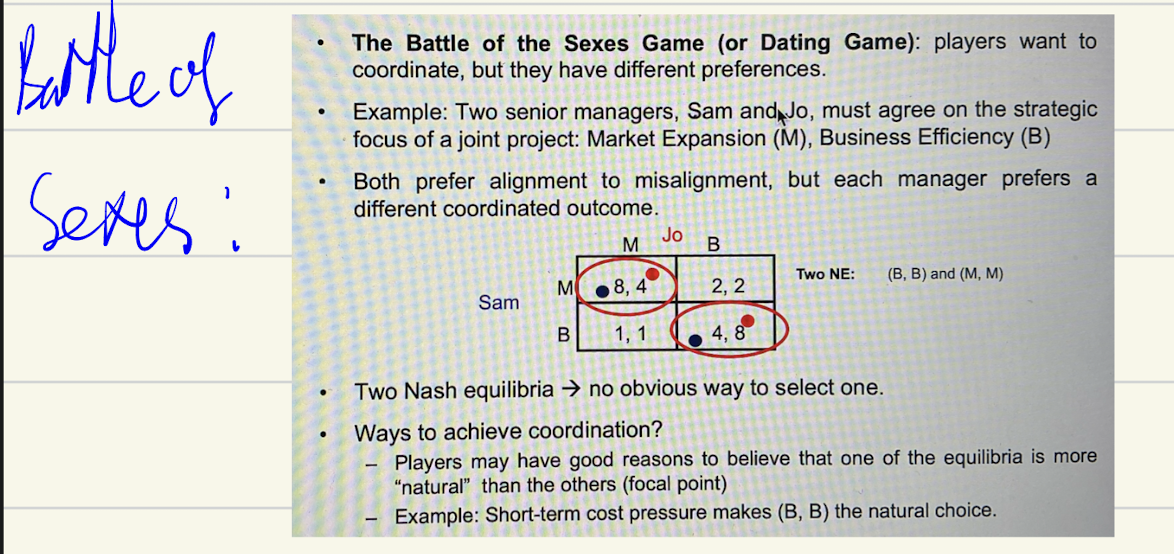
Battle of sexes
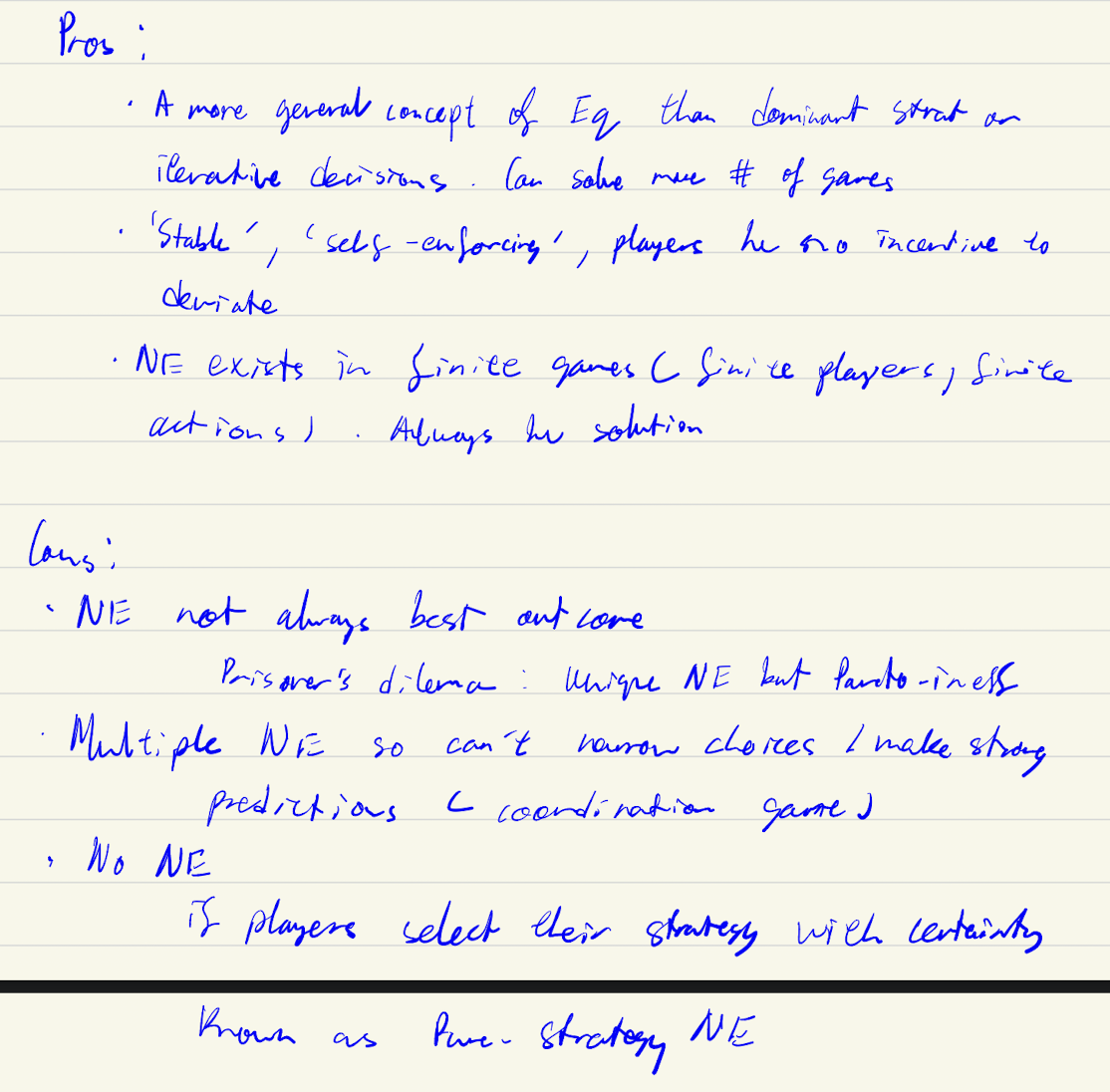
NE Pros and Cons
Backward induction
looking at the future to anticipate what the follower will do for the leader to decide today
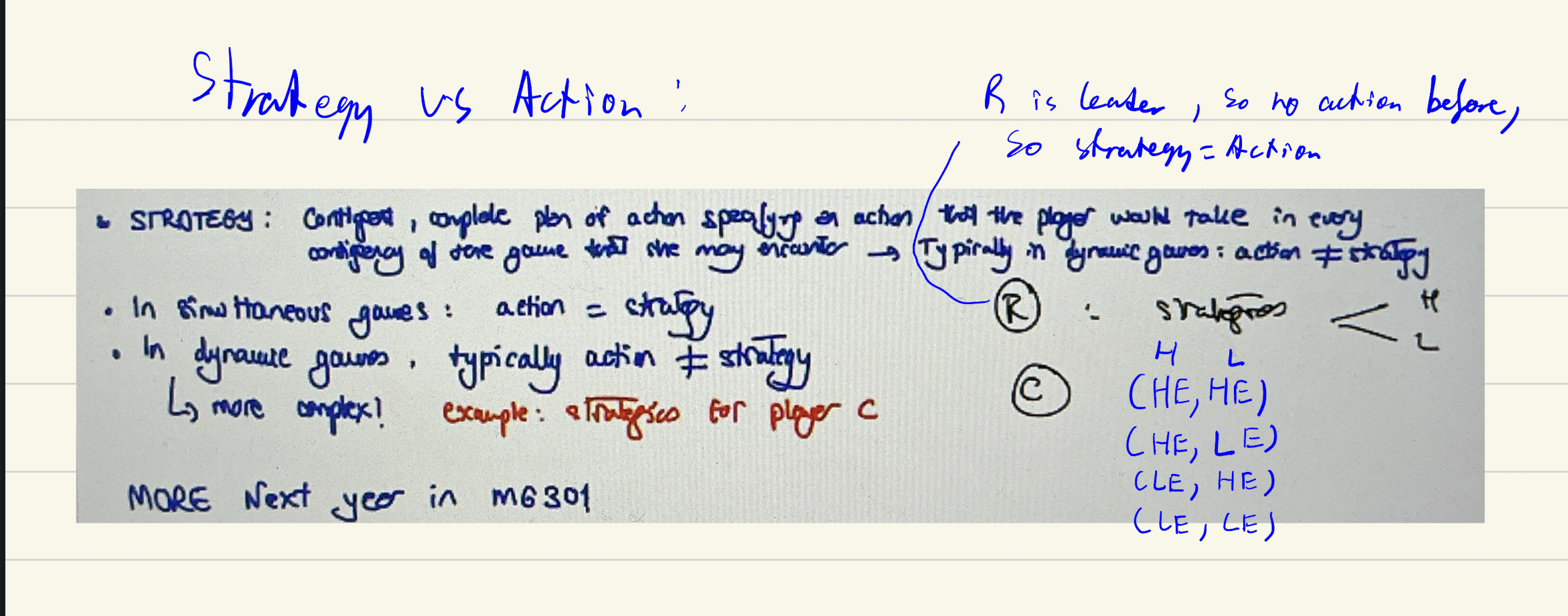
Strategy vs action
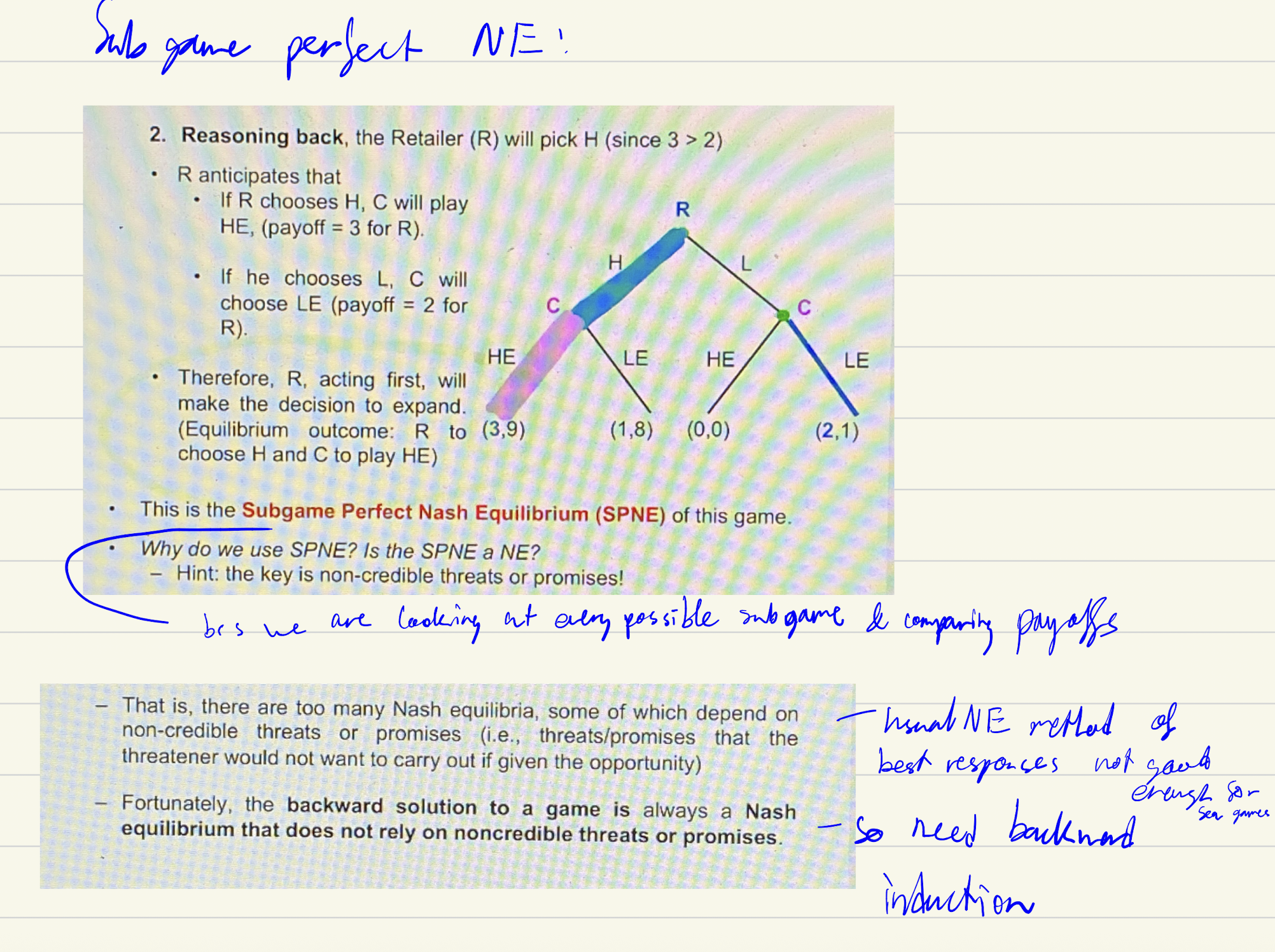
subgame perfect NE
Rules out NE that are based on non-credible threats. All SPNE are NE but not all NE are SPNE.
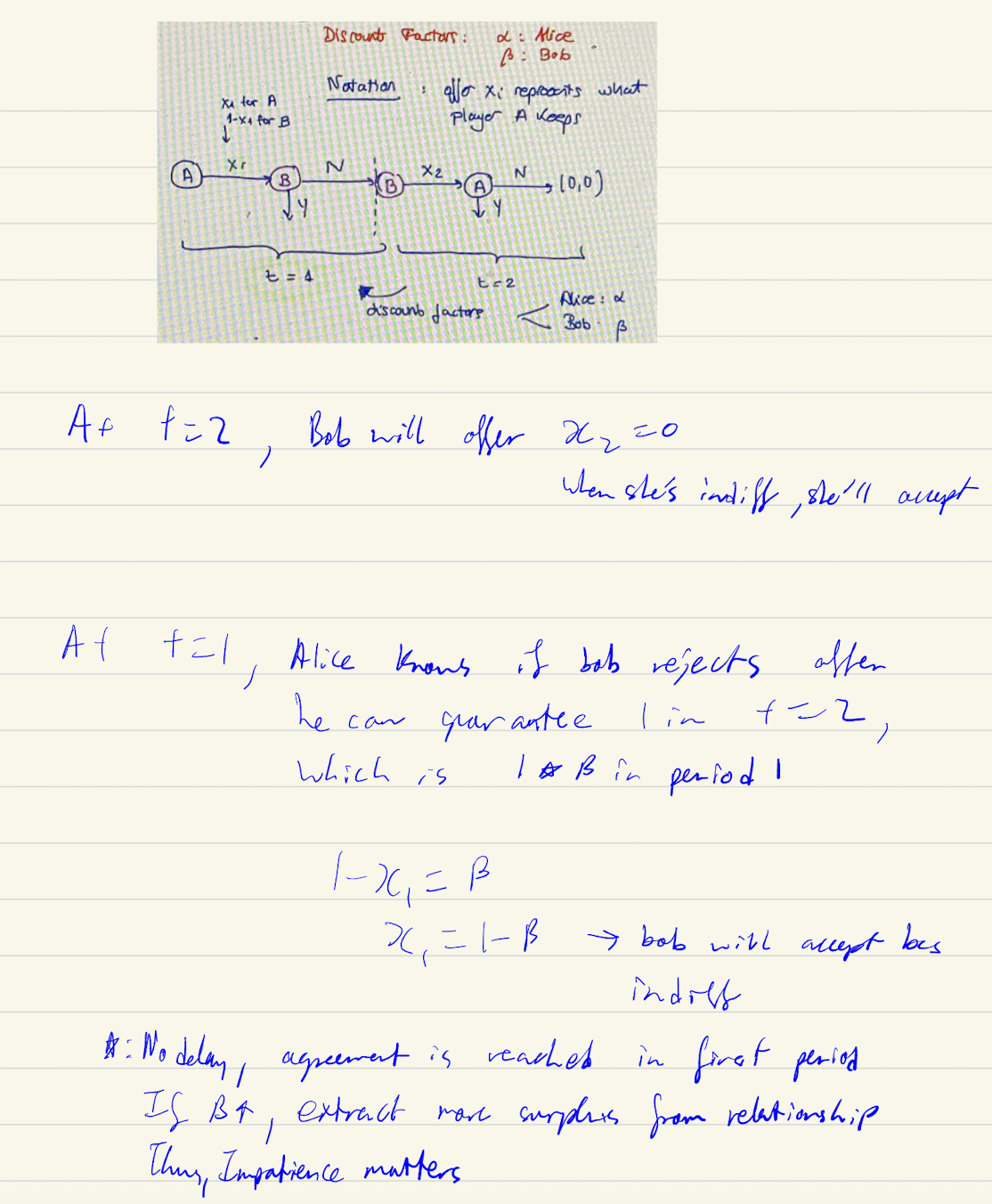
Bargaining and impatience
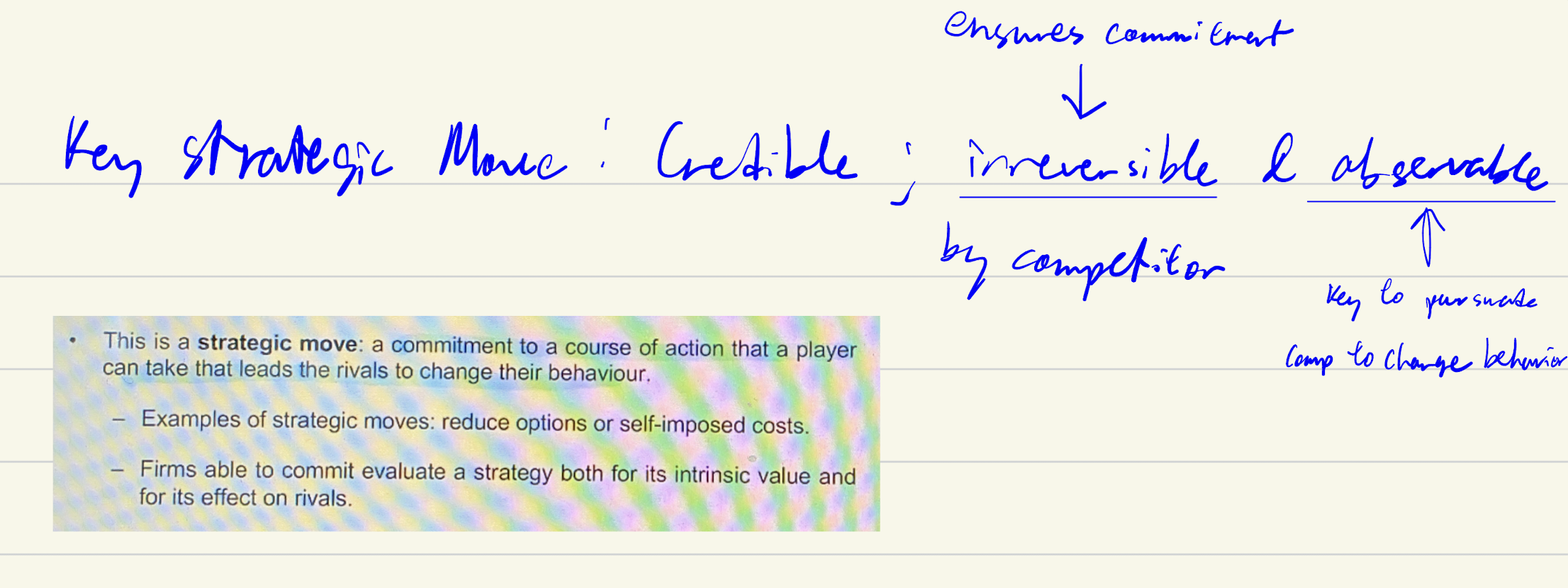
Strategic moves properties/definition
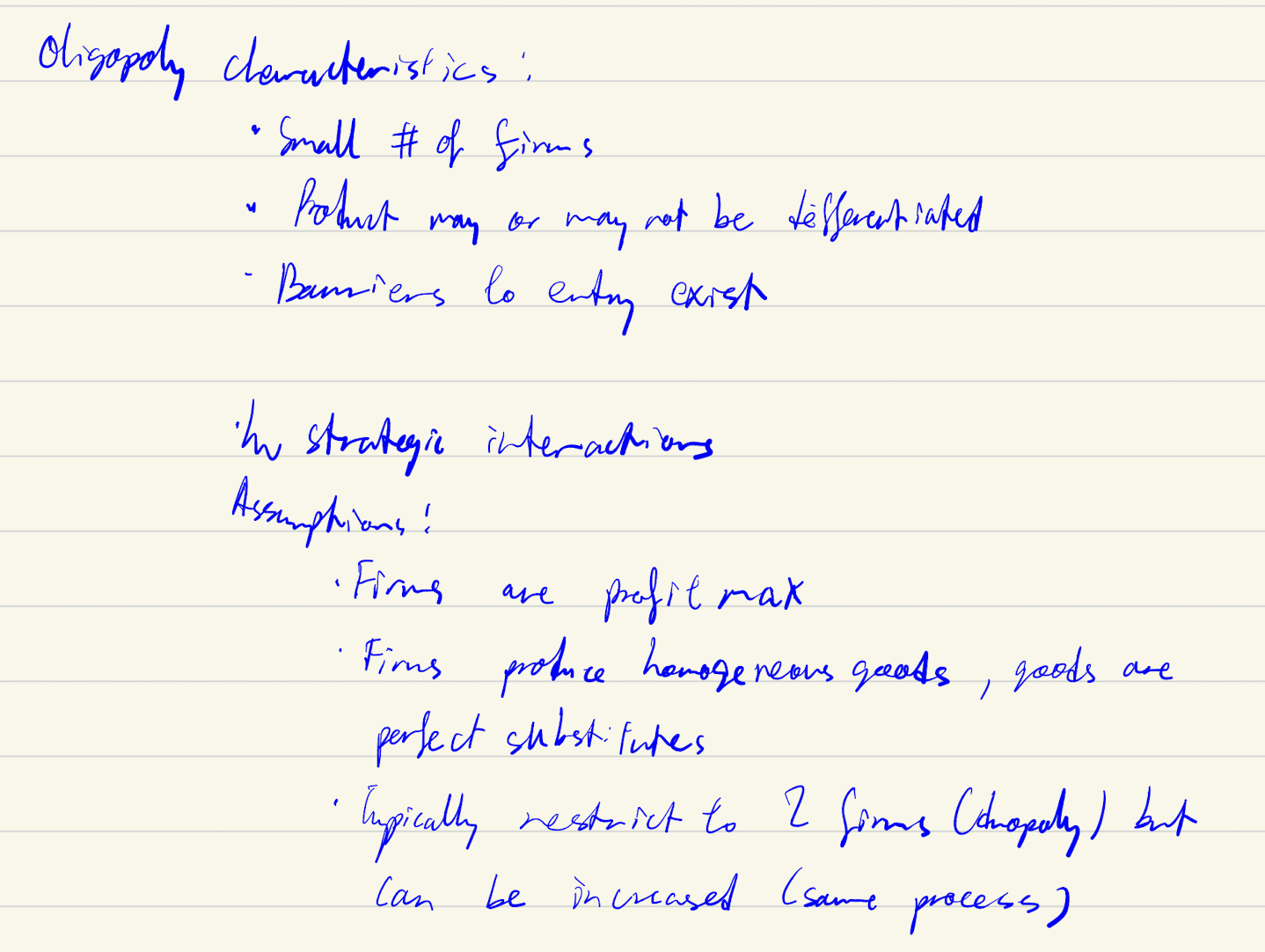
Oligopoly characteristics
4 variables of interest, price & quantity each firm sets
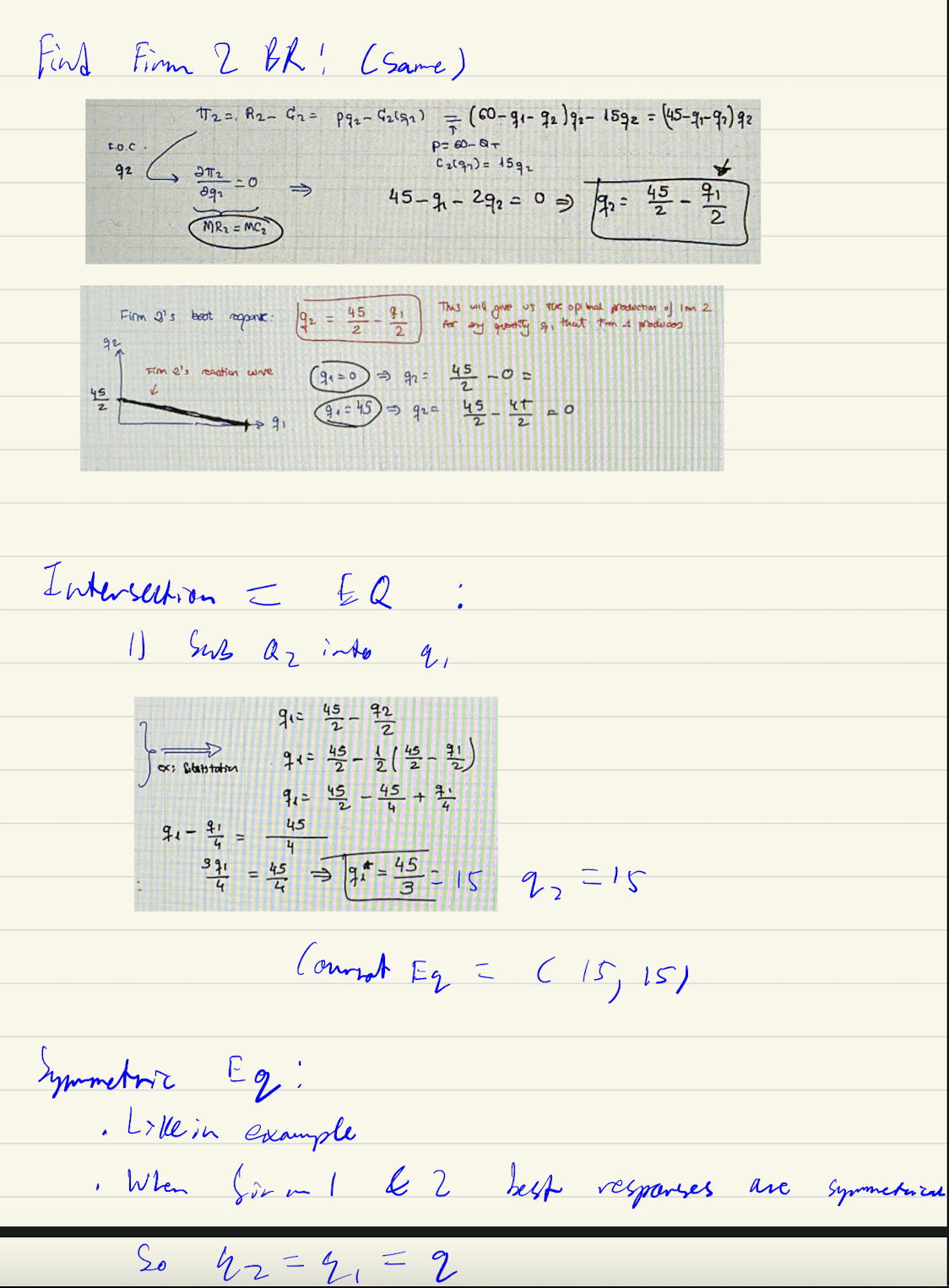
Cournot competition
quantity comp → firms choose q that max profit given q set by other firm → price = a - Qt (total quantity)
Steps: Find their best response function (differentiate) → intersection of BR is the eq, where both are mutually best responding (NE)
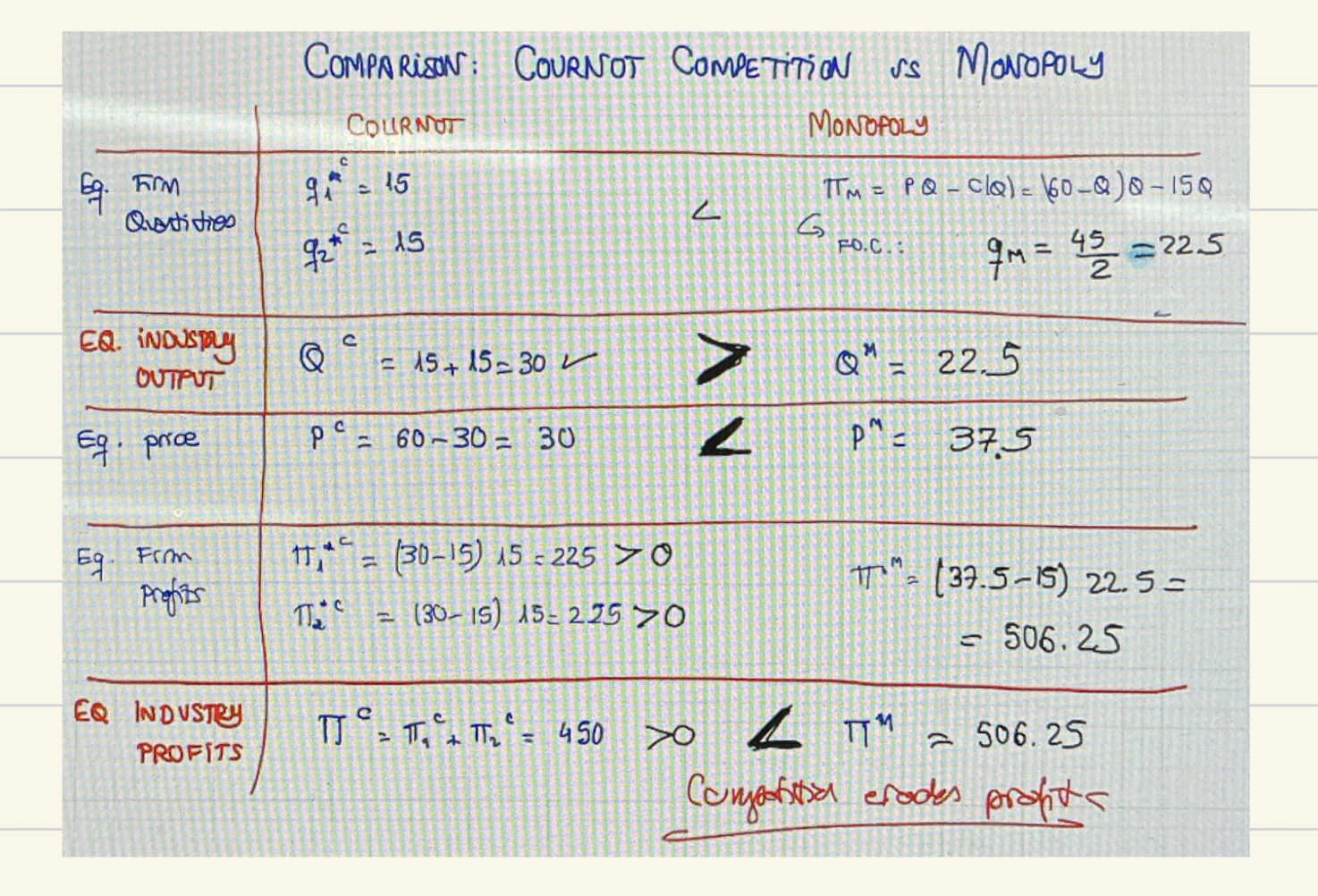
Cournot vs monopoly
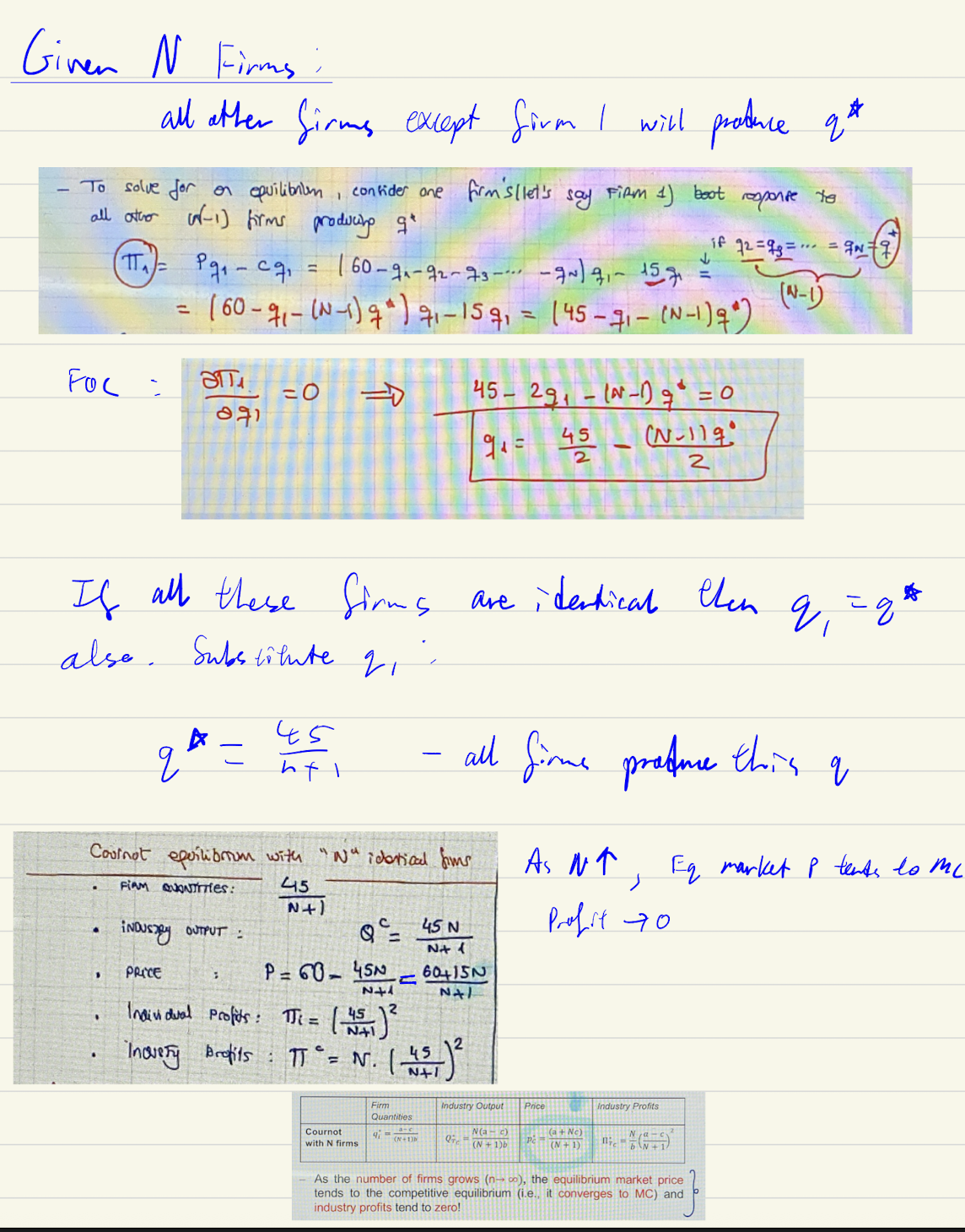
Cournot w N firms
same but substitute (n-1)q*
impact of change in MC (pass through rate)
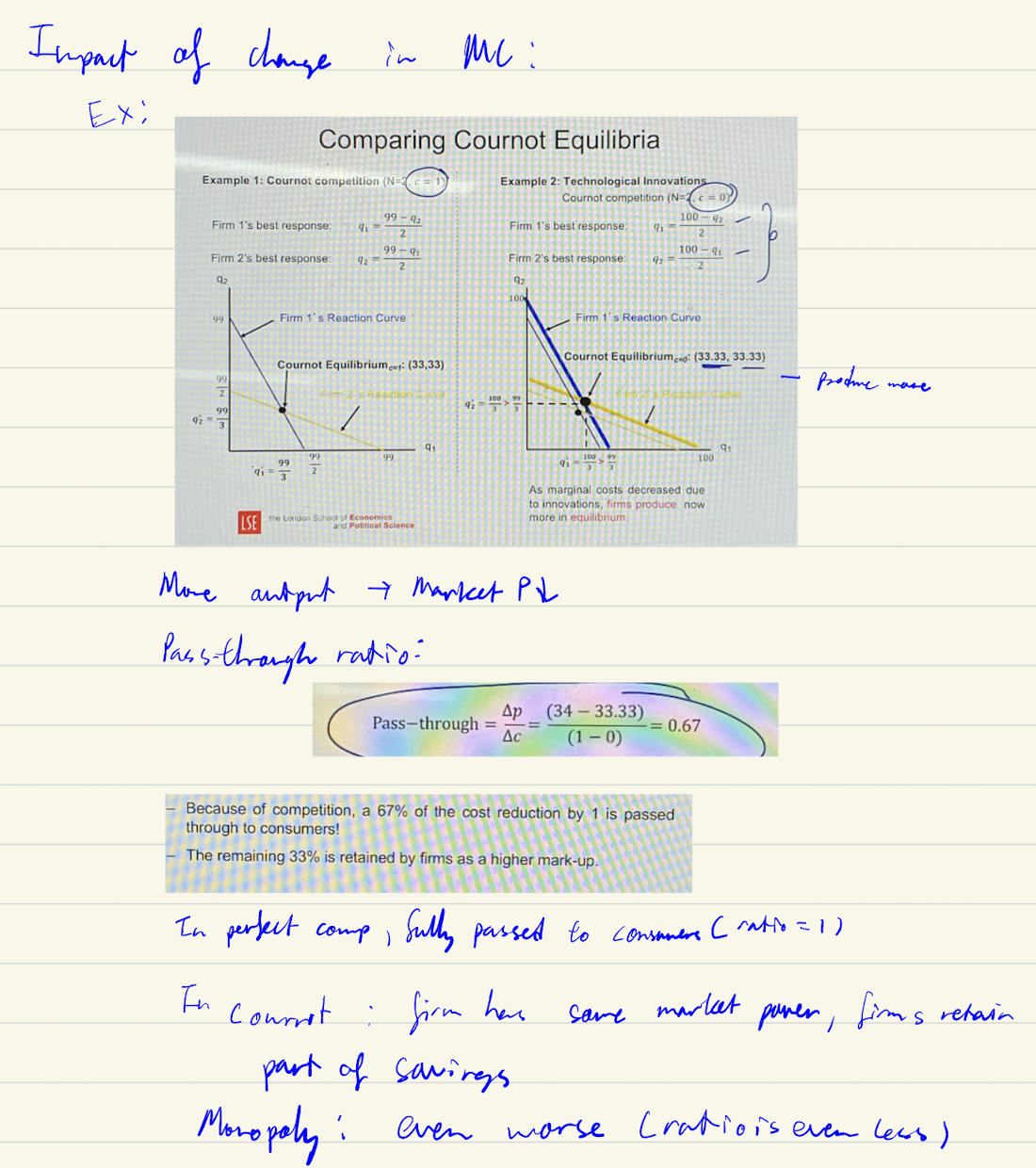
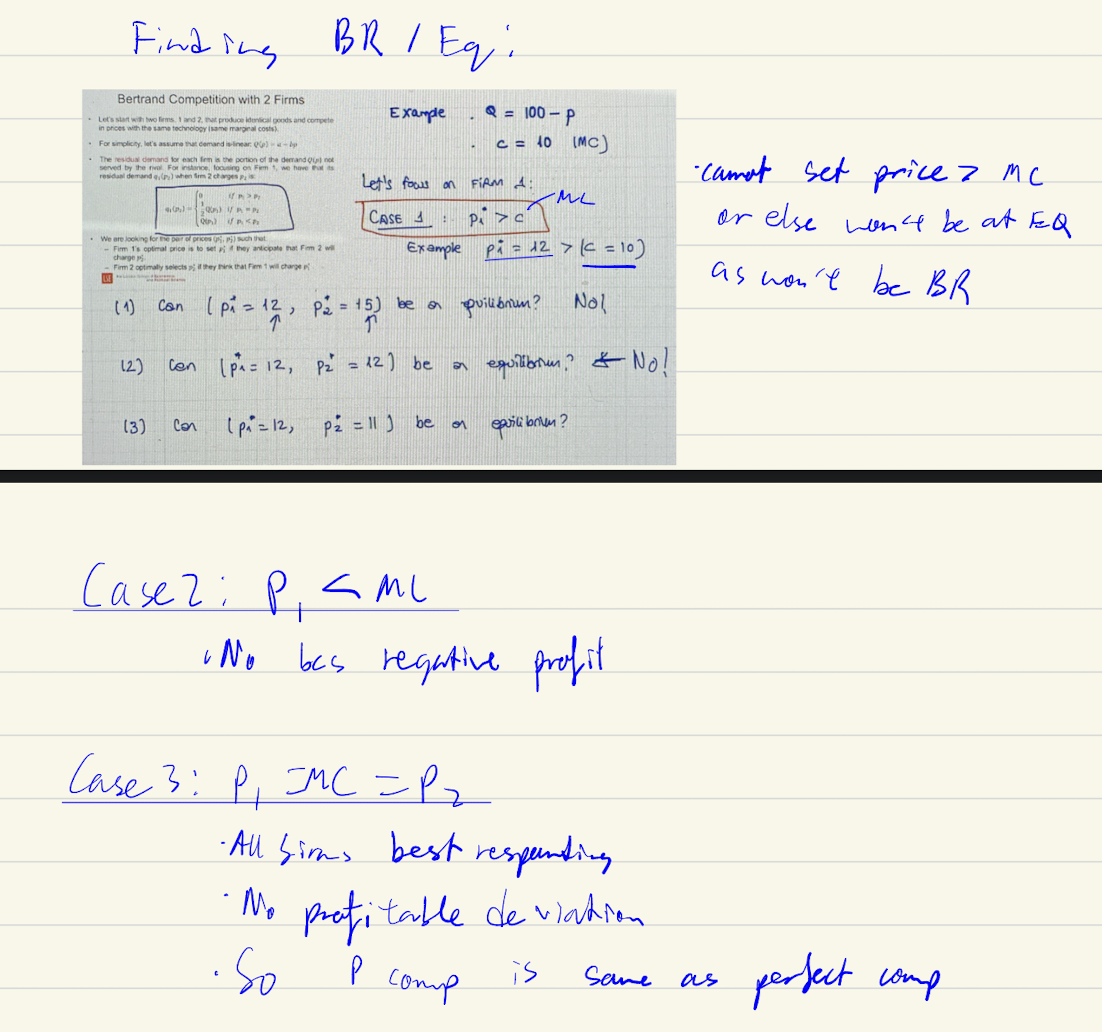
Price competition (Bertrand model)
Price is strategic variable
BR p1=mc=p2
Cut throat competition as no profits
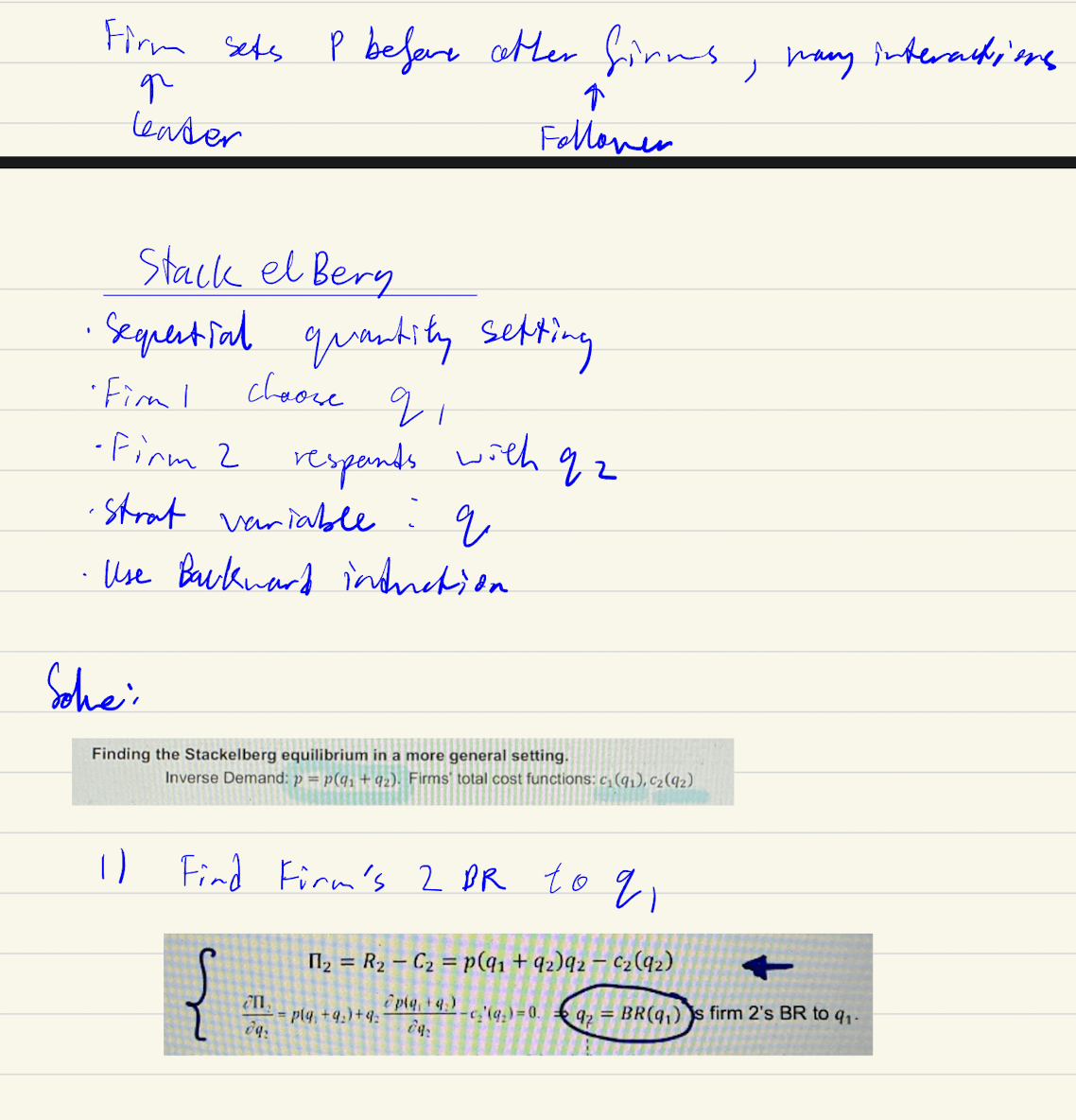
Stackelberg competition
Find firm’s 2 BR → plug in Firm 2 br into firm 1 profit function → differentiate it and find the q1* → q1 then can find q2*
First mover advantage - follower reacts
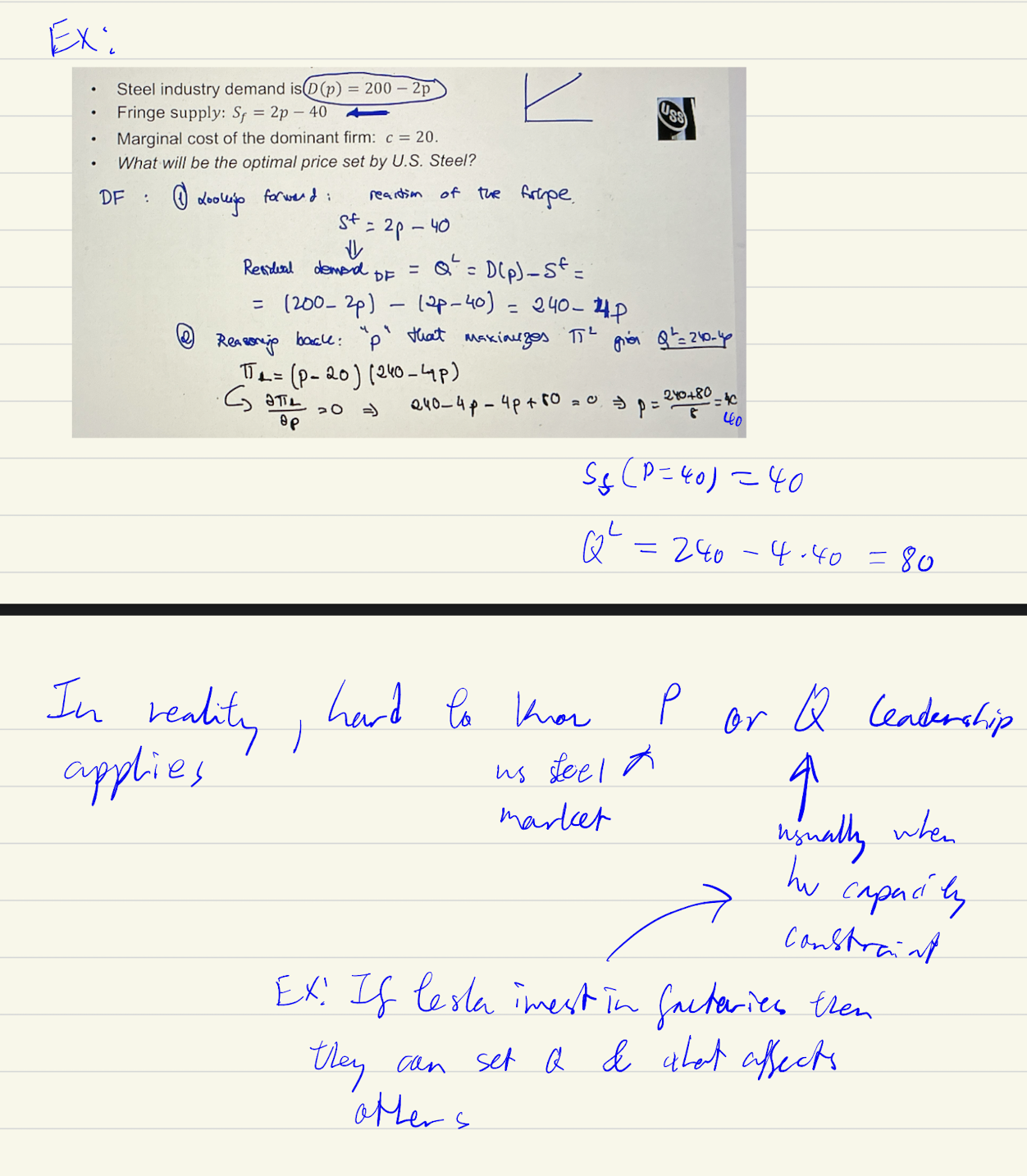
Dominant firm with competitive fringe
Sequential price competition
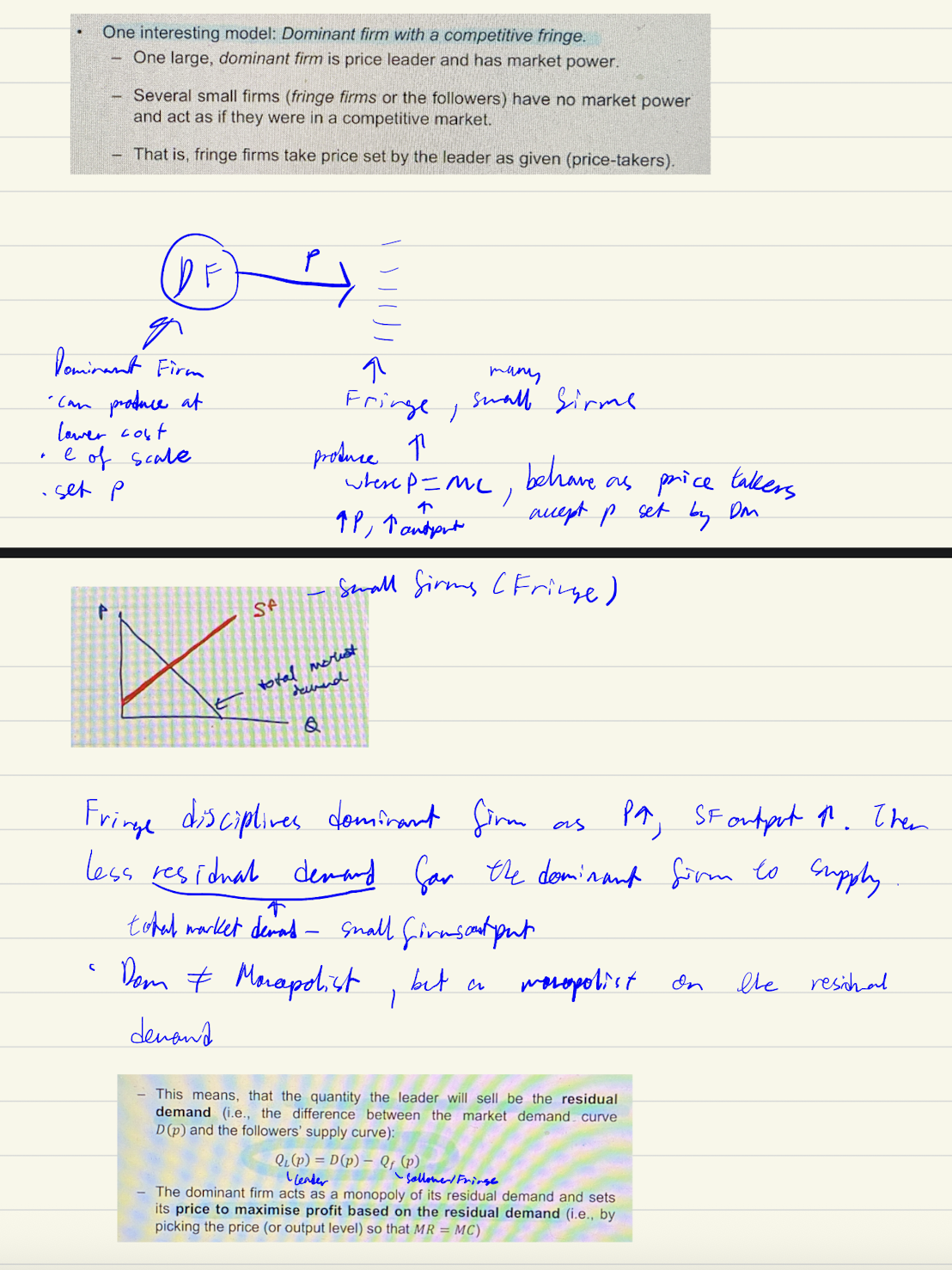
Finding optimal price to set for dominant firm with fringe
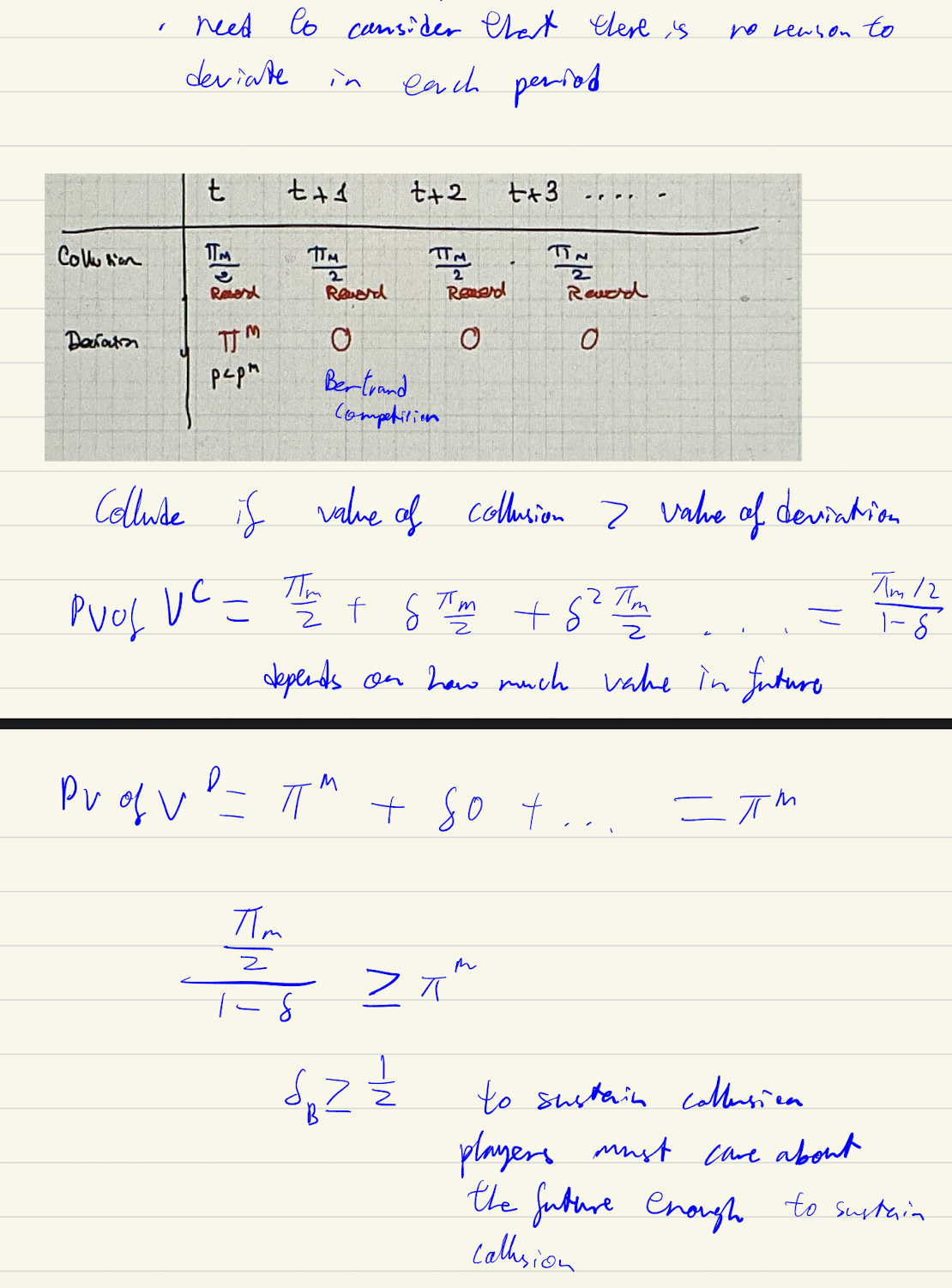
Collusion in finite vs infinite periods (Bertrand)
Finite: Will eventually cheat so will always cheat → won’t collude