KNR 282 Exam 4 ISU Marcel
 Call Kai
 Learn
Learn Practice Test
 Spaced Repetition
 Match
Match Flashcards
 Knowt Play
1/101

There's no tags or description
Looks like no tags are added yet.
Name | Mastery | Learn | Test | Matching | Spaced | Call with Kai |
|---|
No analytics yet
Send a link to your students to track their progress
102 Terms
I GPa
1,000,000,000 Pa
1MPa
1,000,000 Pa
1 m2 (cm)
10,000 cm2
1 m2 (mm)
1,000,000 mm2
Mechanical Stress
Internal force (F) divided by the cross-sectional area (A) of the surface on which the internal force acts
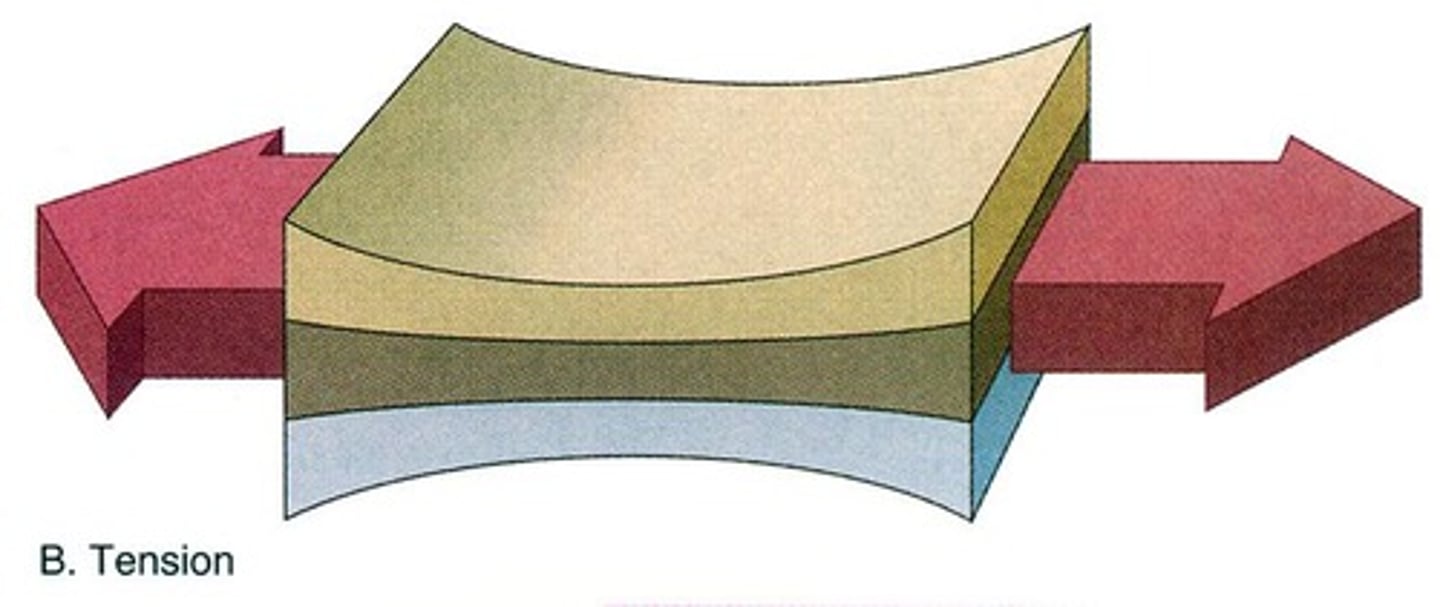
Tension
F tends to pull molecules apart causing axial stress.
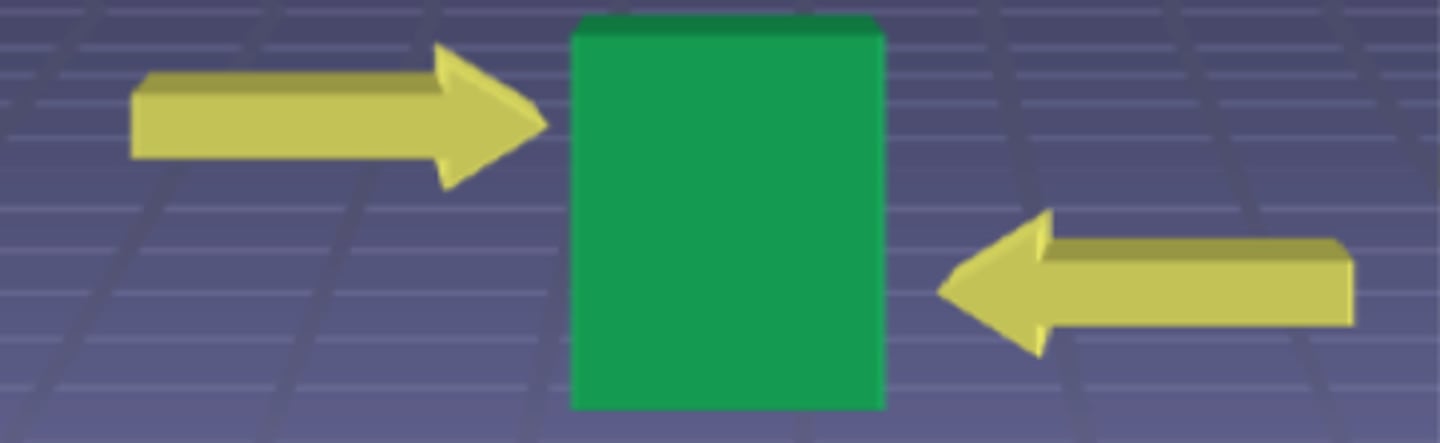
Compression
F tends to push molecules more tightly together causing axial stress
Shear
F acting parallel cause transverse stress
Changes in orientation of object's molecules, Measured as a change in angle (Do not worry about the equation)
Linear
Changes in object's length
Elastic Response
Positively Linear, Reaction to small loads
Plastic Response
Curvilinear, Object deformation, Yield Point: Point where further increases in stress will cause deformation
Steeper slope
Larger elastic modulus, Stiffer material
Gradual slope
Smaller elastic modulus, Compliant material
Yield strength
If + Stress = plastic deformation = no regain in shape
Ultimate strength
Total load that can be carried
Failure Strength
Stress corresponding to the end of the stress-strain curve, Usually the same value as ultimate strength
Skeletal Muscle
Active
Passive
Anisotropic
Isotropic
Bones
Passive, Anisotropic, Strength: compressive stress, Weakness: shear stress
Cartilage
Passive, Anisotropic, Strength: tensile stress, Weakness: compressive stress
Tendons and Ligaments
Passive, Anisotropic, Strength: tensile stress, Weakness: compression and shear stress
Axial Skeleton
(74 bones)
Skull, vertebral column, and rib cage
Appendicular Skeleton
(126 bones)
Shoulder girdle - clavicle and scapula
Pelvic bones - ilium, ischium, and pubis
Extremities - femur, humerus, tibia, fibula, radius, ulna, etc
Long bones
Humerus, radius, ulna, femur, tibia, fibula, metacarpals, metatarsals, phalanges, and clavicle
Most involved in motion
Short bones
Carpals and tarsals (wrist and ankle)
Flat bones
Ribs, skull, scapula, sternum, and pelvic bones
Irregular bones
Vertebrae, sacrum, coccyx, and facial bones
Sesamoid bones
Bones that develop in tendons (i.e., patella)
Fibrous (sutures and syndesmoses)
Usually rigid
Sutures of the skull
Cartilaginous (synchrondroses)
Joined by cartilage;
Rigid or slight movement
Pubic symphysis
Synovial
Most common
Connected by ligaments
Joint cavity
Synarthrodial
immovable
Fibrous
Amphiarthrodial
slightly movable
Cartilaginous
Diarthrodial
freely movable
Synovial
Macrostructure
Muscle
Fascicle
Muscle Fiber
Myofibril
Myofilaments
Microstructure
Muscle fiber = myocyte = muscle cell
Sarcolemma
Conducts electrical impulses
Myofibrill
Sarcomere
Contractile structural unit (z-line to z-line)
Contains actin and myosin
Connective tissue sheaths
Epimysium (covers whole muscle)
Perimysium (covers fasciculi)
Endomysium (covers muscle fiber)
Neurons
Fundamental unit of the nervous system
Dendrites
Branched region where neuron receives connections from other neurons
Soma (cell body)
Contains the nucleus and other organelles
Axon
Long projection from the soma. Carries action potentials (APs) to the terminals
Axon hillock
Final point that summated potentials propagate to. Action Potentials (APs) start here
Sensory (afferent)
Peripheral nervous system
Cell bodies lie outside the CNS
Interface with interneurons or motor neurons
Motor (efferent)
Central nervous system
Cell bodies lie within the CNS
Receive signals from sensory, interneurons, and higher efferent neurons
Interneurons (connector)
Central nervous system
Motor Unit
Motor neuron and the muscle fibers that it innervates. Each neuron is responsible for activating its own muscle fibers
"All or None" Principle
IF... MN activated by brain
THEN... ALL innervated muscle fibers by MN get activated
Golgi tendon organs (GTOs)
Function: To detect changes in musculotendinous tension, Provides joint stability
GTOs located in myotendinous regions
When muscle & tendon are under too much tension, GTOs cause inhibition of the muscle
Type Ib afferent fibers interneuron(s) motor neuron
Inhibits motor neurons going to that muscle (i.e. agonist)
Excites motor neurons going to the antagonist
Improve Technique, Description
Describe to your athletes what you want to see
Fundamental knowledge, purpose of skill, and characteristics of the most effective technique
Improve Technique, Observation
Observe the performance of your athlete to determine his/her technique
Improve Technique, Evaluation
Compare the ideal technique to the observed performance
Identify and evaluate errors
Improve Technique, Instruction
Educate the athlete by providing feedback and the instruction necessary to correct those errors
Qualitative Anatomical Analysis Method, Fact #1
Muscle activity cannot be directly observed
Qualitative Anatomical Analysis Method, Fact #2
EMG is not easily accessible
Qualitative Anatomical Analysis Method, Fact #3
With knowledge and observation, you can get a general idea of which muscles are active based on the principles used in an inverse dynamic analysis
Inverse Dynamic Analysis
1. Divide the activity into temporal phases
2. Identify the joints and movements involved
3. Determine the type of muscular contraction (concentric, eccentric, or isometric) and identify the predominant active muscle group at each joint
4. Identify instances when rapid joint angular accelerations occur and where impacts occur
5. Identify any extremes in joint ranges of motion
Tissue Responses to Stress
A tissue adapts to the level of stress imposed on it (Julius Wolff, 1892)
As mechanical stress increases, a tissue gains strength through hypertrophy
This is know as "Wolff's Law"
Pathologic Underload Zone
Distress
Injury = Atrophy
Low stress continuum
Physiologic Loading Zone
Eustress
Low stress continuum
Physiologic Training Zone
Eustress
High stress continuum
Pathologic Overload Zone
Distress
Injury
High continuum
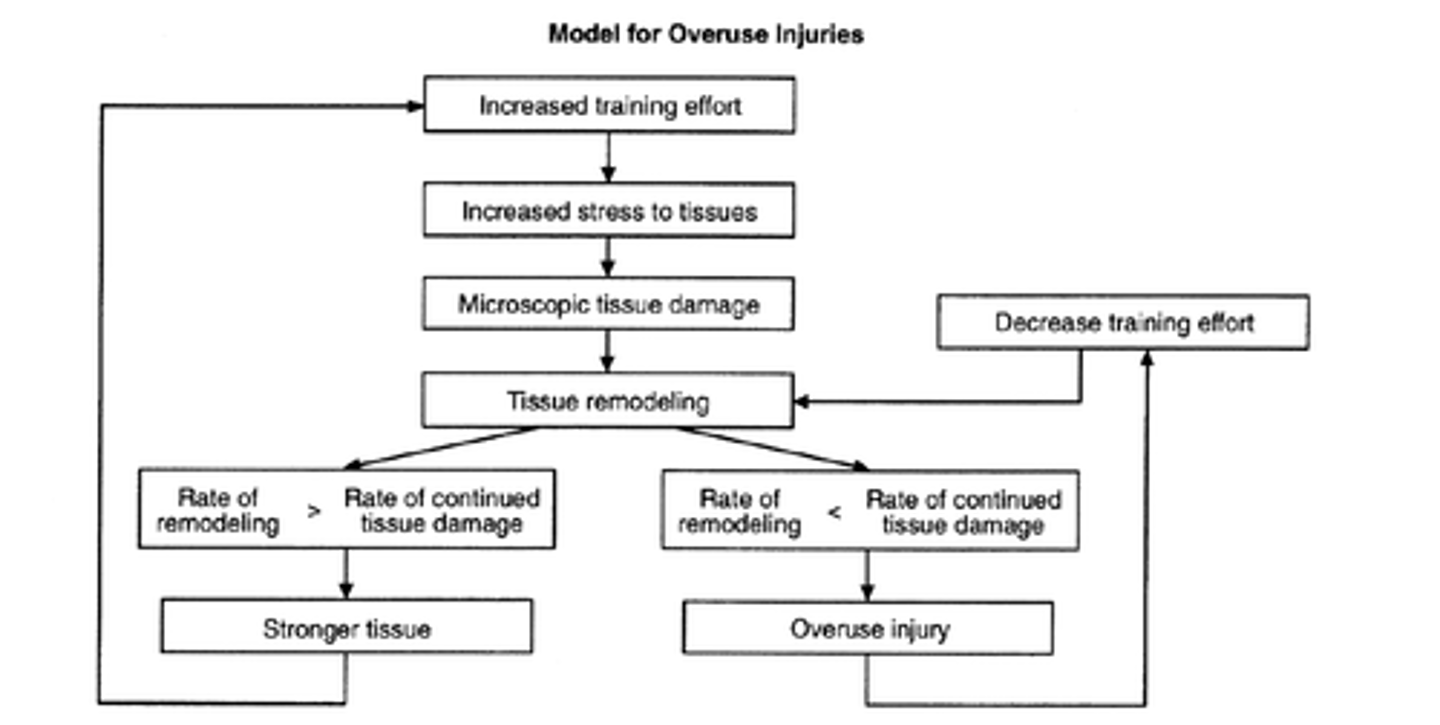
Overuse Injury
Longitudinal
Fm = Am Om
Pennate
Fm = (Am cos) Om
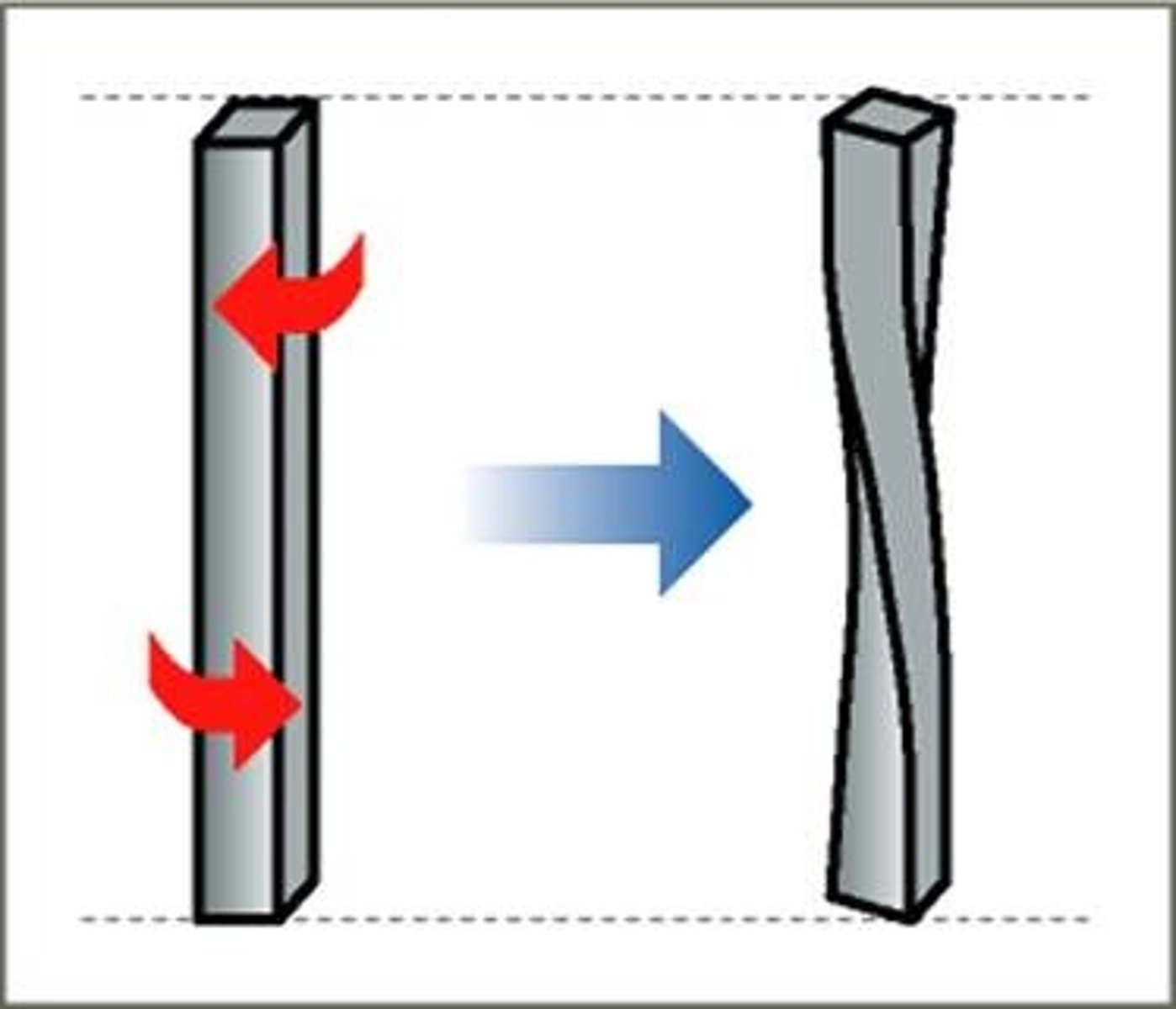
Torsion
A twisting force
During a push-up, the humerus undergoes what type of stress?
Compressive
The fiber arrangement in ligaments allows more resistance to non-axial loads
True
A section of the patellar tendon is 34 mm2 in cross-section. What would the stress in this section of the tendon be as a result of an 8,500 N tensile force?
250 MPa
The modulus of elasticity (for compression) for a section of compact bone in the femur is 13 GPa (13 × 109 Pa, or 13,000,000,000 Pa). If this bone is subjected to a compression stress of 45 MPa (45 × 106 Pa, or 45,000,000 Pa), what strain results from this compression?
0.00346
The yield strength of a material is 20 MPa (20,000,000 Pa). The yield strain for this material is 0.4%. What is the modulus of elasticity?
5 GPa
The modulus of elasticity for a prosthetic material is 20 GPa (20,000,000,000 Pa). A 3 cm long sample of this material has an area of 0.003 m2. This sample is stretched to 3.004 cm. What tensile force was applied to the material to create this stretch?
80,000 N
A 2.2 cm long section of the patellar tendon stretches to 2.205 cm when it is subjected to a tensile force of 14,500 N. What is the strain in this segment of the tendon? (give the answer as a percentage)
0.227%
Put the following parts in order, from largest to smallest:
1. Fascicle
2. Myofibril
3. Whole muscle
4. Myofilament
5. Myocyte (muscle cell)
3, 1, 5, 2, 4
The form of a bone will be determined by the mechanical stresses imposed on it and its function
True
The basic contractile unit of muscles is the ______________
Sarcomere
Which of the following joint types cannot move about more than one axis (i.e., does not have more than one degree of freedom)? Mark all that apply
Pivot joints
Hinge joints
Which of the following connective tissue sheaths covers the muscle fasciculi?
Perimysium
Which of the following would be an example of a fusiform muscle?
Biceps Brachii
The ______________ is the membrane of a muscle fiber
Sarcolemma
Which of the following types of joints would not allow for flexion or extension movements?
Pivot
A unipennate muscle has a cross-sectional area of 10 cm2 and another cross-sectional area of 11 cm2. The angle of pennation for both cross-sectional areas is 30°. This muscle can produce a maximal isometric contraction force of 500 N. What is the stress during the maximal isometric contraction?
27.49 N/cm2
A longitudinal muscle has a cross-sectional area of 11.5 cm2 and can produce 30 N/cm2 of stress during an isometric contraction. What is the maximal isometric force that this muscle is capable of producing?
345 N
The control of force through the manipulation of motor unit firing rates is referred to as _________
Rate coding
The otolith organs (utricle and saccule) are responsible for detecting rotational movements of the head. True or False?
False
One way a muscle can control force is by how many of the muscle fibers each motor neuron activates. True or Flase?
True
Which of the following reflexes involves the stimulation of Golgi tendon organs (GTOs)?
Inverse myotatic reflex
A high innervation ratio is better suited for _______________
Muscles responsible for gross movements
Which of the following best represents the motor unit recruitment order that would occur due to the size principle?
Small motor units get recruited first, then larger ones
Which type of neuron is efferent?
Motor
Stimulation of which of the following receptors contributes to the stretch-shortening cycle?
Muscle spindles
The long, slender projection on a neuron that carries actions potentials is referred to as ___________________
Axon
Which type of neuron is afferent?
Sensory
Which of the following is not considered a component of physical fitness? Cardiovascular fitness
Flexibility
Psychological capacity
Muscular power
Muscular strength
Psychological capacity
___________ training may involve performing the actual skill or performing drills that mimic specific aspects of the skill
Technical
The first step of a qualitative anatomical analysis is to ______________________________
Break down the performance into specific phases or motions
After determining the primary plane of the movement for the skill, the best place to observe the performance of that skill is ____________________________
Perpendicular to that plane
The Physiologic Training Zone on the stress continuum represents a level of stress _____________ that to which the tissue has adapted
Above
Wolff's Law essentially states that, as mechanical stress _________________, a tissue gains strength through ________________
Increases; Hypertrophy
Which of the following is not one of the steps for using qualitative biomechanical analyses to improve technique?
Simulation
Overuse injuries are often a consequence of ________________
Inadequate recovery time